Partial Extraction Therapies (PET): Maintaining Alveolar Ridge Contour at Pontic and Immediate Implant Sites Presented by: Dr. Sohail Mohammad (Fellow oral implantology) Guided by: Dr Aabhay Datarkar Sir Author Howard Gluckman Jonathan Du
"Partial Extraction Therapies (PET): Maintaining" is the property of its rightful owner. Permission is granted to
download and print the materials on this website for personal, non-commercial use only, and to display it
on your personal computer provided you do not modify the materials and that you retain all copyright
notices contained in the materials. By downloading content from our website, you accept the terms of this
agreement.
Presentation Transcript
01
Partial Extraction Therapies (PET): Maintaining Alveolar Ridge Contour at Pontic and Immediate Implant Sites Presented by: Dr. Sohail Mohammad
(Fellow oral implantology)
Guided by: Dr Aabhay Datarkar Sir<br>
02
Author Howard Gluckman
Jonathan Du Toit, BChD, Dipl Implantol, Dip Oral Surg, MSc Dent3<br>
03
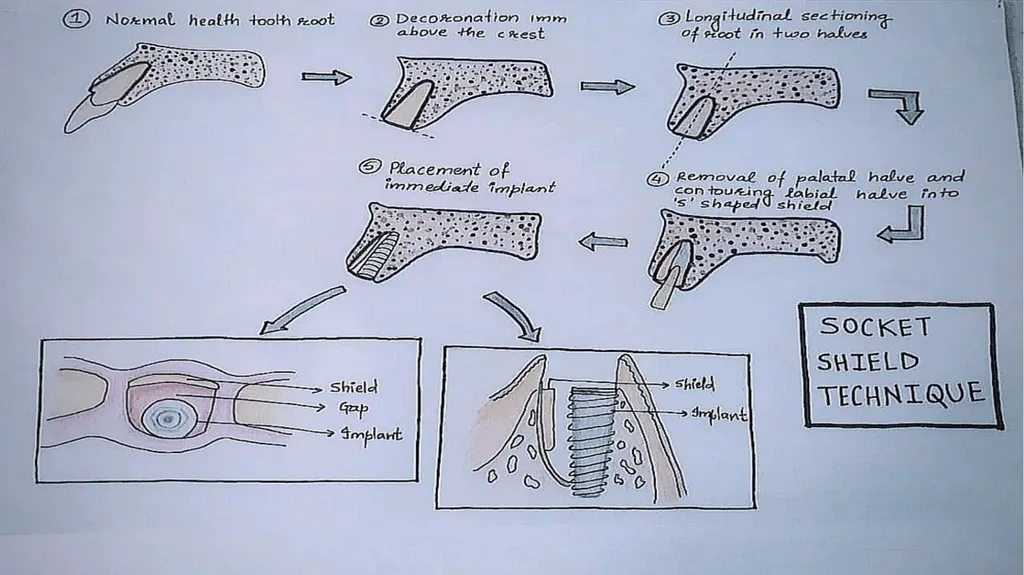
Objective Studies describes in this journal club presentation has objectives about a clinical technique which was developed where the buccal portion of the root is retained to preserve the periodontal ligament and bundle bone i.e Socket shield or Partial extraction therapy(PET).
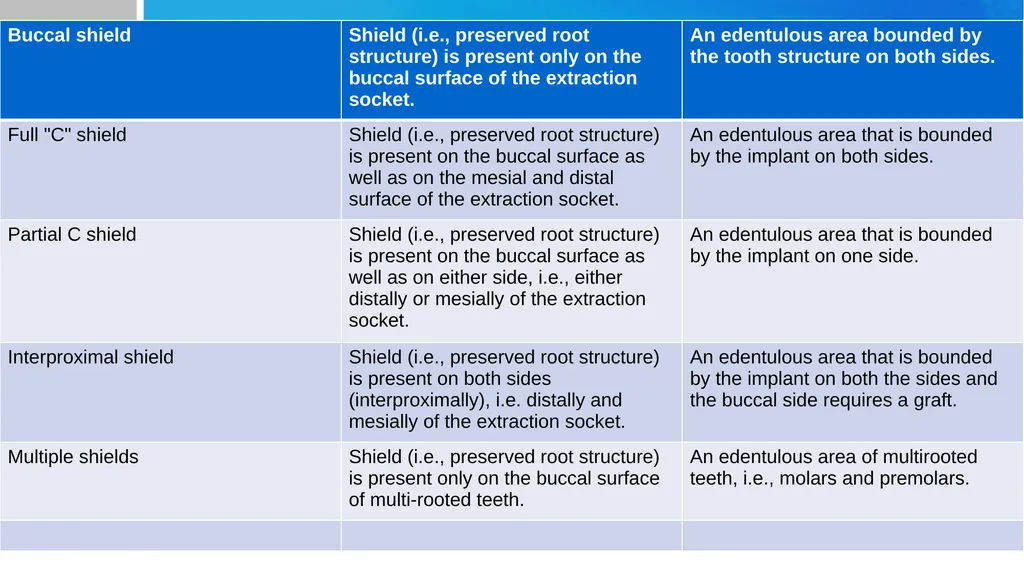
Another objective includes various techniques used for PET its Classification, Indication.<br>
04
Introduction & Background Nowadays, there is a tremendous demand for esthetics due to various factors such as development in lifestyle, increase in literacy rate, and increase in desire. Everyone wants to appear attractive and have an appealing and beautiful smile.
Therefore, only tooth removal (extraction) is not enough, especially in the area of esthetics (anterior maxilla). The most crucial and pressing issue is replacement and rehabilitation.
To replace lost teeth or tooth with a poor prognosis, dental implants have become the standard.
Resorption of alveolar bone after dental extraction and implant placement can be a serious problem with often extremely poor esthetic effects<br>
05
After tooth extraction, the thickness of the alveolar bone decreased by 3-3.5 mm, especially on the buccal aspect of the maxillary front region
Within one year of tooth extraction the alveolar width, on an average of 5-7 mm, is reabsorbed. As the buccal plate is thinner and weaker in structure, two-thirds of its resorption occurs in the first three months.
Understanding the periodontium and the post-extraction loss of tissues is related to the fundamental procedure of tooth removal, which involves cutting off the highly vascular PDL system that supplies blood and nutrition to the bundle bone.
a sequence of precollapse procedures that utilize the tooth itself to compensate for the loss of alveolar tissue, came into existence, and addressed issues caused by extraction known as “Partial Extraction Therapy.”
The PDL-bone complex as well as its vasculature is kept intact by preserving the tooth root attachments to the bone.<br>
06
Partial Extraction Therapy It has been suggested that maintaining the tooth root or a piece of it will keep all the tissue components of the periodontium together by preserving the PDL fibers and the vascular system that nourishes the bundle boneand holds it and prevent bone loss.
Many researches have been conducted to demonstrate various ways for preserving residual ridge when resorption begins following tooth extraction. The latest study has also shown that implant placement at the preserved root surface preserves the buccal bone, resulting in an excellent emergence profile<br>
07
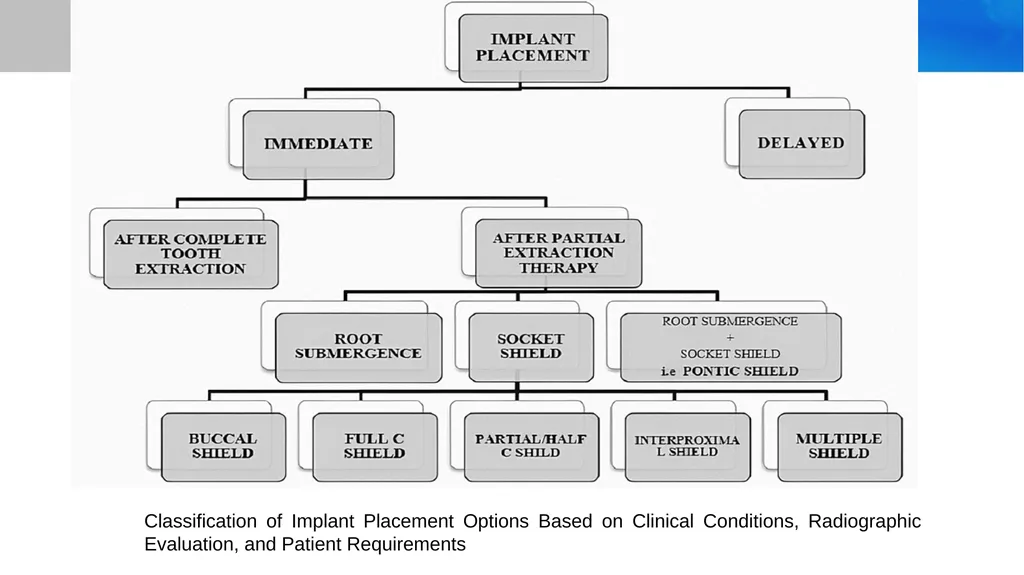
Classification of Implant Placement Options Based on Clinical Conditions, Radiographic Evaluation, and Patient Requirements<br>
08
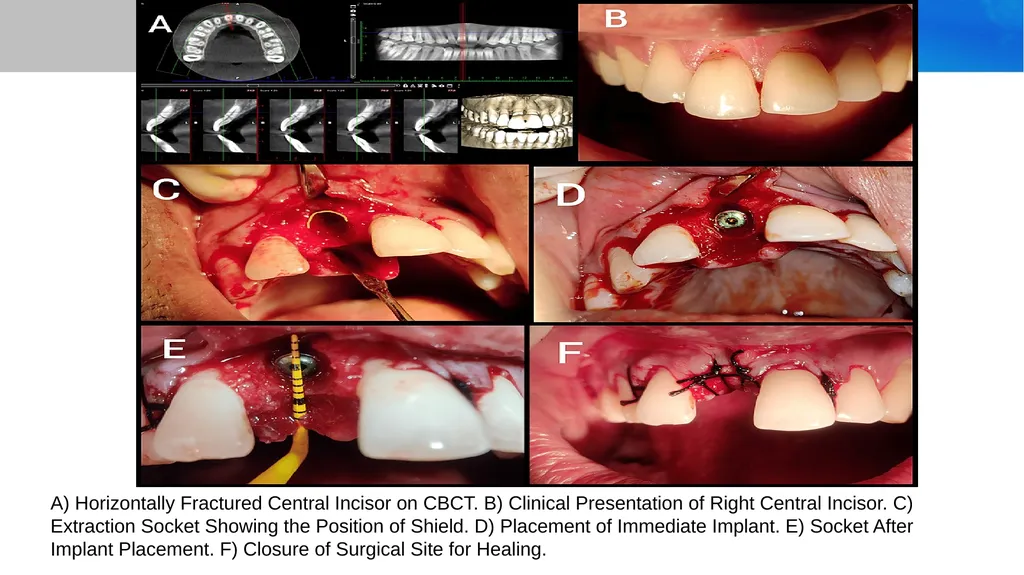
A) Horizontally Fractured Central Incisor on CBCT. B) Clinical Presentation of Right Central Incisor. C) Extraction Socket Showing the Position of Shield. D) Placement of Immediate Implant. E) Socket After Implant Placement. F) Closure of Surgical Site for Healing.<br>
09
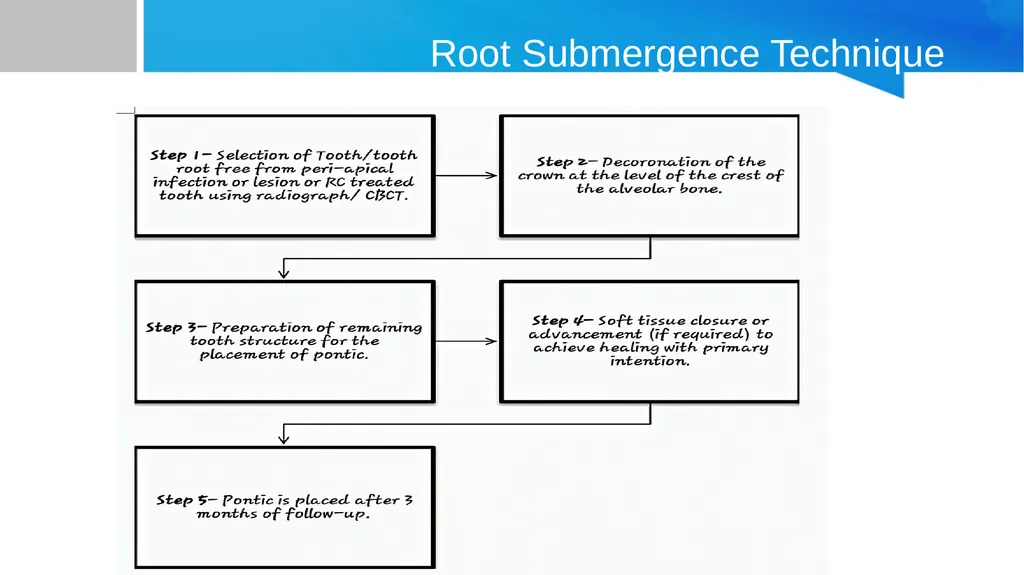
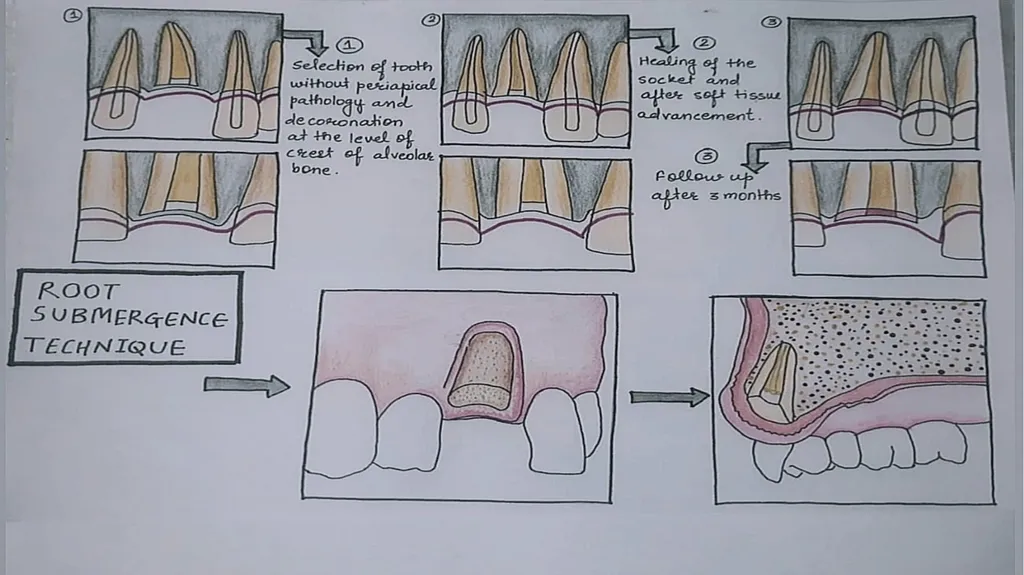
Root Submergence Technique<br>
10
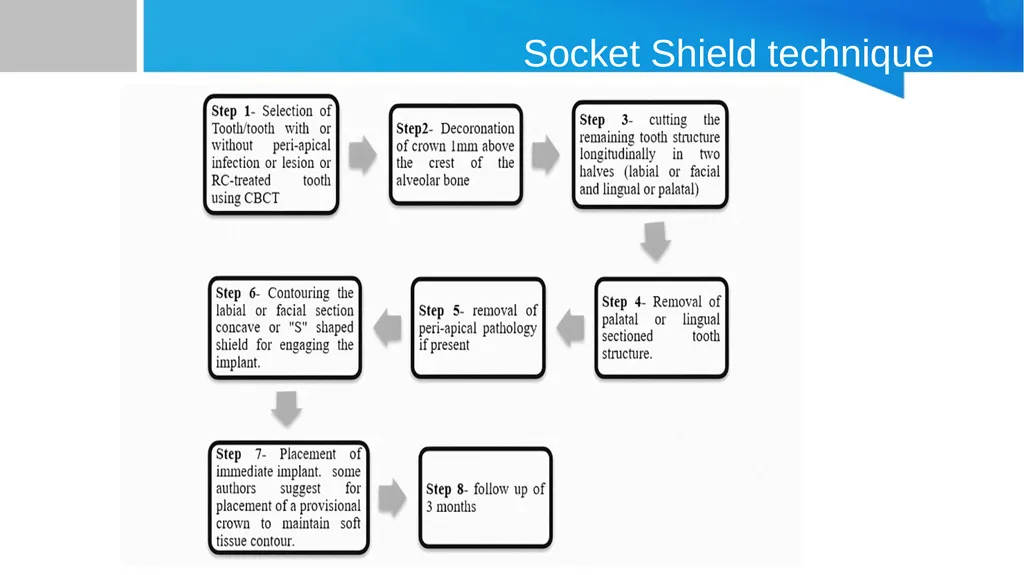
Socket Shield technique<br>
11
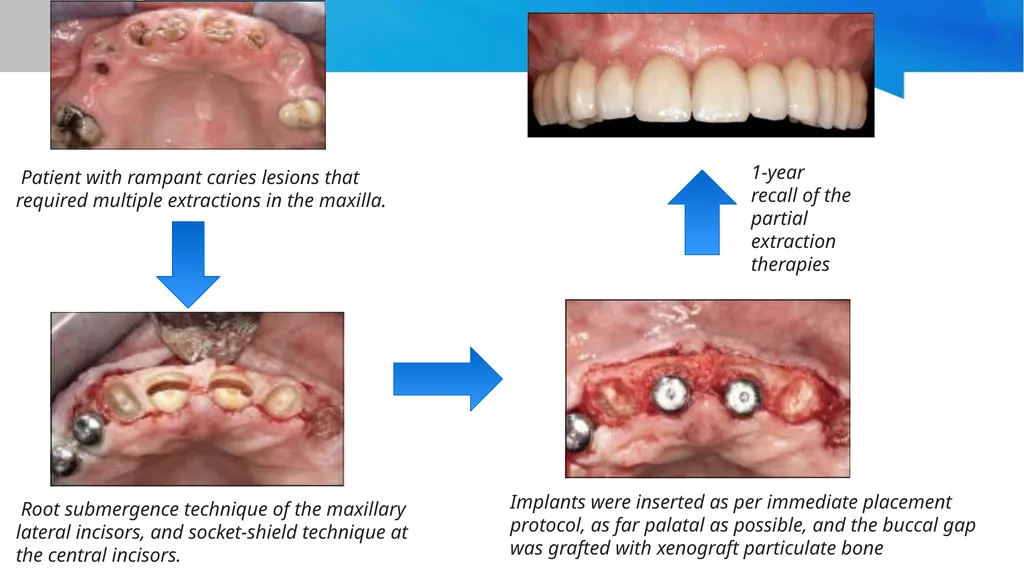
Patient with rampant caries lesions that required multiple extractions in the maxilla. Root submergence technique of the maxillary lateral incisors, and socket-shield technique at the central incisors. Implants were inserted as per immediate placement protocol, as far palatal as possible, and the buccal gap was grafted with xenograft particulate bone 1-year recall of the partial extraction therapies<br>
12
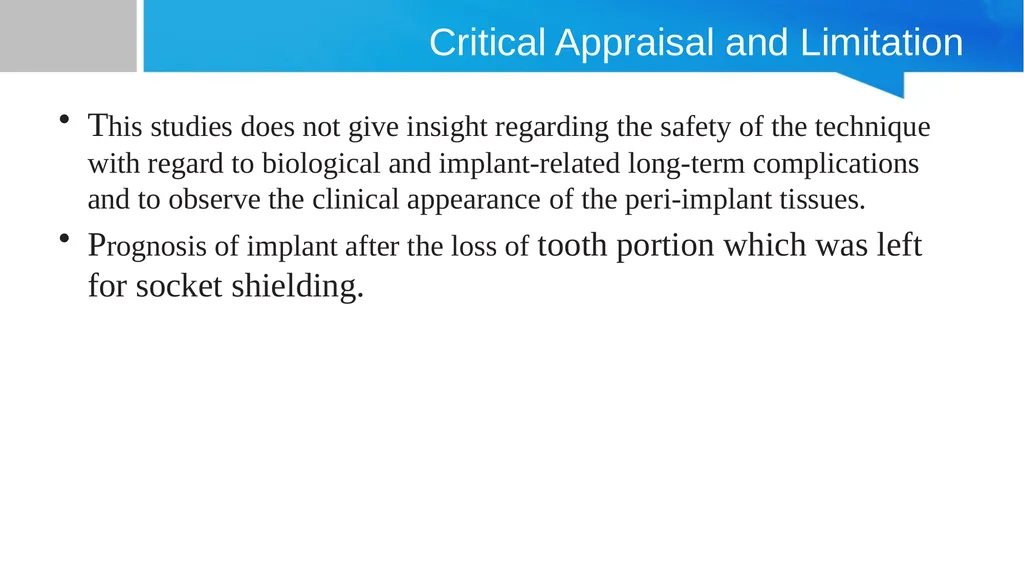
Critical Appraisal and Limitation This studies does not give insight regarding the safety of the technique with regard to biological and implant-related long-term complications and to observe the clinical appearance of the peri-implant tissues.
Prognosis of implant after the loss of tooth portion which was left for socket shielding.<br>
13
Conclusions Clinical professionals all over the globe are becoming more and more interested in PET. In cases involving immediate implant insertion post-extraction, this therapy has shown very promising results in preventing alveolar ridge resorption. But there is need for retrospective pilot studies and more literature-based data for showing long-term therapeutic effectiveness with implant treatment.<br>
14
References Gluckman H, Salama M, Du Toit J: Partial extraction therapies (PET) part 1: maintaining alveolar ridge contour at pontic and immediate implant sites. Int J Periodontics Restorative Dent. 2016, 36:681-7. 10.11607/prd.2783
Ahamed M, Mundada B P, Paul P, et al. (November 12, 2022) Partial Extraction Therapy for Implant Placement: A Newer Approach in Implantology Practice. Cureus 14(11): e31414. doi:10.7759/cureus.31414
Jayesh RS, Dhinakarsamy V: Osseointegration. J Pharm Bioallied Sci. 2015, 7:S226-9. 10.4103/0975-7406.155917
Kim TI: A tribute to Dr. Per-Ingvar Brånemark. J Periodontal Implant Sci. 2014, 44:265. 10.5051/jpis.2014.44.6.265
Jivraj S, Chee W: Treatment planning of implants in the aesthetic zone. Br Dent J. 2006, 201:77-89. 10.1038/sj.bdj.4813820
Levine RA: Soft tissue considerations for optimizing implant esthetics. Funct Esthet Restor Dent. 2007, 1:54-62.
Jansen CE, Weisgold A: Presurgical treatment planning for the anterior single-tooth implant restoration. Compend Contin Educ Dent. 1995, 16:746, 748-52, 754 passim; quiz 764.
Spielman HP: Influence of the implant position on the aesthetics of the restoration. Pract Periodontics Aesthet Dent. 1996, 8:897-904; quiz 906.<br>