04
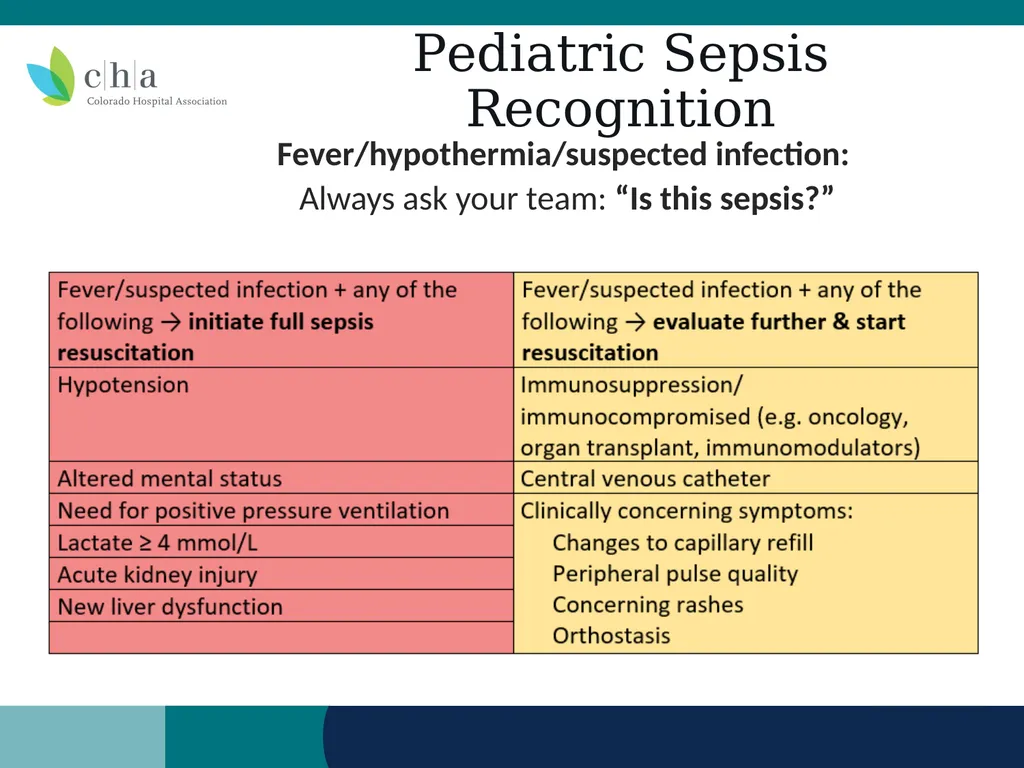
Pediatric Sepsis Recognition Fever/hypothermia/suspected infection:
Always ask your team: “Is this sepsis?”<br>
05
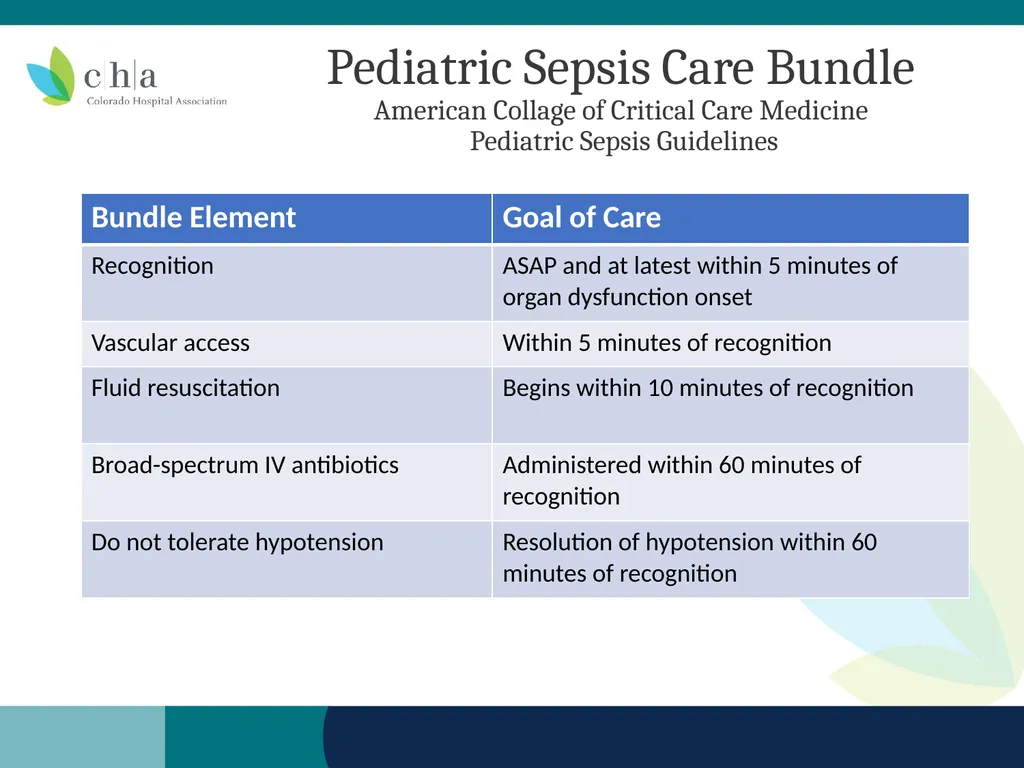
Pediatric Sepsis Care Bundle�American Collage of Critical Care Medicine� Pediatric Sepsis Guidelines<br>
06
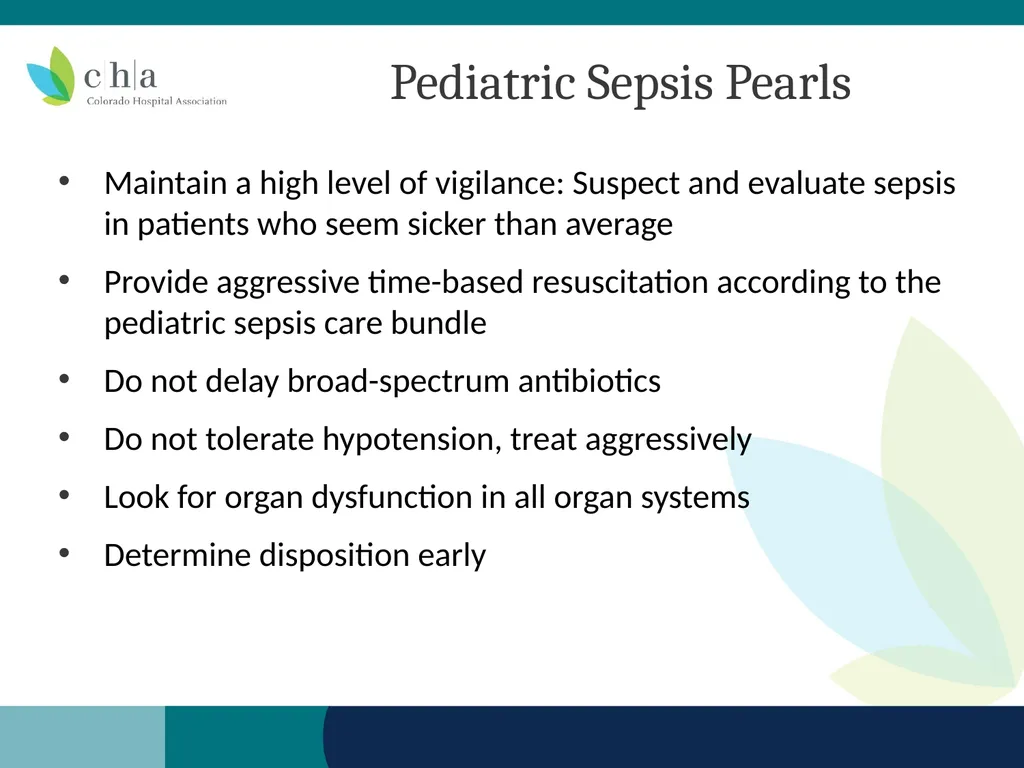
Pediatric Sepsis Pearls Maintain a high level of vigilance: Suspect and evaluate sepsis in patients who seem sicker than average
Provide aggressive time-based resuscitation according to the pediatric sepsis care bundle
Do not delay broad-spectrum antibiotics
Do not tolerate hypotension, treat aggressively
Look for organ dysfunction in all organ systems
Determine disposition early<br>
08
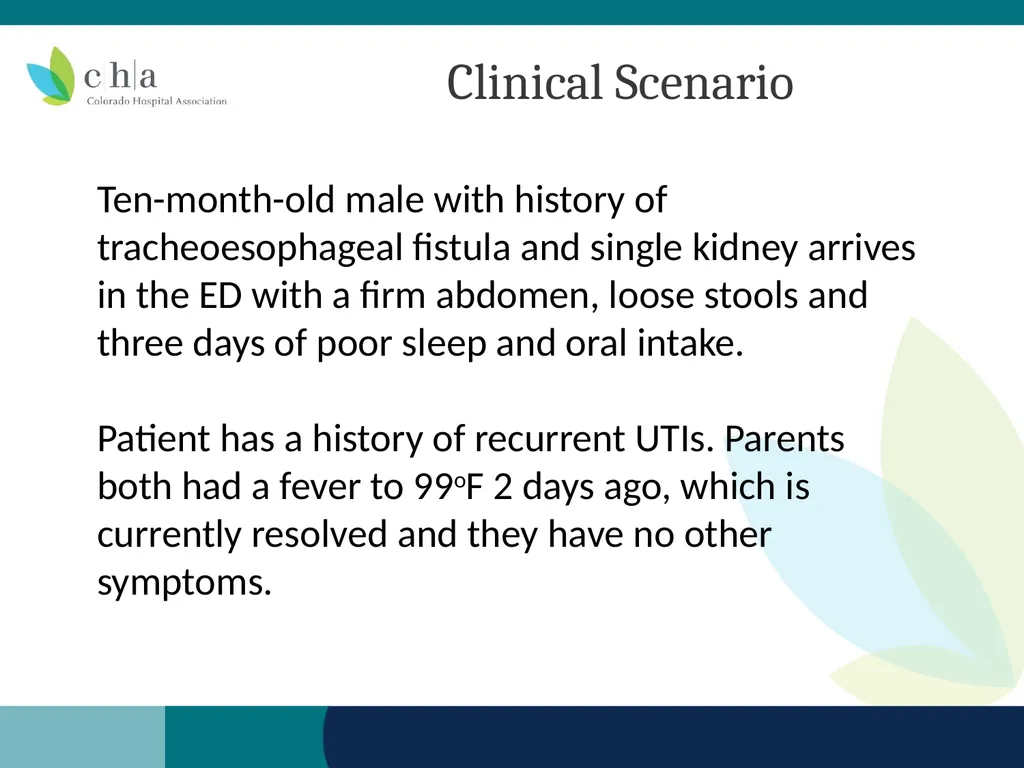
Clinical Scenario Ten-month-old male with history of tracheoesophageal fistula and single kidney arrives in the ED with a firm abdomen, loose stools and three days of poor sleep and oral intake.
Patient has a history of recurrent UTIs. Parents both had a fever to 99oF 2 days ago, which is currently resolved and they have no other symptoms.<br>
09
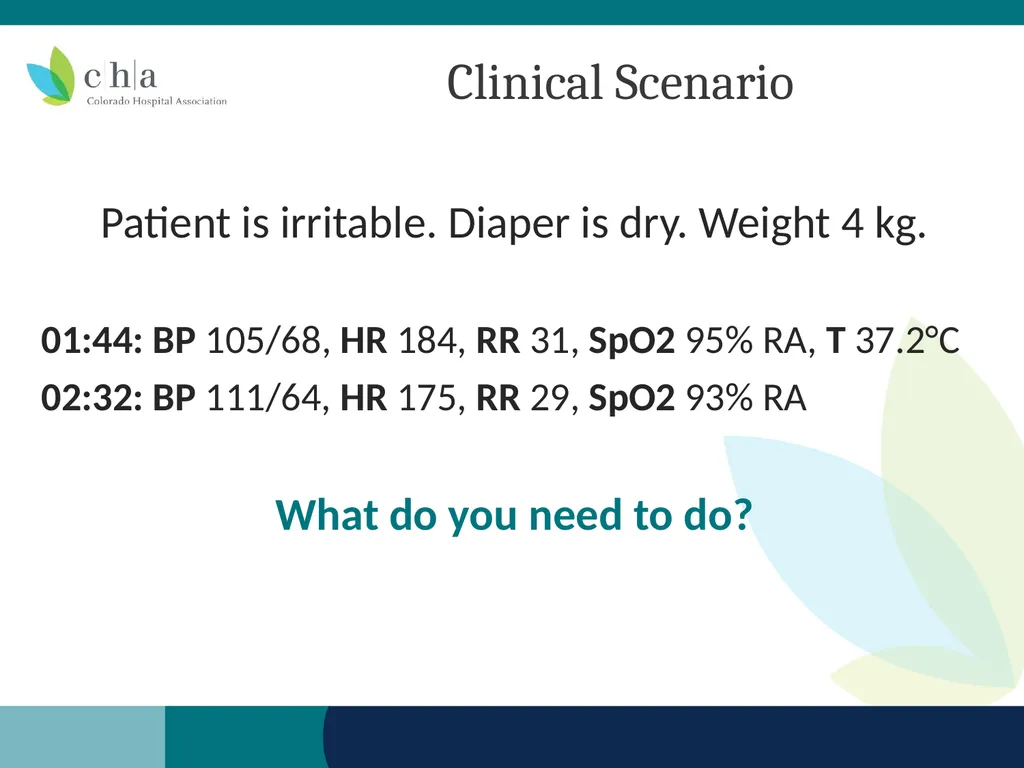
Clinical Scenario Patient is irritable. Diaper is dry. Weight 4 kg.
01:44: BP 105/68, HR 184, RR 31, SpO2 95% RA, T 37.2°C
02:32: BP 111/64, HR 175, RR 29, SpO2 93% RA
What do you need to do?<br>
10
Urine dip positive for leukocyte esterase; sample sent for culture Labs Drawn in ED<br>
11
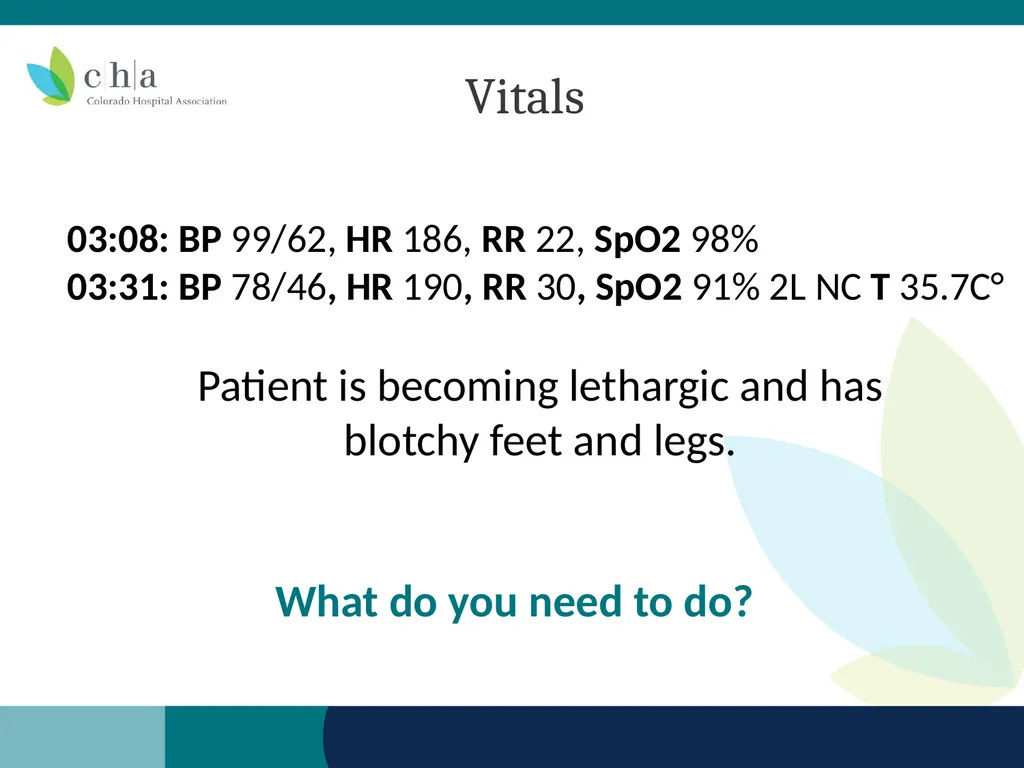
Vitals 03:08: BP 99/62, HR 186, RR 22, SpO2 98%
03:31: BP 78/46, HR 190, RR 30, SpO2 91% 2L NC T 35.7C°
Patient is becoming lethargic and has
blotchy feet and legs. What do you need to do?<br>
12
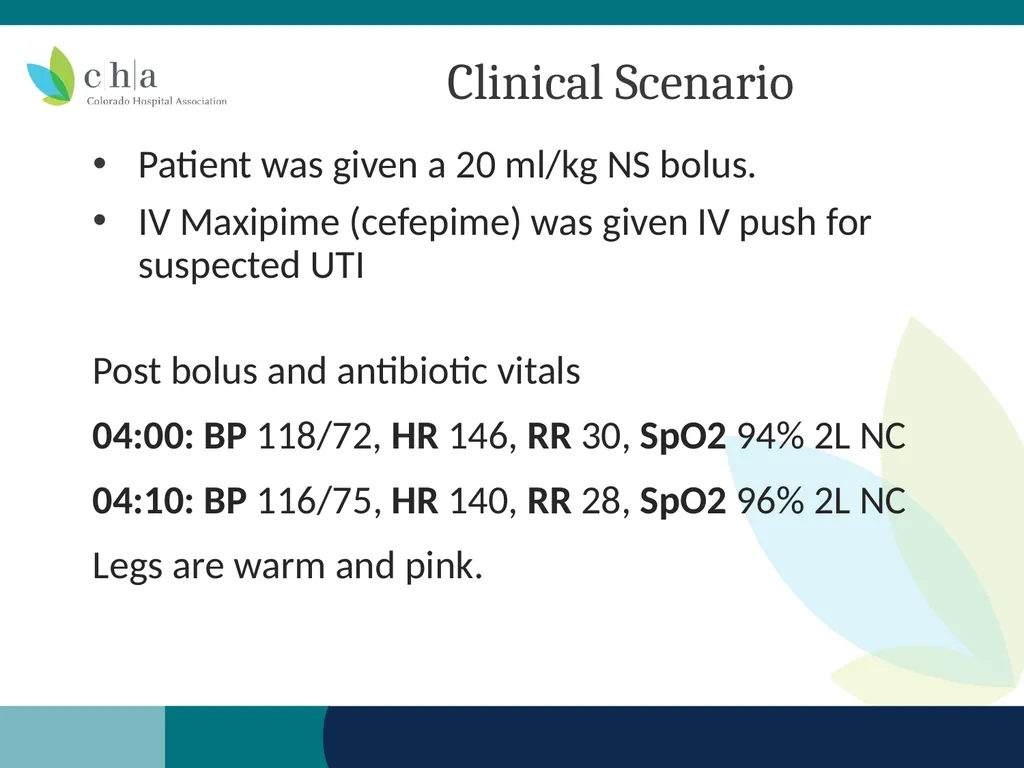
Clinical Scenario Patient was given a 20 ml/kg NS bolus.
IV Maxipime (cefepime) was given IV push for suspected UTI
Post bolus and antibiotic vitals
04:00: BP 118/72, HR 146, RR 30, SpO2 94% 2L NC
04:10: BP 116/75, HR 140, RR 28, SpO2 96% 2L NC
Legs are warm and pink.<br>
13
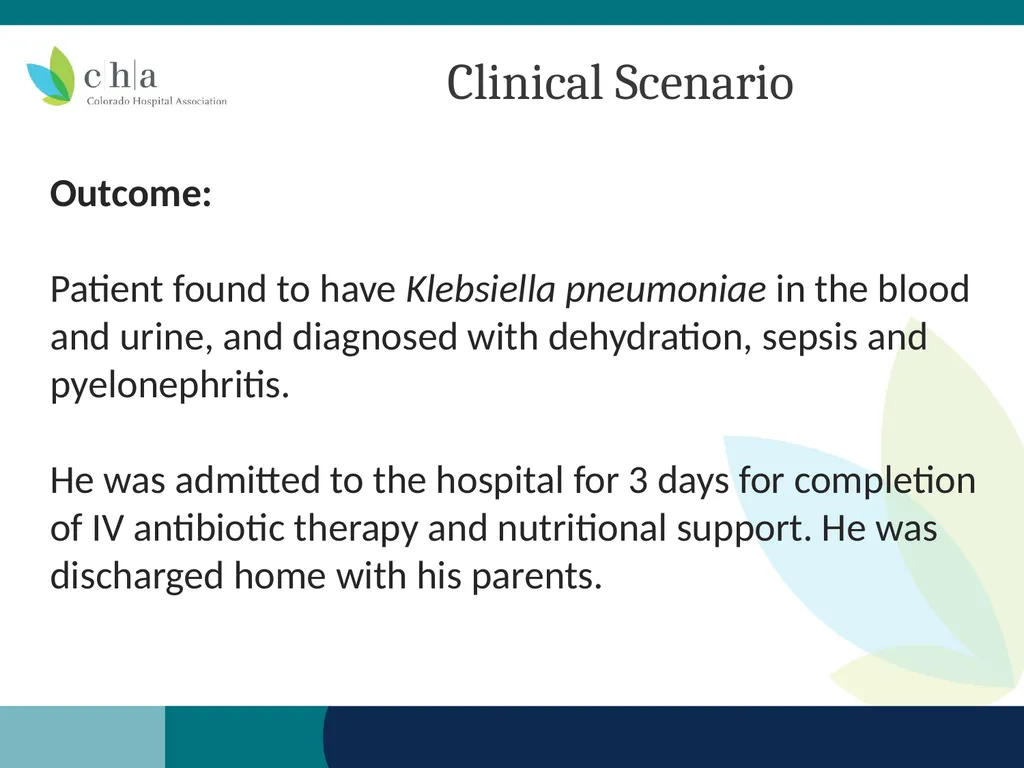
Clinical Scenario Outcome:
Patient found to have Klebsiella pneumoniae in the blood and urine, and diagnosed with dehydration, sepsis and pyelonephritis.
He was admitted to the hospital for 3 days for completion of IV antibiotic therapy and nutritional support. He was discharged home with his parents.<br>
14
What needs to be done to prepare for transfer to a higher level of care?<br>
15
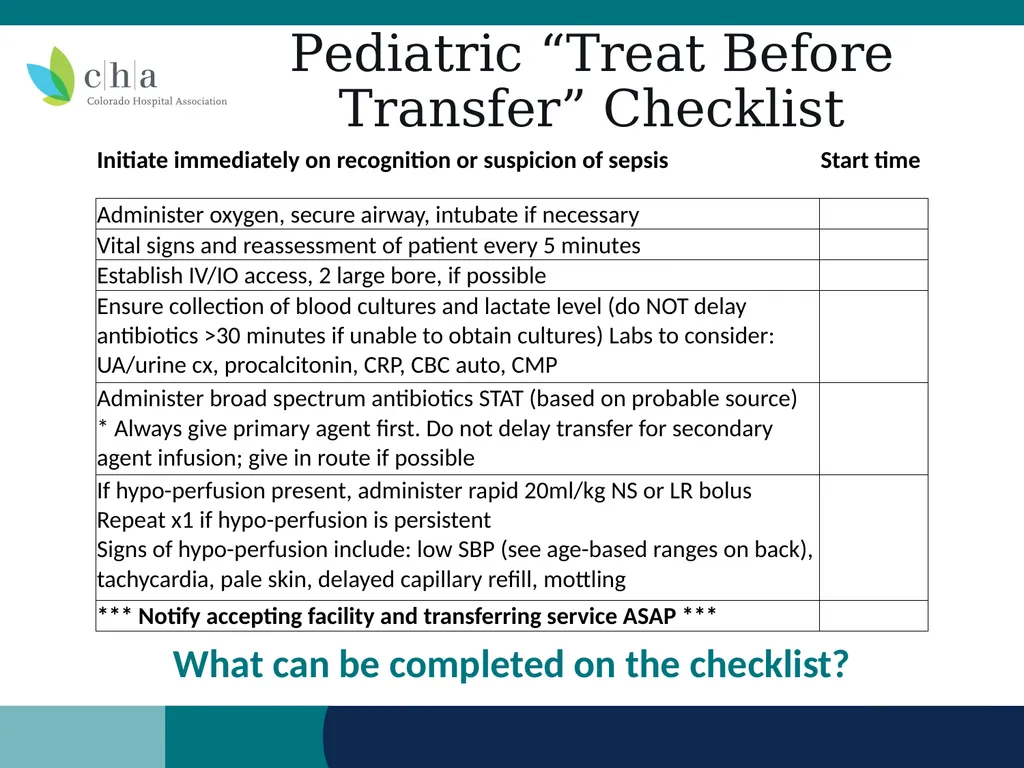
Pediatric “Treat Before Transfer” Checklist What can be completed on the checklist?<br>
16
Questions and Discussion<br>
17
References ACLS-Algorithms (2018). Pediatric Advanced Life Support Review Septic Shock [website]. Retrieved from https://acls-algorithms.com/pediatric-advanced-life-support/pediatric-shock-overview-part-1/septic-shock/
Biban, P., Gaffuri, M., Spaggiari, S., Zaglia, F., Serra, A., & Santuz, P. (2012). Early recognition and management of septic shock in children. Pediatric reports, 4(1), e13. doi:10.4081/pr.2012.e13
Cardiovascular Physiology and Shock. (2018). In Waldhausen, J., Powell, D., & Hirschl, R. (Eds.), Pediatric Surgery NaT. Available from https://www.pedsurglibrary.com/apsa/view/Pediatric-Surgery-NaT/829023/all/Cardiovascular_Physiology_and_Shock
Chiarello P1, M. M. (2016, DEC). US National Library of Medicine. Retrieved from Pubmed.org: https://www.ncbi.nlm.nih.gov/pubmed/22075805
Davis AL, Carcillo JA, Aneja RK, Deymann AJ, Lin JC, Nguyen TC, et al. American College of Critical Care Medicine Clinical Practice Parameters for Hemodynamic Support of Pediatric and Neonatal Septic Shock. Critical care medicine. 2017;45(6):1061-1093
Giuliano Jr, J (Interviewer), Polikoff, L and Weiss, S (Interviewees). (2017). Management of Sepsis in the PICU: Biomarker-Based Approaches [Interview video]. Retrieved from Medscape website: http://www.Medscape.org/viewarticle/876833<br>
18
References Guzman-Cottrill, J., Cheesebrough, B., Nadel, S., Goldstein, B. The Systemic Inflammatory Response syndrome (SIRS), Sepsis, and Septic Shock. Retrieved on August 31, 2018 from https://www.macpeds.com/documents/13LongChap11-septicshock.pdf
Hirasawa, H., Oda, S., & Nakamura, M. (2009). Blood glucose control in patients with severe sepsis and septic shock. World journal of gastroenterology, 15(33), 4132–4136. doi:10.3748/wjg.15.4132
Hackethal, Veronica, MD. (July 2018). Sepsis Survival Higher in Kids with Quick Bundle Completion. Medscape. Retrieved from www.Medscape.com/viewarticle/899743
Jat, K. R., Jhamb, U., & Gupta, V. K. (2011). Serum lactate levels as the predictor of outcome in pediatric septic shock. Indian journal of critical care medicine : peer-reviewed, official publication of Indian Society of Critical Care Medicine, 15(2), 102–107. doi:10.4103/0972-5229.83017
Stoney Brook. (2006, OCT 20). Site Collection Documents. Retrieved from Surviving Sepsis: http://www.survivingsepsis.org/SiteCollectionDocuments/Protocols-Pediatric-ICU-Screening-Tool.pdf From Stoney Brook
University of California San Francisco Benioff Children's Hospital. (2011, February 10). Tests. Retrieved from C-Reactive Protein: https://www.ucsfbenioffchildrens.org/tests/003356.html<br>