Performance Terms AP Music Theory Mr. Silvagni Italian heritage Most terms in music come from Italian, though there are a few in French and German An exhaustive list of musical terms:
"Performance Terms AP Music Theory Mr. Silvagni" is the property of its rightful owner. Permission is granted to
download and print the materials on this website for personal, non-commercial use only, and to display it
on your personal computer provided you do not modify the materials and that you retain all copyright
notices contained in the materials. By downloading content from our website, you accept the terms of this
agreement.
Presentation Transcript
01
Performance Terms AP Music Theory
Mr. Silvagni<br>
02
Italian heritage Most terms in music come from Italian, though there are a few in French and German
An exhaustive list of musical terms:
https://en.wikipedia.org/wiki/List_of_Italian_musical_terms_used_in_English<br>
03
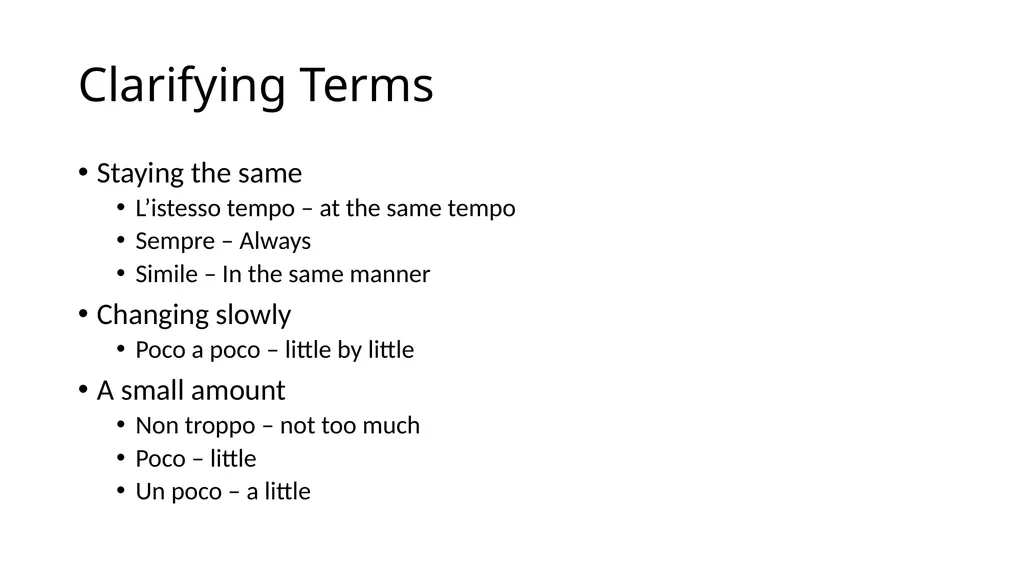
Clarifying Terms Staying the same
L’istesso tempo – at the same tempo
Sempre – Always
Simile – In the same manner
Changing slowly
Poco a poco – little by little
A small amount
Non troppo – not too much
Poco – little
Un poco – a little<br>
04
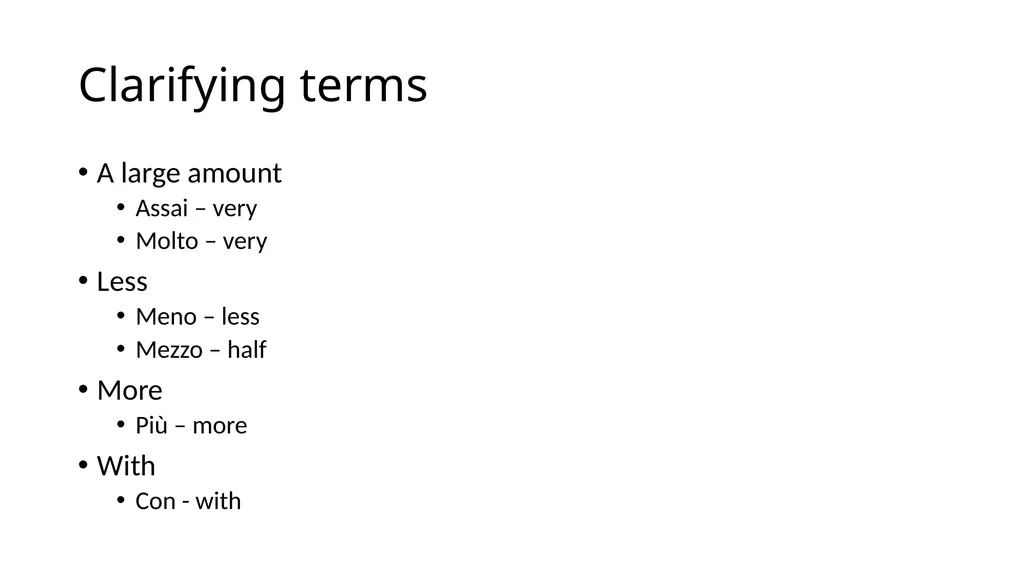
Clarifying terms A large amount
Assai – very
Molto – very
Less
Meno – less
Mezzo – half
More
Più – more
With
Con - with<br>
05
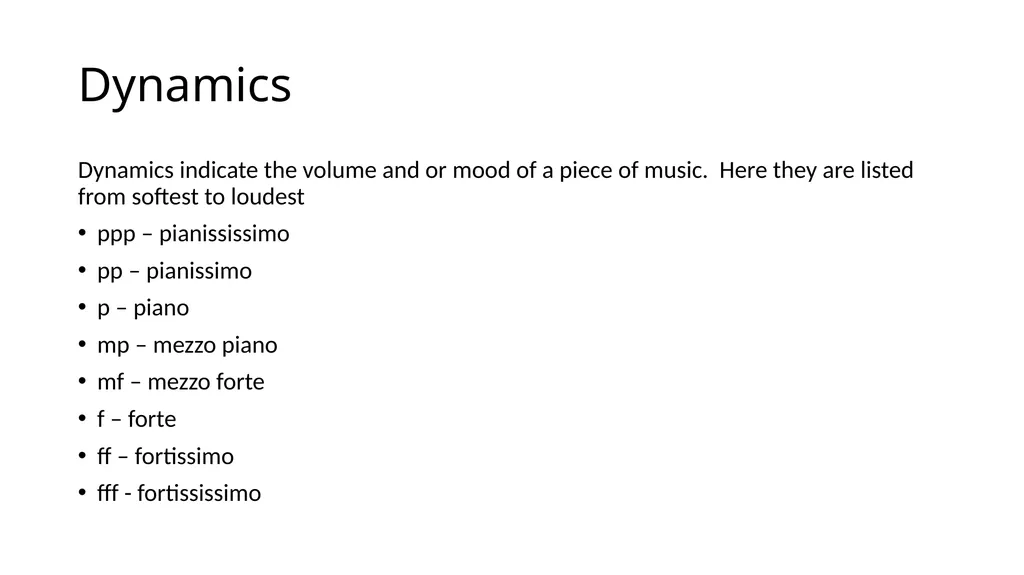
Dynamics Dynamics indicate the volume and or mood of a piece of music. Here they are listed from softest to loudest
ppp – pianississimo
pp – pianissimo
p – piano
mp – mezzo piano
mf – mezzo forte
f – forte
ff – fortissimo
fff - fortississimo<br>
06
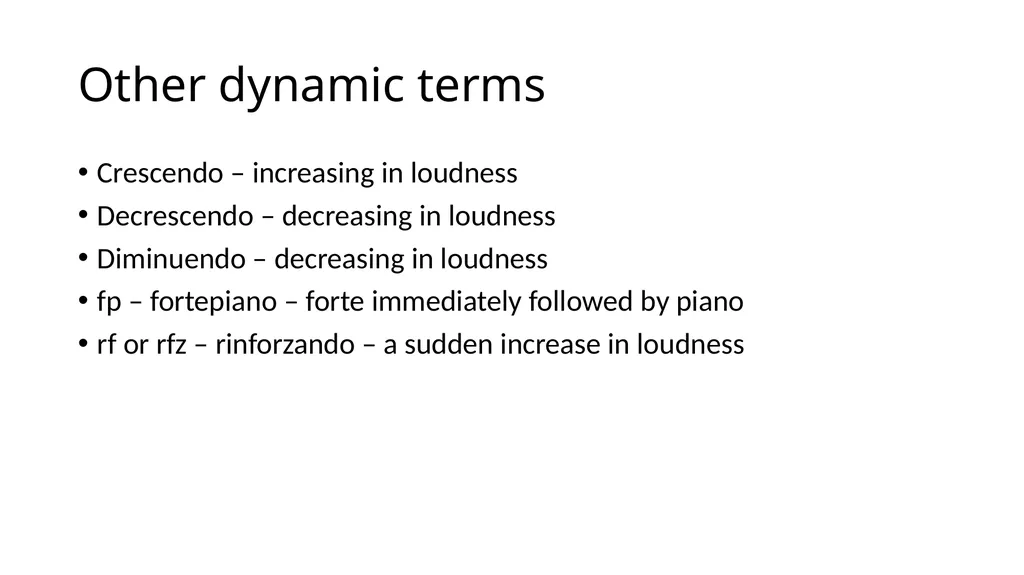
Other dynamic terms Crescendo – increasing in loudness
Decrescendo – decreasing in loudness
Diminuendo – decreasing in loudness
fp – fortepiano – forte immediately followed by piano
rf or rfz – rinforzando – a sudden increase in loudness<br>
07
Tempo Tempo refers to the speed of music
Initial markings are in Italian and may be followed by a metronome marking, e.g. M.M. = 120 (Maelzel Metronome), referring to beats per minute
The metronome marking will also refer to which note is played at the listed speed, e.g. quarter note = 120<br>
08
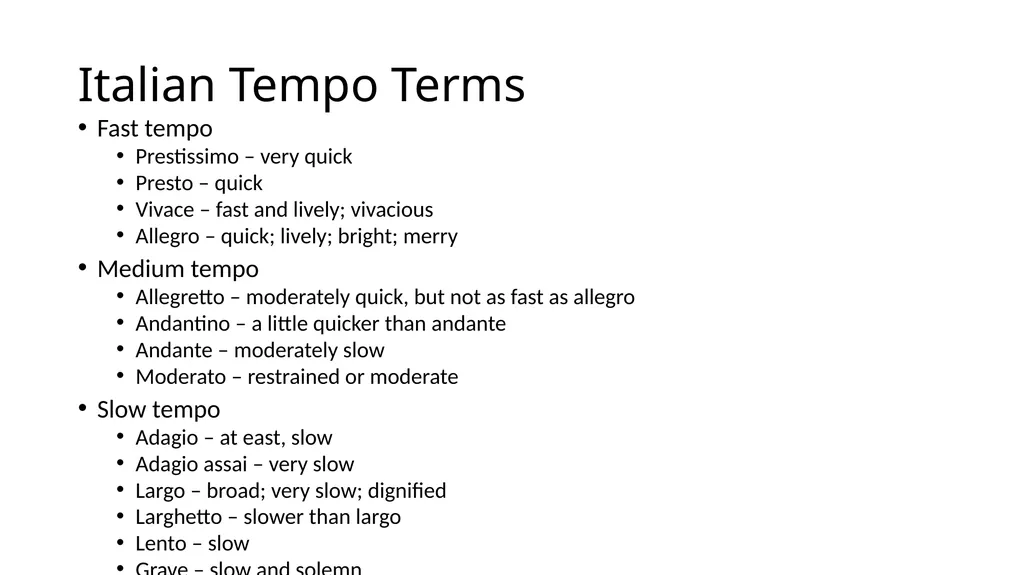
Italian Tempo Terms Fast tempo
Prestissimo – very quick
Presto – quick
Vivace – fast and lively; vivacious
Allegro – quick; lively; bright; merry
Medium tempo
Allegretto – moderately quick, but not as fast as allegro
Andantino – a little quicker than andante
Andante – moderately slow
Moderato – restrained or moderate
Slow tempo
Adagio – at east, slow
Adagio assai – very slow
Largo – broad; very slow; dignified
Larghetto – slower than largo
Lento – slow
Grave – slow and solemn<br>
09
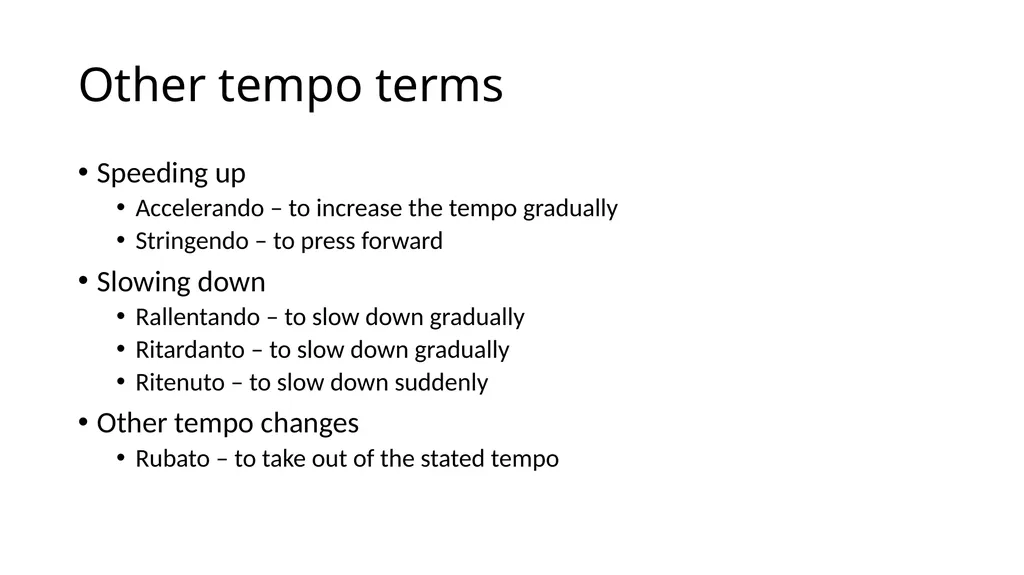
Other tempo terms Speeding up
Accelerando – to increase the tempo gradually
Stringendo – to press forward
Slowing down
Rallentando – to slow down gradually
Ritardanto – to slow down gradually
Ritenuto – to slow down suddenly
Other tempo changes
Rubato – to take out of the stated tempo<br>
10
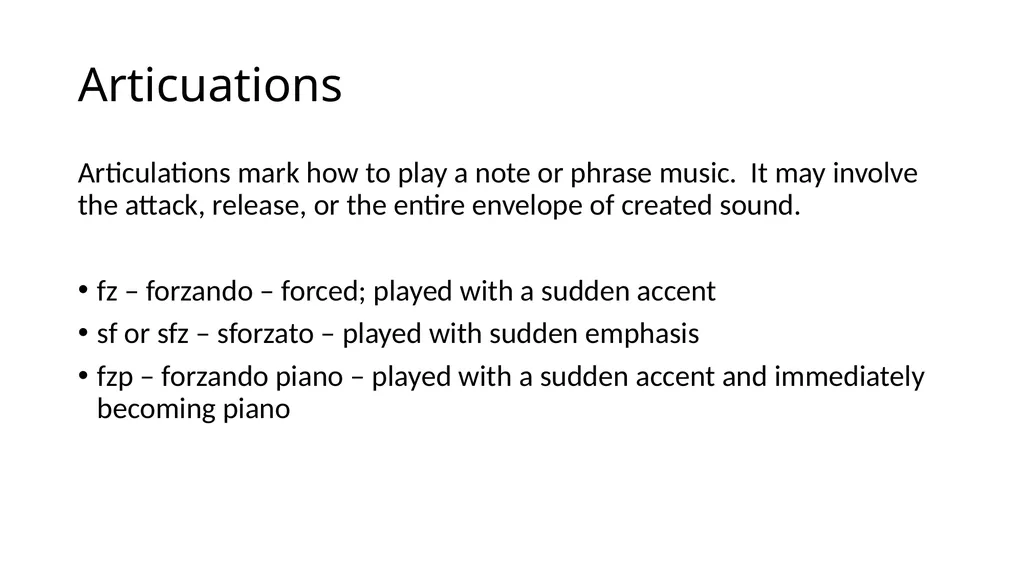
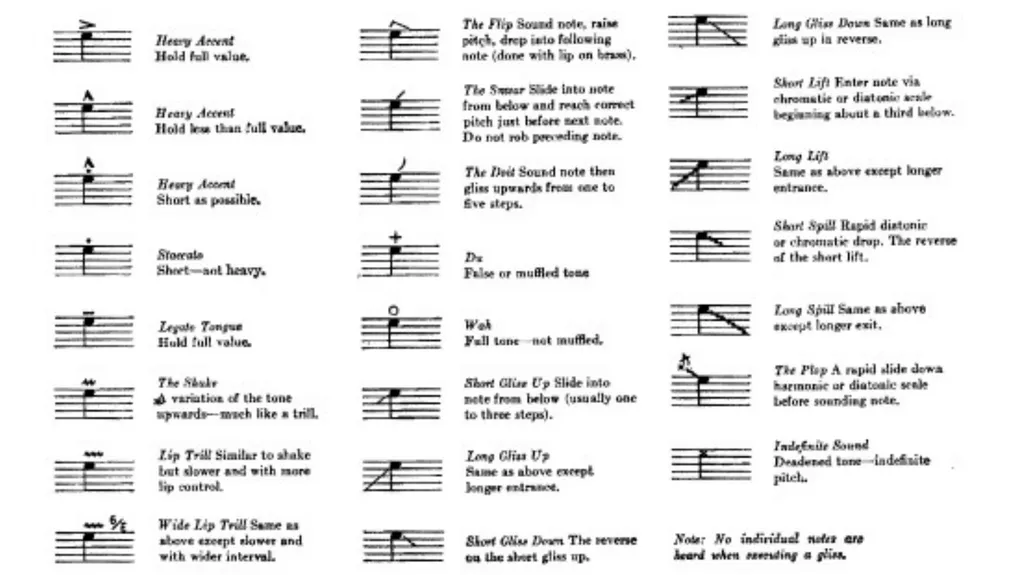
Articuations Articulations mark how to play a note or phrase music. It may involve the attack, release, or the entire envelope of created sound.
fz – forzando – forced; played with a sudden accent
sf or sfz – sforzato – played with sudden emphasis
fzp – forzando piano – played with a sudden accent and immediately becoming piano<br>
11
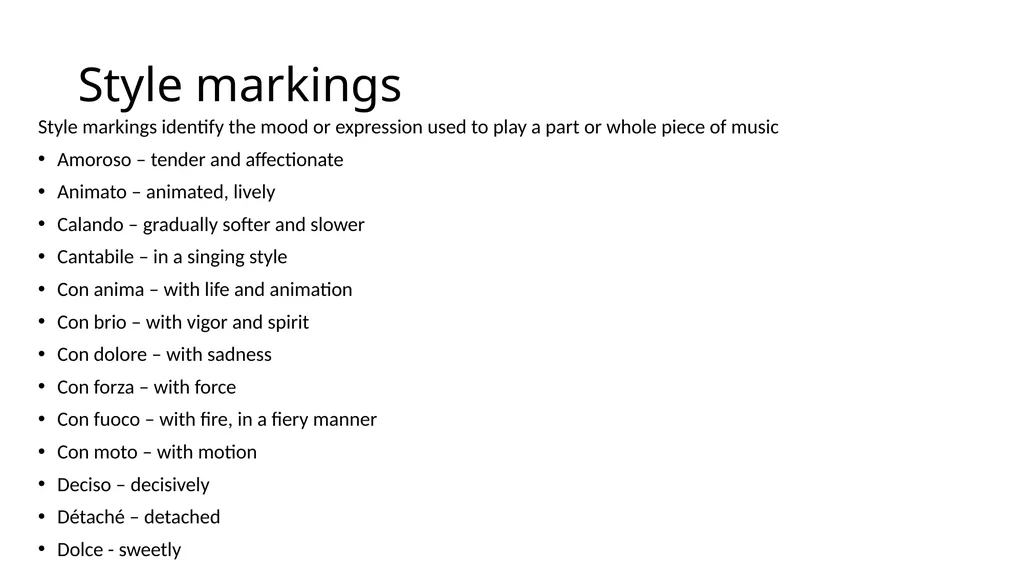
Style markings Style markings identify the mood or expression used to play a part or whole piece of music
Amoroso – tender and affectionate
Animato – animated, lively
Calando – gradually softer and slower
Cantabile – in a singing style
Con anima – with life and animation
Con brio – with vigor and spirit
Con dolore – with sadness
Con forza – with force
Con fuoco – with fire, in a fiery manner
Con moto – with motion
Deciso – decisively
Détaché – detached
Dolce - sweetly<br>
12
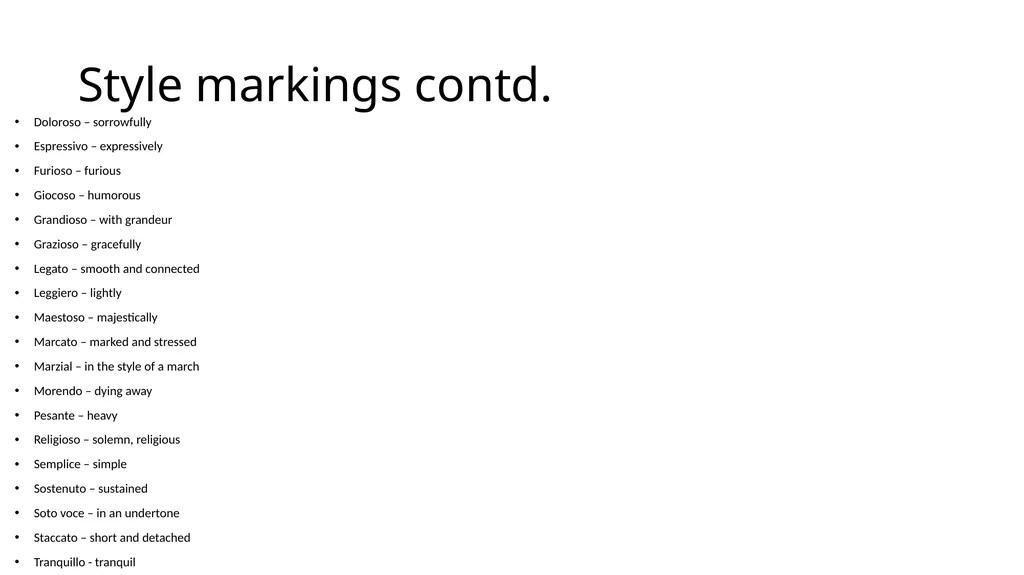
Style markings contd. Doloroso – sorrowfully
Espressivo – expressively
Furioso – furious
Giocoso – humorous
Grandioso – with grandeur
Grazioso – gracefully
Legato – smooth and connected
Leggiero – lightly
Maestoso – majestically
Marcato – marked and stressed
Marzial – in the style of a march
Morendo – dying away
Pesante – heavy
Religioso – solemn, religious
Semplice – simple
Sostenuto – sustained
Soto voce – in an undertone
Staccato – short and detached
Tranquillo - tranquil<br>
13
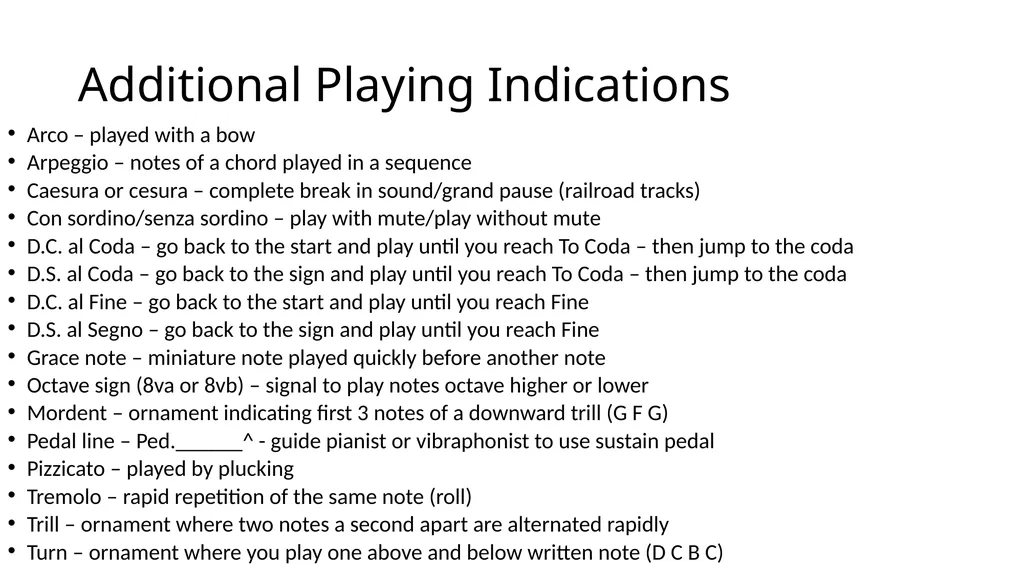
Additional Playing Indications Arco – played with a bow
Arpeggio – notes of a chord played in a sequence
Caesura or cesura – complete break in sound/grand pause (railroad tracks)
Con sordino/senza sordino – play with mute/play without mute
D.C. al Coda – go back to the start and play until you reach To Coda – then jump to the coda
D.S. al Coda – go back to the sign and play until you reach To Coda – then jump to the coda
D.C. al Fine – go back to the start and play until you reach Fine
D.S. al Segno – go back to the sign and play until you reach Fine
Grace note – miniature note played quickly before another note
Octave sign (8va or 8vb) – signal to play notes octave higher or lower
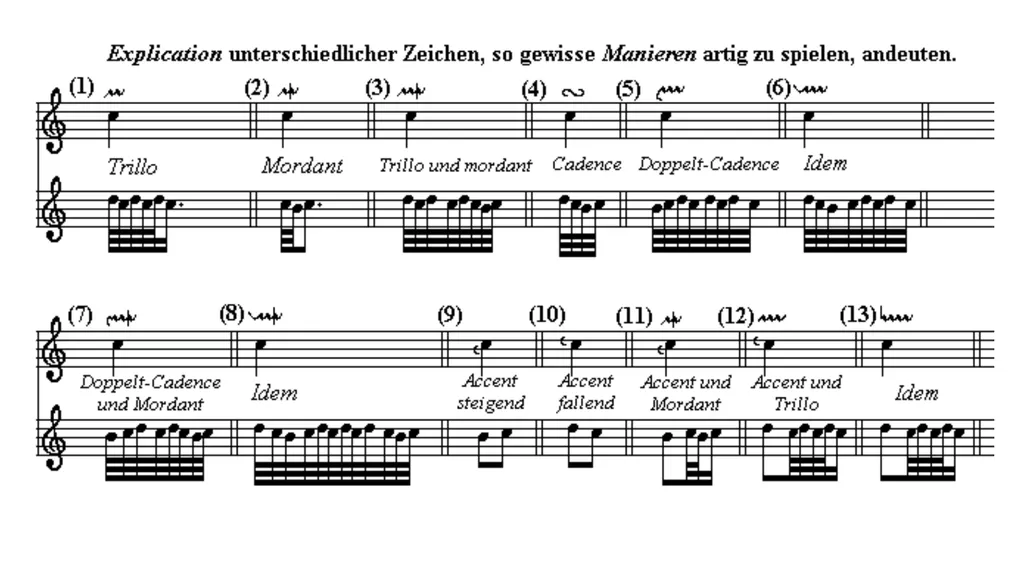
Mordent – ornament indicating first 3 notes of a downward trill (G F G)
Pedal line – Ped.______^ - guide pianist or vibraphonist to use sustain pedal
Pizzicato – played by plucking
Tremolo – rapid repetition of the same note (roll)
Trill – ornament where two notes a second apart are alternated rapidly
Turn – ornament where you play one above and below written note (D C B C)<br>
14
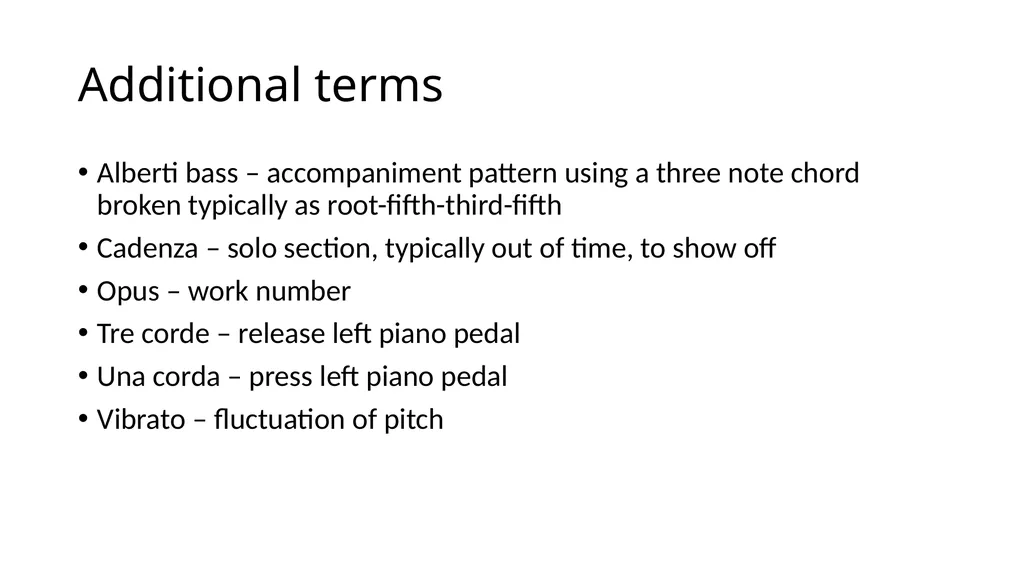
Additional terms Alberti bass – accompaniment pattern using a three note chord broken typically as root-fifth-third-fifth
Cadenza – solo section, typically out of time, to show off
Opus – work number
Tre corde – release left piano pedal
Una corda – press left piano pedal
Vibrato – fluctuation of pitch<br>