
Personal Finance SIXTH EDITION Chapter 2 Planning
Description: Personal Finance SIXTH EDITION Chapter 2 Planning with Personal Financial Statements Chapter Objectives 2.1 Explain how to create your personal cash flow statement 2.2 Identify the factors that affect your cash flows 2.3 Forecast your cash
Related Topics
Download Presentation
"Personal Finance SIXTH EDITION Chapter 2 Planning" is the property of its rightful owner. Permission is granted to download and print the materials on this website for personal, non-commercial use only, and to display it on your personal computer provided you do not modify the materials and that you retain all copyright notices contained in the materials. By downloading content from our website, you accept the terms of this agreement.
Presentation Transcript
slide1. Personal Finance SIXTH EDITION Chapter 2 Planning with Personal Financial Statements<br>
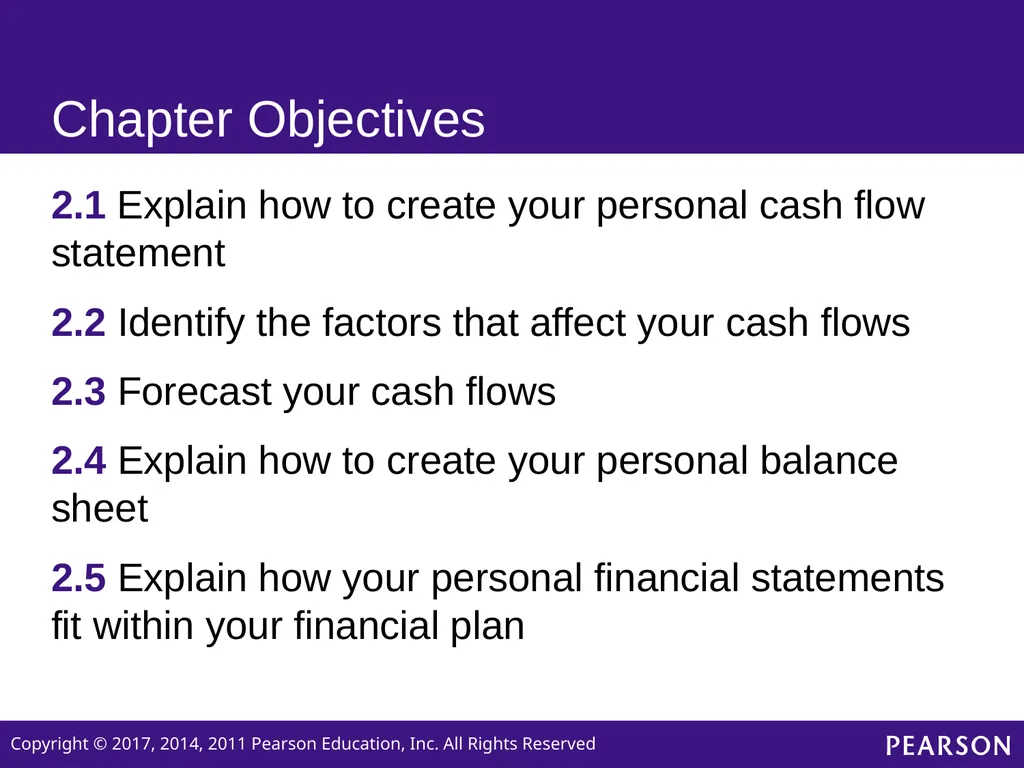
slide2. Chapter Objectives 2.1 Explain how to create your personal cash flow statement
2.2 Identify the factors that affect your cash flows
2.3 Forecast your cash flows
2.4 Explain how to create your personal balance sheet
2.5 Explain how your personal financial statements fit within your financial plan<br>
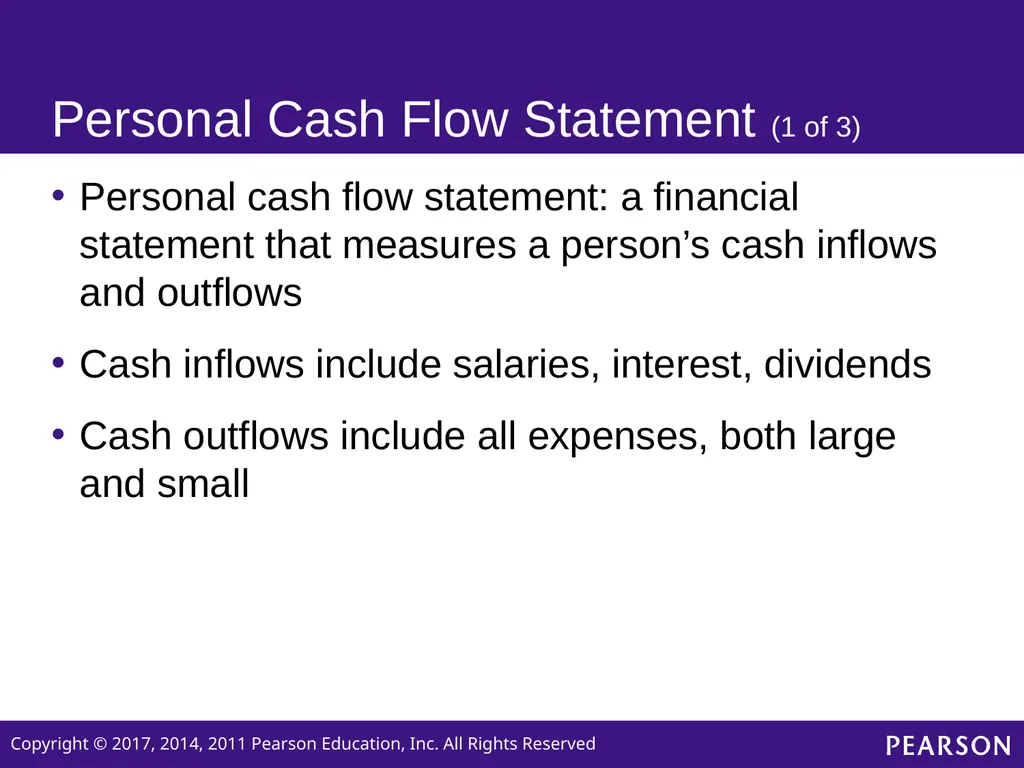
slide3. Personal Cash Flow Statement (1 of 3) Personal cash flow statement: a financial statement that measures a person’s cash inflows and outflows
Cash inflows include salaries, interest, dividends
Cash outflows include all expenses, both large and small<br>
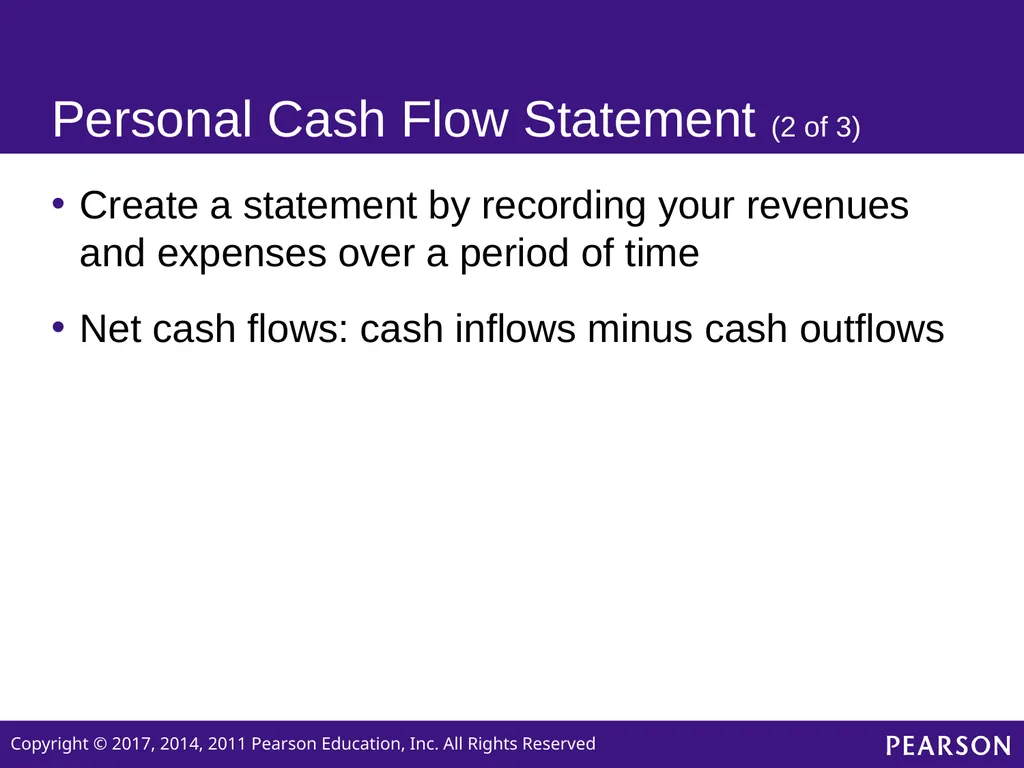
slide4. Personal Cash Flow Statement (2 of 3) Create a statement by recording your revenues and expenses over a period of time
Net cash flows: cash inflows minus cash outflows<br>
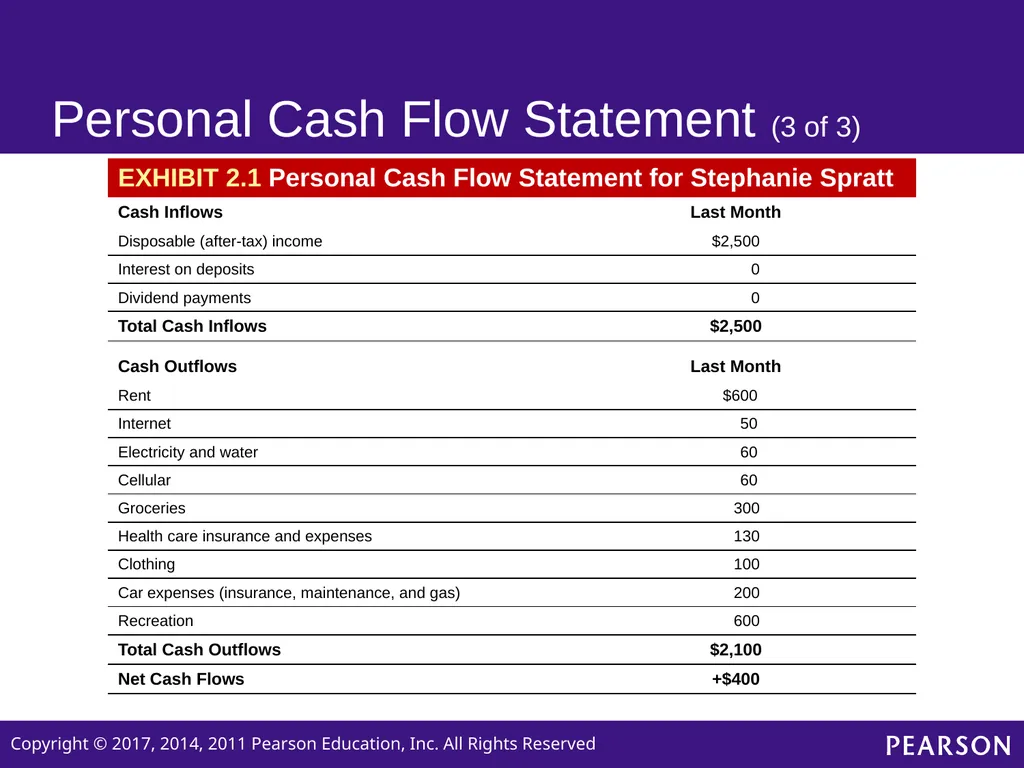
slide5. Personal Cash Flow Statement (3 of 3)<br>
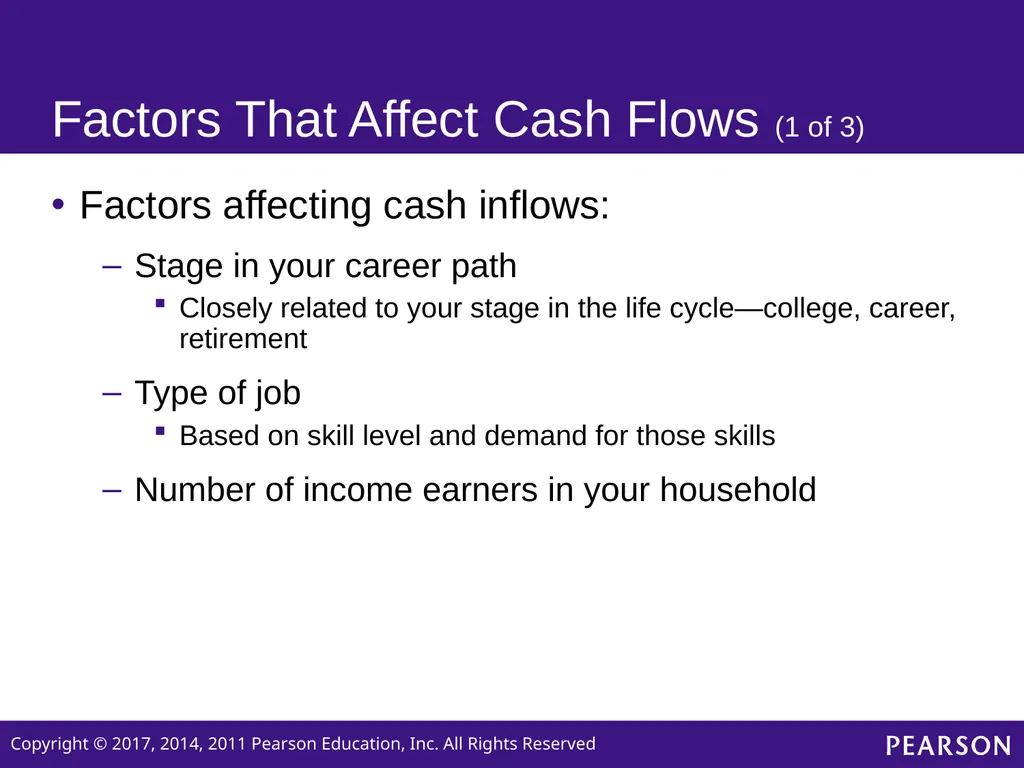
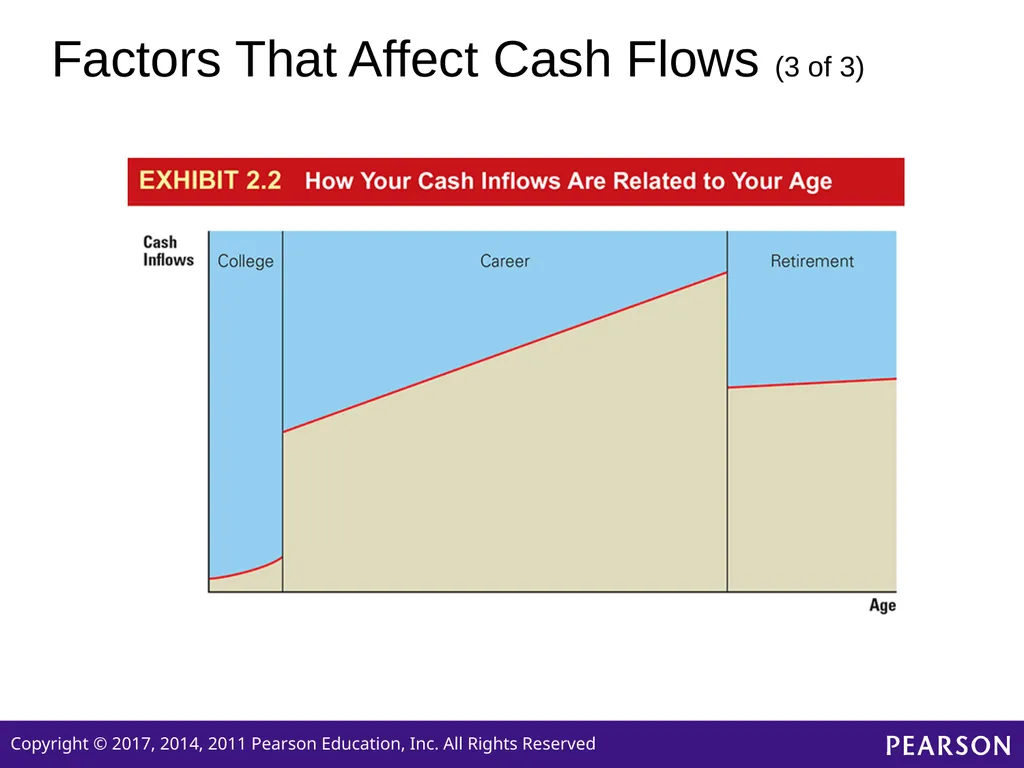
slide6. Factors That Affect Cash Flows (1 of 3) Factors affecting cash inflows:
Stage in your career path
Closely related to your stage in the life cycle—college, career, retirement
Type of job
Based on skill level and demand for those skills
Number of income earners in your household<br>
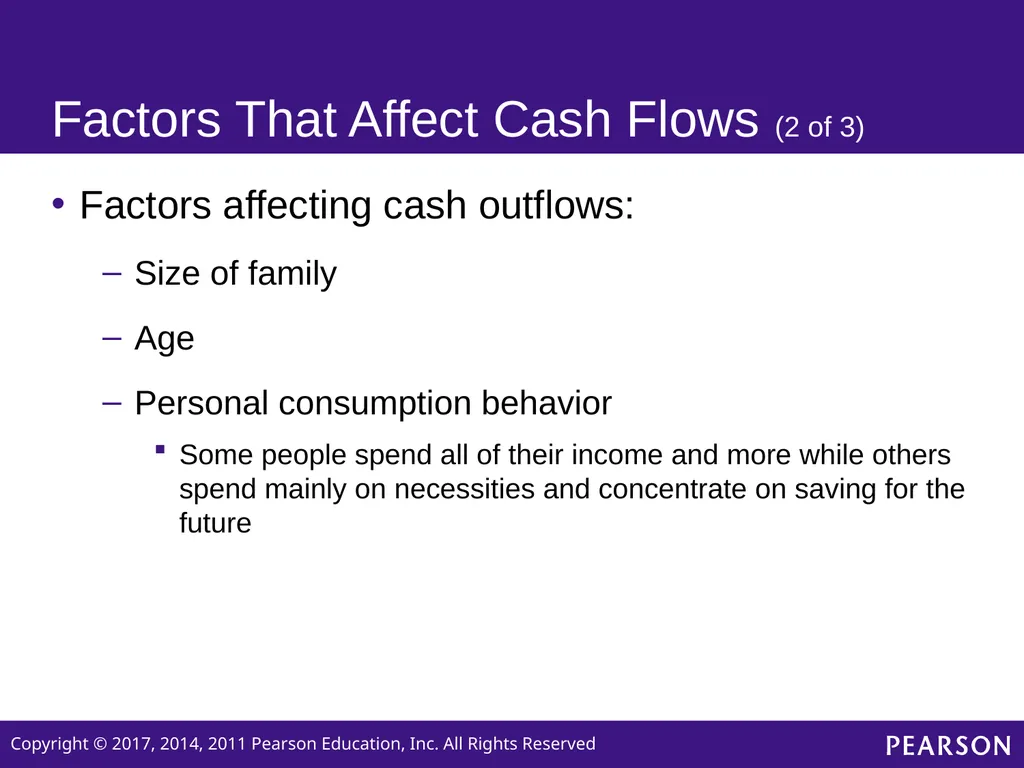
slide7. Factors That Affect Cash Flows (2 of 3) Factors affecting cash outflows:
Size of family
Age
Personal consumption behavior
Some people spend all of their income and more while others spend mainly on necessities and concentrate on saving for the future<br>
slide8. Factors That Affect Cash Flows (3 of 3)<br>
slide9. Creating a Budget (1 of 8) Budget: a cash flow statement that is based on forecasted cash flows for a future time period
Budgets are useful for anticipating either cash surpluses or cash deficiencies<br>
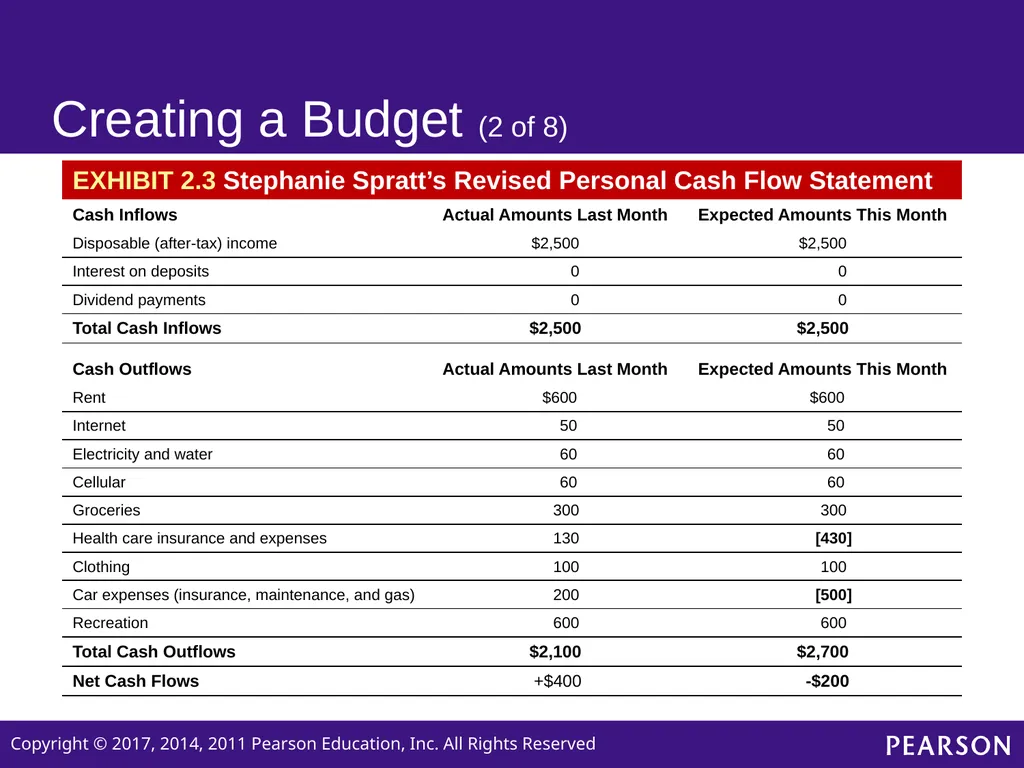
slide10. Creating a Budget (2 of 8)<br>
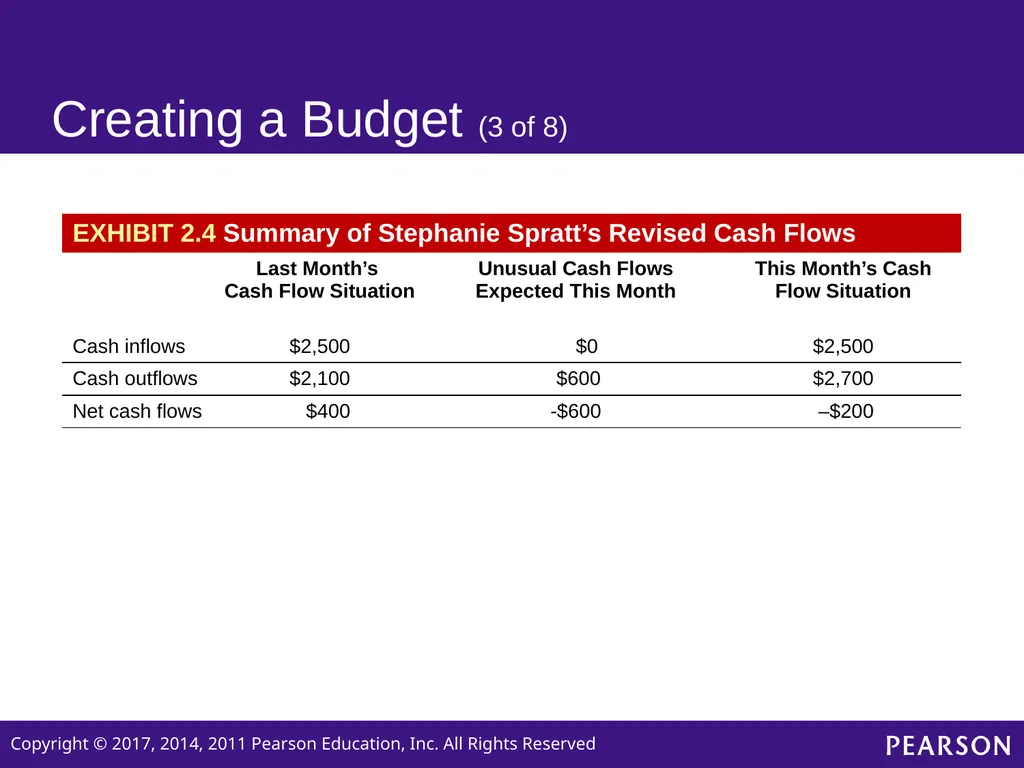
slide11. Creating a Budget (3 of 8)<br>
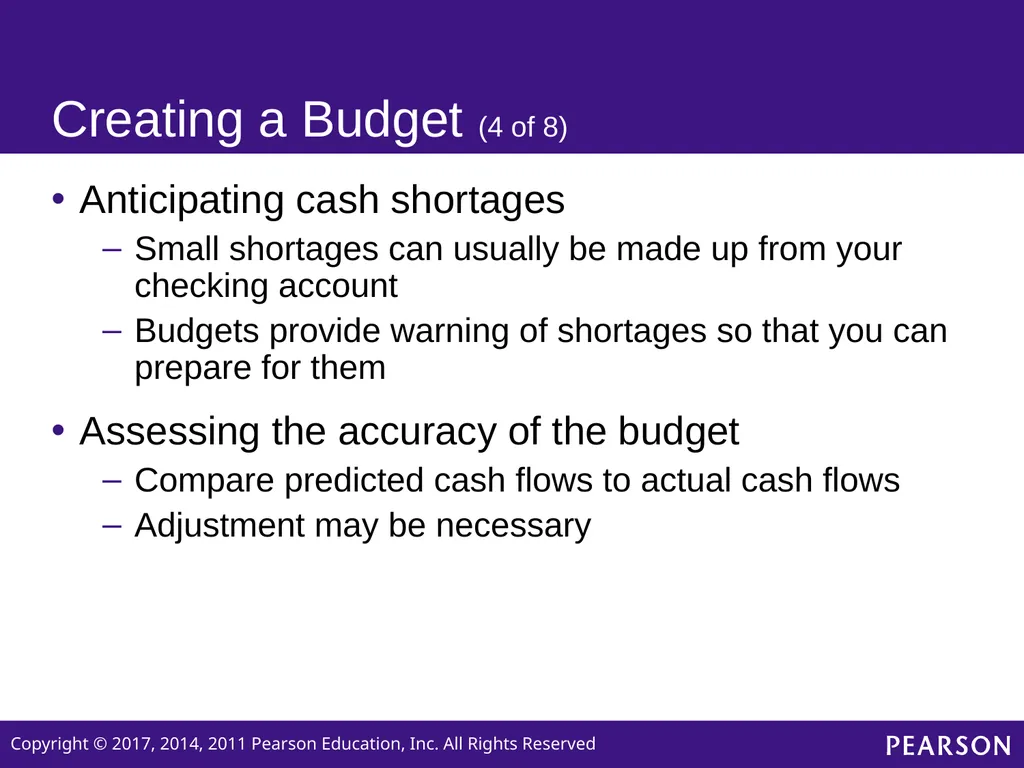
slide12. Creating a Budget (4 of 8) Anticipating cash shortages
Small shortages can usually be made up from your checking account
Budgets provide warning of shortages so that you can prepare for them
Assessing the accuracy of the budget
Compare predicted cash flows to actual cash flows
Adjustment may be necessary<br>
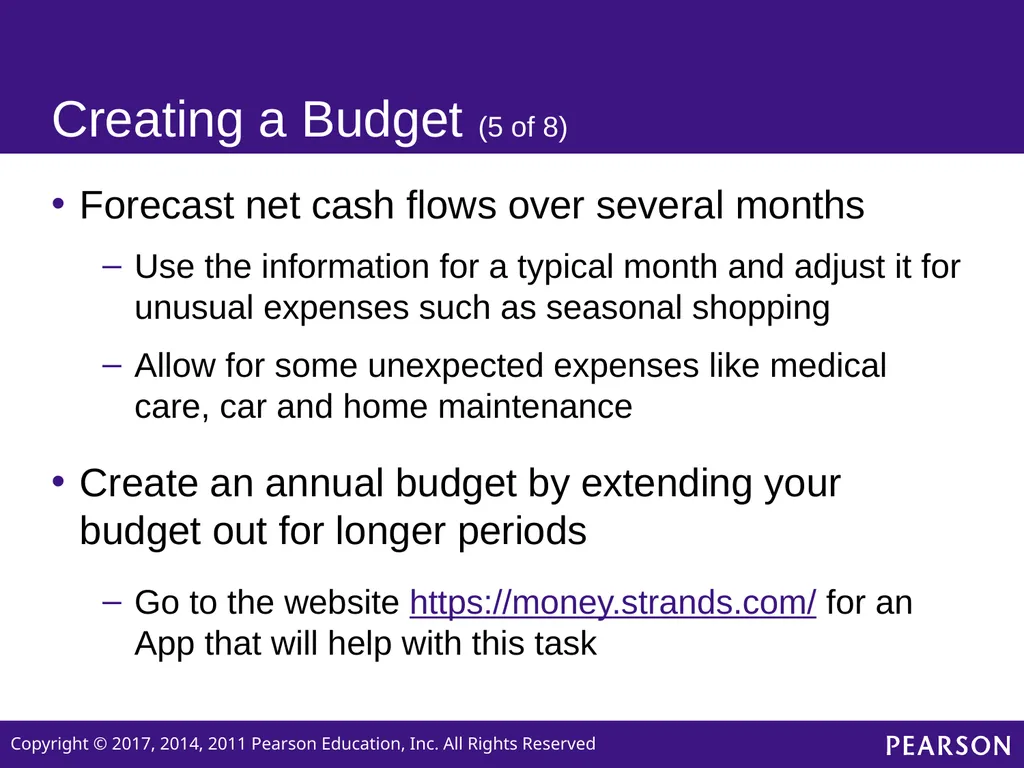
slide13. Creating a Budget (5 of 8) Forecast net cash flows over several months
Use the information for a typical month and adjust it for unusual expenses such as seasonal shopping
Allow for some unexpected expenses like medical care, car and home maintenance
Create an annual budget by extending your budget out for longer periods
Go to the website https://money.strands.com/ for an App that will help with this task<br>
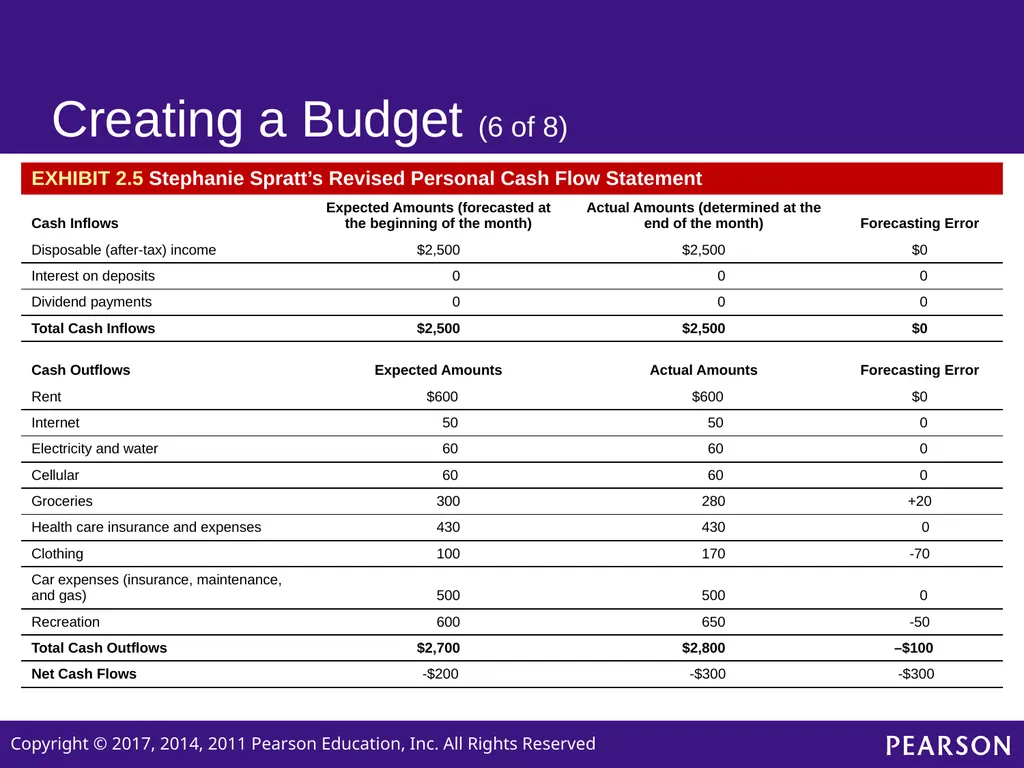
slide14. Creating a Budget (6 of 8)<br>
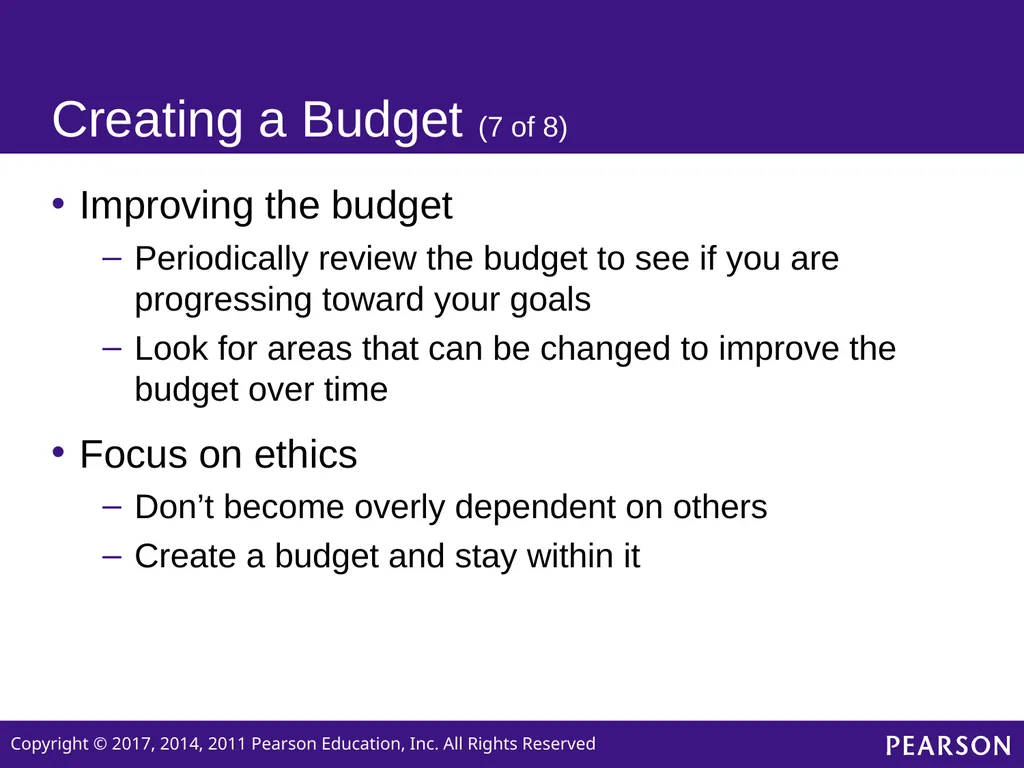
slide15. Creating a Budget (7 of 8) Improving the budget
Periodically review the budget to see if you are progressing toward your goals
Look for areas that can be changed to improve the budget over time
Focus on ethics
Don’t become overly dependent on others
Create a budget and stay within it<br>
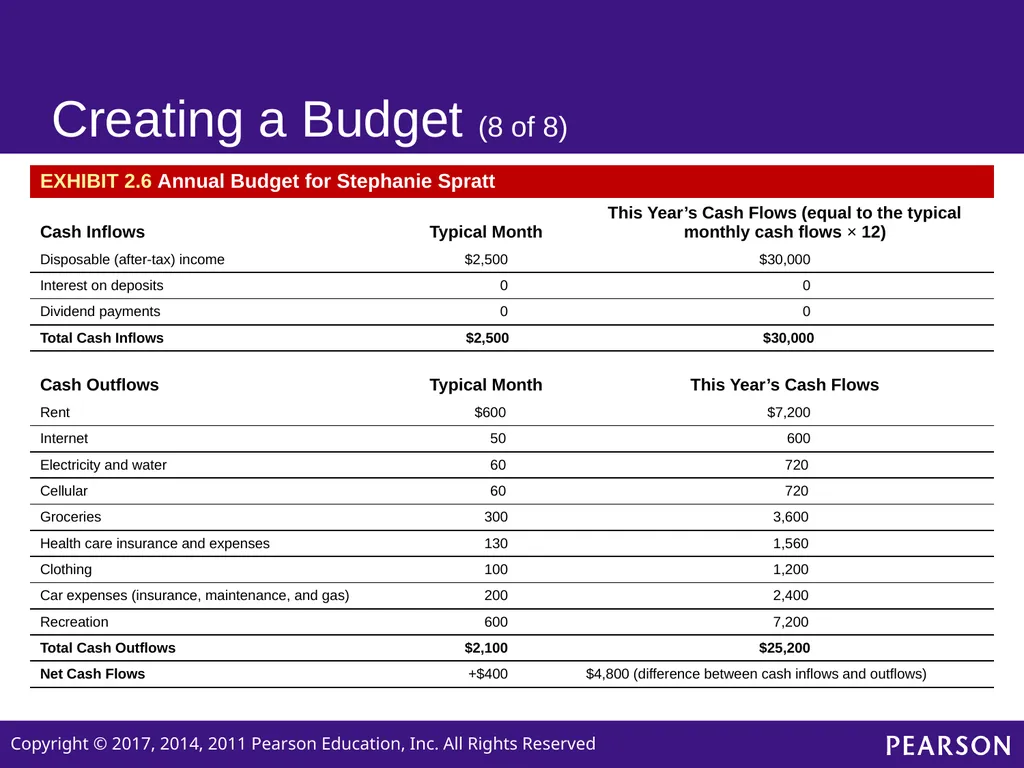
slide16. Creating a Budget (8 of 8)<br>
slide17. Financial Planning Online (1 of 2) Go to www.moneycrashers.com/five-steps-to-effective-budgeting
This Web site provides tips on effective budgeting based on your goals.
The Web site https://www.mint.com/ also contains a lot of budgeting information and other financial tools.<br>
slide18. Personal Balance Sheet (1 of 15) Personal balance sheet: a summary of your assets (what you own), your liabilities (what you owe), and your net worth (assets minus liabilities)
A balance sheet reflects your financial position at a specific point in time<br>
slide19. Financial Planning Online (2 of 2) Go to http://www.dailyfinance.com/
Search for Calculators
This Web site provides an estimate of the savings you can accumulate over time if you can reduce your spending on one or more of your monthly expenses.<br>
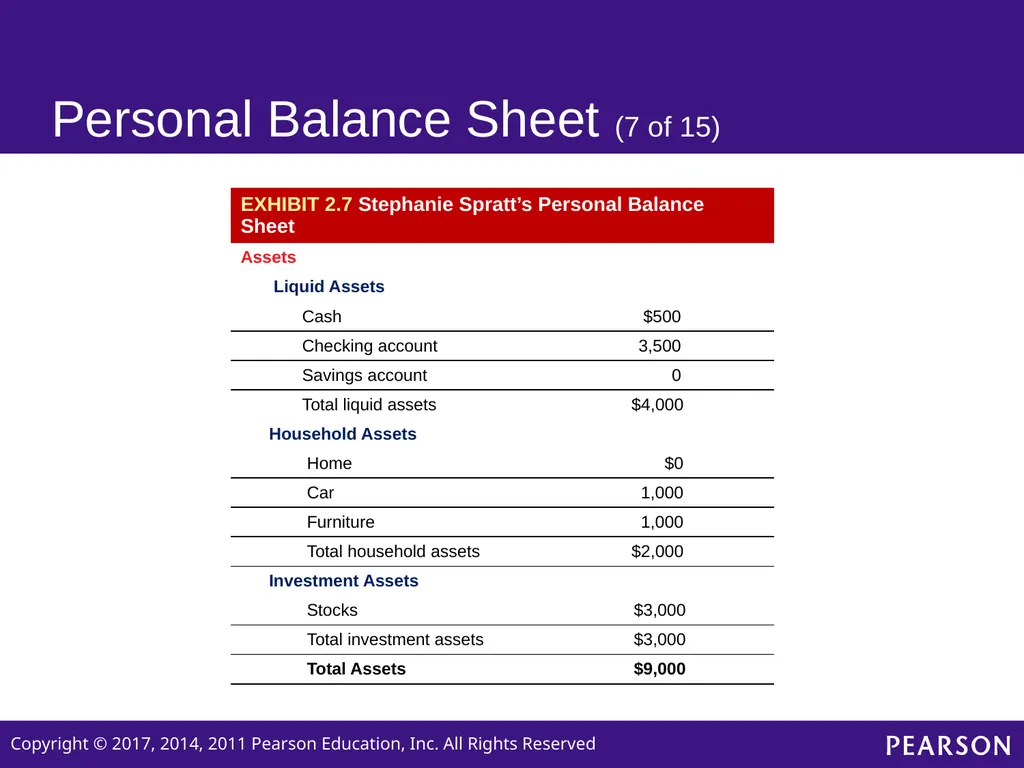
slide20. Personal Balance Sheet (2 of 15) Assets
Liquid assets are financial assets that can be easily sold without a loss in value
Household assets are items normally owned by a household, such as a home, a car, and furniture
You need to establish market values for these assets—the amount you would receive if you sold the asset today<br>
slide21. Personal Balance Sheet (3 of 15) Investment (financial assets)
Bonds: certificates issued by borrower, usually firms and government agencies, to raise funds
Stocks: certificates representing partial ownership in a firm<br>
slide22. Personal Balance Sheet (4 of 15) Mutual funds: investment companies that sell shares and invest the proceeds in investment instruments
Real estate: holdings in rental property and land
Rental property: housing or commercial property that is rented out to others<br>
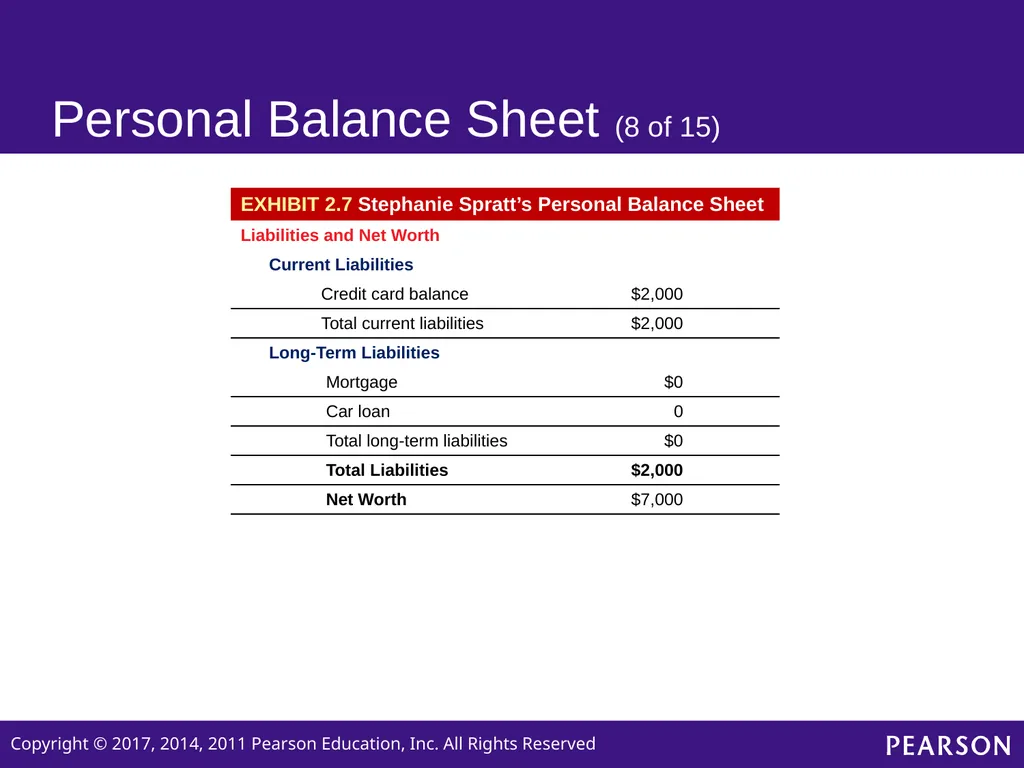
slide23. Personal Balance Sheet (5 of 15) Liabilities
Current liabilities: debts that will be paid within a year
Long-term liabilities: debts that will be paid over a period longer than one year
Net worth is the difference between what you own and what you owe.<br>
slide24. Personal Balance Sheet (6 of 15) Creating a personal balance sheet
Allows you to determine your net worth
Update it periodically to monitor changes in your net worth over time<br>
slide25. Personal Balance Sheet (7 of 15)<br>
slide26. Personal Balance Sheet (8 of 15)<br>
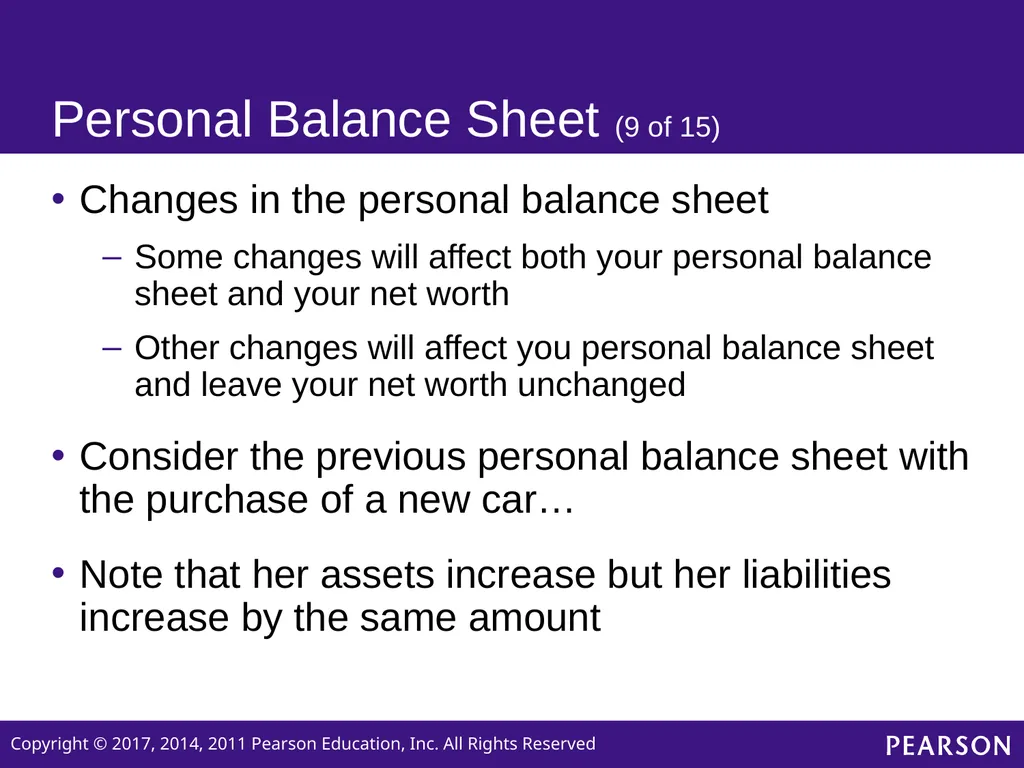
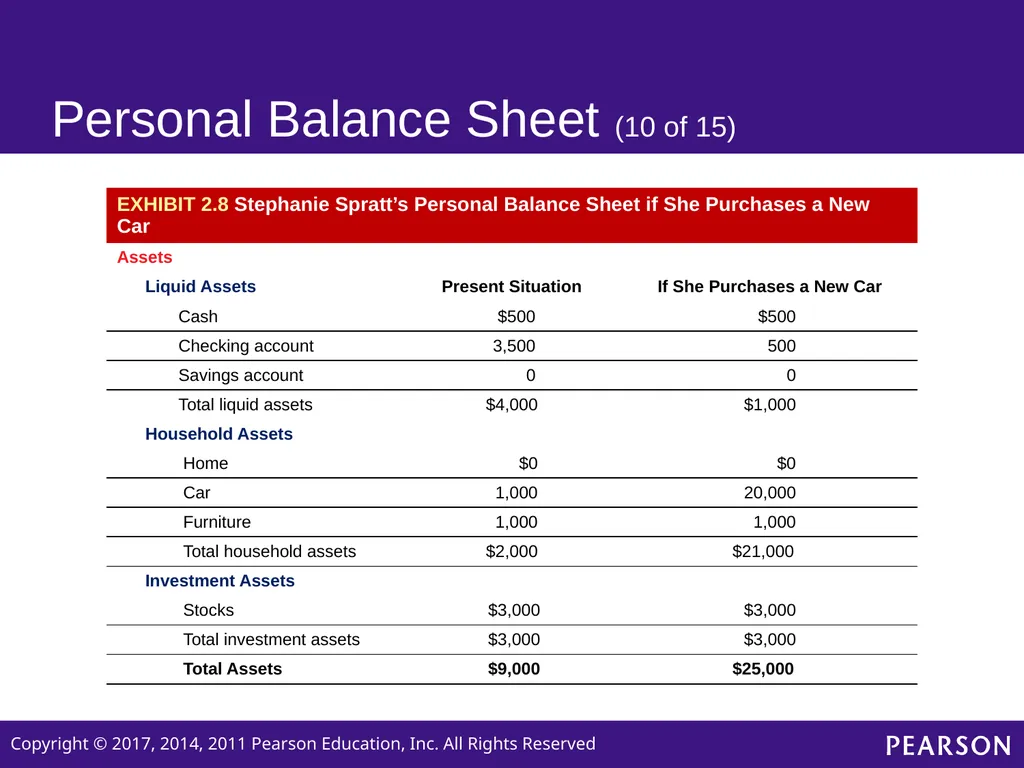
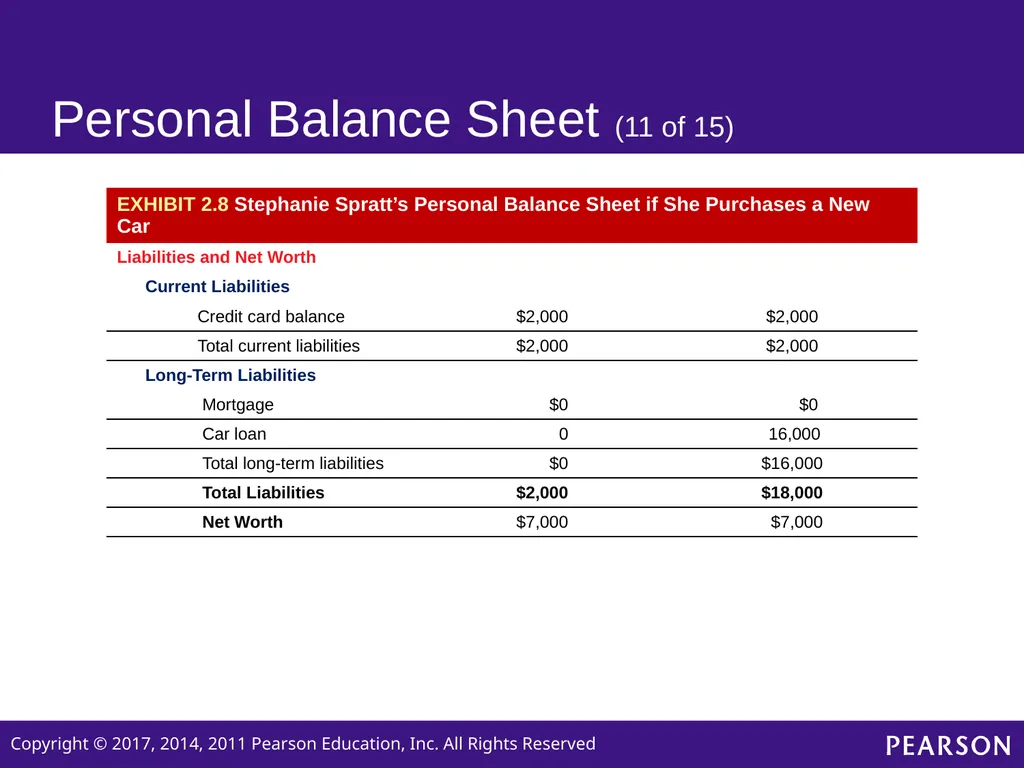
slide27. Personal Balance Sheet (9 of 15) Changes in the personal balance sheet
Some changes will affect both your personal balance sheet and your net worth
Other changes will affect you personal balance sheet and leave your net worth unchanged
Consider the previous personal balance sheet with the purchase of a new car…
Note that her assets increase but her liabilities increase by the same amount<br>
slide28. Personal Balance Sheet (10 of 15)<br>
slide29. Personal Balance Sheet (11 of 15)<br>
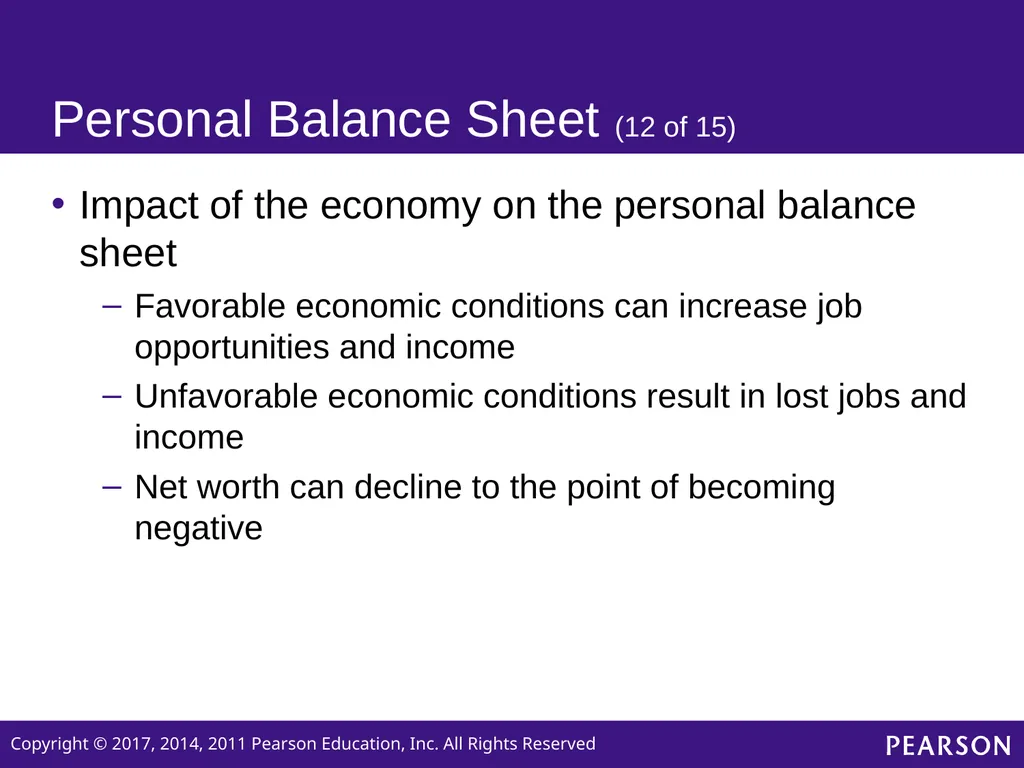
slide30. Personal Balance Sheet (12 of 15) Impact of the economy on the personal balance sheet
Favorable economic conditions can increase job opportunities and income
Unfavorable economic conditions result in lost jobs and income
Net worth can decline to the point of becoming negative<br>
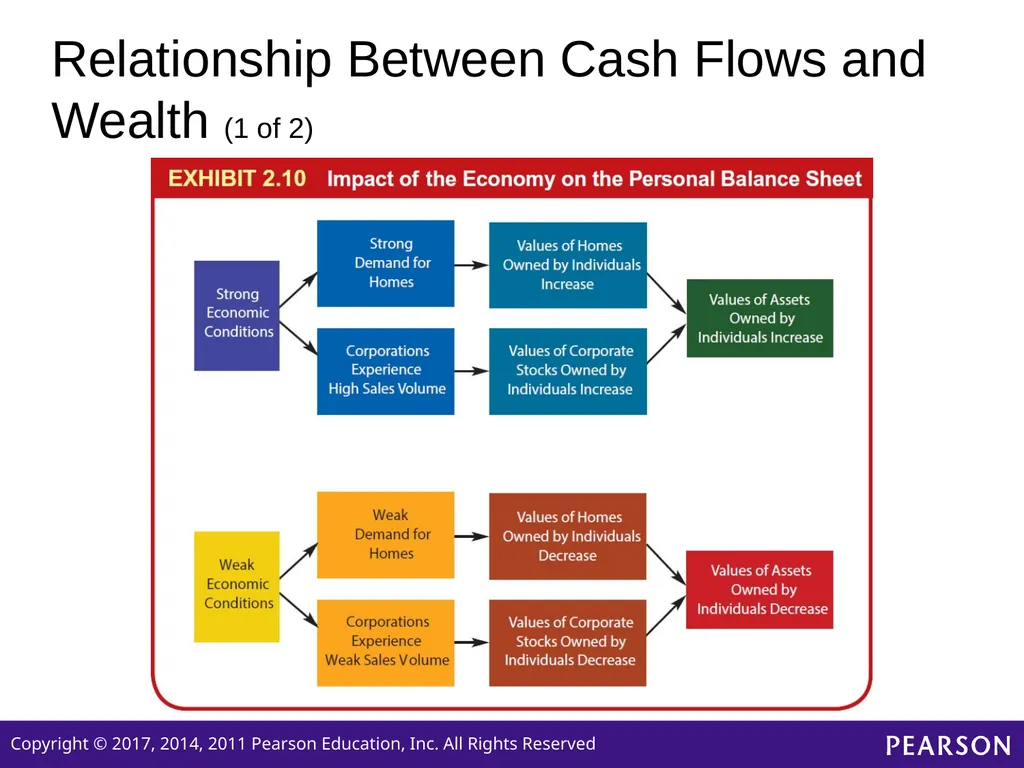
slide31. Relationship Between Cash Flows and Wealth (1 of 2)<br>
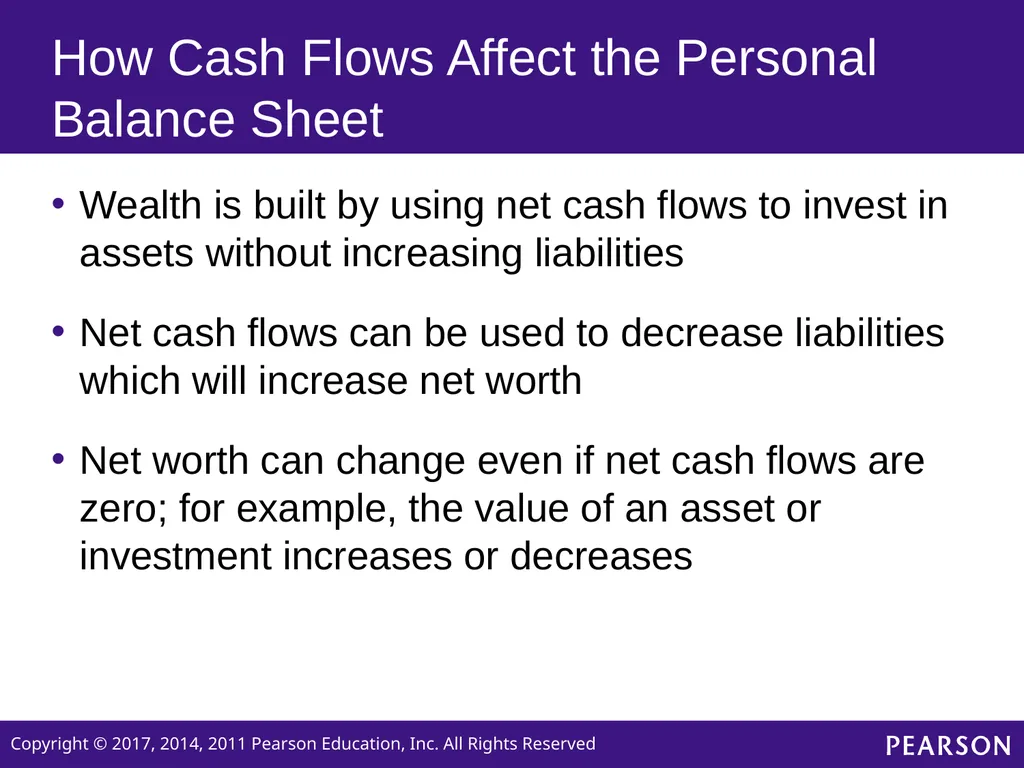
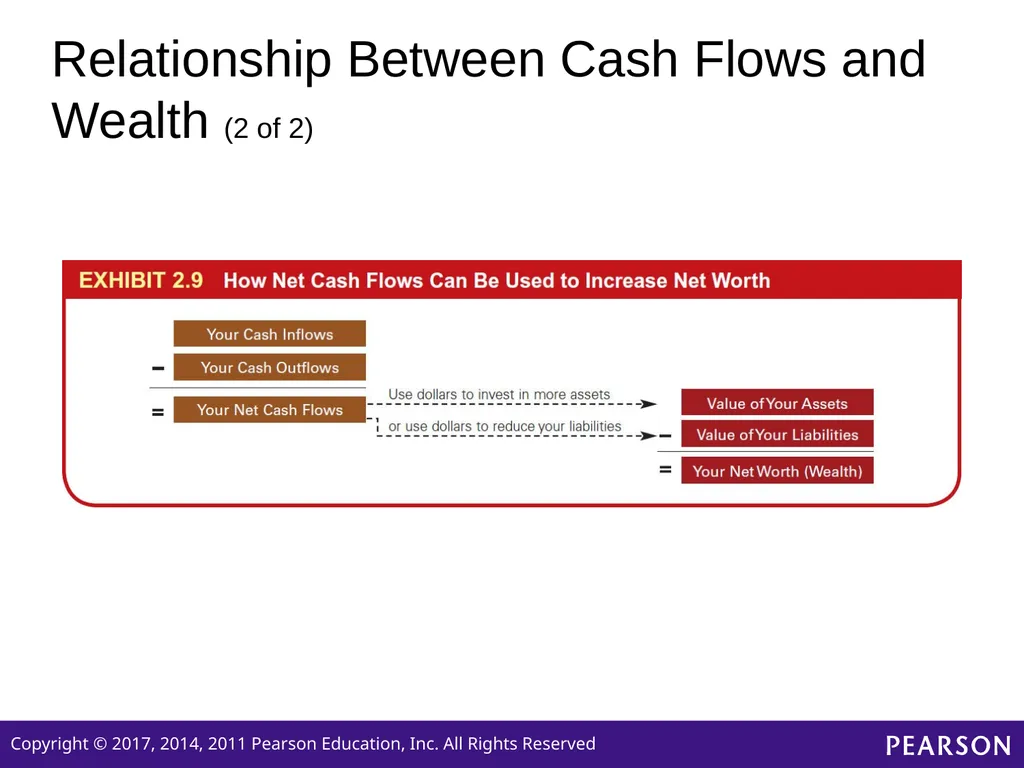
slide32. How Cash Flows Affect the Personal Balance Sheet Wealth is built by using net cash flows to invest in assets without increasing liabilities
Net cash flows can be used to decrease liabilities which will increase net worth
Net worth can change even if net cash flows are zero; for example, the value of an asset or investment increases or decreases<br>
slide33. Relationship Between Cash Flows and Wealth (2 of 2)<br>
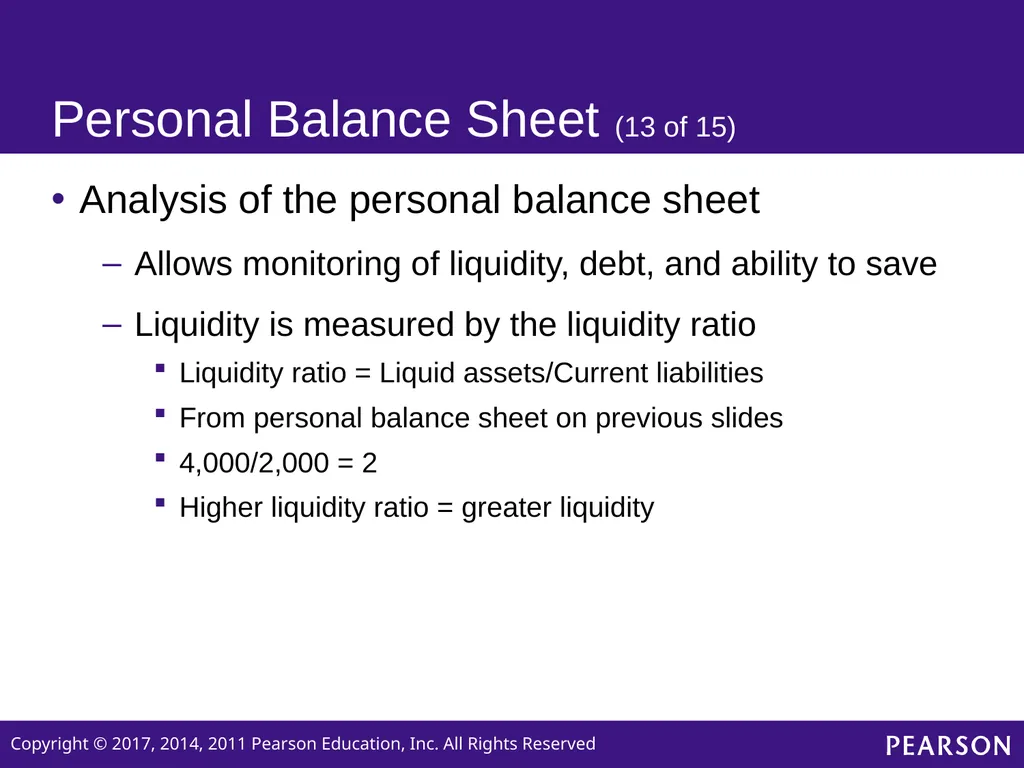
slide34. Personal Balance Sheet (13 of 15) Analysis of the personal balance sheet
Allows monitoring of liquidity, debt, and ability to save
Liquidity is measured by the liquidity ratio
Liquidity ratio = Liquid assets/Current liabilities
From personal balance sheet on previous slides
4,000/2,000 = 2
Higher liquidity ratio = greater liquidity<br>
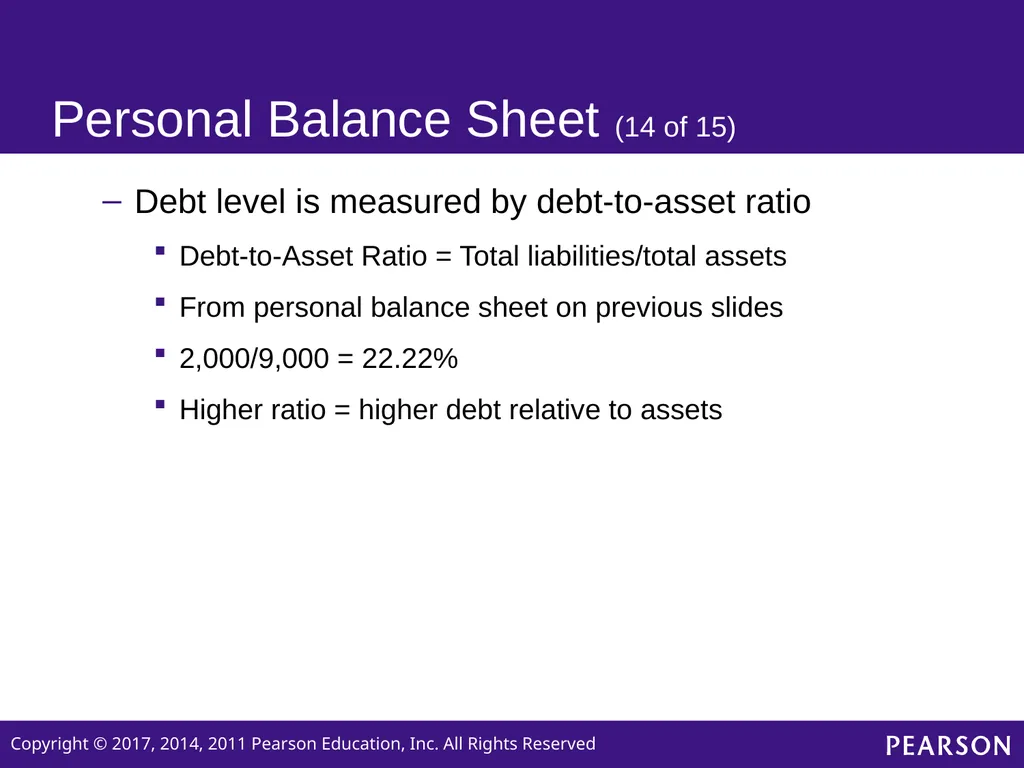
slide35. Personal Balance Sheet (14 of 15) Debt level is measured by debt-to-asset ratio
Debt-to-Asset Ratio = Total liabilities/total assets
From personal balance sheet on previous slides
2,000/9,000 = 22.22%
Higher ratio = higher debt relative to assets<br>
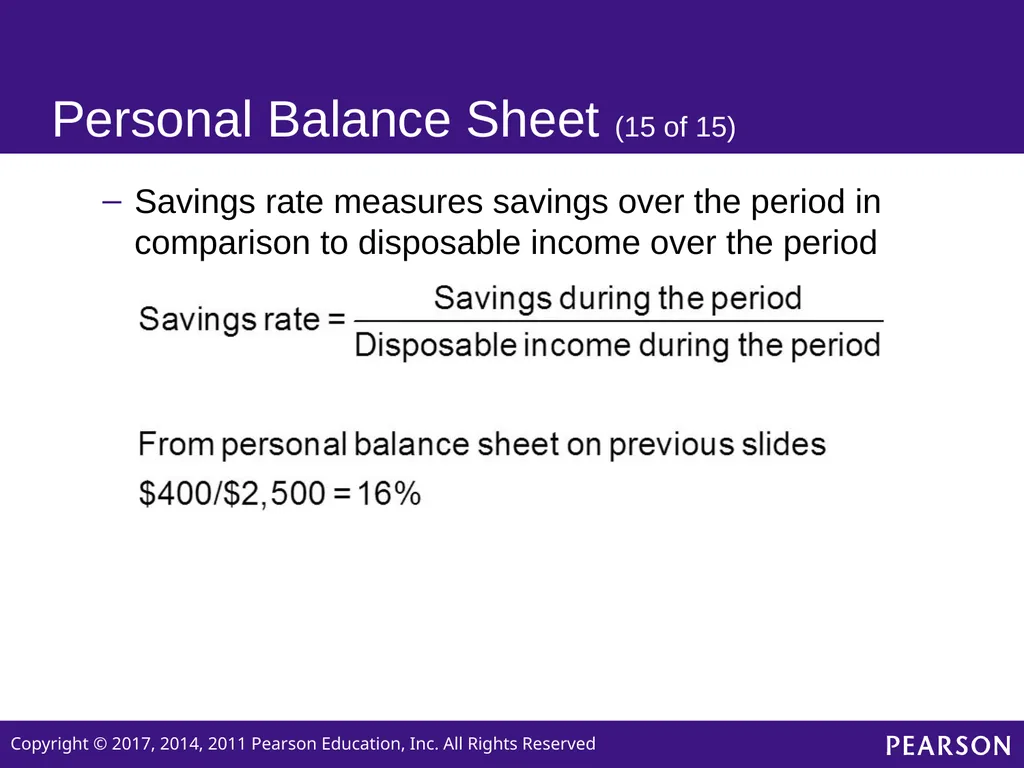
slide36. Personal Balance Sheet (15 of 15) Savings rate measures savings over the period in comparison to disposable income over the period<br>
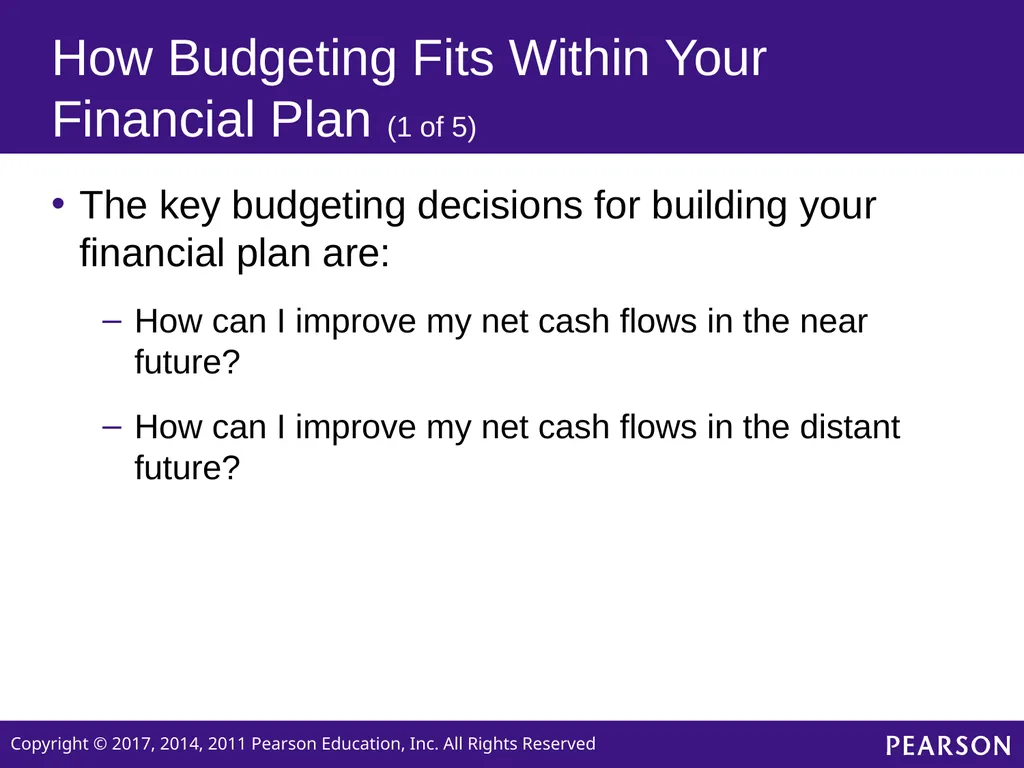
slide37. How Budgeting Fits Within Your Financial Plan (1 of 5) The key budgeting decisions for building your financial plan are:
How can I improve my net cash flows in the near future?
How can I improve my net cash flows in the distant future?<br>
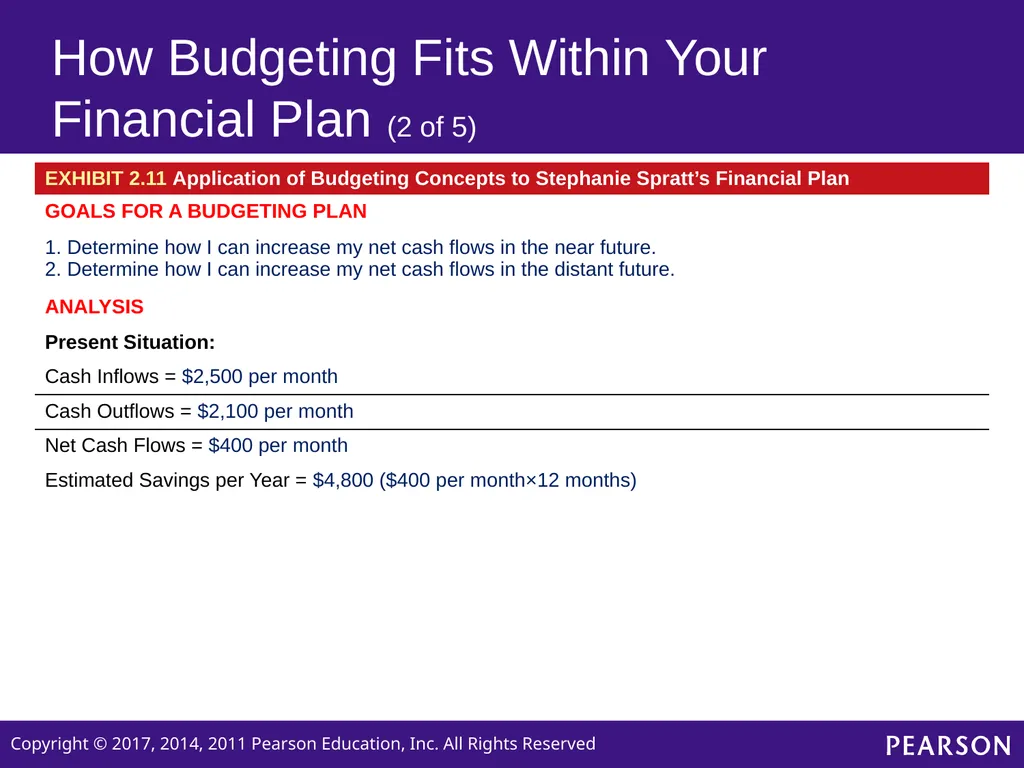
slide38. How Budgeting Fits Within Your Financial Plan (2 of 5)<br>
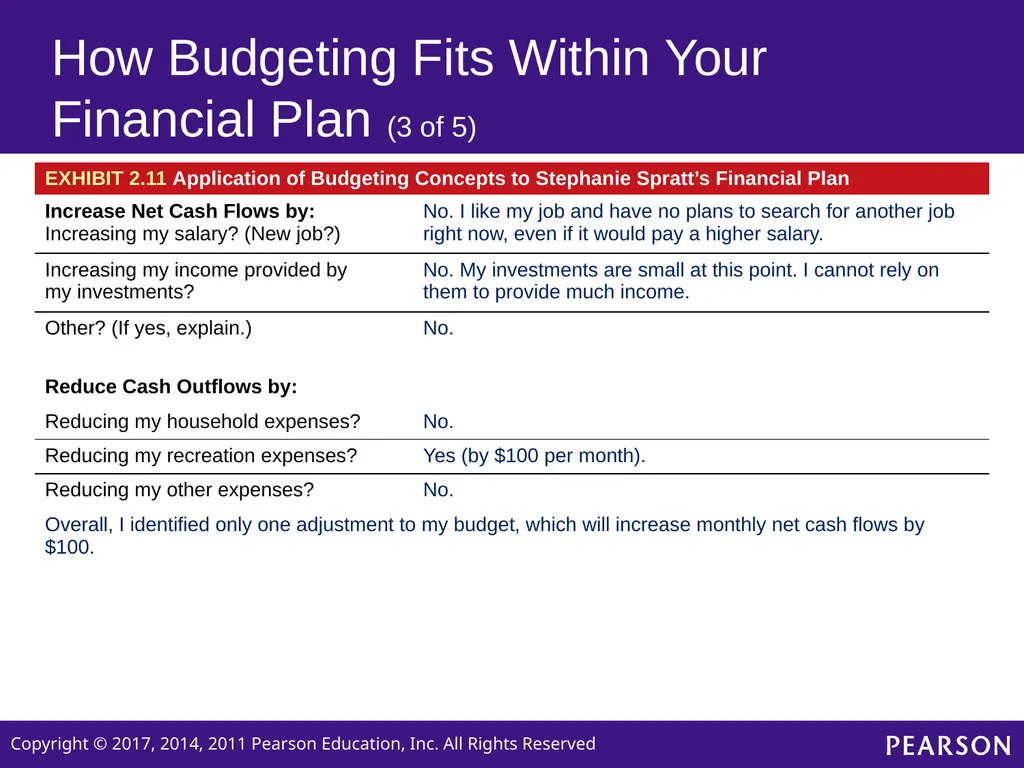
slide39. How Budgeting Fits Within Your Financial Plan (3 of 5)<br>
slide40. How Budgeting Fits Within Your Financial Plan (4 of 5) DECISIONS
Decision to Increase Net Cash Flows in the Near Future:
I initially established a budget to save $4,800 per year. During the next year, I can attempt to save an additional $100 per month by reducing the amount I spend on recreation. I can increase my savings if I reduce cash outflows. By reducing cash outflows by $100 per month, my savings will increase from $400 to $500 per month. The only way that I can reduce cash outflows at this point is to reduce the amount I spend for recreation purposes.<br>
slide41. How Budgeting Fits Within Your Financial Plan (5 of 5) Decision to Increase Net Cash Flows in the Distant Future:
My cash inflows will rise over time if my salary increases. If I can keep my cash outflows stable, my net cash flows (and therefore my savings) will increase. When I buy a new car or a home, my monthly cash outflows will increase as a result of the monthly loan payments. If I buy a new car or a home, I need to make sure that I limit my spending (and therefore limit the loan amount) so that I have sufficient cash inflows to cover the monthly loan payments along with my other typical monthly expenses.
If I get married someday, my husband would contribute to the cash inflows, which would increase net cash flows. We would be able to save more money and may consider buying a home. If I marry, my goal will be to save even more money per month than I save now, to prepare for the possibility of raising a family in the future.<br>
slide2. Chapter Objectives 2.1 Explain how to create your personal cash flow statement
2.2 Identify the factors that affect your cash flows
2.3 Forecast your cash flows
2.4 Explain how to create your personal balance sheet
2.5 Explain how your personal financial statements fit within your financial plan<br>
slide3. Personal Cash Flow Statement (1 of 3) Personal cash flow statement: a financial statement that measures a person’s cash inflows and outflows
Cash inflows include salaries, interest, dividends
Cash outflows include all expenses, both large and small<br>
slide4. Personal Cash Flow Statement (2 of 3) Create a statement by recording your revenues and expenses over a period of time
Net cash flows: cash inflows minus cash outflows<br>
slide5. Personal Cash Flow Statement (3 of 3)<br>
slide6. Factors That Affect Cash Flows (1 of 3) Factors affecting cash inflows:
Stage in your career path
Closely related to your stage in the life cycle—college, career, retirement
Type of job
Based on skill level and demand for those skills
Number of income earners in your household<br>
slide7. Factors That Affect Cash Flows (2 of 3) Factors affecting cash outflows:
Size of family
Age
Personal consumption behavior
Some people spend all of their income and more while others spend mainly on necessities and concentrate on saving for the future<br>
slide8. Factors That Affect Cash Flows (3 of 3)<br>
slide9. Creating a Budget (1 of 8) Budget: a cash flow statement that is based on forecasted cash flows for a future time period
Budgets are useful for anticipating either cash surpluses or cash deficiencies<br>
slide10. Creating a Budget (2 of 8)<br>
slide11. Creating a Budget (3 of 8)<br>
slide12. Creating a Budget (4 of 8) Anticipating cash shortages
Small shortages can usually be made up from your checking account
Budgets provide warning of shortages so that you can prepare for them
Assessing the accuracy of the budget
Compare predicted cash flows to actual cash flows
Adjustment may be necessary<br>
slide13. Creating a Budget (5 of 8) Forecast net cash flows over several months
Use the information for a typical month and adjust it for unusual expenses such as seasonal shopping
Allow for some unexpected expenses like medical care, car and home maintenance
Create an annual budget by extending your budget out for longer periods
Go to the website https://money.strands.com/ for an App that will help with this task<br>
slide14. Creating a Budget (6 of 8)<br>
slide15. Creating a Budget (7 of 8) Improving the budget
Periodically review the budget to see if you are progressing toward your goals
Look for areas that can be changed to improve the budget over time
Focus on ethics
Don’t become overly dependent on others
Create a budget and stay within it<br>
slide16. Creating a Budget (8 of 8)<br>
slide17. Financial Planning Online (1 of 2) Go to www.moneycrashers.com/five-steps-to-effective-budgeting
This Web site provides tips on effective budgeting based on your goals.
The Web site https://www.mint.com/ also contains a lot of budgeting information and other financial tools.<br>
slide18. Personal Balance Sheet (1 of 15) Personal balance sheet: a summary of your assets (what you own), your liabilities (what you owe), and your net worth (assets minus liabilities)
A balance sheet reflects your financial position at a specific point in time<br>
slide19. Financial Planning Online (2 of 2) Go to http://www.dailyfinance.com/
Search for Calculators
This Web site provides an estimate of the savings you can accumulate over time if you can reduce your spending on one or more of your monthly expenses.<br>
slide20. Personal Balance Sheet (2 of 15) Assets
Liquid assets are financial assets that can be easily sold without a loss in value
Household assets are items normally owned by a household, such as a home, a car, and furniture
You need to establish market values for these assets—the amount you would receive if you sold the asset today<br>
slide21. Personal Balance Sheet (3 of 15) Investment (financial assets)
Bonds: certificates issued by borrower, usually firms and government agencies, to raise funds
Stocks: certificates representing partial ownership in a firm<br>
slide22. Personal Balance Sheet (4 of 15) Mutual funds: investment companies that sell shares and invest the proceeds in investment instruments
Real estate: holdings in rental property and land
Rental property: housing or commercial property that is rented out to others<br>
slide23. Personal Balance Sheet (5 of 15) Liabilities
Current liabilities: debts that will be paid within a year
Long-term liabilities: debts that will be paid over a period longer than one year
Net worth is the difference between what you own and what you owe.<br>
slide24. Personal Balance Sheet (6 of 15) Creating a personal balance sheet
Allows you to determine your net worth
Update it periodically to monitor changes in your net worth over time<br>
slide25. Personal Balance Sheet (7 of 15)<br>
slide26. Personal Balance Sheet (8 of 15)<br>
slide27. Personal Balance Sheet (9 of 15) Changes in the personal balance sheet
Some changes will affect both your personal balance sheet and your net worth
Other changes will affect you personal balance sheet and leave your net worth unchanged
Consider the previous personal balance sheet with the purchase of a new car…
Note that her assets increase but her liabilities increase by the same amount<br>
slide28. Personal Balance Sheet (10 of 15)<br>
slide29. Personal Balance Sheet (11 of 15)<br>
slide30. Personal Balance Sheet (12 of 15) Impact of the economy on the personal balance sheet
Favorable economic conditions can increase job opportunities and income
Unfavorable economic conditions result in lost jobs and income
Net worth can decline to the point of becoming negative<br>
slide31. Relationship Between Cash Flows and Wealth (1 of 2)<br>
slide32. How Cash Flows Affect the Personal Balance Sheet Wealth is built by using net cash flows to invest in assets without increasing liabilities
Net cash flows can be used to decrease liabilities which will increase net worth
Net worth can change even if net cash flows are zero; for example, the value of an asset or investment increases or decreases<br>
slide33. Relationship Between Cash Flows and Wealth (2 of 2)<br>
slide34. Personal Balance Sheet (13 of 15) Analysis of the personal balance sheet
Allows monitoring of liquidity, debt, and ability to save
Liquidity is measured by the liquidity ratio
Liquidity ratio = Liquid assets/Current liabilities
From personal balance sheet on previous slides
4,000/2,000 = 2
Higher liquidity ratio = greater liquidity<br>
slide35. Personal Balance Sheet (14 of 15) Debt level is measured by debt-to-asset ratio
Debt-to-Asset Ratio = Total liabilities/total assets
From personal balance sheet on previous slides
2,000/9,000 = 22.22%
Higher ratio = higher debt relative to assets<br>
slide36. Personal Balance Sheet (15 of 15) Savings rate measures savings over the period in comparison to disposable income over the period<br>
slide37. How Budgeting Fits Within Your Financial Plan (1 of 5) The key budgeting decisions for building your financial plan are:
How can I improve my net cash flows in the near future?
How can I improve my net cash flows in the distant future?<br>
slide38. How Budgeting Fits Within Your Financial Plan (2 of 5)<br>
slide39. How Budgeting Fits Within Your Financial Plan (3 of 5)<br>
slide40. How Budgeting Fits Within Your Financial Plan (4 of 5) DECISIONS
Decision to Increase Net Cash Flows in the Near Future:
I initially established a budget to save $4,800 per year. During the next year, I can attempt to save an additional $100 per month by reducing the amount I spend on recreation. I can increase my savings if I reduce cash outflows. By reducing cash outflows by $100 per month, my savings will increase from $400 to $500 per month. The only way that I can reduce cash outflows at this point is to reduce the amount I spend for recreation purposes.<br>
slide41. How Budgeting Fits Within Your Financial Plan (5 of 5) Decision to Increase Net Cash Flows in the Distant Future:
My cash inflows will rise over time if my salary increases. If I can keep my cash outflows stable, my net cash flows (and therefore my savings) will increase. When I buy a new car or a home, my monthly cash outflows will increase as a result of the monthly loan payments. If I buy a new car or a home, I need to make sure that I limit my spending (and therefore limit the loan amount) so that I have sufficient cash inflows to cover the monthly loan payments along with my other typical monthly expenses.
If I get married someday, my husband would contribute to the cash inflows, which would increase net cash flows. We would be able to save more money and may consider buying a home. If I marry, my goal will be to save even more money per month than I save now, to prepare for the possibility of raising a family in the future.<br>