Philippe Fournier-Viger http:www.philippe-Fournier-viger.com Frequent subgraph mining 1 Source code and datasets available in the SPMF library Frequent subgraph mining A graph (图表) is a set of vertices (顶点) and edges (边) e.g. This graph
"Philippe Fournier-Viger" is the property of its rightful owner. Permission is granted to
download and print the materials on this website for personal, non-commercial use only, and to display it
on your personal computer provided you do not modify the materials and that you retain all copyright
notices contained in the materials. By downloading content from our website, you accept the terms of this
agreement.
Presentation Transcript
01
Philippe Fournier-Viger http://www.philippe-Fournier-viger.com Frequent subgraph mining 1 Source code and datasets available in the SPMF library<br>
02
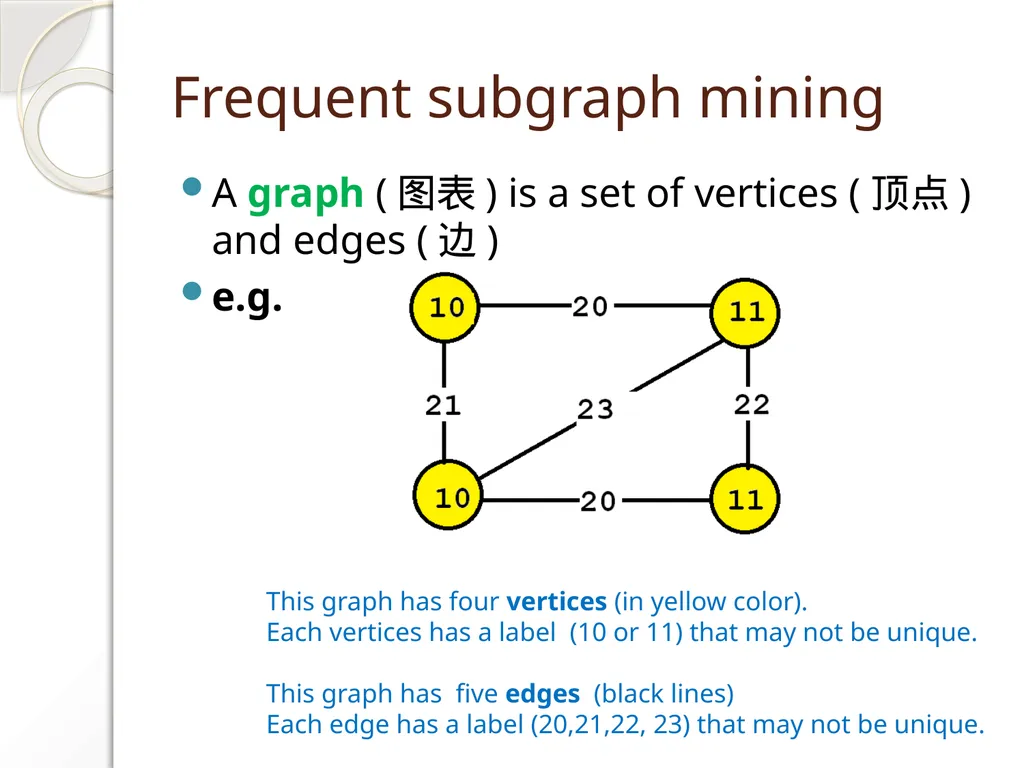
Frequent subgraph mining A graph (图表) is a set of vertices (顶点) and edges (边)
e.g. This graph has four vertices (in yellow color).
Each vertices has a label (10 or 11) that may not be unique.
This graph has five edges (black lines)
Each edge has a label (20,21,22, 23) that may not be unique.<br>
03
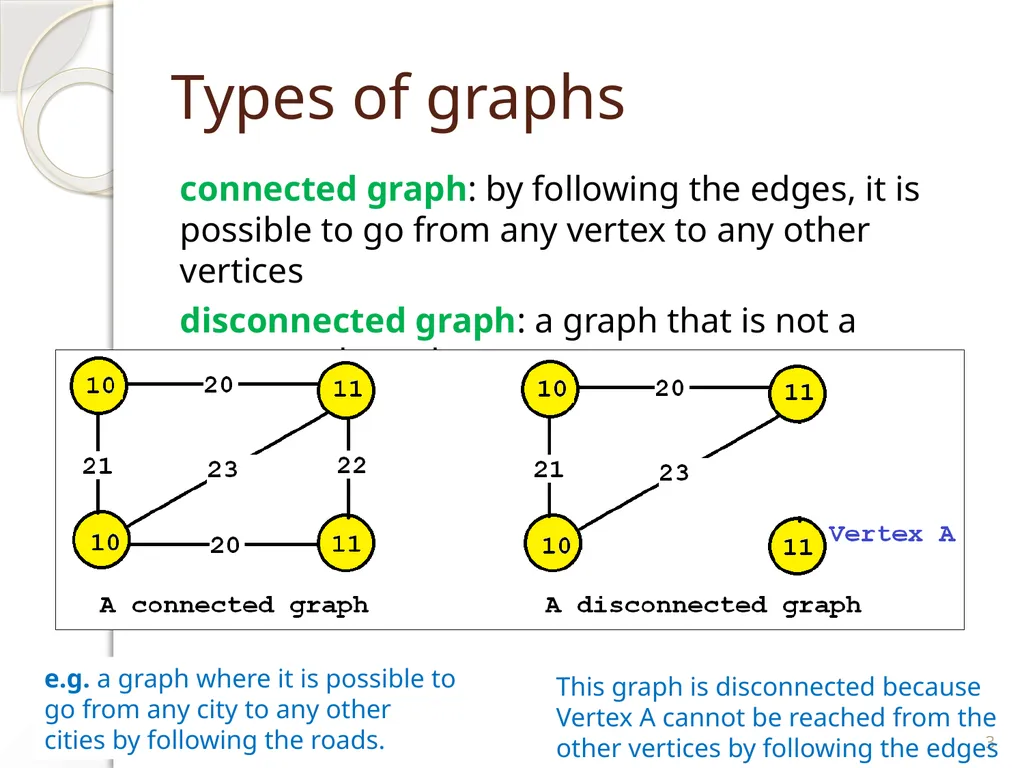
Types of graphs connected graph: by following the edges, it is possible to go from any vertex to any other vertices
disconnected graph: a graph that is not a connected graph 3 e.g. a graph where it is possible to go from any city to any other cities by following the roads. This graph is disconnected because Vertex A cannot be reached from the other vertices by following the edges<br>
04
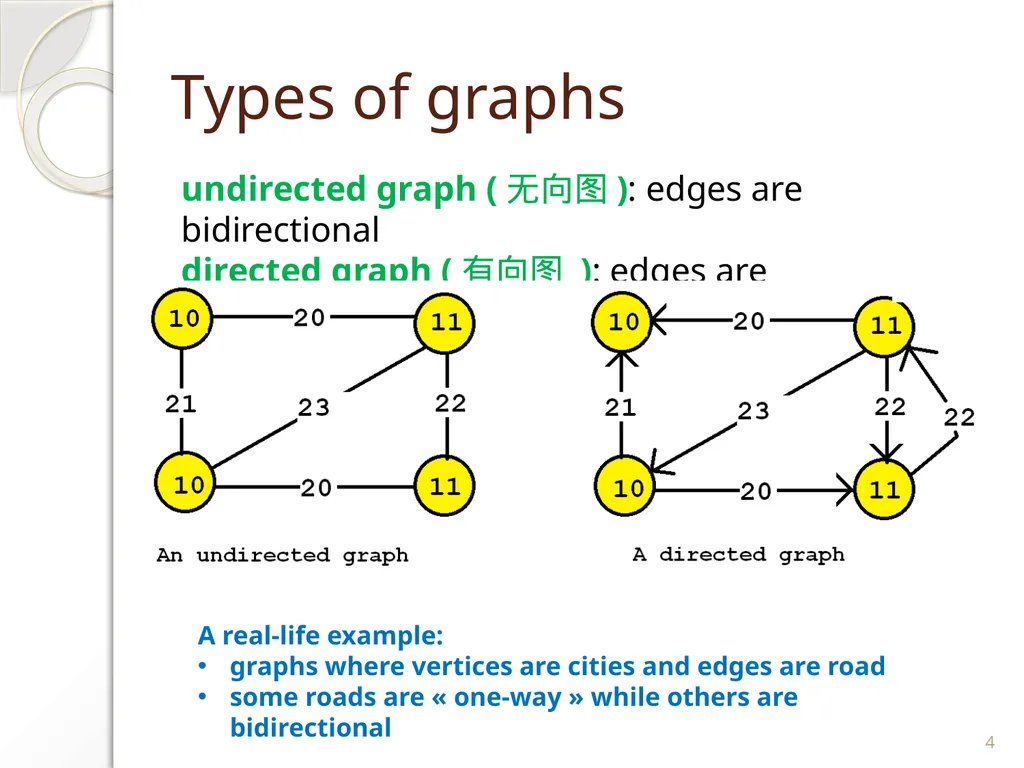
Types of graphs undirected graph (无向图): edges are bidirectional directed graph (有向图 ): edges are unidirectional 4 A real-life example:
graphs where vertices are cities and edges are road
some roads are « one-way » while others are bidirectional<br>
05
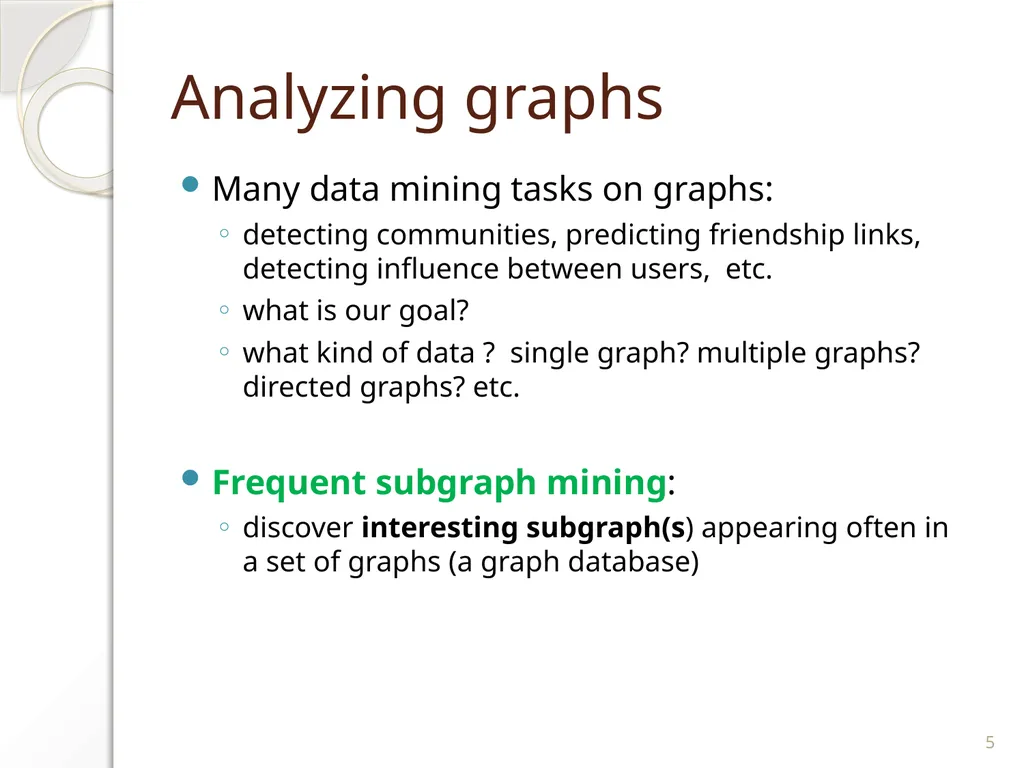
Analyzing graphs Many data mining tasks on graphs:
detecting communities, predicting friendship links, detecting influence between users, etc.
what is our goal?
what kind of data ? single graph? multiple graphs? directed graphs? etc.
Frequent subgraph mining:
discover interesting subgraph(s) appearing often in a set of graphs (a graph database) 5<br>
06
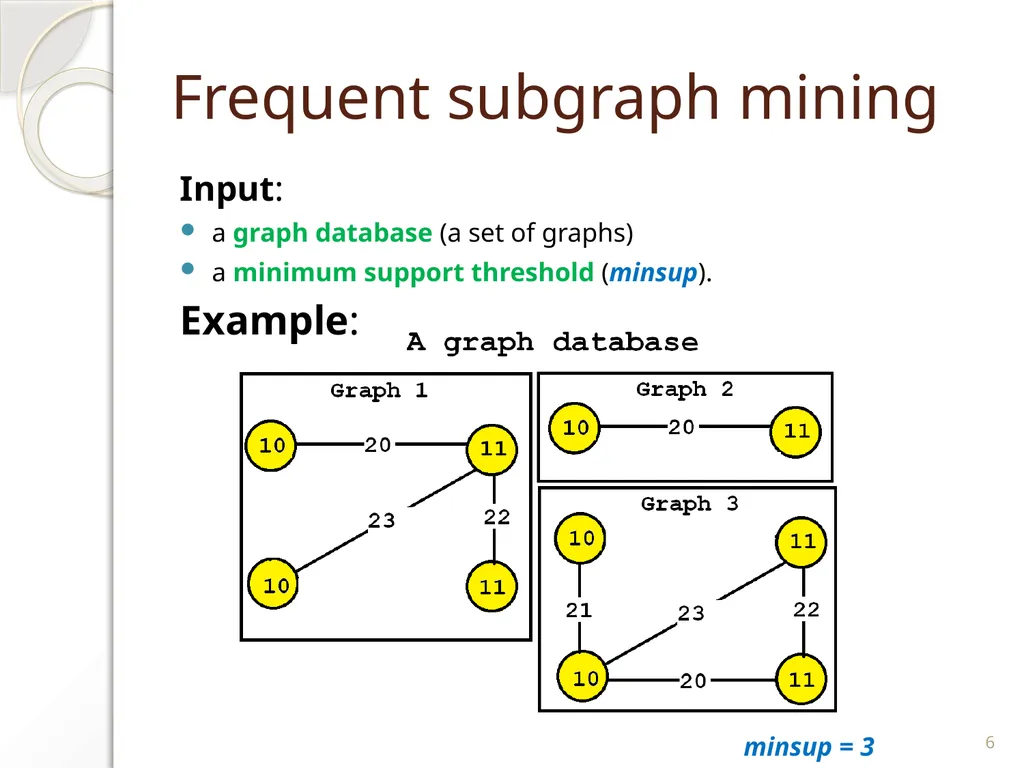
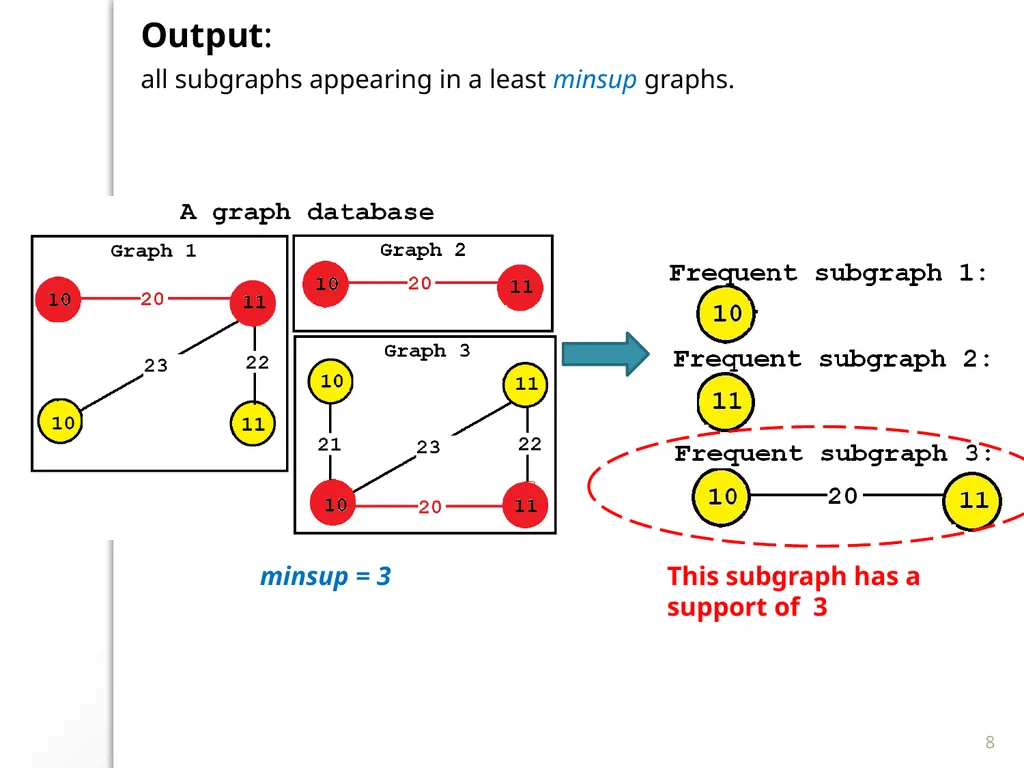
Frequent subgraph mining Input:
a graph database (a set of graphs)
a minimum support threshold (minsup).
Example: 6 minsup = 3<br>
07
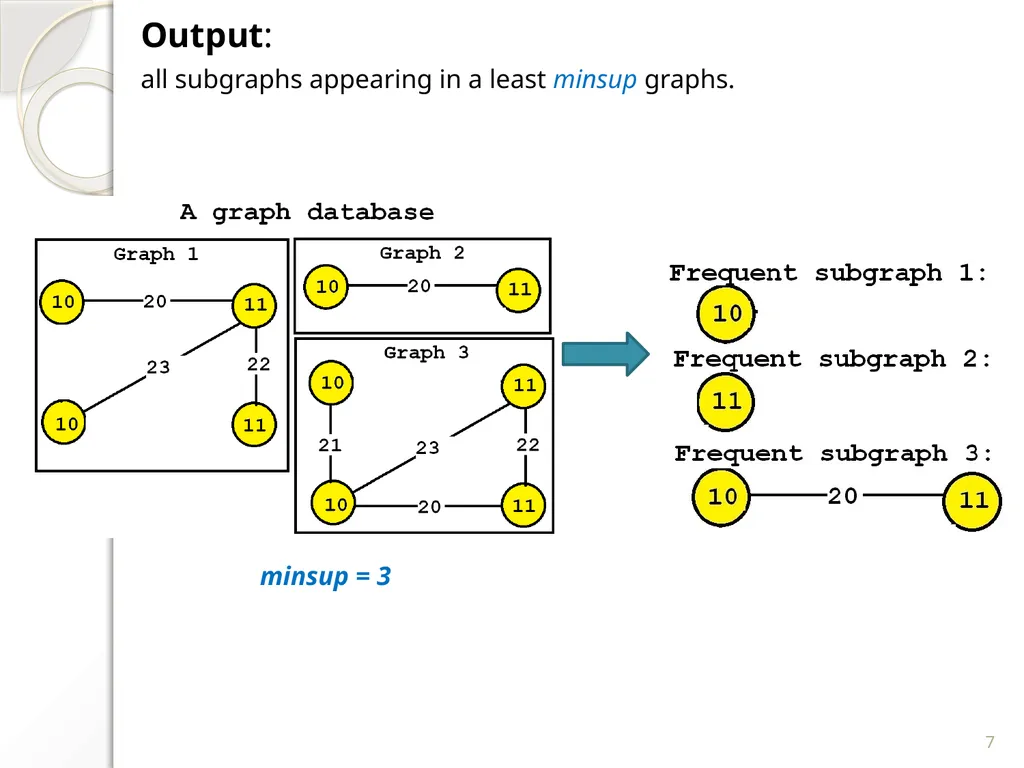
Output:
all subgraphs appearing in a least minsup graphs. 7 minsup = 3<br>
08
8 This subgraph has a support of 3 Output:
all subgraphs appearing in a least minsup graphs. minsup = 3<br>
09
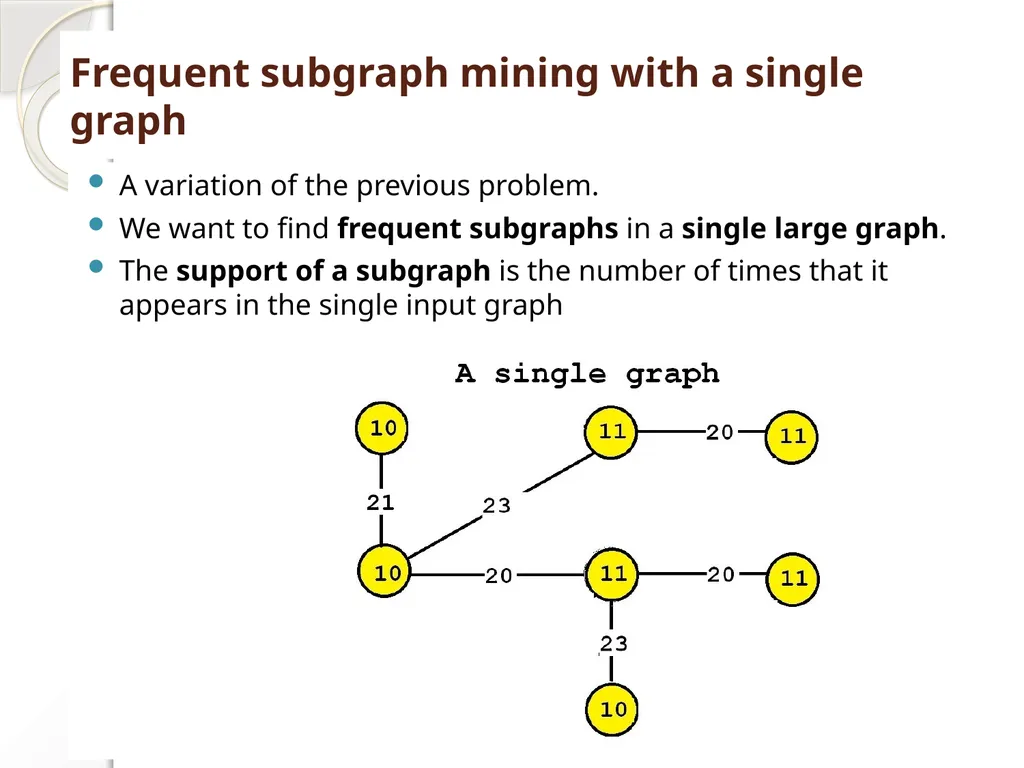
Frequent subgraph mining with a single graph A variation of the previous problem.
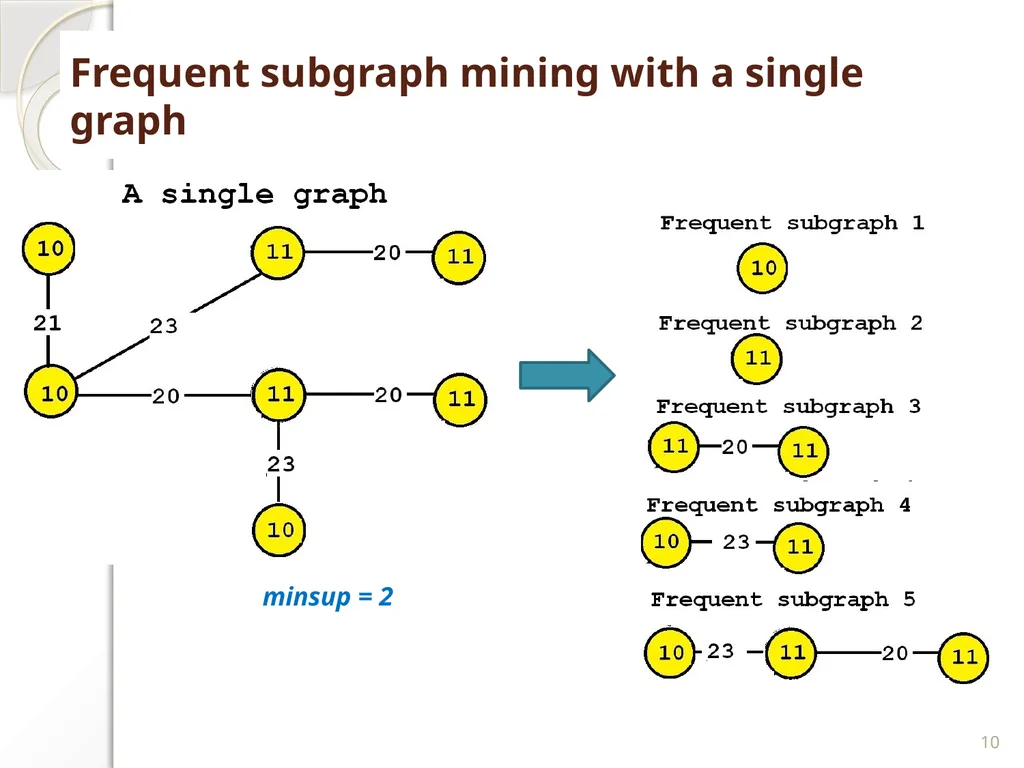
We want to find frequent subgraphs in a single large graph.
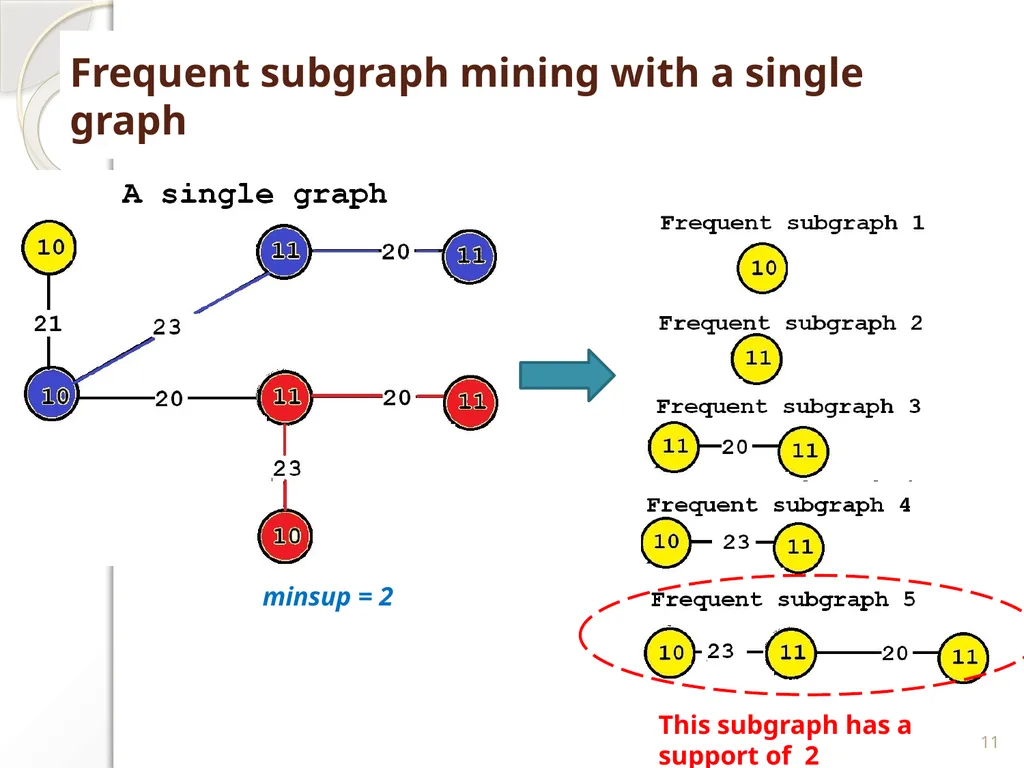
The support of a subgraph is the number of times that it appears in the single input graph 9<br>
10
Frequent subgraph mining with a single graph 10 minsup = 2<br>
11
Frequent subgraph mining with a single graph 11 minsup = 2 This subgraph has a support of 2<br>
12
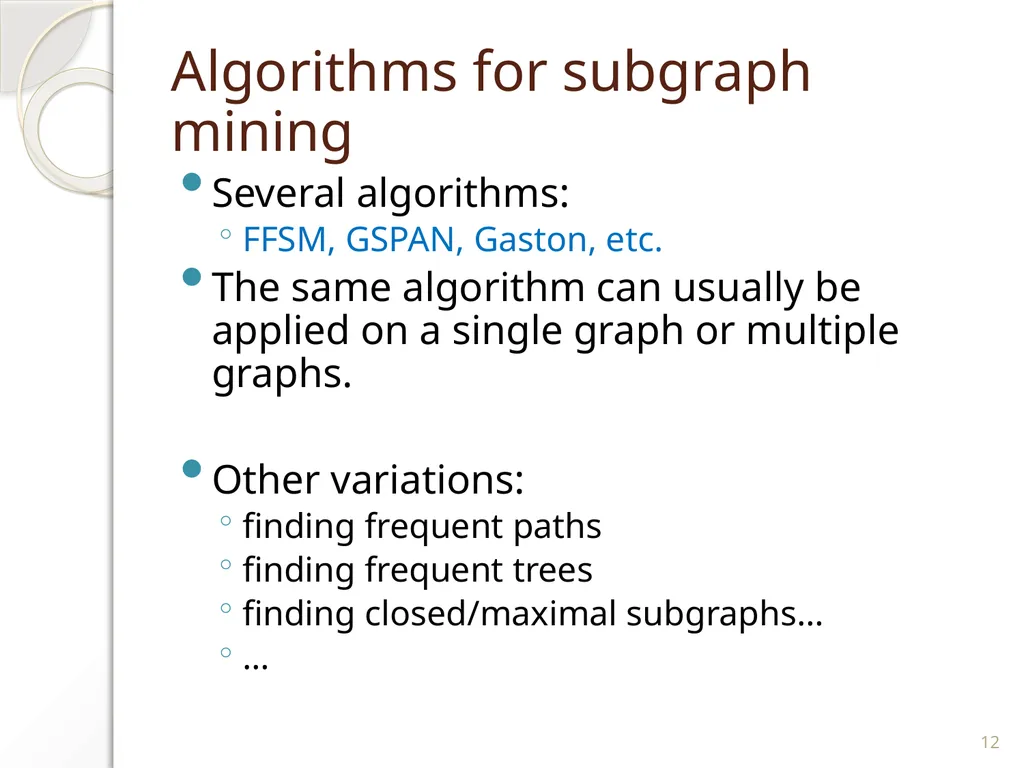
Algorithms for subgraph mining Several algorithms:
FFSM, GSPAN, Gaston, etc.
The same algorithm can usually be applied on a single graph or multiple graphs.
Other variations:
finding frequent paths
finding frequent trees
finding closed/maximal subgraphs…
… 12<br>
13
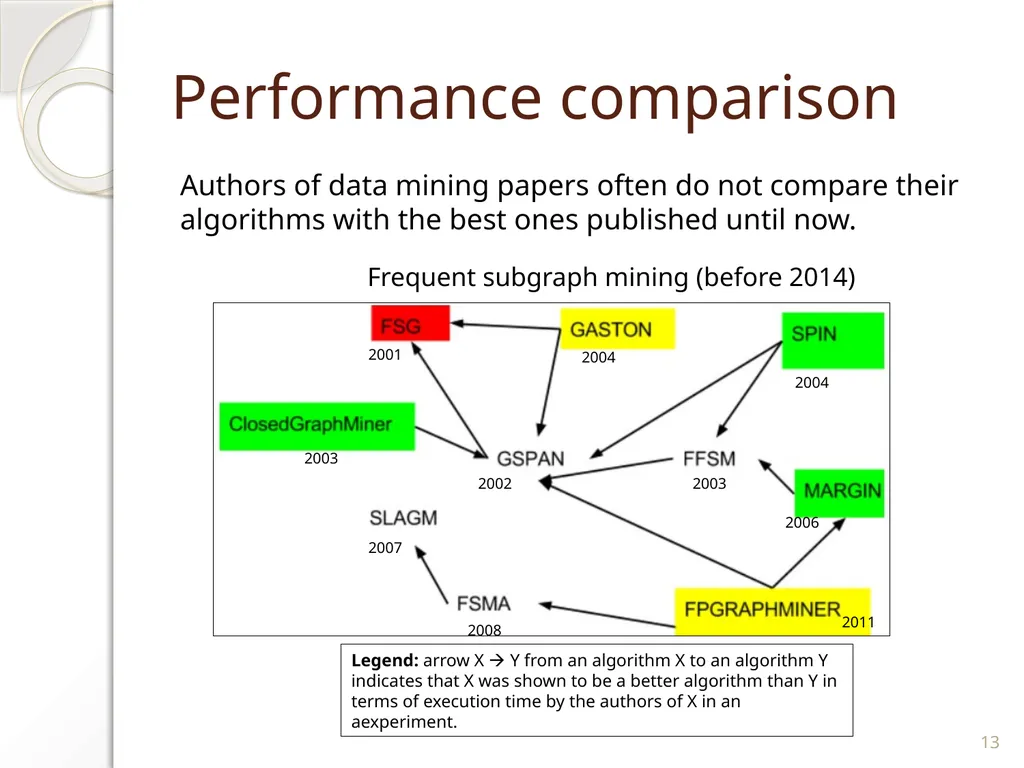
Performance comparison Authors of data mining papers often do not compare their algorithms with the best ones published until now. 13 Legend: arrow X Y from an algorithm X to an algorithm Y indicates that X was shown to be a better algorithm than Y in terms of execution time by the authors of X in an aexperiment. 2001 2002 2004 2004 2003 2011 2006 2007 2008 Frequent subgraph mining (before 2014) 2003<br>