PHONETICS Introduction
Description: PHONETICS Introduction http:www.youtube.comwatch?vuTOhDqhCKQs Phonetics Definition: The scientific study of speech. Speech? Represents words and other units of language. There are some sounds we can identify easily enough and some
Related Topics
Download Presentation
"PHONETICS Introduction" is the property of its rightful owner. Permission is granted to download and print the materials on this website for personal, non-commercial use only, and to display it on your personal computer provided you do not modify the materials and that you retain all copyright notices contained in the materials. By downloading content from our website, you accept the terms of this agreement.
Presentation Transcript
slide1. PHONETICS Introduction<br>
slide2. http://www.youtube.com/watch?v=uTOhDqhCKQs<br>
slide3. Phonetics Definition: The scientific study of speech.
Speech?
Represents words and other units of language.
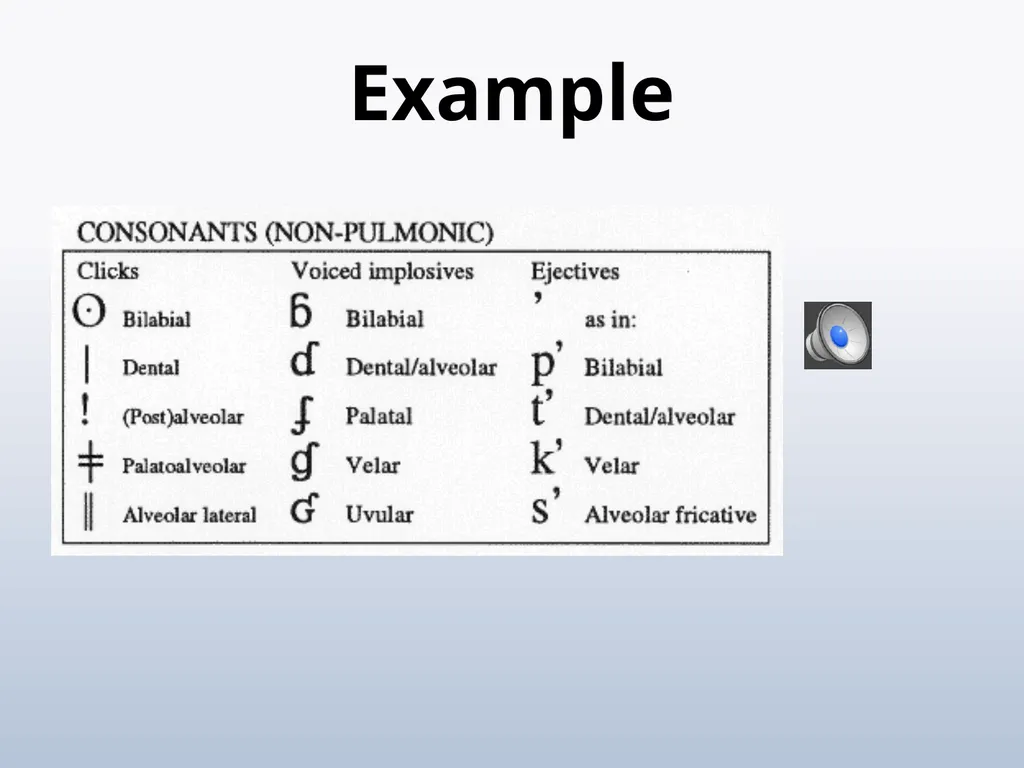
There are some sounds we can identify easily enough and some sounds are difficult. (E.g non-pulmonic sounds)
Scientific?
To measure as accurately as possible and give an agreed terminology<br>
slide4. Example<br>
slide5. WHISTLE LANGUAGE http://www.lemondesiffle.free.fr/presentation_eng/languessifflees.htm<br>
slide6. Phonetics Concerned with:
The characteristics of sounds that occur in language
Interested in:
1. Description of sounds
2. Classification of sounds; [p] voiceless, bilabial, stop<br>
slide7. Phonetics 3. Transcription of words:
To write words according to how you hear them.
It is a method of writing down speech sounds in a systematic and consistent way<br>
slide8. Difficulties from learning a new language After puberty it is difficult to learn a new language, so we have to learn it at an early age.
There will be difficulties arising from second language interference.
English?
(R.P) received pronunciation, which is the pronunciation of the educated speakers of the English language.<br>
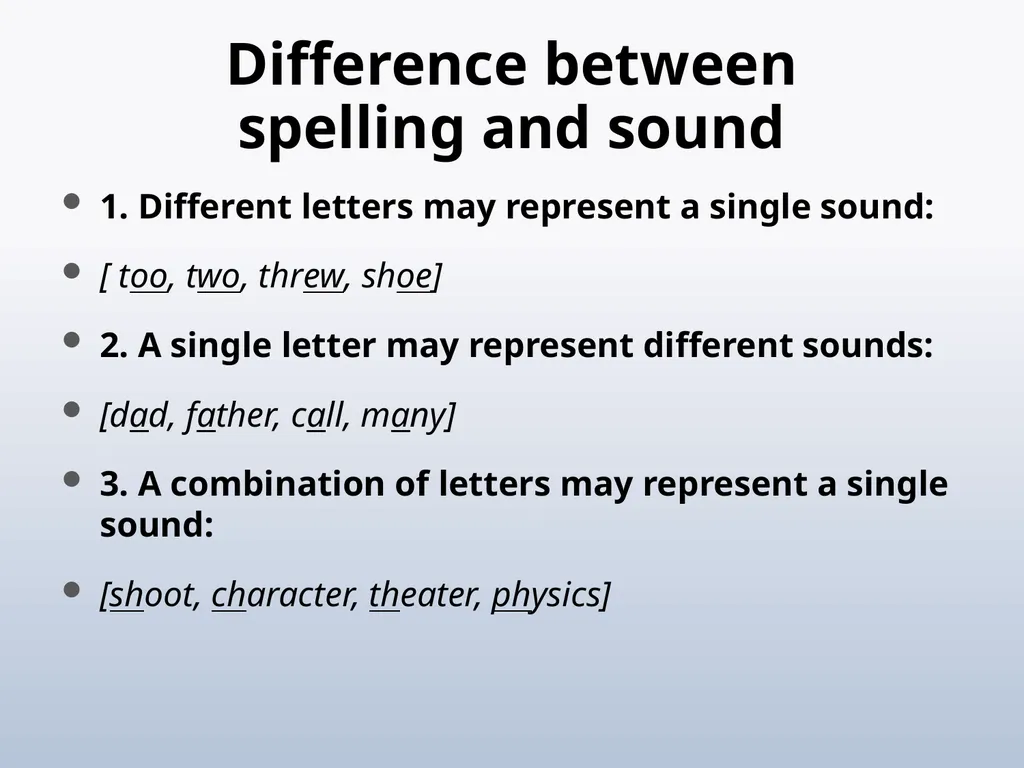
slide9. Difference between spelling and sound 1. Different letters may represent a single sound:
[ too, two, threw, shoe]
2. A single letter may represent different sounds:
[dad, father, call, many]
3. A combination of letters may represent a single sound:
[shoot, character, theater, physics]<br>
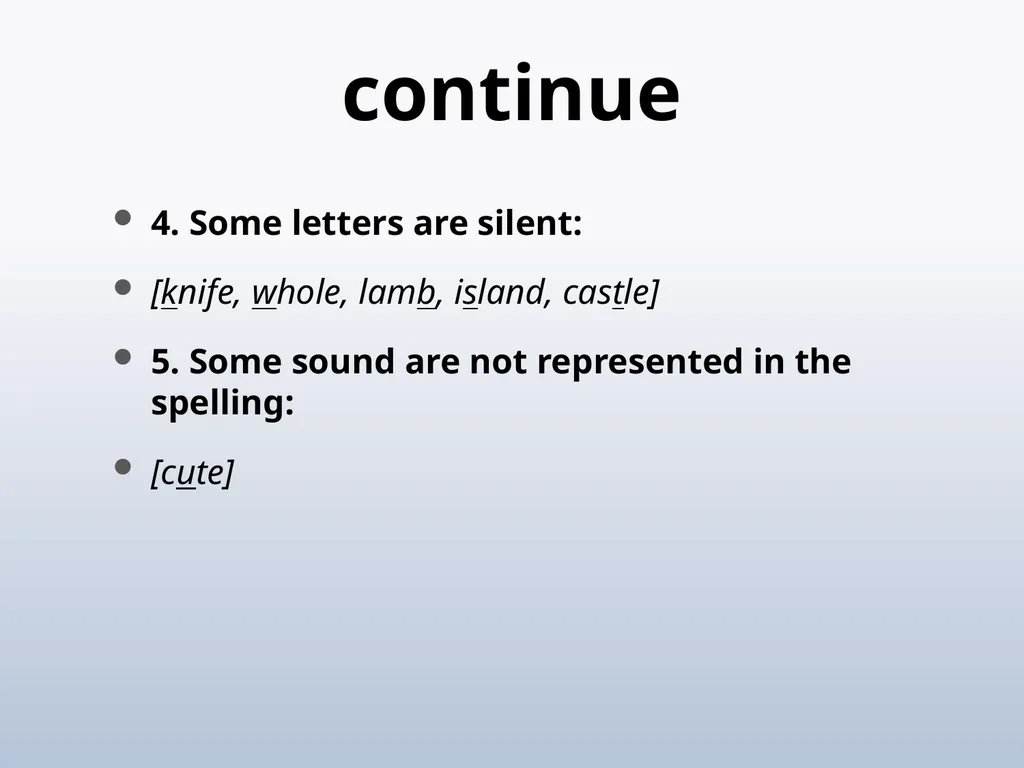
slide10. continue 4. Some letters are silent:
[knife, whole, lamb, island, castle]
5. Some sound are not represented in the spelling:
[cute]<br>
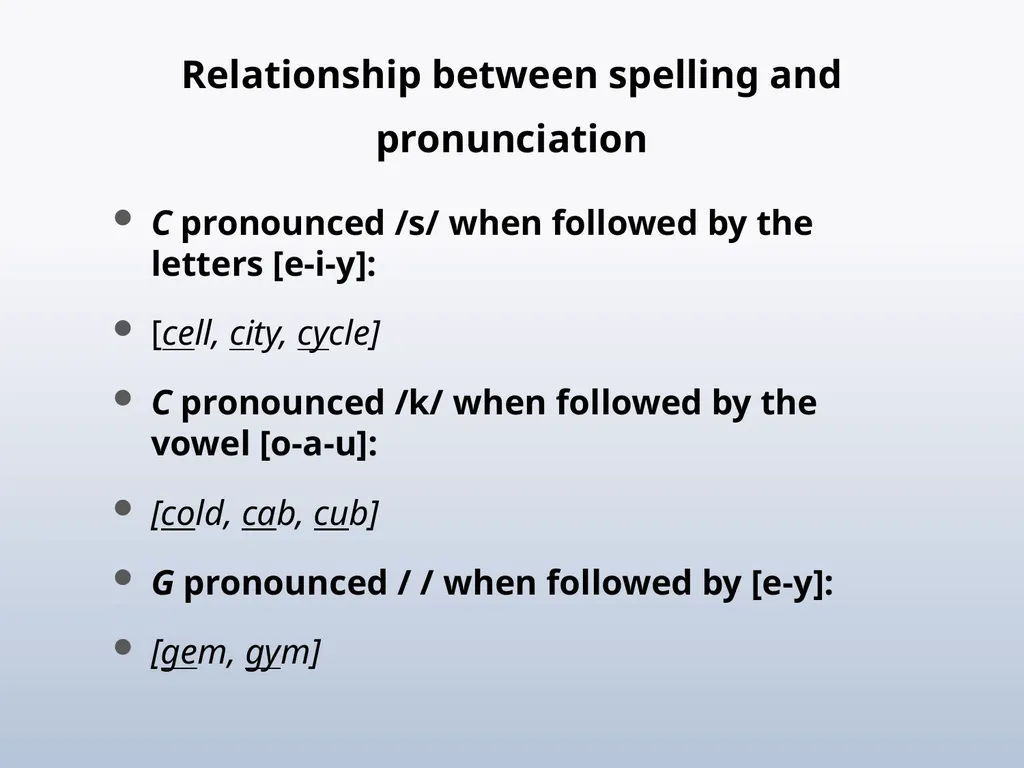
slide11. Relationship between spelling and pronunciation C pronounced /s/ when followed by the letters [e-i-y]:
[cell, city, cycle]
C pronounced /k/ when followed by the vowel [o-a-u]:
[cold, cab, cub]
G pronounced / / when followed by [e-y]:
[gem, gym]<br>
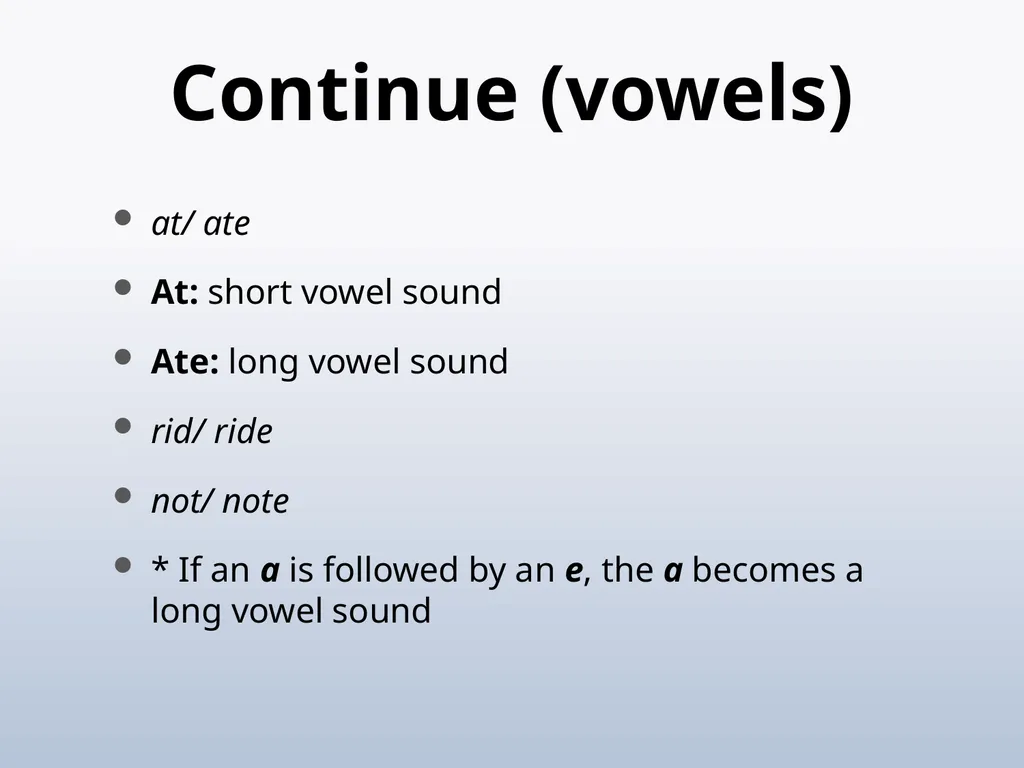
slide12. Continue (vowels) at/ ate
At: short vowel sound
Ate: long vowel sound
rid/ ride
not/ note
* If an a is followed by an e, the a becomes a long vowel sound<br>
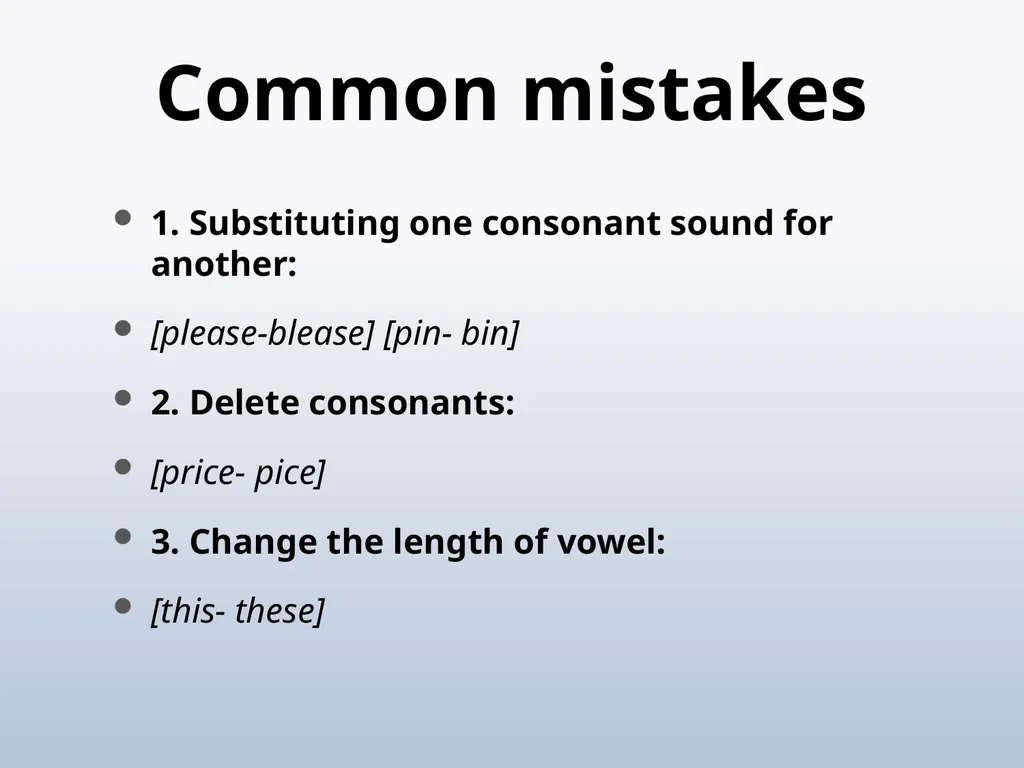
slide13. Common mistakes 1. Substituting one consonant sound for another:
[please-blease] [pin- bin]
2. Delete consonants:
[price- pice]
3. Change the length of vowel:
[this- these]<br>
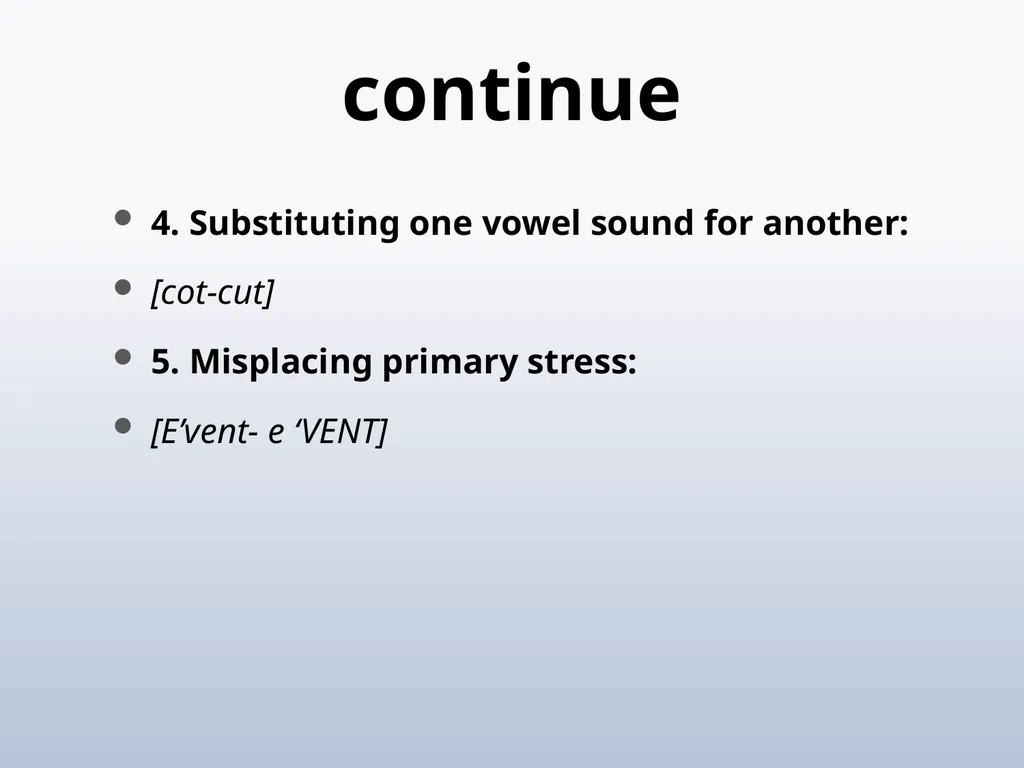
slide14. continue 4. Substituting one vowel sound for another:
[cot-cut]
5. Misplacing primary stress:
[E’vent- e ‘VENT]<br>
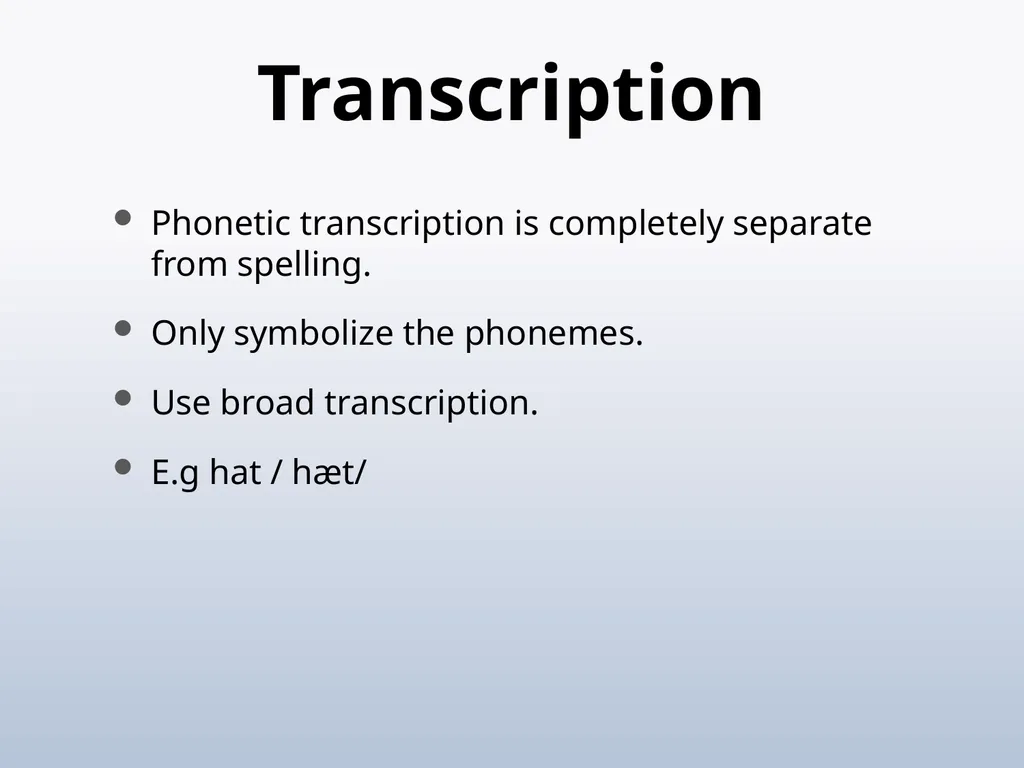
slide15. Transcription Phonetic transcription is completely separate from spelling.
Only symbolize the phonemes.
Use broad transcription.
E.g hat / hæt/<br>
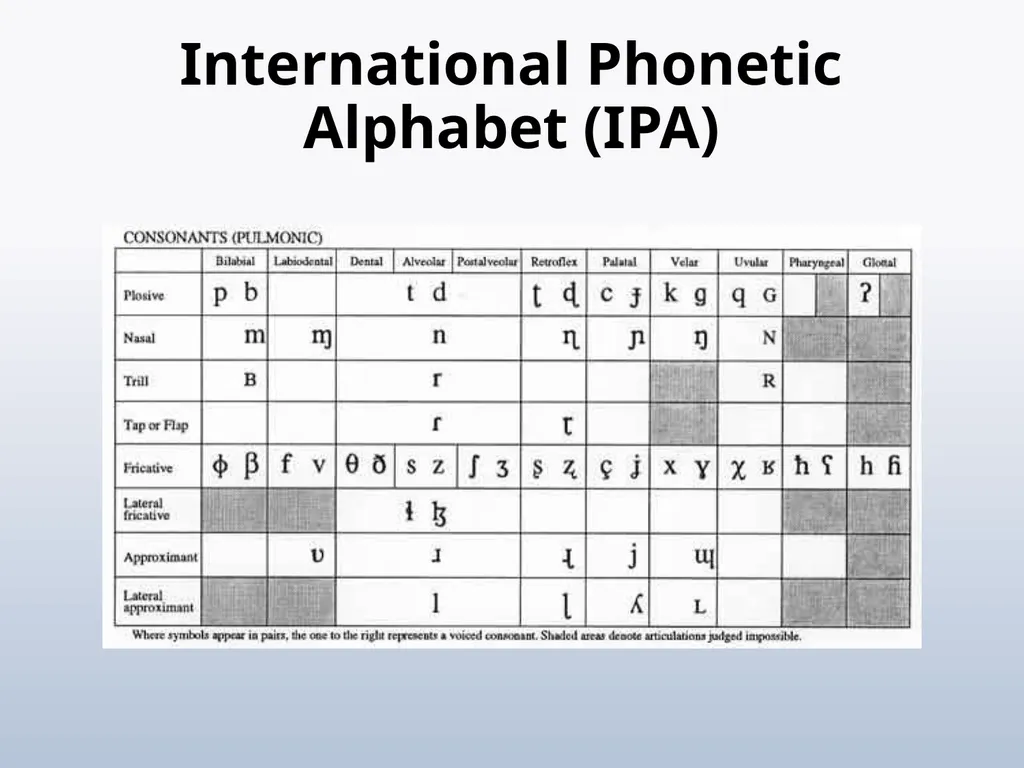
slide16. International Phonetic Alphabet (IPA)<br>
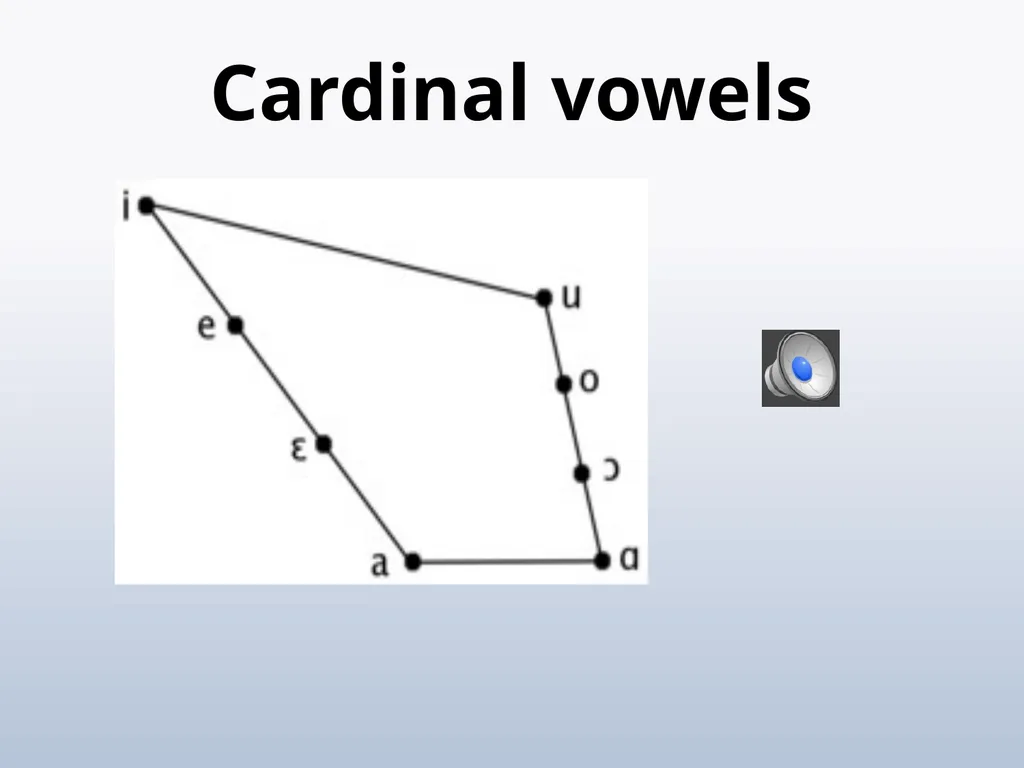
slide17. Cardinal vowels<br>
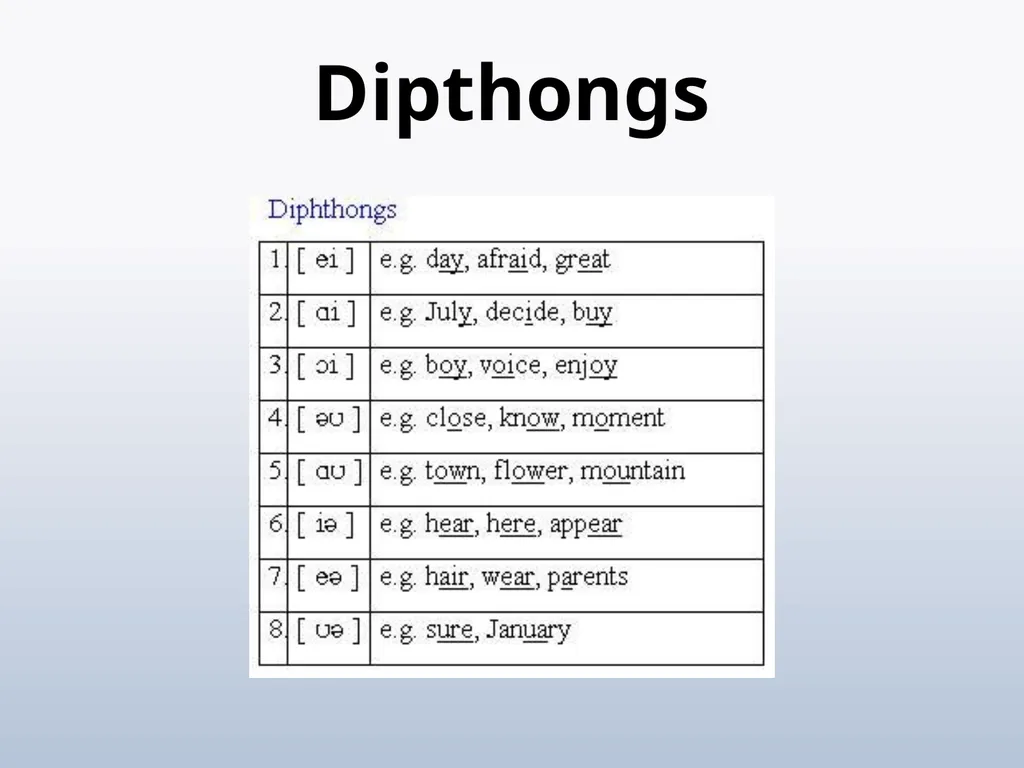
slide18. Dipthongs<br>
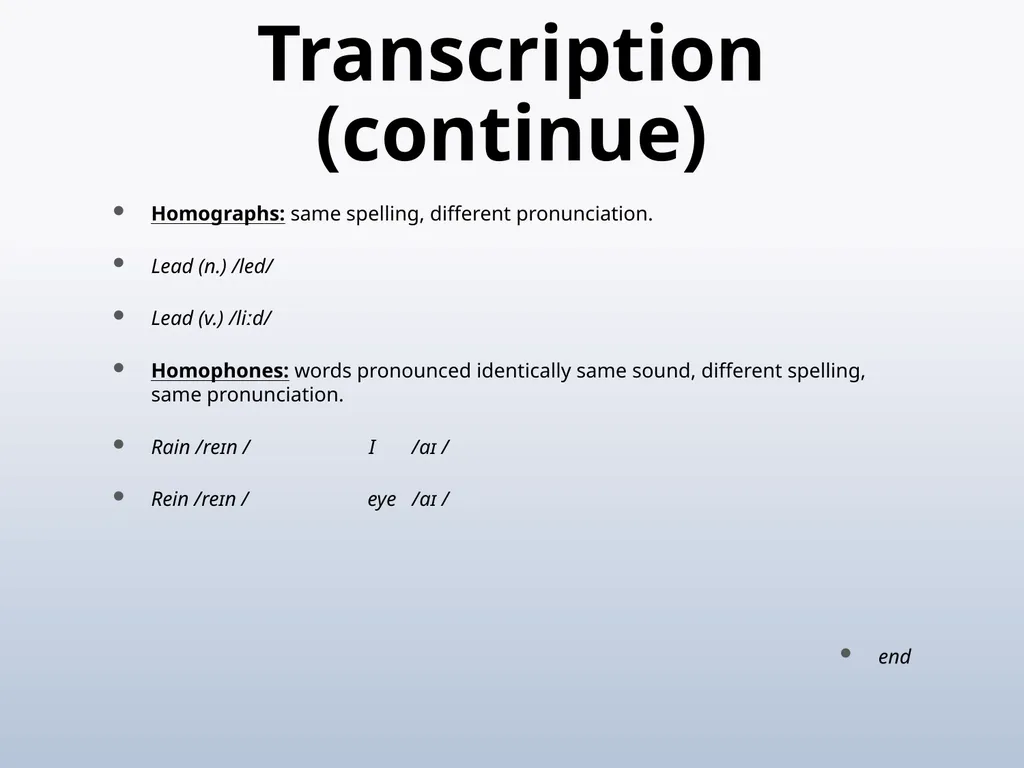
slide19. Transcription (continue) Homographs: same spelling, different pronunciation.
Lead (n.) /led/
Lead (v.) /liːd/
Homophones: words pronounced identically same sound, different spelling, same pronunciation.
Rain /reɪn / I /aɪ /
Rein /reɪn / eye /aɪ /
end<br>
slide20. How the Speech Organs Work?<br>
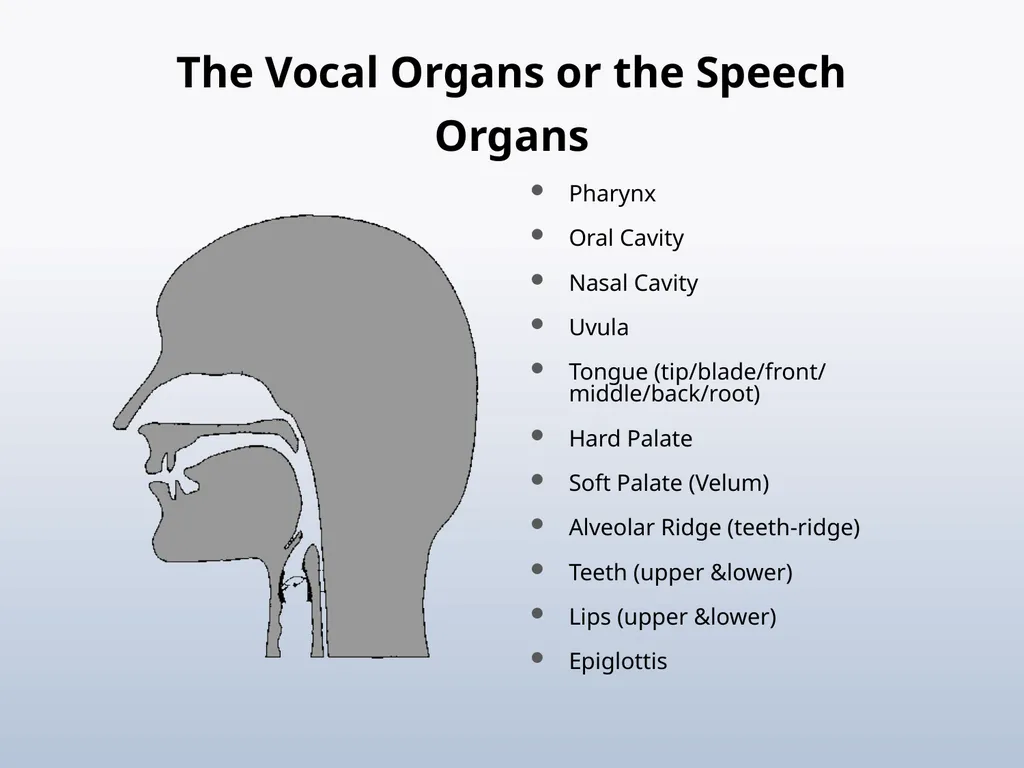
slide21. The Vocal Organs or the Speech Organs Pharynx
Oral Cavity
Nasal Cavity
Uvula
Tongue (tip/blade/front/ middle/back/root)
Hard Palate
Soft Palate (Velum)
Alveolar Ridge (teeth-ridge)
Teeth (upper &lower)
Lips (upper &lower)
Epiglottis<br>
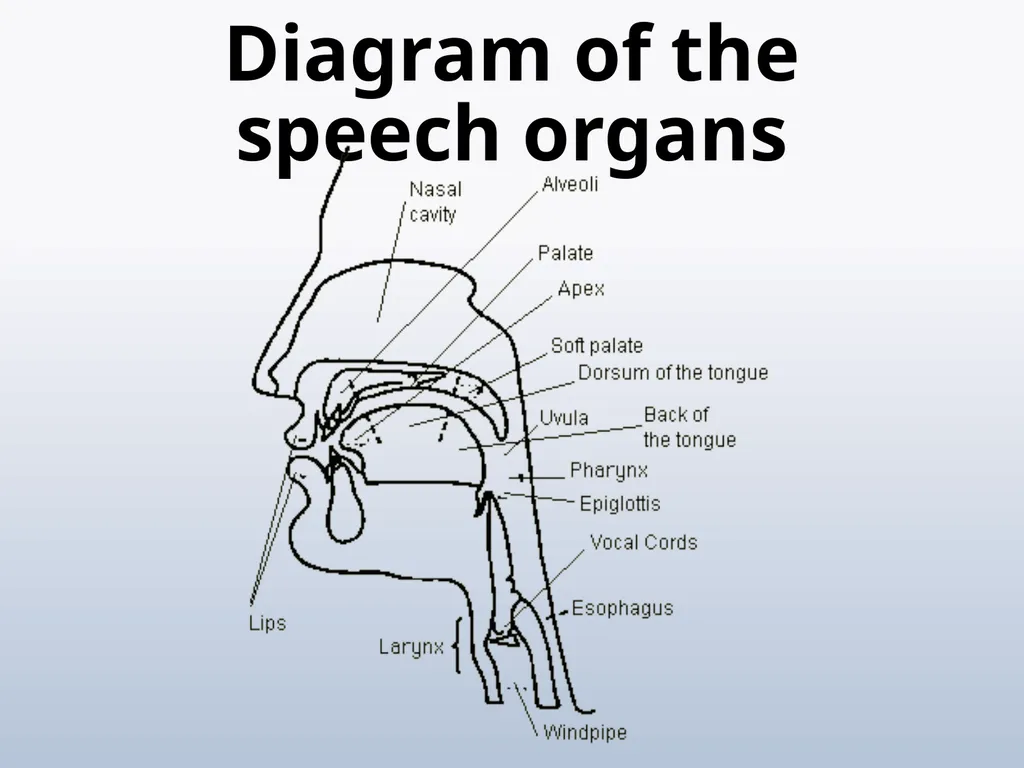
slide22. Diagram of the speech organs<br>
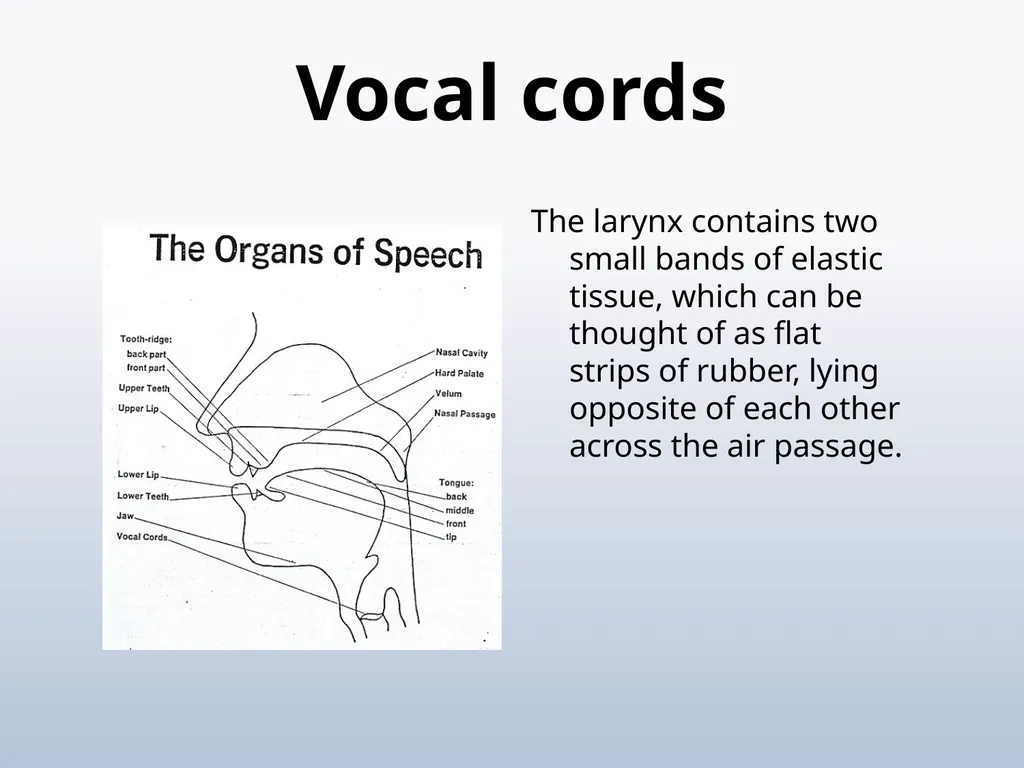
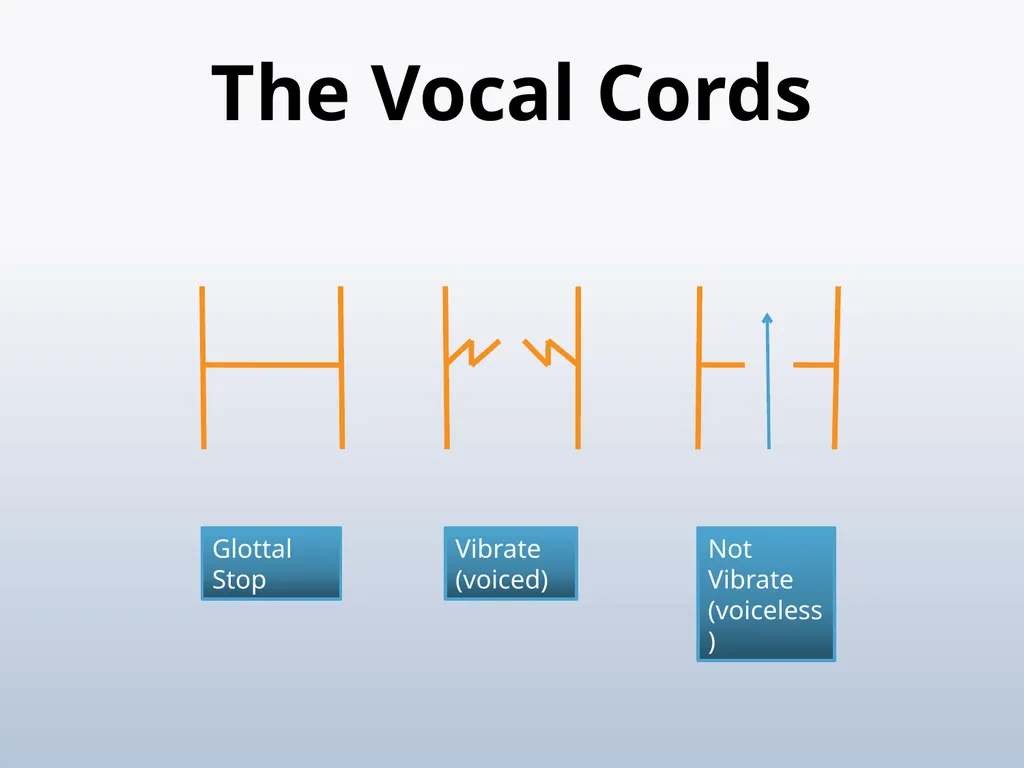
slide23. Vocal cords The larynx contains two small bands of elastic tissue, which can be thought of as flat strips of rubber, lying opposite of each other across the air passage.<br>
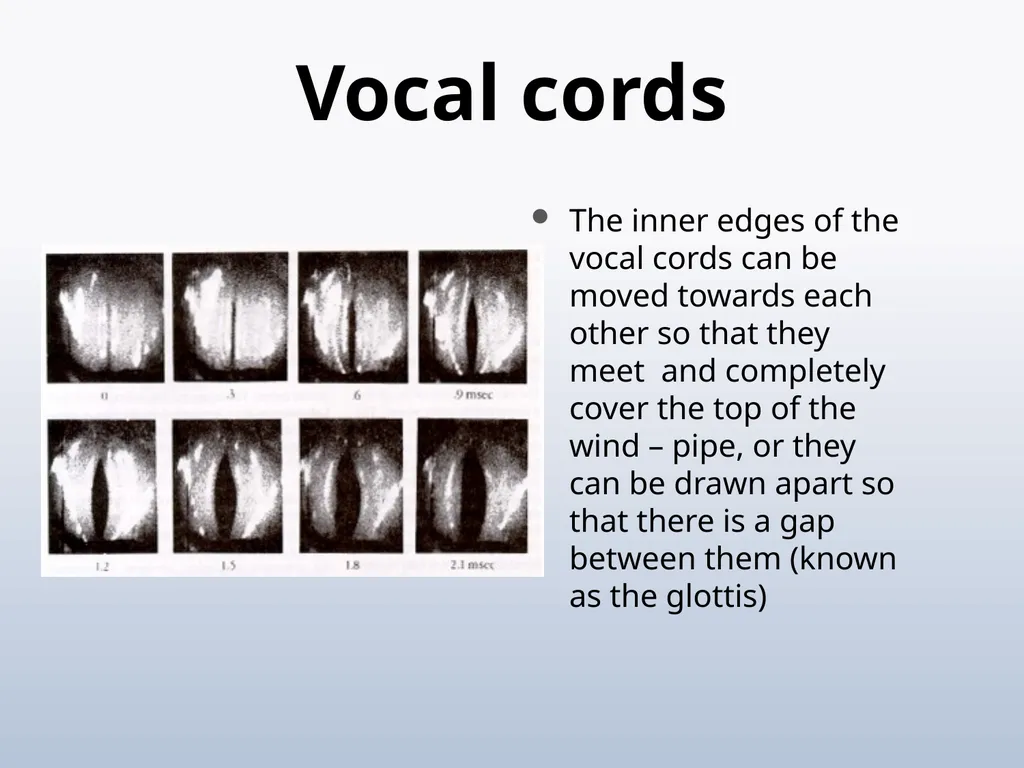
slide24. Vocal cords The inner edges of the vocal cords can be moved towards each other so that they meet and completely cover the top of the wind – pipe, or they can be drawn apart so that there is a gap between them (known as the glottis)<br>
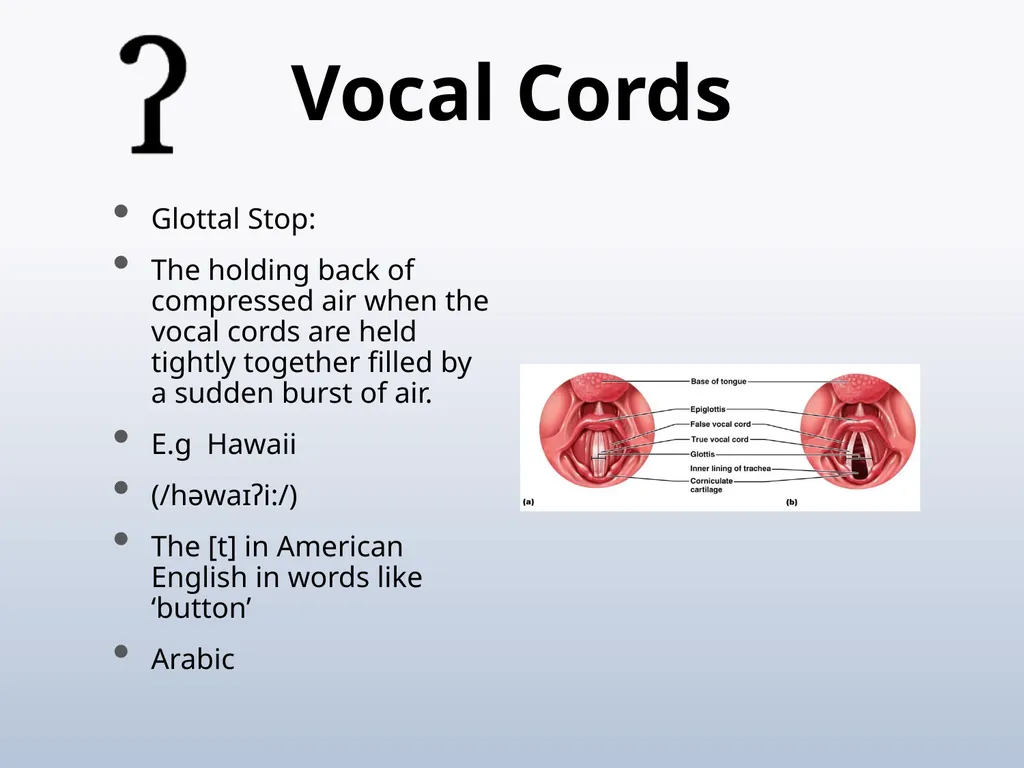
slide25. Vocal Cords Glottal Stop:
The holding back of compressed air when the vocal cords are held tightly together filled by a sudden burst of air.
E.g Hawaii
(/həwaɪʔi:/)
The [t] in American English in words like ‘button’
Arabic<br>
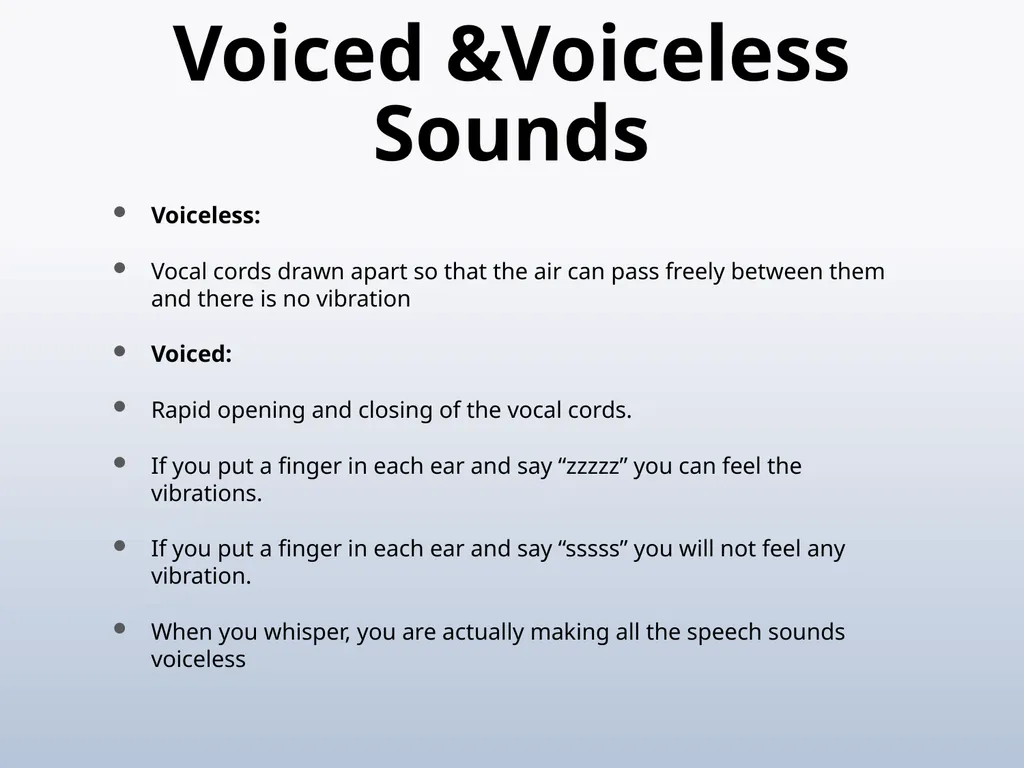
slide26. Voiced &Voiceless Sounds Voiceless:
Vocal cords drawn apart so that the air can pass freely between them and there is no vibration
Voiced:
Rapid opening and closing of the vocal cords.
If you put a finger in each ear and say “zzzzz” you can feel the vibrations.
If you put a finger in each ear and say “sssss” you will not feel any vibration.
When you whisper, you are actually making all the speech sounds voiceless<br>
slide27. The Vocal Cords Glottal Stop Vibrate (voiced) Not Vibrate (voiceless)<br>
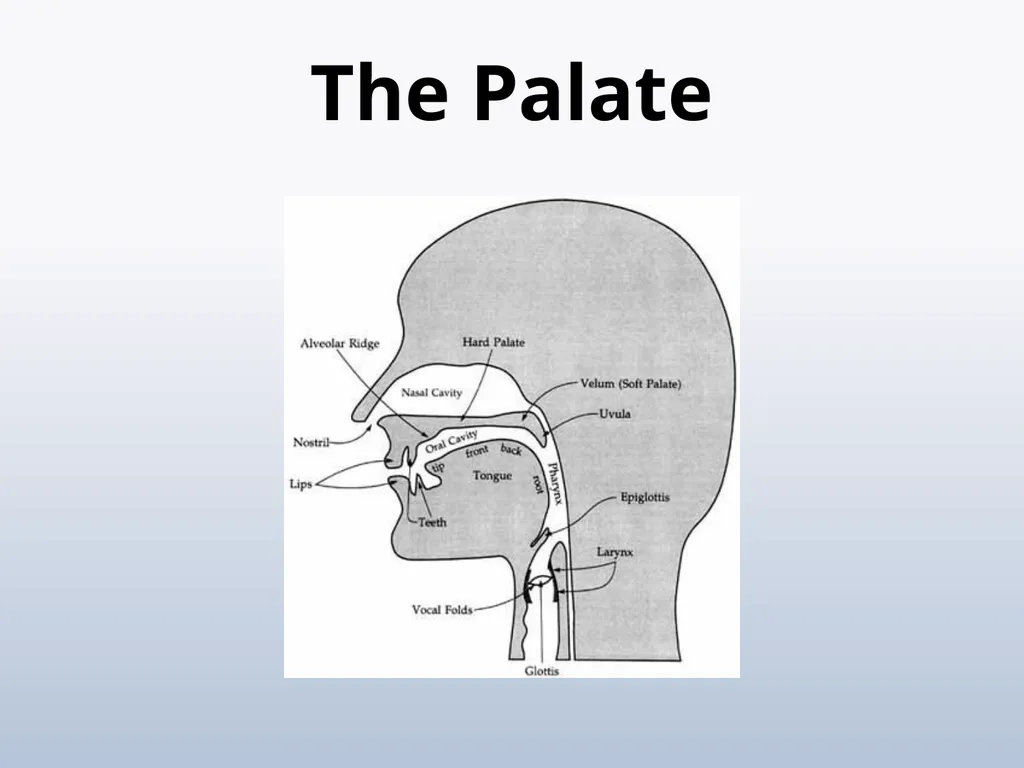
slide28. The Palate<br>
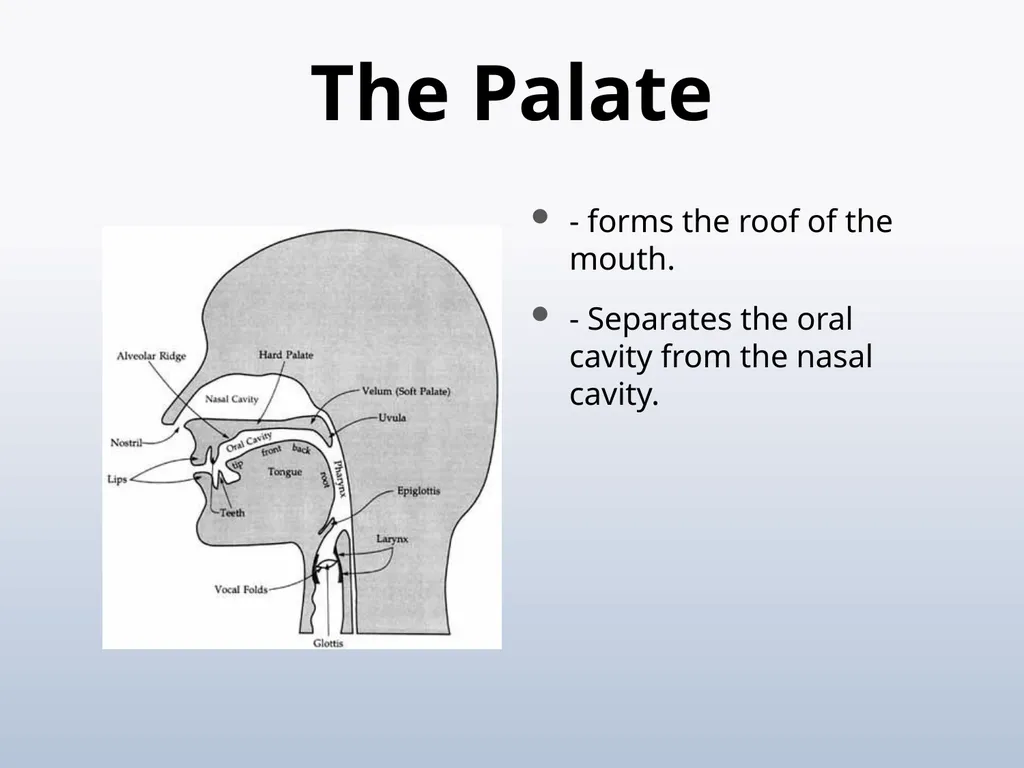
slide29. The Palate - forms the roof of the mouth.
- Separates the oral cavity from the nasal cavity.<br>
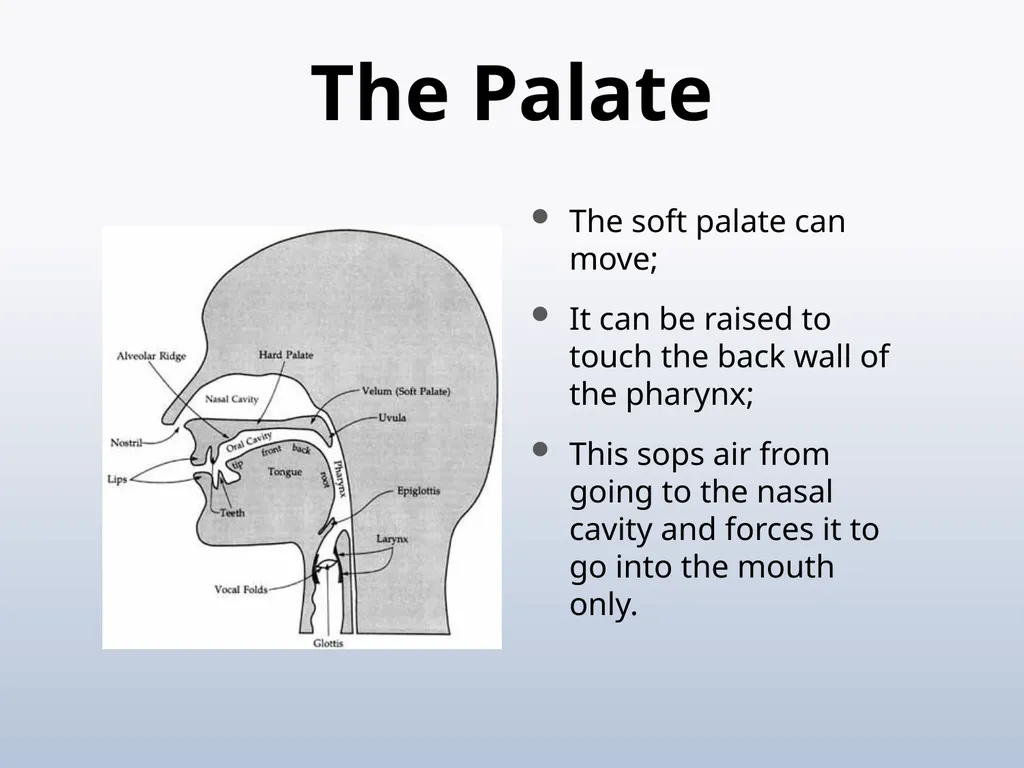
slide30. The Palate The soft palate can move;
It can be raised to touch the back wall of the pharynx;
This sops air from going to the nasal cavity and forces it to go into the mouth only.<br>
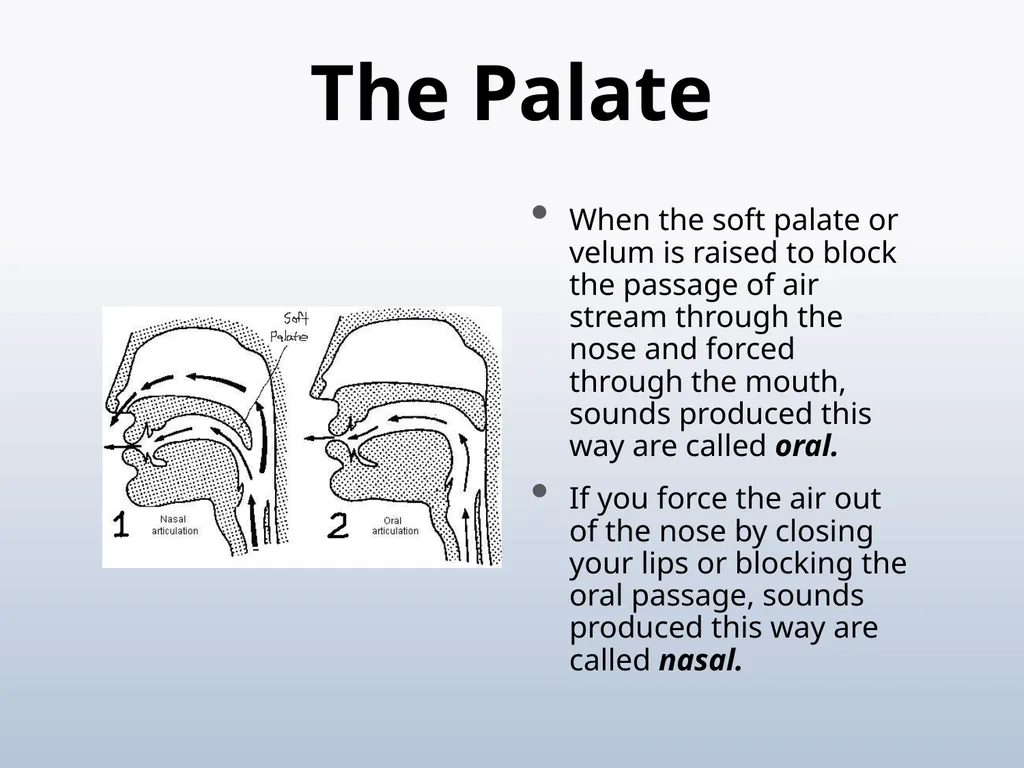
slide31. The Palate When the soft palate or velum is raised to block the passage of air stream through the nose and forced through the mouth, sounds produced this way are called oral.
If you force the air out of the nose by closing your lips or blocking the oral passage, sounds produced this way are called nasal.<br>
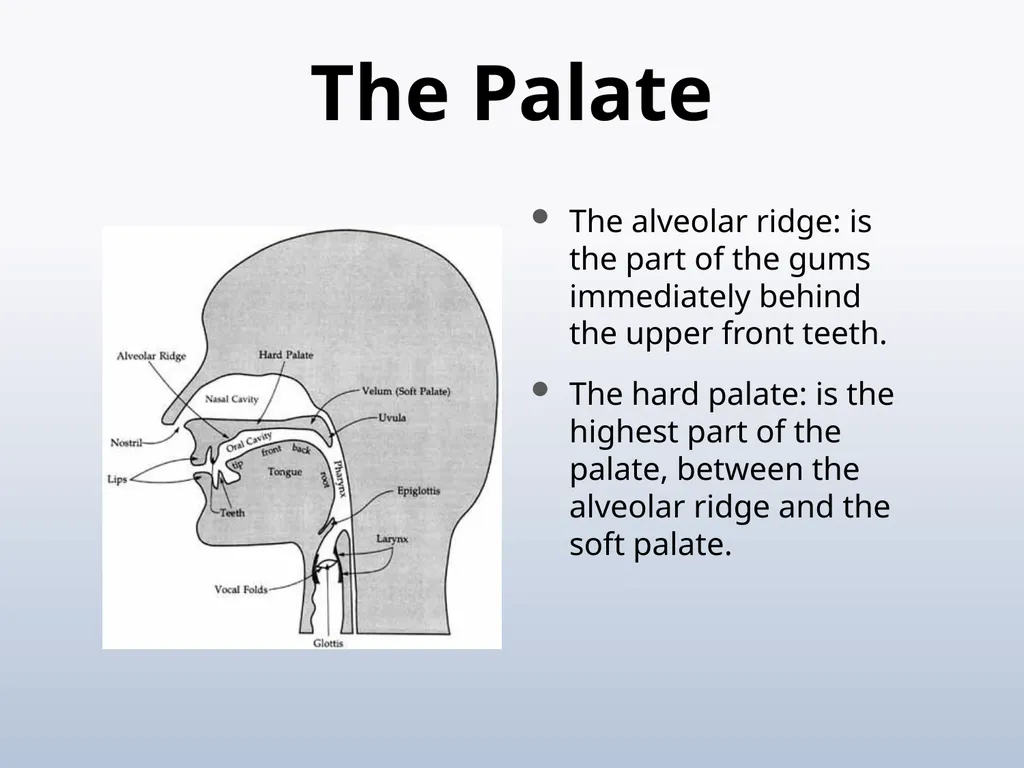
slide32. The Palate The alveolar ridge: is the part of the gums immediately behind the upper front teeth.
The hard palate: is the highest part of the palate, between the alveolar ridge and the soft palate.<br>
slide33. The Teeth The lower front teeth are not important in speech except certain sounds will be difficult to make e.g /s/ and /z/.
Dental fricatives are examples of sounds produced using the upper teeth.<br>
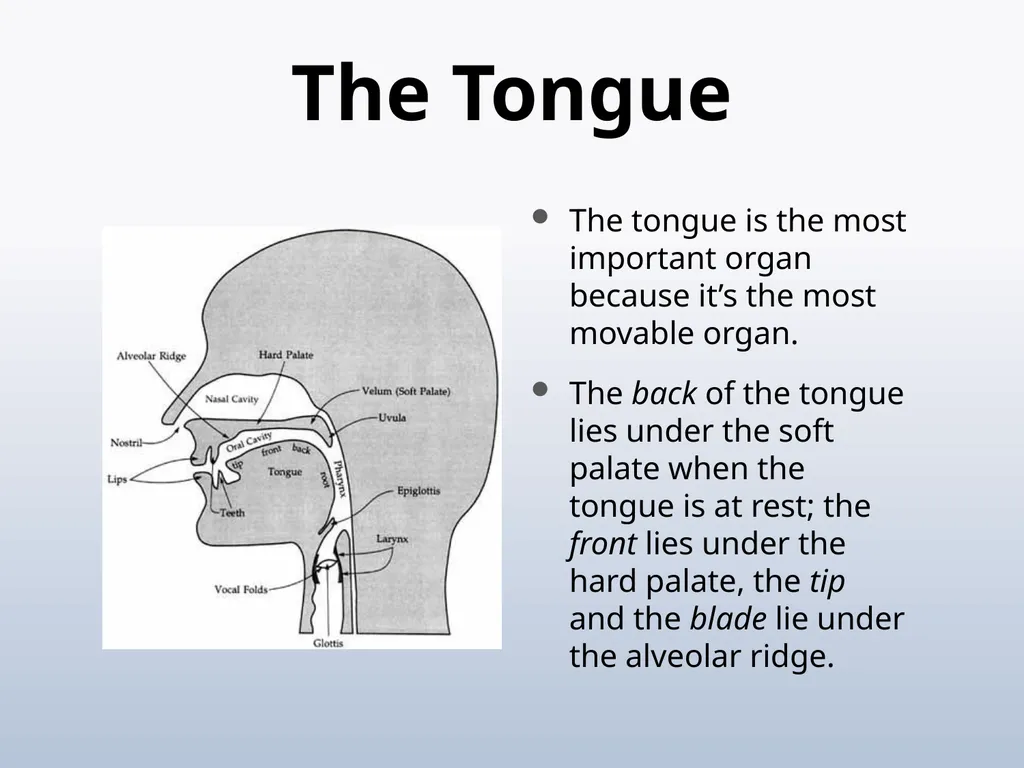
slide34. The Tongue The tongue is the most important organ because it’s the most movable organ.
The back of the tongue lies under the soft palate when the tongue is at rest; the front lies under the hard palate, the tip and the blade lie under the alveolar ridge.<br>
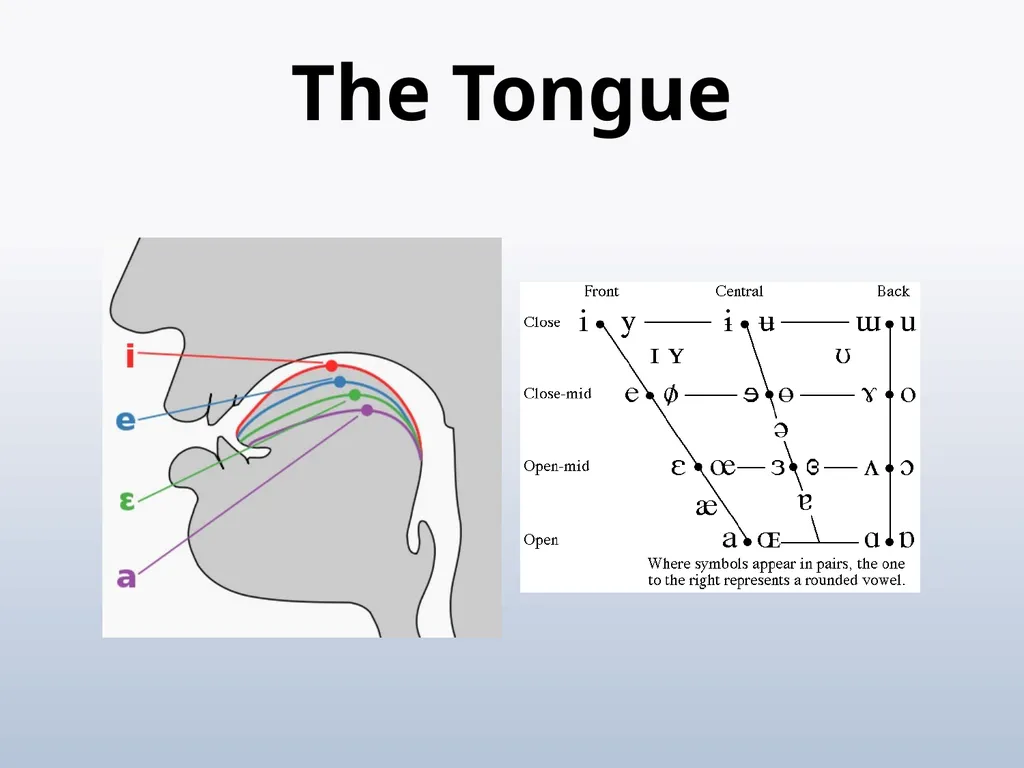
slide35. The Tongue<br>
slide36. /s/ and /l/ /s/
The sides of the tongue are pressed firmly against the side of the palate, so that the breath is forced to pass down the narrow central passage between the blade of the tongue and the alveolar ridge. /l/
The center of the mouth is blocked by the tip and blade of the tongue pressed firmly against the alveolar ridge and the air passes instead between the sides of the tongue and the sides of the palate.<br>
slide37. Examples /s/ we feel the blade of the tongue.
/j/ we feel the center of the tongue moving.
/k/ we feel the back of the tongue moving.<br>
slide38. The Lips Very easy to make different position for lips.
1. completely closed: bilabials [p, b, m]
2. moving lower lip: /f/ (lip – teeth position)
3. rounded lips: /w/<br>
slide39. The English and lips Their lips are never very far apart.
They do not take very rounded shapes.
They are rarely spread very much.
They are almost never pushed forward or protruded.
End<br>

slide2. http://www.youtube.com/watch?v=uTOhDqhCKQs<br>
slide3. Phonetics Definition: The scientific study of speech.
Speech?
Represents words and other units of language.
There are some sounds we can identify easily enough and some sounds are difficult. (E.g non-pulmonic sounds)
Scientific?
To measure as accurately as possible and give an agreed terminology<br>
slide4. Example<br>
slide5. WHISTLE LANGUAGE http://www.lemondesiffle.free.fr/presentation_eng/languessifflees.htm<br>
slide6. Phonetics Concerned with:
The characteristics of sounds that occur in language
Interested in:
1. Description of sounds
2. Classification of sounds; [p] voiceless, bilabial, stop<br>
slide7. Phonetics 3. Transcription of words:
To write words according to how you hear them.
It is a method of writing down speech sounds in a systematic and consistent way<br>
slide8. Difficulties from learning a new language After puberty it is difficult to learn a new language, so we have to learn it at an early age.
There will be difficulties arising from second language interference.
English?
(R.P) received pronunciation, which is the pronunciation of the educated speakers of the English language.<br>
slide9. Difference between spelling and sound 1. Different letters may represent a single sound:
[ too, two, threw, shoe]
2. A single letter may represent different sounds:
[dad, father, call, many]
3. A combination of letters may represent a single sound:
[shoot, character, theater, physics]<br>
slide10. continue 4. Some letters are silent:
[knife, whole, lamb, island, castle]
5. Some sound are not represented in the spelling:
[cute]<br>
slide11. Relationship between spelling and pronunciation C pronounced /s/ when followed by the letters [e-i-y]:
[cell, city, cycle]
C pronounced /k/ when followed by the vowel [o-a-u]:
[cold, cab, cub]
G pronounced / / when followed by [e-y]:
[gem, gym]<br>
slide12. Continue (vowels) at/ ate
At: short vowel sound
Ate: long vowel sound
rid/ ride
not/ note
* If an a is followed by an e, the a becomes a long vowel sound<br>
slide13. Common mistakes 1. Substituting one consonant sound for another:
[please-blease] [pin- bin]
2. Delete consonants:
[price- pice]
3. Change the length of vowel:
[this- these]<br>
slide14. continue 4. Substituting one vowel sound for another:
[cot-cut]
5. Misplacing primary stress:
[E’vent- e ‘VENT]<br>
slide15. Transcription Phonetic transcription is completely separate from spelling.
Only symbolize the phonemes.
Use broad transcription.
E.g hat / hæt/<br>
slide16. International Phonetic Alphabet (IPA)<br>
slide17. Cardinal vowels<br>
slide18. Dipthongs<br>
slide19. Transcription (continue) Homographs: same spelling, different pronunciation.
Lead (n.) /led/
Lead (v.) /liːd/
Homophones: words pronounced identically same sound, different spelling, same pronunciation.
Rain /reɪn / I /aɪ /
Rein /reɪn / eye /aɪ /
end<br>
slide20. How the Speech Organs Work?<br>
slide21. The Vocal Organs or the Speech Organs Pharynx
Oral Cavity
Nasal Cavity
Uvula
Tongue (tip/blade/front/ middle/back/root)
Hard Palate
Soft Palate (Velum)
Alveolar Ridge (teeth-ridge)
Teeth (upper &lower)
Lips (upper &lower)
Epiglottis<br>
slide22. Diagram of the speech organs<br>
slide23. Vocal cords The larynx contains two small bands of elastic tissue, which can be thought of as flat strips of rubber, lying opposite of each other across the air passage.<br>
slide24. Vocal cords The inner edges of the vocal cords can be moved towards each other so that they meet and completely cover the top of the wind – pipe, or they can be drawn apart so that there is a gap between them (known as the glottis)<br>
slide25. Vocal Cords Glottal Stop:
The holding back of compressed air when the vocal cords are held tightly together filled by a sudden burst of air.
E.g Hawaii
(/həwaɪʔi:/)
The [t] in American English in words like ‘button’
Arabic<br>
slide26. Voiced &Voiceless Sounds Voiceless:
Vocal cords drawn apart so that the air can pass freely between them and there is no vibration
Voiced:
Rapid opening and closing of the vocal cords.
If you put a finger in each ear and say “zzzzz” you can feel the vibrations.
If you put a finger in each ear and say “sssss” you will not feel any vibration.
When you whisper, you are actually making all the speech sounds voiceless<br>
slide27. The Vocal Cords Glottal Stop Vibrate (voiced) Not Vibrate (voiceless)<br>
slide28. The Palate<br>
slide29. The Palate - forms the roof of the mouth.
- Separates the oral cavity from the nasal cavity.<br>
slide30. The Palate The soft palate can move;
It can be raised to touch the back wall of the pharynx;
This sops air from going to the nasal cavity and forces it to go into the mouth only.<br>
slide31. The Palate When the soft palate or velum is raised to block the passage of air stream through the nose and forced through the mouth, sounds produced this way are called oral.
If you force the air out of the nose by closing your lips or blocking the oral passage, sounds produced this way are called nasal.<br>
slide32. The Palate The alveolar ridge: is the part of the gums immediately behind the upper front teeth.
The hard palate: is the highest part of the palate, between the alveolar ridge and the soft palate.<br>
slide33. The Teeth The lower front teeth are not important in speech except certain sounds will be difficult to make e.g /s/ and /z/.
Dental fricatives are examples of sounds produced using the upper teeth.<br>
slide34. The Tongue The tongue is the most important organ because it’s the most movable organ.
The back of the tongue lies under the soft palate when the tongue is at rest; the front lies under the hard palate, the tip and the blade lie under the alveolar ridge.<br>
slide35. The Tongue<br>
slide36. /s/ and /l/ /s/
The sides of the tongue are pressed firmly against the side of the palate, so that the breath is forced to pass down the narrow central passage between the blade of the tongue and the alveolar ridge. /l/
The center of the mouth is blocked by the tip and blade of the tongue pressed firmly against the alveolar ridge and the air passes instead between the sides of the tongue and the sides of the palate.<br>
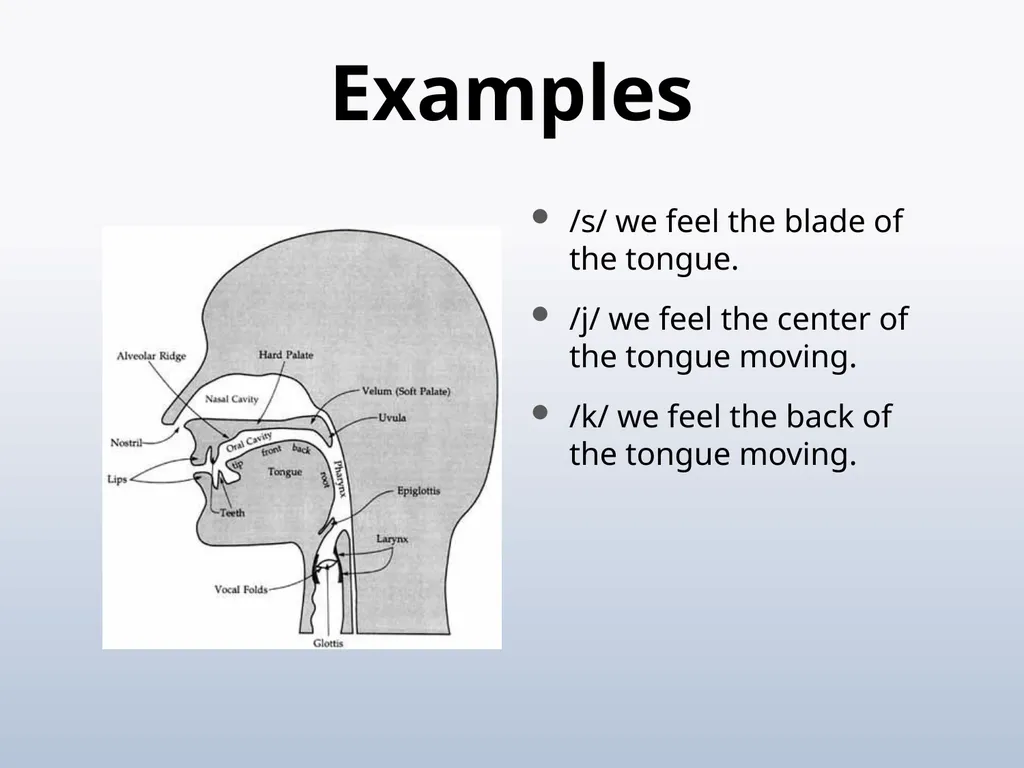
slide37. Examples /s/ we feel the blade of the tongue.
/j/ we feel the center of the tongue moving.
/k/ we feel the back of the tongue moving.<br>
slide38. The Lips Very easy to make different position for lips.
1. completely closed: bilabials [p, b, m]
2. moving lower lip: /f/ (lip – teeth position)
3. rounded lips: /w/<br>
slide39. The English and lips Their lips are never very far apart.
They do not take very rounded shapes.
They are rarely spread very much.
They are almost never pushed forward or protruded.
End<br>