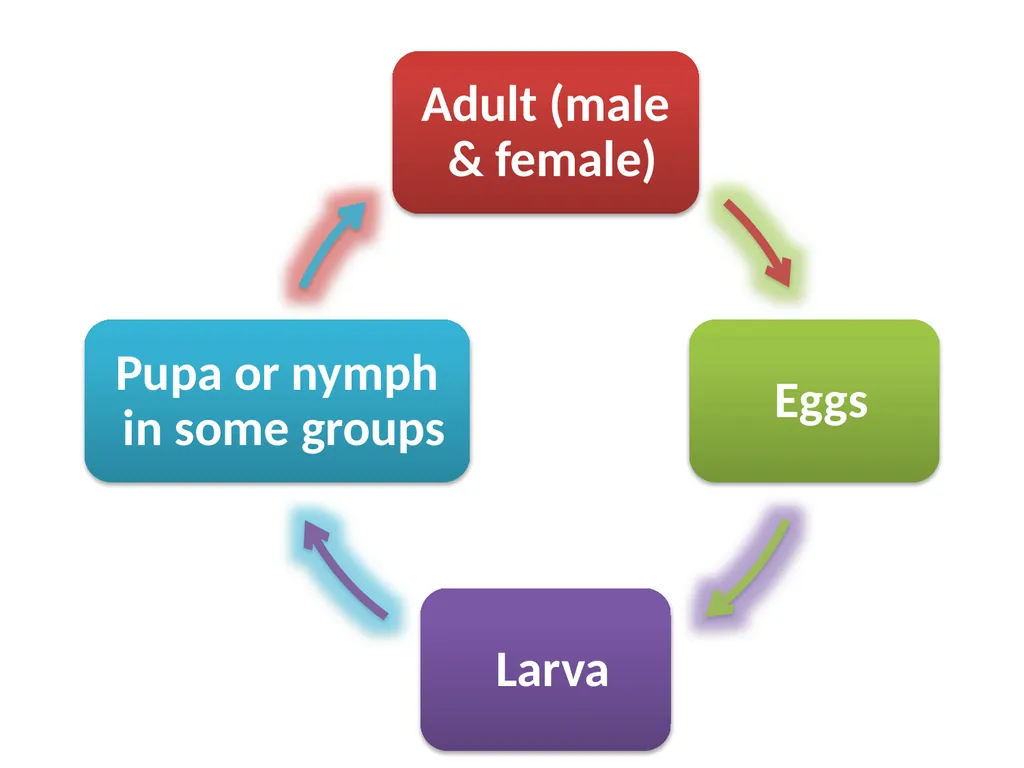
Phylum: Arthropoda Lab 18 introduction Characters of Arthropoda: Bodies appendages (legs, mouth parts, antennae and genitalia) are segmented. Body walls are made up of a complicated saccharine proteins secretion (non-living materials
"Phylum: Arthropoda Lab 18 introduction Characters" is the property of its rightful owner. Permission is granted to
download and print the materials on this website for personal, non-commercial use only, and to display it
on your personal computer provided you do not modify the materials and that you retain all copyright
notices contained in the materials. By downloading content from our website, you accept the terms of this
agreement.
Presentation Transcript
01
Phylum: Arthropoda<br>
02
Lab 18 introduction<br>
03
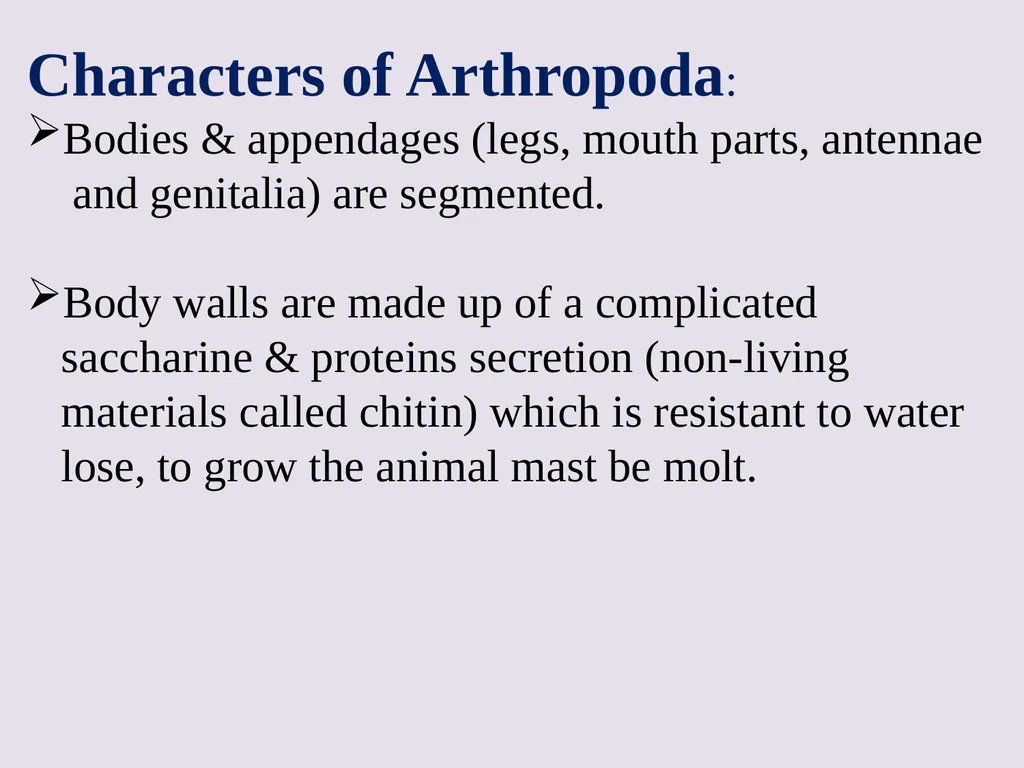
Characters of Arthropoda:
Bodies & appendages (legs, mouth parts, antennae
and genitalia) are segmented.
Body walls are made up of a complicated
saccharine & proteins secretion (non-living
materials called chitin) which is resistant to water
lose, to grow the animal mast be molt.<br>
04
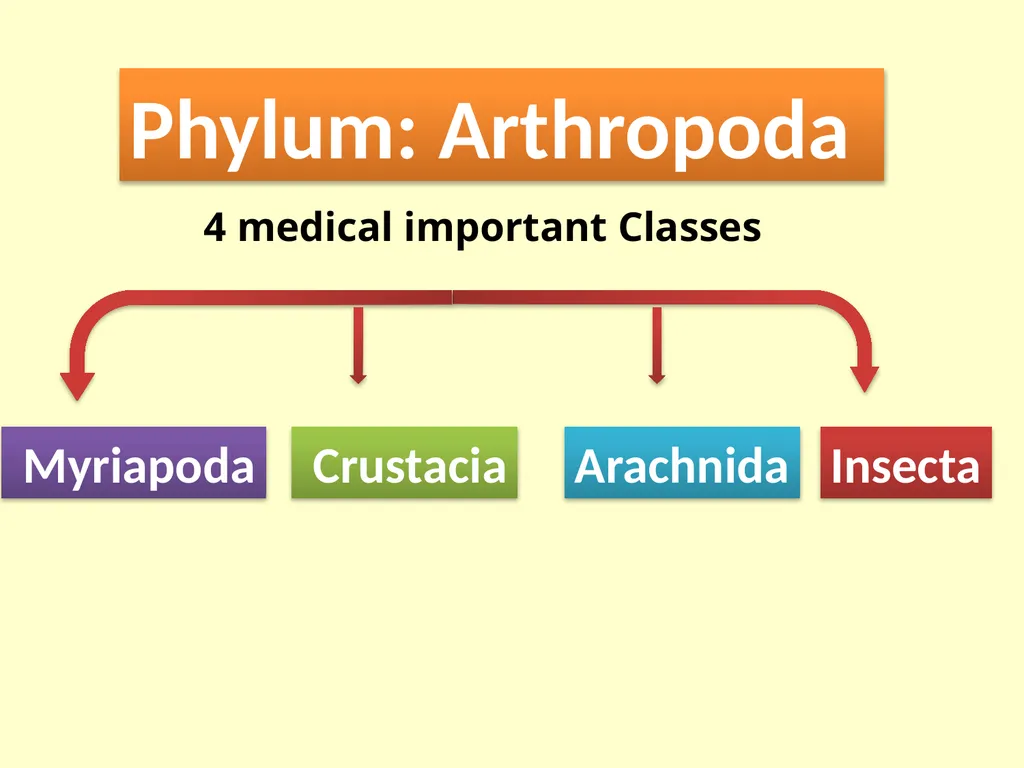
Phylum: Arthropoda Myriapoda 4 medical important Classes Crustacia Arachnida Insecta<br>
05
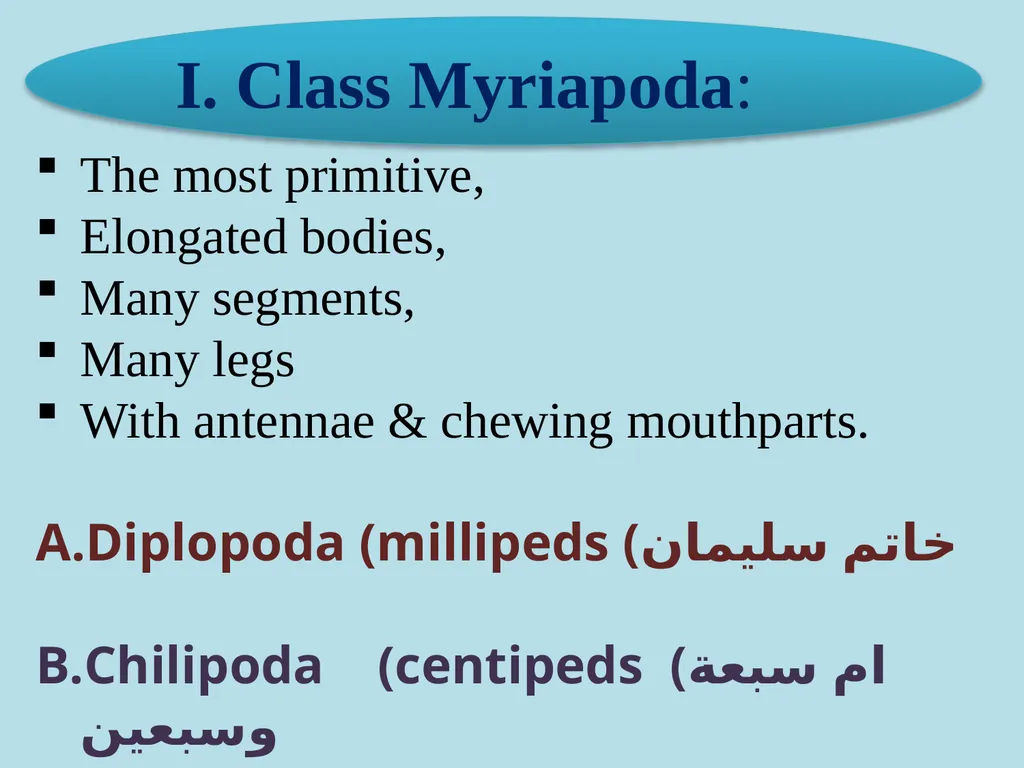
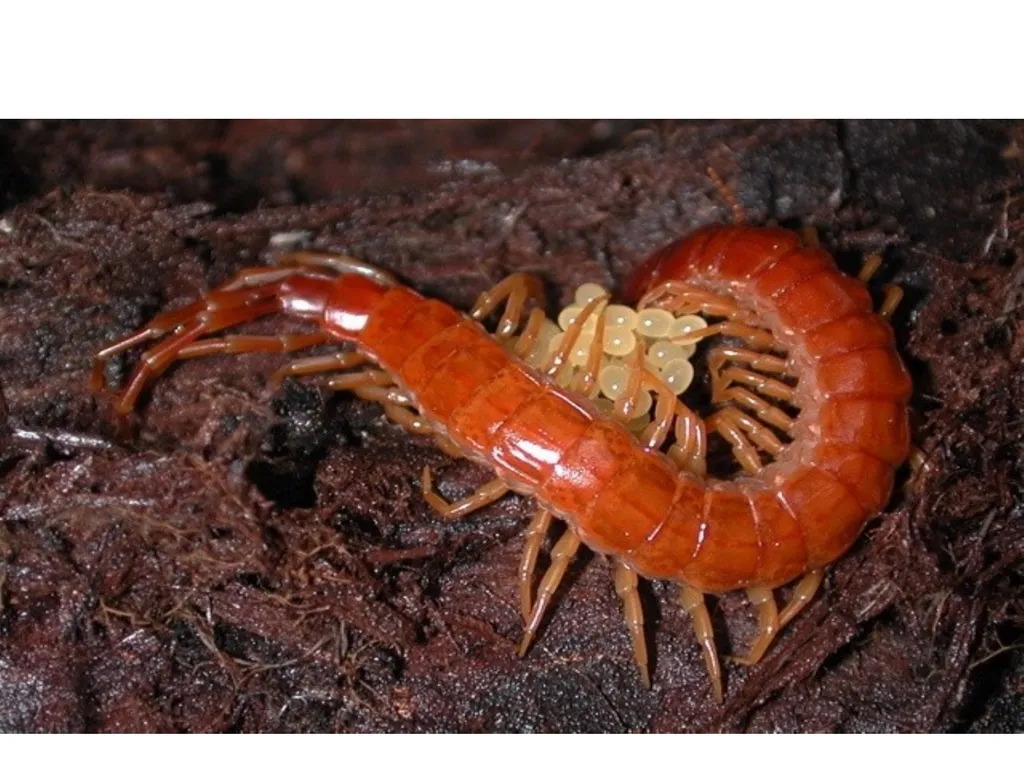
The most primitive,
Elongated bodies,
Many segments,
Many legs
With antennae & chewing mouthparts.
Diplopoda (millipeds (خاتم سليمان
Chilipoda (centipeds (ام سبعة وسبعين I. Class Myriapoda:<br>
06
A. Diplopoda (millipeds خاتم سليمان ):
Many segments,
Segments circular,
Two pairs of legs per segment,
Live on plant materials in
gardens (herbaceous)
Body covered with minute
hairs & glands,
If bothered either spray
poisoning secretions or
through hairs or both,
causing sensitivity, rash,
swelling but not killing.<br>
07
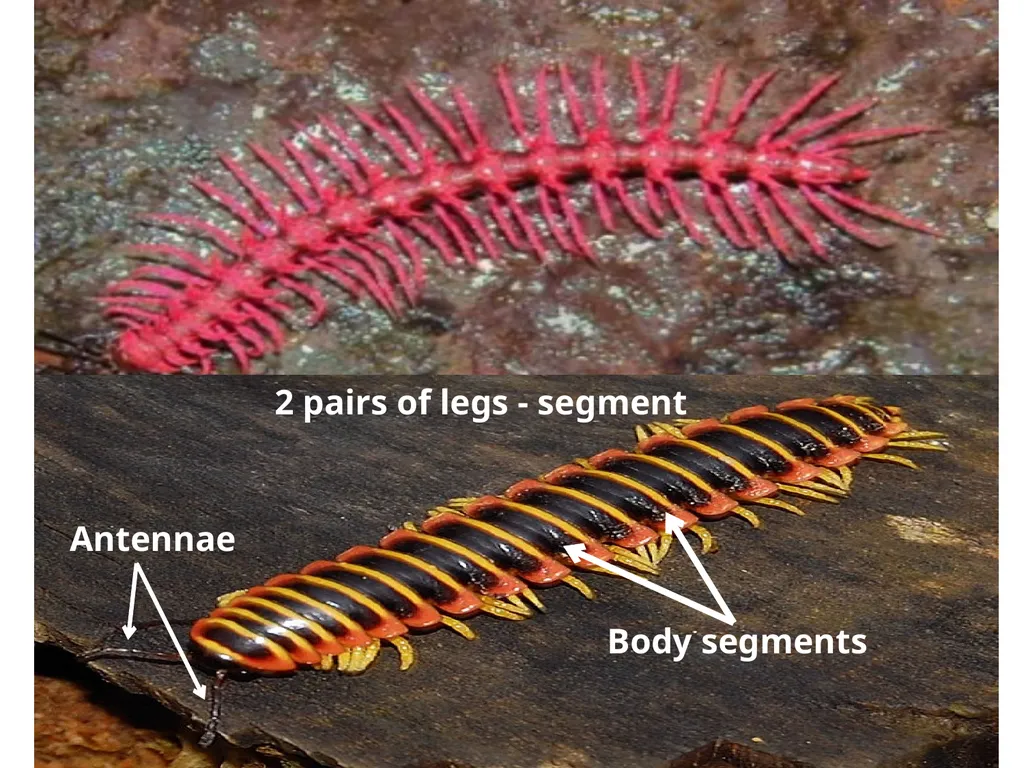
Antennae Body segments 2 pairs of legs - segment<br>
08
Chilipoda (centipeds ام سبعه وسبعين ):
Many broad segments,
One pair of legs in each
segment,
Predacious on other small arthropods,
Provided with poison
glands,
First pair of leg modified
into claws to inject poison
Painful bite may be killing. Claws 1 pair of legs -segment<br>
09
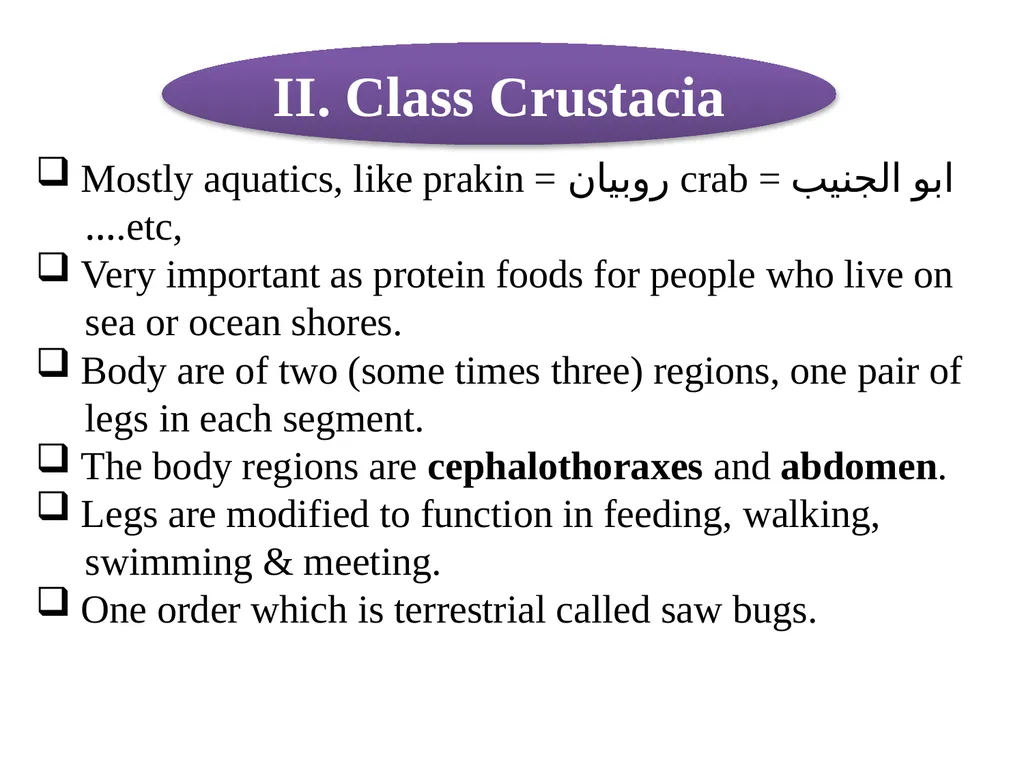
Mostly aquatics, like prakin = روبيان crab = ابو الجنيب
….etc,
Very important as protein foods for people who live on
sea or ocean shores.
Body are of two (some times three) regions, one pair of
legs in each segment.
The body regions are cephalothoraxes and abdomen.
Legs are modified to function in feeding, walking,
swimming & meeting.
One order which is terrestrial called saw bugs. II. Class Crustacia<br>
10
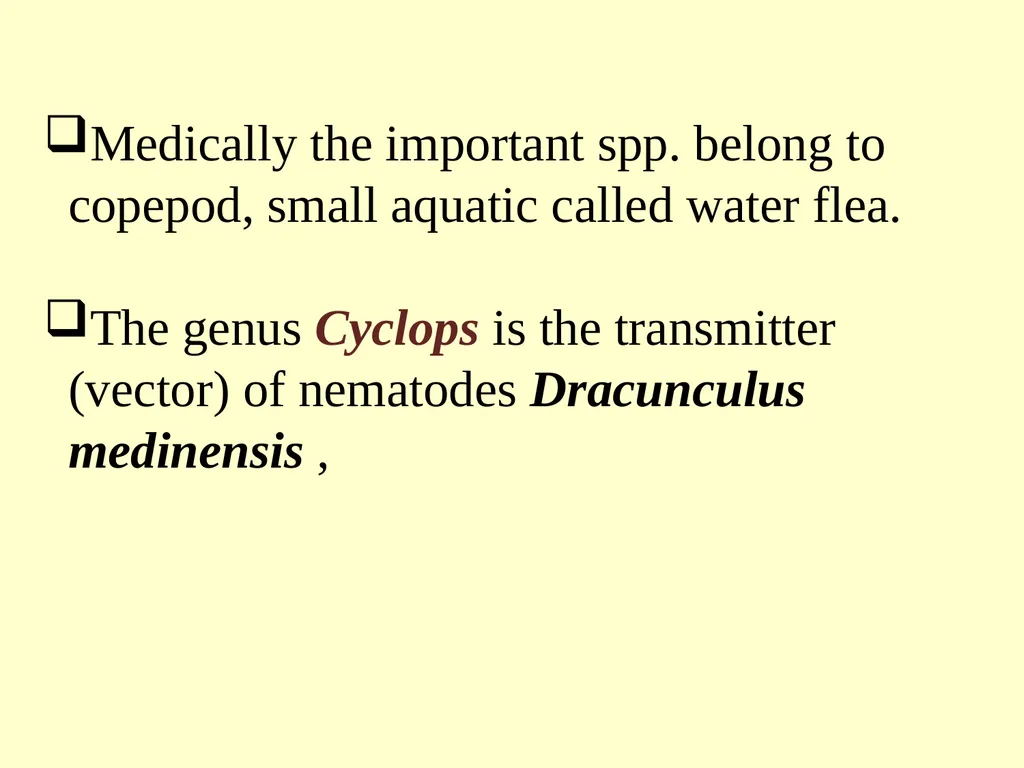
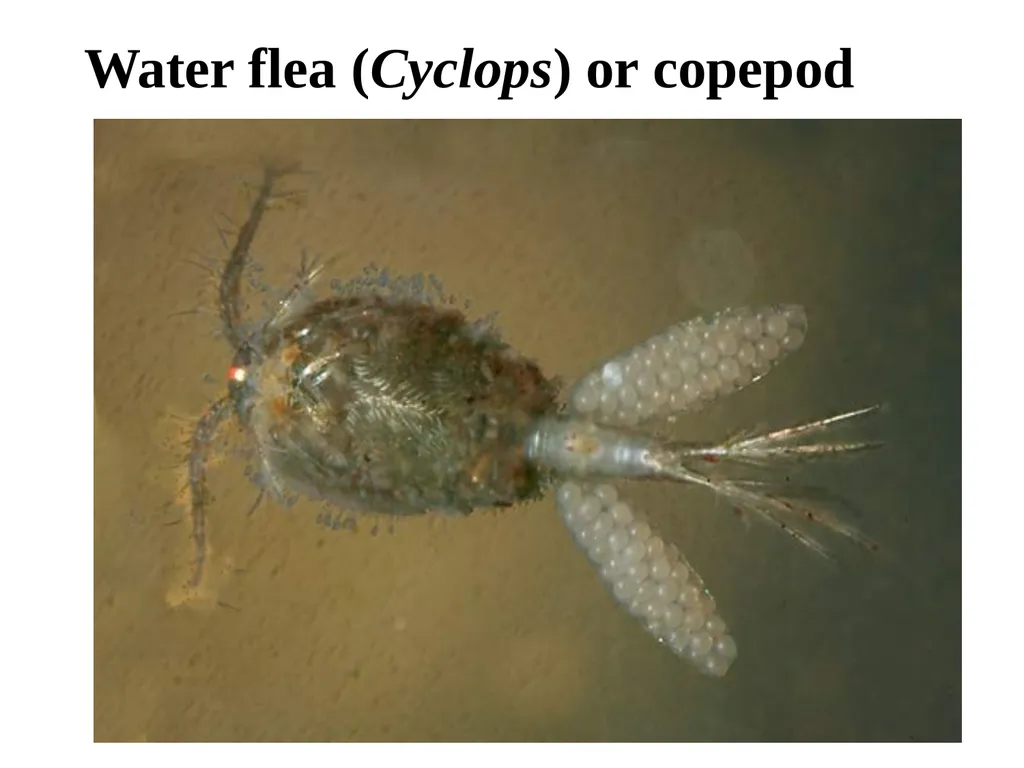
Medically the important spp. belong to copepod, small aquatic called water flea.
The genus Cyclops is the transmitter (vector) of nematodes Dracunculus medinensis ,<br>
11
Water flea (Cyclops) or copepod<br>
12
like spiders, scorpions, ticks & mites.
They are characterized by having:
A. 2 body regions…… cephalothorax & abdomen.
B. In adult 4 pairs of legs, on the cephalothorax.
No appendages on abdomen.
C. No sensory antennae.
D. Mouth parts all of sucking types (piercing,
cutting, rupturing and then sucking). mouth
parts composed of chelicerae & peripoda. III. Class Archanida (العنكبوتيات)<br>
13
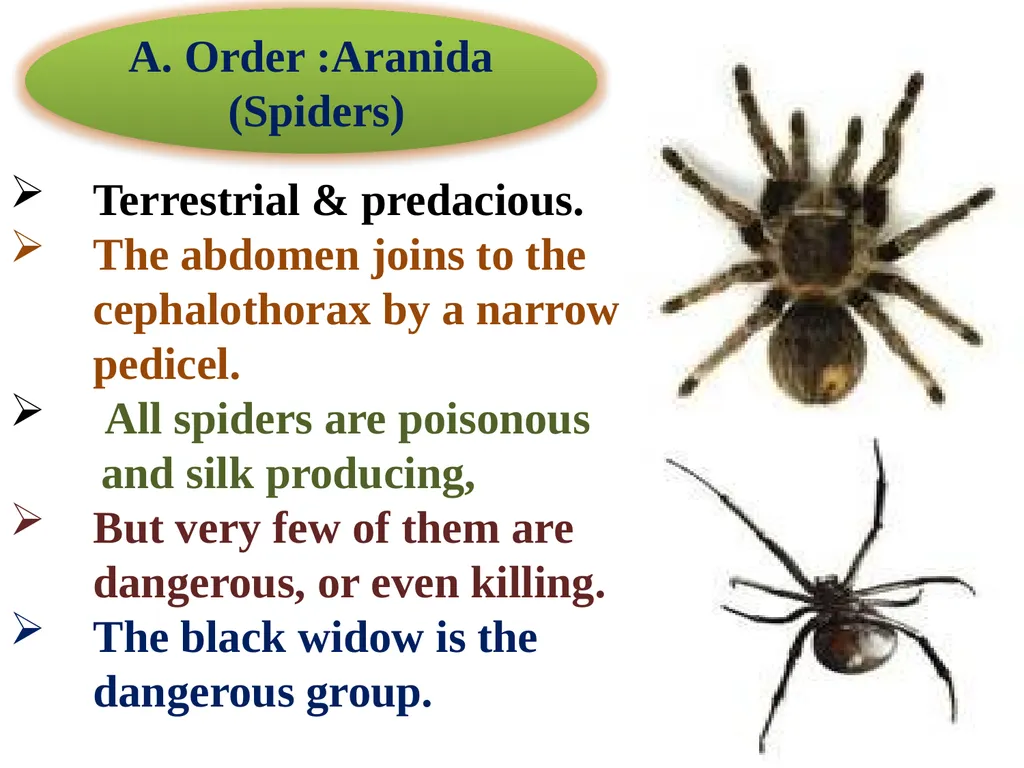
Terrestrial & predacious.
The abdomen joins to the cephalothorax by a narrow pedicel.
All spiders are poisonous
and silk producing,
But very few of them are dangerous, or even killing.
The black widow is the dangerous group. A. Order :Aranida (Spiders)<br>
14
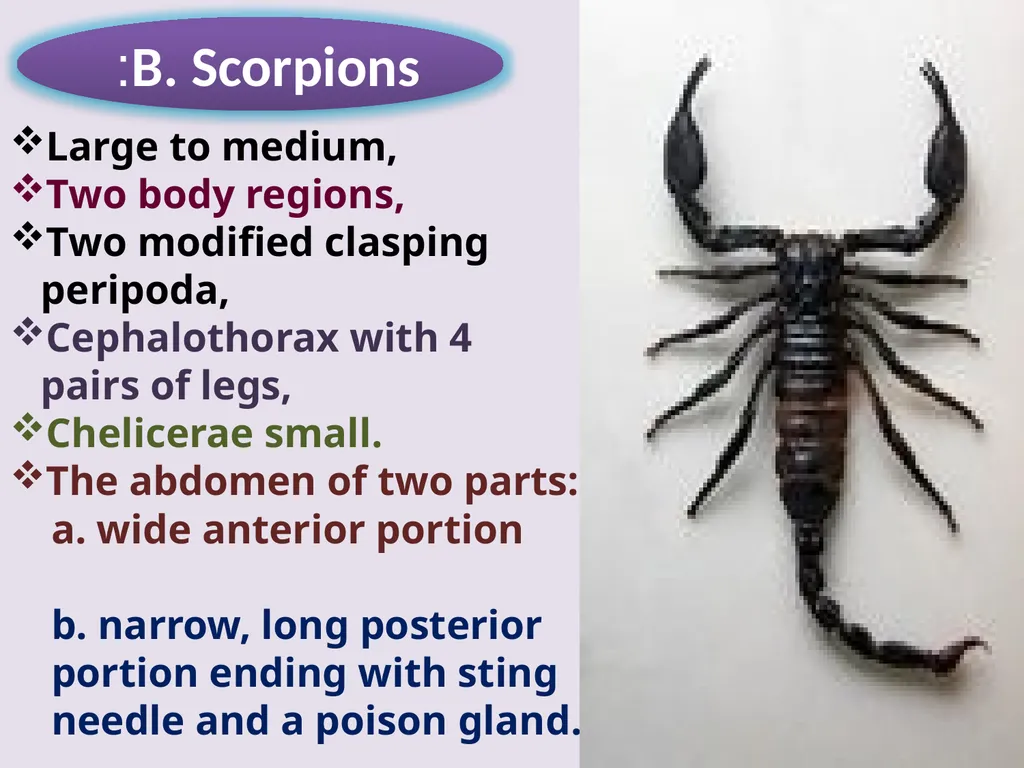
Large to medium,
Two body regions,
Two modified clasping
peripoda,
Cephalothorax with 4
pairs of legs,
Chelicerae small.
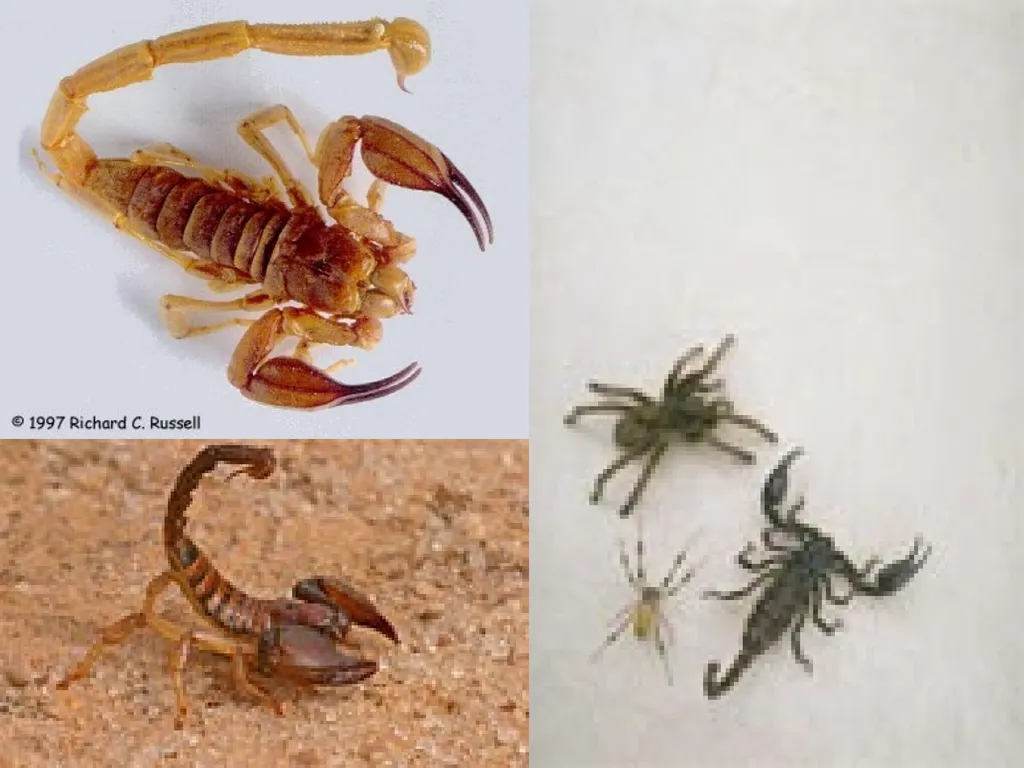
The abdomen of two parts:
a. wide anterior portion
b. narrow, long posterior
portion ending with sting
needle and a poison gland. B. Scorpions:<br>
15
Al- Jarrar scorpion:
Found in the eastern
of Zagros Mountain, Khanaquin, Mendili, Badrah, Jassan and down to Ahwaz (Iran).
The scorpion when moving draws the tail behind and not having it stand on the ready.
Very dangerous, may kill children or leave a large spot….<br>
16
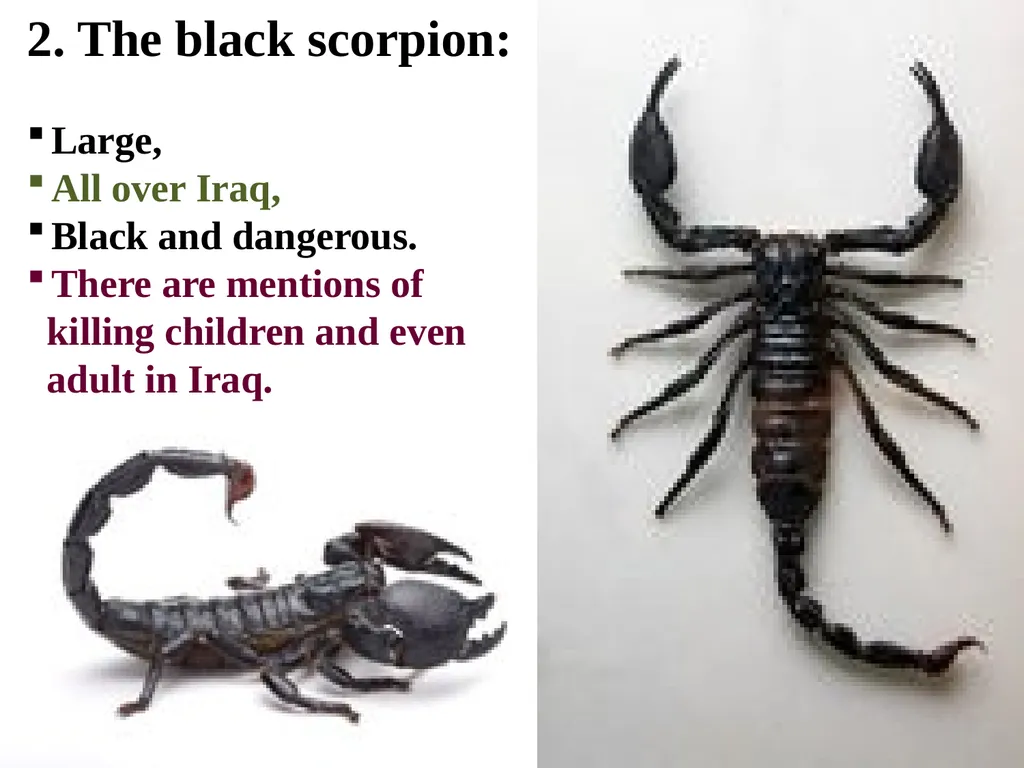
2. The black scorpion:
Large,
All over Iraq,
Black and dangerous.
There are mentions of
killing children and even
adult in Iraq.<br>