
Physical Science Chapter 4 Atomic Structure
Description: Physical Science Chapter 4 Atomic Structure Democritus and Aristotle Democritus thought all matter consisted of extremely tiny particles that could not be divided. (Cut aluminum foil in half) Also thought matter in liquids was round and
Related Topics
Download Presentation
"Physical Science Chapter 4 Atomic Structure" is the property of its rightful owner. Permission is granted to download and print the materials on this website for personal, non-commercial use only, and to display it on your personal computer provided you do not modify the materials and that you retain all copyright notices contained in the materials. By downloading content from our website, you accept the terms of this agreement.
Presentation Transcript
slide1. Physical Science Chapter 4 Atomic Structure<br>
slide2. Democritus and Aristotle
Democritus thought all matter consisted of extremely tiny particles that could not be divided. (Cut aluminum foil in half)
Also thought matter in liquids was round and smooth; in solids rough and prickly
Aristotle thought there was no limit to the number of times matter could be divided. 4.1 Studying Atoms<br>
slide3. Developed a theory to explain why the elements in a compound always behave in the same way.
Main Points
1) All elements are composed of atoms.
2) All atoms of the same element have the same mass, and atoms of different elements have different masses.
3) Compounds contain atoms of more than one element.
4) In a compound, atoms of different elements always combine in the same way. Dalton’s Atomic Theory<br>
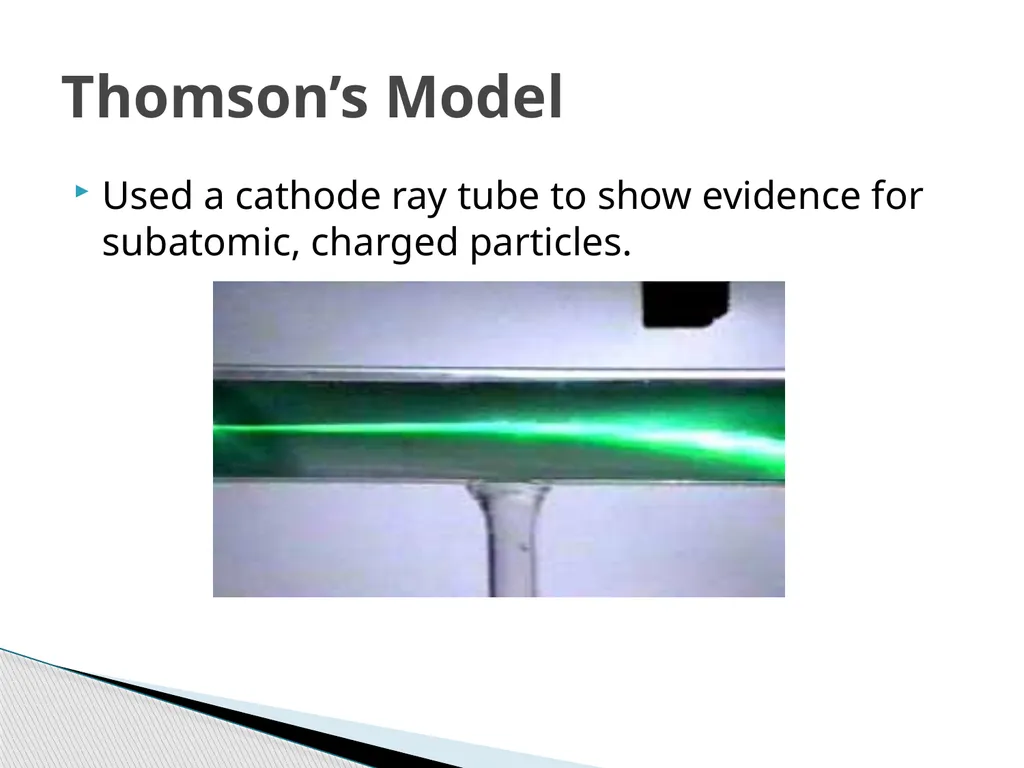
slide4. Used a cathode ray tube to show evidence for subatomic, charged particles. Thomson’s Model<br>
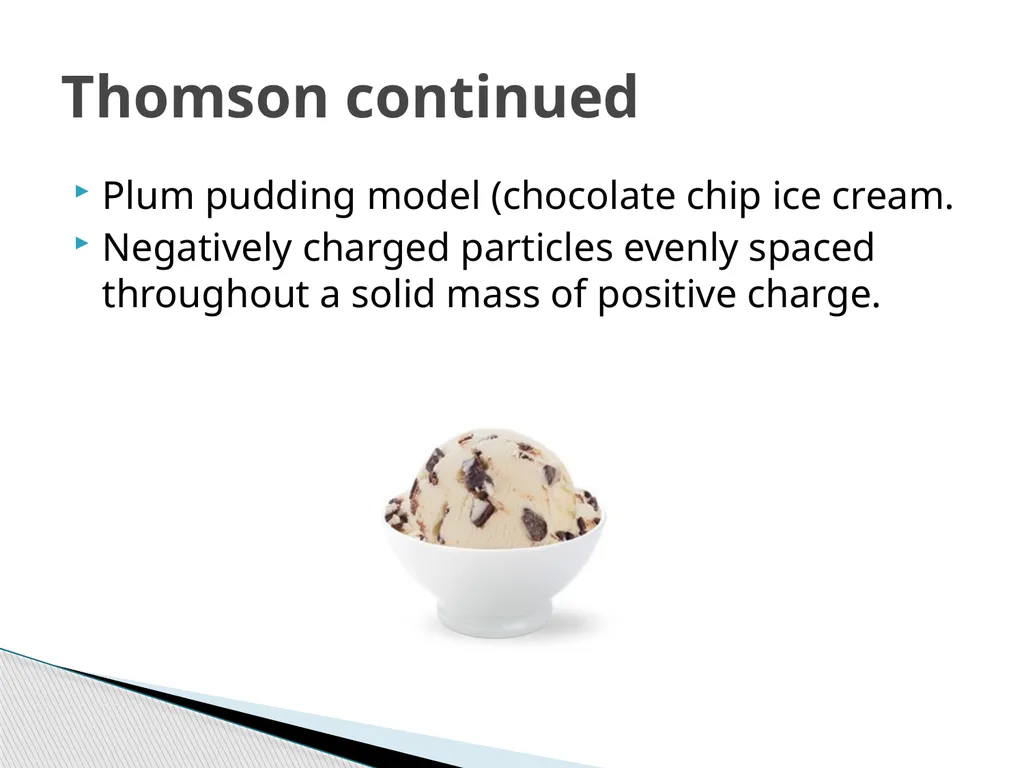
slide5. Plum pudding model (chocolate chip ice cream.
Negatively charged particles evenly spaced throughout a solid mass of positive charge. Thomson continued<br>
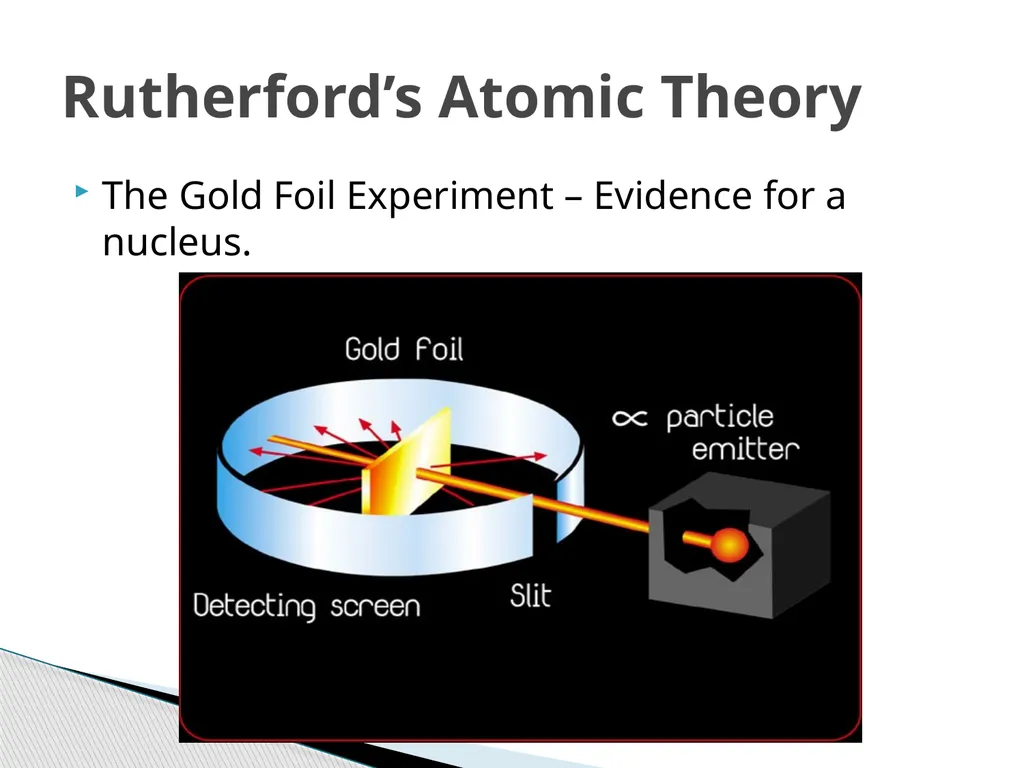
slide6. The Gold Foil Experiment – Evidence for a nucleus. Rutherford’s Atomic Theory<br>
slide7. Chapter 4 Lesson 2 “Structure of the Atom”<br>
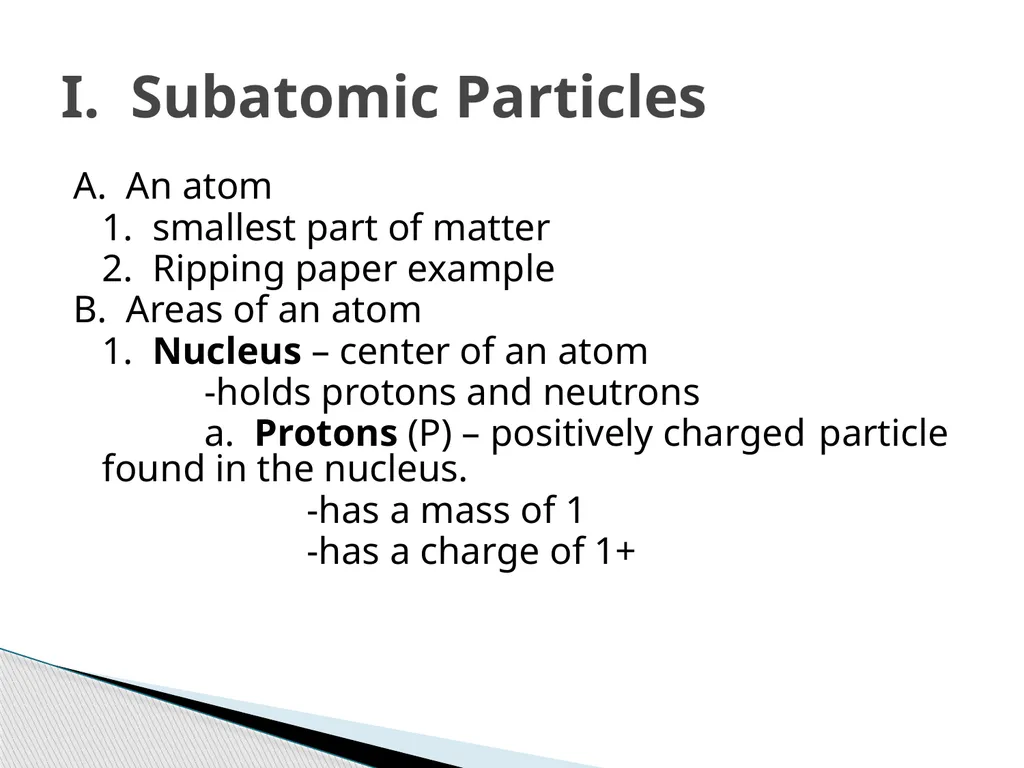
slide8. A. An atom
1. smallest part of matter
2. Ripping paper example
B. Areas of an atom
1. Nucleus – center of an atom
-holds protons and neutrons
a. Protons (P) – positively charged particle found in the nucleus.
-has a mass of 1
-has a charge of 1+ I. Subatomic Particles<br>
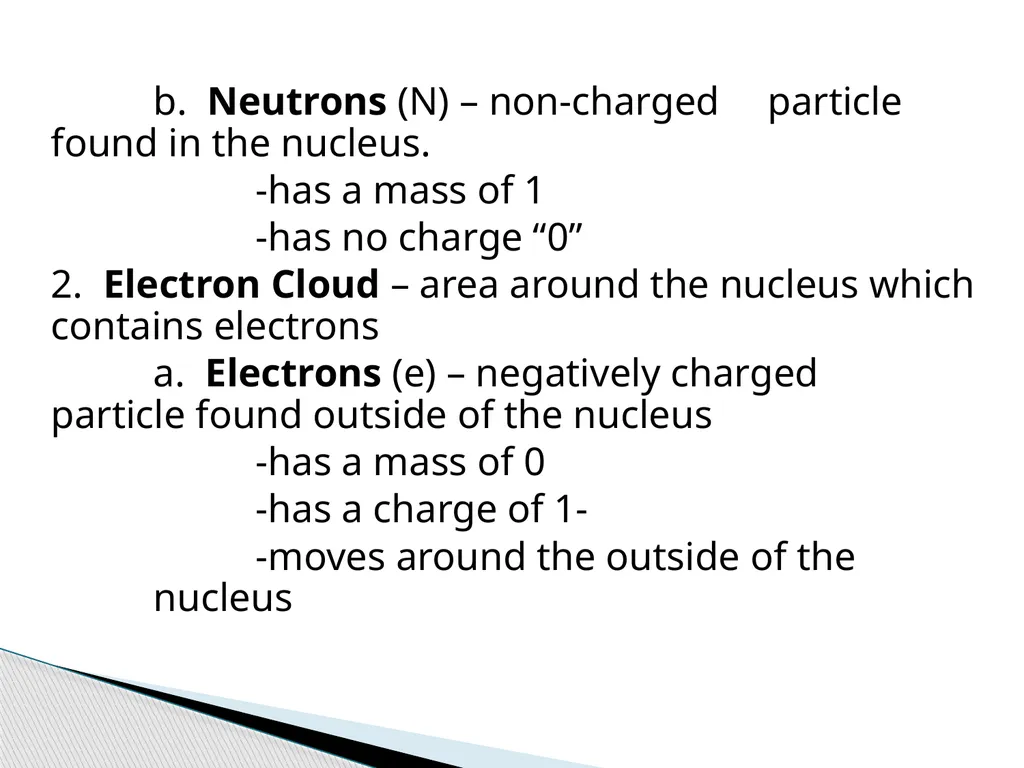
slide9. b. Neutrons (N) – non-charged particle found in the nucleus.
-has a mass of 1
-has no charge “0”
2. Electron Cloud – area around the nucleus which contains electrons
a. Electrons (e) – negatively charged particle found outside of the nucleus
-has a mass of 0
-has a charge of 1-
-moves around the outside of the nucleus<br>
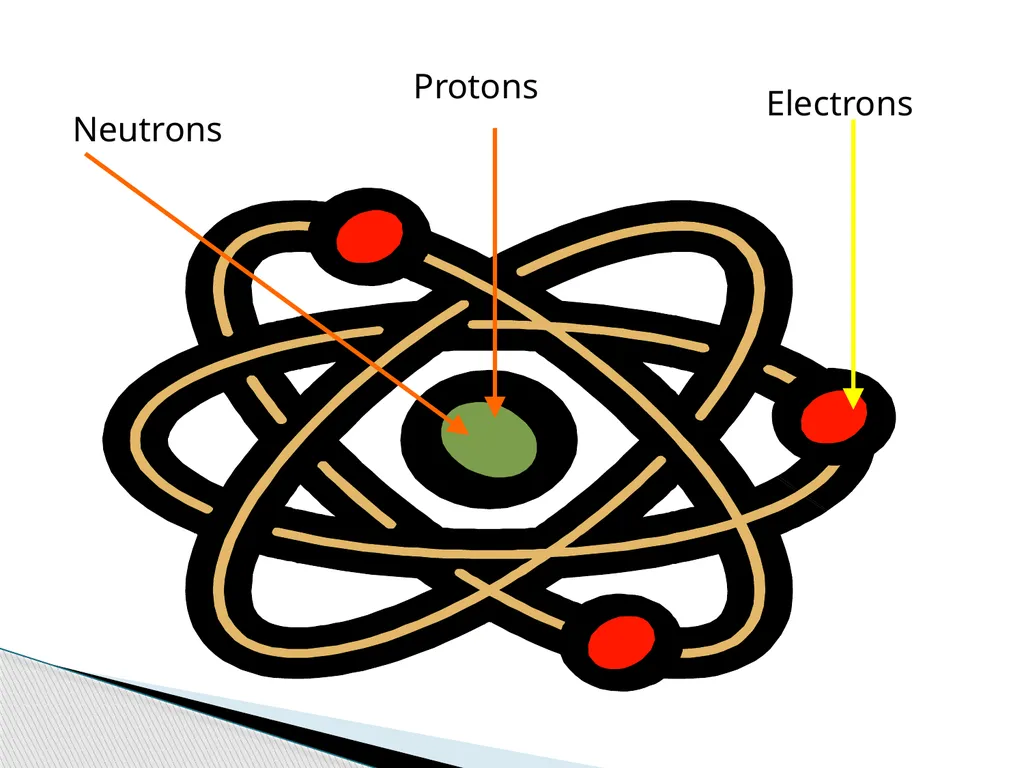
slide10. Protons Electrons Neutrons<br>
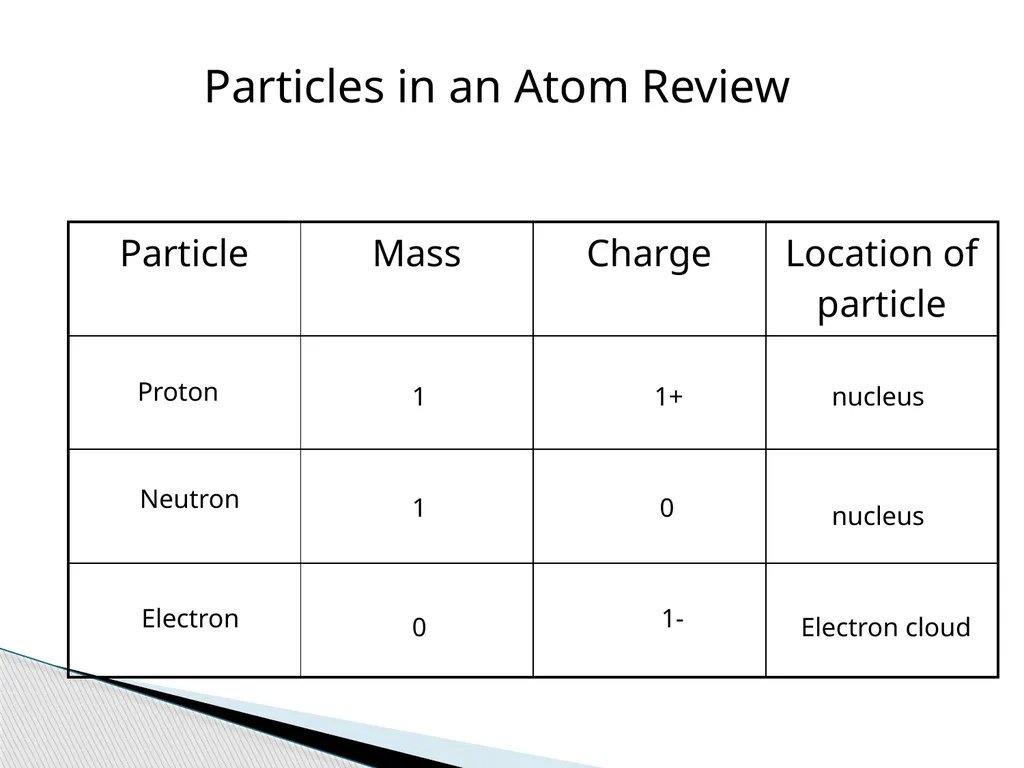
slide11. Particles in an Atom Review Proton Neutron Electron 1 1 0 1+ 0 1- nucleus nucleus Electron cloud<br>
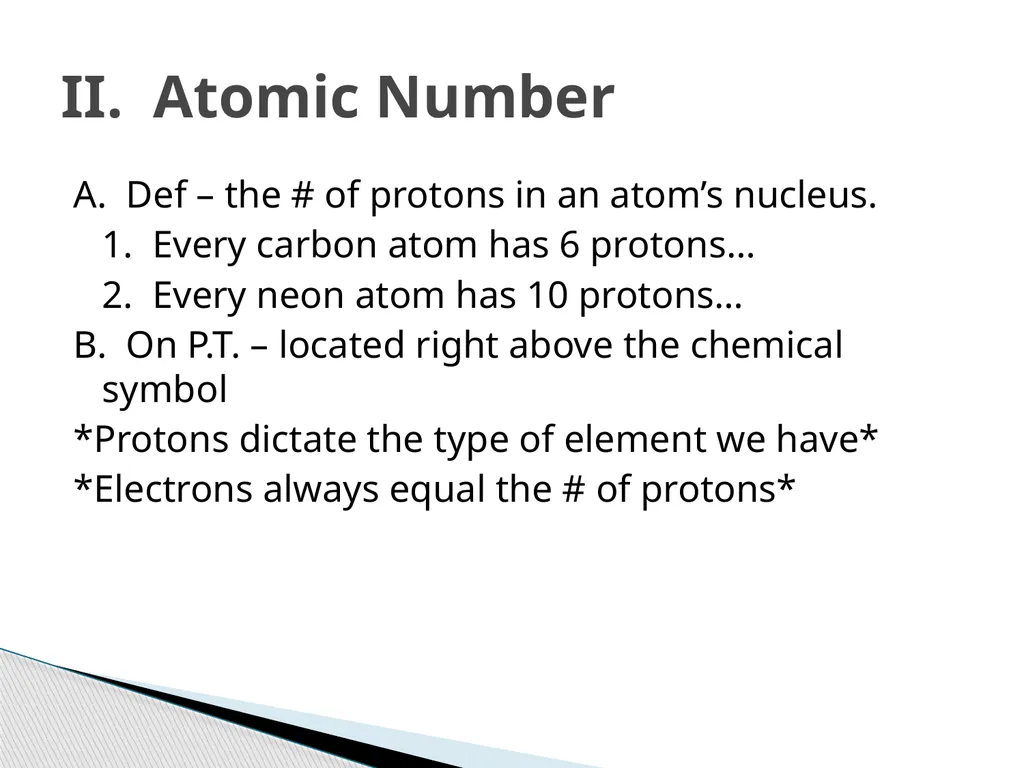
slide12. A. Def – the # of protons in an atom’s nucleus.
1. Every carbon atom has 6 protons…
2. Every neon atom has 10 protons…
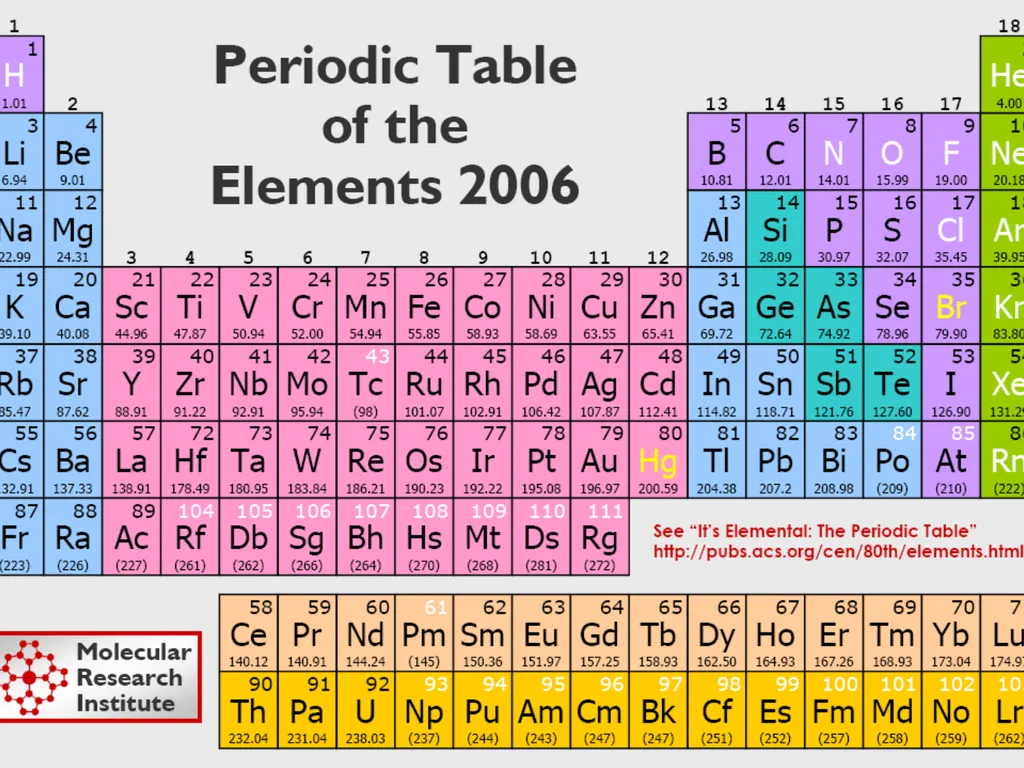
B. On P.T. – located right above the chemical symbol
*Protons dictate the type of element we have*
*Electrons always equal the # of protons* II. Atomic Number<br>
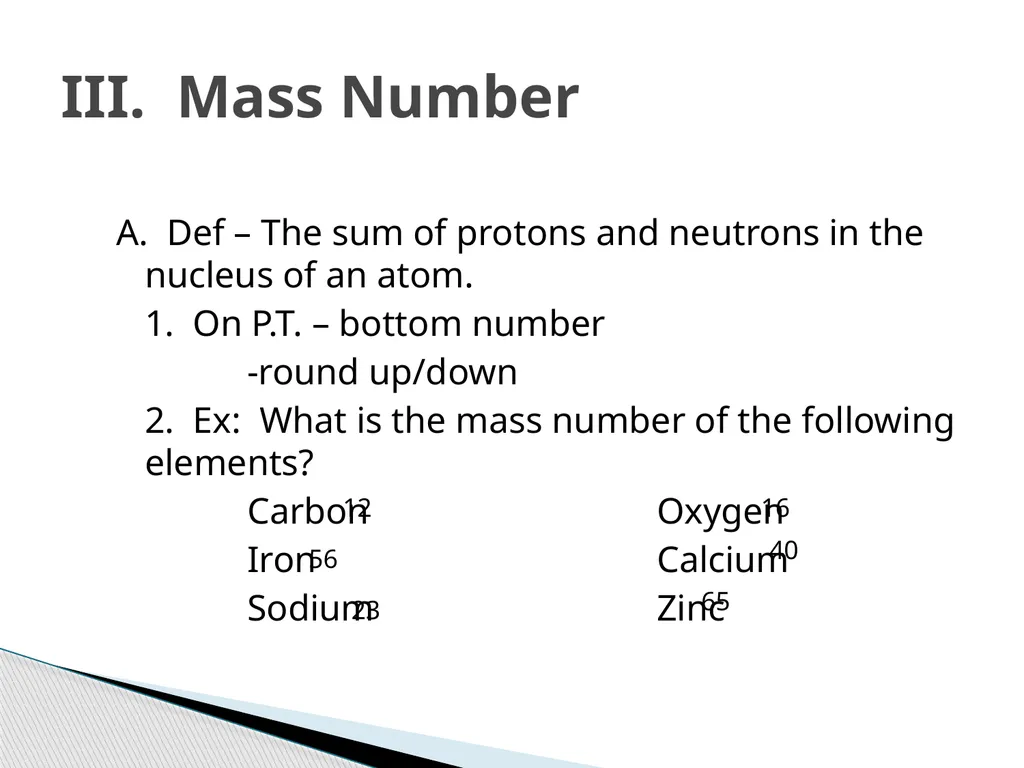
slide14. A. Def – The sum of protons and neutrons in the nucleus of an atom.
1. On P.T. – bottom number
-round up/down
2. Ex: What is the mass number of the following elements?
Carbon Oxygen
Iron Calcium
Sodium Zinc III. Mass Number 12 56 23 16 40 65<br>
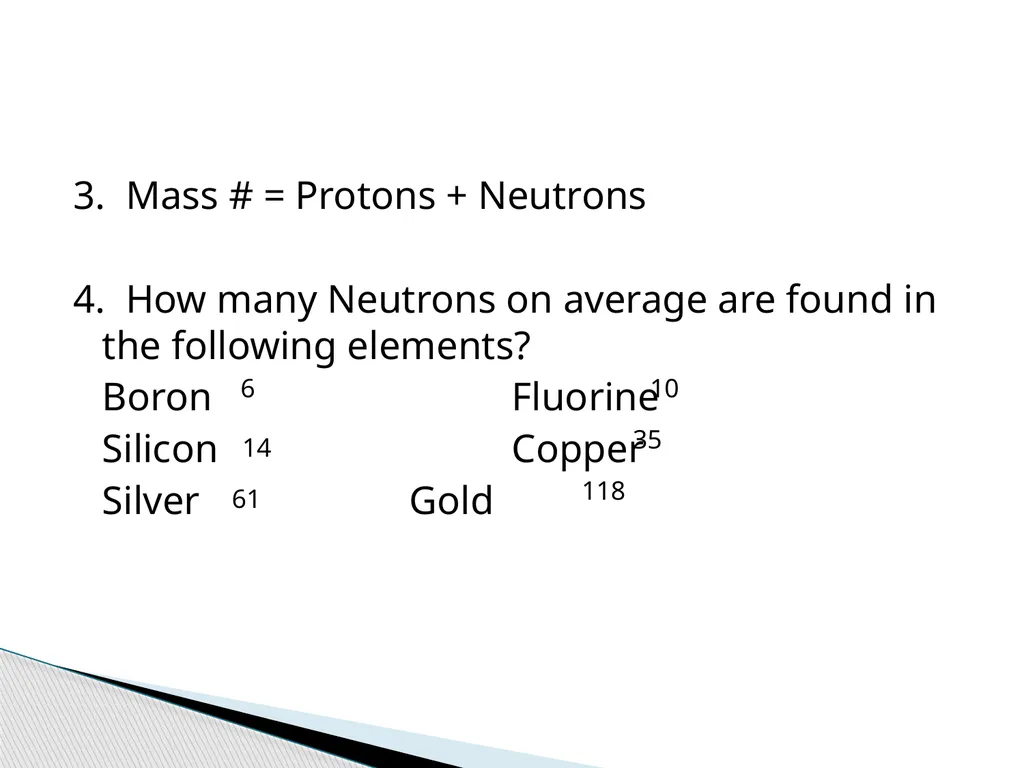
slide15. 3. Mass # = Protons + Neutrons
4. How many Neutrons on average are found in the following elements?
Boron Fluorine
Silicon Copper
Silver Gold 118 14 6 61 10 35<br>
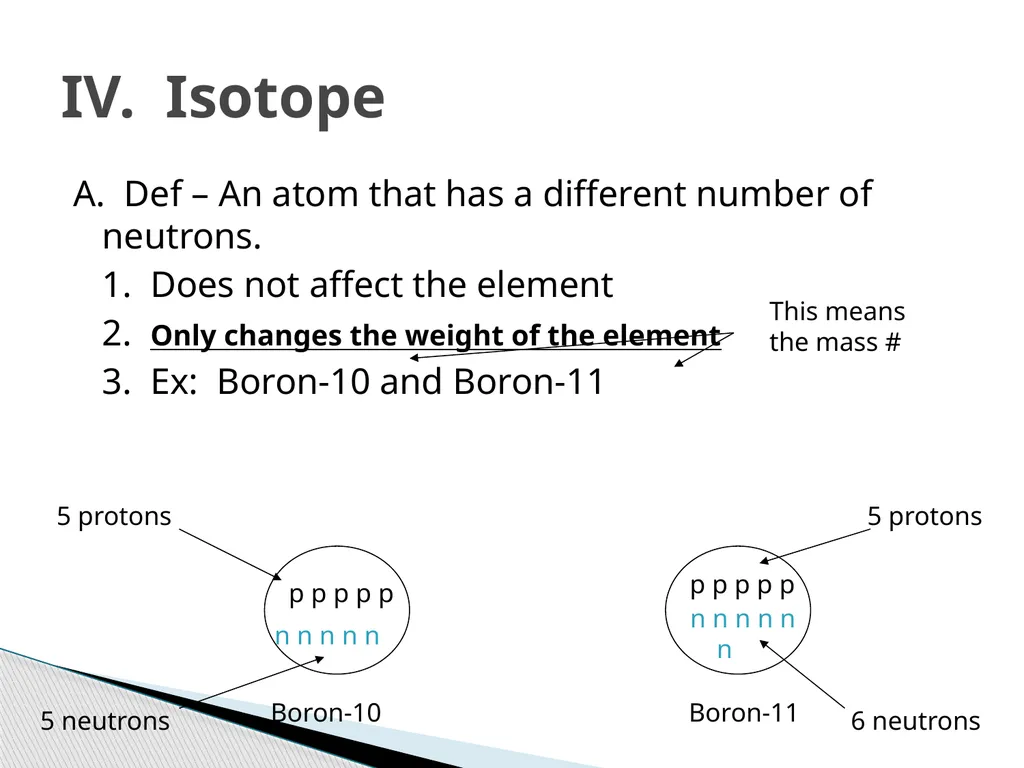
slide16. A. Def – An atom that has a different number of neutrons.
1. Does not affect the element
2. Only changes the weight of the element
3. Ex: Boron-10 and Boron-11 IV. Isotope p p p p p p p p p p n n n n n n n n n n
n 5 protons 5 protons 5 neutrons 6 neutrons This means
the mass # Boron-10 Boron-11<br>
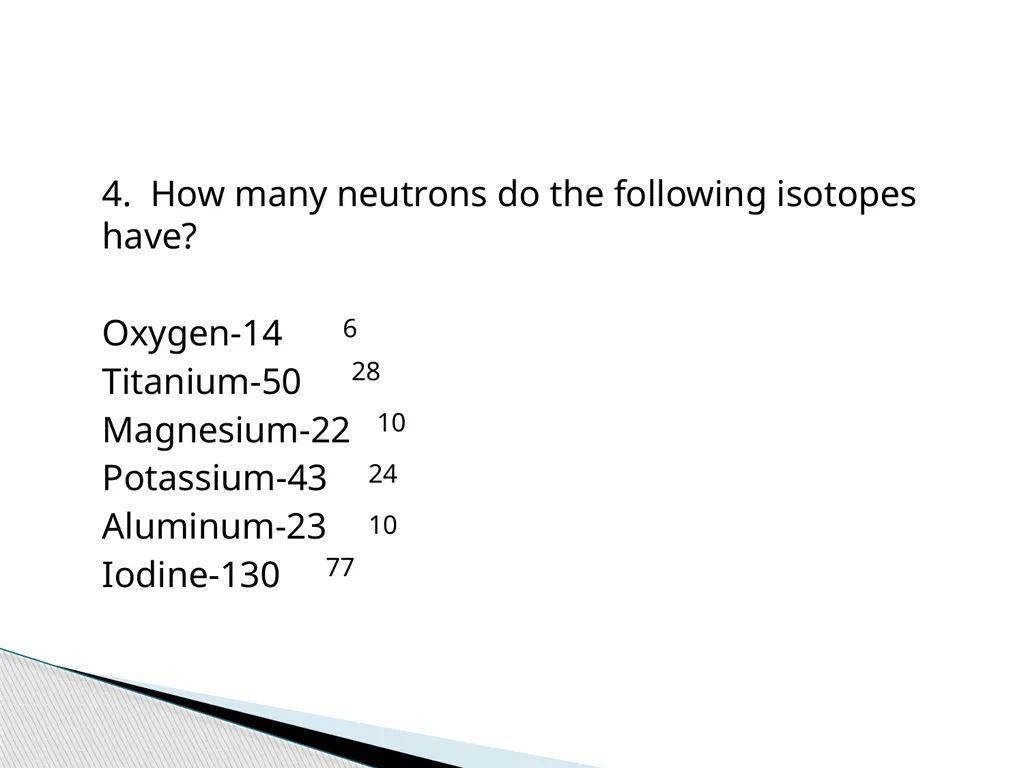
slide17. 4. How many neutrons do the following isotopes have?
Oxygen-14
Titanium-50
Magnesium-22
Potassium-43
Aluminum-23
Iodine-130 6 28 10 24 10 77<br>
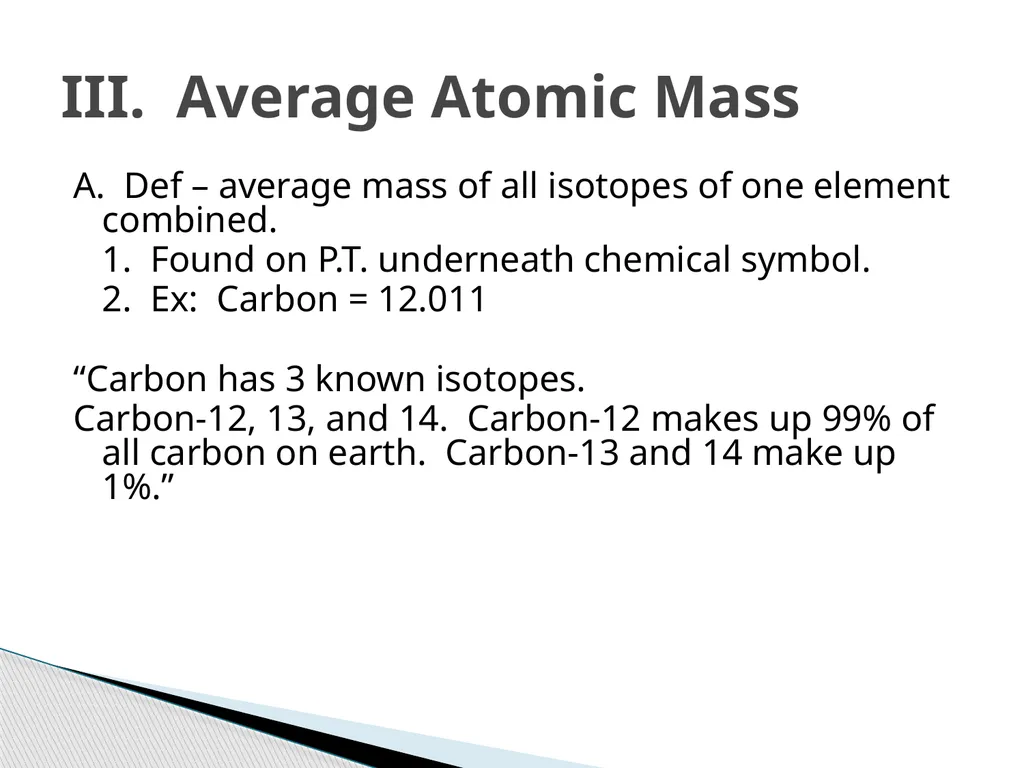
slide18. A. Def – average mass of all isotopes of one element combined.
1. Found on P.T. underneath chemical symbol.
2. Ex: Carbon = 12.011
“Carbon has 3 known isotopes.
Carbon-12, 13, and 14. Carbon-12 makes up 99% of all carbon on earth. Carbon-13 and 14 make up 1%.” III. Average Atomic Mass<br>
slide19. Chapter 4 Lesson 3 “Modern Atomic Theory”
Chemistry Timeline…pg. 114-115<br>
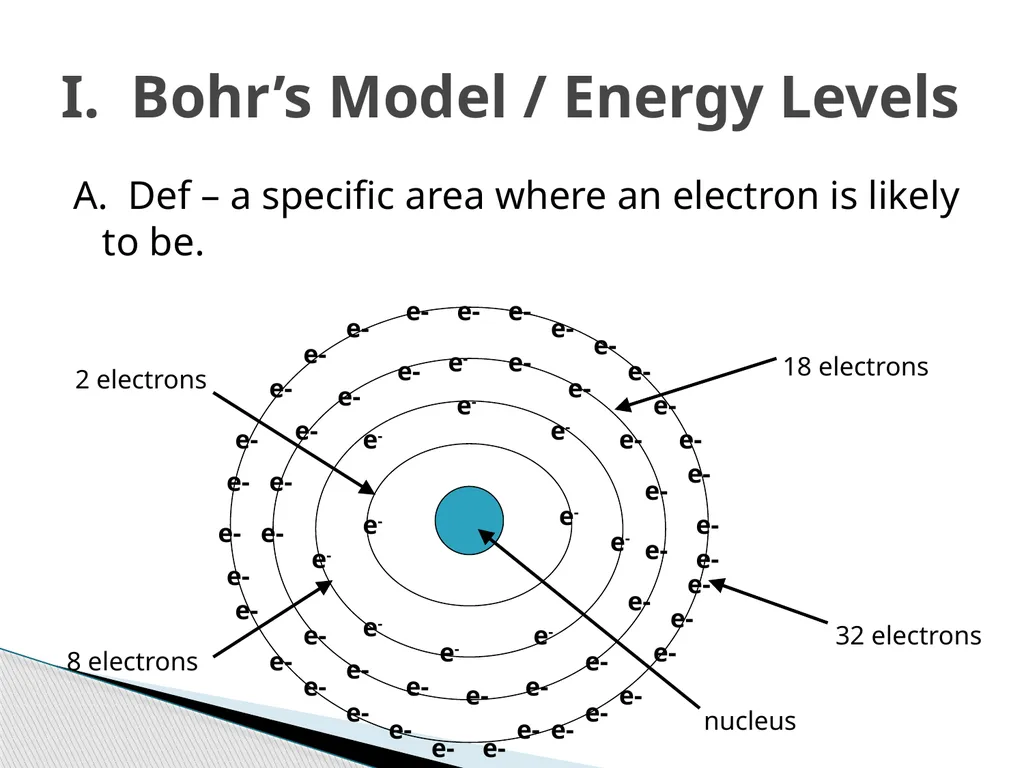
slide20. A. Def – a specific area where an electron is likely to be. I. Bohr’s Model / Energy Levels nucleus 2 electrons 8 electrons 18 electrons 32 electrons e- e- e- e- e- e- e- e- e- e- e- e- e- e- e- e- e- e- e- e- e- e- e- e- e- e- e- e- e- e- e- e- e- e- e- e- e- e- e- e- e- e- e- e- e- e- e- e- e- e- e- e- e- e- e- e- e- e- e- e-<br>
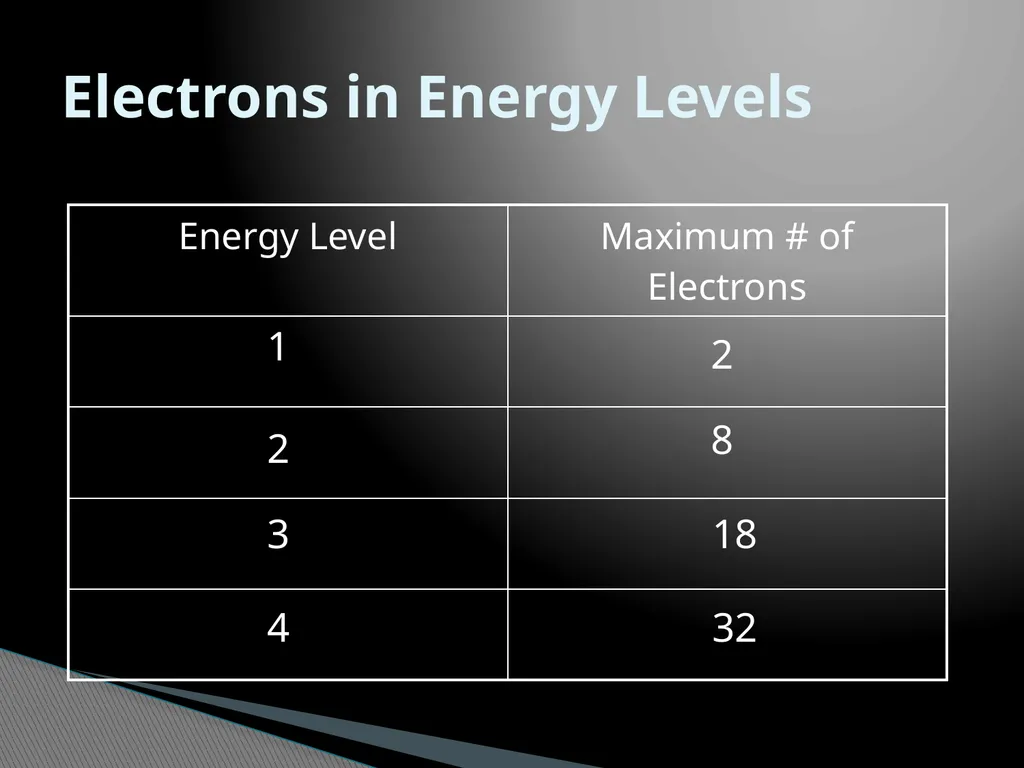
slide21. 1 2 3 4 2 8 18 32 Electrons in Energy Levels<br>
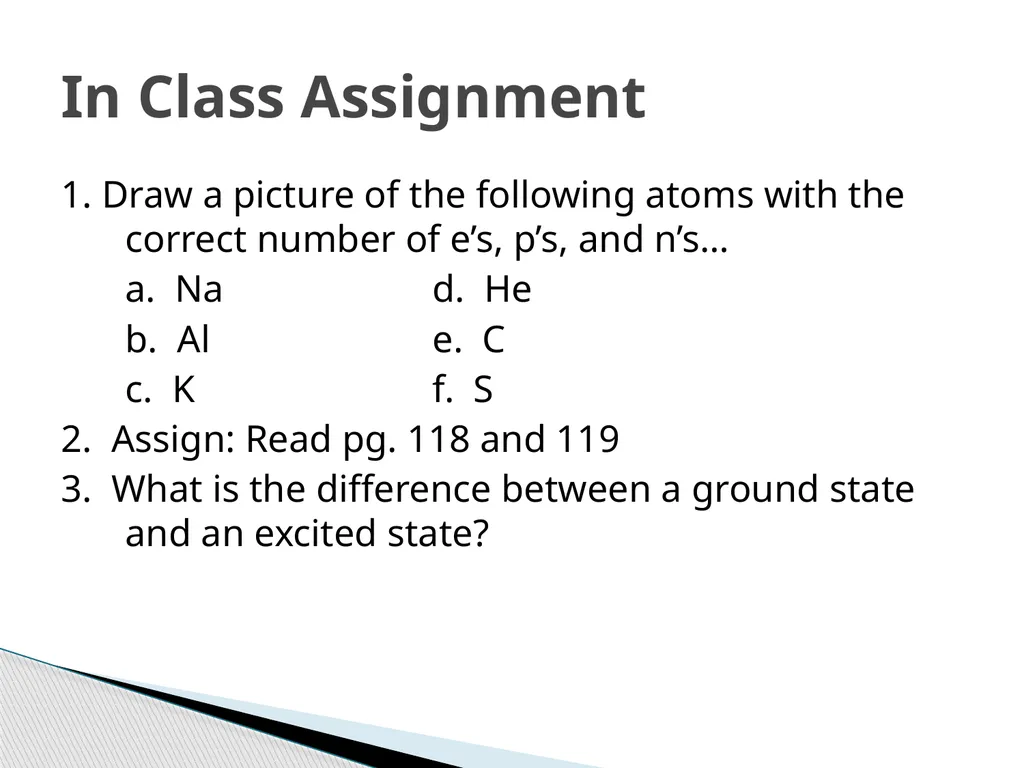
slide22. 1. Draw a picture of the following atoms with the correct number of e’s, p’s, and n’s…
a. Na d. He
b. Al e. C
c. K f. S
2. Assign: Read pg. 118 and 119
3. What is the difference between a ground state and an excited state? In Class Assignment<br>
slide2. Democritus and Aristotle
Democritus thought all matter consisted of extremely tiny particles that could not be divided. (Cut aluminum foil in half)
Also thought matter in liquids was round and smooth; in solids rough and prickly
Aristotle thought there was no limit to the number of times matter could be divided. 4.1 Studying Atoms<br>
slide3. Developed a theory to explain why the elements in a compound always behave in the same way.
Main Points
1) All elements are composed of atoms.
2) All atoms of the same element have the same mass, and atoms of different elements have different masses.
3) Compounds contain atoms of more than one element.
4) In a compound, atoms of different elements always combine in the same way. Dalton’s Atomic Theory<br>
slide4. Used a cathode ray tube to show evidence for subatomic, charged particles. Thomson’s Model<br>
slide5. Plum pudding model (chocolate chip ice cream.
Negatively charged particles evenly spaced throughout a solid mass of positive charge. Thomson continued<br>
slide6. The Gold Foil Experiment – Evidence for a nucleus. Rutherford’s Atomic Theory<br>
slide7. Chapter 4 Lesson 2 “Structure of the Atom”<br>
slide8. A. An atom
1. smallest part of matter
2. Ripping paper example
B. Areas of an atom
1. Nucleus – center of an atom
-holds protons and neutrons
a. Protons (P) – positively charged particle found in the nucleus.
-has a mass of 1
-has a charge of 1+ I. Subatomic Particles<br>
slide9. b. Neutrons (N) – non-charged particle found in the nucleus.
-has a mass of 1
-has no charge “0”
2. Electron Cloud – area around the nucleus which contains electrons
a. Electrons (e) – negatively charged particle found outside of the nucleus
-has a mass of 0
-has a charge of 1-
-moves around the outside of the nucleus<br>
slide10. Protons Electrons Neutrons<br>
slide11. Particles in an Atom Review Proton Neutron Electron 1 1 0 1+ 0 1- nucleus nucleus Electron cloud<br>
slide12. A. Def – the # of protons in an atom’s nucleus.
1. Every carbon atom has 6 protons…
2. Every neon atom has 10 protons…
B. On P.T. – located right above the chemical symbol
*Protons dictate the type of element we have*
*Electrons always equal the # of protons* II. Atomic Number<br>
slide14. A. Def – The sum of protons and neutrons in the nucleus of an atom.
1. On P.T. – bottom number
-round up/down
2. Ex: What is the mass number of the following elements?
Carbon Oxygen
Iron Calcium
Sodium Zinc III. Mass Number 12 56 23 16 40 65<br>
slide15. 3. Mass # = Protons + Neutrons
4. How many Neutrons on average are found in the following elements?
Boron Fluorine
Silicon Copper
Silver Gold 118 14 6 61 10 35<br>
slide16. A. Def – An atom that has a different number of neutrons.
1. Does not affect the element
2. Only changes the weight of the element
3. Ex: Boron-10 and Boron-11 IV. Isotope p p p p p p p p p p n n n n n n n n n n
n 5 protons 5 protons 5 neutrons 6 neutrons This means
the mass # Boron-10 Boron-11<br>
slide17. 4. How many neutrons do the following isotopes have?
Oxygen-14
Titanium-50
Magnesium-22
Potassium-43
Aluminum-23
Iodine-130 6 28 10 24 10 77<br>
slide18. A. Def – average mass of all isotopes of one element combined.
1. Found on P.T. underneath chemical symbol.
2. Ex: Carbon = 12.011
“Carbon has 3 known isotopes.
Carbon-12, 13, and 14. Carbon-12 makes up 99% of all carbon on earth. Carbon-13 and 14 make up 1%.” III. Average Atomic Mass<br>
slide19. Chapter 4 Lesson 3 “Modern Atomic Theory”
Chemistry Timeline…pg. 114-115<br>
slide20. A. Def – a specific area where an electron is likely to be. I. Bohr’s Model / Energy Levels nucleus 2 electrons 8 electrons 18 electrons 32 electrons e- e- e- e- e- e- e- e- e- e- e- e- e- e- e- e- e- e- e- e- e- e- e- e- e- e- e- e- e- e- e- e- e- e- e- e- e- e- e- e- e- e- e- e- e- e- e- e- e- e- e- e- e- e- e- e- e- e- e- e-<br>
slide21. 1 2 3 4 2 8 18 32 Electrons in Energy Levels<br>
slide22. 1. Draw a picture of the following atoms with the correct number of e’s, p’s, and n’s…
a. Na d. He
b. Al e. C
c. K f. S
2. Assign: Read pg. 118 and 119
3. What is the difference between a ground state and an excited state? In Class Assignment<br>