
PIT LATRINE EMPTYING PROTOCOLS AND GUIDELINES
SB
Published · 38 slides · 0 views
1 / 1

Description
PIT LATRINE EMPTYING PROTOCOLS AND GUIDELINES Maumsamatha Kafanikhale Ministry of Health and Population Ekwendeni Campus 26th February 2020 PRESENTATION OUTLINE Definition of pit emptying Introduction and background Methods of pit latrine
Related Topics
Share
Embed code
Download this presentation From Below
"PIT LATRINE EMPTYING PROTOCOLS AND GUIDELINES" is the property of its rightful owner. Permission is granted to download and print the materials on this website for personal, non-commercial use only, and to display it on your personal computer provided you do not modify the materials and that you retain all copyright notices contained in the materials. By downloading content from our website, you accept the terms of this agreement.
Presentation Transcript
01
PIT LATRINE EMPTYING PROTOCOLS AND GUIDELINES Maumsamatha Kafanikhale
Ministry of Health and Population
Ekwendeni Campus
26th February 2020<br>
Ministry of Health and Population
Ekwendeni Campus
26th February 2020<br>
02
PRESENTATION OUTLINE Definition of pit emptying
Introduction and background
Methods of pit latrine emptying
Factors affecting selection appropriate pit emptying
Disposal of sludge
Guidelines and protocols
Conclusions and recommendations<br>
Introduction and background
Methods of pit latrine emptying
Factors affecting selection appropriate pit emptying
Disposal of sludge
Guidelines and protocols
Conclusions and recommendations<br>
03
DEFINITION It is feacal sludge management method used in pit latrines either manually or mechanically to ensure re use of the available latrine
Reasons for pit emptying
Land scarcity
Economical difficulties
Longevity of permanent structure<br>
Reasons for pit emptying
Land scarcity
Economical difficulties
Longevity of permanent structure<br>
04
INTRODUCTION Pit latrines are the most common forms of sanitation in urban slums and unplanned settlements in developing countries.
Often, little consideration is given to how to deal with the pits once they fill up.
Pit emptying technologies have been designed to date to overcome the problem of feacal sludge management in such settings
It presents a framework to assist decision makers in identifying potential pit emptying methods based on local technical conditions.<br>
Often, little consideration is given to how to deal with the pits once they fill up.
Pit emptying technologies have been designed to date to overcome the problem of feacal sludge management in such settings
It presents a framework to assist decision makers in identifying potential pit emptying methods based on local technical conditions.<br>
05
INTRODUCTION cont’d Most of the world’s population does not rely on a piped sewer system.
Instead, on-site facilities such as pit latrines are typical methods of providing sanitation in developing countries.
In general, there are considerable practical problems as to how to deal with the pits once they fill up, particularly in highly populated areas where space is limited for facilities to be moved or for pit emptying equipment to access the plot.
A number of technologies have been tried in developing countries to address this problem, with varying degrees of success.<br>
Instead, on-site facilities such as pit latrines are typical methods of providing sanitation in developing countries.
In general, there are considerable practical problems as to how to deal with the pits once they fill up, particularly in highly populated areas where space is limited for facilities to be moved or for pit emptying equipment to access the plot.
A number of technologies have been tried in developing countries to address this problem, with varying degrees of success.<br>
06
WHY CARRY OUT PIT EMTPYING When a pit latrine is full, there are two options:
(a) stop using it and construct a new latrine
(b) empty it (Pickford and Shaw, 1997).
Often, the lack of available space
The costs of constructing a new latrine superstructure
Pit emptying may be the only practical alternative
However, this can also be difficult.
Removal of sludge was rarely considered in latrine-building programs.
Pits are not designed to facilitate emptying.<br>
(a) stop using it and construct a new latrine
(b) empty it (Pickford and Shaw, 1997).
Often, the lack of available space
The costs of constructing a new latrine superstructure
Pit emptying may be the only practical alternative
However, this can also be difficult.
Removal of sludge was rarely considered in latrine-building programs.
Pits are not designed to facilitate emptying.<br>
07
METHODS FOR PIT EMPTYING Pits can be emptied either manually or by using a machine.
Traditional practices usually employ buckets, manual digging, or large vacuum tankers.
A number of mechanized pit emptying technologies exist, although none have been proven on a large scale for use in slums.
These range from conventional vacuum tankers to small hand-operated pumps that have been used or piloted in urban areas in developing countries including Malawi.<br>
Traditional practices usually employ buckets, manual digging, or large vacuum tankers.
A number of mechanized pit emptying technologies exist, although none have been proven on a large scale for use in slums.
These range from conventional vacuum tankers to small hand-operated pumps that have been used or piloted in urban areas in developing countries including Malawi.<br>
08
LIST OF METHODS FOR PIT EMPTYING Manual pit emptying
Vacuum based methods
Conventional vacuum tankers
Mini vacuum tankers
Manual pumps
Sludge degrading additives<br>
Vacuum based methods
Conventional vacuum tankers
Mini vacuum tankers
Manual pumps
Sludge degrading additives<br>
09
Manual pit emptying Manual emptying is common in many areas worldwide (Water and Environmental Health at London and Loughborough, 1998).
In sub-Saharan Africa, manual emptying is widely used in poor urban areas because conventional truck-mounted tankers cannot access the households and the charges are too expensive for users (Water Utility Partnership, 2003).
Manual emptying generally involves destroying the squatting slab and digging the sludge out with hand tools such as spades, shovels, and buckets by a team of workers, sometimes borrowed or rented from the customer.
Emptying of septic tanks is carried out in a similar manner, but does not involve breaking the slab. Emptying by hand poses serious health risks to the emptiers, especially if no protective clothing is worn.<br>
In sub-Saharan Africa, manual emptying is widely used in poor urban areas because conventional truck-mounted tankers cannot access the households and the charges are too expensive for users (Water Utility Partnership, 2003).
Manual emptying generally involves destroying the squatting slab and digging the sludge out with hand tools such as spades, shovels, and buckets by a team of workers, sometimes borrowed or rented from the customer.
Emptying of septic tanks is carried out in a similar manner, but does not involve breaking the slab. Emptying by hand poses serious health risks to the emptiers, especially if no protective clothing is worn.<br>
10
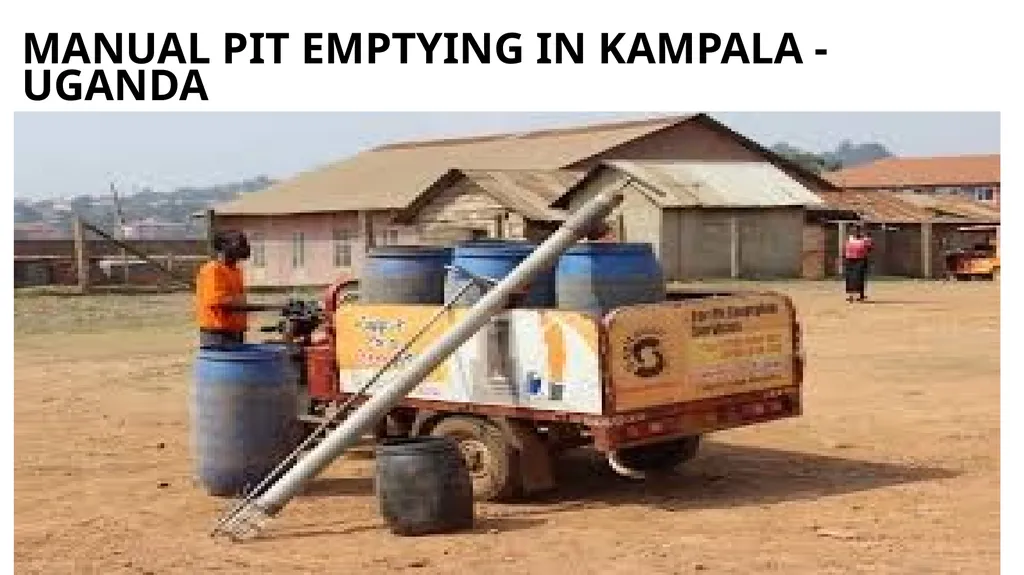
MANUAL PIT EMPTYING IN KAMPALA -UGANDA<br>
11
Vacuum based methods. General concepts Most mechanical methods centre on utilizing atmospheric pressure or high rates of air flow to suck pit contents through a hose into a container under a partial vacuum.
There are four main techniques: the direct vacuum system and pneumatic systems, which comprise the constant air drag system, the air bleed nozzle, and the plug drag system (B¨osch and Schertenleib, 1985).
The constant air drag and plug drag system can remove denser sludge but requires more skill and effort than the direct vacuum system.
This is because it requires the operator to maintain the position of the hose just above the sludge in the former case, or constantly dip the hose in and out of the sludge in the latter case.<br>
There are four main techniques: the direct vacuum system and pneumatic systems, which comprise the constant air drag system, the air bleed nozzle, and the plug drag system (B¨osch and Schertenleib, 1985).
The constant air drag and plug drag system can remove denser sludge but requires more skill and effort than the direct vacuum system.
This is because it requires the operator to maintain the position of the hose just above the sludge in the former case, or constantly dip the hose in and out of the sludge in the latter case.<br>
12
Conventional vacuum tankers A conventional vacuum tanker is often the favoured technology, when able to access the plot and the pit, because there is minimal contact with the pit contents and it is more efficient in evacuating sludge than its alternatives (Eales, 2005).
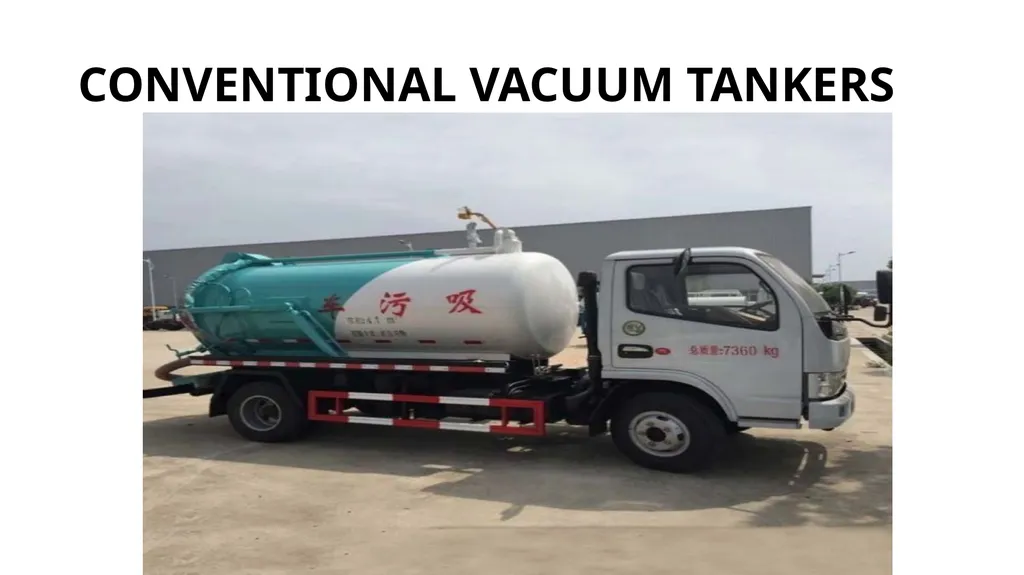
The technology is imported from industrialized countries: a hose connects the pit contents to a truck-mounted tank between 1 and 10 m3 in capacity and a vacuum pump is connected to the tank (Klingel et al., 2002).
Vacuum tanker can lift sludge from a depth of up to 2–3 m.
This depth depends on the density and viscosity of the sludge as well as the height of the tank above the ground.
The tankers were tested to find the limit of density and viscosity and the maximum distance between the pit and tanker possible to remove sludge from the pits.<br>
The technology is imported from industrialized countries: a hose connects the pit contents to a truck-mounted tank between 1 and 10 m3 in capacity and a vacuum pump is connected to the tank (Klingel et al., 2002).
Vacuum tanker can lift sludge from a depth of up to 2–3 m.
This depth depends on the density and viscosity of the sludge as well as the height of the tank above the ground.
The tankers were tested to find the limit of density and viscosity and the maximum distance between the pit and tanker possible to remove sludge from the pits.<br>
13
Conventional vacuum tankers Major disadvantage of vacuum pumps is their inability to deal satisfactorily with certain pit contents, for example, heavy sludge or objects such as stones, sticks, and other rubbish (Harvey, 2007).
The high capital and operating costs of conventional vacuum tankers also prohibit small enterprises from entering pit emptying market (Eales, 2005). The equipment costs between US $50,000–80,000 per unit (Klingel et al., 2002).
Operationally, there is high reliance on imported fuel and spare parts. Boot (2008) found that fuel and tipping made up about three quarters of the cost of one pit emptying trip.
Wear and tear is high, as engines run all day (Hawkins, 1982). Muller and Rijnsburger (1994) also reported that the vacuum tanker fleet in Dar es Salaam experienced long delays in repairs and broken down vehicles were often scavenged to find usable parts.
However, Muller and Rijnsburger (1994) also recognized that tankers are more efficient overall. Two reasons can be identified:<br>
The high capital and operating costs of conventional vacuum tankers also prohibit small enterprises from entering pit emptying market (Eales, 2005). The equipment costs between US $50,000–80,000 per unit (Klingel et al., 2002).
Operationally, there is high reliance on imported fuel and spare parts. Boot (2008) found that fuel and tipping made up about three quarters of the cost of one pit emptying trip.
Wear and tear is high, as engines run all day (Hawkins, 1982). Muller and Rijnsburger (1994) also reported that the vacuum tanker fleet in Dar es Salaam experienced long delays in repairs and broken down vehicles were often scavenged to find usable parts.
However, Muller and Rijnsburger (1994) also recognized that tankers are more efficient overall. Two reasons can be identified:<br>
14
CONVENTIONAL VACUUM TANKERS<br>
15
Minivacuum Tankers Smaller versions of conventional vacuum tankers have been developed to improve accessibility to high-density settlements.
Among the most publicized are the UN-HABITAT Vacutug and MAPET tried in Kenya, Mozambique, RSA Bangkadesh, Tanzania, India, Ghana, Senegal in 1995 to 2003
The Vacutug was conceived to
Provide accessibility in dense areas,
Have cheap capital costs
Be able to cover running costs with its revenue,
Be able to take the pit contents to an adequate disposal site,
Be able to empty dense sludge (United Nations Human Settlements Programme,
The design is based on the following assumptions:<br>
Among the most publicized are the UN-HABITAT Vacutug and MAPET tried in Kenya, Mozambique, RSA Bangkadesh, Tanzania, India, Ghana, Senegal in 1995 to 2003
The Vacutug was conceived to
Provide accessibility in dense areas,
Have cheap capital costs
Be able to cover running costs with its revenue,
Be able to take the pit contents to an adequate disposal site,
Be able to empty dense sludge (United Nations Human Settlements Programme,
The design is based on the following assumptions:<br>
16
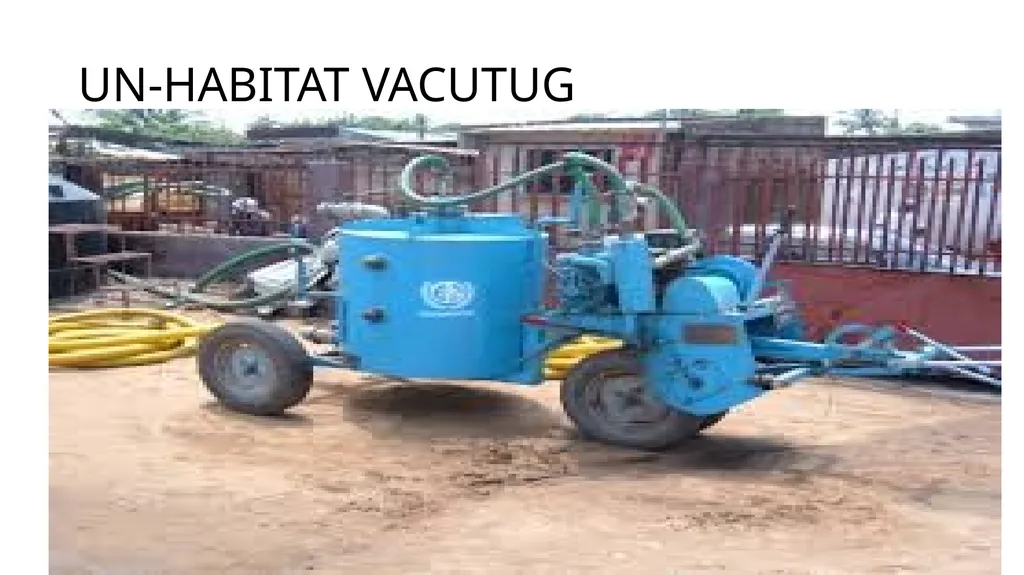
UN-HABITAT VACUTUG<br>
17
UN-HABITAT VACUTUG The Vacutug is usually used with a 500 L tank made from mild steel and mounted on a steel frame.
Operating the Vacutug requires two people.
In Dhaka, the entire Vacutug staff comprises five people: one supervisor, one head operator, two assistant operators, and a driver (Parkinson and Quader, 2008).
The Vacutug was relatively successful in Nairobi, Kenya, and Dar es Salaam, Tanzania, but still faced difficulties in Dhaka, Bangladesh, and Durban, South Africa, due to narrow lanes, dense population, and steep topography. There was insufficient power for the long hoses to reach inaccessible locations (Macleod, 2005; Parkinson and Quader, 2008).
This was due to the very different layout of the settlements between Dhaka and Kibera. Other disadvantages listed include the limited storage capacity and slow speeds (Parkinson and Quader, 2008).<br>
Operating the Vacutug requires two people.
In Dhaka, the entire Vacutug staff comprises five people: one supervisor, one head operator, two assistant operators, and a driver (Parkinson and Quader, 2008).
The Vacutug was relatively successful in Nairobi, Kenya, and Dar es Salaam, Tanzania, but still faced difficulties in Dhaka, Bangladesh, and Durban, South Africa, due to narrow lanes, dense population, and steep topography. There was insufficient power for the long hoses to reach inaccessible locations (Macleod, 2005; Parkinson and Quader, 2008).
This was due to the very different layout of the settlements between Dhaka and Kibera. Other disadvantages listed include the limited storage capacity and slow speeds (Parkinson and Quader, 2008).<br>
18
MANUAL PUMP EMPTYING TECHNOLOGY Small-scale equipment have been developed based on vacuum pump technology, but operated manually rather than mechanically.
Compared to manual pit emptying, this class of technologies uses more sophisticated tools that may improve the efficiency and safety of the emptying process.
The earliest reference found was the testing of the BUMI hand pump during Botswana field tests (B¨osch and Schertenleib, 1984), where the results were less than ideal.
Difficulties encountered were hose blockage, manpower requirements, and the inability to empty dense sludge or sludge containing sandy material and rubbish<br>
Compared to manual pit emptying, this class of technologies uses more sophisticated tools that may improve the efficiency and safety of the emptying process.
The earliest reference found was the testing of the BUMI hand pump during Botswana field tests (B¨osch and Schertenleib, 1984), where the results were less than ideal.
Difficulties encountered were hose blockage, manpower requirements, and the inability to empty dense sludge or sludge containing sandy material and rubbish<br>
19
MANUAL PUMP EMPTYING TECHNOLOGY The Manual Pit Emptying Technology (MAPET) system was developed in Dar es Salaam, Tanzania, in the 1980s by WASTE Consultants together with the Dar es Salaam Sewerage and Sanitation Department (DSSD; Muller and Rijnsburger, 1994).
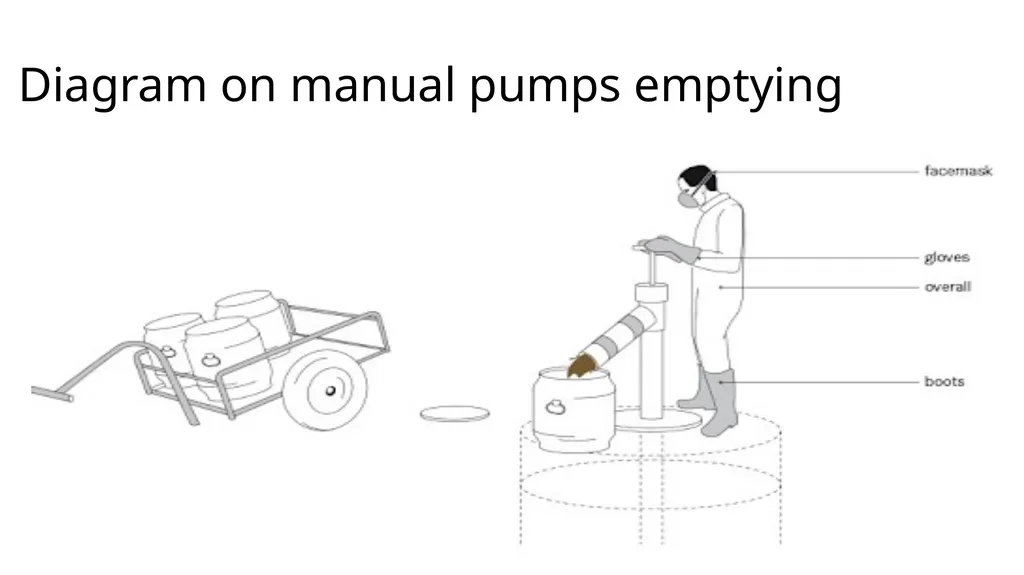
The two core elements of the MAPET are the piston pump with the flywheel and the 200 L vacuum tank (Figure 3). Each is mounted on a pushcart.
The pump has a 6 inch PVC cylinder made from sewage piping encasing a leather piston.
The sewage piping was available at the DSSD, but the piston leather had to be imported from the Netherlands. It was chosen over the diaphragm pump because it was more durable given the local conditions.
The use of a manual pump reduces the dependence on imported fossil fuel. As with the technologies previously mentioned, the sludge is pumped indirectly.
This prevents blockages and wear and tear. It takes about 5–20 minutes to fill up a 200 L tank, depending on the viscosity of the sludge and the pumping head.<br>
The two core elements of the MAPET are the piston pump with the flywheel and the 200 L vacuum tank (Figure 3). Each is mounted on a pushcart.
The pump has a 6 inch PVC cylinder made from sewage piping encasing a leather piston.
The sewage piping was available at the DSSD, but the piston leather had to be imported from the Netherlands. It was chosen over the diaphragm pump because it was more durable given the local conditions.
The use of a manual pump reduces the dependence on imported fossil fuel. As with the technologies previously mentioned, the sludge is pumped indirectly.
This prevents blockages and wear and tear. It takes about 5–20 minutes to fill up a 200 L tank, depending on the viscosity of the sludge and the pumping head.<br>
20
MANUAL EMPTYING TECHNOLOGY cont’d Separate pushcarts were used after various methods of haulage were tested.
The tyres were irregularly sized and weak and the ball bearings could not take a loaded tank cart, especially on poor roads.
However, the alternative was to use expensive, heavy, and wide car wheels, which would have made the width of the MAPET over 800 mm.
This was the maximum diameter specified to allow the MAPET to traverse narrow paths and gates.
Again, manual pushcarts were chosen to avoid the need for fuel.
The technology is simple and does not require high-end equipment or skill to build and maintain.
Minor maintenance usually involves spotwelding loose components and dealing with tire punctures. Major, expensive maintenance is typically carried out on the bearings, guides, piston leather, or valves of the hand pump and the bearings or tires of the wheels.<br>
The tyres were irregularly sized and weak and the ball bearings could not take a loaded tank cart, especially on poor roads.
However, the alternative was to use expensive, heavy, and wide car wheels, which would have made the width of the MAPET over 800 mm.
This was the maximum diameter specified to allow the MAPET to traverse narrow paths and gates.
Again, manual pushcarts were chosen to avoid the need for fuel.
The technology is simple and does not require high-end equipment or skill to build and maintain.
Minor maintenance usually involves spotwelding loose components and dealing with tire punctures. Major, expensive maintenance is typically carried out on the bearings, guides, piston leather, or valves of the hand pump and the bearings or tires of the wheels.<br>
21
Diagram on manual pumps emptying<br>
22
SLUDGE DEGRADING ADDITIVES The concept of using additives to degrade the amount of sludge or reduce the rate of sludge accumulation has been used ( Jere et al. 1998)
Spore forming non-pathogenic bacteria could effectively reduce sludge volumes.
This would lead to less frequent emptying and may change the requirements of pit emptying technologies.
However, there are varied levels of degradation of sludge(Harvey, 2007).<br>
Spore forming non-pathogenic bacteria could effectively reduce sludge volumes.
This would lead to less frequent emptying and may change the requirements of pit emptying technologies.
However, there are varied levels of degradation of sludge(Harvey, 2007).<br>
23
FACTORS AFFECTING SELECTION APPROPRIATE PIT EMPTYING PIT LATRINE CHARACTERISTICS
The particular design of the pit latrine has an impact on the selection of the optimal emptying process. Some latrines, such as Ecosan toilets, may eliminate the need to empty pits. Therefore, to facilitate pit emptying, it may be just as beneficial to modify the latrine design as the emptying method. Once constructed and in use, it is difficult to make modifications to the latrine
SLUDGE CHARACTERISTICS
The amount of urine and feces an individual excretes varies widely, even locally, depending on water consumption, climate, diet, and occupation. According to Franceys et al. (1992), the amount of urine produced depends significantly on temperature and humidity. This means that pit emptying technologies may have to deal with a wide variation of sludge composition.<br>
The particular design of the pit latrine has an impact on the selection of the optimal emptying process. Some latrines, such as Ecosan toilets, may eliminate the need to empty pits. Therefore, to facilitate pit emptying, it may be just as beneficial to modify the latrine design as the emptying method. Once constructed and in use, it is difficult to make modifications to the latrine
SLUDGE CHARACTERISTICS
The amount of urine and feces an individual excretes varies widely, even locally, depending on water consumption, climate, diet, and occupation. According to Franceys et al. (1992), the amount of urine produced depends significantly on temperature and humidity. This means that pit emptying technologies may have to deal with a wide variation of sludge composition.<br>
24
FACTORS AFFECTING SELECTION APPROPRIATE PIT EMPTYING CHARACTERISTICS OF PIT EMPTYING METHODS
The emptying technology must be able to access the roads leading to the pit location as well as the inside of the pit. In particular, the width of the pit emptying equipment determine its ability to access the latrine. Vacuum tankers have the option of using longer hoses, but the maximum horizontal distance it can park from the pit latrine is approximately 50 m, unless the pit is located above the tanker and the process is helped by gravity (Still, 2002).
CHARACTERISTICS OF DISPOSAL SITE
The distance to the disposal site and traffic conditions is a key factor, especially for pit emptying technologies with low sludge storage capacities, slow road speeds, and inconvenient modes of transport. Providing adequate access to disposal sites should be a priority (Water Utility Partnership, 2003). Eales (2005) described how in Kibera, Kenya, the amount of sludge emptied each night is determined by the time it takes to carry the 100 L drum on a handcart through the steep bumpy roads to the most convenient disposal point. This results in the pit emptiers preferring to work near a road or river<br>
The emptying technology must be able to access the roads leading to the pit location as well as the inside of the pit. In particular, the width of the pit emptying equipment determine its ability to access the latrine. Vacuum tankers have the option of using longer hoses, but the maximum horizontal distance it can park from the pit latrine is approximately 50 m, unless the pit is located above the tanker and the process is helped by gravity (Still, 2002).
CHARACTERISTICS OF DISPOSAL SITE
The distance to the disposal site and traffic conditions is a key factor, especially for pit emptying technologies with low sludge storage capacities, slow road speeds, and inconvenient modes of transport. Providing adequate access to disposal sites should be a priority (Water Utility Partnership, 2003). Eales (2005) described how in Kibera, Kenya, the amount of sludge emptied each night is determined by the time it takes to carry the 100 L drum on a handcart through the steep bumpy roads to the most convenient disposal point. This results in the pit emptiers preferring to work near a road or river<br>
25
FACTORS AFFECTING SELECTION APPROPRIATE PIT EMPTYING GEOGRAPHY
Geography can have significant effect on the viability on technological and organizational solutions (Klingel et al., 2002).
The ability of the pit emptying equipment to access the site and the pit remains a key constraint in slums and informal settlements.
Factors affecting accessibility include topography, width of roads, and location of the pit relative to the road<br>
Geography can have significant effect on the viability on technological and organizational solutions (Klingel et al., 2002).
The ability of the pit emptying equipment to access the site and the pit remains a key constraint in slums and informal settlements.
Factors affecting accessibility include topography, width of roads, and location of the pit relative to the road<br>
26
DISPOSAL METHODS Once the sludge is collected, it has to be disposed somewhere.
Therefore, haulage, transfer, storage, and disposal of the fecal sludge must be considered together with the emptying phase.
The lack of provision of adequate facilities may result in indiscriminate or illegal disposal of sludge to rivers, open drains, the sea or any open space (Water Utility Partnership, 2003), particularly if the emptying technology used does not possess appropriate haulage capacity for long distances, local capacity is weak, and effective legislation is not in place.
For example, manual emptiers in Kibera, Kenya, typically dump the sludge in nearby streams, which contaminates the river (Bongi and Morel, 2005). This is similar to Malawi scenarios<br>
Therefore, haulage, transfer, storage, and disposal of the fecal sludge must be considered together with the emptying phase.
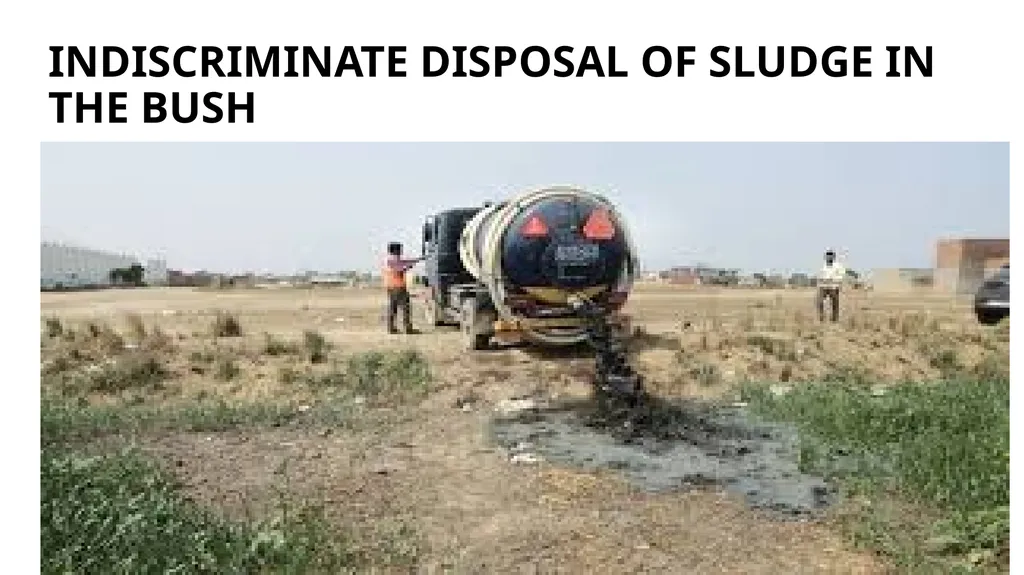
The lack of provision of adequate facilities may result in indiscriminate or illegal disposal of sludge to rivers, open drains, the sea or any open space (Water Utility Partnership, 2003), particularly if the emptying technology used does not possess appropriate haulage capacity for long distances, local capacity is weak, and effective legislation is not in place.
For example, manual emptiers in Kibera, Kenya, typically dump the sludge in nearby streams, which contaminates the river (Bongi and Morel, 2005). This is similar to Malawi scenarios<br>
27
ON-SITE DISPOSAL Disposal of sludge close to the latrine is considered the most economic method
This involves digging a latrine, filling it up with sludge, letting the liquid leach out of the sludge for one or two days, and then covering it with at least 30 cm of dry, excavated soil- Dwangwa local artisans.
On-site disposal is common in low- to medium density areas but is increasingly limited by the space available and the depth of the groundwater table
Care must be taken to ensure that the sludge is not dug up before it has decomposed. If the sludge has decomposed, that is, when the pathogens have died off, the sludge becomes safer to handle.<br>
This involves digging a latrine, filling it up with sludge, letting the liquid leach out of the sludge for one or two days, and then covering it with at least 30 cm of dry, excavated soil- Dwangwa local artisans.
On-site disposal is common in low- to medium density areas but is increasingly limited by the space available and the depth of the groundwater table
Care must be taken to ensure that the sludge is not dug up before it has decomposed. If the sludge has decomposed, that is, when the pathogens have died off, the sludge becomes safer to handle.<br>
28
DIRECT HAULAGE TO TREATMENT FACILITY OR SEWERAGE NETWORK Sludge can be discharged at sewage treatment plants,
Composted,
Buried in landfill sites
Drying beds
Note: Instead of being treated or disposed, sludge can also be used for agriculture, aquaculture, or biogas production due to its high nutrient value. There are health risks associated with applying sludge on crops and in fish ponds or tanks, which must be considered.<br>
Composted,
Buried in landfill sites
Drying beds
Note: Instead of being treated or disposed, sludge can also be used for agriculture, aquaculture, or biogas production due to its high nutrient value. There are health risks associated with applying sludge on crops and in fish ponds or tanks, which must be considered.<br>
29
INDISCRIMINATE DISPOSAL OF SLUDGE IN THE BUSH<br>
30
TRANSFER STATIONS Transfer stations reduce the distance pit emptiers have to go to dispose of the sludge, allowing them with more time to generate income emptying pits.
There are two types of transfer stations: fixed and mobile transfer stations.
A mobile transfer station could take the form of a tractor pulling a tank and has the following advantages over a fixed station: a smaller tank volume required (2 m3), increased mobility, and it is not subject to planning restrictions (Muller and Rijnsburger, 1994).<br>
There are two types of transfer stations: fixed and mobile transfer stations.
A mobile transfer station could take the form of a tractor pulling a tank and has the following advantages over a fixed station: a smaller tank volume required (2 m3), increased mobility, and it is not subject to planning restrictions (Muller and Rijnsburger, 1994).<br>
31
PRECAUTIONS Avoid contaminating the environments
Land
Water bodies
Apply lime to decontaminate the sludge
Kill microbial load
Reduce offensive smell
Provide protective wears to operators
Site selection of drying beds to avoid smell and odour to communities<br>
Land
Water bodies
Apply lime to decontaminate the sludge
Kill microbial load
Reduce offensive smell
Provide protective wears to operators
Site selection of drying beds to avoid smell and odour to communities<br>
32
GUIDELINES MANUAL EMPTYING Analyze OHS risks during a pre-operation visit to the emptying site;
Wear appropriate clothing, including Personal Protection Equipment;
Examine suitability of equipment to be used for emptying and transportation;
Check the leaking points of pipe, if any;
Ensure sufficient lighting;
Arrange a first aid kit;
Arrange water bottles;<br>
Wear appropriate clothing, including Personal Protection Equipment;
Examine suitability of equipment to be used for emptying and transportation;
Check the leaking points of pipe, if any;
Ensure sufficient lighting;
Arrange a first aid kit;
Arrange water bottles;<br>
33
GUIDELINES MANUAL EMPTYING Avoid drinking alcohol;
Ensure the use of Personal Protection Equipment during emptying and transportation;
Locate the on-site sanitation system the sludge is to be removed from;
Determine the accessibility of the system once it is located;
Be careful when opening tank covers or manhole using hands;
Entering the tank should be avoided but if necessary give certain time for the gases to flow out and ladders should be used when needed;
Close and secure the system once sludge removal is completed; o) Clean up appropriately on completion to ensure personal hygiene; bathe using soap.<br>
Ensure the use of Personal Protection Equipment during emptying and transportation;
Locate the on-site sanitation system the sludge is to be removed from;
Determine the accessibility of the system once it is located;
Be careful when opening tank covers or manhole using hands;
Entering the tank should be avoided but if necessary give certain time for the gases to flow out and ladders should be used when needed;
Close and secure the system once sludge removal is completed; o) Clean up appropriately on completion to ensure personal hygiene; bathe using soap.<br>
34
GUIDELINES FOR MECHANICAL EMPTYING AND TRANSPORT Park the truck as close to the system as possible. The maximum distance is determined by the length of hose and elevation rise from the bottom of the pit or septic tank to the vacuum truck tank inlet. This should typically be no more than 25 metres in linear distance and 4 metres in elevation gain.
Further distances or elevation differences may require intermediate pumps.
Inform the occupant of the pending service and note any concerns or issues.
Clearing the area of people and inspect the site for possible hazards, such a high groundwater table that can cause a tank to ‘float’ if emptied.
Secure the truck using wheel chocks.
Lay out and connect the hoses from the truck to the tank or pit to be emptied.
Open the tank or pit by removing the access ports or covers over the storage system.<br>
Further distances or elevation differences may require intermediate pumps.
Inform the occupant of the pending service and note any concerns or issues.
Clearing the area of people and inspect the site for possible hazards, such a high groundwater table that can cause a tank to ‘float’ if emptied.
Secure the truck using wheel chocks.
Lay out and connect the hoses from the truck to the tank or pit to be emptied.
Open the tank or pit by removing the access ports or covers over the storage system.<br>
35
GUIDELINES FOR MECHANICAL EMPTYING AND TRANSPORT Engage the vacuum equipment by using a power take-off from the truck’s transmission
Increase the vacuum to the proper level with the valve closed by watching the vacuum gauge, then lowering the end of the hose into the storage system, and open the valve sufficiently such that the sludge is drawn out of the tank or pit. Closing the valve periodically re-builds the vacuum to enable the removal of further sludge. j) Continue this process until the job is complete.
Break up sludge that has agglomerated into a solid mass, either by making use of a longhandle shovel and adding water when necessary to reduce the viscosity of the sludge, or by reversing the direction of the flow and forcing the contents of the vacuum truck tank back through the hose and into the sanitation system in order to use the high pressure stream to<br>
Increase the vacuum to the proper level with the valve closed by watching the vacuum gauge, then lowering the end of the hose into the storage system, and open the valve sufficiently such that the sludge is drawn out of the tank or pit. Closing the valve periodically re-builds the vacuum to enable the removal of further sludge. j) Continue this process until the job is complete.
Break up sludge that has agglomerated into a solid mass, either by making use of a longhandle shovel and adding water when necessary to reduce the viscosity of the sludge, or by reversing the direction of the flow and forcing the contents of the vacuum truck tank back through the hose and into the sanitation system in order to use the high pressure stream to<br>
36
CONCLUSIONS AND RECOMMENDATIONS Pit emptying is a serious challenge in slums and informal settlements where there are a large number of pit latrines situated in highly dense, urban areas.
Traditional vacuum-based methods cannot empty dense and viscous sludge.
The composition of sludge varies widely between and within pits, requiring a technology, or a combination of technologies, able to tackle these variations.
The high densities within slum settlements make it very difficult to develop a product that is accessible and yet has the ability to remove sludge effectively.<br>
Traditional vacuum-based methods cannot empty dense and viscous sludge.
The composition of sludge varies widely between and within pits, requiring a technology, or a combination of technologies, able to tackle these variations.
The high densities within slum settlements make it very difficult to develop a product that is accessible and yet has the ability to remove sludge effectively.<br>
37
CONCLUSIONS AND RECOMMENDATIONS The method must address subsequent components of the feacal sludge management chain including transport, storage, treatment, and disposal.
The technology must not only satisfy the previous requirements but also must be technically and financially sustainable in developing country contexts.
It is crucial that the pit emptying method selected from the presently available choices is appropriate to the local situation in order to maximize the benefits to the user and the service provider.<br>
The technology must not only satisfy the previous requirements but also must be technically and financially sustainable in developing country contexts.
It is crucial that the pit emptying method selected from the presently available choices is appropriate to the local situation in order to maximize the benefits to the user and the service provider.<br>
38
Thank you for your attention<br>