Plants Evolutionary Past Cyanobacteria Blue- green algae Photosynthetic Responsible for the marked increase in Oxygen 2000 million years ago Cyanobacteria Evidence DNA shows the first green plants evolved from prokaryotes between 2500 and
"Plants Evolutionary Past Cyanobacteria Blue- green" is the property of its rightful owner. Permission is granted to
download and print the materials on this website for personal, non-commercial use only, and to display it
on your personal computer provided you do not modify the materials and that you retain all copyright
notices contained in the materials. By downloading content from our website, you accept the terms of this
agreement.
Presentation Transcript
01
Plants<br>
02
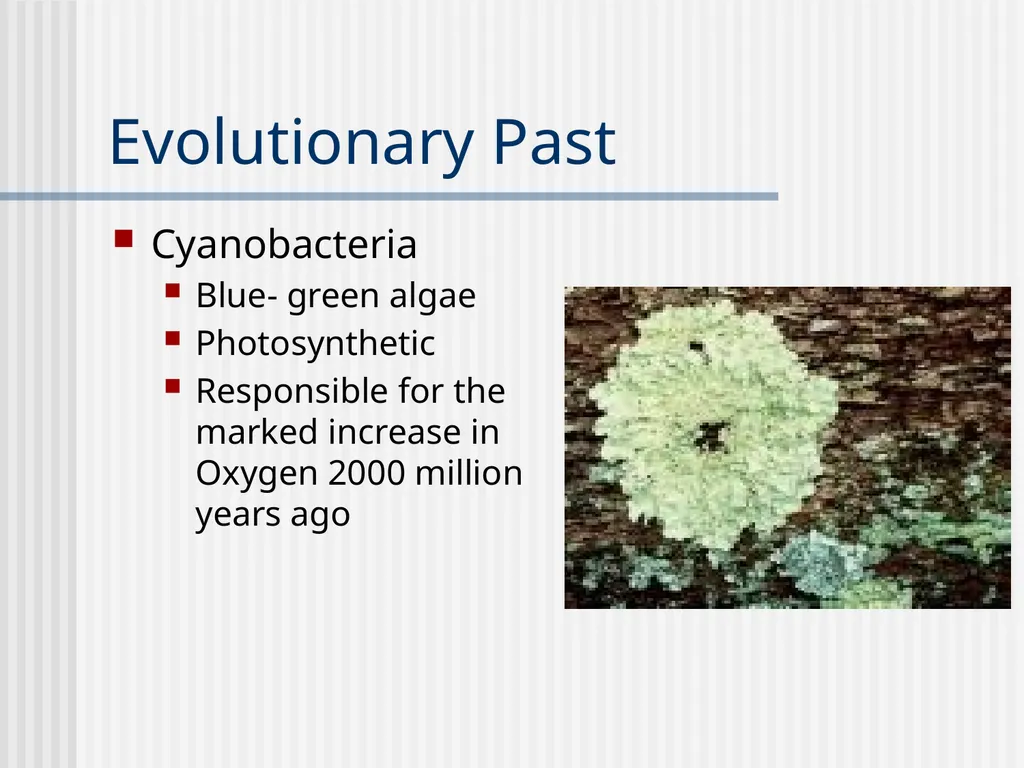
Evolutionary Past Cyanobacteria
Blue- green algae
Photosynthetic
Responsible for the marked increase in Oxygen 2000 million years ago<br>
03
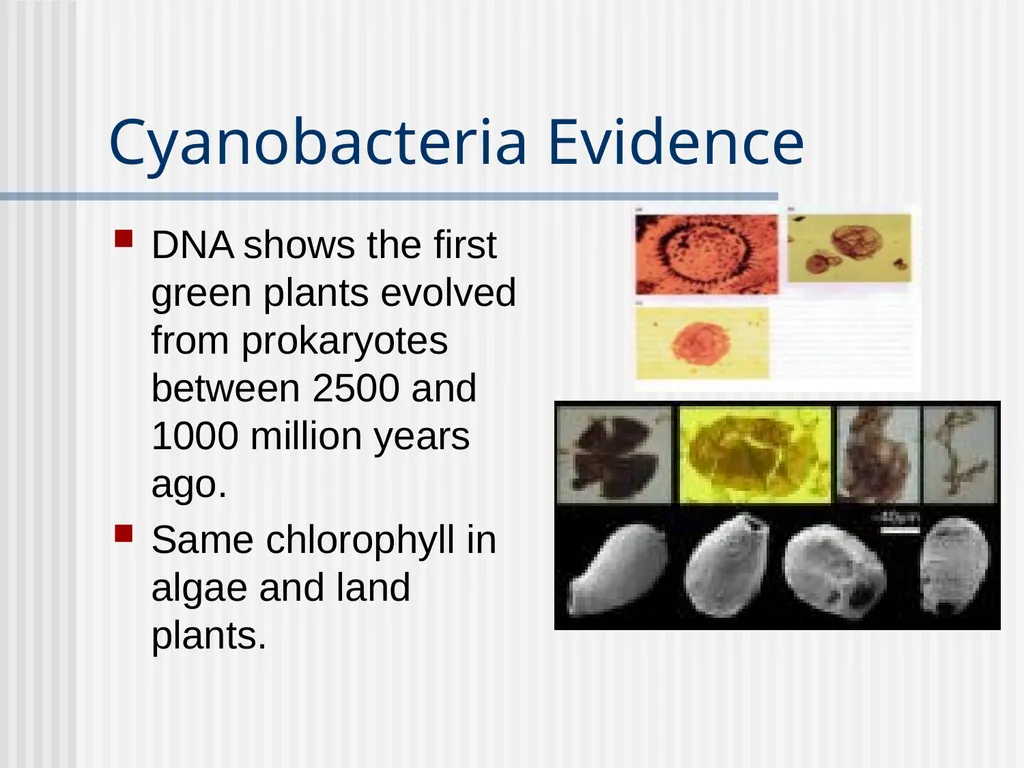
Cyanobacteria Evidence DNA shows the first green plants evolved from prokaryotes between 2500 and 1000 million years ago.
Same chlorophyll in algae and land plants.<br>
04
Endosymbiosis a symbiotic relationship between two organisms in which one of the two organisms (the endosymbiont) lives inside the body of the other one (the host).<br>
05
Classification of Plants Kingdom - Plantae
Division (-phyta)
Class (-opsida)
Subclass (-idae)
Order (-ales)
Family (-aceae)
Genus
Species (Genus + specific epithet)<br>
06
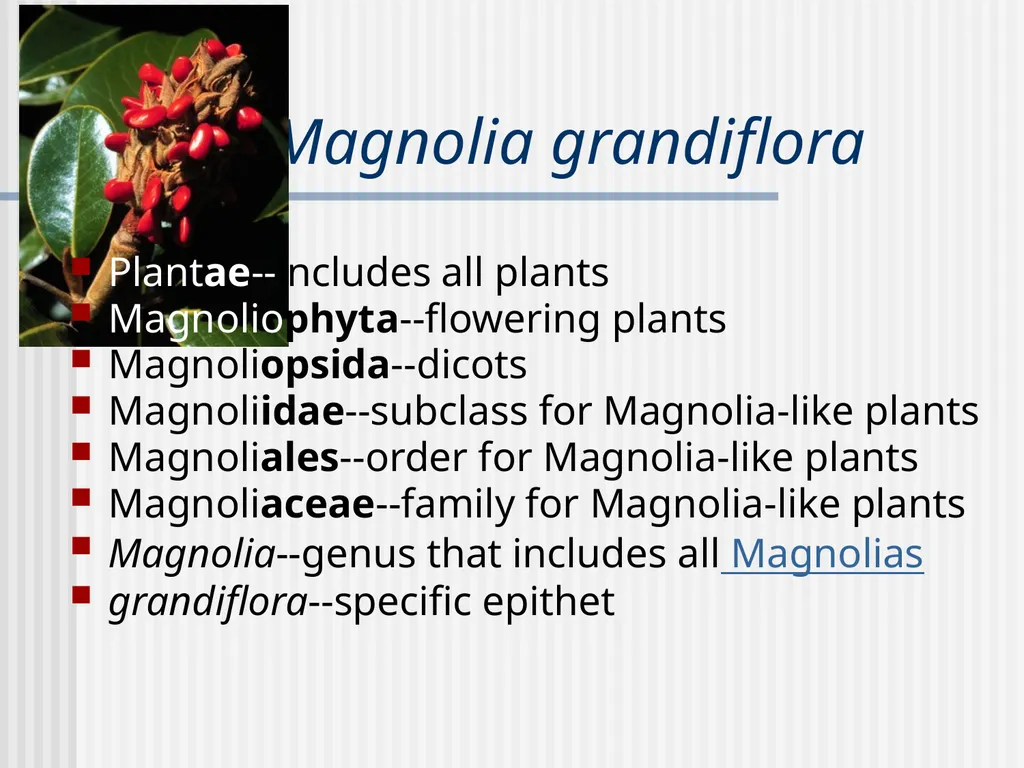
Magnolia grandiflora Plantae--includes all plants
Magnoliophyta--flowering plants
Magnoliopsida--dicots
Magnoliidae--subclass for Magnolia-like plants
Magnoliales--order for Magnolia-like plants
Magnoliaceae--family for Magnolia-like plants
Magnolia--genus that includes all Magnolias
grandiflora--specific epithet<br>
07
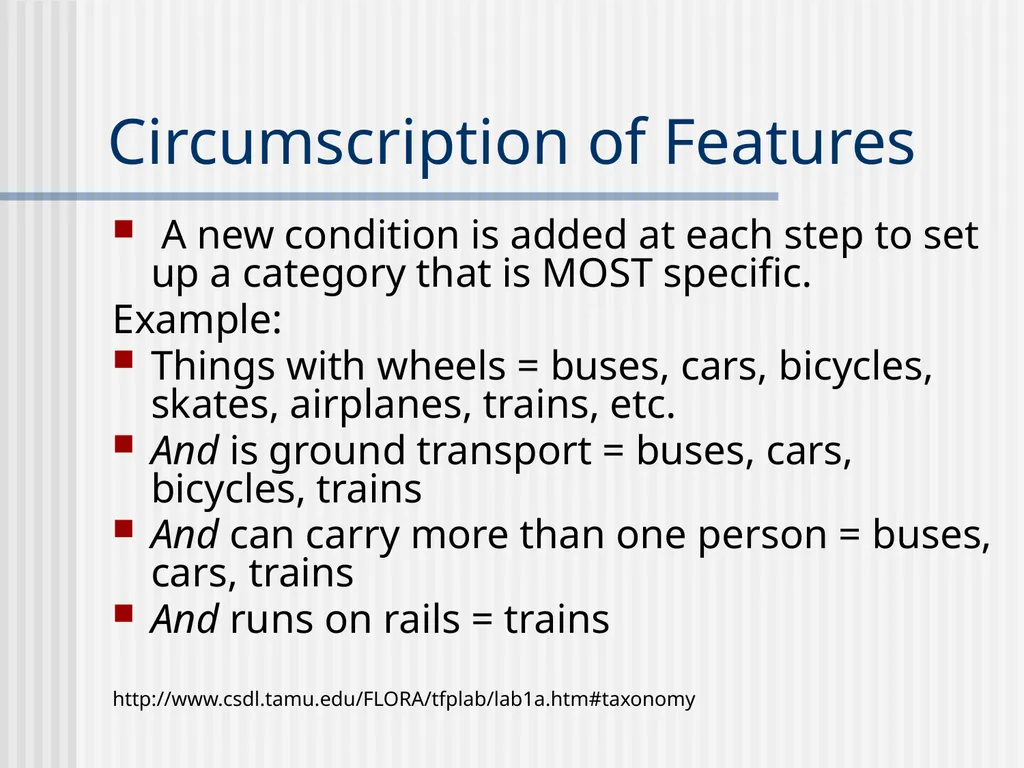
Circumscription of Features A new condition is added at each step to set up a category that is MOST specific.
Example:
Things with wheels = buses, cars, bicycles, skates, airplanes, trains, etc.
And is ground transport = buses, cars, bicycles, trains
And can carry more than one person = buses, cars, trains
And runs on rails = trains
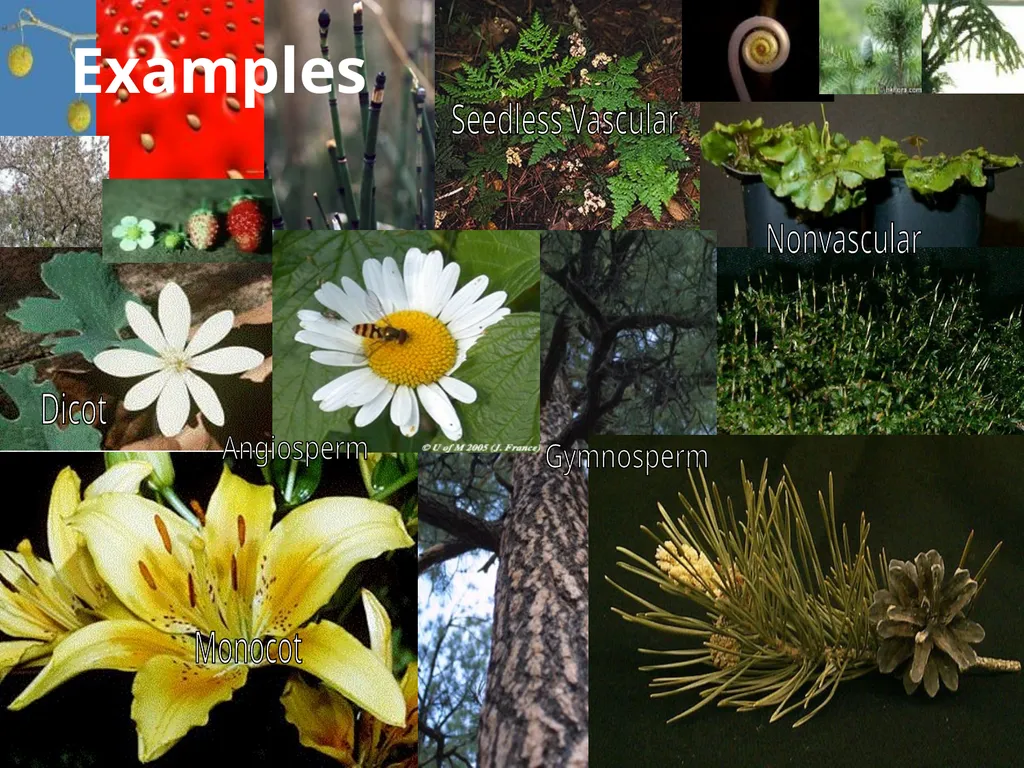
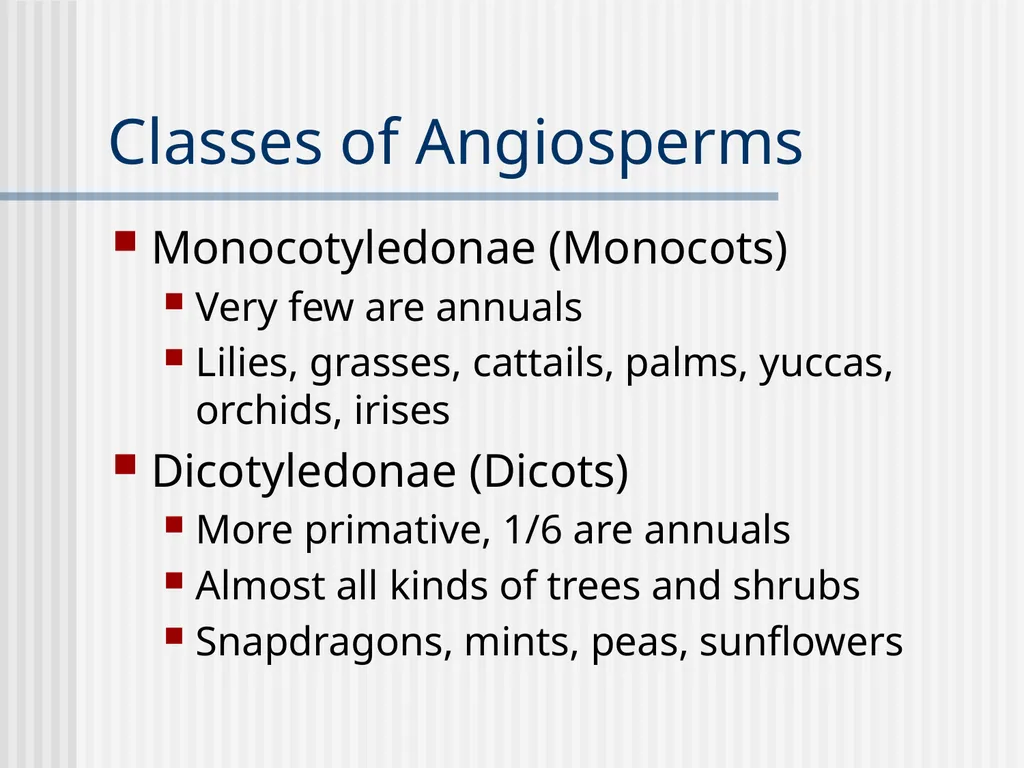
Classes of Angiosperms Monocotyledonae (Monocots)
Very few are annuals
Lilies, grasses, cattails, palms, yuccas, orchids, irises
Dicotyledonae (Dicots)
More primative, 1/6 are annuals
Almost all kinds of trees and shrubs
Snapdragons, mints, peas, sunflowers<br>
15
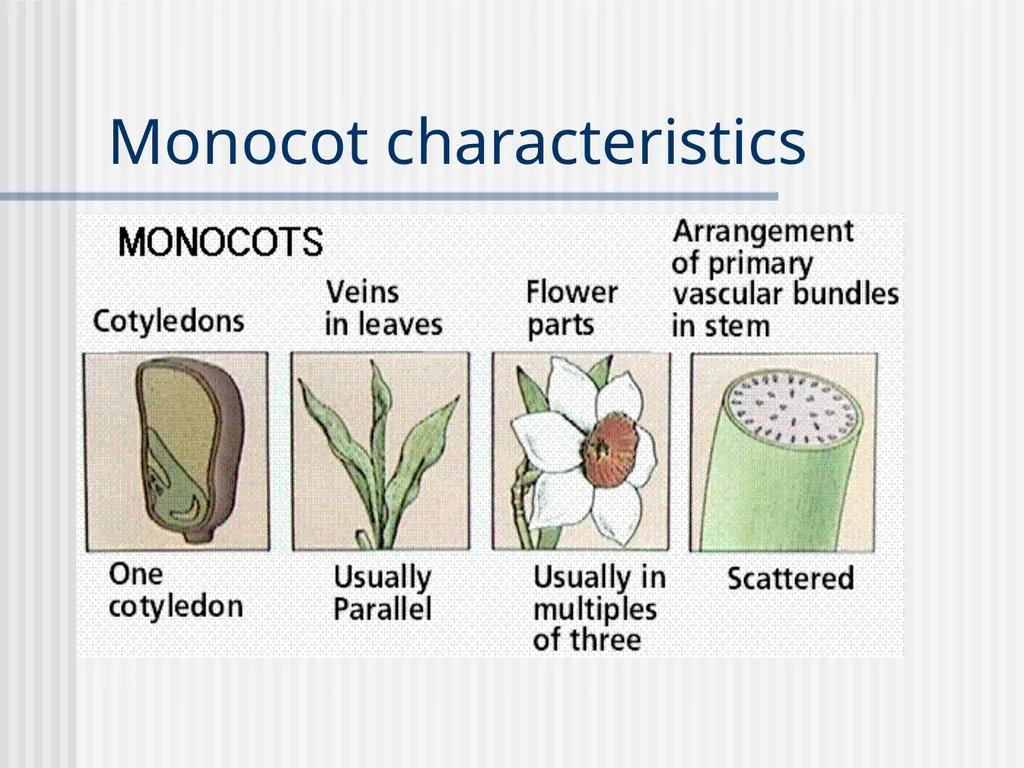
Monocot characteristics<br>
16
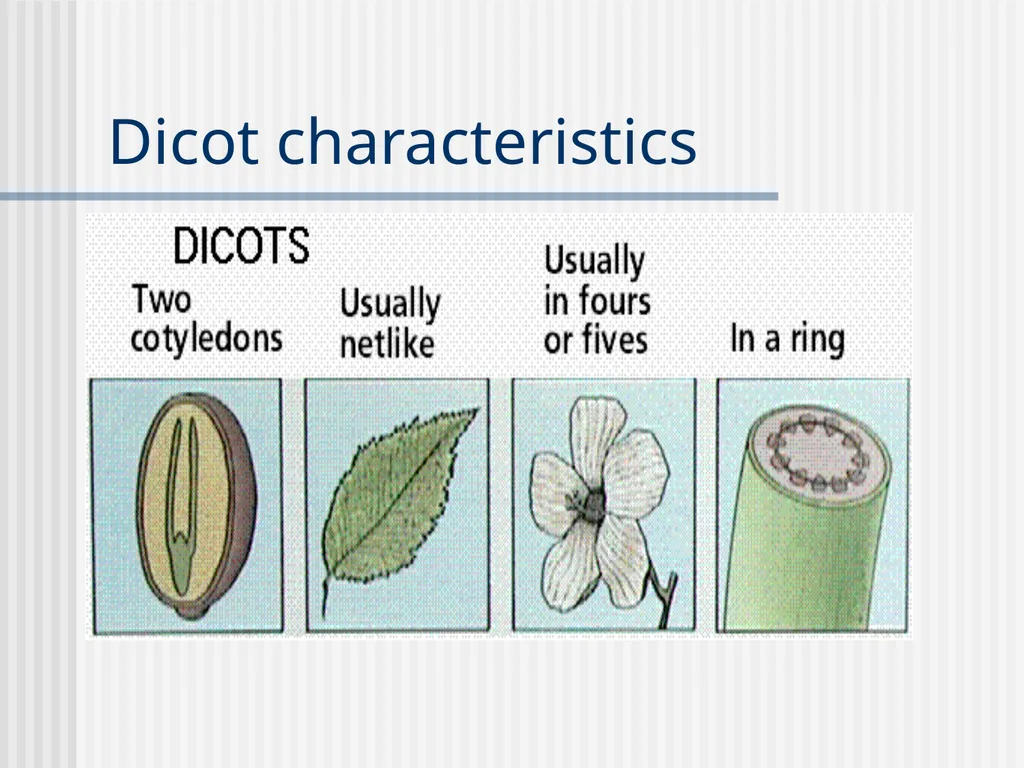
Dicot characteristics<br>
17
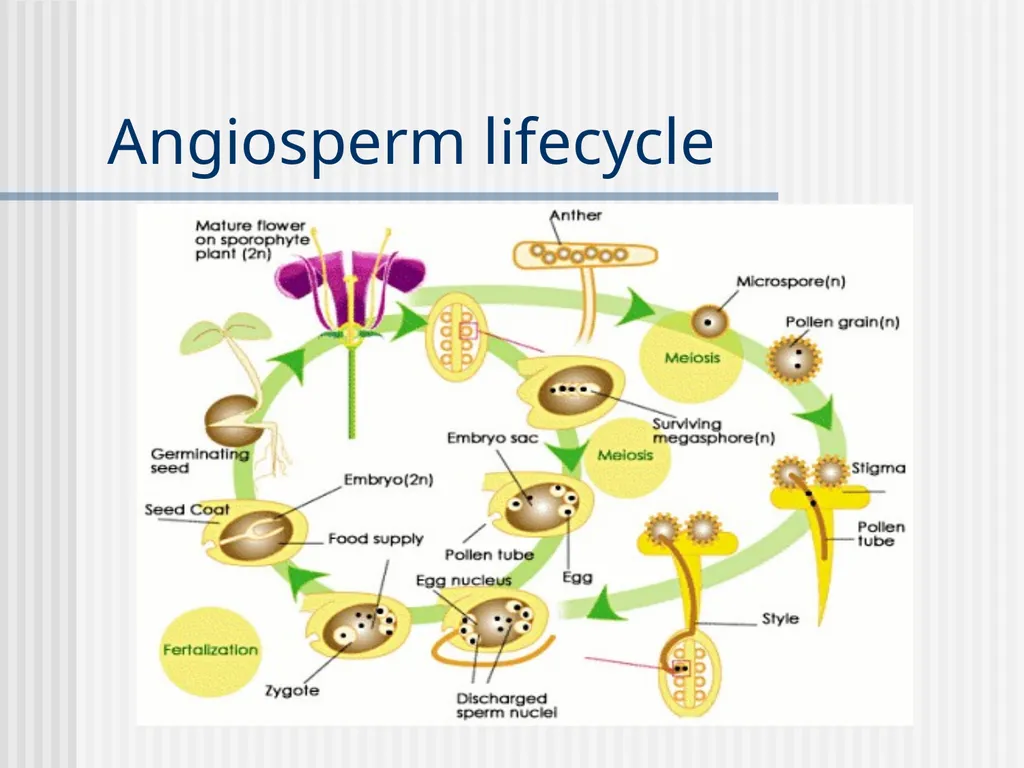
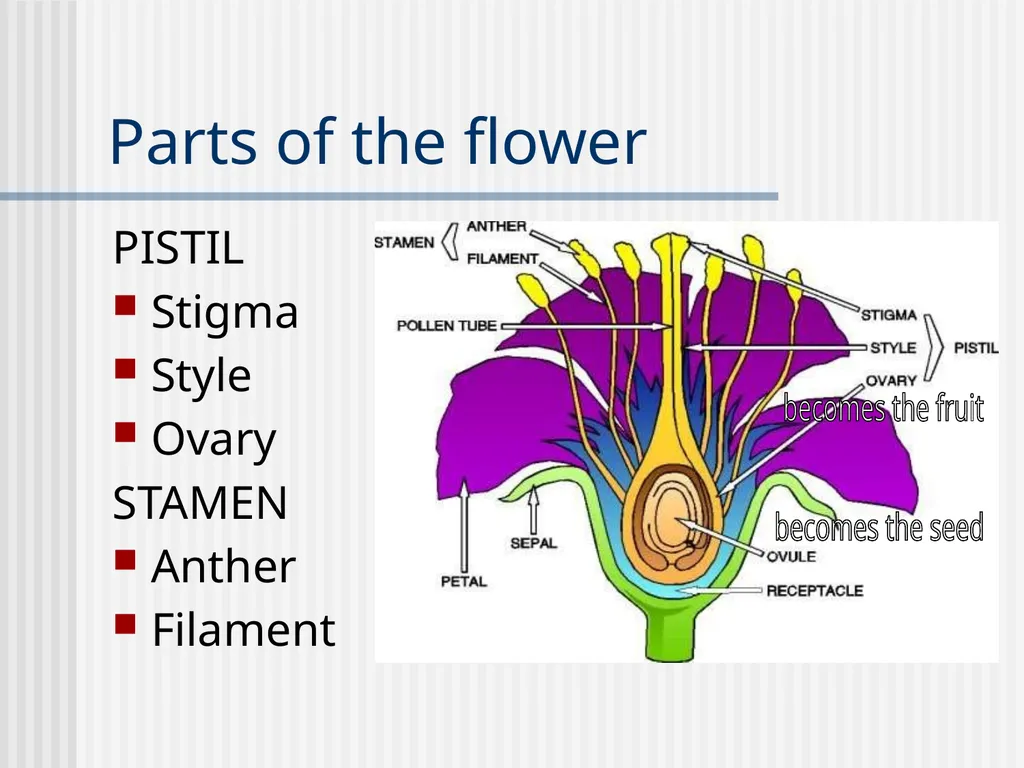
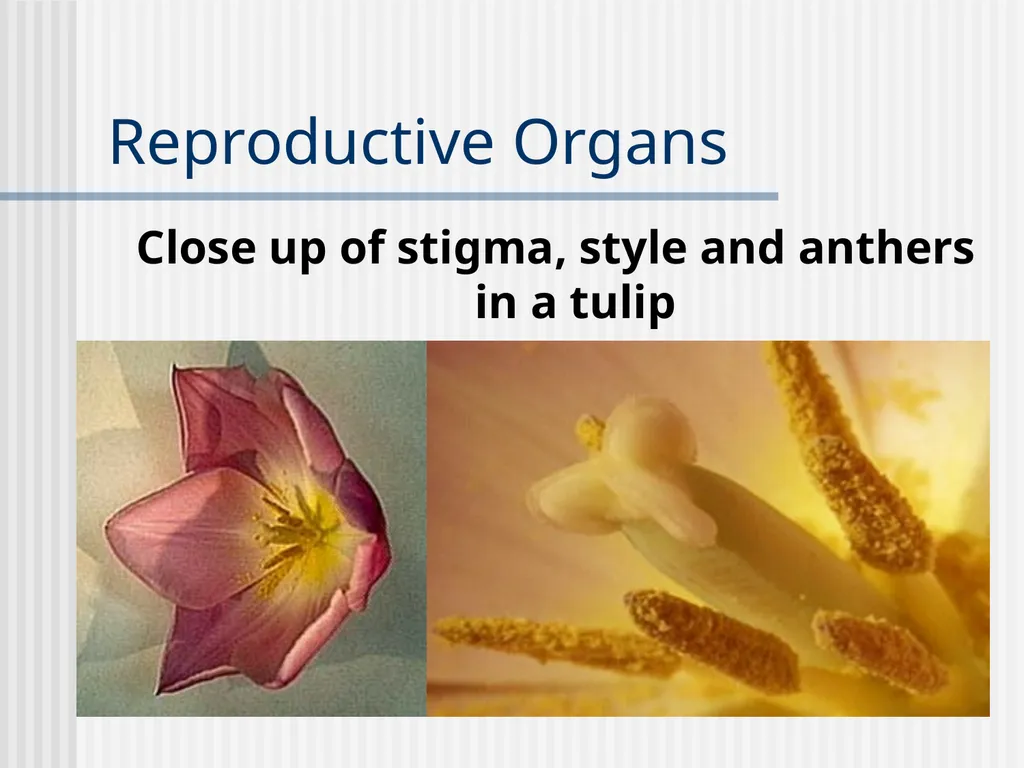
Parts of the flower PISTIL
Stigma
Style
Ovary
STAMEN
Anther
Filament becomes the seed becomes the fruit<br>
18
Reproductive Organs Close up of stigma, style and anthers in a tulip<br>
This powerpoint was kindly donated to www.worldofteaching.com
http://www.worldofteaching.com is home to over a thousand powerpoints submitted by teachers. This is a completely free site and requires no registration. Please visit and I hope it will help in your teaching.<br>