Plate Tectonics Theyre Pulling Apart! When plates pull away from one another they form a diverging plate boundary, or spreading zone. Thingvellir, the spreading zone in Iceland between the North American (left side) and Eurasian (right
"Plate Tectonics They’re Pulling Apart! When plates" is the property of its rightful owner. Permission is granted to
download and print the materials on this website for personal, non-commercial use only, and to display it
on your personal computer provided you do not modify the materials and that you retain all copyright
notices contained in the materials. By downloading content from our website, you accept the terms of this
agreement.
Presentation Transcript
01
Plate Tectonics<br>
02
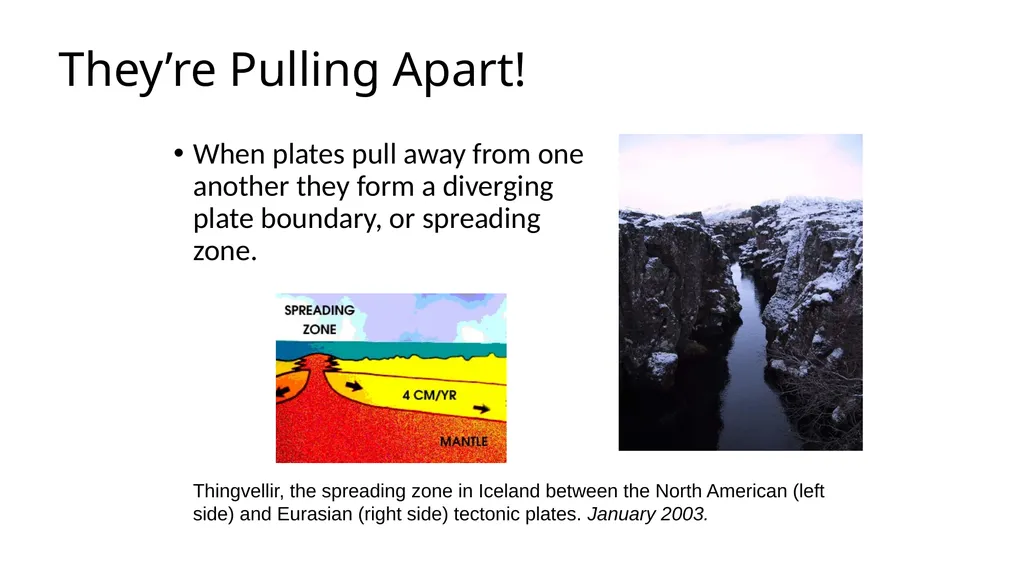
They’re Pulling Apart! When plates pull away from one another they form a diverging plate boundary, or spreading zone. Thingvellir, the spreading zone in Iceland between the North American (left side) and Eurasian (right side) tectonic plates. January 2003.<br>
03
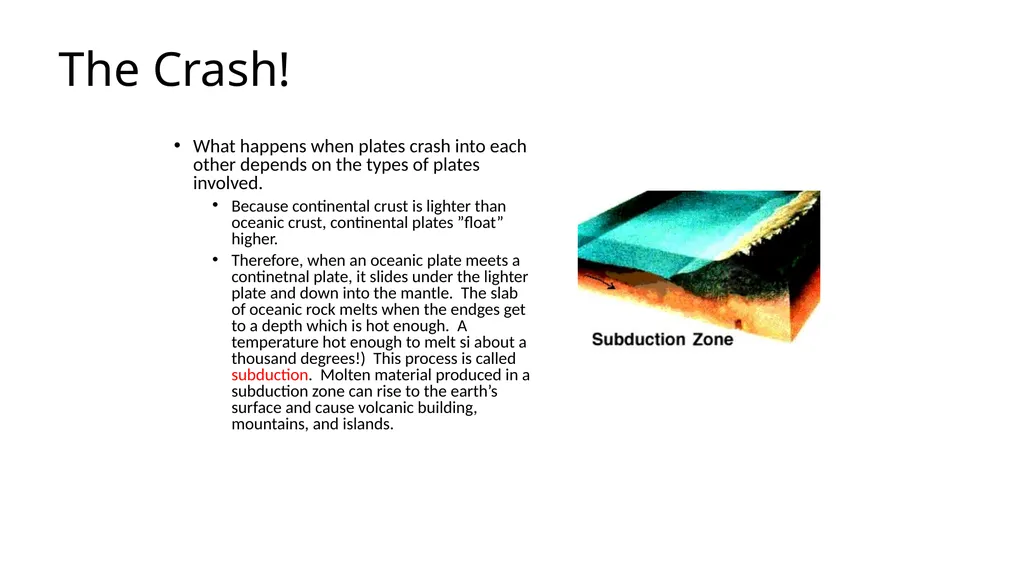
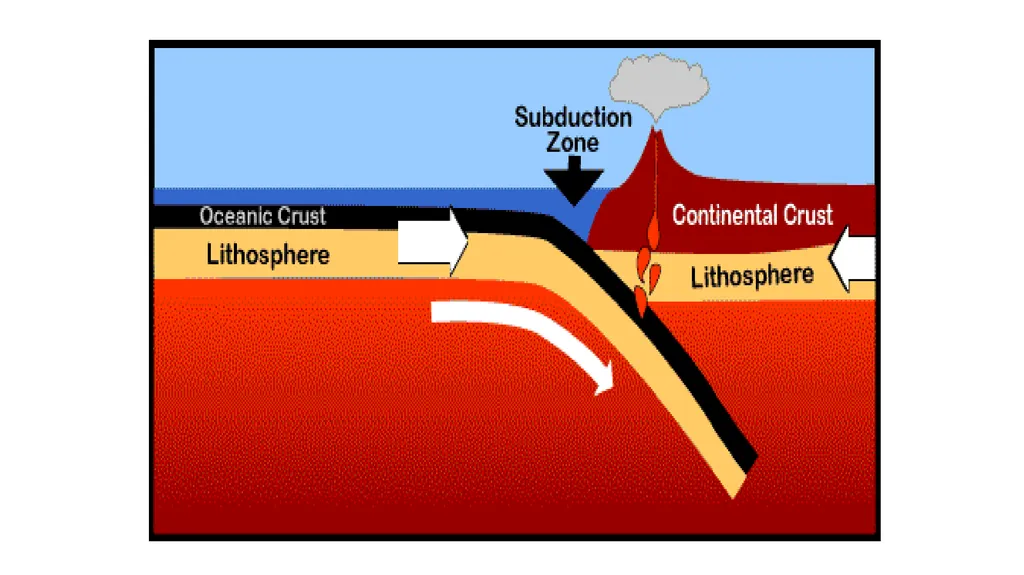
The Crash! What happens when plates crash into each other depends on the types of plates involved.
Because continental crust is lighter than oceanic crust, continental plates ”float” higher.
Therefore, when an oceanic plate meets a continetnal plate, it slides under the lighter plate and down into the mantle. The slab of oceanic rock melts when the endges get to a depth which is hot enough. A temperature hot enough to melt si about a thousand degrees!) This process is called subduction. Molten material produced in a subduction zone can rise to the earth’s surface and cause volcanic building, mountains, and islands.<br>
04
When they Crash When two plates of the same type meet, the result is a process called converging.
Depending on what type of plates these are, depends on what occurs.<br>
05
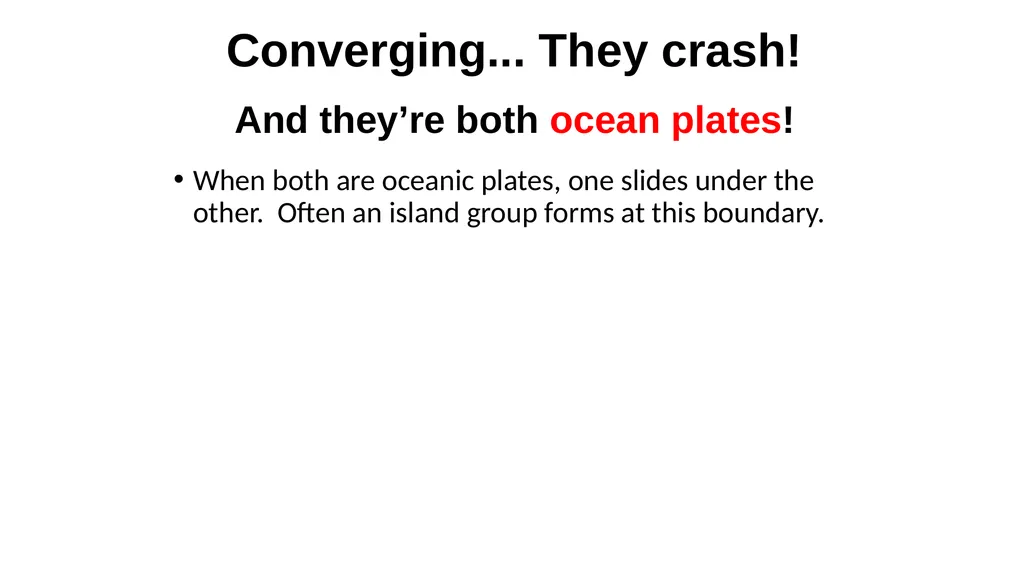
When both are oceanic plates, one slides under the other. Often an island group forms at this boundary. Converging... They crash!
And they’re both ocean plates!<br>
06
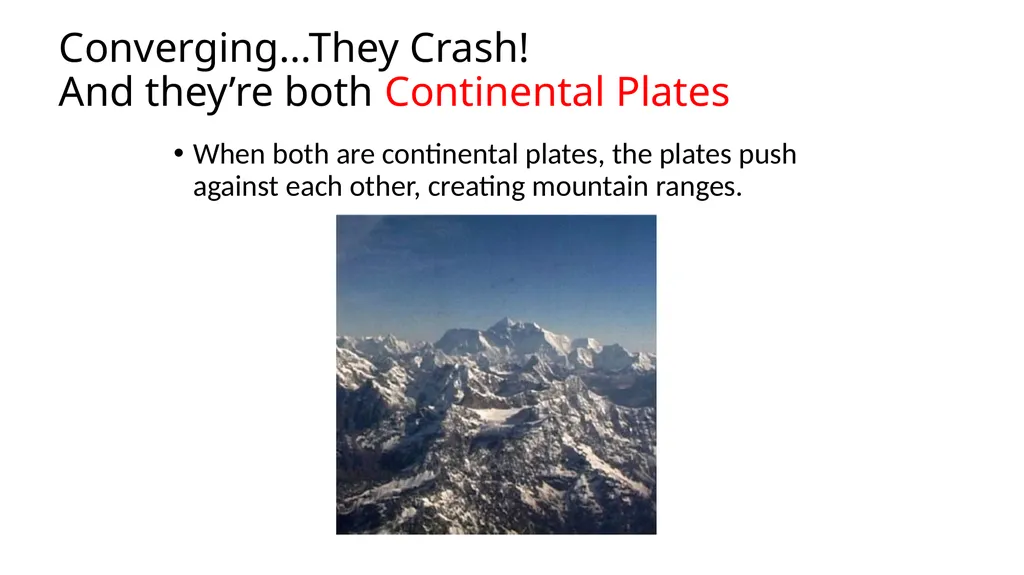
Converging...They Crash! And they’re both Continental Plates When both are continental plates, the plates push against each other, creating mountain ranges.<br>
07
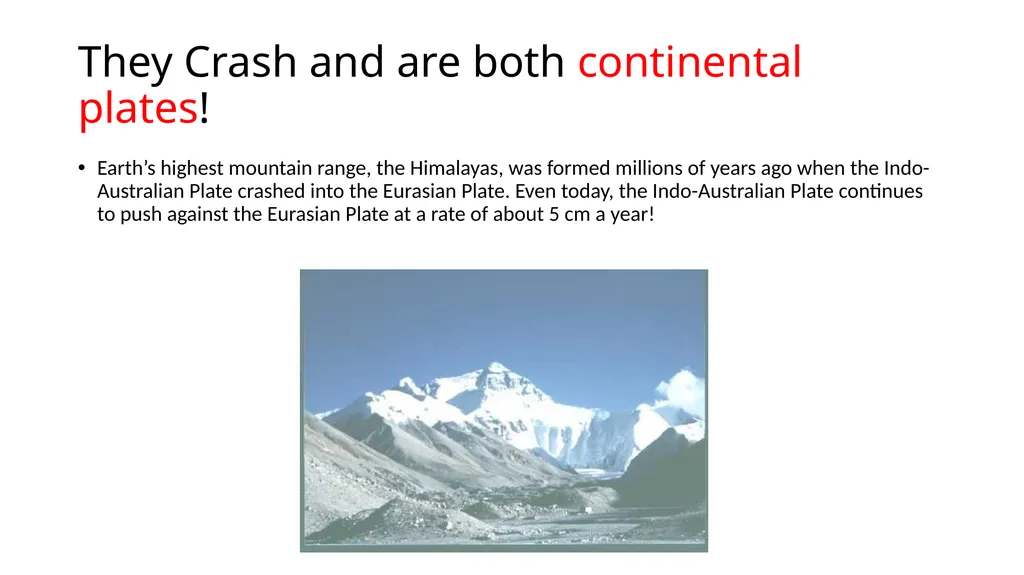
They Crash and are both continental plates! Earth’s highest mountain range, the Himalayas, was formed millions of years ago when the Indo-Australian Plate crashed into the Eurasian Plate. Even today, the Indo-Australian Plate continues to push against the Eurasian Plate at a rate of about 5 cm a year!<br>
08
They meet and slide past each other! Sometimes, instead of pulling away from each other or colliding with eac hother, plates slip or grind past each other along faults. This process is known as faulting.<br>
09
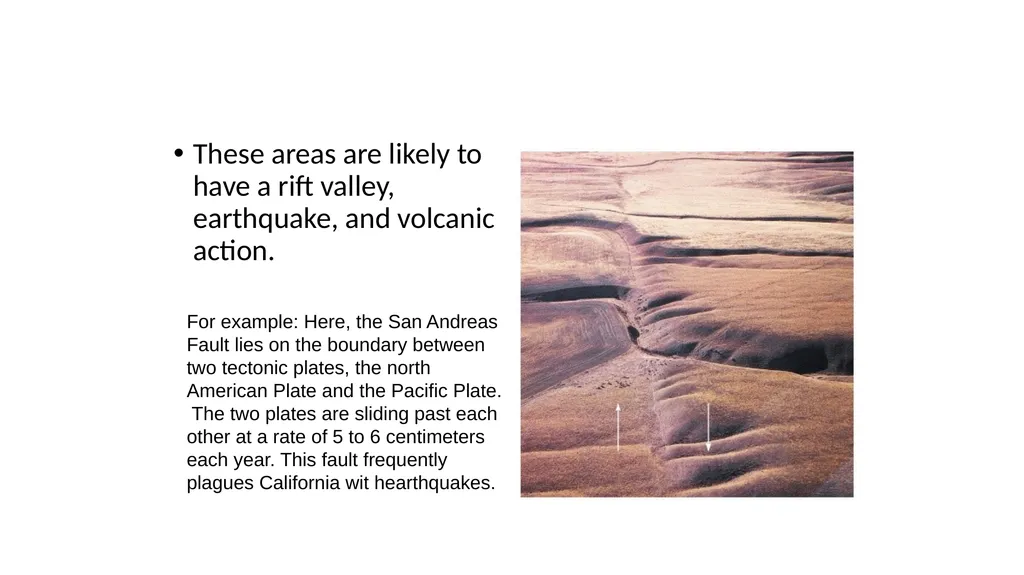
These areas are likely to have a rift valley, earthquake, and volcanic action. For example: Here, the San Andreas Fault lies on the boundary between two tectonic plates, the north American Plate and the Pacific Plate. The two plates are sliding past each other at a rate of 5 to 6 centimeters each year. This fault frequently plagues California wit hearthquakes.<br>
10
What forces inside the earth create and change landforms on the surface?
What happens when the plates crash together, pull apart, and slide against each other?<br>
11
All graphics were taken from Google Images, enchanted learning, boom zone, and other educational sites.
All written information was taken from Prentice Hall, World Geography, PBS.org, and other educational websites.
A good website for a deeper understanding is www.observe.arc.nasa.gov/<br>