POSTMODERNISM a response to the elitist and bourgeois culture of modernism post-structuralism (Derridas theory of deconstruction, 1966) a response to Humanism in which Man is considered to be an unproblematic hypothesized substitute of
"POSTMODERNISM a response to the elitist and" is the property of its rightful owner. Permission is granted to
download and print the materials on this website for personal, non-commercial use only, and to display it
on your personal computer provided you do not modify the materials and that you retain all copyright
notices contained in the materials. By downloading content from our website, you accept the terms of this
agreement.
Presentation Transcript
01
POSTMODERNISM<br>
02
a response to the elitist and bourgeois culture of modernism
post-structuralism (Derrida’s theory of deconstruction, 1966)
a response to Humanism in which Man is considered to be an unproblematic hypothesized substitute of God, the embodiment of stability
post-colonialism (pluralism, heteroglossia, subjectivity)<br>
03
Postmodernism tends to refer to a cultural, intellectual, or artistic state lacking a clear central hierarchy or organizing principle and embodying extreme complexity, contradiction, ambiguity, diversity , and interconnectedness or interreferentiality.<br>
04
Postmodernism is characterized by:<br>
05
rejection of all kinds of organizational hierarchy (e.g. the conceptual oppositions we employ to do this organization such as speech vs. writing, soul vs. body, literal vs. metaphorical, natural vs. cultural, masculine vs. feminine - are wrong or too rigidly fixed)<br>
06
breaking away from an allegiance to any “given” systems and believing that the way we see the world can and should be changed<br>
07
believing that the reader/listener/spectator involved in the articulation or interpretation of the play of language should act independently of any supposed intention of the author - the text is to be constructed by the reader.<br>
08
resisting the master narrative of modernism, the authority of high art (postmodernists seem to be unconcerned by the relationship between the formerly “high” and “low” genres)<br>
09
Untitled by Barbara Kruger<br>
10
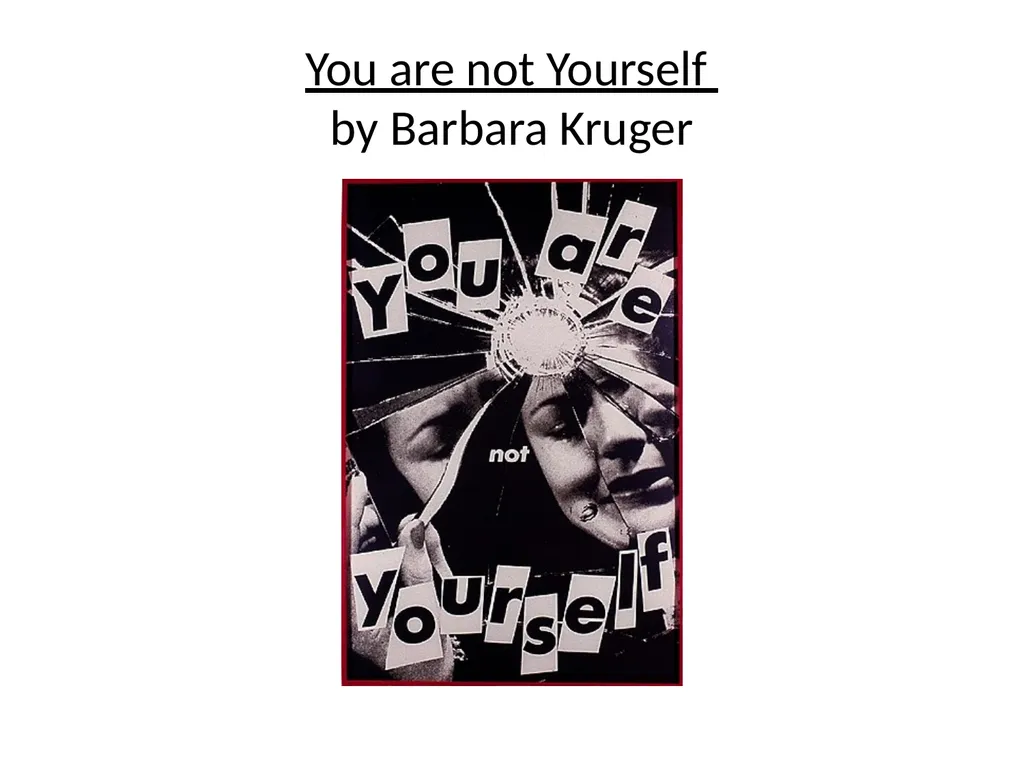
You are not Yourself by Barbara Kruger<br>
11
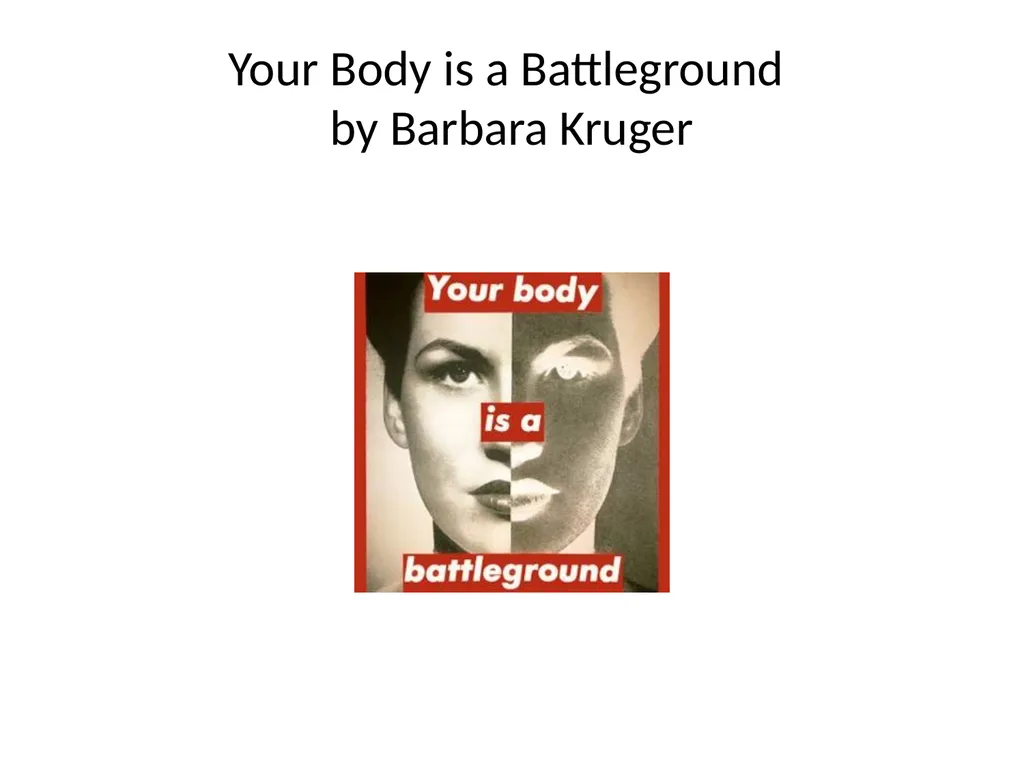
Your Body is a Battleground by Barbara Kruger<br>
12
Who is Free to Choose by Barbara Kruger<br>
13
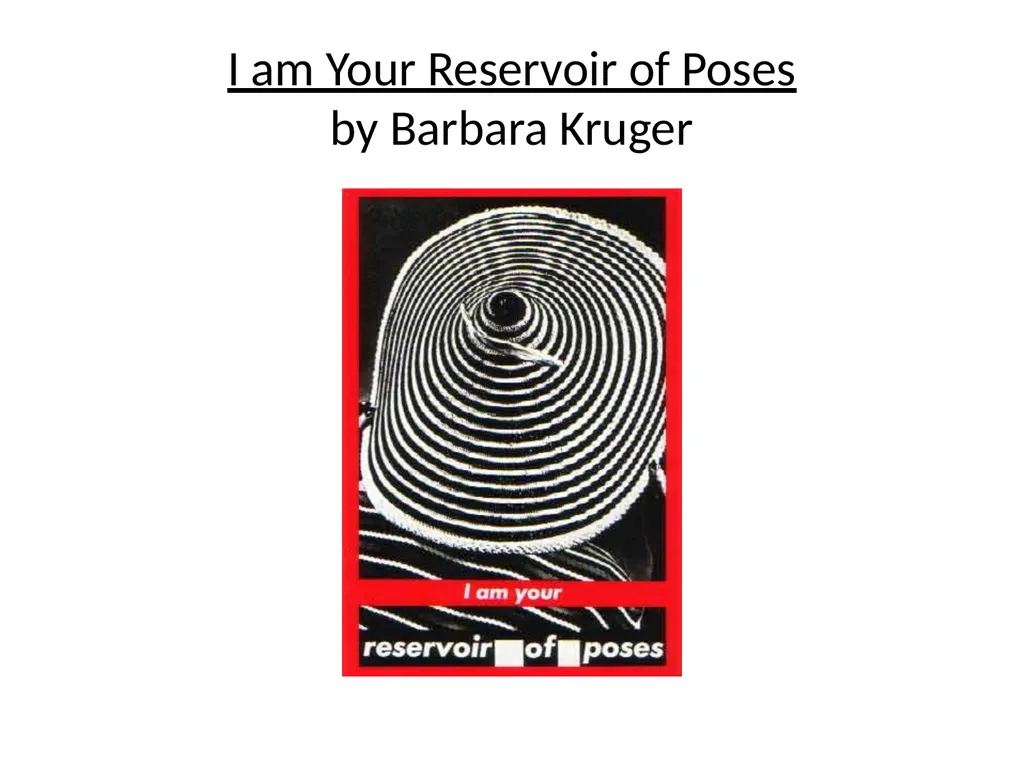
I am Your Reservoir of Poses by Barbara Kruger<br>
14
Your Comfort is My Silence by Barbara Kruger<br>
15
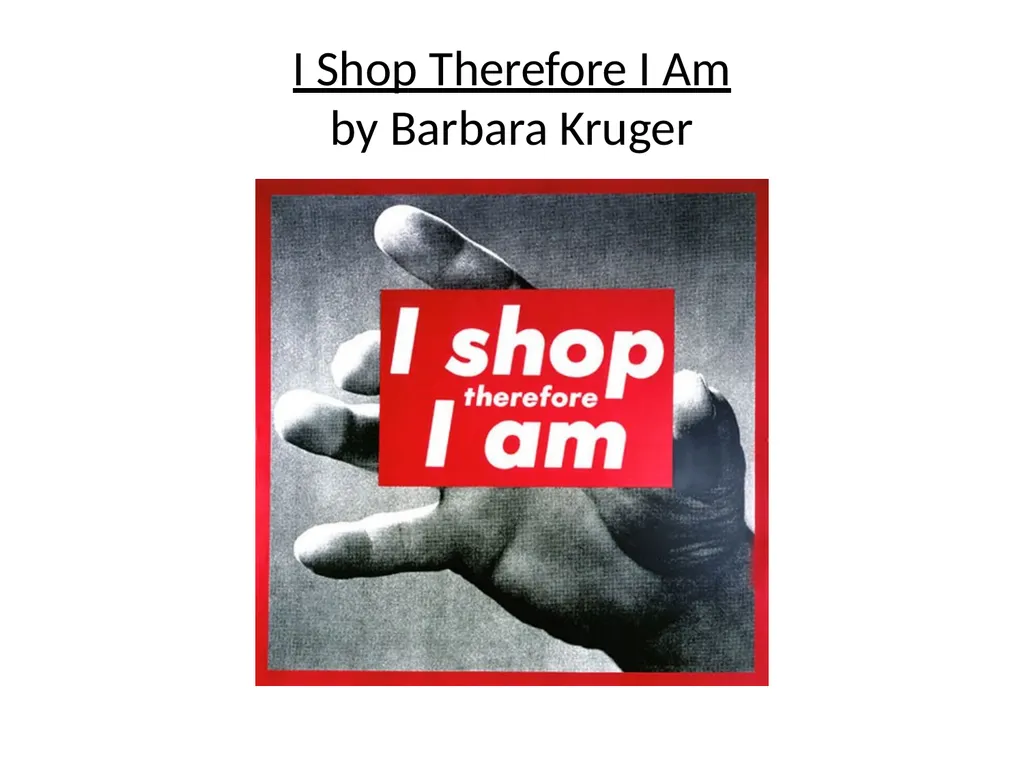
I Shop Therefore I Am by Barbara Kruger<br>
16
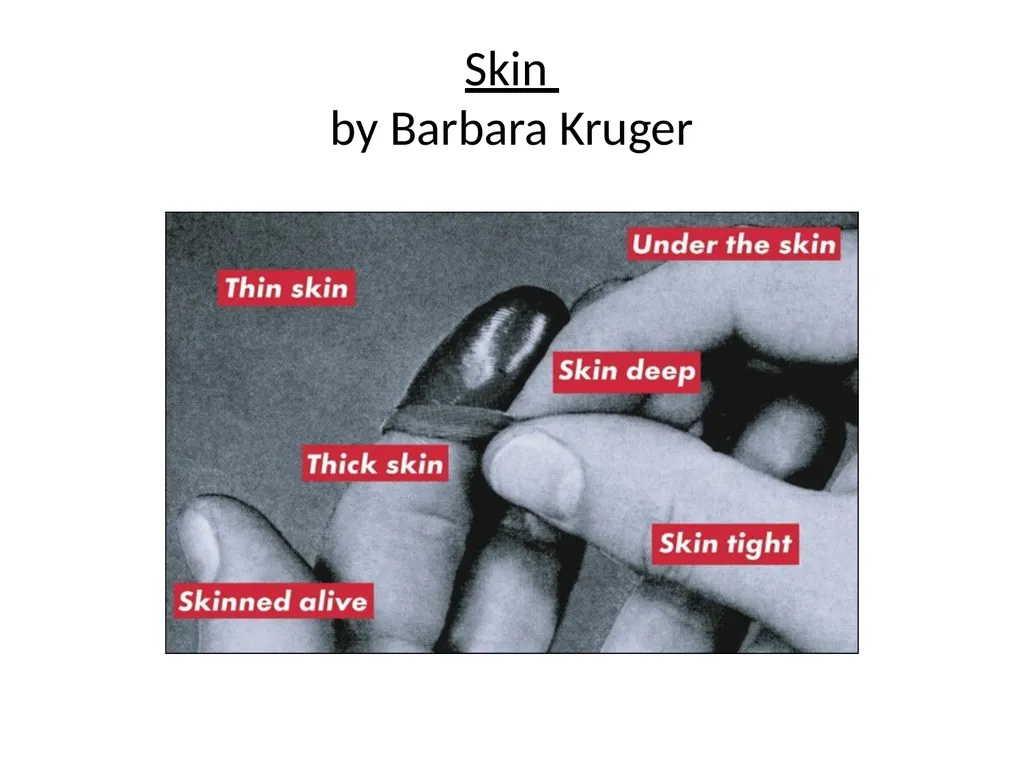
Skin by Barbara Kruger<br>
17
Armorites by Jean-Michel Basquiat<br>
18
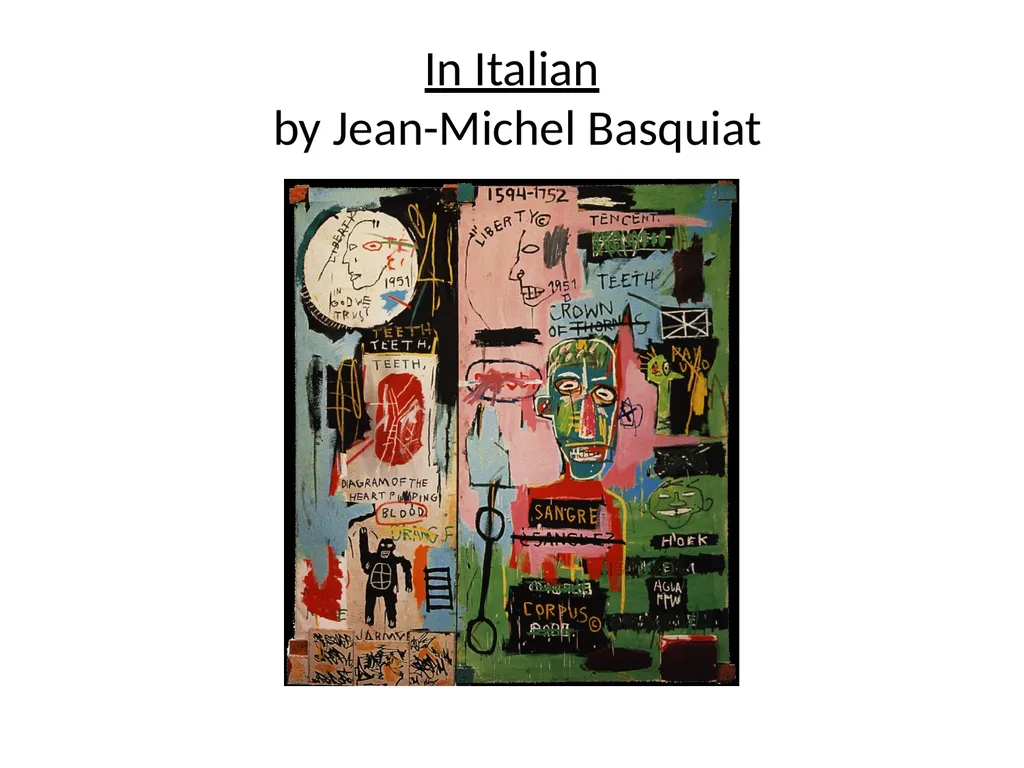
In Italian by Jean-Michel Basquiat<br>
19
Mona Lisa by Jean-Michel Basquiat<br>
20
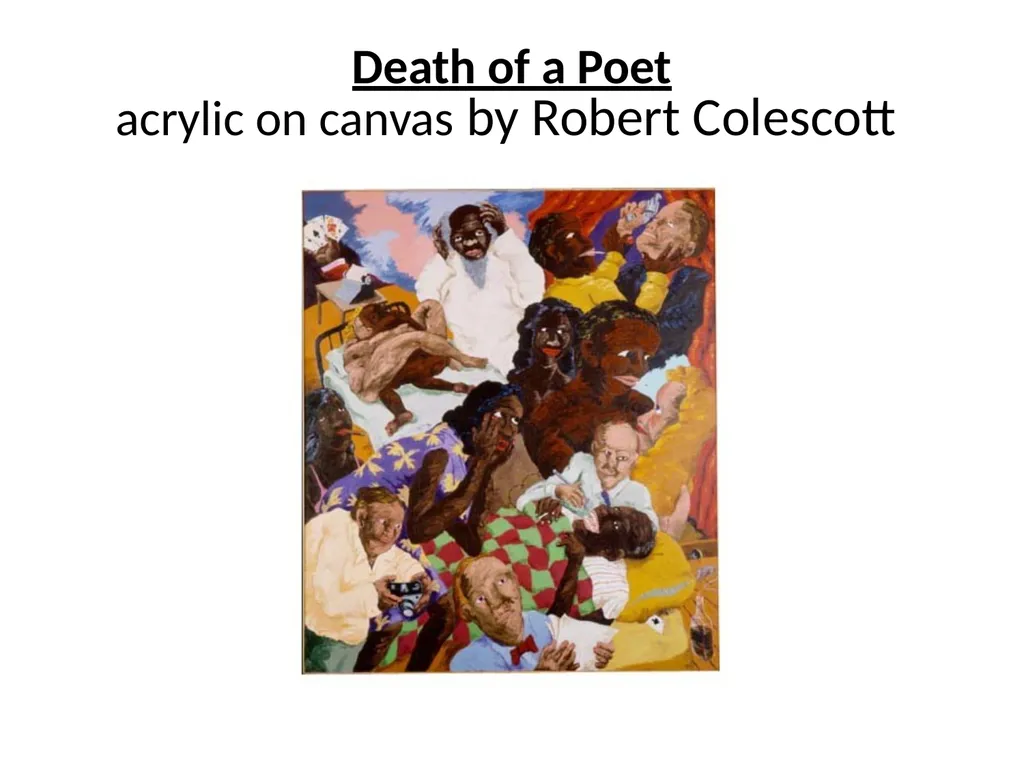
Death of a Poet acrylic on canvas by Robert Colescott<br>
21
Oh! Byzantium! Oh! by Robert Colescott<br>
22
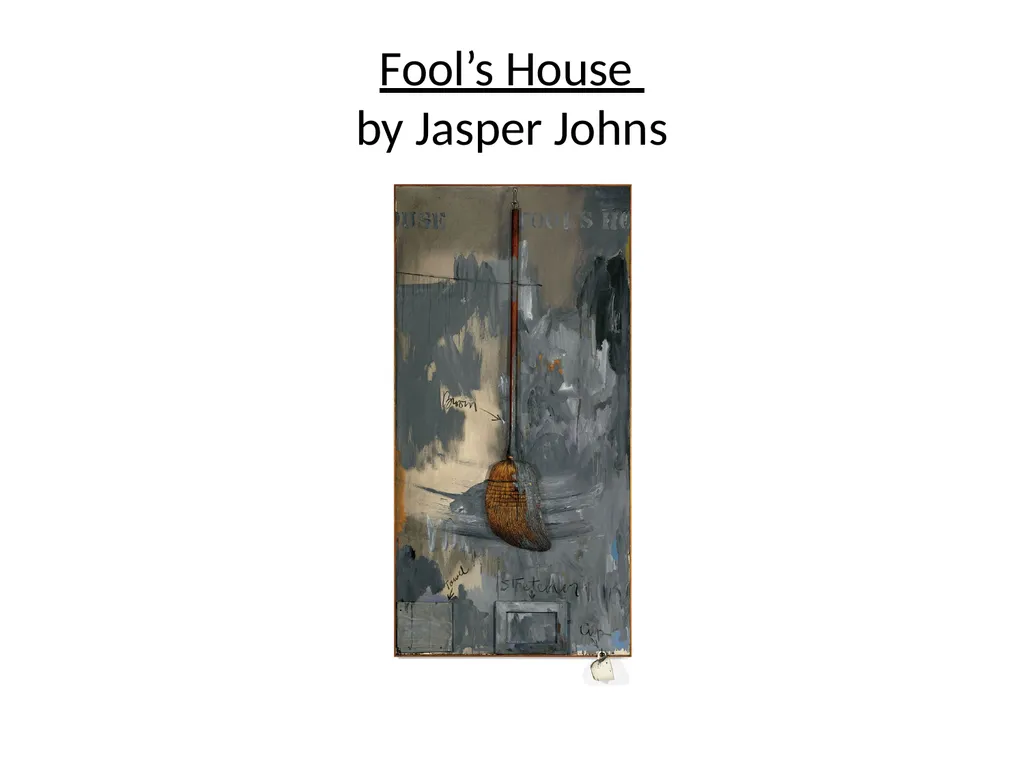
Fool’s House by Jasper Johns<br>
23
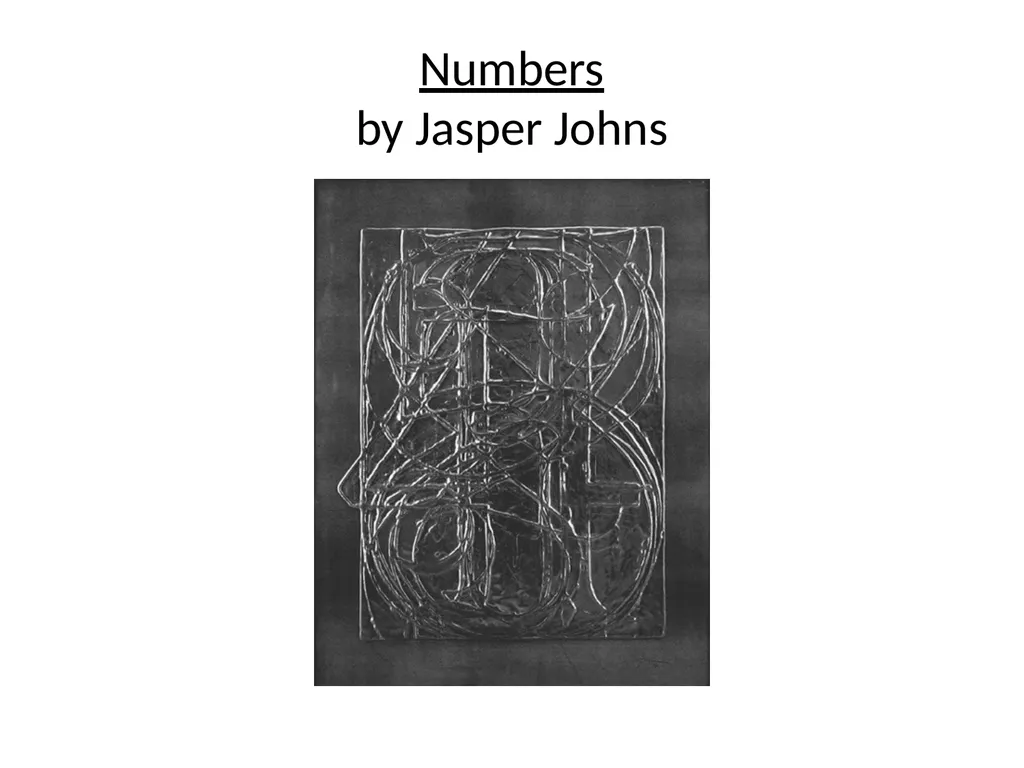
Numbers by Jasper Johns<br>
24
The postmodern novel<br>
25
creates all sorts of confusions between fact and fiction (Brian McHale argues that the “dominant” mode of postmodernist fiction involves an ontological uncertainty about the contradictory nature of the world projected by the text<br>
26
includes the dramatis personae that may wander into the text from history or from other fictions (intertextuality)<br>
27
mixes historical and fictional material and thereby implies or states a postmodernist critique of the realist norms for the relationship of fiction to history<br>
28
parodies the traditional approaches to writing<br>
29
The postmodern novel doesn’t try to create a sustained realist illusion: it displays itself as open to all those illusory tricks of stereotype and narrative manipulation, and of multiple interpretation in all its contradiction and inconsistency, which are central to postmodernist thought.<br>
30
Postmodernist novels are seen as:<br>
31
incredulous towards “metanarratives”<br>
32
sensitive to difference<br>
33
taking into account the heterogeneity of systems (cultural hybridity) through which knowledge is validated<br>
34
Online sources to consult:
How to recognize postmodernism / parts 1 and 2: http://www.youtube.com/watch?v=jbONkZsduZs http://www.youtube.com/watch?v=tLEgfv9bOtA&feature=related
What is modernism? http://www.youtube.com/watch?v=oL8MhYq9owo&feature=related
Deconstruction and Derrida / parts 1 and 2: http://www.youtube.com/watch?v=Fs5Q0tYlVQc&feature=related http://www.youtube.com/watch?v=zZ9mHGk5Fpo
Derrida's definition of deconstruction / in French / English subtitles: http://www.youtube.com/watch?v=vgwOjjoYtco
Noam Chomsky on creativity and subjectivity and vs. Michel Foucault: http://www.youtube.com/watch?v=kawGakdNoT0&feature=related<br>