PowerPoint 14: Warning signs PowerPoint
Description: PowerPoint 14: Warning signs PowerPoint presentation 1. Health and safety in building services engineering 1.13 Safety Signs Objectives By the end of the session learners should be able to: describe the different types of safety sign found
Related Topics
Download Presentation
"PowerPoint 14: Warning signs PowerPoint" is the property of its rightful owner. Permission is granted to download and print the materials on this website for personal, non-commercial use only, and to display it on your personal computer provided you do not modify the materials and that you retain all copyright notices contained in the materials. By downloading content from our website, you accept the terms of this agreement.
Presentation Transcript
slide1. PowerPoint 14: Warning signs PowerPoint presentation 1. Health and safety in building services engineering
1.13 Safety Signs<br>
slide2. Objectives By the end of the session learners should be able to:
describe the different types of safety sign found in the construction industry
identify the symbols for hazardous waste
understand the meaning of each pictogram in the Classification, Labelling and Packaging (CLP) Regulation and where each might be encountered.<br>
slide3. Safety signs A building site is a very dangerous place, full of potential hazards. It is very important that you should always try and mitigate against these hazards. Warning signs on site help to warn people of possible dangers.
There are four main types of safety sign:
prohibition signs
warning signs
mandatory signs
emergency/information signs.<br>
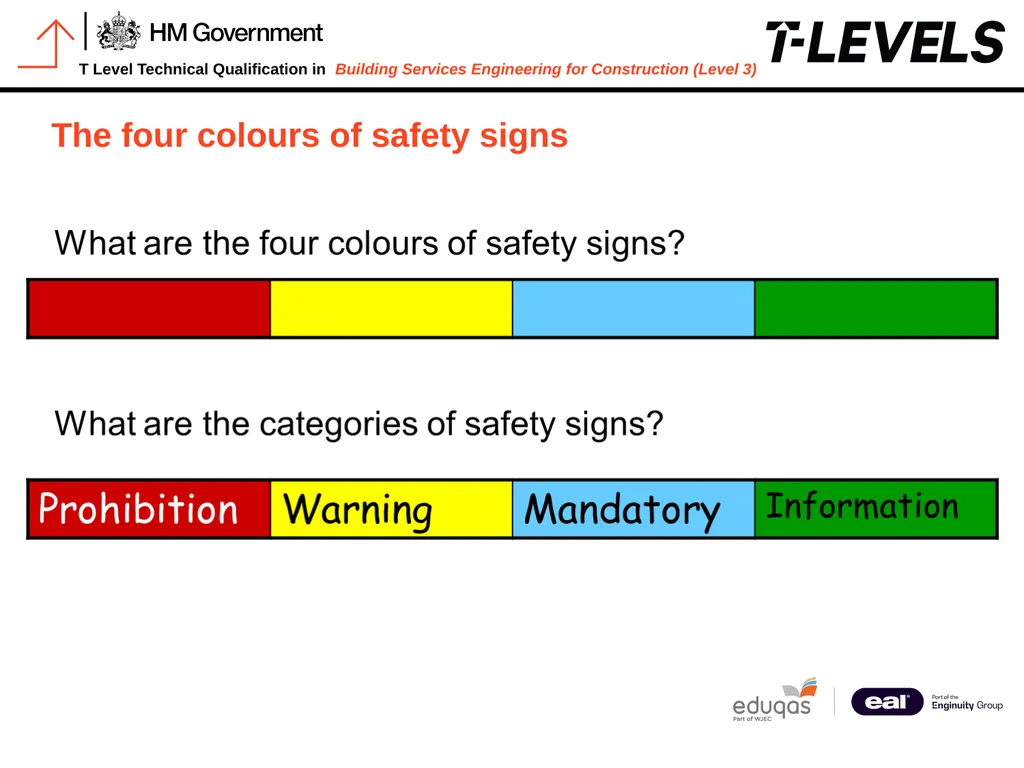
slide4. The four colours of safety signs<br>
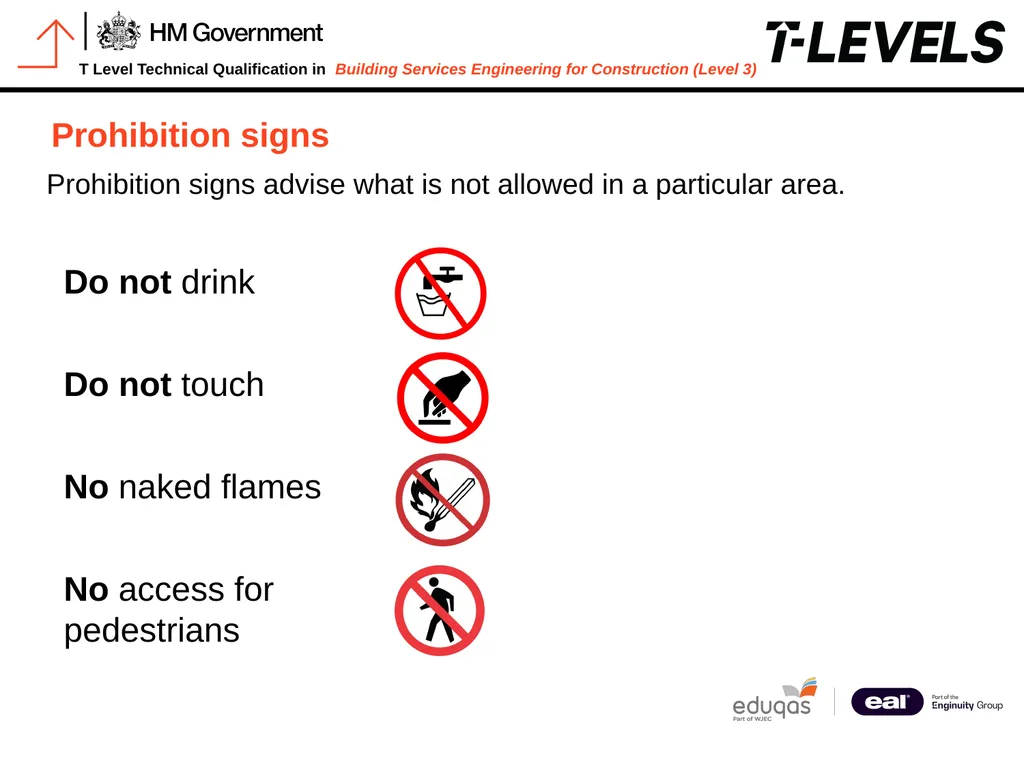
slide5. Prohibition signs Prohibition signs advise what is not allowed in a particular area. Do not drink
Do not touch
No naked flames
No access for pedestrians<br>
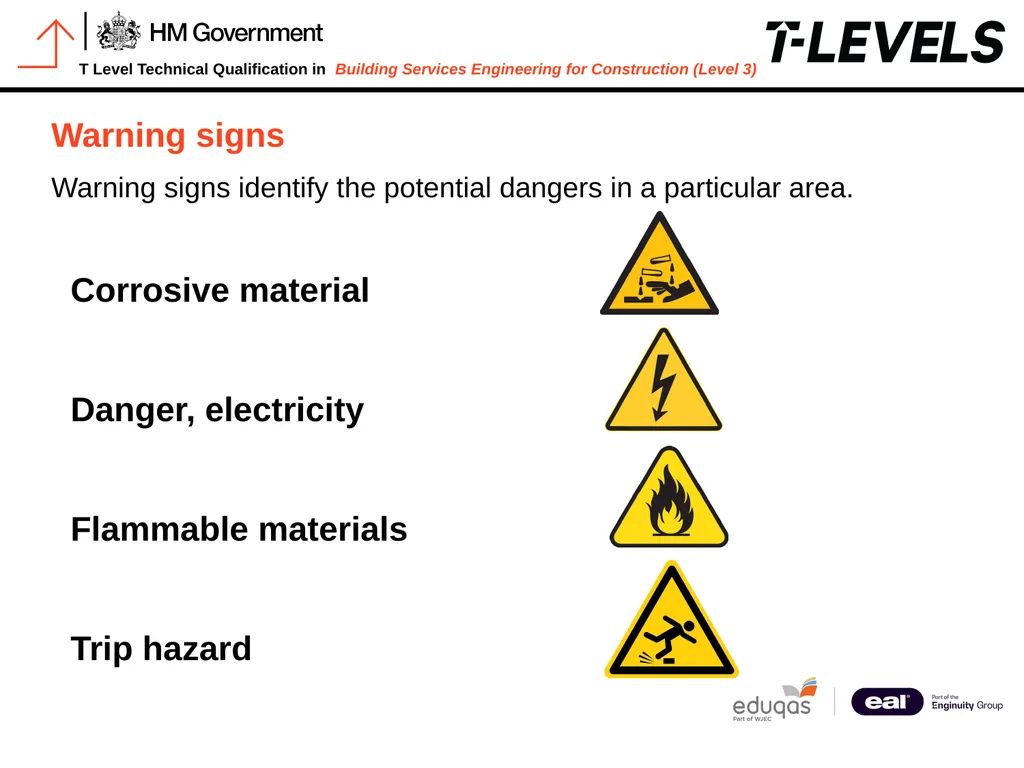
slide6. Warning signs Warning signs identify the potential dangers in a particular area. Corrosive material
Danger, electricity
Flammable materials
Trip hazard<br>
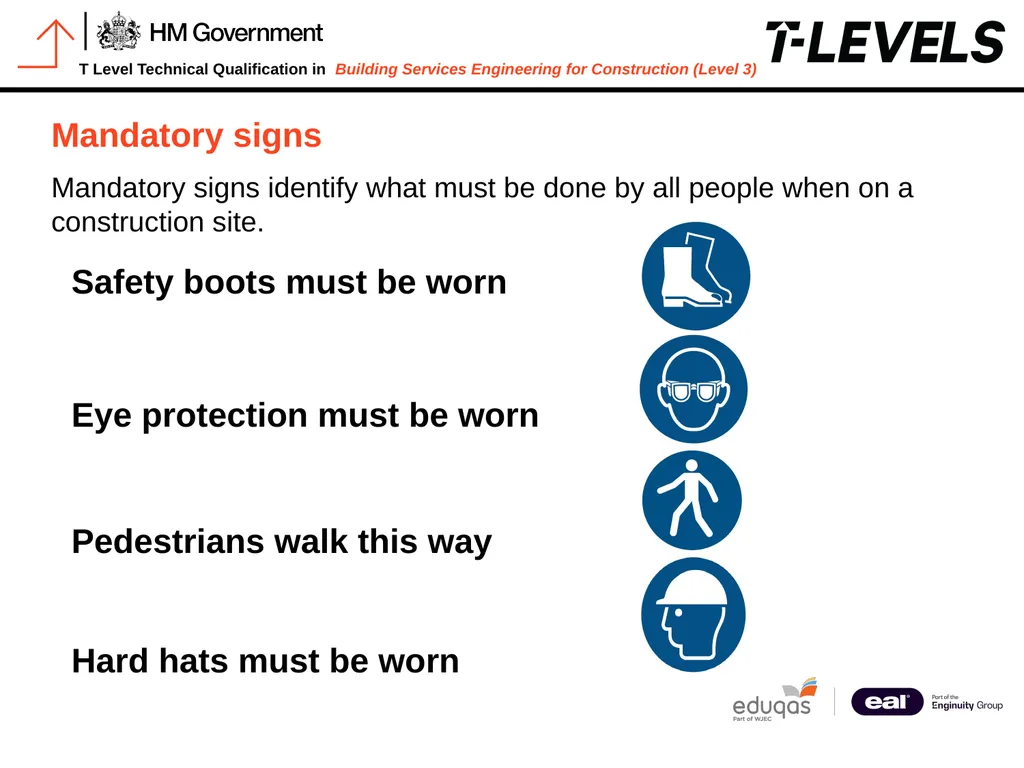
slide7. Mandatory signs Mandatory signs identify what must be done by all people when on a construction site. Safety boots must be worn
Eye protection must be worn
Pedestrians walk this way
Hard hats must be worn<br>
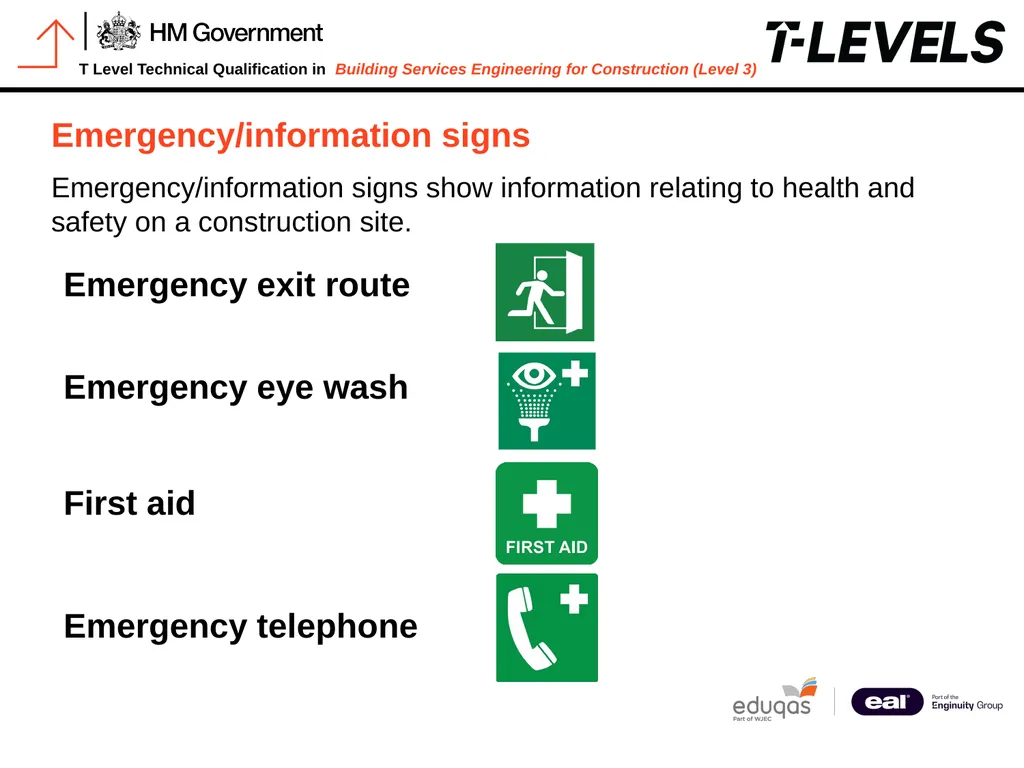
slide8. Emergency/information signs Emergency/information signs show information relating to health and safety on a construction site. Emergency exit route
Emergency eye wash
First aid
Emergency telephone<br>
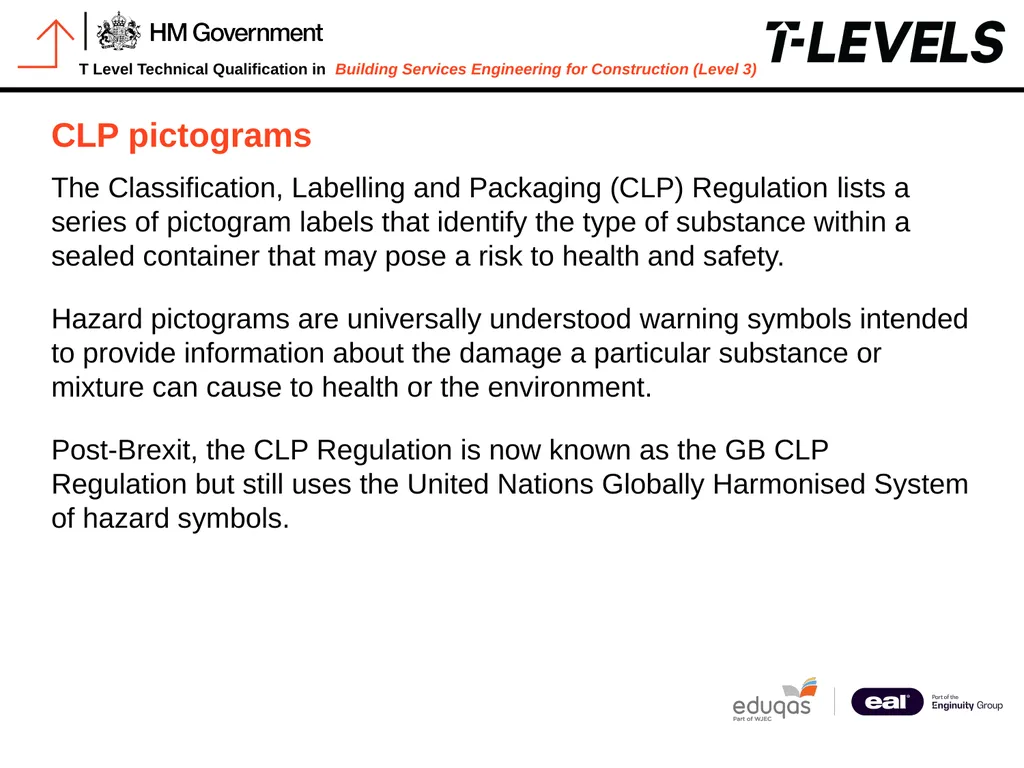
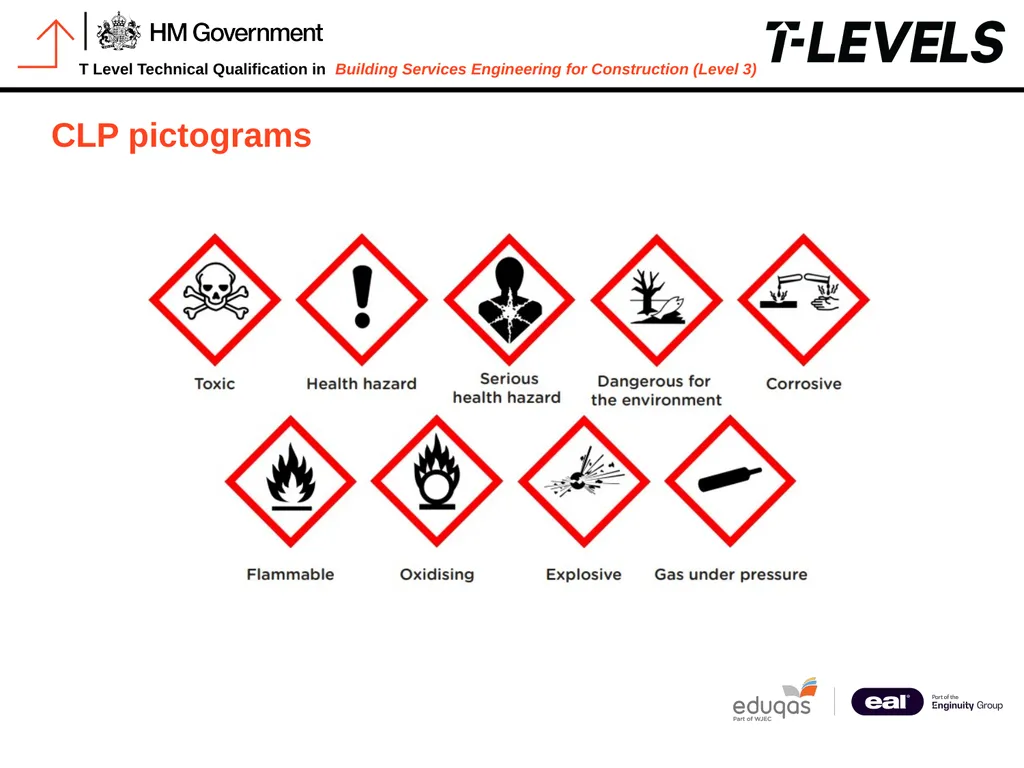
slide9. CLP pictograms The Classification, Labelling and Packaging (CLP) Regulation lists a series of pictogram labels that identify the type of substance within a sealed container that may pose a risk to health and safety.
Hazard pictograms are universally understood warning symbols intended to provide information about the damage a particular substance or mixture can cause to health or the environment.
Post-Brexit, the CLP Regulation is now known as the GB CLP Regulation but still uses the United Nations Globally Harmonised System of hazard symbols.<br>
slide10. CLP pictograms<br>
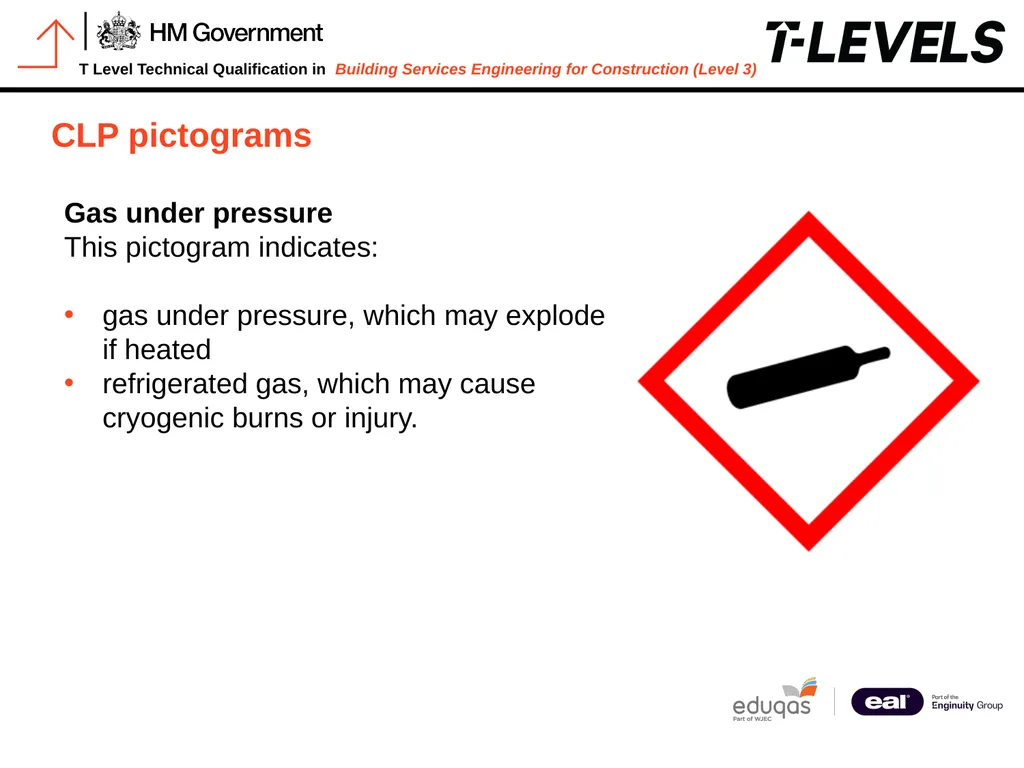
slide11. CLP pictograms Gas under pressure
This pictogram indicates:
gas under pressure, which may explode if heated
refrigerated gas, which may cause cryogenic burns or injury.<br>
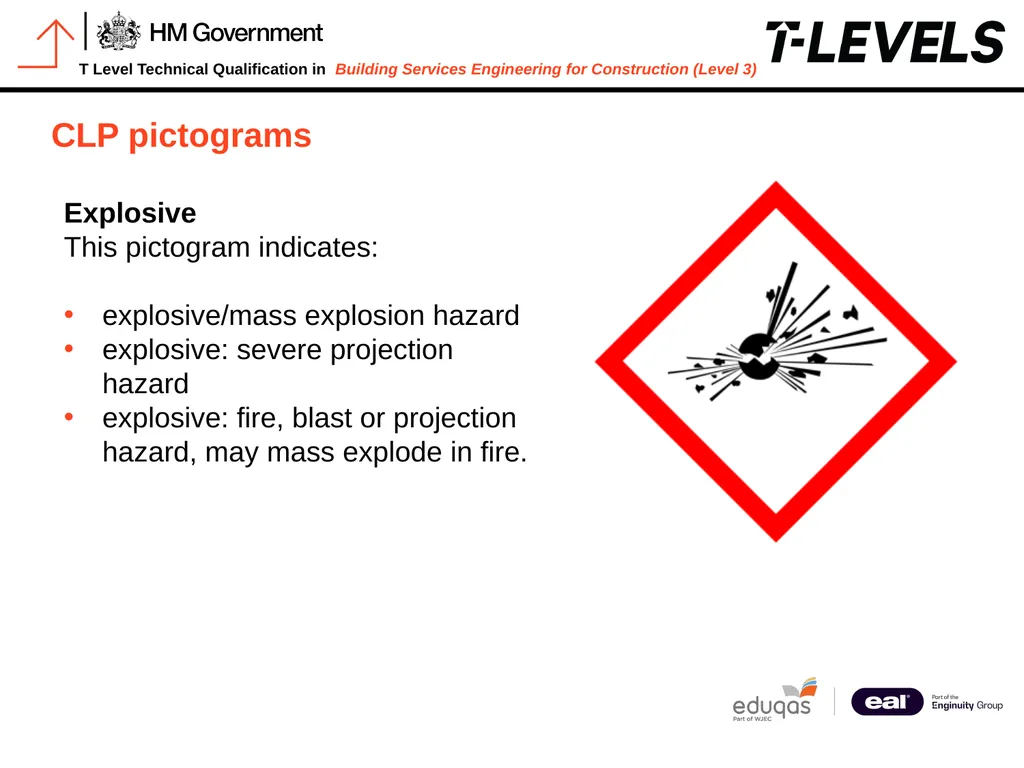
slide12. CLP pictograms Explosive
This pictogram indicates:
explosive/mass explosion hazard
explosive: severe projection hazard
explosive: fire, blast or projection hazard, may mass explode in fire.
Source: CLP Pictograms - ECHA (europa.eu)<br>
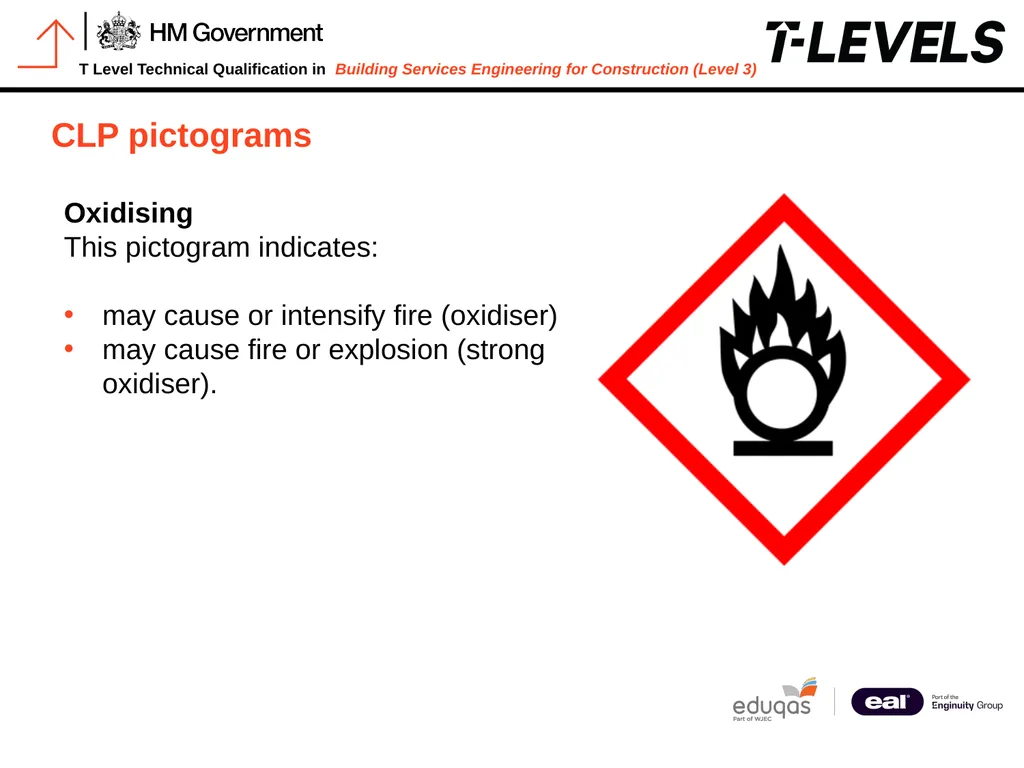
slide13. CLP pictograms Oxidising
This pictogram indicates:
may cause or intensify fire (oxidiser)
may cause fire or explosion (strong oxidiser).<br>
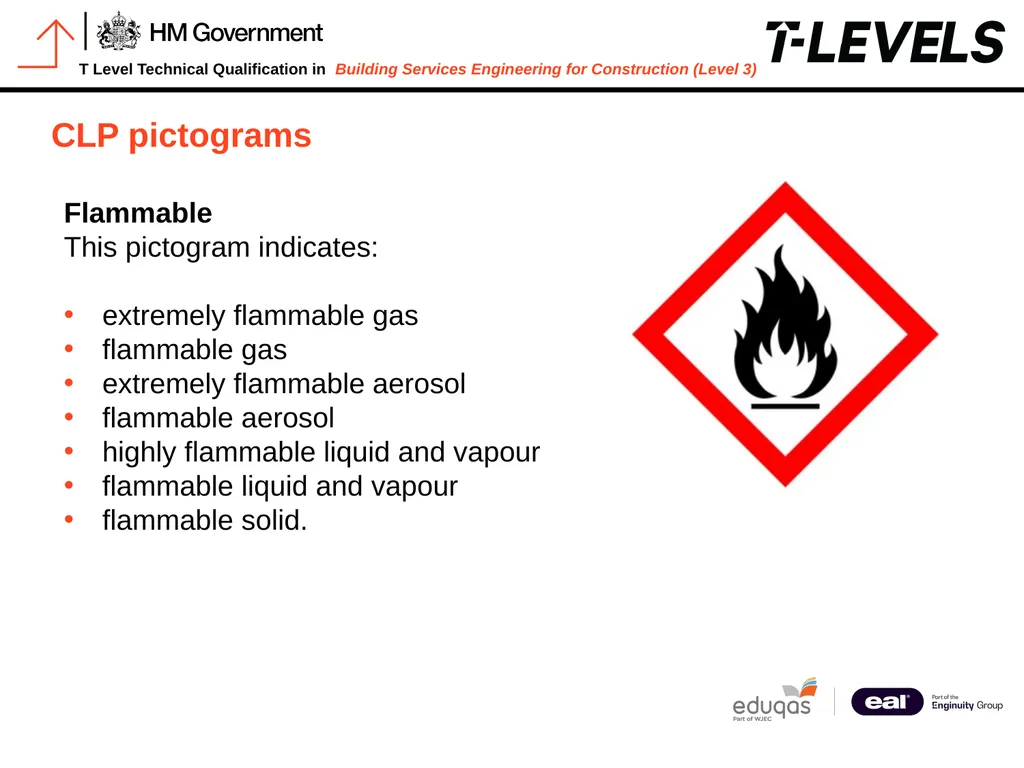
slide14. CLP pictograms Flammable
This pictogram indicates:
extremely flammable gas
flammable gas
extremely flammable aerosol
flammable aerosol
highly flammable liquid and vapour
flammable liquid and vapour
flammable solid.<br>
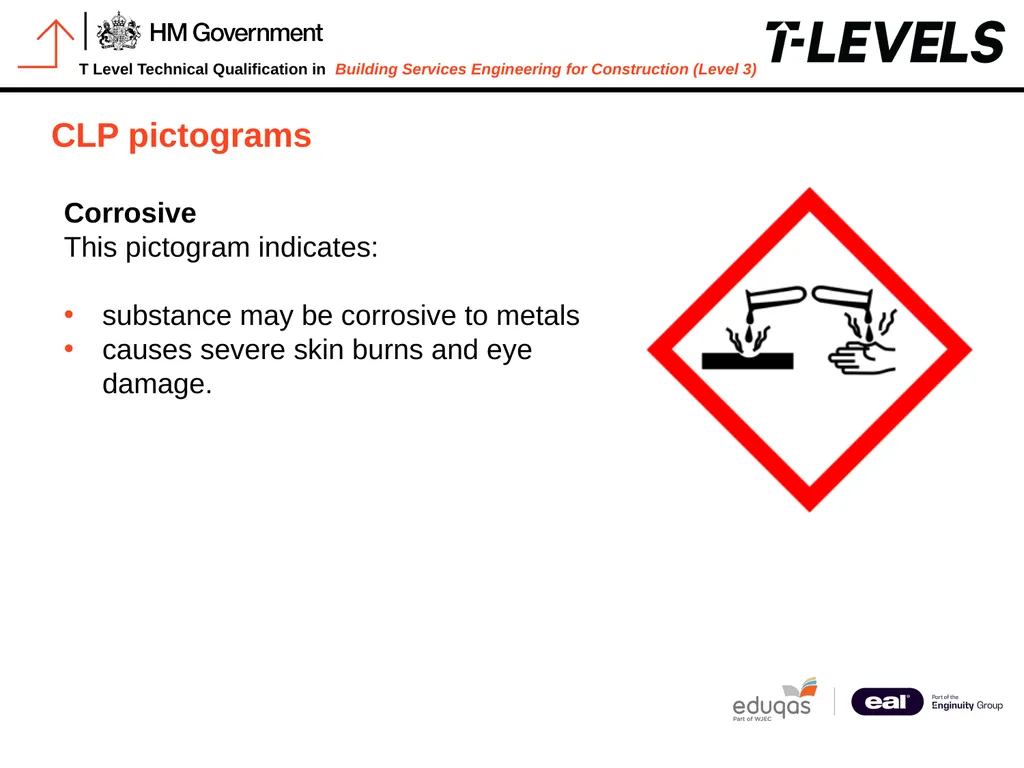
slide15. CLP pictograms Corrosive
This pictogram indicates:
substance may be corrosive to metals
causes severe skin burns and eye damage.<br>
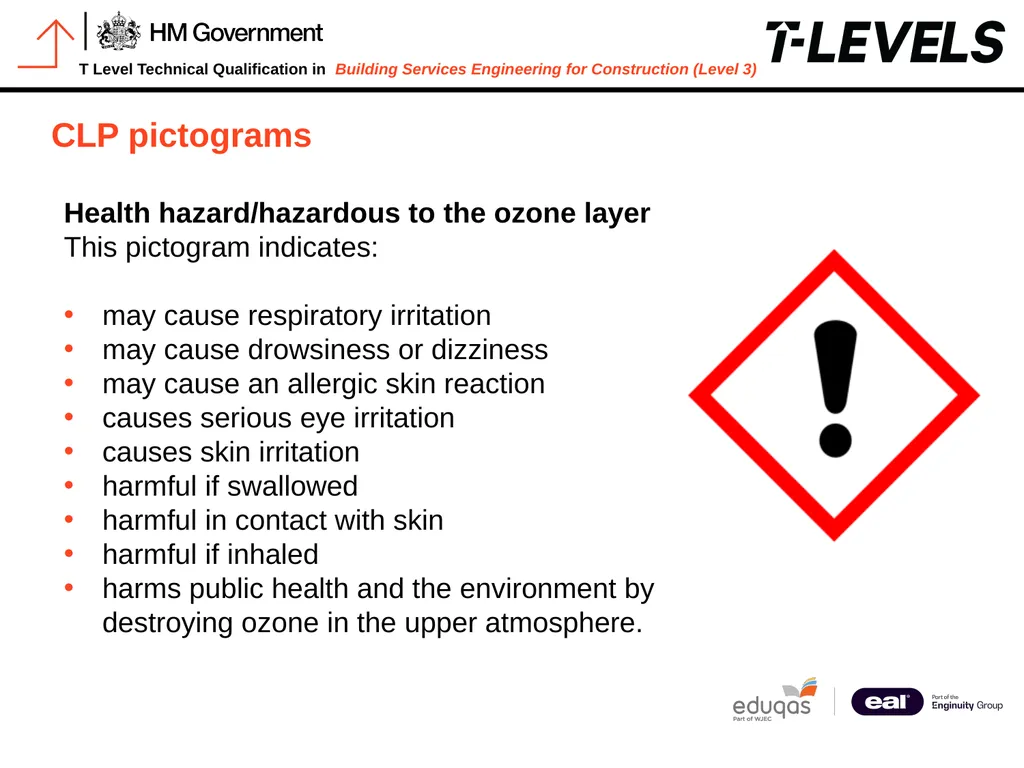
slide16. CLP pictograms Health hazard/hazardous to the ozone layer
This pictogram indicates:
may cause respiratory irritation
may cause drowsiness or dizziness
may cause an allergic skin reaction
causes serious eye irritation
causes skin irritation
harmful if swallowed
harmful in contact with skin
harmful if inhaled
harms public health and the environment by destroying ozone in the upper atmosphere.<br>
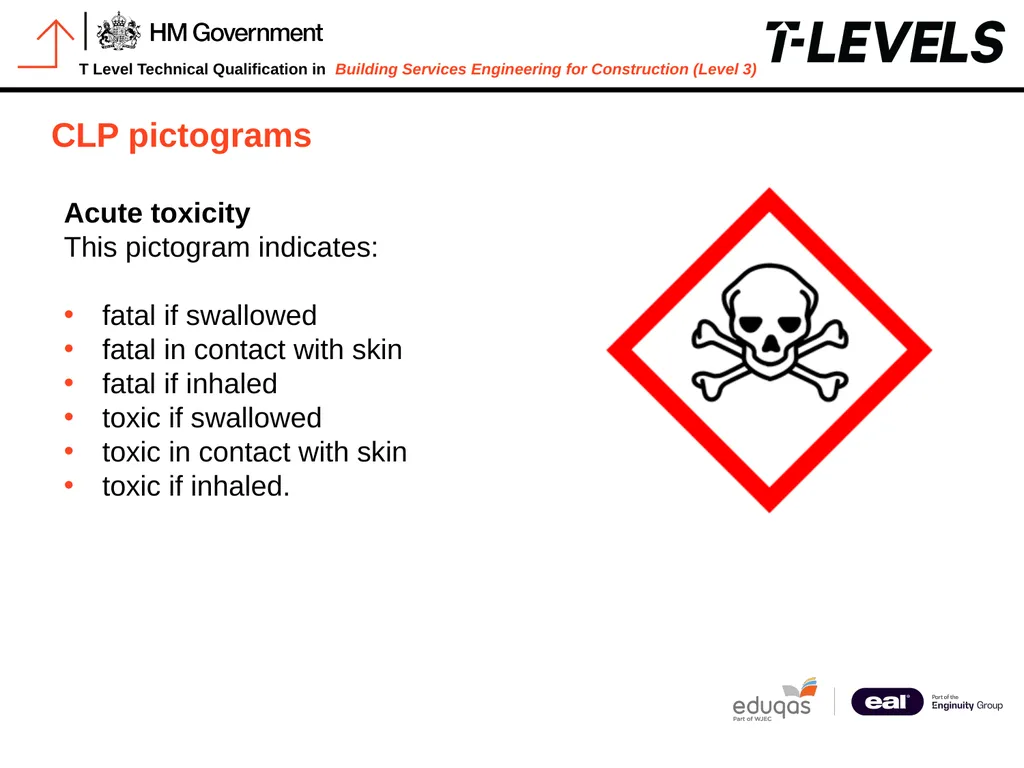
slide17. CLP pictograms Acute toxicity
This pictogram indicates:
fatal if swallowed
fatal in contact with skin
fatal if inhaled
toxic if swallowed
toxic in contact with skin
toxic if inhaled.<br>
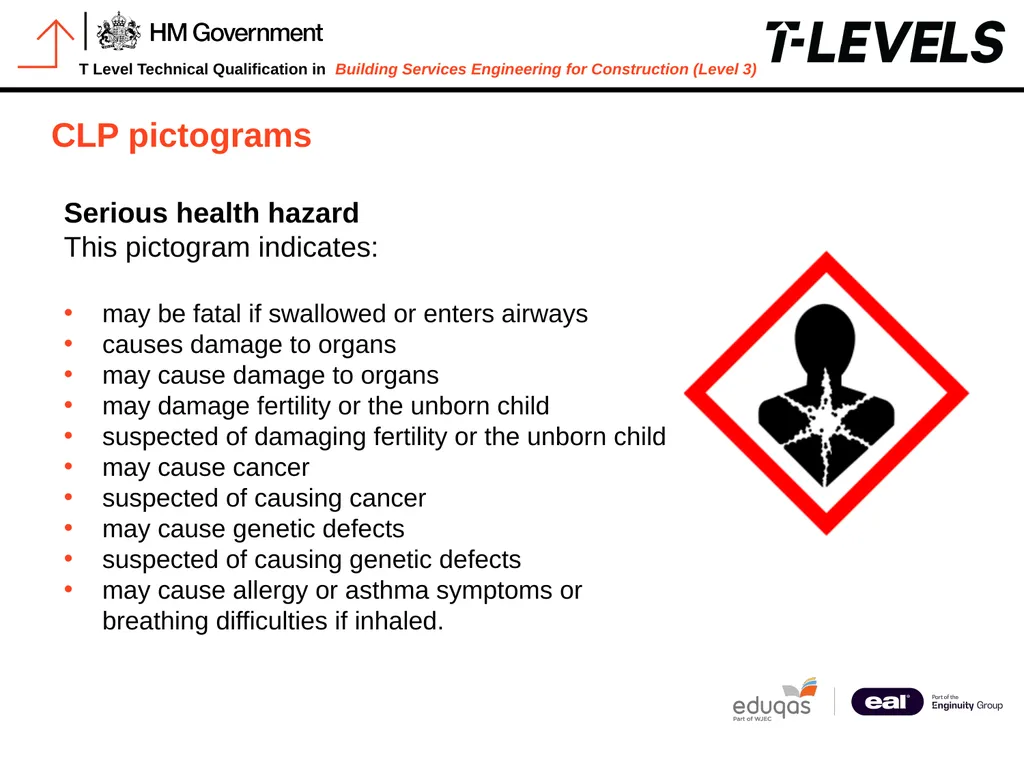
slide18. CLP pictograms Serious health hazard
This pictogram indicates:
may be fatal if swallowed or enters airways
causes damage to organs
may cause damage to organs
may damage fertility or the unborn child
suspected of damaging fertility or the unborn child
may cause cancer
suspected of causing cancer
may cause genetic defects
suspected of causing genetic defects
may cause allergy or asthma symptoms or breathing difficulties if inhaled.<br>
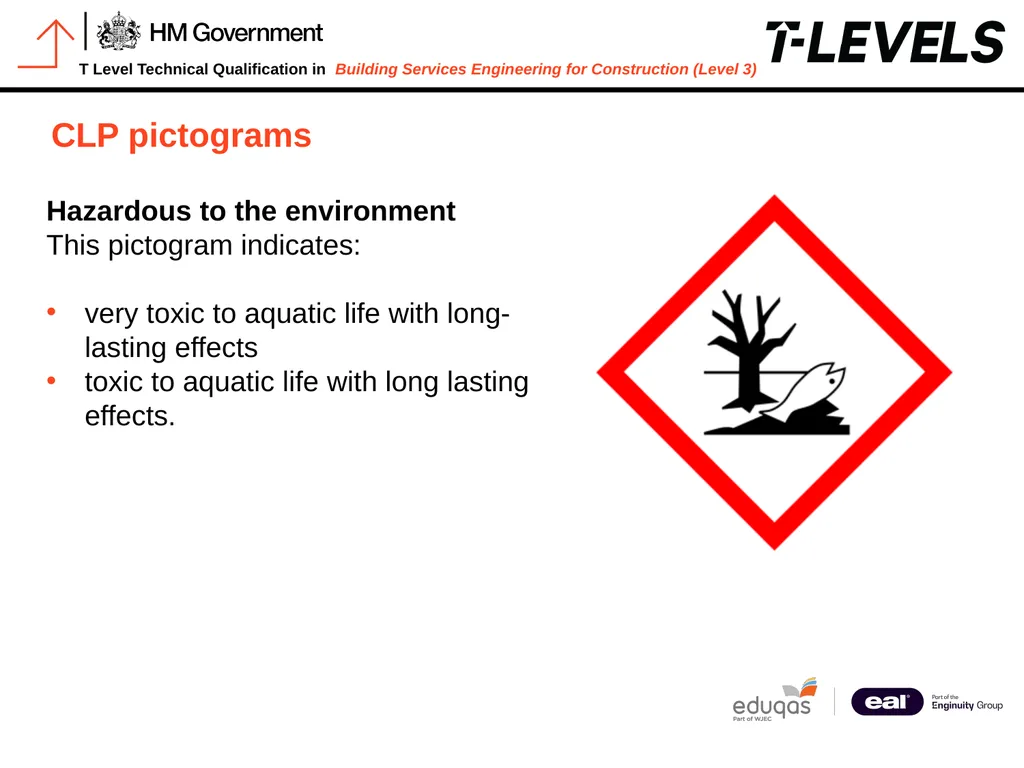
slide19. CLP pictograms Hazardous to the environment
This pictogram indicates:
very toxic to aquatic life with long-lasting effects
toxic to aquatic life with long lasting effects.<br>

slide20. Any questions?
Copyright in this document belongs to and is used under licence from the Department for Education, © 2025.
‘T-LEVELS’ and ‘T Level’ are registered trademarks of the Department for Education.
WJEC is authorised by the Department for Education to develop and deliver this T Level Technical Qualification.
WJEC operates in England under the name Eduqas which is a registered trademark of WJEC.<br>
1.13 Safety Signs<br>
slide2. Objectives By the end of the session learners should be able to:
describe the different types of safety sign found in the construction industry
identify the symbols for hazardous waste
understand the meaning of each pictogram in the Classification, Labelling and Packaging (CLP) Regulation and where each might be encountered.<br>
slide3. Safety signs A building site is a very dangerous place, full of potential hazards. It is very important that you should always try and mitigate against these hazards. Warning signs on site help to warn people of possible dangers.
There are four main types of safety sign:
prohibition signs
warning signs
mandatory signs
emergency/information signs.<br>
slide4. The four colours of safety signs<br>
slide5. Prohibition signs Prohibition signs advise what is not allowed in a particular area. Do not drink
Do not touch
No naked flames
No access for pedestrians<br>
slide6. Warning signs Warning signs identify the potential dangers in a particular area. Corrosive material
Danger, electricity
Flammable materials
Trip hazard<br>
slide7. Mandatory signs Mandatory signs identify what must be done by all people when on a construction site. Safety boots must be worn
Eye protection must be worn
Pedestrians walk this way
Hard hats must be worn<br>
slide8. Emergency/information signs Emergency/information signs show information relating to health and safety on a construction site. Emergency exit route
Emergency eye wash
First aid
Emergency telephone<br>
slide9. CLP pictograms The Classification, Labelling and Packaging (CLP) Regulation lists a series of pictogram labels that identify the type of substance within a sealed container that may pose a risk to health and safety.
Hazard pictograms are universally understood warning symbols intended to provide information about the damage a particular substance or mixture can cause to health or the environment.
Post-Brexit, the CLP Regulation is now known as the GB CLP Regulation but still uses the United Nations Globally Harmonised System of hazard symbols.<br>
slide10. CLP pictograms<br>
slide11. CLP pictograms Gas under pressure
This pictogram indicates:
gas under pressure, which may explode if heated
refrigerated gas, which may cause cryogenic burns or injury.<br>
slide12. CLP pictograms Explosive
This pictogram indicates:
explosive/mass explosion hazard
explosive: severe projection hazard
explosive: fire, blast or projection hazard, may mass explode in fire.
Source: CLP Pictograms - ECHA (europa.eu)<br>
slide13. CLP pictograms Oxidising
This pictogram indicates:
may cause or intensify fire (oxidiser)
may cause fire or explosion (strong oxidiser).<br>
slide14. CLP pictograms Flammable
This pictogram indicates:
extremely flammable gas
flammable gas
extremely flammable aerosol
flammable aerosol
highly flammable liquid and vapour
flammable liquid and vapour
flammable solid.<br>
slide15. CLP pictograms Corrosive
This pictogram indicates:
substance may be corrosive to metals
causes severe skin burns and eye damage.<br>
slide16. CLP pictograms Health hazard/hazardous to the ozone layer
This pictogram indicates:
may cause respiratory irritation
may cause drowsiness or dizziness
may cause an allergic skin reaction
causes serious eye irritation
causes skin irritation
harmful if swallowed
harmful in contact with skin
harmful if inhaled
harms public health and the environment by destroying ozone in the upper atmosphere.<br>
slide17. CLP pictograms Acute toxicity
This pictogram indicates:
fatal if swallowed
fatal in contact with skin
fatal if inhaled
toxic if swallowed
toxic in contact with skin
toxic if inhaled.<br>
slide18. CLP pictograms Serious health hazard
This pictogram indicates:
may be fatal if swallowed or enters airways
causes damage to organs
may cause damage to organs
may damage fertility or the unborn child
suspected of damaging fertility or the unborn child
may cause cancer
suspected of causing cancer
may cause genetic defects
suspected of causing genetic defects
may cause allergy or asthma symptoms or breathing difficulties if inhaled.<br>
slide19. CLP pictograms Hazardous to the environment
This pictogram indicates:
very toxic to aquatic life with long-lasting effects
toxic to aquatic life with long lasting effects.<br>
slide20. Any questions?
Copyright in this document belongs to and is used under licence from the Department for Education, © 2025.
‘T-LEVELS’ and ‘T Level’ are registered trademarks of the Department for Education.
WJEC is authorised by the Department for Education to develop and deliver this T Level Technical Qualification.
WJEC operates in England under the name Eduqas which is a registered trademark of WJEC.<br>