
PowerPoint Guide The news icon is hyperlinked to a


Description: PowerPoint Guide The news icon is hyperlinked to a related article or website. Simply click to access The film icon is hyperlinked to a related clip. Simply click to access The discuss icon indicates suggested points to discuss The
Related Topics
Download Presentation
"PowerPoint Guide The news icon is hyperlinked to a" is the property of its rightful owner. Permission is granted to download and print the materials on this website for personal, non-commercial use only, and to display it on your personal computer provided you do not modify the materials and that you retain all copyright notices contained in the materials. By downloading content from our website, you accept the terms of this agreement.
Presentation Transcript
slide1. PowerPoint Guide The news icon is hyperlinked to a related article or website.
Simply click to access The film icon is hyperlinked to a related clip.
Simply click to access The discuss icon indicates suggested points to discuss The calculation icon indicates a calculation task<br>
slide2. 3.6 Finance 3.6.2 Cash flow<br>
slide3. Key elements to this topic Calculation and interpretation of cash flow forecasts The importance of cash to a business Cash versus profit<br>
slide4. Why is cash important to a business? Cash is the lifeblood of a business
If a business runs out of cash it will almost certainly fail
Few businesses have access to unlimited finance – cash is restricted, so it needs to be managed carefully<br>
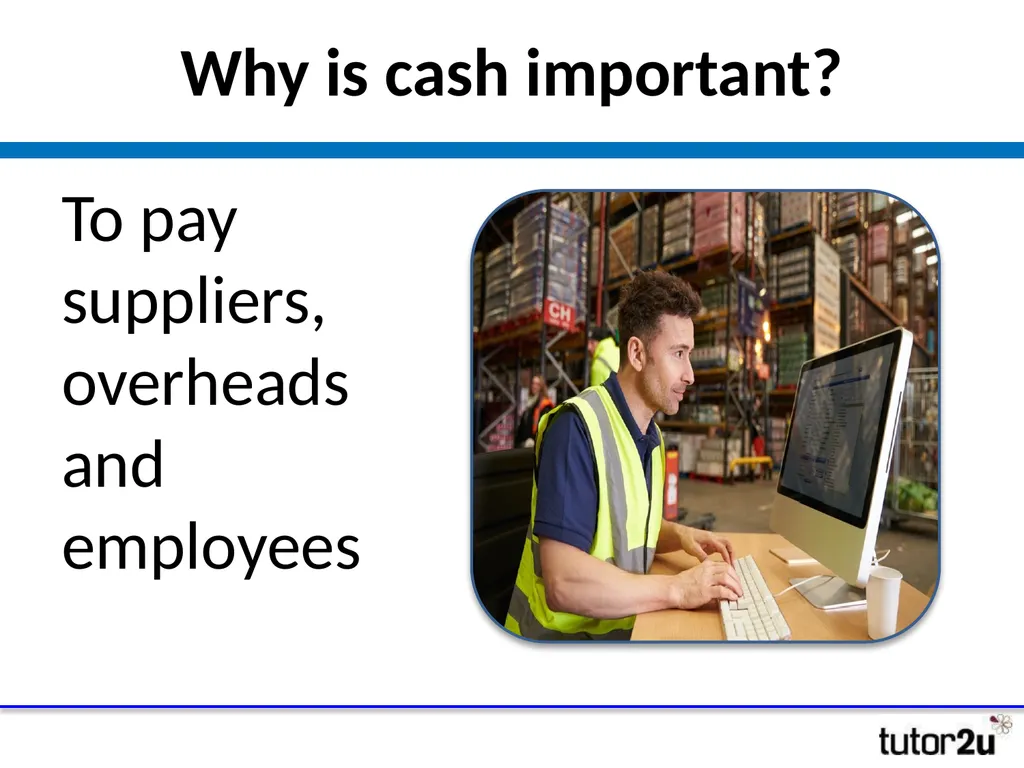
slide5. Why is cash important? To pay suppliers, overheads and employees<br>
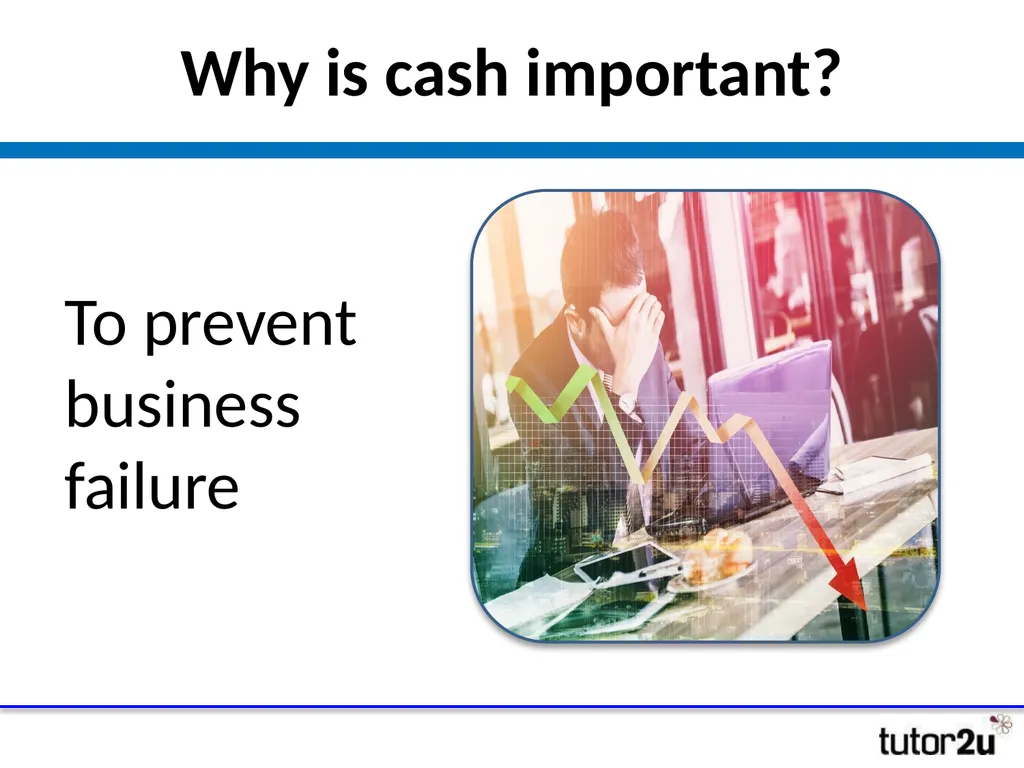
slide6. Why is cash important? To prevent business failure<br>
slide7. Difference between cash and profit<br>
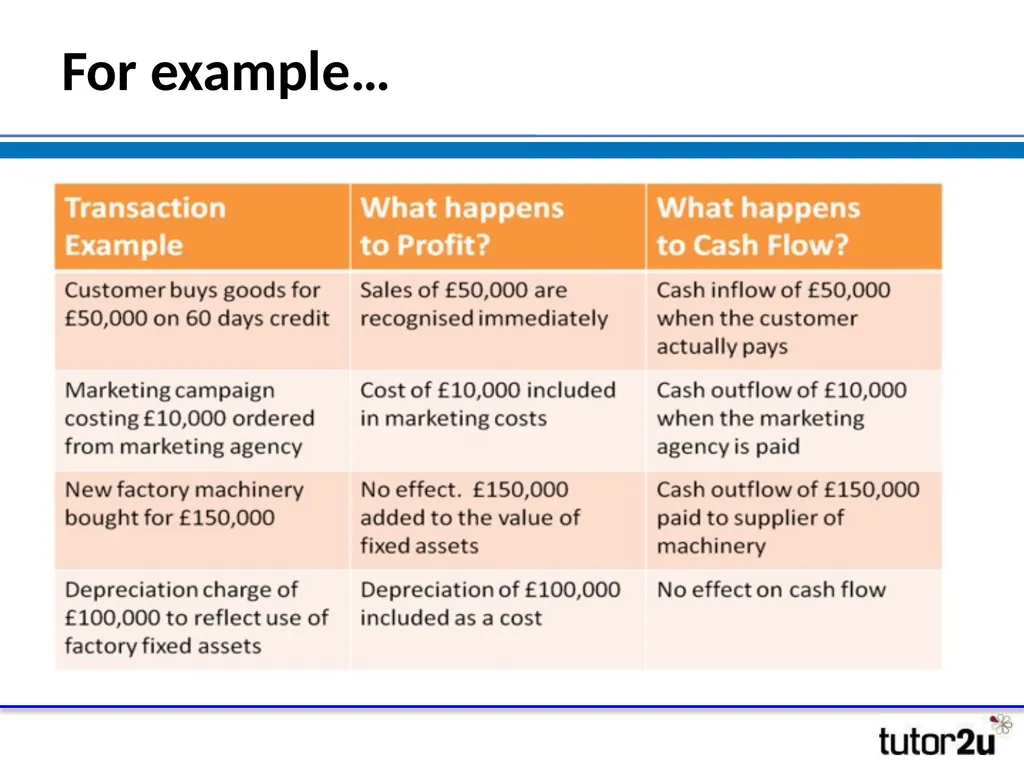
slide8. Cash versus profit Profit is recorded when a sale is made, whereas cash is recorded when it is received. This means that a business selling on credit can be making a profit despite having no cash.
Profit is affected only by running costs, whereas cash is affected by start up, running and expansion costs. This means that when a business buys fixed assets (items of value which are held in the business for over a year) cash is affected, but profit isn’t.<br>
slide9. For example…<br>
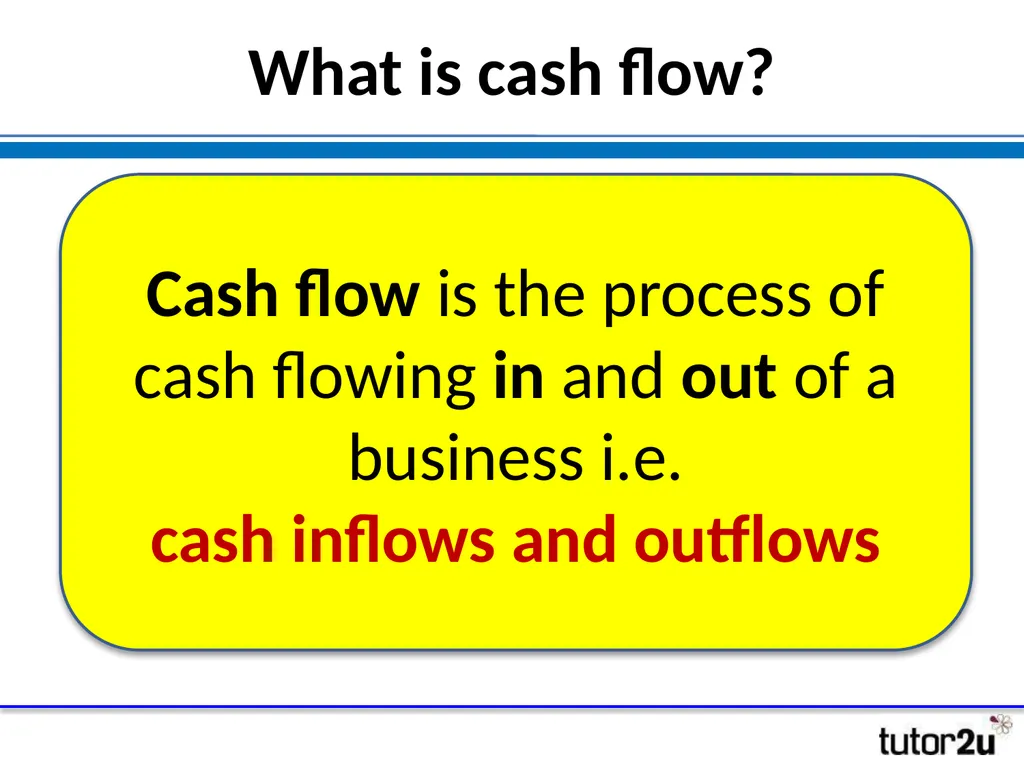
slide10. What is cash flow? Cash flow is the process of cash flowing in and out of a business i.e.
cash inflows and outflows<br>
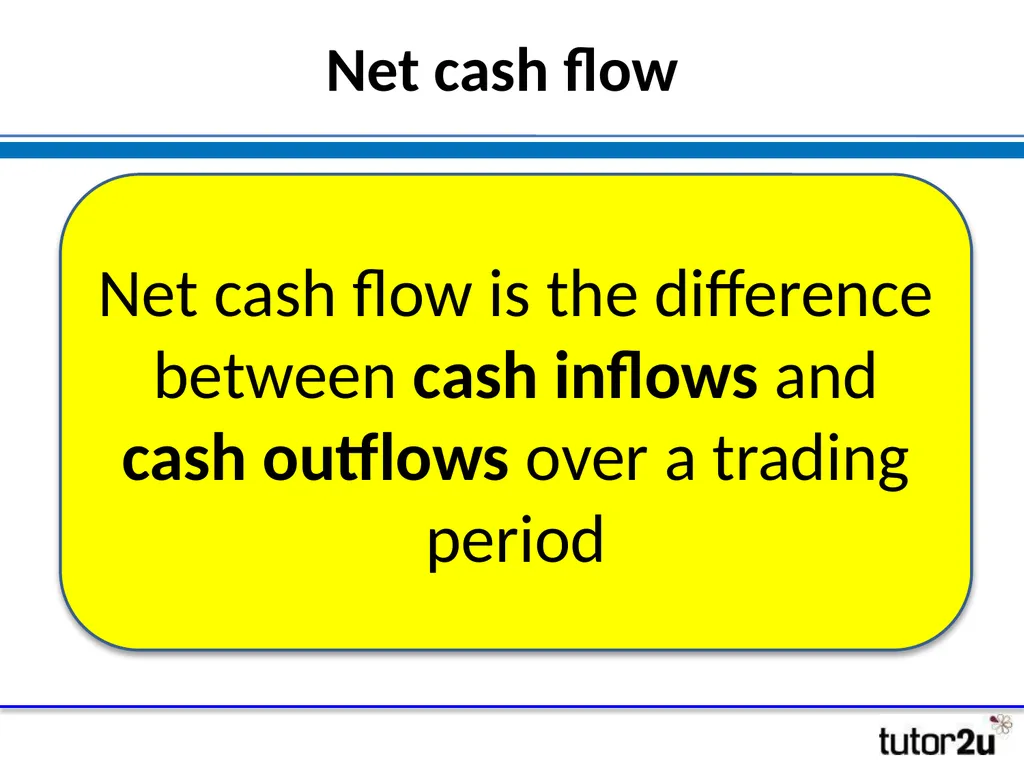
slide11. Net cash flow Net cash flow is the difference between cash inflows and cash outflows over a trading period<br>
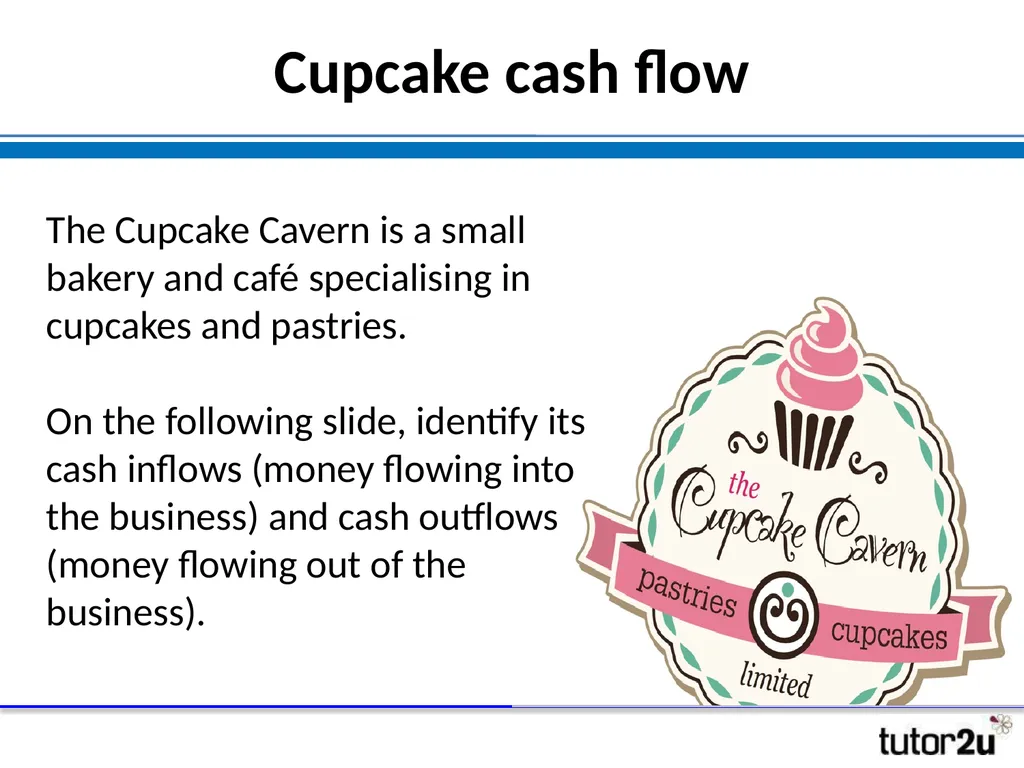
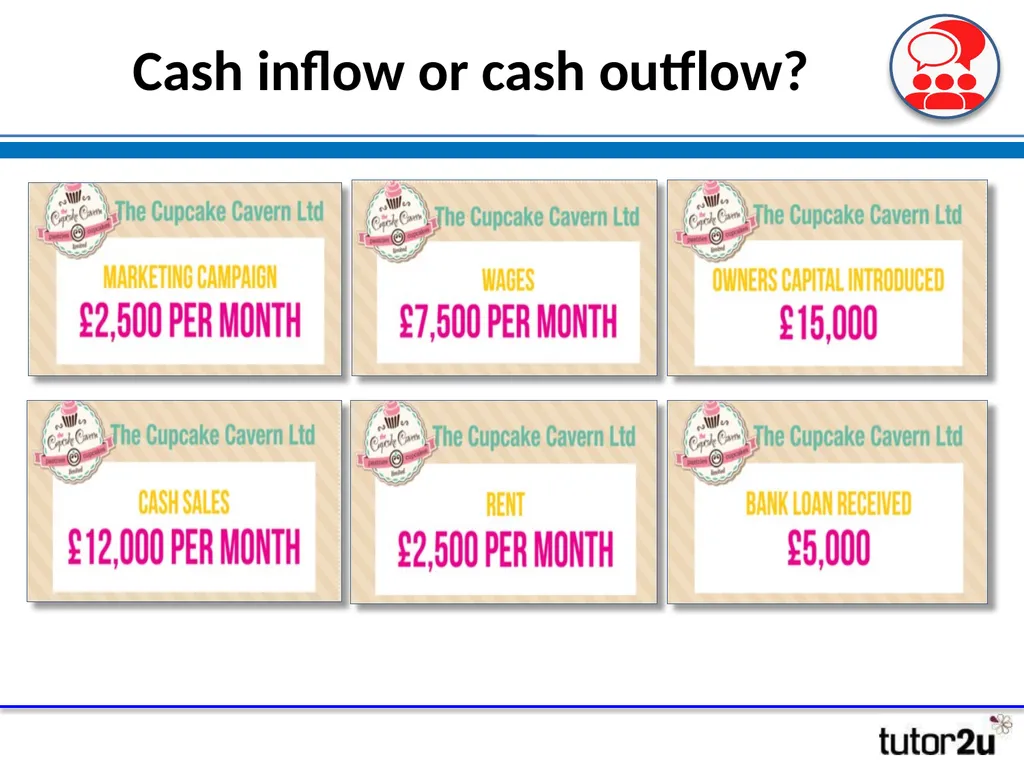
slide12. Cupcake cash flow The Cupcake Cavern is a small bakery and café specialising in cupcakes and pastries.
On the following slide, identify its cash inflows (money flowing into the business) and cash outflows (money flowing out of the business).<br>
slide13. Cash inflow or cash outflow?<br>
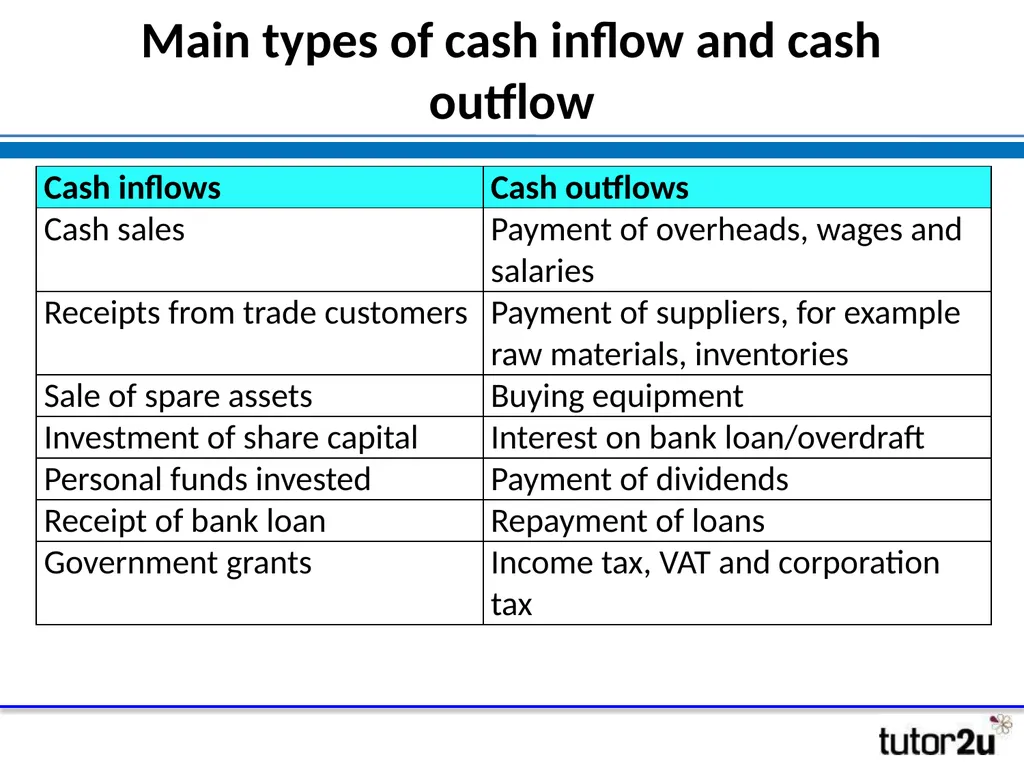
slide14. Main types of cash inflow and cash outflow<br>
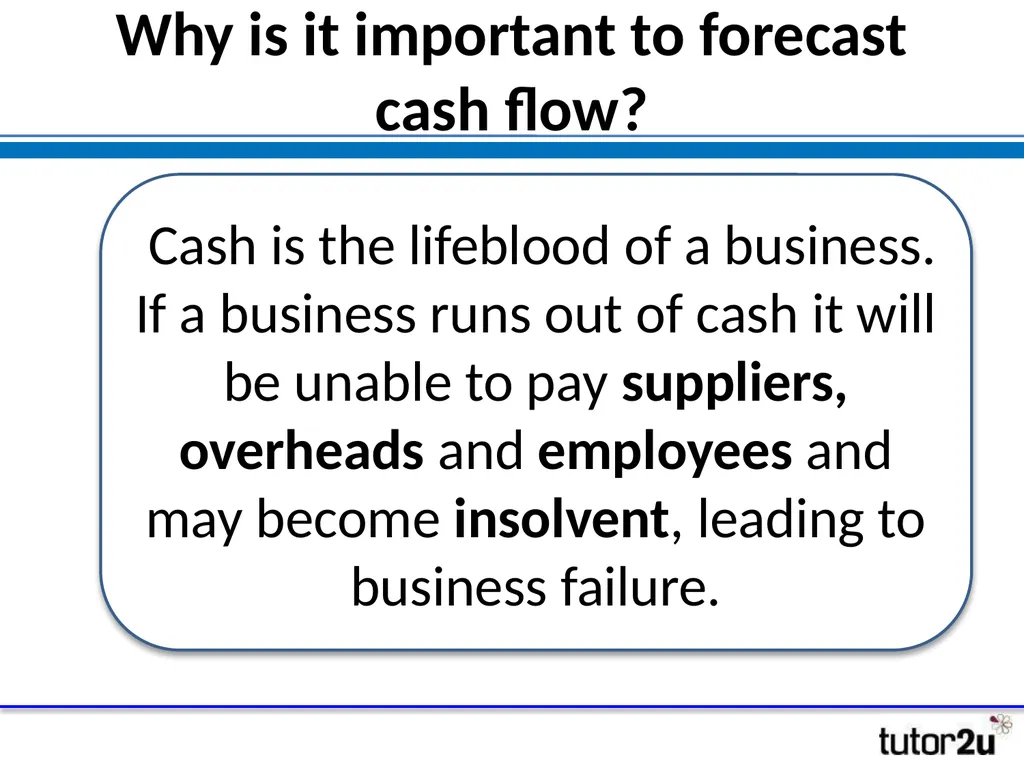
slide15. Why is it important to forecast cash flow? Cash is the lifeblood of a business. If a business runs out of cash it will be unable to pay suppliers, overheads and employees and may become insolvent, leading to business failure.<br>
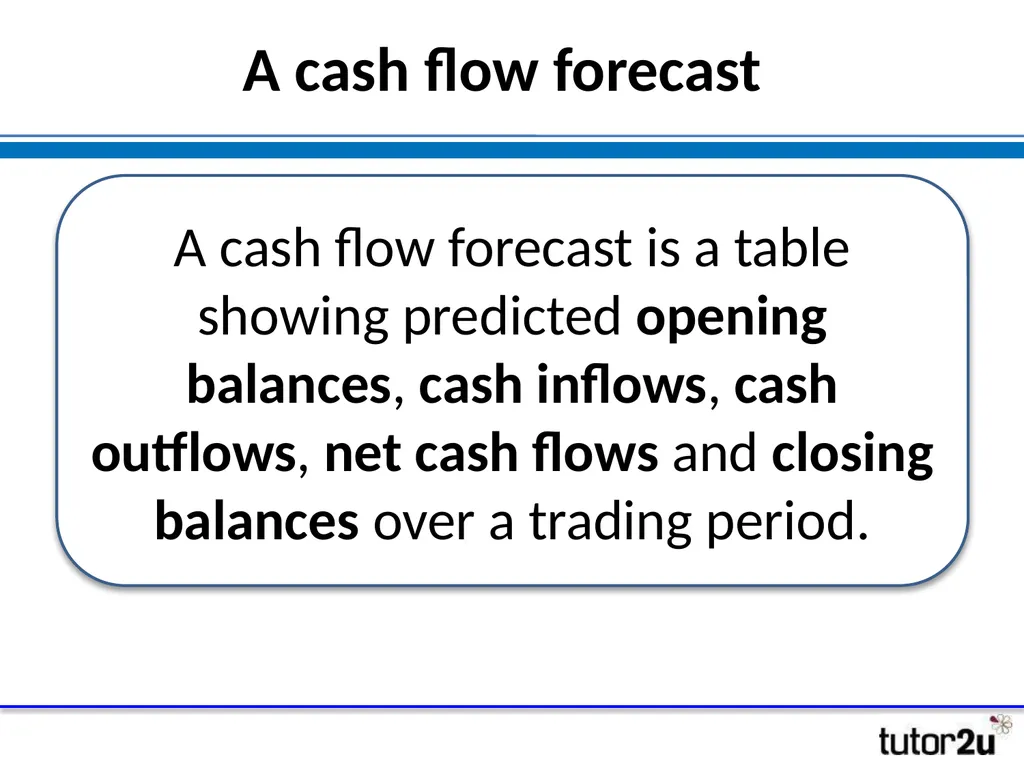
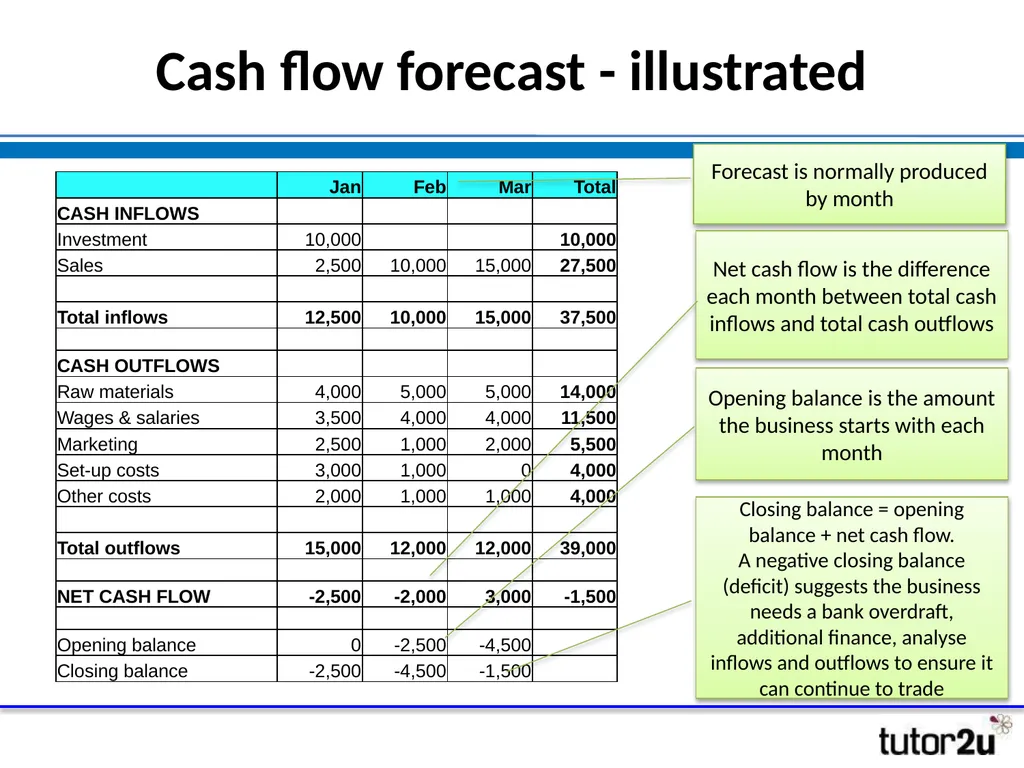
slide16. A cash flow forecast A cash flow forecast is a table showing predicted opening balances, cash inflows, cash outflows, net cash flows and closing balances over a trading period.<br>
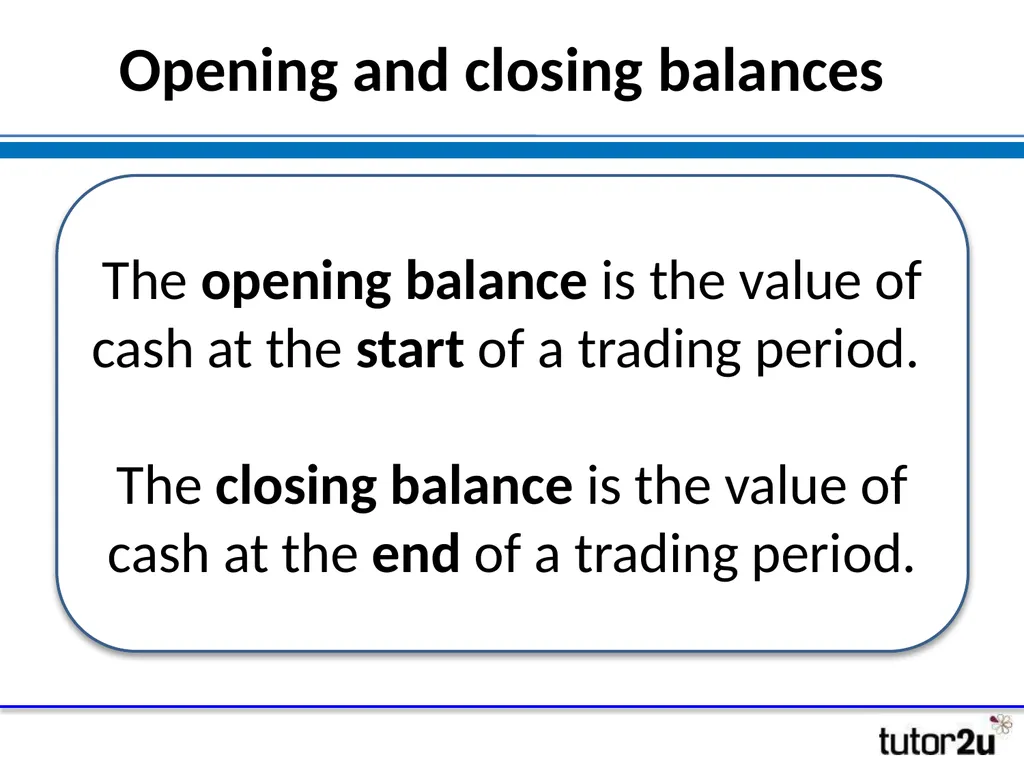
slide17. Opening and closing balances The opening balance is the value of cash at the start of a trading period.
The closing balance is the value of cash at the end of a trading period.<br>
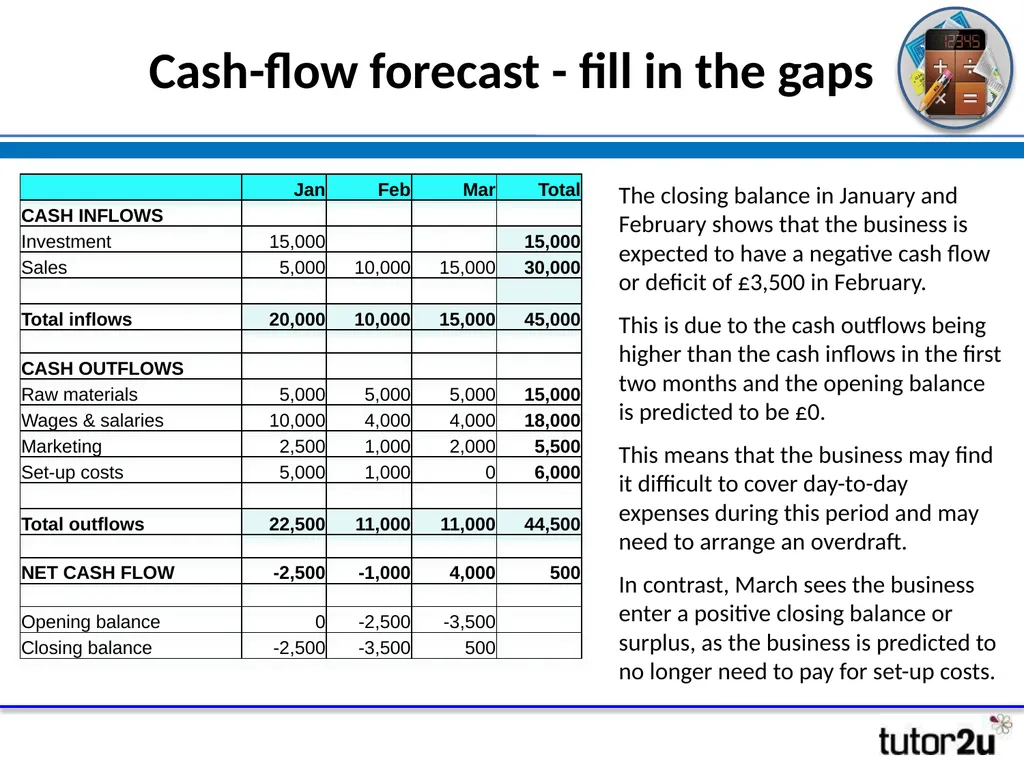
slide18. Cash flow forecast - illustrated Forecast is normally produced by month Net cash flow is the difference each month between total cash inflows and total cash outflows Opening balance is the amount the business starts with each month Closing balance = opening balance + net cash flow.
A negative closing balance (deficit) suggests the business needs a bank overdraft, additional finance, analyse inflows and outflows to ensure it can continue to trade<br>
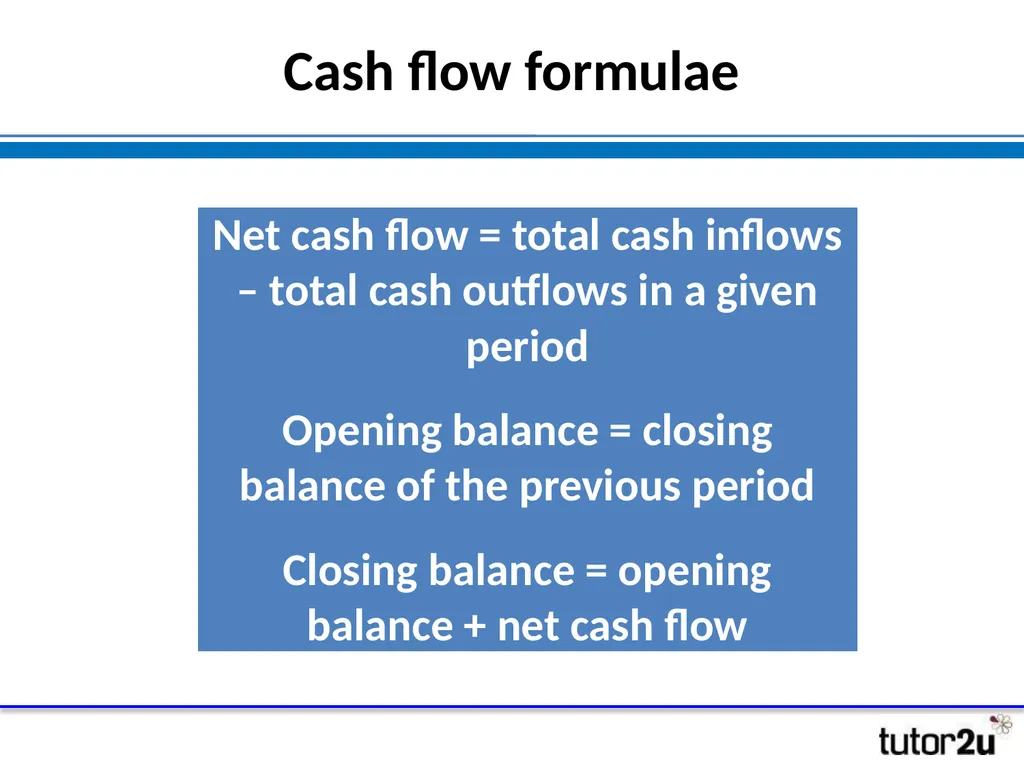
slide19. Cash flow formulae<br>
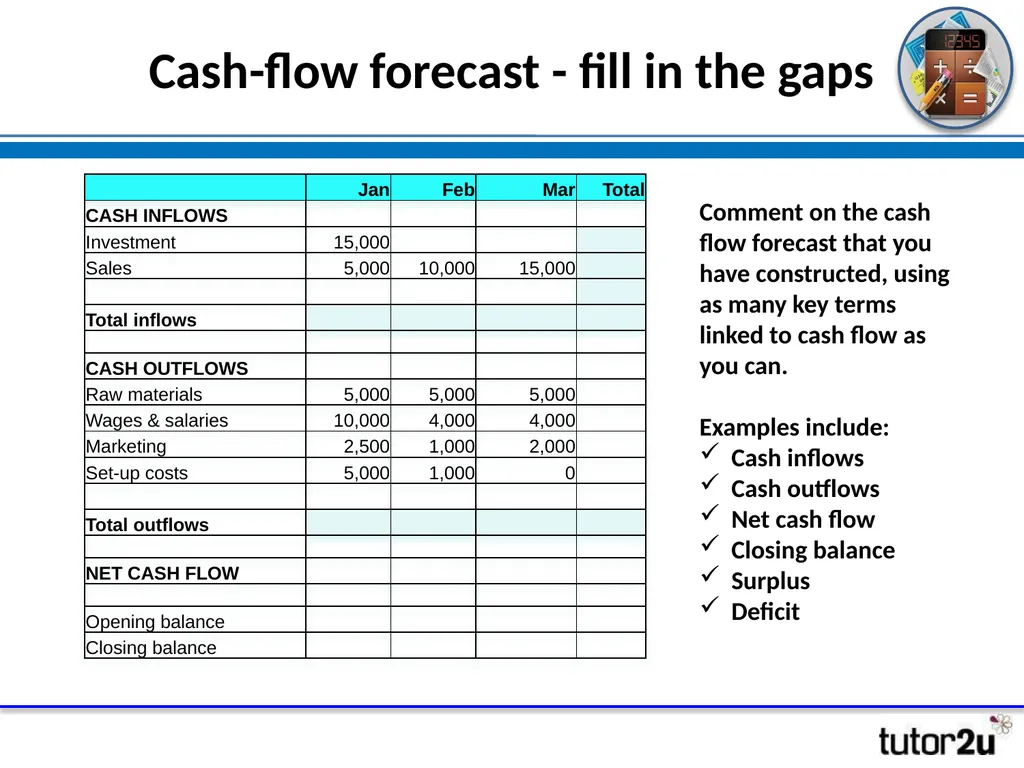
slide20. Cash-flow forecast - fill in the gaps Comment on the cash flow forecast that you have constructed, using as many key terms linked to cash flow as you can.
Examples include:
Cash inflows
Cash outflows
Net cash flow
Closing balance
Surplus
Deficit<br>
slide21. Cash-flow forecast - fill in the gaps The closing balance in January and February shows that the business is expected to have a negative cash flow or deficit of £3,500 in February.
This is due to the cash outflows being higher than the cash inflows in the first two months and the opening balance is predicted to be £0.
This means that the business may find it difficult to cover day-to-day expenses during this period and may need to arrange an overdraft.
In contrast, March sees the business enter a positive closing balance or surplus, as the business is predicted to no longer need to pay for set-up costs.<br>
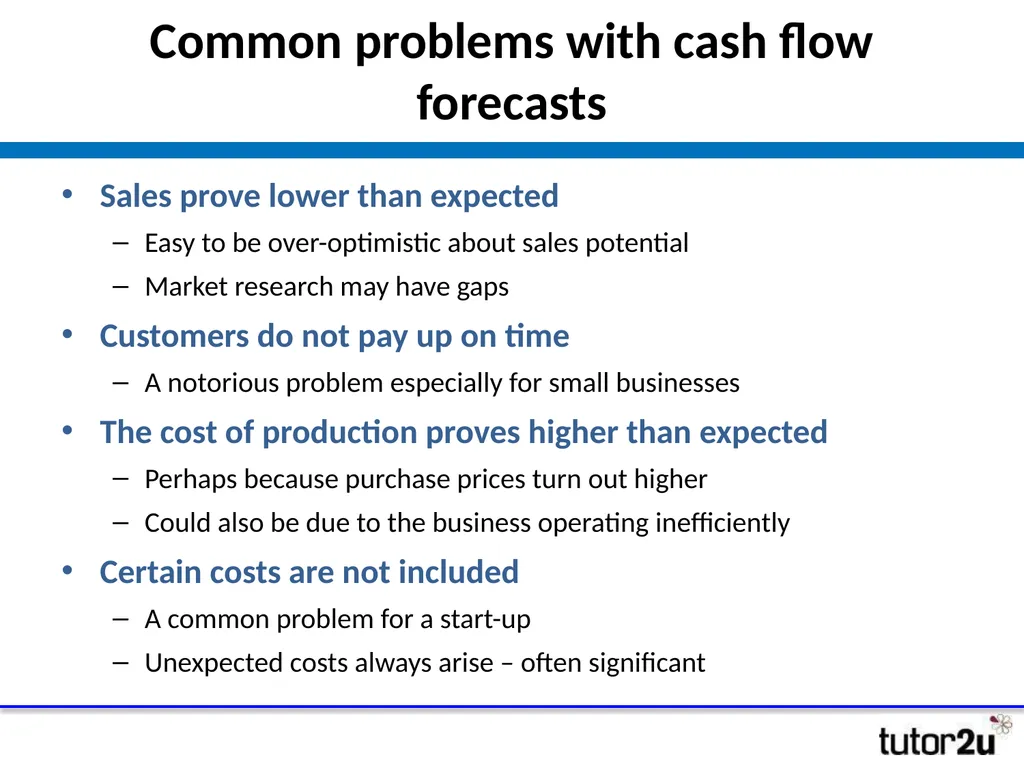
slide22. Common problems with cash flow forecasts Sales prove lower than expected
Easy to be over-optimistic about sales potential
Market research may have gaps
Customers do not pay up on time
A notorious problem especially for small businesses
The cost of production proves higher than expected
Perhaps because purchase prices turn out higher
Could also be due to the business operating inefficiently
Certain costs are not included
A common problem for a start-up
Unexpected costs always arise – often significant<br>
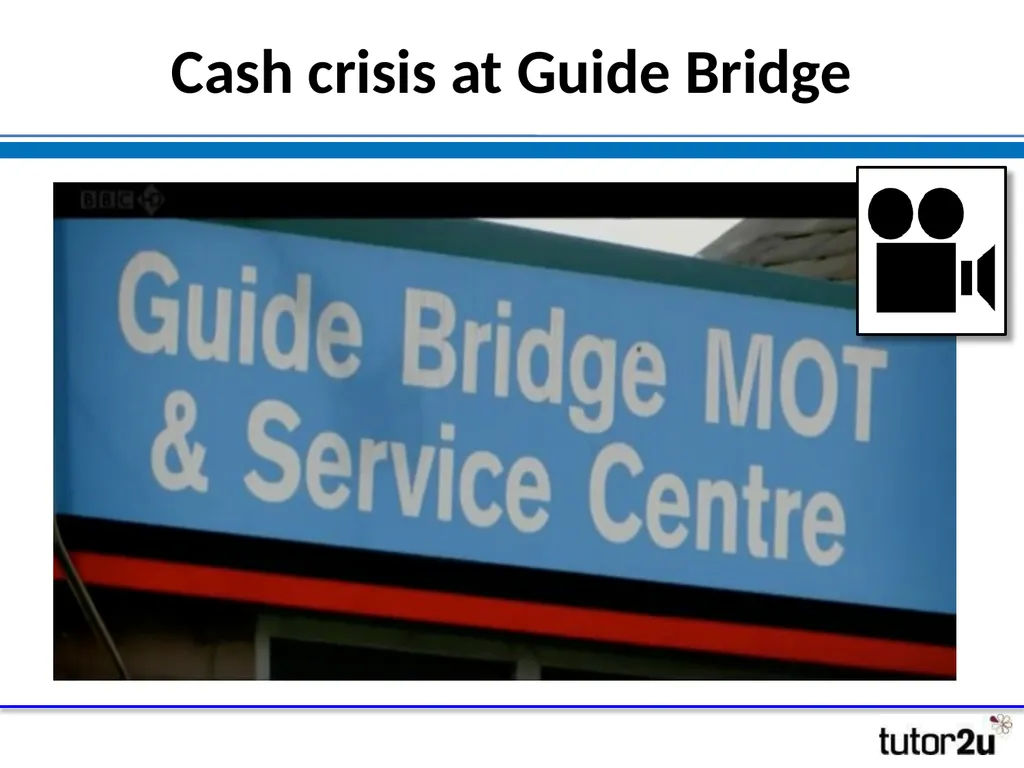
slide23. Cash crisis at Guide Bridge<br>
slide24. Just a minute… Suggest three ways Guide Bridge could improve its cash flow<br>
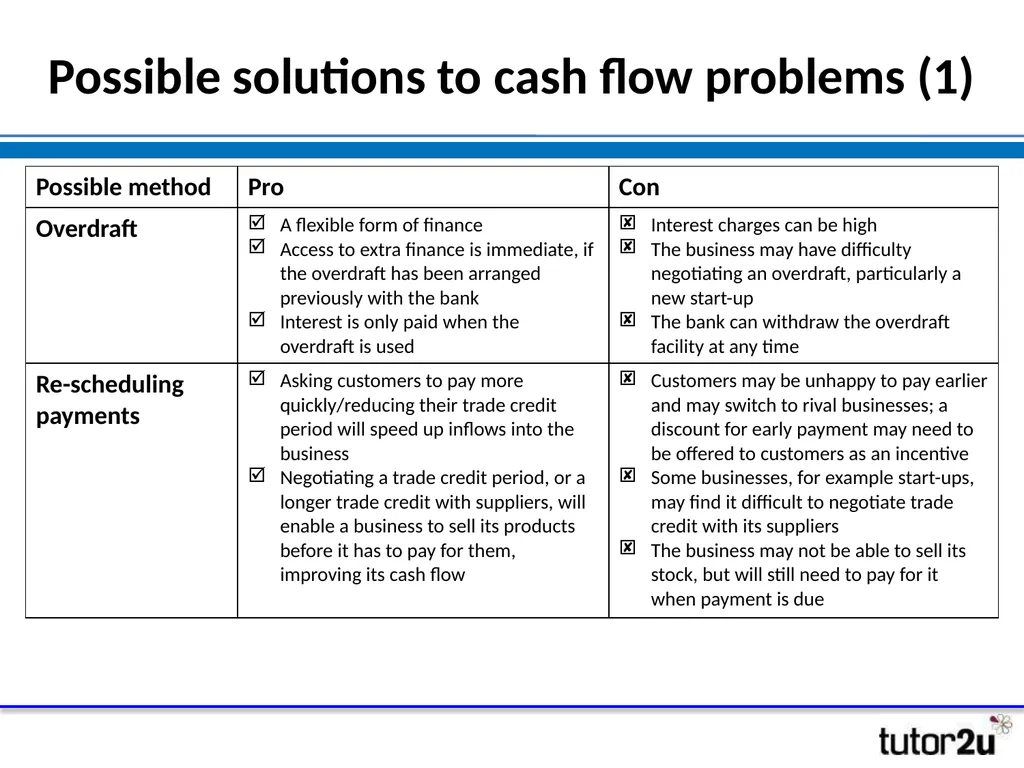
slide25. Possible solutions to cash flow problems (1)<br>
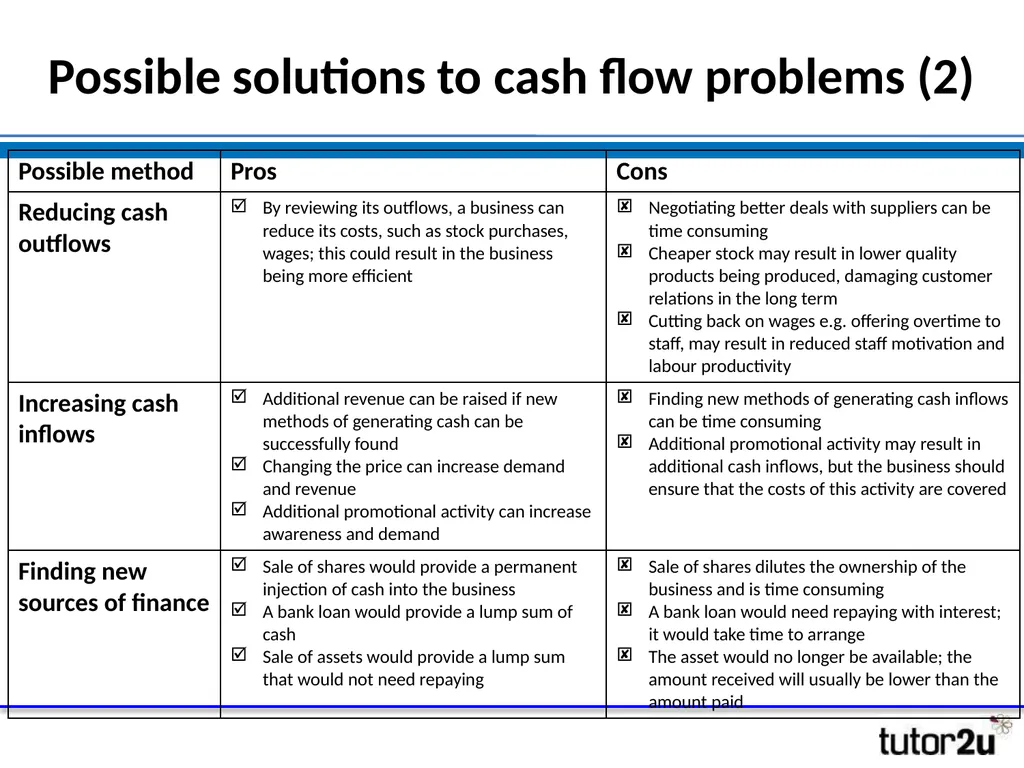
slide26. Possible solutions to cash flow problems (2)<br>
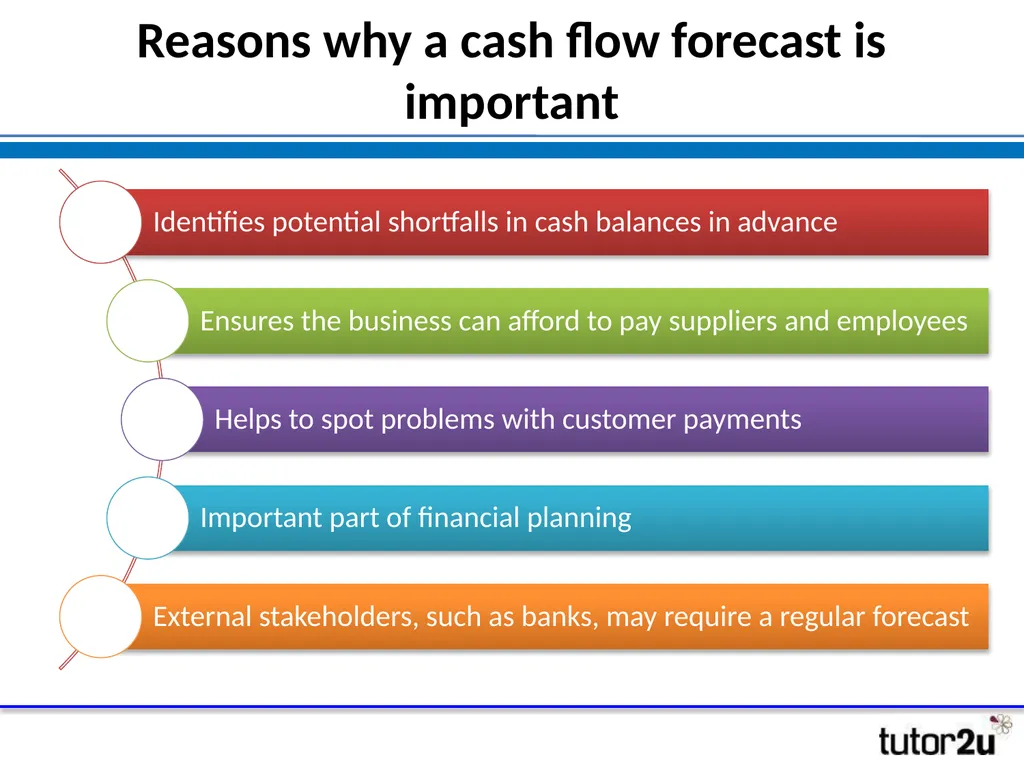
slide27. Reasons why a cash flow forecast is important<br>
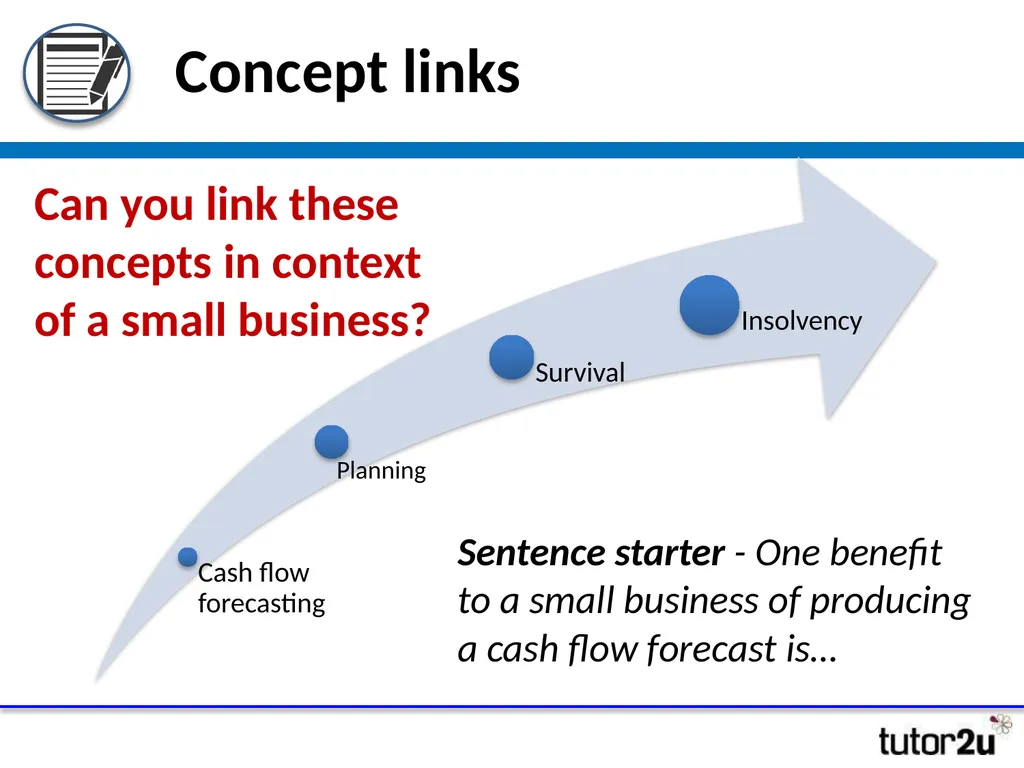
slide28. Concept links Can you link these concepts in context of a small business? Sentence starter - One benefit to a small business of producing a cash flow forecast is… Planning<br>
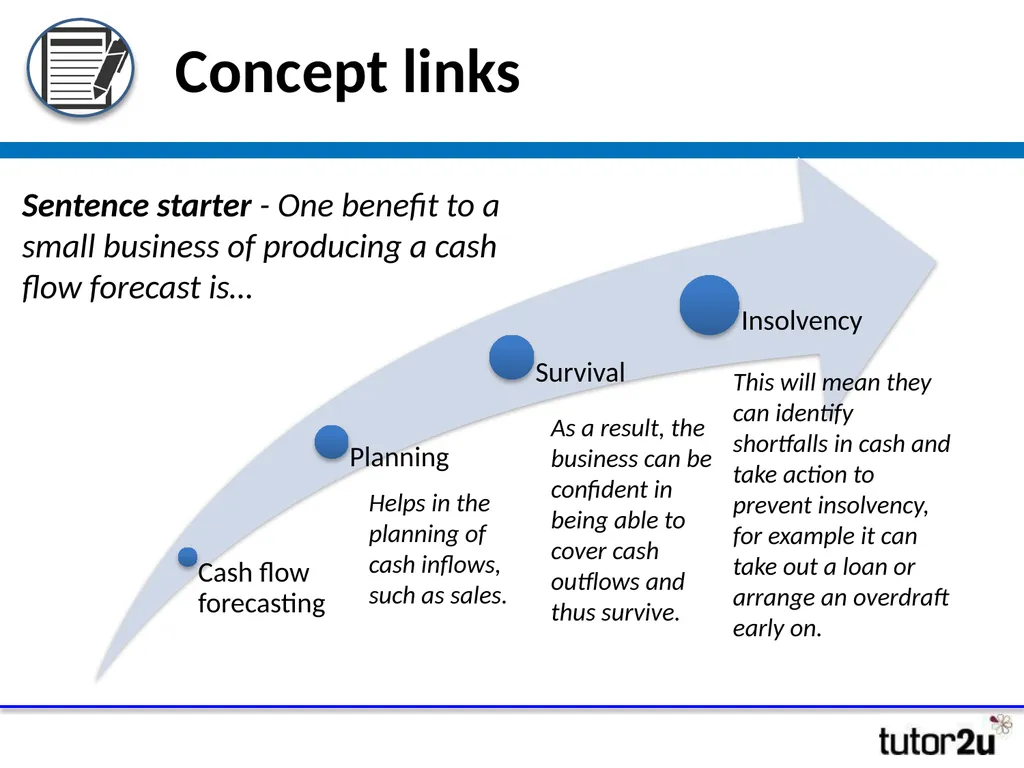
slide29. Concept links Sentence starter - One benefit to a small business of producing a cash flow forecast is… Helps in the planning of cash inflows, such as sales. As a result, the business can be confident in being able to cover cash outflows and thus survive. This will mean they can identify shortfalls in cash and take action to prevent insolvency, for example it can take out a loan or arrange an overdraft early on.<br>
Simply click to access The film icon is hyperlinked to a related clip.
Simply click to access The discuss icon indicates suggested points to discuss The calculation icon indicates a calculation task<br>
slide2. 3.6 Finance 3.6.2 Cash flow<br>
slide3. Key elements to this topic Calculation and interpretation of cash flow forecasts The importance of cash to a business Cash versus profit<br>
slide4. Why is cash important to a business? Cash is the lifeblood of a business
If a business runs out of cash it will almost certainly fail
Few businesses have access to unlimited finance – cash is restricted, so it needs to be managed carefully<br>
slide5. Why is cash important? To pay suppliers, overheads and employees<br>
slide6. Why is cash important? To prevent business failure<br>
slide7. Difference between cash and profit<br>
slide8. Cash versus profit Profit is recorded when a sale is made, whereas cash is recorded when it is received. This means that a business selling on credit can be making a profit despite having no cash.
Profit is affected only by running costs, whereas cash is affected by start up, running and expansion costs. This means that when a business buys fixed assets (items of value which are held in the business for over a year) cash is affected, but profit isn’t.<br>
slide9. For example…<br>
slide10. What is cash flow? Cash flow is the process of cash flowing in and out of a business i.e.
cash inflows and outflows<br>
slide11. Net cash flow Net cash flow is the difference between cash inflows and cash outflows over a trading period<br>
slide12. Cupcake cash flow The Cupcake Cavern is a small bakery and café specialising in cupcakes and pastries.
On the following slide, identify its cash inflows (money flowing into the business) and cash outflows (money flowing out of the business).<br>
slide13. Cash inflow or cash outflow?<br>
slide14. Main types of cash inflow and cash outflow<br>
slide15. Why is it important to forecast cash flow? Cash is the lifeblood of a business. If a business runs out of cash it will be unable to pay suppliers, overheads and employees and may become insolvent, leading to business failure.<br>
slide16. A cash flow forecast A cash flow forecast is a table showing predicted opening balances, cash inflows, cash outflows, net cash flows and closing balances over a trading period.<br>
slide17. Opening and closing balances The opening balance is the value of cash at the start of a trading period.
The closing balance is the value of cash at the end of a trading period.<br>
slide18. Cash flow forecast - illustrated Forecast is normally produced by month Net cash flow is the difference each month between total cash inflows and total cash outflows Opening balance is the amount the business starts with each month Closing balance = opening balance + net cash flow.
A negative closing balance (deficit) suggests the business needs a bank overdraft, additional finance, analyse inflows and outflows to ensure it can continue to trade<br>
slide19. Cash flow formulae<br>
slide20. Cash-flow forecast - fill in the gaps Comment on the cash flow forecast that you have constructed, using as many key terms linked to cash flow as you can.
Examples include:
Cash inflows
Cash outflows
Net cash flow
Closing balance
Surplus
Deficit<br>
slide21. Cash-flow forecast - fill in the gaps The closing balance in January and February shows that the business is expected to have a negative cash flow or deficit of £3,500 in February.
This is due to the cash outflows being higher than the cash inflows in the first two months and the opening balance is predicted to be £0.
This means that the business may find it difficult to cover day-to-day expenses during this period and may need to arrange an overdraft.
In contrast, March sees the business enter a positive closing balance or surplus, as the business is predicted to no longer need to pay for set-up costs.<br>
slide22. Common problems with cash flow forecasts Sales prove lower than expected
Easy to be over-optimistic about sales potential
Market research may have gaps
Customers do not pay up on time
A notorious problem especially for small businesses
The cost of production proves higher than expected
Perhaps because purchase prices turn out higher
Could also be due to the business operating inefficiently
Certain costs are not included
A common problem for a start-up
Unexpected costs always arise – often significant<br>
slide23. Cash crisis at Guide Bridge<br>
slide24. Just a minute… Suggest three ways Guide Bridge could improve its cash flow<br>
slide25. Possible solutions to cash flow problems (1)<br>
slide26. Possible solutions to cash flow problems (2)<br>
slide27. Reasons why a cash flow forecast is important<br>
slide28. Concept links Can you link these concepts in context of a small business? Sentence starter - One benefit to a small business of producing a cash flow forecast is… Planning<br>
slide29. Concept links Sentence starter - One benefit to a small business of producing a cash flow forecast is… Helps in the planning of cash inflows, such as sales. As a result, the business can be confident in being able to cover cash outflows and thus survive. This will mean they can identify shortfalls in cash and take action to prevent insolvency, for example it can take out a loan or arrange an overdraft early on.<br>