PowerPoint presentation Keeping working area clean and hygienic Unit 207: Food safety Cleaning the work area Cleaning is key to maintaining hygiene standards in food preparation and service areas. It is the responsibility of all food
"PowerPoint presentation Keeping working area clean" is the property of its rightful owner. Permission is granted to
download and print the materials on this website for personal, non-commercial use only, and to display it
on your personal computer provided you do not modify the materials and that you retain all copyright
notices contained in the materials. By downloading content from our website, you accept the terms of this
agreement.
Presentation Transcript
01
PowerPoint presentation Keeping working area clean and hygienic Unit 207: Food safety<br>
02
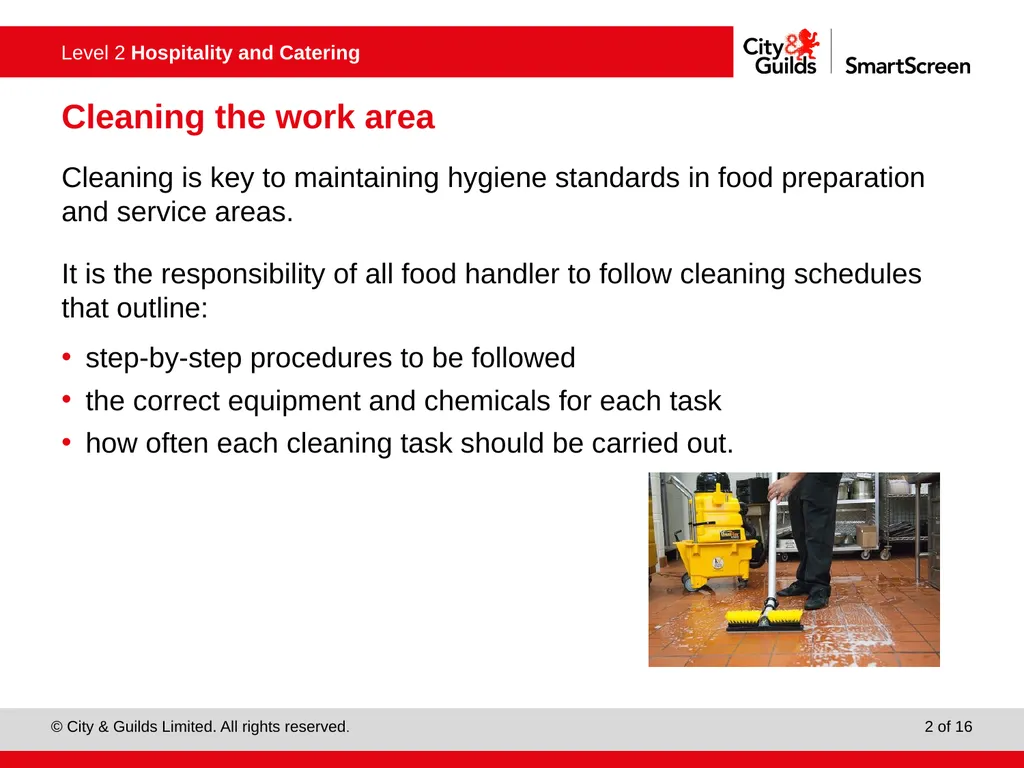
Cleaning the work area Cleaning is key to maintaining hygiene standards in food preparation and service areas.
It is the responsibility of all food handler to follow cleaning schedules that outline:
step-by-step procedures to be followed
the correct equipment and chemicals for each task
how often each cleaning task should be carried out.<br>
03
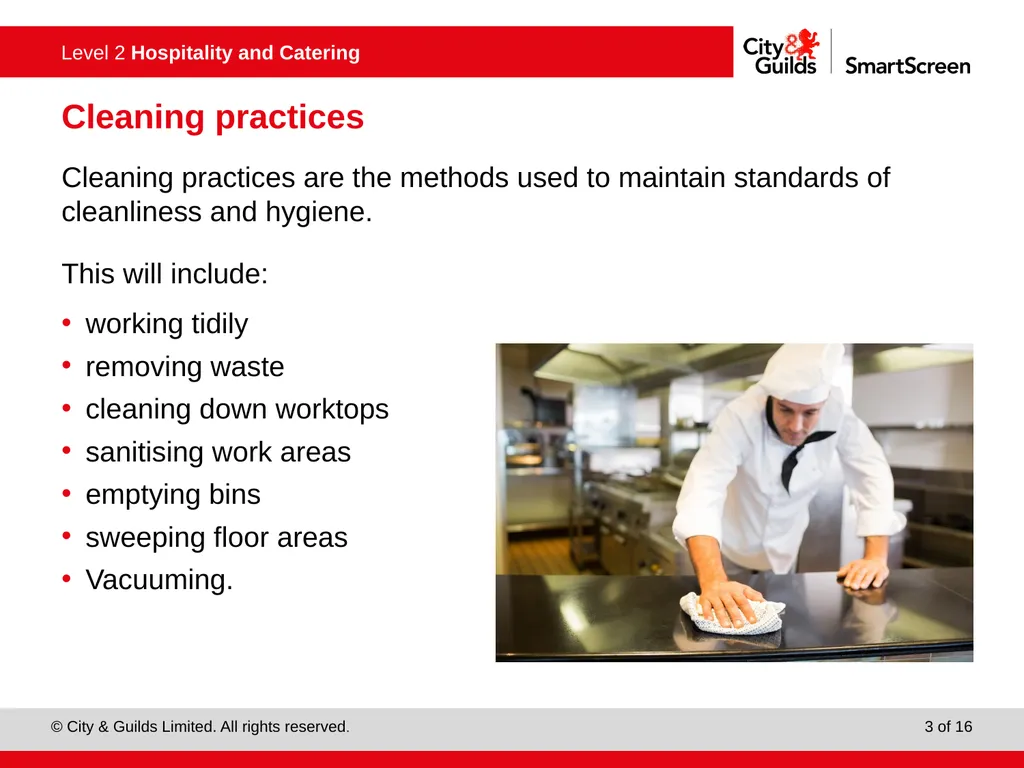
Cleaning practices Cleaning practices are the methods used to maintain standards of cleanliness and hygiene.
This will include:
working tidily
removing waste
cleaning down worktops
sanitising work areas
emptying bins
sweeping floor areas
Vacuuming.<br>
04
Six stages of cleaning Pre-clean
Main clean
Rinse
Disinfect
Rinse
Dry<br>
05
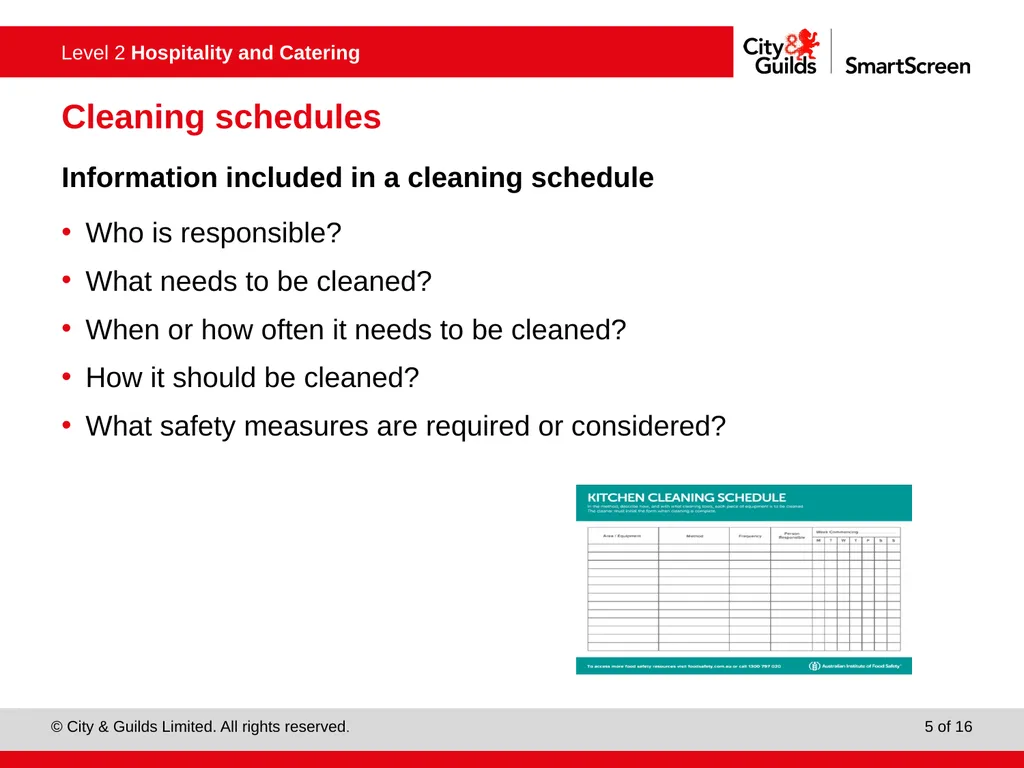
Cleaning schedules Information included in a cleaning schedule
Who is responsible?
What needs to be cleaned?
When or how often it needs to be cleaned?
How it should be cleaned?
What safety measures are required or considered?<br>
06
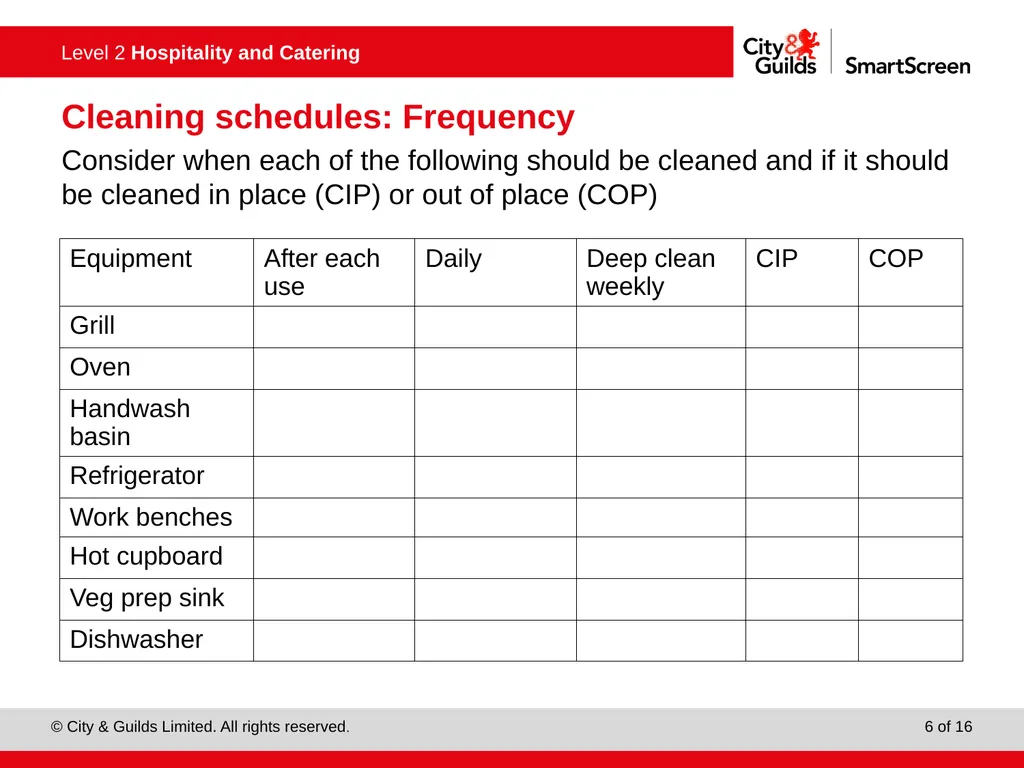
Cleaning schedules: Frequency Consider when each of the following should be cleaned and if it should be cleaned in place (CIP) or out of place (COP)<br>
07
Cleaning chemicals Chemicals should be used when cleaning food production areas to ensure standards of hygiene are maintained.
In most cases the chemical is added to water to dilute it to the correct strength needed to clean effectively.
Rules to follow when using cleaning chemicals:
Follow manufacturer’s instructions
Wear recommended PPE
Store chemicals away from food in a cool area
Always label containers if decanting
Never mix chemicals
Dilute/mix as required to ensure the effectiveness of cleaning
Contact times must be followed to ensure it cleans effectively.<br>
08
Cleaning chemicals Types of chemicals
Detergents – used to dissolve grease, help to remove food debris from surfaces and equipment. They do not kill bacteria.
Disinfectants – designed to destroy bacteria or reduce them to a safe level. They do not remove grease or dirt so must be used after a surface has been cleaned. May be strong smelling so care must be taken in food areas.
Sanitiser – combine the effects of detergents and disinfectant to remove grease and dirt whilst disinfecting at the same time.
Disinfection can also be carried out by heat as an effective way to kill bacteria, if using hot water it should be over 82°C.<br>
09
Cleaning chemical risk assessment A risk assessment must be carried out on all chemicals used in the work place to prevent harm to health.
This will involve:
finding out the health hazards
deciding how to prevent harm to health
providing control measures to reduce harm to health
making sure controls are used – personal protective equipment
keeping all controls measures in good order
providing information, instruction and training to staff.<br>
10
Cleaning chemical safety When using chemicals it is important that personal protective equipment is supplied to reduce risks to staff.
Examples of PPE:
gloves/gauntlets
goggles
eye protectors
face shields/masks
Staff must also be made aware of the risks of:
mixing chemicals
decanting chemicals
using unlabeled containers.<br>
11
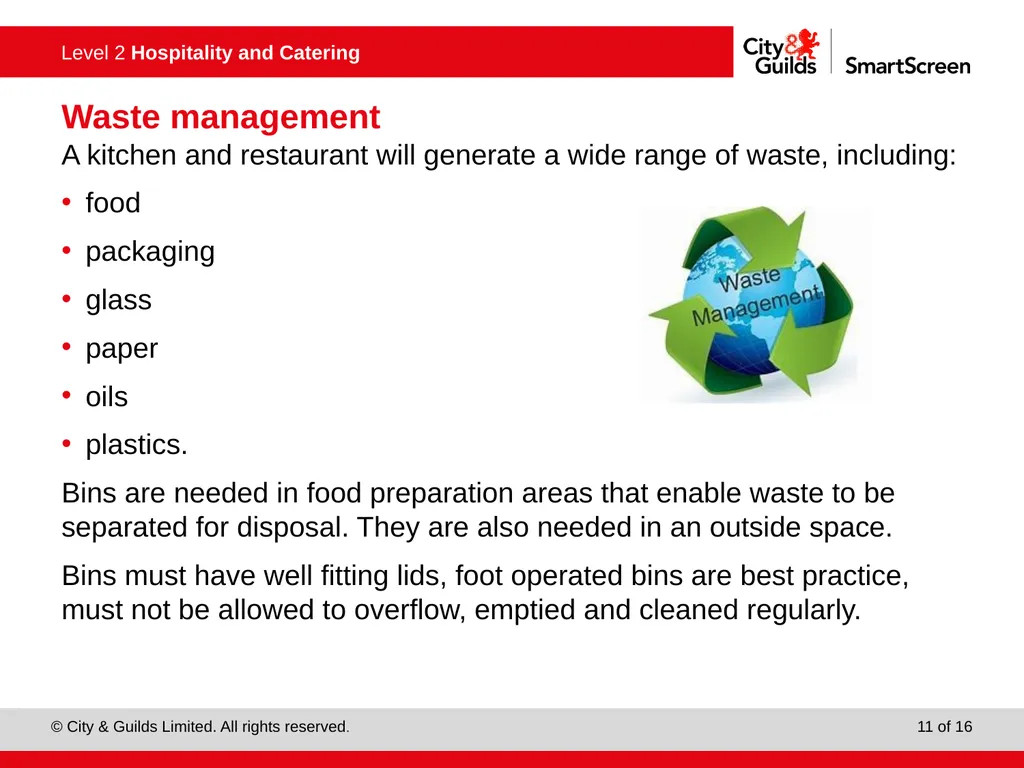
Waste management A kitchen and restaurant will generate a wide range of waste, including:
food
packaging
glass
paper
oils
plastics.
Bins are needed in food preparation areas that enable waste to be separated for disposal. They are also needed in an outside space.
Bins must have well fitting lids, foot operated bins are best practice, must not be allowed to overflow, emptied and cleaned regularly.<br>
12
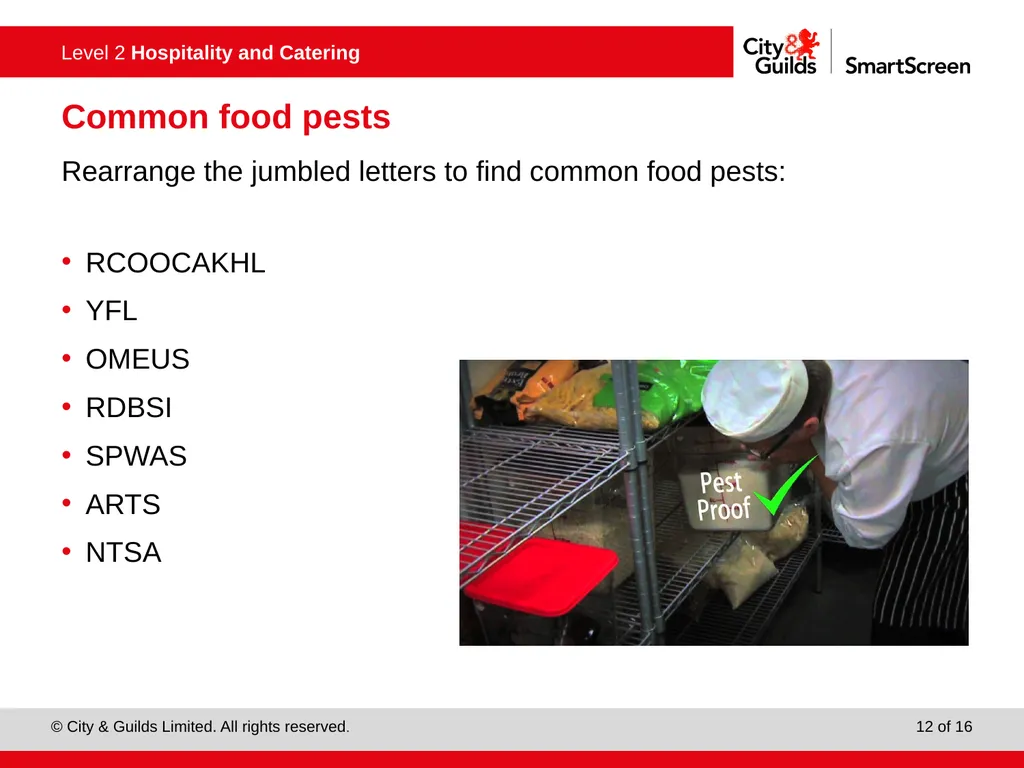
Common food pests Rearrange the jumbled letters to find common food pests:
RCOOCAKHL
YFL
OMEUS
RDBSI
SPWAS
ARTS
NTSA<br>
13
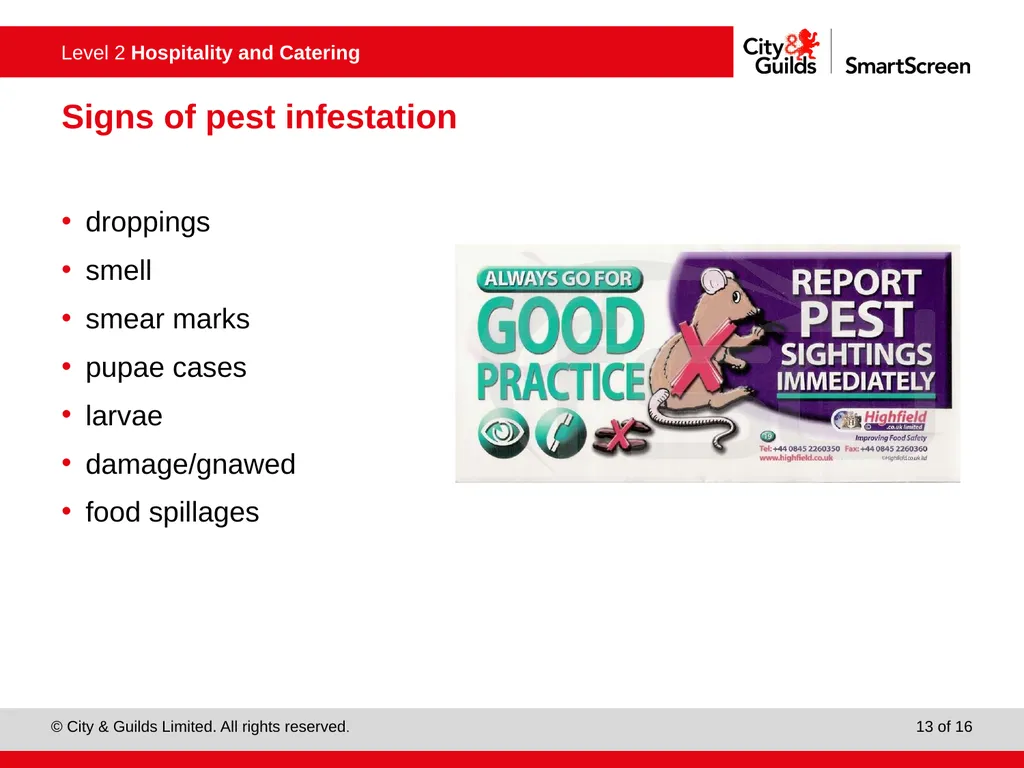
Signs of pest infestation droppings
smell
smear marks
pupae cases
larvae
damage/gnawed
food spillages<br>
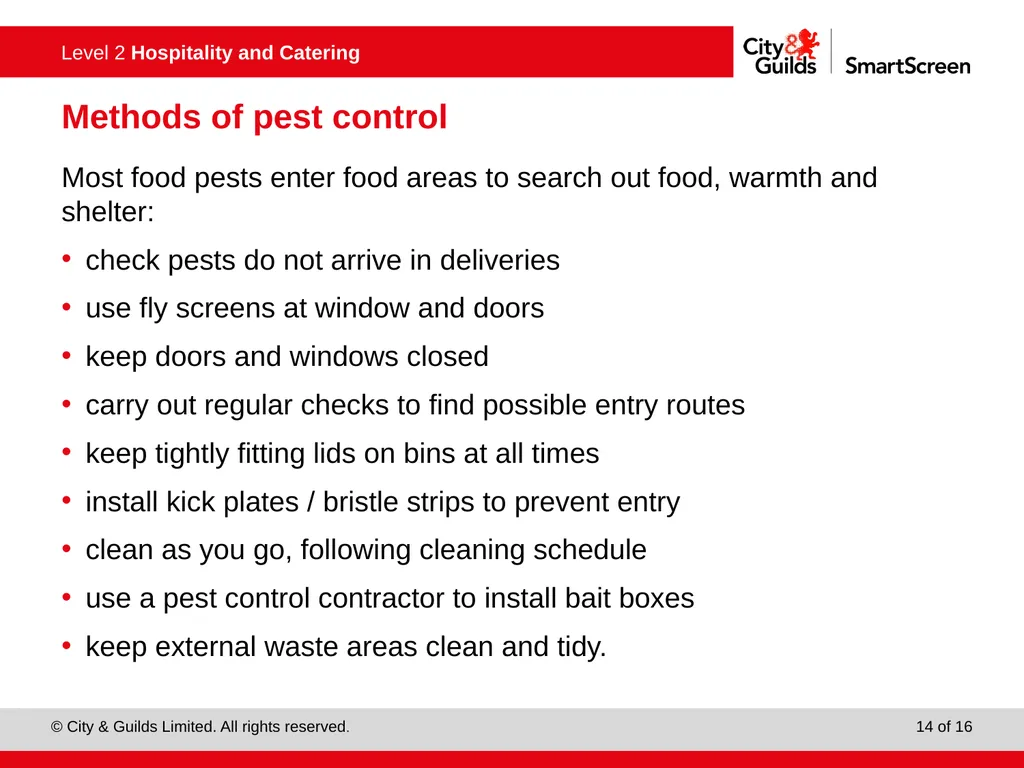
14
Methods of pest control Most food pests enter food areas to search out food, warmth and shelter:
check pests do not arrive in deliveries
use fly screens at window and doors
keep doors and windows closed
carry out regular checks to find possible entry routes
keep tightly fitting lids on bins at all times
install kick plates / bristle strips to prevent entry
clean as you go, following cleaning schedule
use a pest control contractor to install bait boxes
keep external waste areas clean and tidy.<br>
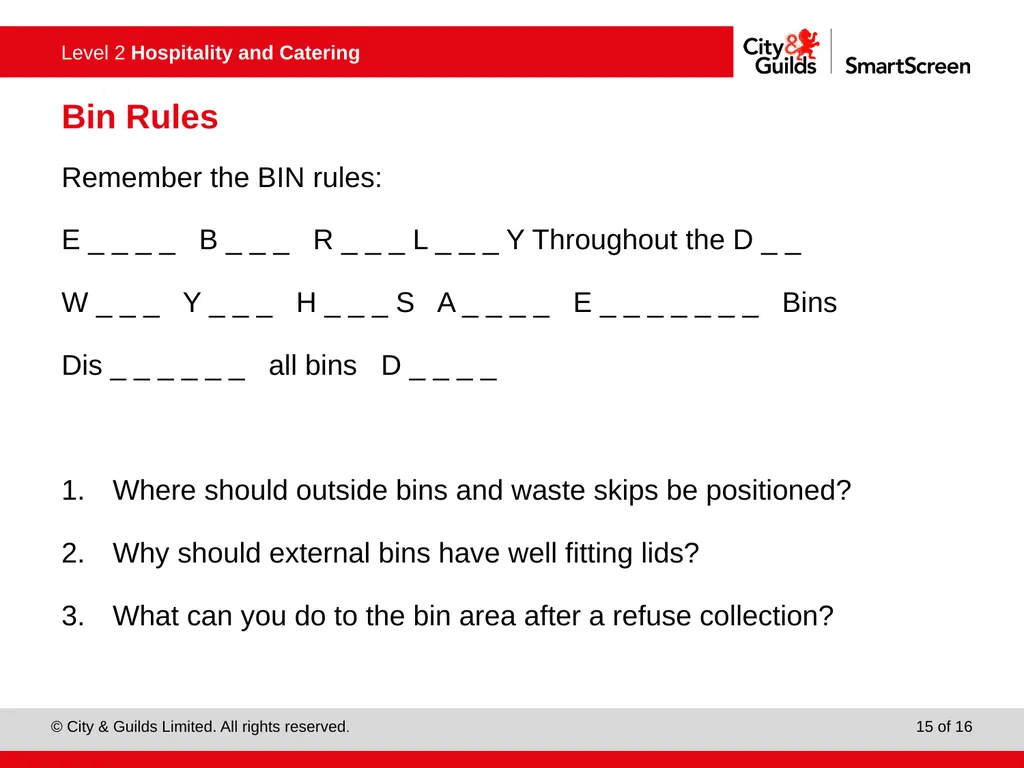
15
Bin Rules Remember the BIN rules:
E _ _ _ _ B _ _ _ R _ _ _ L _ _ _ Y Throughout the D _ _
W _ _ _ Y _ _ _ H _ _ _ S A _ _ _ _ E _ _ _ _ _ _ _ Bins
Dis _ _ _ _ _ _ all bins D _ _ _ _
Where should outside bins and waste skips be positioned?
Why should external bins have well fitting lids?
What can you do to the bin area after a refuse collection?<br>