PowerPoint presentation Managing resources Unit 303: Contribute to business success Managing resources A chef de partie has to manage both physical and human resources within a section to ensure budgets are met and profit margins achieved.
"PowerPoint presentation Managing resources Unit" is the property of its rightful owner. Permission is granted to
download and print the materials on this website for personal, non-commercial use only, and to display it
on your personal computer provided you do not modify the materials and that you retain all copyright
notices contained in the materials. By downloading content from our website, you accept the terms of this
agreement.
Presentation Transcript
01
PowerPoint presentation Managing resources Unit 303: Contribute to business success<br>
02
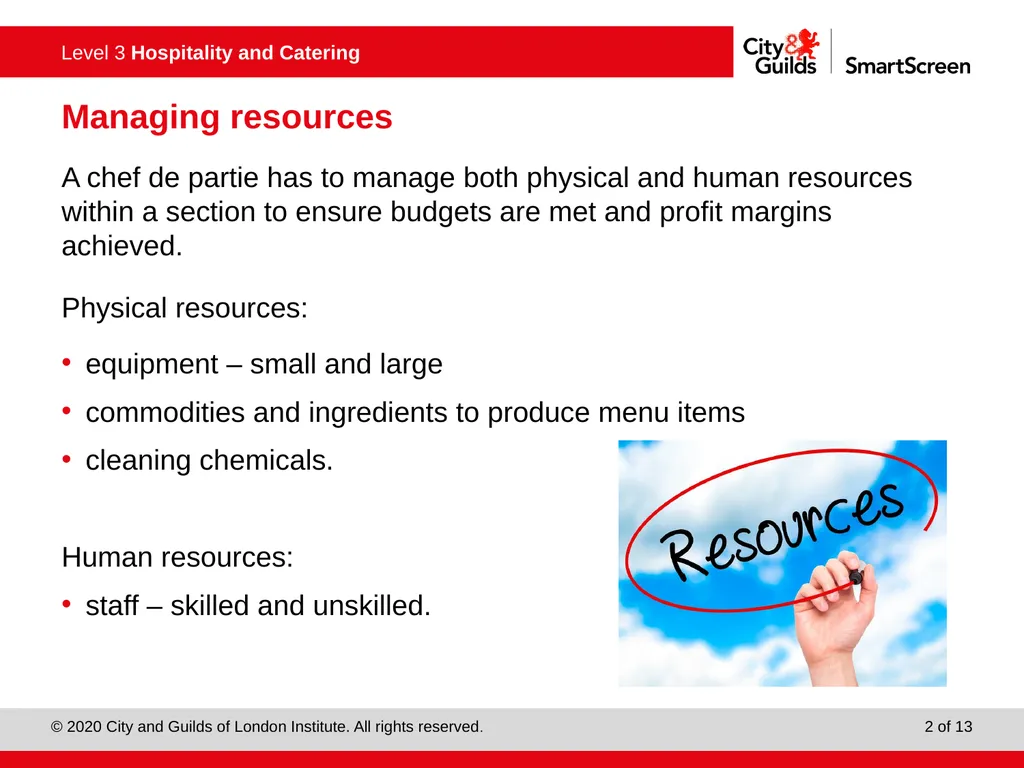
Managing resources A chef de partie has to manage both physical and human resources within a section to ensure budgets are met and profit margins achieved.
Physical resources:
equipment – small and large
commodities and ingredients to produce menu items
cleaning chemicals.
Human resources:
staff – skilled and unskilled.<br>
03
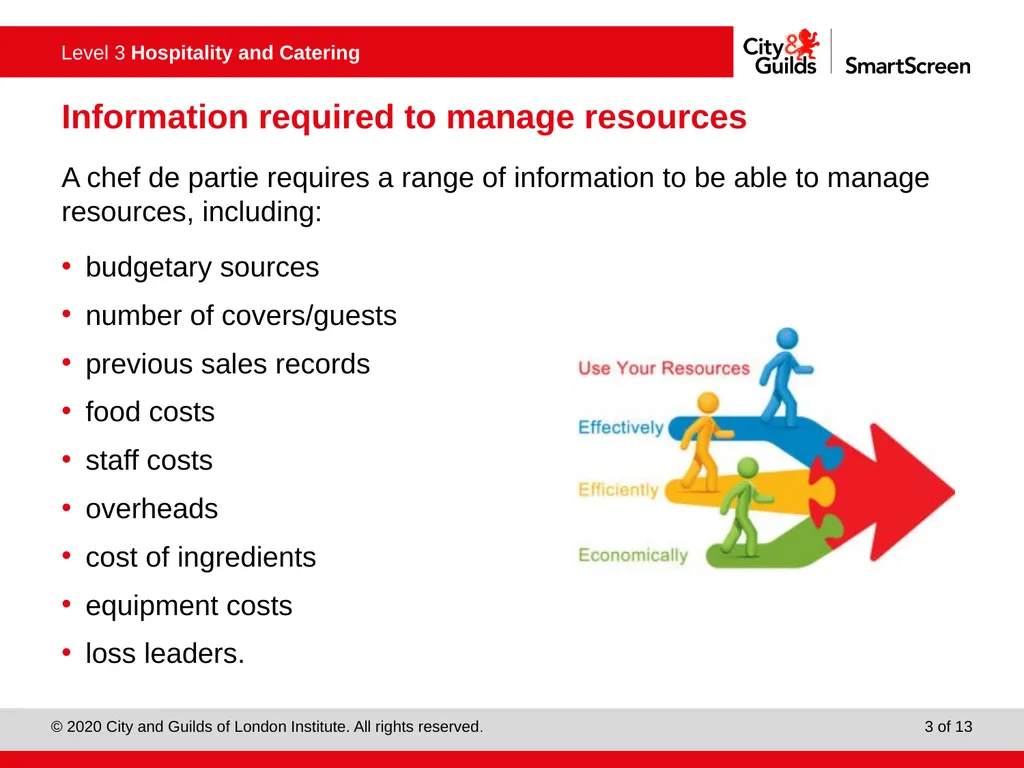
Information required to manage resources A chef de partie requires a range of information to be able to manage resources, including:
budgetary sources
number of covers/guests
previous sales records
food costs
staff costs
overheads
cost of ingredients
equipment costs
loss leaders.<br>
04
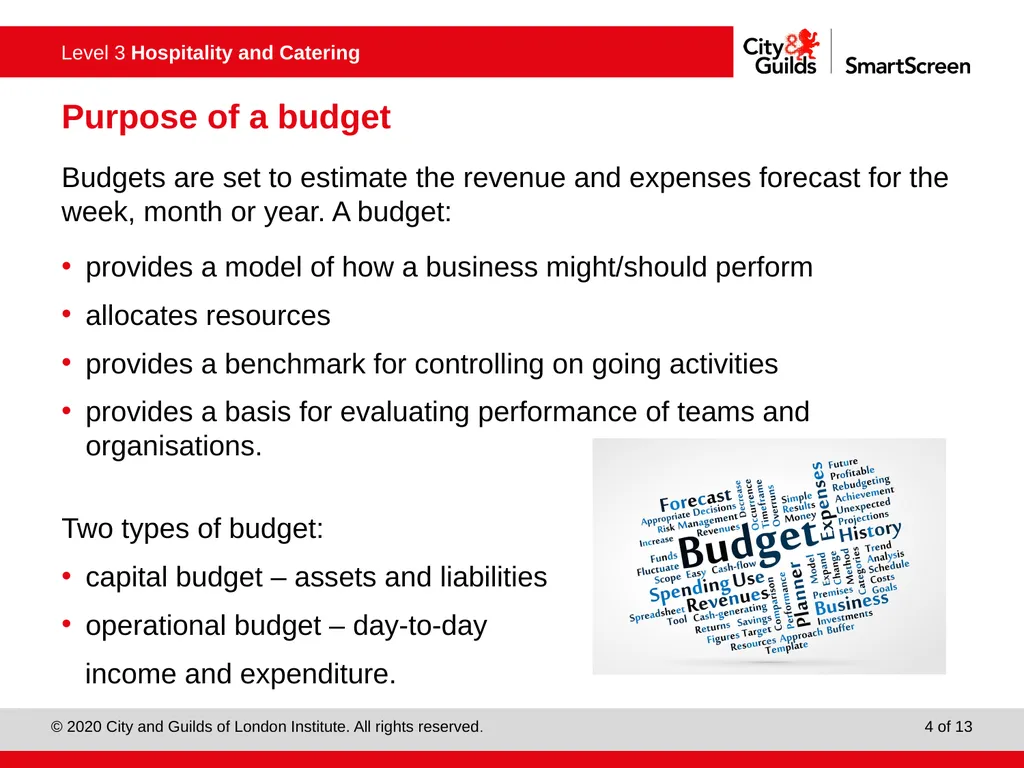
Purpose of a budget Budgets are set to estimate the revenue and expenses forecast for the week, month or year. A budget:
provides a model of how a business might/should perform
allocates resources
provides a benchmark for controlling on going activities
provides a basis for evaluating performance of teams and organisations.
Two types of budget:
capital budget – assets and liabilities
operational budget – day-to-day
income and expenditure.<br>
05
Purpose of a budget continued Agreed budgets and their achievement mean that the business will perform within the set parameters.
Whilst budgets are an estimate they are normally based on historical data or a defined data set of projected customer visits and average revenue.
Budgets are broken into overall budgets for the business as a whole but also broken into smaller sub-components usually based on the cost centre, e.g. kitchen, F&B.
The cost centre can then be broken into smaller parts for the kitchen. This would mean breakfast, lunch, room service and dinner or banqueting.
The targets are set and measured each week or month against the actual revenue and expenses.
This allows for adjustments on an ongoing basis and also highlights any areas that are underperforming.<br>
06
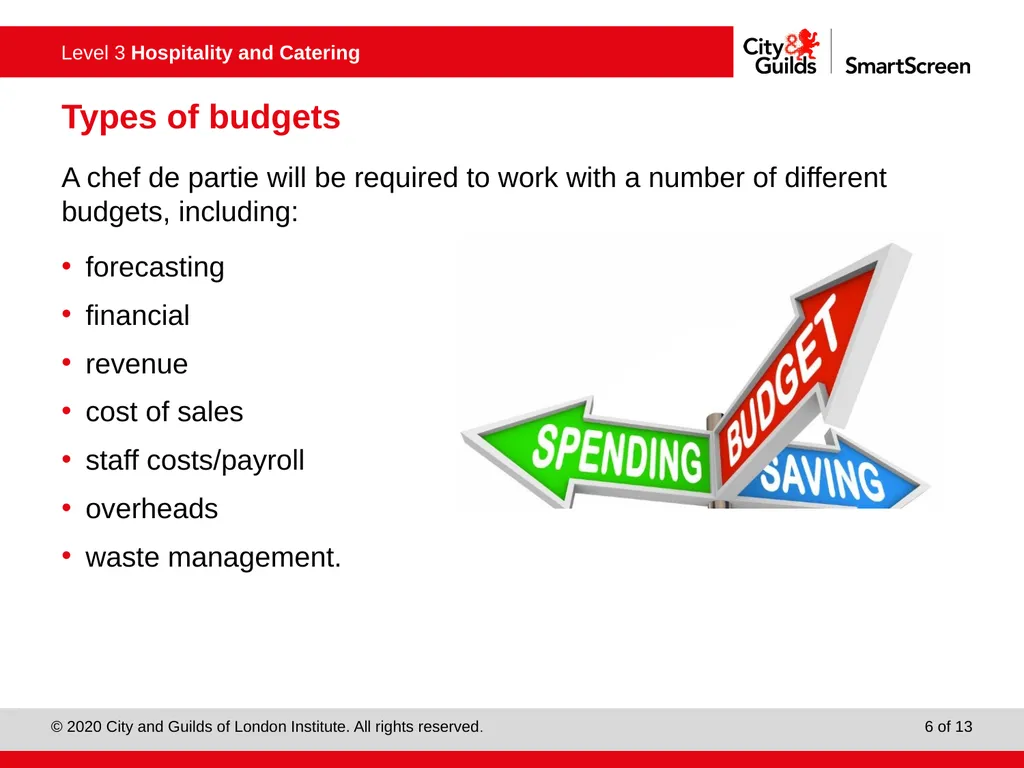
Types of budgets A chef de partie will be required to work with a number of different budgets, including:
forecasting
financial
revenue
cost of sales
staff costs/payroll
overheads
waste management.<br>
07
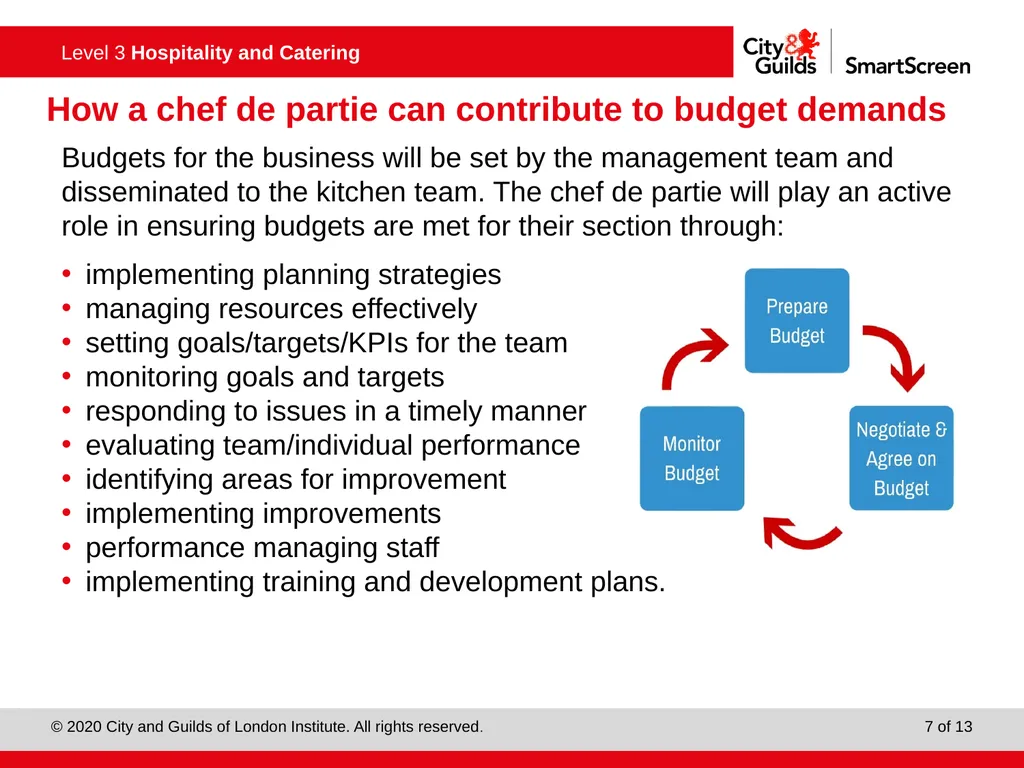
How a chef de partie can contribute to budget demands Budgets for the business will be set by the management team and disseminated to the kitchen team. The chef de partie will play an active role in ensuring budgets are met for their section through:
implementing planning strategies
managing resources effectively
setting goals/targets/KPIs for the team
monitoring goals and targets
responding to issues in a timely manner
evaluating team/individual performance
identifying areas for improvement
implementing improvements
performance managing staff
implementing training and development plans.<br>
08
Contributing to business performance A kitchen team play a key role in contributing to a businesses performance by:
operating within budgets
effective use of staff
effective use of ingredients
production of food to meet service times
meeting guest expectations
working as a team
working with other departments to meet guest needs
retaining staff
responding positively to feedback.<br>
09
Contributing to business profitability A kitchen team play a key role in contributing to the profitability of a businesses by:
managing resources effectively
generating new menu items
upselling through specials
finding efficiencies across the kitchen operation
using less electricity, gas and water
reducing waste
adopting a sustainable approach.<br>
10
Recruiting staff Managing the human resources is an increasingly important skill as staff costs are a key cost incurred by the business.
An effective recruitment and selection process will:
reduce staff turnover and increase staff morale
help to reduce costs by ensuring staff with the required skills and experience are employed
reduce time required for training new staff
build a strong kitchen team to meet the business needs
build the reputation of the business as a place to work.<br>
11
How a chef de partie can contribute to the recruitment process identify recruitment needs
contribute to the development of job descriptions
recognise suitable candidates – internal/external
screen applicants
interview applicants
support in the selection of staff
feedback on trials
induct new staff
coach and mentor during probation periods.<br>
12
How training and development support staff retention upskilling staff
investment in continuous professional development
improves employee performance
employees feel valued
increased accountability
increased pride
increased opportunities for promotion – monetary gain
increased employee satisfaction.<br>