
Preoperative Fasting Hannah Liu Topic For patients































Description: Preoperative Fasting Hannah Liu Topic For patients (adultpaediatric) undergoing anaesthesia for surgery, should they fast according to the current guideline or should sip til send be implemented, in order to minimise perioperative
Related Topics
Download Presentation
"Preoperative Fasting Hannah Liu Topic For patients" is the property of its rightful owner. Permission is granted to download and print the materials on this website for personal, non-commercial use only, and to display it on your personal computer provided you do not modify the materials and that you retain all copyright notices contained in the materials. By downloading content from our website, you accept the terms of this agreement.
Presentation Transcript
slide1. Preoperative Fasting Hannah Liu<br>
slide2. Topic For patients (adult/paediatric) undergoing anaesthesia for surgery, should they fast according to the current guideline or should “sip til send” be implemented, in order to minimise perioperative complications?<br>
slide3. Sip Til Send ‘Fluid fasting in unscheduled patients in Ninewells Hospital’ (November 2020)
Mean fluid deprivation 7.5 hrs
Max 22 hrs
Repeated fasting over multiple days<br>
slide6. Auburn preoperative fasting audit A prospective clinical audit of patient solid and clear fluid fasting times for patients between February and March 2021
The median clear fluid fasting time was 7.8 hours (IQR 4.73-11.5 hours)<br>
slide7. Adverse Events Quarterly governance meeting + web-based Clinical Incident Management System
6 regurgitations in first 6 months
6/12000 cases = 0.05%
No sequelae - all DC same day
Ongoing monitoring<br>
slide8. Current Preoperative Fasting Guideline<br>
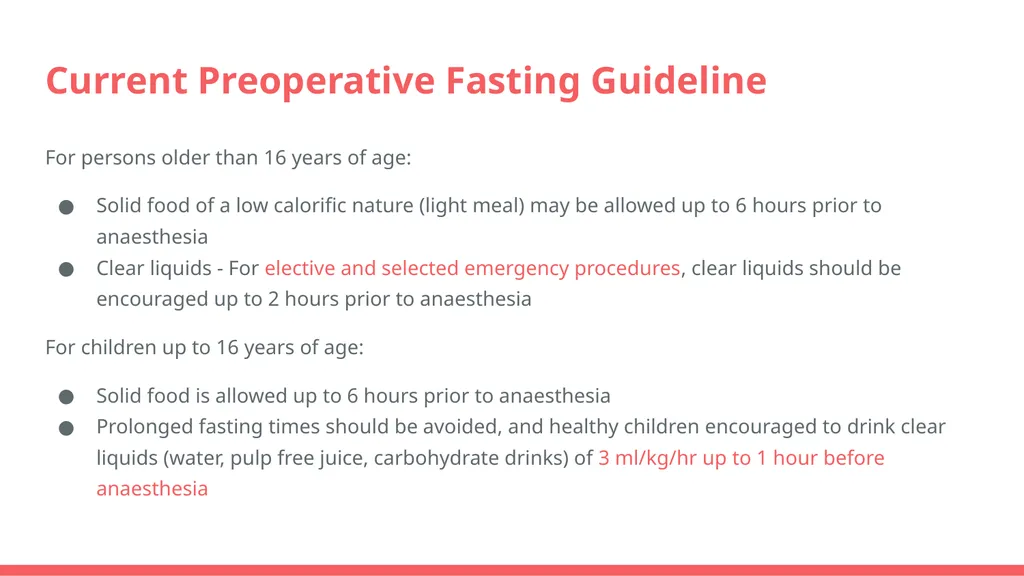
slide9. Current Preoperative Fasting Guideline For persons older than 16 years of age:
Solid food of a low calorific nature (light meal) may be allowed up to 6 hours prior to anaesthesia
Clear liquids - For elective and selected emergency procedures, clear liquids should be encouraged up to 2 hours prior to anaesthesia
For children up to 16 years of age:
Solid food is allowed up to 6 hours prior to anaesthesia
Prolonged fasting times should be avoided, and healthy children encouraged to drink clear liquids (water, pulp free juice, carbohydrate drinks) of 3 ml/kg/hr up to 1 hour before anaesthesia<br>
slide10. For example, currently there is interest in many international centres employing a ‘Sip Til Send’ or ‘Sip Til Leave Home’ protocol. There is also increasing use of point of care testing in the form of gastric ultrasound. While there appears to be increasing uptake of SipTilSend, which may be reasonable in a variety of settings, the thresholds have not been met for consensus statements to encourage routine reductions less than 2 hours for ingestion of clear liquids or routine reliance on point of care ultrasound. As volume of prospective data and reliability of evidence increases for a combination of practices, consideration will be given to applicability to this practice guideline.<br>
slide11. Why do we fast?<br>
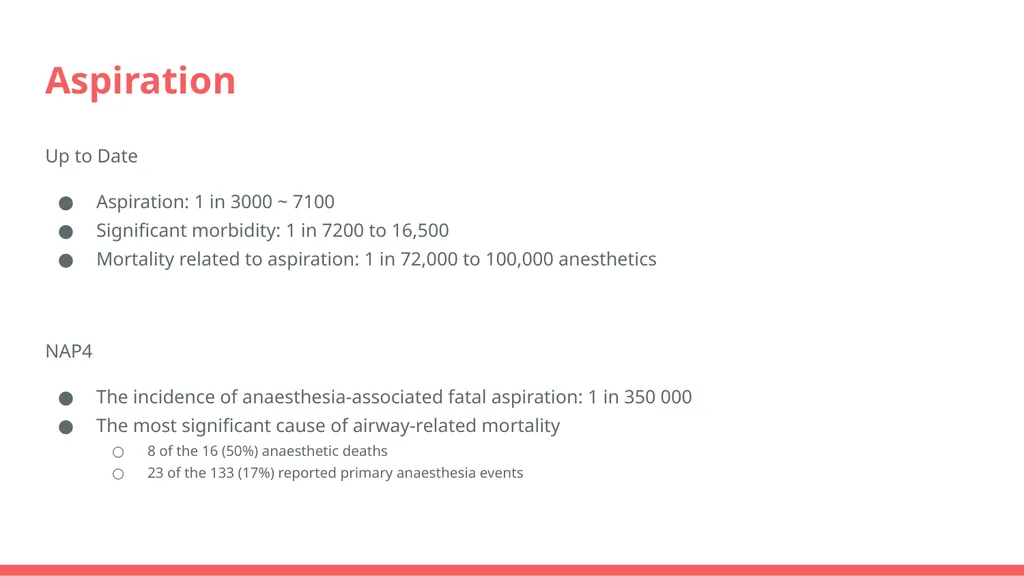
slide12. Aspiration Up to Date
Aspiration: 1 in 3000 ~ 7100
Significant morbidity: 1 in 7200 to 16,500
Mortality related to aspiration: 1 in 72,000 to 100,000 anesthetics
NAP4
The incidence of anaesthesia-associated fatal aspiration: 1 in 350 000
The most significant cause of airway-related mortality
8 of the 16 (50%) anaesthetic deaths
23 of the 133 (17%) reported primary anaesthesia events<br>
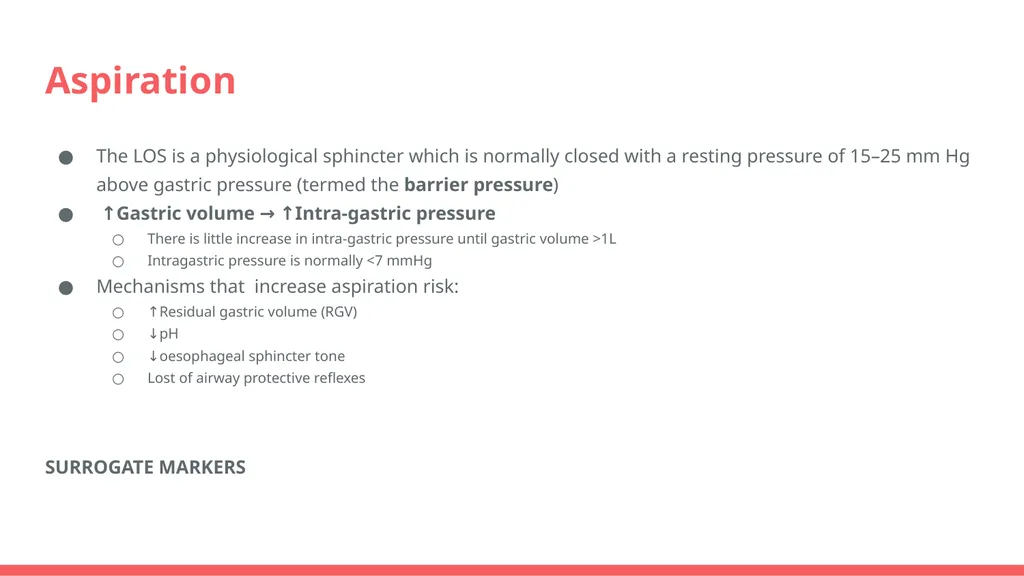
slide13. Aspiration The LOS is a physiological sphincter which is normally closed with a resting pressure of 15–25 mm Hg above gastric pressure (termed the barrier pressure)
↑Gastric volume → ↑Intra-gastric pressure
There is little increase in intra-gastric pressure until gastric volume >1L
Intragastric pressure is normally <7 mmHg
Mechanisms that increase aspiration risk:
↑Residual gastric volume (RGV)
↓pH
↓oesophageal sphincter tone
Lost of airway protective reflexes
SURROGATE MARKERS<br>
slide14. Questions What is the evidence for 2 hours clear fluid fasting?
What is the physiological transit time for clear fluid? What factors affect the transit time?
Is it safe to decrease fasting time for clear fluid?
Does drinking clear fluid <2hr preop increase RGV?
Does fasting reduce RGV?
Does increased RGV correlate to increased risk of aspiration?
What are the adverse effects of prolonged fasting?<br>
slide15. What is the evidence for 2 hours clear fluid fasting?<br>
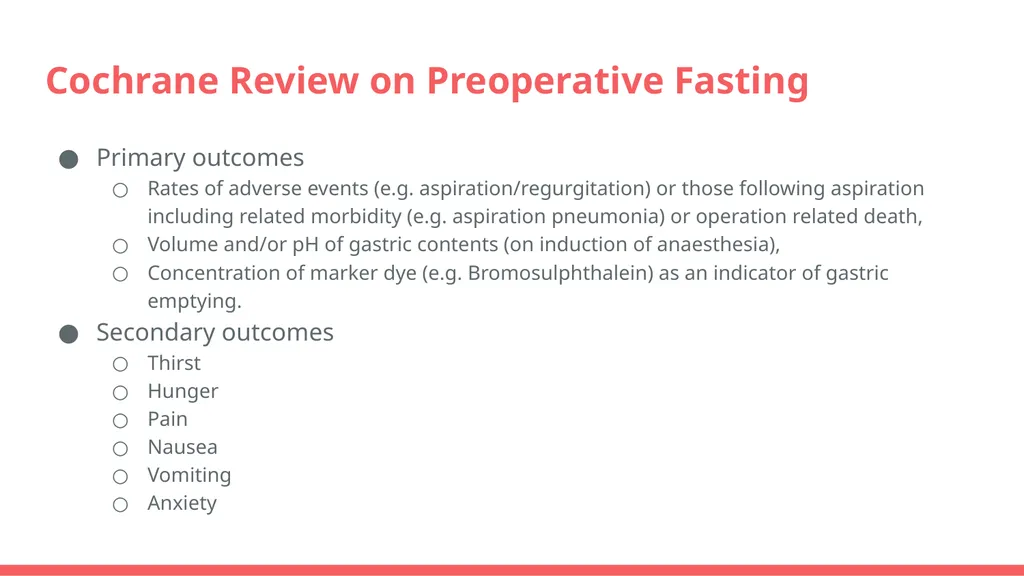
slide17. Cochrane Review on Preoperative Fasting Primary outcomes
Rates of adverse events (e.g. aspiration/regurgitation) or those following aspiration including related morbidity (e.g. aspiration pneumonia) or operation related death,
Volume and/or pH of gastric contents (on induction of anaesthesia),
Concentration of marker dye (e.g. Bromosulphthalein) as an indicator of gastric emptying.
Secondary outcomes
Thirst
Hunger
Pain
Nausea
Vomiting
Anxiety<br>
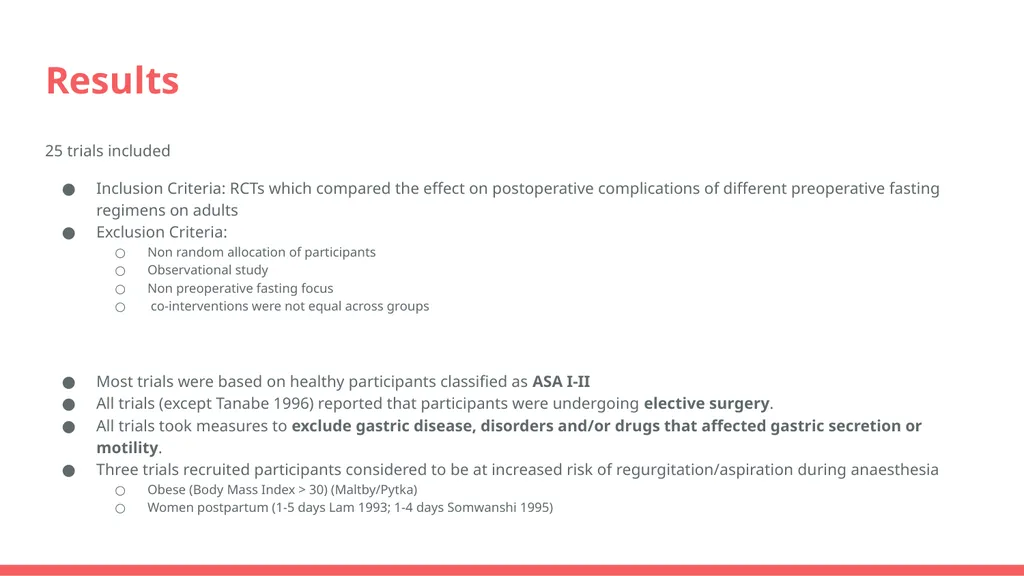
slide18. Results 25 trials included
Inclusion Criteria: RCTs which compared the effect on postoperative complications of different preoperative fasting regimens on adults
Exclusion Criteria:
Non random allocation of participants
Observational study
Non preoperative fasting focus
co-interventions were not equal across groups
Most trials were based on healthy participants classified as ASA I-II
All trials (except Tanabe 1996) reported that participants were undergoing elective surgery.
All trials took measures to exclude gastric disease, disorders and/or drugs that affected gastric secretion or motility.
Three trials recruited participants considered to be at increased risk of regurgitation/aspiration during anaesthesia
Obese (Body Mass Index > 30) (Maltby/Pytka)
Women postpartum (1-5 days Lam 1993; 1-4 days Somwanshi 1995)<br>
slide19. Results Aspiration/Regurgitation
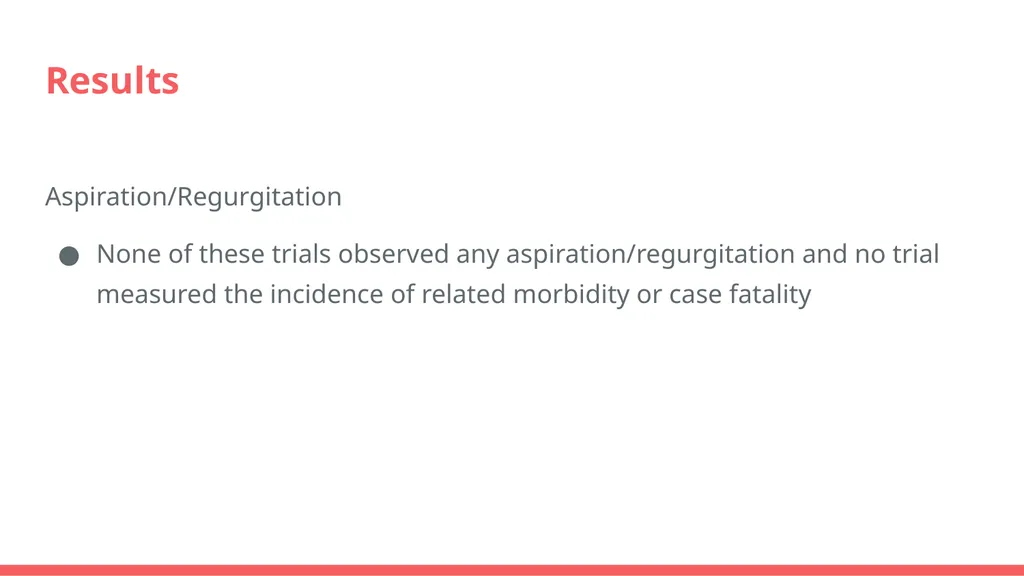
None of these trials observed any aspiration/regurgitation and no trial measured the incidence of related morbidity or case fatality<br>
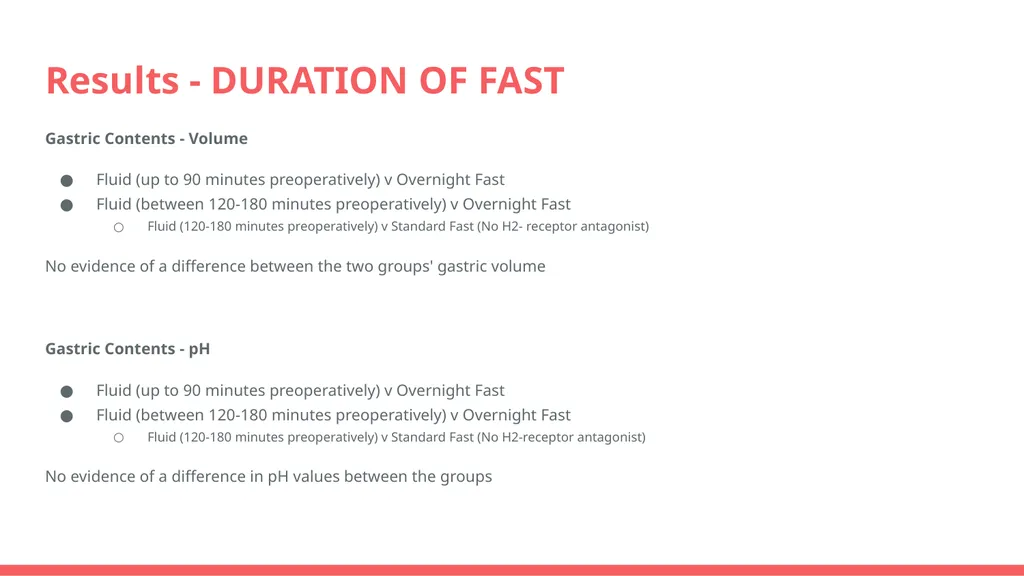
slide20. Results - DURATION OF FAST Gastric Contents - Volume
Fluid (up to 90 minutes preoperatively) v Overnight Fast
Fluid (between 120-180 minutes preoperatively) v Overnight Fast
Fluid (120-180 minutes preoperatively) v Standard Fast (No H2- receptor antagonist)
No evidence of a difference between the two groups' gastric volume
Gastric Contents - pH
Fluid (up to 90 minutes preoperatively) v Overnight Fast
Fluid (between 120-180 minutes preoperatively) v Overnight Fast
Fluid (120-180 minutes preoperatively) v Standard Fast (No H2-receptor antagonist)
No evidence of a difference in pH values between the groups<br>
slide21. Results - TYPE OF FLUID Gastric Contents - Volume
Water v Overnight Fast (no H2-receptor antagonist)
Nine trials: participants permitted a preoperative drink of water (n = 319) had a lower volume of gastric contents on induction of anaesthesia than those participants that followed a standard fasting regimen (n = 292).
This difference was highly statistically significant (p = 0.00002, WMD -6.16 mls CI 95%[-9.41, -2.91]) but is not considered clinically significant.
Fruit Juice v Overnight Fast (no H2-receptor antagonist)
No difference between the groups (WMD 0.50 mls, CI 95% [-6.50,7.50]
Other Fluids v Overnight Fast (no H2-receptor antagonist)
No evidence of a between group difference in gastric volume (WMD 2.19 mls, CI 95% [-0.63, 5.00]).<br>
slide22. Results - TYPE OF FLUID Gastric Contents - pH
Water v Overnight Fast
Water v Overnight Fast (No H2-receptor antagonist)
Fruit Juice v Overnight Fast (no H2-receptor antagonist)
No difference between the groups' post induction gastric pH values<br>
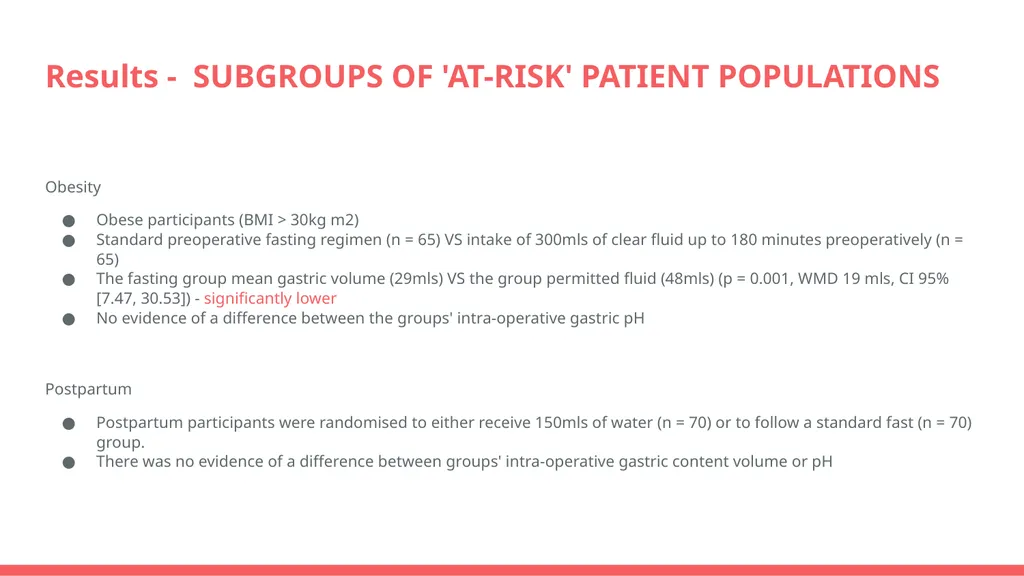
slide23. Results - SUBGROUPS OF 'AT-RISK' PATIENT POPULATIONS Obesity
Obese participants (BMI > 30kg m2)
Standard preoperative fasting regimen (n = 65) VS intake of 300mls of clear fluid up to 180 minutes preoperatively (n = 65)
The fasting group mean gastric volume (29mls) VS the group permitted fluid (48mls) (p = 0.001, WMD 19 mls, CI 95% [7.47, 30.53]) - significantly lower
No evidence of a difference between the groups' intra-operative gastric pH
Postpartum
Postpartum participants were randomised to either receive 150mls of water (n = 70) or to follow a standard fast (n = 70) group.
There was no evidence of a difference between groups' intra-operative gastric content volume or pH<br>
slide24. Conclusion There was no indication participants permitted fluids up to 90 minutes preoperatively were at increased risk (as measured by their gastric volume and pH) compared to participants that followed a standard fast.
Within this review there was clear evidence that intake of water during the preoperative period actually resulted in significantly lower volumes of gastric contents on induction of anaesthesia than had no fluids been taken. This difference however cannot be considered of clinical significance (6mls).
Obese participants (BMI > 30) permitted 300mls of clear fluids two hours preoperatively were noted to have a higher mean gastric volume than the fasted group that was statistically and clinically significant.<br>
slide25. Pro
Comprehensive review
Compared
Duration of fasting
Fluid type
At risk population group
Clinical significance considered Limitations
Small sample sizes - no aspiration/regurgitation detected
Most participants were healthy, non-pregnant, adult population undergoing elective surgery
Lack of blinding<br>
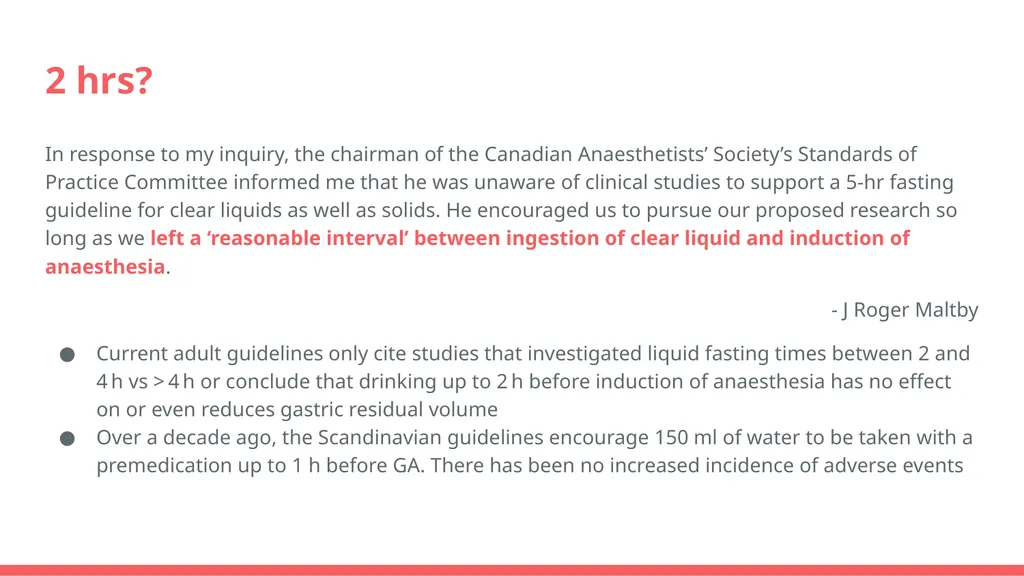
slide26. In response to my inquiry, the chairman of the Canadian Anaesthetists’ Society’s Standards of Practice Committee informed me that he was unaware of clinical studies to support a 5-hr fasting guideline for clear liquids as well as solids. He encouraged us to pursue our proposed research so long as we left a ‘reasonable interval’ between ingestion of clear liquid and induction of anaesthesia.
- J Roger Maltby
Current adult guidelines only cite studies that investigated liquid fasting times between 2 and 4 h vs > 4 h or conclude that drinking up to 2 h before induction of anaesthesia has no effect on or even reduces gastric residual volume
Over a decade ago, the Scandinavian guidelines encourage 150 ml of water to be taken with a premedication up to 1 h before GA. There has been no increased incidence of adverse events 2 hrs?<br>
slide27. What is the physiological transit time for clear fluid? What factors affect the transit time?<br>
slide29. Is it safe to decrease fasting time for clear fluid?<br>
slide30. Paediatric preoperative fasting<br>
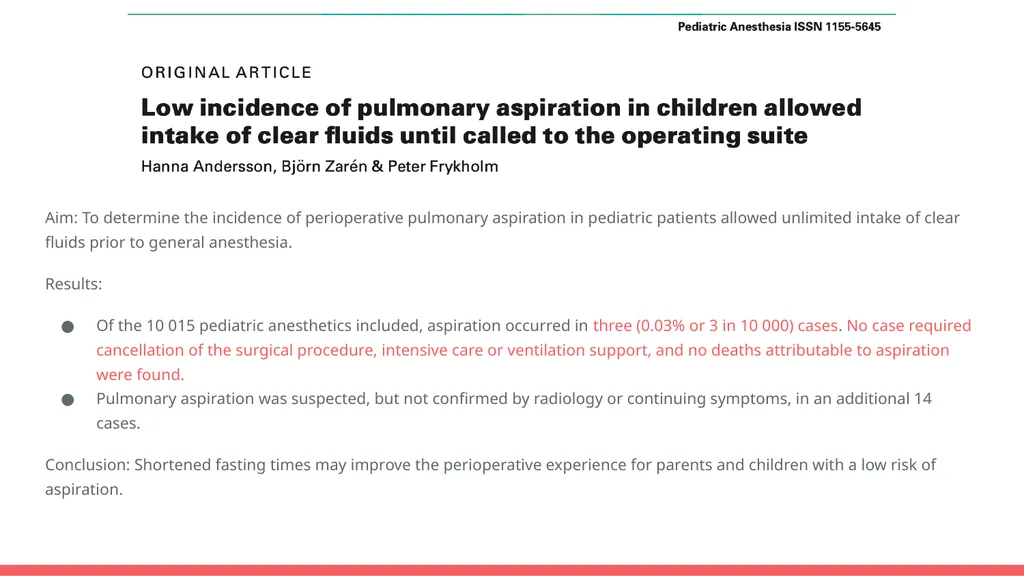
slide31. Aim: To determine the incidence of perioperative pulmonary aspiration in pediatric patients allowed unlimited intake of clear fluids prior to general anesthesia.
Results:
Of the 10 015 pediatric anesthetics included, aspiration occurred in three (0.03% or 3 in 10 000) cases. No case required cancellation of the surgical procedure, intensive care or ventilation support, and no deaths attributable to aspiration were found.
Pulmonary aspiration was suspected, but not confirmed by radiology or continuing symptoms, in an additional 14 cases.
Conclusion: Shortened fasting times may improve the perioperative experience for parents and children with a low risk of aspiration.<br>
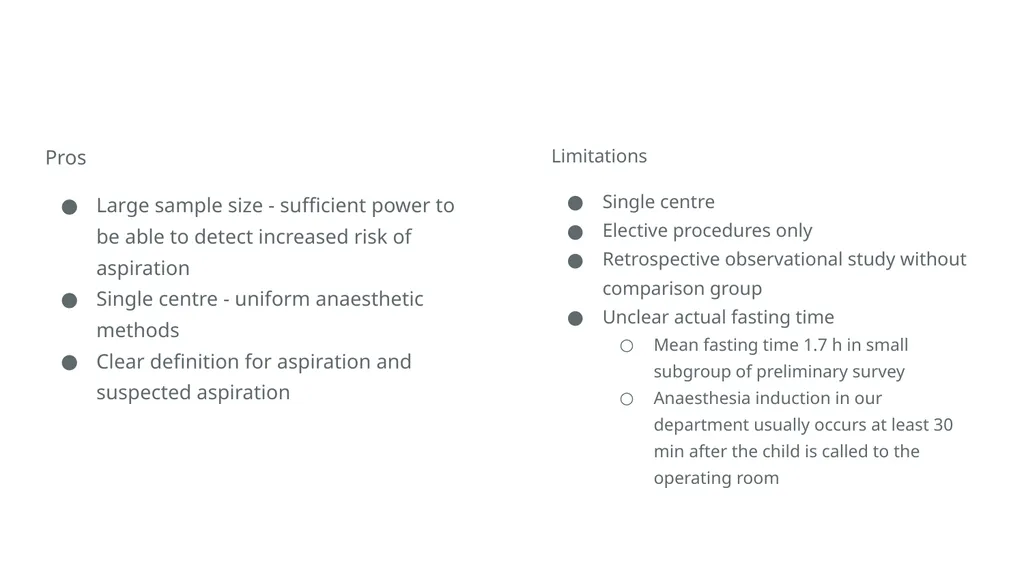
slide32. Pros
Large sample size - sufficient power to be able to detect increased risk of aspiration
Single centre - uniform anaesthetic methods
Clear definition for aspiration and suspected aspiration Limitations
Single centre
Elective procedures only
Retrospective observational study without comparison group
Unclear actual fasting time
Mean fasting time 1.7 h in small subgroup of preliminary survey
Anaesthesia induction in our department usually occurs at least 30 min after the child is called to the operating room<br>
slide33. Adult preoperative fasting<br>
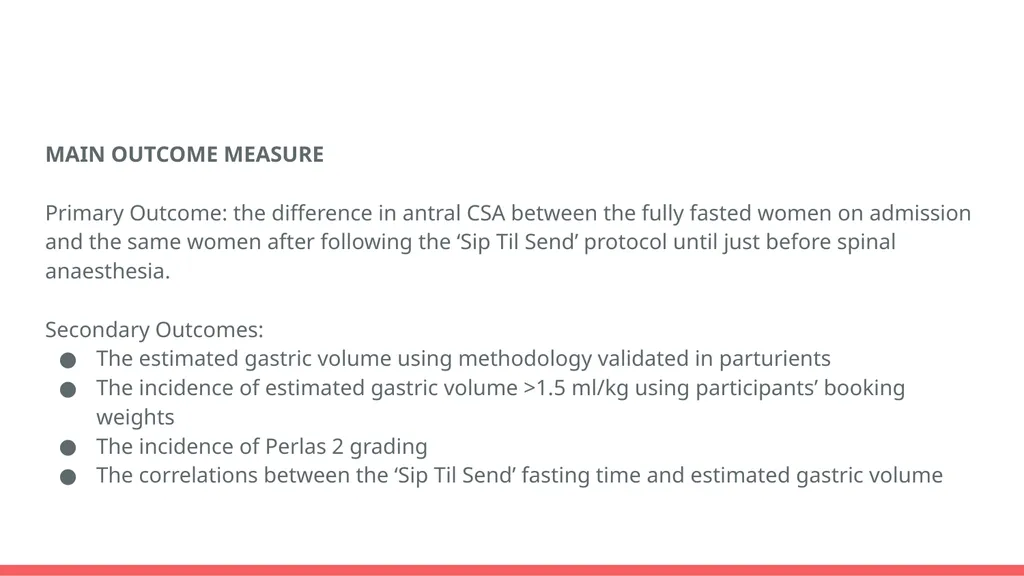
slide36. MAIN OUTCOME MEASURE
Primary Outcome: the difference in antral CSA between the fully fasted women on admission and the same women after following the ‘Sip Til Send’ protocol until just before spinal anaesthesia.
Secondary Outcomes:
The estimated gastric volume using methodology validated in parturients
The incidence of estimated gastric volume >1.5 ml/kg using participants’ booking weights
The incidence of Perlas 2 grading
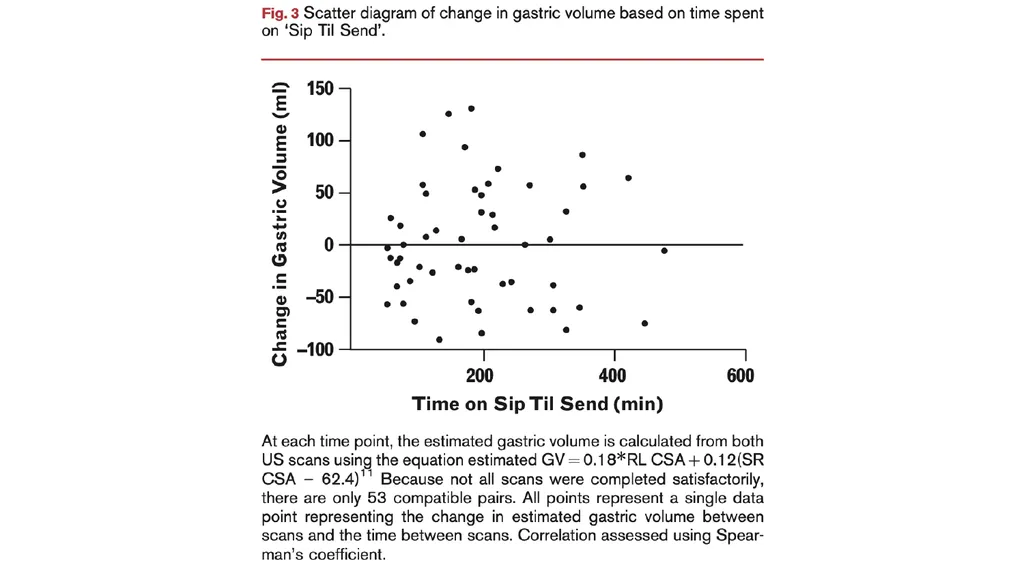
The correlations between the ‘Sip Til Send’ fasting time and estimated gastric volume<br>
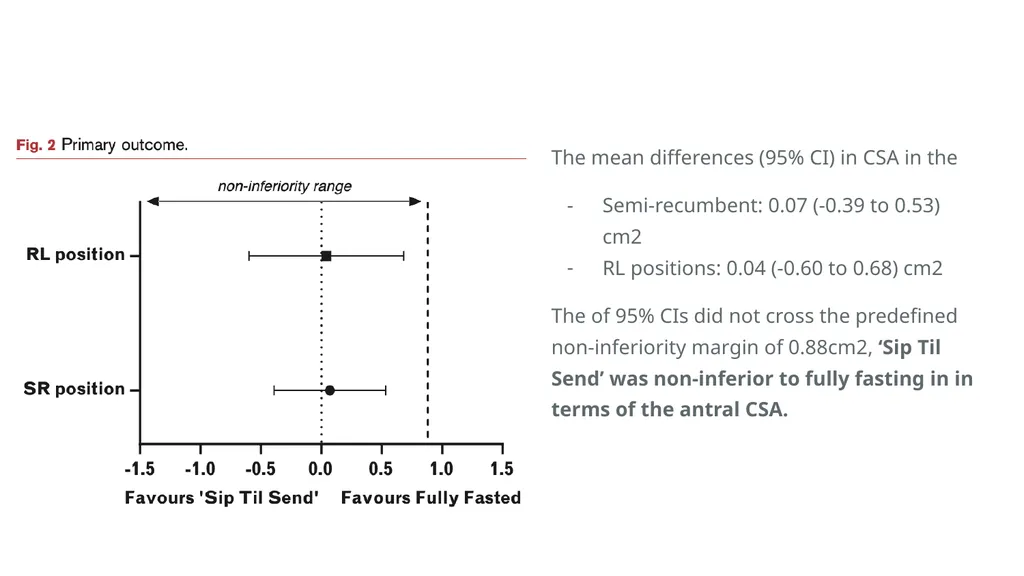
slide37. The mean differences (95% CI) in CSA in the
Semi-recumbent: 0.07 (-0.39 to 0.53) cm2
RL positions: 0.04 (-0.60 to 0.68) cm2
The of 95% CIs did not cross the predefined non-inferiority margin of 0.88cm2, ‘Sip Til Send’ was non-inferior to fully fasting in in terms of the antral CSA.<br>
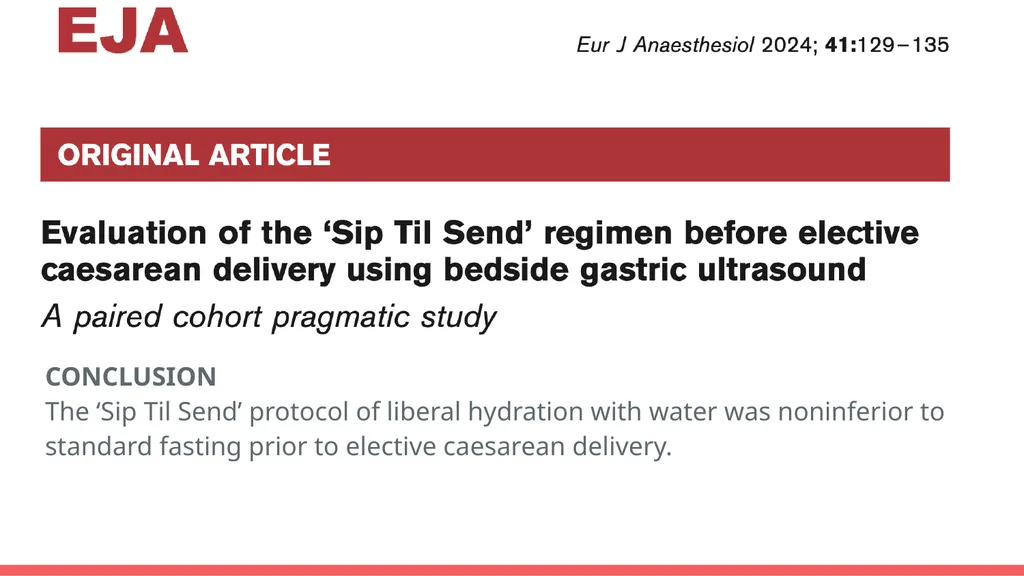
slide40. CONCLUSION
The ‘Sip Til Send’ protocol of liberal hydration with water was noninferior to standard fasting prior to elective caesarean delivery.<br>
slide41. Pros
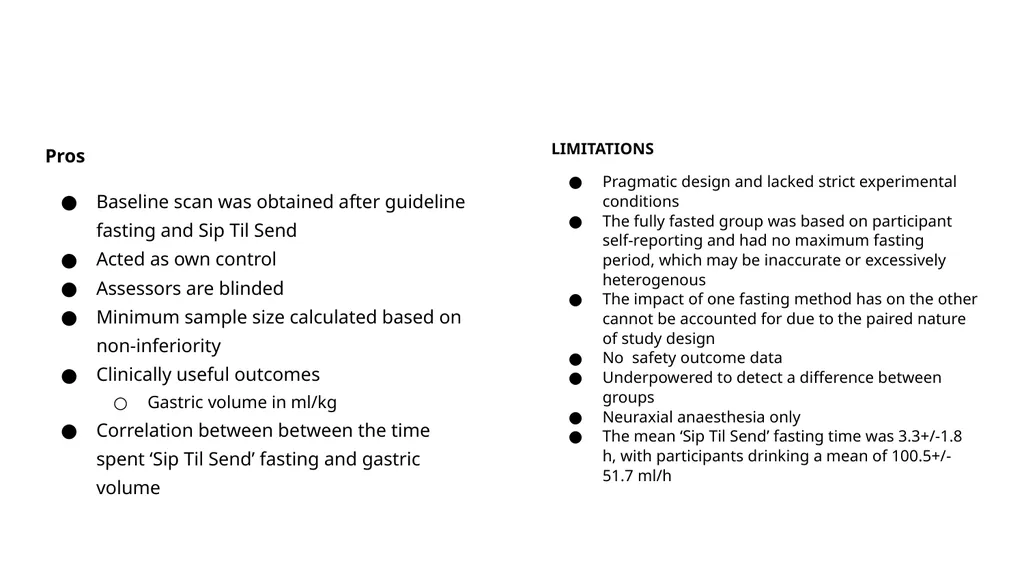
Baseline scan was obtained after guideline fasting and Sip Til Send
Acted as own control
Assessors are blinded
Minimum sample size calculated based on non-inferiority
Clinically useful outcomes
Gastric volume in ml/kg
Correlation between between the time spent ‘Sip Til Send’ fasting and gastric volume LIMITATIONS
Pragmatic design and lacked strict experimental conditions
The fully fasted group was based on participant self-reporting and had no maximum fasting period, which may be inaccurate or excessively heterogenous
The impact of one fasting method has on the other cannot be accounted for due to the paired nature of study design
No safety outcome data
Underpowered to detect a difference between groups
Neuraxial anaesthesia only
The mean ‘Sip Til Send’ fasting time was 3.3+/-1.8 h, with participants drinking a mean of 100.5+/-51.7 ml/h<br>
slide42. Increased RGV increases aspiration risk? There was no evidence to support a linear relationship between RGV and pulmonary aspiration.<br>
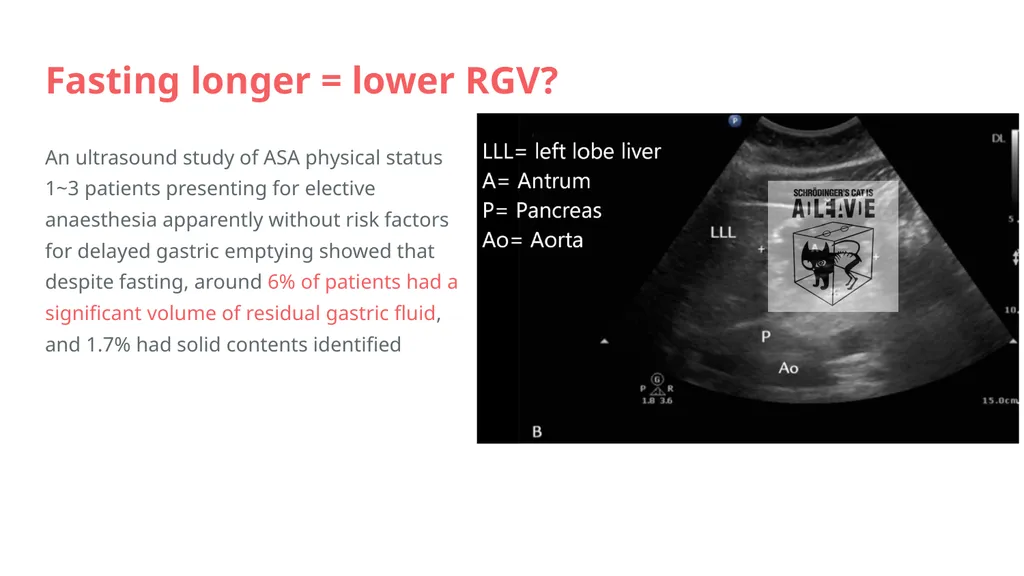
slide43. Fasting longer = lower RGV? An ultrasound study of ASA physical status 1~3 patients presenting for elective anaesthesia apparently without risk factors for delayed gastric emptying showed that despite fasting, around 6% of patients had a significant volume of residual gastric fluid, and 1.7% had solid contents identified<br>
slide44. Prolonged Fasting Fasting duration is often substantially longer than recommended irrespective of a 1- or 2-h clear liquid fasting policy
Prolonged fasting influences
Patient-related outcomes: preoperative thirst, hunger, anxiety, nausea and vomiting, pain, and reduced feeling of well-being
Clinical outcomes: dehydration, difficult cannulation, electrolyte imbalance, postoperative delirium, and hypotension at induction of general anesthesia<br>
slide46. PATIENTS
11500 patients on the day case pathway who were receiving either sedation, GA, regional or combination.
Exclusions: patients undergoing a termination of pregnancy, or patients undergoing community dental procedures, from whom patient experience data are not collected
INTERVENTION Introduction of a change to the day surgery pathway policy permitting unrestricted clear oral fluids pre-operatively until transfer to theatre (from October 2014).
MAIN OUTCOME MEASURES Incidence of postoperative nausea and vomiting.<br>
slide48. RESULTS
The corresponding rates of vomiting were 146/5186 (2.8%) and 104/4716 (2.2%), a relative rate (95% confidence interval) of 0.78 (0.61 to 1.00), P = 0.053.<br>
slide52. Patients Satisfaction
‘Very good’ after 2331/5188 (44.9%) operations when drinking was restricted VS after 2269/4697 (48.3%) operations when clear fluids were unrestricted
Relative rate (95% CI) of 1.08 (1.03 to 1.12), P = 0.0008.<br>
slide53. There were no adverse events of pulmonary aspiration of gastric contents requiring patient admission
As of October 2017, total of 15 214 patients undergone GA or regional or sedation or combination on the day surgery pathway since the change in policy
One aspiration event necessitating tracheal intubation and admission<br>
slide54. CONCLUSION
Our data suggest that the liberal consumption of clear fluids before the induction of scheduled day case anaesthesia reduced the rates of PONV<br>
slide55. PRO:
Large sample size
Compared pre and post intervention
Demonstration of a change point at a distinct point in a continuous series of patients that coincided with the crossover period of our change in fluids policy LIMITATIONS:
The volumes or timing of ingested fluids preop were not collected
No record of use of antiemetics
Similar spend on antiemetic agents from our pharmacy department → the use of antiemetic agents consistent
No data on
BMI
Smoking status, patient history of previous PONV or motion sickness
GI issues
>90% ASA1~2<br>
slide56. Answer? Current guideline is based on trials that fasted up to 2hrs for clear fluid, no evidence that <2hr clear fluid fasting will increase risk of aspiration
Clear fluids, esp. water, empty from stomach exponentially with t1/2 ~10mins
The volume and caloric content of fluid ingested are the main factors affecting transit time
Is it safe to decrease fasting time for clear fluid? - PROBABLY
Studies on gastric volume and pH showed no significant difference between “Sip Til Send” VS traditional clear fluid fasting in preoperative patients - lower quality studies in selected patient groups
Has been implemented in multiple hospitals without significant increase in adverse events
The rarity of pulmonary aspiration contributes to difficulty conducting clinical trials to directly address this, as numbers to sufficiently power them are prohibitively large
Prolonged fasting ≠ empty stomach
Prolonged fasting can result in PONV, metabolic derangement, hypovolaemia, HD instability, thirst, anxiety, etc.<br>
slide58. What does this mean for Auburn?<br>
slide59. Sip Til Send at Auburn Audit of current fasting time, send to induction time
Questionnaire for perioperative staff re Sip Til Send
Education
Preoperative Journey
Identify at risk patients
CLEAR INSTRUCTION
Language barrier
Fasting card
On the day of surgery
CLEAR INSTRUCTION
Monitor: writing on the cup when the water was poured<br>
slide63. REFERENCE Brady MC, Kinn S, Stuart P, Ness V. Preoperative fasting for adults to prevent perioperative complications. Cochrane Database of Systematic Reviews 2003, Issue 4. Art. No.: CD004423. DOI: 10.1002/14651858.CD004423.
Andersson H, Hellstrom PM, Frykholm P. Introducing the 6-4-0 fasting regimen and the incidence of prolonged preoperative fasting in children. Pediatric Anesthesia 2018; 28: 46–52.
Marsman M, Pouw N, Moons LMG, van Klei WA, Kappen TH. Gastric fluid volume in adults after implementation of a liberal fasting policy: a prospective cohort study. Br J Anaesth. 2021 Sep;127(3):e85-e87. doi: 10.1016/j.bja.2021.06.006. Epub 2021 Jul 6. PMID: 34238548.
Harnett C, Connors J, Kelly S, Tan T, Howle R. Evaluation of the 'Sip Til Send' regimen before elective caesarean delivery using bedside gastric ultrasound: A paired cohort pragmatic study. Eur J Anaesthesiol. 2024 Feb 1;41(2):129-135. doi: 10.1097/EJA.0000000000001926. Epub 2023 Nov 20. PMID: 37982593.
McCracken GC, Montgomery J. Postoperative nausea and vomiting after unrestricted clear fluids before day surgery: A retrospective analysis. Eur J Anaesthesiol. 2018 May;35(5):337-342. doi: 10.1097/EJA.0000000000000760. PMID: 29232253.<br>
slide64. REFERENCE https://www.youtube.com/watch?v=NlxgPRmtQLk&ab_channel=ANZHFRTrainingandEducation
Checketts MR. Fluid fasting before surgery: the ultimate example of medical sophistry? Anaesthesia. 2023 Feb;78(2):147-149. doi: 10.1111/anae.15925. Epub 2022 Dec 8. PMID: 36480436.
Morrison CE, Ritchie-McLean S, Jha A, Mythen M. Two hours too long: time to review fasting guidelines for clear fluids. Br J Anaesth. 2020 Jan 17:S0007-0912(19)31004-9. doi: 10.1016/j.bja.2019.11.036. Epub ahead of print. PMID: 31959387.
Maltby JR. Fasting from midnight--the history behind the dogma. Best Pract Res Clin Anaesthesiol. 2006 Sep;20(3):363-78. doi: 10.1016/j.bpa.2006.02.001. PMID: 17080690.
Soreide E, Eriksson LI, Hirekar G, et al. Pre-operative fasting guidelines: an update. Acta Anaesthesiol Scand 2005; 49: 1041e7
Okabe T, Terashima H, Sakamoto A. Determinants of liquid gastric emptying: comparisons between milk and isocalorically adjusted clear fluids. Br J Anaesth. 2015 Jan;114(1):77-82. doi: 10.1093/bja/aeu338. Epub 2014 Sep 25. PMID: 25260696.
Ziessman HA, Chander A, Clarke JO, Ramos A, Wahl RL. The added diagnostic value of liquid gastric emptying compared with solid emptying alone. J Nucl Med. 2009 May;50(5):726-31. doi: 10.2967/jnumed.108.059790. Epub 2009 Apr 16. PMID: 19372480.
Beck CE, Rudolph D, Mahn C, et al. Impact of clear fluid fasting on pulmonary aspiration in children undergoing general anesthesia: results of the German prospective multicenter observational (NiKs) study. Paediatr Anaesth 2020; 30:892–899.
Schmidt AR, Buehler KP, Both C, et al. Liberal fluid fasting: impact on gastric pH and residual volume in healthy children undergoing general anaesthesia for elective surgery. British Journal of Anaesthesia 2018; 121: 647–55.<br>
slide66. PROSPECT guideline for elective caesarean section Audit Proposal<br>
slide69. Audit Proposal A retrospective clinical audit comparing the pain management of patients undergoing caesarean sections against the PROSPECT recommendations
Cohort: 100-150 patients who underwent caesarean sections in 2023 at Auburn Hospital
Time Frame: patients from Jan 2023- approx Jun 2023<br>
slide2. Topic For patients (adult/paediatric) undergoing anaesthesia for surgery, should they fast according to the current guideline or should “sip til send” be implemented, in order to minimise perioperative complications?<br>
slide3. Sip Til Send ‘Fluid fasting in unscheduled patients in Ninewells Hospital’ (November 2020)
Mean fluid deprivation 7.5 hrs
Max 22 hrs
Repeated fasting over multiple days<br>
slide6. Auburn preoperative fasting audit A prospective clinical audit of patient solid and clear fluid fasting times for patients between February and March 2021
The median clear fluid fasting time was 7.8 hours (IQR 4.73-11.5 hours)<br>
slide7. Adverse Events Quarterly governance meeting + web-based Clinical Incident Management System
6 regurgitations in first 6 months
6/12000 cases = 0.05%
No sequelae - all DC same day
Ongoing monitoring<br>
slide8. Current Preoperative Fasting Guideline<br>
slide9. Current Preoperative Fasting Guideline For persons older than 16 years of age:
Solid food of a low calorific nature (light meal) may be allowed up to 6 hours prior to anaesthesia
Clear liquids - For elective and selected emergency procedures, clear liquids should be encouraged up to 2 hours prior to anaesthesia
For children up to 16 years of age:
Solid food is allowed up to 6 hours prior to anaesthesia
Prolonged fasting times should be avoided, and healthy children encouraged to drink clear liquids (water, pulp free juice, carbohydrate drinks) of 3 ml/kg/hr up to 1 hour before anaesthesia<br>
slide10. For example, currently there is interest in many international centres employing a ‘Sip Til Send’ or ‘Sip Til Leave Home’ protocol. There is also increasing use of point of care testing in the form of gastric ultrasound. While there appears to be increasing uptake of SipTilSend, which may be reasonable in a variety of settings, the thresholds have not been met for consensus statements to encourage routine reductions less than 2 hours for ingestion of clear liquids or routine reliance on point of care ultrasound. As volume of prospective data and reliability of evidence increases for a combination of practices, consideration will be given to applicability to this practice guideline.<br>
slide11. Why do we fast?<br>
slide12. Aspiration Up to Date
Aspiration: 1 in 3000 ~ 7100
Significant morbidity: 1 in 7200 to 16,500
Mortality related to aspiration: 1 in 72,000 to 100,000 anesthetics
NAP4
The incidence of anaesthesia-associated fatal aspiration: 1 in 350 000
The most significant cause of airway-related mortality
8 of the 16 (50%) anaesthetic deaths
23 of the 133 (17%) reported primary anaesthesia events<br>
slide13. Aspiration The LOS is a physiological sphincter which is normally closed with a resting pressure of 15–25 mm Hg above gastric pressure (termed the barrier pressure)
↑Gastric volume → ↑Intra-gastric pressure
There is little increase in intra-gastric pressure until gastric volume >1L
Intragastric pressure is normally <7 mmHg
Mechanisms that increase aspiration risk:
↑Residual gastric volume (RGV)
↓pH
↓oesophageal sphincter tone
Lost of airway protective reflexes
SURROGATE MARKERS<br>
slide14. Questions What is the evidence for 2 hours clear fluid fasting?
What is the physiological transit time for clear fluid? What factors affect the transit time?
Is it safe to decrease fasting time for clear fluid?
Does drinking clear fluid <2hr preop increase RGV?
Does fasting reduce RGV?
Does increased RGV correlate to increased risk of aspiration?
What are the adverse effects of prolonged fasting?<br>
slide15. What is the evidence for 2 hours clear fluid fasting?<br>
slide17. Cochrane Review on Preoperative Fasting Primary outcomes
Rates of adverse events (e.g. aspiration/regurgitation) or those following aspiration including related morbidity (e.g. aspiration pneumonia) or operation related death,
Volume and/or pH of gastric contents (on induction of anaesthesia),
Concentration of marker dye (e.g. Bromosulphthalein) as an indicator of gastric emptying.
Secondary outcomes
Thirst
Hunger
Pain
Nausea
Vomiting
Anxiety<br>
slide18. Results 25 trials included
Inclusion Criteria: RCTs which compared the effect on postoperative complications of different preoperative fasting regimens on adults
Exclusion Criteria:
Non random allocation of participants
Observational study
Non preoperative fasting focus
co-interventions were not equal across groups
Most trials were based on healthy participants classified as ASA I-II
All trials (except Tanabe 1996) reported that participants were undergoing elective surgery.
All trials took measures to exclude gastric disease, disorders and/or drugs that affected gastric secretion or motility.
Three trials recruited participants considered to be at increased risk of regurgitation/aspiration during anaesthesia
Obese (Body Mass Index > 30) (Maltby/Pytka)
Women postpartum (1-5 days Lam 1993; 1-4 days Somwanshi 1995)<br>
slide19. Results Aspiration/Regurgitation
None of these trials observed any aspiration/regurgitation and no trial measured the incidence of related morbidity or case fatality<br>
slide20. Results - DURATION OF FAST Gastric Contents - Volume
Fluid (up to 90 minutes preoperatively) v Overnight Fast
Fluid (between 120-180 minutes preoperatively) v Overnight Fast
Fluid (120-180 minutes preoperatively) v Standard Fast (No H2- receptor antagonist)
No evidence of a difference between the two groups' gastric volume
Gastric Contents - pH
Fluid (up to 90 minutes preoperatively) v Overnight Fast
Fluid (between 120-180 minutes preoperatively) v Overnight Fast
Fluid (120-180 minutes preoperatively) v Standard Fast (No H2-receptor antagonist)
No evidence of a difference in pH values between the groups<br>
slide21. Results - TYPE OF FLUID Gastric Contents - Volume
Water v Overnight Fast (no H2-receptor antagonist)
Nine trials: participants permitted a preoperative drink of water (n = 319) had a lower volume of gastric contents on induction of anaesthesia than those participants that followed a standard fasting regimen (n = 292).
This difference was highly statistically significant (p = 0.00002, WMD -6.16 mls CI 95%[-9.41, -2.91]) but is not considered clinically significant.
Fruit Juice v Overnight Fast (no H2-receptor antagonist)
No difference between the groups (WMD 0.50 mls, CI 95% [-6.50,7.50]
Other Fluids v Overnight Fast (no H2-receptor antagonist)
No evidence of a between group difference in gastric volume (WMD 2.19 mls, CI 95% [-0.63, 5.00]).<br>
slide22. Results - TYPE OF FLUID Gastric Contents - pH
Water v Overnight Fast
Water v Overnight Fast (No H2-receptor antagonist)
Fruit Juice v Overnight Fast (no H2-receptor antagonist)
No difference between the groups' post induction gastric pH values<br>
slide23. Results - SUBGROUPS OF 'AT-RISK' PATIENT POPULATIONS Obesity
Obese participants (BMI > 30kg m2)
Standard preoperative fasting regimen (n = 65) VS intake of 300mls of clear fluid up to 180 minutes preoperatively (n = 65)
The fasting group mean gastric volume (29mls) VS the group permitted fluid (48mls) (p = 0.001, WMD 19 mls, CI 95% [7.47, 30.53]) - significantly lower
No evidence of a difference between the groups' intra-operative gastric pH
Postpartum
Postpartum participants were randomised to either receive 150mls of water (n = 70) or to follow a standard fast (n = 70) group.
There was no evidence of a difference between groups' intra-operative gastric content volume or pH<br>
slide24. Conclusion There was no indication participants permitted fluids up to 90 minutes preoperatively were at increased risk (as measured by their gastric volume and pH) compared to participants that followed a standard fast.
Within this review there was clear evidence that intake of water during the preoperative period actually resulted in significantly lower volumes of gastric contents on induction of anaesthesia than had no fluids been taken. This difference however cannot be considered of clinical significance (6mls).
Obese participants (BMI > 30) permitted 300mls of clear fluids two hours preoperatively were noted to have a higher mean gastric volume than the fasted group that was statistically and clinically significant.<br>
slide25. Pro
Comprehensive review
Compared
Duration of fasting
Fluid type
At risk population group
Clinical significance considered Limitations
Small sample sizes - no aspiration/regurgitation detected
Most participants were healthy, non-pregnant, adult population undergoing elective surgery
Lack of blinding<br>
slide26. In response to my inquiry, the chairman of the Canadian Anaesthetists’ Society’s Standards of Practice Committee informed me that he was unaware of clinical studies to support a 5-hr fasting guideline for clear liquids as well as solids. He encouraged us to pursue our proposed research so long as we left a ‘reasonable interval’ between ingestion of clear liquid and induction of anaesthesia.
- J Roger Maltby
Current adult guidelines only cite studies that investigated liquid fasting times between 2 and 4 h vs > 4 h or conclude that drinking up to 2 h before induction of anaesthesia has no effect on or even reduces gastric residual volume
Over a decade ago, the Scandinavian guidelines encourage 150 ml of water to be taken with a premedication up to 1 h before GA. There has been no increased incidence of adverse events 2 hrs?<br>
slide27. What is the physiological transit time for clear fluid? What factors affect the transit time?<br>
slide29. Is it safe to decrease fasting time for clear fluid?<br>
slide30. Paediatric preoperative fasting<br>
slide31. Aim: To determine the incidence of perioperative pulmonary aspiration in pediatric patients allowed unlimited intake of clear fluids prior to general anesthesia.
Results:
Of the 10 015 pediatric anesthetics included, aspiration occurred in three (0.03% or 3 in 10 000) cases. No case required cancellation of the surgical procedure, intensive care or ventilation support, and no deaths attributable to aspiration were found.
Pulmonary aspiration was suspected, but not confirmed by radiology or continuing symptoms, in an additional 14 cases.
Conclusion: Shortened fasting times may improve the perioperative experience for parents and children with a low risk of aspiration.<br>
slide32. Pros
Large sample size - sufficient power to be able to detect increased risk of aspiration
Single centre - uniform anaesthetic methods
Clear definition for aspiration and suspected aspiration Limitations
Single centre
Elective procedures only
Retrospective observational study without comparison group
Unclear actual fasting time
Mean fasting time 1.7 h in small subgroup of preliminary survey
Anaesthesia induction in our department usually occurs at least 30 min after the child is called to the operating room<br>
slide33. Adult preoperative fasting<br>
slide36. MAIN OUTCOME MEASURE
Primary Outcome: the difference in antral CSA between the fully fasted women on admission and the same women after following the ‘Sip Til Send’ protocol until just before spinal anaesthesia.
Secondary Outcomes:
The estimated gastric volume using methodology validated in parturients
The incidence of estimated gastric volume >1.5 ml/kg using participants’ booking weights
The incidence of Perlas 2 grading
The correlations between the ‘Sip Til Send’ fasting time and estimated gastric volume<br>
slide37. The mean differences (95% CI) in CSA in the
Semi-recumbent: 0.07 (-0.39 to 0.53) cm2
RL positions: 0.04 (-0.60 to 0.68) cm2
The of 95% CIs did not cross the predefined non-inferiority margin of 0.88cm2, ‘Sip Til Send’ was non-inferior to fully fasting in in terms of the antral CSA.<br>
slide40. CONCLUSION
The ‘Sip Til Send’ protocol of liberal hydration with water was noninferior to standard fasting prior to elective caesarean delivery.<br>
slide41. Pros
Baseline scan was obtained after guideline fasting and Sip Til Send
Acted as own control
Assessors are blinded
Minimum sample size calculated based on non-inferiority
Clinically useful outcomes
Gastric volume in ml/kg
Correlation between between the time spent ‘Sip Til Send’ fasting and gastric volume LIMITATIONS
Pragmatic design and lacked strict experimental conditions
The fully fasted group was based on participant self-reporting and had no maximum fasting period, which may be inaccurate or excessively heterogenous
The impact of one fasting method has on the other cannot be accounted for due to the paired nature of study design
No safety outcome data
Underpowered to detect a difference between groups
Neuraxial anaesthesia only
The mean ‘Sip Til Send’ fasting time was 3.3+/-1.8 h, with participants drinking a mean of 100.5+/-51.7 ml/h<br>
slide42. Increased RGV increases aspiration risk? There was no evidence to support a linear relationship between RGV and pulmonary aspiration.<br>
slide43. Fasting longer = lower RGV? An ultrasound study of ASA physical status 1~3 patients presenting for elective anaesthesia apparently without risk factors for delayed gastric emptying showed that despite fasting, around 6% of patients had a significant volume of residual gastric fluid, and 1.7% had solid contents identified<br>
slide44. Prolonged Fasting Fasting duration is often substantially longer than recommended irrespective of a 1- or 2-h clear liquid fasting policy
Prolonged fasting influences
Patient-related outcomes: preoperative thirst, hunger, anxiety, nausea and vomiting, pain, and reduced feeling of well-being
Clinical outcomes: dehydration, difficult cannulation, electrolyte imbalance, postoperative delirium, and hypotension at induction of general anesthesia<br>
slide46. PATIENTS
11500 patients on the day case pathway who were receiving either sedation, GA, regional or combination.
Exclusions: patients undergoing a termination of pregnancy, or patients undergoing community dental procedures, from whom patient experience data are not collected
INTERVENTION Introduction of a change to the day surgery pathway policy permitting unrestricted clear oral fluids pre-operatively until transfer to theatre (from October 2014).
MAIN OUTCOME MEASURES Incidence of postoperative nausea and vomiting.<br>
slide48. RESULTS
The corresponding rates of vomiting were 146/5186 (2.8%) and 104/4716 (2.2%), a relative rate (95% confidence interval) of 0.78 (0.61 to 1.00), P = 0.053.<br>
slide52. Patients Satisfaction
‘Very good’ after 2331/5188 (44.9%) operations when drinking was restricted VS after 2269/4697 (48.3%) operations when clear fluids were unrestricted
Relative rate (95% CI) of 1.08 (1.03 to 1.12), P = 0.0008.<br>
slide53. There were no adverse events of pulmonary aspiration of gastric contents requiring patient admission
As of October 2017, total of 15 214 patients undergone GA or regional or sedation or combination on the day surgery pathway since the change in policy
One aspiration event necessitating tracheal intubation and admission<br>
slide54. CONCLUSION
Our data suggest that the liberal consumption of clear fluids before the induction of scheduled day case anaesthesia reduced the rates of PONV<br>
slide55. PRO:
Large sample size
Compared pre and post intervention
Demonstration of a change point at a distinct point in a continuous series of patients that coincided with the crossover period of our change in fluids policy LIMITATIONS:
The volumes or timing of ingested fluids preop were not collected
No record of use of antiemetics
Similar spend on antiemetic agents from our pharmacy department → the use of antiemetic agents consistent
No data on
BMI
Smoking status, patient history of previous PONV or motion sickness
GI issues
>90% ASA1~2<br>
slide56. Answer? Current guideline is based on trials that fasted up to 2hrs for clear fluid, no evidence that <2hr clear fluid fasting will increase risk of aspiration
Clear fluids, esp. water, empty from stomach exponentially with t1/2 ~10mins
The volume and caloric content of fluid ingested are the main factors affecting transit time
Is it safe to decrease fasting time for clear fluid? - PROBABLY
Studies on gastric volume and pH showed no significant difference between “Sip Til Send” VS traditional clear fluid fasting in preoperative patients - lower quality studies in selected patient groups
Has been implemented in multiple hospitals without significant increase in adverse events
The rarity of pulmonary aspiration contributes to difficulty conducting clinical trials to directly address this, as numbers to sufficiently power them are prohibitively large
Prolonged fasting ≠ empty stomach
Prolonged fasting can result in PONV, metabolic derangement, hypovolaemia, HD instability, thirst, anxiety, etc.<br>
slide58. What does this mean for Auburn?<br>
slide59. Sip Til Send at Auburn Audit of current fasting time, send to induction time
Questionnaire for perioperative staff re Sip Til Send
Education
Preoperative Journey
Identify at risk patients
CLEAR INSTRUCTION
Language barrier
Fasting card
On the day of surgery
CLEAR INSTRUCTION
Monitor: writing on the cup when the water was poured<br>
slide63. REFERENCE Brady MC, Kinn S, Stuart P, Ness V. Preoperative fasting for adults to prevent perioperative complications. Cochrane Database of Systematic Reviews 2003, Issue 4. Art. No.: CD004423. DOI: 10.1002/14651858.CD004423.
Andersson H, Hellstrom PM, Frykholm P. Introducing the 6-4-0 fasting regimen and the incidence of prolonged preoperative fasting in children. Pediatric Anesthesia 2018; 28: 46–52.
Marsman M, Pouw N, Moons LMG, van Klei WA, Kappen TH. Gastric fluid volume in adults after implementation of a liberal fasting policy: a prospective cohort study. Br J Anaesth. 2021 Sep;127(3):e85-e87. doi: 10.1016/j.bja.2021.06.006. Epub 2021 Jul 6. PMID: 34238548.
Harnett C, Connors J, Kelly S, Tan T, Howle R. Evaluation of the 'Sip Til Send' regimen before elective caesarean delivery using bedside gastric ultrasound: A paired cohort pragmatic study. Eur J Anaesthesiol. 2024 Feb 1;41(2):129-135. doi: 10.1097/EJA.0000000000001926. Epub 2023 Nov 20. PMID: 37982593.
McCracken GC, Montgomery J. Postoperative nausea and vomiting after unrestricted clear fluids before day surgery: A retrospective analysis. Eur J Anaesthesiol. 2018 May;35(5):337-342. doi: 10.1097/EJA.0000000000000760. PMID: 29232253.<br>
slide64. REFERENCE https://www.youtube.com/watch?v=NlxgPRmtQLk&ab_channel=ANZHFRTrainingandEducation
Checketts MR. Fluid fasting before surgery: the ultimate example of medical sophistry? Anaesthesia. 2023 Feb;78(2):147-149. doi: 10.1111/anae.15925. Epub 2022 Dec 8. PMID: 36480436.
Morrison CE, Ritchie-McLean S, Jha A, Mythen M. Two hours too long: time to review fasting guidelines for clear fluids. Br J Anaesth. 2020 Jan 17:S0007-0912(19)31004-9. doi: 10.1016/j.bja.2019.11.036. Epub ahead of print. PMID: 31959387.
Maltby JR. Fasting from midnight--the history behind the dogma. Best Pract Res Clin Anaesthesiol. 2006 Sep;20(3):363-78. doi: 10.1016/j.bpa.2006.02.001. PMID: 17080690.
Soreide E, Eriksson LI, Hirekar G, et al. Pre-operative fasting guidelines: an update. Acta Anaesthesiol Scand 2005; 49: 1041e7
Okabe T, Terashima H, Sakamoto A. Determinants of liquid gastric emptying: comparisons between milk and isocalorically adjusted clear fluids. Br J Anaesth. 2015 Jan;114(1):77-82. doi: 10.1093/bja/aeu338. Epub 2014 Sep 25. PMID: 25260696.
Ziessman HA, Chander A, Clarke JO, Ramos A, Wahl RL. The added diagnostic value of liquid gastric emptying compared with solid emptying alone. J Nucl Med. 2009 May;50(5):726-31. doi: 10.2967/jnumed.108.059790. Epub 2009 Apr 16. PMID: 19372480.
Beck CE, Rudolph D, Mahn C, et al. Impact of clear fluid fasting on pulmonary aspiration in children undergoing general anesthesia: results of the German prospective multicenter observational (NiKs) study. Paediatr Anaesth 2020; 30:892–899.
Schmidt AR, Buehler KP, Both C, et al. Liberal fluid fasting: impact on gastric pH and residual volume in healthy children undergoing general anaesthesia for elective surgery. British Journal of Anaesthesia 2018; 121: 647–55.<br>
slide66. PROSPECT guideline for elective caesarean section Audit Proposal<br>
slide69. Audit Proposal A retrospective clinical audit comparing the pain management of patients undergoing caesarean sections against the PROSPECT recommendations
Cohort: 100-150 patients who underwent caesarean sections in 2023 at Auburn Hospital
Time Frame: patients from Jan 2023- approx Jun 2023<br>