04
Combination HIV Prevention Biomedical Interventions
Behavioral Interventions
Structural Interventions<br>
05
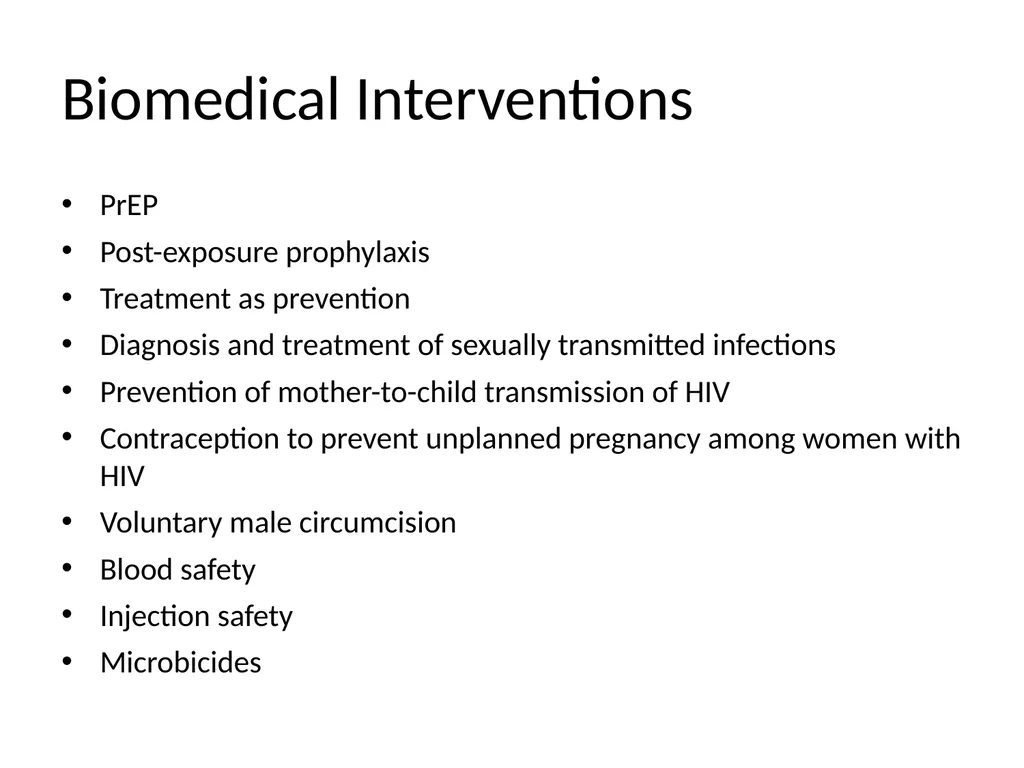
Biomedical Interventions PrEP
Post-exposure prophylaxis
Treatment as prevention
Diagnosis and treatment of sexually transmitted infections
Prevention of mother-to-child transmission of HIV
Contraception to prevent unplanned pregnancy among women with HIV
Voluntary male circumcision
Blood safety
Injection safety
Microbicides<br>
06
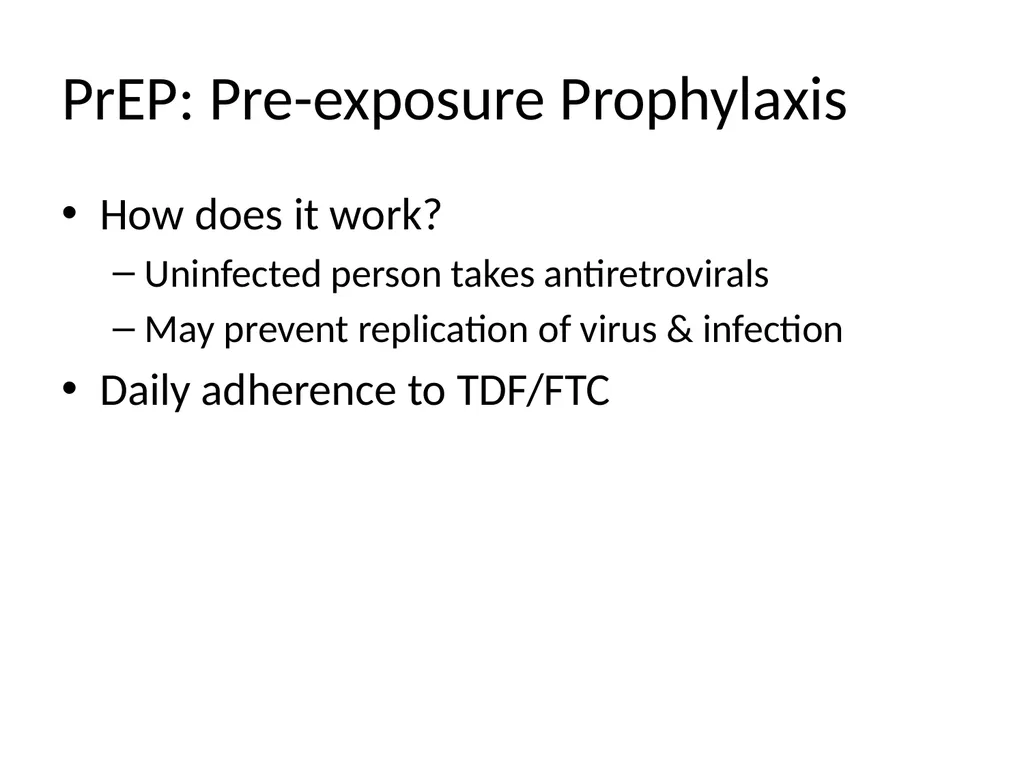
PrEP: Pre-exposure Prophylaxis How does it work?
Uninfected person takes antiretrovirals
May prevent replication of virus & infection
Daily adherence to TDF/FTC<br>
07
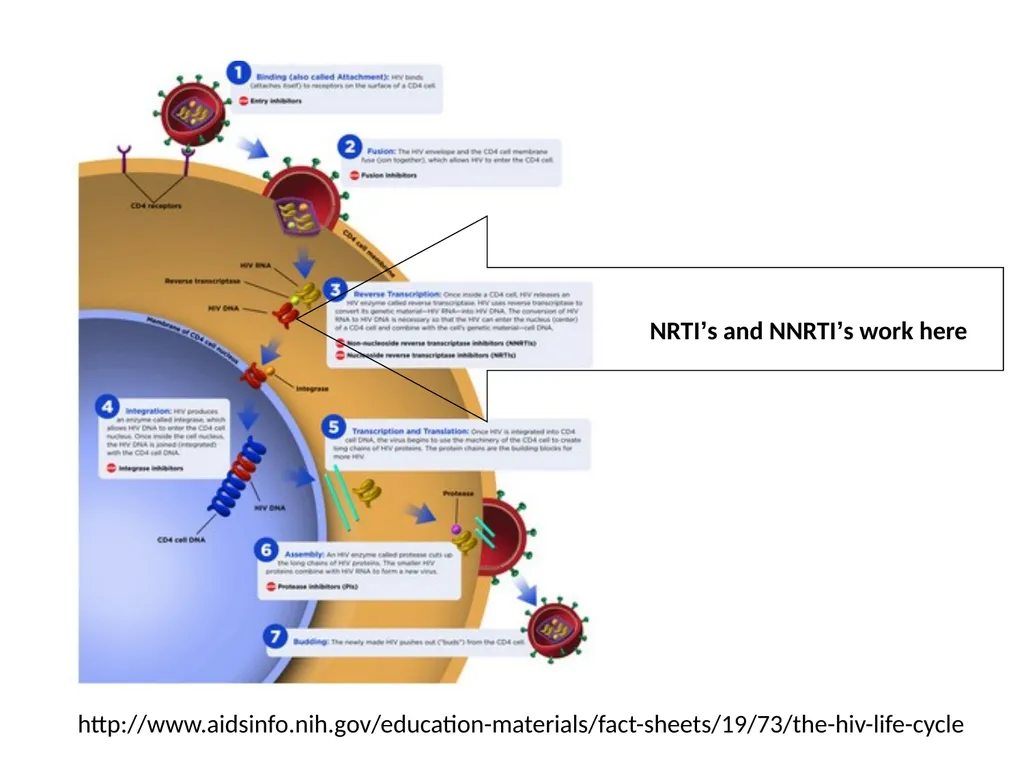
NRTI’s and NNRTI’s work here http://www.aidsinfo.nih.gov/education-materials/fact-sheets/19/73/the-hiv-life-cycle<br>
08
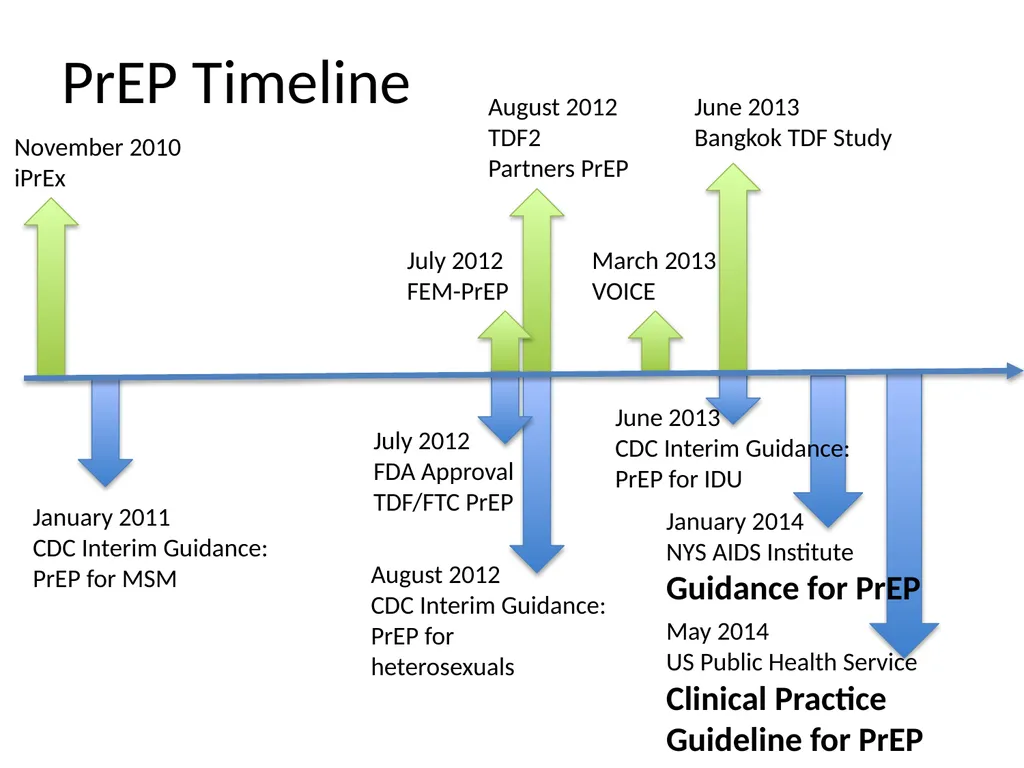
June 2013
CDC Interim Guidance:
PrEP for IDU PrEP Timeline November 2010
iPrEx January 2011
CDC Interim Guidance:
PrEP for MSM August 2012
TDF2
Partners PrEP August 2012
CDC Interim Guidance:
PrEP for
heterosexuals July 2012
FEM-PrEP June 2013
Bangkok TDF Study July 2012
FDA Approval
TDF/FTC PrEP January 2014
NYS AIDS Institute
Guidance for PrEP May 2014
US Public Health Service
Clinical Practice
Guideline for PrEP March 2013
VOICE<br>
09
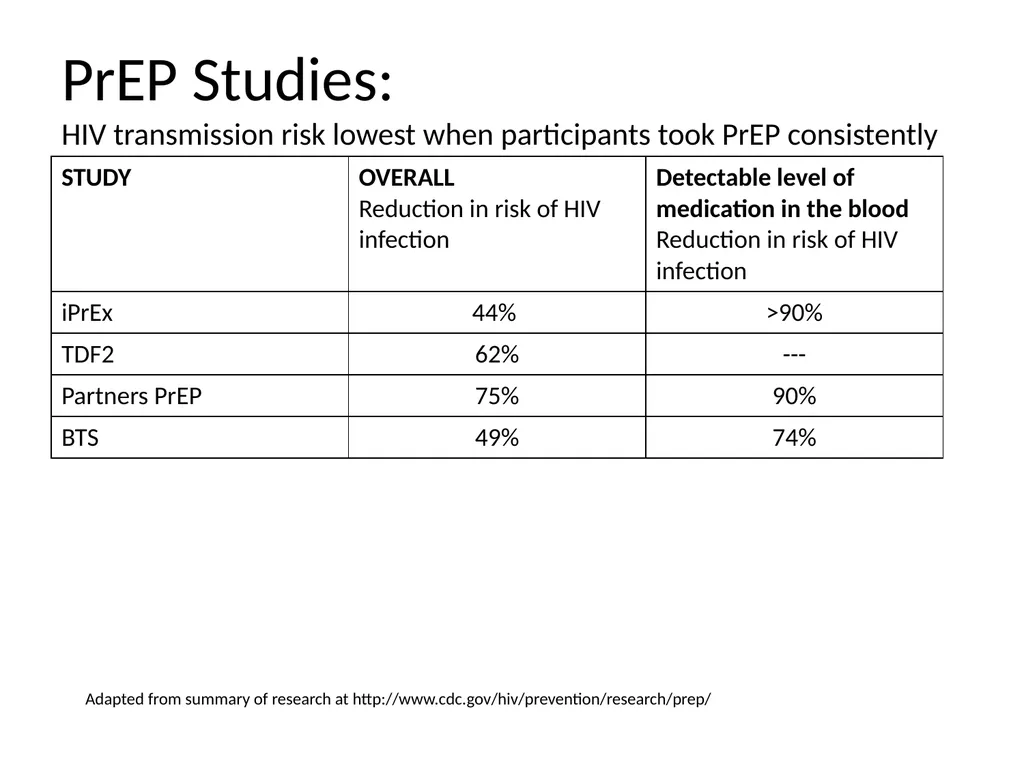
PrEP Studies: �HIV transmission risk lowest when participants took PrEP consistently Adapted from summary of research at http://www.cdc.gov/hiv/prevention/research/prep/<br>
10
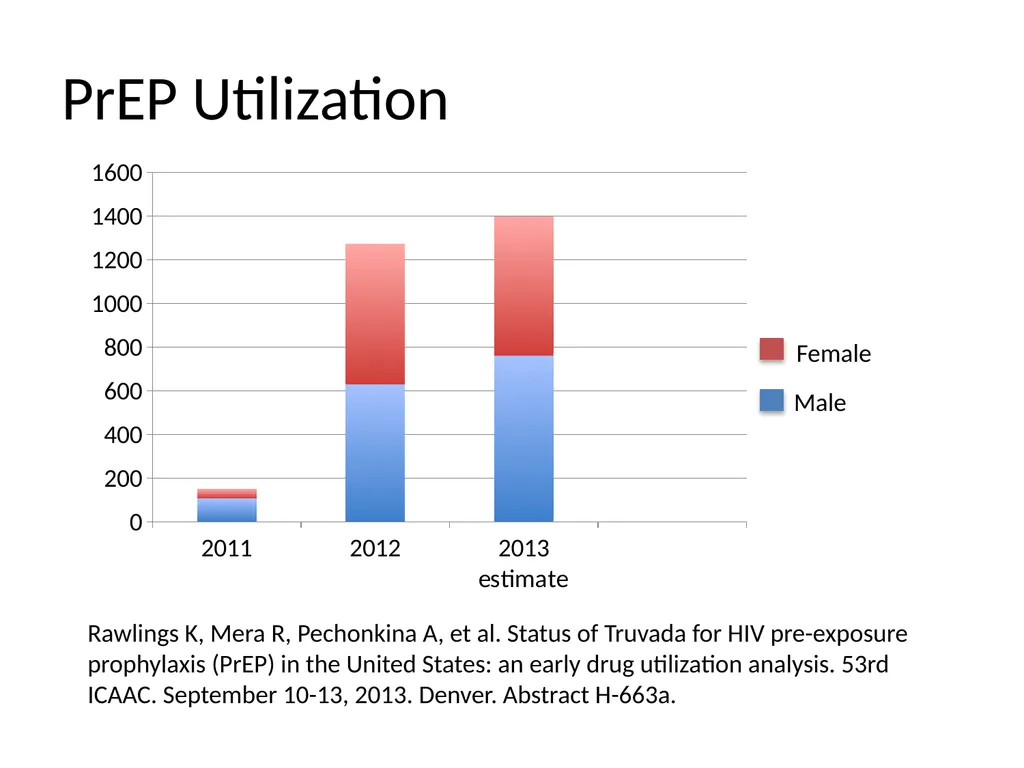
PrEP Utilization Rawlings K, Mera R, Pechonkina A, et al. Status of Truvada for HIV pre-exposure prophylaxis (PrEP) in the United States: an early drug utilization analysis. 53rd ICAAC. September 10-13, 2013. Denver. Abstract H-663a. Female Male<br>
11
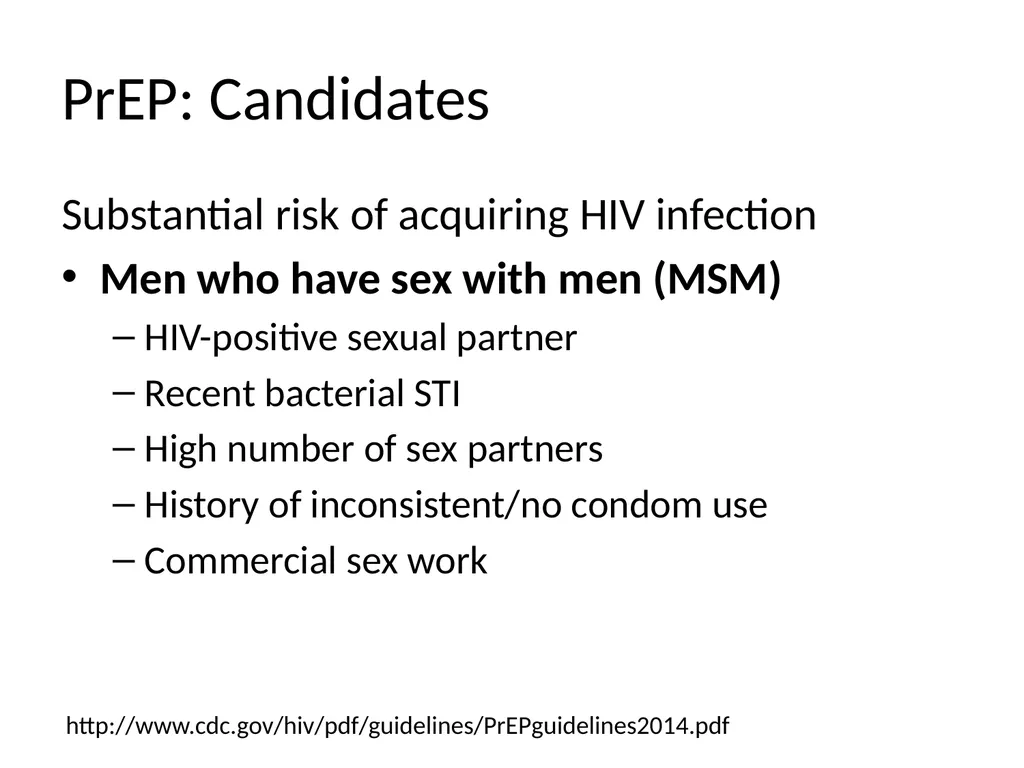
PrEP: Candidates Substantial risk of acquiring HIV infection
Men who have sex with men (MSM)
HIV-positive sexual partner
Recent bacterial STI
High number of sex partners
History of inconsistent/no condom use
Commercial sex work http://www.cdc.gov/hiv/pdf/guidelines/PrEPguidelines2014.pdf<br>
12
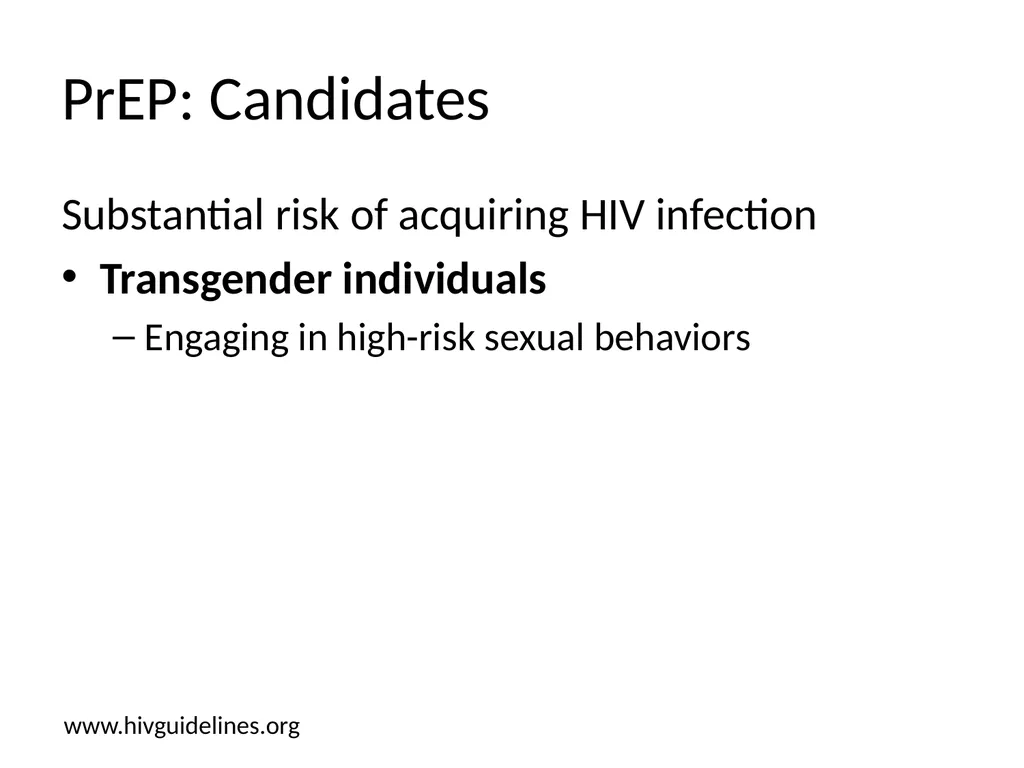
PrEP: Candidates Substantial risk of acquiring HIV infection
Transgender individuals
Engaging in high-risk sexual behaviors www.hivguidelines.org<br>
13
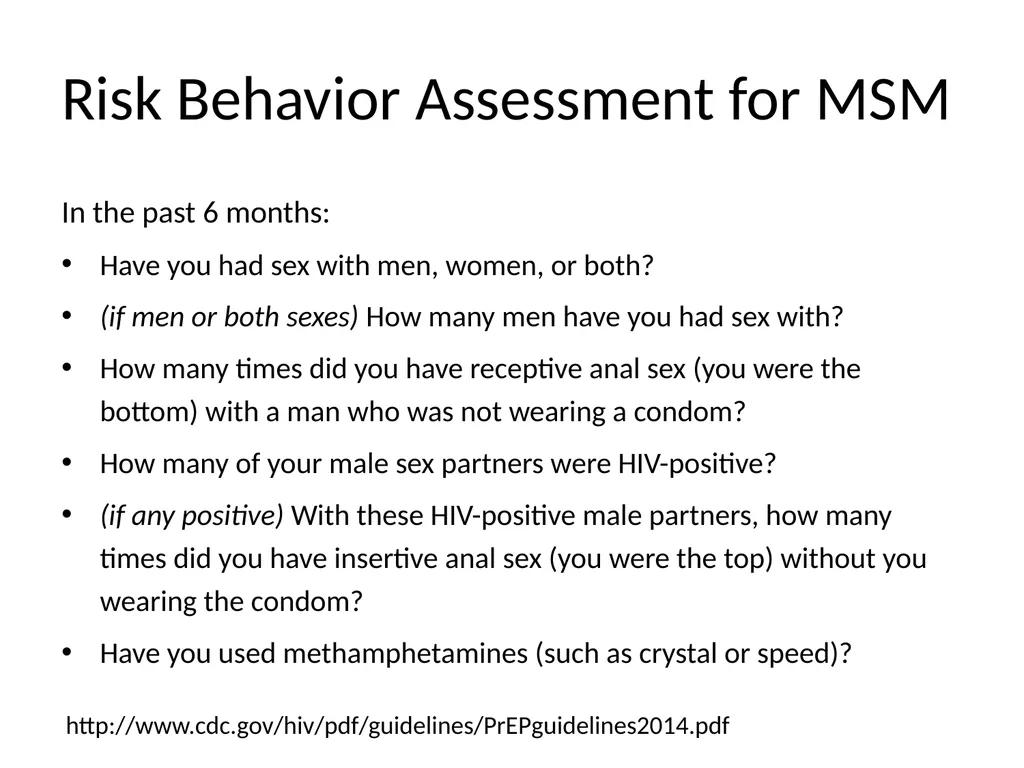
Risk Behavior Assessment for MSM In the past 6 months:
Have you had sex with men, women, or both?
(if men or both sexes) How many men have you had sex with?
How many times did you have receptive anal sex (you were the bottom) with a man who was not wearing a condom?
How many of your male sex partners were HIV-positive?
(if any positive) With these HIV-positive male partners, how many times did you have insertive anal sex (you were the top) without you wearing the condom?
Have you used methamphetamines (such as crystal or speed)? http://www.cdc.gov/hiv/pdf/guidelines/PrEPguidelines2014.pdf<br>
14
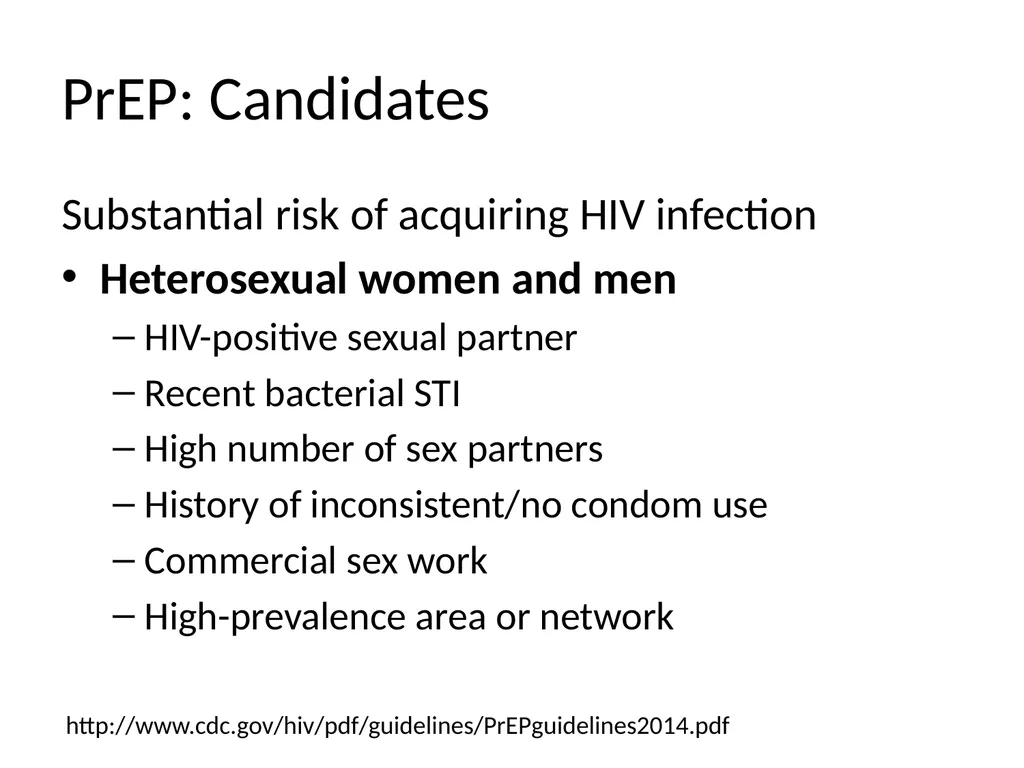
PrEP: Candidates Substantial risk of acquiring HIV infection
Heterosexual women and men
HIV-positive sexual partner
Recent bacterial STI
High number of sex partners
History of inconsistent/no condom use
Commercial sex work
High-prevalence area or network http://www.cdc.gov/hiv/pdf/guidelines/PrEPguidelines2014.pdf<br>
15
PrEP: Candidates Substantial risk of acquiring HIV infection
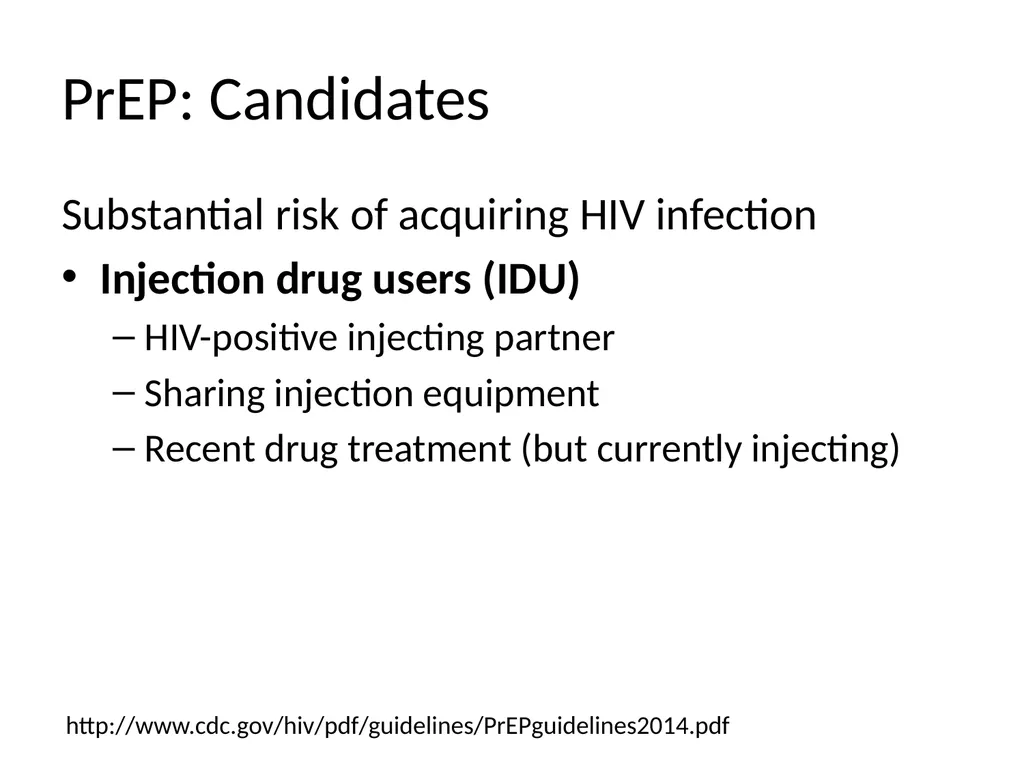
Injection drug users (IDU)
HIV-positive injecting partner
Sharing injection equipment
Recent drug treatment (but currently injecting) http://www.cdc.gov/hiv/pdf/guidelines/PrEPguidelines2014.pdf<br>
16
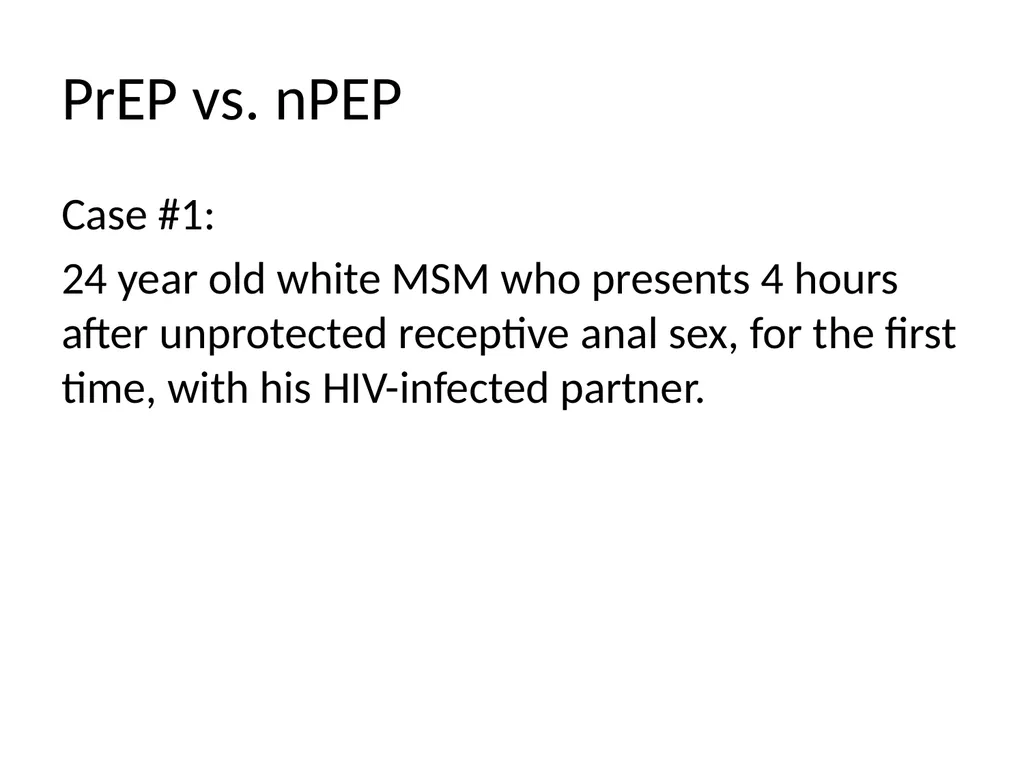
PrEP vs. nPEP Case #1:
24 year old white MSM who presents 4 hours after unprotected receptive anal sex, for the first time, with his HIV-infected partner.<br>
17
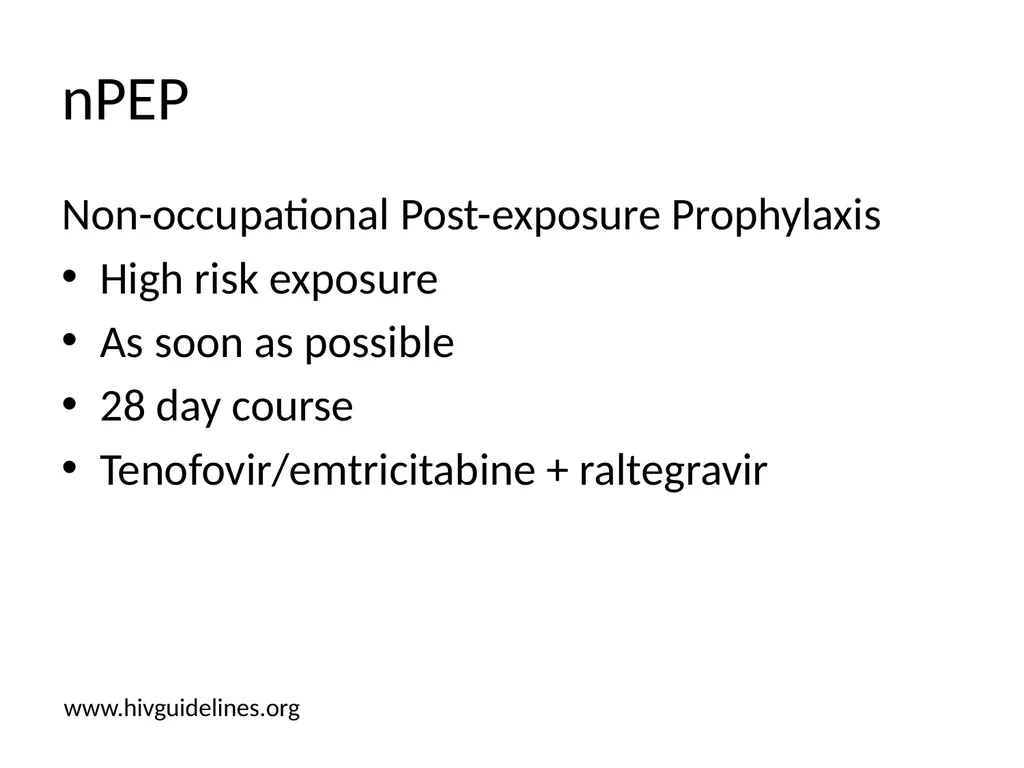
nPEP Non-occupational Post-exposure Prophylaxis
High risk exposure
As soon as possible
28 day course
Tenofovir/emtricitabine + raltegravir www.hivguidelines.org<br>
18
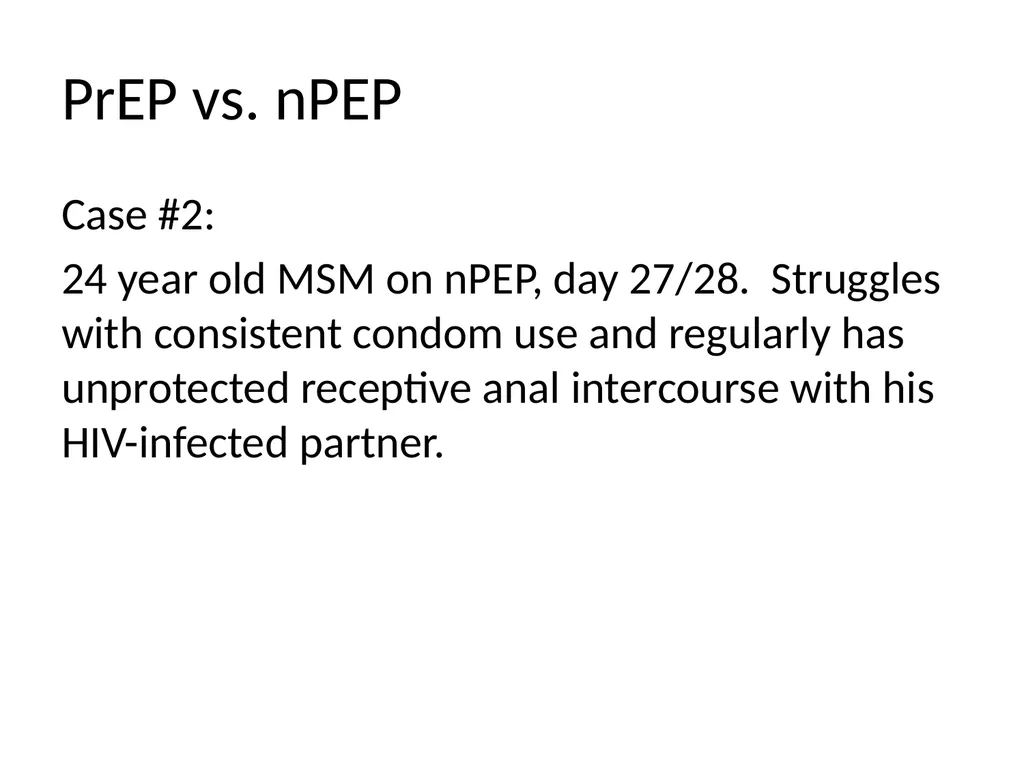
PrEP vs. nPEP Case #2:
24 year old MSM on nPEP, day 27/28. Struggles with consistent condom use and regularly has unprotected receptive anal intercourse with his HIV-infected partner.<br>
19
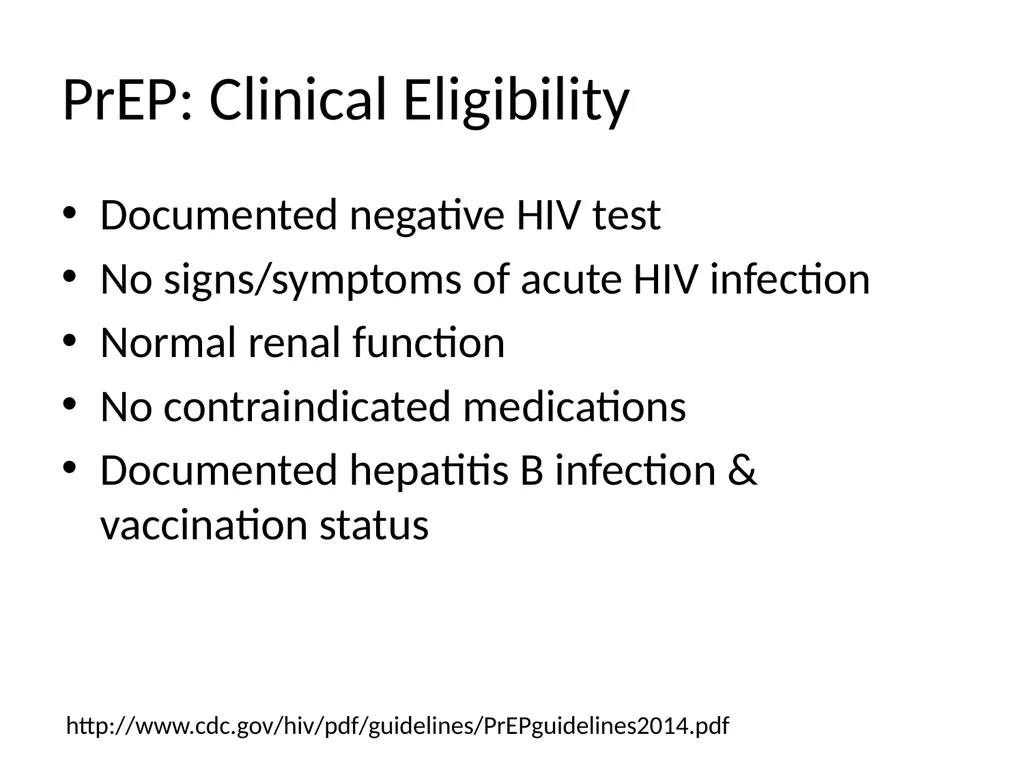
PrEP: Clinical Eligibility Documented negative HIV test
No signs/symptoms of acute HIV infection
Normal renal function
No contraindicated medications
Documented hepatitis B infection & vaccination status http://www.cdc.gov/hiv/pdf/guidelines/PrEPguidelines2014.pdf<br>
20
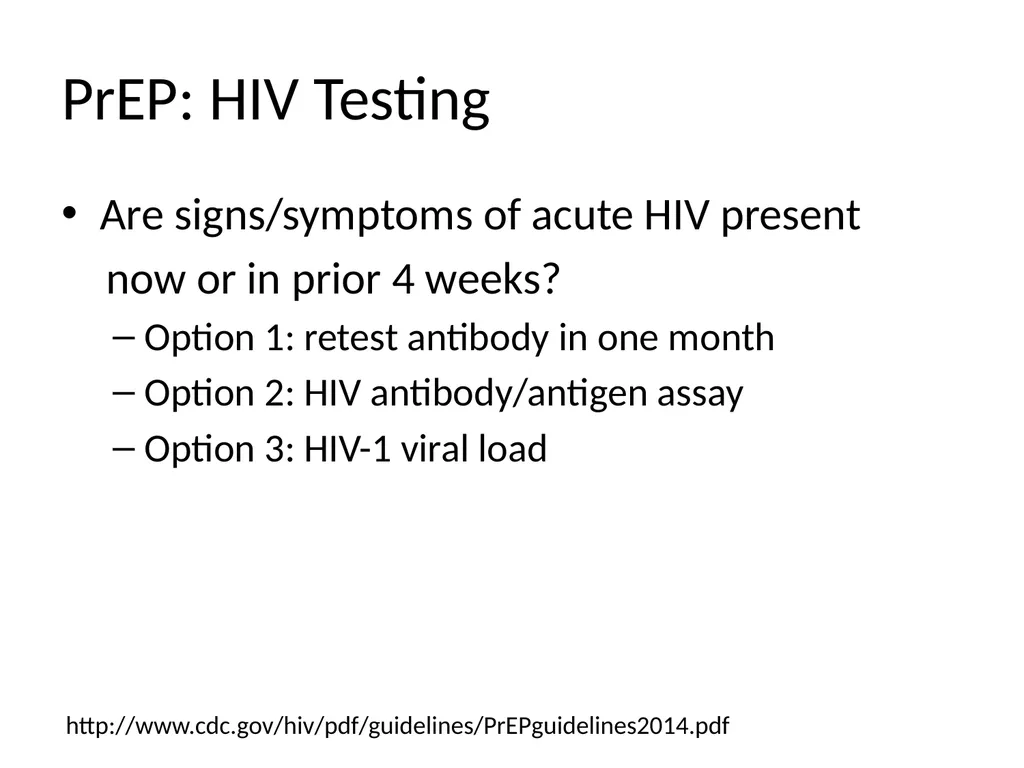
PrEP: HIV Testing Are signs/symptoms of acute HIV present
now or in prior 4 weeks?
Option 1: retest antibody in one month
Option 2: HIV antibody/antigen assay
Option 3: HIV-1 viral load http://www.cdc.gov/hiv/pdf/guidelines/PrEPguidelines2014.pdf<br>
21
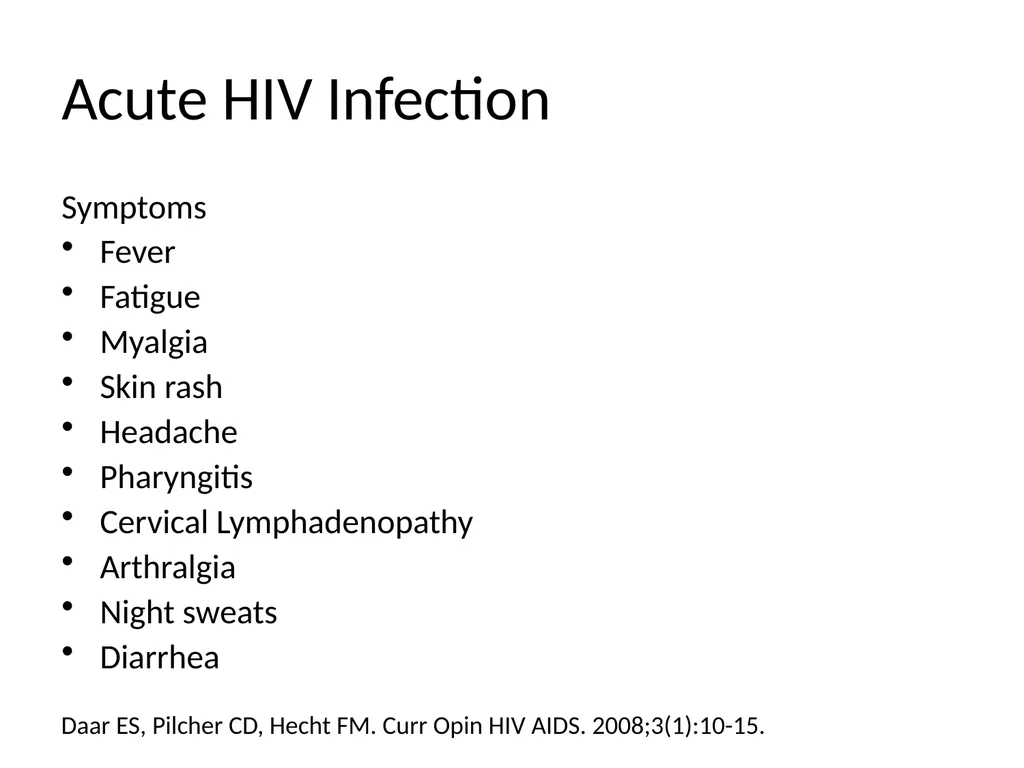
Acute HIV Infection Symptoms
Fever
Fatigue
Myalgia
Skin rash
Headache
Pharyngitis
Cervical Lymphadenopathy
Arthralgia
Night sweats
Diarrhea Daar ES, Pilcher CD, Hecht FM. Curr Opin HIV AIDS. 2008;3(1):10-15.<br>
22
PrEP: Considerations Age
Reproductive plan
Osteopenia/osteoporosis www.hivguidelines.org<br>
23
PrEP: Risk Reduction Case #3:
32 year old black female seeks pregnancy.
She is not infected with HIV.
Her partner is HIV-infected and not currently on antiretroviral treatment.<br>
24
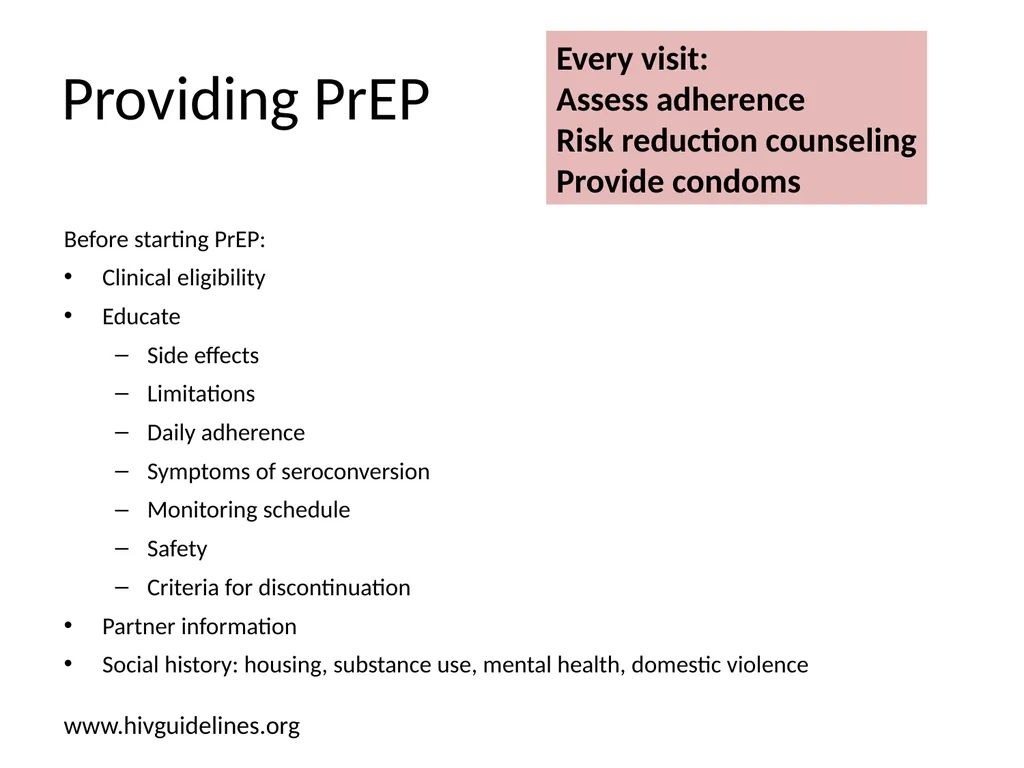
Providing PrEP Before starting PrEP:
Clinical eligibility
Educate
Side effects
Limitations
Daily adherence
Symptoms of seroconversion
Monitoring schedule
Safety
Criteria for discontinuation
Partner information
Social history: housing, substance use, mental health, domestic violence Every visit:
Assess adherence
Risk reduction counseling
Provide condoms www.hivguidelines.org<br>
25
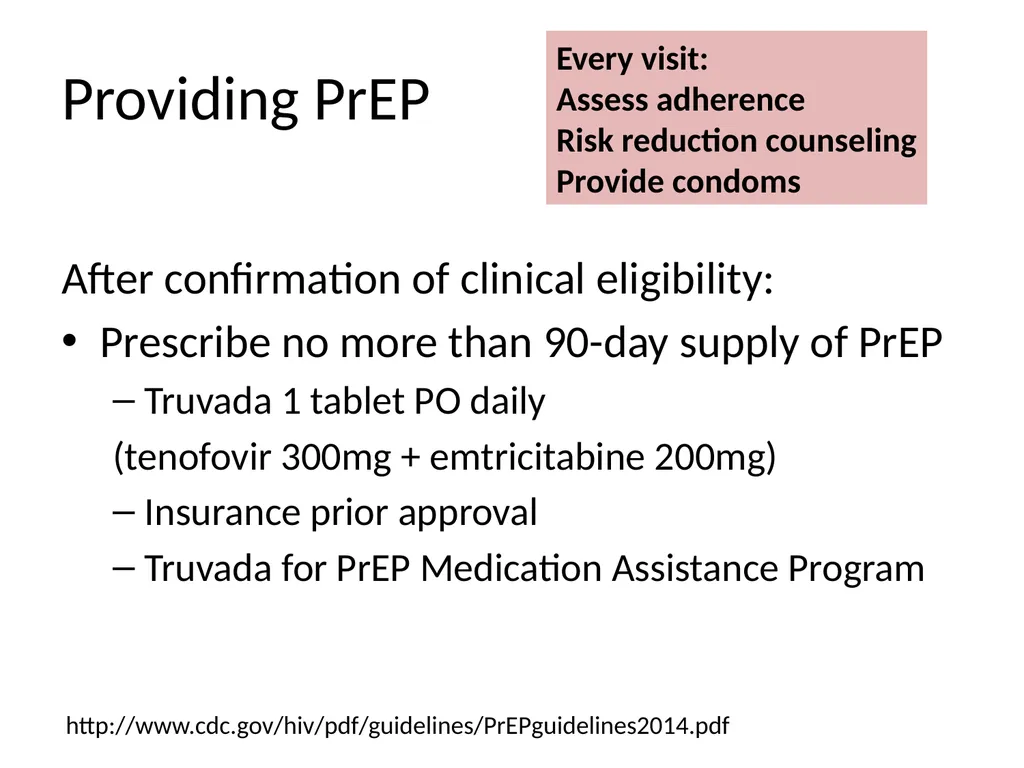
Providing PrEP After confirmation of clinical eligibility:
Prescribe no more than 90-day supply of PrEP
Truvada 1 tablet PO daily
(tenofovir 300mg + emtricitabine 200mg)
Insurance prior approval
Truvada for PrEP Medication Assistance Program Every visit:
Assess adherence
Risk reduction counseling
Provide condoms http://www.cdc.gov/hiv/pdf/guidelines/PrEPguidelines2014.pdf<br>
26
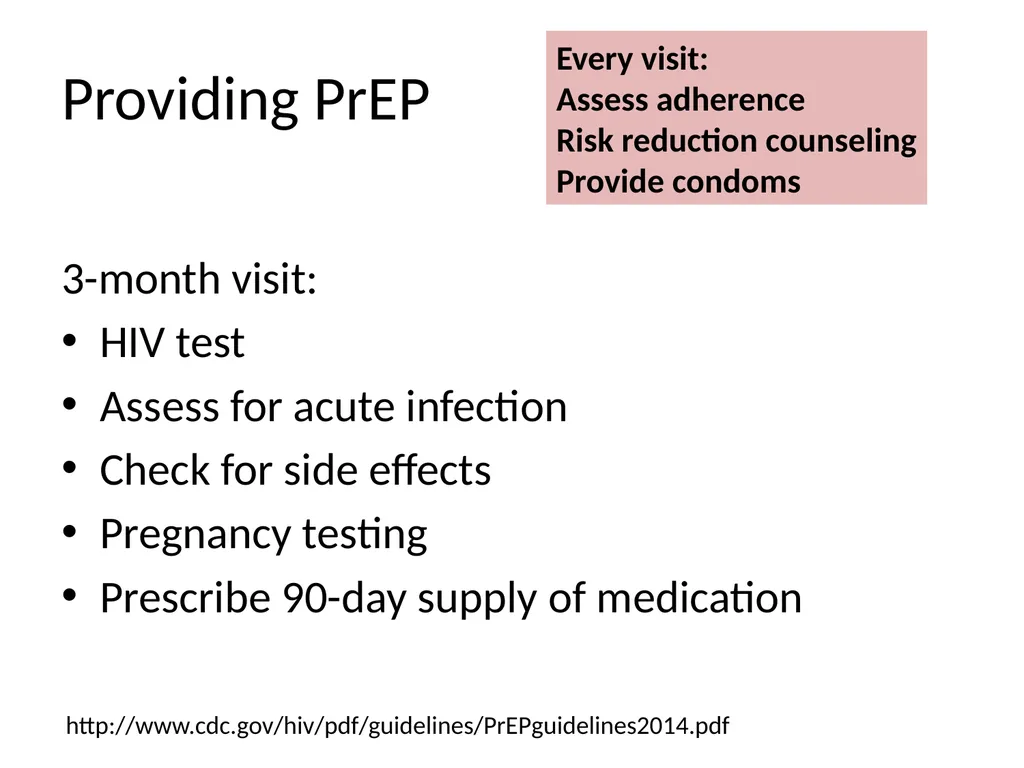
Providing PrEP 3-month visit:
HIV test
Assess for acute infection
Check for side effects
Pregnancy testing
Prescribe 90-day supply of medication Every visit:
Assess adherence
Risk reduction counseling
Provide condoms http://www.cdc.gov/hiv/pdf/guidelines/PrEPguidelines2014.pdf<br>
27
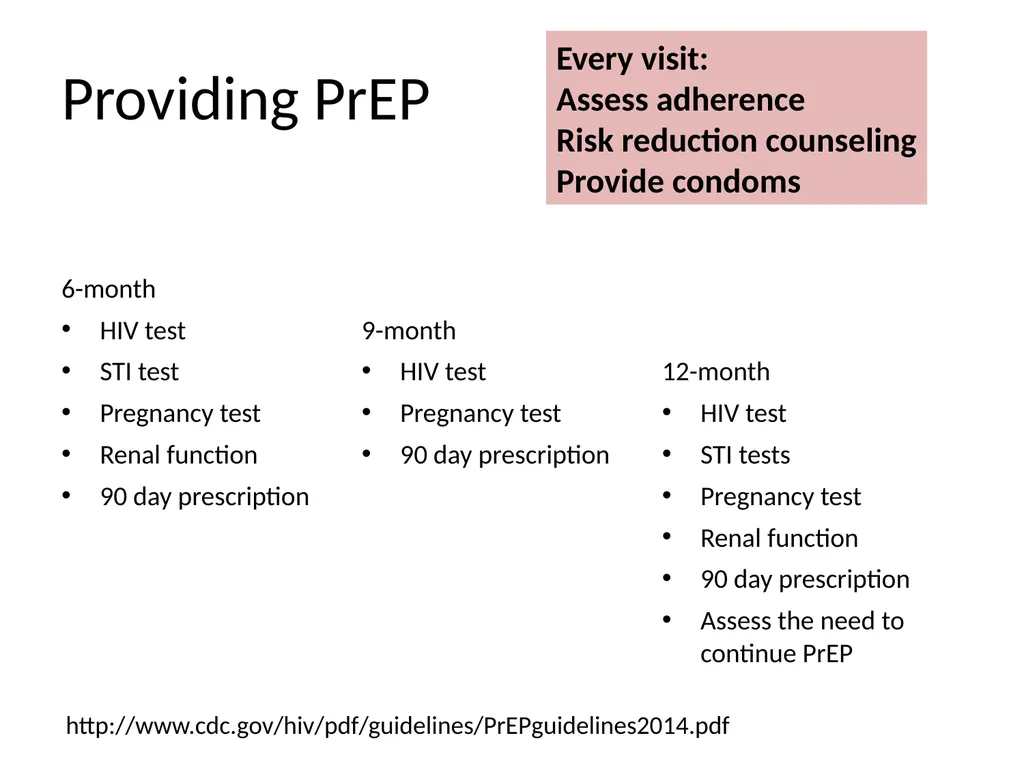
Providing PrEP 6-month
HIV test
STI test
Pregnancy test
Renal function
90 day prescription
9-month
HIV test
Pregnancy test
90 day prescription
12-month
HIV test
STI tests
Pregnancy test
Renal function
90 day prescription
Assess the need to continue PrEP Every visit:
Assess adherence
Risk reduction counseling
Provide condoms http://www.cdc.gov/hiv/pdf/guidelines/PrEPguidelines2014.pdf<br>
28
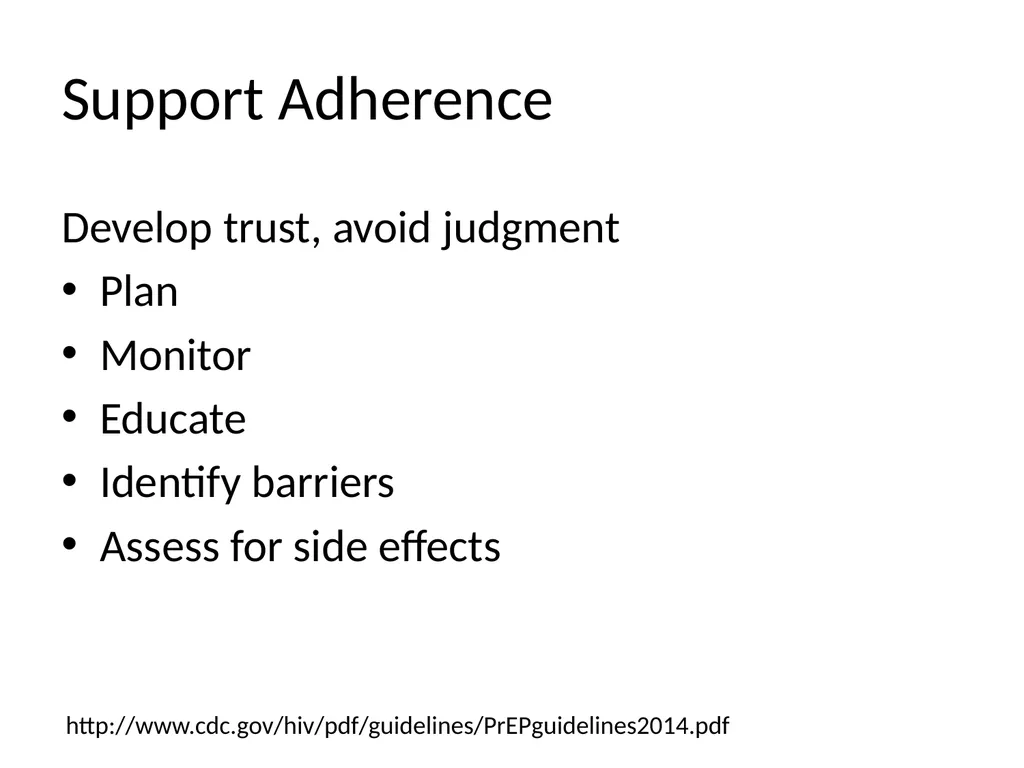
Support Adherence Develop trust, avoid judgment
Plan
Monitor
Educate
Identify barriers
Assess for side effects http://www.cdc.gov/hiv/pdf/guidelines/PrEPguidelines2014.pdf<br>
29
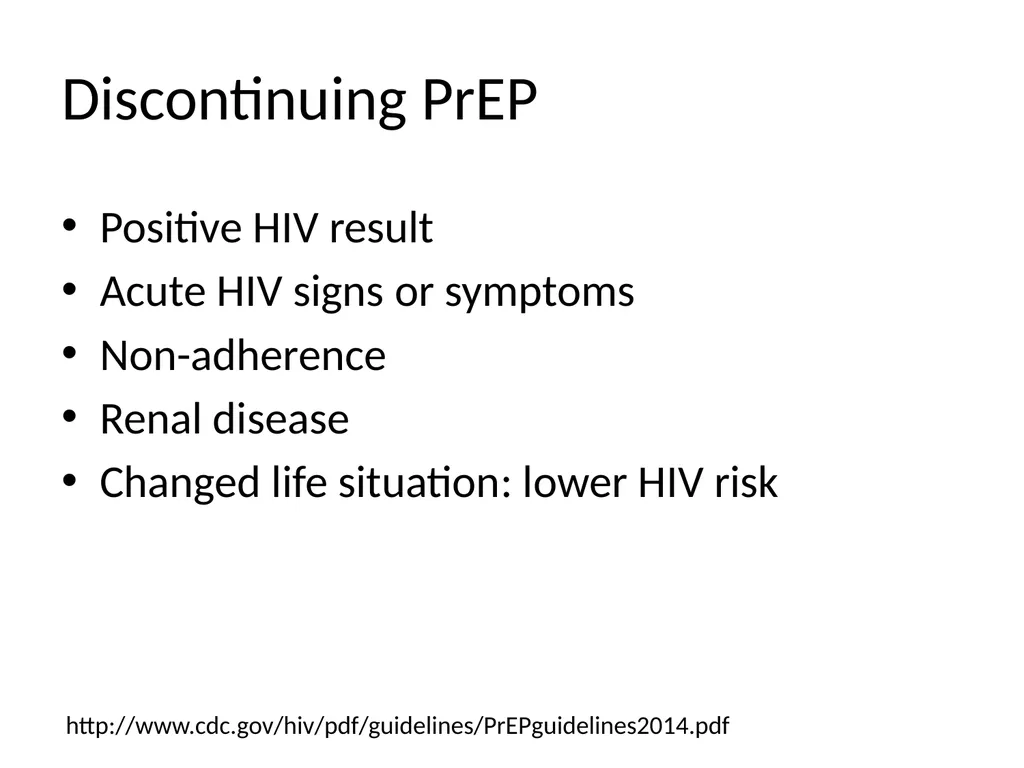
Discontinuing PrEP Positive HIV result
Acute HIV signs or symptoms
Non-adherence
Renal disease
Changed life situation: lower HIV risk http://www.cdc.gov/hiv/pdf/guidelines/PrEPguidelines2014.pdf<br>
30
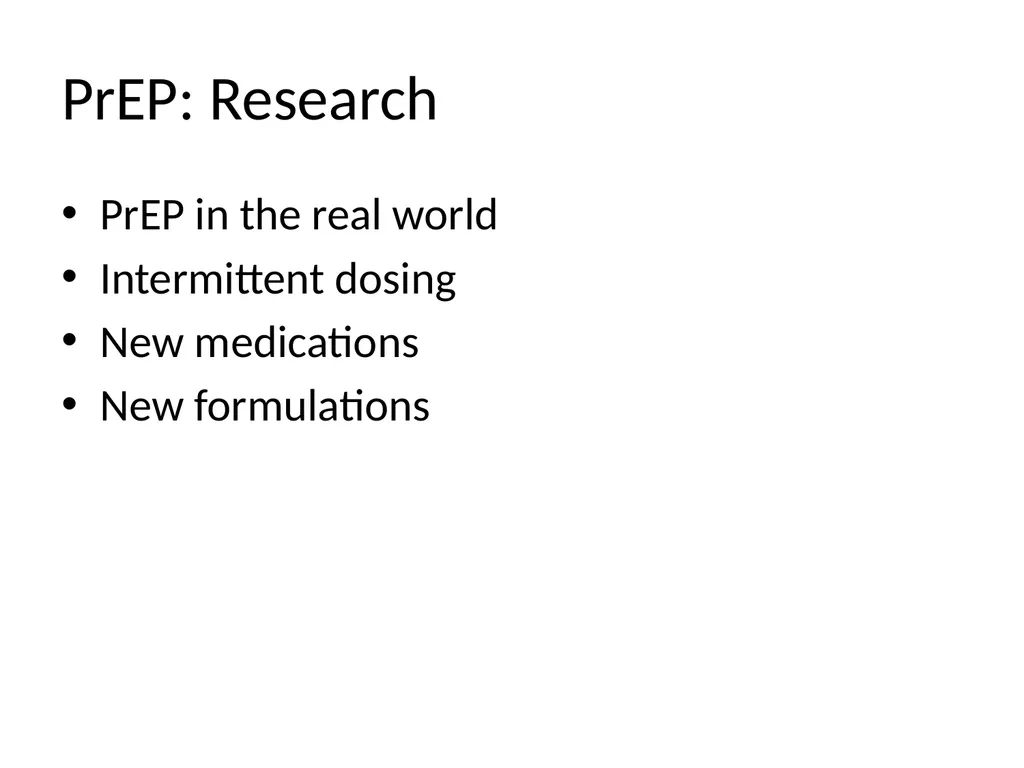
PrEP: Research PrEP in the real world
Intermittent dosing
New medications
New formulations<br>
31
PrEP Summary Effective
FDA approved
Well-tolerated
However,
Short-term data only
Daily adherence required
Side effects
Drug resistance in acute infection
Could lead to fewer condoms being used
Cost
Logistics<br>
32
PrEP Resources CDC: http://www.cdc.gov/hiv/pdf/prepguidelines2014.pdf
NYSDOH AI: http://www.hivguidelines.org/
PrEP Watch/ AVAC: http://www.prepwatch.org/<br>
33
Additional Resources NY/NJ AETC PrEP Webinars
http://nynjaetc.virtualforum.com/pif.asp?Prog_ID=14060902&securitycode=KXbFYh
http://nynjaetc.virtualforum.com/pif.asp?Prog_ID=14052303&securitycode=01r27E
http://nynjaetc.virtualforum.com/pif.asp?Prog_ID=14050908&securitycode=o9k2C2<br>
34
Katherine Marx, MS, MPH, FNP-BC<br>