Prepared by: Mohammed Ali Ayad Lexical semantics
Description: Prepared by: Mohammed Ali Ayad Lexical semantics Contents Homonymy Homophones Lexical relations translation Homonymy Homonyms are unrelated senses of the same phonological word (Saeed, 2009: 63) Homonymy refers to a word with two or
Related Topics
Download Presentation
"Prepared by: Mohammed Ali Ayad Lexical semantics" is the property of its rightful owner. Permission is granted to download and print the materials on this website for personal, non-commercial use only, and to display it on your personal computer provided you do not modify the materials and that you retain all copyright notices contained in the materials. By downloading content from our website, you accept the terms of this agreement.
Presentation Transcript
slide1. Prepared by: Mohammed Ali Ayad Lexical semantics<br>
slide2. Contents Homonymy
Homophones
Lexical relations & translation<br>
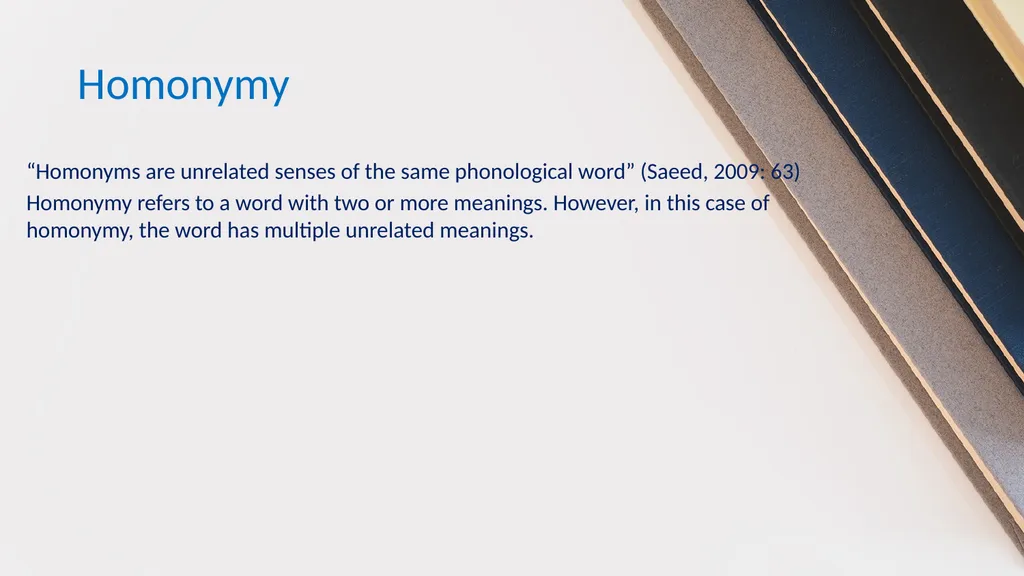
slide3. Homonymy “Homonyms are unrelated senses of the same phonological word” (Saeed, 2009: 63)
Homonymy refers to a word with two or more meanings. However, in this case of homonymy, the word has multiple unrelated meanings.<br>
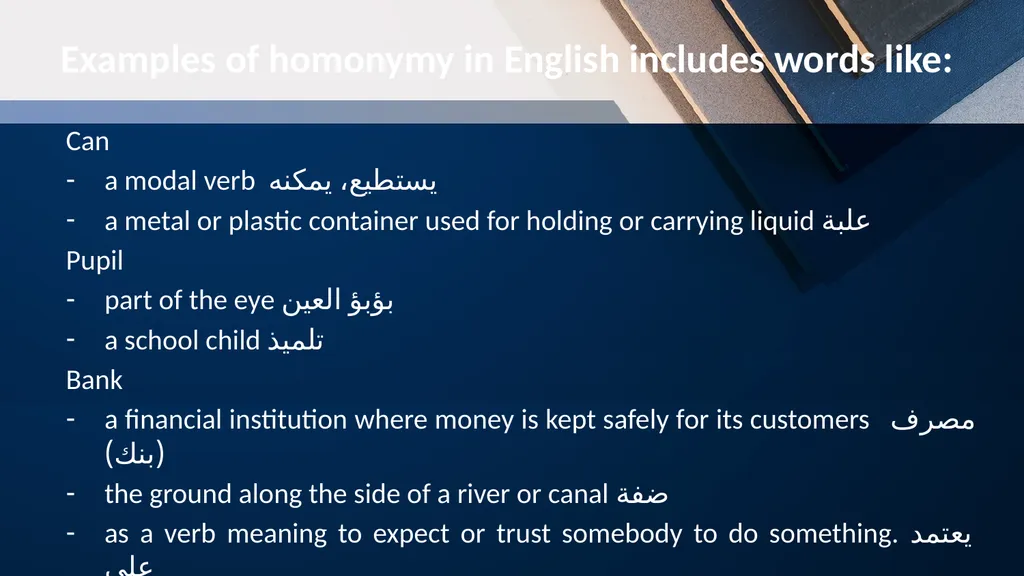
slide4. Examples of homonymy in English includes words like: Can
a modal verb يستطيع، يمكنه
a metal or plastic container used for holding or carrying liquid علبة
Pupil
part of the eye بؤبؤ العين
a school child تلميذ
Bank
a financial institution where money is kept safely for its customers مصرف (بنك)
the ground along the side of a river or canal ضفة
as a verb meaning to expect or trust somebody to do something. يعتمد على<br>
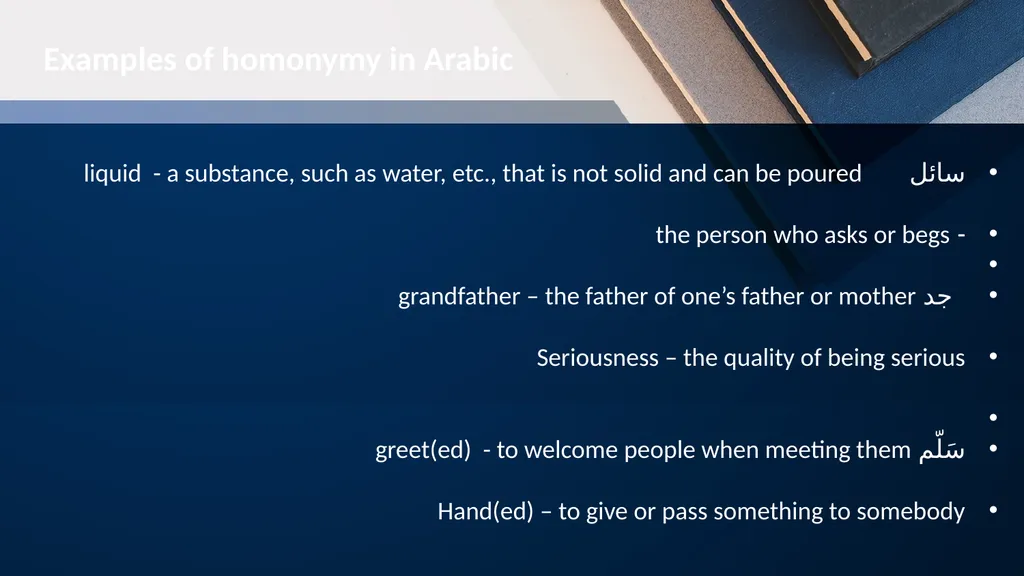
slide5. Examples of homonymy in Arabic سائل liquid - a substance, such as water, etc., that is not solid and can be poured
- the person who asks or begs
جد grandfather – the father of one’s father or mother
Seriousness – the quality of being serious
سَلّم greet(ed) - to welcome people when meeting them
Hand(ed) – to give or pass something to somebody<br>
slide6. Ask for me tomorrow, and you shall find me a grave man.
Romeo and Juliet
by William Shakespeare
In act 3, scene 1, lines 94–95<br>
slide7. It is worth mentioning that the ambiguity that results from the using of homonymous words is sometimes deliberately adopted to convey a message. Let us take the following verses from Arabic as a way of illustration:
يا وَيحَ قَلبي مِن دَواعي الهَوى إِذ رَحَلَ الجيرانُ عِندَ الغُروبْ
أَتبَعتُهُم طَرفي وَقَد أَمعَنوا وَدَمعُ عَينَيَّ كَفَيضِ الغُروبْ
بانوا وَفيهم طَفلَةٌ حَرَّةٌ تَفتَرُّ عَن مِثلِ أَقاحي الغُروبْ<br>
slide8. In these lines of poetry, three words that have the same form and pronunciation but different meanings are intentionally used by the poet to give rhyme for the verses and to force the addressee to use his mental processes to distinguish among them; moreover, they are used as a decorative device to enrich the esthetic value of the verse. ′الغروب′is used to refer to three different senses: sunset, a huge bucket that is full of water and a region of a low-land.<br>
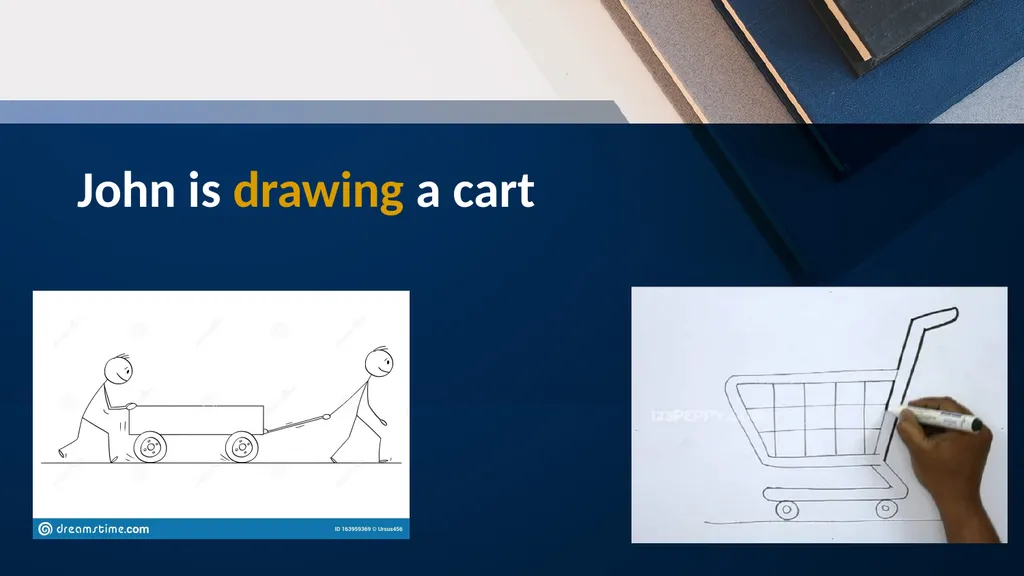
slide9. John is drawing a cart<br>
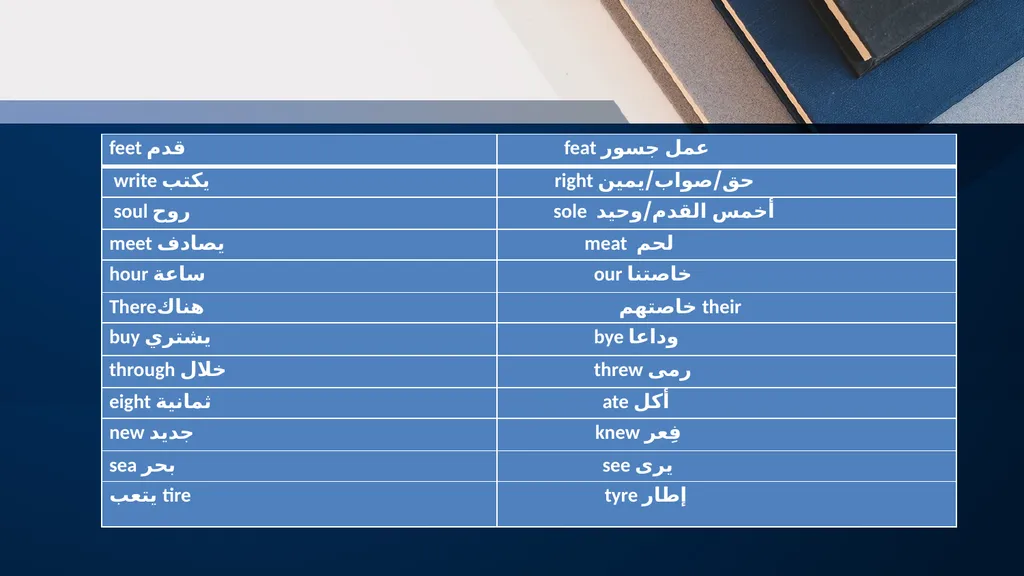
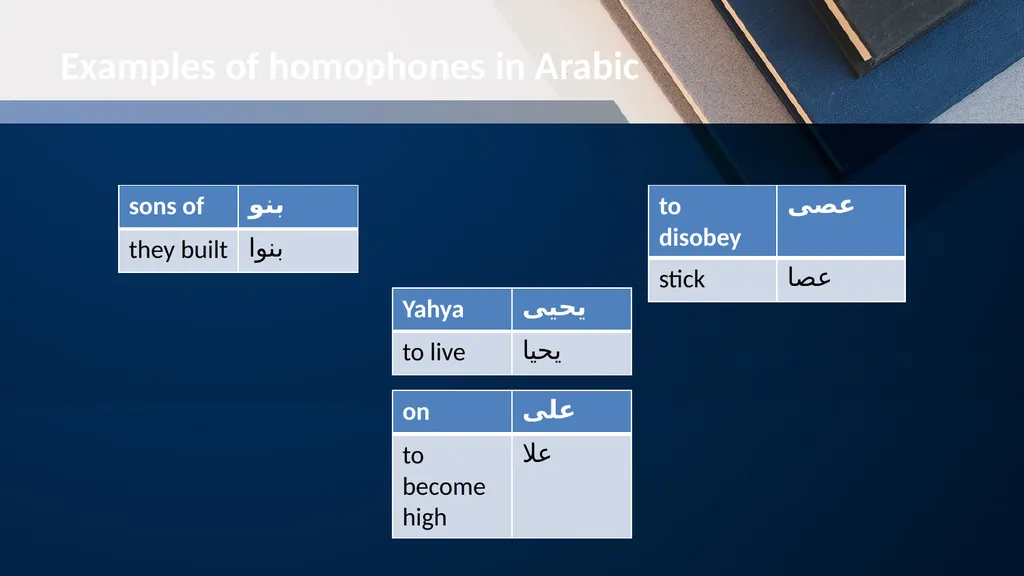
slide10. Homophones Homophones refer to lexical items that have different meanings and different spellings, but the same pronunciation.<br>
slide12. Examples of homophones in Arabic<br>
slide13. رأيت الناس قد عدلوا
إلى من عنده العدلُ
ومن لا عنده عدلٌ
فعنه الناس قد عدلوا
رأيت الناس قد مالوا
إلى من عنده مالٌ
ومن لا عنده مالٌ
فعنه الناس قد مالوا
رأيت الناس قد ذهبوا
إلى من عنده ذهبٌ
ومن لا عنده ذهبٌ
فعنه الناس قد ذهبوا<br>
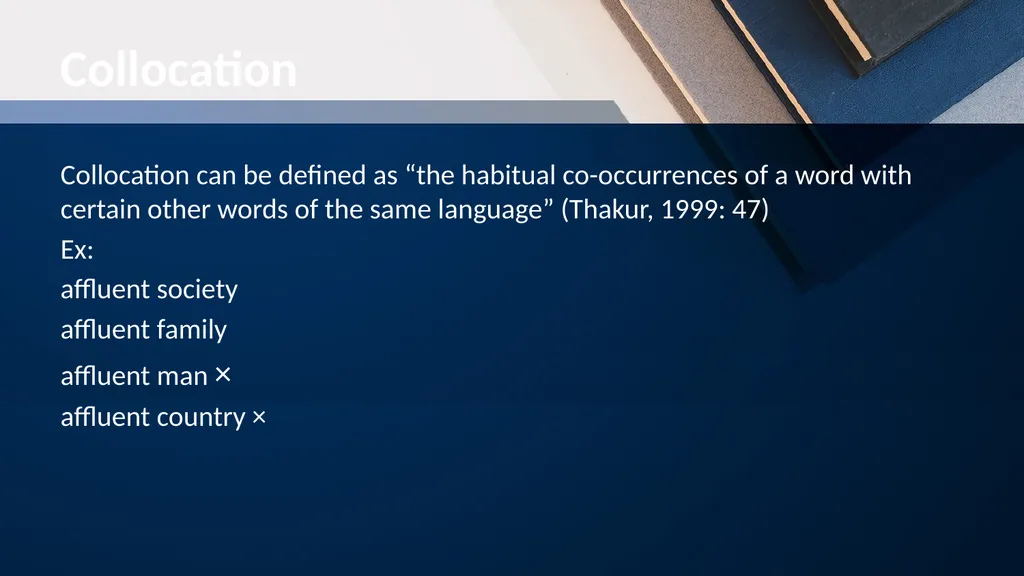
slide14. Collocation Collocation can be defined as “the habitual co-occurrences of a word with certain other words of the same language” (Thakur, 1999: 47)
Ex:
affluent society
affluent family
affluent man ×
affluent country ×<br>
slide15. On the verge of (tears, nervous, or breakdown)
On the brink of (war, death, collapse, or disaster)
Fake or false (teeth, hair, eyelash) ?<br>
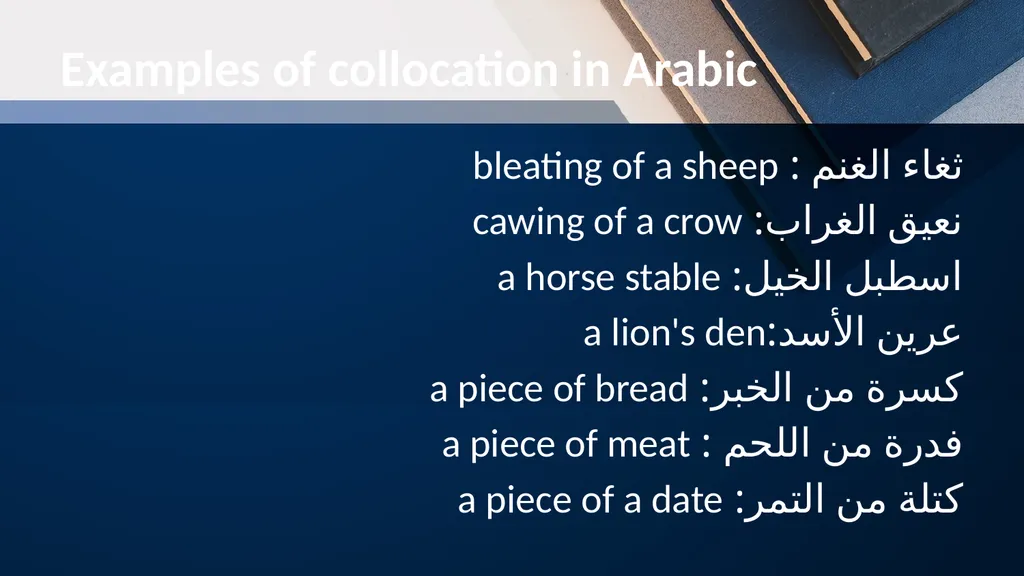
slide16. Examples of collocation in Arabic ثغاء الغنم : bleating of a sheep
نعيق الغراب: cawing of a crow
اسطبل الخيل: a horse stable
عرين الأسد:a lion's den
كسرة من الخبر: a piece of bread
فدرة من اللحم : a piece of meat
كتلة من التمر: a piece of a date<br>
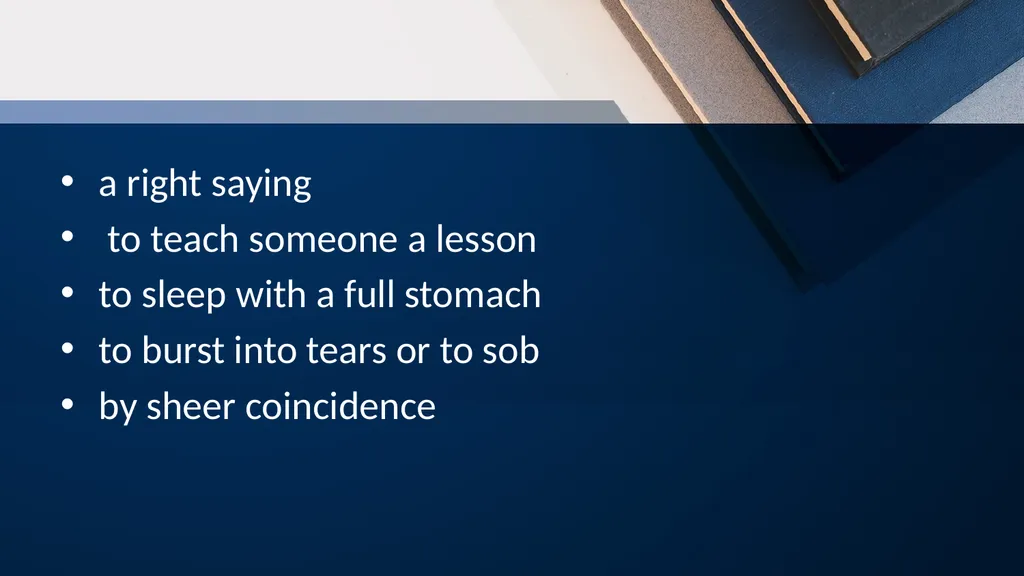
slide17. a right saying
to teach someone a lesson
to sleep with a full stomach
to burst into tears or to sob
by sheer coincidence<br>
slide18. Lexical relations and translation<br>
slide19. This section will illuminate the importance of appreciating and, then, reflecting the source text semantic relations in the target text. To get the discussion started, the following example quoted from Muhsin Al-Ramlī’s story (2009: 31) )حي البحث عن قلب(Search for a Live Heart) may be given careful consideration:<br>
slide20. فأصعد الى سطح الدار في منتصف الليل، وافتح قميصي وصدري …
In the middle of the night I go upstairs, undo my shirt, bare my chest… فتح بابا فتح مدينة فتح ازرار (قميصه) فتح زجاجة فتح صدره افتح<br>
slide21. In English, native speakers of English use different verbs for each activity, thus creating a variety of unmarked collocations, as in:
to open a door
to conquer a city
to undo a button
to unscrew a bottle
to bare one’s chest<br>
slide22. This is an example of particularizing translation or translation by a hyponym in which the denotative meaning of the word used in the target text is narrower and more specific than that of the word used in the original text. Also, in English both nouns قميص (shirt) and صدر (chest) need a verb.<br>
slide23. To illuminate the importance of giving full consideration to the semantic relations through the nexus of translation, the following example from ‘Abdul-Sattār Nāsir’s story (2009: 15) ثلاث قصص ليست للنشر (Three Stories not for Publishing) may be considered:
ST:
دخل الملك على زوجته، فرآها عارية تماماً، وما ان اقترب منها، حتى تأكد له انها ليست بمفردها، وأن حارسه <<الأمين>> ينام هانئاً معها....
خرج الحارس من غرفة الملك وفي بطنه اكثر من جرح عريض عميق، وعند الباب، كان الحارس قد مات...
TT:
When the king came in, he saw that his wife was completely naked. The moment he approached her, he realized that she was not alone. His “faithful” bodyguard was sleeping peacefully next to her.
The guard ran out of the king’s bedroom, his belly bearing more than a wide, deep gash. He died by the door.<br>
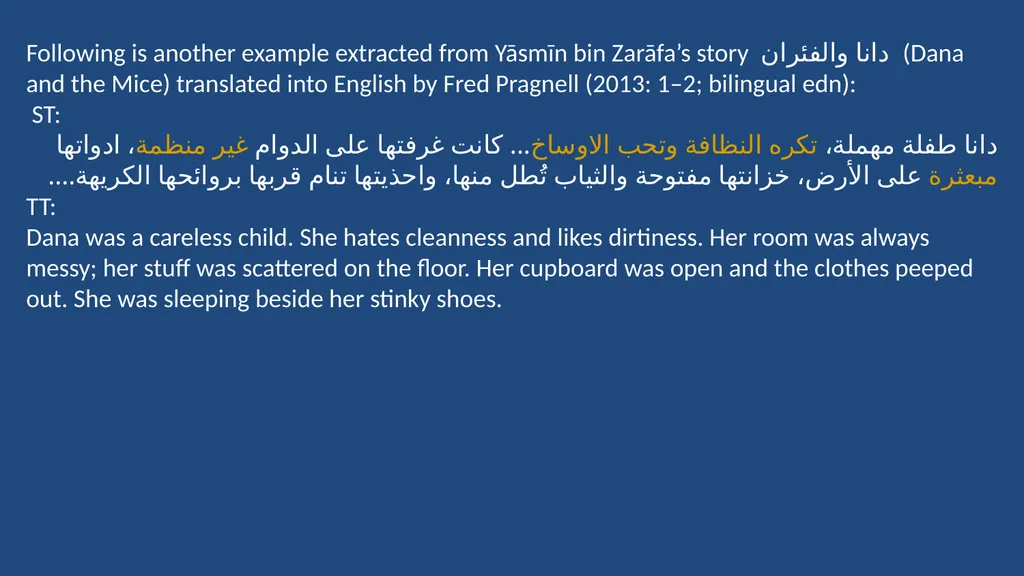
slide24. Following is another example extracted from Yāsmīn bin Zarāfa’s story دانا والفئران (Dana and the Mice) translated into English by Fred Pragnell (2013: 1–2; bilingual edn):
ST:
دانا طفلة مهملة، تكره النظافة وتحب الاوساخ... كانت غرفتها على الدوام غير منظمة، ادواتها مبعثرة على الأرض، خزانتها مفتوحة والثياب تُطل منها، واحذيتها تنام قربها بروائحها الكريهة....
TT:
Dana was a careless child. She hates cleanness and likes dirtiness. Her room was always messy; her stuff was scattered on the floor. Her cupboard was open and the clothes peeped out. She was sleeping beside her stinky shoes.<br>
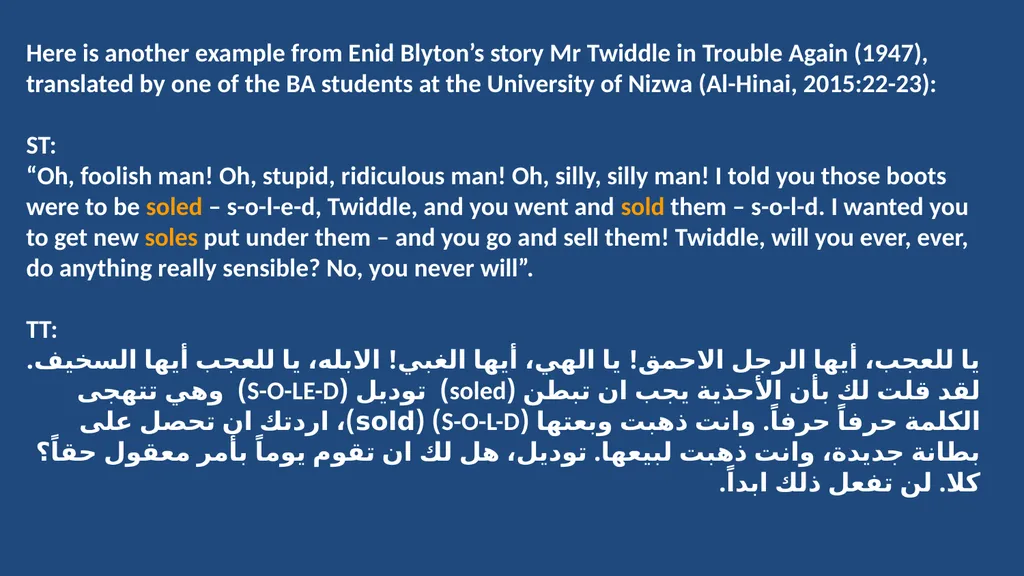
slide25. Here is another example from Enid Blyton’s story Mr Twiddle in Trouble Again (1947), translated by one of the BA students at the University of Nizwa (Al-Hinai, 2015:22-23):
ST:
“Oh, foolish man! Oh, stupid, ridiculous man! Oh, silly, silly man! I told you those boots were to be soled – s-o-l-e-d, Twiddle, and you went and sold them – s-o-l-d. I wanted you to get new soles put under them – and you go and sell them! Twiddle, will you ever, ever, do anything really sensible? No, you never will”.
TT:
يا للعجب، أيها الرجل الاحمق! يا الهي، أيها الغبي! الابله، يا للعجب أيها السخيف. لقد قلت لك بأن الأحذية يجب ان تبطن (soled) توديل (S-O-LE-D) وهي تتهجى الكلمة حرفاً حرفاً. وانت ذهبت وبعتها (S-O-L-D) (sold)، اردتك ان تحصل على بطانة جديدة، وانت ذهبت لبيعها. توديل، هل لك ان تقوم يوماً بأمر معقول حقاً؟ كلا. لن تفعل ذلك ابداً.<br>
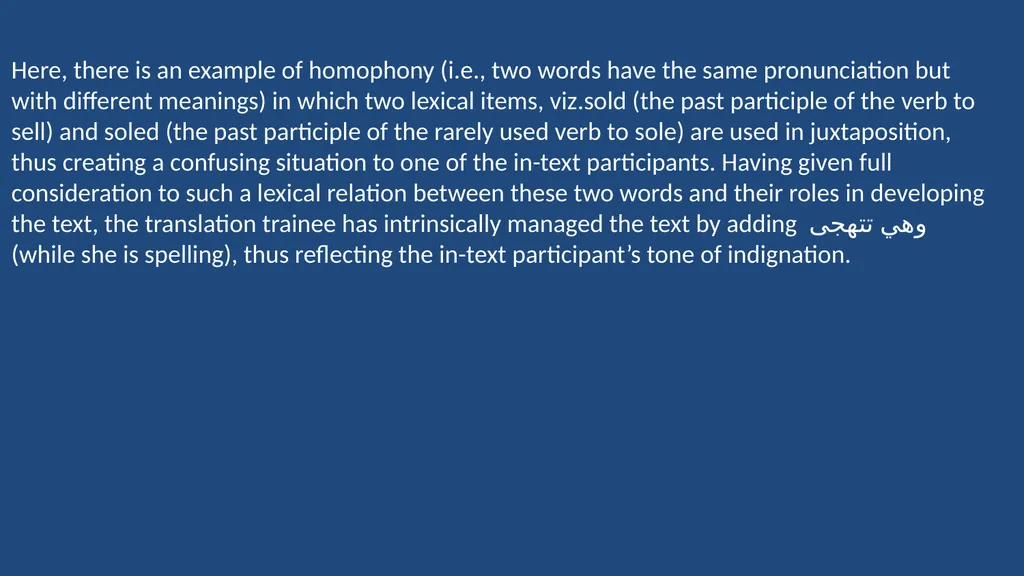
slide26. Here, there is an example of homophony (i.e., two words have the same pronunciation but with different meanings) in which two lexical items, viz.sold (the past participle of the verb to sell) and soled (the past participle of the rarely used verb to sole) are used in juxtaposition, thus creating a confusing situation to one of the in-text participants. Having given full consideration to such a lexical relation between these two words and their roles in developing the text, the translation trainee has intrinsically managed the text by adding وهي تتهجى (while she is spelling), thus reflecting the in-text participant’s tone of indignation.<br>
slide27. References
Almanna. A, (2016). Semantics for Translation Students. New York: Peter Lang.
Saeed, J. I. (1997). Semantics. Oxford: Blackwell Publishers.
Damodar, T. (1999). Linguistics Simplified Semantics. Patna: Bharati Bhawan.<br>

slide2. Contents Homonymy
Homophones
Lexical relations & translation<br>
slide3. Homonymy “Homonyms are unrelated senses of the same phonological word” (Saeed, 2009: 63)
Homonymy refers to a word with two or more meanings. However, in this case of homonymy, the word has multiple unrelated meanings.<br>
slide4. Examples of homonymy in English includes words like: Can
a modal verb يستطيع، يمكنه
a metal or plastic container used for holding or carrying liquid علبة
Pupil
part of the eye بؤبؤ العين
a school child تلميذ
Bank
a financial institution where money is kept safely for its customers مصرف (بنك)
the ground along the side of a river or canal ضفة
as a verb meaning to expect or trust somebody to do something. يعتمد على<br>
slide5. Examples of homonymy in Arabic سائل liquid - a substance, such as water, etc., that is not solid and can be poured
- the person who asks or begs
جد grandfather – the father of one’s father or mother
Seriousness – the quality of being serious
سَلّم greet(ed) - to welcome people when meeting them
Hand(ed) – to give or pass something to somebody<br>
slide6. Ask for me tomorrow, and you shall find me a grave man.
Romeo and Juliet
by William Shakespeare
In act 3, scene 1, lines 94–95<br>
slide7. It is worth mentioning that the ambiguity that results from the using of homonymous words is sometimes deliberately adopted to convey a message. Let us take the following verses from Arabic as a way of illustration:
يا وَيحَ قَلبي مِن دَواعي الهَوى إِذ رَحَلَ الجيرانُ عِندَ الغُروبْ
أَتبَعتُهُم طَرفي وَقَد أَمعَنوا وَدَمعُ عَينَيَّ كَفَيضِ الغُروبْ
بانوا وَفيهم طَفلَةٌ حَرَّةٌ تَفتَرُّ عَن مِثلِ أَقاحي الغُروبْ<br>
slide8. In these lines of poetry, three words that have the same form and pronunciation but different meanings are intentionally used by the poet to give rhyme for the verses and to force the addressee to use his mental processes to distinguish among them; moreover, they are used as a decorative device to enrich the esthetic value of the verse. ′الغروب′is used to refer to three different senses: sunset, a huge bucket that is full of water and a region of a low-land.<br>
slide9. John is drawing a cart<br>
slide10. Homophones Homophones refer to lexical items that have different meanings and different spellings, but the same pronunciation.<br>
slide12. Examples of homophones in Arabic<br>
slide13. رأيت الناس قد عدلوا
إلى من عنده العدلُ
ومن لا عنده عدلٌ
فعنه الناس قد عدلوا
رأيت الناس قد مالوا
إلى من عنده مالٌ
ومن لا عنده مالٌ
فعنه الناس قد مالوا
رأيت الناس قد ذهبوا
إلى من عنده ذهبٌ
ومن لا عنده ذهبٌ
فعنه الناس قد ذهبوا<br>
slide14. Collocation Collocation can be defined as “the habitual co-occurrences of a word with certain other words of the same language” (Thakur, 1999: 47)
Ex:
affluent society
affluent family
affluent man ×
affluent country ×<br>
slide15. On the verge of (tears, nervous, or breakdown)
On the brink of (war, death, collapse, or disaster)
Fake or false (teeth, hair, eyelash) ?<br>
slide16. Examples of collocation in Arabic ثغاء الغنم : bleating of a sheep
نعيق الغراب: cawing of a crow
اسطبل الخيل: a horse stable
عرين الأسد:a lion's den
كسرة من الخبر: a piece of bread
فدرة من اللحم : a piece of meat
كتلة من التمر: a piece of a date<br>
slide17. a right saying
to teach someone a lesson
to sleep with a full stomach
to burst into tears or to sob
by sheer coincidence<br>
slide18. Lexical relations and translation<br>
slide19. This section will illuminate the importance of appreciating and, then, reflecting the source text semantic relations in the target text. To get the discussion started, the following example quoted from Muhsin Al-Ramlī’s story (2009: 31) )حي البحث عن قلب(Search for a Live Heart) may be given careful consideration:<br>
slide20. فأصعد الى سطح الدار في منتصف الليل، وافتح قميصي وصدري …
In the middle of the night I go upstairs, undo my shirt, bare my chest… فتح بابا فتح مدينة فتح ازرار (قميصه) فتح زجاجة فتح صدره افتح<br>
slide21. In English, native speakers of English use different verbs for each activity, thus creating a variety of unmarked collocations, as in:
to open a door
to conquer a city
to undo a button
to unscrew a bottle
to bare one’s chest<br>
slide22. This is an example of particularizing translation or translation by a hyponym in which the denotative meaning of the word used in the target text is narrower and more specific than that of the word used in the original text. Also, in English both nouns قميص (shirt) and صدر (chest) need a verb.<br>
slide23. To illuminate the importance of giving full consideration to the semantic relations through the nexus of translation, the following example from ‘Abdul-Sattār Nāsir’s story (2009: 15) ثلاث قصص ليست للنشر (Three Stories not for Publishing) may be considered:
ST:
دخل الملك على زوجته، فرآها عارية تماماً، وما ان اقترب منها، حتى تأكد له انها ليست بمفردها، وأن حارسه <<الأمين>> ينام هانئاً معها....
خرج الحارس من غرفة الملك وفي بطنه اكثر من جرح عريض عميق، وعند الباب، كان الحارس قد مات...
TT:
When the king came in, he saw that his wife was completely naked. The moment he approached her, he realized that she was not alone. His “faithful” bodyguard was sleeping peacefully next to her.
The guard ran out of the king’s bedroom, his belly bearing more than a wide, deep gash. He died by the door.<br>
slide24. Following is another example extracted from Yāsmīn bin Zarāfa’s story دانا والفئران (Dana and the Mice) translated into English by Fred Pragnell (2013: 1–2; bilingual edn):
ST:
دانا طفلة مهملة، تكره النظافة وتحب الاوساخ... كانت غرفتها على الدوام غير منظمة، ادواتها مبعثرة على الأرض، خزانتها مفتوحة والثياب تُطل منها، واحذيتها تنام قربها بروائحها الكريهة....
TT:
Dana was a careless child. She hates cleanness and likes dirtiness. Her room was always messy; her stuff was scattered on the floor. Her cupboard was open and the clothes peeped out. She was sleeping beside her stinky shoes.<br>
slide25. Here is another example from Enid Blyton’s story Mr Twiddle in Trouble Again (1947), translated by one of the BA students at the University of Nizwa (Al-Hinai, 2015:22-23):
ST:
“Oh, foolish man! Oh, stupid, ridiculous man! Oh, silly, silly man! I told you those boots were to be soled – s-o-l-e-d, Twiddle, and you went and sold them – s-o-l-d. I wanted you to get new soles put under them – and you go and sell them! Twiddle, will you ever, ever, do anything really sensible? No, you never will”.
TT:
يا للعجب، أيها الرجل الاحمق! يا الهي، أيها الغبي! الابله، يا للعجب أيها السخيف. لقد قلت لك بأن الأحذية يجب ان تبطن (soled) توديل (S-O-LE-D) وهي تتهجى الكلمة حرفاً حرفاً. وانت ذهبت وبعتها (S-O-L-D) (sold)، اردتك ان تحصل على بطانة جديدة، وانت ذهبت لبيعها. توديل، هل لك ان تقوم يوماً بأمر معقول حقاً؟ كلا. لن تفعل ذلك ابداً.<br>
slide26. Here, there is an example of homophony (i.e., two words have the same pronunciation but with different meanings) in which two lexical items, viz.sold (the past participle of the verb to sell) and soled (the past participle of the rarely used verb to sole) are used in juxtaposition, thus creating a confusing situation to one of the in-text participants. Having given full consideration to such a lexical relation between these two words and their roles in developing the text, the translation trainee has intrinsically managed the text by adding وهي تتهجى (while she is spelling), thus reflecting the in-text participant’s tone of indignation.<br>
slide27. References
Almanna. A, (2016). Semantics for Translation Students. New York: Peter Lang.
Saeed, J. I. (1997). Semantics. Oxford: Blackwell Publishers.
Damodar, T. (1999). Linguistics Simplified Semantics. Patna: Bharati Bhawan.<br>