04
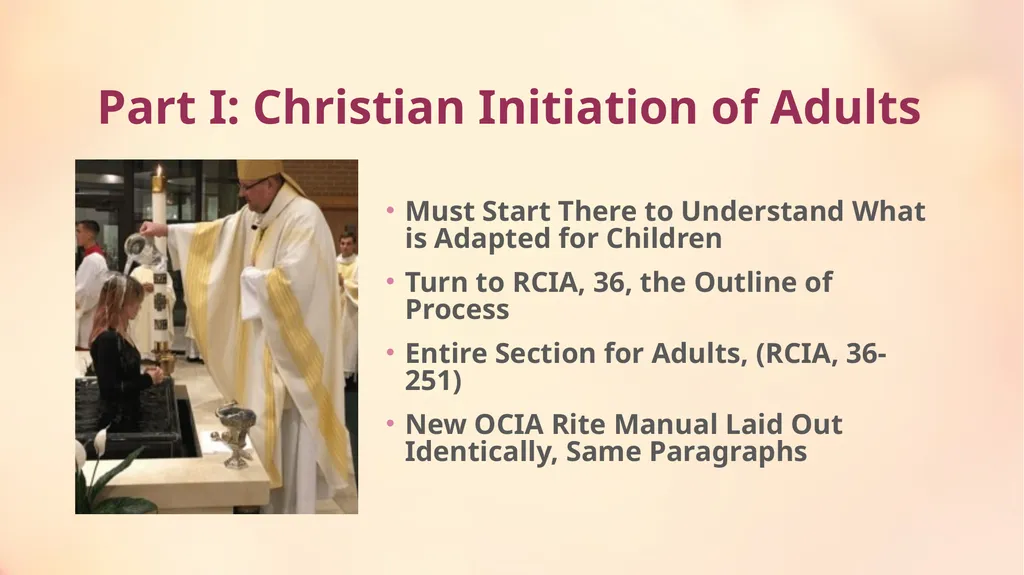
RCIA for Adults is the Normative Process Recommend Reading Paragraphs in Adult Process
Valuable Formation Content Within Those Paragraphs
The Pattern is Repeated for Each New Period and then Rite
RCIA, 36-40 Period of Evangelization and Precatechumenate
RCIA, 41-74 First Step: Acceptance into the Order of Catechumens
Turn to the Adaptation for Children…begin with Commentary<br>
05
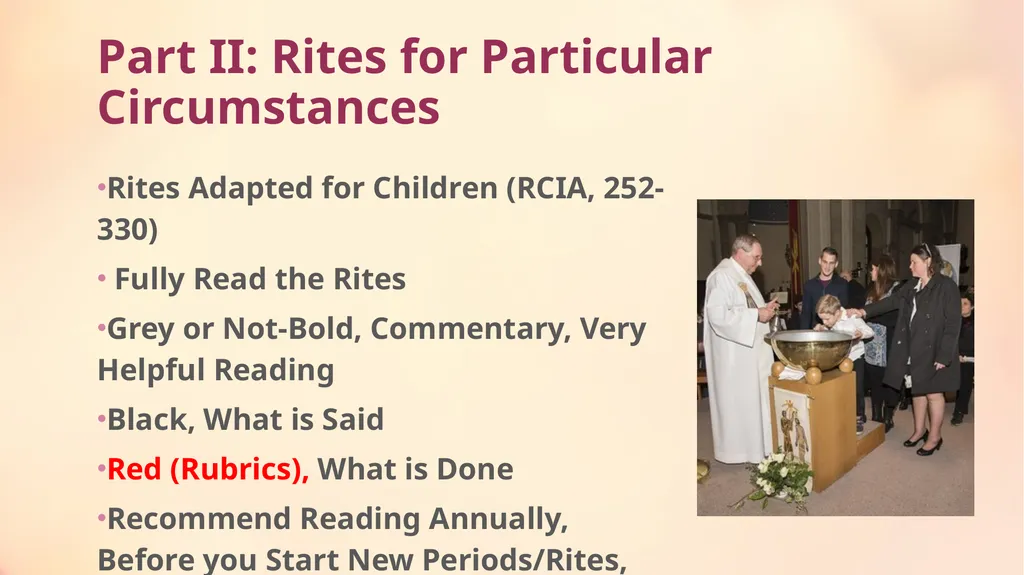
Part II: Rites for Particular Circumstances Rites Adapted for Children (RCIA, 252-330)
Fully Read the Rites
Grey or Not-Bold, Commentary, Very Helpful Reading
Black, What is Said
Red (Rubrics), What is Done
Recommend Reading Annually, Before you Start New Periods/Rites, Invaluable Reminders<br>
06
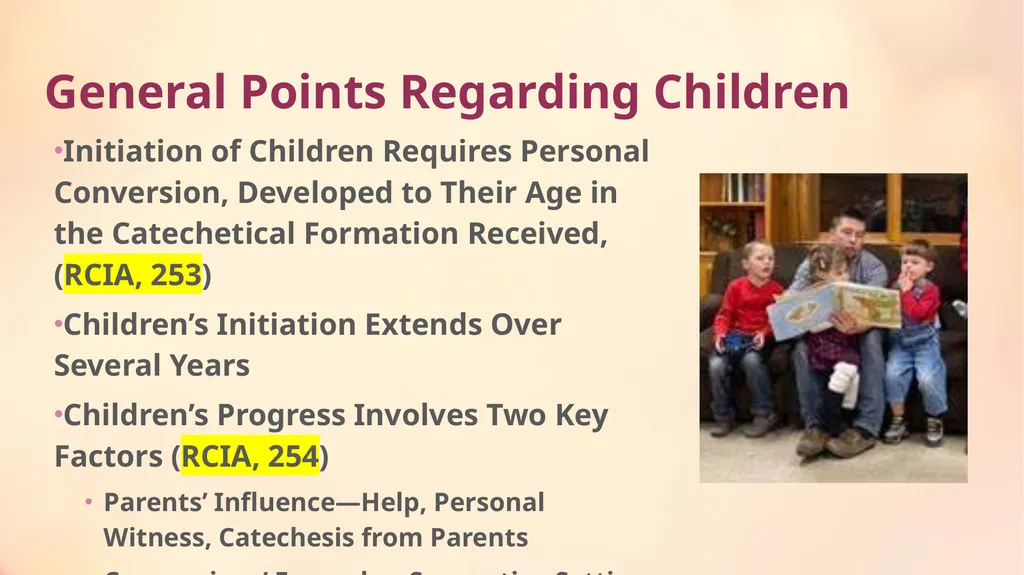
General Points Regarding Children Initiation of Children Requires Personal Conversion, Developed to Their Age in the Catechetical Formation Received, (RCIA, 253)
Children’s Initiation Extends Over Several Years
Children’s Progress Involves Two Key Factors (RCIA, 254)
Parents’ Influence—Help, Personal Witness, Catechesis from Parents
Companions’ Example—Supportive Setting from a Group of Peers<br>
07
Overview of Process Look at Overview Chart
Process Adapted for Children Involves Steps with Corresponding Periods of Catechetical Formation:
Inquiry/Precatechumenate—Followed by Rite of Entrance
Catechumenate Period—Followed by Optional Rite of Election for Children
Purification and Enlightenment—Involving Penitential Rite/Scrutiny
Celebration of Sacraments of Initiation
Full Adult Process Not Necessary for the Children<br>
08
Why the Rite of Entrance? Rite of Entrance (formerly Rite of Acceptance) (RCIA 262-276)
Establishes a Formal “Relationship” between God/Church and the Unbaptized Child
Makes/Names Them a “Catechumen,” Gives Them Rights:
Rights Afforded by Canon Law to “Catechumens”
Married in the Church, More Applicable to Adult Catechumen
Buried in the Church if They Died
Without This Rite, They Are Just an “Inquirer”<br>
09
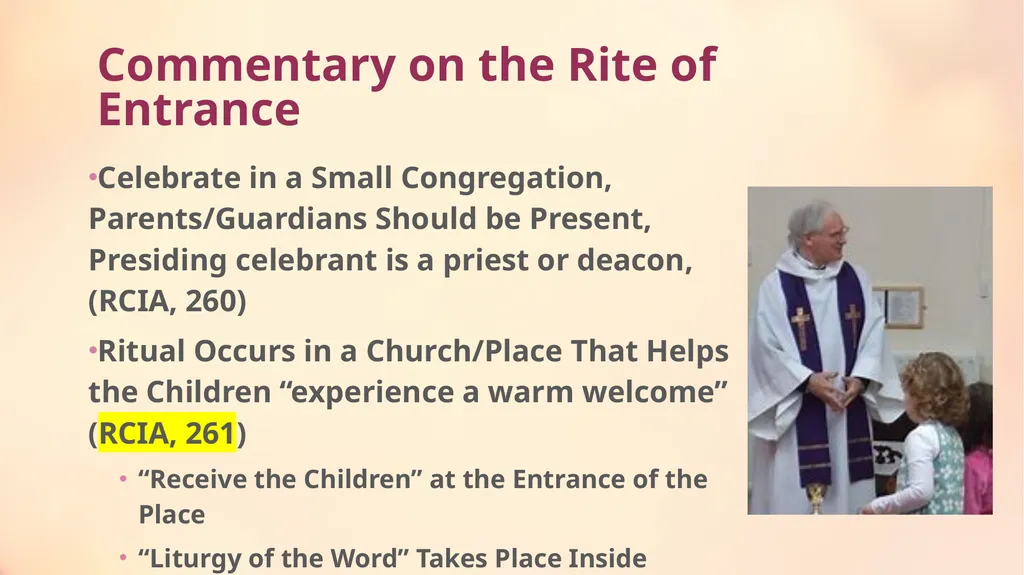
Commentary on the Rite of Entrance Celebrate in a Small Congregation, Parents/Guardians Should be Present, Presiding celebrant is a priest or deacon, (RCIA, 260)
Ritual Occurs in a Church/Place That Helps the Children “experience a warm welcome” (RCIA, 261)
“Receive the Children” at the Entrance of the Place
“Liturgy of the Word” Takes Place Inside
Normally Eucharist is Not Combined with the Rite for Children<br>
10
Rite of Entrance Adapted for Children Celebrant Wears Alb/Surplice and Stole (RCIA, 262)
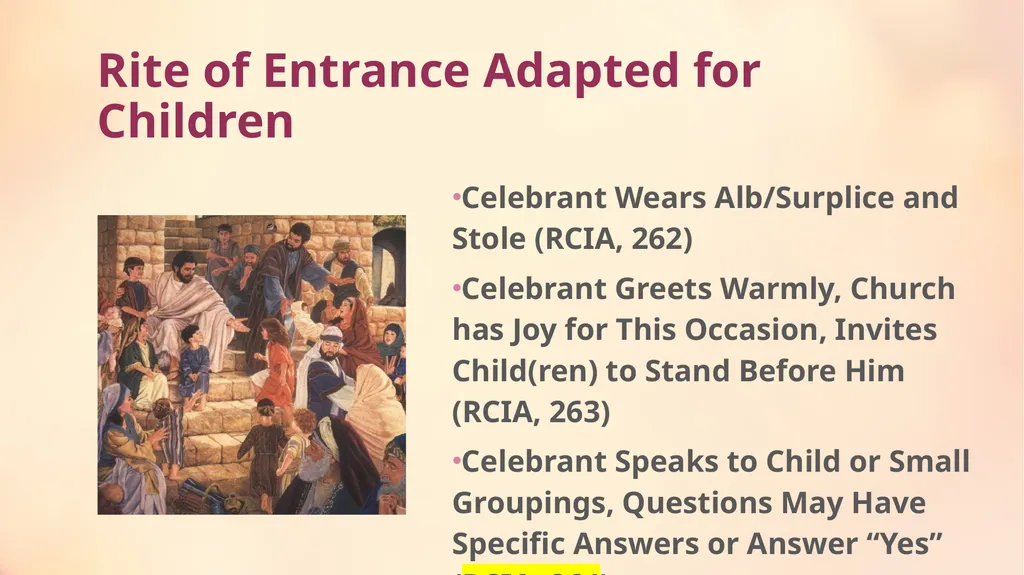
Celebrant Greets Warmly, Church has Joy for This Occasion, Invites Child(ren) to Stand Before Him (RCIA, 263)
Celebrant Speaks to Child or Small Groupings, Questions May Have Specific Answers or Answer “Yes” (RCIA, 264)<br>
11
Rite of Entrance �Adapted for Children Affirmation from Parents/Assembly
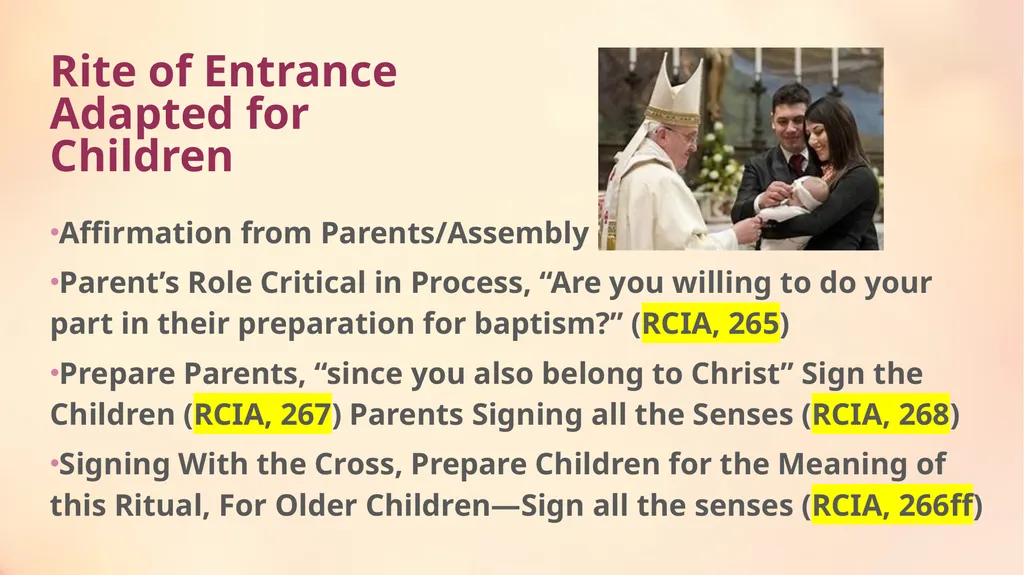
Parent’s Role Critical in Process, “Are you willing to do your part in their preparation for baptism?” (RCIA, 265)
Prepare Parents, “since you also belong to Christ” Sign the Children (RCIA, 267) Parents Signing all the Senses (RCIA, 268)
Signing With the Cross, Prepare Children for the Meaning of this Ritual, For Older Children—Sign all the senses (RCIA, 266ff)<br>
12
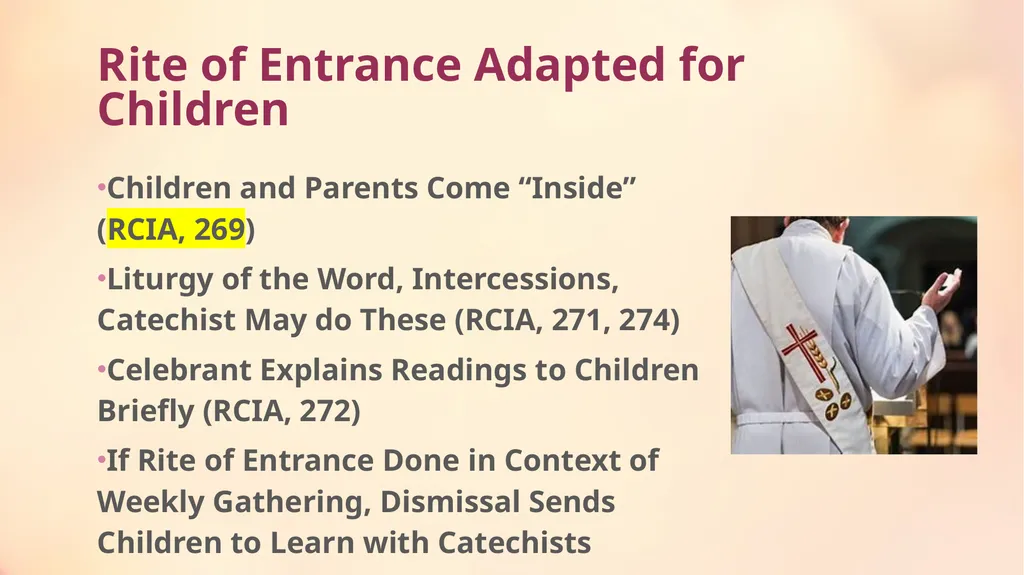
Rite of Entrance Adapted for Children Children and Parents Come “Inside” (RCIA, 269)
Liturgy of the Word, Intercessions, Catechist May do These (RCIA, 271, 274)
Celebrant Explains Readings to Children Briefly (RCIA, 272)
If Rite of Entrance Done in Context of Weekly Gathering, Dismissal Sends Children to Learn with Catechists<br>
13
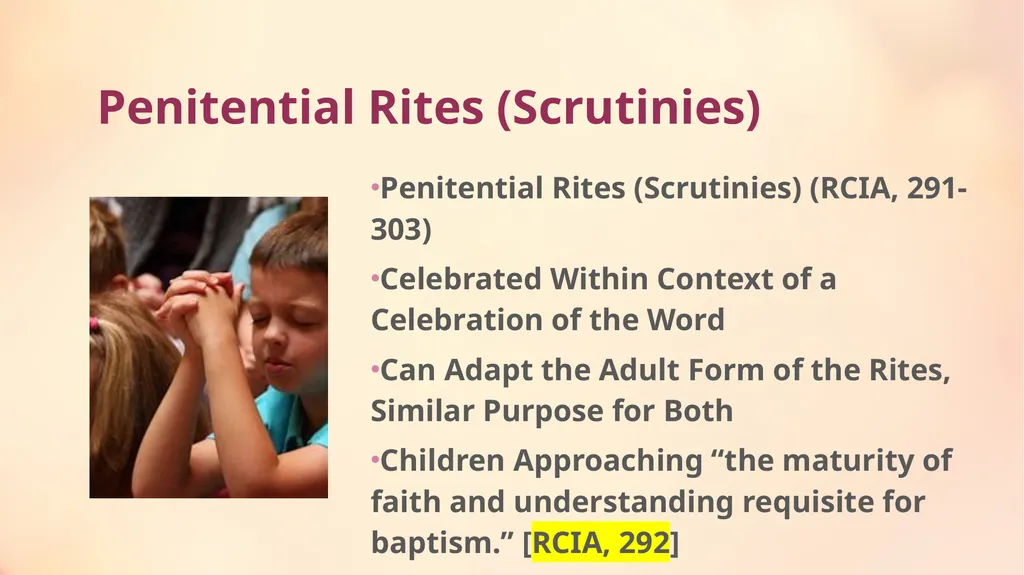
Penitential Rites (Scrutinies) Penitential Rites (Scrutinies) (RCIA, 291-303)
Celebrated Within Context of a Celebration of the Word
Can Adapt the Adult Form of the Rites, Similar Purpose for Both
Children Approaching “the maturity of faith and understanding requisite for baptism.” [RCIA, 292]<br>
14
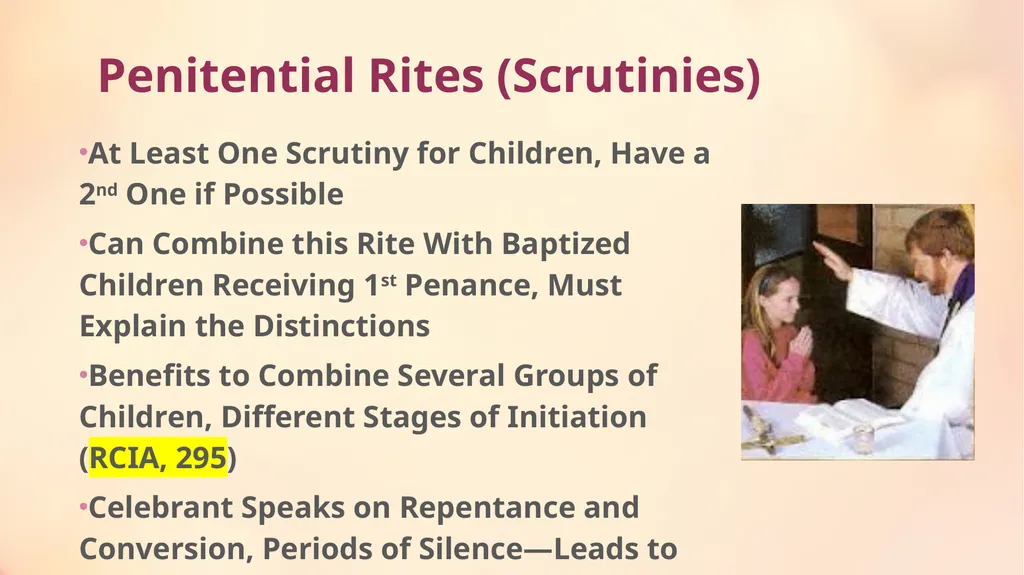
Penitential Rites (Scrutinies) At Least One Scrutiny for Children, Have a 2nd One if Possible
Can Combine this Rite With Baptized Children Receiving 1st Penance, Must Explain the Distinctions
Benefits to Combine Several Groups of Children, Different Stages of Initiation (RCIA, 295)
Celebrant Speaks on Repentance and Conversion, Periods of Silence—Leads to Sincere Sorrow
Intercessions (RCIA, 299)<br>
15
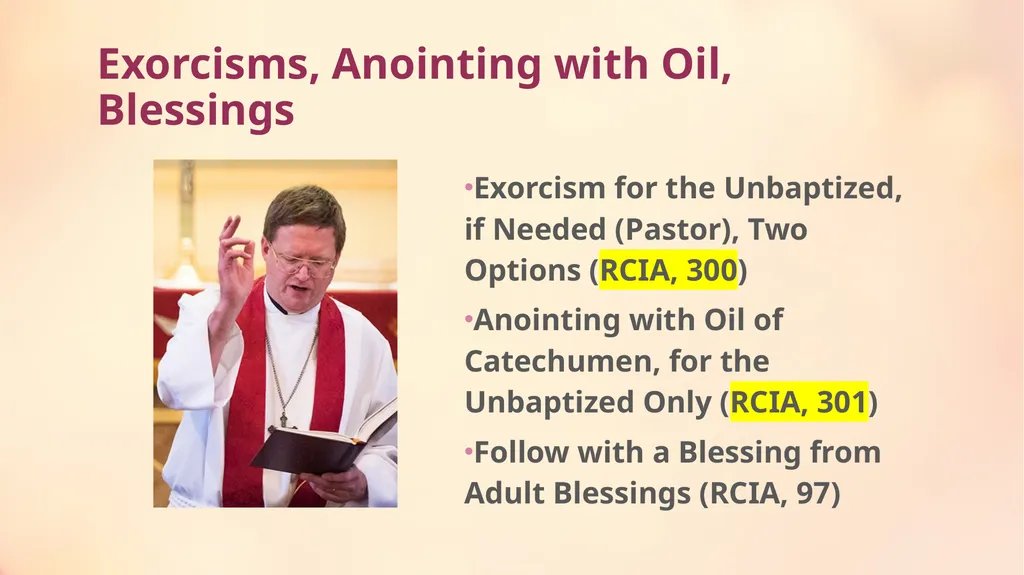
Exorcisms, Anointing with Oil, Blessings Exorcism for the Unbaptized, if Needed (Pastor), Two Options (RCIA, 300)
Anointing with Oil of Catechumen, for the Unbaptized Only (RCIA, 301)
Follow with a Blessing from Adult Blessings (RCIA, 97)<br>
16
Sacraments of Initiation (RCIA, 304-329) Celebrate Sacraments of Initiation at Easter Vigil/Sunday
Excellent Catechetical Content in Blessing Option A (RCIA, 311)
Communal Profession of Faith Precedes Children’s Profession of Faith
Each Child Makes Profession of Faith and Immediately Baptized
Baptism Done by Either Immersion or Pouring (RCIA, 316)
Clothing with White Garment and Receiving Lighted Candle (RCIA 320-321)<br>
17
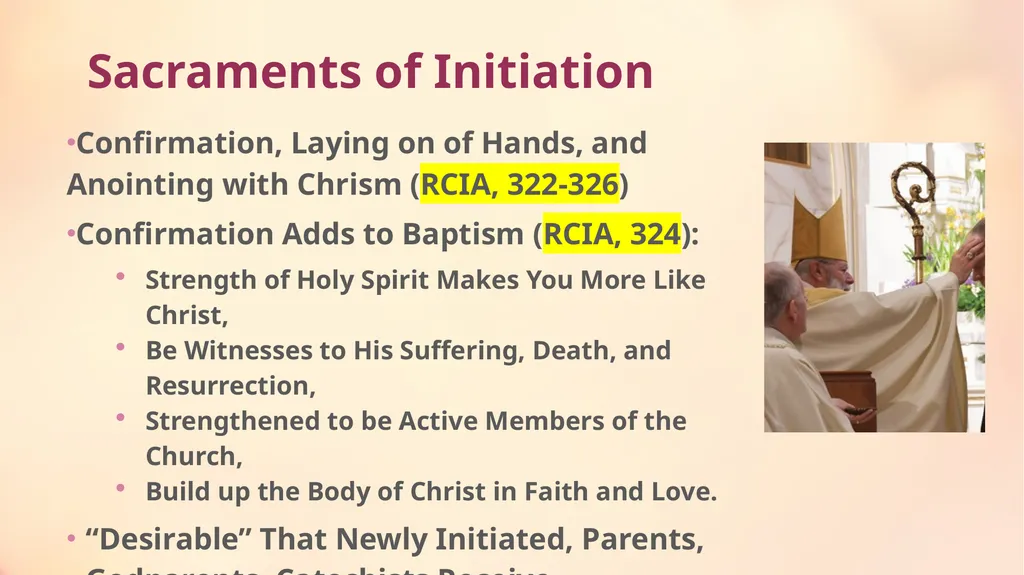
Sacraments of Initiation Confirmation, Laying on of Hands, and Anointing with Chrism (RCIA, 322-326)
Confirmation Adds to Baptism (RCIA, 324):
Strength of Holy Spirit Makes You More Like Christ,
Be Witnesses to His Suffering, Death, and Resurrection,
Strengthened to be Active Members of the Church,
Build up the Body of Christ in Faith and Love.
“Desirable” That Newly Initiated, Parents, Godparents, Catechists Receive Communion Under Both Species (RCIA, 329)<br>
18
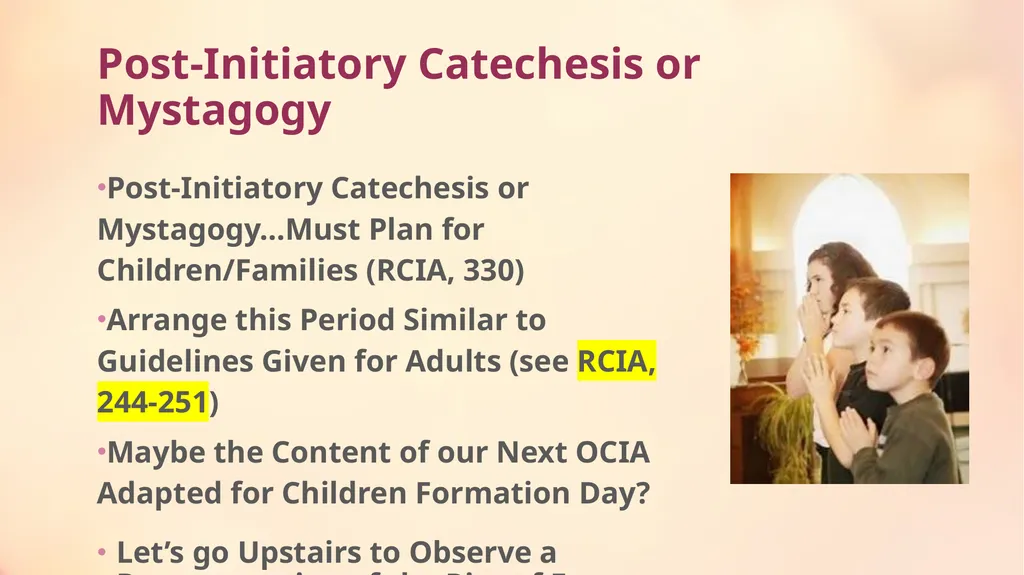
Post-Initiatory Catechesis or Mystagogy Post-Initiatory Catechesis or Mystagogy…Must Plan for Children/Families (RCIA, 330)
Arrange this Period Similar to Guidelines Given for Adults (see RCIA, 244-251)
Maybe the Content of our Next OCIA Adapted for Children Formation Day?
Let’s go Upstairs to Observe a Demonstration of the Rite of Entrance<br>
19
Thank You! Martha Drennan, DMin
Director of Adult Faith Formation
mdrennan@rcbm.org
(603)663-0172<br>