Preparing the Expert for Deposition and Trial Complete file avoid impeachment. Define the experts role for trial before their deposition. Be aware of Kennemur. Consider including documents they wont rely on direct them to what is
"Preparing the Expert for Deposition and Trial" is the property of its rightful owner. Permission is granted to
download and print the materials on this website for personal, non-commercial use only, and to display it
on your personal computer provided you do not modify the materials and that you retain all copyright
notices contained in the materials. By downloading content from our website, you accept the terms of this
agreement.
Presentation Transcript
01
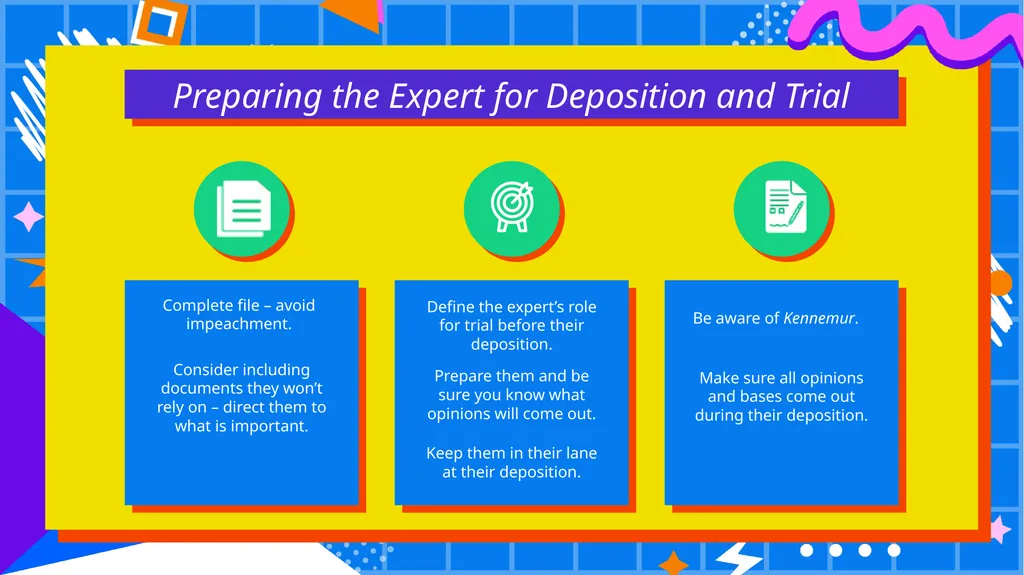
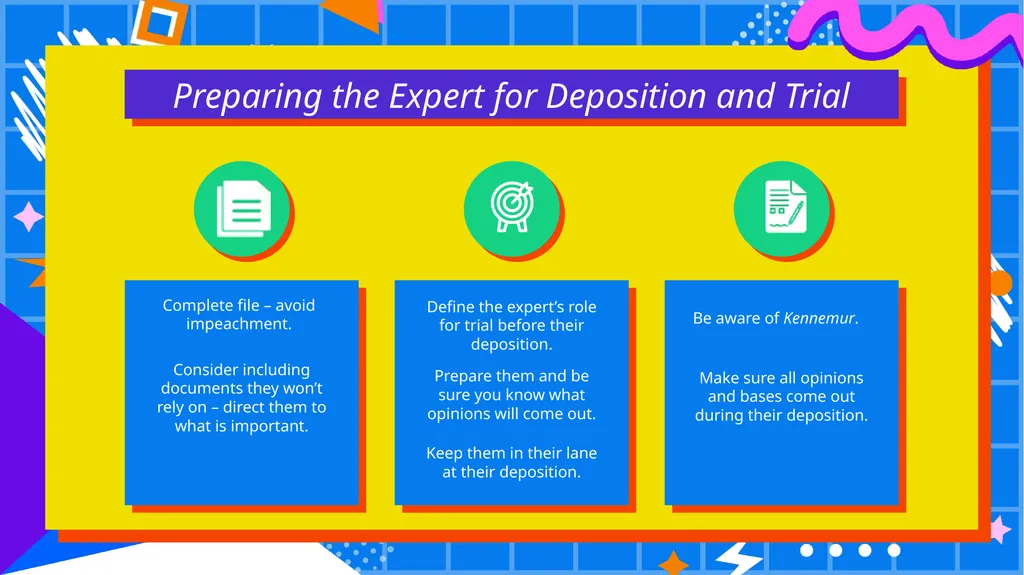
Preparing the Expert for Deposition and Trial Complete file – avoid impeachment. Define the expert’s role for trial before their deposition. Be aware of Kennemur. Consider including documents they won’t rely on – direct them to what is important. Keep them in their lane at their deposition. Make sure all opinions and bases come out during their deposition. Prepare them and be sure you know what opinions will come out.<br>
02
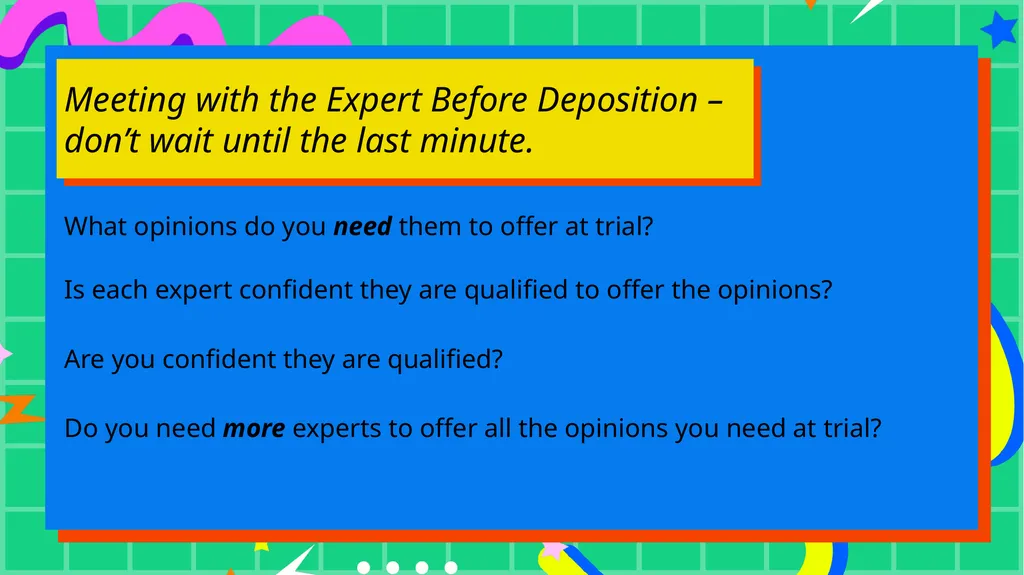
Meeting with the Expert Before Deposition – don’t wait until the last minute. What opinions do you need them to offer at trial? Are you confident they are qualified? Is each expert confident they are qualified to offer the opinions? Do you need more experts to offer all the opinions you need at trial?<br>
03
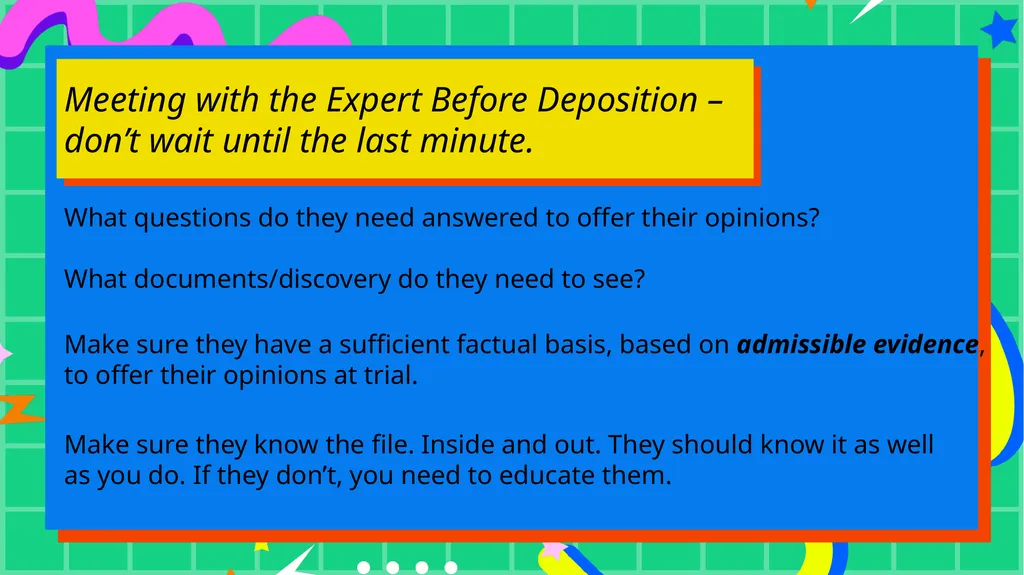
Meeting with the Expert Before Deposition – don’t wait until the last minute. What questions do they need answered to offer their opinions? Make sure they have a sufficient factual basis, based on admissible evidence, to offer their opinions at trial. What documents/discovery do they need to see? Make sure they know the file. Inside and out. They should know it as well as you do. If they don’t, you need to educate them.<br>
04
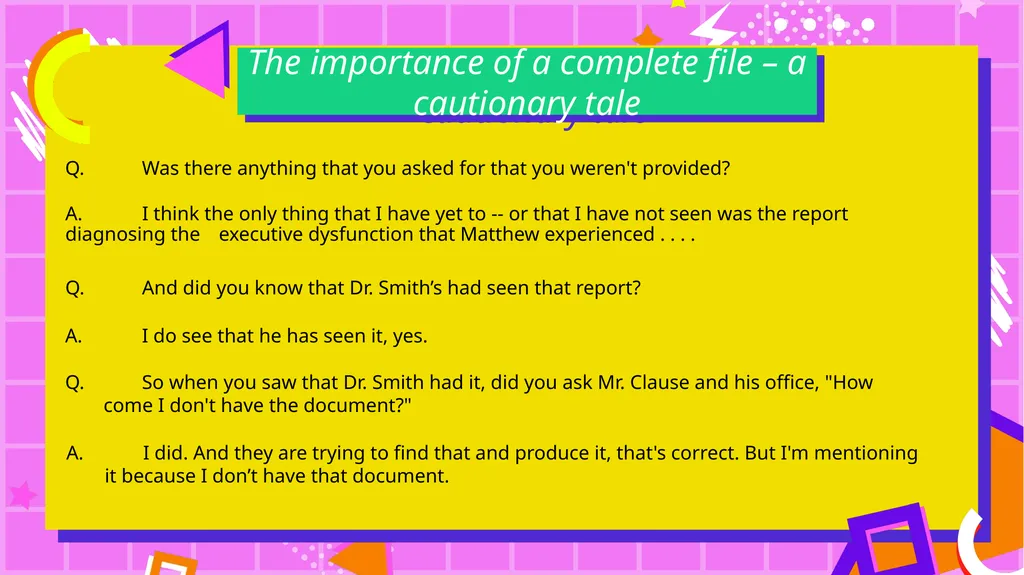
The importance of a complete file – a cautionary tale Q. Was there anything that you asked for that you weren't provided? A. I think the only thing that I have yet to -- or that I have not seen was the report diagnosing the executive dysfunction that Matthew experienced . . . . A. I do see that he has seen it, yes. Q. And did you know that Dr. Smith’s had seen that report? Q. So when you saw that Dr. Smith had it, did you ask Mr. Clause and his office, "How come I don't have the document?" A. I did. And they are trying to find that and produce it, that's correct. But I'm mentioning it because I don’t have that document.<br>
05
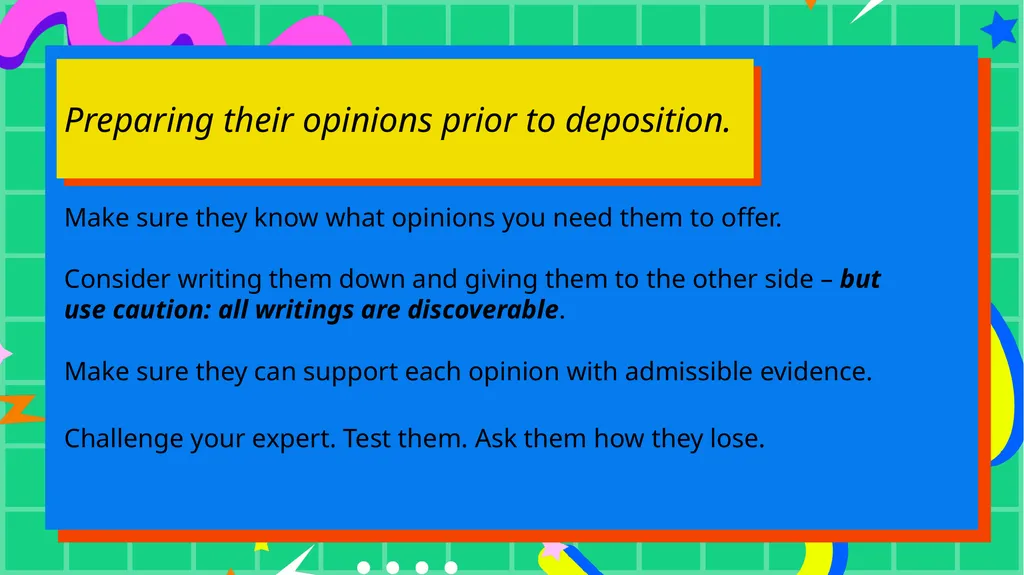
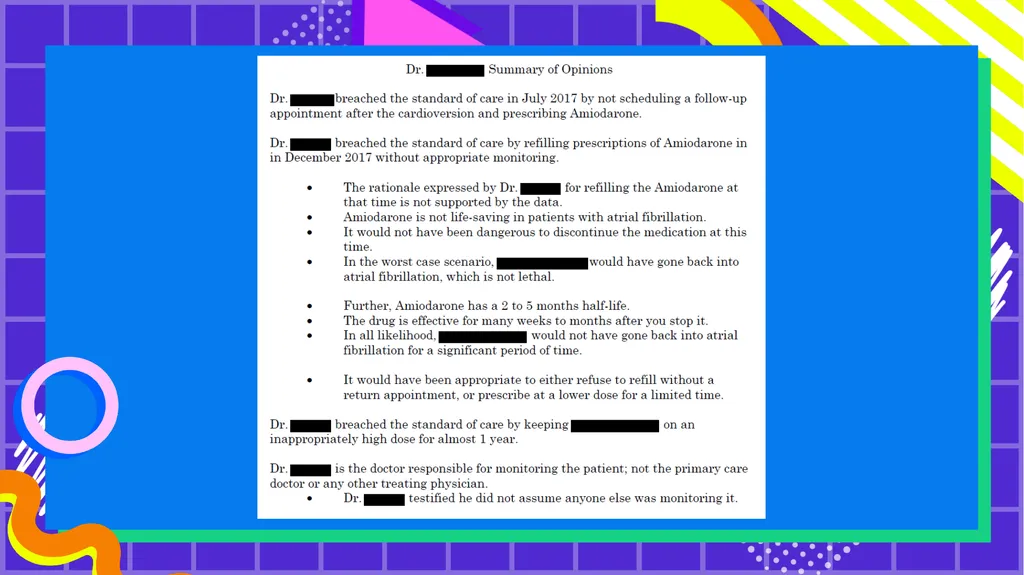
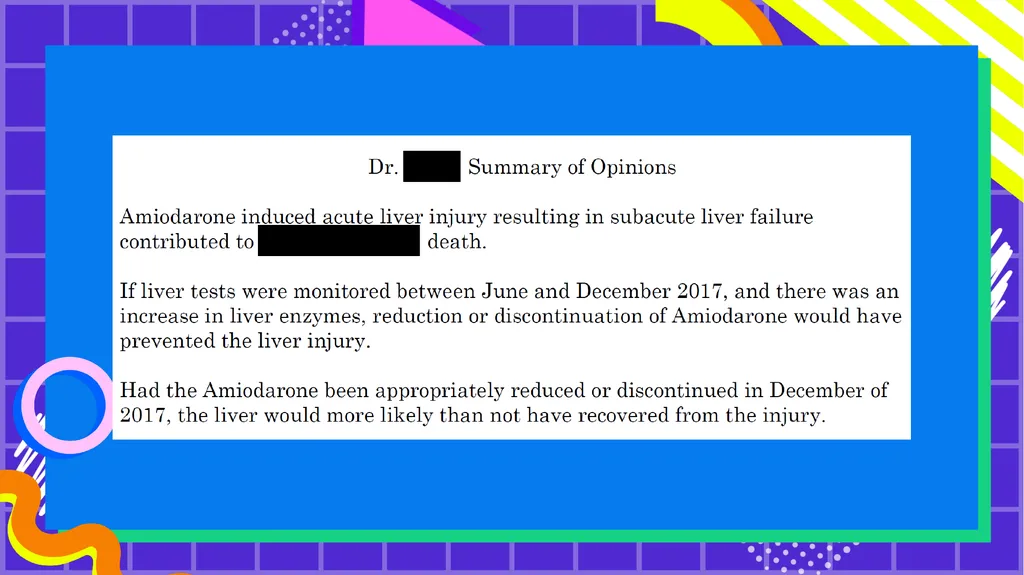
Preparing their opinions prior to deposition. Make sure they know what opinions you need them to offer. Make sure they can support each opinion with admissible evidence. Consider writing them down and giving them to the other side – but use caution: all writings are discoverable. Challenge your expert. Test them. Ask them how they lose.<br>
06
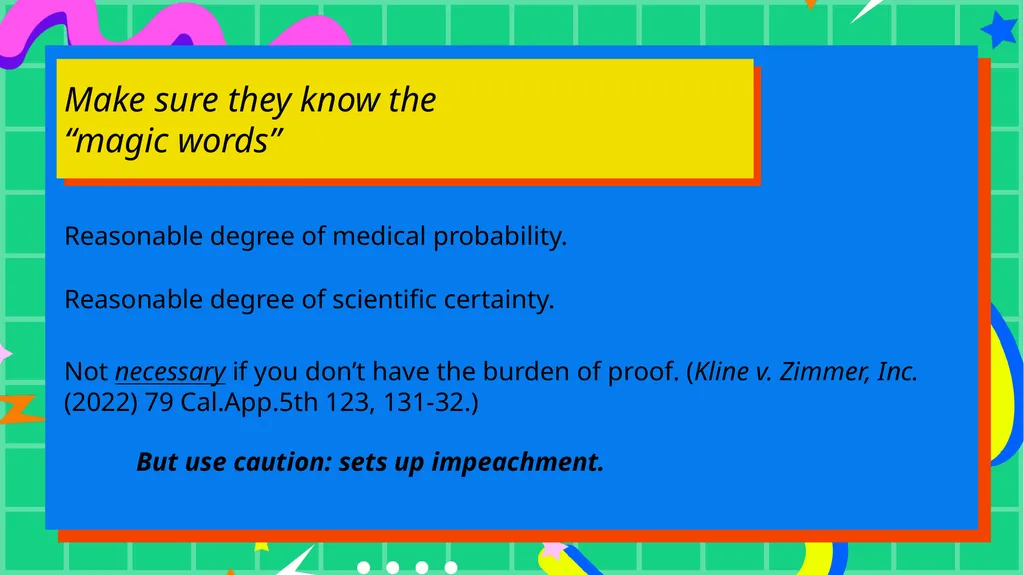
Make sure they know the “magic words” Reasonable degree of medical probability. But use caution: sets up impeachment. Reasonable degree of scientific certainty. Not necessary if you don’t have the burden of proof. (Kline v. Zimmer, Inc. (2022) 79 Cal.App.5th 123, 131-32.)<br>
07
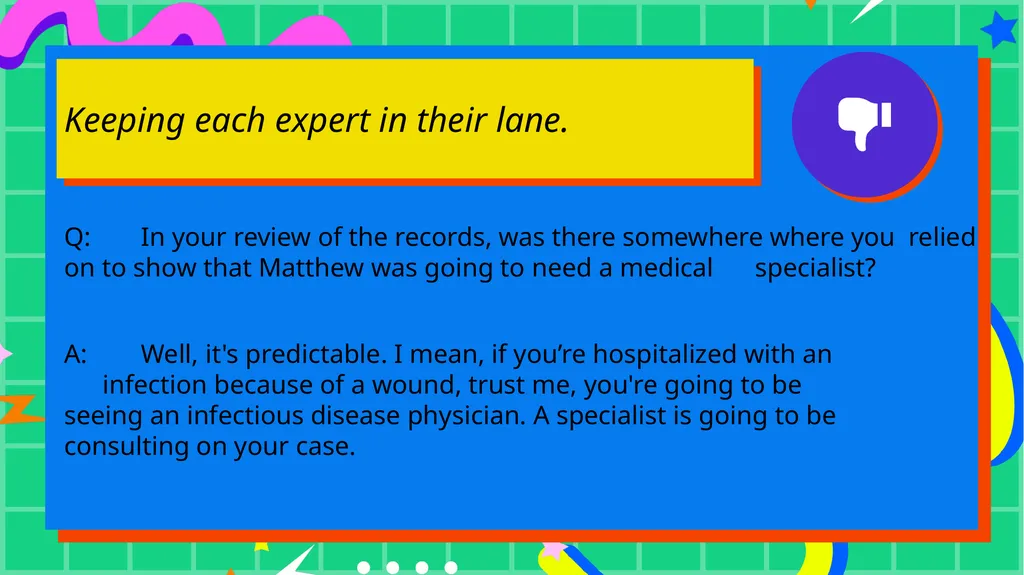
Keeping each expert in their lane. Q: In your review of the records, was there somewhere where you relied on to show that Matthew was going to need a medical specialist? A: Well, it's predictable. I mean, if you’re hospitalized with an infection because of a wound, trust me, you're going to be seeing an infectious disease physician. A specialist is going to be consulting on your case.<br>
08
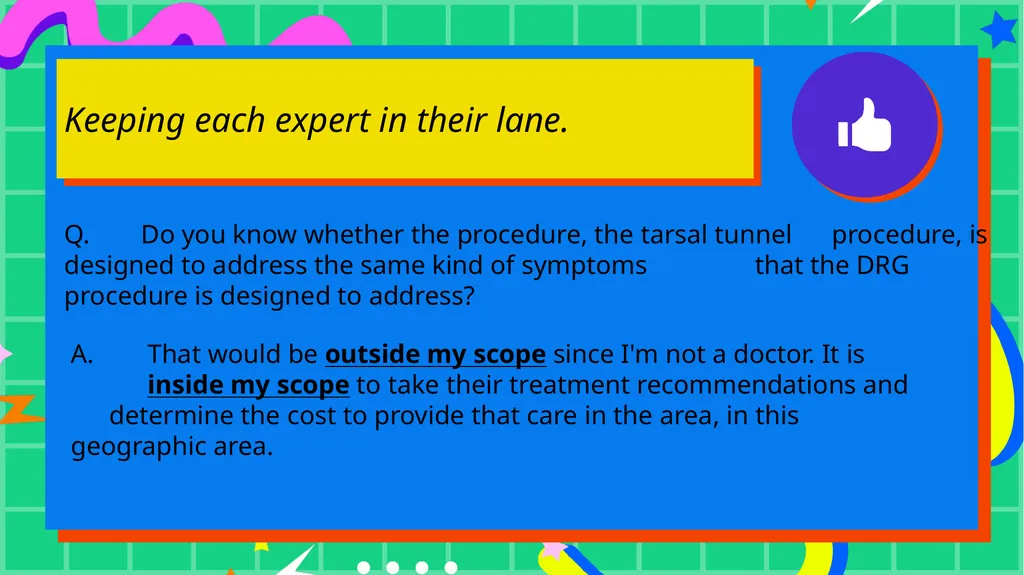
Keeping each expert in their lane. Q. Do you know whether the procedure, the tarsal tunnel procedure, is designed to address the same kind of symptoms that the DRG procedure is designed to address? A. That would be outside my scope since I'm not a doctor. It is
inside my scope to take their treatment recommendations and determine the cost to provide that care in the area, in this geographic area.<br>
09
Final Thoughts Do some dress rehearsal – train your expert to avoid rambling and focus on the question. Challenge them – present them with the opposing side’s opinions and ask how they refute it. Make sure they know the file and can support their opinions with a factual basis.<br>