04
Skin moisture- Skin exposure to moisture through in continence, perspiration or wound drainage can contribute to rashes, cracking of the skin /infection
Poor Nutrition- Poor nutrtion can contribute to the development of pressure ulcers.<br>
05
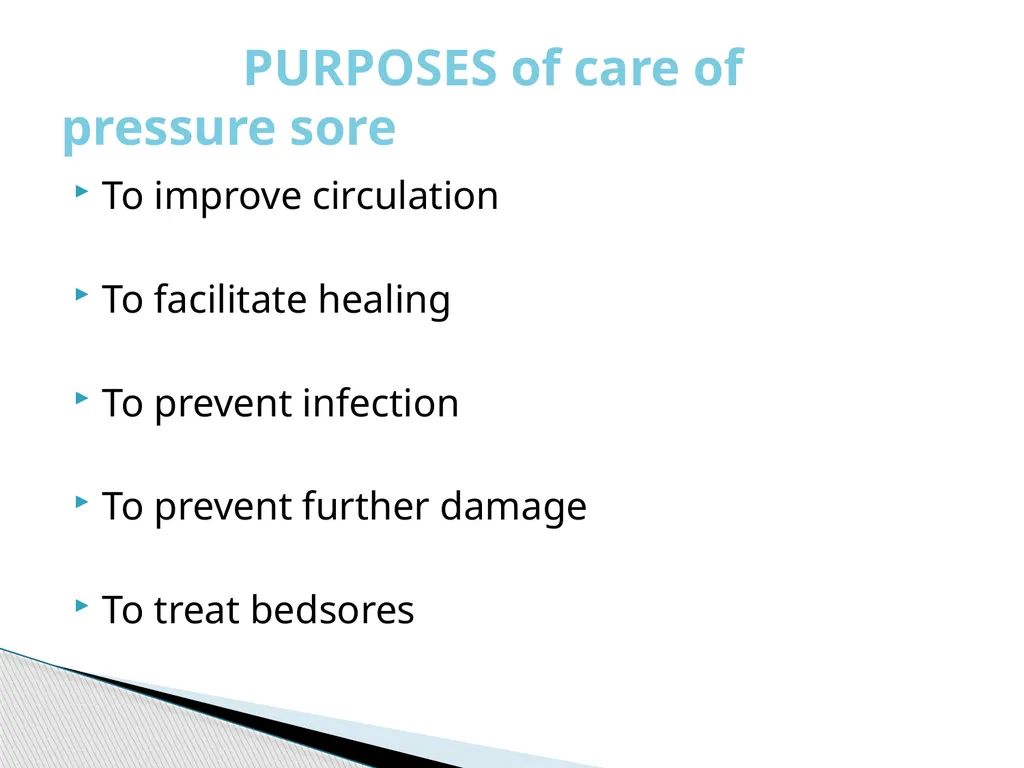
To improve circulation
To facilitate healing
To prevent infection
To prevent further damage
To treat bedsores PURPOSES of care of pressure sore<br>
06
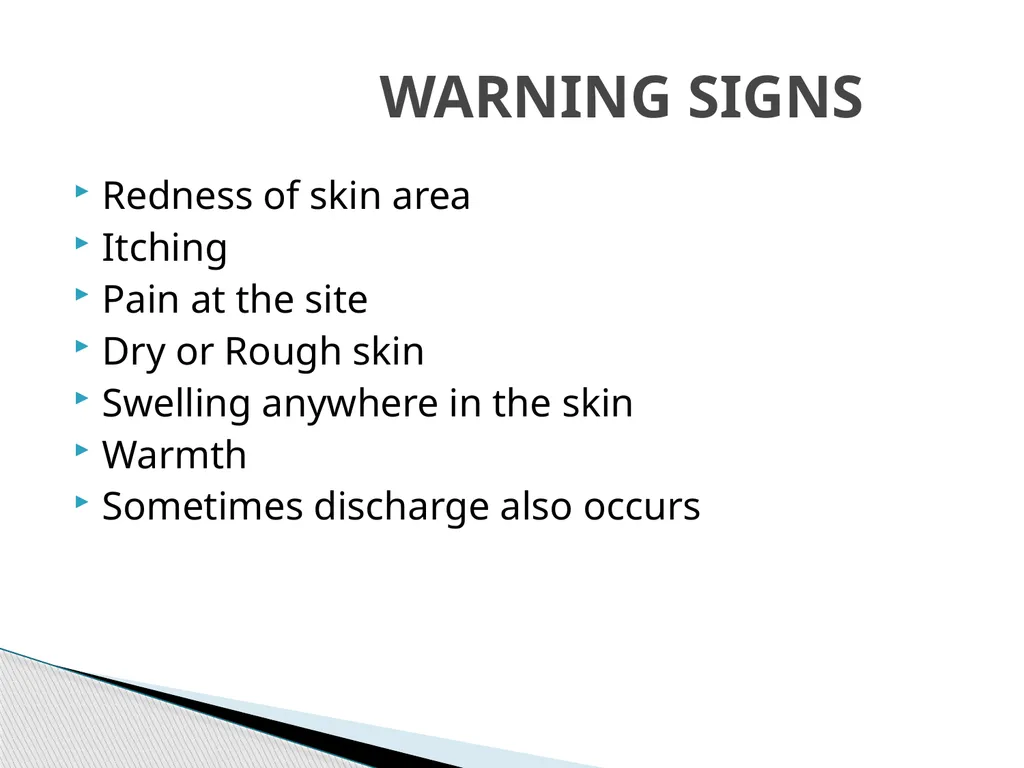
Redness of skin area
Itching
Pain at the site
Dry or Rough skin
Swelling anywhere in the skin
Warmth
Sometimes discharge also occurs WARNING SIGNS<br>
07
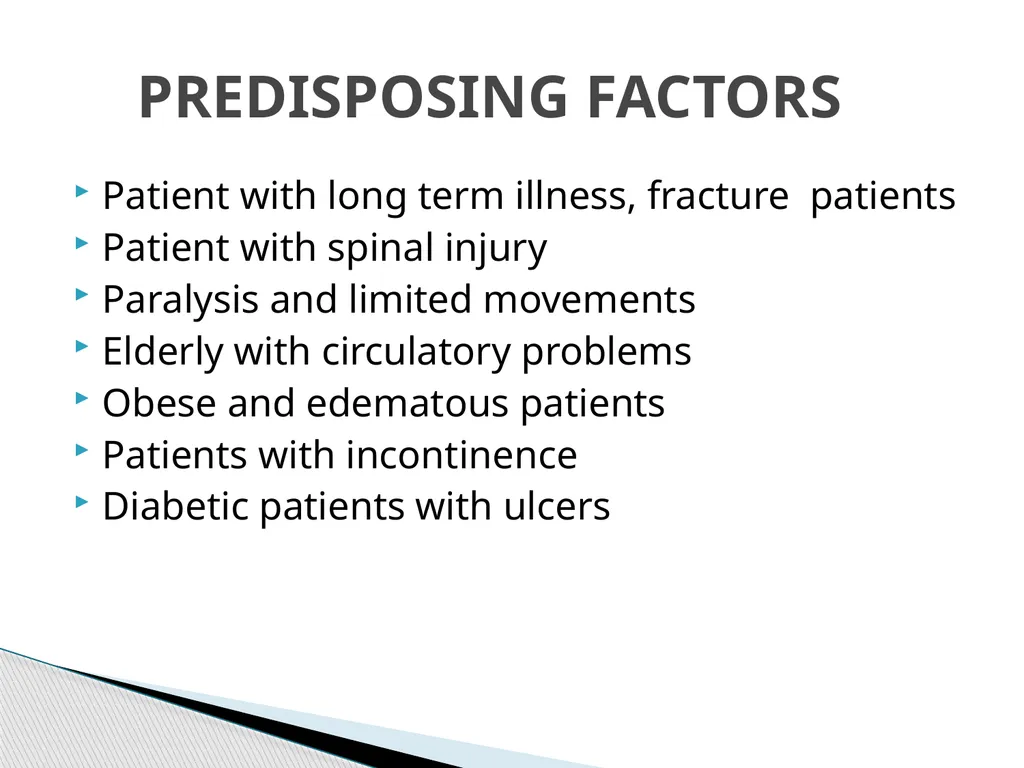
Patient with long term illness, fracture patients
Patient with spinal injury
Paralysis and limited movements
Elderly with circulatory problems
Obese and edematous patients
Patients with incontinence
Diabetic patients with ulcers PREDISPOSING FACTORS<br>
08
STAGES OF PRESSURE ULCER<br>
09
Once a pressure ulcer has developed,it can rapidly get worse unless we take quick action to treat it.
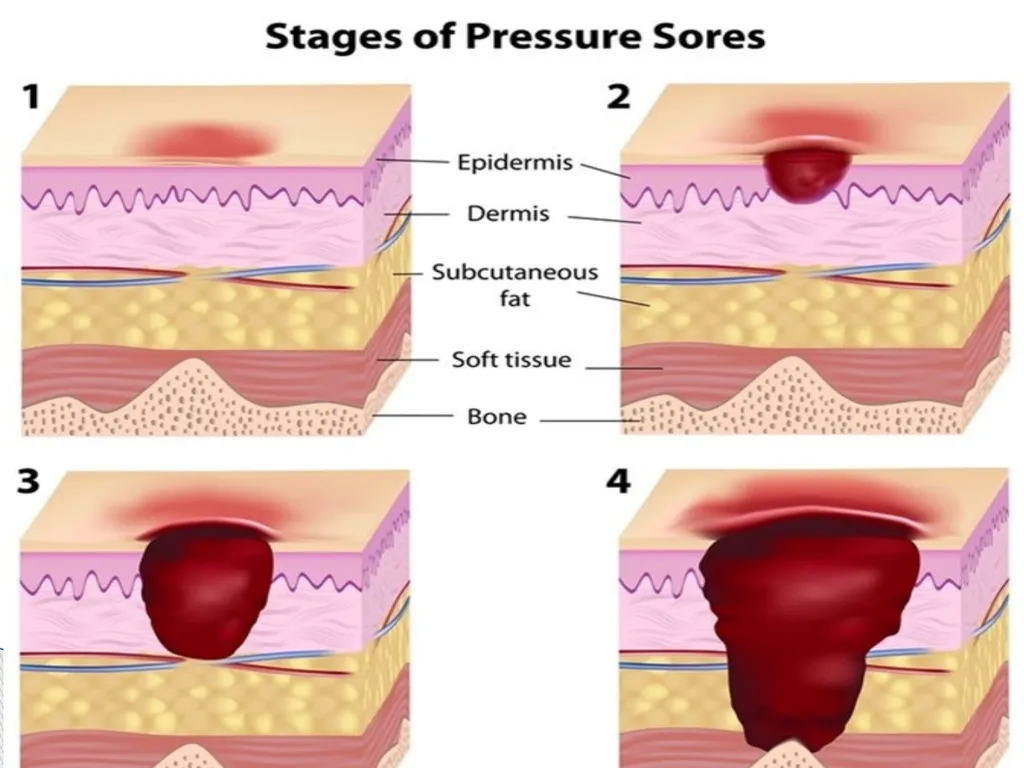
There are four stages of pressure ulcers
It is very important to recognize and identify the sign and symptoms of pressure ulcers at each stage. INTRODUCTION<br>
10
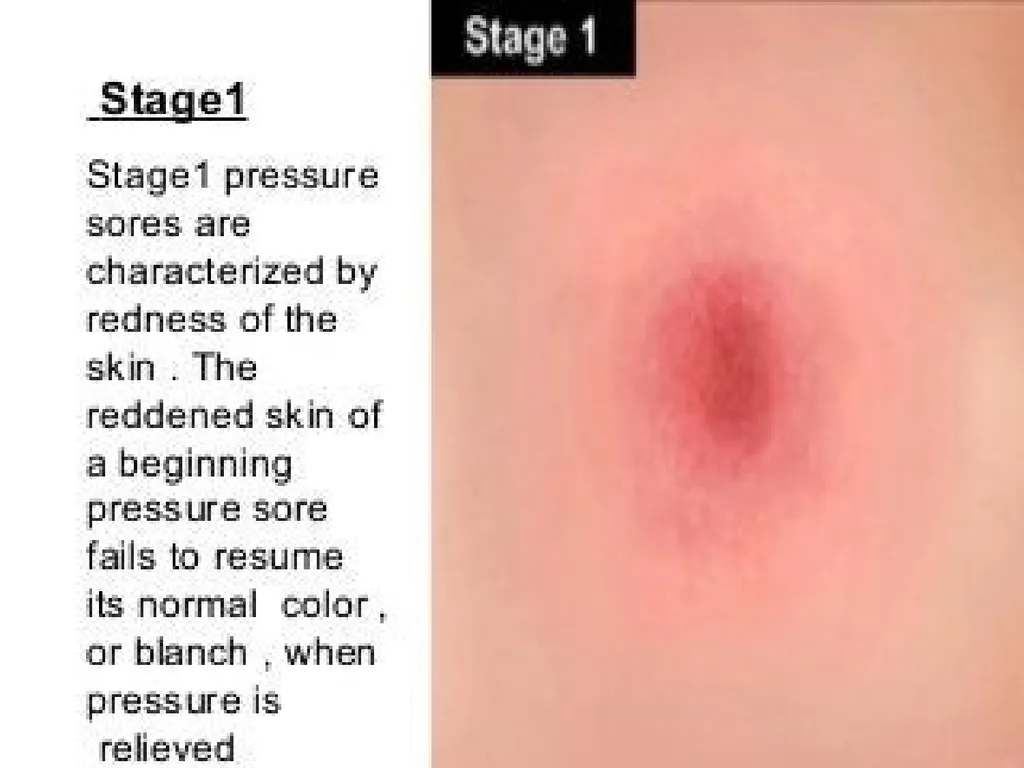
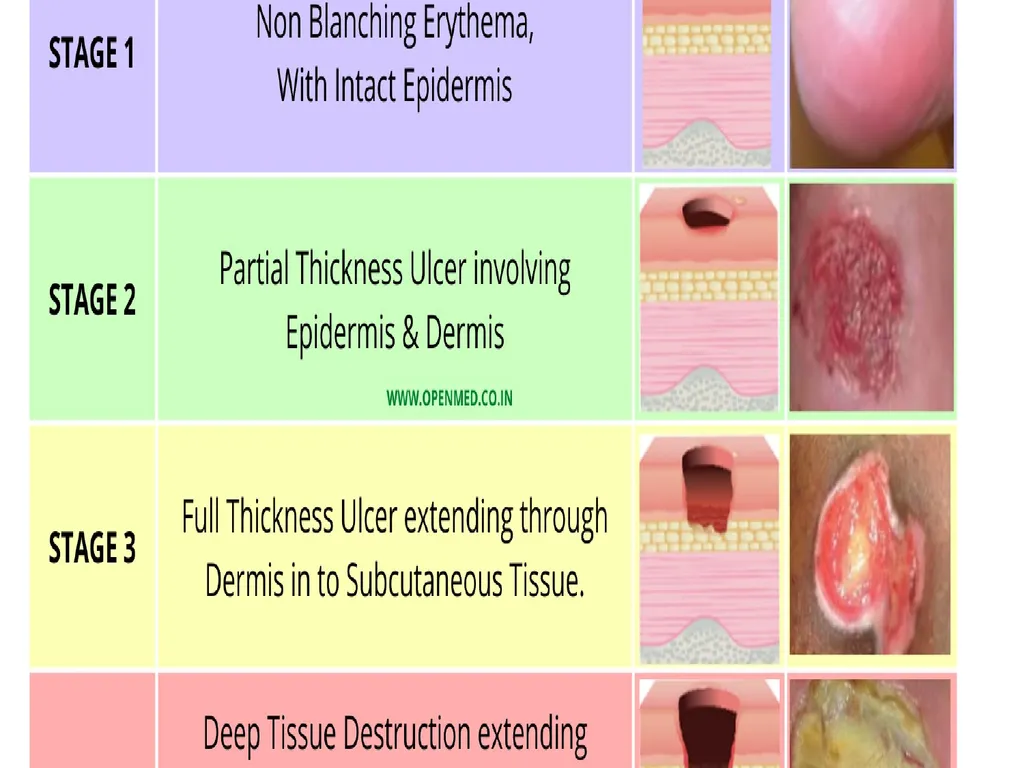
Skin is intact and un broken
Skin with non blanchable redness of a localised area usually over a bony prominence
Patients complain of pain and discomfort at the site.
Affects upper layer of skin ie: epidermis STAGE-I<br>
11
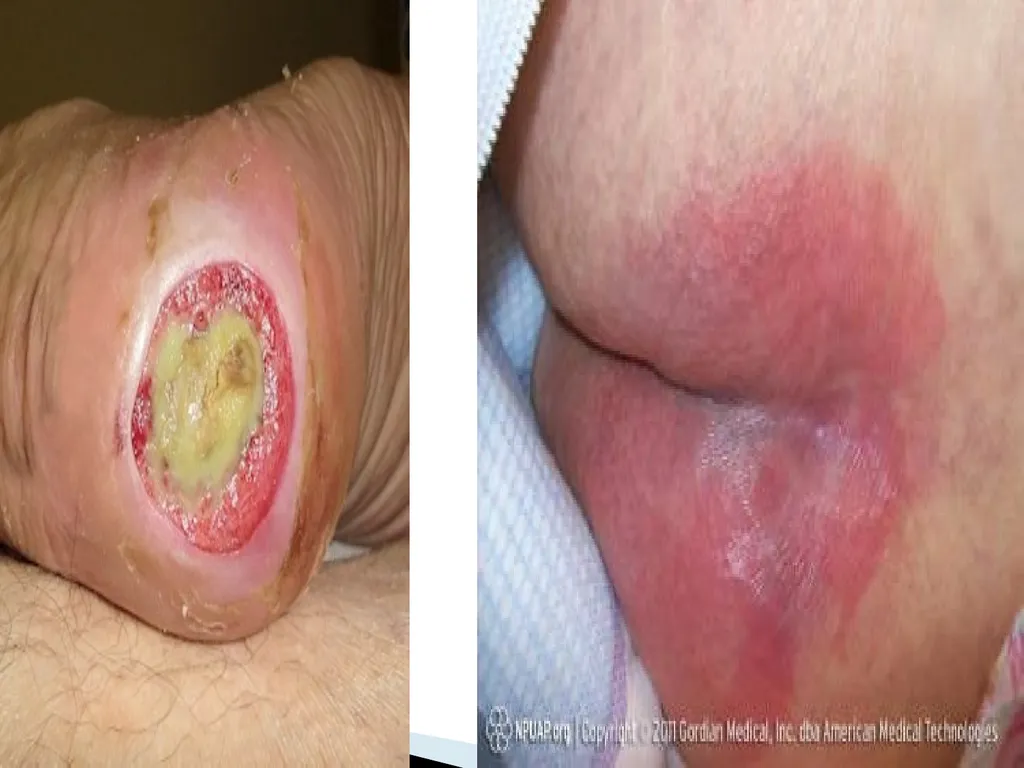
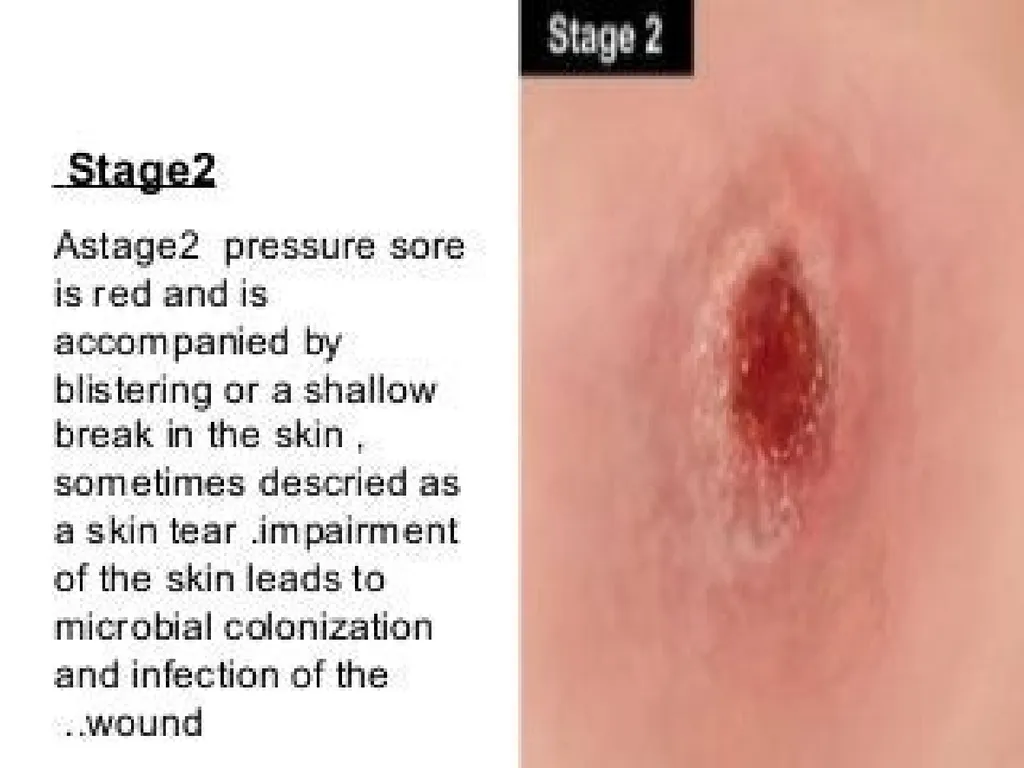
Partial thickness skin loss that involves the epidermis or dermis (or both)
Dermis presenting as a shallow open ulcer with a red pink wound bed without slough.
Some time blister formation also occur. STAGE-2<br>
12
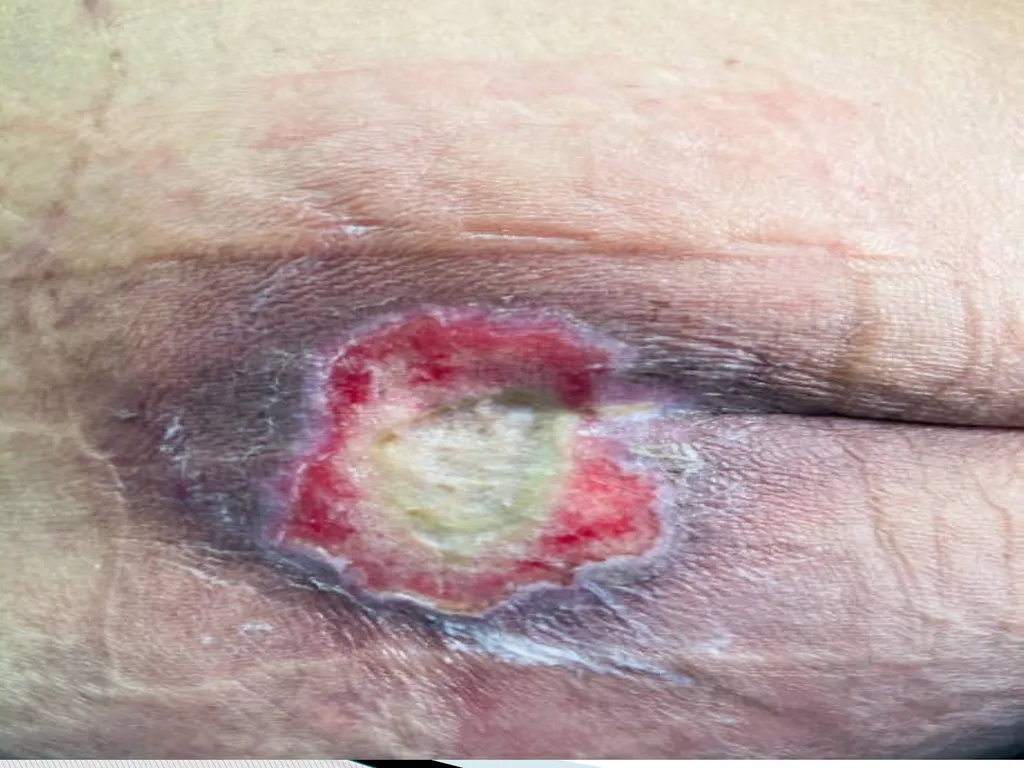
Full thickness skin loss that extends into the subcutaneous tissue ( below the skin)
Full subcutaneous fat may be visible but bone, tendon or muscles are not exposed. STAGE-3<br>
13
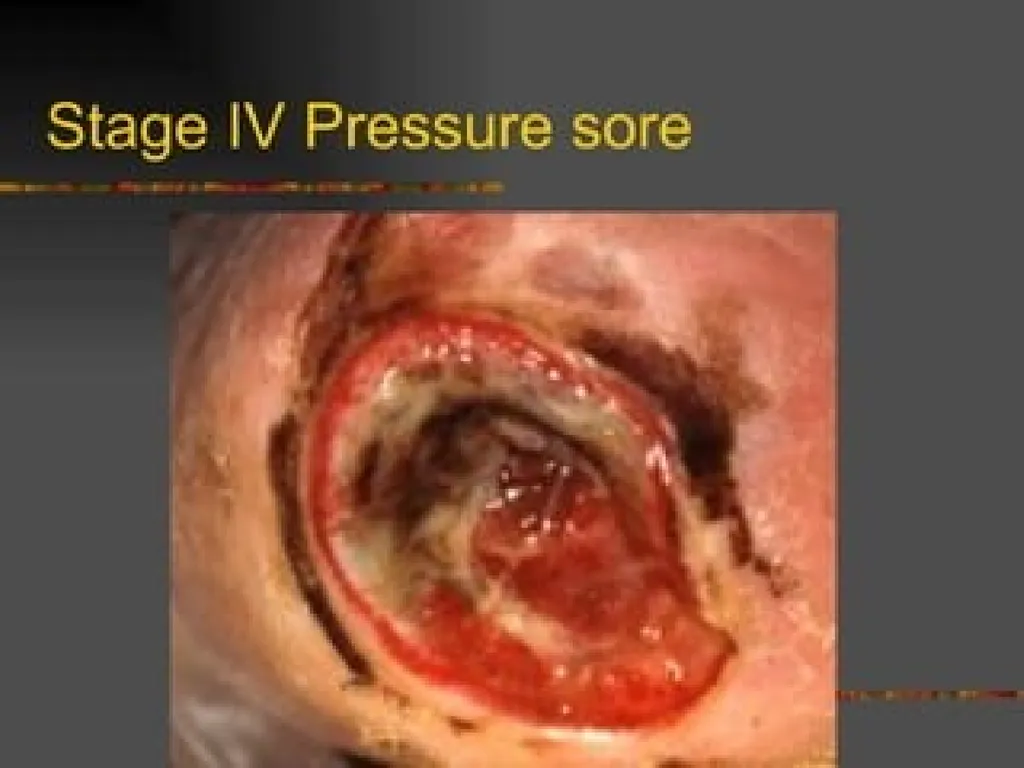
Full thickness loss with exposed bone, tendon or muscle
Exposed bone, tendon are usually directly visible /palpable
The skin has turned black and shows signs of infection-red edges, pus, odor ,heat and / drainage STAGE-4<br>
14
Redness of skin areas
Itching
Pain at site, soft and warmer/cooler compared with surrounding skin
Dry or rough skin
Swelling anywhere in the skin
Warmth
Sometimes discharge also occurs at the site
Infected wound may often smell. SIGNS AND SYMPTOMS<br>
15
Prevention is the key treatment of pressure ulcer
Pressure ulcers are preventable in nature by taking small effort by caregivers for their own patient CARE AND PREVENTION<br>
16
Skin Assesment
Repositioning Techniques
Skin hygiene and moisture control
Pressure point care
Use of proper pressure relieving devices
Range of motion exercises
Nutritional balance INTERVENTIONS<br>
17
Inspect all of the skin while repositioning the patient
Clean the skin promptly after the patient pass urine or stool
Avoid positioning an individual in an area of redness
Avoid rubbing or massaging skin too hard- especially over the bony prominences
Pat the skin dry with a soft towel
Keep the skin clean and dry<br>
18
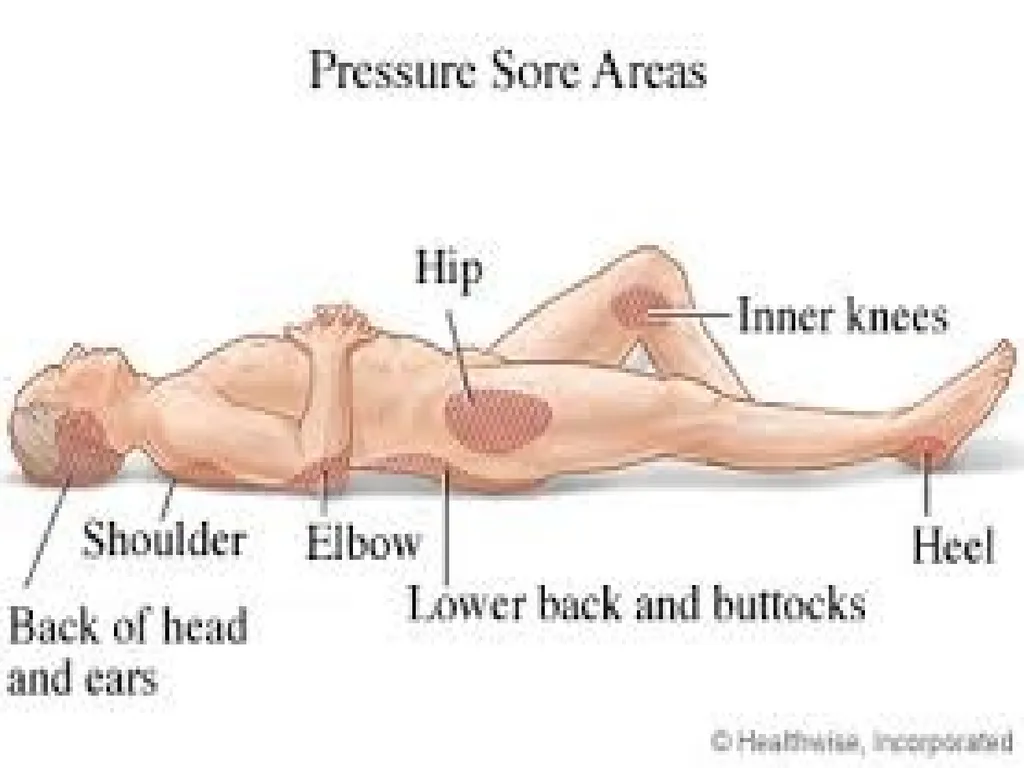
Asses Specific vulnerable pressure points such as:
Supine : Occipit, Sacrum,heels, shoulder
Sitting : Ischial tuberosities, Coccyx
Side lying position: Trochanters<br>
19
There are several tools for assesing the risk for developing pressure ulcers
Prevention and treatment of pressure ulcers are major nursing priorities.
Various assesment scales are used such as
Norton scale
Braden scale
Mclaren scale.
Most commonly used are Norton scale and Braden scale.
Each scale has five or six factors that are ranked by number. ASSESMENT OF PRESSURE ULCER<br>
20
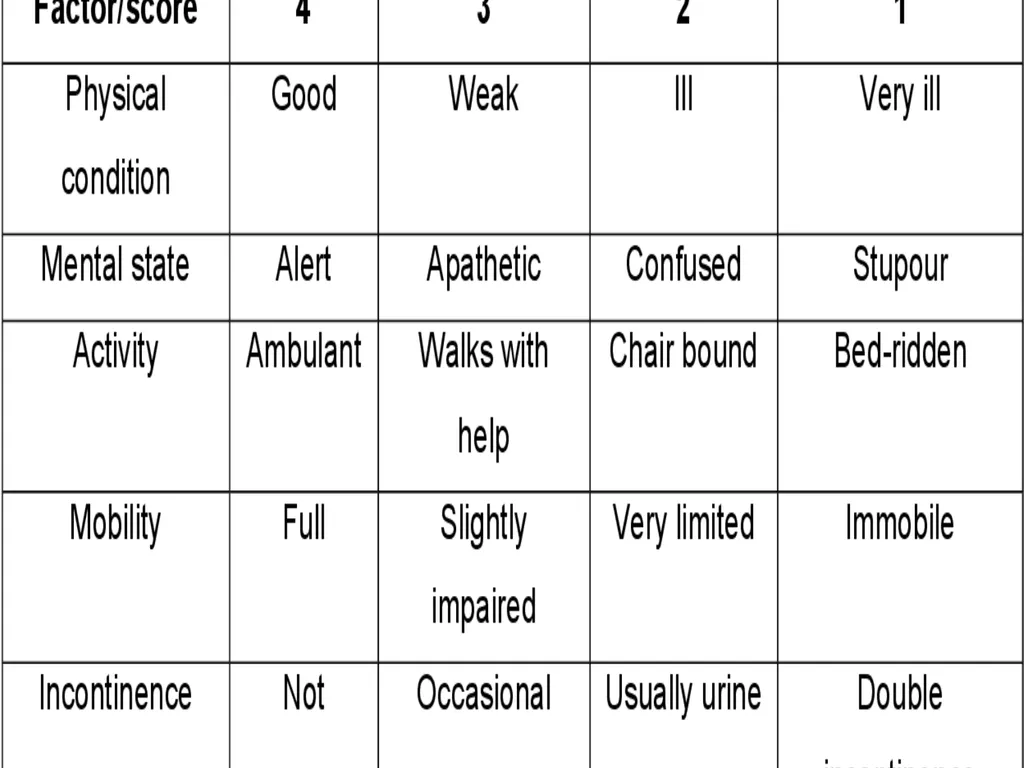
This is the first scale reported in 1962
It scores five risk factors
Physical condition
Mental condition
Activity
Mobility
Incontinence Norton scale<br>
21
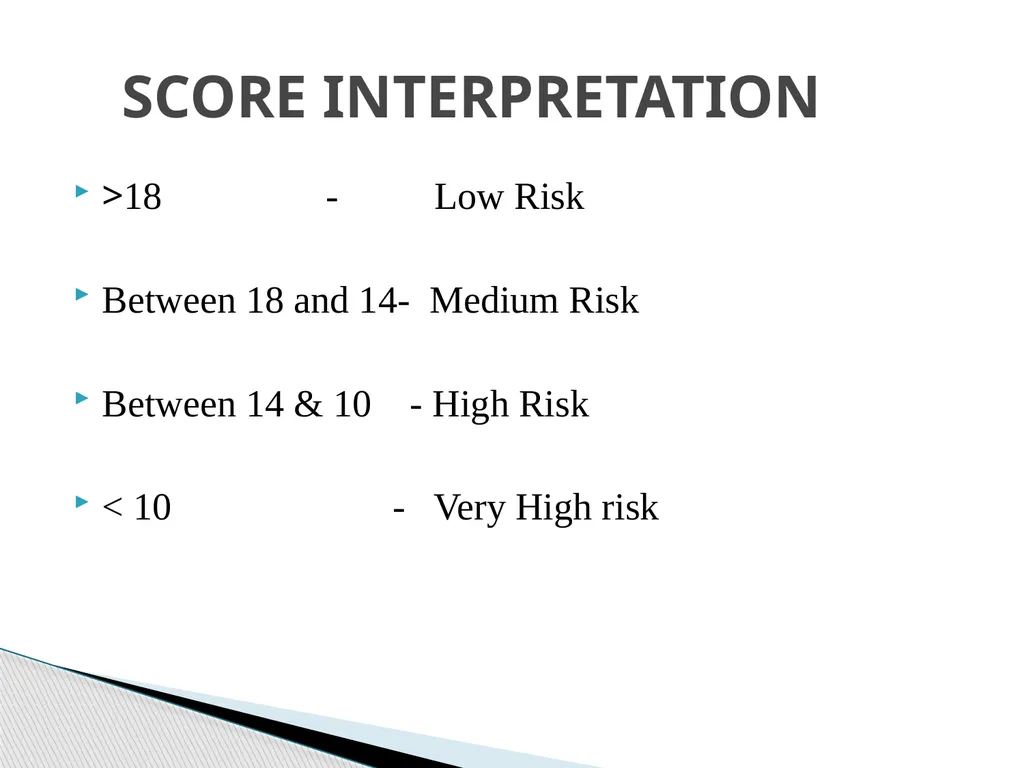
>18 - Low Risk
Between 18 and 14- Medium Risk
Between 14 & 10 - High Risk
< 10 - Very High risk SCORE INTERPRETATION<br>
22
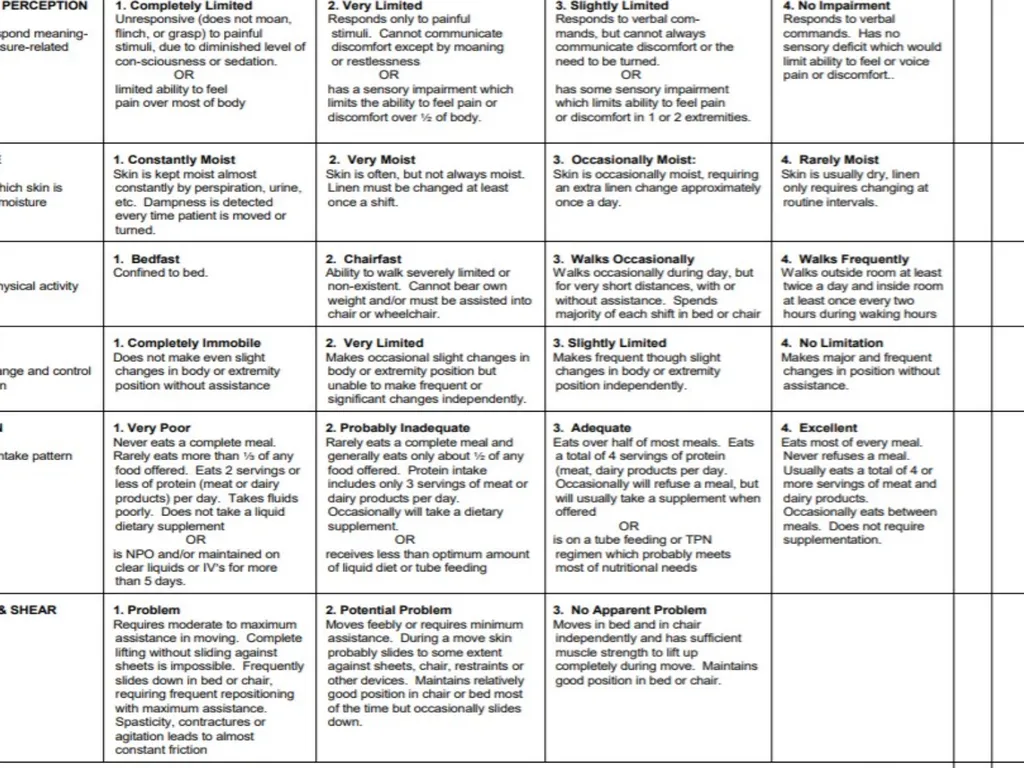
Braden scale was developed in 1987
It composed of six components- sensory perception, moisture, activity, mobility ,nutrition, friction and shear
The total score ranges from 6-23 ,a lower scale indicates the higher chances of developing of pressure ulcers. BRADEN SCALE<br>
23
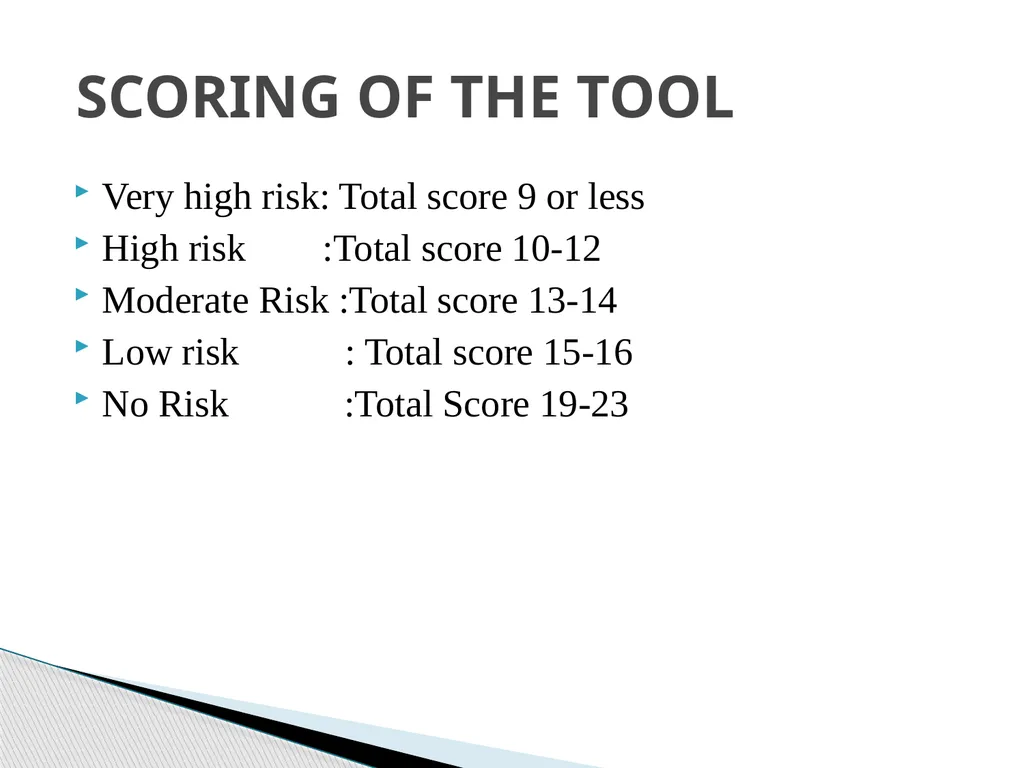
Very high risk: Total score 9 or less
High risk :Total score 10-12
Moderate Risk :Total score 13-14
Low risk : Total score 15-16
No Risk :Total Score 19-23 SCORING OF THE TOOL<br>
24
The repositioning techniques are the simple and best method to prevent the occurrence of pressure ulcers.
While doing repositioning remember to keep in mind some important measures to prevent further damage to the skin. REPOSITIONING<br>
25
Encourage the patient independence whenever possible to change their position by their own.
Keep 2-3 pillows ,towels, and protective devices nearby and use these items appropriately to protect high risk areas
Make sure the patient is comfortable after turning or repositioning. do’s<br>
26
Leave a patient in an upright sitting position for long periods. This can create shearing forces
Let a patient’s feet rest directly against an unpadded footboard.
Accidently touch an existing sore or high risk area during movement
Leave a bedpan in position for long period. The pressure could cause pressure sore within minutes DONT’S<br>
27
For sitting position in bed head of bed should not be >30
For bedridden patient ,it should be an oblique position inclined at 30 degree. Use of 2-3 pillows is required to release the pressure from bony prominences.
Schedule regular and frequent turning and positioning at least every 2 hrs and one hourly in elderly patients.
Encourage the patient to move in bed as far as possible.<br>
28
Inspection
Absorb moisture
Skin cleansing
Minimize irritation and dryness
Skin hygiene
Avoid dry skin
Avoid massage
Minimize Exposure to moisture
Health teaching
Use of diaper
Bedsheet Skin hygiene and moisture control<br>
29
Pillows
Cotton rings
Air mattresses CORRECT USE OF COMFORT DEVICES<br>
30
Mobility is the key factor in determining activities and exercise level.
The basic objective is to prevent stiff joints, muscle weakness, and to release the pressure from the pressure points.
The exercises are :
Neck and head exercise
Ankle pump exercise
Knee raised exercise
Elbow exercise RANGE OF MOTION EXERCISES<br>
31
It includes the relieving of pressure from highly vulnerable areas with the help of comfort devices or ROM Exercises PRESSURE POINT CARE<br>
32
NUTRITIONAL BALANCE<br>