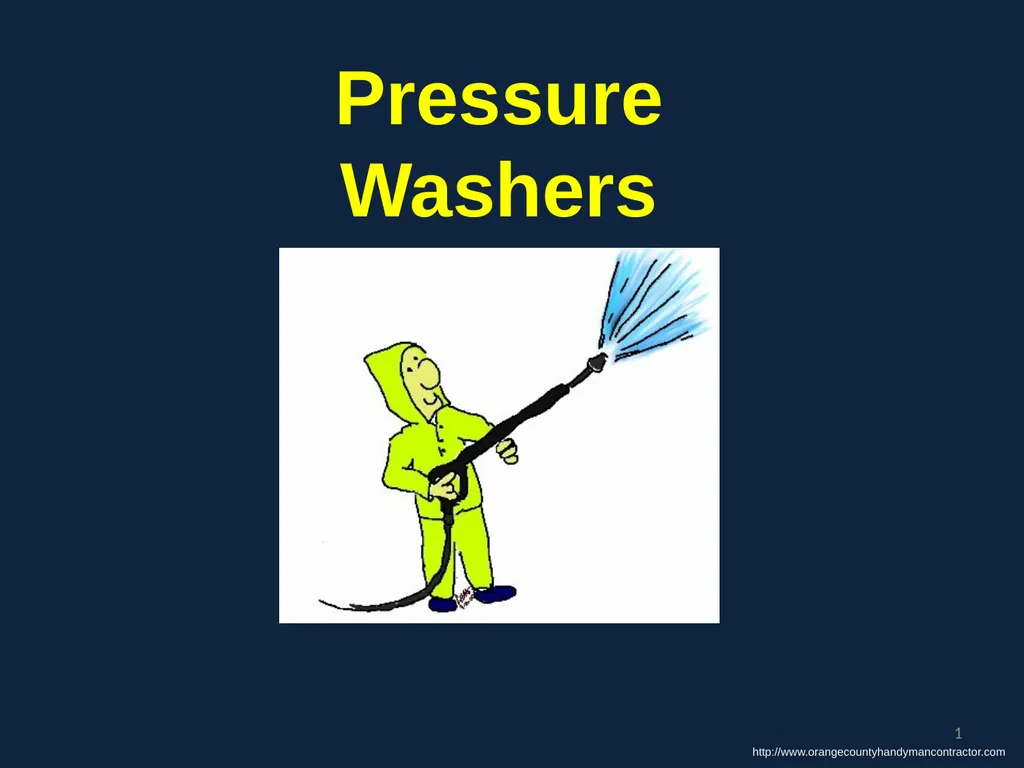
Pressure Washers http:www.orangecountyhandymancontractor.com 1 A mechanical sprayer that uses high pressure water to clean Basic Components: Motor Trigger Switch High-Pressure Hose Description of a Pressure Washer 2 Pressure Washer Uses
"Pressure Washers" is the property of its rightful owner. Permission is granted to
download and print the materials on this website for personal, non-commercial use only, and to display it
on your personal computer provided you do not modify the materials and that you retain all copyright
notices contained in the materials. By downloading content from our website, you accept the terms of this
agreement.
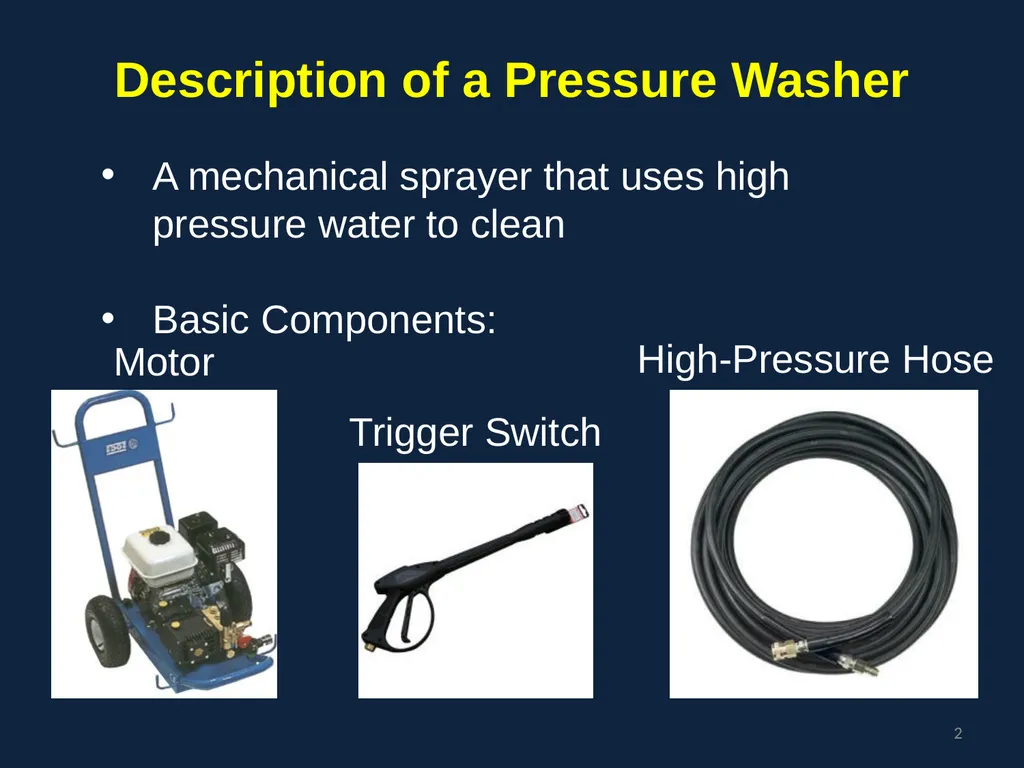
A mechanical sprayer that uses high pressure water to clean
Basic Components: Motor Trigger Switch High-Pressure Hose Description of a Pressure Washer 2<br>
03
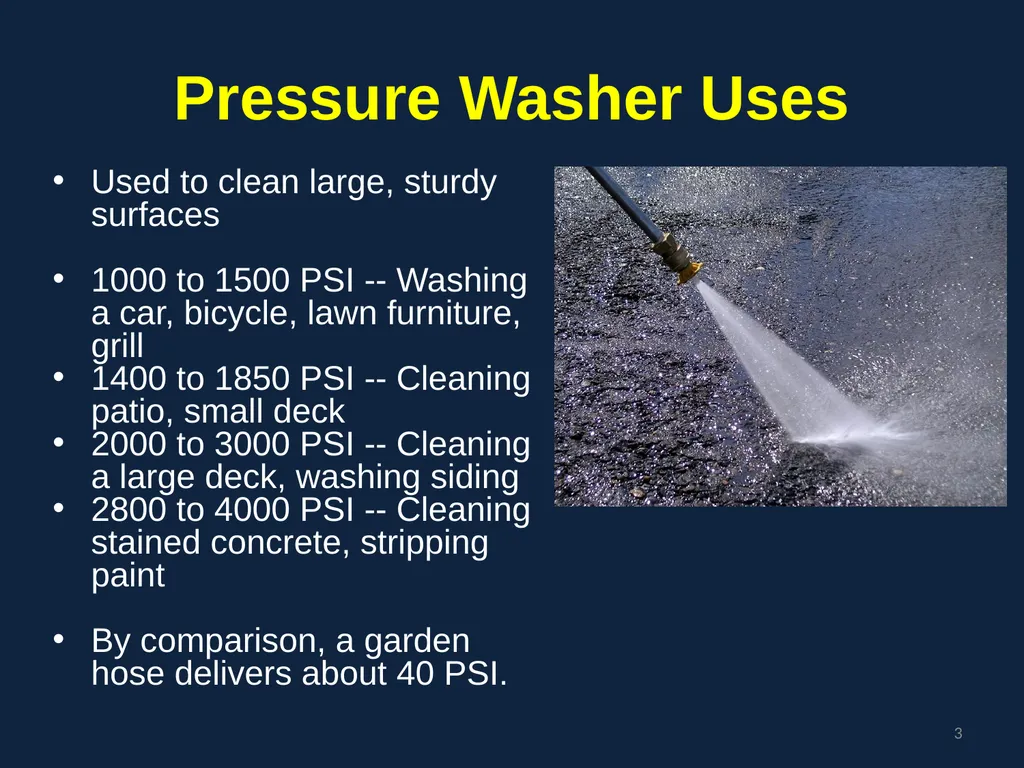
Pressure Washer Uses Used to clean large, sturdy surfaces
1000 to 1500 PSI -- Washing a car, bicycle, lawn furniture, grill
1400 to 1850 PSI -- Cleaning patio, small deck
2000 to 3000 PSI -- Cleaning a large deck, washing siding
2800 to 4000 PSI -- Cleaning stained concrete, stripping paint
By comparison, a garden hose delivers about 40 PSI. 3<br>
04
Safety Concerns High pressure water
Excessive noise from compressor (gas powered)
Flying debris during use
Initial Recoil from gun pressure
Electric shock from water + electricity
Corrosive chemical hazard
Exhaust fumes 4<br>
05
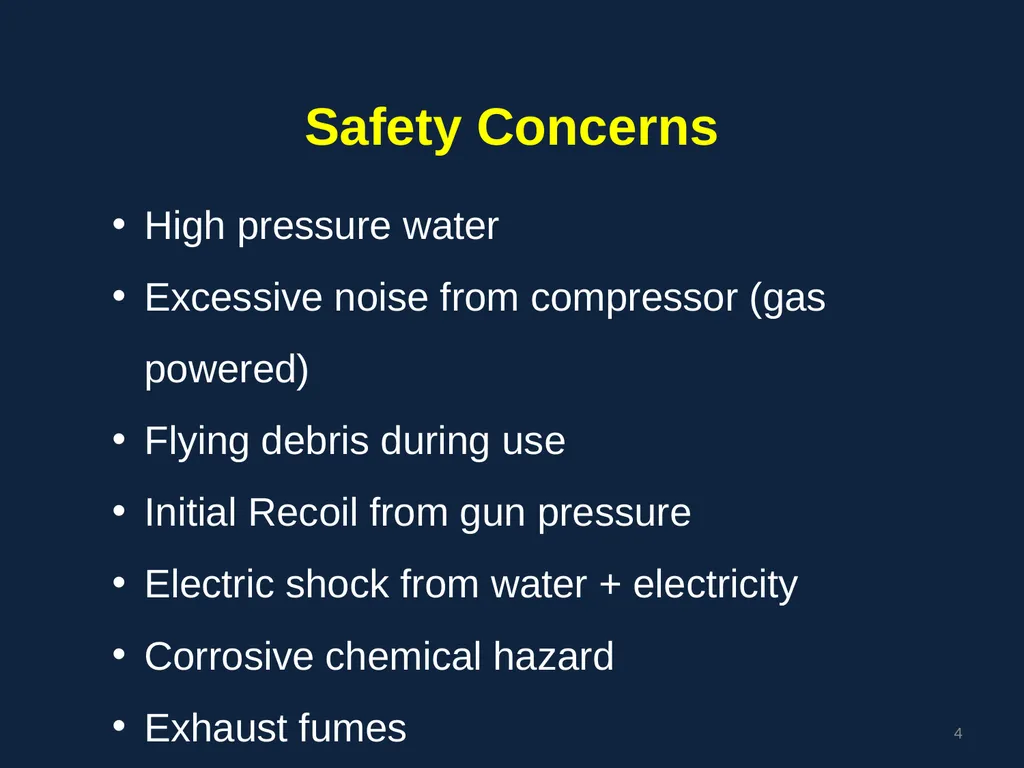
Pressure Washer Related Injuries Contact with water stream
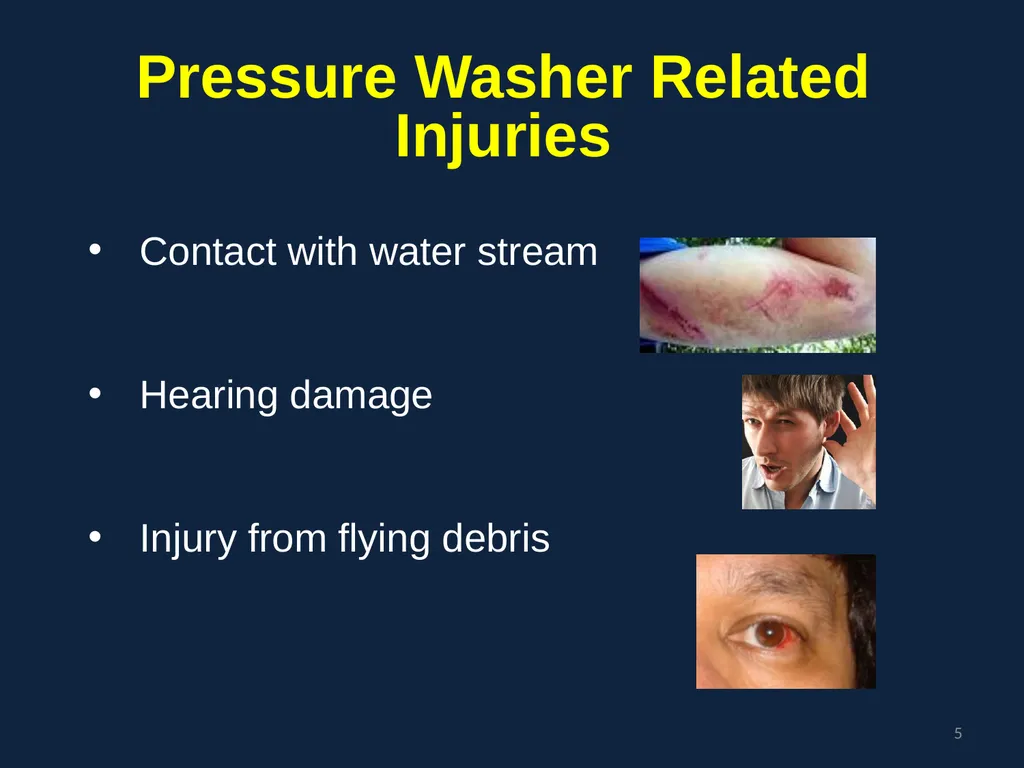
Hearing damage
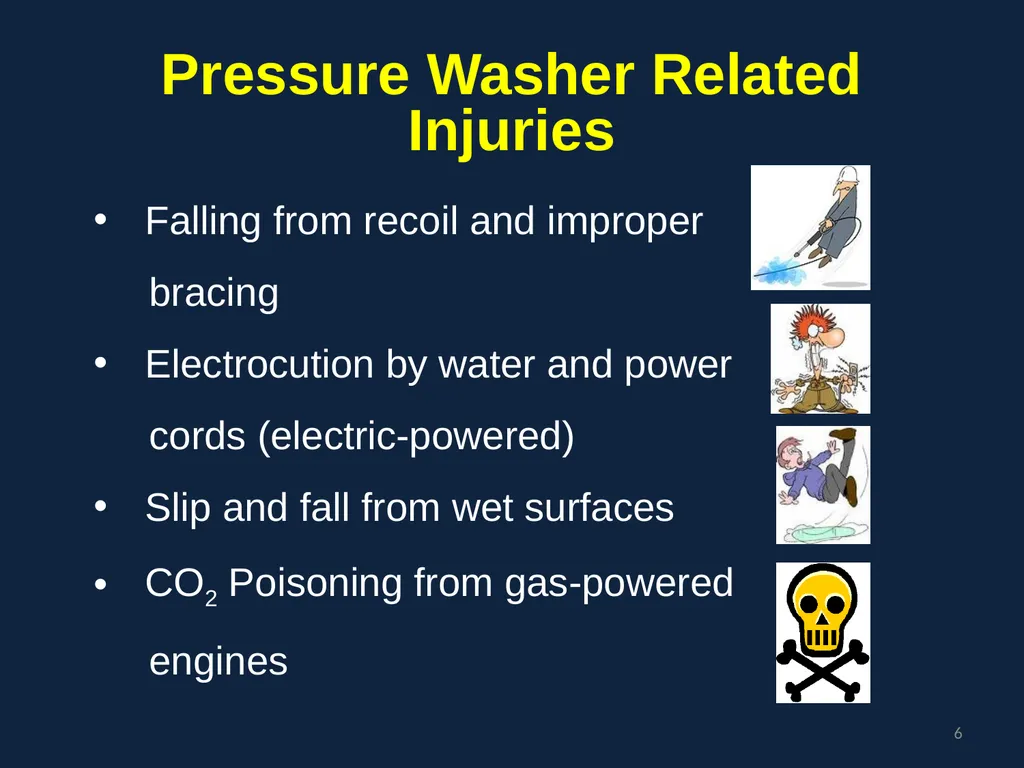
Injury from flying debris 5<br>
06
Pressure Washer Related Injuries Falling from recoil and improper
bracing
Electrocution by water and power
cords (electric-powered)
Slip and fall from wet surfaces
CO2 Poisoning from gas-powered
engines 6<br>
07
Pressure Washer Related Fatalities OSHA investigated one pressure washer-related fatality case from 1990 thru 2009 that resulted in the death of two workers. The cause of death was a result of inhaling glycolic acid and carbon monoxide in a poorly ventilated space.1 1 Source: Extracted from OSHA Accident Investigation Data 1990-2009 7<br>
08
OSHA Regulations Currently, there are no OSHA regulations that specifically mention pressure washers. 8<br>
09
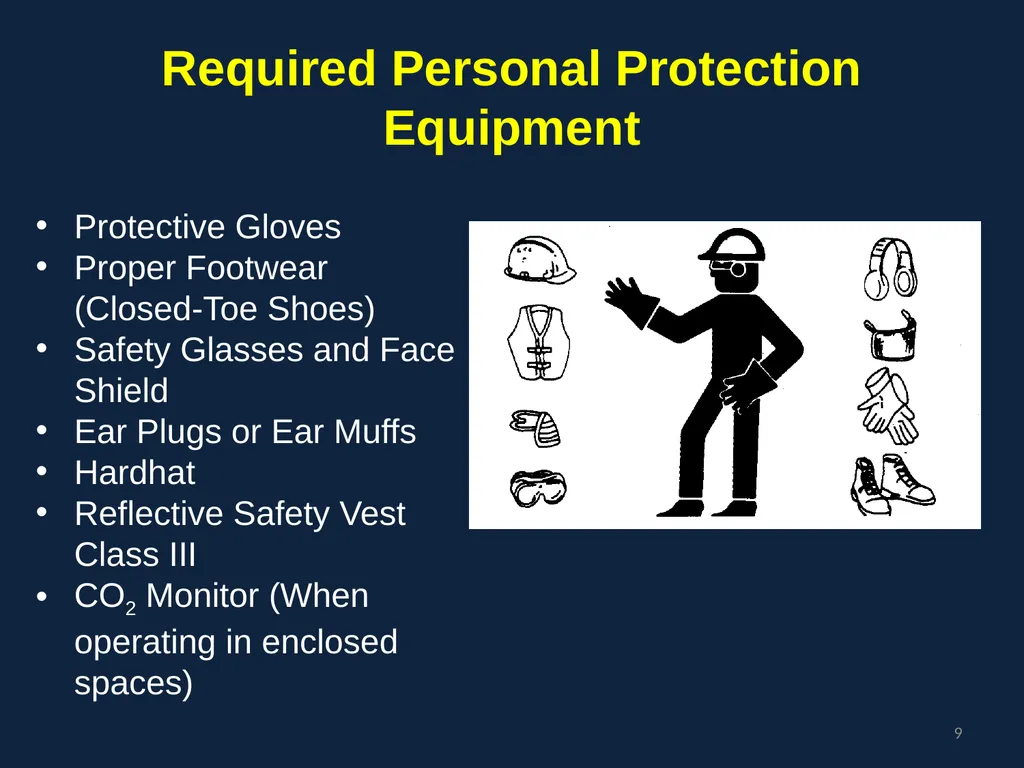
Required Personal Protection Equipment Protective Gloves
Proper Footwear (Closed-Toe Shoes)
Safety Glasses and Face Shield
Ear Plugs or Ear Muffs
Hardhat
Reflective Safety Vest Class III
CO2 Monitor (When operating in enclosed spaces) 9<br>
10
Improper PPE 10<br>
11
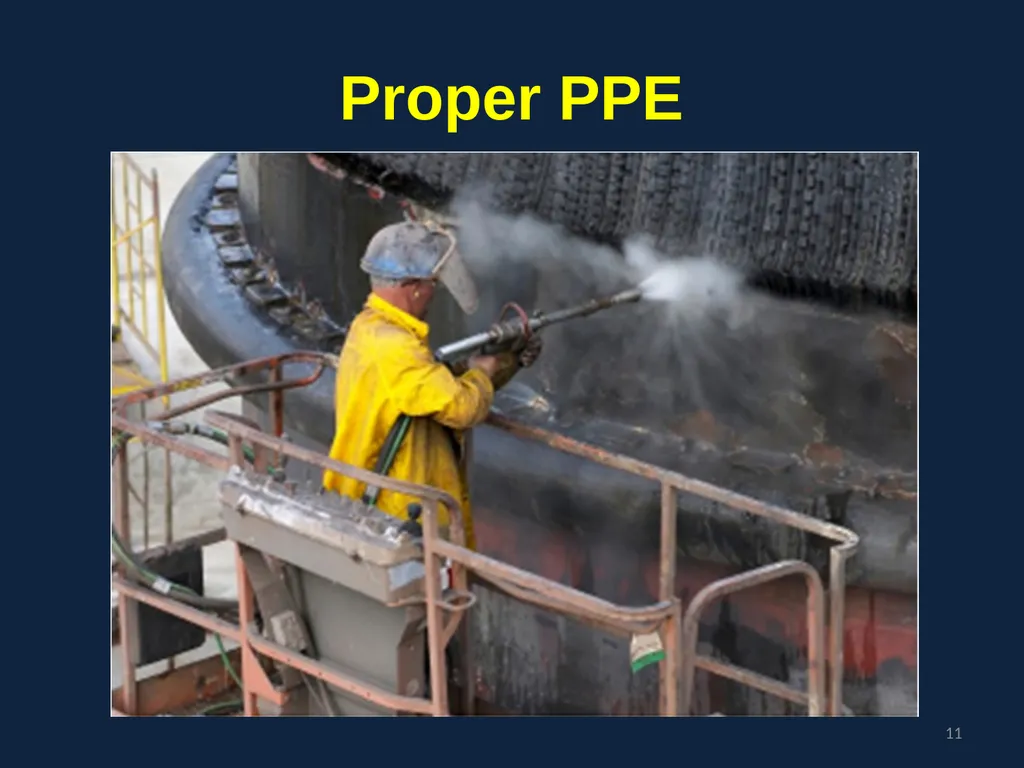
Proper PPE 11<br>
12
Correct Operating Procedures Inspect equipment prior to use
Stabilize the unit to negate the possibility of roll-over
Connect water source
Make sure source stays connected and turned on while operating
Never fill engine with gasoline while engine is running or hot or operate it in an enclosed space
Stand in a firm stance to negate initial recoil
Be aware of the surroundings
Never point wand at/near people and be conscious of overspray
Do not operate the pressure washer near other individuals
Always test the ground fault circuit interrupter (circuit breaker or outlet) before using an electric pressure washer 12<br>
13
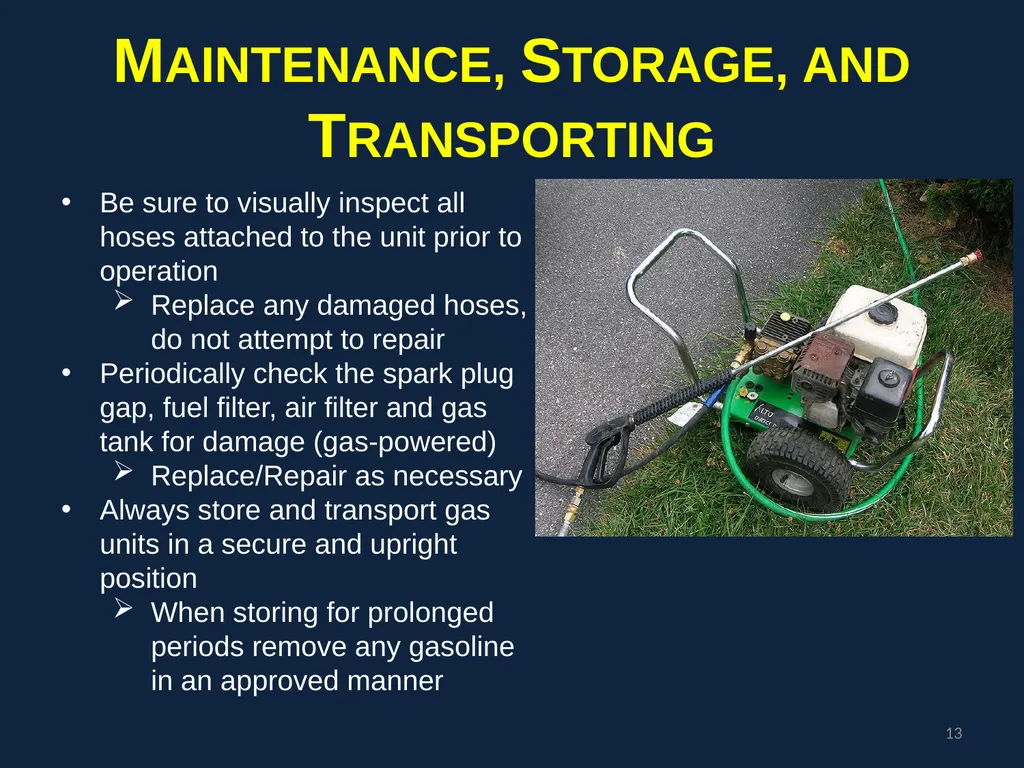
Maintenance, Storage, and Transporting Be sure to visually inspect all hoses attached to the unit prior to operation
Replace any damaged hoses, do not attempt to repair
Periodically check the spark plug gap, fuel filter, air filter and gas tank for damage (gas-powered)
Replace/Repair as necessary
Always store and transport gas units in a secure and upright position
When storing for prolonged periods remove any gasoline in an approved manner 13<br>