PROF. Winnie Mucherah cARNEGIE AFRICAN DIASPORA FELLOW Ball State University INDIANA, U.S.A. Research Article Review Breaking Down the Article What is the purpose of literature review? Anyone can negatively criticize it is the cheapest of
"PROF. Winnie Mucherah cARNEGIE AFRICAN DIASPORA" is the property of its rightful owner. Permission is granted to
download and print the materials on this website for personal, non-commercial use only, and to display it
on your personal computer provided you do not modify the materials and that you retain all copyright
notices contained in the materials. By downloading content from our website, you accept the terms of this
agreement.
Presentation Transcript
01
PROF. Winnie Mucherah
cARNEGIE AFRICAN DIASPORA FELLOW
Ball State University
INDIANA, U.S.A. Research Article Review<br>
02
Breaking Down the Article What is the purpose of literature review?<br>
03
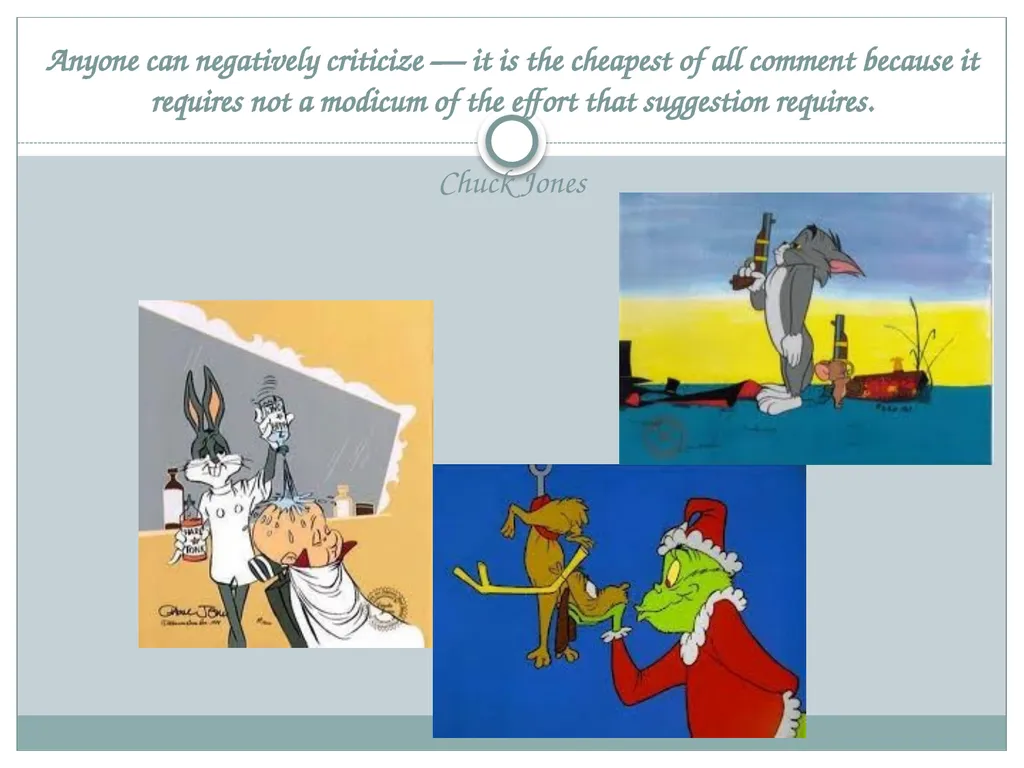
Anyone can negatively criticize — it is the cheapest of all comment because it requires not a modicum of the effort that suggestion requires. Chuck Jones<br>
04
Purpose What is the purpose of the study?
What are they looking for?
What are the variables?
Are they looking for a relationship or a difference?<br>
05
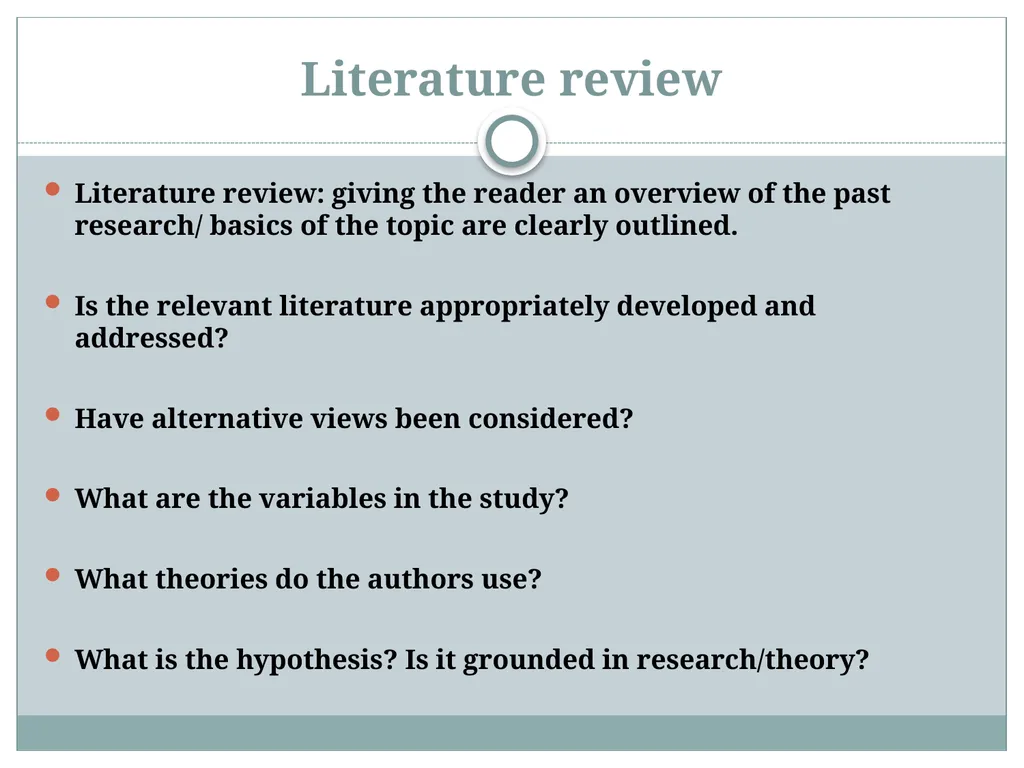
Literature review Literature review: giving the reader an overview of the past research/ basics of the topic are clearly outlined.
Is the relevant literature appropriately developed and addressed?
Have alternative views been considered?
What are the variables in the study?
What theories do the authors use?
What is the hypothesis? Is it grounded in research/theory?<br>
06
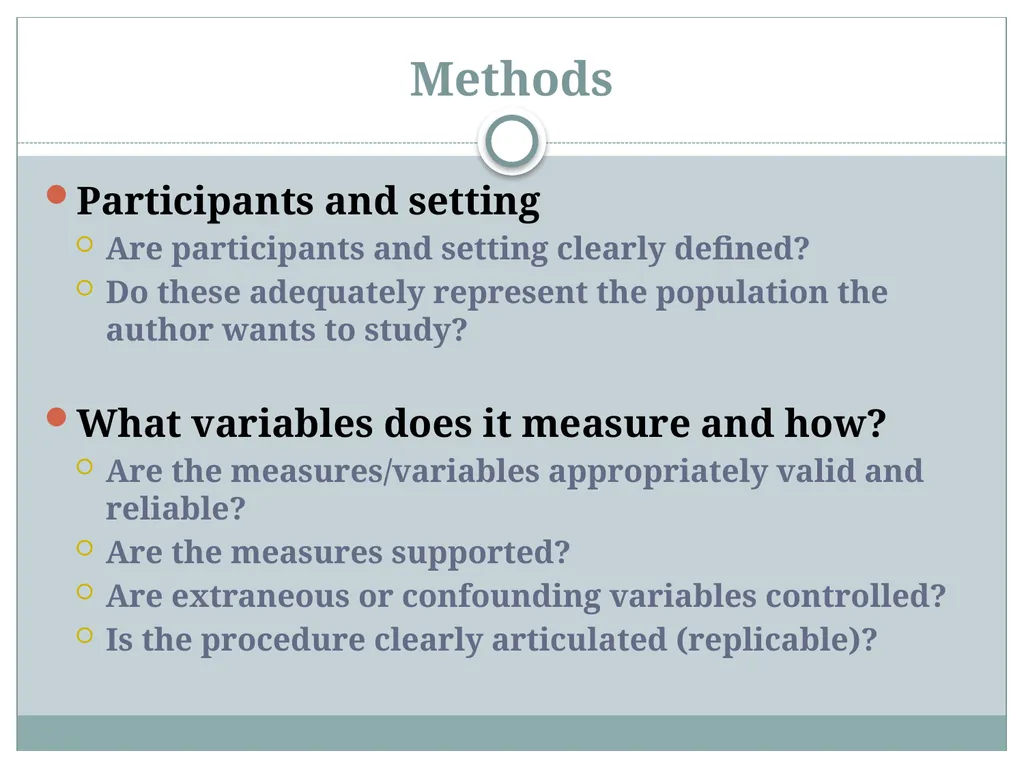
Methods Participants and setting
Are participants and setting clearly defined?
Do these adequately represent the population the author wants to study?
What variables does it measure and how?
Are the measures/variables appropriately valid and reliable?
Are the measures supported?
Are extraneous or confounding variables controlled?
Is the procedure clearly articulated (replicable)?<br>
07
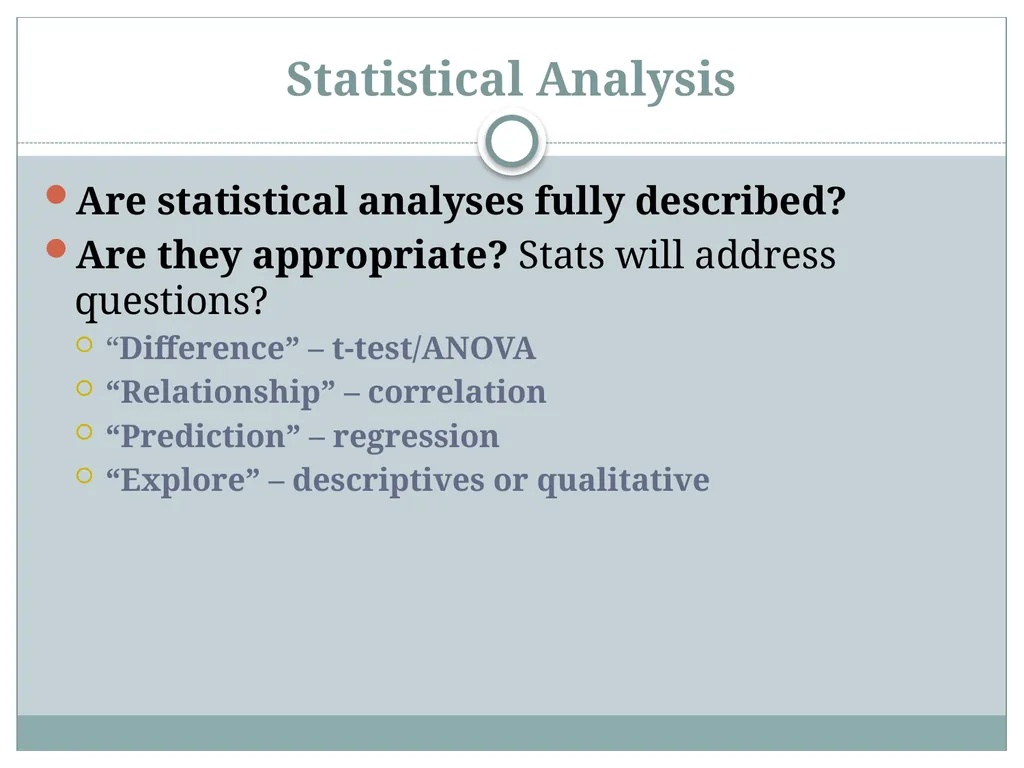
Statistical Analysis Are statistical analyses fully described?
Are they appropriate? Stats will address questions?
“Difference” – t-test/ANOVA
“Relationship” – correlation
“Prediction” – regression
“Explore” – descriptives or qualitative<br>
08
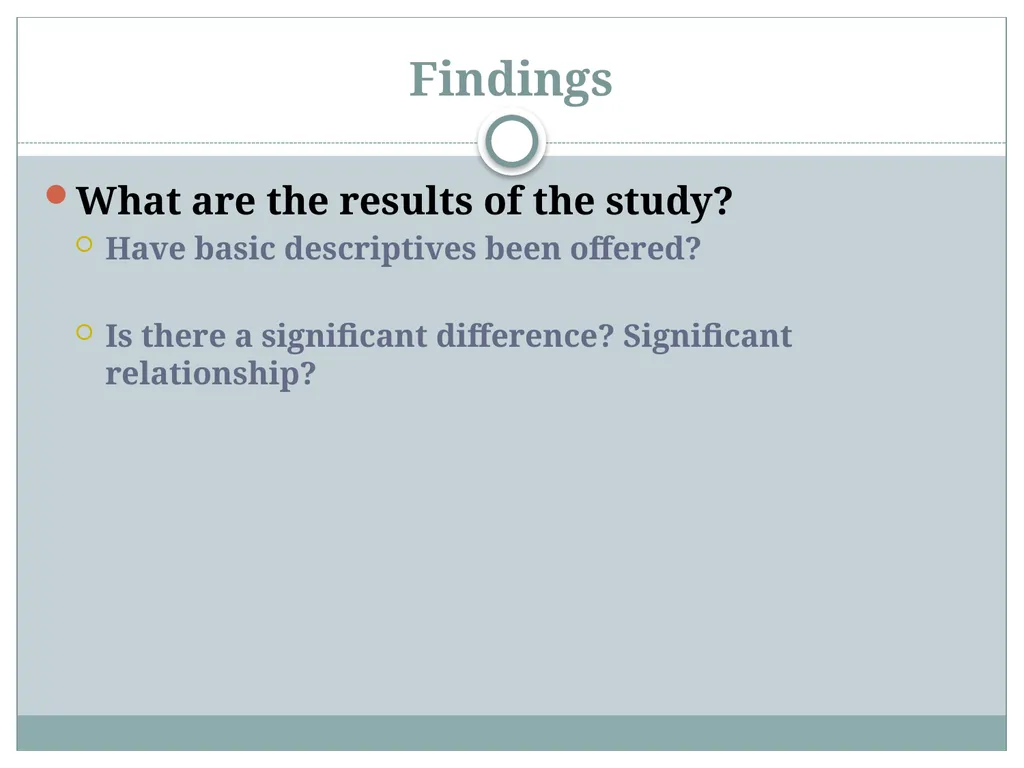
Findings What are the results of the study?
Have basic descriptives been offered?
Is there a significant difference? Significant relationship?<br>
09
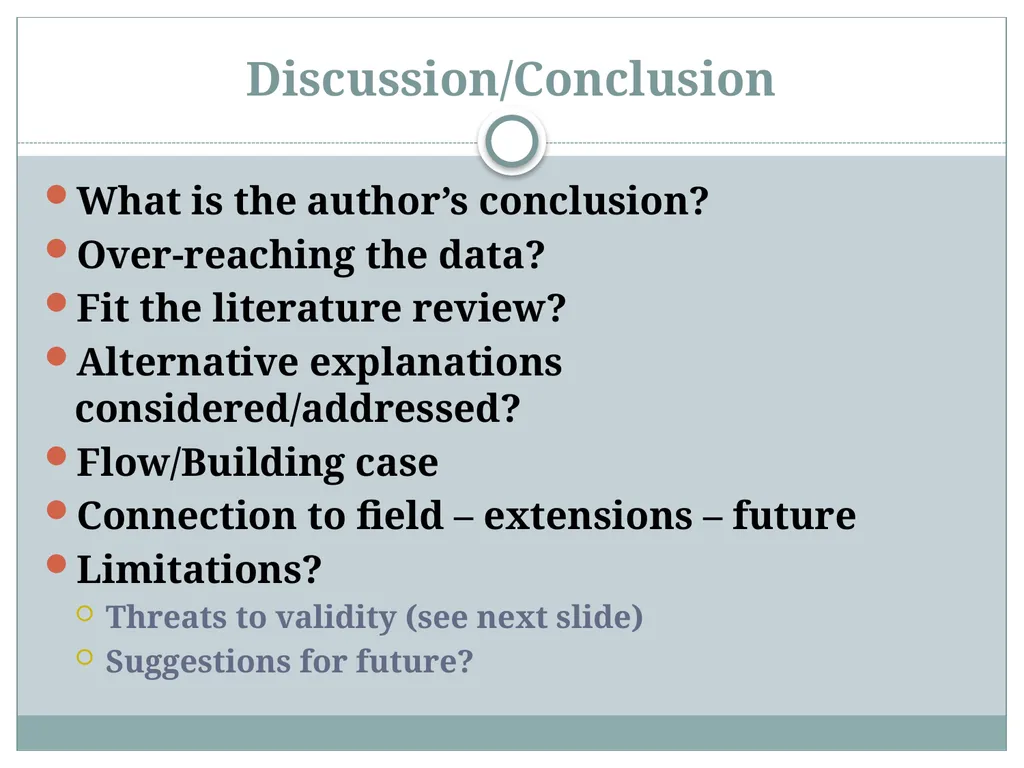
Discussion/Conclusion What is the author’s conclusion?
Over-reaching the data?
Fit the literature review?
Alternative explanations considered/addressed?
Flow/Building case
Connection to field – extensions – future
Limitations?
Threats to validity (see next slide)
Suggestions for future?<br>
10
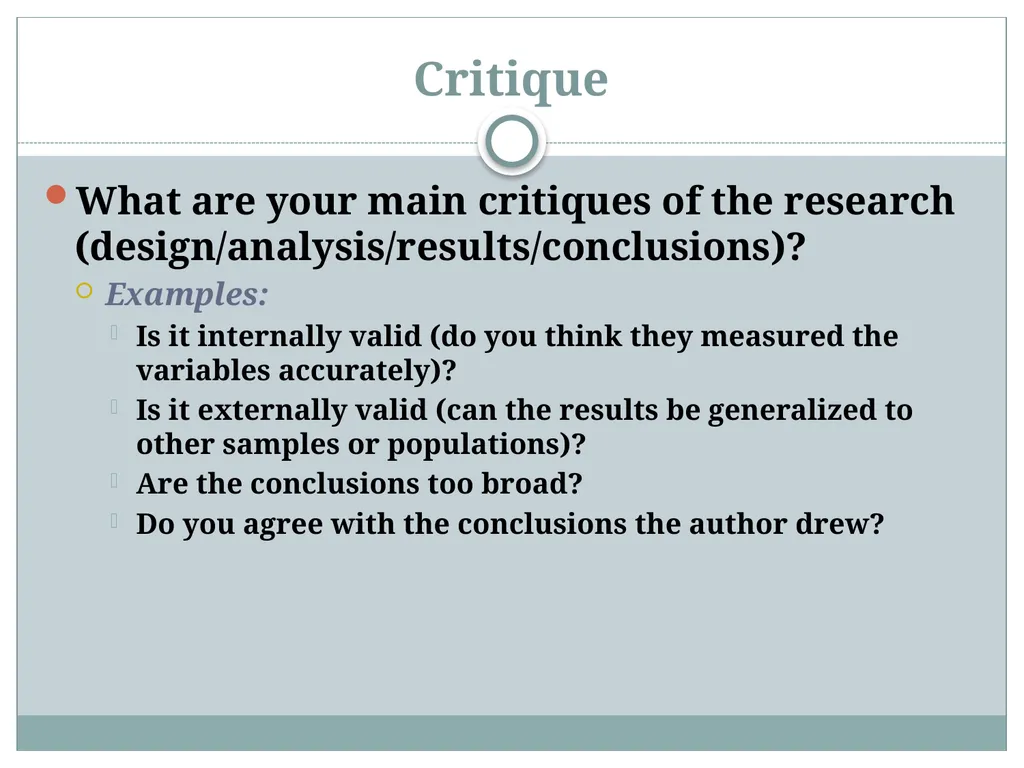
Critique What are your main critiques of the research (design/analysis/results/conclusions)?
Examples:
Is it internally valid (do you think they measured the variables accurately)?
Is it externally valid (can the results be generalized to other samples or populations)?
Are the conclusions too broad?
Do you agree with the conclusions the author drew?<br>
11
Main take-aways Take note of the main findings you would use to support or refute future studies
How are these results applicable to your research or practice?<br>
12
Conclusion on Literature Reviews Reviewing the problems you have had in summarizing the results of others’ studies can provide you with a good beginning list of practices to follow in your own research.
Remember that your study is destined to become part of a virtual data archive
As we have benefited from the work of past researchers, so too we all have an ethical obligation to help future researchers benefit from ours-Vogt et al., 2014<br>