
Properties and changes of materials Comparing
Description: Properties and changes of materials Comparing soluble and insoluble materials Year 5 Age 9 - 10 Properties and changes of materials 2 Comparing soluble and insoluble materials Key Learning Some materials will dissolve in a liquid and form a
Related Topics
Download Presentation
"Properties and changes of materials Comparing" is the property of its rightful owner. Permission is granted to download and print the materials on this website for personal, non-commercial use only, and to display it on your personal computer provided you do not modify the materials and that you retain all copyright notices contained in the materials. By downloading content from our website, you accept the terms of this agreement.
Presentation Transcript
slide1. Properties and changes of materials Comparing soluble and insoluble
materials Year 5
Age 9 - 10<br>
slide2. Properties and changes of materials 2 Comparing soluble and insoluble materials Key Learning
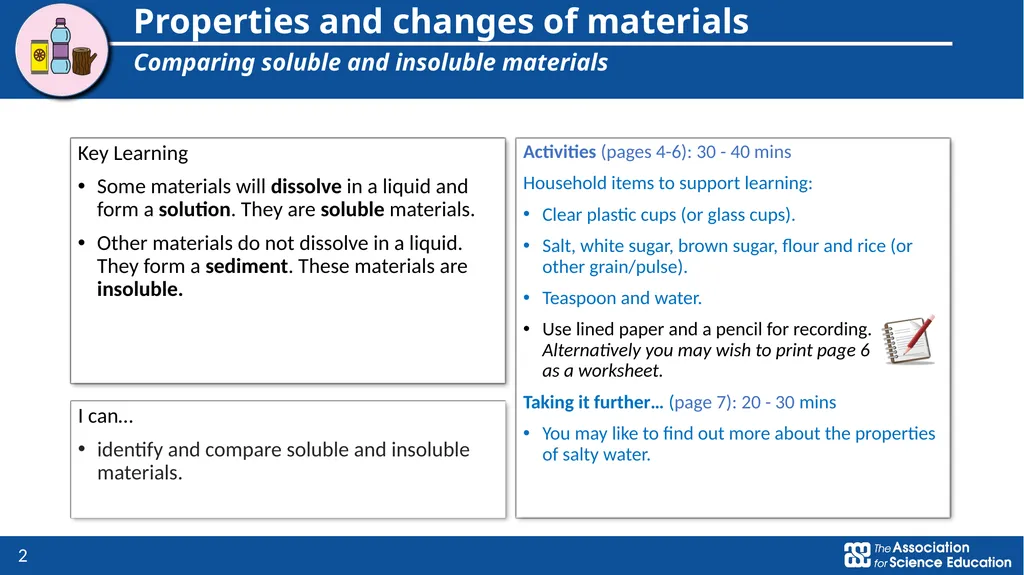
Some materials will dissolve in a liquid and form a solution. They are soluble materials.
Other materials do not dissolve in a liquid. They form a sediment. These materials are insoluble. I can…
identify and compare soluble and insoluble materials. Activities (pages 4-6): 30 - 40 mins
Household items to support learning:
Clear plastic cups (or glass cups).
Salt, white sugar, brown sugar, flour and rice (or other grain/pulse).
Teaspoon and water.
Use lined paper and a pencil for recording. Alternatively you may wish to print page 6 as a worksheet.
Taking it further… (page 7): 20 - 30 mins
You may like to find out more about the properties of salty water.<br>
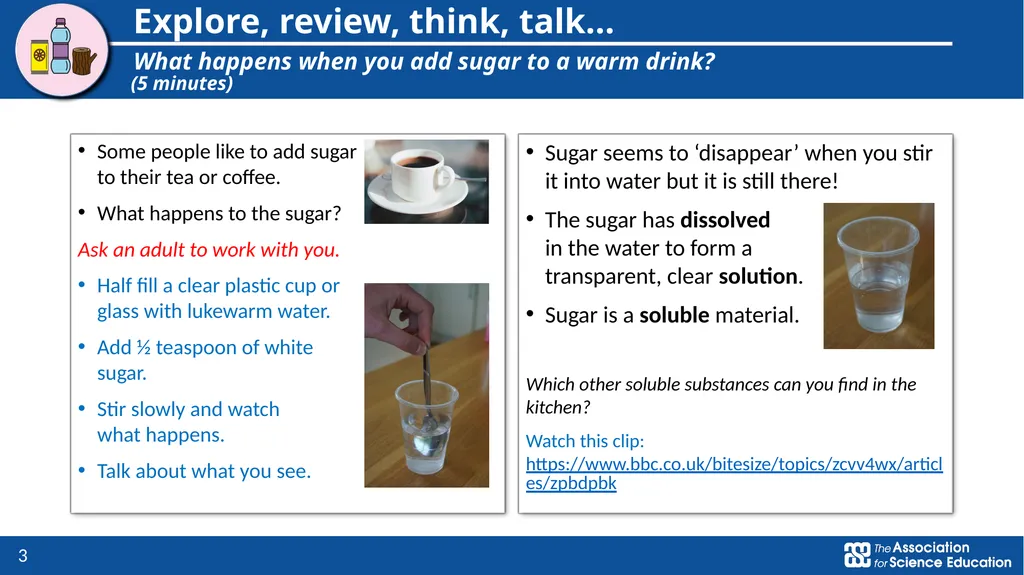
slide3. Explore, review, think, talk… 3 What happens when you add sugar to a warm drink? Some people like to add sugar to their tea or coffee.
What happens to the sugar?
Ask an adult to work with you.
Half fill a clear plastic cup or glass with lukewarm water.
Add ½ teaspoon of white sugar.
Stir slowly and watch what happens.
Talk about what you see. Sugar seems to ‘disappear’ when you stir it into water but it is still there!
The sugar has dissolved in the water to form a transparent, clear solution.
Sugar is a soluble material.
Which other soluble substances can you find in the kitchen?
Watch this clip: https://www.bbc.co.uk/bitesize/topics/zcvv4wx/articles/zpbdpbk (5 minutes)<br>
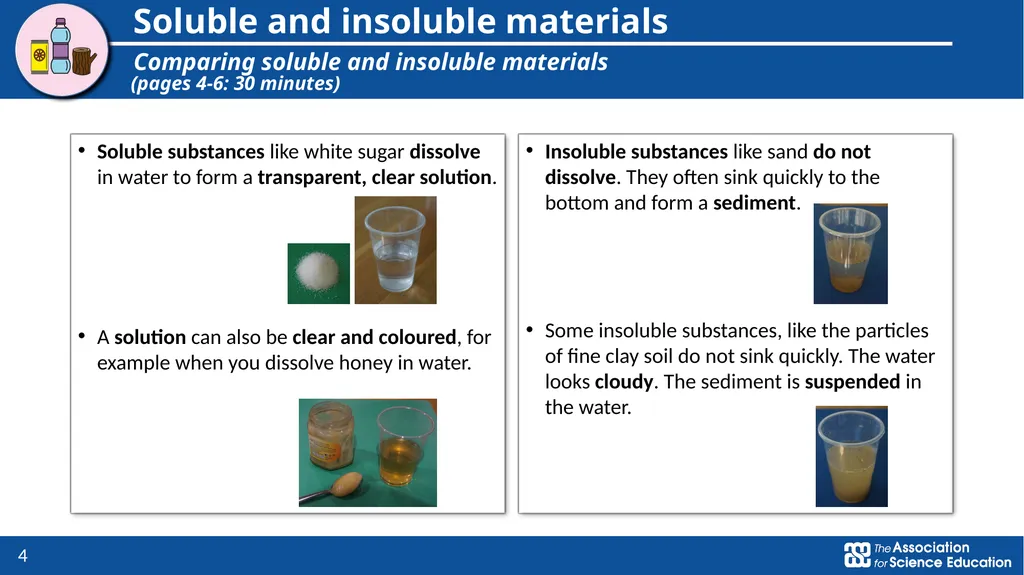
slide4. Soluble and insoluble materials 4 Comparing soluble and insoluble materials Soluble substances like white sugar dissolve in water to form a transparent, clear solution.
A solution can also be clear and coloured, for example when you dissolve honey in water. Insoluble substances like sand do not dissolve. They often sink quickly to the bottom and form a sediment.
Some insoluble substances, like the particles of fine clay soil do not sink quickly. The water looks cloudy. The sediment is suspended in the water. (pages 4-6: 30 minutes)<br>
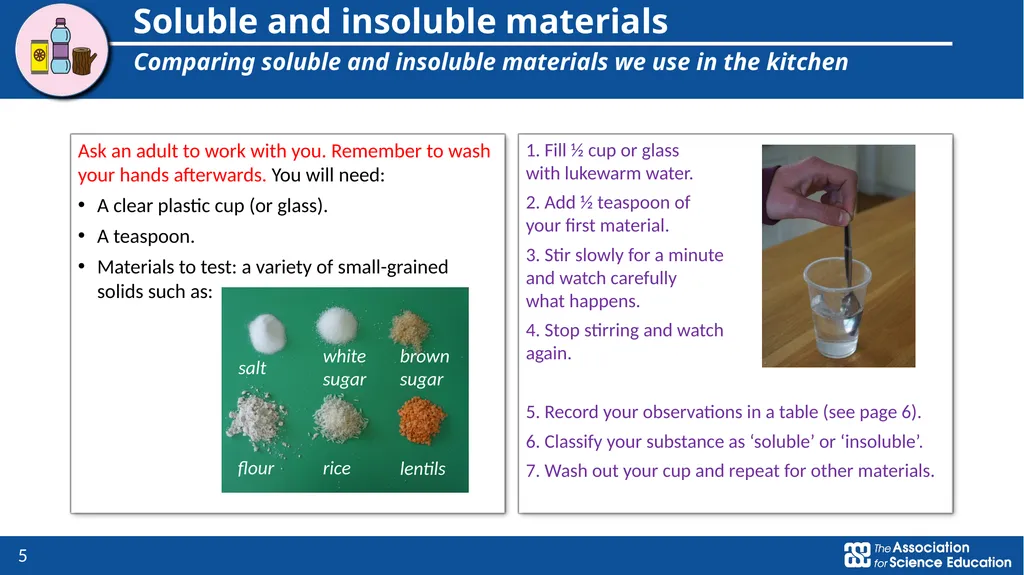
slide5. Soluble and insoluble materials 5 Comparing soluble and insoluble materials we use in the kitchen Ask an adult to work with you. Remember to wash your hands afterwards. You will need:
A clear plastic cup (or glass).
A teaspoon.
Materials to test: a variety of small-grained solids such as: 1. Fill ½ cup or glass with lukewarm water.
2. Add ½ teaspoon of your first material.
3. Stir slowly for a minute and watch carefully what happens.
4. Stop stirring and watch again.
5. Record your observations in a table (see page 6).
6. Classify your substance as ‘soluble’ or ‘insoluble’.
7. Wash out your cup and repeat for other materials. salt white
sugar brown sugar flour rice lentils<br>
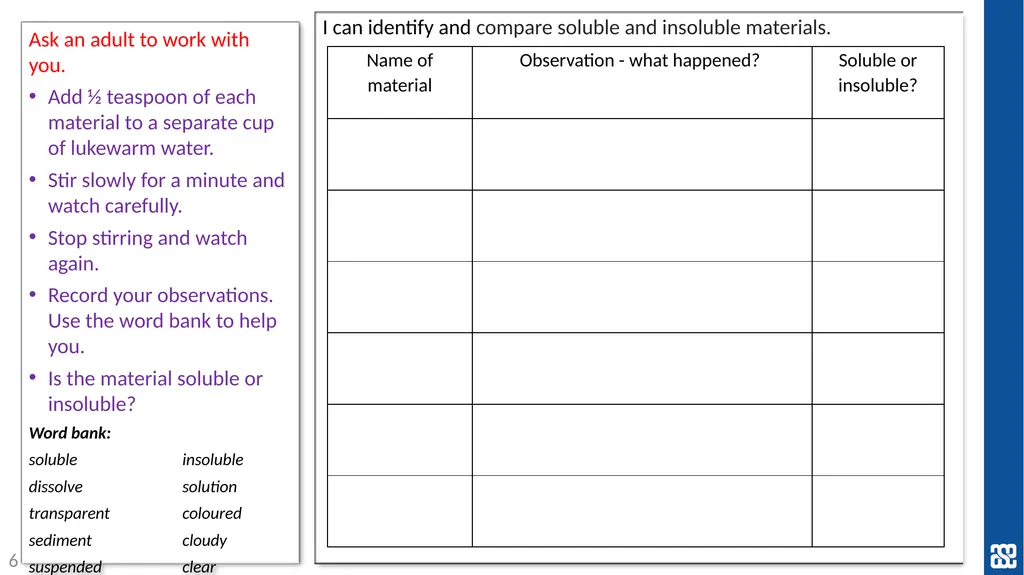
slide6. 6 Ask an adult to work with you.
Add ½ teaspoon of each material to a separate cup of lukewarm water.
Stir slowly for a minute and watch carefully.
Stop stirring and watch again.
Record your observations. Use the word bank to help you.
Is the material soluble or insoluble?
Word bank:
soluble insoluble
dissolve solution
transparent coloured
sediment cloudy
suspended clear I can identify and compare soluble and insoluble materials.<br>
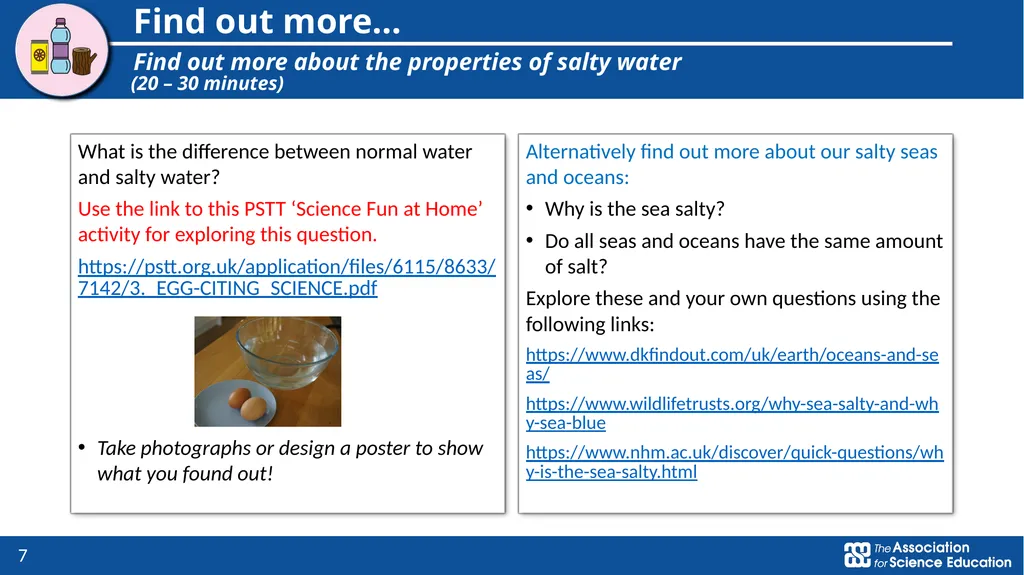
slide7. Find out more… 7 Find out more about the properties of salty water What is the difference between normal water and salty water?
Use the link to this PSTT ‘Science Fun at Home’ activity for exploring this question.
https://pstt.org.uk/application/files/6115/8633/7142/3._EGG-CITING_SCIENCE.pdf
Take photographs or design a poster to show what you found out! Alternatively find out more about our salty seas and oceans:
Why is the sea salty?
Do all seas and oceans have the same amount of salt?
Explore these and your own questions using the following links:
https://www.dkfindout.com/uk/earth/oceans-and-seas/
https://www.wildlifetrusts.org/why-sea-salty-and-why-sea-blue
https://www.nhm.ac.uk/discover/quick-questions/why-is-the-sea-salty.html (20 – 30 minutes)<br>
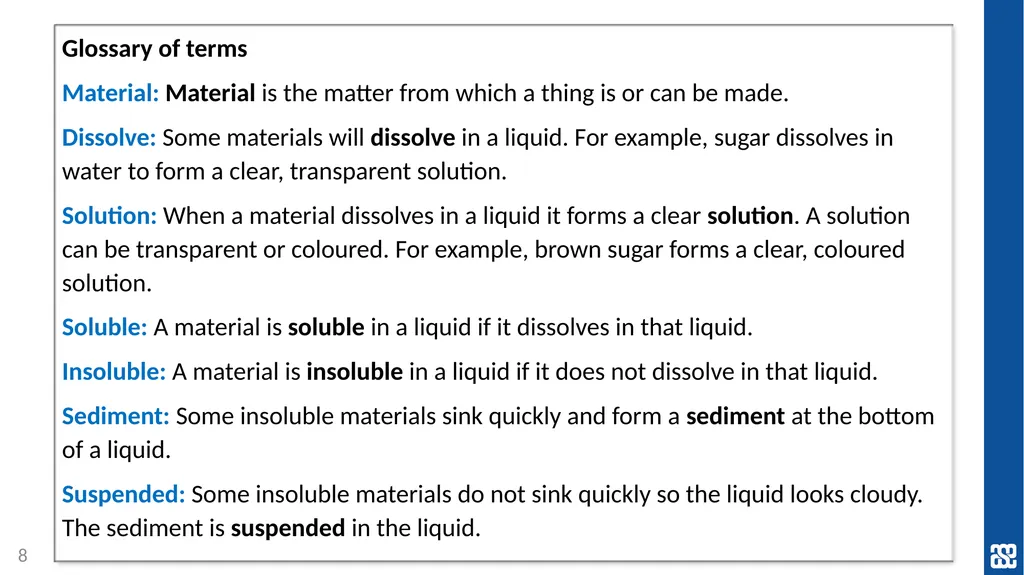
slide8. 8 Glossary of terms
Material: Material is the matter from which a thing is or can be made.
Dissolve: Some materials will dissolve in a liquid. For example, sugar dissolves in water to form a clear, transparent solution.
Solution: When a material dissolves in a liquid it forms a clear solution. A solution can be transparent or coloured. For example, brown sugar forms a clear, coloured solution.
Soluble: A material is soluble in a liquid if it dissolves in that liquid.
Insoluble: A material is insoluble in a liquid if it does not dissolve in that liquid.
Sediment: Some insoluble materials sink quickly and form a sediment at the bottom of a liquid.
Suspended: Some insoluble materials do not sink quickly so the liquid looks cloudy. The sediment is suspended in the liquid.<br>
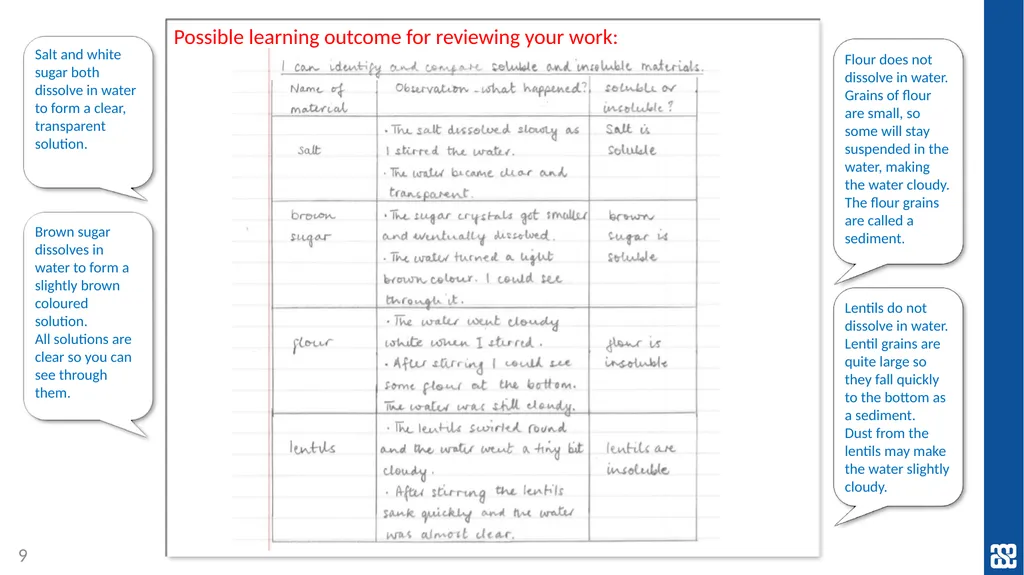
slide9. 9 Possible learning outcome for reviewing your work:<br>
slide2. Properties and changes of materials 2 Comparing soluble and insoluble materials Key Learning
Some materials will dissolve in a liquid and form a solution. They are soluble materials.
Other materials do not dissolve in a liquid. They form a sediment. These materials are insoluble. I can…
identify and compare soluble and insoluble materials. Activities (pages 4-6): 30 - 40 mins
Household items to support learning:
Clear plastic cups (or glass cups).
Salt, white sugar, brown sugar, flour and rice (or other grain/pulse).
Teaspoon and water.
Use lined paper and a pencil for recording. Alternatively you may wish to print page 6 as a worksheet.
Taking it further… (page 7): 20 - 30 mins
You may like to find out more about the properties of salty water.<br>
slide3. Explore, review, think, talk… 3 What happens when you add sugar to a warm drink? Some people like to add sugar to their tea or coffee.
What happens to the sugar?
Ask an adult to work with you.
Half fill a clear plastic cup or glass with lukewarm water.
Add ½ teaspoon of white sugar.
Stir slowly and watch what happens.
Talk about what you see. Sugar seems to ‘disappear’ when you stir it into water but it is still there!
The sugar has dissolved in the water to form a transparent, clear solution.
Sugar is a soluble material.
Which other soluble substances can you find in the kitchen?
Watch this clip: https://www.bbc.co.uk/bitesize/topics/zcvv4wx/articles/zpbdpbk (5 minutes)<br>
slide4. Soluble and insoluble materials 4 Comparing soluble and insoluble materials Soluble substances like white sugar dissolve in water to form a transparent, clear solution.
A solution can also be clear and coloured, for example when you dissolve honey in water. Insoluble substances like sand do not dissolve. They often sink quickly to the bottom and form a sediment.
Some insoluble substances, like the particles of fine clay soil do not sink quickly. The water looks cloudy. The sediment is suspended in the water. (pages 4-6: 30 minutes)<br>
slide5. Soluble and insoluble materials 5 Comparing soluble and insoluble materials we use in the kitchen Ask an adult to work with you. Remember to wash your hands afterwards. You will need:
A clear plastic cup (or glass).
A teaspoon.
Materials to test: a variety of small-grained solids such as: 1. Fill ½ cup or glass with lukewarm water.
2. Add ½ teaspoon of your first material.
3. Stir slowly for a minute and watch carefully what happens.
4. Stop stirring and watch again.
5. Record your observations in a table (see page 6).
6. Classify your substance as ‘soluble’ or ‘insoluble’.
7. Wash out your cup and repeat for other materials. salt white
sugar brown sugar flour rice lentils<br>
slide6. 6 Ask an adult to work with you.
Add ½ teaspoon of each material to a separate cup of lukewarm water.
Stir slowly for a minute and watch carefully.
Stop stirring and watch again.
Record your observations. Use the word bank to help you.
Is the material soluble or insoluble?
Word bank:
soluble insoluble
dissolve solution
transparent coloured
sediment cloudy
suspended clear I can identify and compare soluble and insoluble materials.<br>
slide7. Find out more… 7 Find out more about the properties of salty water What is the difference between normal water and salty water?
Use the link to this PSTT ‘Science Fun at Home’ activity for exploring this question.
https://pstt.org.uk/application/files/6115/8633/7142/3._EGG-CITING_SCIENCE.pdf
Take photographs or design a poster to show what you found out! Alternatively find out more about our salty seas and oceans:
Why is the sea salty?
Do all seas and oceans have the same amount of salt?
Explore these and your own questions using the following links:
https://www.dkfindout.com/uk/earth/oceans-and-seas/
https://www.wildlifetrusts.org/why-sea-salty-and-why-sea-blue
https://www.nhm.ac.uk/discover/quick-questions/why-is-the-sea-salty.html (20 – 30 minutes)<br>
slide8. 8 Glossary of terms
Material: Material is the matter from which a thing is or can be made.
Dissolve: Some materials will dissolve in a liquid. For example, sugar dissolves in water to form a clear, transparent solution.
Solution: When a material dissolves in a liquid it forms a clear solution. A solution can be transparent or coloured. For example, brown sugar forms a clear, coloured solution.
Soluble: A material is soluble in a liquid if it dissolves in that liquid.
Insoluble: A material is insoluble in a liquid if it does not dissolve in that liquid.
Sediment: Some insoluble materials sink quickly and form a sediment at the bottom of a liquid.
Suspended: Some insoluble materials do not sink quickly so the liquid looks cloudy. The sediment is suspended in the liquid.<br>
slide9. 9 Possible learning outcome for reviewing your work:<br>