Proverbs August H. Konkel McMcaster Divinity College March 2022 Proverbs Session 2 Purpose of Proverbs Exordium to Proverbs 1 august h. konkel THE TITLES OF PROVERBS The proverbs of Solomon, son of David king of Israel (1:1) The proverbs of
"Proverbs August H. Konkel McMcaster Divinity" is the property of its rightful owner. Permission is granted to
download and print the materials on this website for personal, non-commercial use only, and to display it
on your personal computer provided you do not modify the materials and that you retain all copyright
notices contained in the materials. By downloading content from our website, you accept the terms of this
agreement.
Presentation Transcript
01
Proverbs August H. Konkel
McMcaster Divinity College
March 2022<br>
02
Proverbs Session 2
Purpose of Proverbs
Exordium to Proverbs 1
august h. konkel<br>
03
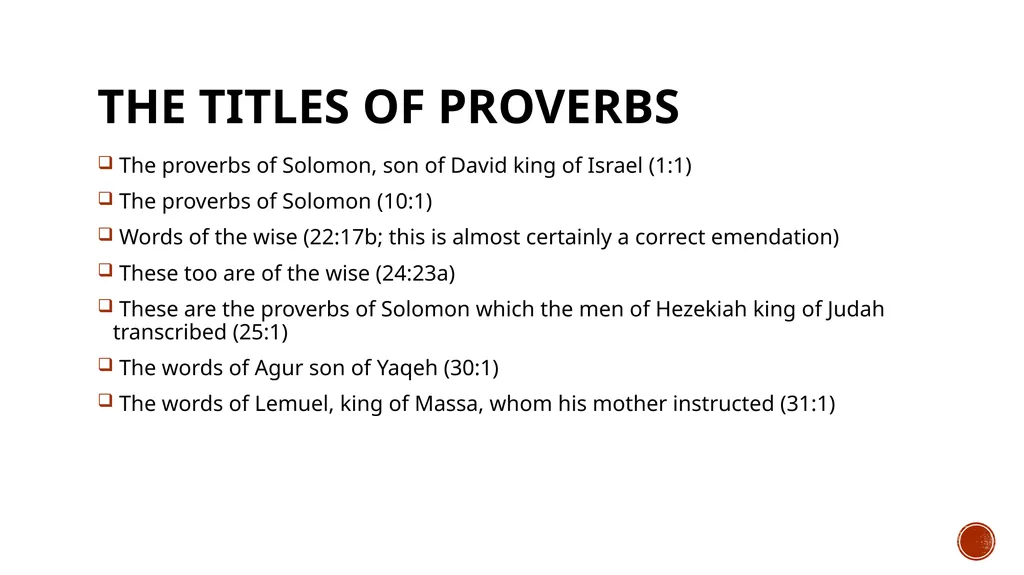
THE TITLES OF PROVERBS The proverbs of Solomon, son of David king of Israel (1:1)
The proverbs of Solomon (10:1)
Words of the wise (22:17b; this is almost certainly a correct emendation)
These too are of the wise (24:23a)
These are the proverbs of Solomon which the men of Hezekiah king of Judah transcribed (25:1)
The words of Agur son of Yaqeh (30:1)
The words of Lemuel, king of Massa, whom his mother instructed (31:1)<br>
04
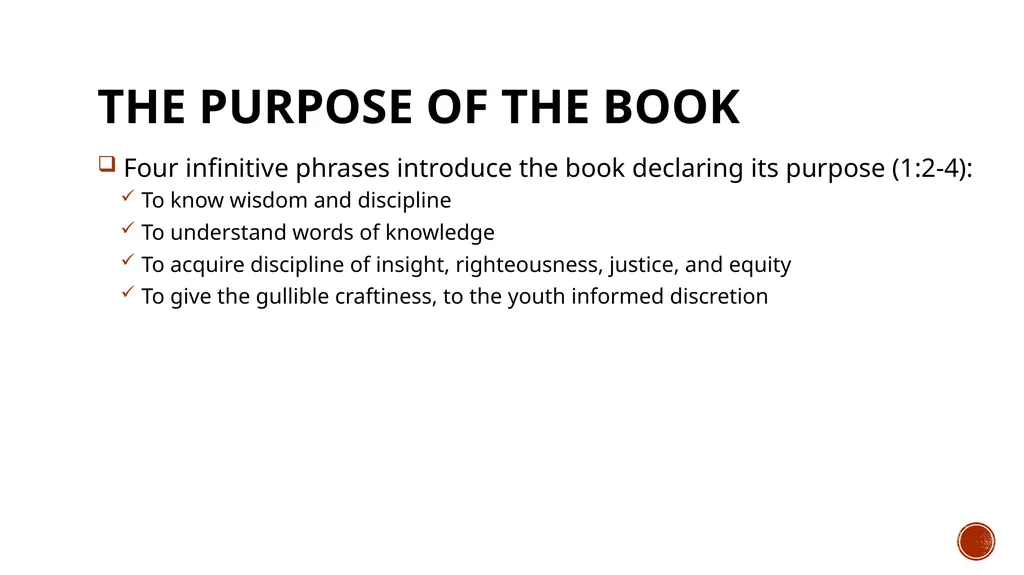
THE PURPOSE OF THE BOOK Four infinitive phrases introduce the book declaring its purpose (1:2-4):
To know wisdom and discipline
To understand words of knowledge
To acquire discipline of insight, righteousness, justice, and equity
To give the gullible craftiness, to the youth informed discretion<br>
05
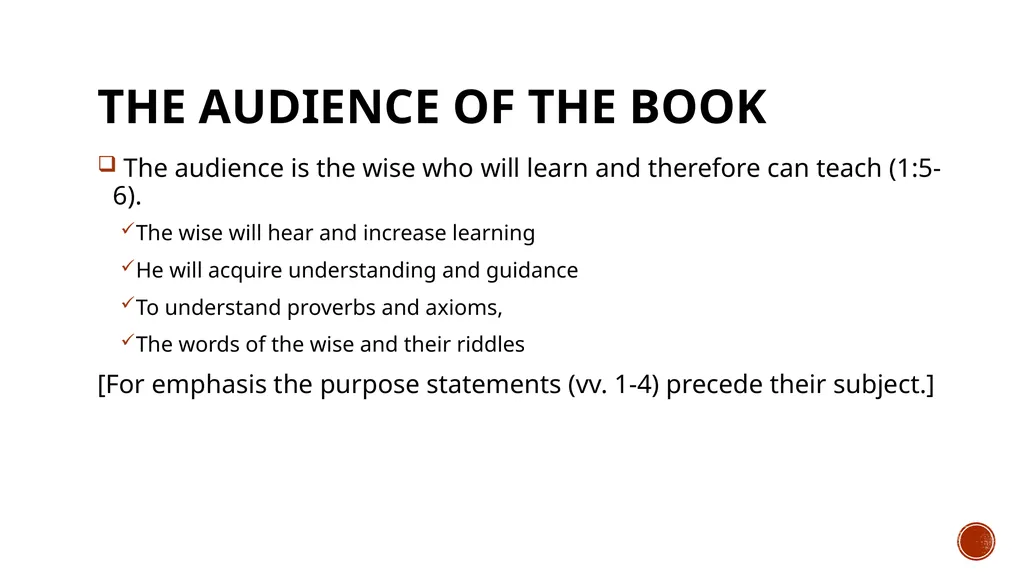
THE AUDIENCE OF THE BOOK The audience is the wise who will learn and therefore can teach (1:5-6).
The wise will hear and increase learning
He will acquire understanding and guidance
To understand proverbs and axioms,
The words of the wise and their riddles
[For emphasis the purpose statements (vv. 1-4) precede their subject.]<br>
06
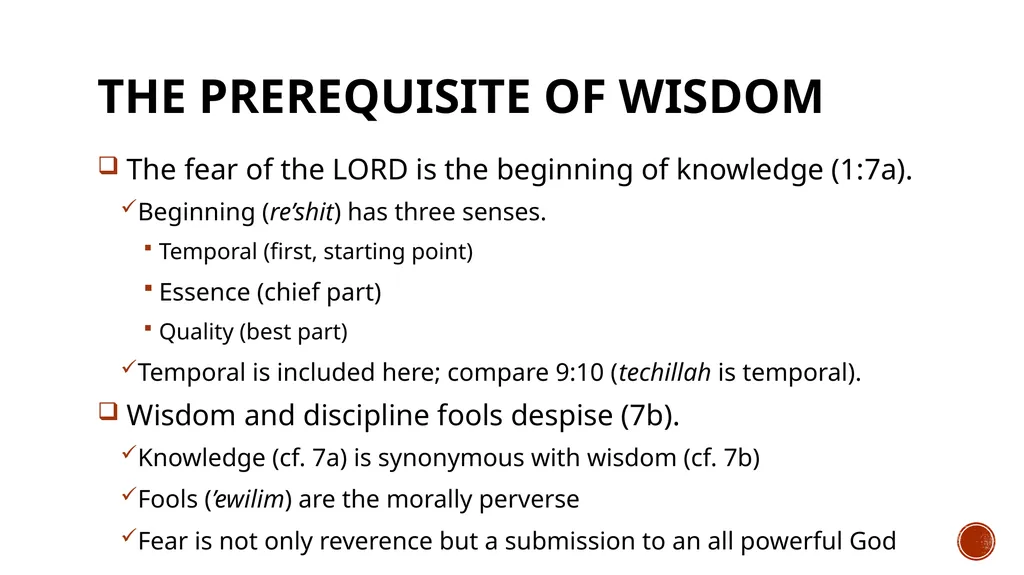
THE PREREQUISITE OF WISDOM The fear of the LORD is the beginning of knowledge (1:7a).
Beginning (re’shit) has three senses.
Temporal (first, starting point)
Essence (chief part)
Quality (best part)
Temporal is included here; compare 9:10 (techillah is temporal).
Wisdom and discipline fools despise (7b).
Knowledge (cf. 7a) is synonymous with wisdom (cf. 7b)
Fools (’ewilim) are the morally perverse
Fear is not only reverence but a submission to an all powerful God<br>
07
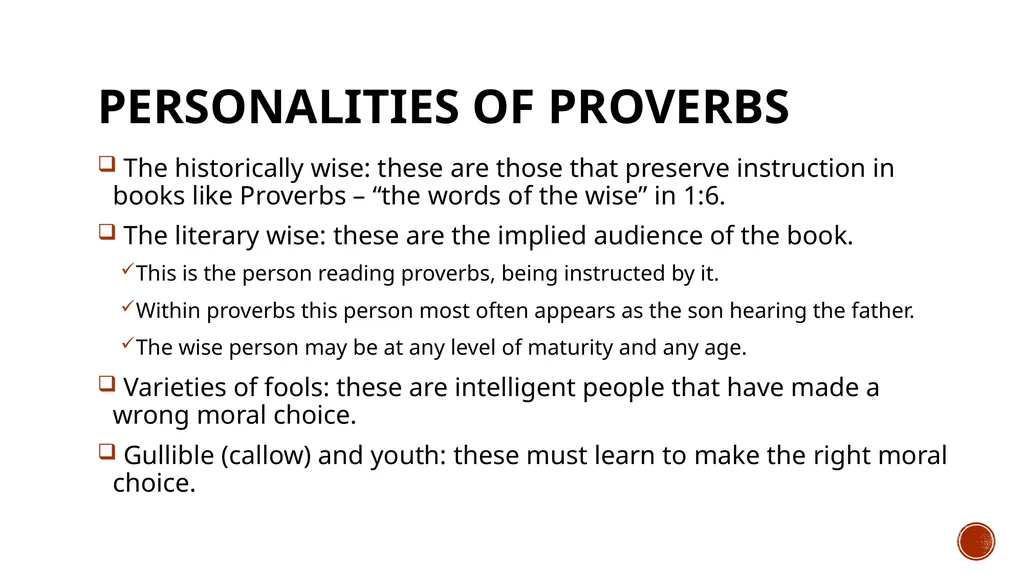
PERSONALITIES OF PROVERBS The historically wise: these are those that preserve instruction in books like Proverbs – “the words of the wise” in 1:6.
The literary wise: these are the implied audience of the book.
This is the person reading proverbs, being instructed by it.
Within proverbs this person most often appears as the son hearing the father.
The wise person may be at any level of maturity and any age.
Varieties of fools: these are intelligent people that have made a wrong moral choice.
Gullible (callow) and youth: these must learn to make the right moral choice.<br>