Psychological perspective in Curriculum Development Meaning of psychology Study of Soul Study of mind Study of Consciousness(conscious-mind) Study of behaviour Understanding learning- Gardner .M The term learning covers every modification
"Psychological perspective in Curriculum" is the property of its rightful owner. Permission is granted to
download and print the materials on this website for personal, non-commercial use only, and to display it
on your personal computer provided you do not modify the materials and that you retain all copyright
notices contained in the materials. By downloading content from our website, you accept the terms of this
agreement.
Presentation Transcript
01
Psychological perspective in Curriculum Development Meaning of psychology
Study of Soul
Study of mind
Study of Consciousness(conscious-mind)
Study of behaviour<br>
02
Understanding learning-
Gardner .M “ The term learning covers every modification in behaviour
to meet environmental needs.”
Kingsley “ Learning is the process by which behaviour is originated or changes through practice or training.”
The behaviour of an individual is changed through direct or indirect experiences , this change in behaviour brought about by experience is commonly known as learning.<br>
03
Psychological Perspective influencing curriculum-
Behaviourism and curriculum
Cognitivism and curriculum
Constructivism and curriculum
Humanism and curriculum<br>
04
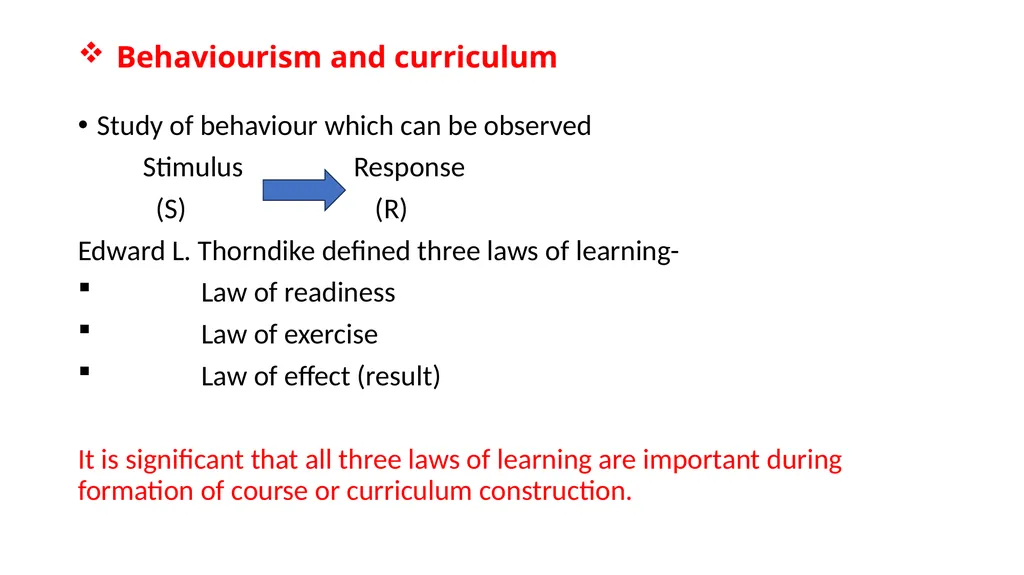
Behaviourism and curriculum Study of behaviour which can be observed
Stimulus Response
(S) (R)
Edward L. Thorndike defined three laws of learning-
Law of readiness
Law of exercise
Law of effect (result)
It is significant that all three laws of learning are important during formation of course or curriculum construction.<br>
05
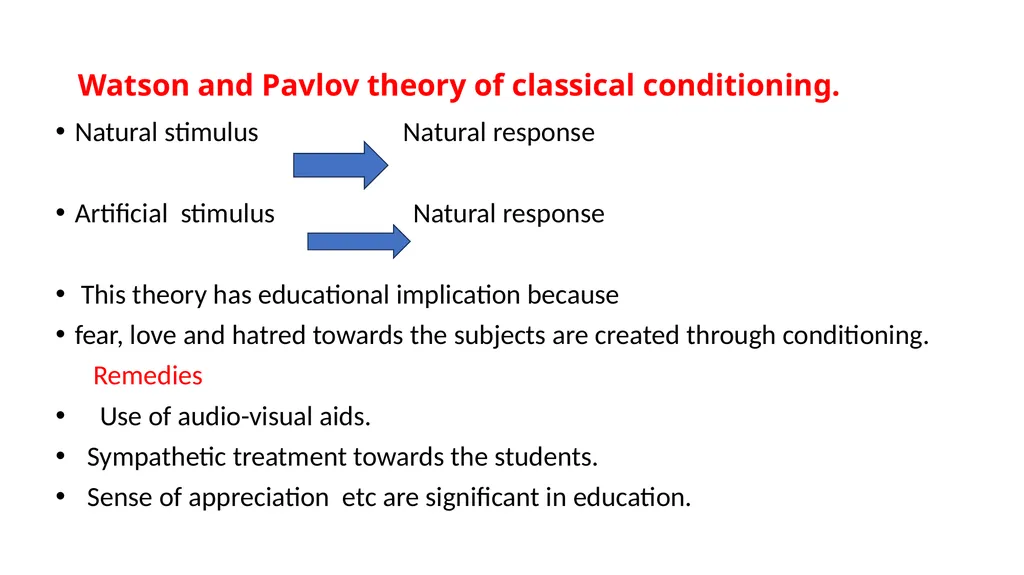
Watson and Pavlov theory of classical conditioning. Natural stimulus Natural response
Artificial stimulus Natural response
This theory has educational implication because
fear, love and hatred towards the subjects are created through conditioning.
Remedies
Use of audio-visual aids.
Sympathetic treatment towards the students.
Sense of appreciation etc are significant in education.<br>
06
Skinner operant conditioning theory- Need of reward and punishment
Positive reinforcement
Negative reinforcement
Cognitivism and curriculum
Cognitive or mental development- The process of the cognitive growth and development is responsible for the development of an individual’s all cognitive, mental or intellectual abilities like sensation, perception, imagination, memory, reasoning, understanding, intelligence, generalization, language ability, conceptual ability, problem solving and decision making ability etc. These abilities are interrelated and never develop in isolation.<br>
07
The great psychologist Jean Piaget developed the theory of cognitive development. He defined four stages of growth and development, these are-
Sensori motor stage(from birth to 2 years)
Pre-operational stage( from 3 to 6 years)
Concrete operational stage (from 7 to 11 years )
Formal operational stage( from 12 to 15 years)<br>
08
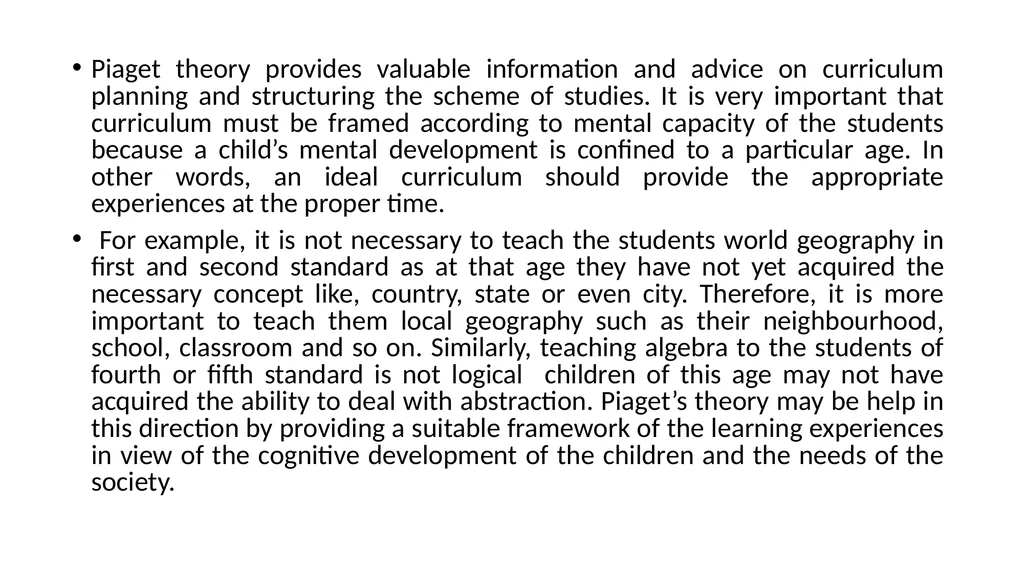
Piaget theory provides valuable information and advice on curriculum planning and structuring the scheme of studies. It is very important that curriculum must be framed according to mental capacity of the students because a child’s mental development is confined to a particular age. In other words, an ideal curriculum should provide the appropriate experiences at the proper time.
For example, it is not necessary to teach the students world geography in first and second standard as at that age they have not yet acquired the necessary concept like, country, state or even city. Therefore, it is more important to teach them local geography such as their neighbourhood, school, classroom and so on. Similarly, teaching algebra to the students of fourth or fifth standard is not logical children of this age may not have acquired the ability to deal with abstraction. Piaget’s theory may be help in this direction by providing a suitable framework of the learning experiences in view of the cognitive development of the children and the needs of the society.<br>
09
Constructivism and curriculum- Constructivism is the theory that says learners construct knowledge rather than just passively take in information. As people experience the world and reflect upon those experiences, they build their own representations and incorporate new information. Learning is active reconstruction and re-interpretation of experience. Learner constructs knowledge using-
Previous knowledge
Newly assimilated experience
Newly developed insights.<br>
10
In constructivist theory learner’s initiative is accepted and encouraged.
The learners are actively involved, the environment is democratic and the activities are interactive and student centred. Emphasis is given on social and communication skills, collaboration and exchange of ideas.
Humanism and curriculum- Humanistic curriculum is student centred approach which focuses on developing students’ whole personality. Humanistic curriculum aims to develop students’ self-concept and interpersonal skills. It also seeks to foster independent judgement, emotional and intellectual wellbeing and personal growth. The humanistic psychologists are- Abraham Maslow and Carl Roger.
They believe that all humans are unique beings and that is why they should be recognized through education. It focuses on people’s strengths and innate ability.<br>
11
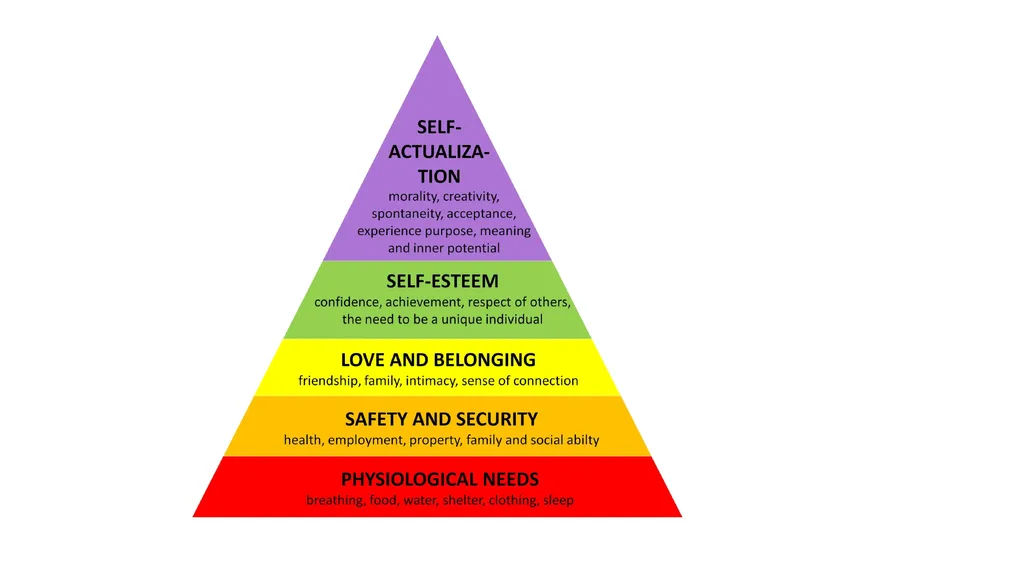
Maslow’s theory provides valuable insights into understanding and addressing students’ needs which can greatly impact in their motivation, engagement and overall well-being in the educational setting.<br>