PSYCHOTHERAPEUTICS BEHAVIOURAL THERAPY CONTENTS
Description: PSYCHOTHERAPEUTICS BEHAVIOURAL THERAPY CONTENTS Introduction Four areas of development Key Concepts Therapeutic Process Therapeutic Techniques and Procedure Conclusion References introduction Behavioural therapy focus on directly observable
Related Topics
Download Presentation
"PSYCHOTHERAPEUTICS BEHAVIOURAL THERAPY CONTENTS" is the property of its rightful owner. Permission is granted to download and print the materials on this website for personal, non-commercial use only, and to display it on your personal computer provided you do not modify the materials and that you retain all copyright notices contained in the materials. By downloading content from our website, you accept the terms of this agreement.
Presentation Transcript
slide1. PSYCHOTHERAPEUTICS<br>
slide2. BEHAVIOURAL THERAPY<br>
slide3. CONTENTS Introduction
Four areas of development
Key Concepts
Therapeutic Process
Therapeutic Techniques and Procedure
Conclusion
References<br>
slide4. introduction Behavioural therapy focus on directly observable behavior ,current determinants ,learning experience that promote change and rigorous assessment and evaluation.
Treat wide range of Psychological disorder.
Anxiety disorder, depression, posttraumatic stress disorder, sexual disorder etc
Used in the field of developmental disabilities, education and special education, clincal Psychology, Rehabilitation etc<br>
slide5. Four areas of development Classical Conditioning
Operant Conditioning
Social Cognitive Theory
Cognitive Behavioral Therapy<br>
slide6. Key concepts 1) View of Human Nature
Systematic and structured approach to Counselling.
Give control and freedom to the client.
Aims to increase people skill
Help to attain humanistic ends<br>
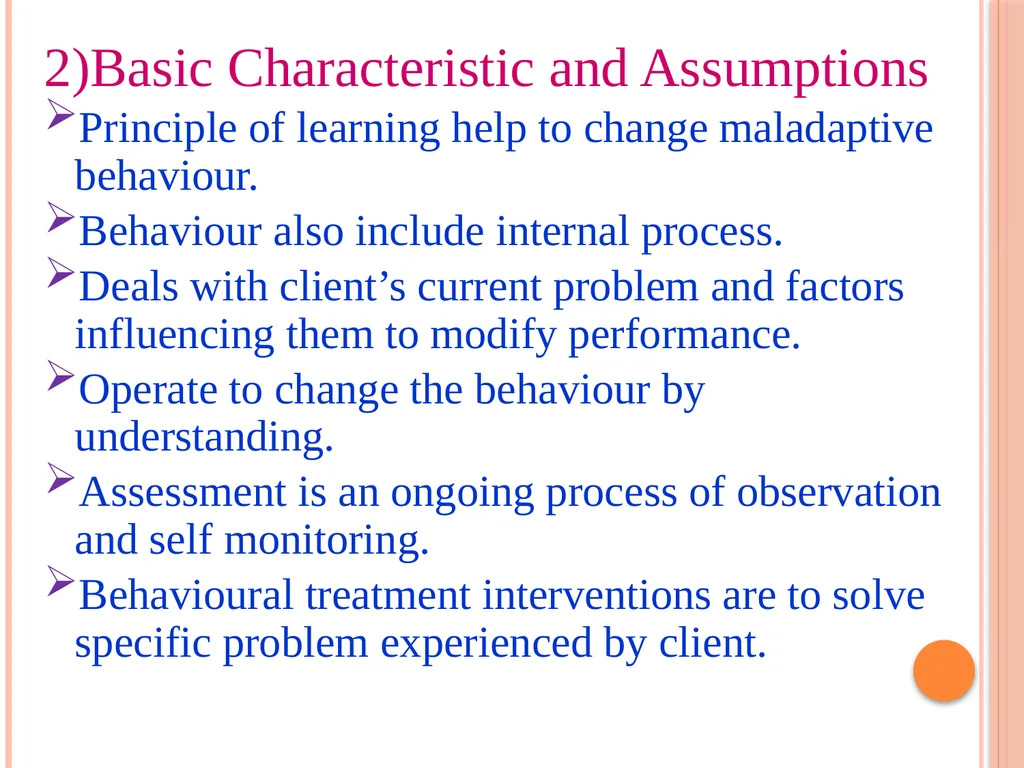
slide7. 2)Basic Characteristic and Assumptions
Principle of learning help to change maladaptive behaviour.
Behaviour also include internal process.
Deals with client’s current problem and factors influencing them to modify performance.
Operate to change the behaviour by understanding.
Assessment is an ongoing process of observation and self monitoring.
Behavioural treatment interventions are to solve specific problem experienced by client.<br>
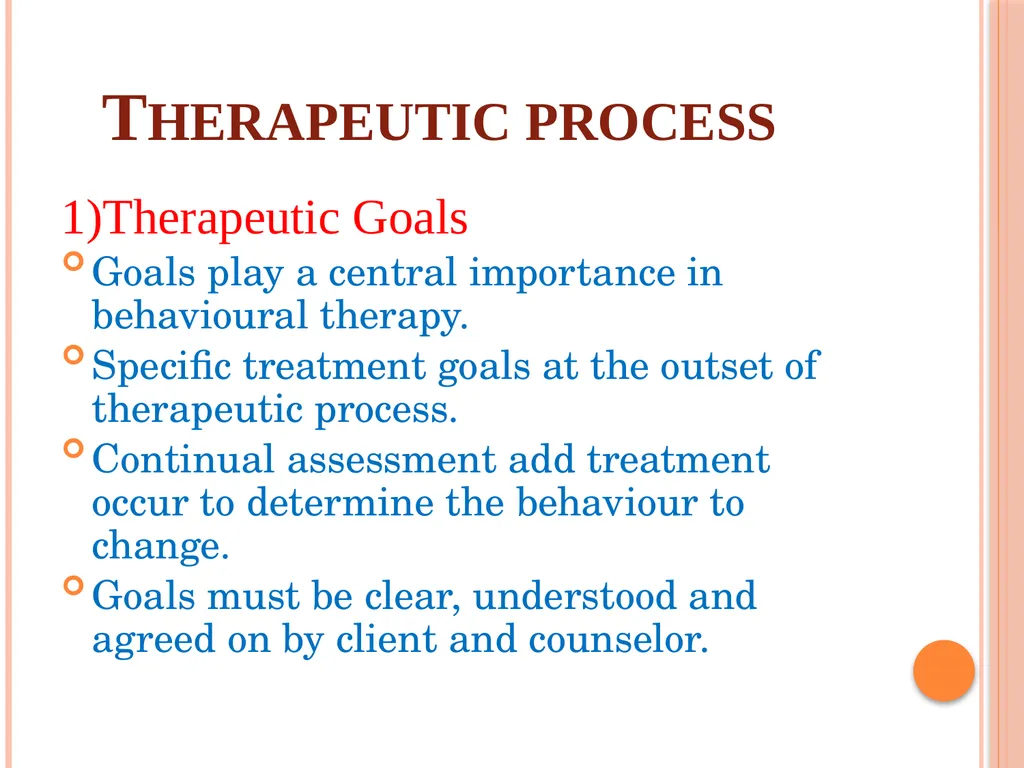
slide8. Therapeutic process 1)Therapeutic Goals
Goals play a central importance in behavioural therapy.
Specific treatment goals at the outset of therapeutic process.
Continual assessment add treatment occur to determine the behaviour to change.
Goals must be clear, understood and agreed on by client and counselor.<br>
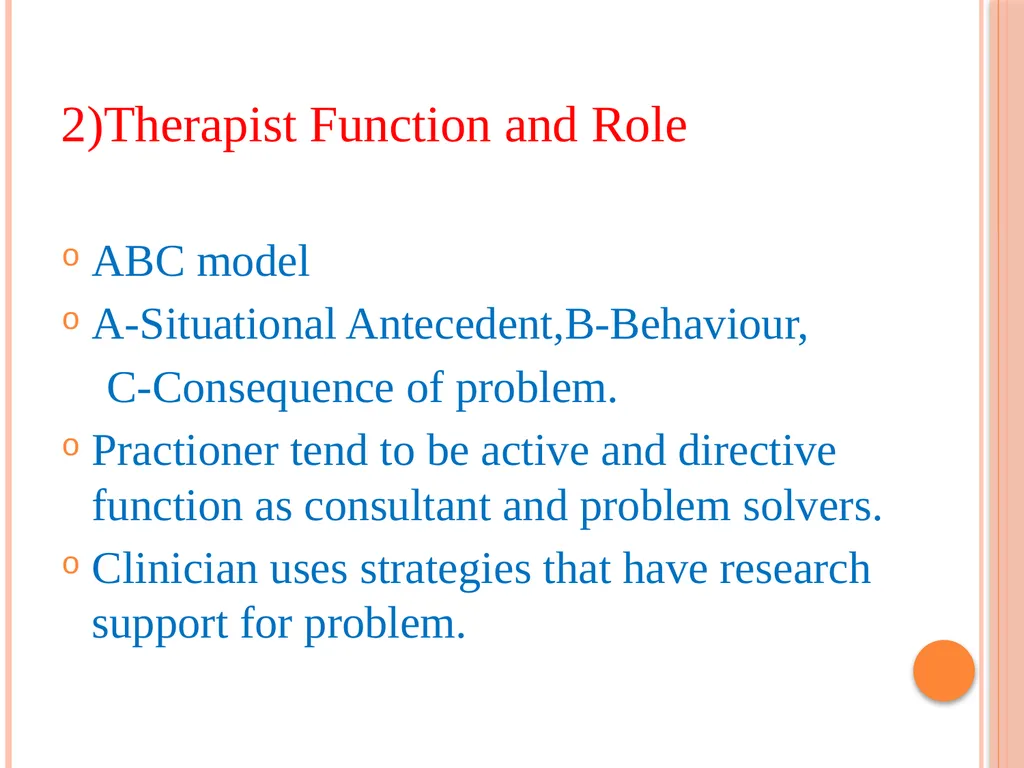
slide9. 2)Therapist Function and Role
ABC model
A-Situational Antecedent,B-Behaviour,
C-Consequence of problem.
Practioner tend to be active and directive function as consultant and problem solvers.
Clinician uses strategies that have research support for problem.<br>
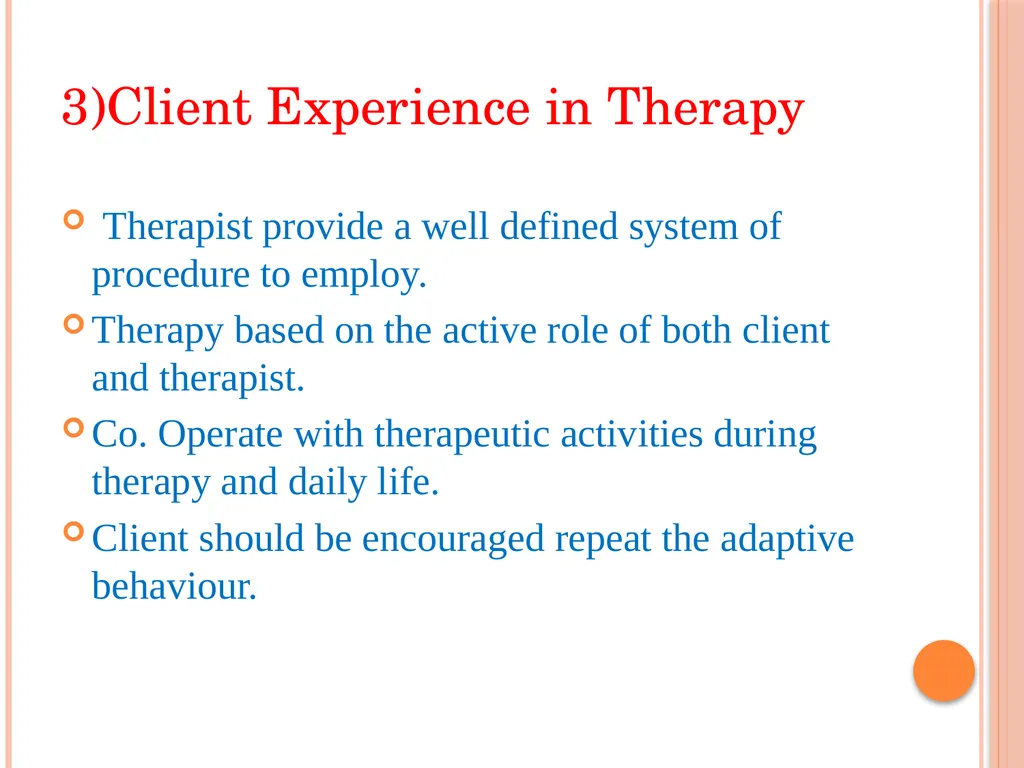
slide10. 3)Client Experience in Therapy
Therapist provide a well defined system of procedure to employ.
Therapy based on the active role of both client and therapist.
Co. Operate with therapeutic activities during therapy and daily life.
Client should be encouraged repeat the adaptive behaviour.<br>
slide11. 4)Relationship between Therapist and client
Establish the relationship between client and therapist.
Flexible relationship styles+ wide range of techniques=treatment outcome.
Help to change.<br>
slide12. therapeutic techniques and procedure The strength of behavioral approach is the development of therapeutic procedure.
Empirically supported
In cooperate different techniques that effectively change behavior.
Various techniques are available to the Practioner,<br>
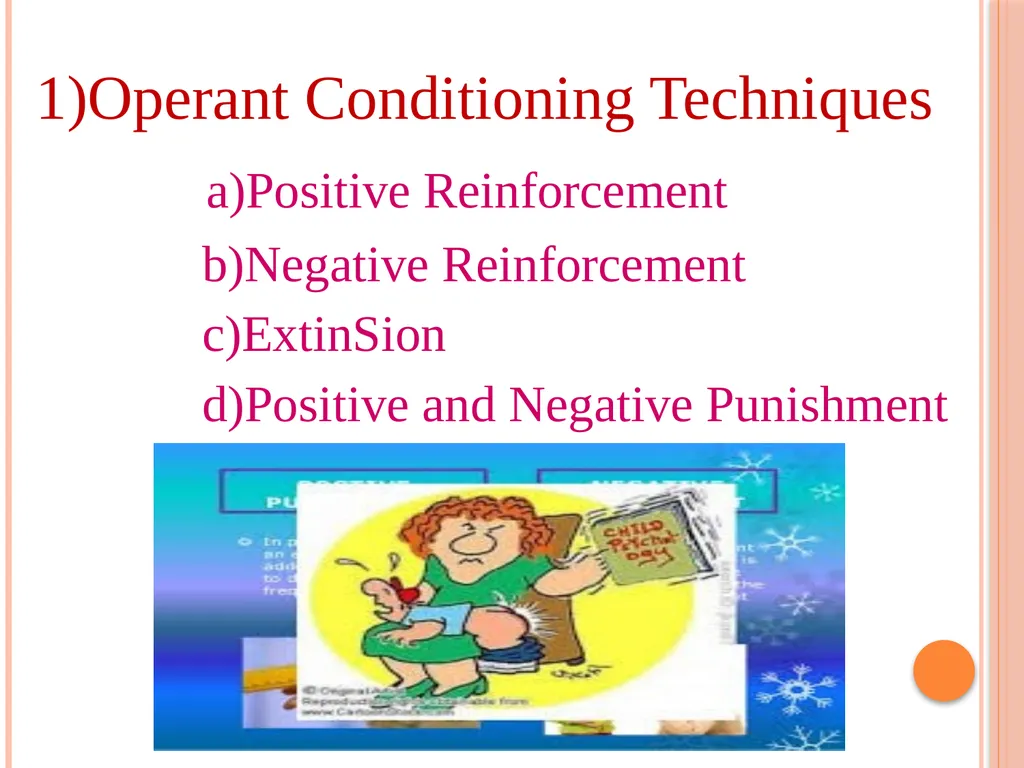
slide13. 1)Operant Conditioning Techniques
a)Positive Reinforcement
b)Negative Reinforcement
c)ExtinSion
d)Positive and Negative Punishment<br>
slide14. 2)Progressive Muscle Relaxation
A method of teaching people to cope with stresses produced by daily livings.
Achieve muscle relaxation and is easily learned.
Jacobson initially developed this procedure.
It is frequently used in combination with other behavioural techniques.<br>
slide15. 3)Systematic Desensitization
This procedure which is based on the principle of Classical Conditioning is a behavioural procedure developed by Joseph Wolpe.
Empirically researched behavioural therapy.
The step process
a)Relaxation training
b)Development of anxiety hierarchy
c)Systematic Desensitization<br>
slide16. 4)Eye movement desensitization and Reprocessing(EMDR)
EMDR is a form of Exposure Therapy which entails assessment and preparation, Imaginal flooding and cognitive restructuring with traumatic events.
Treatment consist of 3 phases
a)Assesment and Preparation
b)Imaginal Flooding
c)Cognitive Restructuring<br>
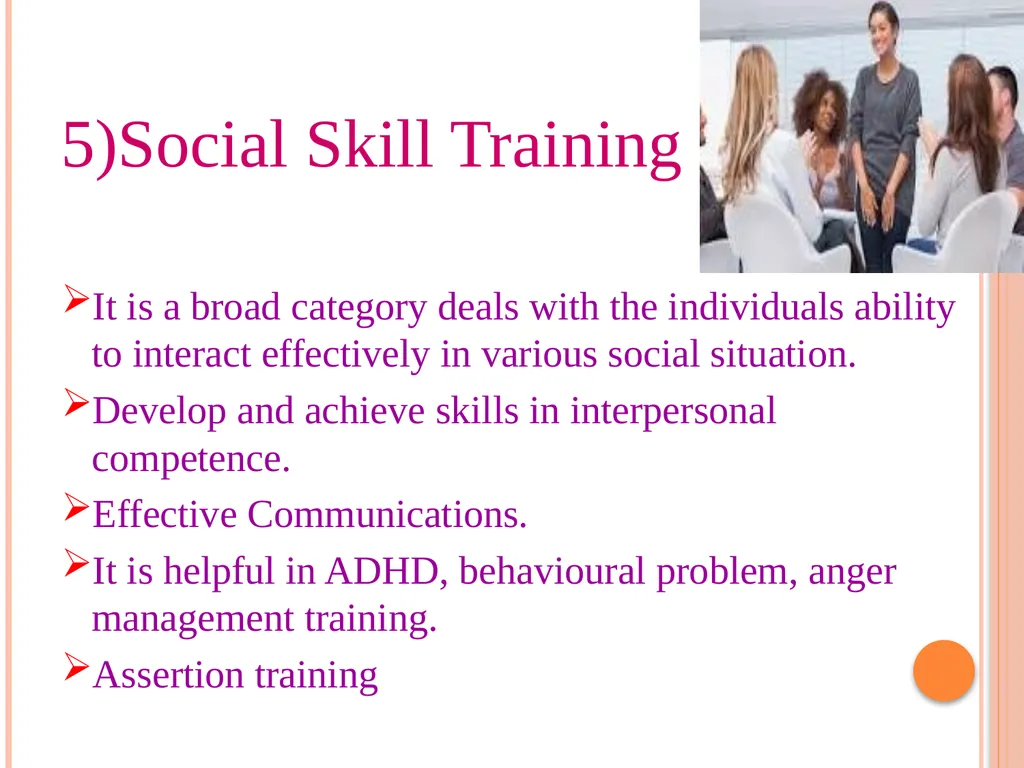
slide17. 5)Social Skill Training
It is a broad category deals with the individuals ability to interact effectively in various social situation.
Develop and achieve skills in interpersonal competence.
Effective Communications.
It is helpful in ADHD, behavioural problem, anger management training.
Assertion training<br>
slide18. conclusion Four Areas of Development
Key Concepts
Basic Characteristics and Assumption
Therapeutic Process
Therapeutic Techniques and Procedures<br>
slide19. references Corey.G.(2001):Theory and Practice of Counseling and Psychotherapy.New Delhi,Brooks/cole.

https://www.psychotherapeutics
www.psychotherapeuticsimages.com
https://www.behaviouraltherapies<br>
slide2. BEHAVIOURAL THERAPY<br>
slide3. CONTENTS Introduction
Four areas of development
Key Concepts
Therapeutic Process
Therapeutic Techniques and Procedure
Conclusion
References<br>
slide4. introduction Behavioural therapy focus on directly observable behavior ,current determinants ,learning experience that promote change and rigorous assessment and evaluation.
Treat wide range of Psychological disorder.
Anxiety disorder, depression, posttraumatic stress disorder, sexual disorder etc
Used in the field of developmental disabilities, education and special education, clincal Psychology, Rehabilitation etc<br>
slide5. Four areas of development Classical Conditioning
Operant Conditioning
Social Cognitive Theory
Cognitive Behavioral Therapy<br>
slide6. Key concepts 1) View of Human Nature
Systematic and structured approach to Counselling.
Give control and freedom to the client.
Aims to increase people skill
Help to attain humanistic ends<br>
slide7. 2)Basic Characteristic and Assumptions
Principle of learning help to change maladaptive behaviour.
Behaviour also include internal process.
Deals with client’s current problem and factors influencing them to modify performance.
Operate to change the behaviour by understanding.
Assessment is an ongoing process of observation and self monitoring.
Behavioural treatment interventions are to solve specific problem experienced by client.<br>
slide8. Therapeutic process 1)Therapeutic Goals
Goals play a central importance in behavioural therapy.
Specific treatment goals at the outset of therapeutic process.
Continual assessment add treatment occur to determine the behaviour to change.
Goals must be clear, understood and agreed on by client and counselor.<br>
slide9. 2)Therapist Function and Role
ABC model
A-Situational Antecedent,B-Behaviour,
C-Consequence of problem.
Practioner tend to be active and directive function as consultant and problem solvers.
Clinician uses strategies that have research support for problem.<br>
slide10. 3)Client Experience in Therapy
Therapist provide a well defined system of procedure to employ.
Therapy based on the active role of both client and therapist.
Co. Operate with therapeutic activities during therapy and daily life.
Client should be encouraged repeat the adaptive behaviour.<br>
slide11. 4)Relationship between Therapist and client
Establish the relationship between client and therapist.
Flexible relationship styles+ wide range of techniques=treatment outcome.
Help to change.<br>
slide12. therapeutic techniques and procedure The strength of behavioral approach is the development of therapeutic procedure.
Empirically supported
In cooperate different techniques that effectively change behavior.
Various techniques are available to the Practioner,<br>
slide13. 1)Operant Conditioning Techniques
a)Positive Reinforcement
b)Negative Reinforcement
c)ExtinSion
d)Positive and Negative Punishment<br>
slide14. 2)Progressive Muscle Relaxation
A method of teaching people to cope with stresses produced by daily livings.
Achieve muscle relaxation and is easily learned.
Jacobson initially developed this procedure.
It is frequently used in combination with other behavioural techniques.<br>
slide15. 3)Systematic Desensitization
This procedure which is based on the principle of Classical Conditioning is a behavioural procedure developed by Joseph Wolpe.
Empirically researched behavioural therapy.
The step process
a)Relaxation training
b)Development of anxiety hierarchy
c)Systematic Desensitization<br>
slide16. 4)Eye movement desensitization and Reprocessing(EMDR)
EMDR is a form of Exposure Therapy which entails assessment and preparation, Imaginal flooding and cognitive restructuring with traumatic events.
Treatment consist of 3 phases
a)Assesment and Preparation
b)Imaginal Flooding
c)Cognitive Restructuring<br>
slide17. 5)Social Skill Training
It is a broad category deals with the individuals ability to interact effectively in various social situation.
Develop and achieve skills in interpersonal competence.
Effective Communications.
It is helpful in ADHD, behavioural problem, anger management training.
Assertion training<br>
slide18. conclusion Four Areas of Development
Key Concepts
Basic Characteristics and Assumption
Therapeutic Process
Therapeutic Techniques and Procedures<br>
slide19. references Corey.G.(2001):Theory and Practice of Counseling and Psychotherapy.New Delhi,Brooks/cole.
https://www.psychotherapeutics
www.psychotherapeuticsimages.com
https://www.behaviouraltherapies<br>