PUBLIC SECTOR FINANCIAL MANAGEMENT REFORM: THE ECOWAS EXPERIENCE BACKGROUND For over three decades, developing and developed countries have been undertaking Public Sector Financial Management Reforms. These reforms are critical because the
"PUBLIC SECTOR FINANCIAL MANAGEMENT REFORM: THE" is the property of its rightful owner. Permission is granted to
download and print the materials on this website for personal, non-commercial use only, and to display it
on your personal computer provided you do not modify the materials and that you retain all copyright
notices contained in the materials. By downloading content from our website, you accept the terms of this
agreement.
Presentation Transcript
01
PUBLIC SECTOR FINANCIAL MANAGEMENT REFORM: THE ECOWAS EXPERIENCE<br>
02
BACKGROUND For over three decades, developing and developed countries have been undertaking Public Sector Financial Management Reforms.
These reforms are critical because the Public sector is the pivot on which economies grow.
The public sector is also the main tool available to governments for the implementation of their developmental goals and objectives.<br>
03
The public sector oversees the creation of conducive environments for all the other sectors to function.
It is therefore imperative that best financial management practices are adopted in the Public Sector to ensure the smooth operation of all other sectors dependent on the public sector.<br>
04
It is important to point out that Public Sector Financial Management reforms are effective in the following instances:
When there is a strong commitment from the leadership to their being implemented
Where the Public Sector Financial Management reforms strategy and the processes involved in their implementation have been customized to the specific institution<br>
05
Where there have been strong efforts to lead, oversee and direct the reforms by the leadership.
The aforementioned have been at the core of the advancements made in the Public Sector Financial Management reforms in ECOWAS.<br>
06
THE ECOWAS JOURNEY SO FAR To commence the reforms, an assessment on the compliance level of ECOWAS with international standards on financial and administrative management was done.
Subsequently, weaknesses in the ECOWAS rules and procedure and the areas where there was lack of compliance were identified.<br>
07
To improve on these deficiencies, the management at ECOWAS embarked on Public Sector Financial Reforms with support from the European Union.
The implementation in ECOWAS consists of five main components; Finance, Human Resources, Procurement, Audit Assurance and Internal Controls.<br>
08
COMPONENT 1: FINANCE<br>
09
FINANCE Comprising of:
Formal and on the job training on ECOWAS internal control framework
Internal control assessment templates for payroll, time management and related expenditures and allowances.
Results based budgeting and reporting
Compliant periodic and annual budgets<br>
10
FINANCE CONTD’ Production of IPSAS compliant Financial Statements
IPSAS compliant financial policies defined and implemented
IPSAS compliant Financial Statements and Annual Reports issued and provided to stakeholders<br>
11
FINANCE CONT’D Deployment of ECOWAS Internal Control Framework within the new Office of the Auditor General
Monitoring process on Internal Control recommendations
Updated Financial Regulations and Manual of Financial Management procedures.<br>
12
FINANCE CONTD’ ECOLink Phase II
Internal control design reflected in ECOLink Phase II blueprint compliant with EU Pillar assessment requirements
Fixed Assets Management and Electronic Filing and Archiving Systems<br>
13
COMPONENT 2: HUMAN RESOURCES<br>
14
HUMAN RESOURCES Comprising of
HR Project Monitoring Committee
Job descriptions and Key Skill Areas
ECOLink HCM master data
Employee Performance management
Workshop on the revision of the Staff Regulations<br>
15
HUMAN RESOURCES CONT’D Planning activities for the next semester
Recruitment
HR Policies and Procedures Manual
Payroll process review workshop<br>
16
COMPONENT 3: PROCUREMENT (AND GRANTS)<br>
17
COMPONENT 3: Procurement (and Grants) Comprising of
Procurement and Grant Codes
Procurement and Grant manual
Procurement and Grant templates<br>
18
COMPONENTS 4 & 5: AUDIT ASSURANCE AND INTERNAL CONTROLS<br>
19
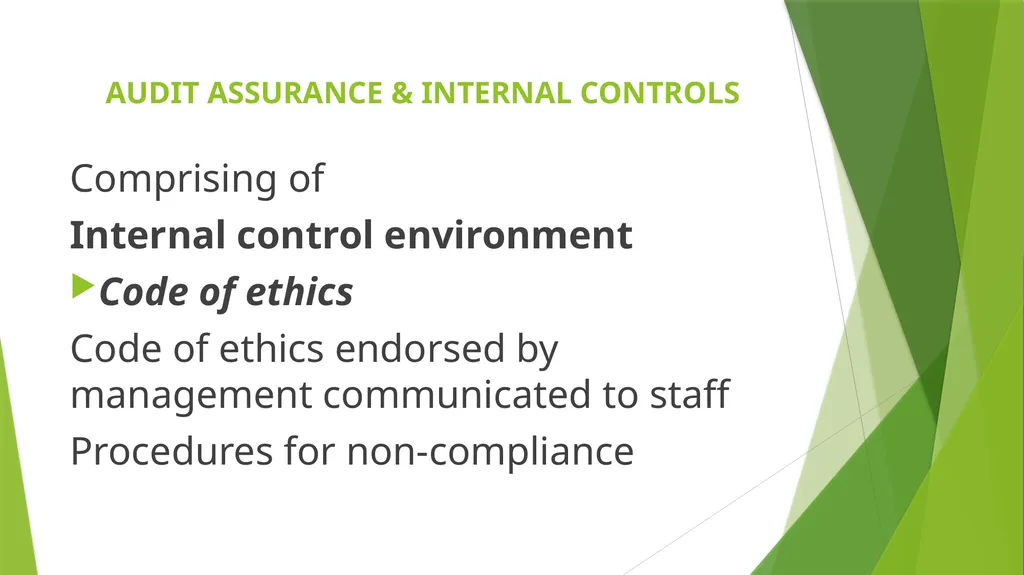
AUDIT ASSURANCE & INTERNAL CONTROLS Comprising of
Internal control environment
Code of ethics
Code of ethics endorsed by management communicated to staff
Procedures for non-compliance<br>
20
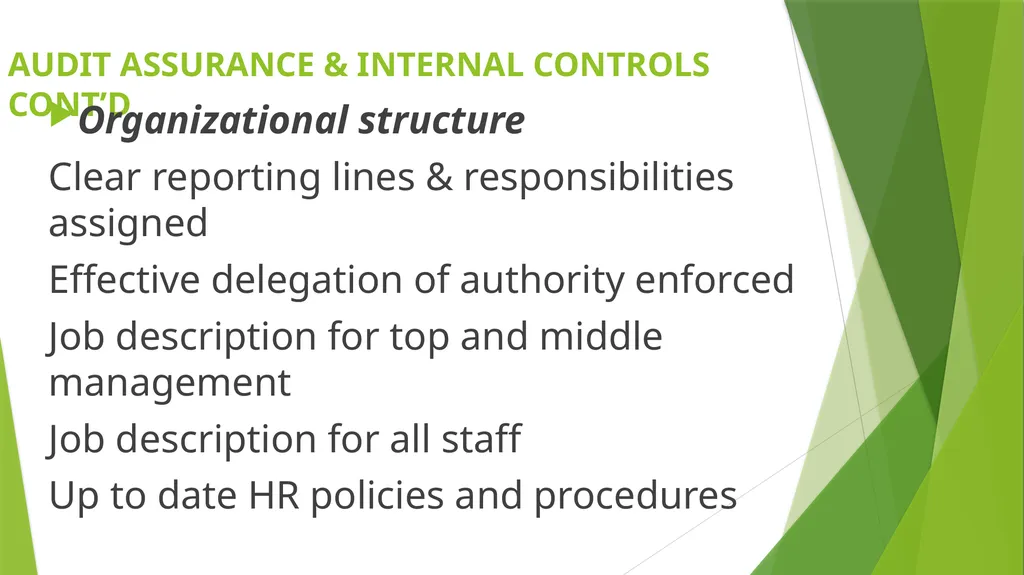
AUDIT ASSURANCE & INTERNAL CONTROLS CONT’D Organizational structure
Clear reporting lines & responsibilities assigned
Effective delegation of authority enforced
Job description for top and middle management
Job description for all staff
Up to date HR policies and procedures<br>
21
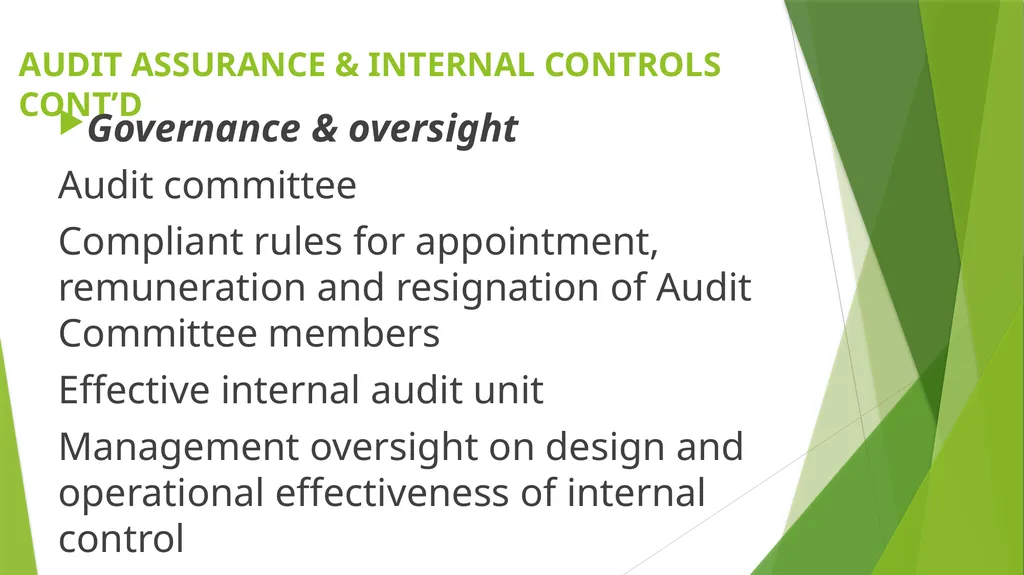
AUDIT ASSURANCE & INTERNAL CONTROLS CONT’D Governance & oversight
Audit committee
Compliant rules for appointment, remuneration and resignation of Audit Committee members
Effective internal audit unit
Management oversight on design and operational effectiveness of internal control<br>
22
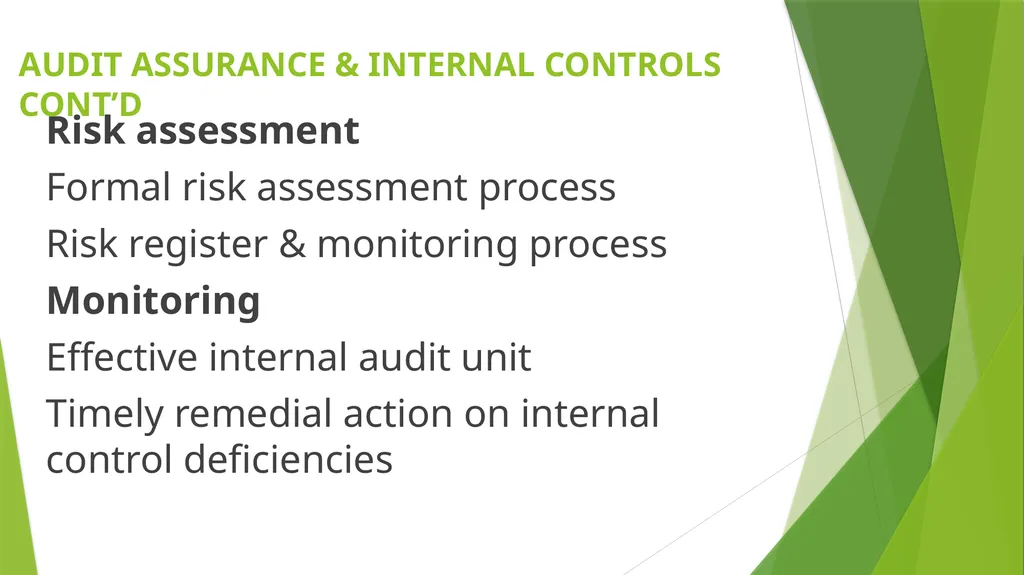
Risk assessment
Formal risk assessment process
Risk register & monitoring process
Monitoring
Effective internal audit unit
Timely remedial action on internal control deficiencies AUDIT ASSURANCE & INTERNAL CONTROLS CONT’D<br>
23
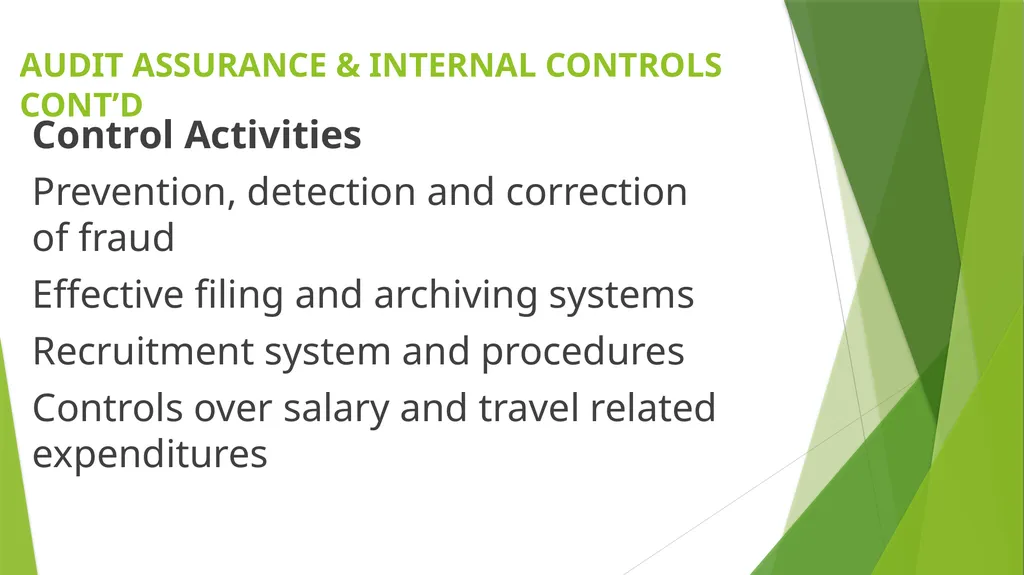
AUDIT ASSURANCE & INTERNAL CONTROLS CONT’D Control Activities
Prevention, detection and correction of fraud
Effective filing and archiving systems
Recruitment system and procedures
Controls over salary and travel related expenditures<br>
24
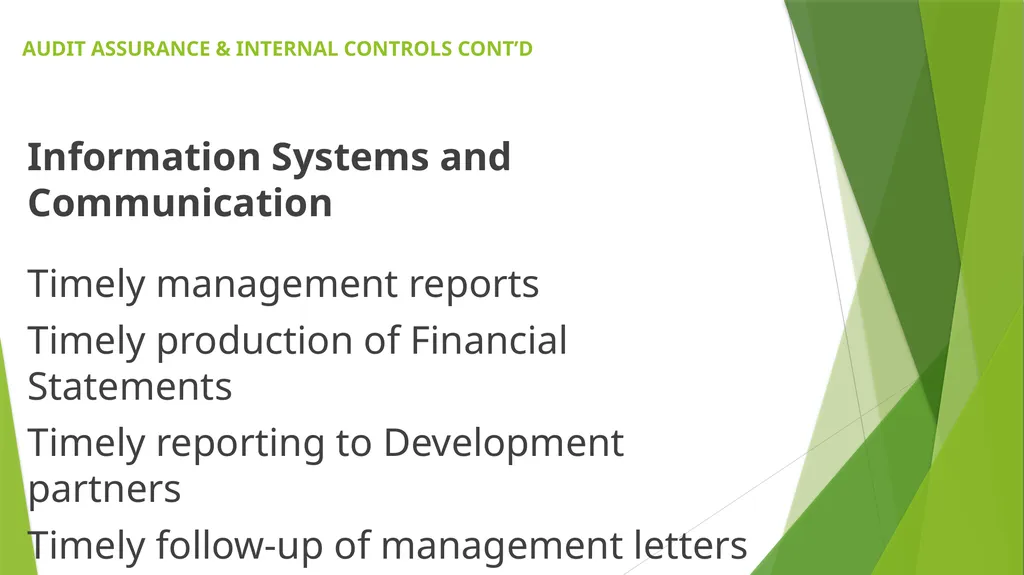
AUDIT ASSURANCE & INTERNAL CONTROLS CONT’D Information Systems and Communication
Timely management reports
Timely production of Financial Statements
Timely reporting to Development partners
Timely follow-up of management letters<br>
25
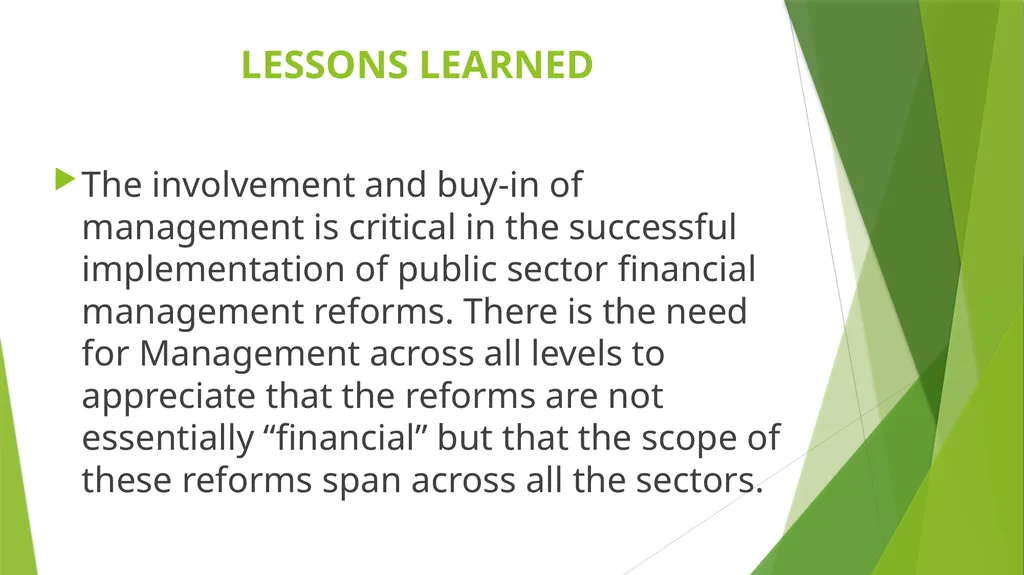
LESSONS LEARNED The involvement and buy-in of management is critical in the successful implementation of public sector financial management reforms. There is the need for Management across all levels to appreciate that the reforms are not essentially “financial” but that the scope of these reforms span across all the sectors.<br>
26
LESSONS LEARNED CONT’D The need for the technical competence and authority of those involved in the coordination and management of the reforms.
The need for those coordinating and implementing the reforms to manage and take control over all external and donor support received while implementing the reforms.
Constant training of all those involved to ensure skills are continually upgraded to align with current best practices.<br>
27
CONCLUSION The implementation of Public Sector Financial Management Reforms in ECOWAS is an ongoing process. These reforms are expectedly complex and the initial plans that were suitable at inception have often needed reinventing.
There is continuous monitoring to ensure speedy identification and resolution of any problems encountered. Finally, the involvement and commitment of Management and various stakeholders has been a critical success factor in the implementation process.<br>