
Putting the Pieces Together- Developing a School

Description: Putting the Pieces Together- Developing a School Homeless Program Greta Hinderliter Natrona County School District, McKinney-Vento Liaison History of NCSD1 Homeless Program 1999-Natrona County School District developed the first homeless
Related Topics
Download Presentation
"Putting the Pieces Together- Developing a School" is the property of its rightful owner. Permission is granted to download and print the materials on this website for personal, non-commercial use only, and to display it on your personal computer provided you do not modify the materials and that you retain all copyright notices contained in the materials. By downloading content from our website, you accept the terms of this agreement.
Presentation Transcript
slide1. Putting the Pieces Together- Developing a School Homeless Program Greta Hinderliter
Natrona County School District, McKinney-Vento Liaison<br>
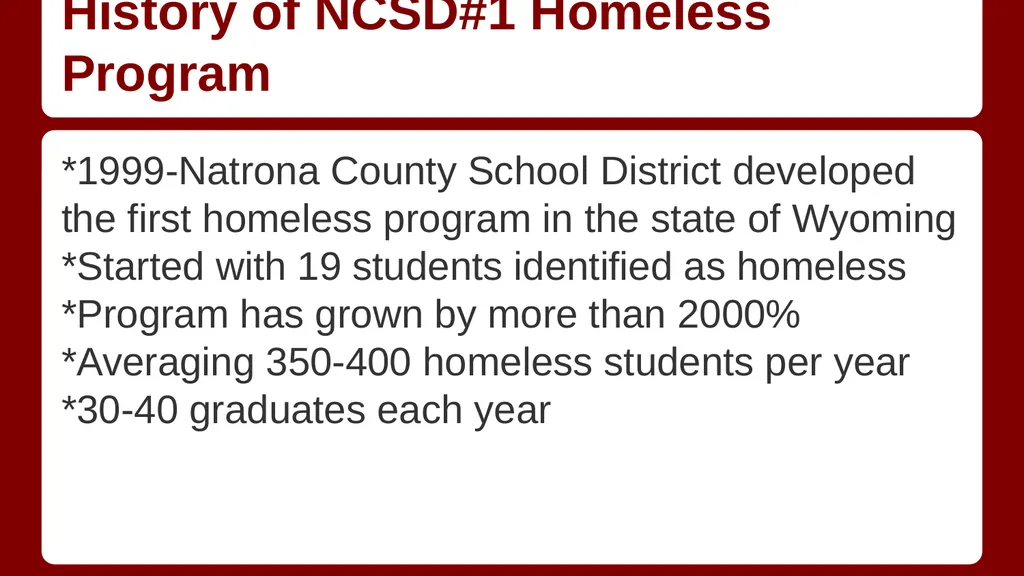
slide2. History of NCSD#1 Homeless Program *1999-Natrona County School District developed the first homeless program in the state of Wyoming
*Started with 19 students identified as homeless
*Program has grown by more than 2000%
*Averaging 350-400 homeless students per year
*30-40 graduates each year<br>
slide3. Definition of Homeless “A child that lacks a fixed nighttime adequate residence”<br>
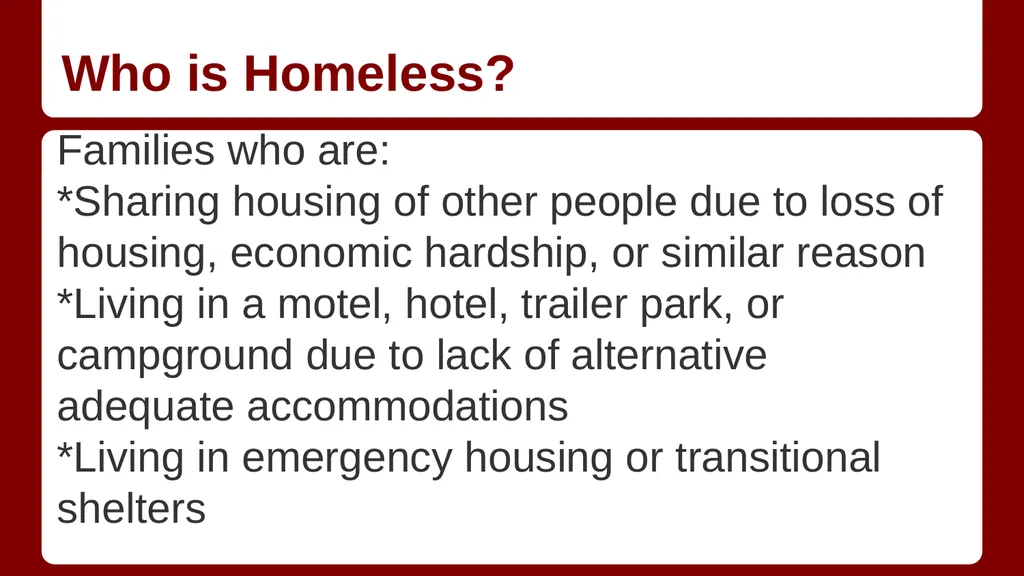
slide4. Who is Homeless? Families who are:
*Sharing housing of other people due to loss of housing, economic hardship, or similar reason
*Living in a motel, hotel, trailer park, or campground due to lack of alternative adequate accommodations
*Living in emergency housing or transitional shelters<br>
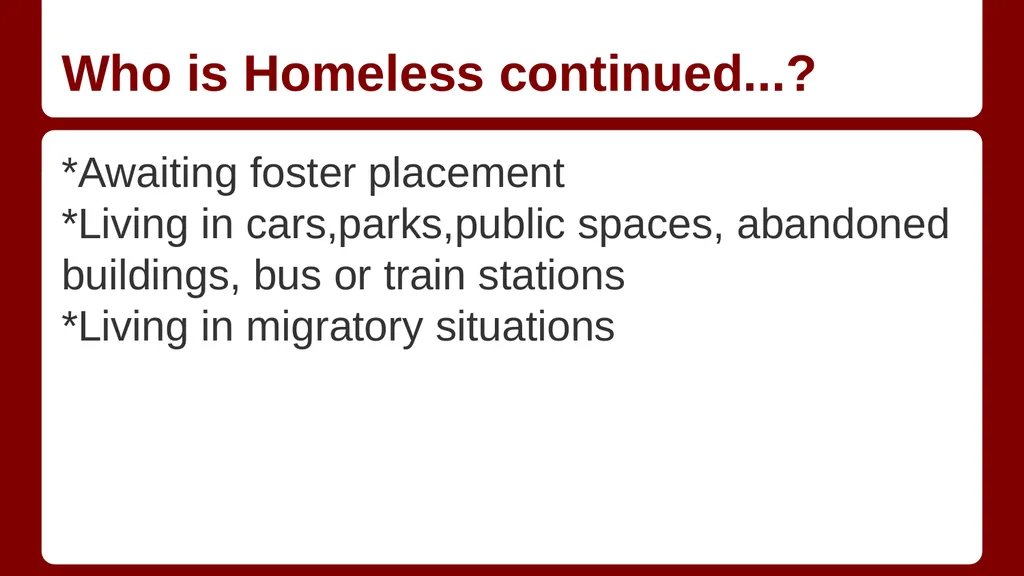
slide5. Who is Homeless continued...? *Awaiting foster placement
*Living in cars,parks,public spaces, abandoned buildings, bus or train stations
*Living in migratory situations<br>
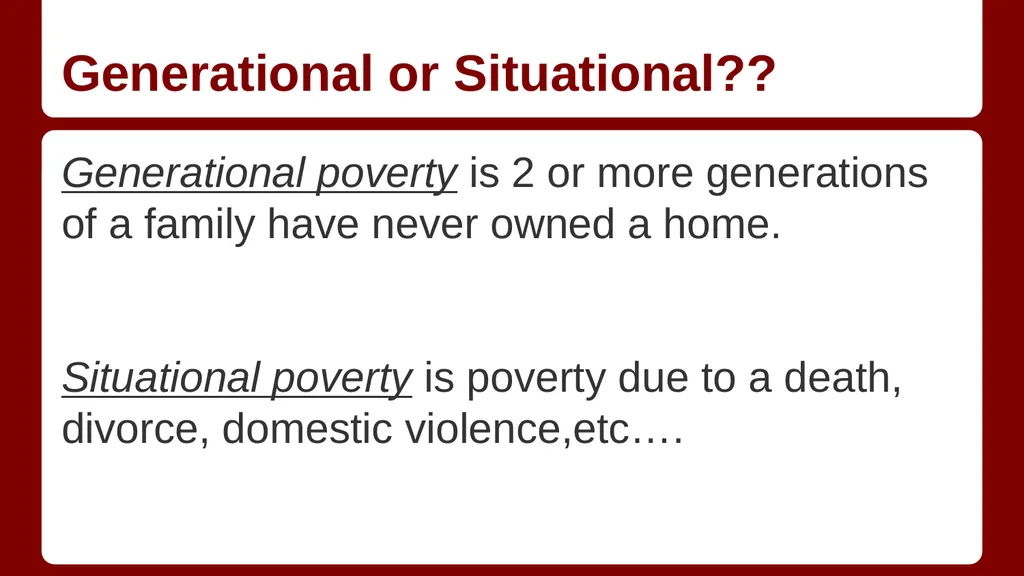
slide6. Generational or Situational?? Generational poverty is 2 or more generations of a family have never owned a home.
Situational poverty is poverty due to a death, divorce, domestic violence,etc….<br>
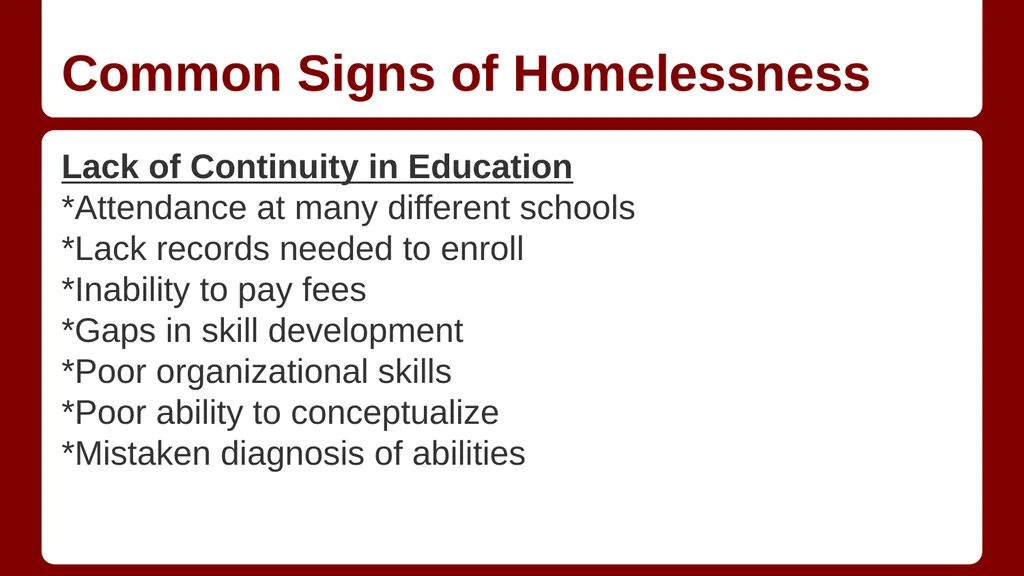
slide7. Common Signs of Homelessness Lack of Continuity in Education
*Attendance at many different schools
*Lack records needed to enroll
*Inability to pay fees
*Gaps in skill development
*Poor organizational skills
*Poor ability to conceptualize
*Mistaken diagnosis of abilities<br>
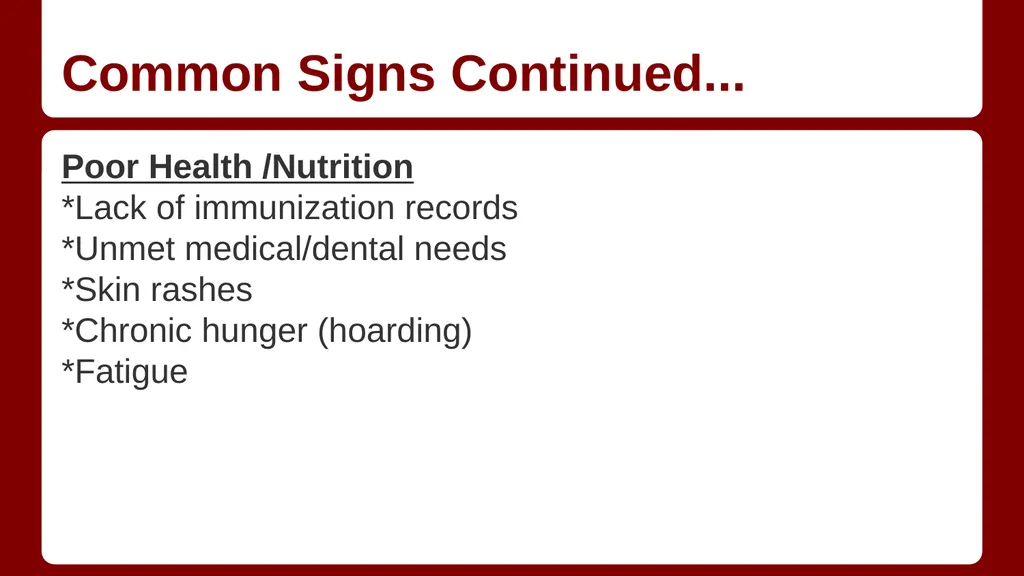
slide8. Common Signs Continued... Poor Health /Nutrition
*Lack of immunization records
*Unmet medical/dental needs
*Skin rashes
*Chronic hunger (hoarding)
*Fatigue<br>
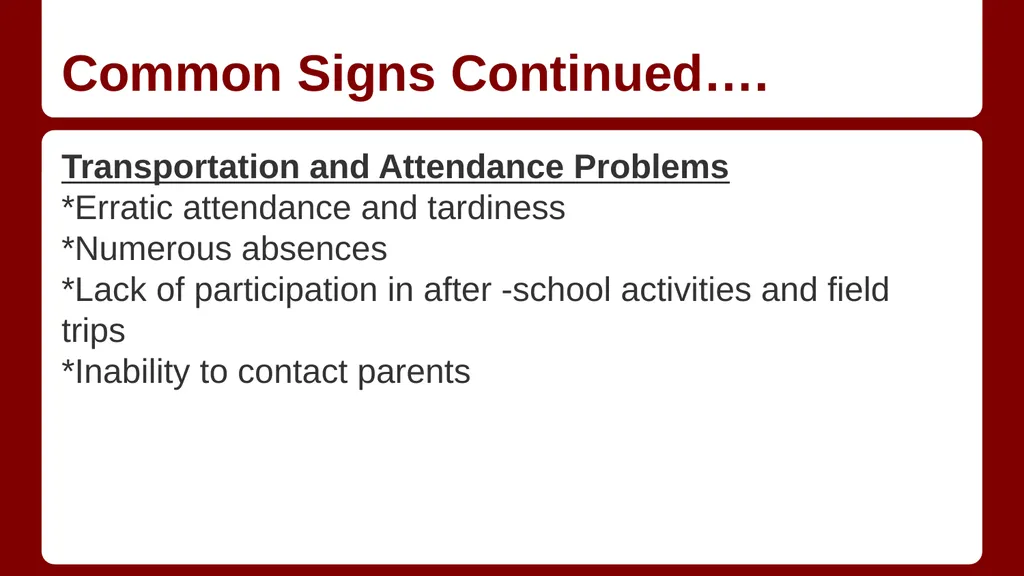
slide9. Common Signs Continued…. Transportation and Attendance Problems
*Erratic attendance and tardiness
*Numerous absences
*Lack of participation in after -school activities and field trips
*Inability to contact parents<br>
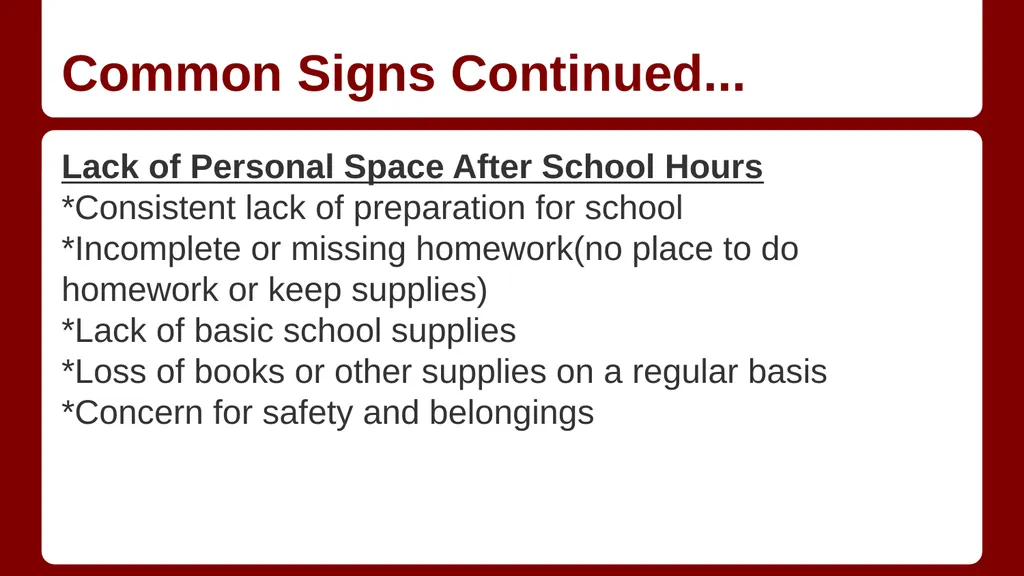
slide10. Common Signs Continued... Lack of Personal Space After School Hours
*Consistent lack of preparation for school
*Incomplete or missing homework(no place to do homework or keep supplies)
*Lack of basic school supplies
*Loss of books or other supplies on a regular basis
*Concern for safety and belongings<br>
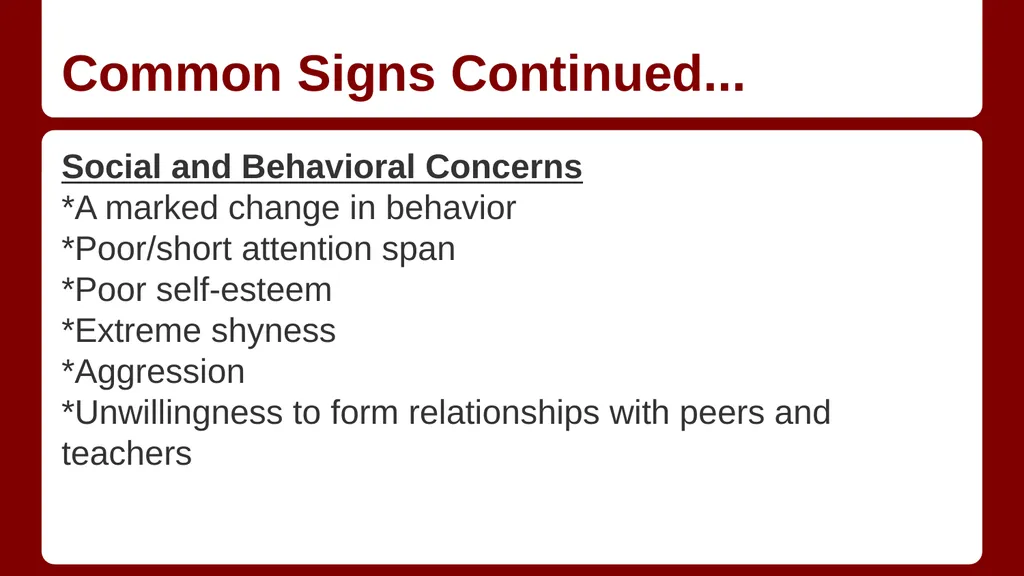
slide11. Common Signs Continued... Social and Behavioral Concerns
*A marked change in behavior
*Poor/short attention span
*Poor self-esteem
*Extreme shyness
*Aggression
*Unwillingness to form relationships with peers and teachers<br>
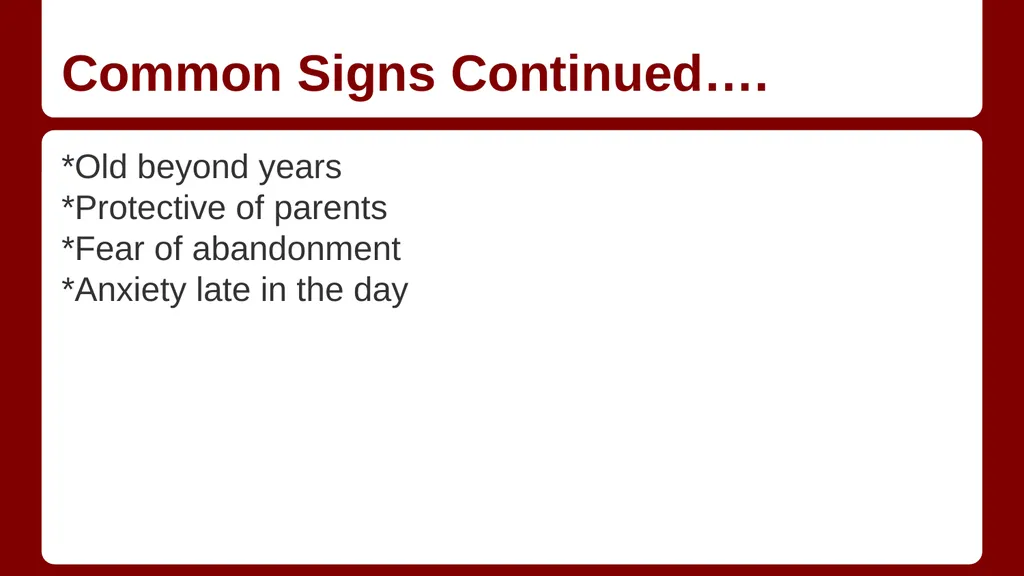
slide12. Common Signs Continued…. *Old beyond years
*Protective of parents
*Fear of abandonment
*Anxiety late in the day<br>
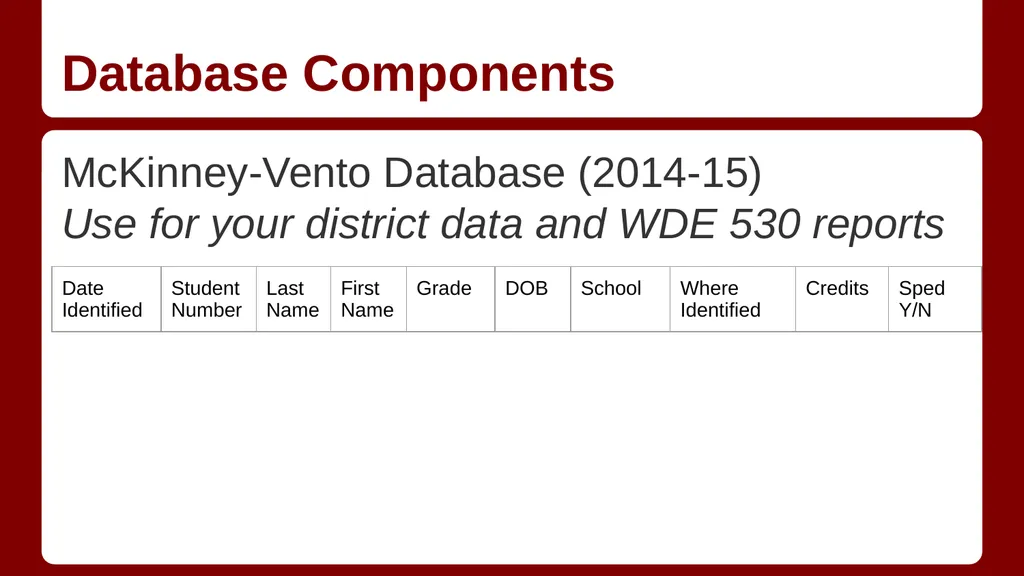
slide13. Database Components McKinney-Vento Database (2014-15)
Use for your district data and WDE 530 reports<br>
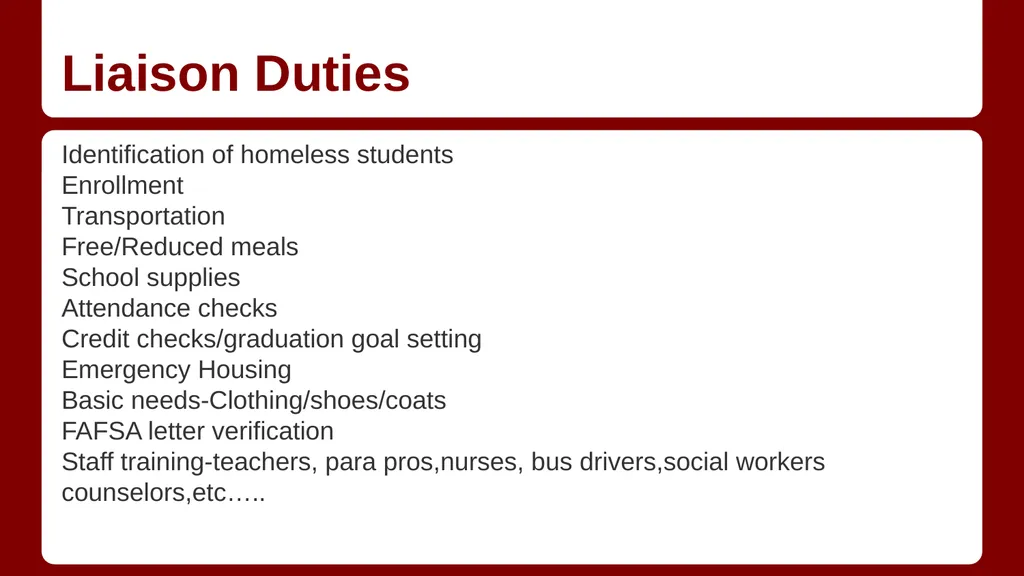
slide14. Liaison Duties Identification of homeless students
Enrollment
Transportation
Free/Reduced meals
School supplies
Attendance checks
Credit checks/graduation goal setting
Emergency Housing
Basic needs-Clothing/shoes/coats
FAFSA letter verification
Staff training-teachers, para pros,nurses, bus drivers,social workers counselors,etc…..<br>
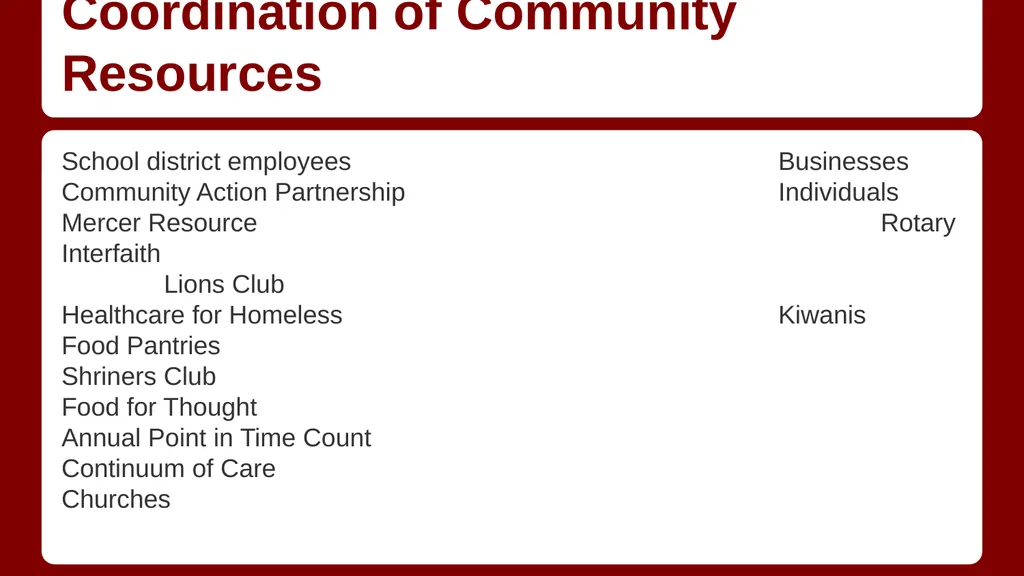
slide15. Coordination of Community Resources School district employees Businesses
Community Action Partnership Individuals
Mercer Resource Rotary
Interfaith Lions Club
Healthcare for Homeless Kiwanis
Food Pantries Shriners Club
Food for Thought
Annual Point in Time Count
Continuum of Care
Churches<br>
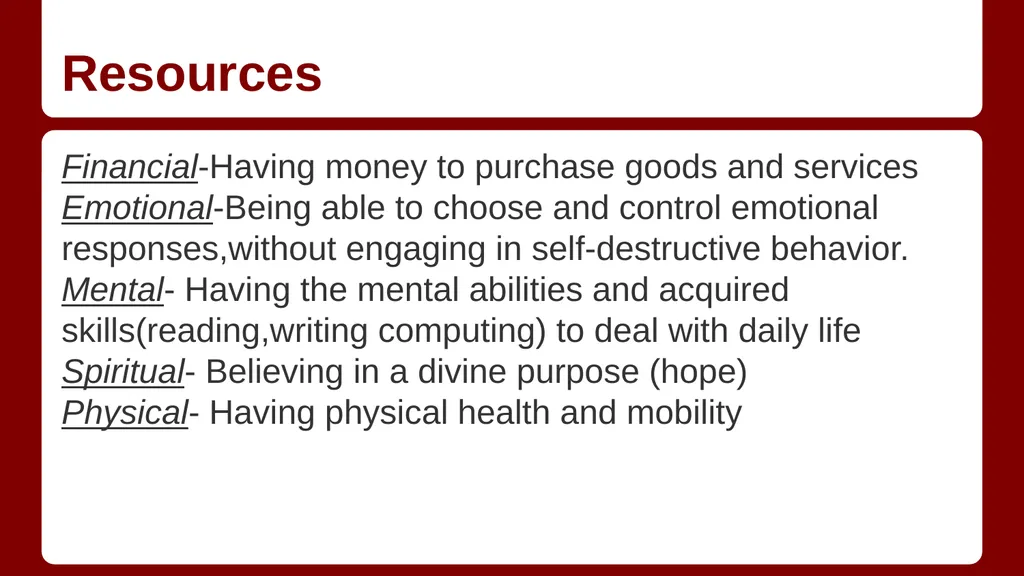
slide16. Resources Financial-Having money to purchase goods and services
Emotional-Being able to choose and control emotional responses,without engaging in self-destructive behavior.
Mental- Having the mental abilities and acquired skills(reading,writing computing) to deal with daily life
Spiritual- Believing in a divine purpose (hope)
Physical- Having physical health and mobility<br>
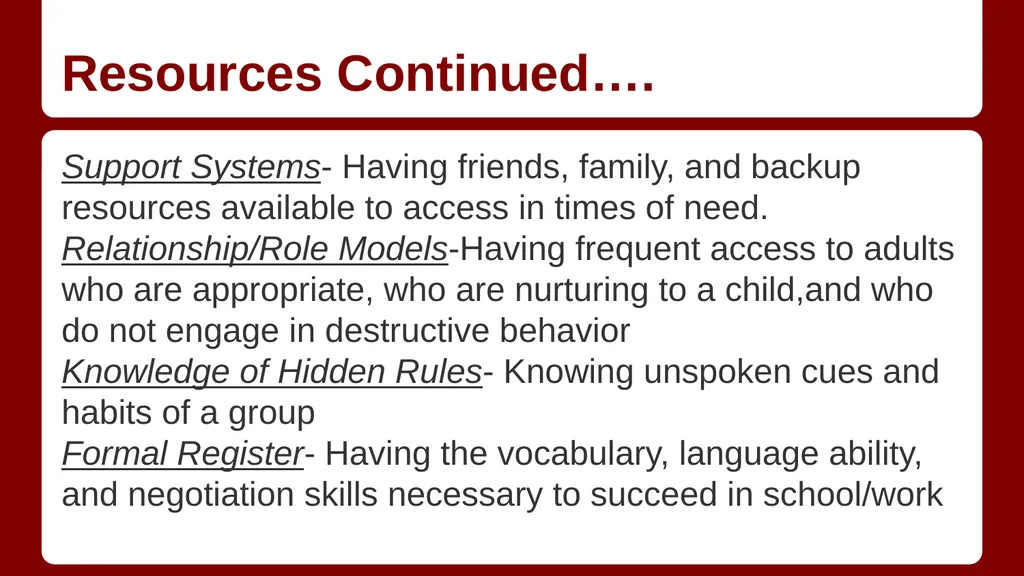
slide17. Resources Continued…. Support Systems- Having friends, family, and backup resources available to access in times of need.
Relationship/Role Models-Having frequent access to adults who are appropriate, who are nurturing to a child,and who do not engage in destructive behavior
Knowledge of Hidden Rules- Knowing unspoken cues and habits of a group
Formal Register- Having the vocabulary, language ability, and negotiation skills necessary to succeed in school/work<br>
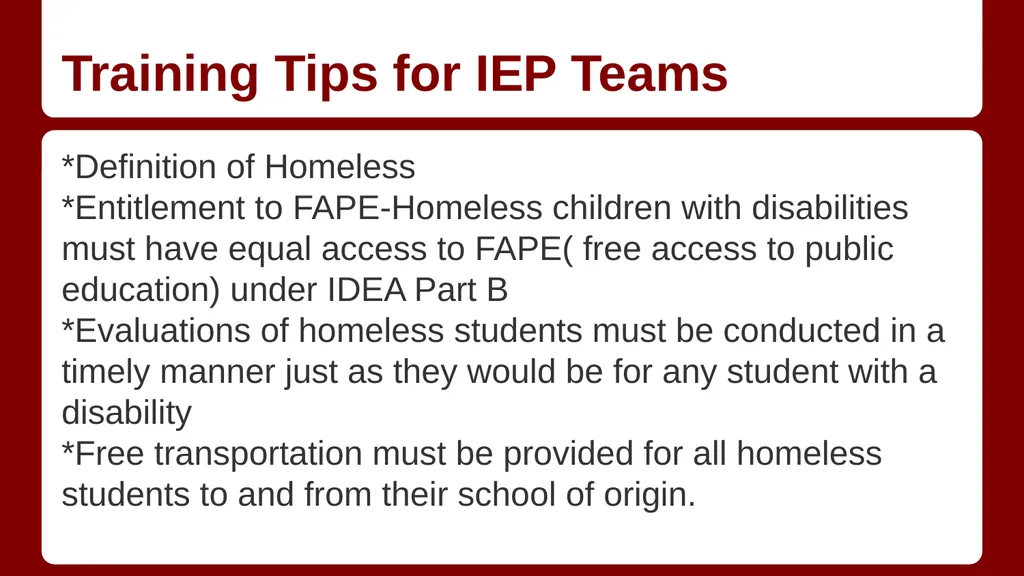
slide18. Training Tips for IEP Teams *Definition of Homeless
*Entitlement to FAPE-Homeless children with disabilities must have equal access to FAPE( free access to public education) under IDEA Part B
*Evaluations of homeless students must be conducted in a timely manner just as they would be for any student with a disability
*Free transportation must be provided for all homeless students to and from their school of origin.<br>
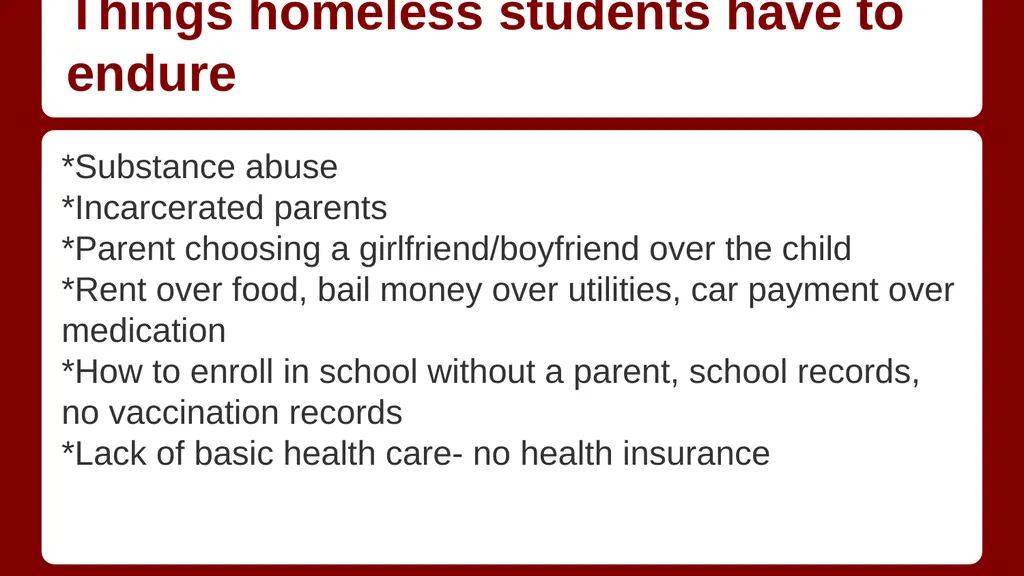
slide19. Things homeless students have to endure *Substance abuse
*Incarcerated parents
*Parent choosing a girlfriend/boyfriend over the child
*Rent over food, bail money over utilities, car payment over medication
*How to enroll in school without a parent, school records, no vaccination records
*Lack of basic health care- no health insurance<br>
slide20. Things homeless students have to endure continued…... *No money for extracurricular activities-music, sports, clubs etc…
*No positive adult role model
*Having to take on adult roles as a child
*Transportation
*Illiterate parents- Parent can’t read school forms, rent applications, etc...
*Family that does not value education<br>
slide21. Reaction Statements by Parent/Guardian “I don’t remember the name of the last school”
“We’ve been moving around alot”
“We’re staying with relatives”
“We’re going through a bad time”
Mention of staying with a relative, friends, motel etc..
Anger or embarrassment when asked for a current address<br>
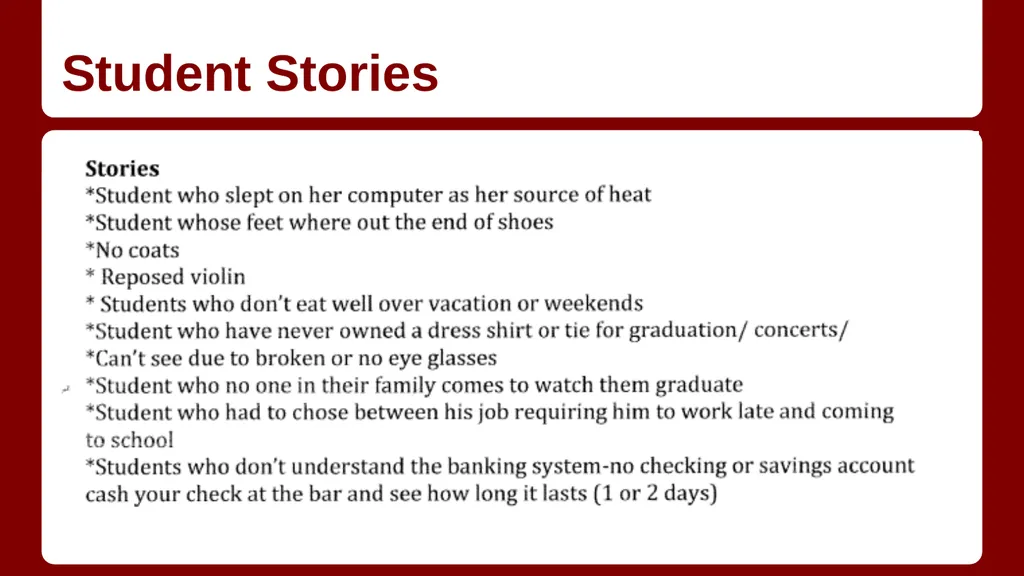
slide22. Student Stories<br>
slide23. Questions????<br>
slide24. Contact Information Greta Hinderliter- NCSD#1
2000 Casper Street
Casper, WY 82604
307-253-4337
greta506@myncsd.org<br>
Natrona County School District, McKinney-Vento Liaison<br>
slide2. History of NCSD#1 Homeless Program *1999-Natrona County School District developed the first homeless program in the state of Wyoming
*Started with 19 students identified as homeless
*Program has grown by more than 2000%
*Averaging 350-400 homeless students per year
*30-40 graduates each year<br>
slide3. Definition of Homeless “A child that lacks a fixed nighttime adequate residence”<br>
slide4. Who is Homeless? Families who are:
*Sharing housing of other people due to loss of housing, economic hardship, or similar reason
*Living in a motel, hotel, trailer park, or campground due to lack of alternative adequate accommodations
*Living in emergency housing or transitional shelters<br>
slide5. Who is Homeless continued...? *Awaiting foster placement
*Living in cars,parks,public spaces, abandoned buildings, bus or train stations
*Living in migratory situations<br>
slide6. Generational or Situational?? Generational poverty is 2 or more generations of a family have never owned a home.
Situational poverty is poverty due to a death, divorce, domestic violence,etc….<br>
slide7. Common Signs of Homelessness Lack of Continuity in Education
*Attendance at many different schools
*Lack records needed to enroll
*Inability to pay fees
*Gaps in skill development
*Poor organizational skills
*Poor ability to conceptualize
*Mistaken diagnosis of abilities<br>
slide8. Common Signs Continued... Poor Health /Nutrition
*Lack of immunization records
*Unmet medical/dental needs
*Skin rashes
*Chronic hunger (hoarding)
*Fatigue<br>
slide9. Common Signs Continued…. Transportation and Attendance Problems
*Erratic attendance and tardiness
*Numerous absences
*Lack of participation in after -school activities and field trips
*Inability to contact parents<br>
slide10. Common Signs Continued... Lack of Personal Space After School Hours
*Consistent lack of preparation for school
*Incomplete or missing homework(no place to do homework or keep supplies)
*Lack of basic school supplies
*Loss of books or other supplies on a regular basis
*Concern for safety and belongings<br>
slide11. Common Signs Continued... Social and Behavioral Concerns
*A marked change in behavior
*Poor/short attention span
*Poor self-esteem
*Extreme shyness
*Aggression
*Unwillingness to form relationships with peers and teachers<br>
slide12. Common Signs Continued…. *Old beyond years
*Protective of parents
*Fear of abandonment
*Anxiety late in the day<br>
slide13. Database Components McKinney-Vento Database (2014-15)
Use for your district data and WDE 530 reports<br>
slide14. Liaison Duties Identification of homeless students
Enrollment
Transportation
Free/Reduced meals
School supplies
Attendance checks
Credit checks/graduation goal setting
Emergency Housing
Basic needs-Clothing/shoes/coats
FAFSA letter verification
Staff training-teachers, para pros,nurses, bus drivers,social workers counselors,etc…..<br>
slide15. Coordination of Community Resources School district employees Businesses
Community Action Partnership Individuals
Mercer Resource Rotary
Interfaith Lions Club
Healthcare for Homeless Kiwanis
Food Pantries Shriners Club
Food for Thought
Annual Point in Time Count
Continuum of Care
Churches<br>
slide16. Resources Financial-Having money to purchase goods and services
Emotional-Being able to choose and control emotional responses,without engaging in self-destructive behavior.
Mental- Having the mental abilities and acquired skills(reading,writing computing) to deal with daily life
Spiritual- Believing in a divine purpose (hope)
Physical- Having physical health and mobility<br>
slide17. Resources Continued…. Support Systems- Having friends, family, and backup resources available to access in times of need.
Relationship/Role Models-Having frequent access to adults who are appropriate, who are nurturing to a child,and who do not engage in destructive behavior
Knowledge of Hidden Rules- Knowing unspoken cues and habits of a group
Formal Register- Having the vocabulary, language ability, and negotiation skills necessary to succeed in school/work<br>
slide18. Training Tips for IEP Teams *Definition of Homeless
*Entitlement to FAPE-Homeless children with disabilities must have equal access to FAPE( free access to public education) under IDEA Part B
*Evaluations of homeless students must be conducted in a timely manner just as they would be for any student with a disability
*Free transportation must be provided for all homeless students to and from their school of origin.<br>
slide19. Things homeless students have to endure *Substance abuse
*Incarcerated parents
*Parent choosing a girlfriend/boyfriend over the child
*Rent over food, bail money over utilities, car payment over medication
*How to enroll in school without a parent, school records, no vaccination records
*Lack of basic health care- no health insurance<br>
slide20. Things homeless students have to endure continued…... *No money for extracurricular activities-music, sports, clubs etc…
*No positive adult role model
*Having to take on adult roles as a child
*Transportation
*Illiterate parents- Parent can’t read school forms, rent applications, etc...
*Family that does not value education<br>
slide21. Reaction Statements by Parent/Guardian “I don’t remember the name of the last school”
“We’ve been moving around alot”
“We’re staying with relatives”
“We’re going through a bad time”
Mention of staying with a relative, friends, motel etc..
Anger or embarrassment when asked for a current address<br>
slide22. Student Stories<br>
slide23. Questions????<br>
slide24. Contact Information Greta Hinderliter- NCSD#1
2000 Casper Street
Casper, WY 82604
307-253-4337
greta506@myncsd.org<br>