
q More than a meal: Co-designed improvements to



Description: q More than a meal: Co-designed improvements to hospital food for First Nations hospital inpatients Druce T1,2, Carter V2, Hitch D1 2, Barrington V2. 1 Deakin University and Western Health Partnership, Melbourne 2 Western Health, Melbourne
Related Topics
Download Presentation
"q More than a meal: Co-designed improvements to" is the property of its rightful owner. Permission is granted to download and print the materials on this website for personal, non-commercial use only, and to display it on your personal computer provided you do not modify the materials and that you retain all copyright notices contained in the materials. By downloading content from our website, you accept the terms of this agreement.
Presentation Transcript
slide1. q More than a meal: Co-designed improvements to hospital food for First Nations hospital inpatients Druce T1,2, Carter V2, Hitch D1 2, Barrington V2.
1 Deakin University and Western Health Partnership, Melbourne
2 Western Health, Melbourne<br>
slide2. We would like to acknowledge the Traditional Owners of the lands we are gathered on today. We pay our respects to Elders past, present and emerging. Importantly, we would like to acknowledge the strength, pride and resilience of the Aboriginal and Torres Strait Islander community.<br>
slide3. What we know
Hospital food plays a vital role in patient recovery, however currently there is limited research into First Nations inpatients’ meal experiences and preferences.<br>
slide4. Aim
To seek feedback from First Nations patients and healthcare staff to determine influences on food choices and experiences with hospital meals.<br>
slide5. What we did
A qualitative descriptive study informed a co-design process
Two focus groups using semi-structured interviews
Topics included traditional and comfort foods, barriers to meal satisfaction and recommendations for hospital food service improvements.<br>
slide6. Characteristics of the participants Two First Nations healthcare clinicians and three First Nations consumers.
The five participants and one researcher identified as First Nations.
Four of the participants identified as female and one as male.
Participants ranged in age from 26 – 71 years.<br>
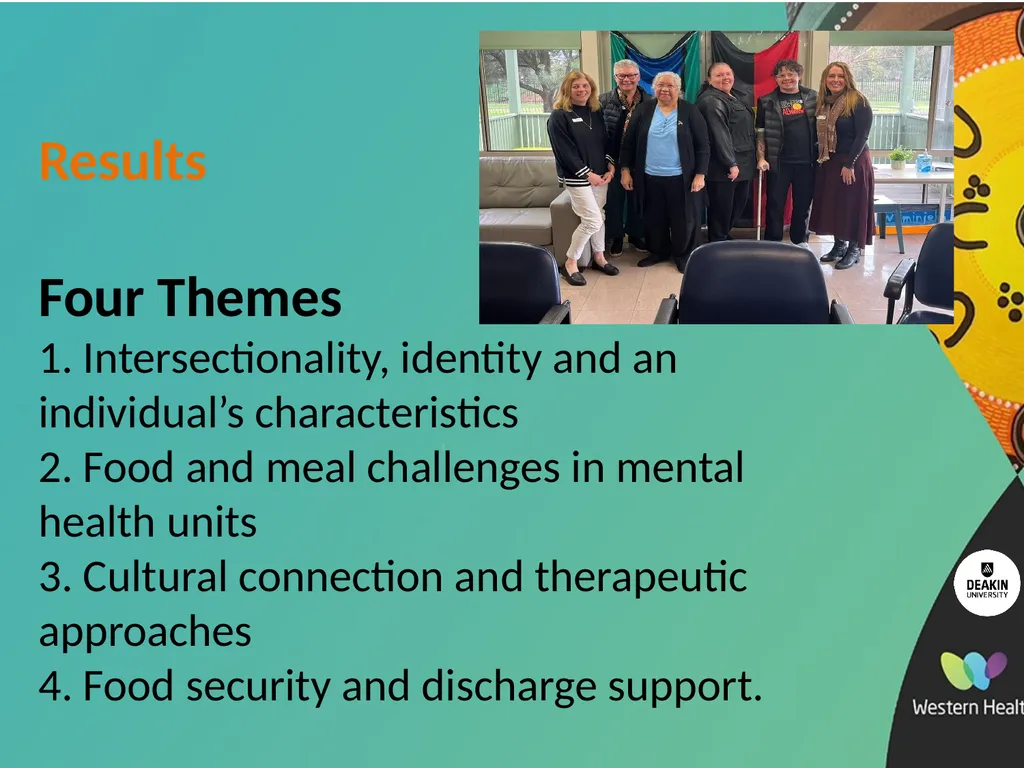
slide7. Results
Four Themes
1. Intersectionality, identity and an individual’s characteristics
2. Food and meal challenges in mental health units
3. Cultural connection and therapeutic approaches
4. Food security and discharge support.<br>
slide8. Theme 1
Intersectionality, identity and an individual’s characteristics<br>
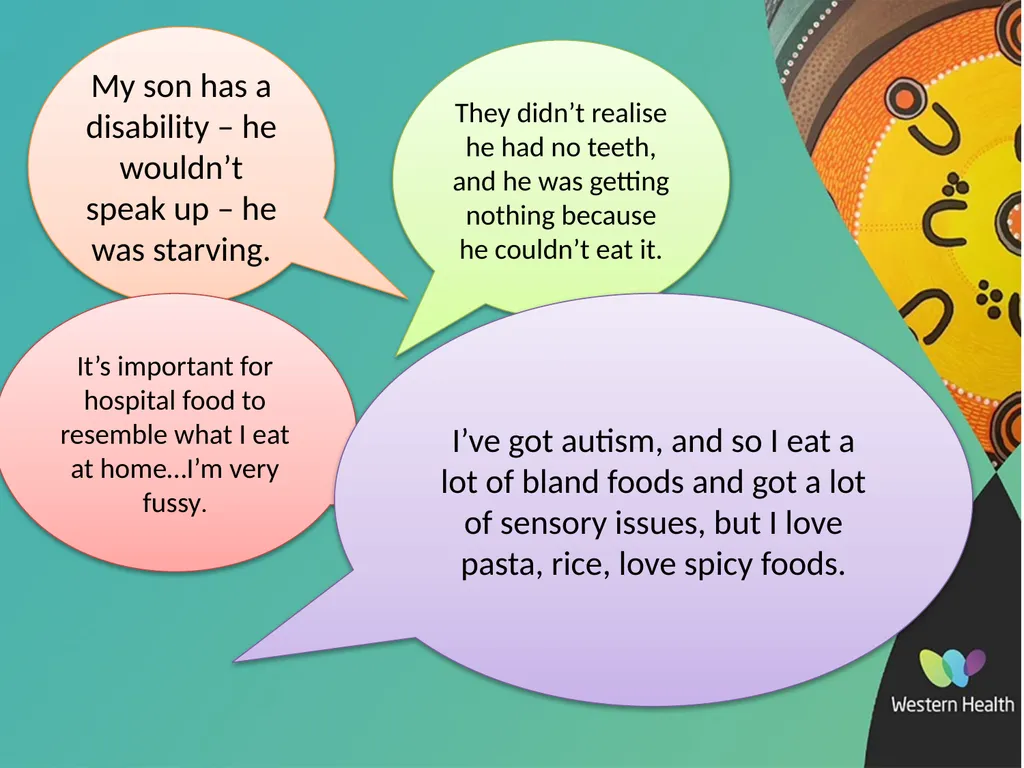
slide9. My son has a disability – he wouldn’t speak up – he was starving. They didn’t realise he had no teeth, and he was getting nothing because he couldn’t eat it. It’s important for hospital food to resemble what I eat at home…I’m very fussy. I’ve got autism, and so I eat a lot of bland foods and got a lot of sensory issues, but I love pasta, rice, love spicy foods.<br>
slide10. Theme 2 and sub-themes
Food and meal challenges in mental health units
Timing of meals
Variety of meal choices
Cooking activities are snacks rather than meals<br>
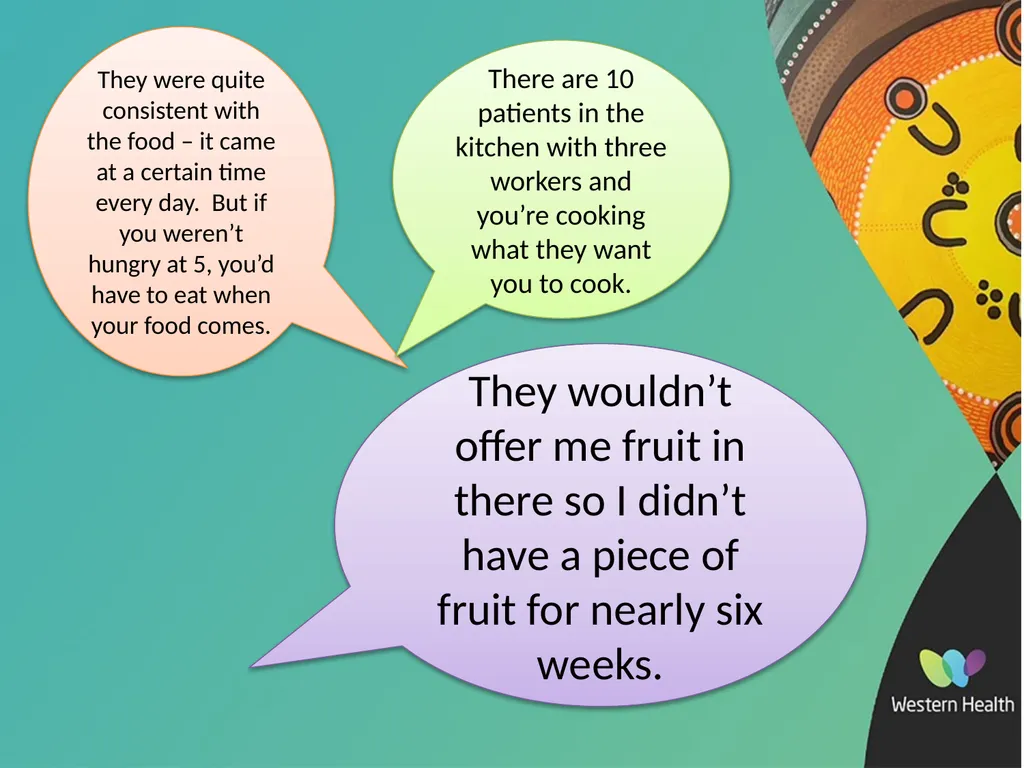
slide11. They were quite consistent with the food – it came at a certain time every day. But if you weren’t hungry at 5, you’d have to eat when your food comes. There are 10 patients in the kitchen with three workers and you’re cooking what they want you to cook. They wouldn’t offer me fruit in there so I didn’t have a piece of fruit for nearly six weeks.<br>
slide12. Theme 3 and sub-themes
Cultural connection and
therapeutic approaches
Cultural safety for First Nation’s people
Education of non-Indigenous people
Medicinal plants from Country<br>
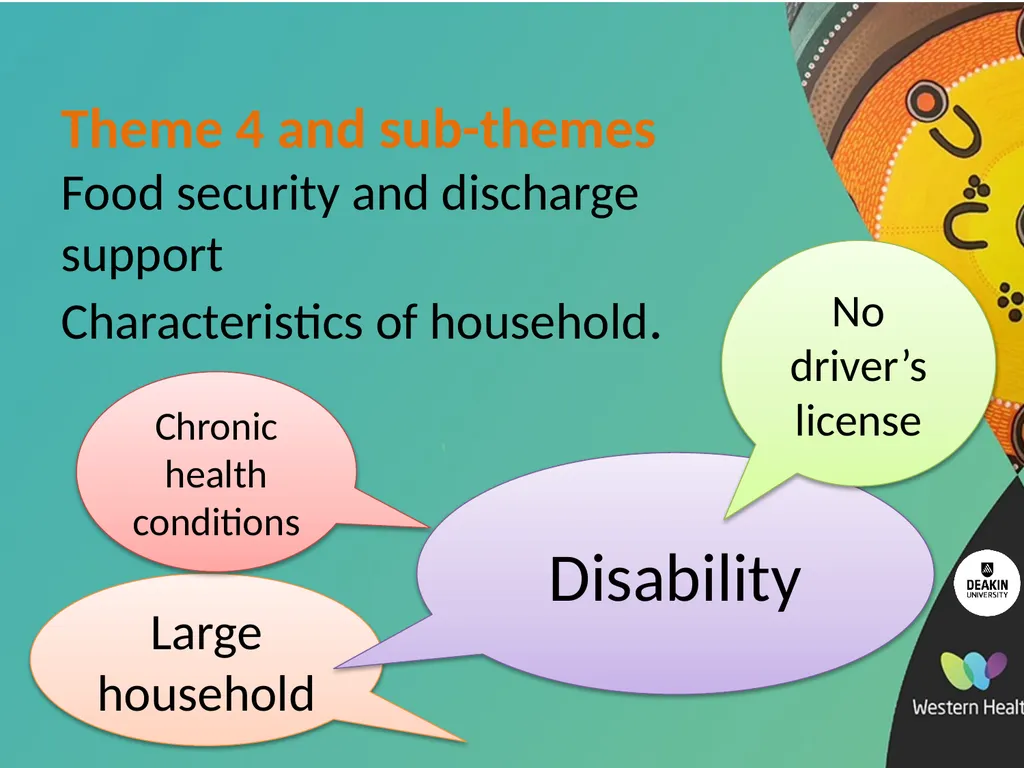
slide13. Theme 4 and sub-themes
Food security and discharge support
Characteristics of household. Large household Disability No driver’s license Chronic health conditions<br>
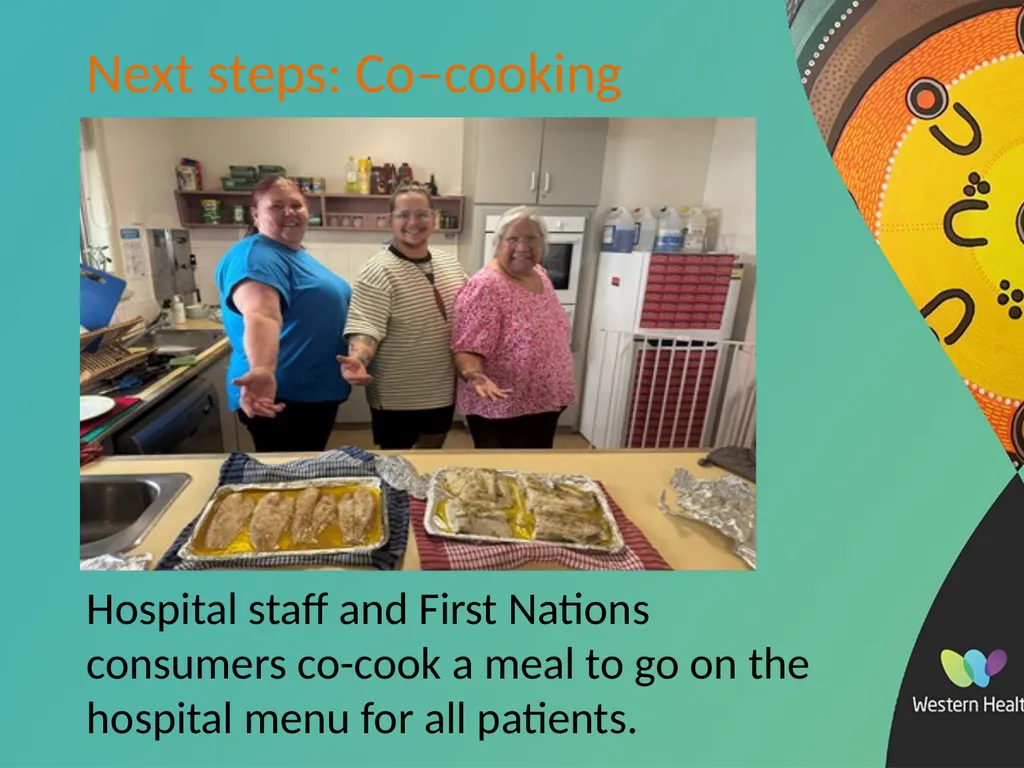
slide14. Highlighted the need for First Nation people to connect to country with food Next steps: Co–cooking
Hospital staff and First Nations consumers co-cook a meal to go on the hospital menu for all patients.<br>
slide15. Inclusion of Cultural foods and cards to celebrate NAIDOC week
2025:finger lime biscuit
2026: Native tea<br>
slide16. Indigenous garden on hospital grounds<br>
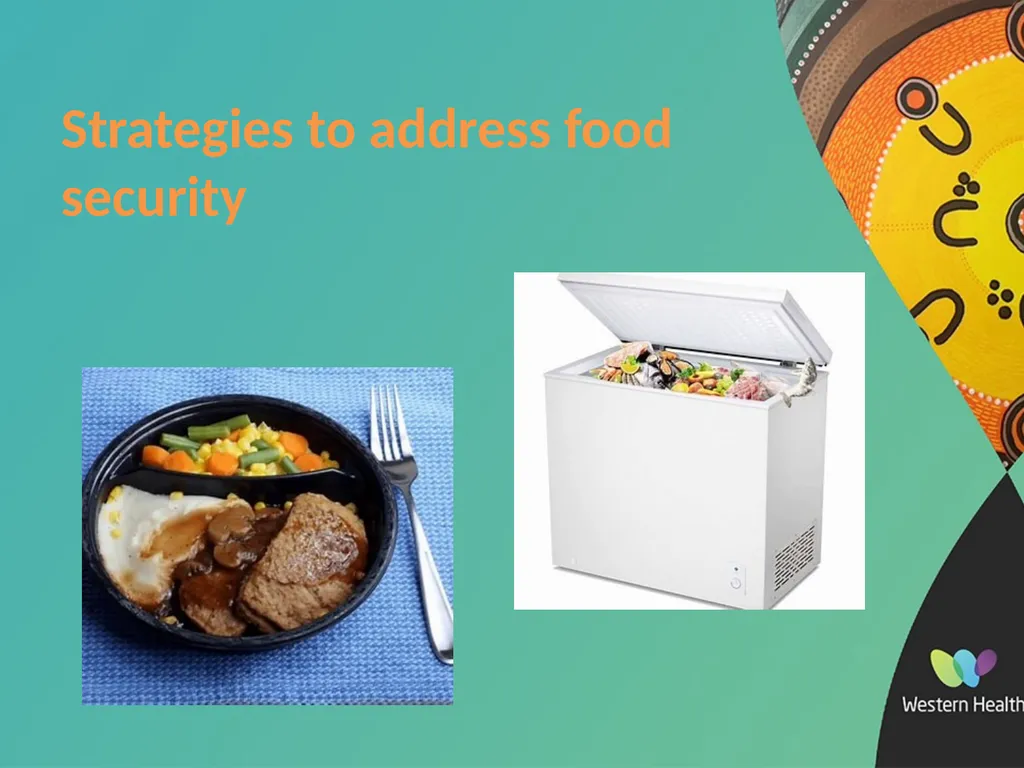
slide17. Strategies to address food security<br>
slide18. Highlighted the need for First Nation people to connect to country with food Summary
Highlighted that food is a means of connecting to culture during inpatient stays
Developing a culinary bank of First Nations meals and events for Hospital Food Service
Food is a means of educating non- indigenous patients about First Nation food
Mental health units- limited food and access to choice needs addressing
Food insecurity on discharge was a very real issue for participants<br>
1 Deakin University and Western Health Partnership, Melbourne
2 Western Health, Melbourne<br>
slide2. We would like to acknowledge the Traditional Owners of the lands we are gathered on today. We pay our respects to Elders past, present and emerging. Importantly, we would like to acknowledge the strength, pride and resilience of the Aboriginal and Torres Strait Islander community.<br>
slide3. What we know
Hospital food plays a vital role in patient recovery, however currently there is limited research into First Nations inpatients’ meal experiences and preferences.<br>
slide4. Aim
To seek feedback from First Nations patients and healthcare staff to determine influences on food choices and experiences with hospital meals.<br>
slide5. What we did
A qualitative descriptive study informed a co-design process
Two focus groups using semi-structured interviews
Topics included traditional and comfort foods, barriers to meal satisfaction and recommendations for hospital food service improvements.<br>
slide6. Characteristics of the participants Two First Nations healthcare clinicians and three First Nations consumers.
The five participants and one researcher identified as First Nations.
Four of the participants identified as female and one as male.
Participants ranged in age from 26 – 71 years.<br>
slide7. Results
Four Themes
1. Intersectionality, identity and an individual’s characteristics
2. Food and meal challenges in mental health units
3. Cultural connection and therapeutic approaches
4. Food security and discharge support.<br>
slide8. Theme 1
Intersectionality, identity and an individual’s characteristics<br>
slide9. My son has a disability – he wouldn’t speak up – he was starving. They didn’t realise he had no teeth, and he was getting nothing because he couldn’t eat it. It’s important for hospital food to resemble what I eat at home…I’m very fussy. I’ve got autism, and so I eat a lot of bland foods and got a lot of sensory issues, but I love pasta, rice, love spicy foods.<br>
slide10. Theme 2 and sub-themes
Food and meal challenges in mental health units
Timing of meals
Variety of meal choices
Cooking activities are snacks rather than meals<br>
slide11. They were quite consistent with the food – it came at a certain time every day. But if you weren’t hungry at 5, you’d have to eat when your food comes. There are 10 patients in the kitchen with three workers and you’re cooking what they want you to cook. They wouldn’t offer me fruit in there so I didn’t have a piece of fruit for nearly six weeks.<br>
slide12. Theme 3 and sub-themes
Cultural connection and
therapeutic approaches
Cultural safety for First Nation’s people
Education of non-Indigenous people
Medicinal plants from Country<br>
slide13. Theme 4 and sub-themes
Food security and discharge support
Characteristics of household. Large household Disability No driver’s license Chronic health conditions<br>
slide14. Highlighted the need for First Nation people to connect to country with food Next steps: Co–cooking
Hospital staff and First Nations consumers co-cook a meal to go on the hospital menu for all patients.<br>
slide15. Inclusion of Cultural foods and cards to celebrate NAIDOC week
2025:finger lime biscuit
2026: Native tea<br>
slide16. Indigenous garden on hospital grounds<br>
slide17. Strategies to address food security<br>
slide18. Highlighted the need for First Nation people to connect to country with food Summary
Highlighted that food is a means of connecting to culture during inpatient stays
Developing a culinary bank of First Nations meals and events for Hospital Food Service
Food is a means of educating non- indigenous patients about First Nation food
Mental health units- limited food and access to choice needs addressing
Food insecurity on discharge was a very real issue for participants<br>