
RAPID INTERVENTION WITH GTN IN HYPERACUTE STROKE




Description: RAPID INTERVENTION WITH GTN IN HYPERACUTE STROKE TRIAL: RIGHT Division of Stroke, University of Nottingham East Midlands Ambulance Service Outline of the Presentation Trial Background Aims Trial overview Your role Qualitative study
Related Topics
Download Presentation
"RAPID INTERVENTION WITH GTN IN HYPERACUTE STROKE" is the property of its rightful owner. Permission is granted to download and print the materials on this website for personal, non-commercial use only, and to display it on your personal computer provided you do not modify the materials and that you retain all copyright notices contained in the materials. By downloading content from our website, you accept the terms of this agreement.
Presentation Transcript
slide1. RAPID INTERVENTION WITH GTN IN HYPERACUTE STROKE TRIAL: RIGHT Division of Stroke, University of Nottingham
East Midlands Ambulance Service<br>
slide2. Outline of the Presentation Trial Background
Aims
Trial overview
Your role
Qualitative study<br>
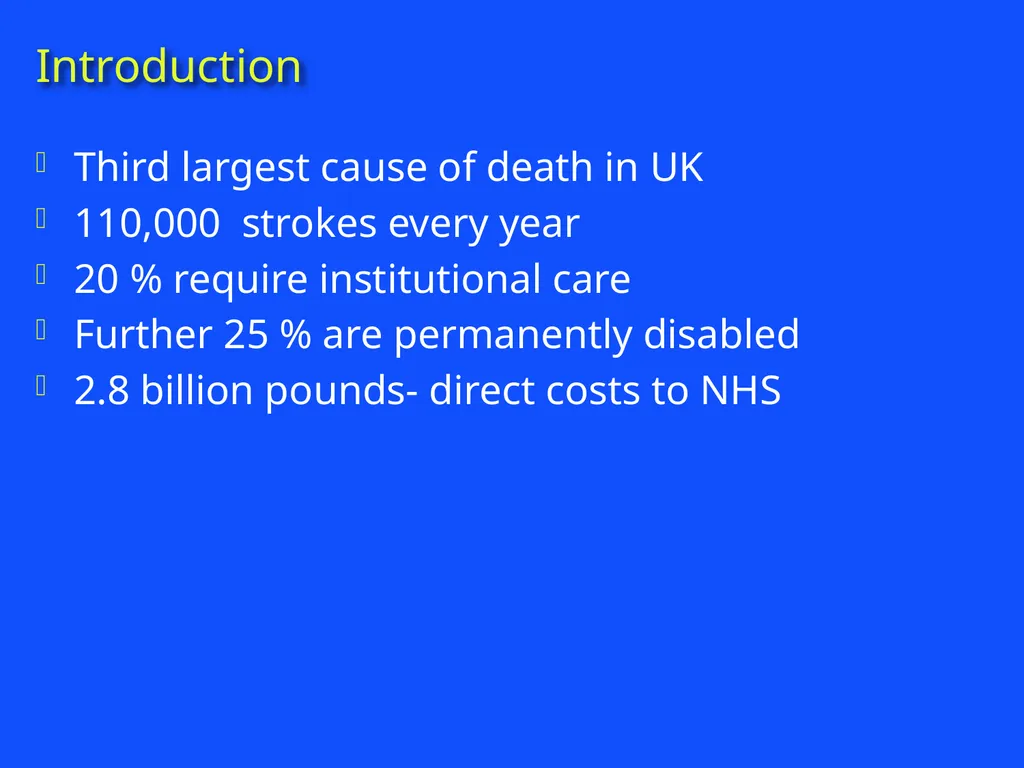
slide3. Introduction Third largest cause of death in UK
110,000 strokes every year
20 % require institutional care
Further 25 % are permanently disabled
2.8 billion pounds- direct costs to NHS<br>
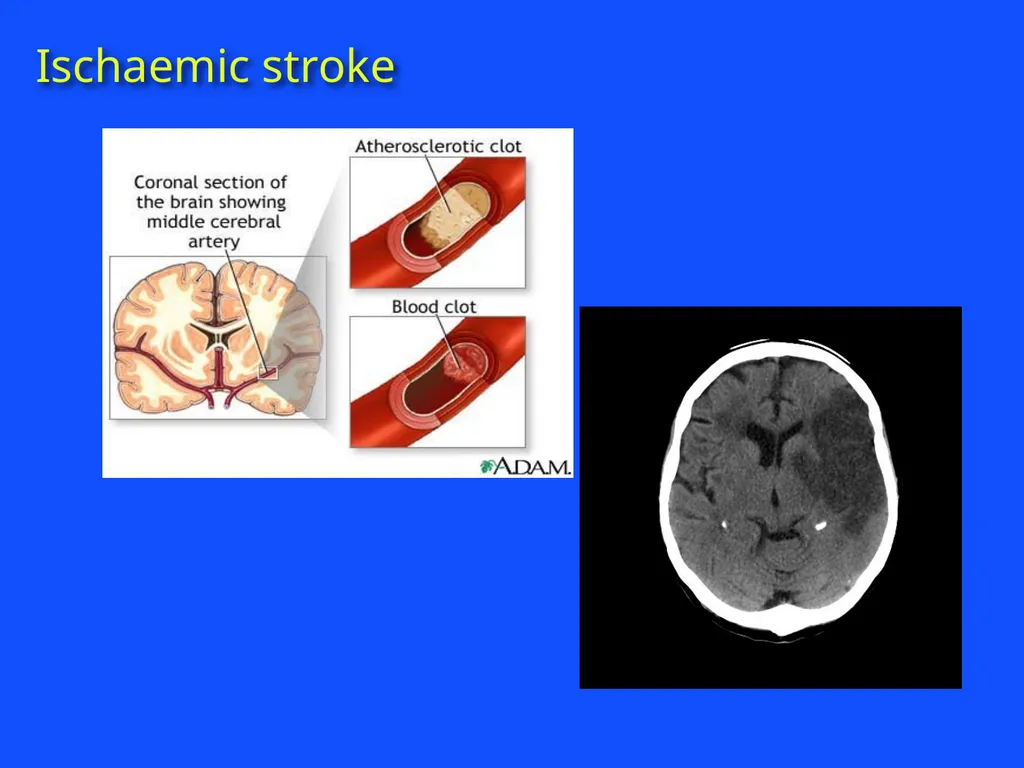
slide4. Ischaemic stroke<br>
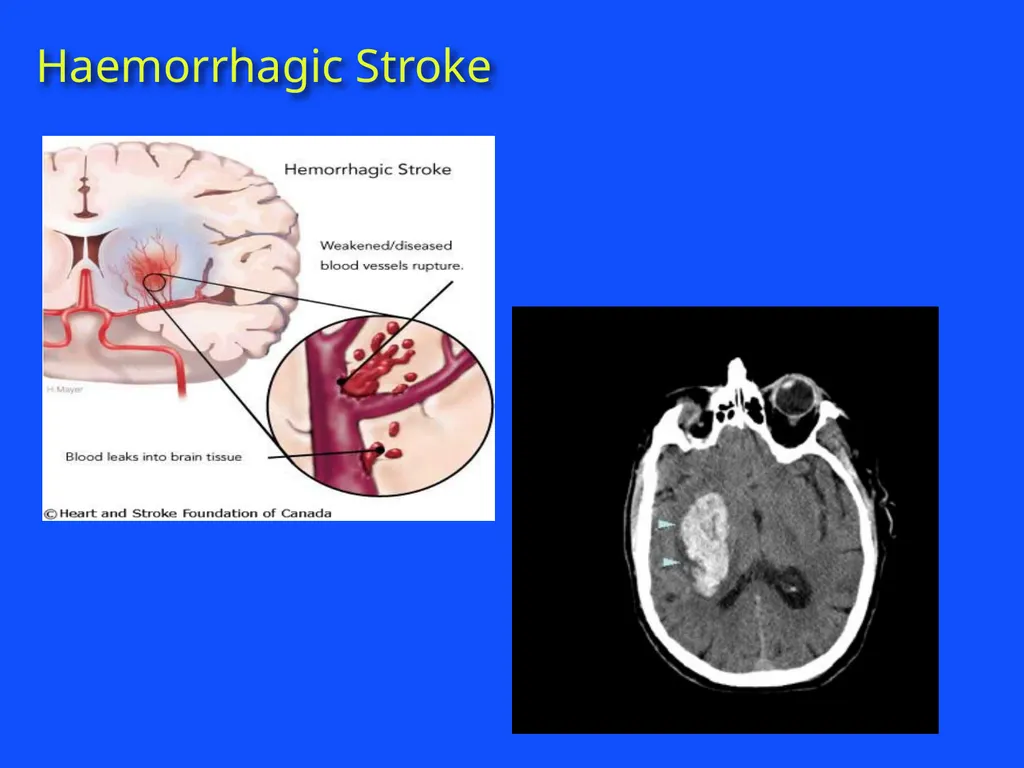
slide5. Haemorrhagic Stroke<br>
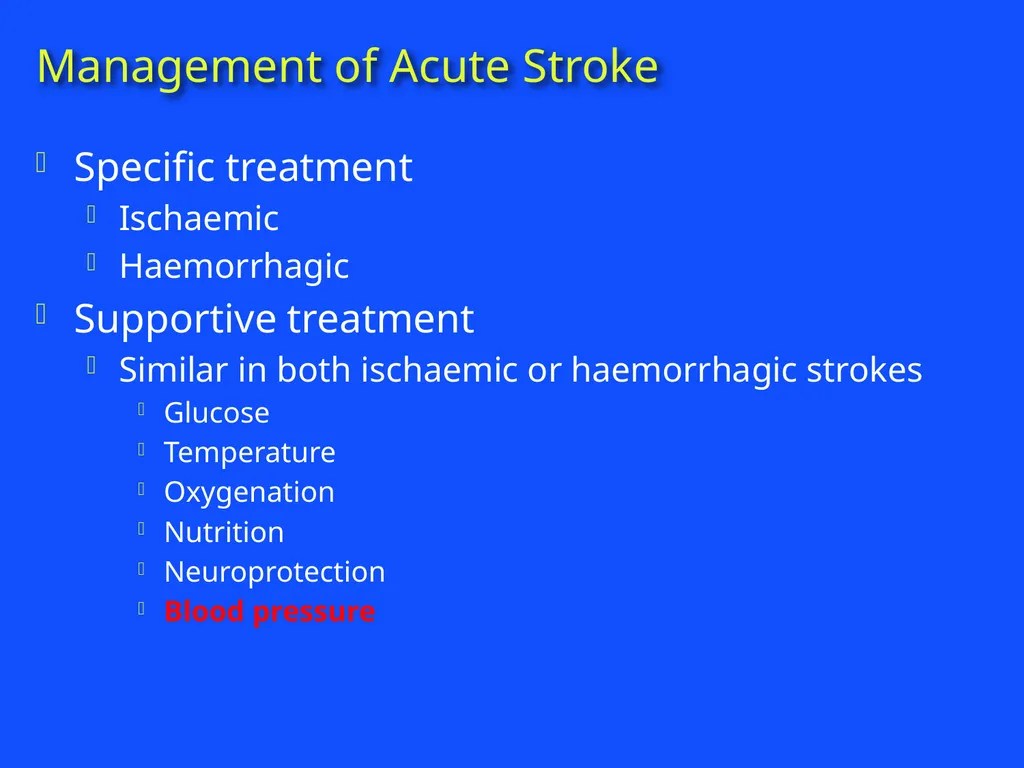
slide6. Management of Acute Stroke Specific treatment
Ischaemic
Haemorrhagic
Supportive treatment
Similar in both ischaemic or haemorrhagic strokes
Glucose
Temperature
Oxygenation
Nutrition
Neuroprotection
Blood pressure<br>
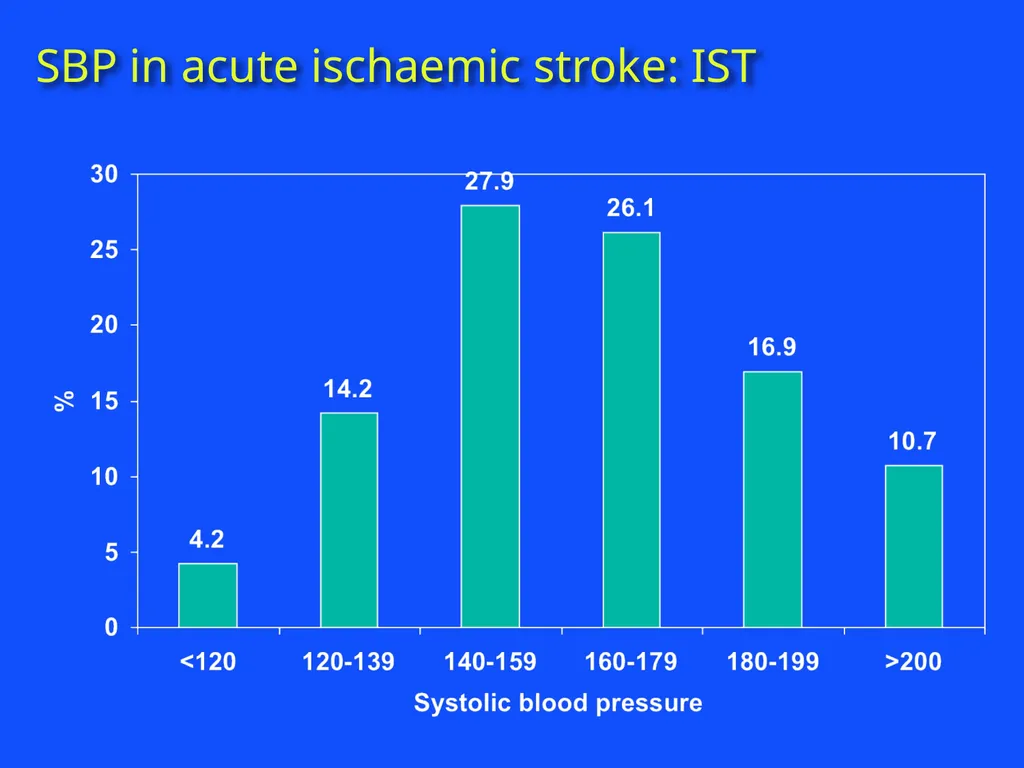
slide7. SBP in acute ischaemic stroke: IST<br>
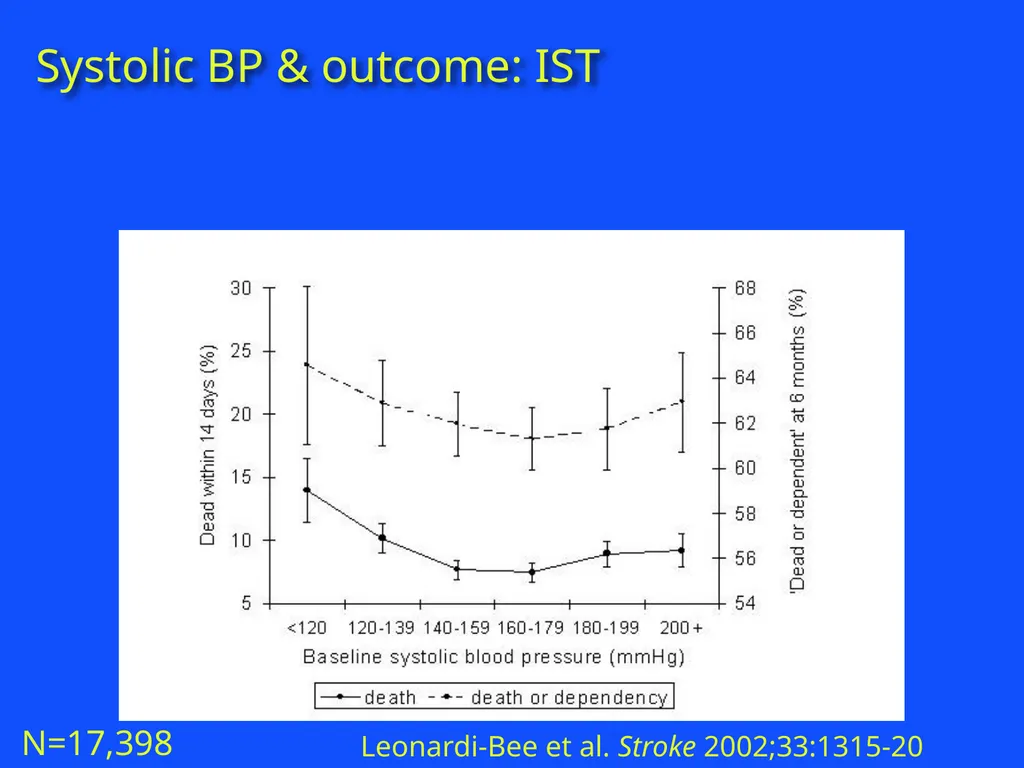
slide8. Systolic BP & outcome: IST Leonardi-Bee et al. Stroke 2002;33:1315-20 N=17,398<br>
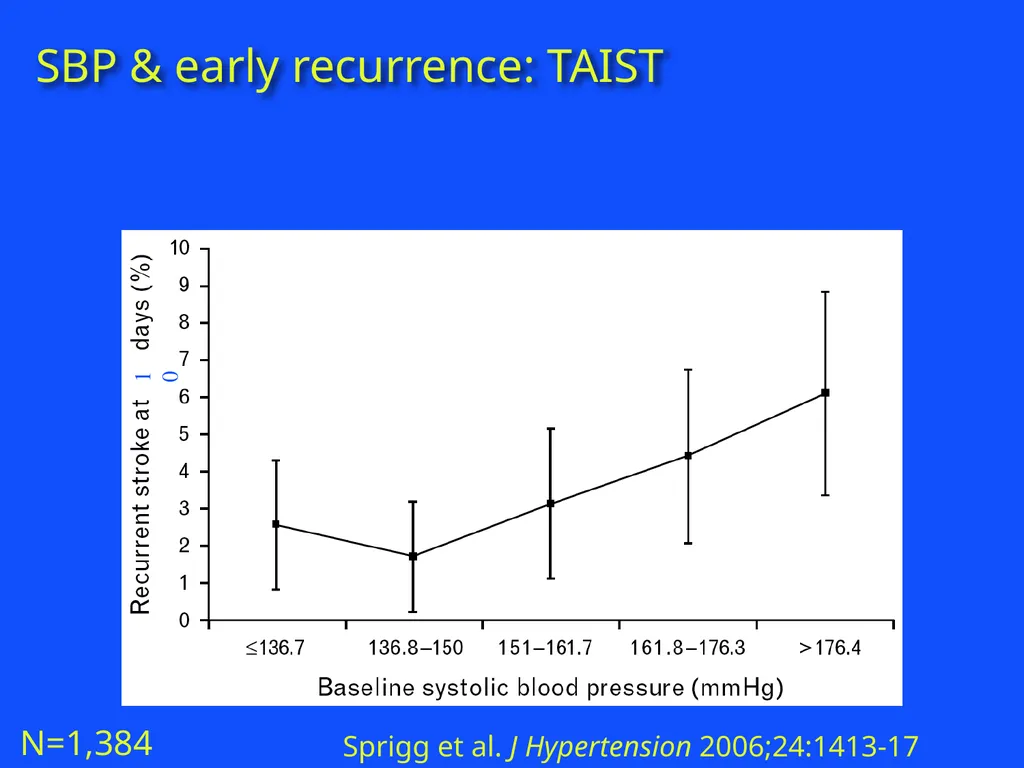
slide9. SBP & early recurrence: TAIST Sprigg et al. J Hypertension 2006;24:1413-17 N=1,384 10<br>
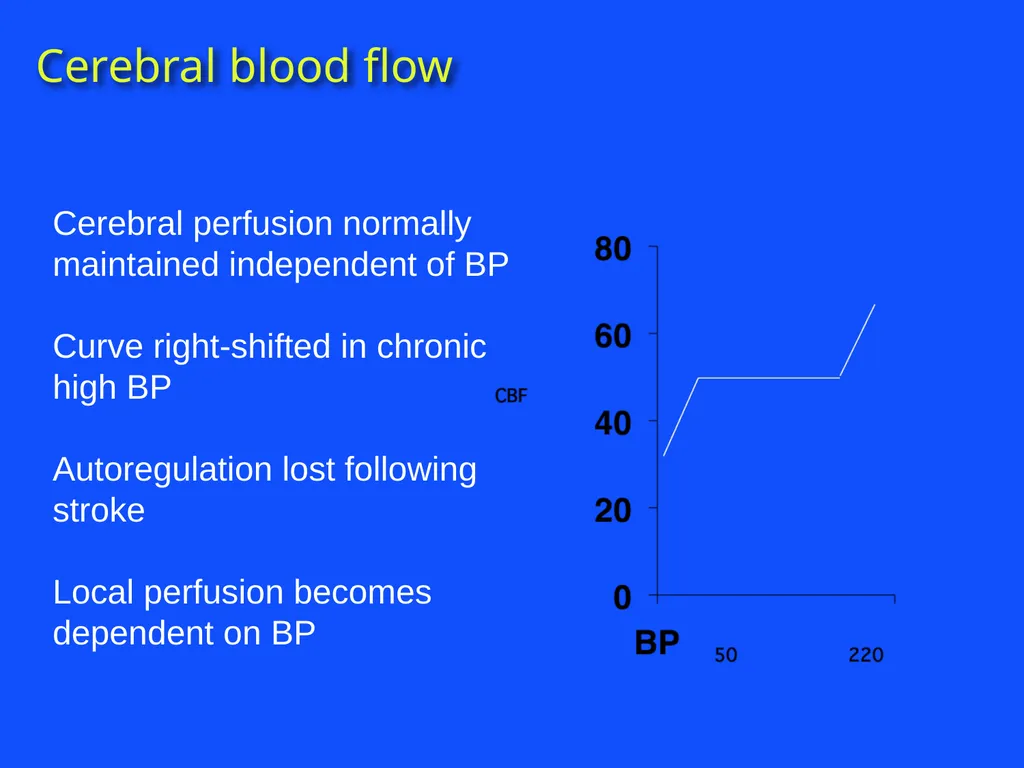
slide10. Cerebral blood flow Cerebral perfusion normally maintained independent of BP
Curve right-shifted in chronic high BP
Autoregulation lost following stroke
Local perfusion becomes dependent on BP<br>
slide11. Nitric Oxide Lowers blood pressure in acute stroke
Maintains regional cerbral blood flow
Anti leucocyte agent
Neuroprotective
May attenuate neuronal apoptosis
Enhances neurogenesis and angiogenesis
Reduce infarct size<br>
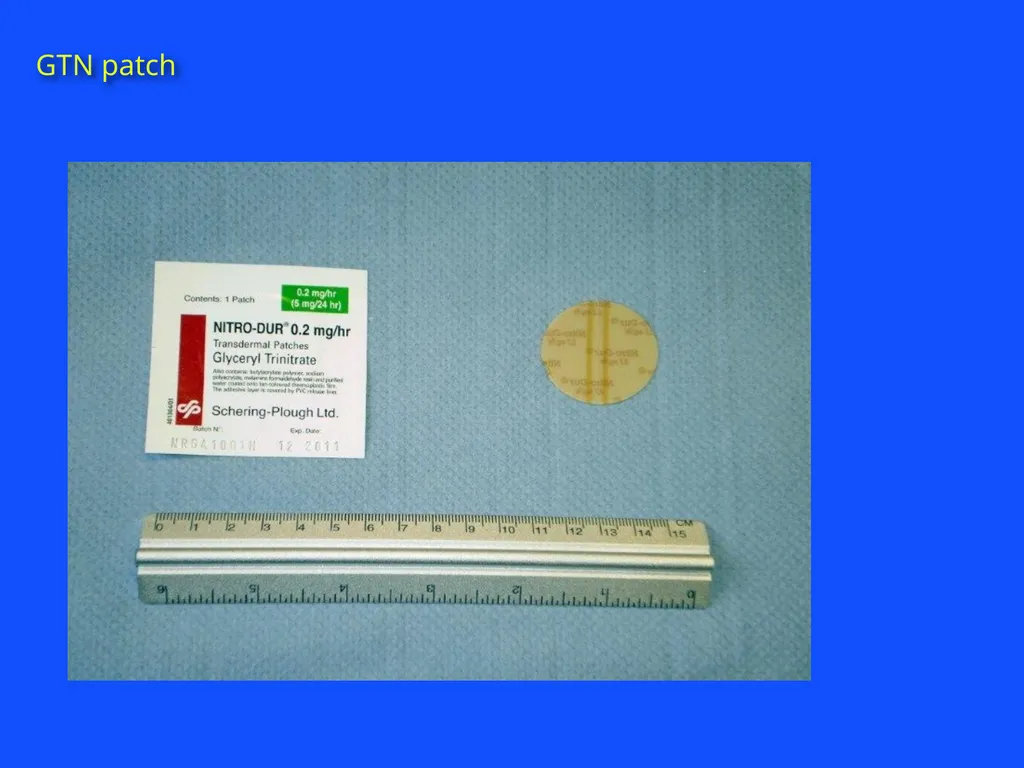
slide12. GTN patch<br>
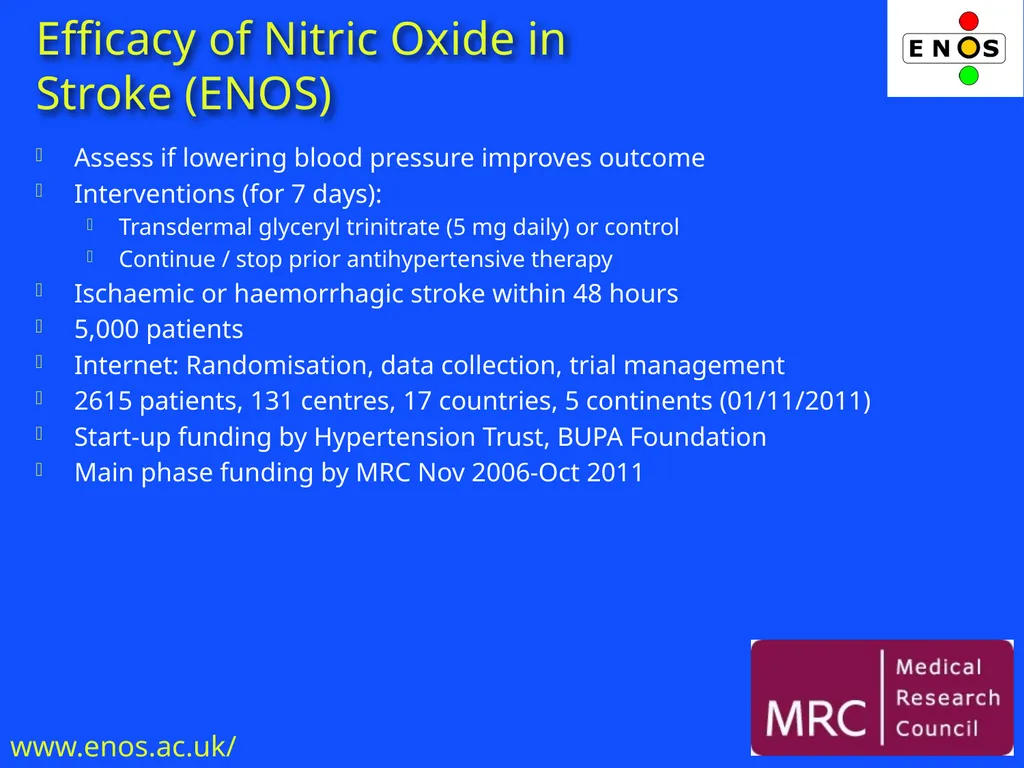
slide13. Efficacy of Nitric Oxide in Stroke (ENOS) Assess if lowering blood pressure improves outcome
Interventions (for 7 days):
Transdermal glyceryl trinitrate (5 mg daily) or control
Continue / stop prior antihypertensive therapy
Ischaemic or haemorrhagic stroke within 48 hours
5,000 patients
Internet: Randomisation, data collection, trial management
2615 patients, 131 centres, 17 countries, 5 continents (01/11/2011)
Start-up funding by Hypertension Trust, BUPA Foundation
Main phase funding by MRC Nov 2006-Oct 2011 www.enos.ac.uk/<br>
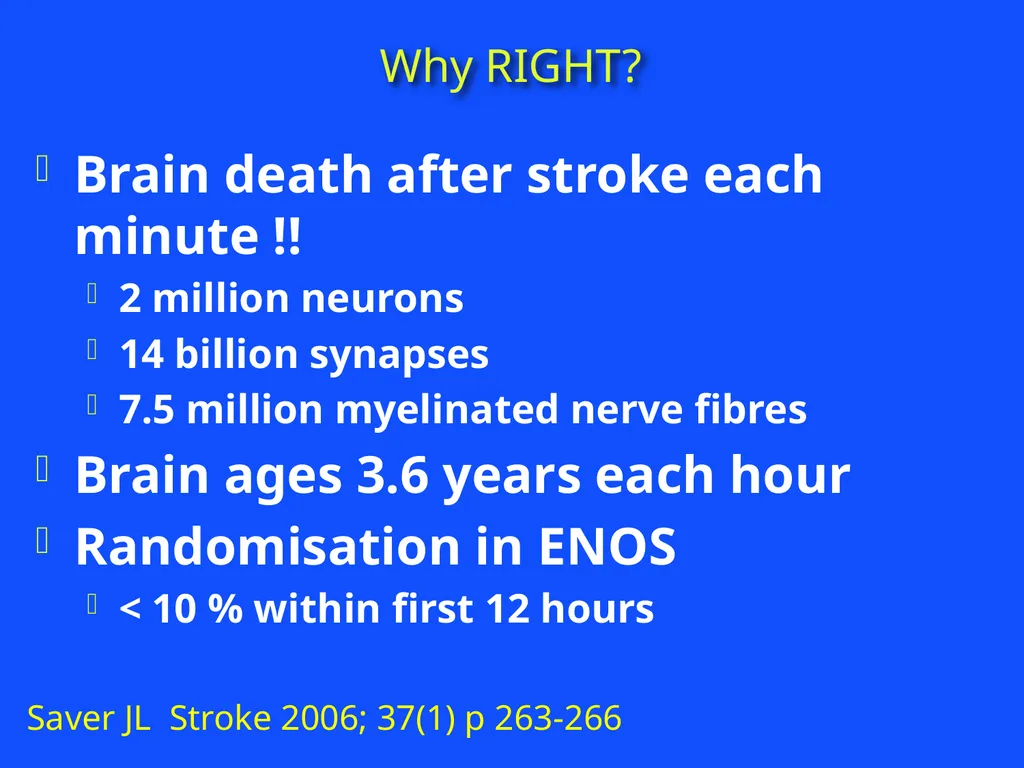
slide14. Why RIGHT? Brain death after stroke each minute !!
2 million neurons
14 billion synapses
7.5 million myelinated nerve fibres
Brain ages 3.6 years each hour
Randomisation in ENOS
< 10 % within first 12 hours Saver JL Stroke 2006; 37(1) p 263-266<br>
slide15. Ambulance Based Stroke Trial None in the UK !!
FAST MAG Pilot Study- US
Brings up a whole lot of new challenges
Diagnosis
Recruitment
Transfer of Care
Feasibility
Patient perception
Paramedics perception<br>
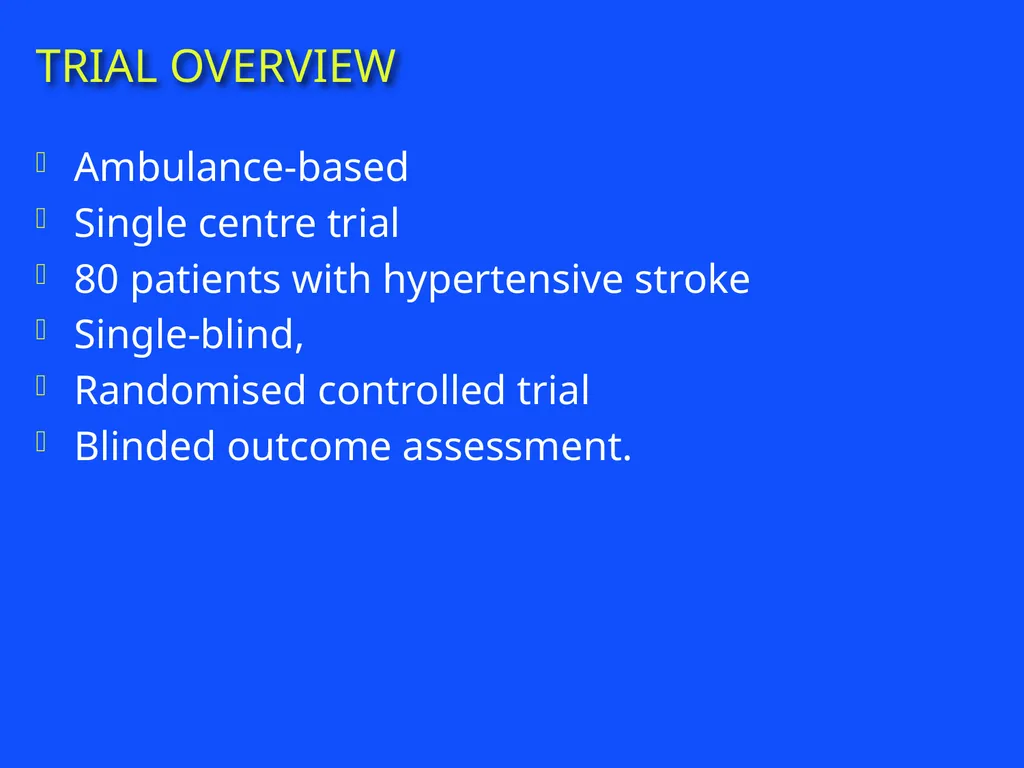
slide16. TRIAL OVERVIEW Ambulance-based
Single centre trial
80 patients with hypertensive stroke
Single-blind,
Randomised controlled trial
Blinded outcome assessment.<br>
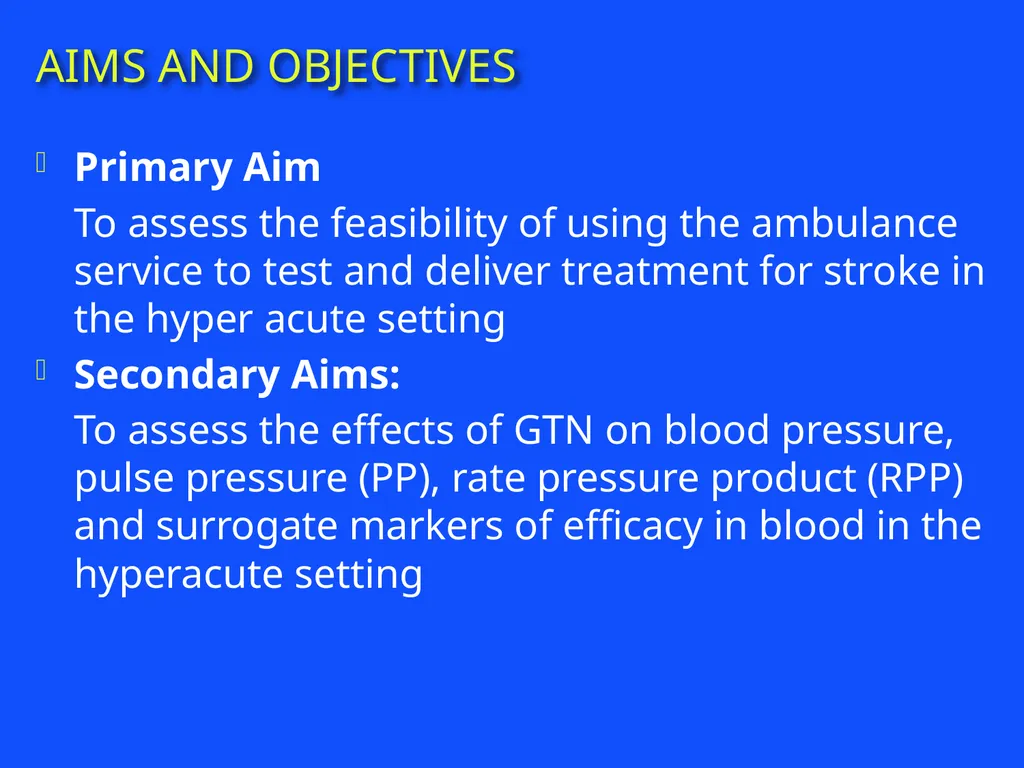
slide17. AIMS AND OBJECTIVES Primary Aim
To assess the feasibility of using the ambulance service to test and deliver treatment for stroke in the hyper acute setting
Secondary Aims:
To assess the effects of GTN on blood pressure, pulse pressure (PP), rate pressure product (RPP) and surrogate markers of efficacy in blood in the hyperacute setting<br>
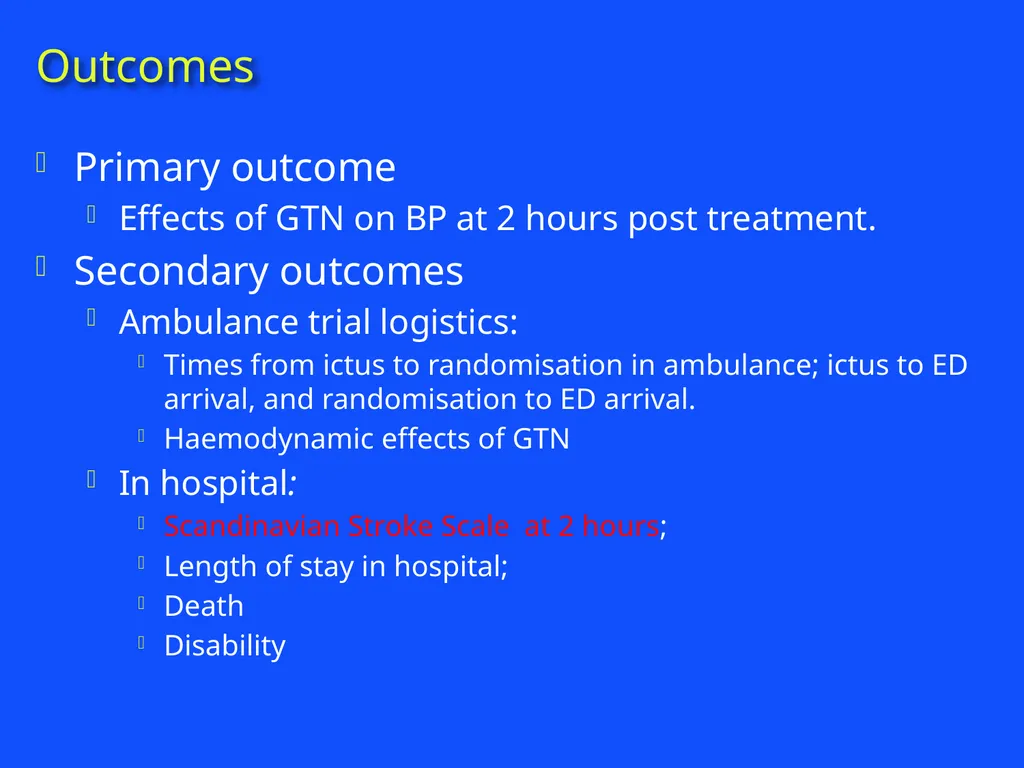
slide18. Outcomes Primary outcome
Effects of GTN on BP at 2 hours post treatment.
Secondary outcomes
Ambulance trial logistics:
Times from ictus to randomisation in ambulance; ictus to ED arrival, and randomisation to ED arrival.
Haemodynamic effects of GTN
In hospital:
Scandinavian Stroke Scale at 2 hours;
Length of stay in hospital;
Death
Disability<br>
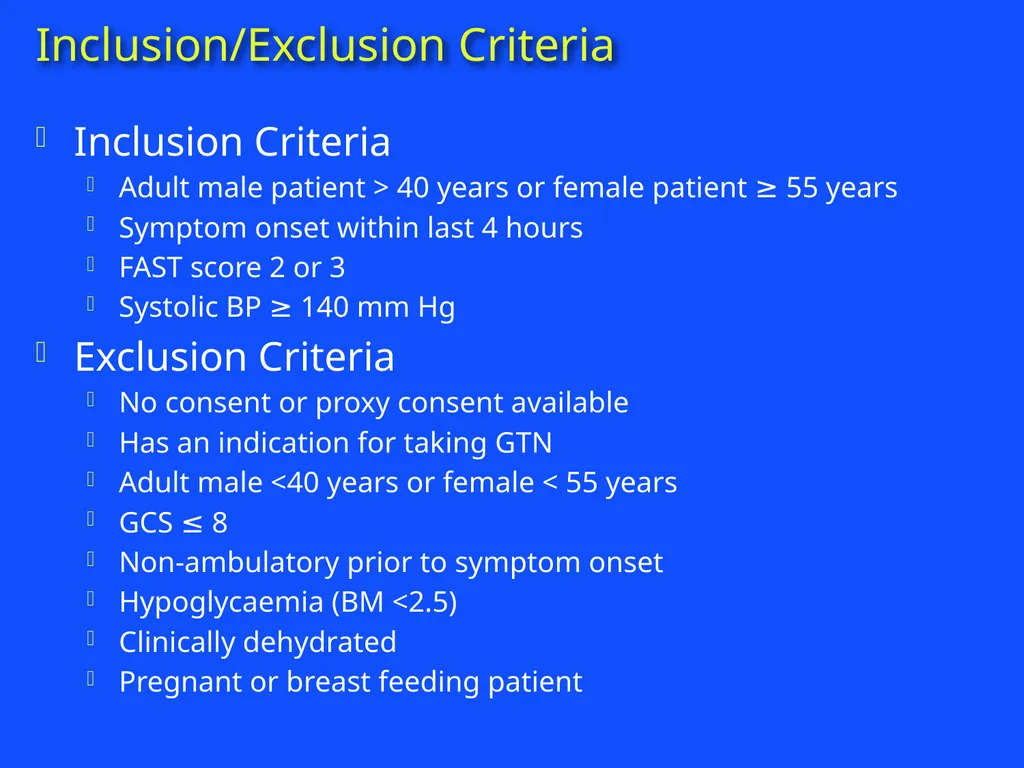
slide19. Inclusion/Exclusion Criteria Inclusion Criteria
Adult male patient > 40 years or female patient ≥ 55 years
Symptom onset within last 4 hours
FAST score 2 or 3
Systolic BP ≥ 140 mm Hg
Exclusion Criteria
No consent or proxy consent available
Has an indication for taking GTN
Adult male <40 years or female < 55 years
GCS ≤ 8
Non-ambulatory prior to symptom onset
Hypoglycaemia (BM <2.5)
Clinically dehydrated
Pregnant or breast feeding patient<br>
slide20. Your Role (1)<br>
slide21. Your Role (2)<br>
slide22. Your Role (3)<br>
slide23. In the Hospital<br>
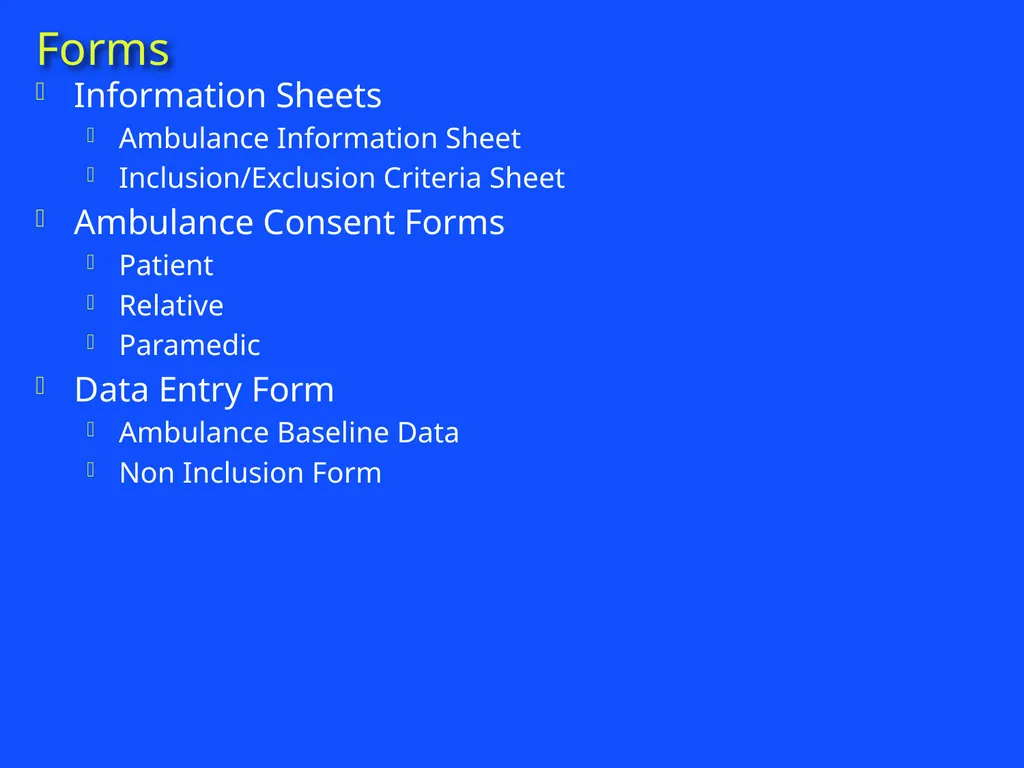
slide24. Forms Information Sheets
Ambulance Information Sheet
Inclusion/Exclusion Criteria Sheet
Ambulance Consent Forms
Patient
Relative
Paramedic
Data Entry Form
Ambulance Baseline Data
Non Inclusion Form<br>
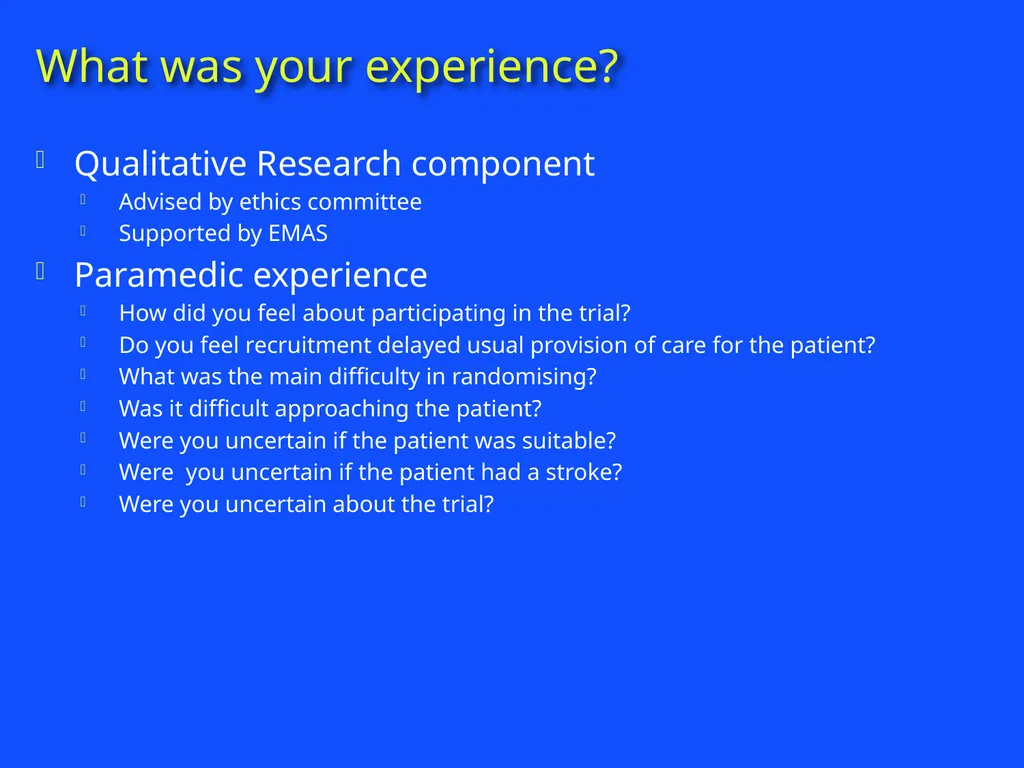
slide25. What was your experience? Qualitative Research component
Advised by ethics committee
Supported by EMAS
Paramedic experience
How did you feel about participating in the trial?
Do you feel recruitment delayed usual provision of care for the patient?
What was the main difficulty in randomising?
Was it difficult approaching the patient?
Were you uncertain if the patient was suitable?
Were you uncertain if the patient had a stroke?
Were you uncertain about the trial?<br>
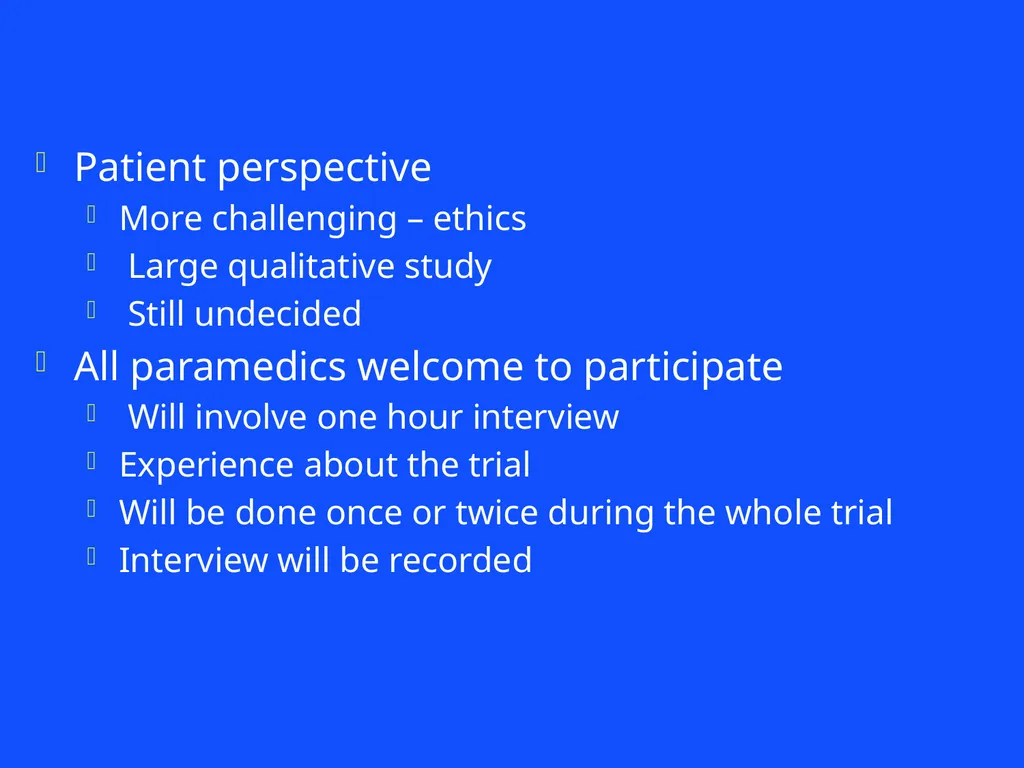
slide26. Patient perspective
More challenging – ethics
Large qualitative study
Still undecided
All paramedics welcome to participate
Will involve one hour interview
Experience about the trial
Will be done once or twice during the whole trial
Interview will be recorded<br>
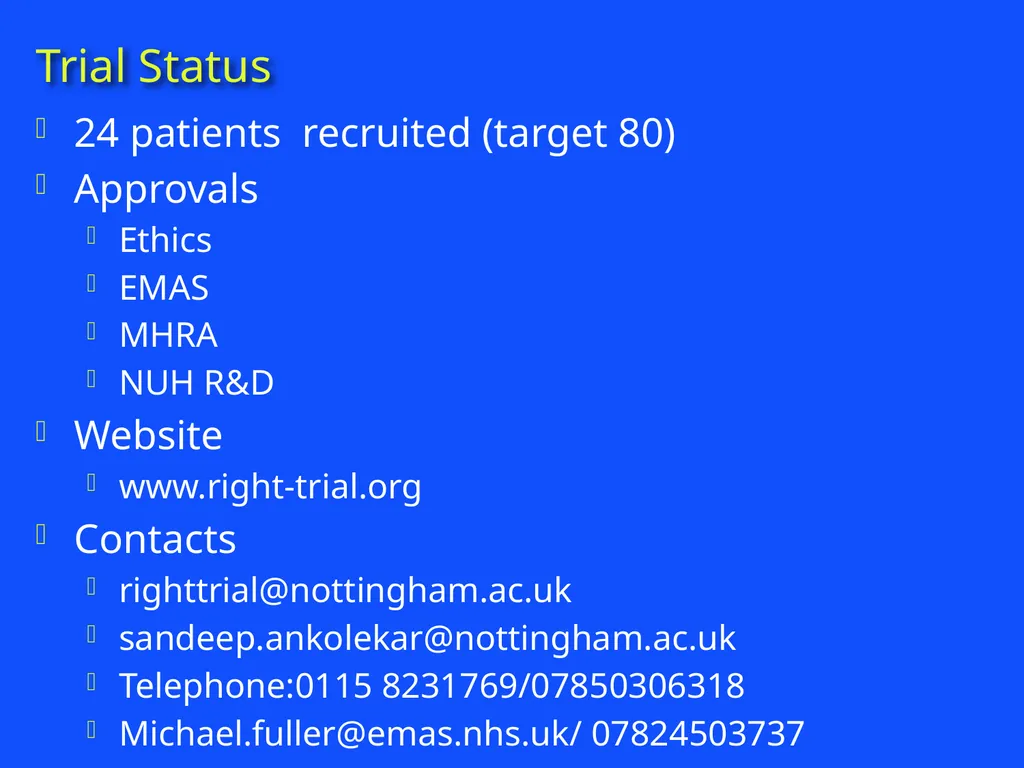
slide27. Trial Status 24 patients recruited (target 80)
Approvals
Ethics
EMAS
MHRA
NUH R&D
Website
www.right-trial.org
Contacts
righttrial@nottingham.ac.uk
sandeep.ankolekar@nottingham.ac.uk
Telephone:0115 8231769/07850306318
Michael.fuller@emas.nhs.uk/ 07824503737<br>
slide28. Thank you<br>
East Midlands Ambulance Service<br>
slide2. Outline of the Presentation Trial Background
Aims
Trial overview
Your role
Qualitative study<br>
slide3. Introduction Third largest cause of death in UK
110,000 strokes every year
20 % require institutional care
Further 25 % are permanently disabled
2.8 billion pounds- direct costs to NHS<br>
slide4. Ischaemic stroke<br>
slide5. Haemorrhagic Stroke<br>
slide6. Management of Acute Stroke Specific treatment
Ischaemic
Haemorrhagic
Supportive treatment
Similar in both ischaemic or haemorrhagic strokes
Glucose
Temperature
Oxygenation
Nutrition
Neuroprotection
Blood pressure<br>
slide7. SBP in acute ischaemic stroke: IST<br>
slide8. Systolic BP & outcome: IST Leonardi-Bee et al. Stroke 2002;33:1315-20 N=17,398<br>
slide9. SBP & early recurrence: TAIST Sprigg et al. J Hypertension 2006;24:1413-17 N=1,384 10<br>
slide10. Cerebral blood flow Cerebral perfusion normally maintained independent of BP
Curve right-shifted in chronic high BP
Autoregulation lost following stroke
Local perfusion becomes dependent on BP<br>
slide11. Nitric Oxide Lowers blood pressure in acute stroke
Maintains regional cerbral blood flow
Anti leucocyte agent
Neuroprotective
May attenuate neuronal apoptosis
Enhances neurogenesis and angiogenesis
Reduce infarct size<br>
slide12. GTN patch<br>
slide13. Efficacy of Nitric Oxide in Stroke (ENOS) Assess if lowering blood pressure improves outcome
Interventions (for 7 days):
Transdermal glyceryl trinitrate (5 mg daily) or control
Continue / stop prior antihypertensive therapy
Ischaemic or haemorrhagic stroke within 48 hours
5,000 patients
Internet: Randomisation, data collection, trial management
2615 patients, 131 centres, 17 countries, 5 continents (01/11/2011)
Start-up funding by Hypertension Trust, BUPA Foundation
Main phase funding by MRC Nov 2006-Oct 2011 www.enos.ac.uk/<br>
slide14. Why RIGHT? Brain death after stroke each minute !!
2 million neurons
14 billion synapses
7.5 million myelinated nerve fibres
Brain ages 3.6 years each hour
Randomisation in ENOS
< 10 % within first 12 hours Saver JL Stroke 2006; 37(1) p 263-266<br>
slide15. Ambulance Based Stroke Trial None in the UK !!
FAST MAG Pilot Study- US
Brings up a whole lot of new challenges
Diagnosis
Recruitment
Transfer of Care
Feasibility
Patient perception
Paramedics perception<br>
slide16. TRIAL OVERVIEW Ambulance-based
Single centre trial
80 patients with hypertensive stroke
Single-blind,
Randomised controlled trial
Blinded outcome assessment.<br>
slide17. AIMS AND OBJECTIVES Primary Aim
To assess the feasibility of using the ambulance service to test and deliver treatment for stroke in the hyper acute setting
Secondary Aims:
To assess the effects of GTN on blood pressure, pulse pressure (PP), rate pressure product (RPP) and surrogate markers of efficacy in blood in the hyperacute setting<br>
slide18. Outcomes Primary outcome
Effects of GTN on BP at 2 hours post treatment.
Secondary outcomes
Ambulance trial logistics:
Times from ictus to randomisation in ambulance; ictus to ED arrival, and randomisation to ED arrival.
Haemodynamic effects of GTN
In hospital:
Scandinavian Stroke Scale at 2 hours;
Length of stay in hospital;
Death
Disability<br>
slide19. Inclusion/Exclusion Criteria Inclusion Criteria
Adult male patient > 40 years or female patient ≥ 55 years
Symptom onset within last 4 hours
FAST score 2 or 3
Systolic BP ≥ 140 mm Hg
Exclusion Criteria
No consent or proxy consent available
Has an indication for taking GTN
Adult male <40 years or female < 55 years
GCS ≤ 8
Non-ambulatory prior to symptom onset
Hypoglycaemia (BM <2.5)
Clinically dehydrated
Pregnant or breast feeding patient<br>
slide20. Your Role (1)<br>
slide21. Your Role (2)<br>
slide22. Your Role (3)<br>
slide23. In the Hospital<br>
slide24. Forms Information Sheets
Ambulance Information Sheet
Inclusion/Exclusion Criteria Sheet
Ambulance Consent Forms
Patient
Relative
Paramedic
Data Entry Form
Ambulance Baseline Data
Non Inclusion Form<br>
slide25. What was your experience? Qualitative Research component
Advised by ethics committee
Supported by EMAS
Paramedic experience
How did you feel about participating in the trial?
Do you feel recruitment delayed usual provision of care for the patient?
What was the main difficulty in randomising?
Was it difficult approaching the patient?
Were you uncertain if the patient was suitable?
Were you uncertain if the patient had a stroke?
Were you uncertain about the trial?<br>
slide26. Patient perspective
More challenging – ethics
Large qualitative study
Still undecided
All paramedics welcome to participate
Will involve one hour interview
Experience about the trial
Will be done once or twice during the whole trial
Interview will be recorded<br>
slide27. Trial Status 24 patients recruited (target 80)
Approvals
Ethics
EMAS
MHRA
NUH R&D
Website
www.right-trial.org
Contacts
righttrial@nottingham.ac.uk
sandeep.ankolekar@nottingham.ac.uk
Telephone:0115 8231769/07850306318
Michael.fuller@emas.nhs.uk/ 07824503737<br>
slide28. Thank you<br>