REACH OUT STAY STRONG ESSENTIALS ROSE About the ROSE PROGRAM Session A: Education on Postpartum Depression Session B: Being a Mother Session C: Relationships and Communication Session D: Planning for the Future Session E: Phone visit after
"REACH OUT STAY STRONG ESSENTIALS ROSE About the" is the property of its rightful owner. Permission is granted to
download and print the materials on this website for personal, non-commercial use only, and to display it
on your personal computer provided you do not modify the materials and that you retain all copyright
notices contained in the materials. By downloading content from our website, you accept the terms of this
agreement.
Presentation Transcript
01
REACH OUT STAY STRONG ESSENTIALS ROSE<br>
02
About the ROSE PROGRAM Session A: Education on Postpartum Depression
Session B: Being a Mother
Session C: Relationships and Communication
Session D: Planning for the Future
Session E: Phone visit after the birth of your baby
Free, will write a note that you attended<br>
03
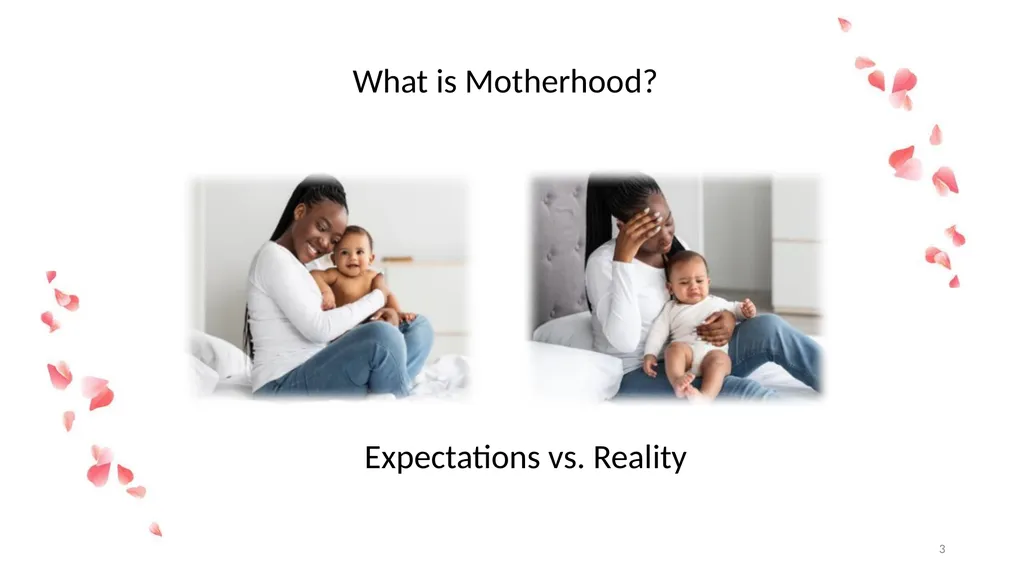
What is Motherhood? 3 Expectations vs. Reality<br>
04
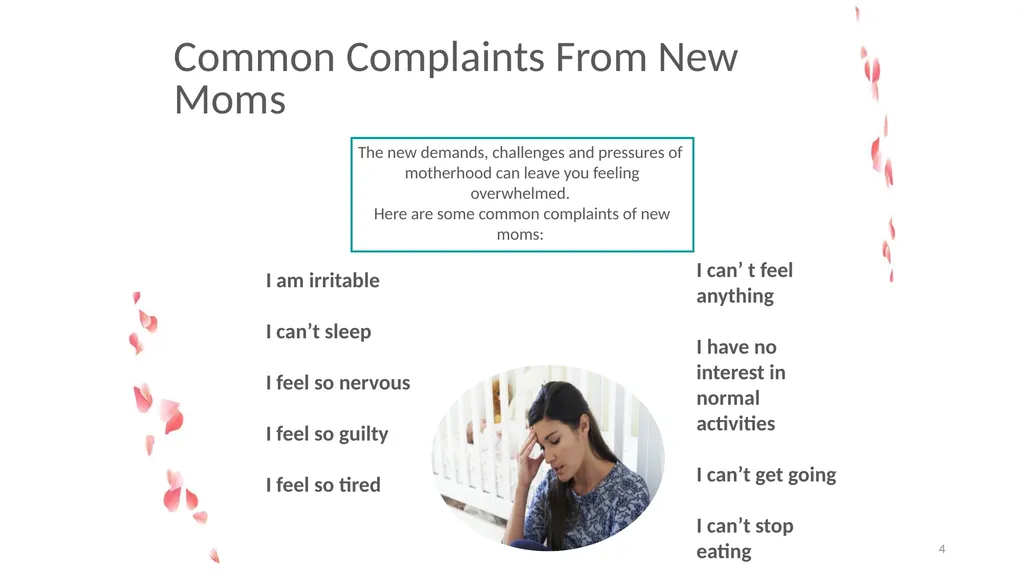
Common Complaints From New Moms The new demands, challenges and pressures of motherhood can leave you feeling overwhelmed. Here are some common complaints of new moms: I am irritable
I can’t sleep
I feel so nervous
I feel so guilty
I feel so tired I can’ t feel anything
I have no interest in normal activities
I can’t get going
I can’t stop eating 4<br>
05
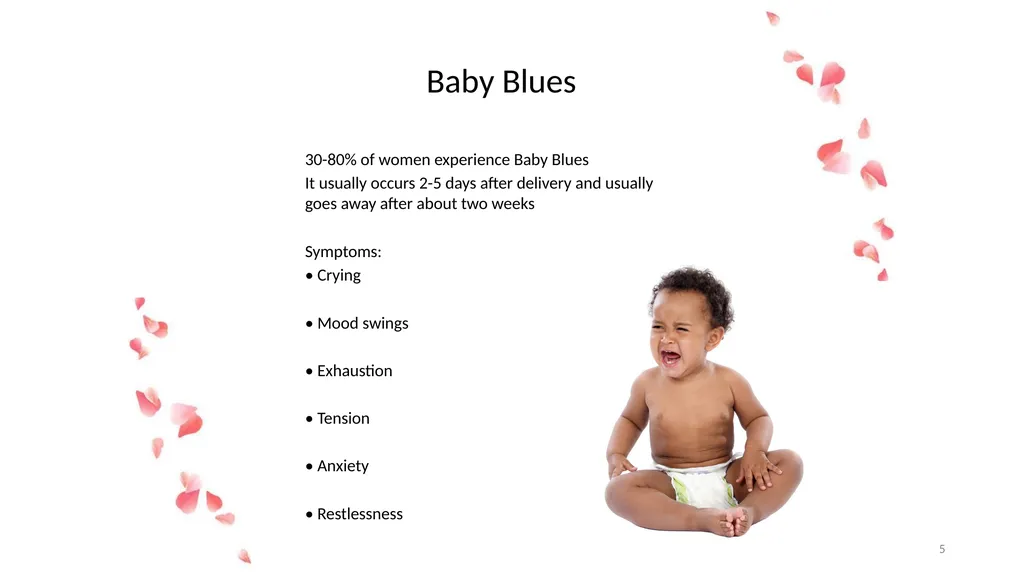
Baby Blues 5 30-80% of women experience Baby Blues
It usually occurs 2-5 days after delivery and usually goes away after about two weeks
Symptoms:
• Crying
• Mood swings
• Exhaustion
• Tension
• Anxiety
• Restlessness<br>
06
Sleep problems (example: you cannot return to sleep after feeding the baby)
• Eating problems-eating too much or too little
• Anxiety and worry
• Avoiding people, avoiding contact with the baby, wanting to be on your own
• No energy
• Death wish, suicidal thoughts
• Difficulty having positive feelings towards the baby
• Difficulty making decisions
• Mania-feeling speedy, being excitable and irritable, talking fast, and having less need for sleep
• Panic attacks
• Fears for the baby, fantasies about harming or killing the baby
If you ever feel that you might hurt yourself, your baby or anyone else, please talk to your healthcare provider or call 911 Postpartum Depression 6<br>
07
Session A Postpartum Depression (PPD) About 10-15% of new mothers show symptoms of PPD
This means one in seven women will experience PPD
For women who are on public assistance or struggle financially it is about one in three will experience PPD
Women who have had previous episode/s of depression are more likely to experience depression after childbirth. Those women who have had postpartum depression are more likely to experience it again.<br>
08
8 You are not alone
You are not to blame
and
You CAN feel better<br>
09
You Are Not Alone, Help is Available 9 The key is reaching out for support when you need it.
1. LEAN ON FAMILY AND FRIENDS A few hours of weekly childcare can give you a much needed break.
Sharing feelings openly allows family & friends to provide support.
2. TALK TO A HEALTH CARE PROFESSIONAL
Doctors will know what options are available to you for assistance and will be familiar with perinatal depression.
3. FIND A SUPPORT GROUP
There are women in your community suffering in similar situations; sharing your feelings with a group of women experiencing the same thing can be helpful.
Talk to your health care provider about how to join a group. 4. TALK TO A MENTAL HEALTH CARE PROFESSIONAL
Mental health care professionals can give you a safe place to express your feelings and will be useful in assisting with man-agement of your symptoms.
5. FOCUS ON WELLNESS
Eat a healthy variety of colorful foods, healthy snacks, and avoid alcohol use.
Exercise, invite friends to go on walks, try a new activity, take time to stretch muscles.<br>
10
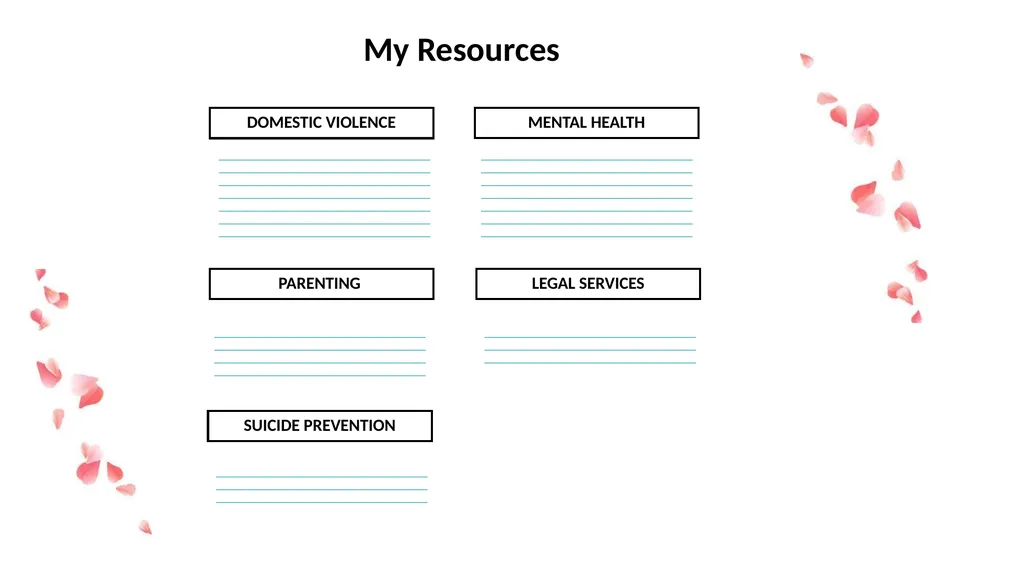
My Resources DOMESTIC VIOLENCE MENTAL HEALTH ________________________________________________________________________________________________________________________________________________________________________________________________________________________________________________________________________________________ ________________________________________________________________________________________________________________________________________________________________________________________________________________________________________________________________________________________ PARENTING ________________________________________________________________________________________________________________________________________________________________ ________________________________________________________________________________________________________________________ LEGAL SERVICES SUICIDE PREVENTION ________________________________________________________________________________________________________________________<br>
11
Wrap–up Having a baby is a major life event
New demands and new skills will be needed
Postpartum women deserve positive support
Support is important so you do not get depressed
Next session _______
Preview of next session:
ways to decrease stress in your life once the baby is here
talk about supportive people in your life<br>