
Reading Novels: Critical Reflection and


Description: Reading Novels: Critical Reflection and Interpretive Abilities Dr. P. Muralidhar Sharma Assistant Professor, School of English Gangadhar Meher University Sambalpur Introduction English as a second language Colonial legacy Misplaced goals
Related Topics
Download Presentation
"Reading Novels: Critical Reflection and" is the property of its rightful owner. Permission is granted to download and print the materials on this website for personal, non-commercial use only, and to display it on your personal computer provided you do not modify the materials and that you retain all copyright notices contained in the materials. By downloading content from our website, you accept the terms of this agreement.
Presentation Transcript
slide1. Reading Novels: Critical Reflection and Interpretive Abilities Dr. P. Muralidhar Sharma
Assistant Professor, School of English
Gangadhar Meher University
Sambalpur<br>
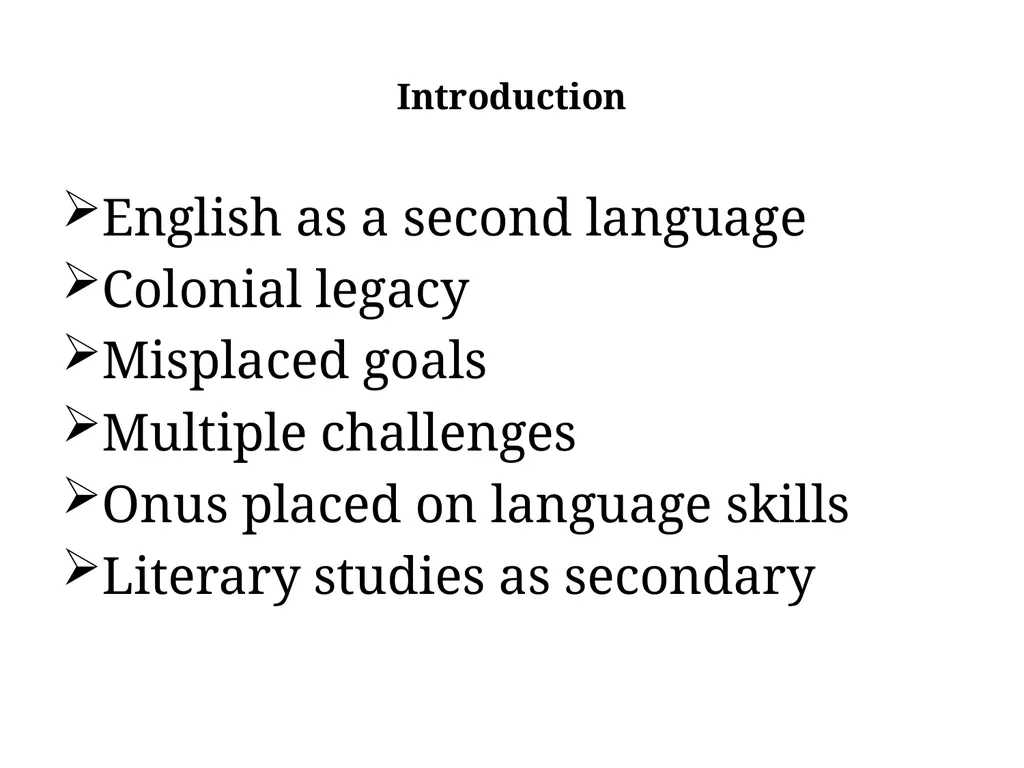
slide2. Introduction English as a second language
Colonial legacy
Misplaced goals
Multiple challenges
Onus placed on language skills
Literary studies as secondary<br>
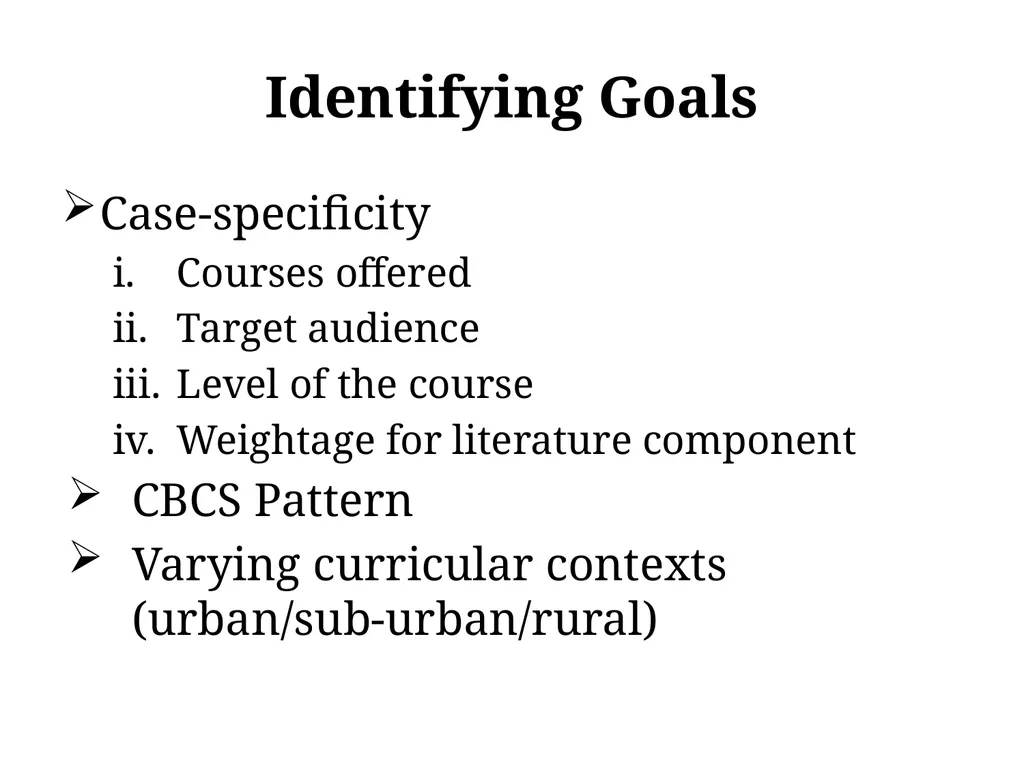
slide3. Identifying Goals Case-specificity
Courses offered
Target audience
Level of the course
Weightage for literature component
CBCS Pattern
Varying curricular contexts (urban/sub-urban/rural)<br>
slide4. Reading Novels Daunting task
Huge content
Students’ reduced familiarity with the text
Difficulty in identifying potential areas
Misdirected focus
Identifying the necessary skills to be tested<br>
slide5. E.M. Forster, Aspects of the Novel
story, people, plot, fantasy, prophecy, pattern and rhythm
Milan Kundera, Art of the Novel
“In its own way, through its own logic, the novel discovered the various dimensions of existence one by one: with Cervantes and his contemporaries, it inquires into the nature of adventure; with Richardson, it begins to examine "what happens inside," to unmask the secret life of the feelings; with Balzac, it discovers man's rootedness in history; with Flaubert, it explores the terra previously incognita of the everyday; with Tolstoy, it focuses on the intrusion of the irrational in human behavior and decisions. It probes time: the elusive past with Proust, the elusive present with Joyce. With Thomas Mann, it examines the role of the myths from the remote past that control our present actions. Et cetera, et cetera”.<br>
slide6. Dynamics of a Novel Generic conventions:
Hybridity in generic features: satire, autobiography, periodical prose, travel narratives
No watertight compartmentalization of genres
Eg. Jonathan Swift, Gulliver’s Travels (satire/travel narrative/novel?)
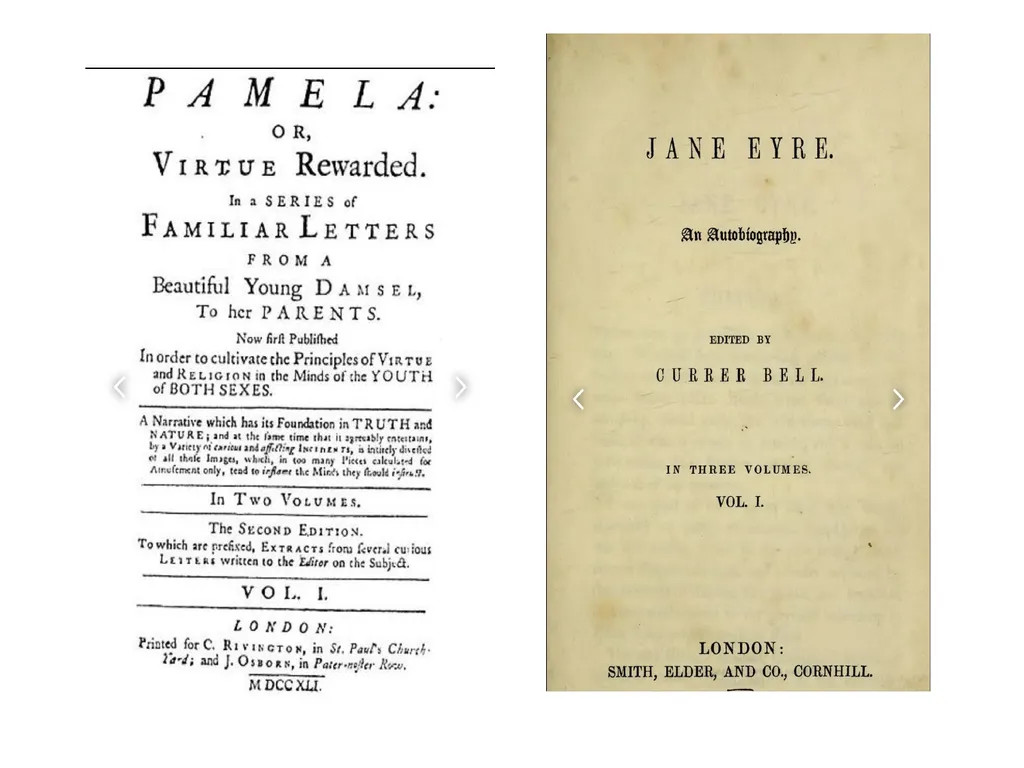
Charlotte Bronte, Jane Eyre (subtitled as “An Autobiography”)
Eg. Identify the conventions of autobiography in Charlotte Bronte’s Jane Eyre.<br>
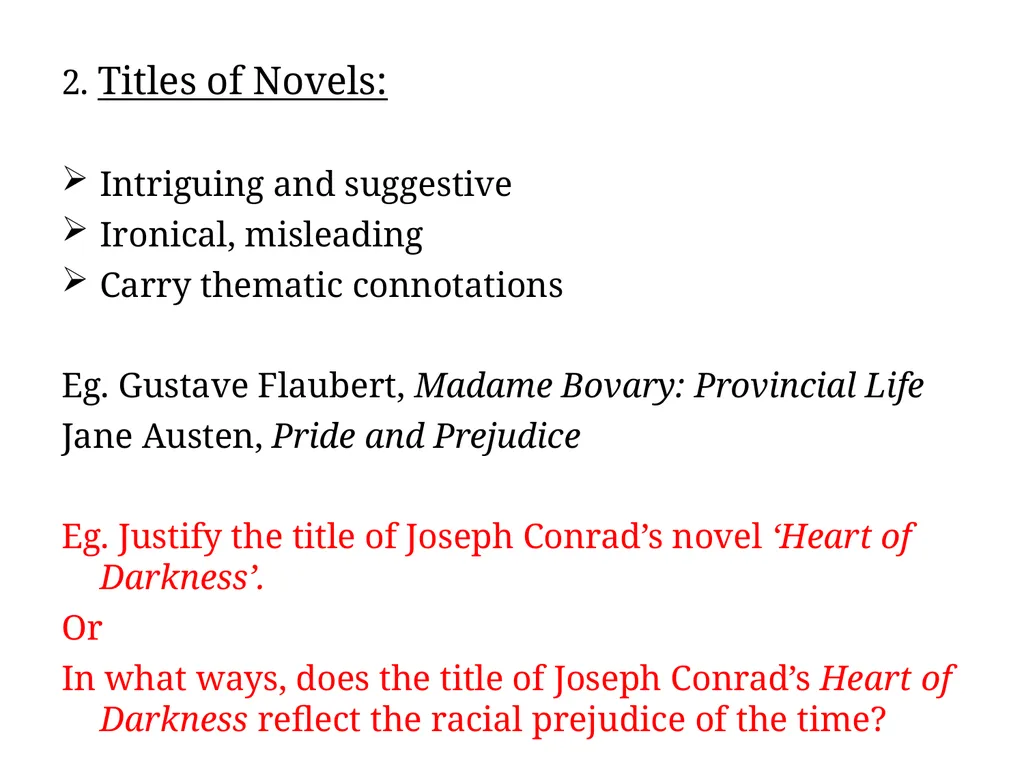
slide8. 2. Titles of Novels:
Intriguing and suggestive
Ironical, misleading
Carry thematic connotations
Eg. Gustave Flaubert, Madame Bovary: Provincial Life
Jane Austen, Pride and Prejudice
Eg. Justify the title of Joseph Conrad’s novel ‘Heart of Darkness’.
Or
In what ways, does the title of Joseph Conrad’s Heart of Darkness reflect the racial prejudice of the time?<br>
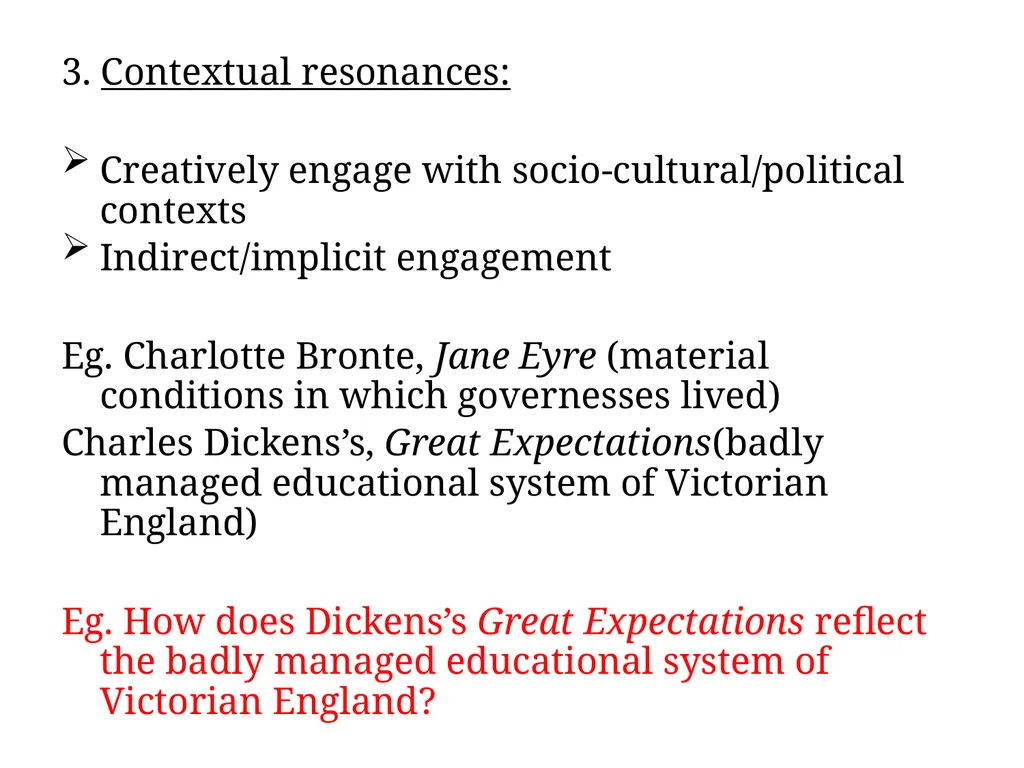
slide9. 3. Contextual resonances:
Creatively engage with socio-cultural/political contexts
Indirect/implicit engagement
Eg. Charlotte Bronte, Jane Eyre (material conditions in which governesses lived)
Charles Dickens’s, Great Expectations(badly managed educational system of Victorian England)
Eg. How does Dickens’s Great Expectations reflect the badly managed educational system of Victorian England?<br>
slide10. 4. Images, symbols, metaphors:
Carry possibilities of interpretation
Central to fiction
Recur at regular intervals
Allusions, extended metaphors, mythical patterns
Eg. What specific purpose does the Icarus symbolism serve in James Joyce’s A Portrait of the Artist as a Young Man?
It is undeniably a symbol of sexual excess, leading Stephen to his adolescence sexual cravings
It is undeniably representative of the failure of genius and suppression of individual will
It is undeniably representative of a reactionary attitude and rebelliousness towards established religion
It is undeniably representative of a reactionary attitude and rebelliousness towards accepted moral standards<br>
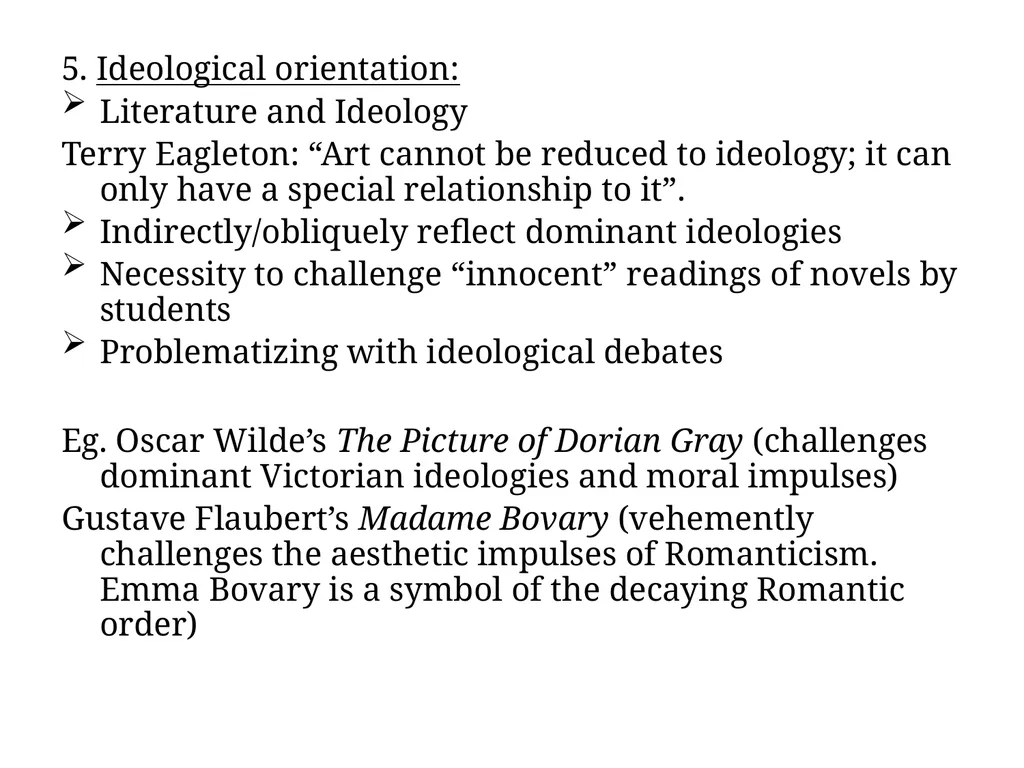
slide11. 5. Ideological orientation:
Literature and Ideology
Terry Eagleton: “Art cannot be reduced to ideology; it can only have a special relationship to it”.
Indirectly/obliquely reflect dominant ideologies
Necessity to challenge “innocent” readings of novels by students
Problematizing with ideological debates
Eg. Oscar Wilde’s The Picture of Dorian Gray (challenges dominant Victorian ideologies and moral impulses)
Gustave Flaubert’s Madame Bovary (vehemently challenges the aesthetic impulses of Romanticism. Emma Bovary is a symbol of the decaying Romantic order)<br>
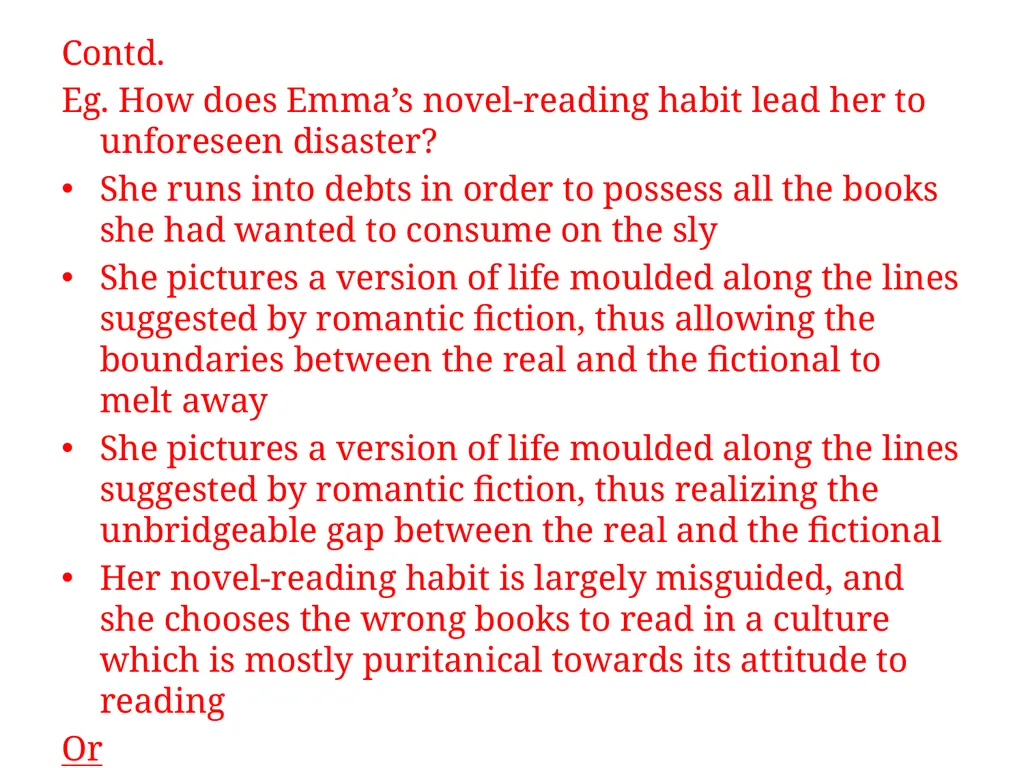
slide12. Contd.
Eg. How does Emma’s novel-reading habit lead her to unforeseen disaster?
She runs into debts in order to possess all the books she had wanted to consume on the sly
She pictures a version of life moulded along the lines suggested by romantic fiction, thus allowing the boundaries between the real and the fictional to melt away
She pictures a version of life moulded along the lines suggested by romantic fiction, thus realizing the unbridgeable gap between the real and the fictional
Her novel-reading habit is largely misguided, and she chooses the wrong books to read in a culture which is mostly puritanical towards its attitude to reading
Or
In what ways is Emma an embodiment of “helpless romanticism”?<br>
slide13. 6. Prototypes, tropes:
Socio-cultural models
Relationship with the outer world
Engender broader perspectives
Eg. Which of the following statements is true of Madame Bovary?
The novel is a profound comment on the moral consequences of fallen womanhood, embodied in the eponymous character.
The novel espouses the cause of women’s emancipation, embodied in the eponymous character.
Set in France, the novel is a detailed examination of the trials and tribulations in the life of a virtuous woman, Emma Bovary.
The novel is involved in an episodic detailing of the monogamous romantic relationship between Emma and Charles Bovary.
Or
Eg. Comment on the trope of chaste womanhood in Munshi Premchand’s Sevasadan.<br>
slide14. 7. Literary trends and movements:
Common areas for question-setting
Highly emphasized in classes
Feminism/Psychoanalysis/Postmodernism/Postcolonialism
Writers’ commitment to theoretical paradigms
Eg. Though the nature and intensity of oppression change, oppression itself remains a constant in the lives of women across generations. Justify the statement with reference to Githa Hariharan’s The Thousand Faces of Night.<br>
slide15. 8. Narrative technique, voice, point-of-view:
Major strategies in structuring novels
Wayne C Booth, The Rhetoric of Fiction: “unreliable” narrator, “implied author”
19th century fiction (omniscient narrators, first-person narrators)
20th century fiction (unreliable narrators, multiple points-of-view, fragmentary voices)
Eg. To which of the following categories does Marlow in Joseph Conrad’s Heart of Darkness belong?
Omniscient narrator
Implied narrator
Unreliable narrator
Reliable narrator<br>
Assistant Professor, School of English
Gangadhar Meher University
Sambalpur<br>
slide2. Introduction English as a second language
Colonial legacy
Misplaced goals
Multiple challenges
Onus placed on language skills
Literary studies as secondary<br>
slide3. Identifying Goals Case-specificity
Courses offered
Target audience
Level of the course
Weightage for literature component
CBCS Pattern
Varying curricular contexts (urban/sub-urban/rural)<br>
slide4. Reading Novels Daunting task
Huge content
Students’ reduced familiarity with the text
Difficulty in identifying potential areas
Misdirected focus
Identifying the necessary skills to be tested<br>
slide5. E.M. Forster, Aspects of the Novel
story, people, plot, fantasy, prophecy, pattern and rhythm
Milan Kundera, Art of the Novel
“In its own way, through its own logic, the novel discovered the various dimensions of existence one by one: with Cervantes and his contemporaries, it inquires into the nature of adventure; with Richardson, it begins to examine "what happens inside," to unmask the secret life of the feelings; with Balzac, it discovers man's rootedness in history; with Flaubert, it explores the terra previously incognita of the everyday; with Tolstoy, it focuses on the intrusion of the irrational in human behavior and decisions. It probes time: the elusive past with Proust, the elusive present with Joyce. With Thomas Mann, it examines the role of the myths from the remote past that control our present actions. Et cetera, et cetera”.<br>
slide6. Dynamics of a Novel Generic conventions:
Hybridity in generic features: satire, autobiography, periodical prose, travel narratives
No watertight compartmentalization of genres
Eg. Jonathan Swift, Gulliver’s Travels (satire/travel narrative/novel?)
Charlotte Bronte, Jane Eyre (subtitled as “An Autobiography”)
Eg. Identify the conventions of autobiography in Charlotte Bronte’s Jane Eyre.<br>
slide8. 2. Titles of Novels:
Intriguing and suggestive
Ironical, misleading
Carry thematic connotations
Eg. Gustave Flaubert, Madame Bovary: Provincial Life
Jane Austen, Pride and Prejudice
Eg. Justify the title of Joseph Conrad’s novel ‘Heart of Darkness’.
Or
In what ways, does the title of Joseph Conrad’s Heart of Darkness reflect the racial prejudice of the time?<br>
slide9. 3. Contextual resonances:
Creatively engage with socio-cultural/political contexts
Indirect/implicit engagement
Eg. Charlotte Bronte, Jane Eyre (material conditions in which governesses lived)
Charles Dickens’s, Great Expectations(badly managed educational system of Victorian England)
Eg. How does Dickens’s Great Expectations reflect the badly managed educational system of Victorian England?<br>
slide10. 4. Images, symbols, metaphors:
Carry possibilities of interpretation
Central to fiction
Recur at regular intervals
Allusions, extended metaphors, mythical patterns
Eg. What specific purpose does the Icarus symbolism serve in James Joyce’s A Portrait of the Artist as a Young Man?
It is undeniably a symbol of sexual excess, leading Stephen to his adolescence sexual cravings
It is undeniably representative of the failure of genius and suppression of individual will
It is undeniably representative of a reactionary attitude and rebelliousness towards established religion
It is undeniably representative of a reactionary attitude and rebelliousness towards accepted moral standards<br>
slide11. 5. Ideological orientation:
Literature and Ideology
Terry Eagleton: “Art cannot be reduced to ideology; it can only have a special relationship to it”.
Indirectly/obliquely reflect dominant ideologies
Necessity to challenge “innocent” readings of novels by students
Problematizing with ideological debates
Eg. Oscar Wilde’s The Picture of Dorian Gray (challenges dominant Victorian ideologies and moral impulses)
Gustave Flaubert’s Madame Bovary (vehemently challenges the aesthetic impulses of Romanticism. Emma Bovary is a symbol of the decaying Romantic order)<br>
slide12. Contd.
Eg. How does Emma’s novel-reading habit lead her to unforeseen disaster?
She runs into debts in order to possess all the books she had wanted to consume on the sly
She pictures a version of life moulded along the lines suggested by romantic fiction, thus allowing the boundaries between the real and the fictional to melt away
She pictures a version of life moulded along the lines suggested by romantic fiction, thus realizing the unbridgeable gap between the real and the fictional
Her novel-reading habit is largely misguided, and she chooses the wrong books to read in a culture which is mostly puritanical towards its attitude to reading
Or
In what ways is Emma an embodiment of “helpless romanticism”?<br>
slide13. 6. Prototypes, tropes:
Socio-cultural models
Relationship with the outer world
Engender broader perspectives
Eg. Which of the following statements is true of Madame Bovary?
The novel is a profound comment on the moral consequences of fallen womanhood, embodied in the eponymous character.
The novel espouses the cause of women’s emancipation, embodied in the eponymous character.
Set in France, the novel is a detailed examination of the trials and tribulations in the life of a virtuous woman, Emma Bovary.
The novel is involved in an episodic detailing of the monogamous romantic relationship between Emma and Charles Bovary.
Or
Eg. Comment on the trope of chaste womanhood in Munshi Premchand’s Sevasadan.<br>
slide14. 7. Literary trends and movements:
Common areas for question-setting
Highly emphasized in classes
Feminism/Psychoanalysis/Postmodernism/Postcolonialism
Writers’ commitment to theoretical paradigms
Eg. Though the nature and intensity of oppression change, oppression itself remains a constant in the lives of women across generations. Justify the statement with reference to Githa Hariharan’s The Thousand Faces of Night.<br>
slide15. 8. Narrative technique, voice, point-of-view:
Major strategies in structuring novels
Wayne C Booth, The Rhetoric of Fiction: “unreliable” narrator, “implied author”
19th century fiction (omniscient narrators, first-person narrators)
20th century fiction (unreliable narrators, multiple points-of-view, fragmentary voices)
Eg. To which of the following categories does Marlow in Joseph Conrad’s Heart of Darkness belong?
Omniscient narrator
Implied narrator
Unreliable narrator
Reliable narrator<br>