
Reading or hearing about other people’s experience


Description: Reading or hearing about other peoples experience can: Be upsetting Be distressing Lead to secondary trauma Be combined with burnout andor compassion fatigue Working with trauma can impact: How you behave Avoidance Disconnection Self
Related Topics
Download Presentation
"Reading or hearing about other people’s experience" is the property of its rightful owner. Permission is granted to download and print the materials on this website for personal, non-commercial use only, and to display it on your personal computer provided you do not modify the materials and that you retain all copyright notices contained in the materials. By downloading content from our website, you accept the terms of this agreement.
Presentation Transcript
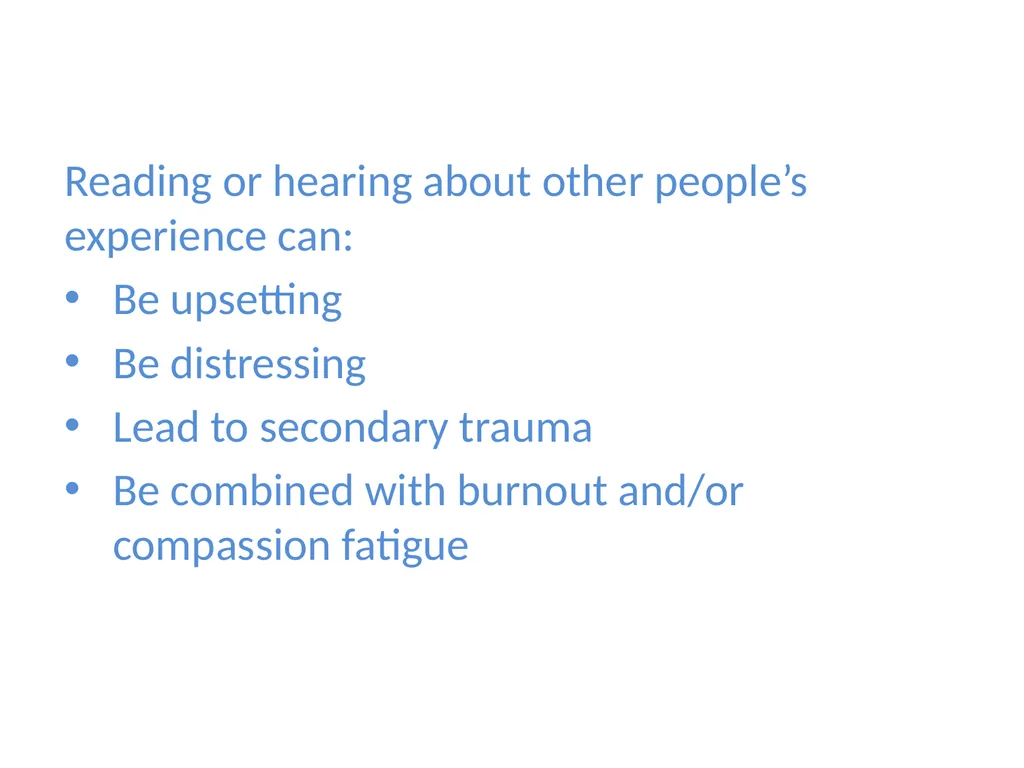
slide1. Reading or hearing about other people’s experience can:
Be upsetting
Be distressing
Lead to secondary trauma
Be combined with burnout and/or compassion fatigue<br>
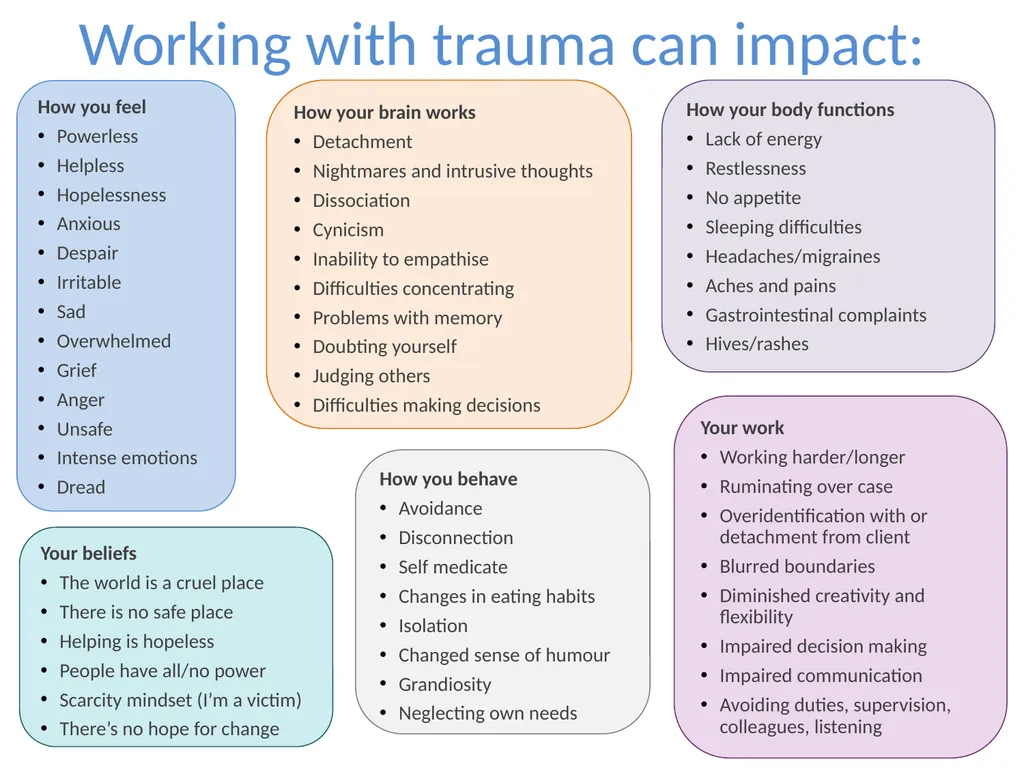
slide2. Working with trauma can impact: How you behave
Avoidance
Disconnection
Self medicate
Changes in eating habits
Isolation
Changed sense of humour
Grandiosity
Neglecting own needs How your body functions
Lack of energy
Restlessness
No appetite
Sleeping difficulties
Headaches/migraines
Aches and pains
Gastrointestinal complaints
Hives/rashes How you feel
Powerless
Helpless
Hopelessness
Anxious
Despair
Irritable
Sad
Overwhelmed
Grief
Anger
Unsafe
Intense emotions
Dread How your brain works
Detachment
Nightmares and intrusive thoughts
Dissociation
Cynicism
Inability to empathise
Difficulties concentrating
Problems with memory
Doubting yourself
Judging others
Difficulties making decisions Your beliefs
The world is a cruel place
There is no safe place
Helping is hopeless
People have all/no power
Scarcity mindset (I’m a victim)
There’s no hope for change Your work
Working harder/longer
Ruminating over case
Overidentification with or detachment from client
Blurred boundaries
Diminished creativity and flexibility
Impaired decision making
Impaired communication
Avoiding duties, supervision, colleagues, listening<br>
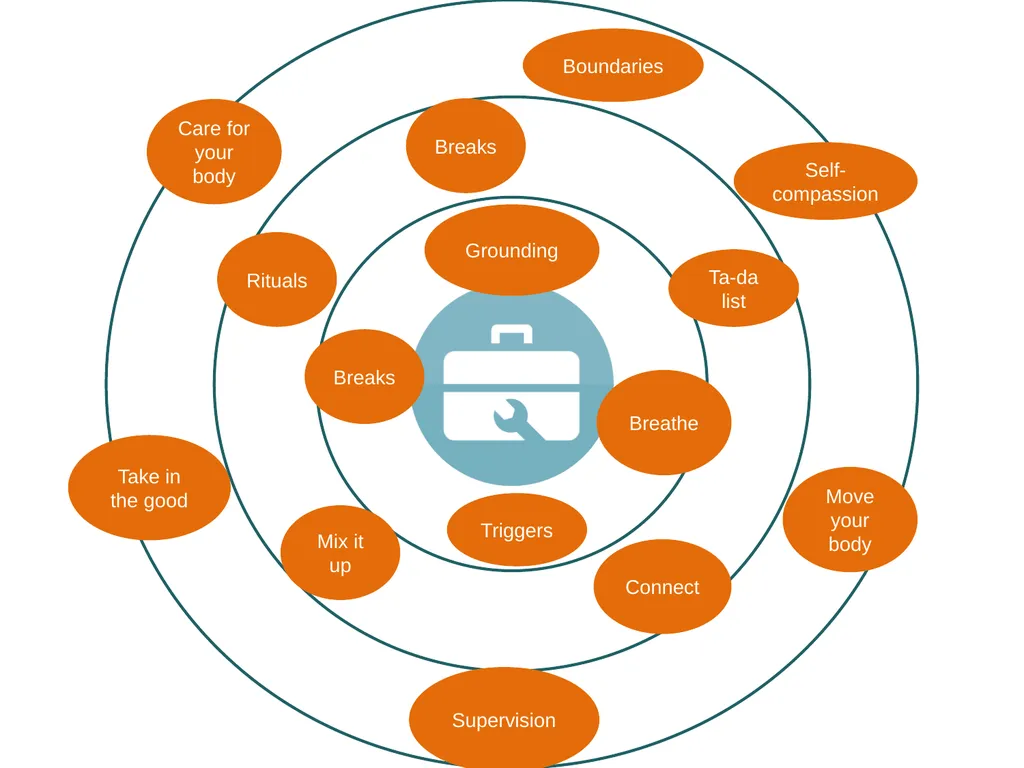
slide3. Triggers Grounding Breathe Boundaries Self-compassion Ta-da list Breaks Move your body Care for your body Take in the good Supervision Breaks Mix it up Connect Rituals<br>
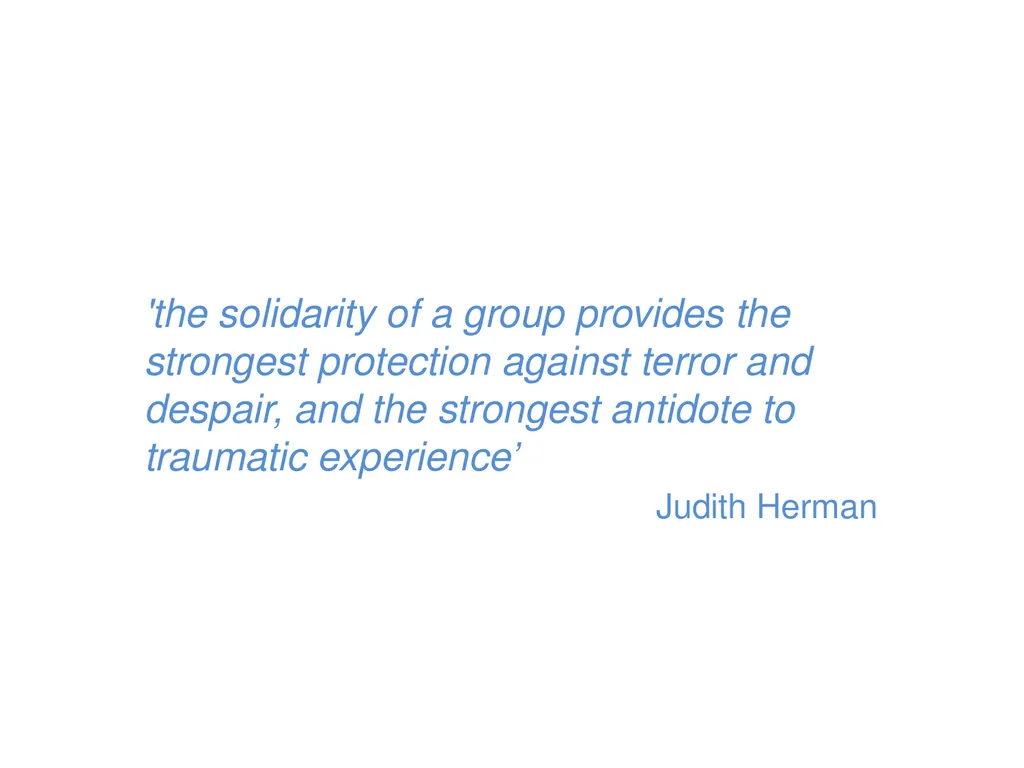
slide4. 'the solidarity of a group provides the strongest protection against terror and despair, and the strongest antidote to traumatic experience’
Judith Herman<br>
Be upsetting
Be distressing
Lead to secondary trauma
Be combined with burnout and/or compassion fatigue<br>
slide2. Working with trauma can impact: How you behave
Avoidance
Disconnection
Self medicate
Changes in eating habits
Isolation
Changed sense of humour
Grandiosity
Neglecting own needs How your body functions
Lack of energy
Restlessness
No appetite
Sleeping difficulties
Headaches/migraines
Aches and pains
Gastrointestinal complaints
Hives/rashes How you feel
Powerless
Helpless
Hopelessness
Anxious
Despair
Irritable
Sad
Overwhelmed
Grief
Anger
Unsafe
Intense emotions
Dread How your brain works
Detachment
Nightmares and intrusive thoughts
Dissociation
Cynicism
Inability to empathise
Difficulties concentrating
Problems with memory
Doubting yourself
Judging others
Difficulties making decisions Your beliefs
The world is a cruel place
There is no safe place
Helping is hopeless
People have all/no power
Scarcity mindset (I’m a victim)
There’s no hope for change Your work
Working harder/longer
Ruminating over case
Overidentification with or detachment from client
Blurred boundaries
Diminished creativity and flexibility
Impaired decision making
Impaired communication
Avoiding duties, supervision, colleagues, listening<br>
slide3. Triggers Grounding Breathe Boundaries Self-compassion Ta-da list Breaks Move your body Care for your body Take in the good Supervision Breaks Mix it up Connect Rituals<br>
slide4. 'the solidarity of a group provides the strongest protection against terror and despair, and the strongest antidote to traumatic experience’
Judith Herman<br>