Rebekah Chew Policy Specialist Effective Development Cooperation, BPPS, UNDP On behalf of the OECD-UNDP Joint Support Team Integration of SDGs into NDPs data from the GPEDC Introduction Global Partnership for Effective Development
"Rebekah Chew Policy Specialist – Effective" is the property of its rightful owner. Permission is granted to
download and print the materials on this website for personal, non-commercial use only, and to display it
on your personal computer provided you do not modify the materials and that you retain all copyright
notices contained in the materials. By downloading content from our website, you accept the terms of this
agreement.
Presentation Transcript
01
Rebekah Chew
Policy Specialist – Effective Development Cooperation, BPPS, UNDP
On behalf of the OECD-UNDP Joint Support Team Integration of SDGs into NDPs – data from the GPEDC<br>
02
Introduction
Global Partnership for Effective Development Co-operation<br>
03
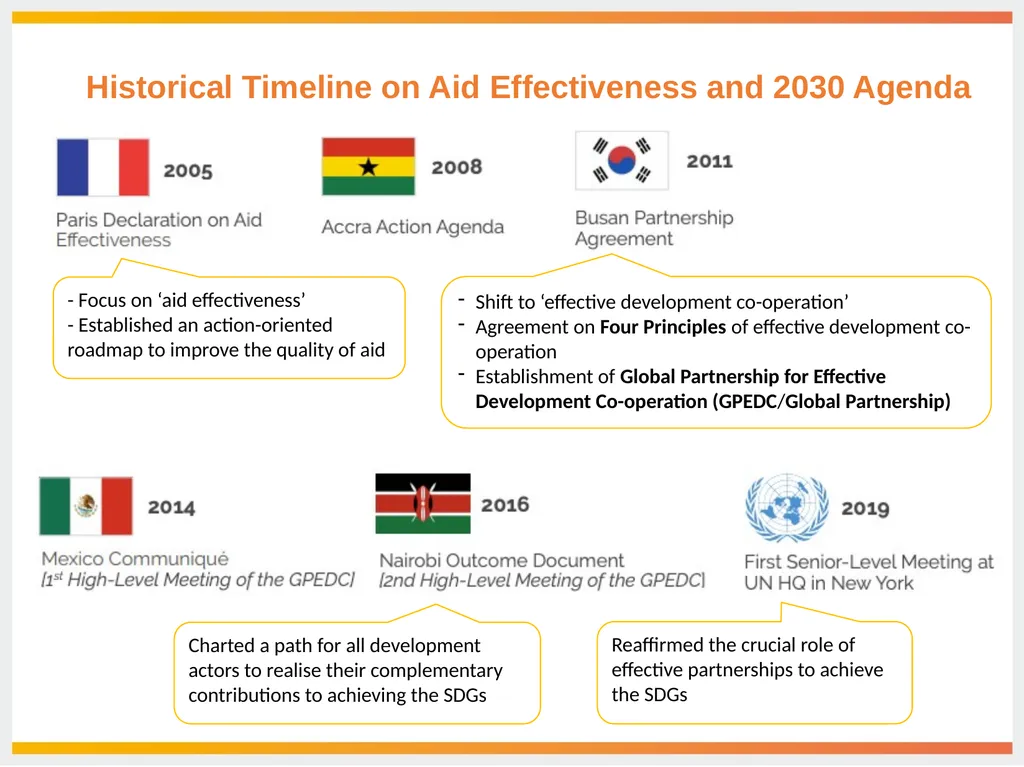
Historical Timeline on Aid Effectiveness and 2030 Agenda - Focus on ‘aid effectiveness’
- Established an action-oriented roadmap to improve the quality of aid Shift to ‘effective development co-operation’
Agreement on Four Principles of effective development co-operation
Establishment of Global Partnership for Effective Development Co-operation (GPEDC/Global Partnership) Charted a path for all development actors to realise their complementary contributions to achieving the SDGs Reaffirmed the crucial role of effective partnerships to achieve the SDGs<br>
04
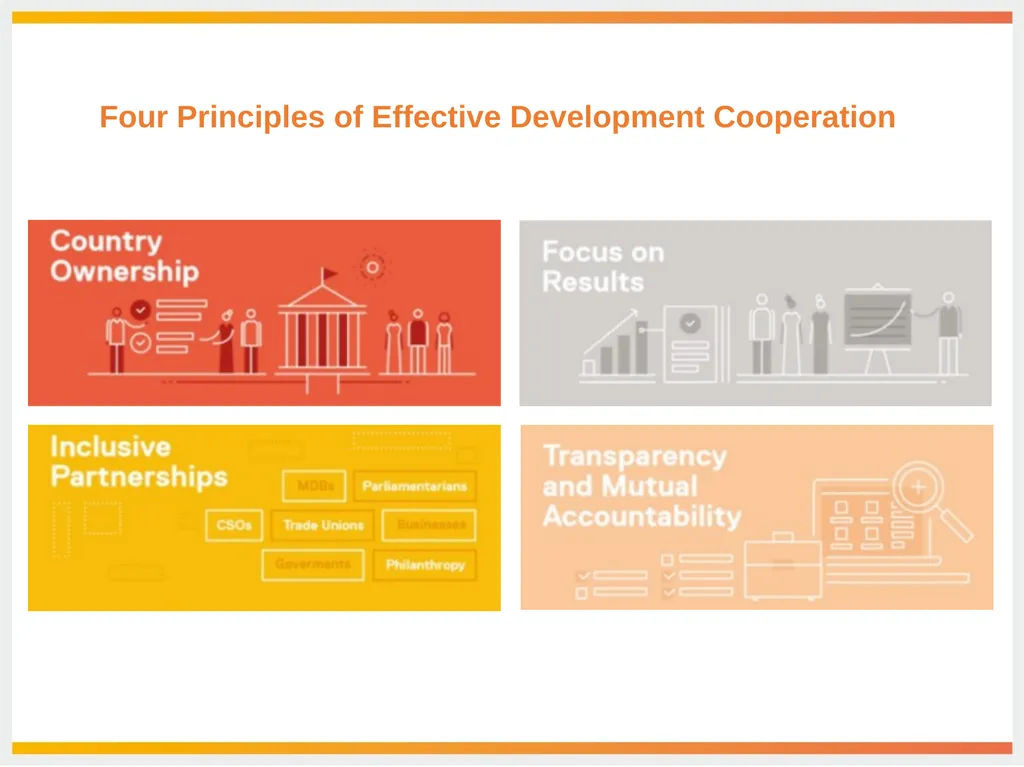
Four Principles of Effective Development Cooperation<br>
05
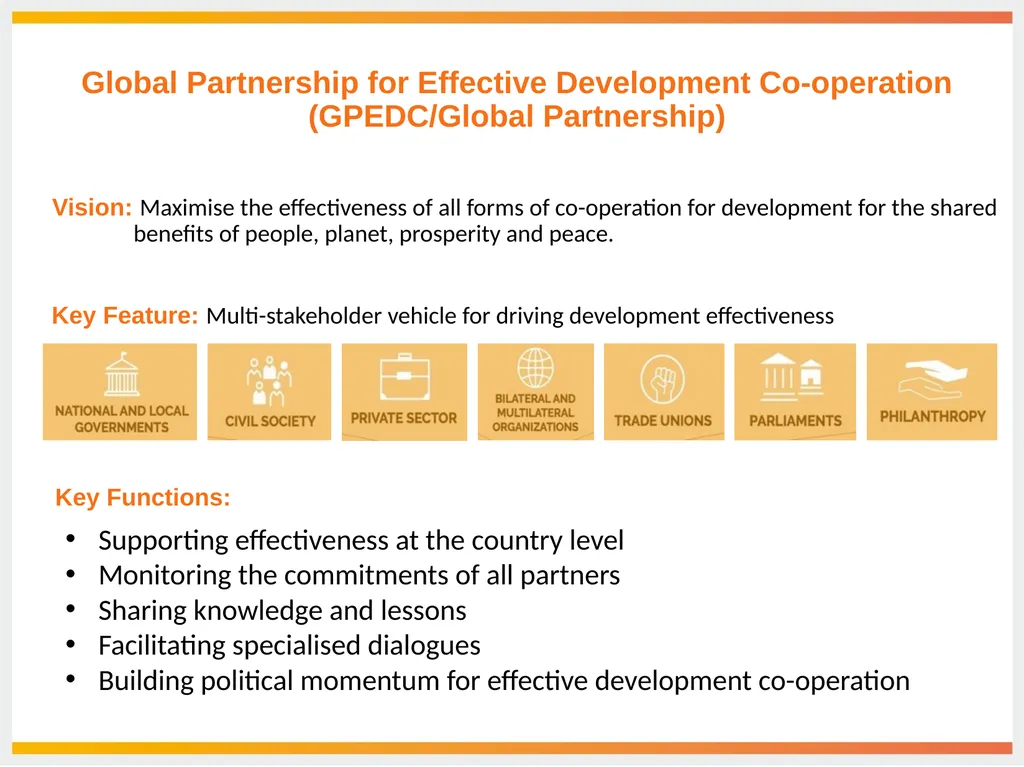
Global Partnership for Effective Development Co-operation (GPEDC/Global Partnership) Supporting effectiveness at the country level
Monitoring the commitments of all partners
Sharing knowledge and lessons
Facilitating specialised dialogues
Building political momentum for effective development co-operation Vision: Maximise the effectiveness of all forms of co-operation for development for the shared benefits of people, planet, prosperity and peace. Key Feature: Multi-stakeholder vehicle for driving development effectiveness Key Functions:<br>
06
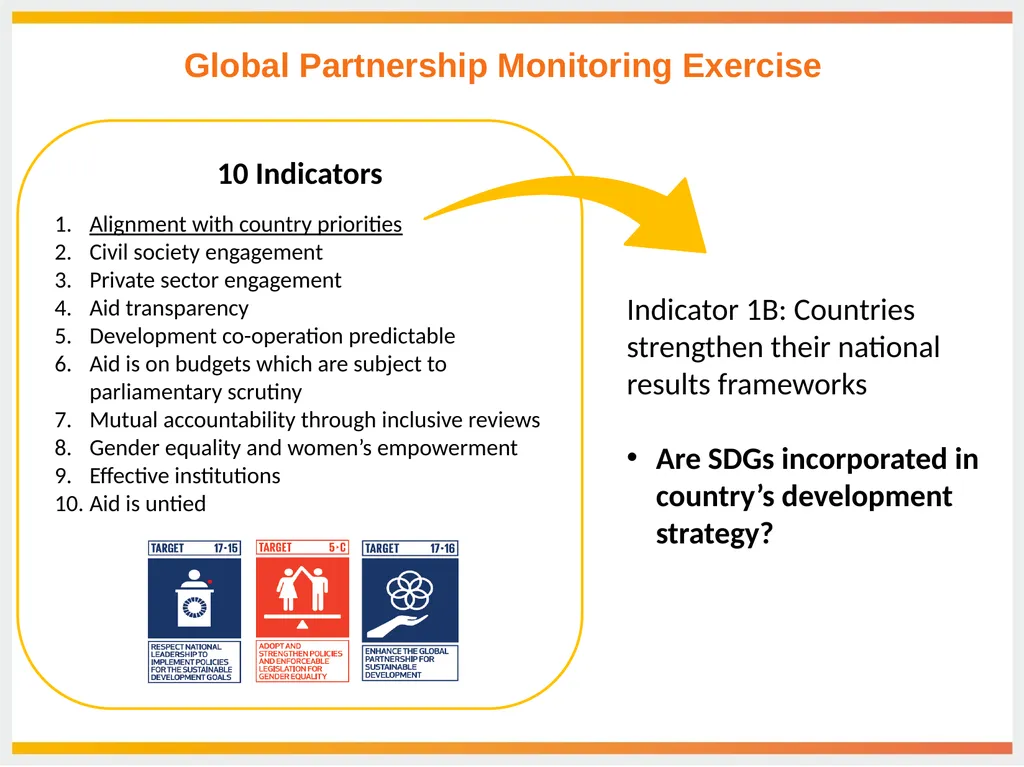
Global Partnership Monitoring Exercise 10 Indicators
Alignment with country priorities
Civil society engagement
Private sector engagement
Aid transparency
Development co-operation predictable
Aid is on budgets which are subject to parliamentary scrutiny
Mutual accountability through inclusive reviews
Gender equality and women’s empowerment
Effective institutions
Aid is untied Indicator 1B: Countries strengthen their national results frameworks
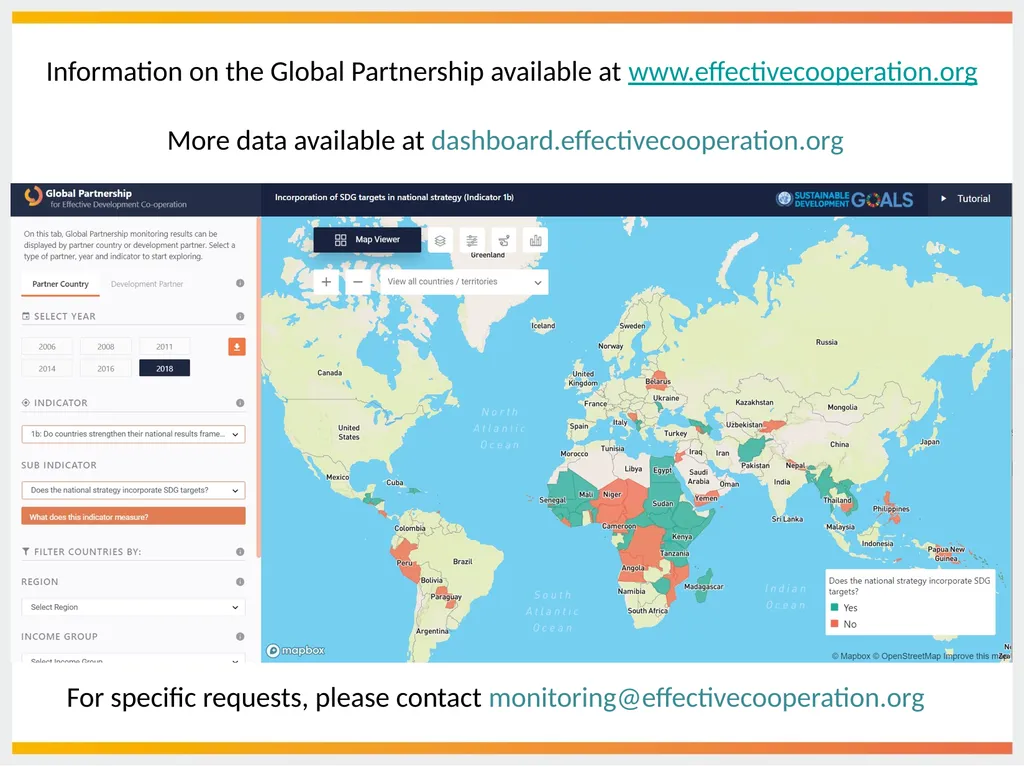
Are SDGs incorporated in country’s development strategy?<br>
07
Results of SDGs integration into NDPs based on the 2018 monitoring Round<br>
08
Results – SDGs and National Development Strategies N=58<br>
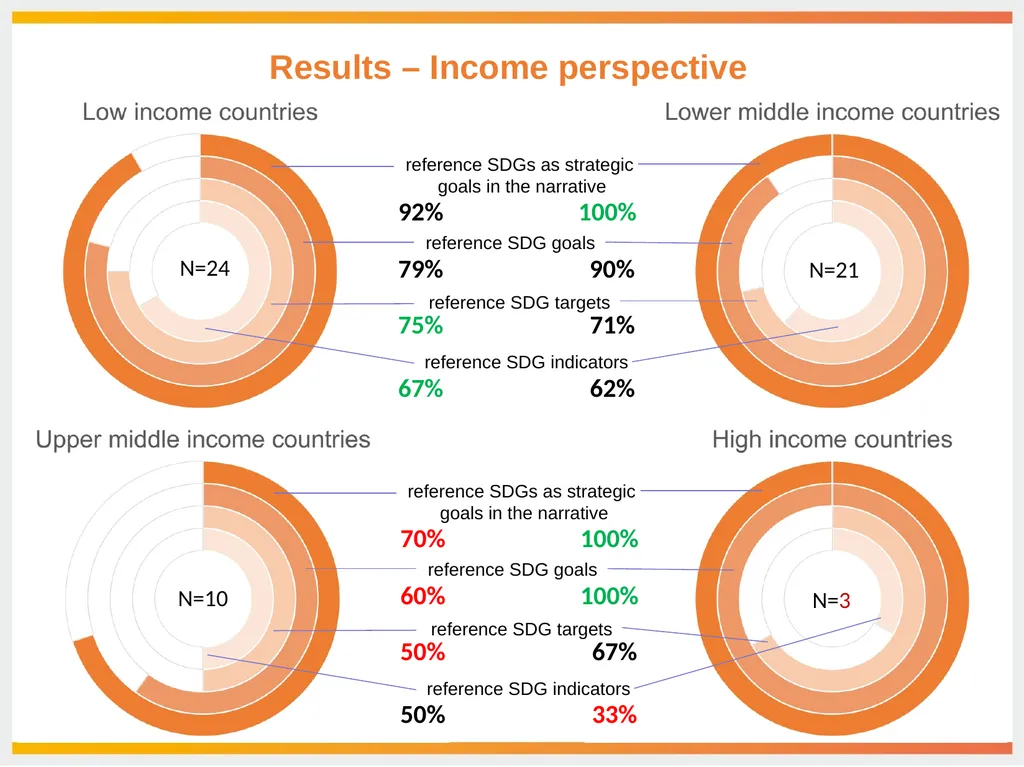
Results – Income perspective N=21 N=24 N=10 N=3<br>
11
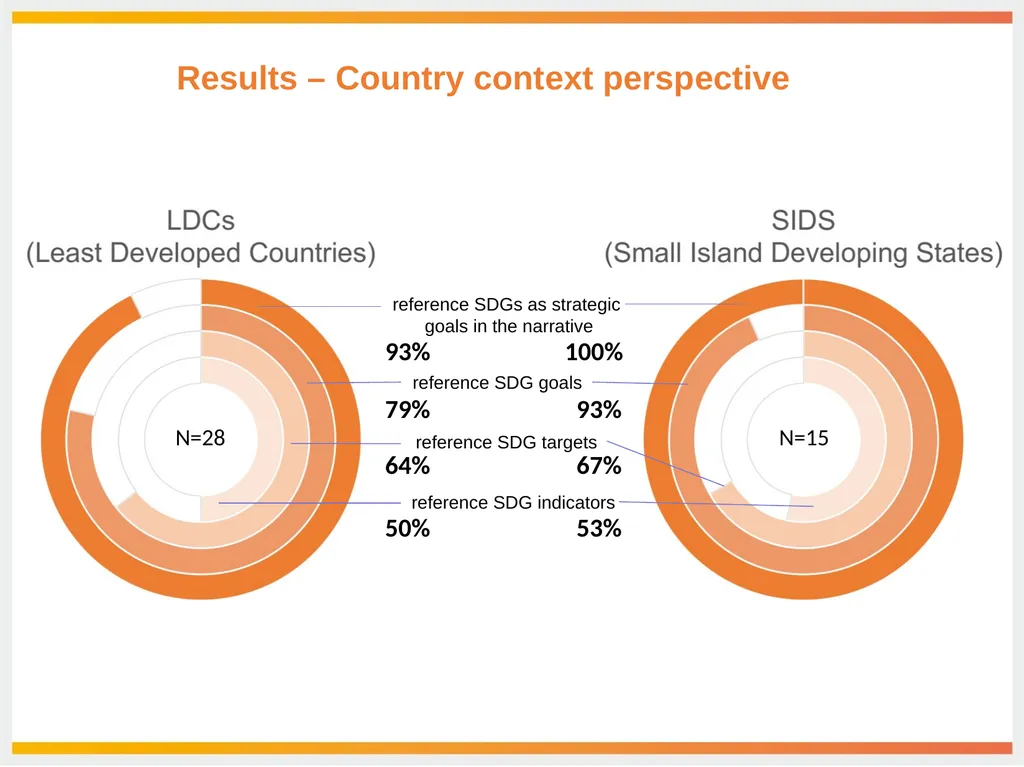
Results – Country context perspective N=15 N=28<br>
12
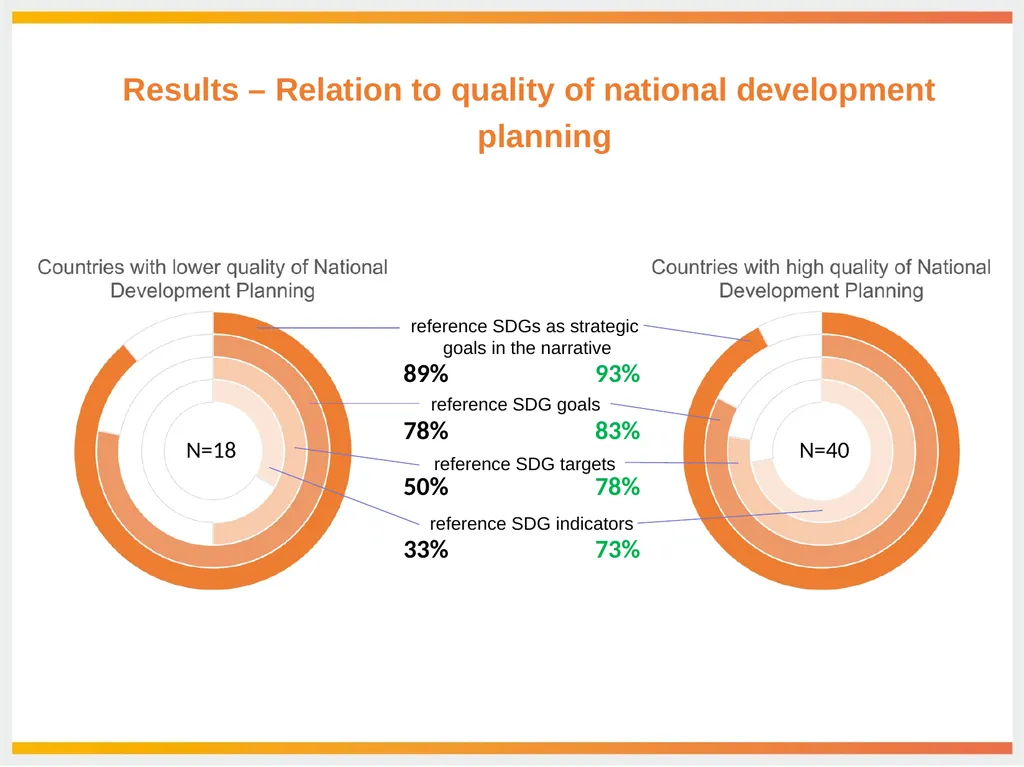
Results – Relation to quality of national development planning N=40 N=18<br>
13
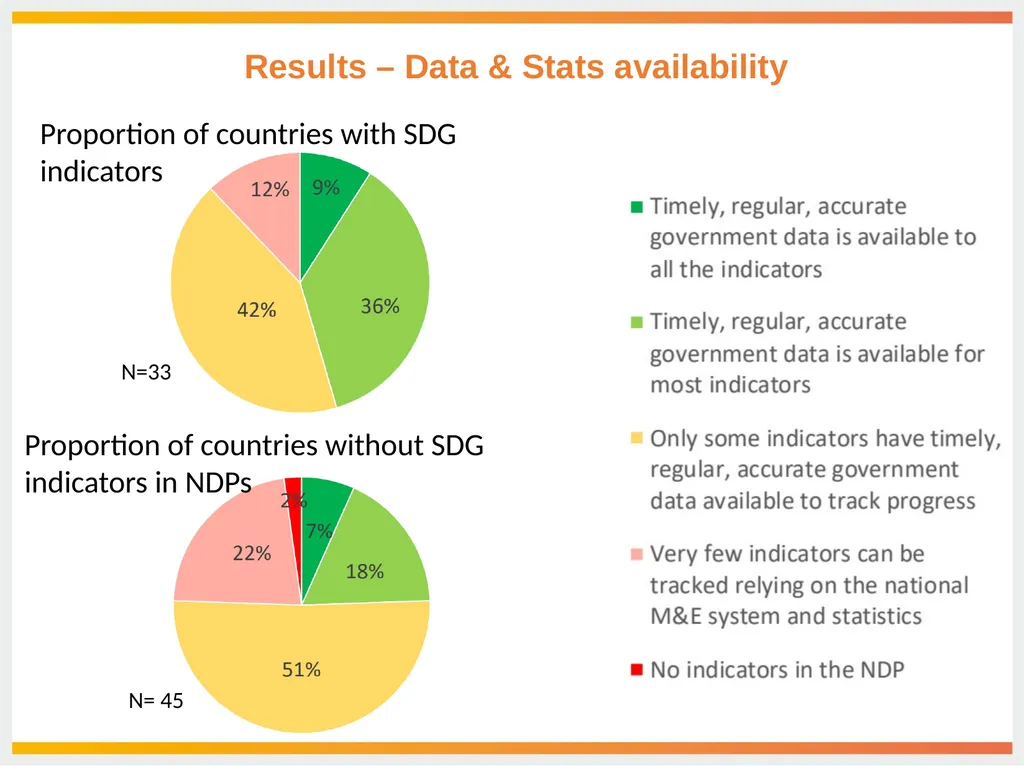
Results – Data & Stats availability Proportion of countries with SDG indicators in NDPs Proportion of countries without SDG indicators in NDPs N=33 N= 45<br>
14
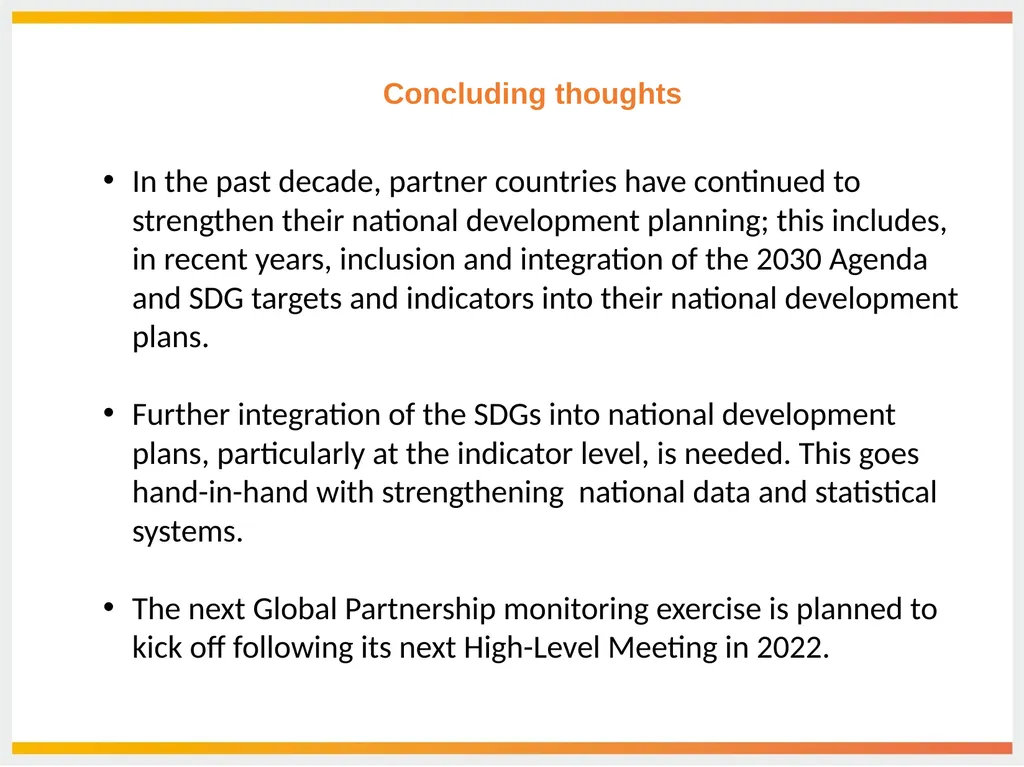
Concluding thoughts In the past decade, partner countries have continued to strengthen their national development planning; this includes, in recent years, inclusion and integration of the 2030 Agenda and SDG targets and indicators into their national development plans.
Further integration of the SDGs into national development plans, particularly at the indicator level, is needed. This goes hand-in-hand with strengthening national data and statistical systems.
The next Global Partnership monitoring exercise is planned to kick off following its next High-Level Meeting in 2022.<br>
15
Information on the Global Partnership available at www.effectivecooperation.org
More data available at dashboard.effectivecooperation.org For specific requests, please contact monitoring@effectivecooperation.org<br>