Referee Position: 3 Official System Starting The Game Center ice face-offs Beginning of game: Face the timekeeper Conduct face-off Back toward side boards keeping play in field of vision Timekeeper Positioning : Following Play Play moves
"Referee Position: 3 Official System Starting The" is the property of its rightful owner. Permission is granted to
download and print the materials on this website for personal, non-commercial use only, and to display it
on your personal computer provided you do not modify the materials and that you retain all copyright
notices contained in the materials. By downloading content from our website, you accept the terms of this
agreement.
Presentation Transcript
01
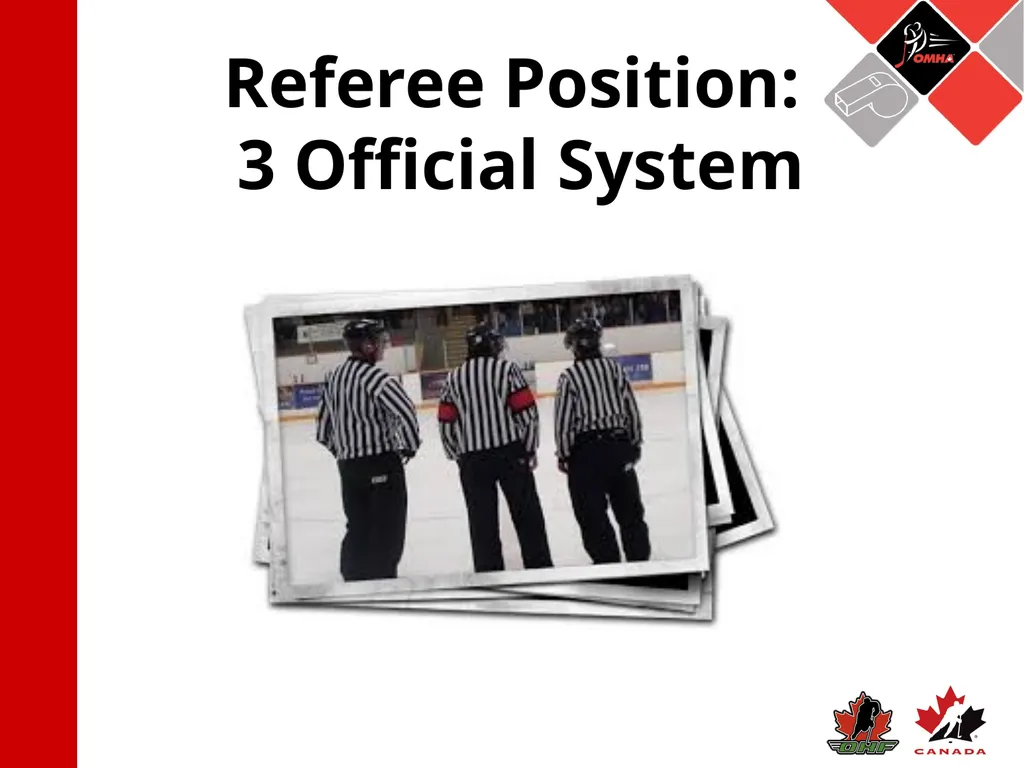
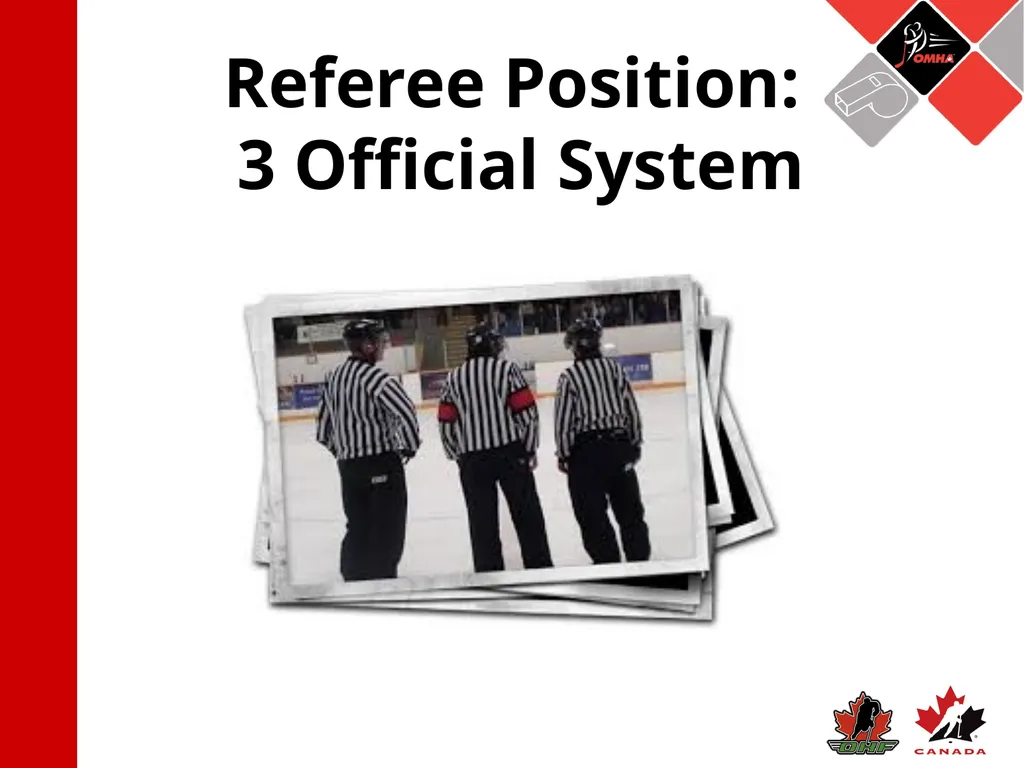
Referee Position: 3 Official System<br>
02
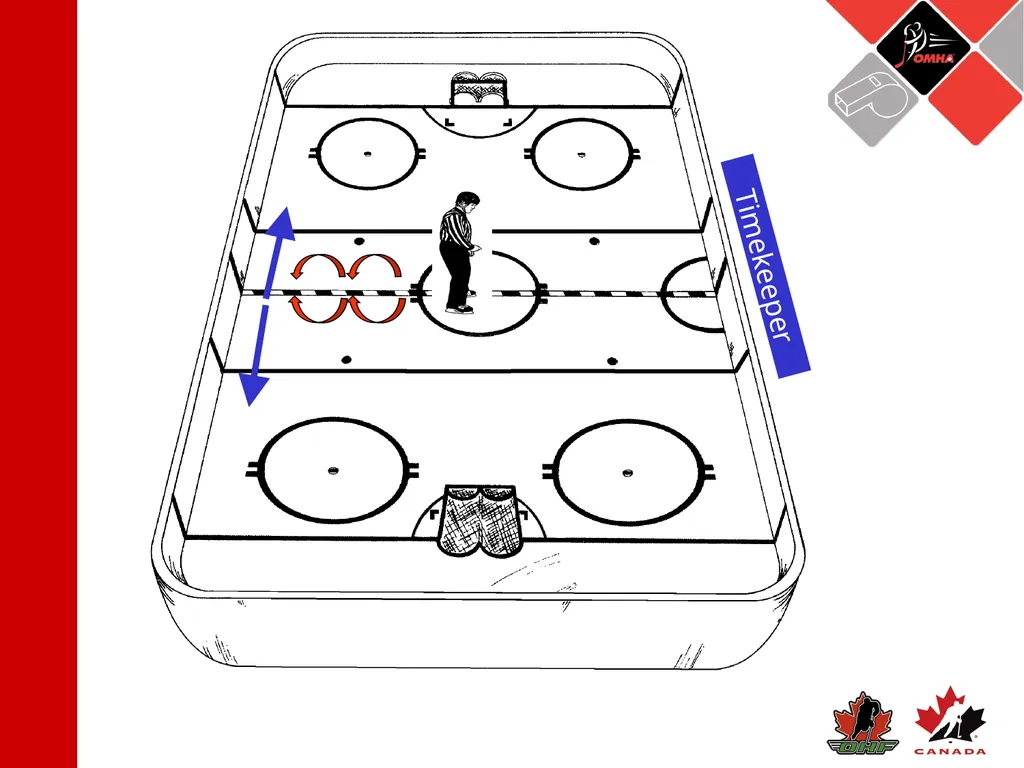
Starting The Game Center ice face-offs
Beginning of game: Face the timekeeper
Conduct face-off
Back toward side boards keeping play in field of vision<br>
03
Timekeeper<br>
04
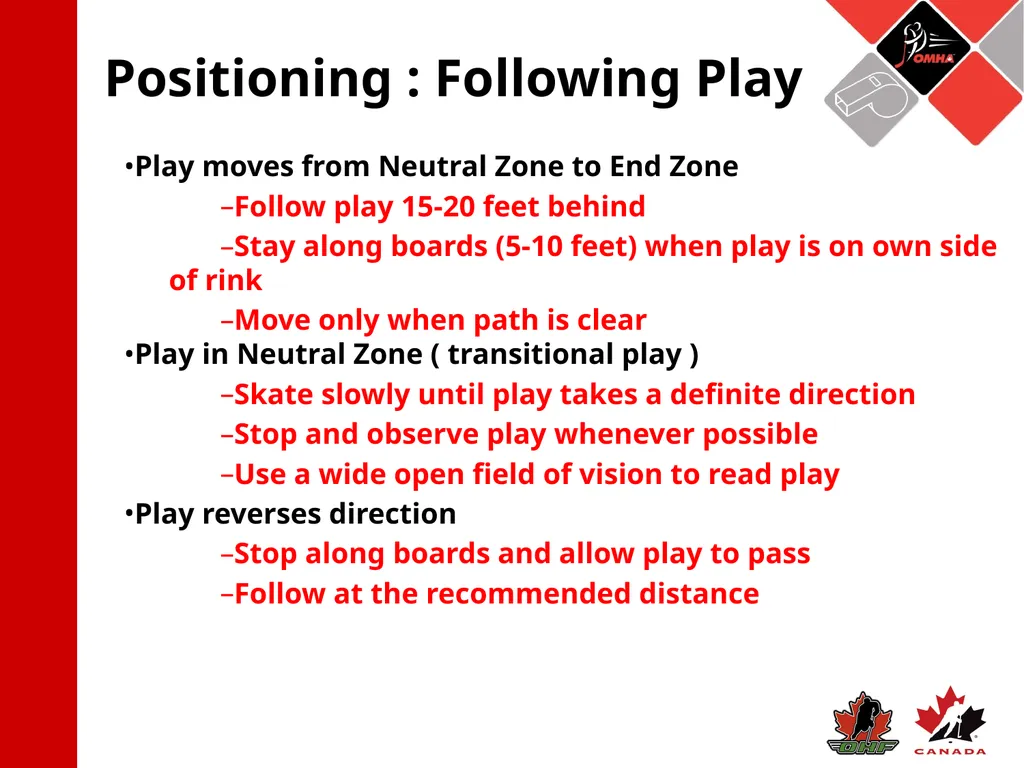
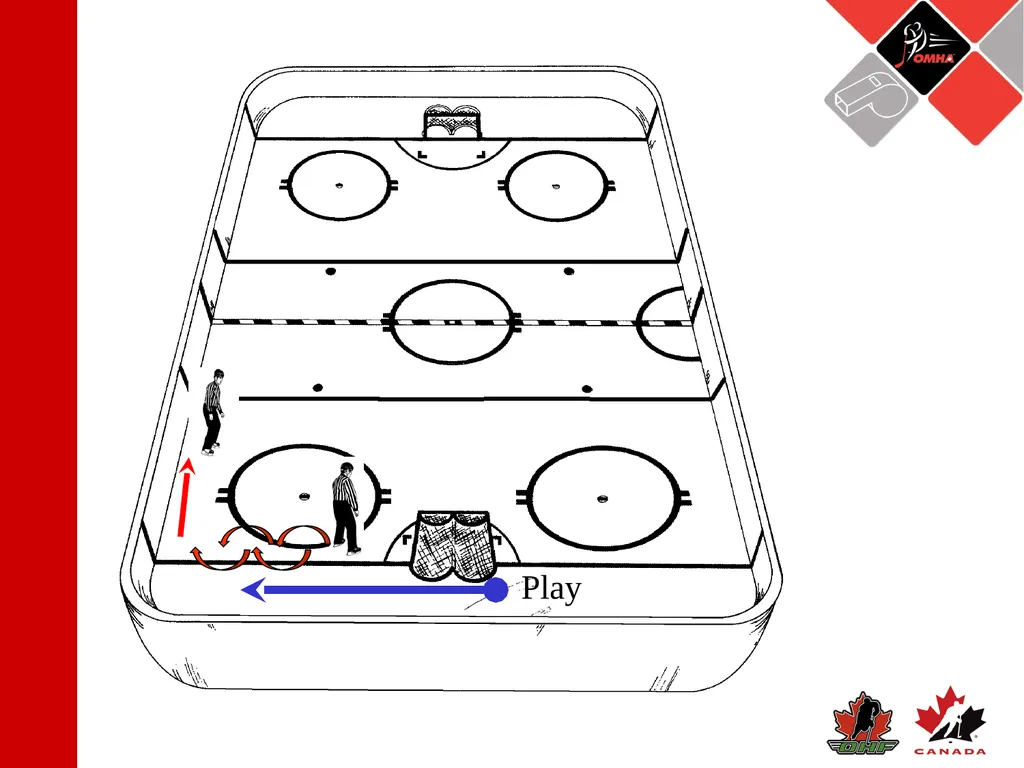
Positioning : Following Play Play moves from Neutral Zone to End Zone
Follow play 15-20 feet behind
Stay along boards (5-10 feet) when play is on own side of rink
Move only when path is clear
Play in Neutral Zone ( transitional play )
Skate slowly until play takes a definite direction
Stop and observe play whenever possible
Use a wide open field of vision to read play
Play reverses direction
Stop along boards and allow play to pass
Follow at the recommended distance<br>
05
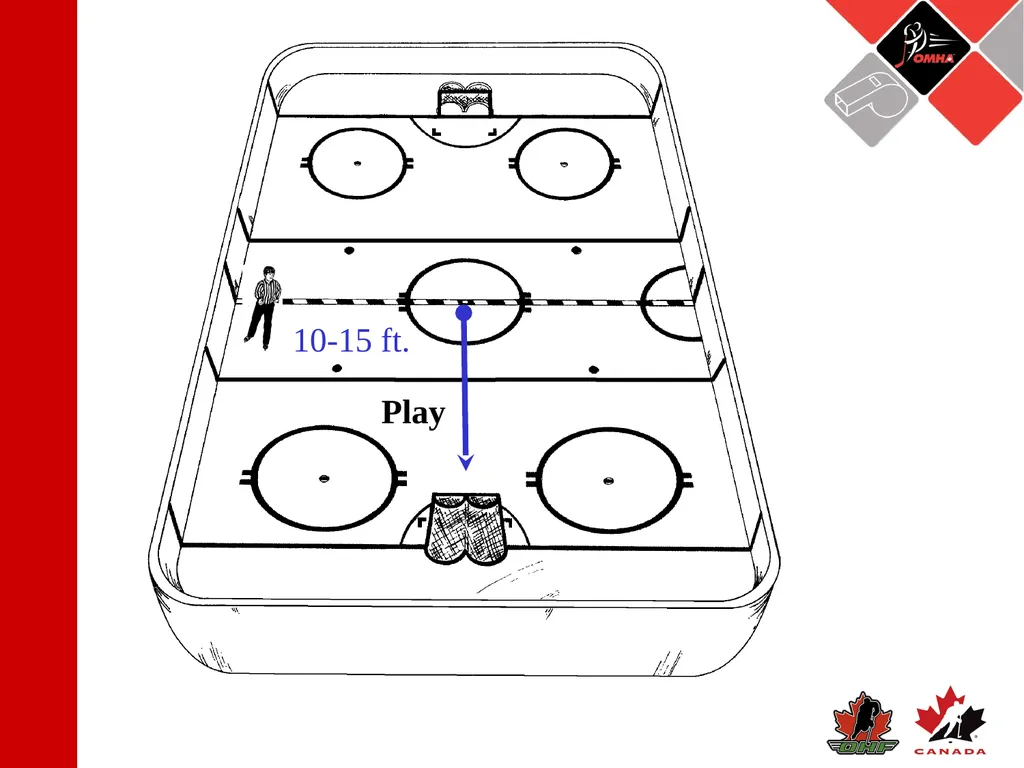
Play 10-15 ft.<br>
06
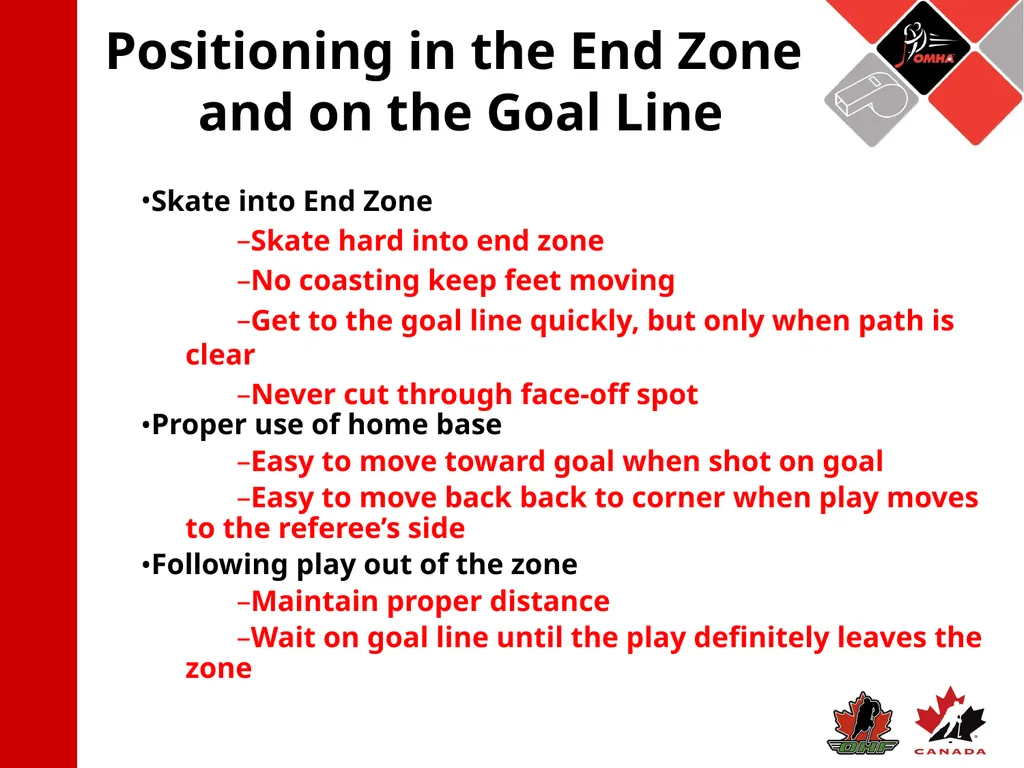
Positioning in the End Zone
and on the Goal Line Skate into End Zone
Skate hard into end zone
No coasting keep feet moving
Get to the goal line quickly, but only when path is clear
Never cut through face-off spot
Proper use of home base
Easy to move toward goal when shot on goal
Easy to move back back to corner when play moves to the referee’s side
Following play out of the zone
Maintain proper distance
Wait on goal line until the play definitely leaves the zone<br>
07
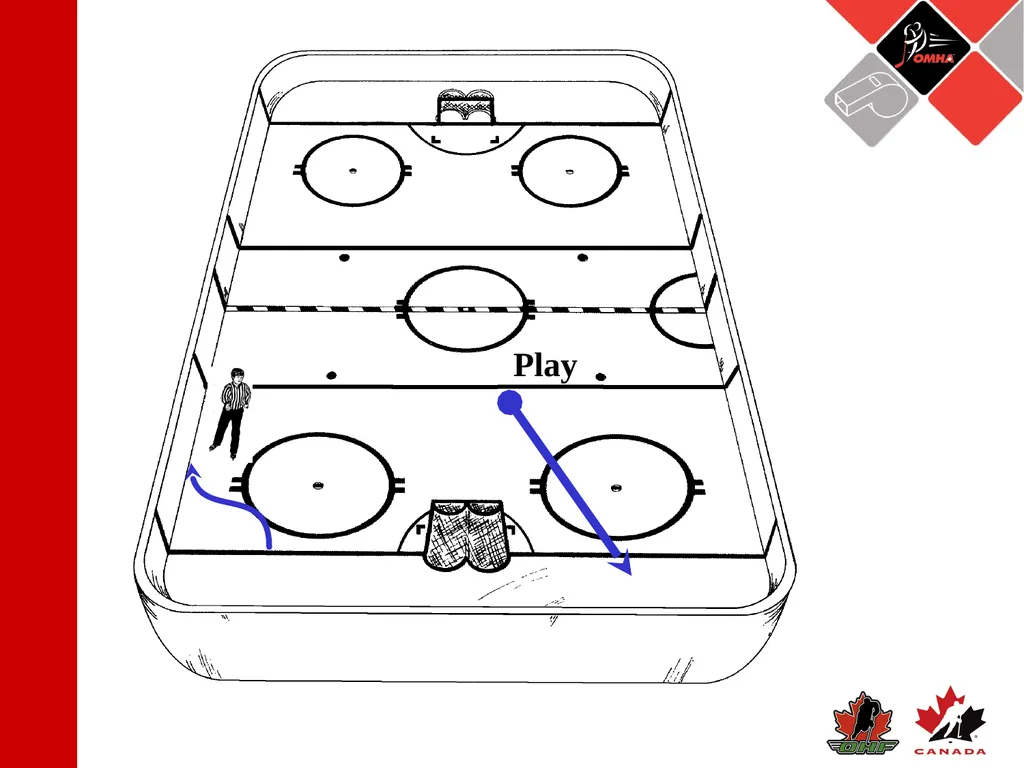
Play<br>
08
Play<br>
09
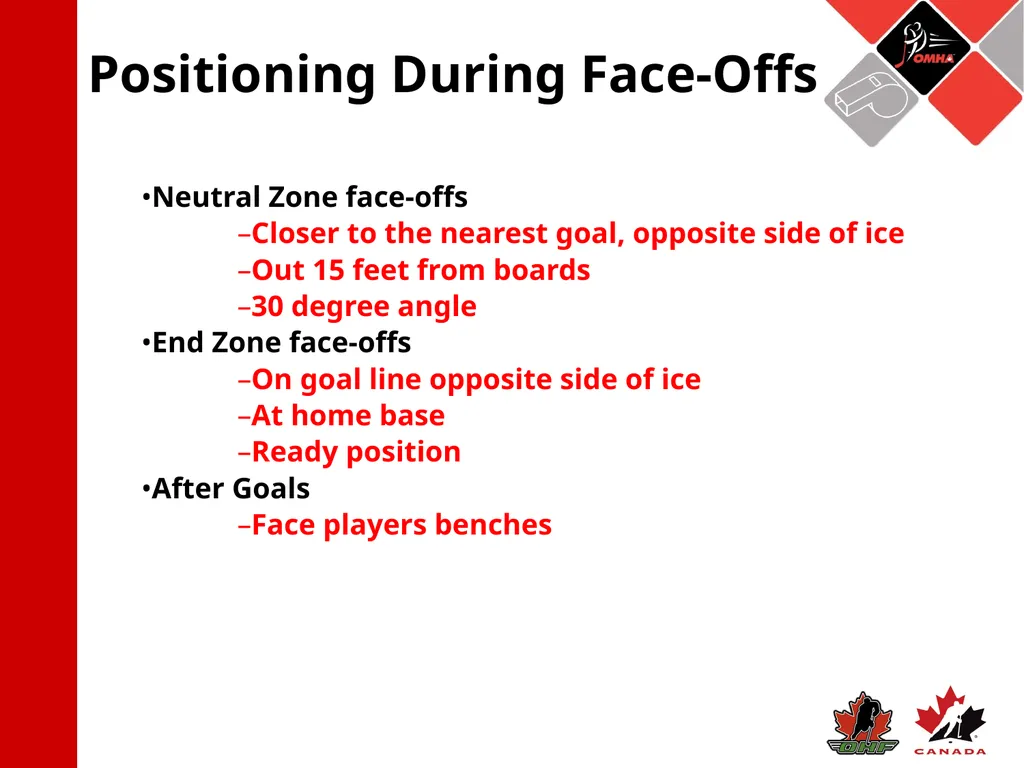
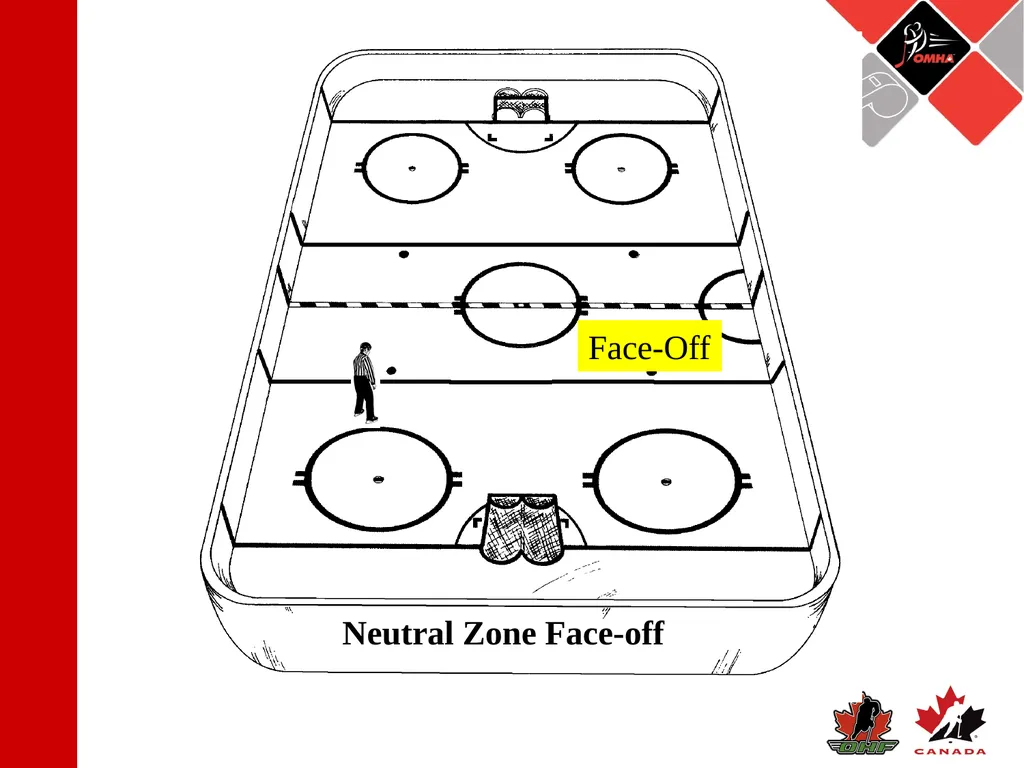
Positioning During Face-Offs Neutral Zone face-offs
Closer to the nearest goal, opposite side of ice
Out 15 feet from boards
30 degree angle
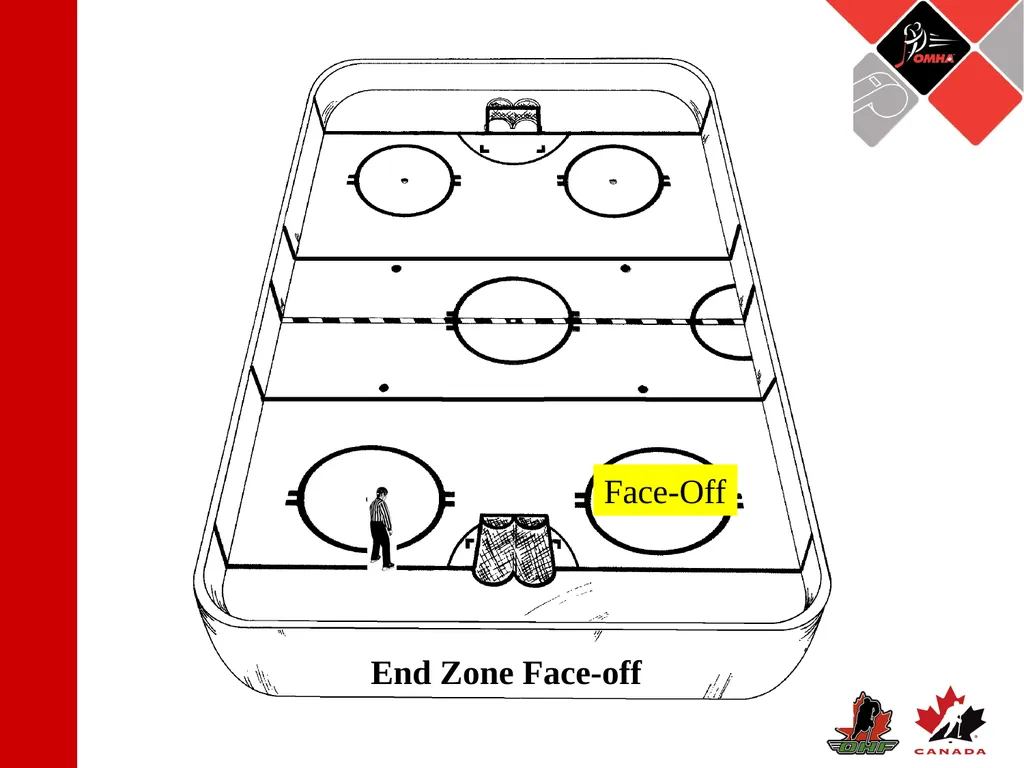
End Zone face-offs
On goal line opposite side of ice
At home base
Ready position
After Goals
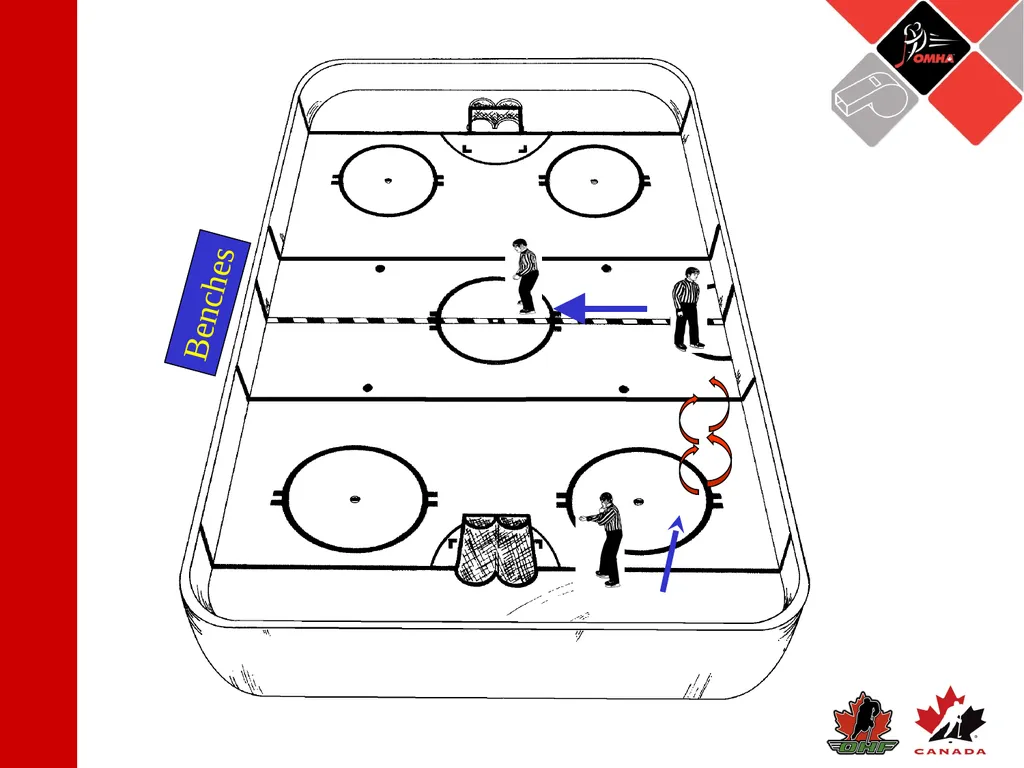
Face players benches<br>
10
Benches<br>
11
Line Change Procedure In an effort to give the benches the best view of the line change procedure, the Referee is encouraged to move outward into the end zone face-off circle to conduct the procedure, and upon completion, take up her position at the ½ piston position.<br>
12
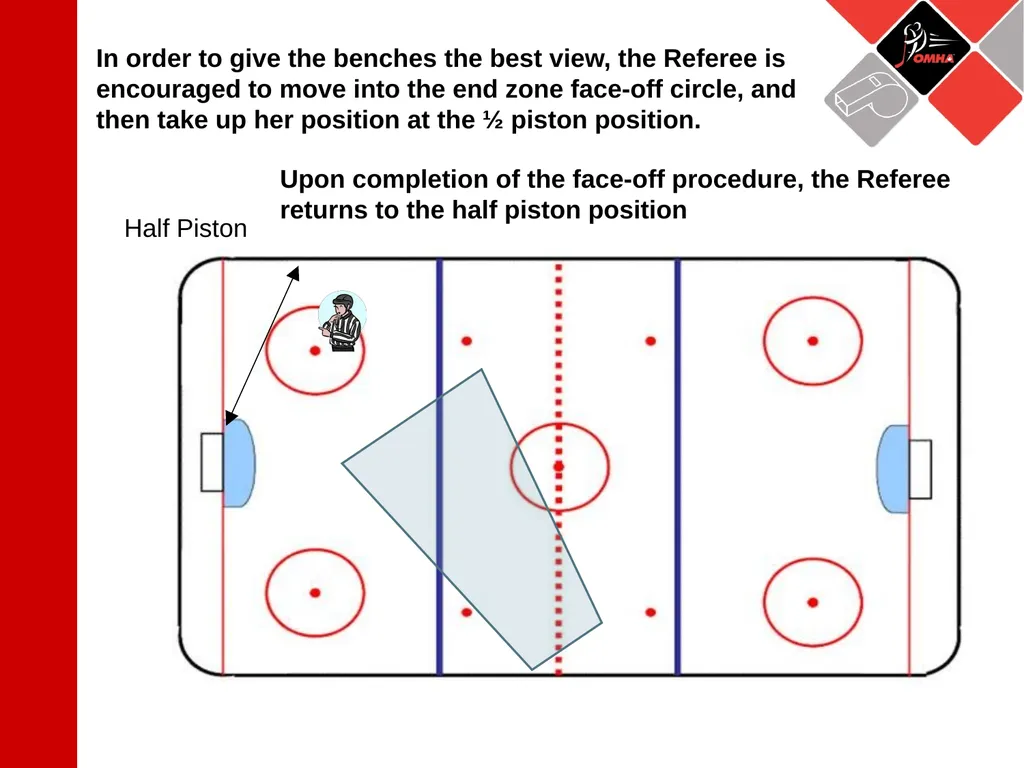
Half Piston In order to give the benches the best view, the Referee is encouraged to move into the end zone face-off circle, and then take up her position at the ½ piston position. Upon completion of the face-off procedure, the Referee returns to the half piston position<br>
13
Penalty Procedure – Reporting
at Penalty Box The Referee must ensure that the off-ice official has the information
Referees are encouraged to stop and report the penalty, however there should not be any undue delay which could lead to confrontation between the penalized player and the Referee.
There may be times when the Referee will want to keep moving and make the stop very short, if at all. In minor hockey, the Referee should have at least one skate in the referee crease.<br>
14
Penalty Procedure – Reporting
at Penalty Box There may be times when the Referee will want to keep moving and make the stop very short, if at all.
The Referee must be aware of all the players when skating to the penalty box to report a penalty<br>
15
Icing Procedure Whenever possible the Referee should get behind all or as many of the players on the ice as possible to follow them up ice. This will allow the Referee to keep everyone in front of him and allow him to witness any possible or further infractions.
Referee should be in the area where the majority of the players are.<br>