
Reforming the Health Work Force to support

Description: Reforming the Health Work Force to support Universal Health coverage in Africa. Dr Patrick KADAMA Executive Director of the Platform on Human Resources for Health at the African Centre for Global Health and Social Transformation (ACHEST)
Related Topics
Download Presentation
"Reforming the Health Work Force to support" is the property of its rightful owner. Permission is granted to download and print the materials on this website for personal, non-commercial use only, and to display it on your personal computer provided you do not modify the materials and that you retain all copyright notices contained in the materials. By downloading content from our website, you accept the terms of this agreement.
Presentation Transcript
slide1. Reforming the Health Work Force to support Universal Health coverage in Africa. Dr Patrick KADAMA
Executive Director of the Platform on Human Resources for Health at the
African Centre for Global Health and Social Transformation (ACHEST)<br>
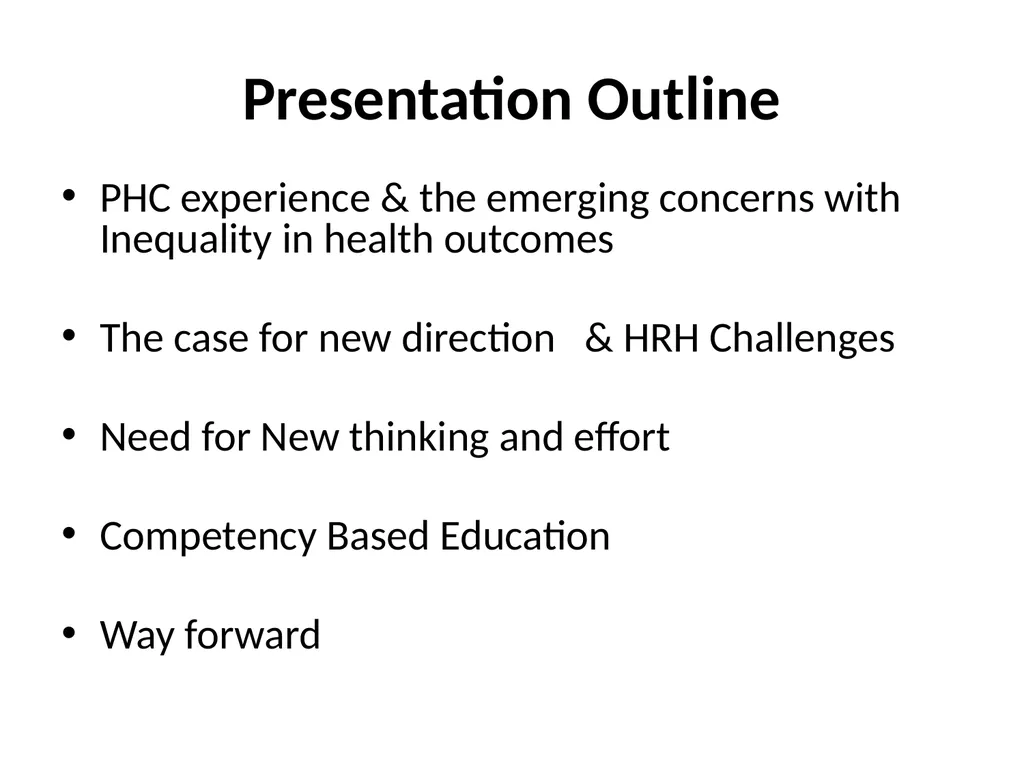
slide2. Presentation Outline PHC experience & the emerging concerns with Inequality in health outcomes
The case for new direction & HRH Challenges
Need for New thinking and effort
Competency Based Education
Way forward<br>
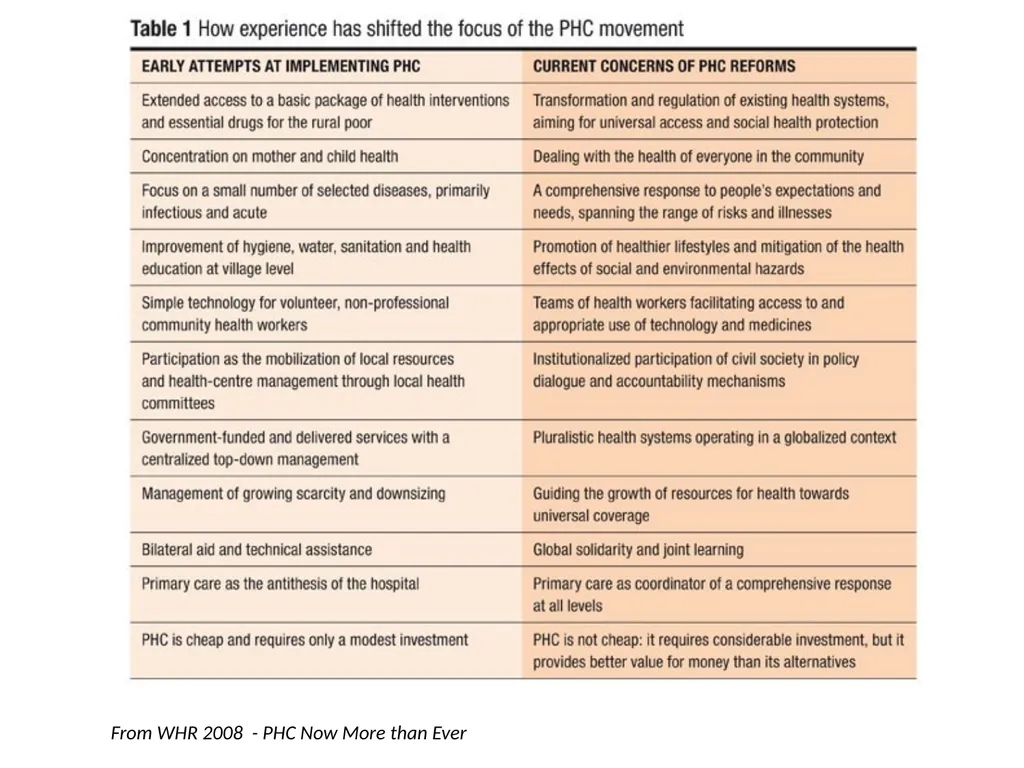
slide3. From WHR 2008 - PHC Now More than Ever<br>
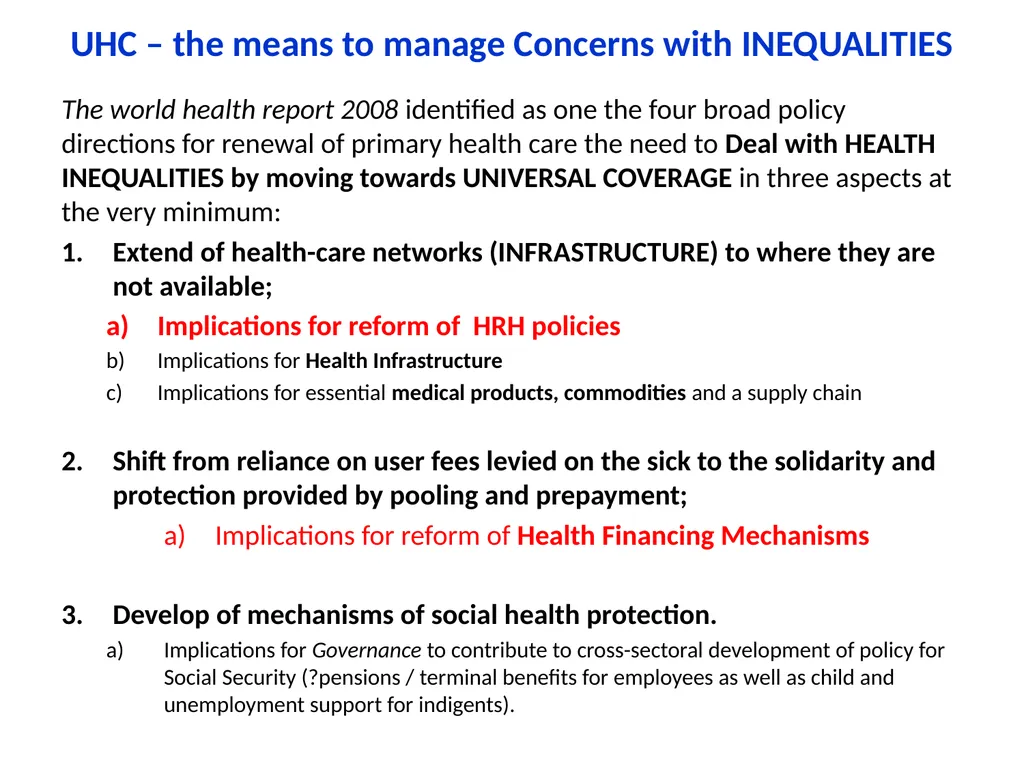
slide4. UHC – the means to manage Concerns with INEQUALITIES The world health report 2008 identified as one the four broad policy directions for renewal of primary health care the need to Deal with HEALTH INEQUALITIES by moving towards UNIVERSAL COVERAGE in three aspects at the very minimum:
Extend of health-care networks (INFRASTRUCTURE) to where they are not available;
Implications for reform of HRH policies
Implications for Health Infrastructure
Implications for essential medical products, commodities and a supply chain
Shift from reliance on user fees levied on the sick to the solidarity and protection provided by pooling and prepayment;
Implications for reform of Health Financing Mechanisms
Develop of mechanisms of social health protection.
Implications for Governance to contribute to cross-sectoral development of policy for Social Security (?pensions / terminal benefits for employees as well as child and unemployment support for indigents).<br>
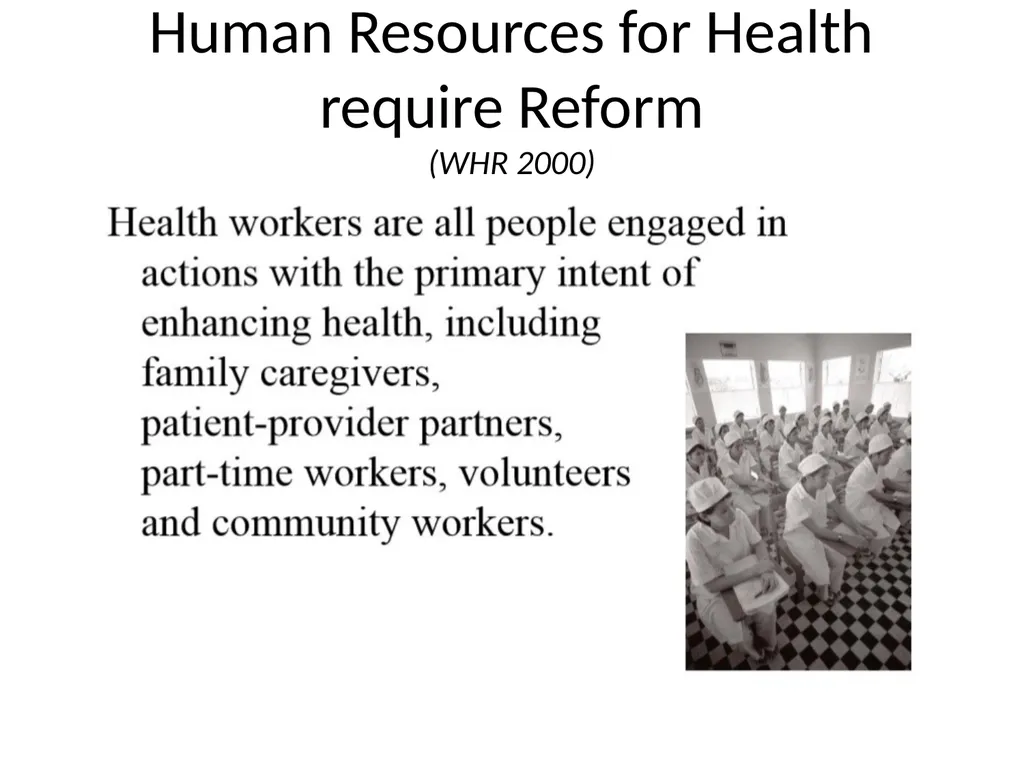
slide5. Human Resources for Health require Reform (WHR 2000)<br>
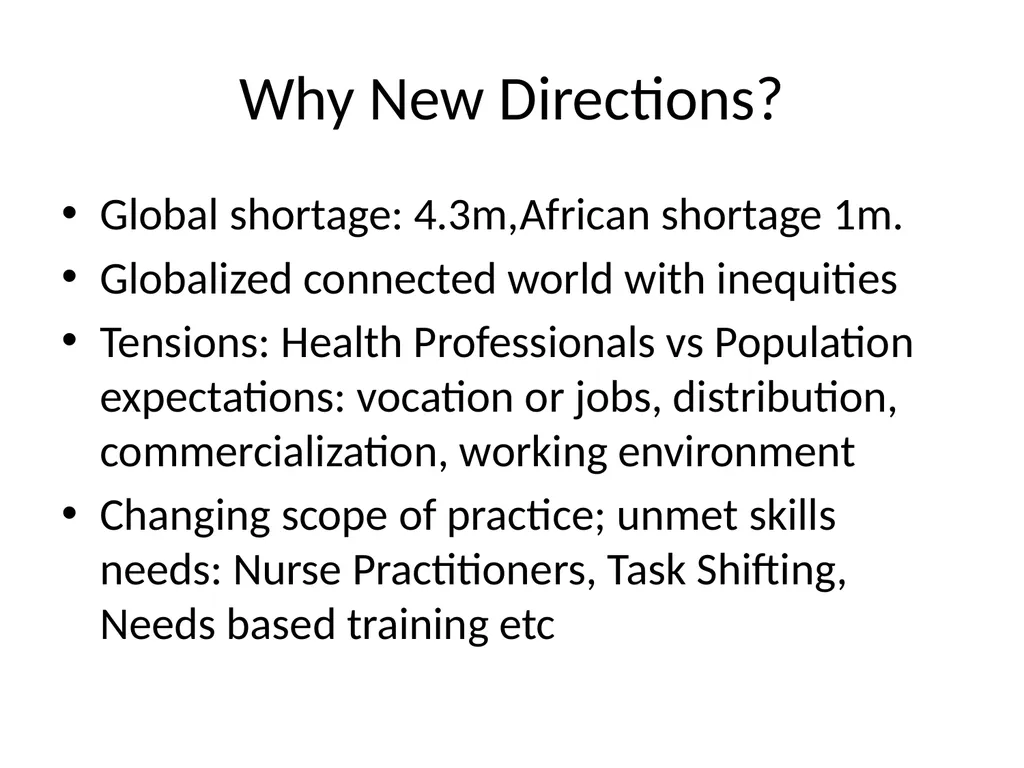
slide6. Why New Directions? Global shortage: 4.3m,African shortage 1m.
Globalized connected world with inequities
Tensions: Health Professionals vs Population expectations: vocation or jobs, distribution, commercialization, working environment
Changing scope of practice; unmet skills needs: Nurse Practitioners, Task Shifting, Needs based training etc<br>
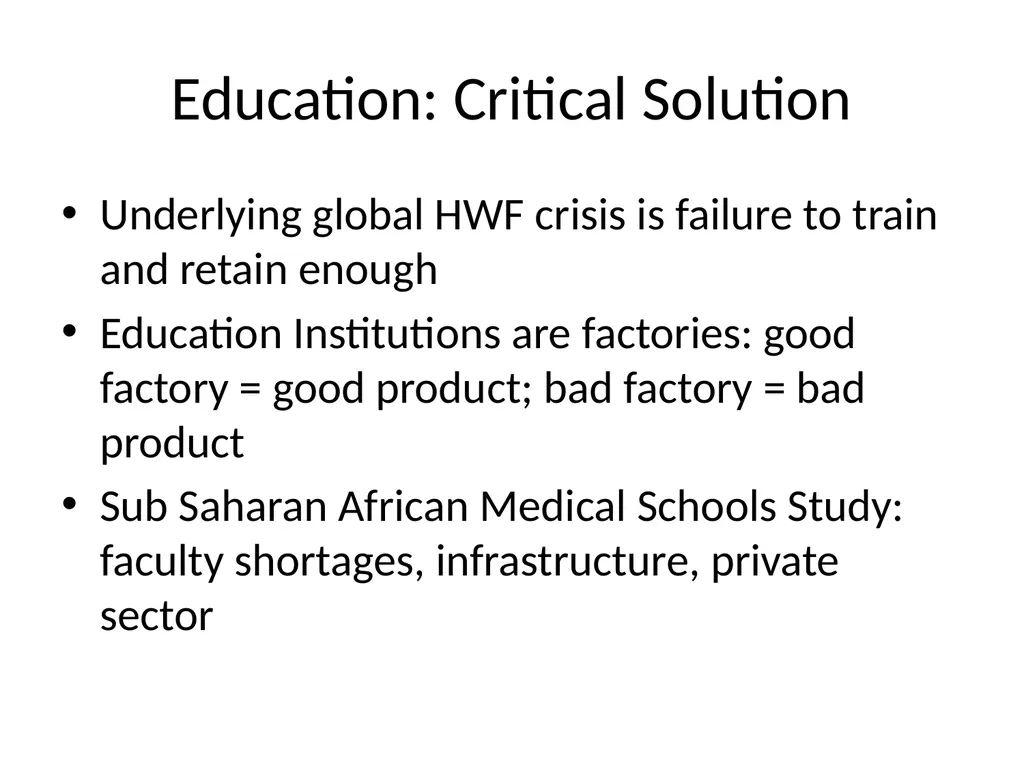
slide7. Education: Critical Solution Underlying global HWF crisis is failure to train and retain enough
Education Institutions are factories: good factory = good product; bad factory = bad product
Sub Saharan African Medical Schools Study: faculty shortages, infrastructure, private sector<br>
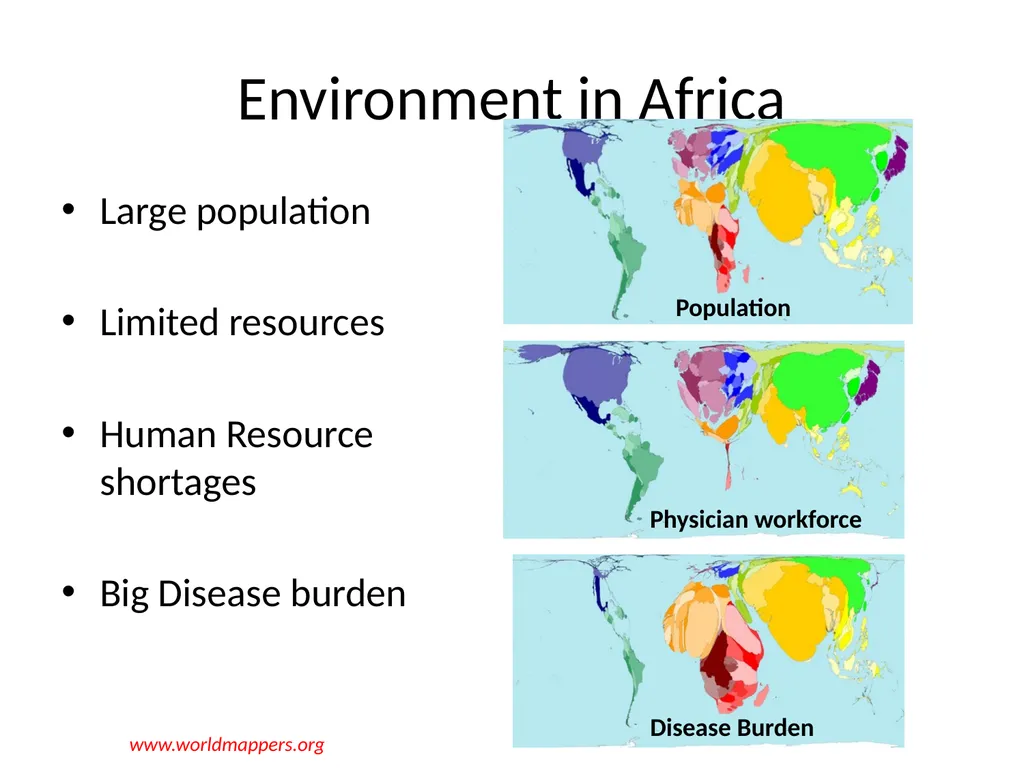
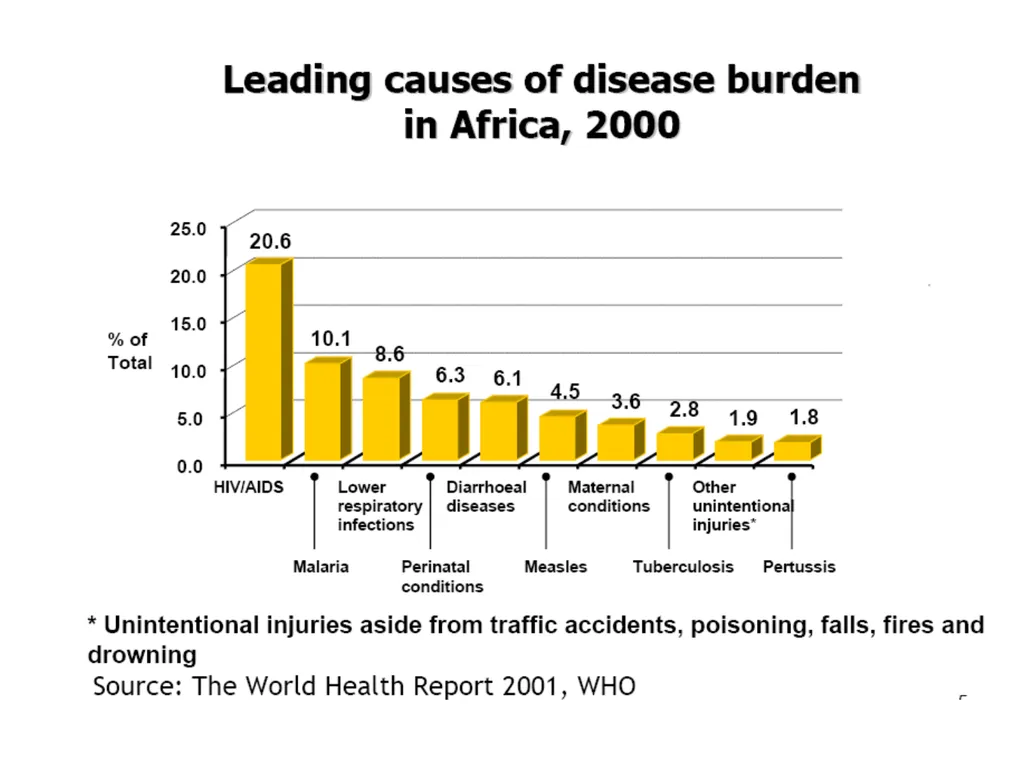
slide8. Environment in Africa Large population
Limited resources
Human Resource shortages
Big Disease burden Population Physician workforce Disease Burden www.worldmappers.org<br>
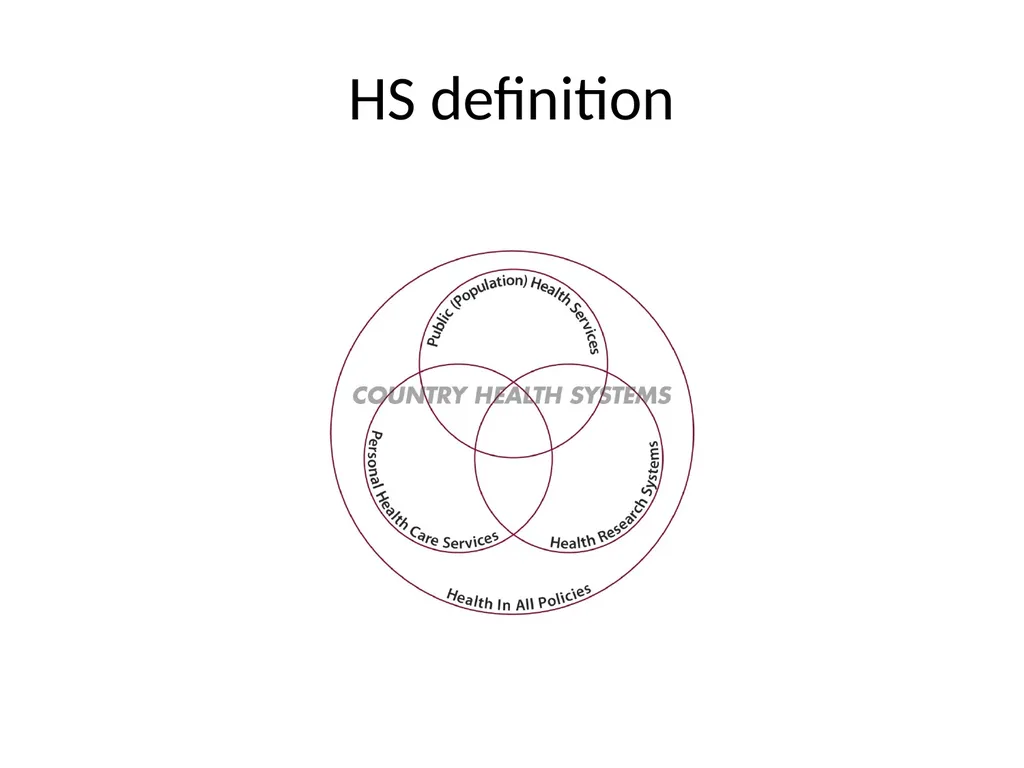
slide10. HS definition<br>
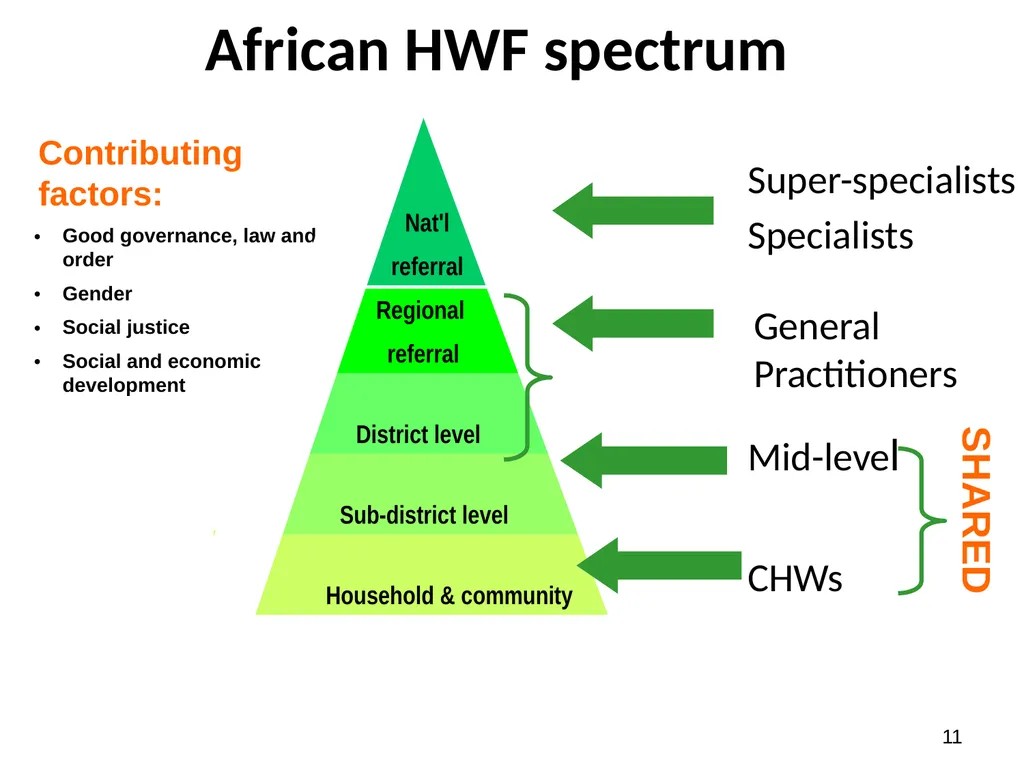
slide11. 11 Household & community Sub-district level District level Regional
referral Nat'l
referral African HWF spectrum Super-specialists
Specialists
Mid-level
CHWs SHARED Contributing factors:
Good governance, law and order
Gender
Social justice
Social and economic development General Practitioners<br>
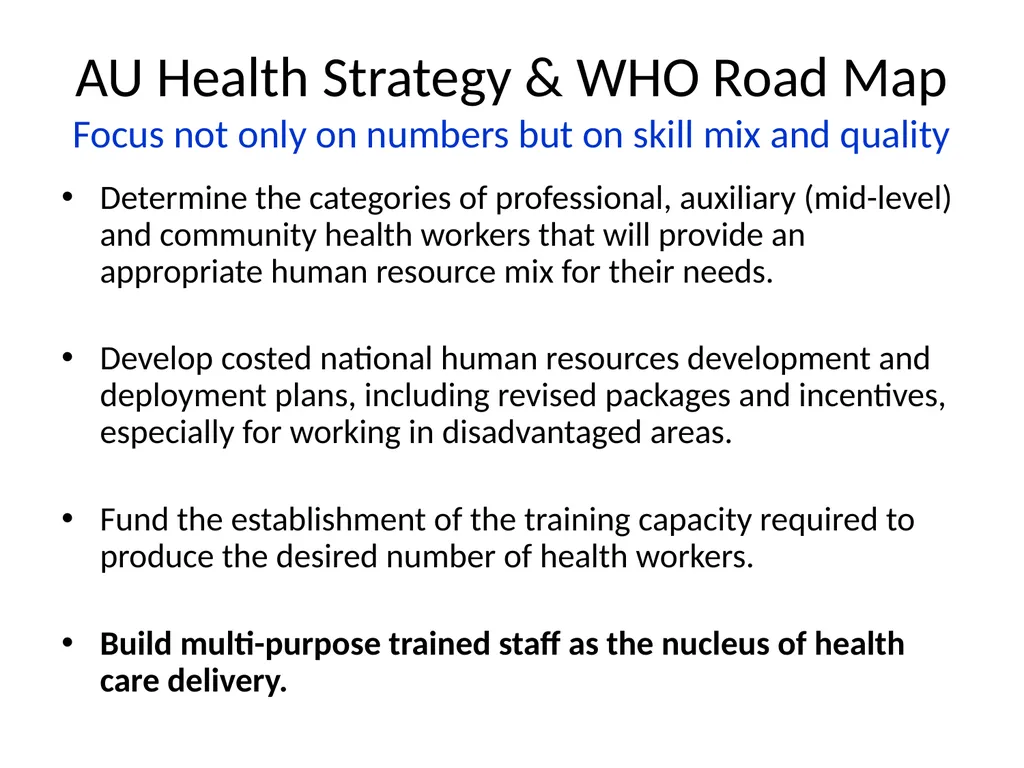
slide12. AU Health Strategy & WHO Road Map Focus not only on numbers but on skill mix and quality Determine the categories of professional, auxiliary (mid-level) and community health workers that will provide an appropriate human resource mix for their needs.
Develop costed national human resources development and deployment plans, including revised packages and incentives, especially for working in disadvantaged areas.
Fund the establishment of the training capacity required to produce the desired number of health workers.
Build multi-purpose trained staff as the nucleus of health care delivery.<br>
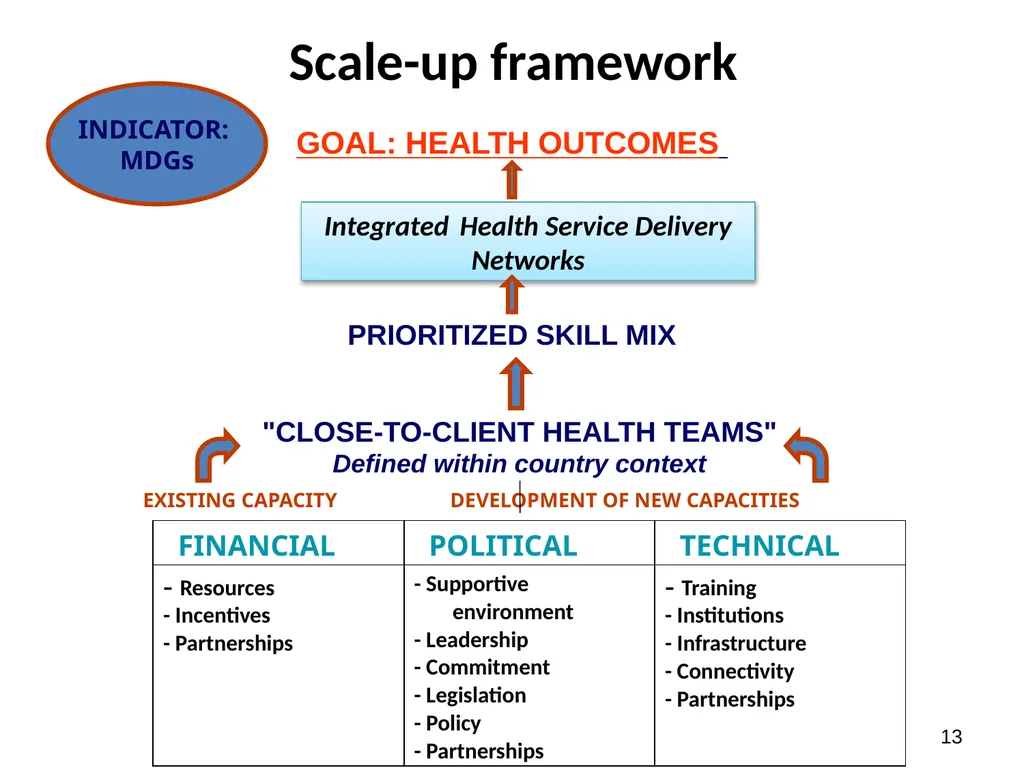
slide13. 13 Scale-up framework GOAL: HEALTH OUTCOMES Integrated Health Service Delivery Networks PRIORITIZED SKILL MIX "CLOSE-TO-CLIENT HEALTH TEAMS"
Defined within country context EXISTING CAPACITY DEVELOPMENT OF NEW CAPACITIES INDICATOR:
MDGs<br>
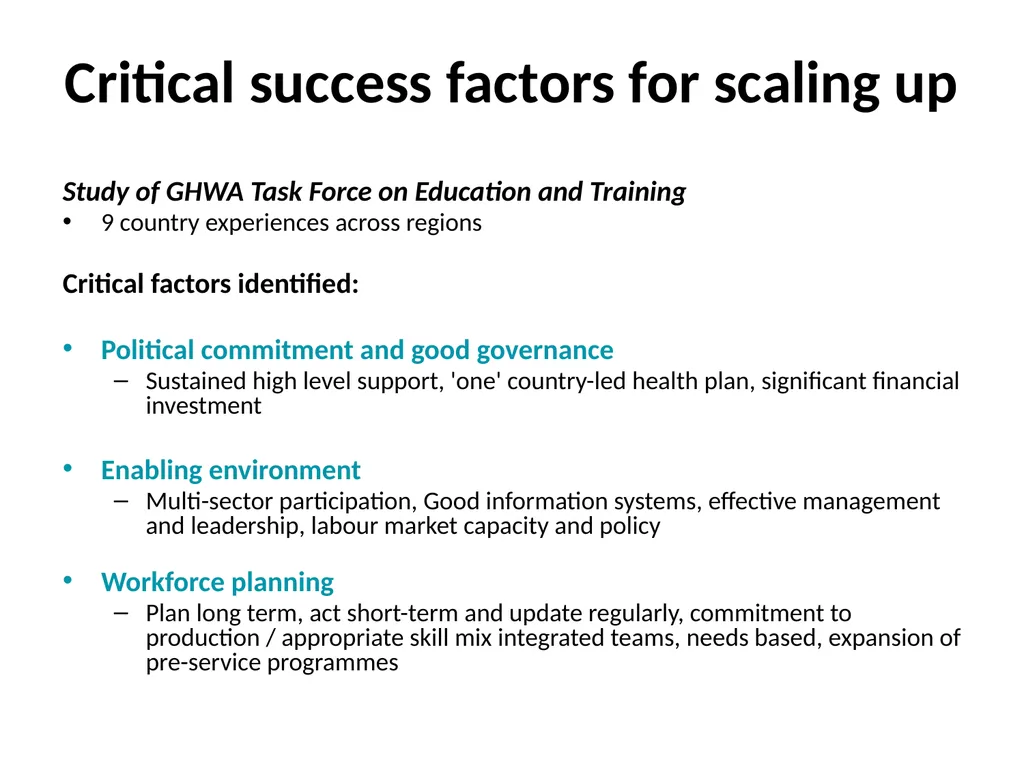
slide14. Critical success factors for scaling up Study of GHWA Task Force on Education and Training
9 country experiences across regions
Critical factors identified:
Political commitment and good governance
Sustained high level support, 'one' country-led health plan, significant financial investment
Enabling environment
Multi-sector participation, Good information systems, effective management and leadership, labour market capacity and policy
Workforce planning
Plan long term, act short-term and update regularly, commitment to production / appropriate skill mix integrated teams, needs based, expansion of pre-service programmes<br>
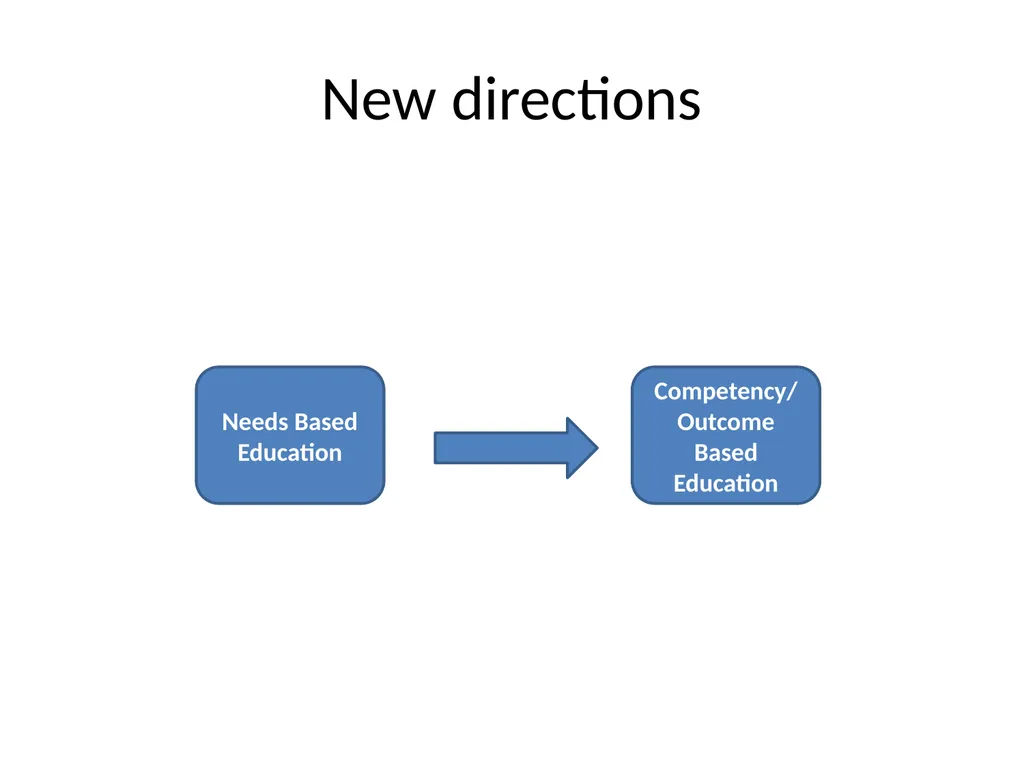
slide15. New directions Needs Based Education Competency/Outcome Based Education<br>
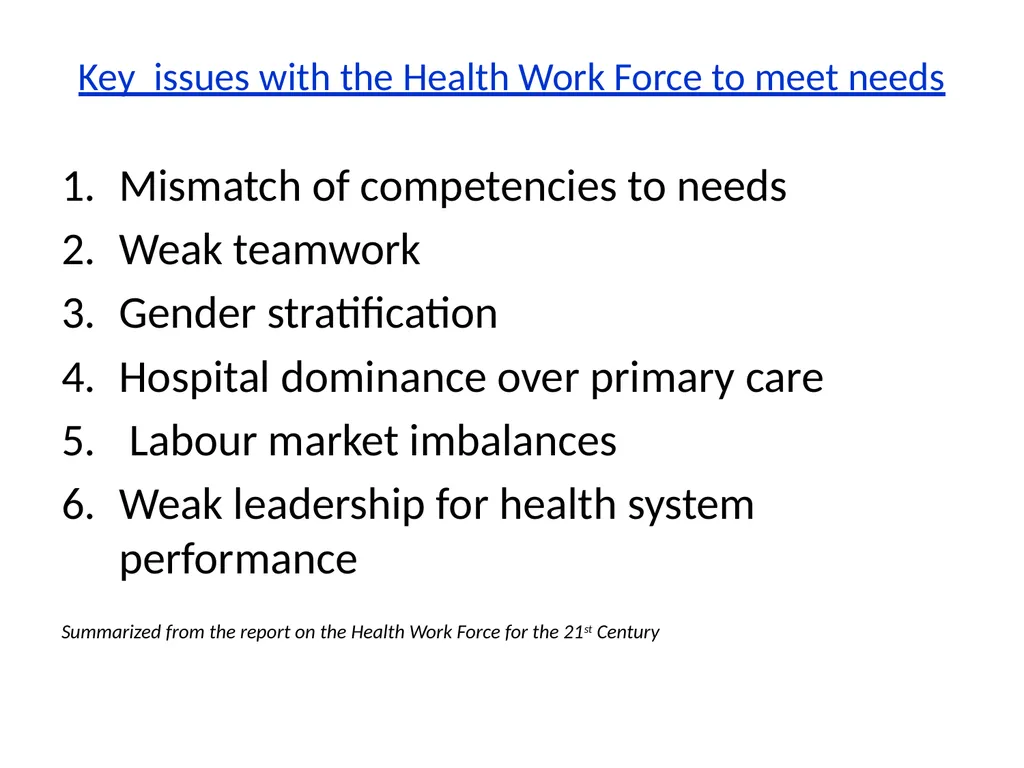
slide16. Key issues with the Health Work Force to meet needs Mismatch of competencies to needs
Weak teamwork
Gender stratification
Hospital dominance over primary care
Labour market imbalances
Weak leadership for health system performance
Summarized from the report on the Health Work Force for the 21st Century<br>
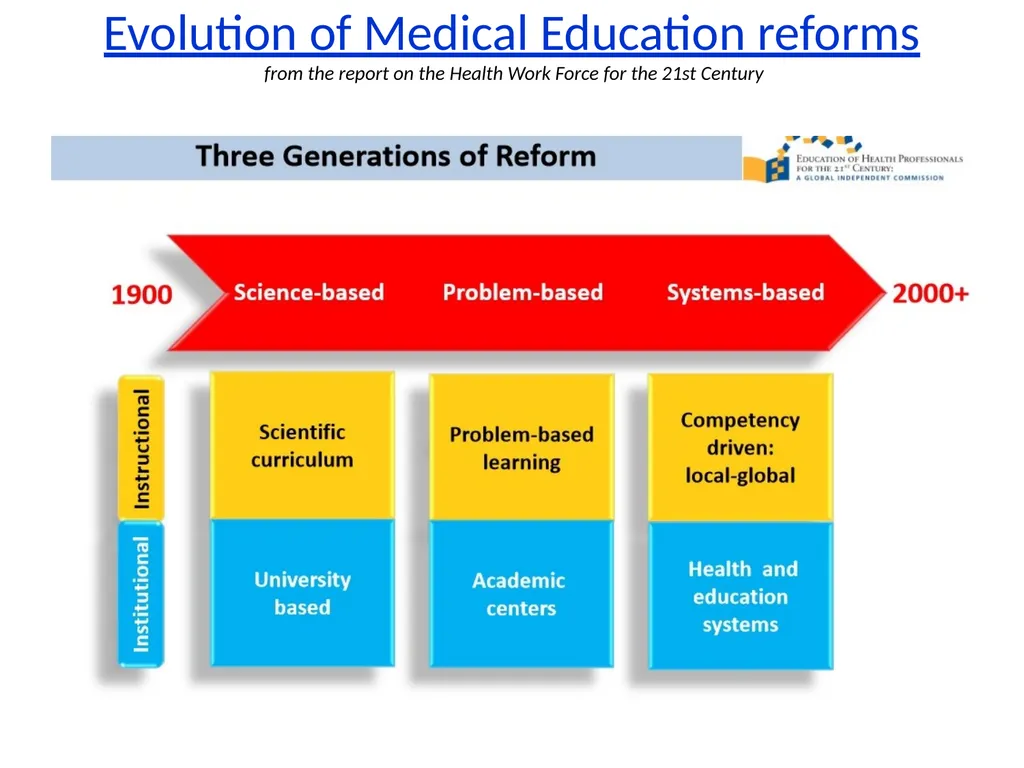
slide17. Evolution of Medical Education reforms from the report on the Health Work Force for the 21st Century<br>
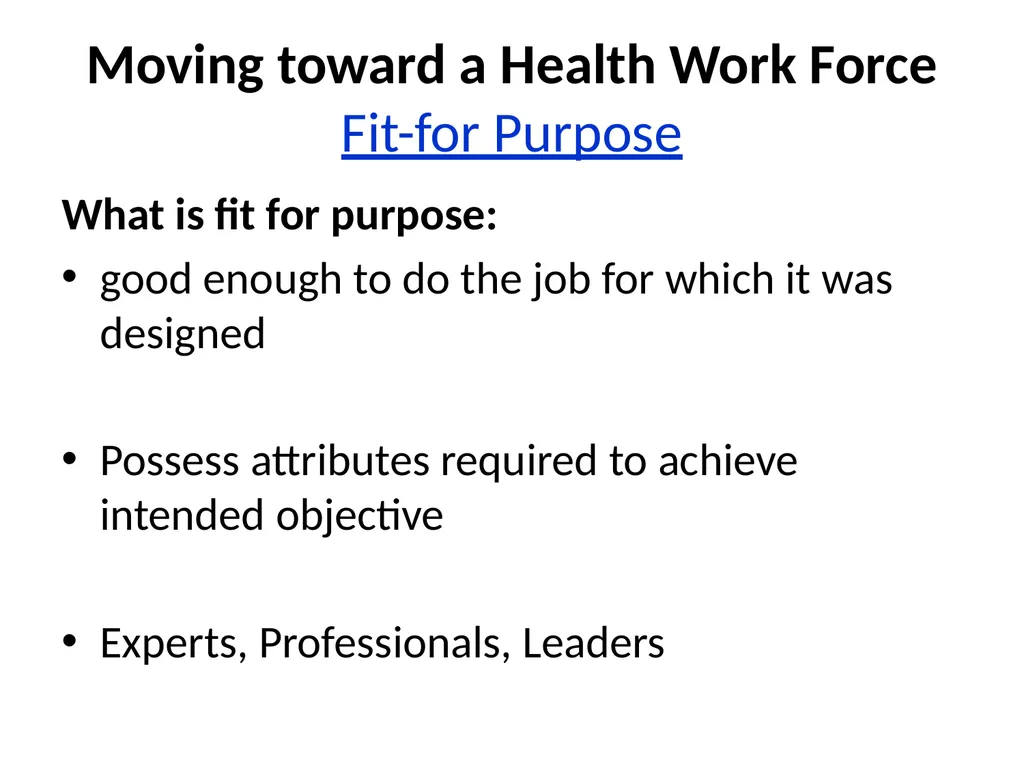
slide18. Moving toward a Health Work Force Fit-for Purpose What is fit for purpose:
good enough to do the job for which it was designed
Possess attributes required to achieve intended objective
Experts, Professionals, Leaders<br>
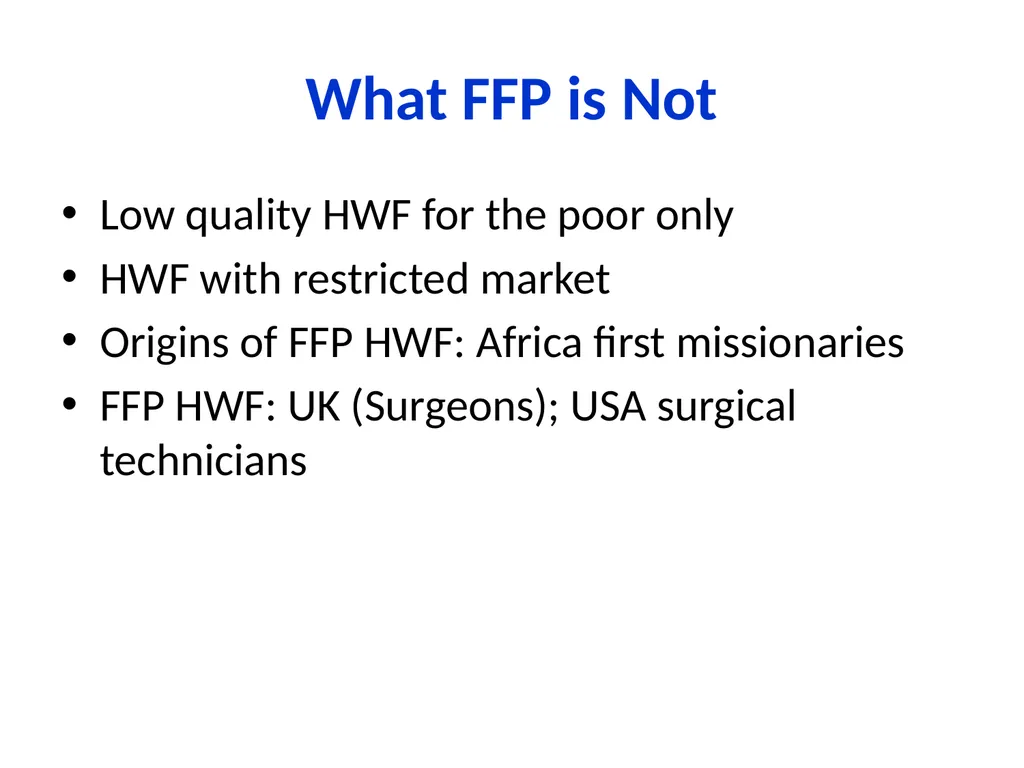
slide19. What FFP is Not Low quality HWF for the poor only
HWF with restricted market
Origins of FFP HWF: Africa first missionaries
FFP HWF: UK (Surgeons); USA surgical technicians<br>
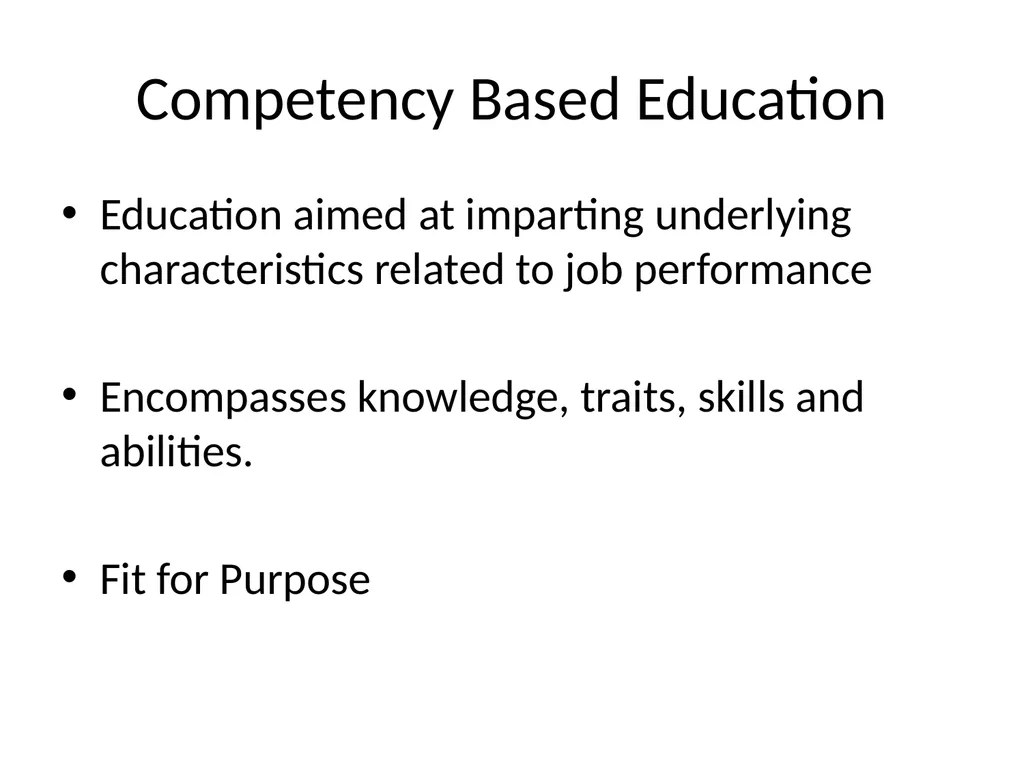
slide20. Competency Based Education Education aimed at imparting underlying characteristics related to job performance
Encompasses knowledge, traits, skills and abilities.
Fit for Purpose<br>
slide21. Required Competencies Prepared to work where services are most needed.
Able to respond to health needs of community.
Able to deliver quality care with available (limited) resources.
Able to be leaders and change agents
Continuous self directed learners
Effective communicators<br>
slide22. Achieving Competencies Selection process for candidates
Right attitudes, belong to community (underserved areas)
Training in real life practice environment
Mentorship
Team Based Learning
Strong linkages with communities<br>
slide23. 23 Kampala Declaration and Agenda for Global Action Key elements:
Building coherent national and global leadership for health workforce solutions
Ensuring capacity for an informed response based on evidence and joint learning
Scaling up health worker education and training with needs based skill mix
Retaining an effective, responsive and equitably distributed health workforce
Managing the pressures of the international health workforce market and its impact on migration
Securing additional and more productive investment in the health workforce<br>
slide24. Implications for Countries Prioritize Education and Training of HWF
Link with National Development Plans
Plan long term, act short and review frequently
Link E &T to Population health needs & health systems
Create Country Multi-stakeholder Alliances (CCF)
Establish HWF Information Systems (Observatories)<br>
Executive Director of the Platform on Human Resources for Health at the
African Centre for Global Health and Social Transformation (ACHEST)<br>
slide2. Presentation Outline PHC experience & the emerging concerns with Inequality in health outcomes
The case for new direction & HRH Challenges
Need for New thinking and effort
Competency Based Education
Way forward<br>
slide3. From WHR 2008 - PHC Now More than Ever<br>
slide4. UHC – the means to manage Concerns with INEQUALITIES The world health report 2008 identified as one the four broad policy directions for renewal of primary health care the need to Deal with HEALTH INEQUALITIES by moving towards UNIVERSAL COVERAGE in three aspects at the very minimum:
Extend of health-care networks (INFRASTRUCTURE) to where they are not available;
Implications for reform of HRH policies
Implications for Health Infrastructure
Implications for essential medical products, commodities and a supply chain
Shift from reliance on user fees levied on the sick to the solidarity and protection provided by pooling and prepayment;
Implications for reform of Health Financing Mechanisms
Develop of mechanisms of social health protection.
Implications for Governance to contribute to cross-sectoral development of policy for Social Security (?pensions / terminal benefits for employees as well as child and unemployment support for indigents).<br>
slide5. Human Resources for Health require Reform (WHR 2000)<br>
slide6. Why New Directions? Global shortage: 4.3m,African shortage 1m.
Globalized connected world with inequities
Tensions: Health Professionals vs Population expectations: vocation or jobs, distribution, commercialization, working environment
Changing scope of practice; unmet skills needs: Nurse Practitioners, Task Shifting, Needs based training etc<br>
slide7. Education: Critical Solution Underlying global HWF crisis is failure to train and retain enough
Education Institutions are factories: good factory = good product; bad factory = bad product
Sub Saharan African Medical Schools Study: faculty shortages, infrastructure, private sector<br>
slide8. Environment in Africa Large population
Limited resources
Human Resource shortages
Big Disease burden Population Physician workforce Disease Burden www.worldmappers.org<br>
slide10. HS definition<br>
slide11. 11 Household & community Sub-district level District level Regional
referral Nat'l
referral African HWF spectrum Super-specialists
Specialists
Mid-level
CHWs SHARED Contributing factors:
Good governance, law and order
Gender
Social justice
Social and economic development General Practitioners<br>
slide12. AU Health Strategy & WHO Road Map Focus not only on numbers but on skill mix and quality Determine the categories of professional, auxiliary (mid-level) and community health workers that will provide an appropriate human resource mix for their needs.
Develop costed national human resources development and deployment plans, including revised packages and incentives, especially for working in disadvantaged areas.
Fund the establishment of the training capacity required to produce the desired number of health workers.
Build multi-purpose trained staff as the nucleus of health care delivery.<br>
slide13. 13 Scale-up framework GOAL: HEALTH OUTCOMES Integrated Health Service Delivery Networks PRIORITIZED SKILL MIX "CLOSE-TO-CLIENT HEALTH TEAMS"
Defined within country context EXISTING CAPACITY DEVELOPMENT OF NEW CAPACITIES INDICATOR:
MDGs<br>
slide14. Critical success factors for scaling up Study of GHWA Task Force on Education and Training
9 country experiences across regions
Critical factors identified:
Political commitment and good governance
Sustained high level support, 'one' country-led health plan, significant financial investment
Enabling environment
Multi-sector participation, Good information systems, effective management and leadership, labour market capacity and policy
Workforce planning
Plan long term, act short-term and update regularly, commitment to production / appropriate skill mix integrated teams, needs based, expansion of pre-service programmes<br>
slide15. New directions Needs Based Education Competency/Outcome Based Education<br>
slide16. Key issues with the Health Work Force to meet needs Mismatch of competencies to needs
Weak teamwork
Gender stratification
Hospital dominance over primary care
Labour market imbalances
Weak leadership for health system performance
Summarized from the report on the Health Work Force for the 21st Century<br>
slide17. Evolution of Medical Education reforms from the report on the Health Work Force for the 21st Century<br>
slide18. Moving toward a Health Work Force Fit-for Purpose What is fit for purpose:
good enough to do the job for which it was designed
Possess attributes required to achieve intended objective
Experts, Professionals, Leaders<br>
slide19. What FFP is Not Low quality HWF for the poor only
HWF with restricted market
Origins of FFP HWF: Africa first missionaries
FFP HWF: UK (Surgeons); USA surgical technicians<br>
slide20. Competency Based Education Education aimed at imparting underlying characteristics related to job performance
Encompasses knowledge, traits, skills and abilities.
Fit for Purpose<br>
slide21. Required Competencies Prepared to work where services are most needed.
Able to respond to health needs of community.
Able to deliver quality care with available (limited) resources.
Able to be leaders and change agents
Continuous self directed learners
Effective communicators<br>
slide22. Achieving Competencies Selection process for candidates
Right attitudes, belong to community (underserved areas)
Training in real life practice environment
Mentorship
Team Based Learning
Strong linkages with communities<br>
slide23. 23 Kampala Declaration and Agenda for Global Action Key elements:
Building coherent national and global leadership for health workforce solutions
Ensuring capacity for an informed response based on evidence and joint learning
Scaling up health worker education and training with needs based skill mix
Retaining an effective, responsive and equitably distributed health workforce
Managing the pressures of the international health workforce market and its impact on migration
Securing additional and more productive investment in the health workforce<br>
slide24. Implications for Countries Prioritize Education and Training of HWF
Link with National Development Plans
Plan long term, act short and review frequently
Link E &T to Population health needs & health systems
Create Country Multi-stakeholder Alliances (CCF)
Establish HWF Information Systems (Observatories)<br>