
Relationships at Monmouth Comprehensive School



Description: Relationships at Monmouth Comprehensive School Reflections on our culture and ethos to learning and relationships, in order to make a difference. 4 years within SLT - New to role as Assistant Headteacher responsible for Wellbeing 2018-19.
Related Topics
Download Presentation
"Relationships at Monmouth Comprehensive School" is the property of its rightful owner. Permission is granted to download and print the materials on this website for personal, non-commercial use only, and to display it on your personal computer provided you do not modify the materials and that you retain all copyright notices contained in the materials. By downloading content from our website, you accept the terms of this agreement.
Presentation Transcript
slide1. Relationships at Monmouth Comprehensive School Reflections on our culture and ethos to learning and relationships, in order to make a difference.<br>
slide2. 4 years within SLT - New to role as Assistant Headteacher responsible for Wellbeing 2018-19. 20 Years within the Pastoral System – different systems; moral compass? Integral member of core staff that have fostered and developed curiosity around learning behaviours and wellbeing over 16yr period<br>
slide3. Philosophy Holding to your shared beliefs, principles and values.
Knowing what works and seeing it through. (Resilience and Determination).
Explore, experiment and be open to ideas and views.
Model it every day and in every way – be the Sun not the Wind.<br>
slide4. Fostering a culture and ethos of well-being and respect for all that allows learners to be safe, healthy and secure. Providing an inclusive curriculum that interests and enthuses learners so that all can achieve. Culture<br>
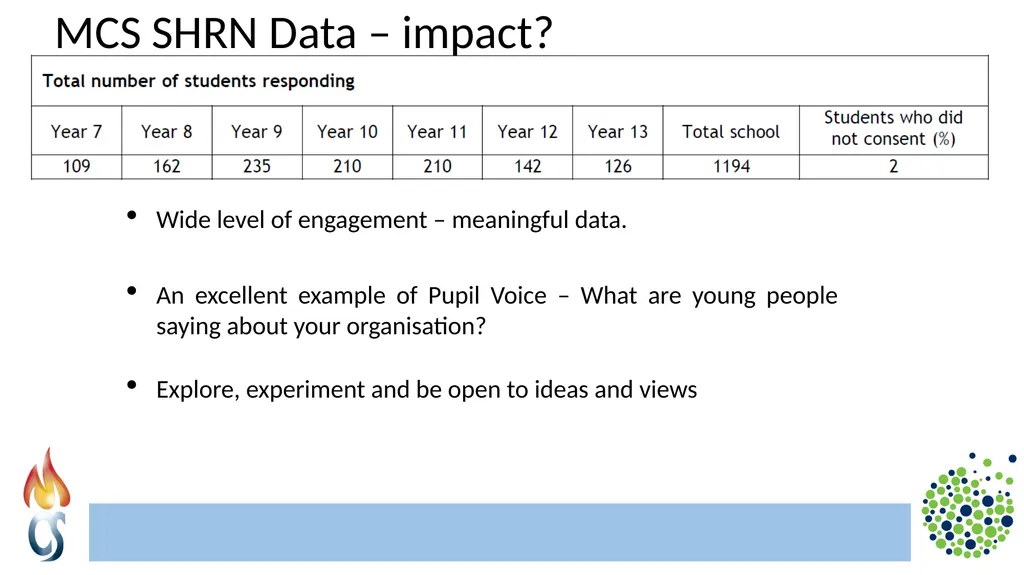
slide5. Wide level of engagement – meaningful data. Explore, experiment and be open to ideas and views An excellent example of Pupil Voice – What are young people saying about your organisation? MCS SHRN Data – impact?<br>
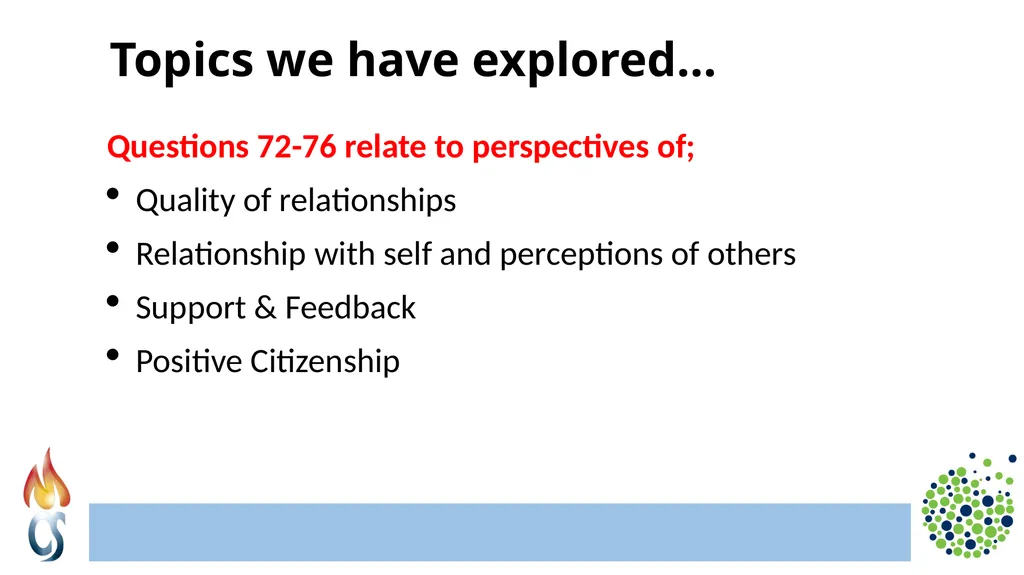
slide6. Topics we have explored… Questions 72-76 relate to perspectives of;
Quality of relationships
Relationship with self and perceptions of others
Support & Feedback
Positive Citizenship<br>
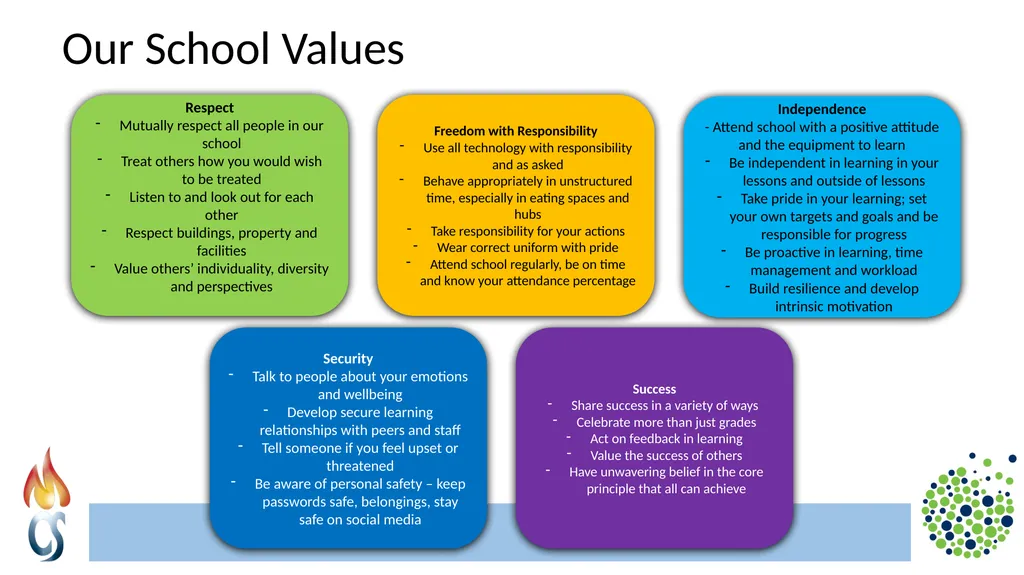
slide7. Our School Values Respect
Mutually respect all people in our school
Treat others how you would wish to be treated
Listen to and look out for each other
Respect buildings, property and facilities
Value others’ individuality, diversity and perspectives Independence
- Attend school with a positive attitude and the equipment to learn
Be independent in learning in your lessons and outside of lessons
Take pride in your learning; set your own targets and goals and be responsible for progress
Be proactive in learning, time management and workload
Build resilience and develop intrinsic motivation Freedom with Responsibility
Use all technology with responsibility and as asked
Behave appropriately in unstructured time, especially in eating spaces and hubs
Take responsibility for your actions
Wear correct uniform with pride
Attend school regularly, be on time and know your attendance percentage Security
Talk to people about your emotions and wellbeing
Develop secure learning relationships with peers and staff
Tell someone if you feel upset or threatened
Be aware of personal safety – keep passwords safe, belongings, stay safe on social media Success
Share success in a variety of ways
Celebrate more than just grades
Act on feedback in learning
Value the success of others
Have unwavering belief in the core principle that all can achieve<br>
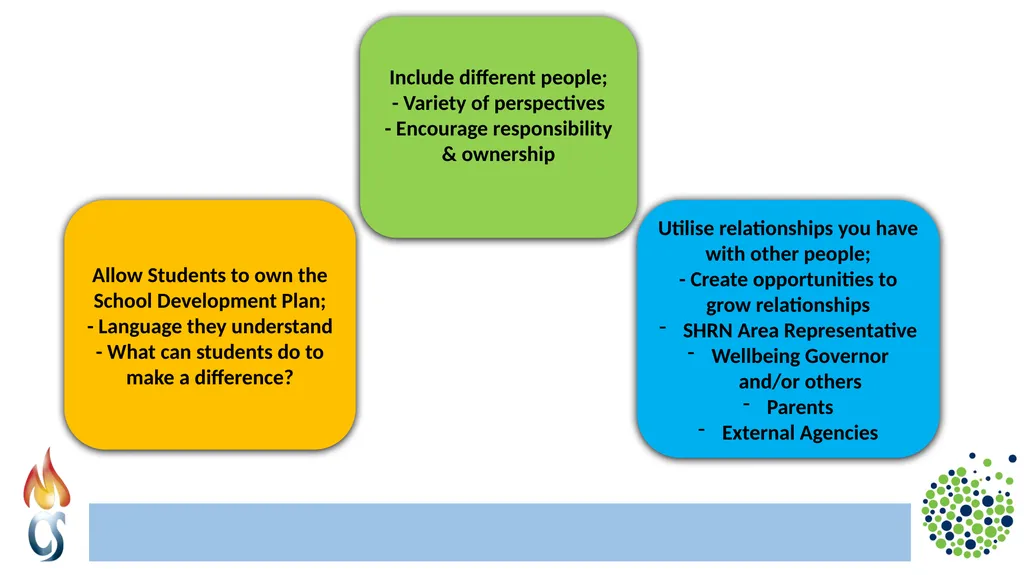
slide8. Include different people;
- Variety of perspectives
- Encourage responsibility & ownership Allow Students to own the School Development Plan;
- Language they understand
- What can students do to make a difference? Utilise relationships you have with other people;
- Create opportunities to grow relationships
SHRN Area Representative
Wellbeing Governor and/or others
Parents
External Agencies<br>
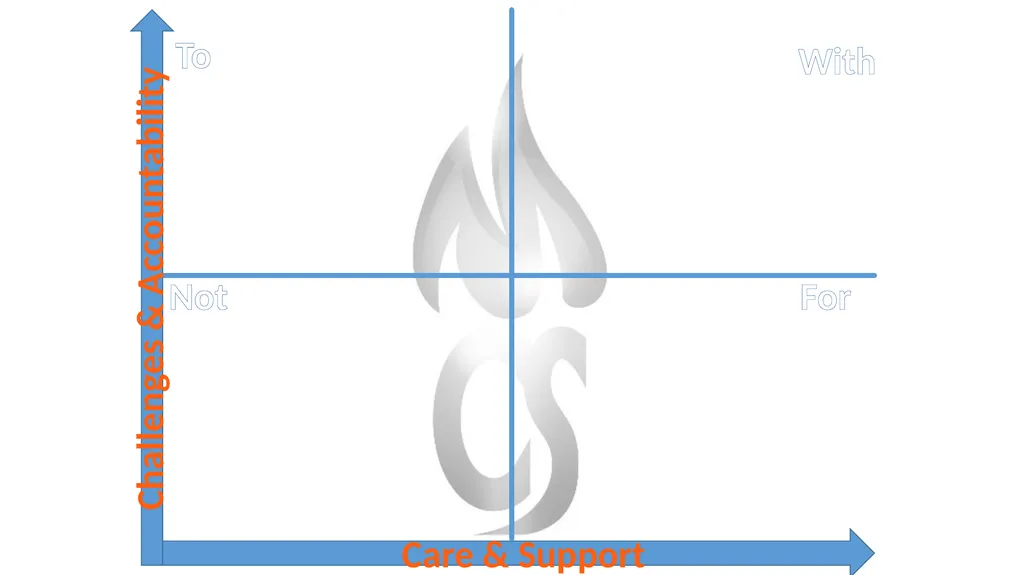
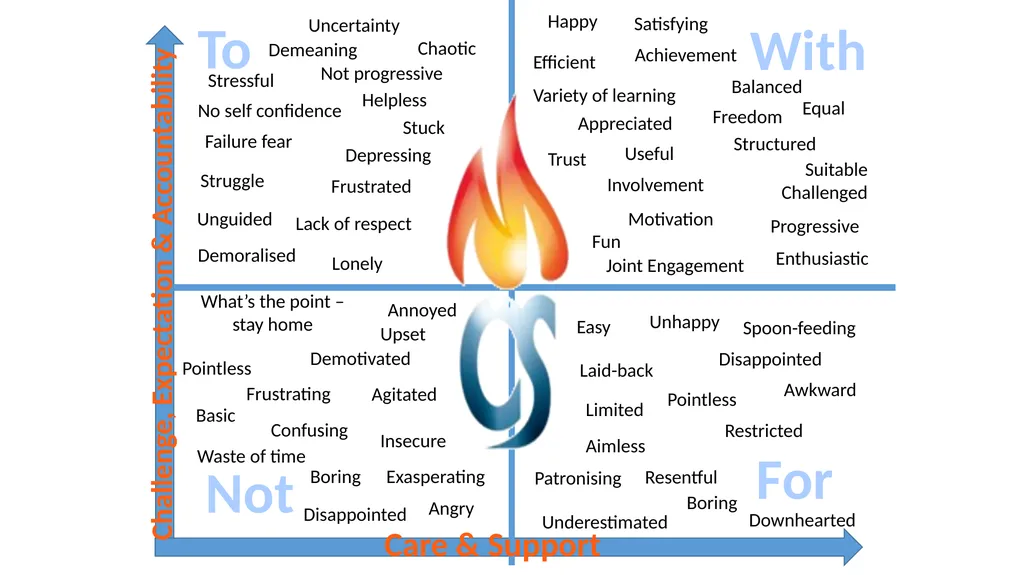
slide9. Care & Support To With Not For Challenges & Accountability<br>
slide10. Challenge, Expectation & Accountability Care & Support To With Not For Demeaning No self confidence Helpless Depressing Variety of learning Freedom Trust Motivation Angry Upset Confusing Agitated Easy Spoon-feeding Laid-back Aimless Pointless Patronising Restricted Boring Limited Resentful Disappointed Underestimated Downhearted Unhappy Disappointed Pointless Boring Insecure Annoyed Waste of time Demotivated Basic Unguided Frustrated Lonely Struggle Stuck Demoralised Stressful Happy Useful Joint Engagement Progressive Involvement Fun Structured Balanced Appreciated Equal Enthusiastic Suitable Challenged Lack of respect Exasperating What’s the point – stay home Frustrating Not progressive Chaotic Satisfying Failure fear Achievement Efficient Awkward Uncertainty<br>
slide11. Be consistent in language and actions – security, safety, rigour Build a sense of self-worth and being valued for all – listen and be heard. Every opportunity to celebrate in different ways the lives of students and staff- build capacity in all. Communicate regularly and without hesitancy the ambition, pride and passion of the school – empathy and optimism<br>
slide12. Everyone has a unique perspective and the right to have their voice heard.
Thoughts are linked to feelings and feelings to actions.
Our actions have an impact on others.
These actions are linked to our needs, or, more often than not, our unmet needs.
Young people need to be supported to take responsibility for their actions and plan the best way forward. Basic principles of Relational Practice<br>
slide2. 4 years within SLT - New to role as Assistant Headteacher responsible for Wellbeing 2018-19. 20 Years within the Pastoral System – different systems; moral compass? Integral member of core staff that have fostered and developed curiosity around learning behaviours and wellbeing over 16yr period<br>
slide3. Philosophy Holding to your shared beliefs, principles and values.
Knowing what works and seeing it through. (Resilience and Determination).
Explore, experiment and be open to ideas and views.
Model it every day and in every way – be the Sun not the Wind.<br>
slide4. Fostering a culture and ethos of well-being and respect for all that allows learners to be safe, healthy and secure. Providing an inclusive curriculum that interests and enthuses learners so that all can achieve. Culture<br>
slide5. Wide level of engagement – meaningful data. Explore, experiment and be open to ideas and views An excellent example of Pupil Voice – What are young people saying about your organisation? MCS SHRN Data – impact?<br>
slide6. Topics we have explored… Questions 72-76 relate to perspectives of;
Quality of relationships
Relationship with self and perceptions of others
Support & Feedback
Positive Citizenship<br>
slide7. Our School Values Respect
Mutually respect all people in our school
Treat others how you would wish to be treated
Listen to and look out for each other
Respect buildings, property and facilities
Value others’ individuality, diversity and perspectives Independence
- Attend school with a positive attitude and the equipment to learn
Be independent in learning in your lessons and outside of lessons
Take pride in your learning; set your own targets and goals and be responsible for progress
Be proactive in learning, time management and workload
Build resilience and develop intrinsic motivation Freedom with Responsibility
Use all technology with responsibility and as asked
Behave appropriately in unstructured time, especially in eating spaces and hubs
Take responsibility for your actions
Wear correct uniform with pride
Attend school regularly, be on time and know your attendance percentage Security
Talk to people about your emotions and wellbeing
Develop secure learning relationships with peers and staff
Tell someone if you feel upset or threatened
Be aware of personal safety – keep passwords safe, belongings, stay safe on social media Success
Share success in a variety of ways
Celebrate more than just grades
Act on feedback in learning
Value the success of others
Have unwavering belief in the core principle that all can achieve<br>
slide8. Include different people;
- Variety of perspectives
- Encourage responsibility & ownership Allow Students to own the School Development Plan;
- Language they understand
- What can students do to make a difference? Utilise relationships you have with other people;
- Create opportunities to grow relationships
SHRN Area Representative
Wellbeing Governor and/or others
Parents
External Agencies<br>
slide9. Care & Support To With Not For Challenges & Accountability<br>
slide10. Challenge, Expectation & Accountability Care & Support To With Not For Demeaning No self confidence Helpless Depressing Variety of learning Freedom Trust Motivation Angry Upset Confusing Agitated Easy Spoon-feeding Laid-back Aimless Pointless Patronising Restricted Boring Limited Resentful Disappointed Underestimated Downhearted Unhappy Disappointed Pointless Boring Insecure Annoyed Waste of time Demotivated Basic Unguided Frustrated Lonely Struggle Stuck Demoralised Stressful Happy Useful Joint Engagement Progressive Involvement Fun Structured Balanced Appreciated Equal Enthusiastic Suitable Challenged Lack of respect Exasperating What’s the point – stay home Frustrating Not progressive Chaotic Satisfying Failure fear Achievement Efficient Awkward Uncertainty<br>
slide11. Be consistent in language and actions – security, safety, rigour Build a sense of self-worth and being valued for all – listen and be heard. Every opportunity to celebrate in different ways the lives of students and staff- build capacity in all. Communicate regularly and without hesitancy the ambition, pride and passion of the school – empathy and optimism<br>
slide12. Everyone has a unique perspective and the right to have their voice heard.
Thoughts are linked to feelings and feelings to actions.
Our actions have an impact on others.
These actions are linked to our needs, or, more often than not, our unmet needs.
Young people need to be supported to take responsibility for their actions and plan the best way forward. Basic principles of Relational Practice<br>