Relationships What is a relationship, and what are the different types of relationship? What are the characteristics, legal status and responsibilities of different types of relationship? What are the characteristics of a positive, healthy,
"Relationships What is a relationship, and what are" is the property of its rightful owner. Permission is granted to
download and print the materials on this website for personal, non-commercial use only, and to display it
on your personal computer provided you do not modify the materials and that you retain all copyright
notices contained in the materials. By downloading content from our website, you accept the terms of this
agreement.
Presentation Transcript
01
Relationships What is a relationship, and what are the different types of relationship?
What are the characteristics, legal status and responsibilities of different types of relationship?
What are the characteristics of a positive, healthy, and safe relationship?<br>
02
STARTER: What is a Relationship?
What are the different types of relationship people can have?<br>
03
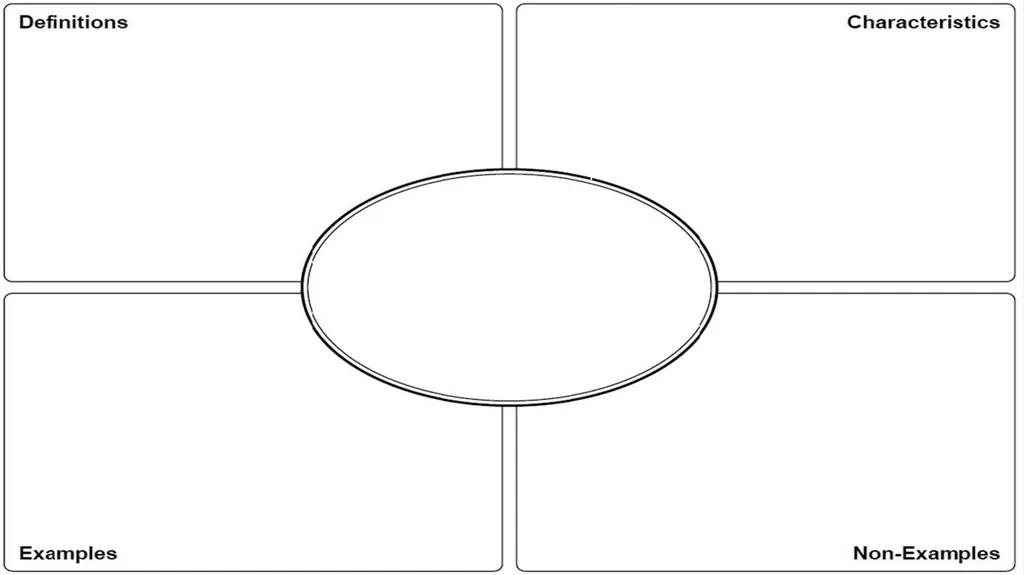
Relationship Noun
The way in which two or more people are connected
Etymology:
relation = connection, correspondence
-ship = state, condition of being Friendship
Family relationship (relative)
Parent - child relationship
Marriage
Long term relationship
Romantic relationship Involves two or more people
Interpersonal
May be biological (blood relationship)
May be intimate (romantic or sexual)
May have a legal status (i.e. marriage, parenthood) A person / individual
Strangers<br>
04
The different types of relationship Friendship –
Friends are people who we are not related to but choose to interact with. Trust, respect, support, loyalty, and the sharing of common interests and ideas are all features of a friendship. A friendship is a reciprocal relationship; for it to exist, both people must see each other as a friend.
There are varying degrees of friendship, and people may feel closer to some friends than others. As a result, there are varying boundaries regarding how much personal information it is appropriate to share, or how much physical contact is appropriate. While some friendships can be close and some friends choose to greet each other by hugging or kissing, other friendships may have no physical contact. Physically intimate or romantic contact is not appropriate in a friendship.<br>
05
Romantic Relationship –
A reciprocal relationship in which you feel strongly attracted to the other person, emotionally and physically. It may exist between a male and female (heterosexual relationship) or members of the same sex or gender (homosexual relationship).
The two people involved will often describe themselves as being attracted to each other and/or “in love”. It is usually exclusive and monogamous, and built on love, trust, respect, support, acceptance, shared interests and a desire to share a life together.
People in a romantic relationship will see each other very often and may live together. Some may choose to have children. As this is such a close relationship, various kinds of physical contact are accepted which would not be appropriate in any other kind of relationship, including sexual intercourse (which should always be mutually agreed).<br>
06
Family Relationship –
Relatives are people we are connected to through some form of kinship, whether it is through blood, marriage, adoption or other relationships.
Ideally, people should have strong, loving relationships with their relatives, although this does not always happen. As families are so close and spend so much time together, arguments and disagreements can arise, but in most families, these are short-lived and even in moments of anger or hurt, families still love and care about each other.
Family relationships are ideally life-long, and the bond with a family can play a very important role in personal wellbeing and the ability to form other kinds of relationships outside of the family unit.
In some families, there is little physical contact whereas in others, it is common for family members to express affection by means such as hugging, kissing, or other appropriate physical contact.<br>
07
Parent-Child Relationship –
The relationship between a parent and child is of special significance. Families come in many different forms, and may contain a biological mother and father, a single parent, step parents, gay or lesbian parents, adoptive parents, foster parents, or the role may be fulfilled by another older relative such as a grandparent. In all cases a parent is the caregiver and caretaker of their offspring, and legally responsible for their children until they reach adulthood.
A key role of parents is to offer guidance, support and, where needed, boundaries and discipline. As children become teenagers and then adults, it is usual for them to have more independence and for the parental relationship to become less one of guidance and more one of mutual support.
The extent to which it is acceptable for a parent to be involved in their child’s life varies. Too little involvement when the offspring is still a child could be said to show neglect, whereas too much involvement, especially as the offspring gets older, is sometimes said to be overprotective or intrusive.<br>
08
Marriage –
Marriage is a special type of romantic relationship as it involves a legal union. It can occur between a man and a woman or between a same-sex couple (in England, Wales and Scotland and, from January 2020, in Northern Ireland).
It usually involves a formal religious or public ceremony, and results in the legal status of spouse (gender neutral), husband (male) or wife (female).
As marriage is a legal union, it can be legally terminated – this is called a divorce.
Marriage must be entered into freely by both people, without duress (emotional or physical pressure). In an arranged or assisted marriage, the families take a role in choosing and introducing the marriage partners, but the marriage is entered into freely by both people. A forced marriage is a marriage conducted without the full consent of both parties and where duress is a factor. Forced marriages are illegal, and are defined as a type of domestic abuse.<br>
09
TASK: Have a think about people you know and what category that they may fall under. Use some of the words on the next slide to help you explain and describe a relationship<br>
10
TASK: Love
Respect
Kindness
Trust
Complete honesty
Clear boundaries
Emotional support
Common interests
Caregiving Equality
Reciprocation (both equally invested)
Mutual consent
Physical intimacy
Legal responsibility
Communication
Compromise
Being a role model
Individuality<br>
11
QUESTIONS: Do friends have to love each other?
Do relatives need to like each other?
Should you tell your best friends everything?
How much information is too much information?
Should your parents know everything about you?
Should parents always be honest with their children?
Can you have a romantic relationship without sex?
Can crossing certain boundaries ruin a friendship?<br>
12
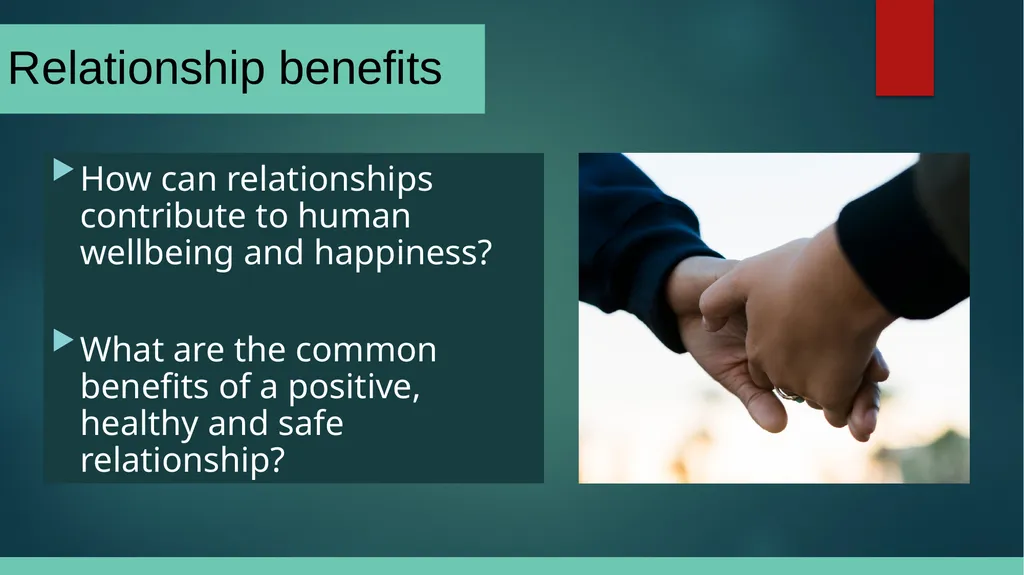
How can relationships contribute to human wellbeing and happiness?
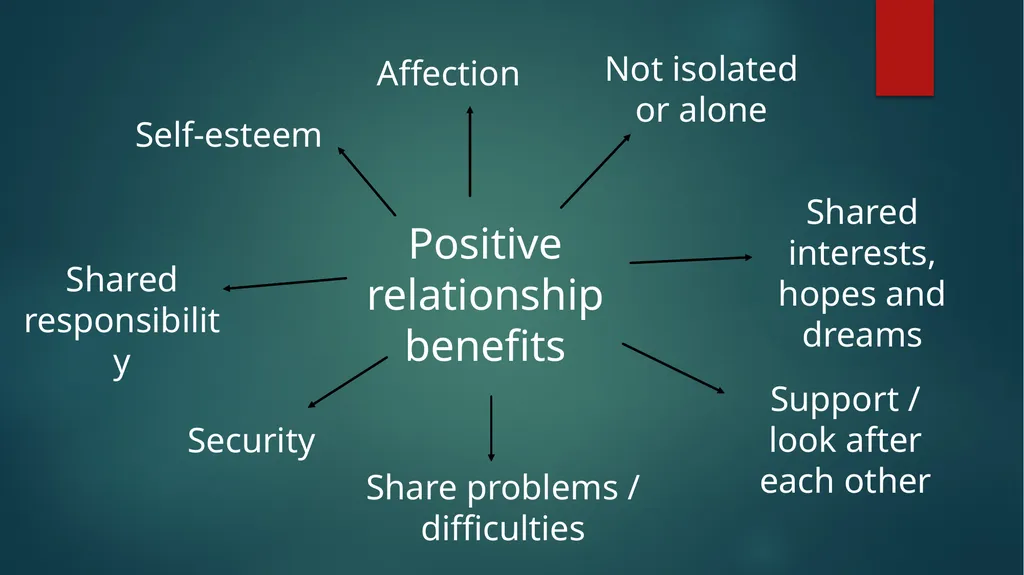
What are the common benefits of a positive, healthy and safe relationship? Relationship benefits<br>
13
Positive relationship benefits Self-esteem Not isolated or alone Shared interests, hopes and dreams Support / look after each other Shared responsibility Security Share problems / difficulties Affection<br>
14
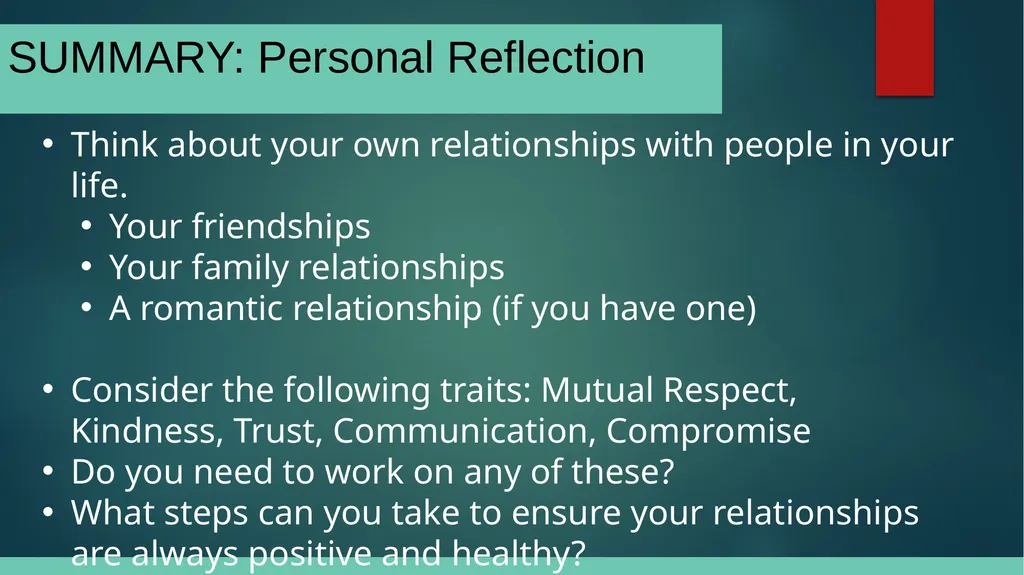
SUMMARY: Personal Reflection Think about your own relationships with people in your life.
Your friendships
Your family relationships
A romantic relationship (if you have one)
Consider the following traits: Mutual Respect, Kindness, Trust, Communication, Compromise
Do you need to work on any of these?
What steps can you take to ensure your relationships are always positive and healthy?<br>