
Report: to what extend do pandemic affect Chinese

Description: Report: to what extend do pandemic affect Chinese attitude towards nature Professor Barbara Malt EES 097 Jingying Chen Nov. 23rd, 2020 Background In December 2019, the COVID-19 started spreading through China. To stop further spread,
Related Topics
Download Presentation
"Report: to what extend do pandemic affect Chinese" is the property of its rightful owner. Permission is granted to download and print the materials on this website for personal, non-commercial use only, and to display it on your personal computer provided you do not modify the materials and that you retain all copyright notices contained in the materials. By downloading content from our website, you accept the terms of this agreement.
Presentation Transcript
slide1. Report: to what extend do pandemic affect Chinese attitude towards nature Professor Barbara Malt
EES 097
Jingying Chen
Nov. 23rd, 2020<br>
slide2. Background In December 2019, the COVID-19 started spreading through China. To stop further spread, Chinese government issued the prohibition of going outdoors in cities like Wuhan and Shanghai where the situation was severed in February, 2020. In Shanghai, one had to register in the community to get the permission of outdoor activities; the number of permission in one family was limited to one or two per day. On April 8th , the prohibition was gradually lifted finally.
However, as the coronavirus stared to rebound in November, some Chinese citizens are asked to reduce outdoor activities and dinner parties again.<br>
slide3. Aim The survey wants to find out to what extend to do Chinese attitude towards nature alter as the pandemic happens, and what may be the factors that cause the change.
The variables in the study are identity and pandemic.<br>
slide4. Language The survey was in Chinese originally because this is a study facing Chinese, and participants may not understand English. I personally translate the Chinese text into English after the collection was completed. I downloaded both the Chinese version and the English version of the survey and uploaded both in pdf. There is no intension to made the English version meaning be different from the Chinese one.
Nevertheless, because this is not an academic survey, the survey uses simple and informal words. In most questions, choices were just ‘yes,’ ‘no,’ and ‘sometimes.’<br>
slide5. Definition Nature: outdoor activities like going to a park, taking a walk on streets, doing outdoor exercise and go hiking etc..
In door entertainment: watching comics, films or televisions, novels on Internet, and playing games at home. Additionally, these activities are done by oneself or only with family members. Note that indoor exercise, studying and practicing instruments etc. are not included.
In China, the pandemic was mainly no longer a factor that influence daily life seriously since May. However, the coronavirus is still not completely over as it is still spreading all over the world; “after the pandemic” in the survey merely describes the circumstance when for most Chinese daily life is not severely affected by COVID-19.<br>
slide6. Method Publishing platform: www.wjx.cn ---- a Chinese website for making surveys
The original data is in the excel document, and is not modified to reach an ideal outcome. Through the platform, ‘one IP once’ was set to make sure each person could complete only once.
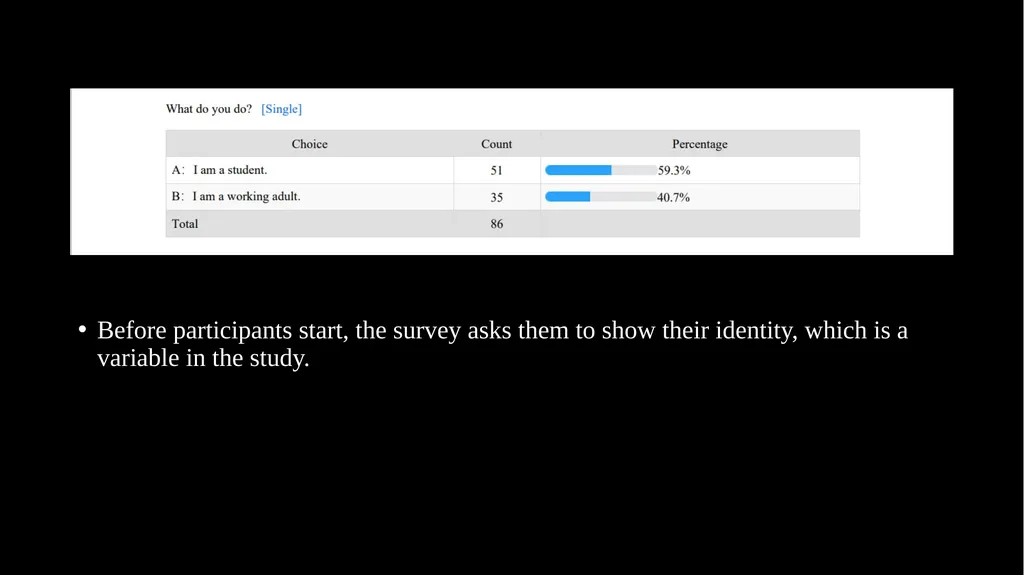
The link of the survey was published in moments in WeChat mainly, forwarded by some of the participants to reach a larger range of participants. The participants came from different provinces of China while mainly Shanghai. The total valid answer is 86.<br>
slide7. Before participants start, the survey asks them to show their identity, which is a variable in the study.<br>
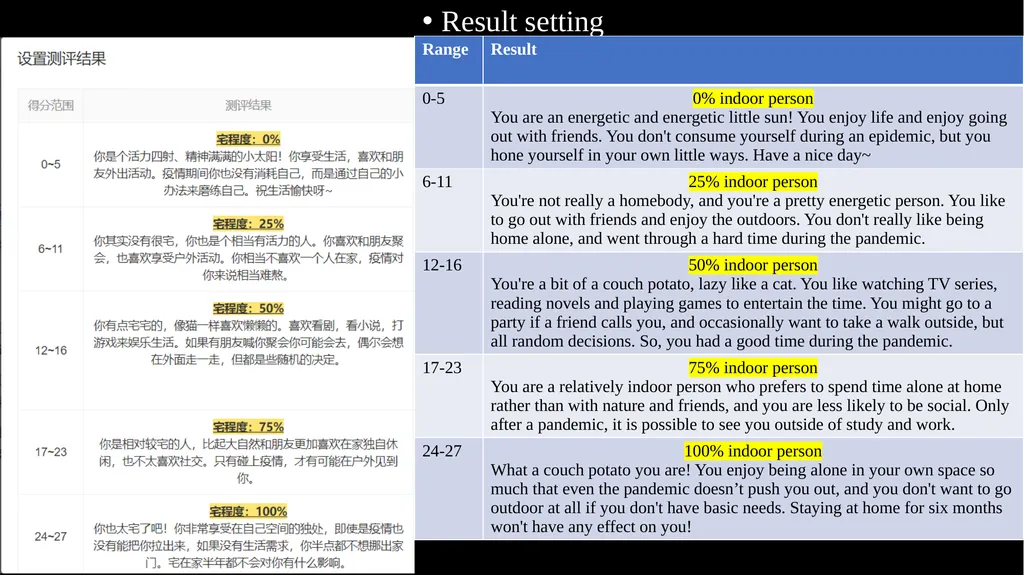
slide8. Score system As to participants, this survey was more like a test rather than a survey. I set points for different choices, so the participants can see to what extend do they prefer home (indoor) after completing. But to make it clear, the score is only a tool to motivate more participants to answer.
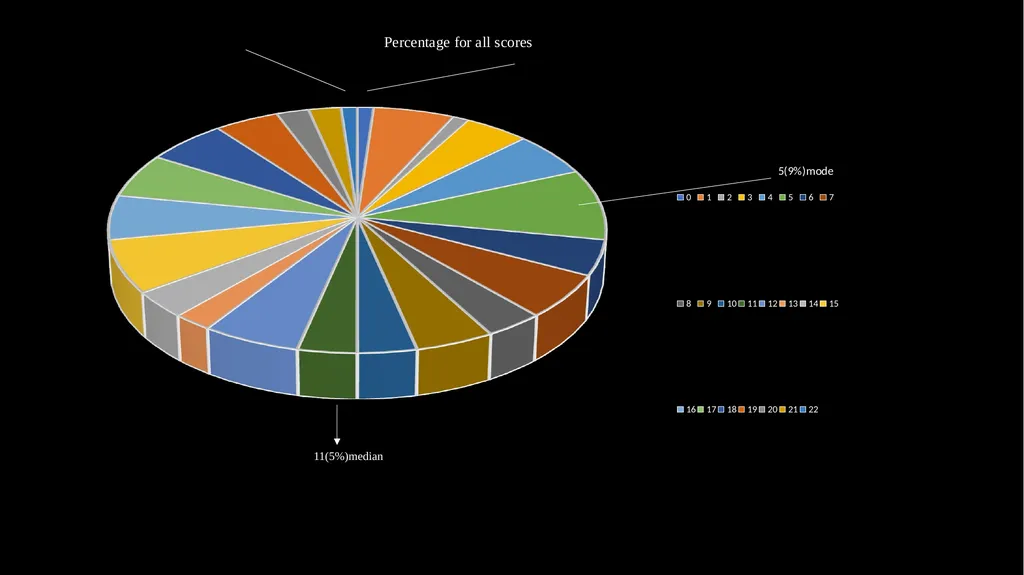
The highest score one can get on the survey is 27. And the actual highest point in this test is 22, the lowest is 0, mean is 10.63, mode is 5, median is 11. The distribution is presented in the next page, and the mechanism of the score system I set the page after next page.<br>
slide9. 11(5%)median<br>
slide10. Result setting<br>
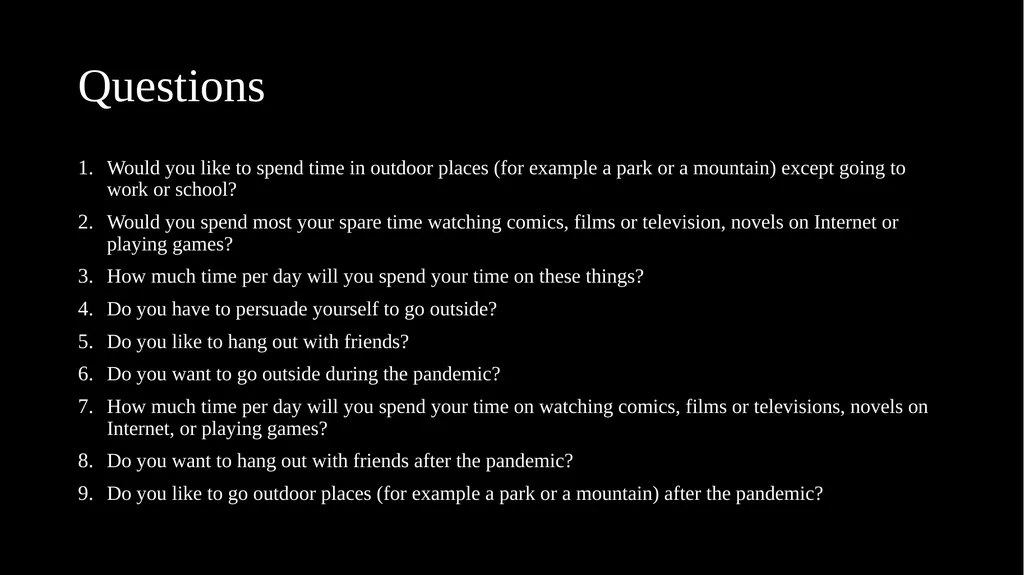
slide11. Questions Would you like to spend time in outdoor places (for example a park or a mountain) except going to work or school?
Would you spend most your spare time watching comics, films or television, novels on Internet or playing games?
How much time per day will you spend your time on these things?
Do you have to persuade yourself to go outside?
Do you like to hang out with friends?
Do you want to go outside during the pandemic?
How much time per day will you spend your time on watching comics, films or televisions, novels on Internet, or playing games?
Do you want to hang out with friends after the pandemic?
Do you like to go outdoor places (for example a park or a mountain) after the pandemic?<br>
slide12. Students VS. Adults<br>
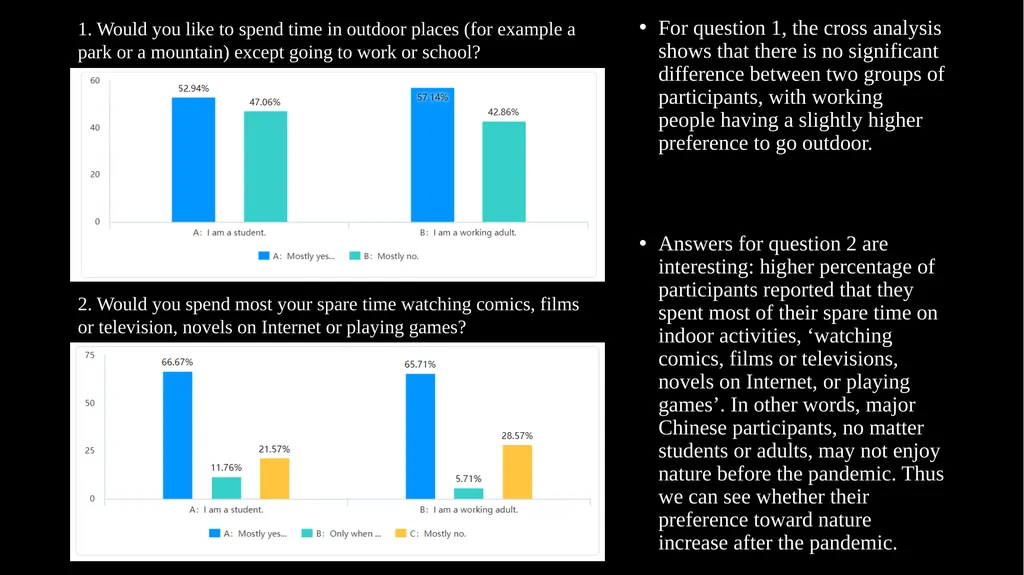
slide13. For question 1, the cross analysis shows that there is no significant difference between two groups of participants, with working people having a slightly higher preference to go outdoor.
Answers for question 2 are interesting: higher percentage of participants reported that they spent most of their spare time on indoor activities, ‘watching comics, films or televisions, novels on Internet, or playing games’. In other words, major Chinese participants, no matter students or adults, may not enjoy nature before the pandemic. Thus we can see whether their preference toward nature increase after the pandemic. 1. Would you like to spend time in outdoor places (for example a park or a mountain) except going to work or school? 2. Would you spend most your spare time watching comics, films or television, novels on Internet or playing games?<br>
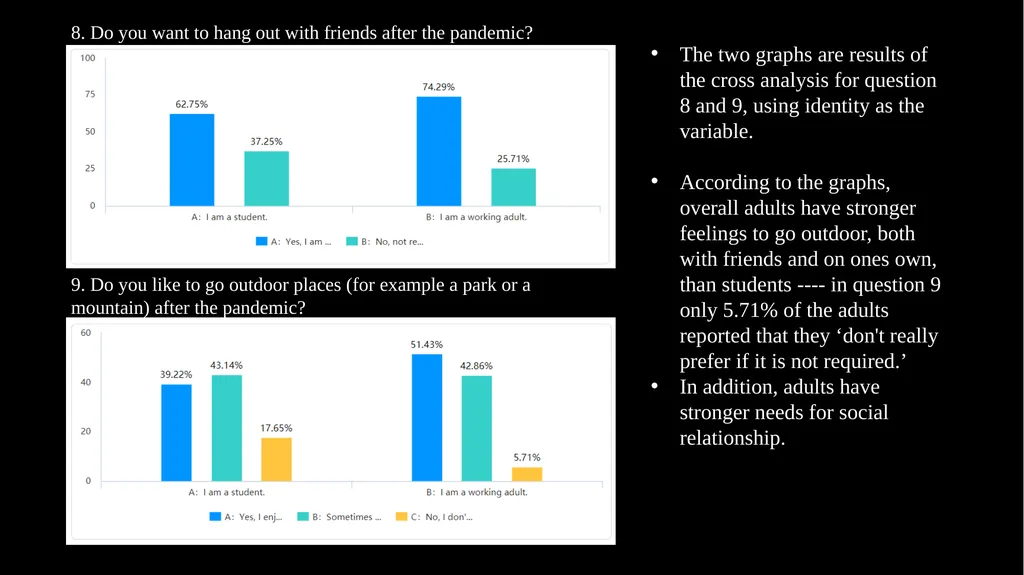
slide14. The two graphs are results of the cross analysis for question 8 and 9, using identity as the variable.
According to the graphs, overall adults have stronger feelings to go outdoor, both with friends and on ones own, than students ---- in question 9 only 5.71% of the adults reported that they ‘don't really prefer if it is not required.’
In addition, adults have stronger needs for social relationship. 8. Do you want to hang out with friends after the pandemic? 9. Do you like to go outdoor places (for example a park or a mountain) after the pandemic?<br>
slide15. Before/during VS. After the pandemic<br>
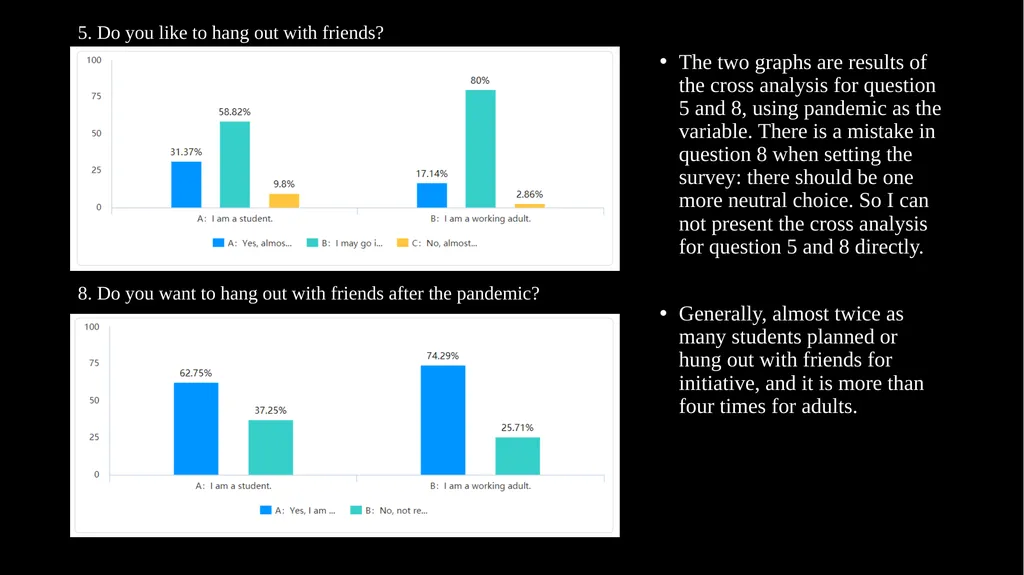
slide16. The two graphs are results of the cross analysis for question 5 and 8, using pandemic as the variable. There is a mistake in question 8 when setting the survey: there should be one more neutral choice. So I can not present the cross analysis for question 5 and 8 directly.
Generally, almost twice as many students planned or hung out with friends for initiative, and it is more than four times for adults. 5. Do you like to hang out with friends? 8. Do you want to hang out with friends after the pandemic?<br>
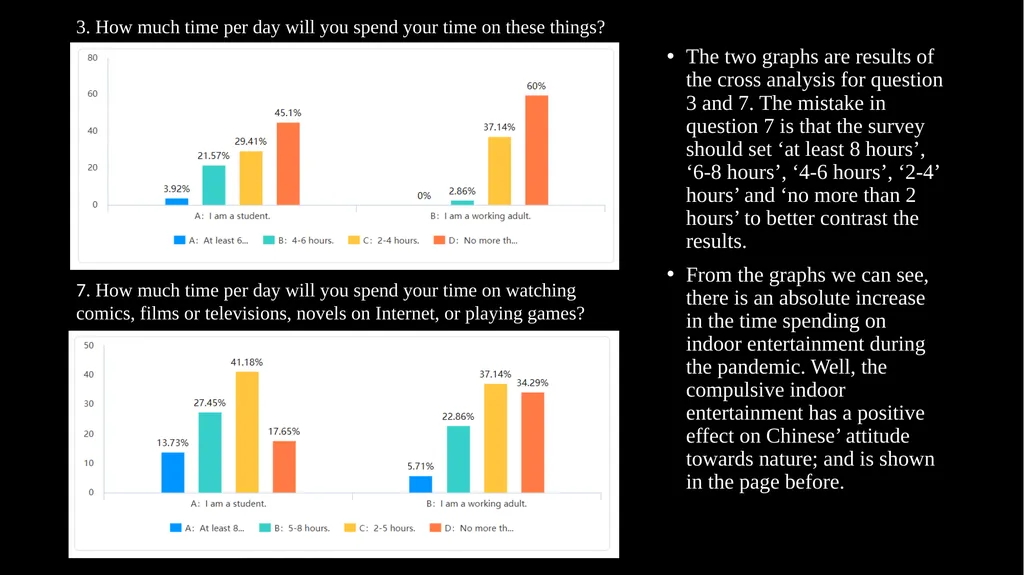
slide17. The two graphs are results of the cross analysis for question 3 and 7. The mistake in question 7 is that the survey should set ‘at least 8 hours’, ‘6-8 hours’, ‘4-6 hours’, ‘2-4’ hours’ and ‘no more than 2 hours’ to better contrast the results.
From the graphs we can see, there is an absolute increase in the time spending on indoor entertainment during the pandemic. Well, the compulsive indoor entertainment has a positive effect on Chinese’ attitude towards nature; and is shown in the page before. 3. How much time per day will you spend your time on these things? 7. How much time per day will you spend your time on watching comics, films or televisions, novels on Internet, or playing games?<br>
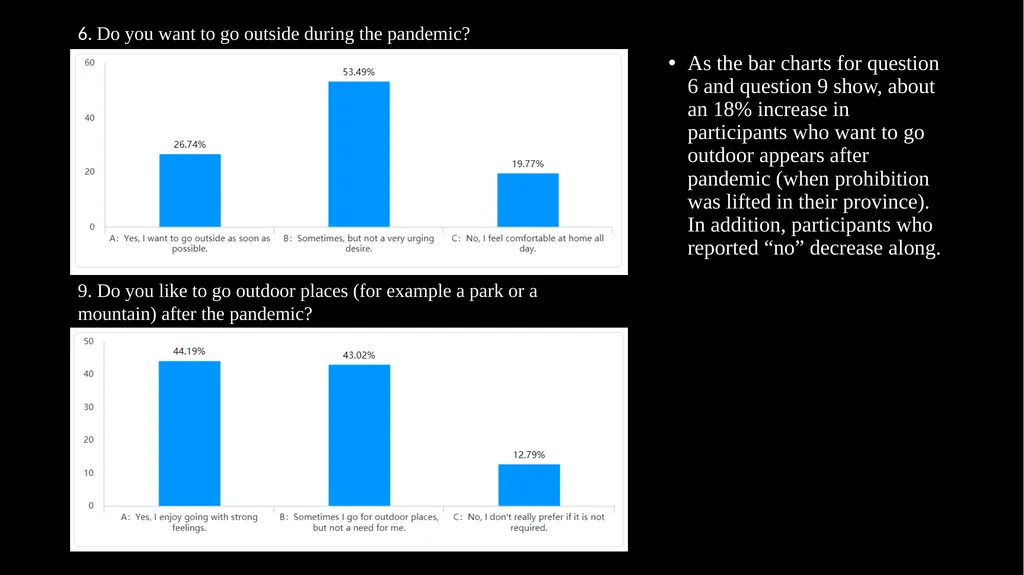
slide18. As the bar charts for question 6 and question 9 show, about an 18% increase in participants who want to go outdoor appears after pandemic (when prohibition was lifted in their province). In addition, participants who reported “no” decrease along. 6. Do you want to go outside during the pandemic? 9. Do you like to go outdoor places (for example a park or a mountain) after the pandemic?<br>
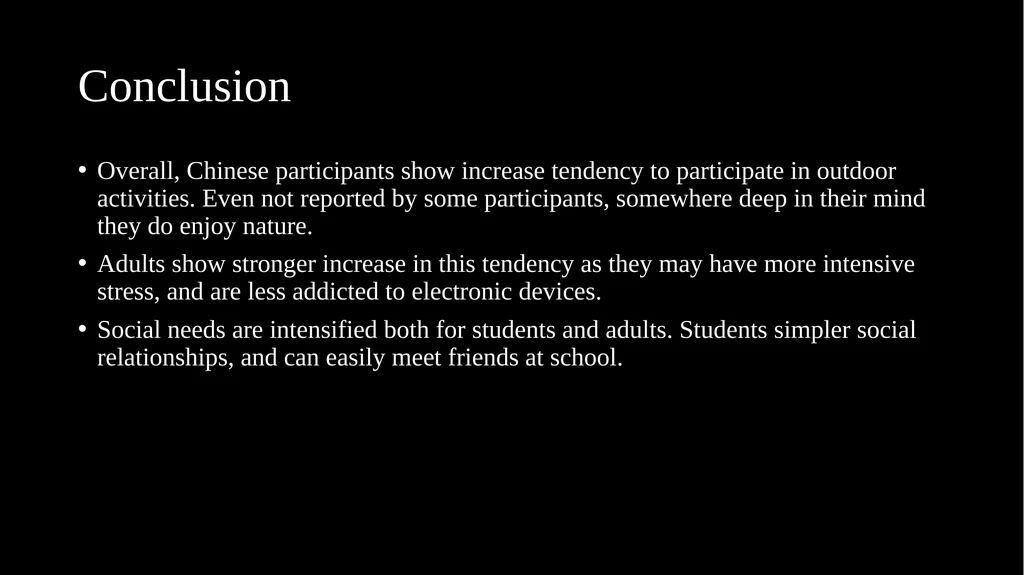
slide19. Conclusion Overall, Chinese participants show increase tendency to participate in outdoor activities. Even not reported by some participants, somewhere deep in their mind they do enjoy nature.
Adults show stronger increase in this tendency as they may have more intensive stress, and are less addicted to electronic devices.
Social needs are intensified both for students and adults. Students simpler social relationships, and can easily meet friends at school.<br>
EES 097
Jingying Chen
Nov. 23rd, 2020<br>
slide2. Background In December 2019, the COVID-19 started spreading through China. To stop further spread, Chinese government issued the prohibition of going outdoors in cities like Wuhan and Shanghai where the situation was severed in February, 2020. In Shanghai, one had to register in the community to get the permission of outdoor activities; the number of permission in one family was limited to one or two per day. On April 8th , the prohibition was gradually lifted finally.
However, as the coronavirus stared to rebound in November, some Chinese citizens are asked to reduce outdoor activities and dinner parties again.<br>
slide3. Aim The survey wants to find out to what extend to do Chinese attitude towards nature alter as the pandemic happens, and what may be the factors that cause the change.
The variables in the study are identity and pandemic.<br>
slide4. Language The survey was in Chinese originally because this is a study facing Chinese, and participants may not understand English. I personally translate the Chinese text into English after the collection was completed. I downloaded both the Chinese version and the English version of the survey and uploaded both in pdf. There is no intension to made the English version meaning be different from the Chinese one.
Nevertheless, because this is not an academic survey, the survey uses simple and informal words. In most questions, choices were just ‘yes,’ ‘no,’ and ‘sometimes.’<br>
slide5. Definition Nature: outdoor activities like going to a park, taking a walk on streets, doing outdoor exercise and go hiking etc..
In door entertainment: watching comics, films or televisions, novels on Internet, and playing games at home. Additionally, these activities are done by oneself or only with family members. Note that indoor exercise, studying and practicing instruments etc. are not included.
In China, the pandemic was mainly no longer a factor that influence daily life seriously since May. However, the coronavirus is still not completely over as it is still spreading all over the world; “after the pandemic” in the survey merely describes the circumstance when for most Chinese daily life is not severely affected by COVID-19.<br>
slide6. Method Publishing platform: www.wjx.cn ---- a Chinese website for making surveys
The original data is in the excel document, and is not modified to reach an ideal outcome. Through the platform, ‘one IP once’ was set to make sure each person could complete only once.
The link of the survey was published in moments in WeChat mainly, forwarded by some of the participants to reach a larger range of participants. The participants came from different provinces of China while mainly Shanghai. The total valid answer is 86.<br>
slide7. Before participants start, the survey asks them to show their identity, which is a variable in the study.<br>
slide8. Score system As to participants, this survey was more like a test rather than a survey. I set points for different choices, so the participants can see to what extend do they prefer home (indoor) after completing. But to make it clear, the score is only a tool to motivate more participants to answer.
The highest score one can get on the survey is 27. And the actual highest point in this test is 22, the lowest is 0, mean is 10.63, mode is 5, median is 11. The distribution is presented in the next page, and the mechanism of the score system I set the page after next page.<br>
slide9. 11(5%)median<br>
slide10. Result setting<br>
slide11. Questions Would you like to spend time in outdoor places (for example a park or a mountain) except going to work or school?
Would you spend most your spare time watching comics, films or television, novels on Internet or playing games?
How much time per day will you spend your time on these things?
Do you have to persuade yourself to go outside?
Do you like to hang out with friends?
Do you want to go outside during the pandemic?
How much time per day will you spend your time on watching comics, films or televisions, novels on Internet, or playing games?
Do you want to hang out with friends after the pandemic?
Do you like to go outdoor places (for example a park or a mountain) after the pandemic?<br>
slide12. Students VS. Adults<br>
slide13. For question 1, the cross analysis shows that there is no significant difference between two groups of participants, with working people having a slightly higher preference to go outdoor.
Answers for question 2 are interesting: higher percentage of participants reported that they spent most of their spare time on indoor activities, ‘watching comics, films or televisions, novels on Internet, or playing games’. In other words, major Chinese participants, no matter students or adults, may not enjoy nature before the pandemic. Thus we can see whether their preference toward nature increase after the pandemic. 1. Would you like to spend time in outdoor places (for example a park or a mountain) except going to work or school? 2. Would you spend most your spare time watching comics, films or television, novels on Internet or playing games?<br>
slide14. The two graphs are results of the cross analysis for question 8 and 9, using identity as the variable.
According to the graphs, overall adults have stronger feelings to go outdoor, both with friends and on ones own, than students ---- in question 9 only 5.71% of the adults reported that they ‘don't really prefer if it is not required.’
In addition, adults have stronger needs for social relationship. 8. Do you want to hang out with friends after the pandemic? 9. Do you like to go outdoor places (for example a park or a mountain) after the pandemic?<br>
slide15. Before/during VS. After the pandemic<br>
slide16. The two graphs are results of the cross analysis for question 5 and 8, using pandemic as the variable. There is a mistake in question 8 when setting the survey: there should be one more neutral choice. So I can not present the cross analysis for question 5 and 8 directly.
Generally, almost twice as many students planned or hung out with friends for initiative, and it is more than four times for adults. 5. Do you like to hang out with friends? 8. Do you want to hang out with friends after the pandemic?<br>
slide17. The two graphs are results of the cross analysis for question 3 and 7. The mistake in question 7 is that the survey should set ‘at least 8 hours’, ‘6-8 hours’, ‘4-6 hours’, ‘2-4’ hours’ and ‘no more than 2 hours’ to better contrast the results.
From the graphs we can see, there is an absolute increase in the time spending on indoor entertainment during the pandemic. Well, the compulsive indoor entertainment has a positive effect on Chinese’ attitude towards nature; and is shown in the page before. 3. How much time per day will you spend your time on these things? 7. How much time per day will you spend your time on watching comics, films or televisions, novels on Internet, or playing games?<br>
slide18. As the bar charts for question 6 and question 9 show, about an 18% increase in participants who want to go outdoor appears after pandemic (when prohibition was lifted in their province). In addition, participants who reported “no” decrease along. 6. Do you want to go outside during the pandemic? 9. Do you like to go outdoor places (for example a park or a mountain) after the pandemic?<br>
slide19. Conclusion Overall, Chinese participants show increase tendency to participate in outdoor activities. Even not reported by some participants, somewhere deep in their mind they do enjoy nature.
Adults show stronger increase in this tendency as they may have more intensive stress, and are less addicted to electronic devices.
Social needs are intensified both for students and adults. Students simpler social relationships, and can easily meet friends at school.<br>