
RF SAFE • FLAGSHIP EVIDENCE + POLICY DECK • AUGUST
BR
Published · 43 slides · 0 views
1 / 1
Description
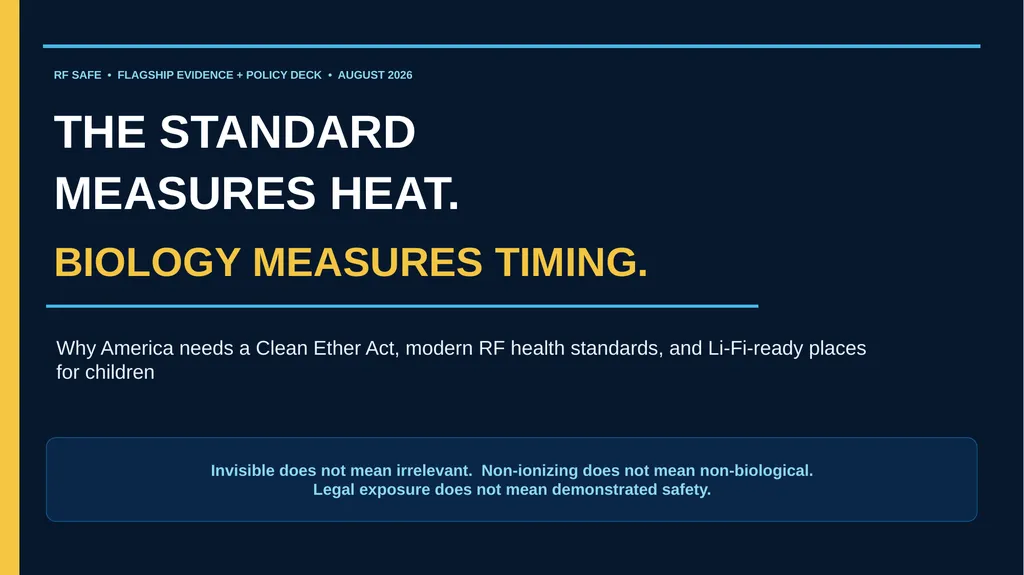
RF SAFE FLAGSHIP EVIDENCE POLICY DECK AUGUST 2026 THE STANDARD MEASURES HEAT. BIOLOGY MEASURES TIMING. Why America needs a Clean Ether Act, modern RF health standards, and Li-Fi-ready places for children Invisible does not mean
Related Topics
Share
Embed code
Download this presentation From Below
"RF SAFE • FLAGSHIP EVIDENCE + POLICY DECK • AUGUST" is the property of its rightful owner. Permission is granted to download and print the materials on this website for personal, non-commercial use only, and to display it on your personal computer provided you do not modify the materials and that you retain all copyright notices contained in the materials. By downloading content from our website, you accept the terms of this agreement.
Presentation Transcript
01
RF SAFE • FLAGSHIP EVIDENCE + POLICY DECK • AUGUST 2026 THE STANDARD MEASURES HEAT. BIOLOGY MEASURES TIMING. Why America needs a Clean Ether Act, modern RF health standards, and Li-Fi-ready places for children Invisible does not mean irrelevant. Non-ionizing does not mean non-biological.
Legal exposure does not mean demonstrated safety.<br>
Legal exposure does not mean demonstrated safety.<br>
02
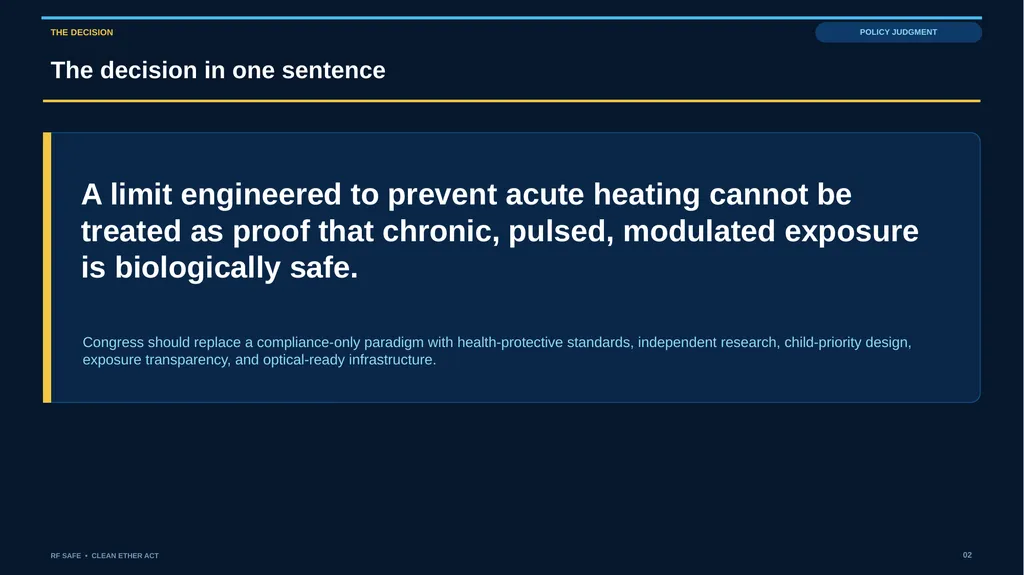
THE DECISION POLICY JUDGMENT The decision in one sentence RF SAFE • CLEAN ETHER ACT 02 A limit engineered to prevent acute heating cannot be treated as proof that chronic, pulsed, modulated exposure is biologically safe. Congress should replace a compliance-only paradigm with health-protective standards, independent research, child-priority design, exposure transparency, and optical-ready infrastructure.<br>
03
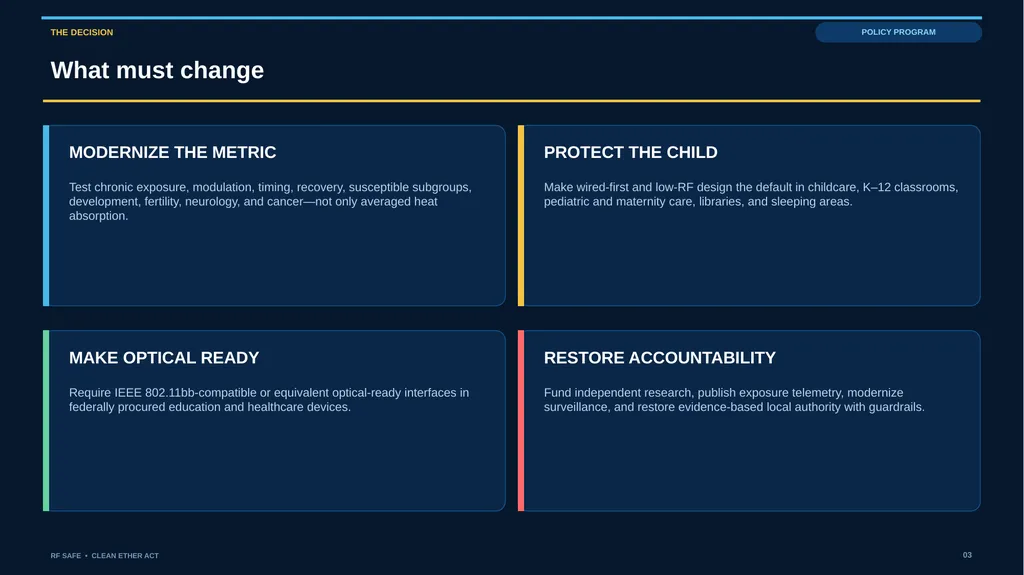
THE DECISION POLICY PROGRAM What must change RF SAFE • CLEAN ETHER ACT 03 MODERNIZE THE METRIC Test chronic exposure, modulation, timing, recovery, susceptible subgroups, development, fertility, neurology, and cancer—not only averaged heat absorption. PROTECT THE CHILD Make wired-first and low-RF design the default in childcare, K–12 classrooms, pediatric and maternity care, libraries, and sleeping areas. MAKE OPTICAL READY Require IEEE 802.11bb-compatible or equivalent optical-ready interfaces in federally procured education and healthcare devices. RESTORE ACCOUNTABILITY Fund independent research, publish exposure telemetry, modernize surveillance, and restore evidence-based local authority with guardrails.<br>
04
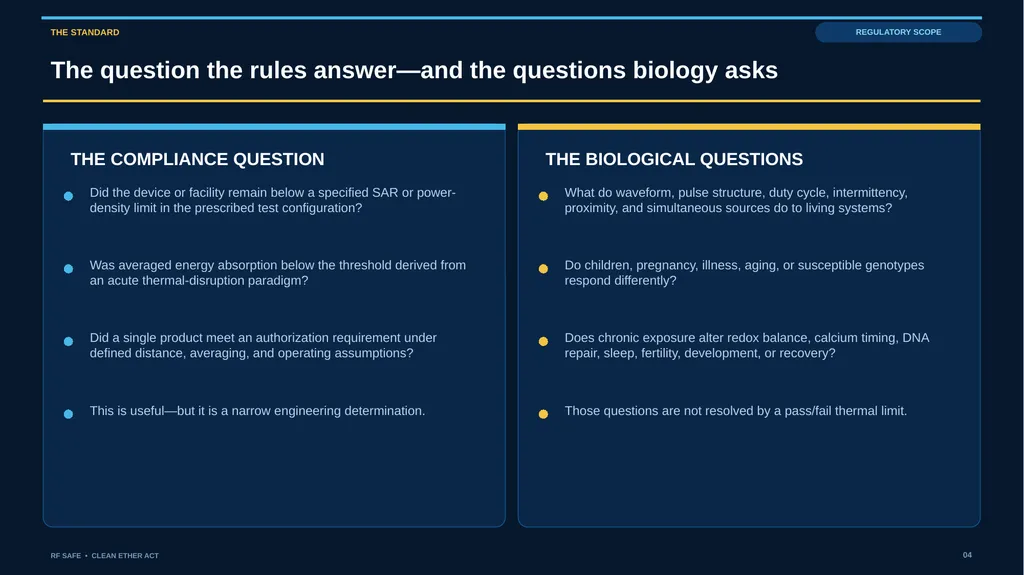
THE STANDARD REGULATORY SCOPE The question the rules answer—and the questions biology asks RF SAFE • CLEAN ETHER ACT 04 THE COMPLIANCE QUESTION Did the device or facility remain below a specified SAR or power-density limit in the prescribed test configuration? Was averaged energy absorption below the threshold derived from an acute thermal-disruption paradigm? Did a single product meet an authorization requirement under defined distance, averaging, and operating assumptions? This is useful—but it is a narrow engineering determination. THE BIOLOGICAL QUESTIONS What do waveform, pulse structure, duty cycle, intermittency, proximity, and simultaneous sources do to living systems? Do children, pregnancy, illness, aging, or susceptible genotypes respond differently? Does chronic exposure alter redox balance, calcium timing, DNA repair, sleep, fertility, development, or recovery? Those questions are not resolved by a pass/fail thermal limit.<br>
05
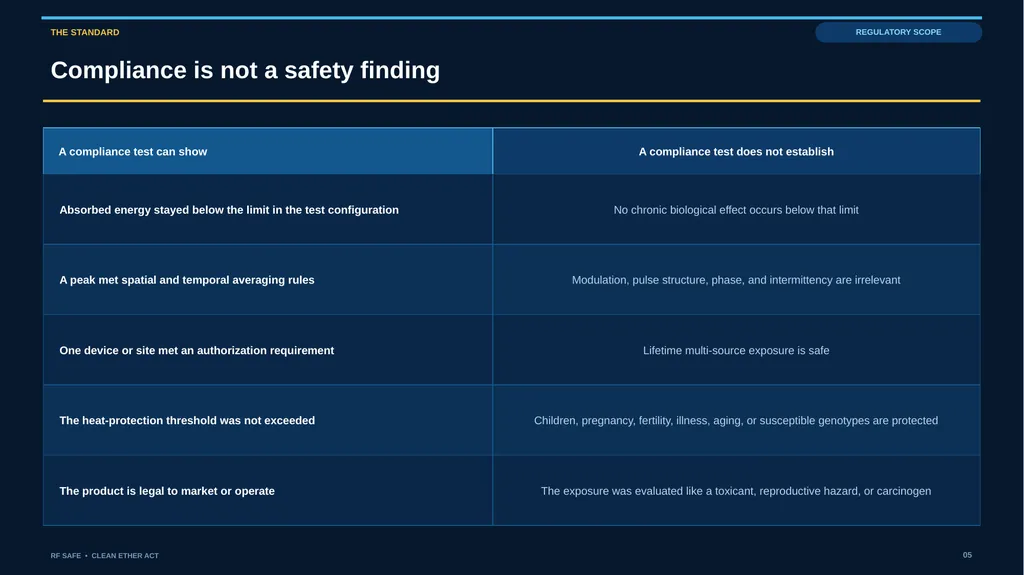
THE STANDARD REGULATORY SCOPE Compliance is not a safety finding RF SAFE • CLEAN ETHER ACT 05 A compliance test can show A compliance test does not establish Absorbed energy stayed below the limit in the test configuration No chronic biological effect occurs below that limit A peak met spatial and temporal averaging rules Modulation, pulse structure, phase, and intermittency are irrelevant One device or site met an authorization requirement Lifetime multi-source exposure is safe The heat-protection threshold was not exceeded Children, pregnancy, fertility, illness, aging, or susceptible genotypes are protected The product is legal to market or operate The exposure was evaluated like a toxicant, reproductive hazard, or carcinogen<br>
06
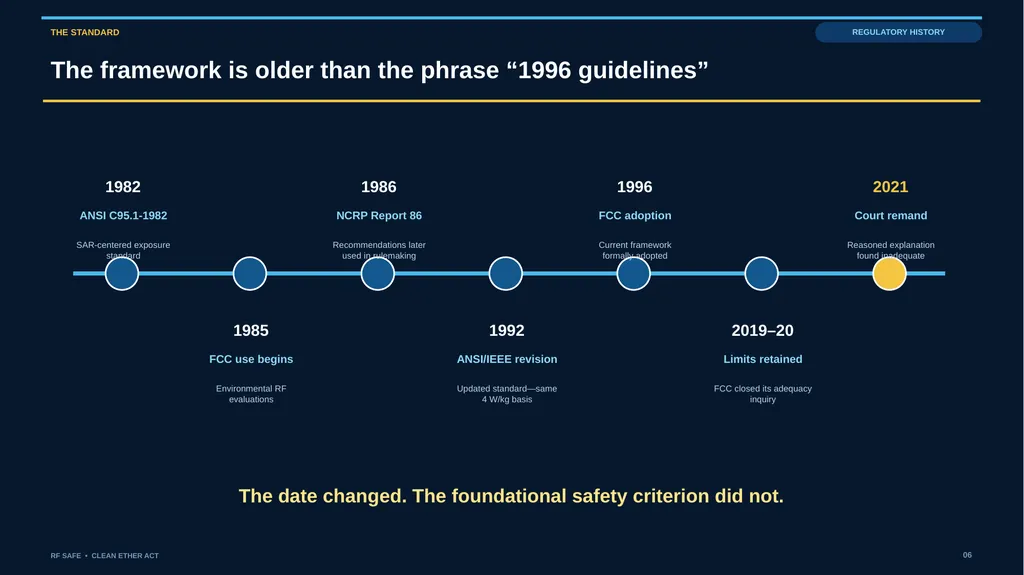
THE STANDARD REGULATORY HISTORY The framework is older than the phrase “1996 guidelines” RF SAFE • CLEAN ETHER ACT 06 1982 ANSI C95.1-1982 SAR-centered exposure standard 1985 FCC use begins Environmental RF evaluations 1986 NCRP Report 86 Recommendations later used in rulemaking 1992 ANSI/IEEE revision Updated standard—same 4 W/kg basis 1996 FCC adoption Current framework formally adopted 2019–20 Limits retained FCC closed its adequacy inquiry 2021 Court remand Reasoned explanation found inadequate The date changed. The foundational safety criterion did not.<br>
07
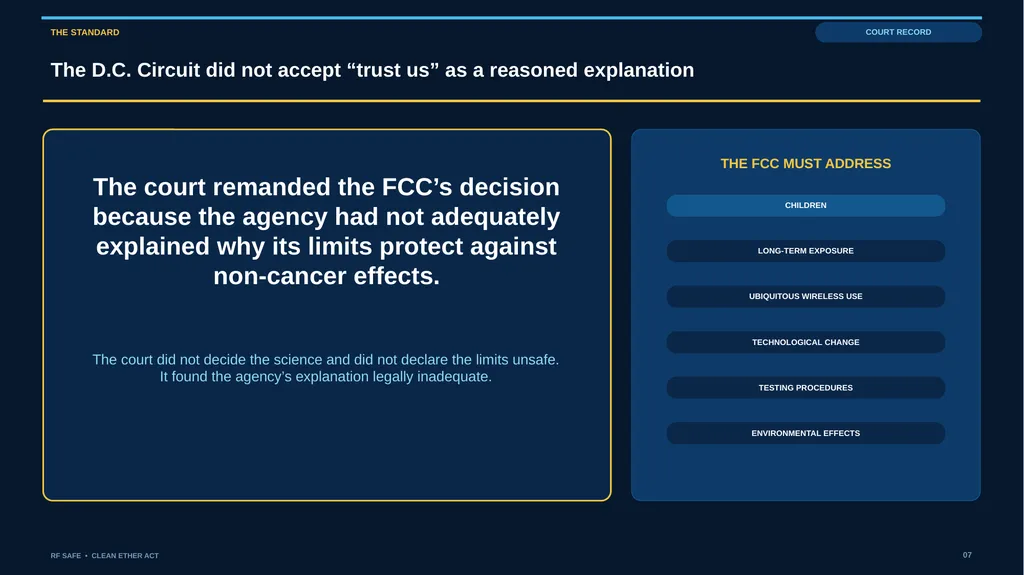
THE STANDARD COURT RECORD The D.C. Circuit did not accept “trust us” as a reasoned explanation RF SAFE • CLEAN ETHER ACT 07 The court remanded the FCC’s decision because the agency had not adequately explained why its limits protect against non-cancer effects. The court did not decide the science and did not declare the limits unsafe. It found the agency’s explanation legally inadequate. THE FCC MUST ADDRESS CHILDREN LONG-TERM EXPOSURE UBIQUITOUS WIRELESS USE TECHNOLOGICAL CHANGE TESTING PROCEDURES ENVIRONMENTAL EFFECTS<br>
08
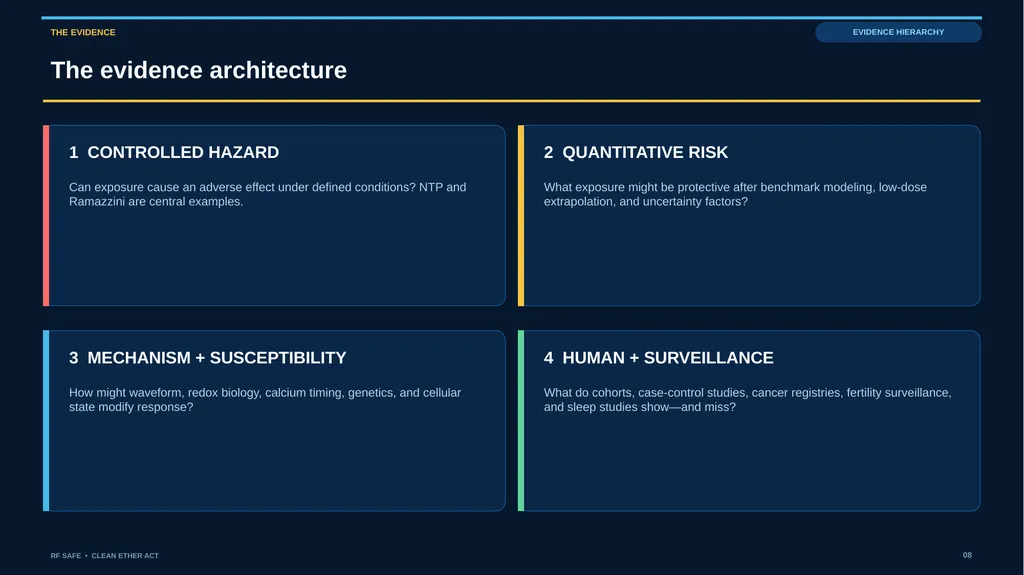
THE EVIDENCE EVIDENCE HIERARCHY The evidence architecture RF SAFE • CLEAN ETHER ACT 08 1 CONTROLLED HAZARD Can exposure cause an adverse effect under defined conditions? NTP and Ramazzini are central examples. 2 QUANTITATIVE RISK What exposure might be protective after benchmark modeling, low-dose extrapolation, and uncertainty factors? 3 MECHANISM + SUSCEPTIBILITY How might waveform, redox biology, calcium timing, genetics, and cellular state modify response? 4 HUMAN + SURVEILLANCE What do cohorts, case-control studies, cancer registries, fertility surveillance, and sleep studies show—and miss?<br>
09
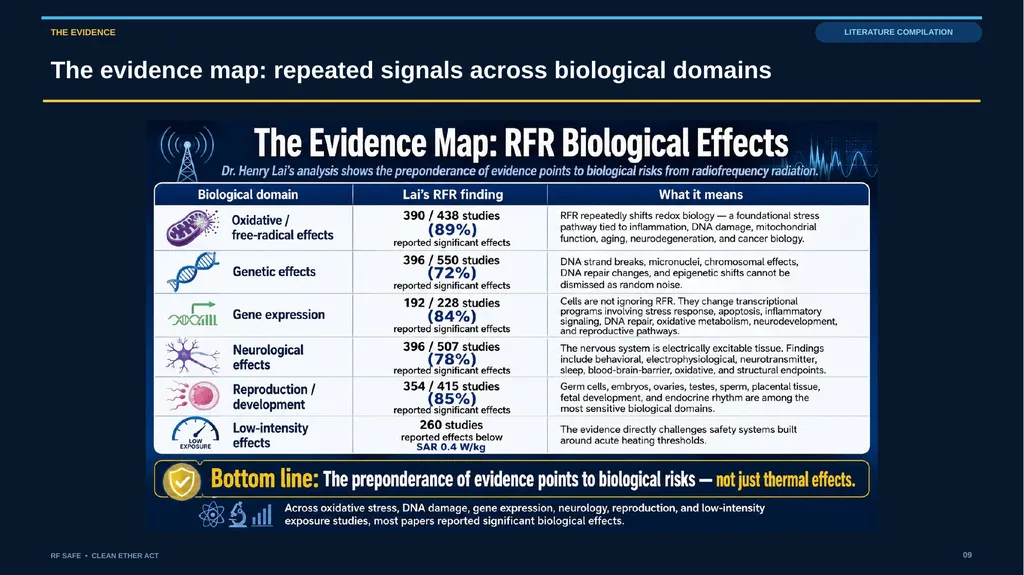
THE EVIDENCE LITERATURE COMPILATION The evidence map: repeated signals across biological domains RF SAFE • CLEAN ETHER ACT 09<br>
10
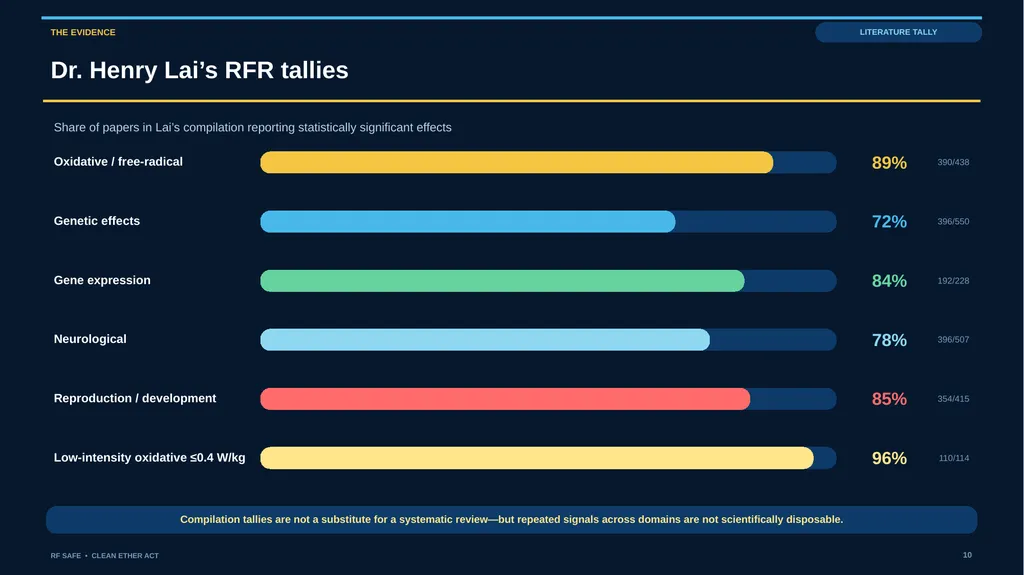
THE EVIDENCE LITERATURE TALLY Dr. Henry Lai’s RFR tallies RF SAFE • CLEAN ETHER ACT 10 Share of papers in Lai’s compilation reporting statistically significant effects Oxidative / free-radical 89% 390/438 Genetic effects 72% 396/550 Gene expression 84% 192/228 Neurological 78% 396/507 Reproduction / development 85% 354/415 Low-intensity oxidative ≤0.4 W/kg 96% 110/114 Compilation tallies are not a substitute for a systematic review—but repeated signals across domains are not scientifically disposable.<br>
11
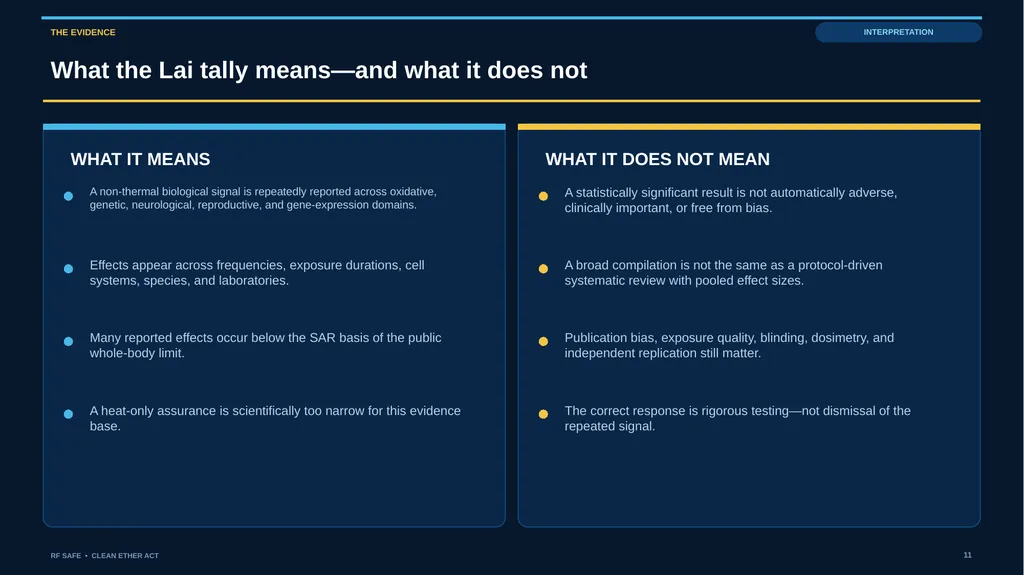
THE EVIDENCE INTERPRETATION What the Lai tally means—and what it does not RF SAFE • CLEAN ETHER ACT 11 WHAT IT MEANS A non-thermal biological signal is repeatedly reported across oxidative, genetic, neurological, reproductive, and gene-expression domains. Effects appear across frequencies, exposure durations, cell systems, species, and laboratories. Many reported effects occur below the SAR basis of the public whole-body limit. A heat-only assurance is scientifically too narrow for this evidence base. WHAT IT DOES NOT MEAN A statistically significant result is not automatically adverse, clinically important, or free from bias. A broad compilation is not the same as a protocol-driven systematic review with pooled effect sizes. Publication bias, exposure quality, blinding, dosimetry, and independent replication still matter. The correct response is rigorous testing—not dismissal of the repeated signal.<br>
12
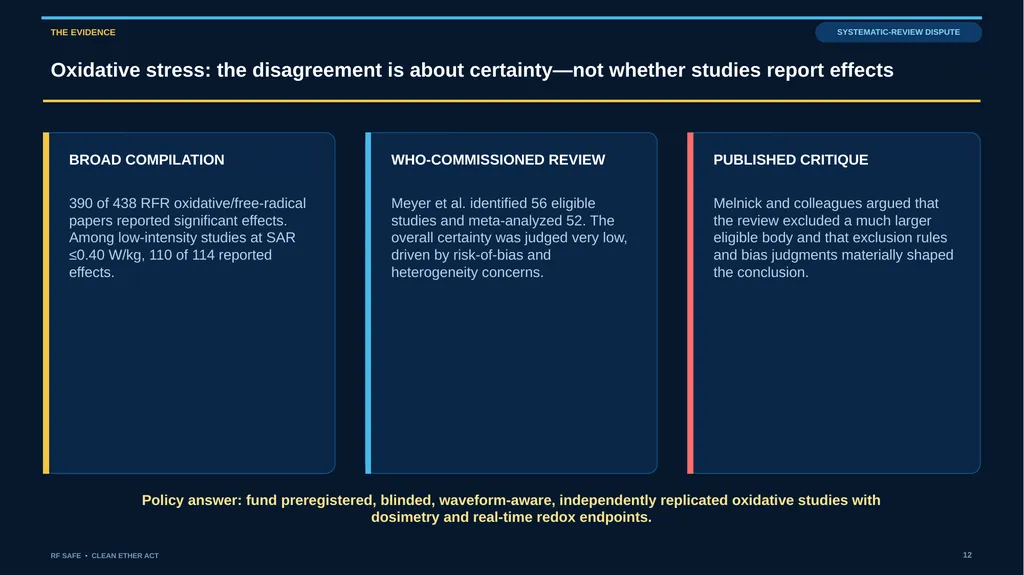
THE EVIDENCE SYSTEMATIC-REVIEW DISPUTE Oxidative stress: the disagreement is about certainty—not whether studies report effects RF SAFE • CLEAN ETHER ACT 12 BROAD COMPILATION 390 of 438 RFR oxidative/free-radical papers reported significant effects. Among low-intensity studies at SAR ≤0.40 W/kg, 110 of 114 reported effects. WHO-COMMISSIONED REVIEW Meyer et al. identified 56 eligible studies and meta-analyzed 52. The overall certainty was judged very low, driven by risk-of-bias and heterogeneity concerns. PUBLISHED CRITIQUE Melnick and colleagues argued that the review excluded a much larger eligible body and that exclusion rules and bias judgments materially shaped the conclusion. Policy answer: fund preregistered, blinded, waveform-aware, independently replicated oxidative studies with dosimetry and real-time redox endpoints.<br>
13
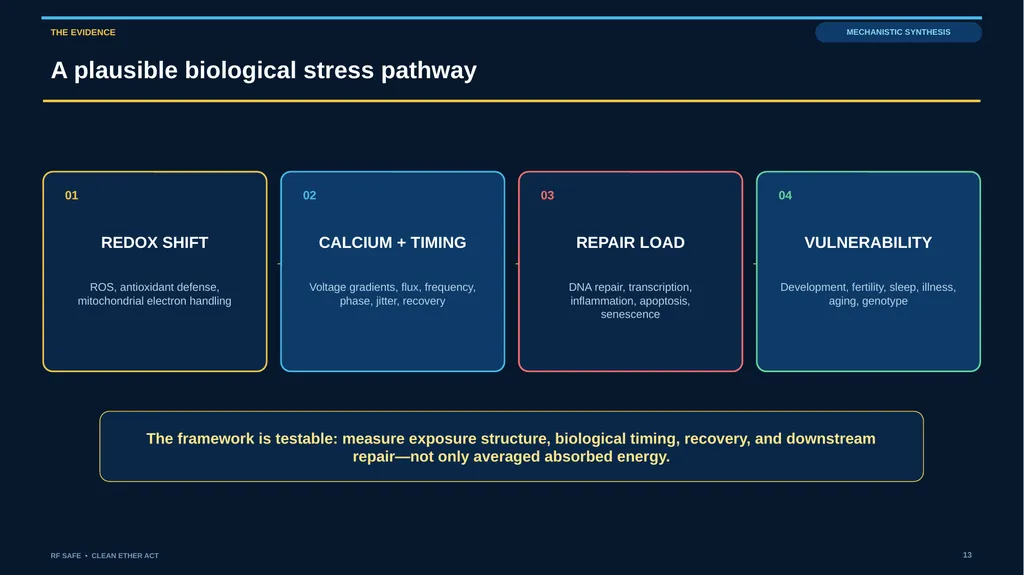
THE EVIDENCE MECHANISTIC SYNTHESIS A plausible biological stress pathway RF SAFE • CLEAN ETHER ACT 13 01 REDOX SHIFT ROS, antioxidant defense, mitochondrial electron handling → 02 CALCIUM + TIMING Voltage gradients, flux, frequency, phase, jitter, recovery → 03 REPAIR LOAD DNA repair, transcription, inflammation, apoptosis, senescence → 04 VULNERABILITY Development, fertility, sleep, illness, aging, genotype The framework is testable: measure exposure structure, biological timing, recovery, and downstream repair—not only averaged absorbed energy.<br>
14
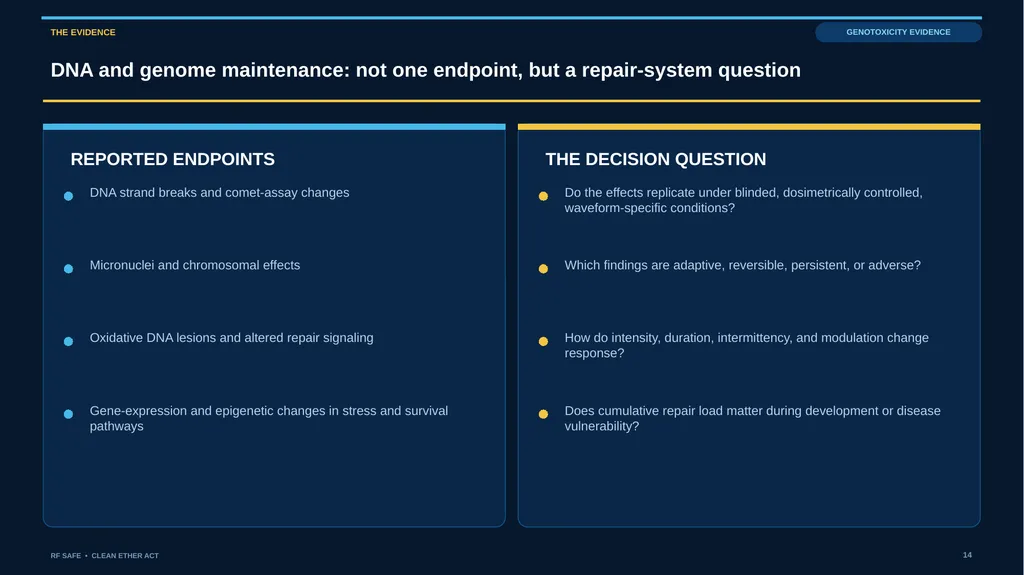
THE EVIDENCE GENOTOXICITY EVIDENCE DNA and genome maintenance: not one endpoint, but a repair-system question RF SAFE • CLEAN ETHER ACT 14 REPORTED ENDPOINTS DNA strand breaks and comet-assay changes Micronuclei and chromosomal effects Oxidative DNA lesions and altered repair signaling Gene-expression and epigenetic changes in stress and survival pathways THE DECISION QUESTION Do the effects replicate under blinded, dosimetrically controlled, waveform-specific conditions? Which findings are adaptive, reversible, persistent, or adverse? How do intensity, duration, intermittency, and modulation change response? Does cumulative repair load matter during development or disease vulnerability?<br>
15
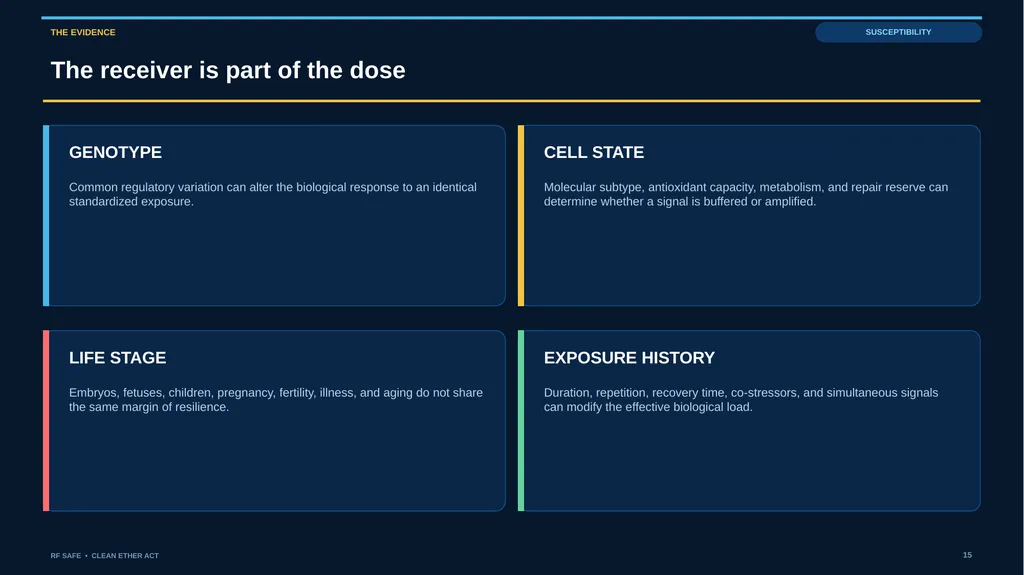
THE EVIDENCE SUSCEPTIBILITY The receiver is part of the dose RF SAFE • CLEAN ETHER ACT 15 GENOTYPE Common regulatory variation can alter the biological response to an identical standardized exposure. CELL STATE Molecular subtype, antioxidant capacity, metabolism, and repair reserve can determine whether a signal is buffered or amplified. LIFE STAGE Embryos, fetuses, children, pregnancy, fertility, illness, and aging do not share the same margin of resilience. EXPOSURE HISTORY Duration, repetition, recovery time, co-stressors, and simultaneous signals can modify the effective biological load.<br>
16
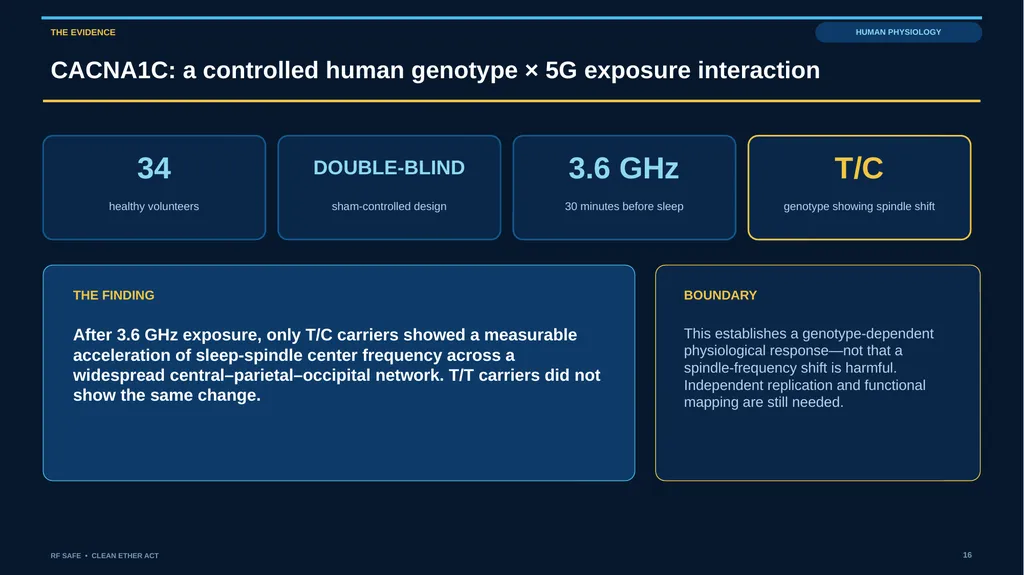
THE EVIDENCE HUMAN PHYSIOLOGY CACNA1C: a controlled human genotype × 5G exposure interaction RF SAFE • CLEAN ETHER ACT 16 34 healthy volunteers DOUBLE-BLIND sham-controlled design 3.6 GHz 30 minutes before sleep T/C genotype showing spindle shift THE FINDING After 3.6 GHz exposure, only T/C carriers showed a measurable acceleration of sleep-spindle center frequency across a widespread central–parietal–occipital network. T/T carriers did not show the same change. BOUNDARY This establishes a genotype-dependent physiological response—not that a spindle-frequency shift is harmful. Independent replication and functional mapping are still needed.<br>
17
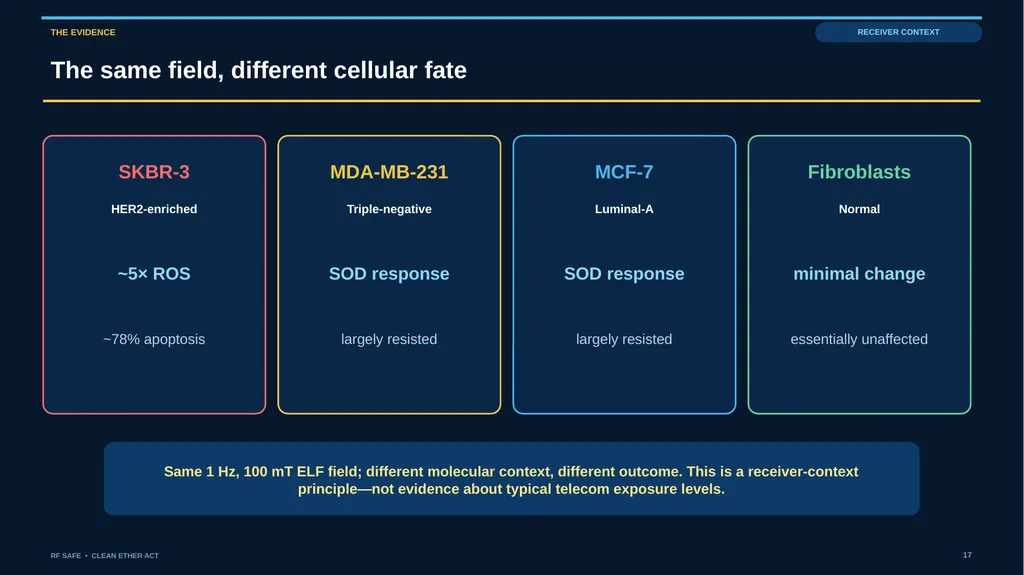
THE EVIDENCE RECEIVER CONTEXT The same field, different cellular fate RF SAFE • CLEAN ETHER ACT 17 SKBR-3 HER2-enriched ~5× ROS ~78% apoptosis MDA-MB-231 Triple-negative SOD response largely resisted MCF-7 Luminal-A SOD response largely resisted Fibroblasts Normal minimal change essentially unaffected Same 1 Hz, 100 mT ELF field; different molecular context, different outcome. This is a receiver-context principle—not evidence about typical telecom exposure levels.<br>
18
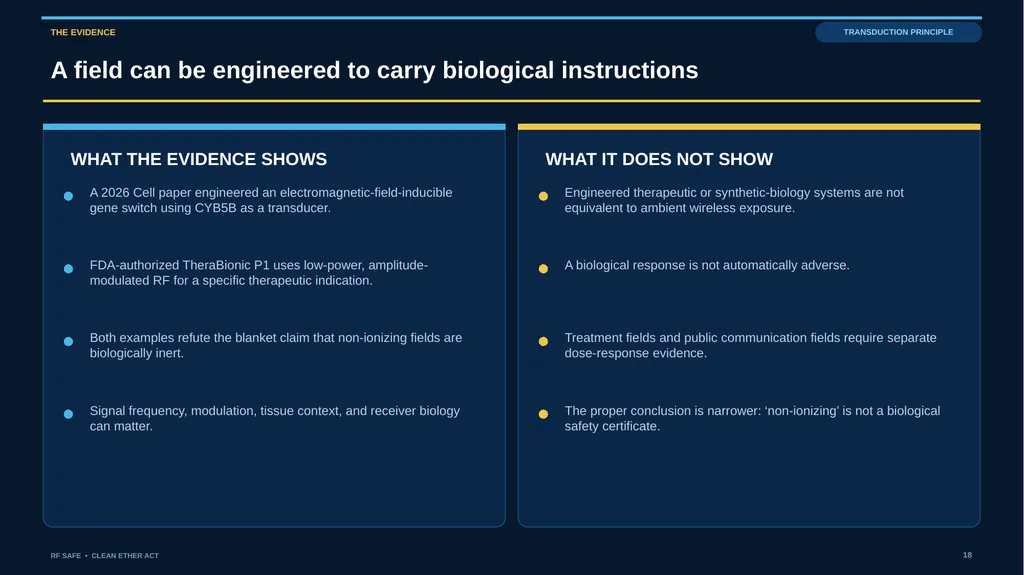
THE EVIDENCE TRANSDUCTION PRINCIPLE A field can be engineered to carry biological instructions RF SAFE • CLEAN ETHER ACT 18 WHAT THE EVIDENCE SHOWS A 2026 Cell paper engineered an electromagnetic-field-inducible gene switch using CYB5B as a transducer. FDA-authorized TheraBionic P1 uses low-power, amplitude-modulated RF for a specific therapeutic indication. Both examples refute the blanket claim that non-ionizing fields are biologically inert. Signal frequency, modulation, tissue context, and receiver biology can matter. WHAT IT DOES NOT SHOW Engineered therapeutic or synthetic-biology systems are not equivalent to ambient wireless exposure. A biological response is not automatically adverse. Treatment fields and public communication fields require separate dose-response evidence. The proper conclusion is narrower: ‘non-ionizing’ is not a biological safety certificate.<br>
19
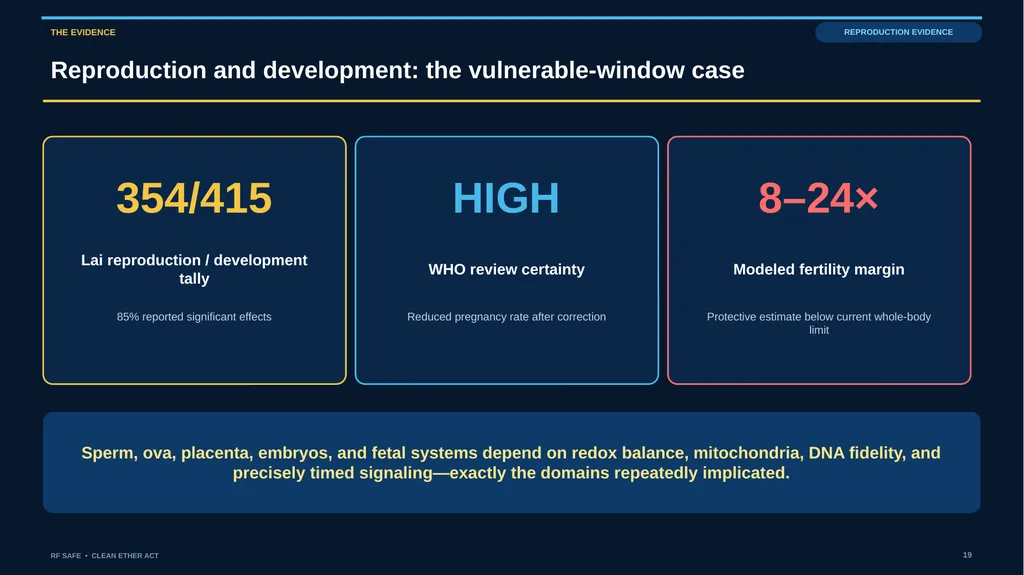
THE EVIDENCE REPRODUCTION EVIDENCE Reproduction and development: the vulnerable-window case RF SAFE • CLEAN ETHER ACT 19 354/415 Lai reproduction / development tally 85% reported significant effects HIGH WHO review certainty Reduced pregnancy rate after correction 8–24× Modeled fertility margin Protective estimate below current whole-body limit Sperm, ova, placenta, embryos, and fetal systems depend on redox balance, mitochondria, DNA fidelity, and precisely timed signaling—exactly the domains repeatedly implicated.<br>
20
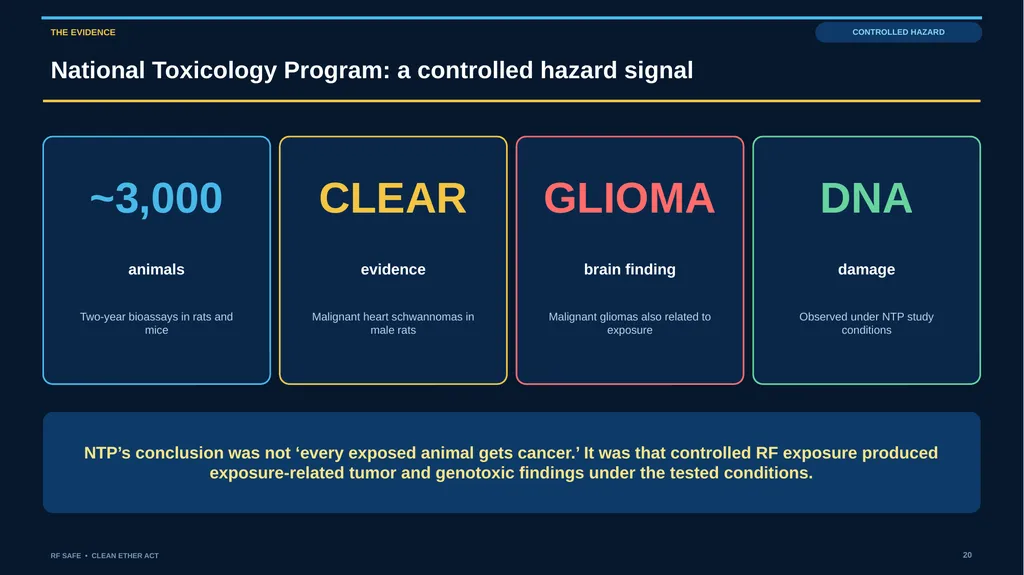
THE EVIDENCE CONTROLLED HAZARD National Toxicology Program: a controlled hazard signal RF SAFE • CLEAN ETHER ACT 20 ~3,000 animals Two-year bioassays in rats and mice CLEAR evidence Malignant heart schwannomas in male rats GLIOMA brain finding Malignant gliomas also related to exposure DNA damage Observed under NTP study conditions NTP’s conclusion was not ‘every exposed animal gets cancer.’ It was that controlled RF exposure produced exposure-related tumor and genotoxic findings under the tested conditions.<br>
21
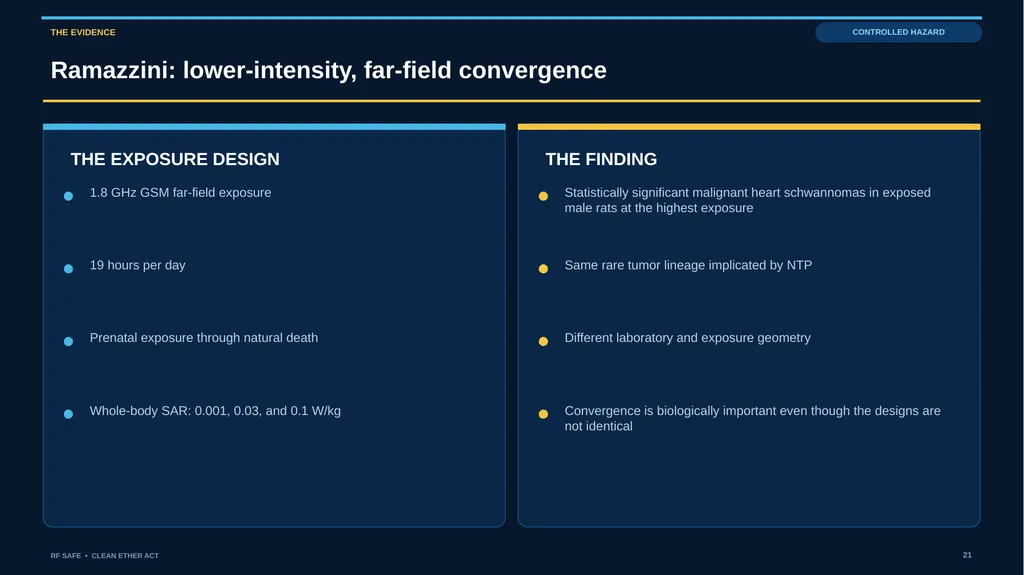
THE EVIDENCE CONTROLLED HAZARD Ramazzini: lower-intensity, far-field convergence RF SAFE • CLEAN ETHER ACT 21 THE EXPOSURE DESIGN 1.8 GHz GSM far-field exposure 19 hours per day Prenatal exposure through natural death Whole-body SAR: 0.001, 0.03, and 0.1 W/kg THE FINDING Statistically significant malignant heart schwannomas in exposed male rats at the highest exposure Same rare tumor lineage implicated by NTP Different laboratory and exposure geometry Convergence is biologically important even though the designs are not identical<br>
22
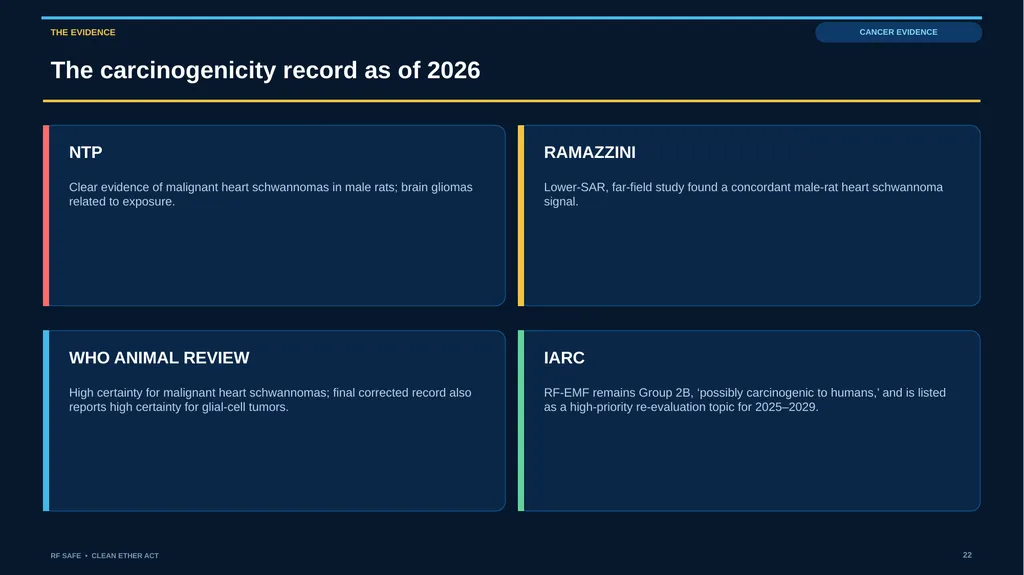
THE EVIDENCE CANCER EVIDENCE The carcinogenicity record as of 2026 RF SAFE • CLEAN ETHER ACT 22 NTP Clear evidence of malignant heart schwannomas in male rats; brain gliomas related to exposure. RAMAZZINI Lower-SAR, far-field study found a concordant male-rat heart schwannoma signal. WHO ANIMAL REVIEW High certainty for malignant heart schwannomas; final corrected record also reports high certainty for glial-cell tumors. IARC RF-EMF remains Group 2B, ‘possibly carcinogenic to humans,’ and is listed as a high-priority re-evaluation topic for 2025–2029.<br>
23
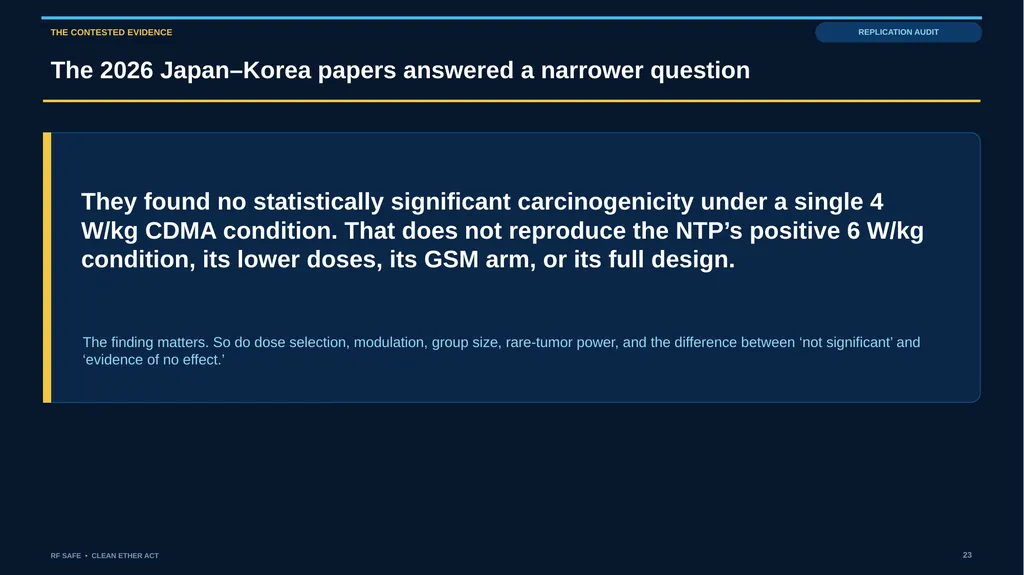
THE CONTESTED EVIDENCE REPLICATION AUDIT The 2026 Japan–Korea papers answered a narrower question RF SAFE • CLEAN ETHER ACT 23 They found no statistically significant carcinogenicity under a single 4 W/kg CDMA condition. That does not reproduce the NTP’s positive 6 W/kg condition, its lower doses, its GSM arm, or its full design. The finding matters. So do dose selection, modulation, group size, rare-tumor power, and the difference between ‘not significant’ and ‘evidence of no effect.’<br>
24
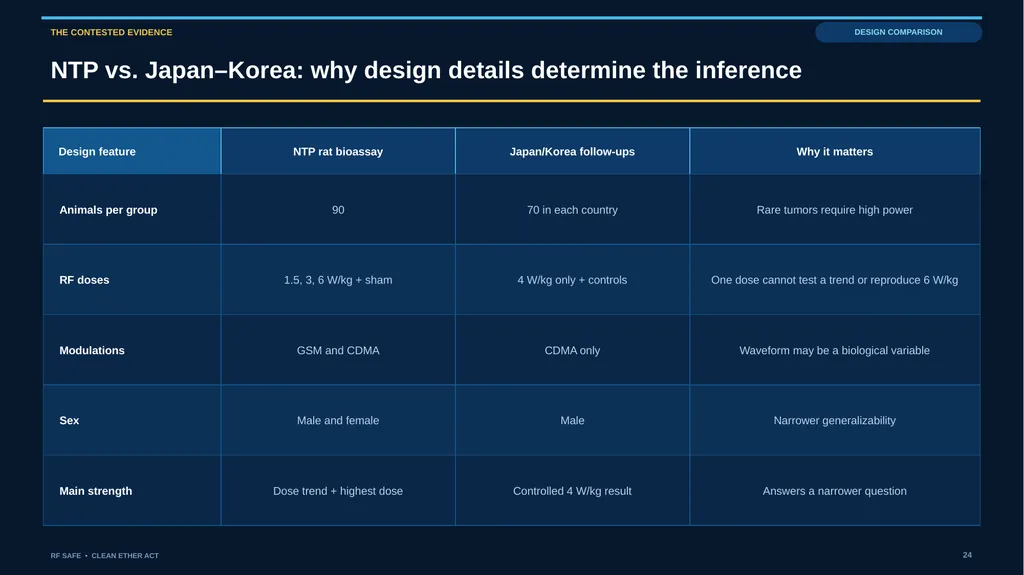
THE CONTESTED EVIDENCE DESIGN COMPARISON NTP vs. Japan–Korea: why design details determine the inference RF SAFE • CLEAN ETHER ACT 24 Design feature NTP rat bioassay Japan/Korea follow-ups Why it matters Animals per group 90 70 in each country Rare tumors require high power RF doses 1.5, 3, 6 W/kg + sham 4 W/kg only + controls One dose cannot test a trend or reproduce 6 W/kg Modulations GSM and CDMA CDMA only Waveform may be a biological variable Sex Male and female Male Narrower generalizability Main strength Dose trend + highest dose Controlled 4 W/kg result Answers a narrower question<br>
25
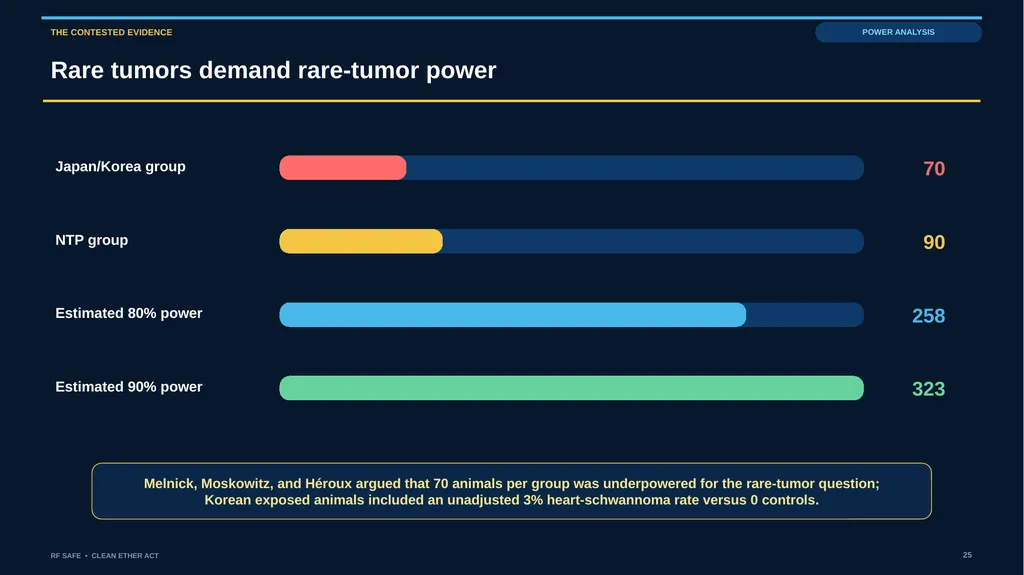
THE CONTESTED EVIDENCE POWER ANALYSIS Rare tumors demand rare-tumor power RF SAFE • CLEAN ETHER ACT 25 Japan/Korea group 70 NTP group 90 Estimated 80% power 258 Estimated 90% power 323 Melnick, Moskowitz, and Héroux argued that 70 animals per group was underpowered for the rare-tumor question; Korean exposed animals included an unadjusted 3% heart-schwannoma rate versus 0 controls.<br>
26
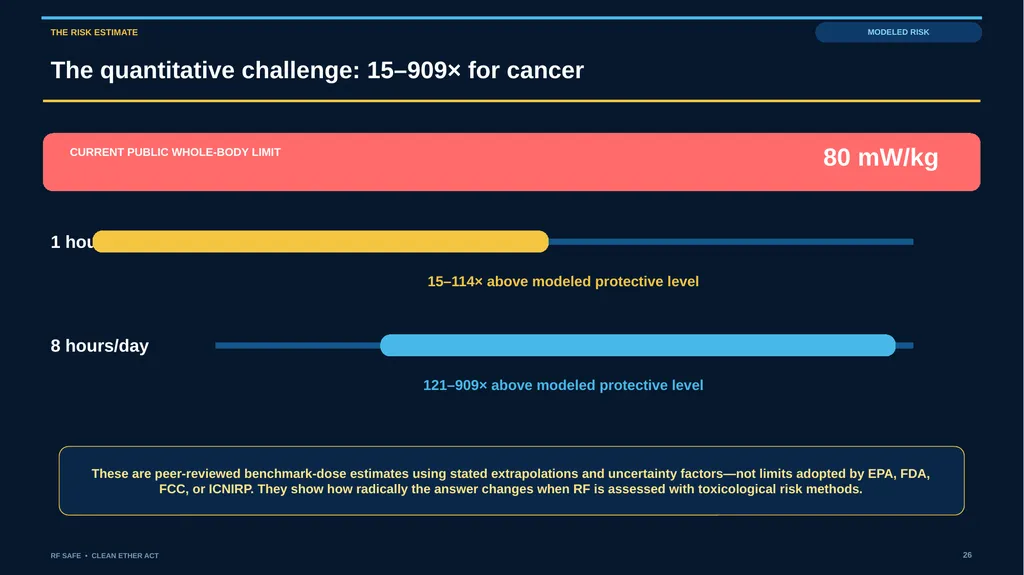
THE RISK ESTIMATE MODELED RISK The quantitative challenge: 15–909× for cancer RF SAFE • CLEAN ETHER ACT 26 CURRENT PUBLIC WHOLE-BODY LIMIT 80 mW/kg 1 hour/day 15–114× above modeled protective level 8 hours/day 121–909× above modeled protective level These are peer-reviewed benchmark-dose estimates using stated extrapolations and uncertainty factors—not limits adopted by EPA, FDA, FCC, or ICNIRP. They show how radically the answer changes when RF is assessed with toxicological risk methods.<br>
27
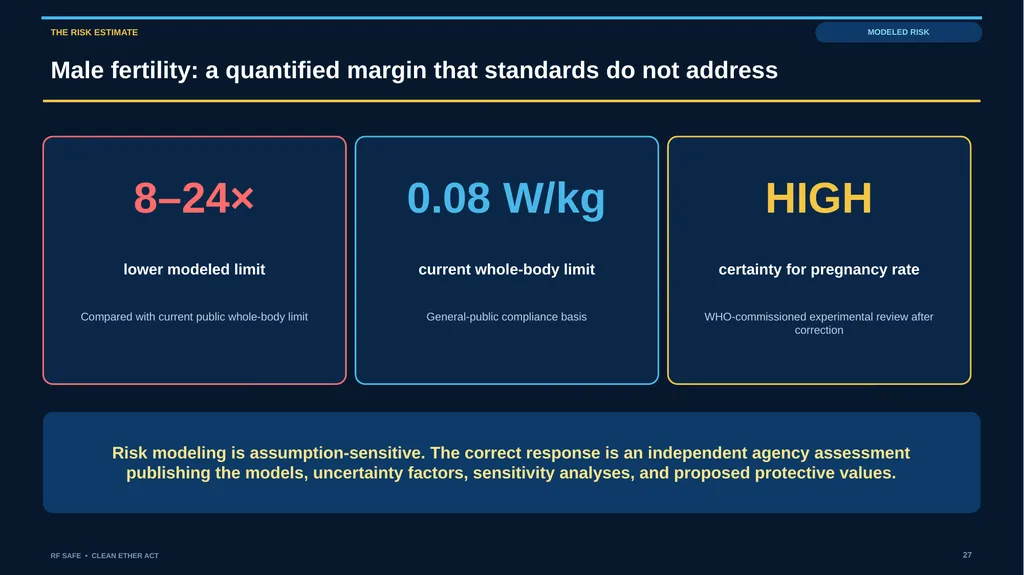
THE RISK ESTIMATE MODELED RISK Male fertility: a quantified margin that standards do not address RF SAFE • CLEAN ETHER ACT 27 8–24× lower modeled limit Compared with current public whole-body limit 0.08 W/kg current whole-body limit General-public compliance basis HIGH certainty for pregnancy rate WHO-commissioned experimental review after correction Risk modeling is assumption-sensitive. The correct response is an independent agency assessment publishing the models, uncertainty factors, sensitivity analyses, and proposed protective values.<br>
28
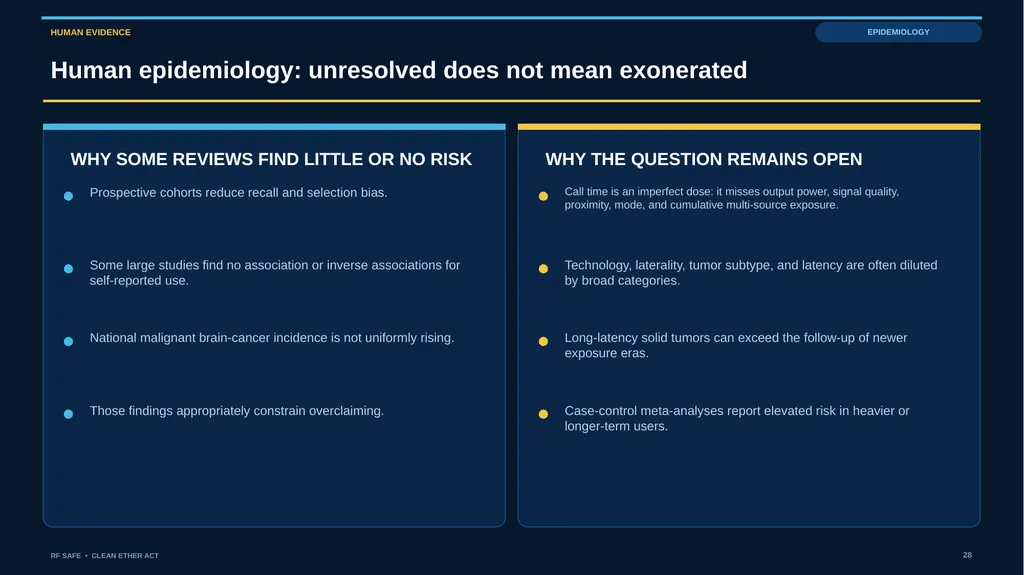
HUMAN EVIDENCE EPIDEMIOLOGY Human epidemiology: unresolved does not mean exonerated RF SAFE • CLEAN ETHER ACT 28 WHY SOME REVIEWS FIND LITTLE OR NO RISK Prospective cohorts reduce recall and selection bias. Some large studies find no association or inverse associations for self-reported use. National malignant brain-cancer incidence is not uniformly rising. Those findings appropriately constrain overclaiming. WHY THE QUESTION REMAINS OPEN Call time is an imperfect dose: it misses output power, signal quality, proximity, mode, and cumulative multi-source exposure. Technology, laterality, tumor subtype, and latency are often diluted by broad categories. Long-latency solid tumors can exceed the follow-up of newer exposure eras. Case-control meta-analyses report elevated risk in heavier or longer-term users.<br>
29
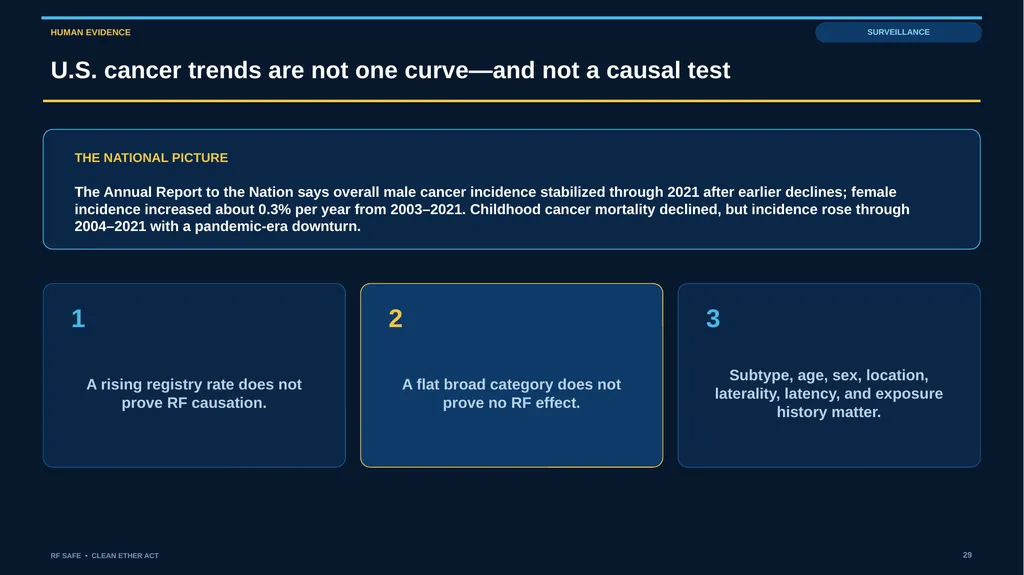
HUMAN EVIDENCE SURVEILLANCE U.S. cancer trends are not one curve—and not a causal test RF SAFE • CLEAN ETHER ACT 29 THE NATIONAL PICTURE The Annual Report to the Nation says overall male cancer incidence stabilized through 2021 after earlier declines; female incidence increased about 0.3% per year from 2003–2021. Childhood cancer mortality declined, but incidence rose through 2004–2021 with a pandemic-era downturn. 1 A rising registry rate does not prove RF causation. 2 A flat broad category does not prove no RF effect. 3 Subtype, age, sex, location, laterality, latency, and exposure history matter.<br>
30
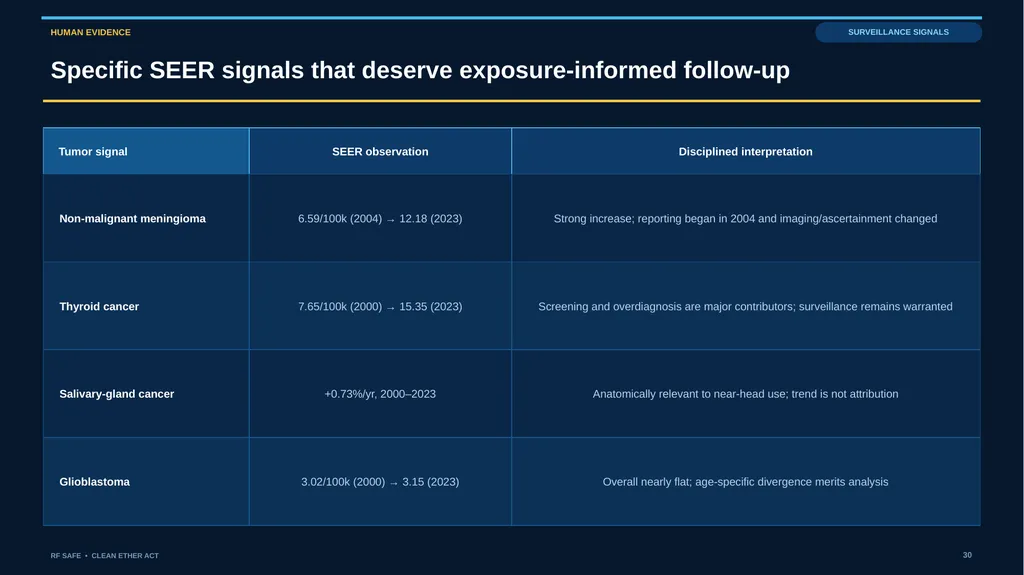
HUMAN EVIDENCE SURVEILLANCE SIGNALS Specific SEER signals that deserve exposure-informed follow-up RF SAFE • CLEAN ETHER ACT 30 Tumor signal SEER observation Disciplined interpretation Non-malignant meningioma 6.59/100k (2004) → 12.18 (2023) Strong increase; reporting began in 2004 and imaging/ascertainment changed Thyroid cancer 7.65/100k (2000) → 15.35 (2023) Screening and overdiagnosis are major contributors; surveillance remains warranted Salivary-gland cancer +0.73%/yr, 2000–2023 Anatomically relevant to near-head use; trend is not attribution Glioblastoma 3.02/100k (2000) → 3.15 (2023) Overall nearly flat; age-specific divergence merits analysis<br>
31
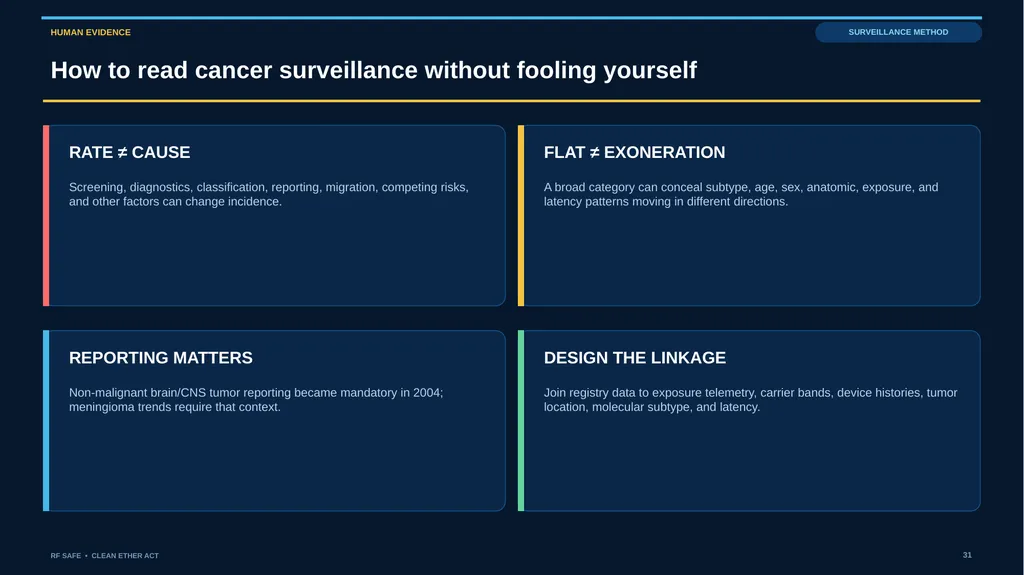
HUMAN EVIDENCE SURVEILLANCE METHOD How to read cancer surveillance without fooling yourself RF SAFE • CLEAN ETHER ACT 31 RATE ≠ CAUSE Screening, diagnostics, classification, reporting, migration, competing risks, and other factors can change incidence. FLAT ≠ EXONERATION A broad category can conceal subtype, age, sex, anatomic, exposure, and latency patterns moving in different directions. REPORTING MATTERS Non-malignant brain/CNS tumor reporting became mandatory in 2004; meningioma trends require that context. DESIGN THE LINKAGE Join registry data to exposure telemetry, carrier bands, device histories, tumor location, molecular subtype, and latency.<br>
32
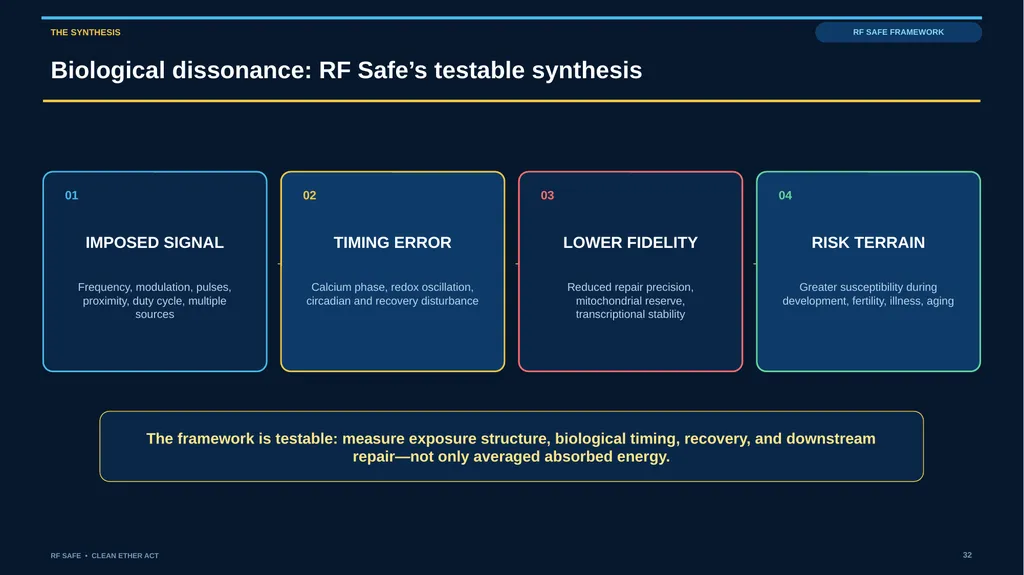
THE SYNTHESIS RF SAFE FRAMEWORK Biological dissonance: RF Safe’s testable synthesis RF SAFE • CLEAN ETHER ACT 32 01 IMPOSED SIGNAL Frequency, modulation, pulses, proximity, duty cycle, multiple sources → 02 TIMING ERROR Calcium phase, redox oscillation, circadian and recovery disturbance → 03 LOWER FIDELITY Reduced repair precision, mitochondrial reserve, transcriptional stability → 04 RISK TERRAIN Greater susceptibility during development, fertility, illness, aging The framework is testable: measure exposure structure, biological timing, recovery, and downstream repair—not only averaged absorbed energy.<br>
33
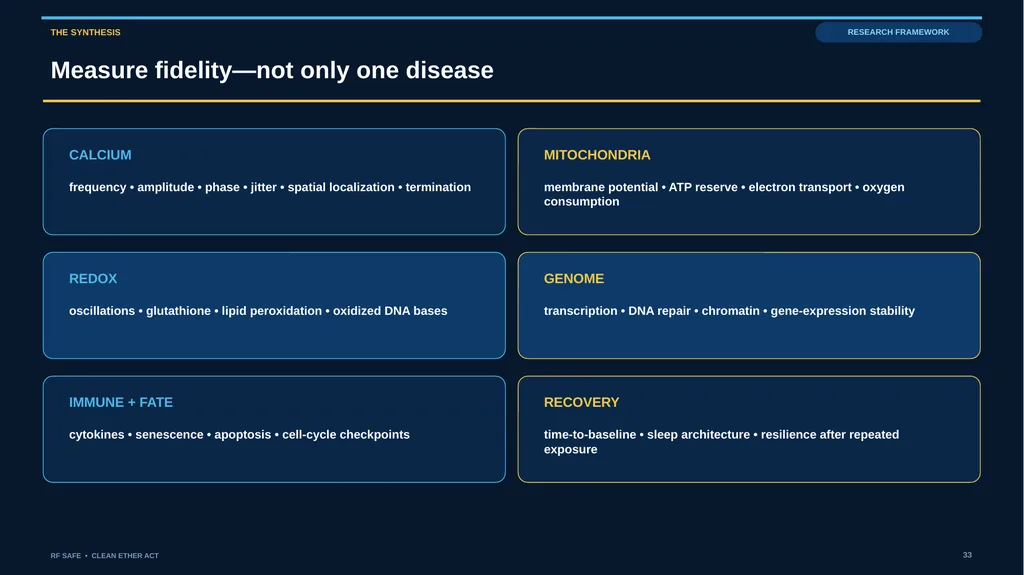
THE SYNTHESIS RESEARCH FRAMEWORK Measure fidelity—not only one disease RF SAFE • CLEAN ETHER ACT 33 CALCIUM frequency • amplitude • phase • jitter • spatial localization • termination MITOCHONDRIA membrane potential • ATP reserve • electron transport • oxygen consumption REDOX oscillations • glutathione • lipid peroxidation • oxidized DNA bases GENOME transcription • DNA repair • chromatin • gene-expression stability IMMUNE + FATE cytokines • senescence • apoptosis • cell-cycle checkpoints RECOVERY time-to-baseline • sleep architecture • resilience after repeated exposure<br>
34
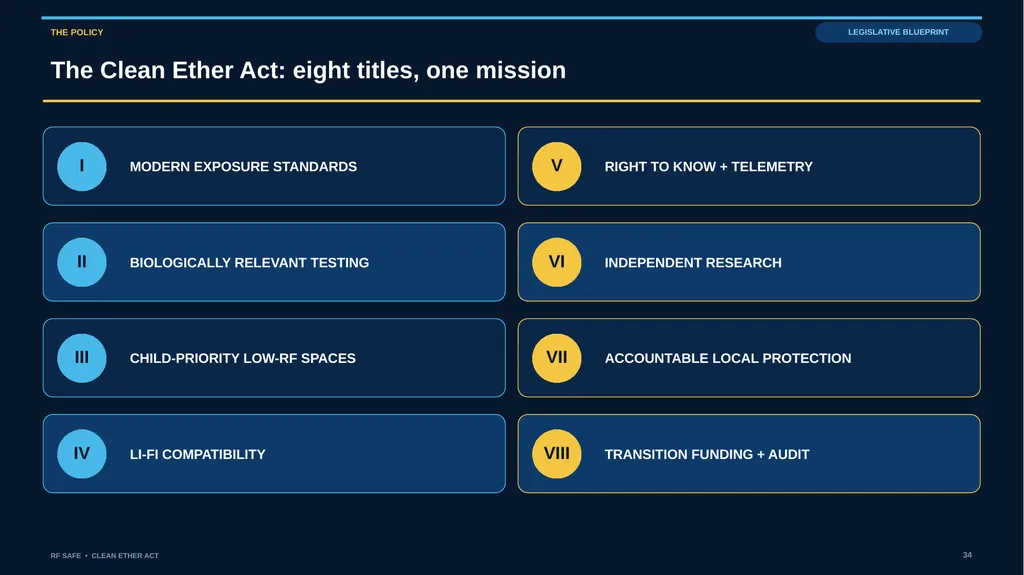
THE POLICY LEGISLATIVE BLUEPRINT The Clean Ether Act: eight titles, one mission RF SAFE • CLEAN ETHER ACT 34 I MODERN EXPOSURE STANDARDS II BIOLOGICALLY RELEVANT TESTING III CHILD-PRIORITY LOW-RF SPACES IV LI-FI COMPATIBILITY V RIGHT TO KNOW + TELEMETRY VI INDEPENDENT RESEARCH VII ACCOUNTABLE LOCAL PROTECTION VIII TRANSITION FUNDING + AUDIT<br>
35
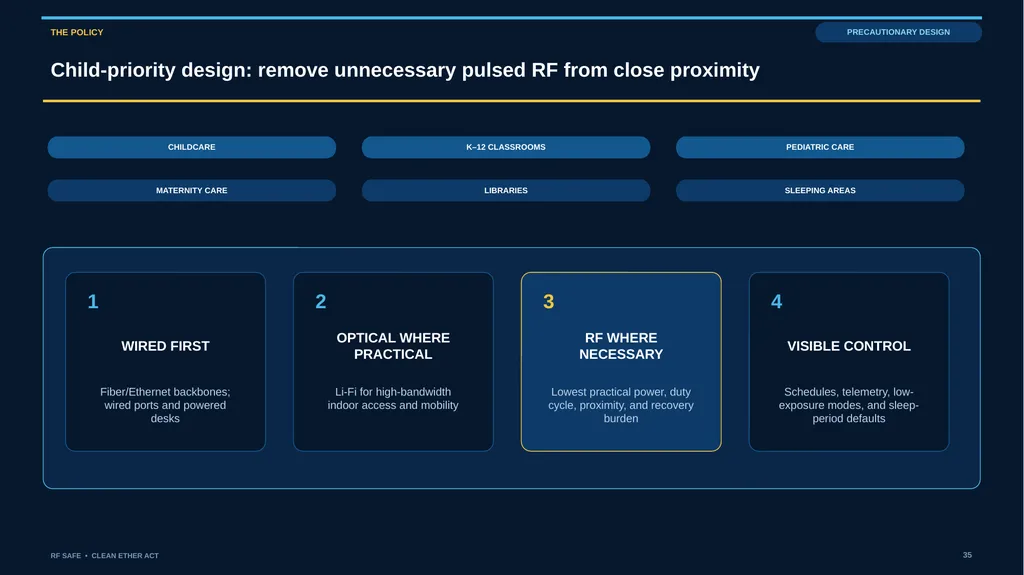
THE POLICY PRECAUTIONARY DESIGN Child-priority design: remove unnecessary pulsed RF from close proximity RF SAFE • CLEAN ETHER ACT 35 CHILDCARE K–12 CLASSROOMS PEDIATRIC CARE MATERNITY CARE LIBRARIES SLEEPING AREAS 1 WIRED FIRST Fiber/Ethernet backbones; wired ports and powered desks 2 OPTICAL WHERE PRACTICAL Li-Fi for high-bandwidth indoor access and mobility 3 RF WHERE NECESSARY Lowest practical power, duty cycle, proximity, and recovery burden 4 VISIBLE CONTROL Schedules, telemetry, low-exposure modes, and sleep-period defaults<br>
36
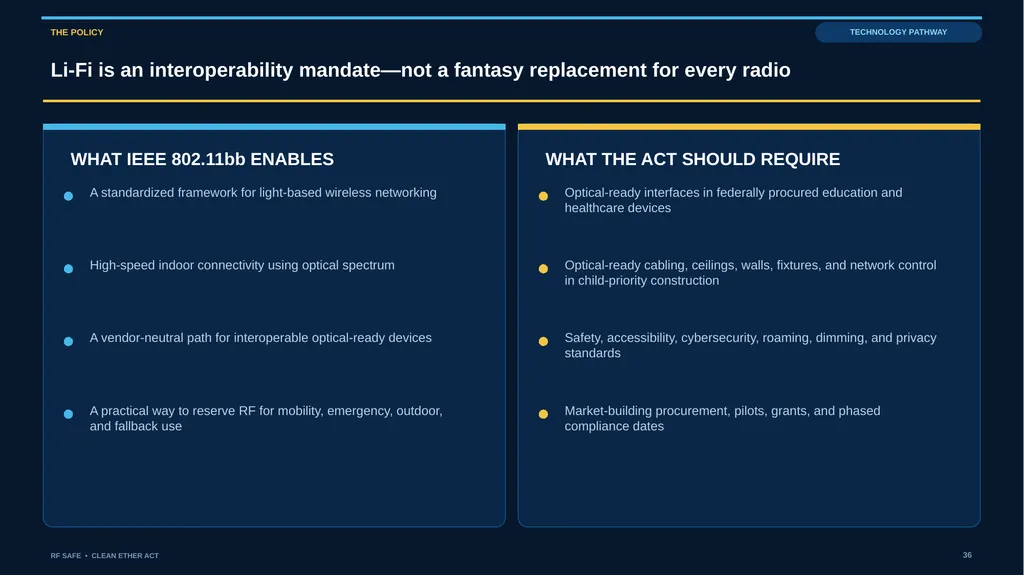
THE POLICY TECHNOLOGY PATHWAY Li-Fi is an interoperability mandate—not a fantasy replacement for every radio RF SAFE • CLEAN ETHER ACT 36 WHAT IEEE 802.11bb ENABLES A standardized framework for light-based wireless networking High-speed indoor connectivity using optical spectrum A vendor-neutral path for interoperable optical-ready devices A practical way to reserve RF for mobility, emergency, outdoor, and fallback use WHAT THE ACT SHOULD REQUIRE Optical-ready interfaces in federally procured education and healthcare devices Optical-ready cabling, ceilings, walls, fixtures, and network control in child-priority construction Safety, accessibility, cybersecurity, roaming, dimming, and privacy standards Market-building procurement, pilots, grants, and phased compliance dates<br>
37
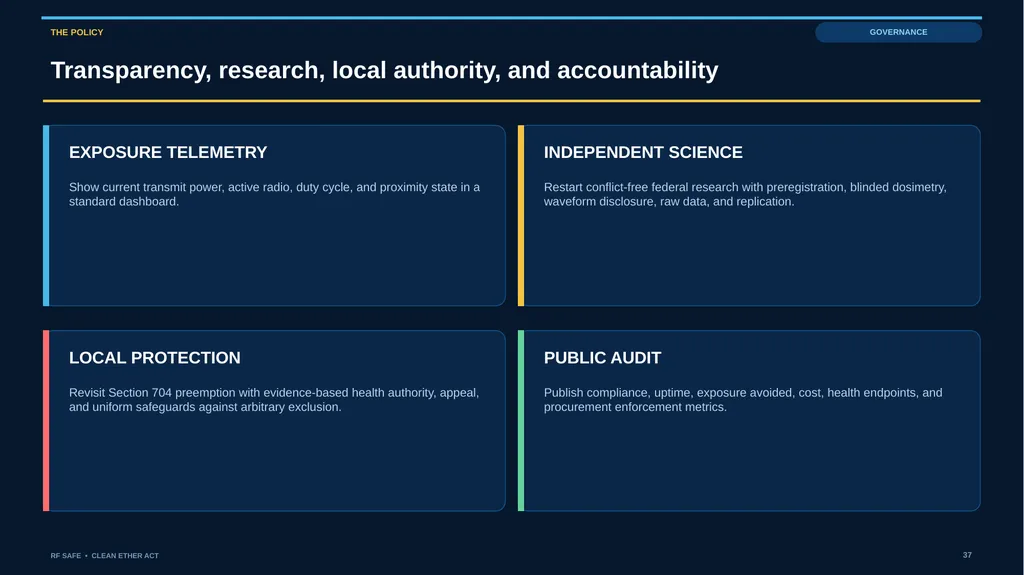
THE POLICY GOVERNANCE Transparency, research, local authority, and accountability RF SAFE • CLEAN ETHER ACT 37 EXPOSURE TELEMETRY Show current transmit power, active radio, duty cycle, and proximity state in a standard dashboard. INDEPENDENT SCIENCE Restart conflict-free federal research with preregistration, blinded dosimetry, waveform disclosure, raw data, and replication. LOCAL PROTECTION Revisit Section 704 preemption with evidence-based health authority, appeal, and uniform safeguards against arbitrary exclusion. PUBLIC AUDIT Publish compliance, uptime, exposure avoided, cost, health endpoints, and procurement enforcement metrics.<br>
38
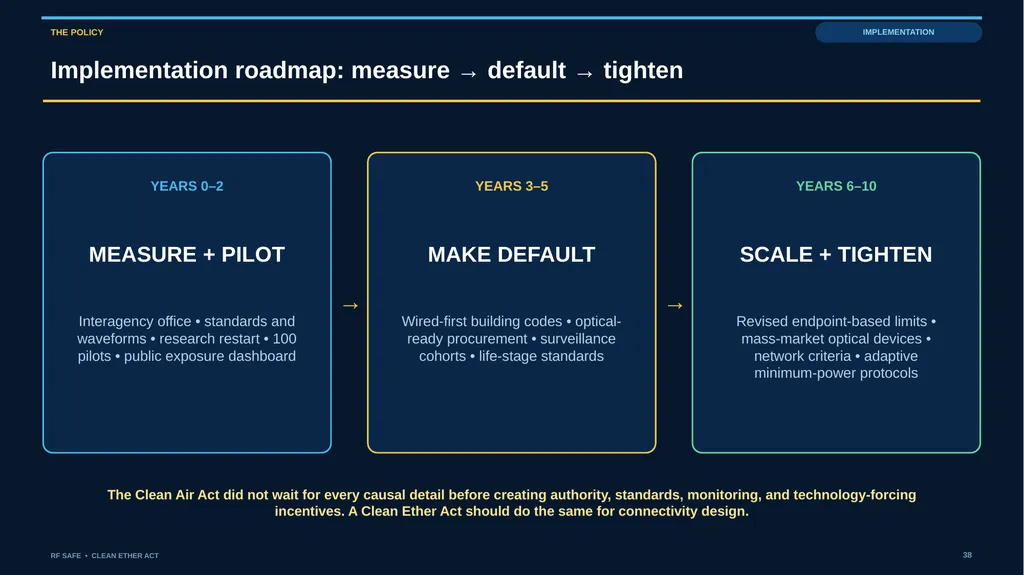
THE POLICY IMPLEMENTATION Implementation roadmap: measure → default → tighten RF SAFE • CLEAN ETHER ACT 38 YEARS 0–2 MEASURE + PILOT Interagency office • standards and waveforms • research restart • 100 pilots • public exposure dashboard → YEARS 3–5 MAKE DEFAULT Wired-first building codes • optical-ready procurement • surveillance cohorts • life-stage standards → YEARS 6–10 SCALE + TIGHTEN Revised endpoint-based limits • mass-market optical devices • network criteria • adaptive minimum-power protocols The Clean Air Act did not wait for every causal detail before creating authority, standards, monitoring, and technology-forcing incentives. A Clean Ether Act should do the same for connectivity design.<br>
39
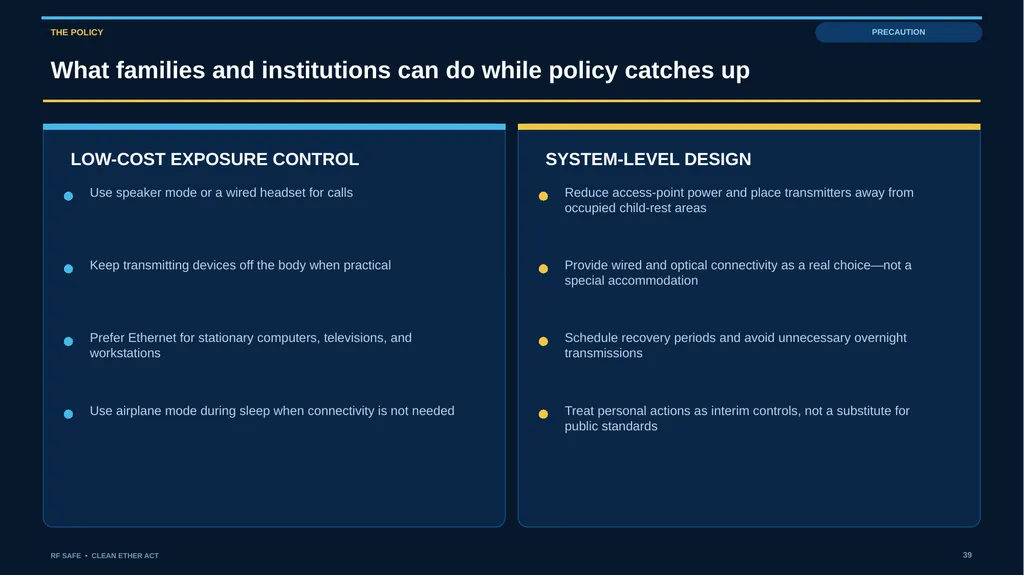
THE POLICY PRECAUTION What families and institutions can do while policy catches up RF SAFE • CLEAN ETHER ACT 39 LOW-COST EXPOSURE CONTROL Use speaker mode or a wired headset for calls Keep transmitting devices off the body when practical Prefer Ethernet for stationary computers, televisions, and workstations Use airplane mode during sleep when connectivity is not needed SYSTEM-LEVEL DESIGN Reduce access-point power and place transmitters away from occupied child-rest areas Provide wired and optical connectivity as a real choice—not a special accommodation Schedule recovery periods and avoid unnecessary overnight transmissions Treat personal actions as interim controls, not a substitute for public standards<br>
40
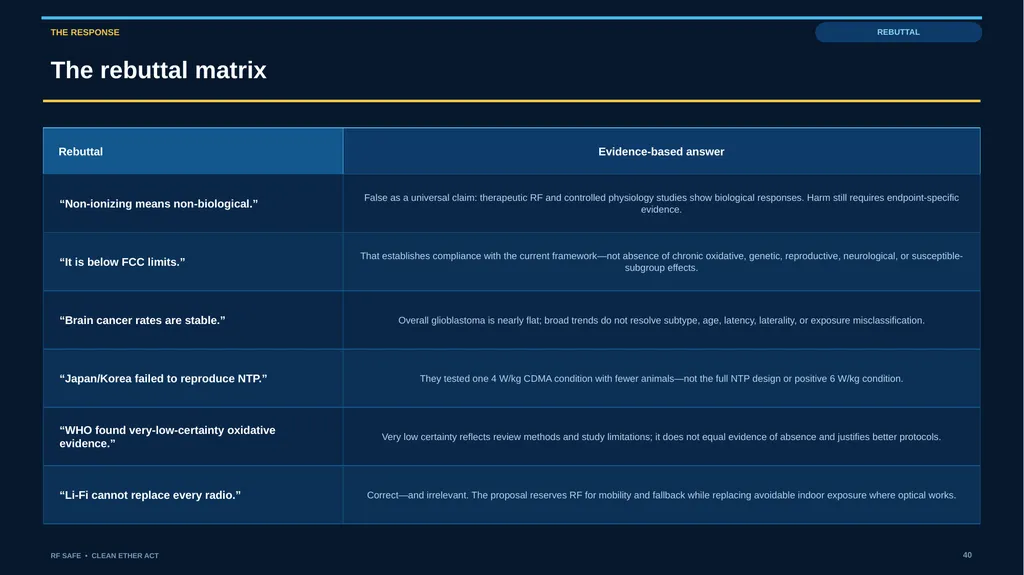
THE RESPONSE REBUTTAL The rebuttal matrix RF SAFE • CLEAN ETHER ACT 40 Rebuttal Evidence-based answer “Non-ionizing means non-biological.” False as a universal claim: therapeutic RF and controlled physiology studies show biological responses. Harm still requires endpoint-specific evidence. “It is below FCC limits.” That establishes compliance with the current framework—not absence of chronic oxidative, genetic, reproductive, neurological, or susceptible-subgroup effects. “Brain cancer rates are stable.” Overall glioblastoma is nearly flat; broad trends do not resolve subtype, age, latency, laterality, or exposure misclassification. “Japan/Korea failed to reproduce NTP.” They tested one 4 W/kg CDMA condition with fewer animals—not the full NTP design or positive 6 W/kg condition. “WHO found very-low-certainty oxidative evidence.” Very low certainty reflects review methods and study limitations; it does not equal evidence of absence and justifies better protocols. “Li-Fi cannot replace every radio.” Correct—and irrelevant. The proposal reserves RF for mobility and fallback while replacing avoidable indoor exposure where optical works.<br>
41
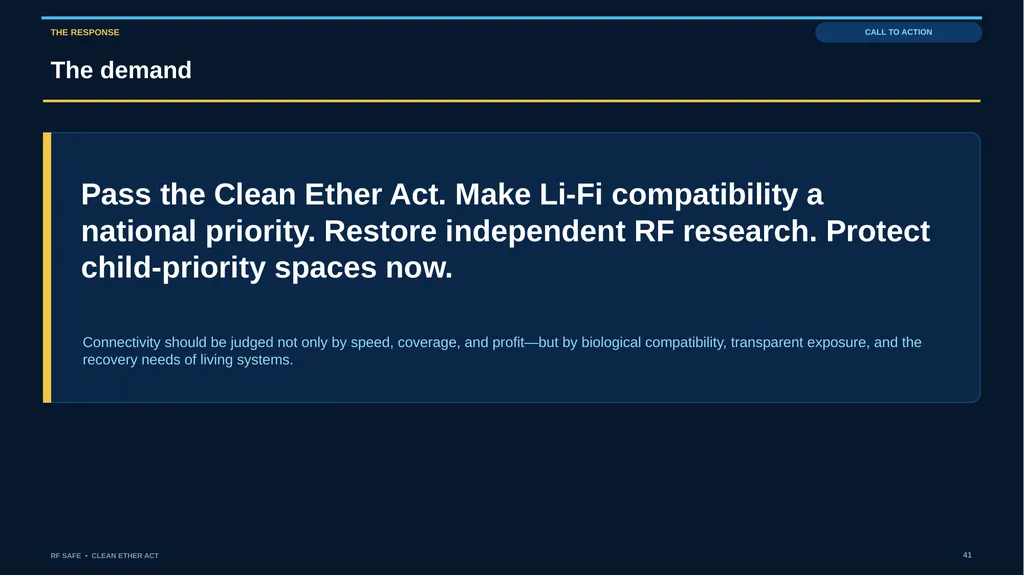
THE RESPONSE CALL TO ACTION The demand RF SAFE • CLEAN ETHER ACT 41 Pass the Clean Ether Act. Make Li-Fi compatibility a national priority. Restore independent RF research. Protect child-priority spaces now. Connectivity should be judged not only by speed, coverage, and profit—but by biological compatibility, transparent exposure, and the recovery needs of living systems.<br>
42
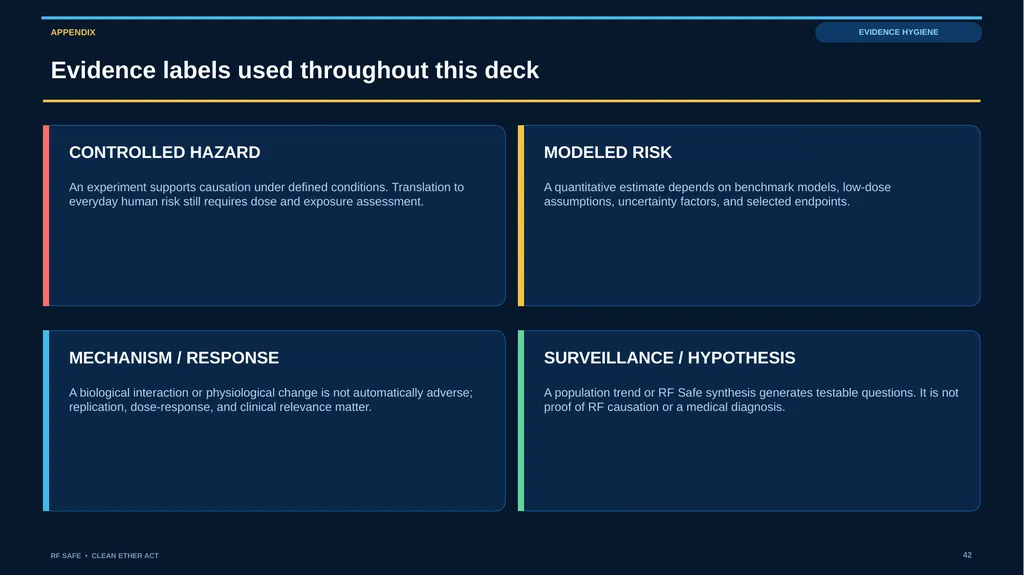
APPENDIX EVIDENCE HYGIENE Evidence labels used throughout this deck RF SAFE • CLEAN ETHER ACT 42 CONTROLLED HAZARD An experiment supports causation under defined conditions. Translation to everyday human risk still requires dose and exposure assessment. MODELED RISK A quantitative estimate depends on benchmark models, low-dose assumptions, uncertainty factors, and selected endpoints. MECHANISM / RESPONSE A biological interaction or physiological change is not automatically adverse; replication, dose-response, and clinical relevance matter. SURVEILLANCE / HYPOTHESIS A population trend or RF Safe synthesis generates testable questions. It is not proof of RF causation or a medical diagnosis.<br>
43
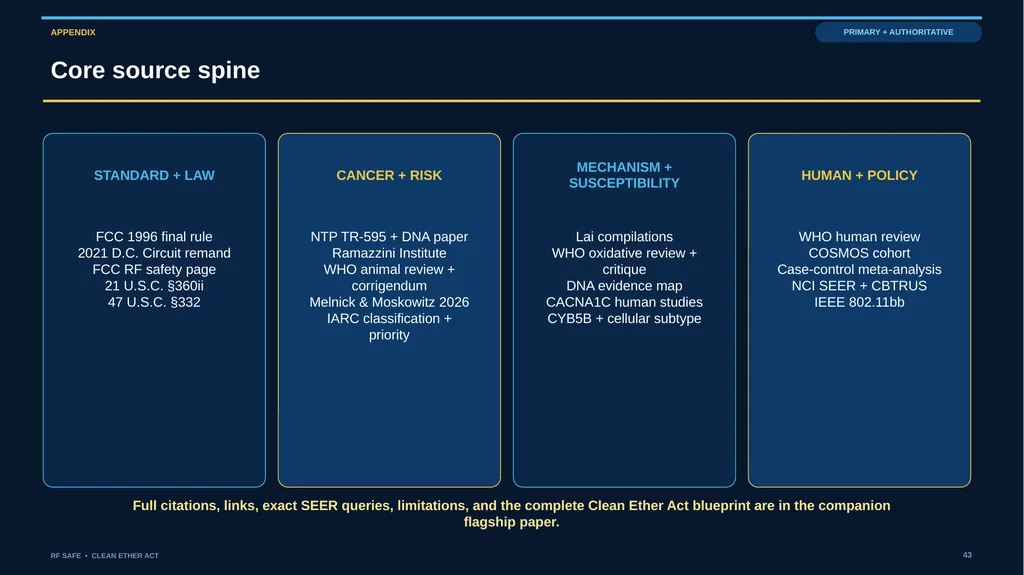
APPENDIX PRIMARY + AUTHORITATIVE Core source spine RF SAFE • CLEAN ETHER ACT 43 STANDARD + LAW FCC 1996 final rule
2021 D.C. Circuit remand
FCC RF safety page
21 U.S.C. §360ii
47 U.S.C. §332 CANCER + RISK NTP TR-595 + DNA paper
Ramazzini Institute
WHO animal review + corrigendum
Melnick & Moskowitz 2026
IARC classification + priority MECHANISM + SUSCEPTIBILITY Lai compilations
WHO oxidative review + critique
DNA evidence map
CACNA1C human studies
CYB5B + cellular subtype HUMAN + POLICY WHO human review
COSMOS cohort
Case-control meta-analysis
NCI SEER + CBTRUS
IEEE 802.11bb Full citations, links, exact SEER queries, limitations, and the complete Clean Ether Act blueprint are in the companion flagship paper.<br>
2021 D.C. Circuit remand
FCC RF safety page
21 U.S.C. §360ii
47 U.S.C. §332 CANCER + RISK NTP TR-595 + DNA paper
Ramazzini Institute
WHO animal review + corrigendum
Melnick & Moskowitz 2026
IARC classification + priority MECHANISM + SUSCEPTIBILITY Lai compilations
WHO oxidative review + critique
DNA evidence map
CACNA1C human studies
CYB5B + cellular subtype HUMAN + POLICY WHO human review
COSMOS cohort
Case-control meta-analysis
NCI SEER + CBTRUS
IEEE 802.11bb Full citations, links, exact SEER queries, limitations, and the complete Clean Ether Act blueprint are in the companion flagship paper.<br>