"Risk Management & Internal Audit (RMIA) Department" is the property of its rightful owner. Permission is granted to
download and print the materials on this website for personal, non-commercial use only, and to display it
on your personal computer provided you do not modify the materials and that you retain all copyright
notices contained in the materials. By downloading content from our website, you accept the terms of this
agreement.
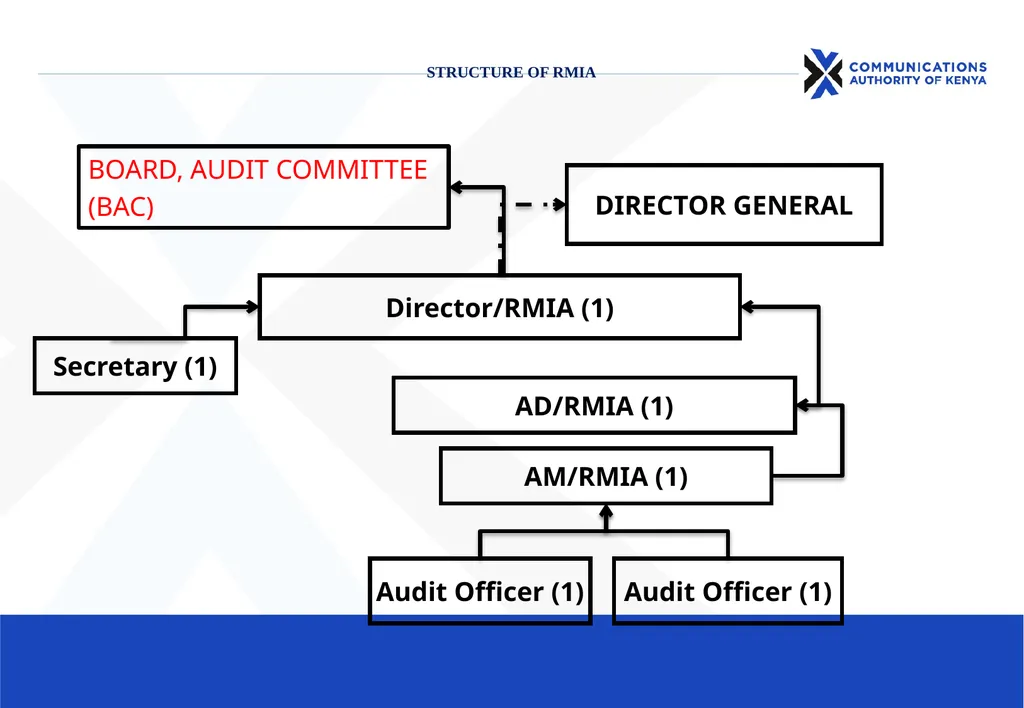
STRUCTURE OF RMIA BOARD, AUDIT COMMITTEE
(BAC) Director/RMIA (1) AD/RMIA (1) AM/RMIA (1) DIRECTOR GENERAL Audit Officer (1) Audit Officer (1) Secretary (1)<br>
03
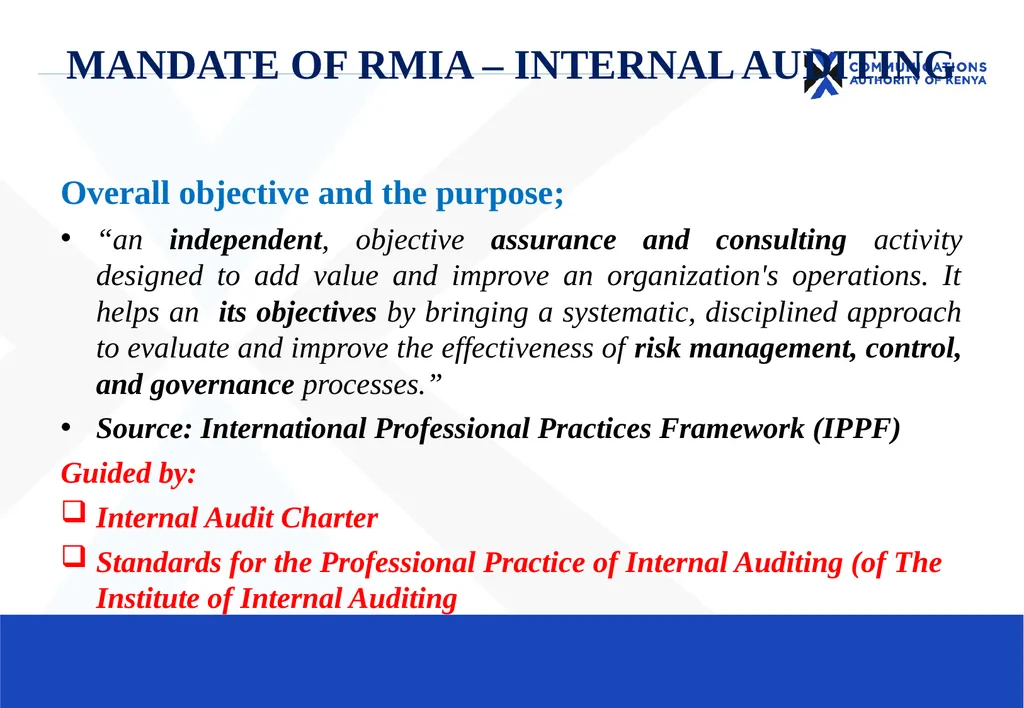
MANDATE OF RMIA – INTERNAL AUDITING Overall objective and the purpose;
“an independent, objective assurance and consulting activity designed to add value and improve an organization's operations. It helps an its objectives by bringing a systematic, disciplined approach to evaluate and improve the effectiveness of risk management, control, and governance processes.”
Source: International Professional Practices Framework (IPPF)
Guided by:
Internal Audit Charter
Standards for the Professional Practice of Internal Auditing (of The Institute of Internal Auditing<br>
04
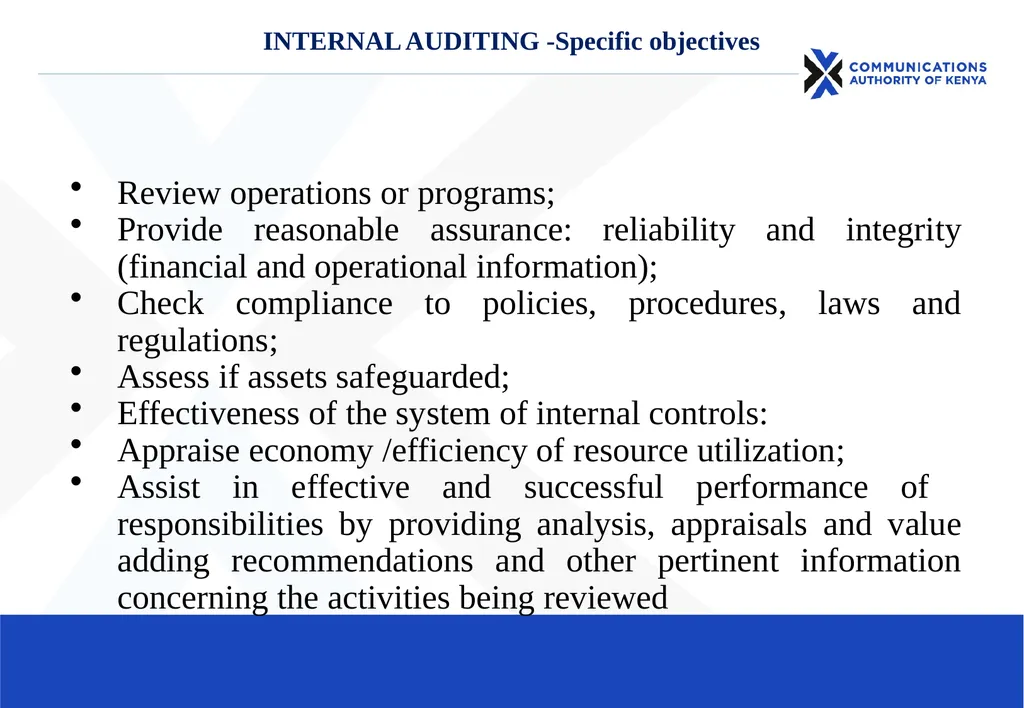
INTERNAL AUDITING -Specific objectives Review operations or programs;
Provide reasonable assurance: reliability and integrity (financial and operational information);
Check compliance to policies, procedures, laws and regulations;
Assess if assets safeguarded;
Effectiveness of the system of internal controls:
Appraise economy /efficiency of resource utilization;
Assist in effective and successful performance of responsibilities by providing analysis, appraisals and value adding recommendations and other pertinent information concerning the activities being reviewed<br>
05
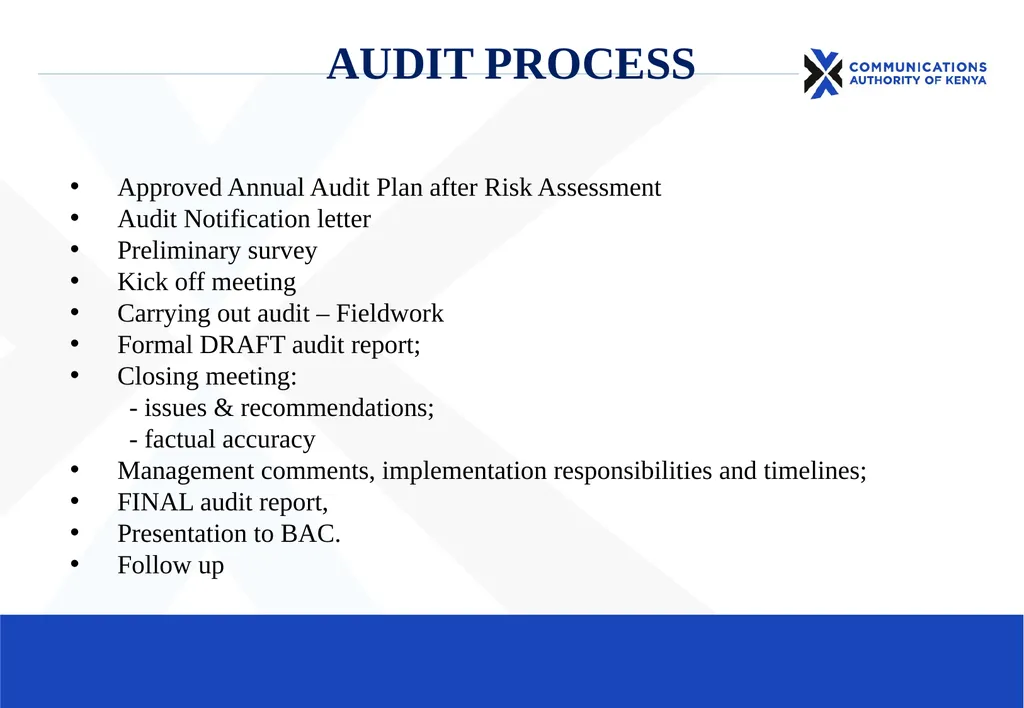
AUDIT PROCESS Approved Annual Audit Plan after Risk Assessment
Audit Notification letter
Preliminary survey
Kick off meeting
Carrying out audit – Fieldwork
Formal DRAFT audit report;
Closing meeting:
- issues & recommendations;
- factual accuracy
Management comments, implementation responsibilities and timelines;
FINAL audit report,
Presentation to BAC.
Follow up<br>
06
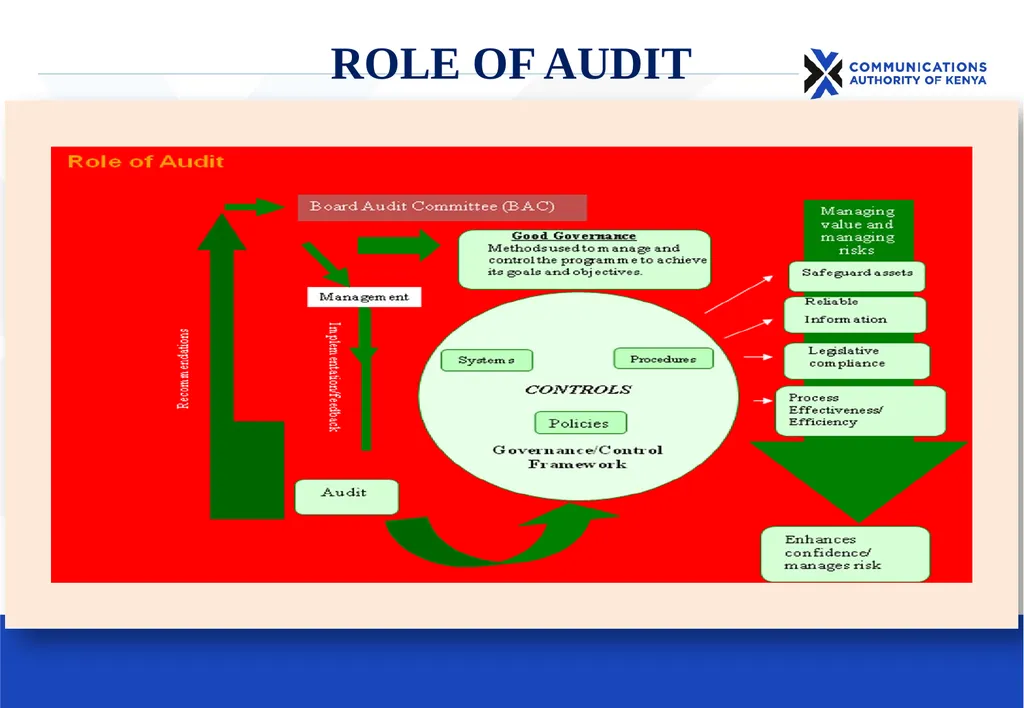
ROLE OF AUDIT<br>
07
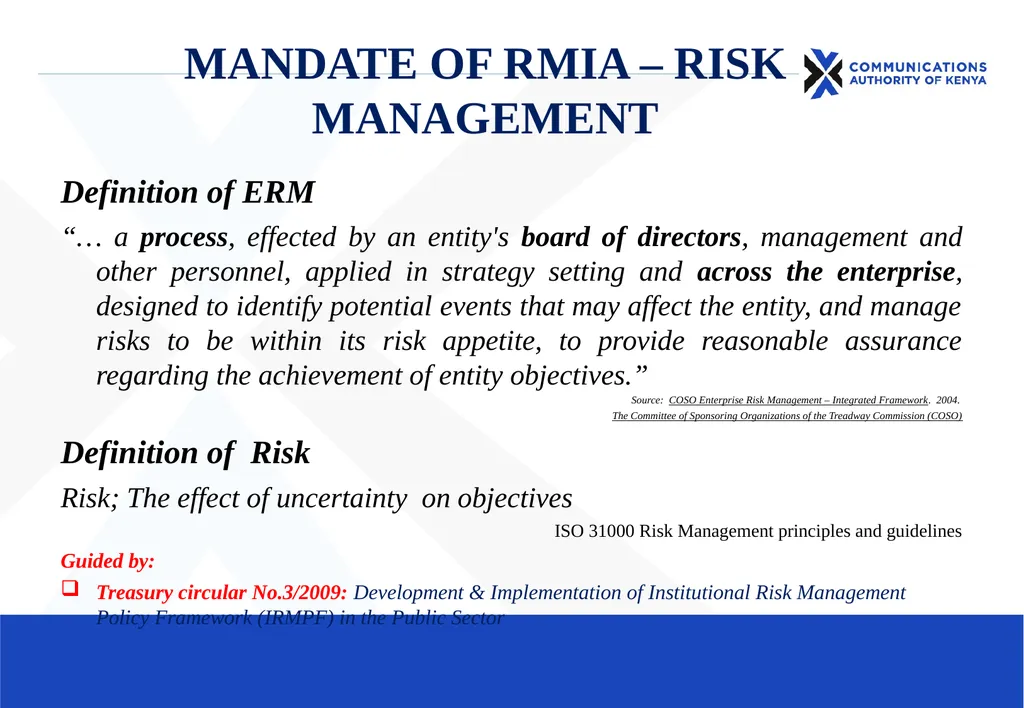
MANDATE OF RMIA – RISK MANAGEMENT Definition of ERM
“… a process, effected by an entity's board of directors, management and other personnel, applied in strategy setting and across the enterprise, designed to identify potential events that may affect the entity, and manage risks to be within its risk appetite, to provide reasonable assurance regarding the achievement of entity objectives.”
Source: COSO Enterprise Risk Management – Integrated Framework. 2004.
The Committee of Sponsoring Organizations of the Treadway Commission (COSO)
Definition of Risk
Risk; The effect of uncertainty on objectives
ISO 31000 Risk Management principles and guidelines
Guided by:
Treasury circular No.3/2009: Development & Implementation of Institutional Risk Management Policy Framework (IRMPF) in the Public Sector<br>
08
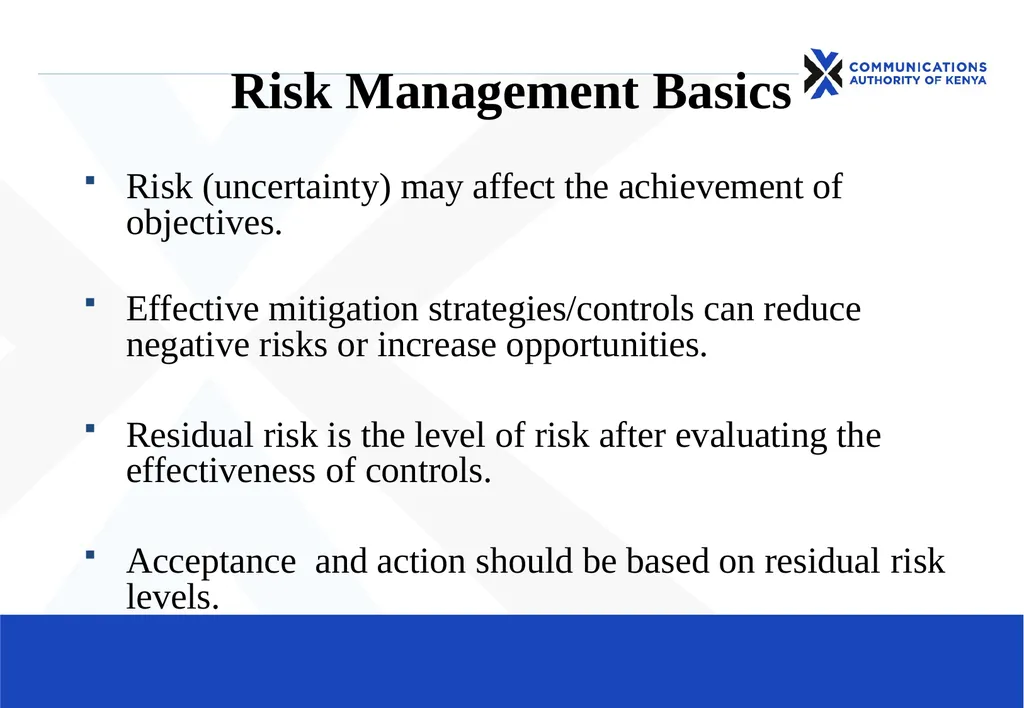
Risk Management Basics Risk (uncertainty) may affect the achievement of objectives.
Effective mitigation strategies/controls can reduce negative risks or increase opportunities.
Residual risk is the level of risk after evaluating the effectiveness of controls.
Acceptance and action should be based on residual risk levels.<br>
09
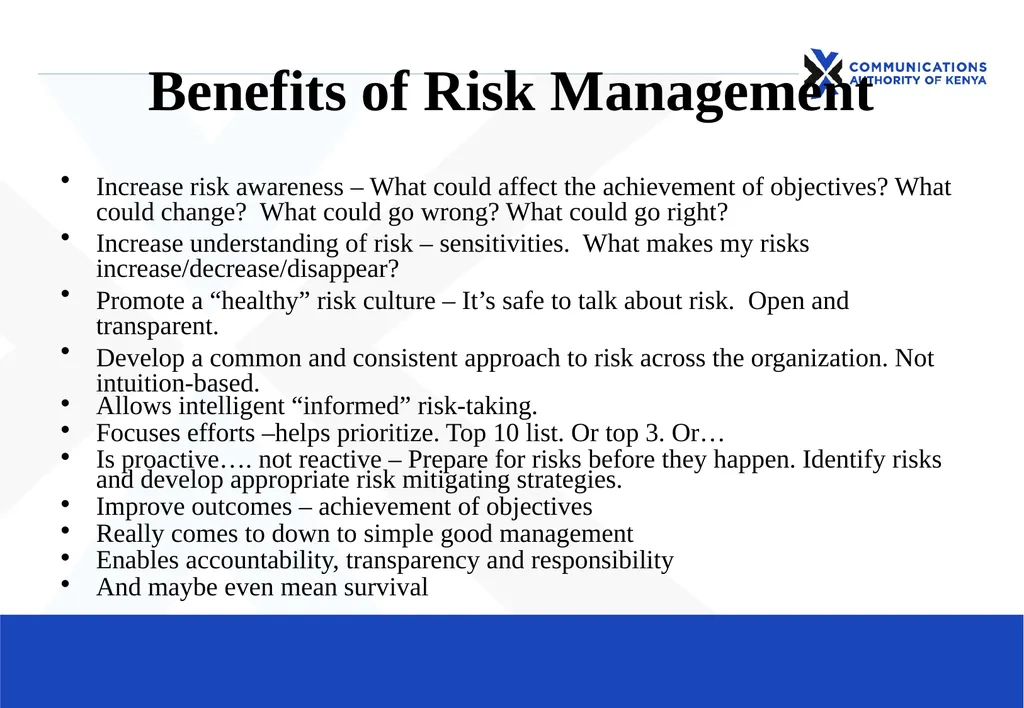
Benefits of Risk Management Increase risk awareness – What could affect the achievement of objectives? What could change? What could go wrong? What could go right?
Increase understanding of risk – sensitivities. What makes my risks increase/decrease/disappear?
Promote a “healthy” risk culture – It’s safe to talk about risk. Open and transparent.
Develop a common and consistent approach to risk across the organization. Not intuition-based.
Allows intelligent “informed” risk-taking.
Focuses efforts –helps prioritize. Top 10 list. Or top 3. Or…
Is proactive…. not reactive – Prepare for risks before they happen. Identify risks and develop appropriate risk mitigating strategies.
Improve outcomes – achievement of objectives
Really comes to down to simple good management
Enables accountability, transparency and responsibility
And maybe even mean survival<br>