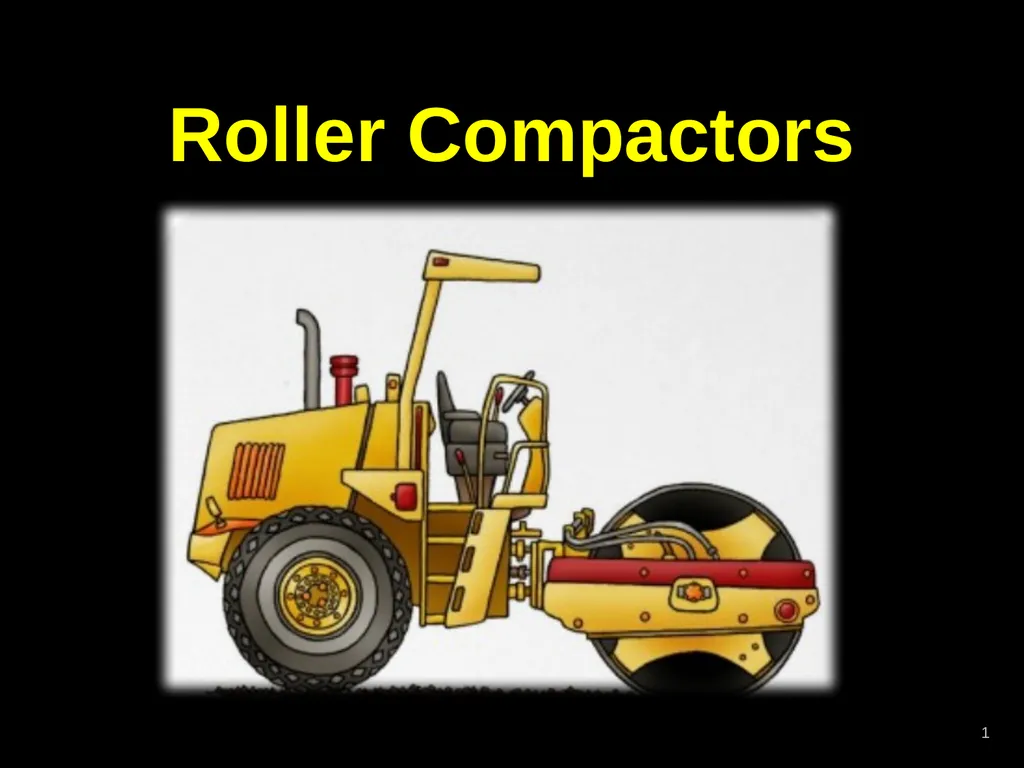
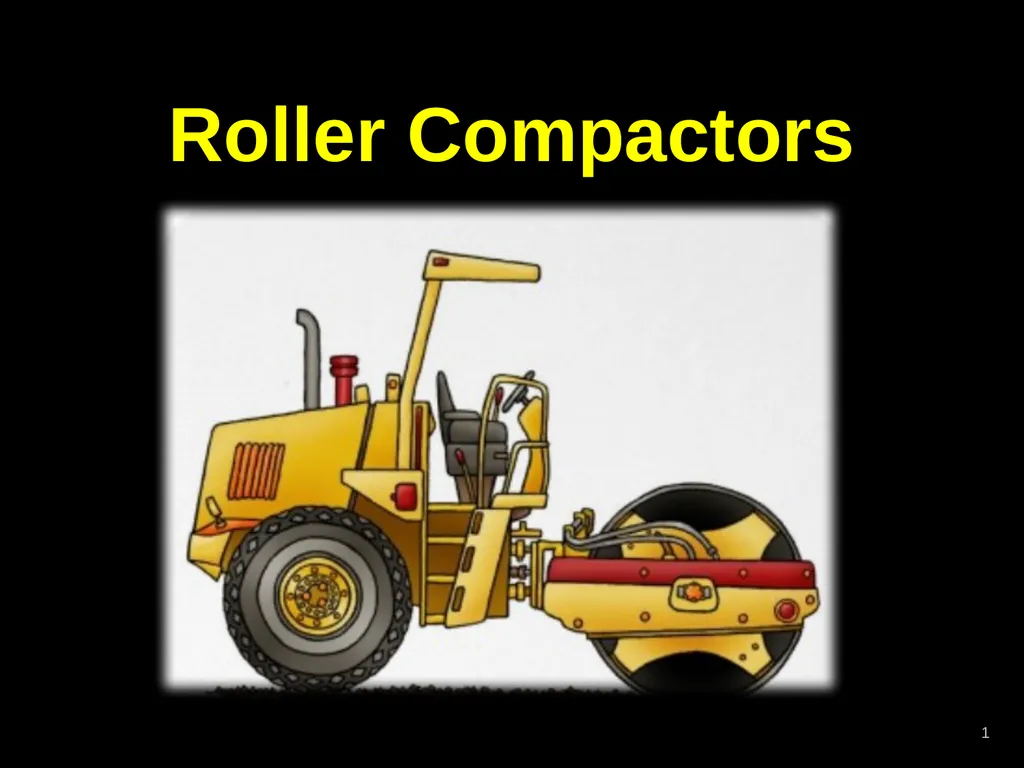
Roller Compactors 1 Description Roller compactors, are used to increase the density of embankments and roadways to level and seal surfaces. They are often used for compaction in construction earthwork. Other construction uses include roads,
"Roller Compactors 1 Description Roller compactors," is the property of its rightful owner. Permission is granted to
download and print the materials on this website for personal, non-commercial use only, and to display it
on your personal computer provided you do not modify the materials and that you retain all copyright
notices contained in the materials. By downloading content from our website, you accept the terms of this
agreement.
Presentation Transcript
01
Roller Compactors 1<br>
02
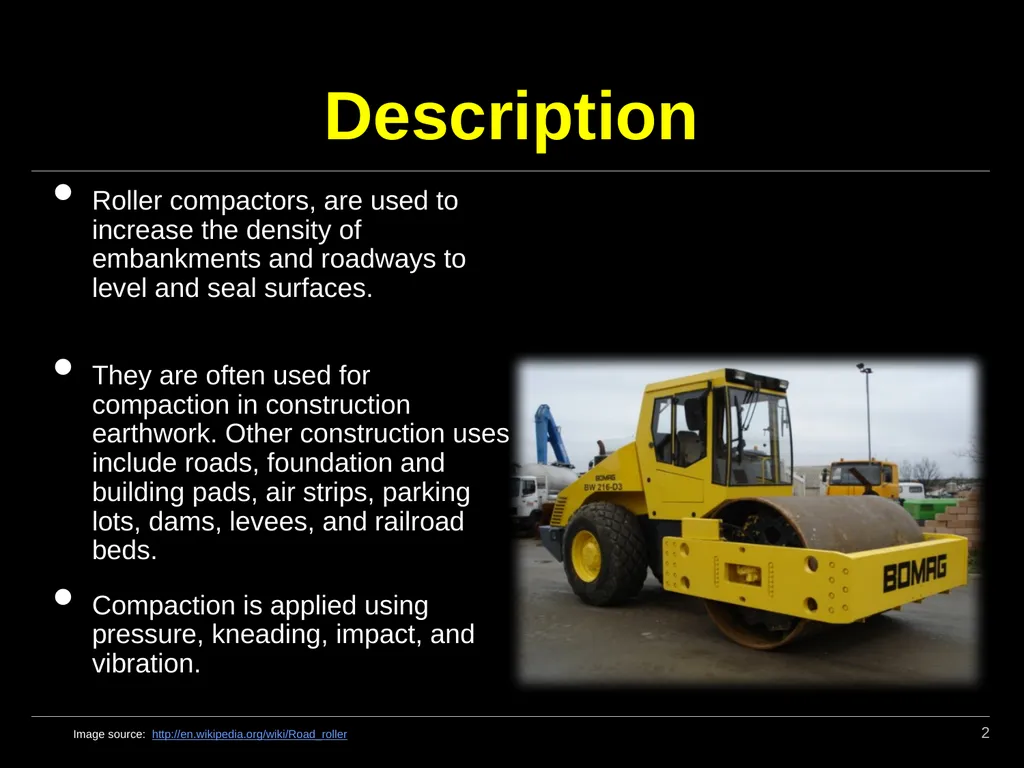
Description Roller compactors, are used to increase the density of embankments and roadways to level and seal surfaces.
They are often used for compaction in construction earthwork. Other construction uses include roads, foundation and building pads, air strips, parking lots, dams, levees, and railroad beds.
Compaction is applied using pressure, kneading, impact, and vibration. Image source: http://en.wikipedia.org/wiki/Road_roller 2<br>
03
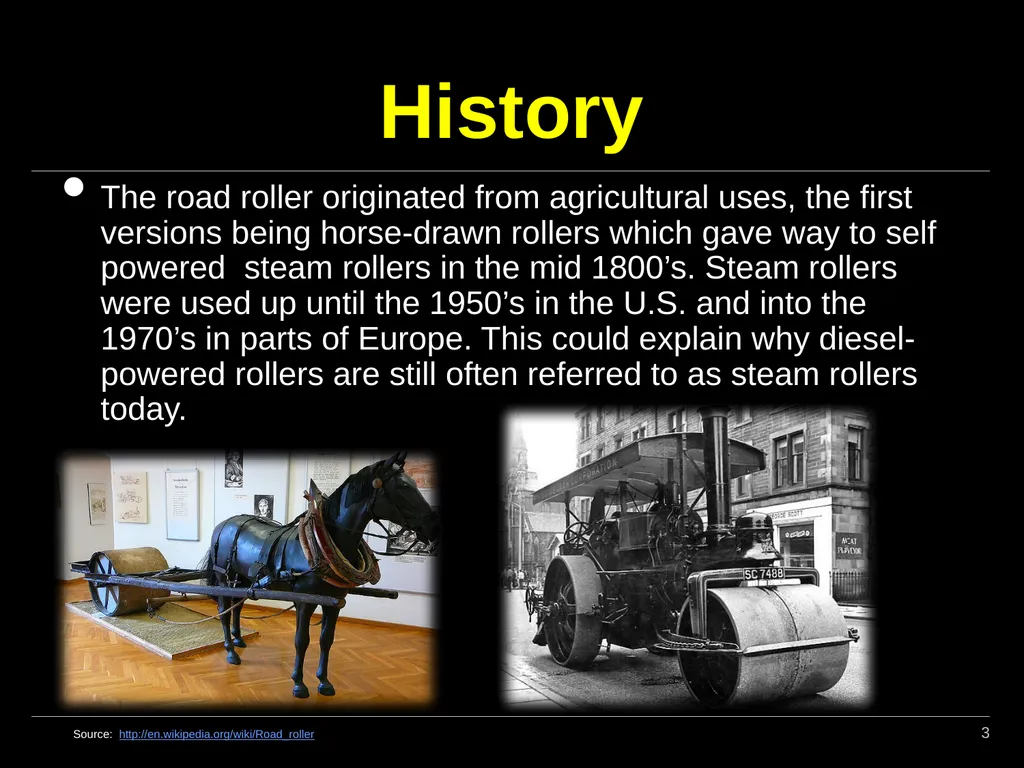
History The road roller originated from agricultural uses, the first versions being horse-drawn rollers which gave way to self powered steam rollers in the mid 1800’s. Steam rollers were used up until the 1950’s in the U.S. and into the 1970’s in parts of Europe. This could explain why diesel-powered rollers are still often referred to as steam rollers today. Source: http://en.wikipedia.org/wiki/Road_roller 3<br>
04
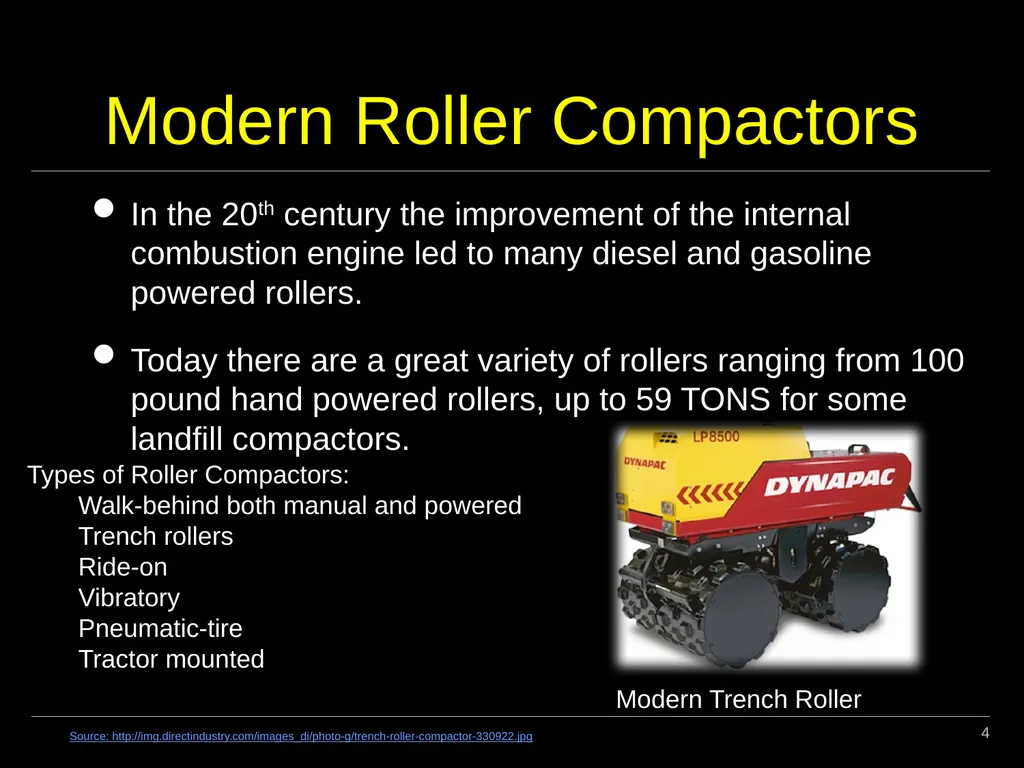
Modern Roller Compactors In the 20th century the improvement of the internal combustion engine led to many diesel and gasoline powered rollers.
Today there are a great variety of rollers ranging from 100 pound hand powered rollers, up to 59 TONS for some landfill compactors. Types of Roller Compactors:
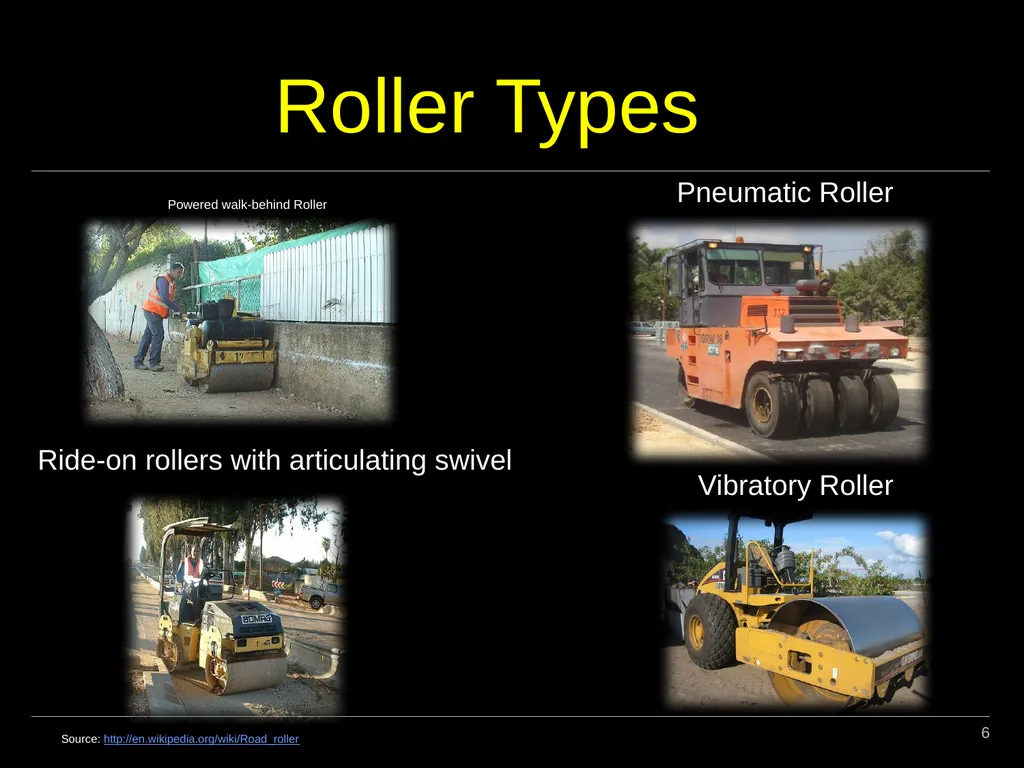
Walk-behind both manual and powered
Trench rollers
Ride-on
Vibratory
Pneumatic-tire
Tractor mounted Modern Trench Roller Source: http://img.directindustry.com/images_di/photo-g/trench-roller-compactor-330922.jpg 4<br>
05
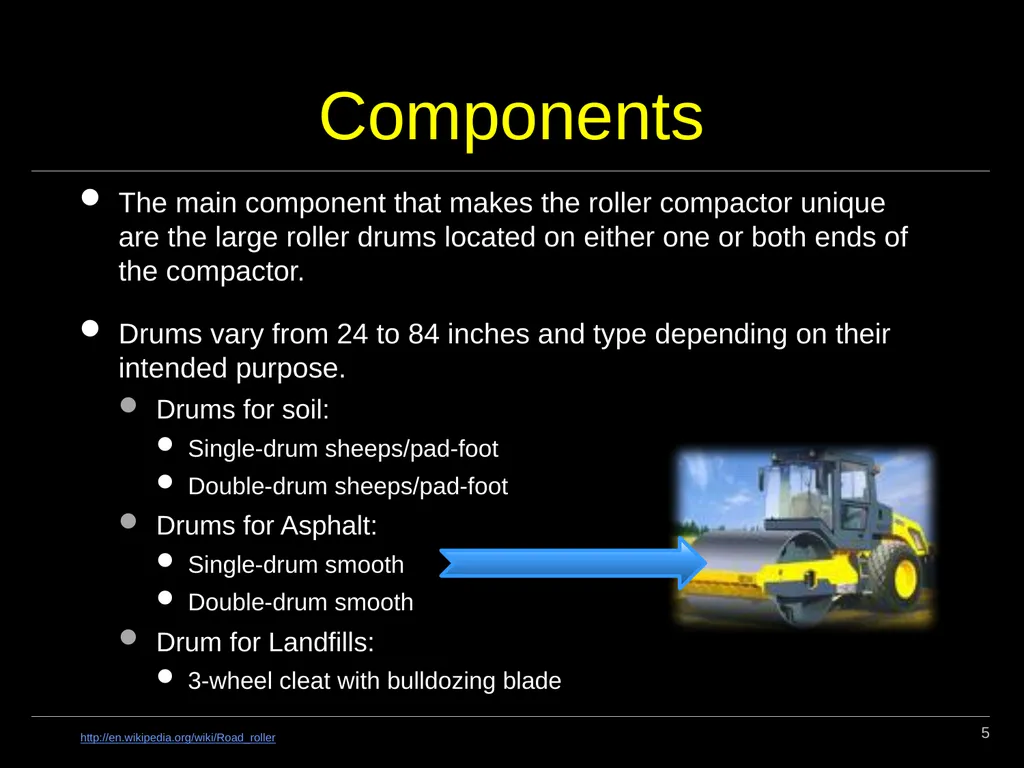
Components The main component that makes the roller compactor unique are the large roller drums located on either one or both ends of the compactor.
Drums vary from 24 to 84 inches and type depending on their intended purpose.
Drums for soil:
Single-drum sheeps/pad-foot
Double-drum sheeps/pad-foot
Drums for Asphalt:
Single-drum smooth
Double-drum smooth
Drum for Landfills:
3-wheel cleat with bulldozing blade http://en.wikipedia.org/wiki/Road_roller 5<br>
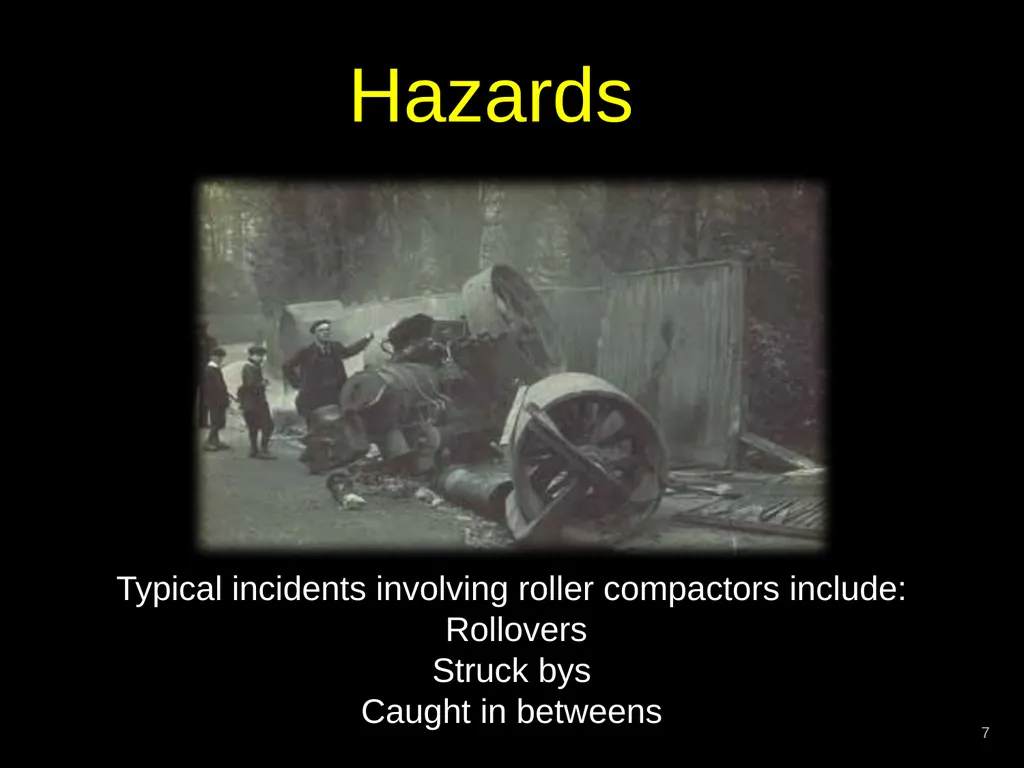
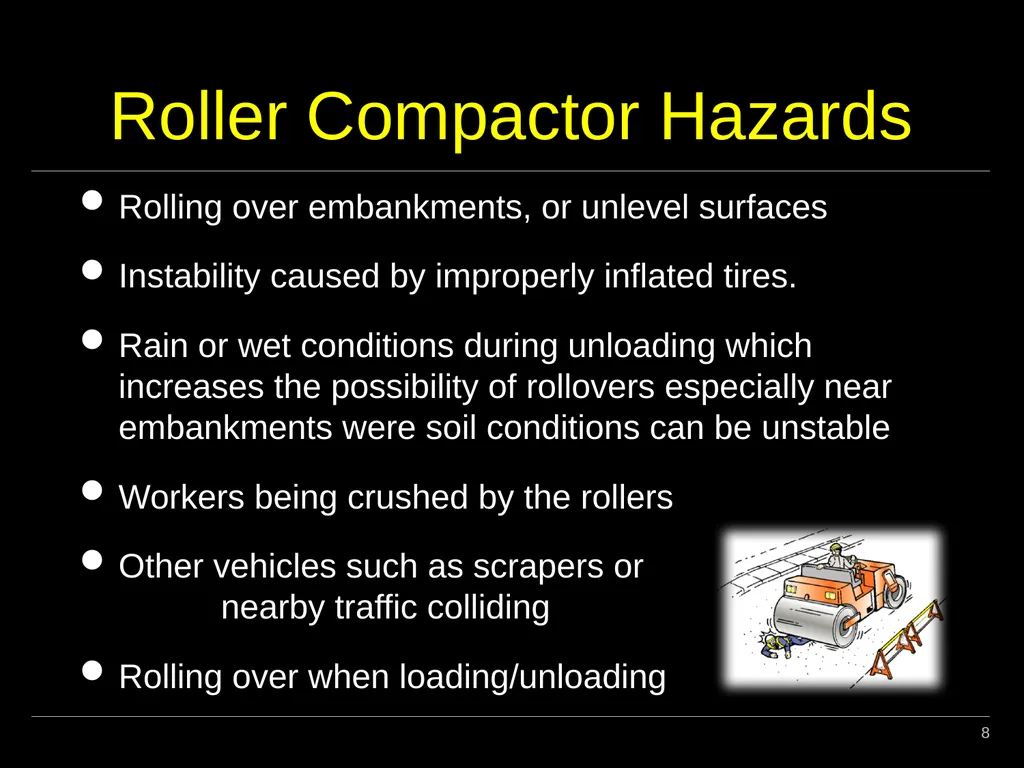
Roller Compactor Hazards Rolling over embankments, or unlevel surfaces
Instability caused by improperly inflated tires.
Rain or wet conditions during unloading which increases the possibility of rollovers especially near embankments were soil conditions can be unstable
Workers being crushed by the rollers
Other vehicles such as scrapers or nearby traffic colliding
Rolling over when loading/unloading 8<br>
09
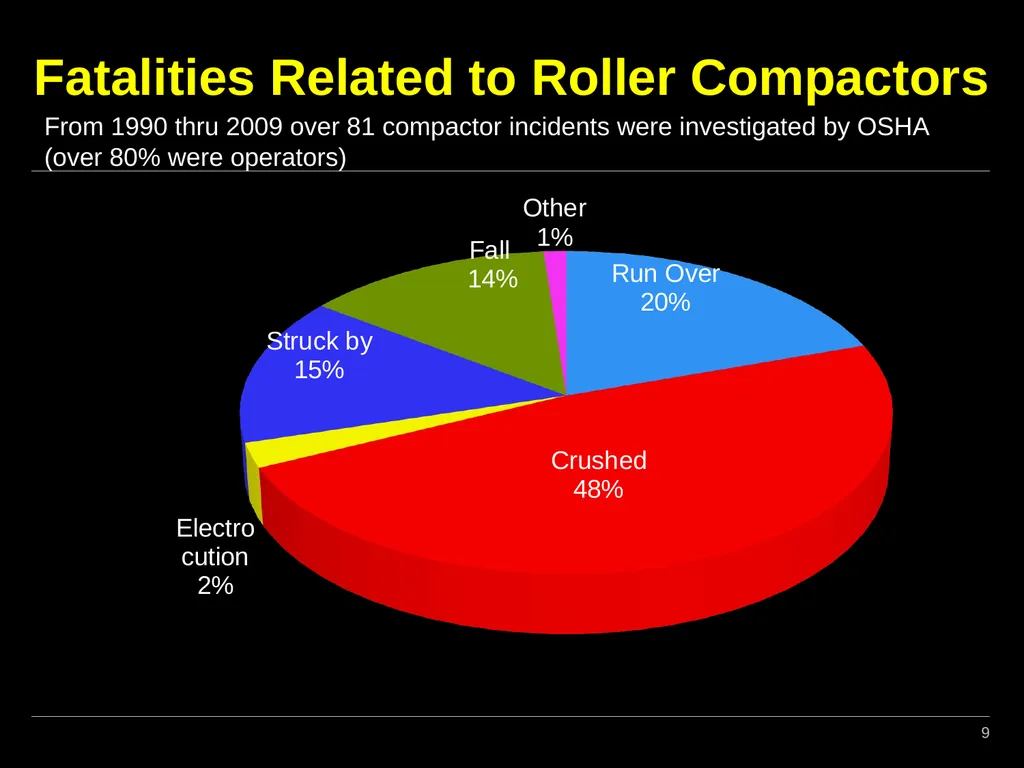
Fatalities Related to Roller Compactors 9 From 1990 thru 2009 over 81 compactor incidents were investigated by OSHA (over 80% were operators)<br>
10
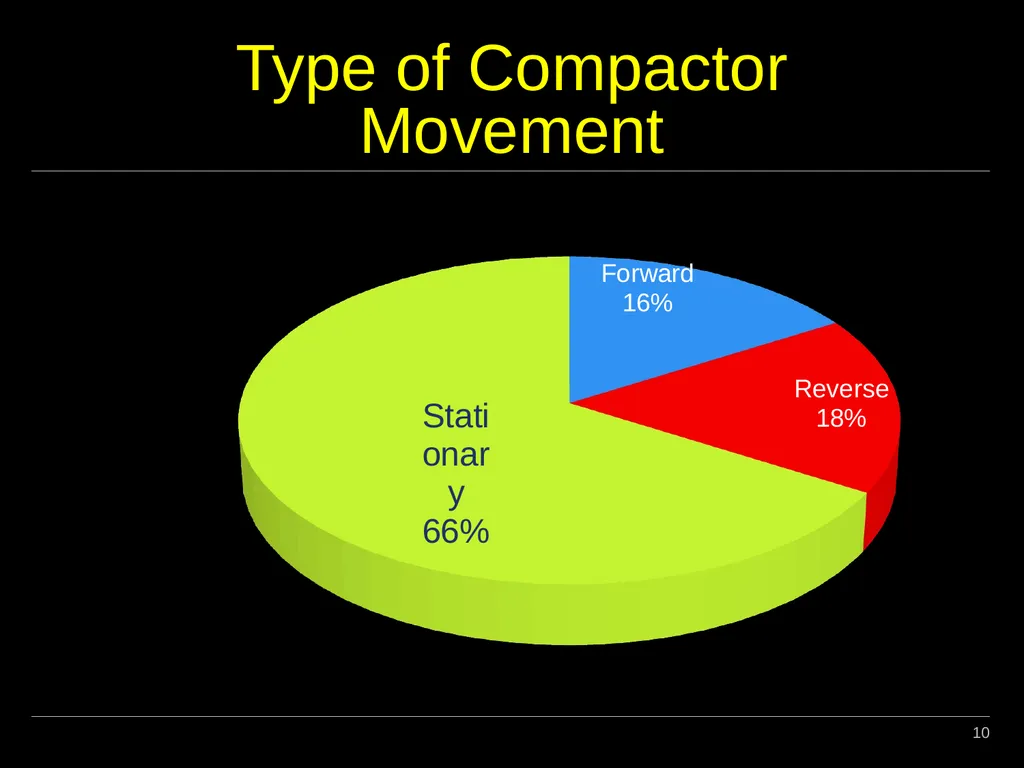
Type of Compactor Movement 10<br>
11
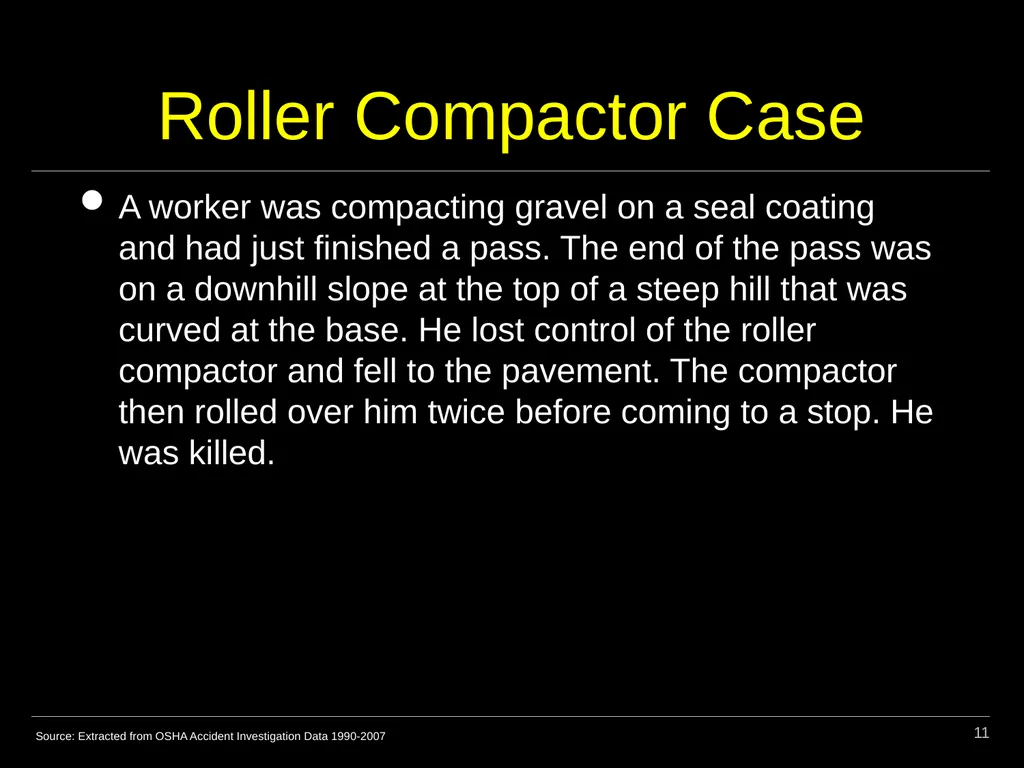
Roller Compactor Case A worker was compacting gravel on a seal coating and had just finished a pass. The end of the pass was on a downhill slope at the top of a steep hill that was curved at the base. He lost control of the roller compactor and fell to the pavement. The compactor then rolled over him twice before coming to a stop. He was killed. 11 Source: Extracted from OSHA Accident Investigation Data 1990-2007<br>
12
Roller Compactor Case A worker was operating a dual drum roller compactor that turned over while compacting aggregate at the side of a newly paved road. The worker lost control as he got too far over to the side where a large ravine existed and began to slide sideways. He attempted to jump clear but the roller compactor turned over and landed on top of him. There was no rollover protective structure and seatbelt provided on this equipment. 12 Source: Extracted from OSHA Accident Investigation Data 1990-2007<br>
13
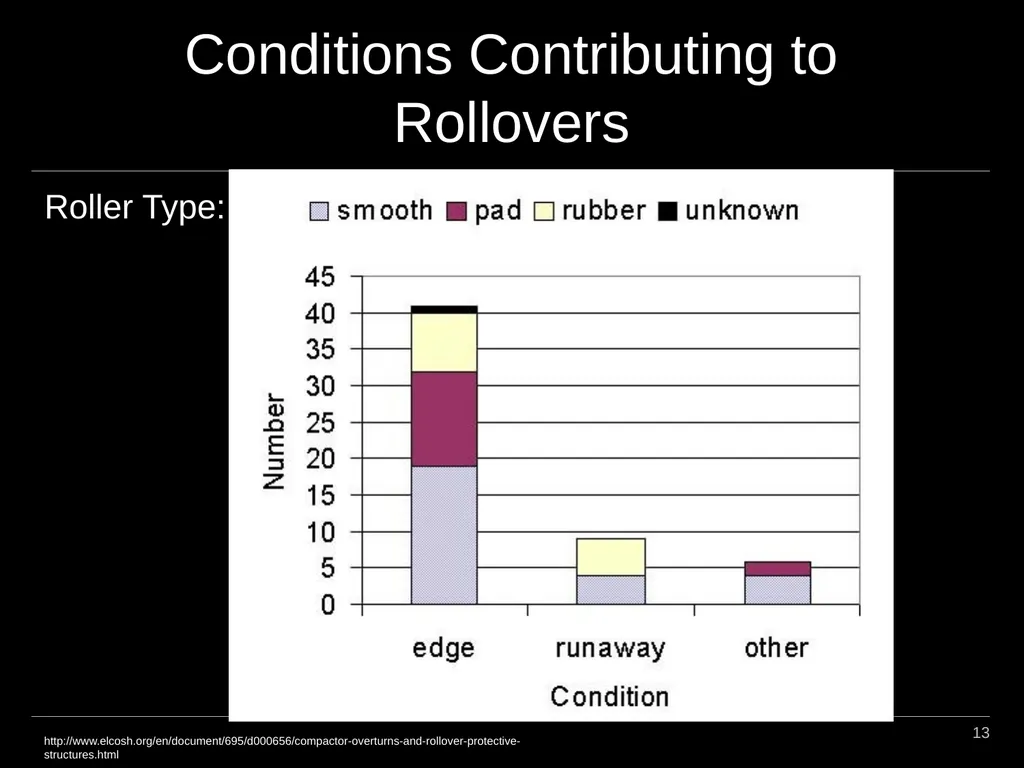
Conditions Contributing to Rollovers Roller Type: 13 http://www.elcosh.org/en/document/695/d000656/compactor-overturns-and-rollover-protective-structures.html<br>
14
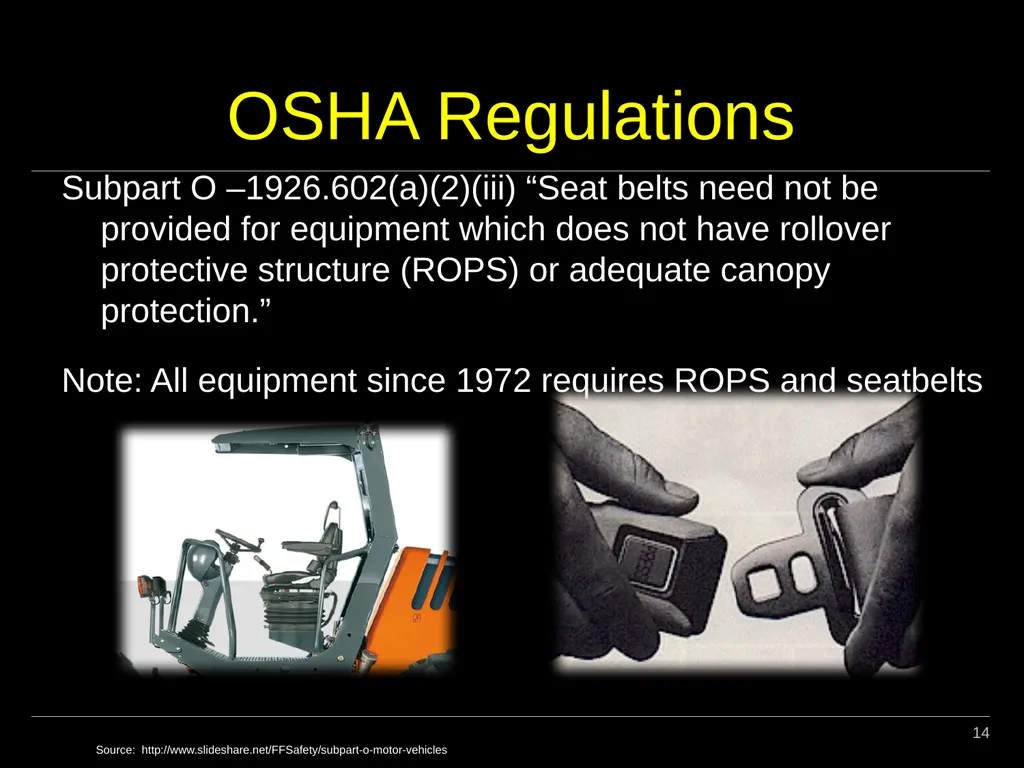
OSHA Regulations Subpart O –1926.602(a)(2)(iii) “Seat belts need not be provided for equipment which does not have rollover protective structure (ROPS) or adequate canopy protection.”
Note: All equipment since 1972 requires ROPS and seatbelts 14 Source: http://www.slideshare.net/FFSafety/subpart-o-motor-vehicles<br>
15
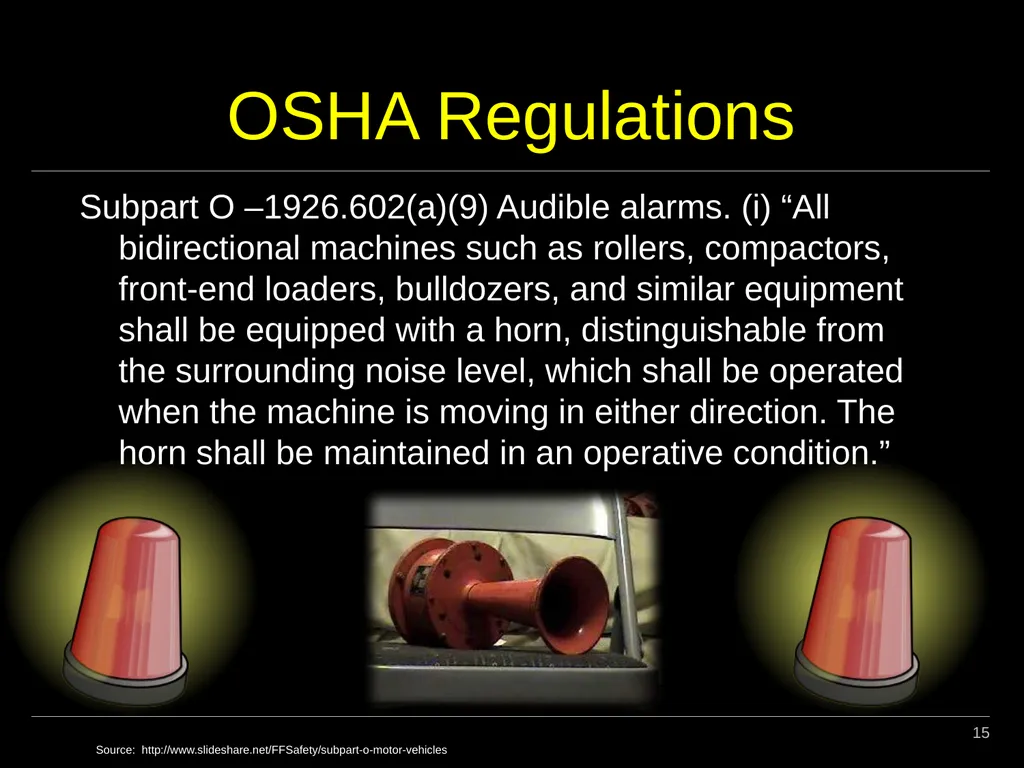
OSHA Regulations Subpart O –1926.602(a)(9) Audible alarms. (i) “All bidirectional machines such as rollers, compactors, front-end loaders, bulldozers, and similar equipment shall be equipped with a horn, distinguishable from the surrounding noise level, which shall be operated when the machine is moving in either direction. The horn shall be maintained in an operative condition.” 15 Source: http://www.slideshare.net/FFSafety/subpart-o-motor-vehicles<br>
16
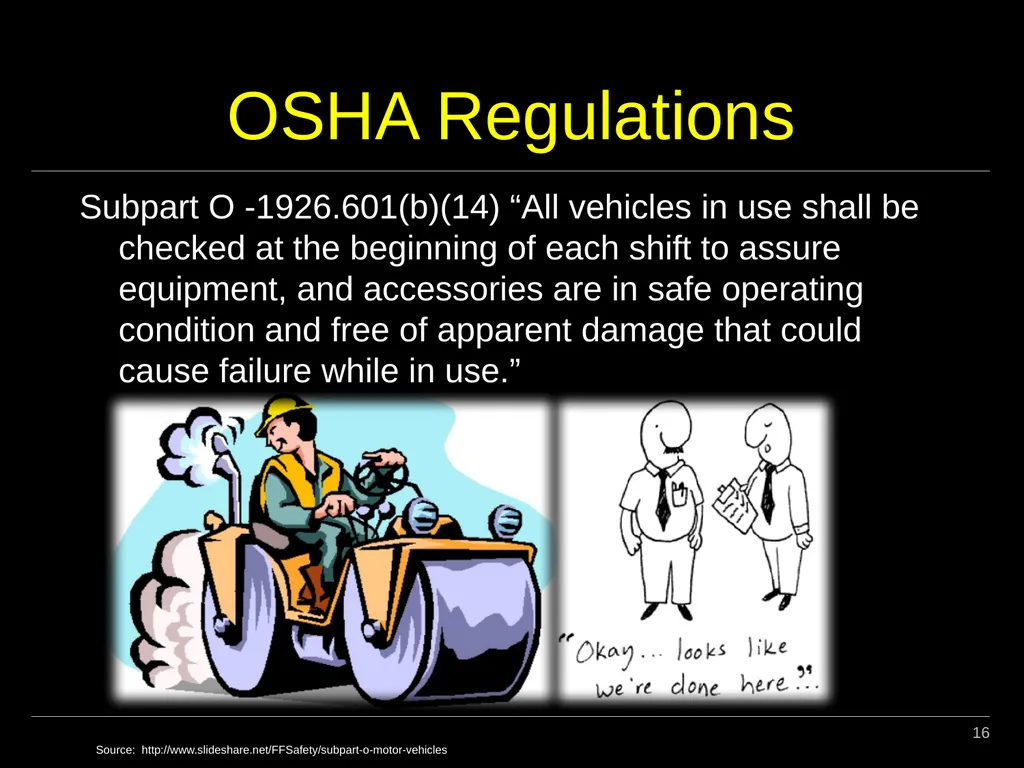
OSHA Regulations Subpart O -1926.601(b)(14) “All vehicles in use shall be checked at the beginning of each shift to assure equipment, and accessories are in safe operating condition and free of apparent damage that could cause failure while in use.” 16 Source: http://www.slideshare.net/FFSafety/subpart-o-motor-vehicles<br>
17
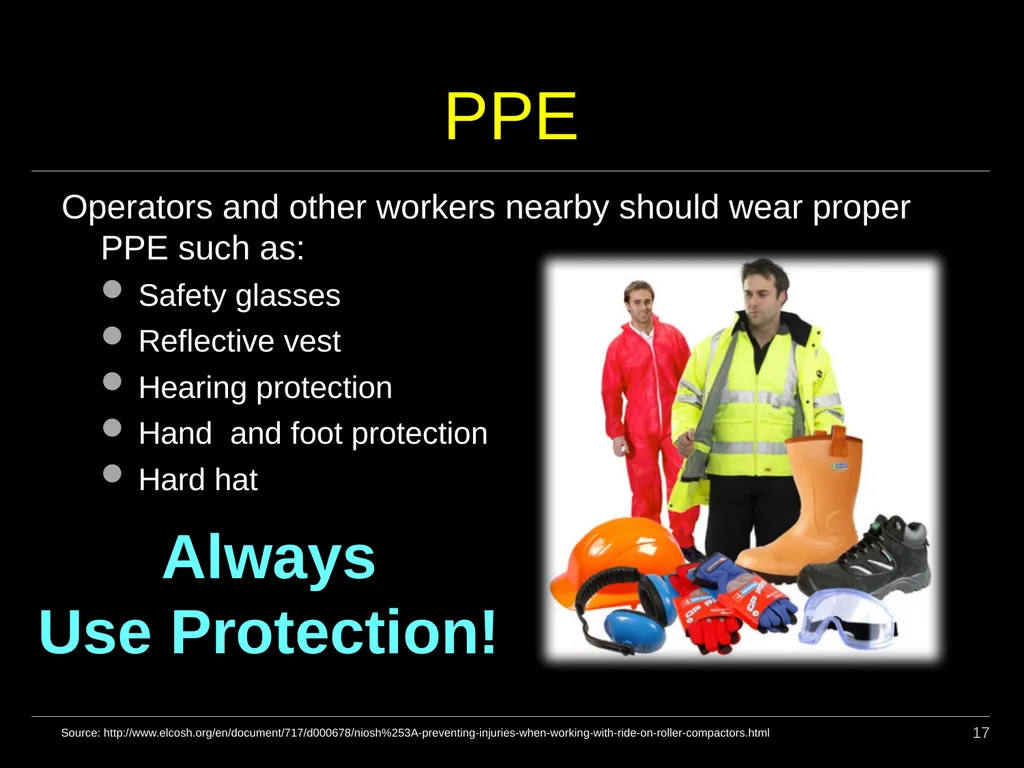
PPE Operators and other workers nearby should wear proper PPE such as:
Safety glasses
Reflective vest
Hearing protection
Hand and foot protection
Hard hat Source: http://www.elcosh.org/en/document/717/d000678/niosh%253A-preventing-injuries-when-working-with-ride-on-roller-compactors.html 17 Always
Use Protection!<br>
18
Safe Procedures Conduct pre-shift inspections to make sure all equipment systems, including the braking system, the tires, and operator controls, are in proper working condition
Operator should be adequately trained
Make sure all workers in the area, are aware of the work to be done
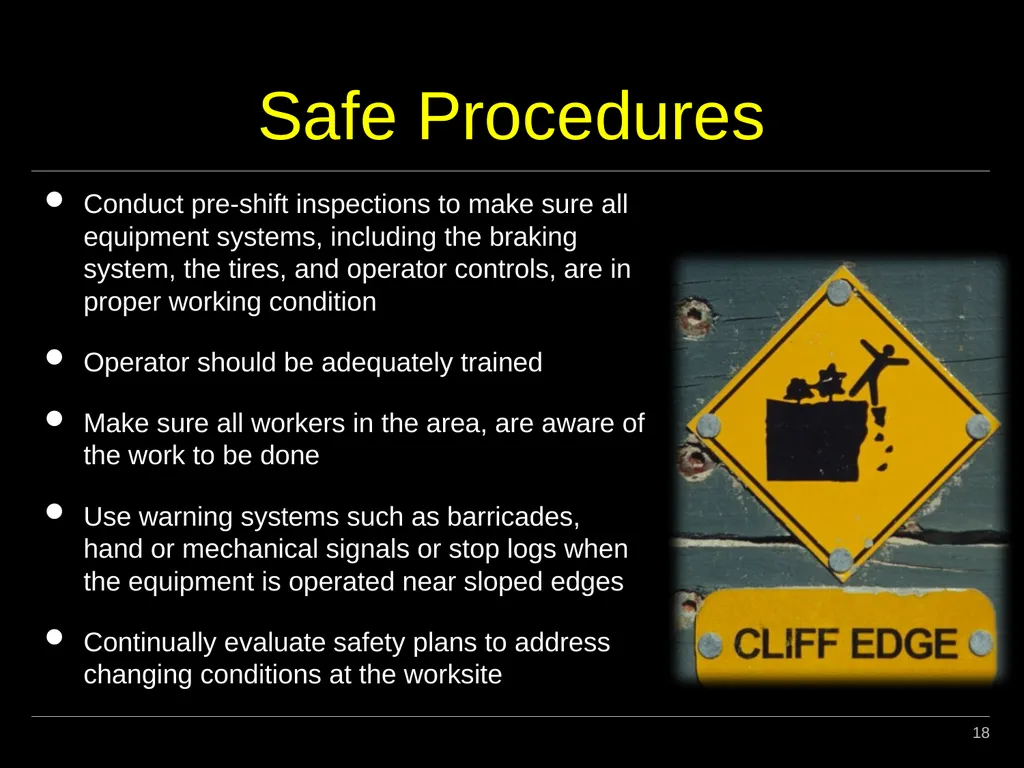
Use warning systems such as barricades, hand or mechanical signals or stop logs when the equipment is operated near sloped edges
Continually evaluate safety plans to address changing conditions at the worksite 18<br>
19
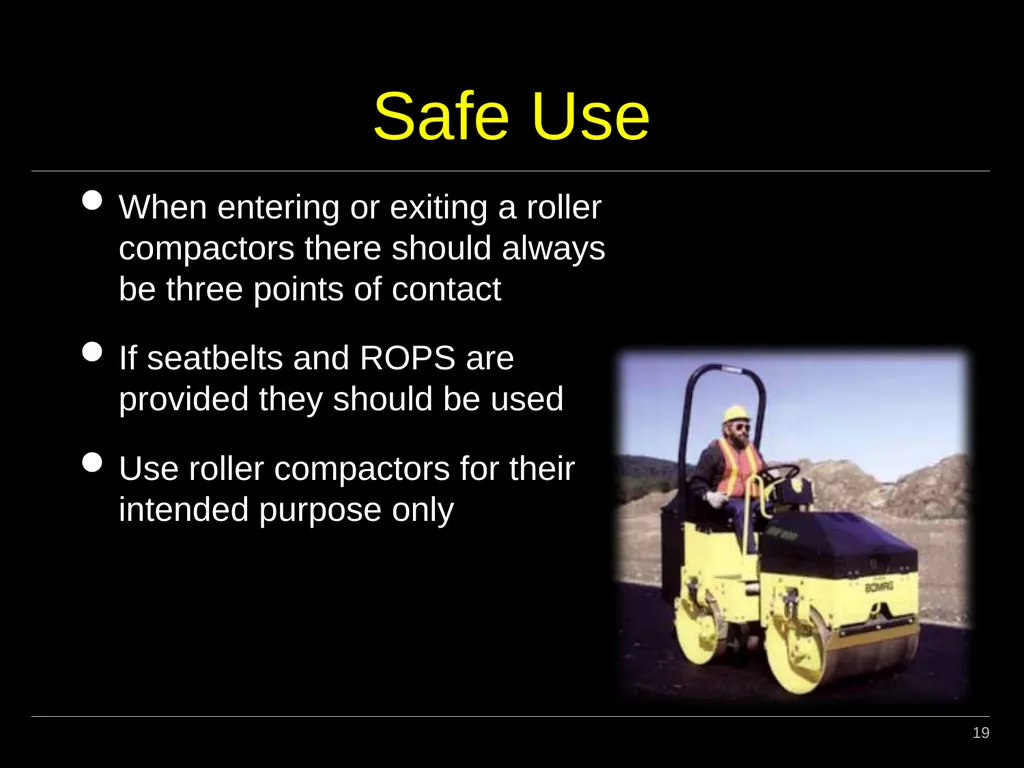
Safe Use When entering or exiting a roller compactors there should always be three points of contact
If seatbelts and ROPS are provided they should be used
Use roller compactors for their intended purpose only 19<br>
20
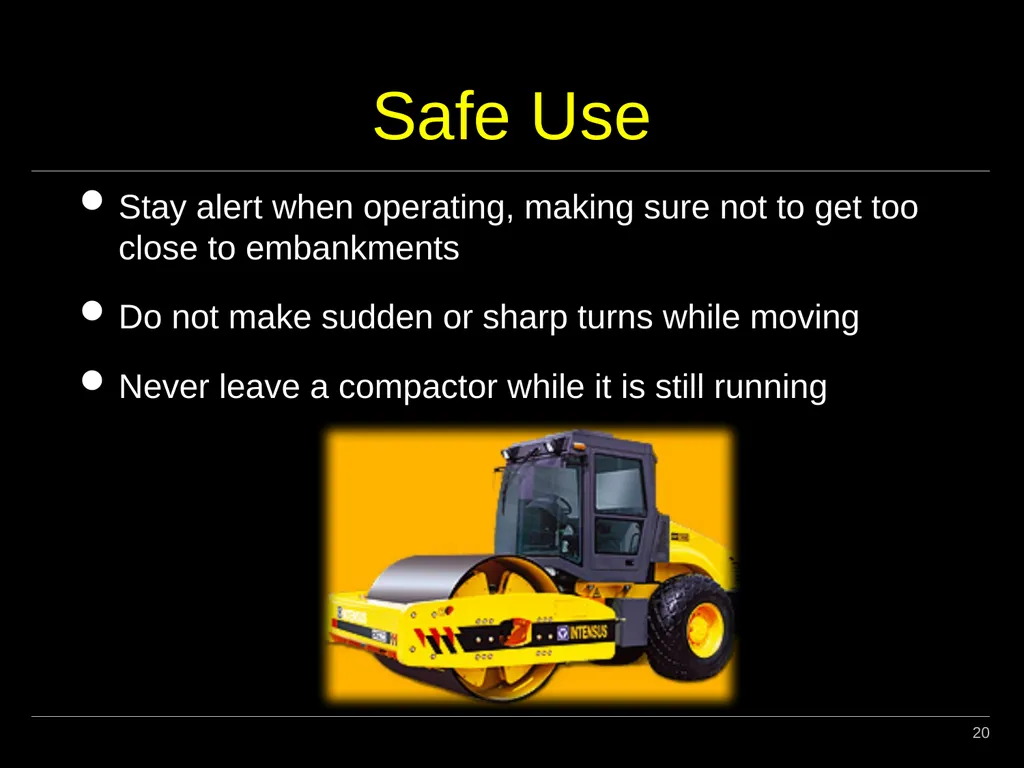
Safe Use Stay alert when operating, making sure not to get too close to embankments
Do not make sudden or sharp turns while moving
Never leave a compactor while it is still running 20<br>
21
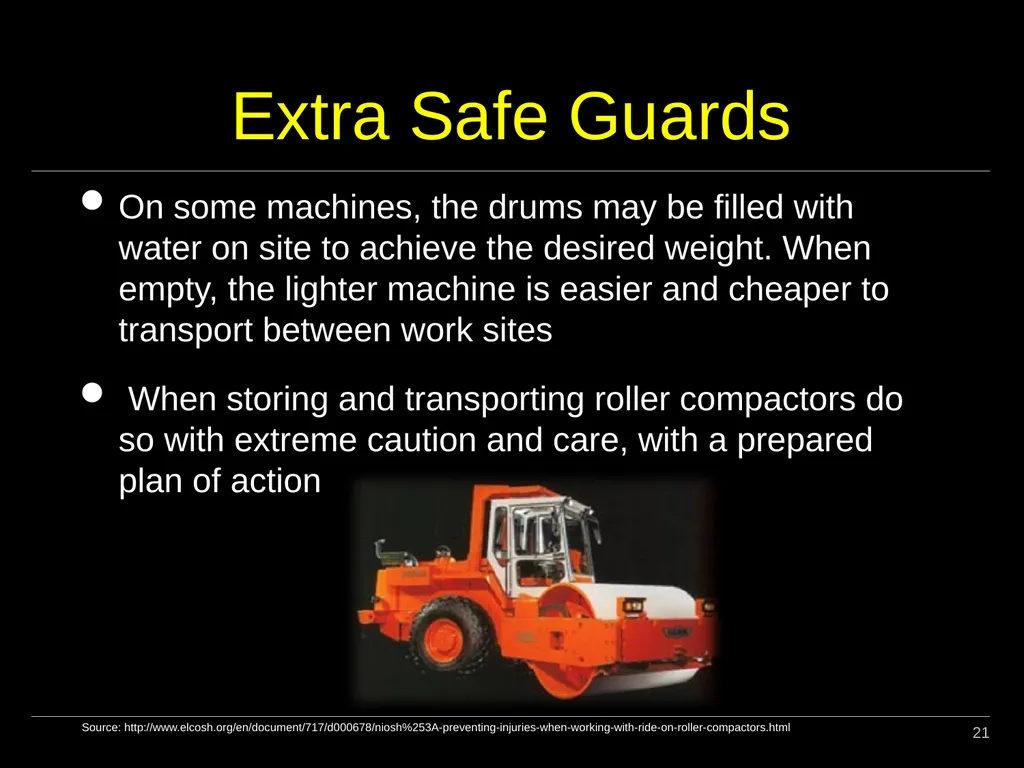
Extra Safe Guards On some machines, the drums may be filled with water on site to achieve the desired weight. When empty, the lighter machine is easier and cheaper to transport between work sites
When storing and transporting roller compactors do so with extreme caution and care, with a prepared plan of action Source: http://www.elcosh.org/en/document/717/d000678/niosh%253A-preventing-injuries-when-working-with-ride-on-roller-compactors.html 21<br>