Safe Lifting techniques to avoid injury Ergonomic injuries account for 35 of all workers compensation injuries in the United States. The goal of this tutorial is to identify injuries common to moversmaterial handlers and to explore
"Safe Lifting techniques to avoid injury Ergonomic" is the property of its rightful owner. Permission is granted to
download and print the materials on this website for personal, non-commercial use only, and to display it
on your personal computer provided you do not modify the materials and that you retain all copyright
notices contained in the materials. By downloading content from our website, you accept the terms of this
agreement.
Presentation Transcript
01
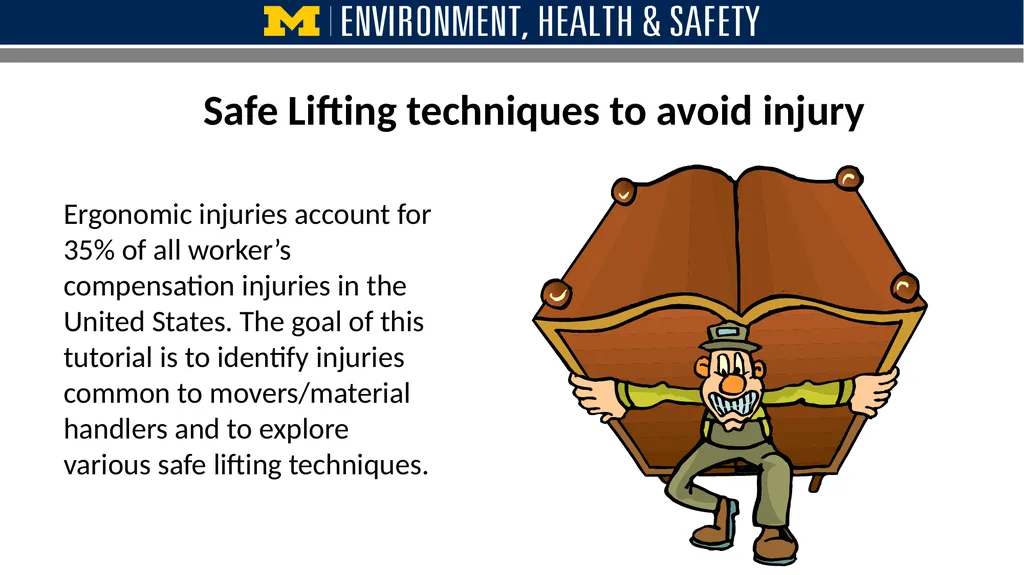
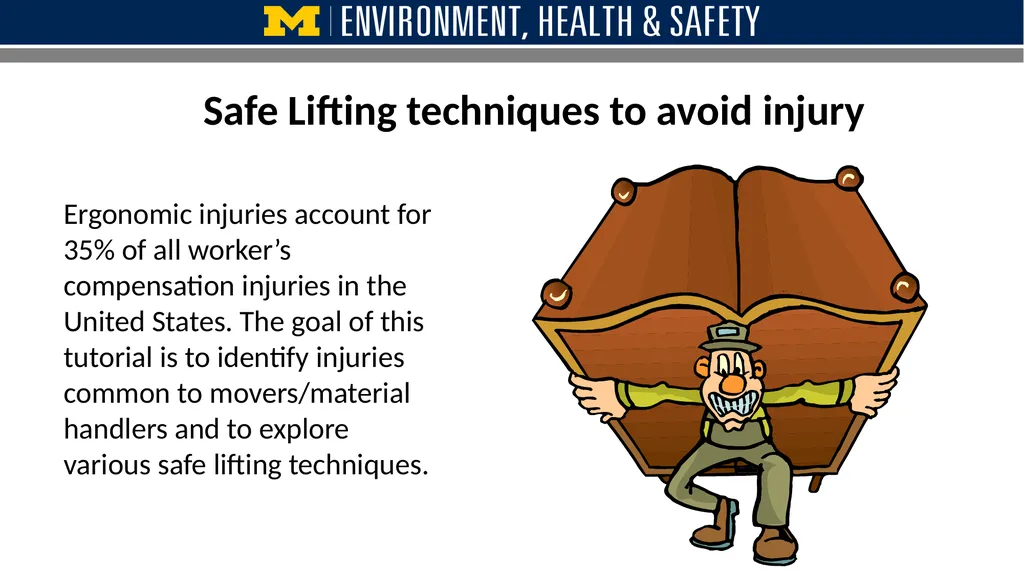
Safe Lifting techniques to avoid injury Ergonomic injuries account for 35% of all worker’s compensation injuries in the United States. The goal of this tutorial is to identify injuries common to movers/material handlers and to explore various safe lifting techniques.<br>
02
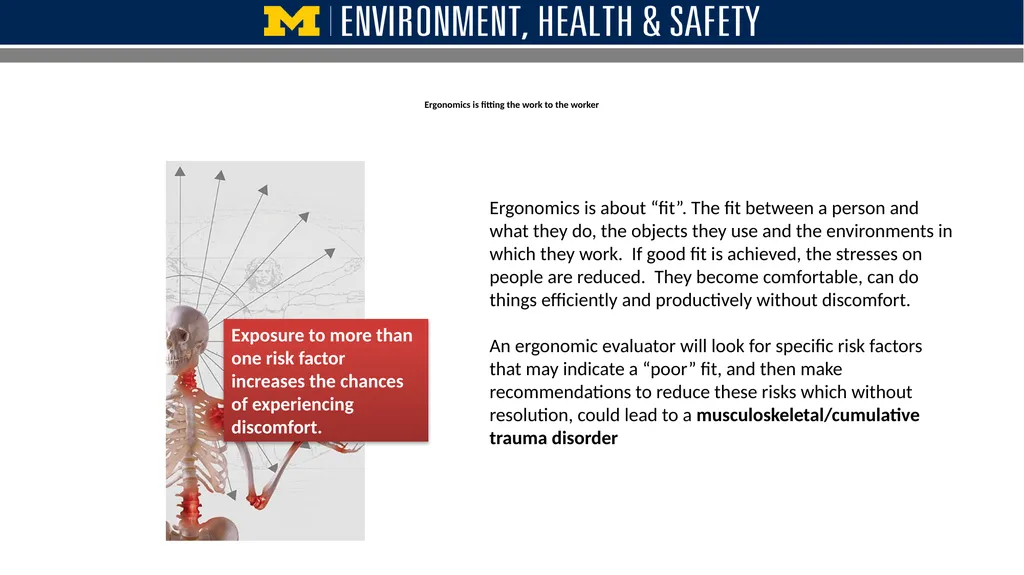
Ergonomics is fitting the work to the worker Exposure to more than one risk factor increases the chances of experiencing discomfort. Ergonomics is about “fit”. The fit between a person and what they do, the objects they use and the environments in which they work. If good fit is achieved, the stresses on people are reduced. They become comfortable, can do things efficiently and productively without discomfort.
An ergonomic evaluator will look for specific risk factors that may indicate a “poor” fit, and then make recommendations to reduce these risks which without resolution, could lead to a musculoskeletal/cumulative trauma disorder<br>
03
What are musculoskeletal/cumulative trauma disorders? A musculoskeletal disorder is discomfort of the muscles, ligaments, tendons, joints or nerves which could include strain, sprain or inflammation which typically accumulates over time. They are NOT a diagnosis, but a class of disorders with similar characteristics. Microtrauma experienced by the body on a daily basis can heal over time. But if we experience more trauma than the natural healing process can absorb, the result is a MSD/CT injury<br>
04
Symptoms of musculoskeletal disorders<br>
05
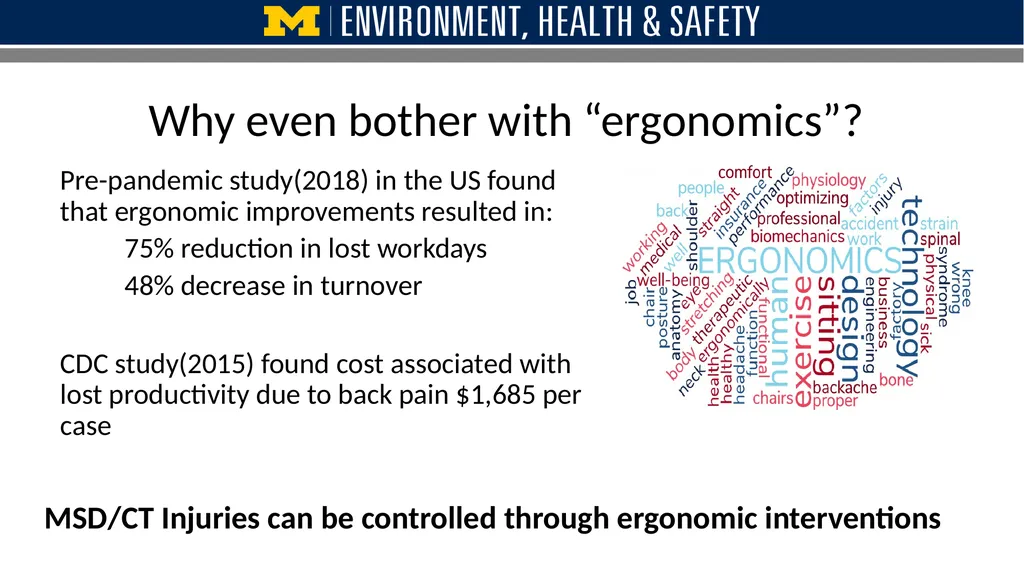
Why even bother with “ergonomics”? Pre-pandemic study(2018) in the US found that ergonomic improvements resulted in:
75% reduction in lost workdays
48% decrease in turnover
CDC study(2015) found cost associated with lost productivity due to back pain $1,685 per case MSD/CT Injuries can be controlled through ergonomic interventions<br>
06
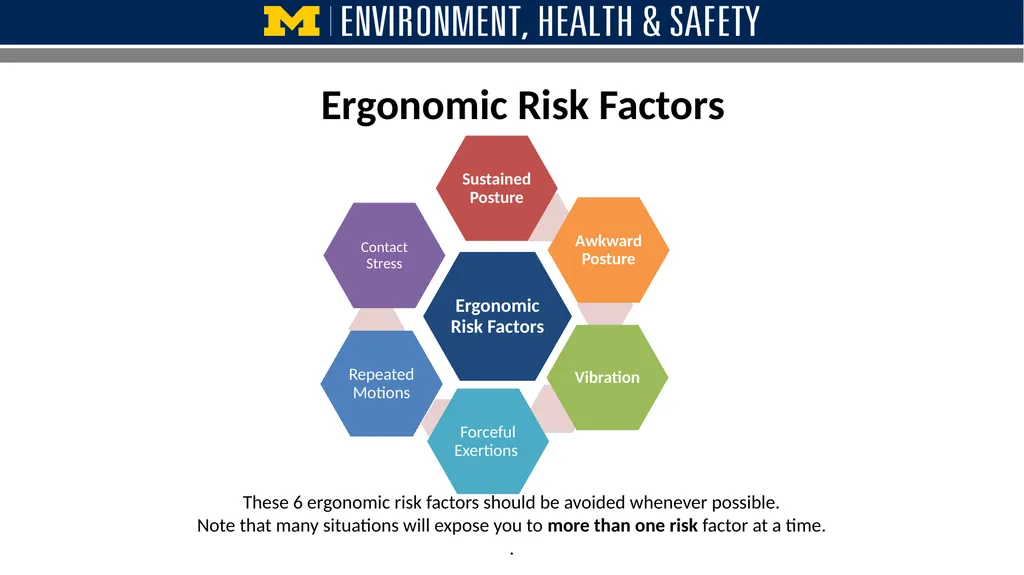
These 6 ergonomic risk factors should be avoided whenever possible.
Note that many situations will expose you to more than one risk factor at a time.
. Ergonomic Risk Factors<br>
07
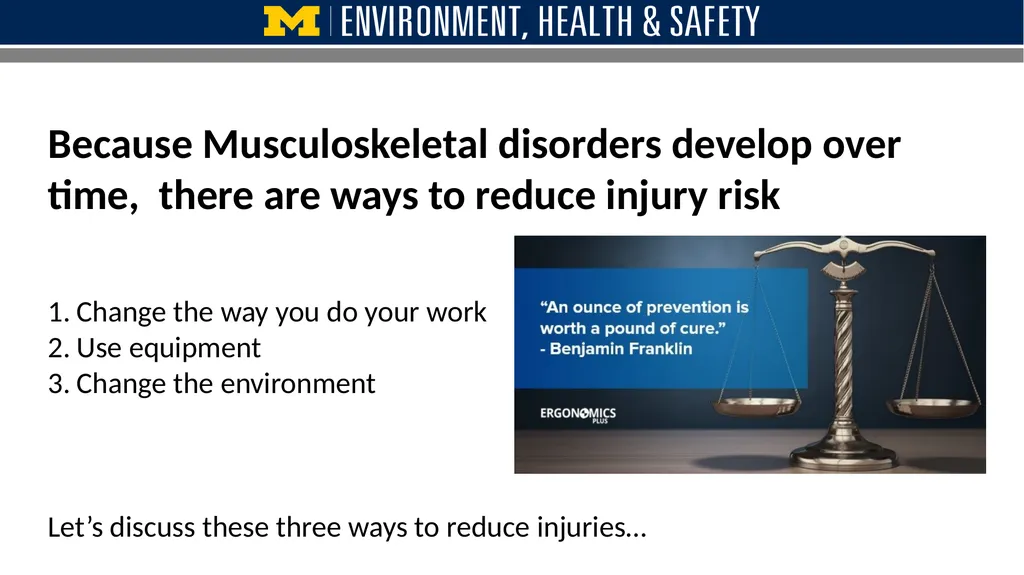
Because Musculoskeletal disorders develop over time, there are ways to reduce injury risk
Change the way you do your work
Use equipment
Change the environment
Let’s discuss these three ways to reduce injuries…<br>
08
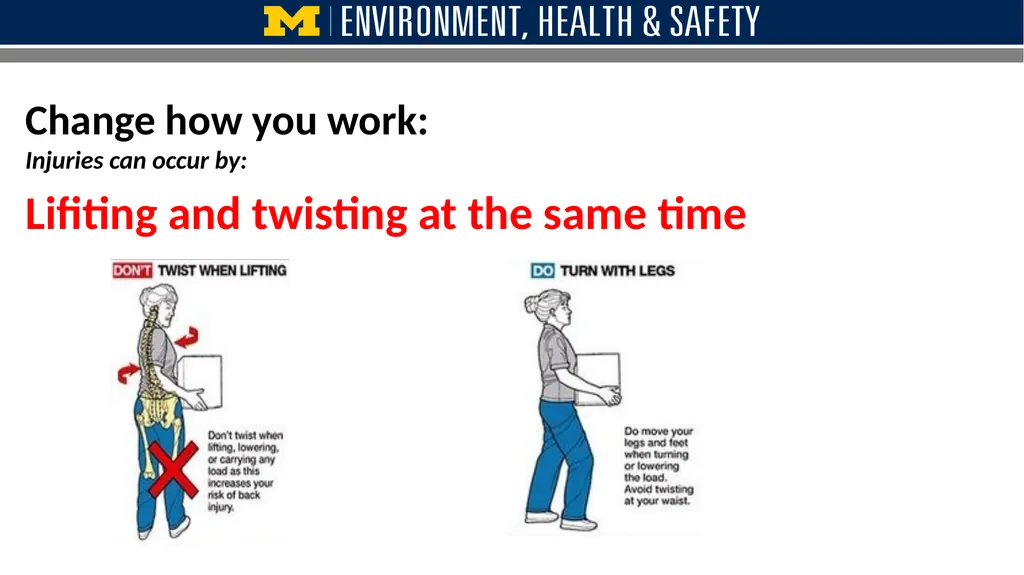
Change how you work:
Injuries can occur by: Lifiting and twisting at the same time<br>
09
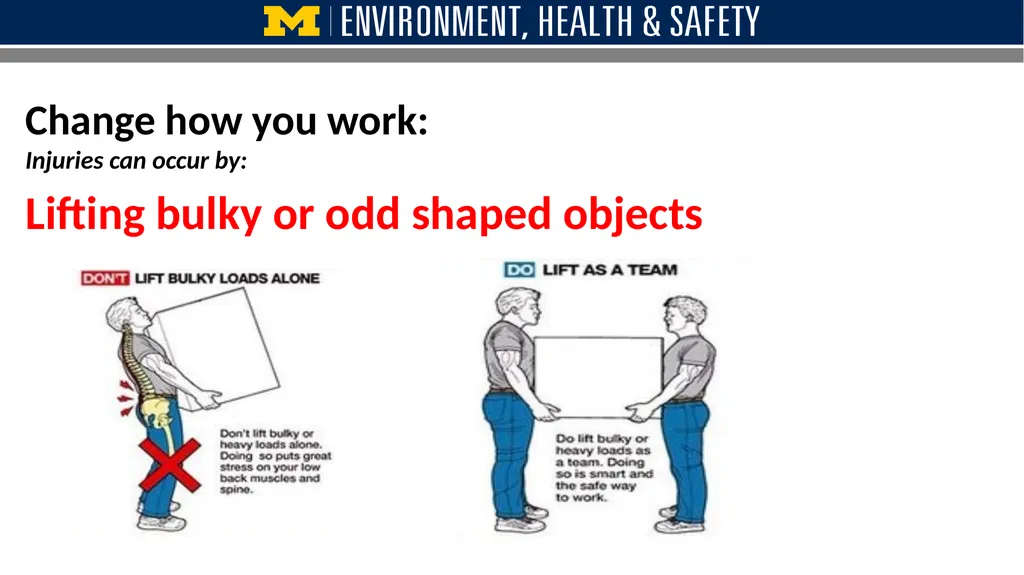
Change how you work:
Injuries can occur by: Lifting bulky or odd shaped objects<br>
10
Change how you work:
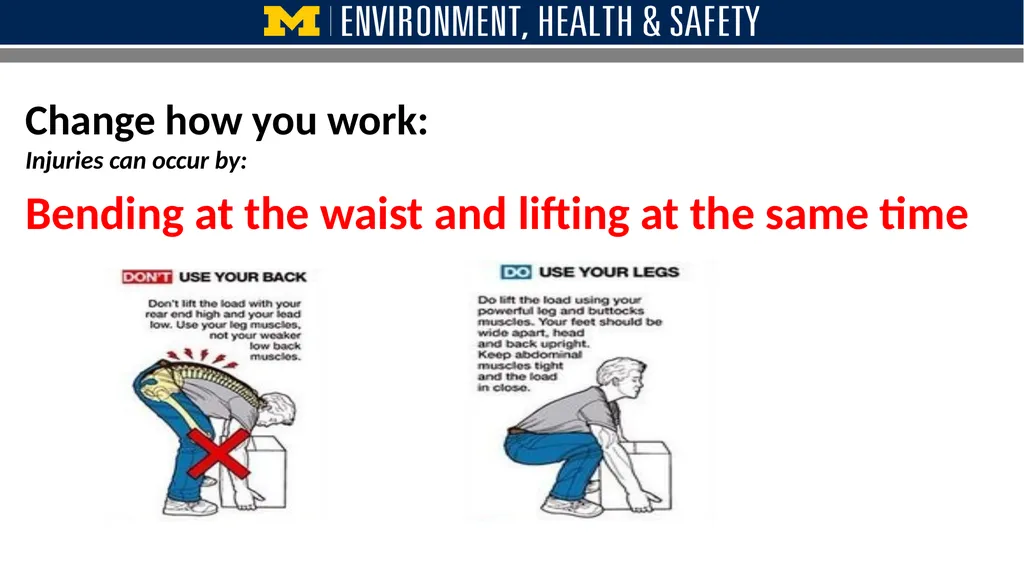
Injuries can occur by: Bending at the waist and lifting at the same time<br>
11
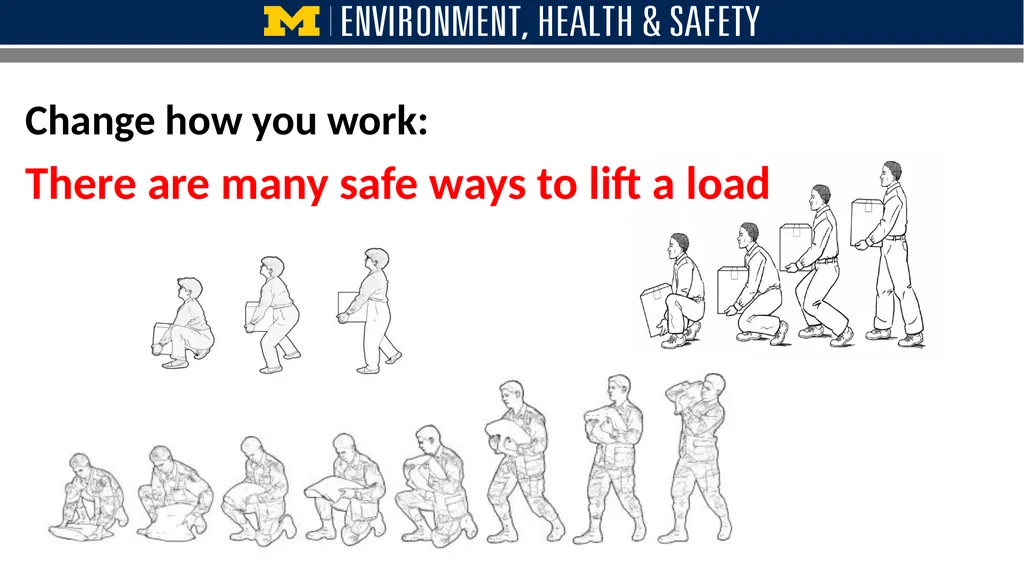
Change how you work: There are many safe ways to lift a load<br>
12
Change how you work:
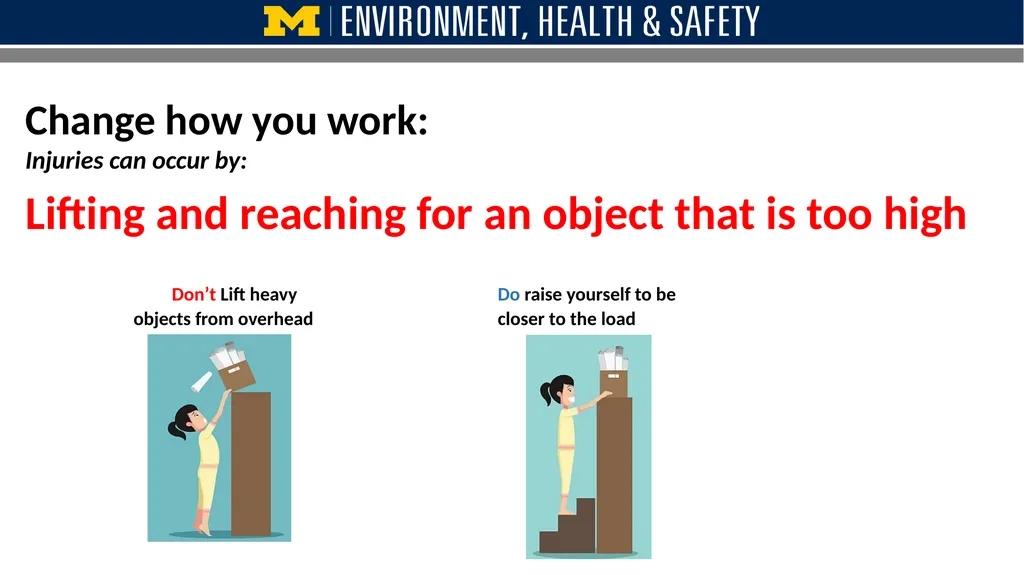
Injuries can occur by: Lifting and reaching for an object that is too high Don’t Lift heavy objects from overhead Do raise yourself to be closer to the load<br>
13
Change how you work:
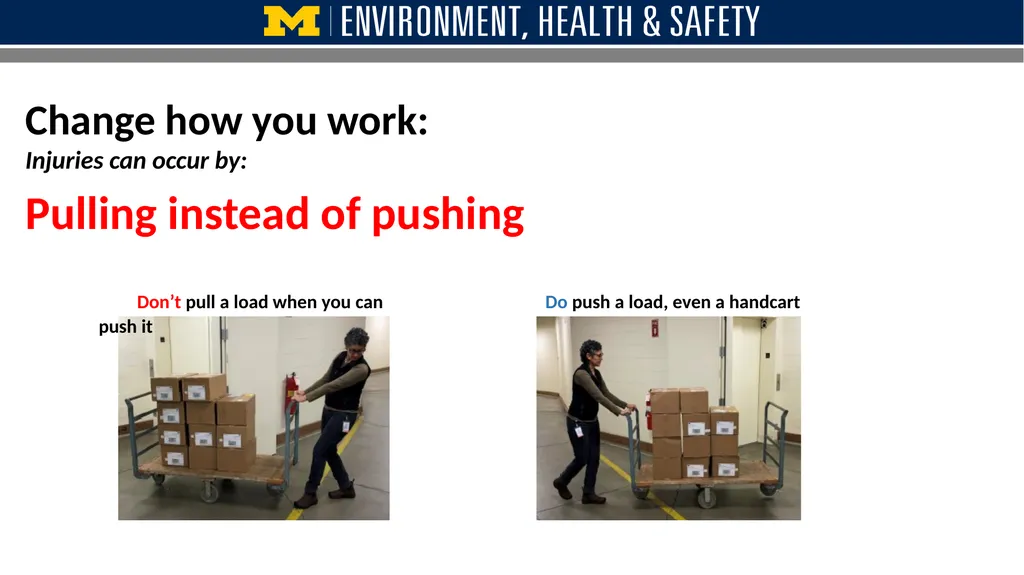
Injuries can occur by: Pulling instead of pushing Do push a load, even a handcart Don’t pull a load when you can push it<br>
14
Change how you work:
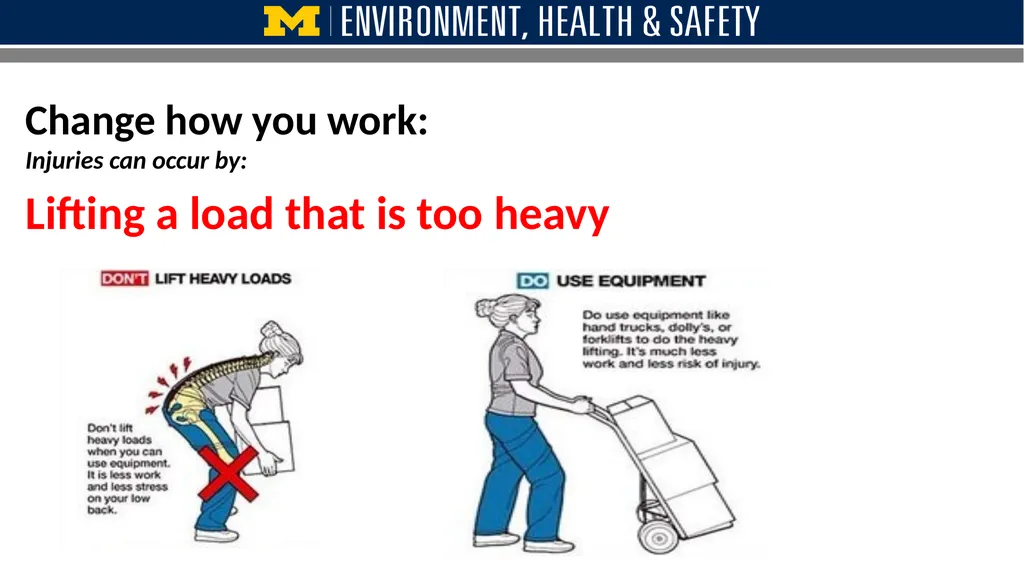
Injuries can occur by: Lifting a load that is too heavy<br>
15
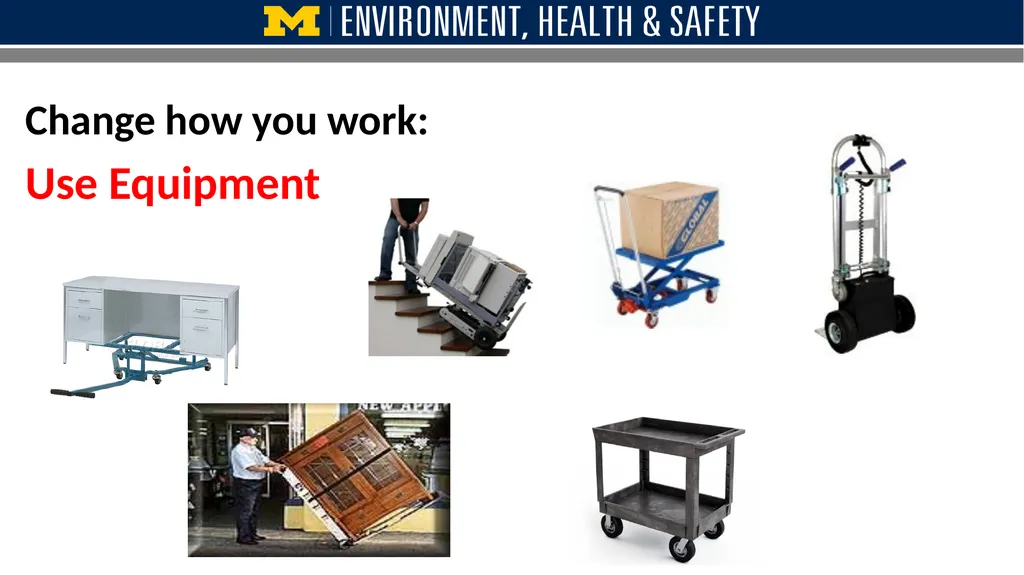
Change how you work: Use Equipment<br>
16
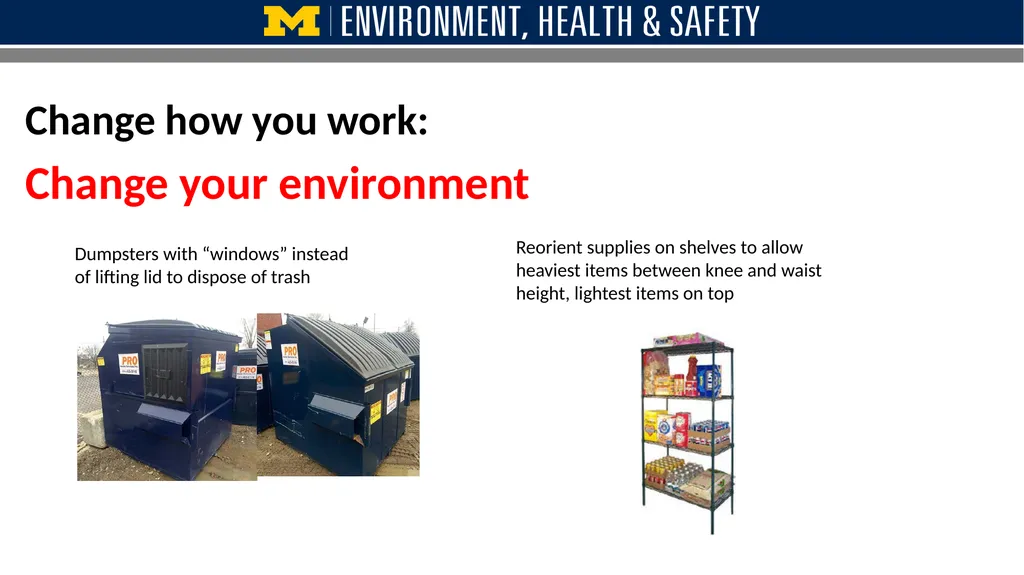
Change how you work: Change your environment Reorient supplies on shelves to allow heaviest items between knee and waist height, lightest items on top Dumpsters with “windows” instead of lifting lid to dispose of trash<br>
17
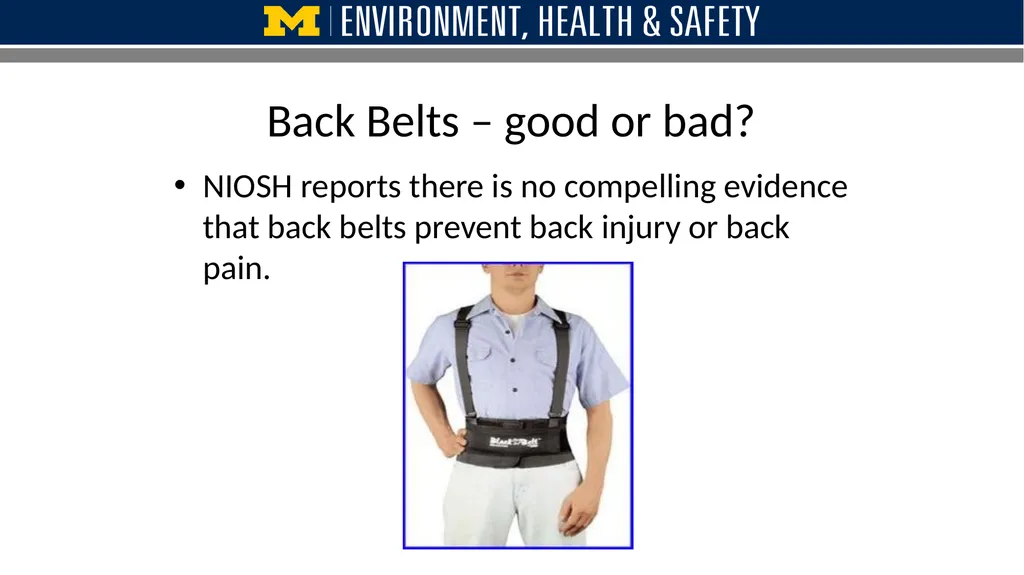
Back Belts – good or bad? NIOSH reports there is no compelling evidence that back belts prevent back injury or back pain.<br>
18
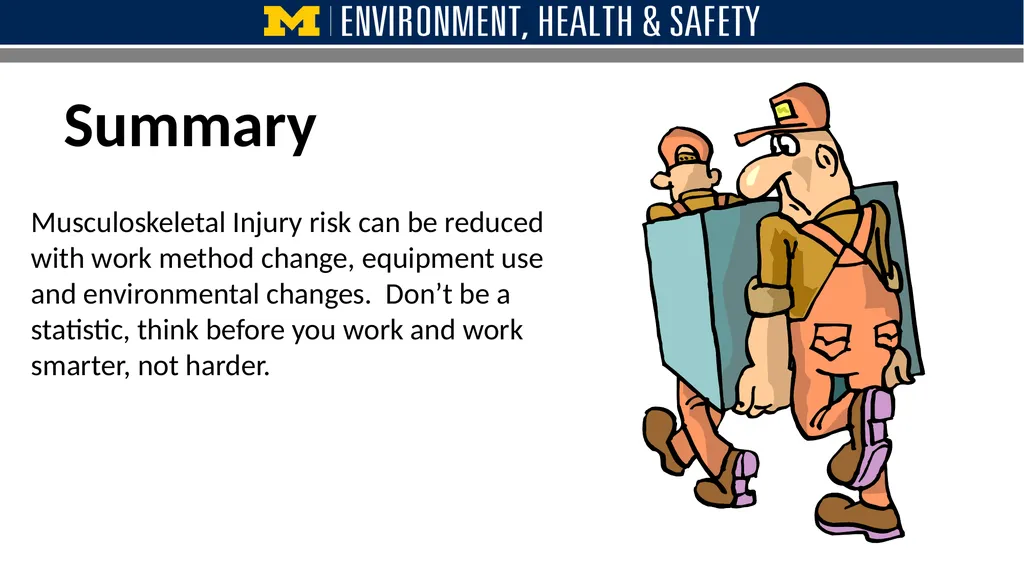
Musculoskeletal Injury risk can be reduced with work method change, equipment use and environmental changes. Don’t be a statistic, think before you work and work smarter, not harder. Summary<br>
19
If you are not sure what you need, contact EHS ergonomics EHSErgonomics@umich.edu<br>
20
Ergonomic Sarah Cooney, OTR/L
Senior Ergonomics Professional
University of Michigan
Environment, Health and Safety
scooney@umich.edu
734-763-7704
EHSErgonomics@umich.edu<br>