04
Before preserving any food
consider the types of foods your
family enjoys and the usefulness of
the preserved product in your
lifestyle.<br>
05
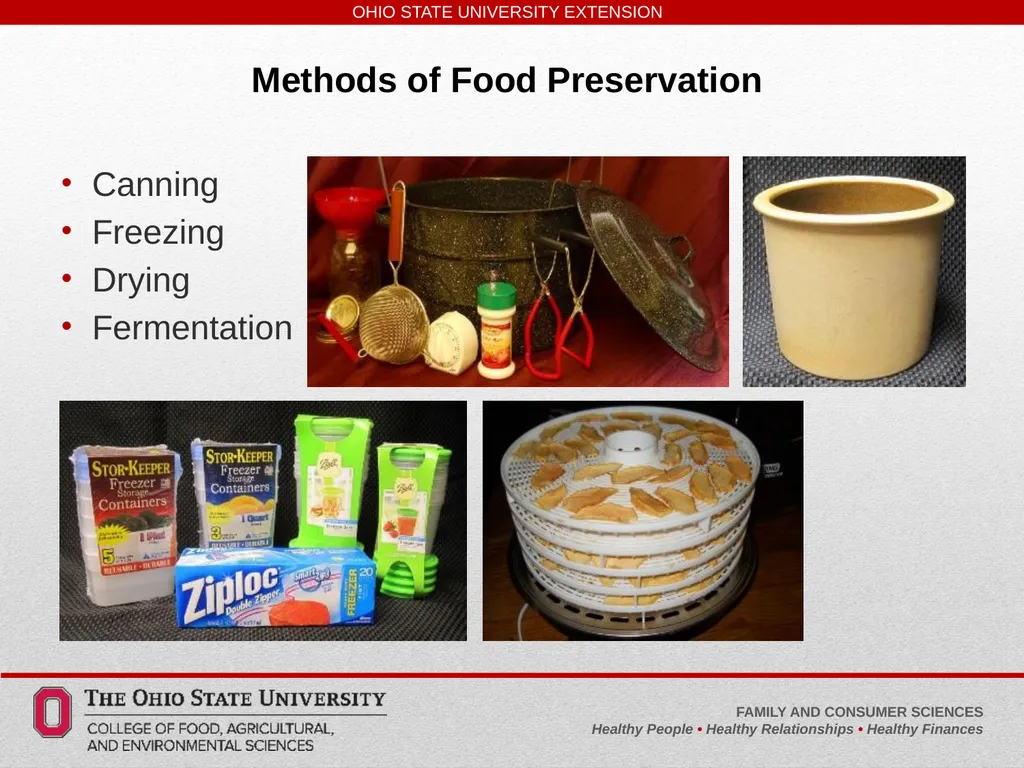
Methods of Food Preservation Canning
Freezing
Drying
Fermentation<br>
06
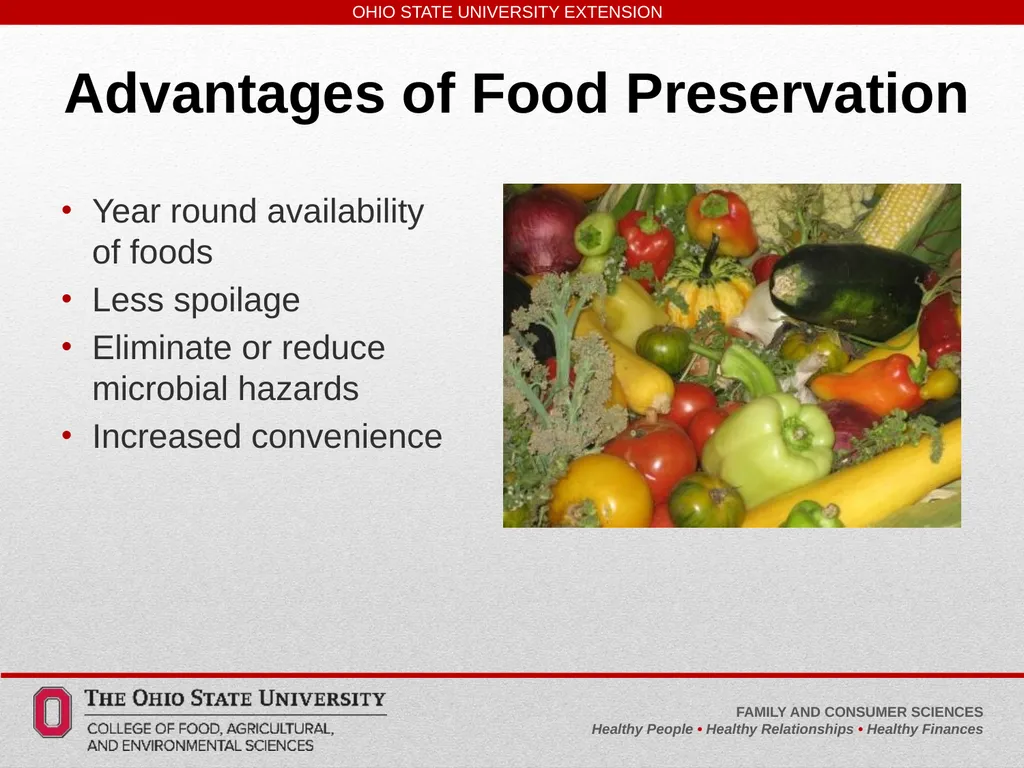
Advantages of Food Preservation Year round availability �of foods
Less spoilage
Eliminate or reduce microbial hazards
Increased convenience<br>
07
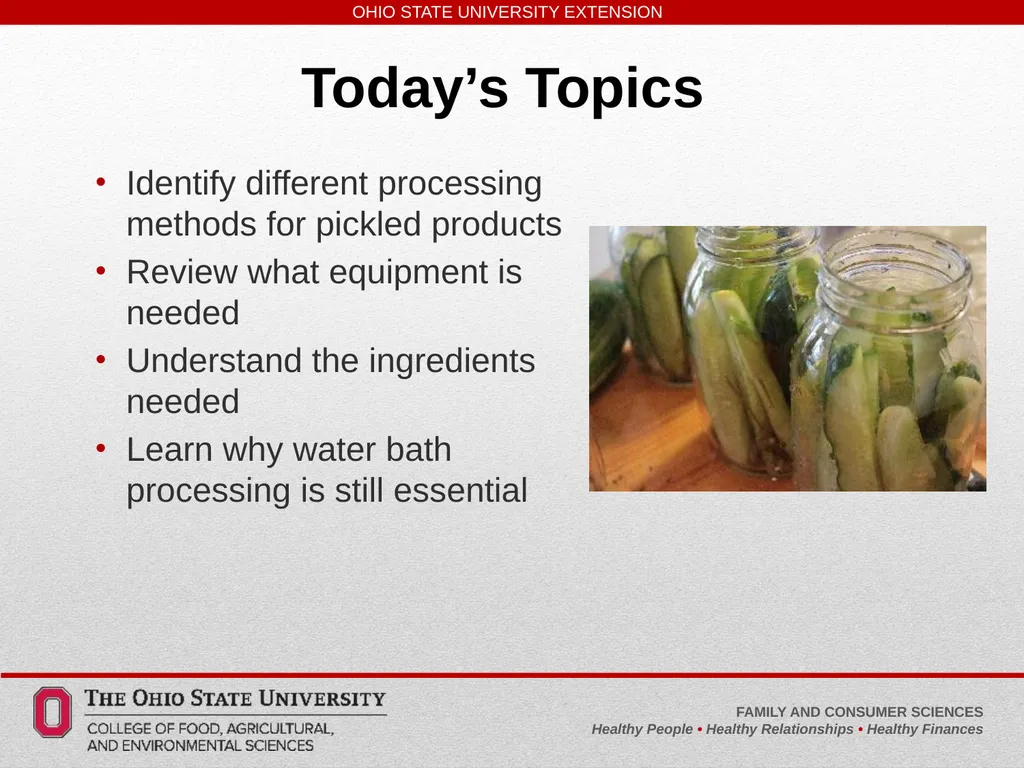
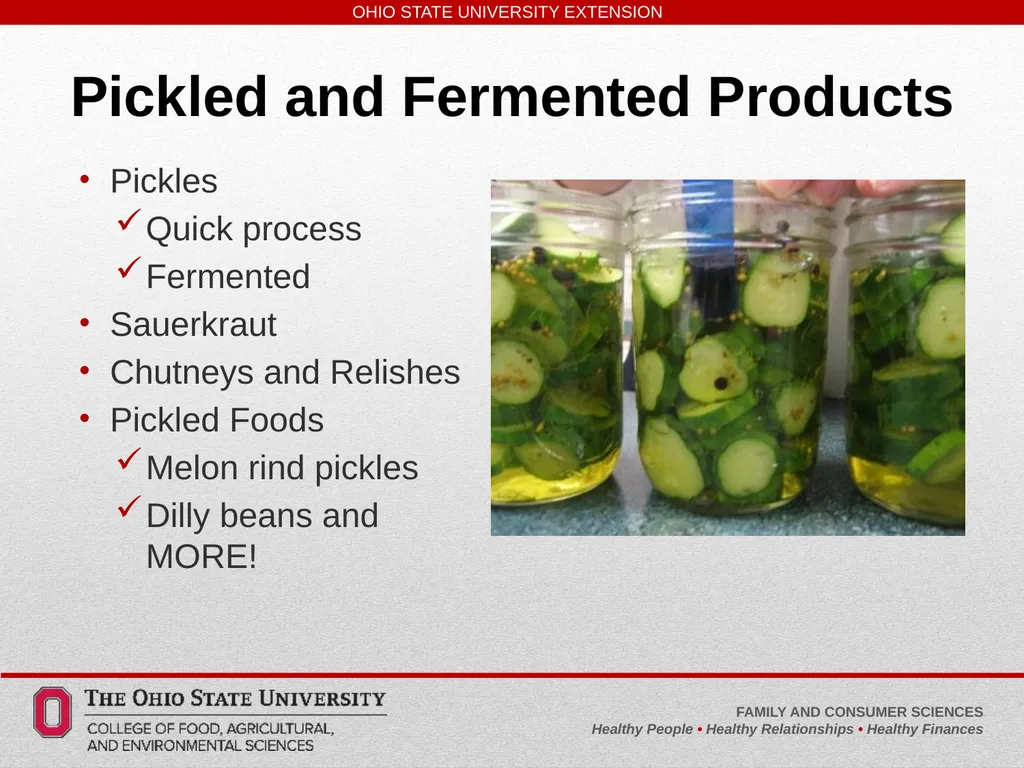
Pickled and Fermented Products Pickles
Quick process
Fermented
Sauerkraut
Chutneys and Relishes
Pickled Foods
Melon rind pickles
Dilly beans and MORE!<br>
08
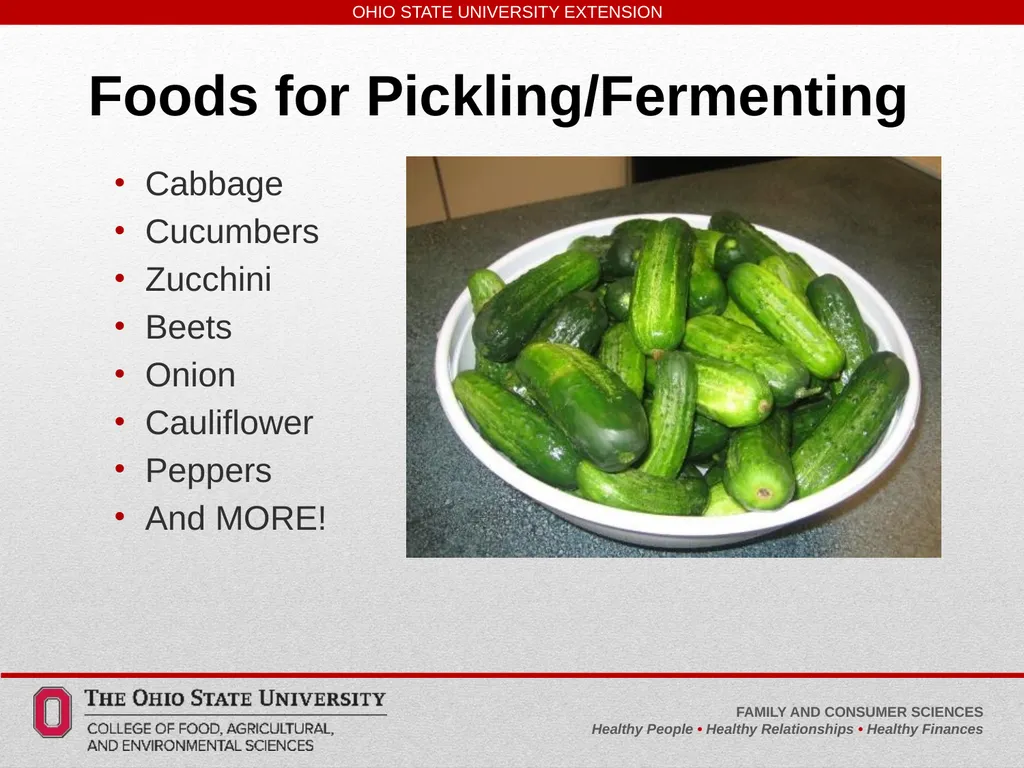
Foods for Pickling/Fermenting Cabbage
Cucumbers
Zucchini
Beets
Onion
Cauliflower
Peppers
And MORE!<br>
09
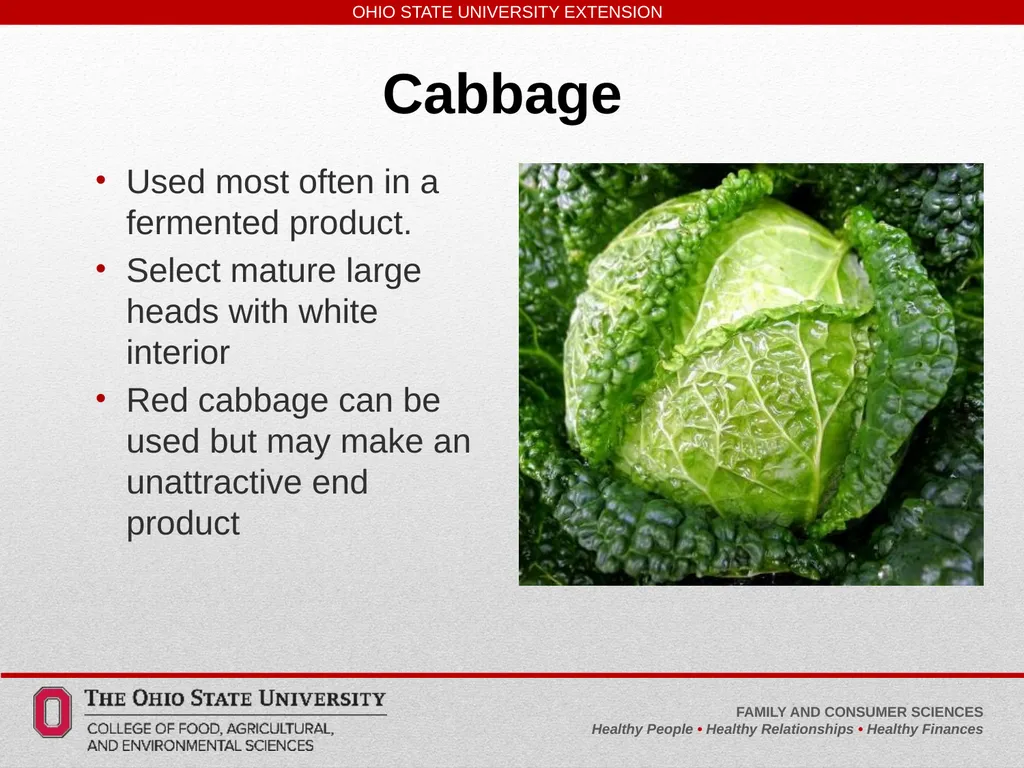
Cabbage Used most often in a fermented product.
Select mature large heads with white interior
Red cabbage can be used but may make an unattractive end product<br>
10
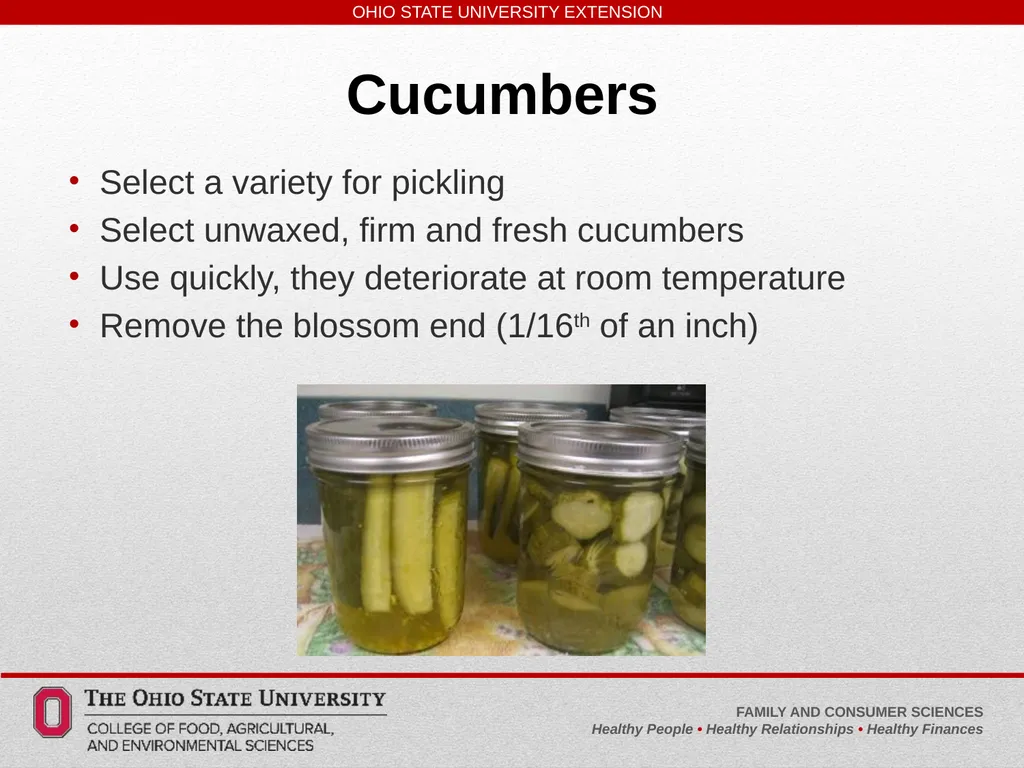
Cucumbers Select a variety for pickling
Select unwaxed, firm and fresh cucumbers
Use quickly, they deteriorate at room temperature
Remove the blossom end (1/16th of an inch)<br>
11
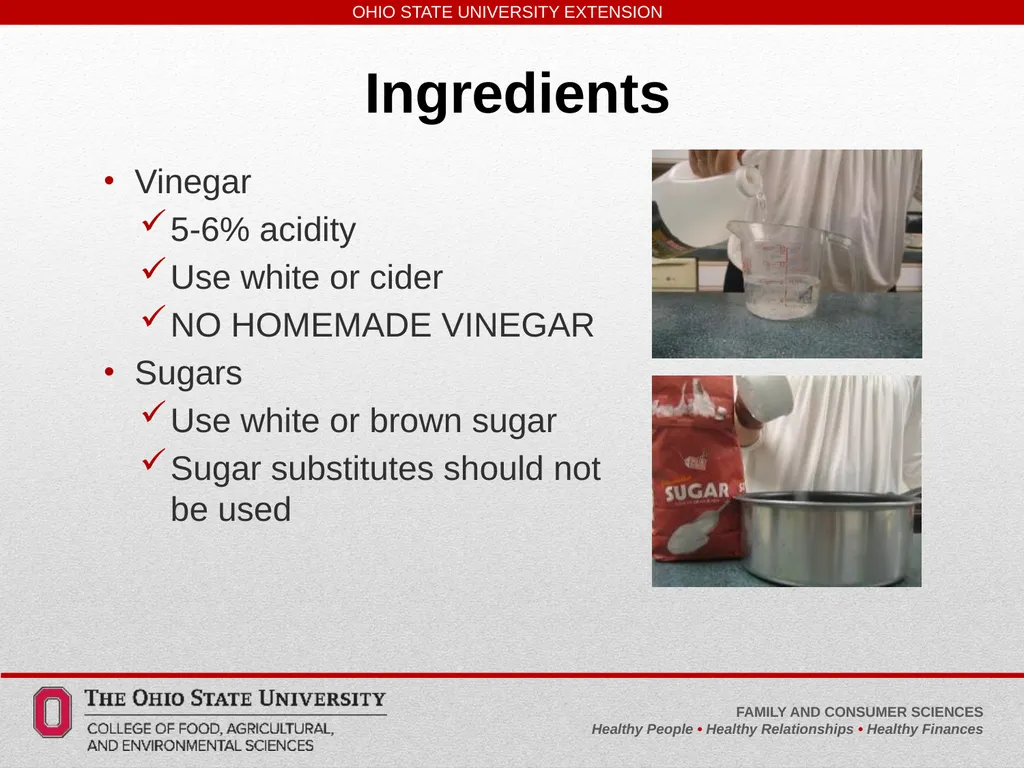
Ingredients Vinegar
5-6% acidity
Use white or cider
NO HOMEMADE VINEGAR
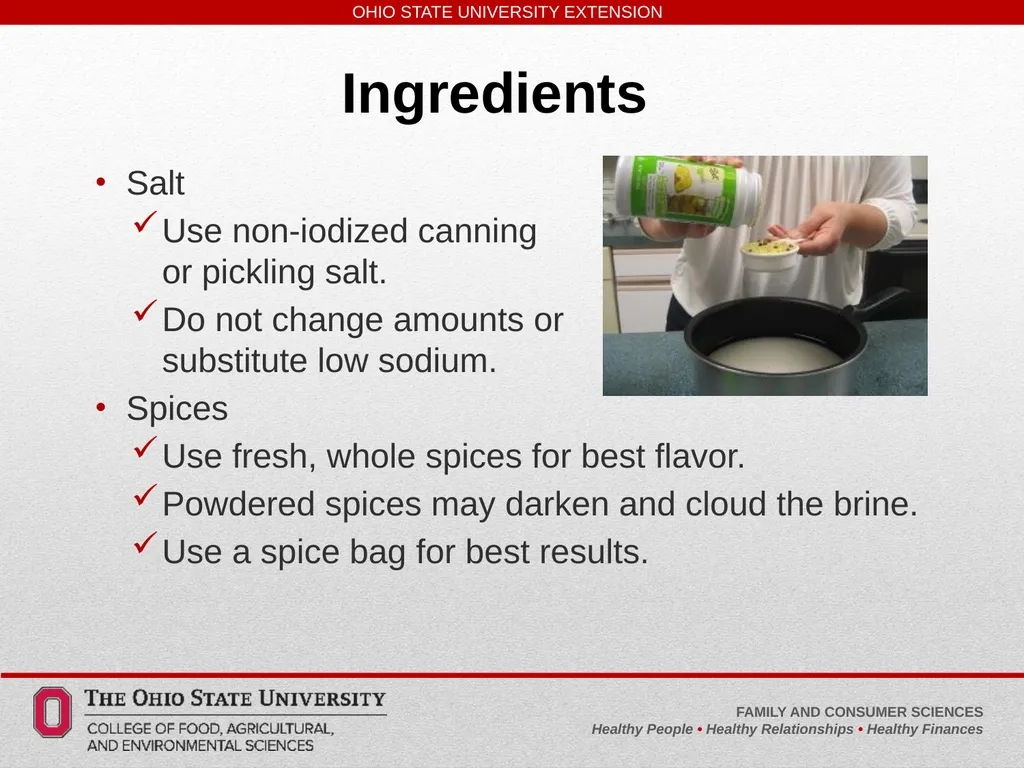
Sugars
Use white or brown sugar
Sugar substitutes should not �be used<br>
12
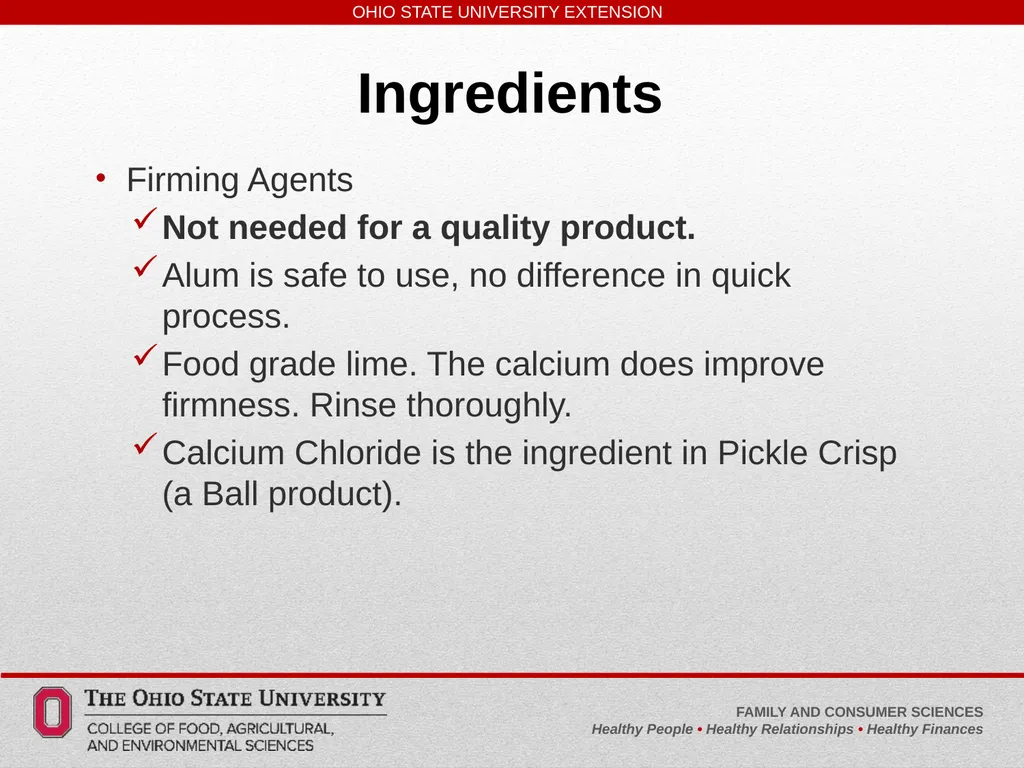
Ingredients Salt
Use non-iodized canning or pickling salt.
Do not change amounts or �substitute low sodium.
Spices
Use fresh, whole spices for best flavor.
Powdered spices may darken and cloud the brine.
Use a spice bag for best results.<br>
13
Ingredients Firming Agents
Not needed for a quality product.
Alum is safe to use, no difference in quick process.
Food grade lime. The calcium does improve firmness. Rinse thoroughly.
Calcium Chloride is the ingredient in Pickle Crisp (a Ball product).<br>
14
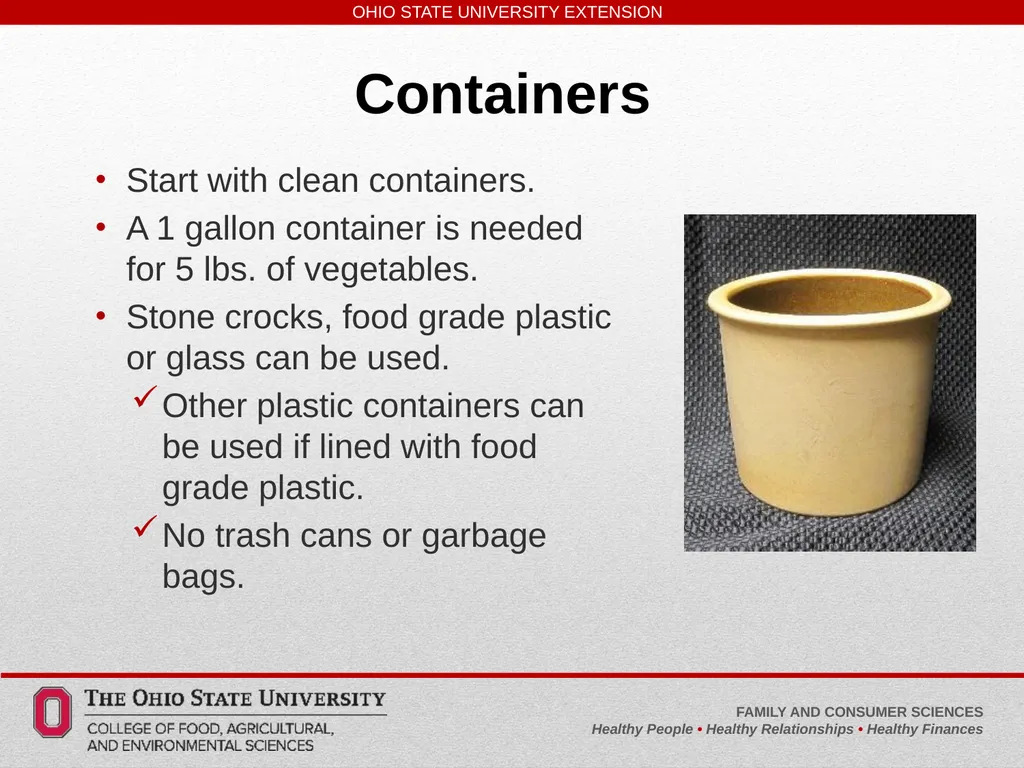
Containers Start with clean containers.
A 1 gallon container is needed �for 5 lbs. of vegetables.
Stone crocks, food grade plastic �or glass can be used.
Other plastic containers can be used if lined with food grade plastic.
No trash cans or garbage bags.<br>
15
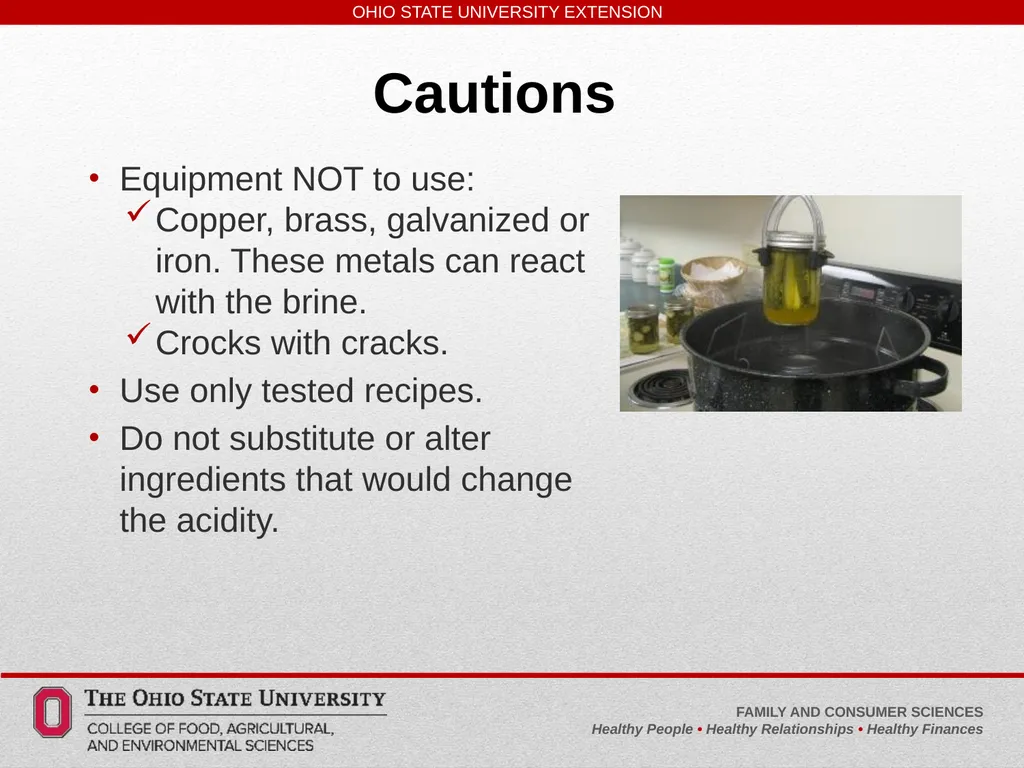
Cautions Equipment NOT to use:
Copper, brass, galvanized or �iron. These metals can react �with the brine.
Crocks with cracks.
Use only tested recipes.
Do not substitute or alter ingredients that would change the acidity.<br>
16
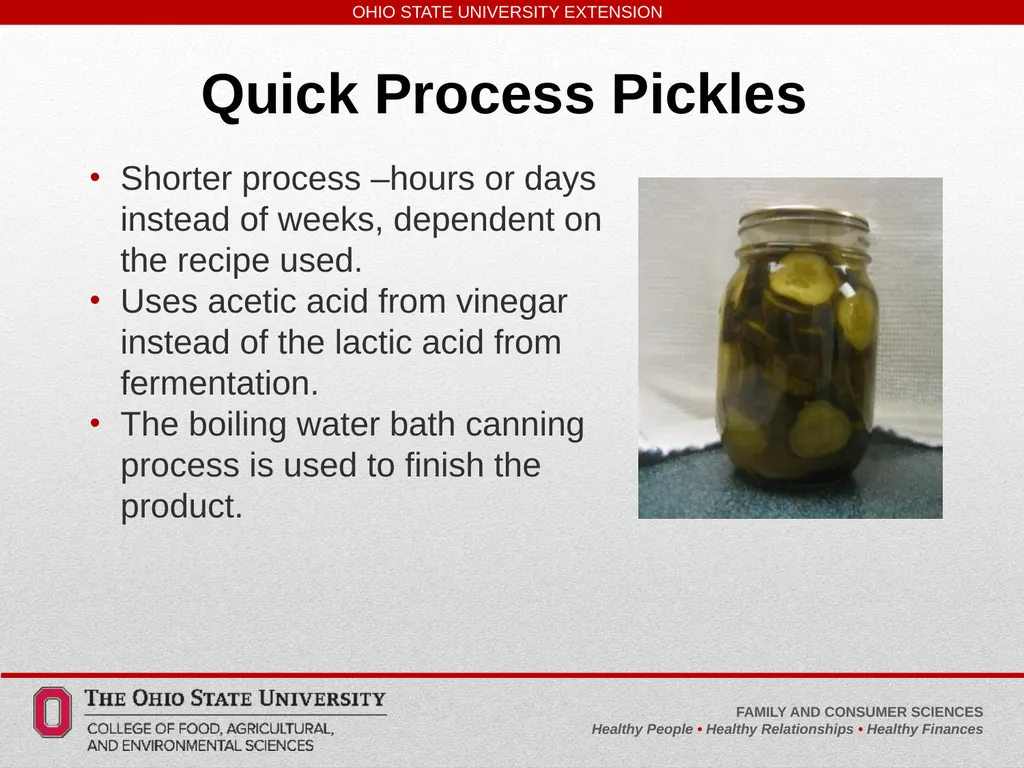
Quick Process Pickles Shorter process –hours or days �instead of weeks, dependent on �the recipe used.
Uses acetic acid from vinegar �instead of the lactic acid from �fermentation.
The boiling water bath canning �process is used to finish the product.<br>
17
Fermented Products Includes food items like dill pickles and sauerkraut.
Curing the product produces lactic acid which preserves the product.
Quality ingredients in the correct proportions are essential: vegetables, salt, vinegar and spices.
The process may take as long as 5-6 weeks.<br>
18
Covers and Weights Vegetables must be kept 1 to 2 inches under the brine to ferment properly.
A dinner plate works well.
Weigh down with sealed jars of water or bags of salted water or brine.
Cover the container with a clean heavy towel.
If recipe ingredients are by weight, scales will be needed.<br>
19
Fermentation Process Weigh the vegetables and place in container.
Make a brine solution, according to your recipe.
Place in container and weigh down.
For the remainder of the fermentation process, add ingredients according to your recipe.<br>
20
Temperature for Fermentation 70-75 ºF
Ideal temperature for fermentation.
Takes about 3-4 weeks.
55-65 ºF
Fermentation takes about 5-6 weeks.
55 ºF
Product may not ferment.
Above 80 ºF
The product may soften or spoil.<br>
21
Checking the Product Each day, check for mold or slime on top.
Remove scum daily.
Tap container and look for bubbles.
Look for even coloring.<br>
22
Pickle Problems Soft or slippery pickles
Weak brine during fermentation, weak vinegar or not immersed in the brine
Improper temperature, too warm
Not processed correctly
Moldy garlic or spices
Blossom ends not removed<br>
23
Pickle Problems Hollow Pickles
Cucumbers too large for brining
Improper fermentation
Long lapse between gathering and brining
Growth defect of the cucumber<br>
24
Pickle Problems Shriveled Pickles
Too strong brine or vinegar
Long lapse between gathering and brining
Over-cooking or processing
Dry weather<br>
25
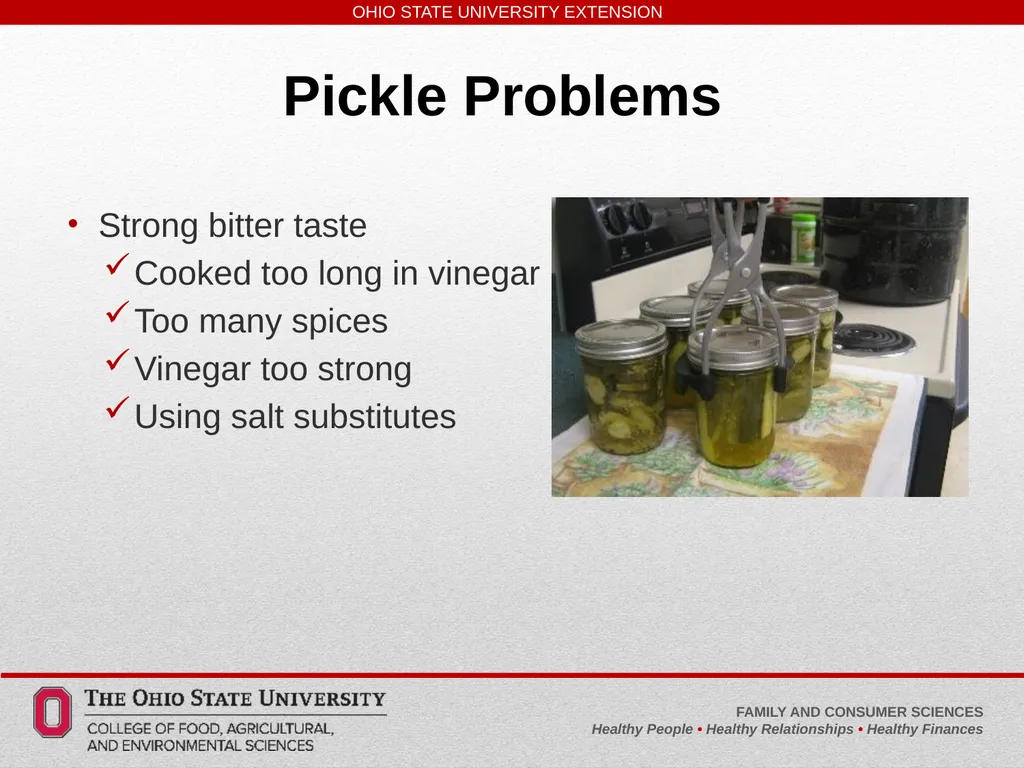
Pickle Problems Strong bitter taste
Cooked too long in vinegar
Too many spices
Vinegar too strong
Using salt substitutes<br>
26
Summary Essential to follow tested recipe.
Don’t make substitutions or alter quantities.
Choose fresh product.
Choose the right equipment.
Don’t cut corners, follow process to the end.
Process in boiling water bath canner.<br>
27
Questions? Contact your local OSU Extension Office
extension.osu.edu
Ohio State University Extension embraces human diversity and is committed to ensuring that all research and related educational programs are available to clientele on a nondiscriminatory basis without regard to age, ancestry, color, disability, gender identity or expression, genetic information, HIV/AIDS status, military status, national origin, race, religion, sex, sexual orientation, or veteran status. This statement is in accordance with United States Civil Rights Laws and the USDA.
Roger Rennekamp, Associate Dean and Director, Ohio State University Extension
For Deaf and Hard of Hearing, please contact Ohio State University Extension using your preferred communication (e-mail, relay services, or video relay services). Phone 1-800-750-0750 between 8 a.m. and 5 p.m. EST Monday through Friday. Inform the operator to dial 614-292-6181.<br>
28
This material has been peer-reviewed for statewide distribution.
Developed by OSU Extension Food Preservation Team:
Lisa Barlage, Educator, Ross County
Melinda Hill, Educator, Wayne County
Shawna Hite, Healthy People Program Specialist
Sanja Ilic, Food Safety State Specialist
Christine Kendle, Educator, Tuscarawas County
Katharine Shumaker, Educator, Holmes County
Nancy Stehulak, Educator, Henry County
Treva Williams, Educator, Scioto County<br>
29
References United States Department of Agriculture (2015). Complete Guide to Home Canning. Agriculture Information Bulletin No. 539.
National Center for Home Food Preservation �www.uga.edu/nchfp/how/can6a_ferment.html
Ohio State University Extension, Quick Process Pickles, http://ohioline.osu.edu/factsheet/hyg-5345
Ohio State University Extension, Making Fermented Dill Pickles, http://ohioline.osu.edu/factsheet/HYG-5342
Andress, E., & Harrison, J.(2014) So Easy to Preserve (6th ed.). Athens, The University of Georgia Cooperative Extension Service<br>
30
Photo Credits Slide 2: Pixabay
Slide 3: Centers for Disease Control and Prevention
Slide 9: Pixabay
All other photos were taken by the Food Preservation Team. Updated May 2016<br>