
Safety Observation Cards A TDI Tool for




Description: Safety Observation Cards A TDI Tool for Improvement What are we trying to improve? Safety Awareness for everyone aboard Daily habits that affect our safety Procedures that could be done more safely or efficiently Maintenance that we have
Related Topics
Download Presentation
"Safety Observation Cards A TDI Tool for" is the property of its rightful owner. Permission is granted to download and print the materials on this website for personal, non-commercial use only, and to display it on your personal computer provided you do not modify the materials and that you retain all copyright notices contained in the materials. By downloading content from our website, you accept the terms of this agreement.
Presentation Transcript
slide1. Safety Observation
Cards
A TDI Tool for Improvement<br>
slide2. What are we trying to improve? Safety Awareness for everyone aboard
Daily habits that affect our safety
Procedures that could be done more safely or efficiently
Maintenance that we have become careless about<br>
slide3. Why do we need to improve? It’s the right thing to do.
To protect each other from harm
To create a positive and safe work environment
To involve people in their own safety<br>
slide4. This is YOUR tool.. The safety cards are a tool for the vessels to engage the people who are on the vessel to find and correct problems BEFORE they become an incident, audit hit or injury.<br>
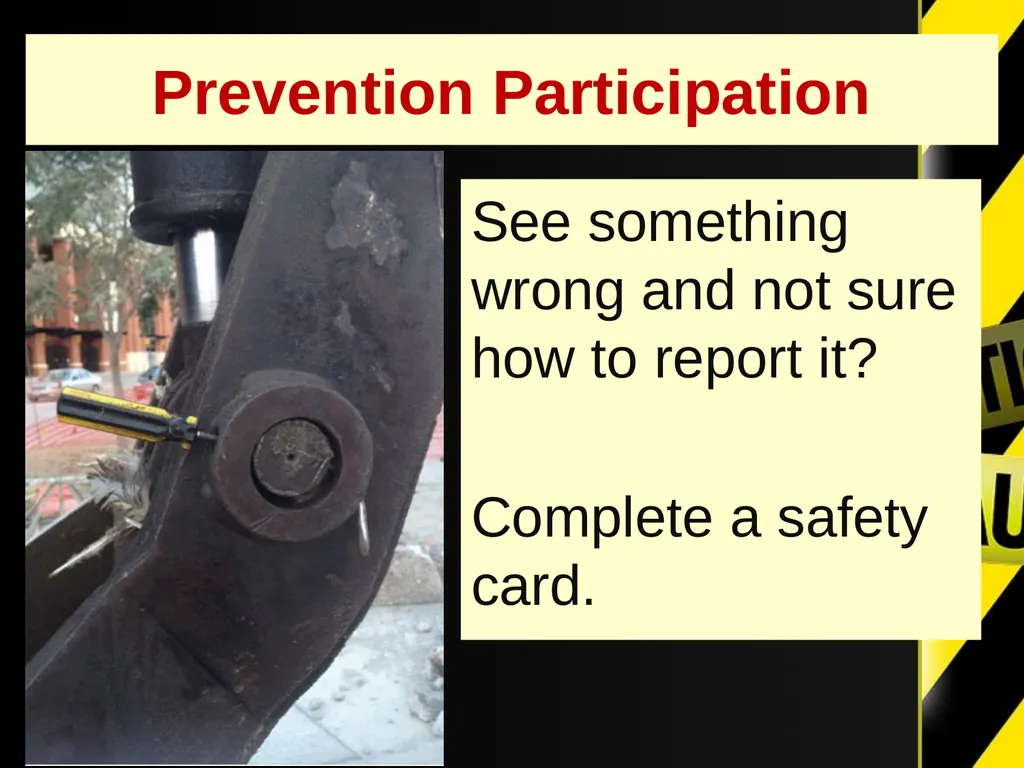
slide5. Prevention Participation See something wrong and not sure how to report it?
Complete a safety card.<br>
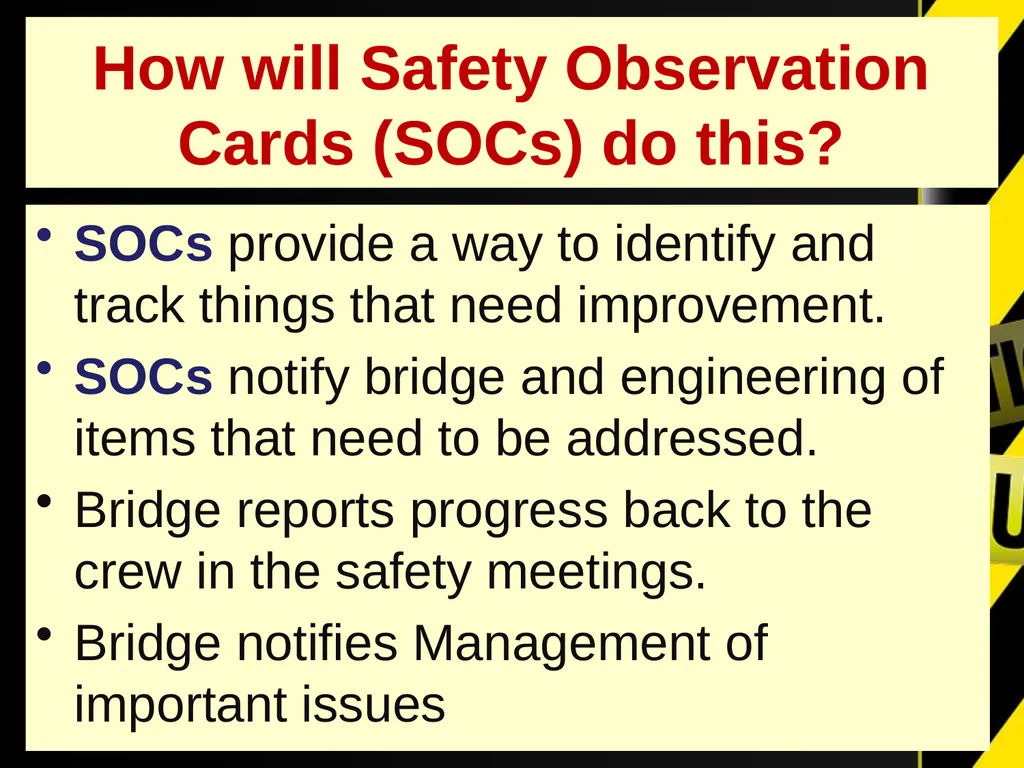
slide6. How will Safety Observation Cards (SOCs) do this? SOCs provide a way to identify and track things that need improvement.
SOCs notify bridge and engineering of items that need to be addressed.
Bridge reports progress back to the crew in the safety meetings.
Bridge notifies Management of important issues<br>
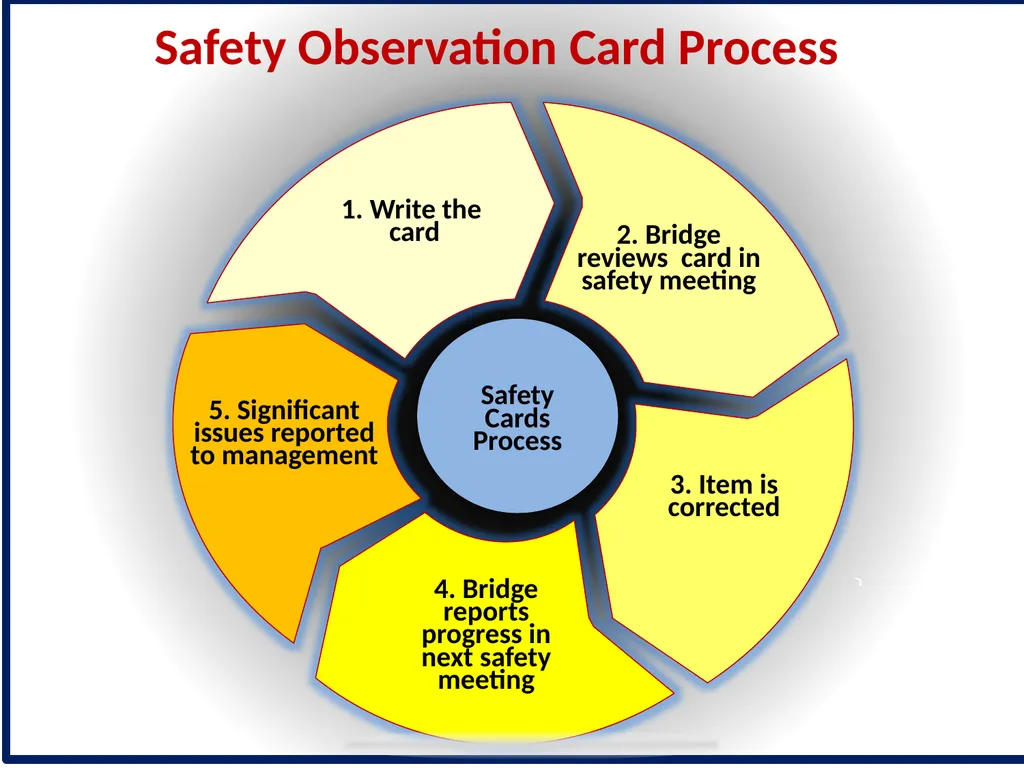
slide7. Safety Observation Card Process<br>
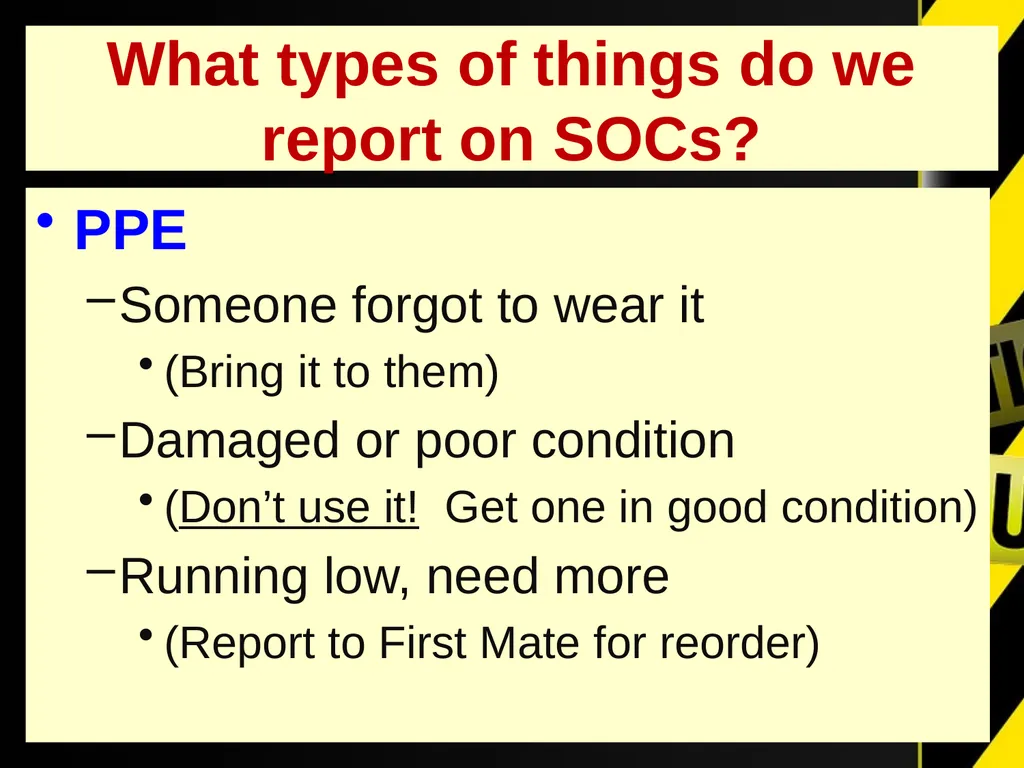
slide8. What types of things do we report on SOCs? PPE
Someone forgot to wear it
(Bring it to them)
Damaged or poor condition
(Don’t use it! Get one in good condition)
Running low, need more
(Report to First Mate for reorder)<br>
slide9. PPE
Don’t have the right kind for the job
(Don’t do the job without it!)<br>
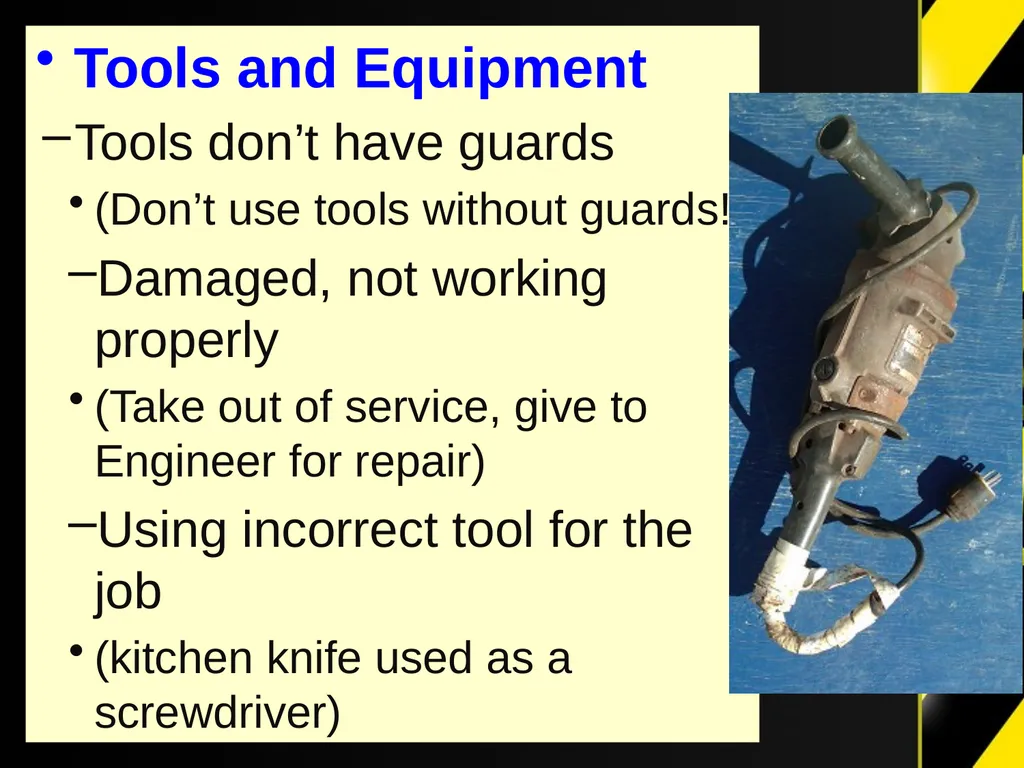
slide10. Tools and Equipment
Tools don’t have guards
(Don’t use tools without guards!)
Damaged, not working properly
(Take out of service, give to Engineer for repair)
Using incorrect tool for the job
(kitchen knife used as a screwdriver)<br>
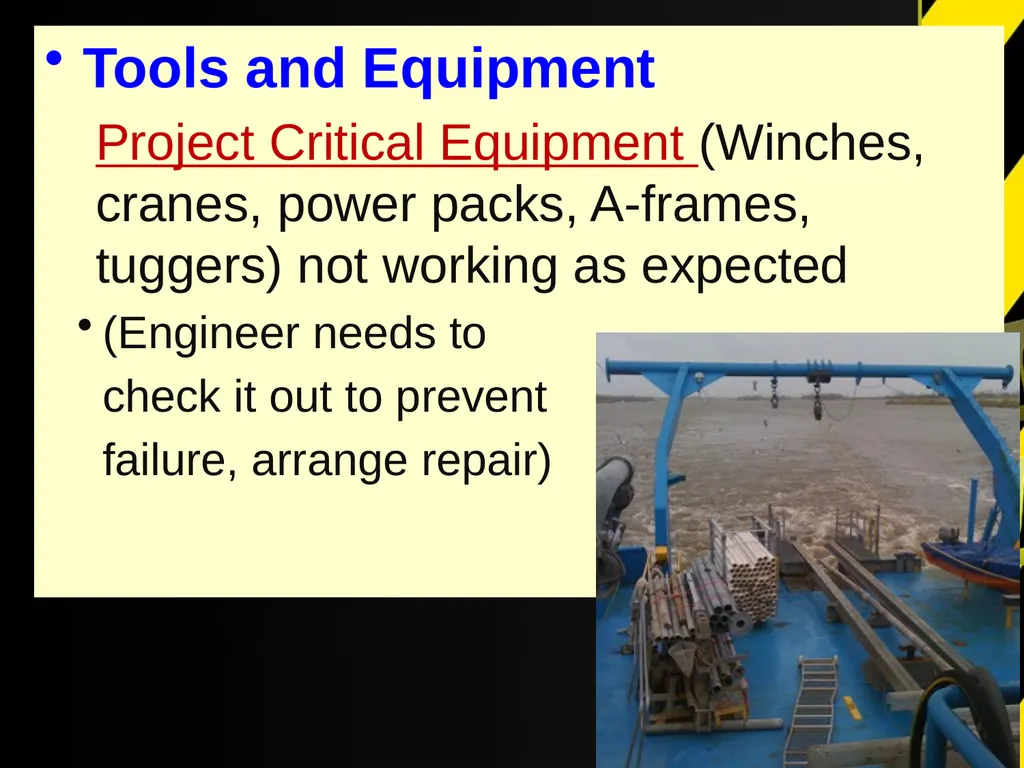
slide11. Tools and Equipment
Project Critical Equipment (Winches, cranes, power packs, A-frames, tuggers) not working as expected
(Engineer needs to
check it out to prevent
failure, arrange repair)<br>
slide12. Safety Attitude
Carelessness- not putting up tools, cleaning area when work is done.
Ignoring posted signage/ warnings.
Blocking emergency exits/ hatches
Watertight doors open when underway<br>
slide13. Safety Attitude
Willful violations Anyone refusing to wear required PPE or follow safety protocols should be immediately reported. They are putting you and the project at risk.<br>
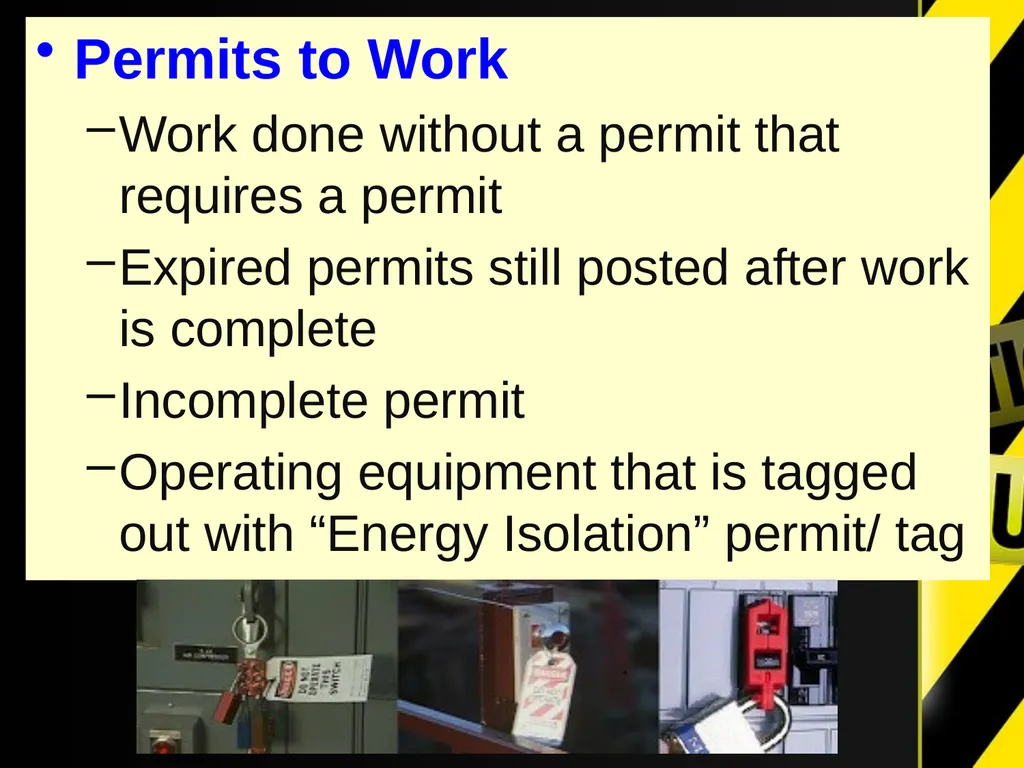
slide14. Permits to Work
Work done without a permit that requires a permit
Expired permits still posted after work is complete
Incomplete permit
Operating equipment that is tagged out with “Energy Isolation” permit/ tag<br>
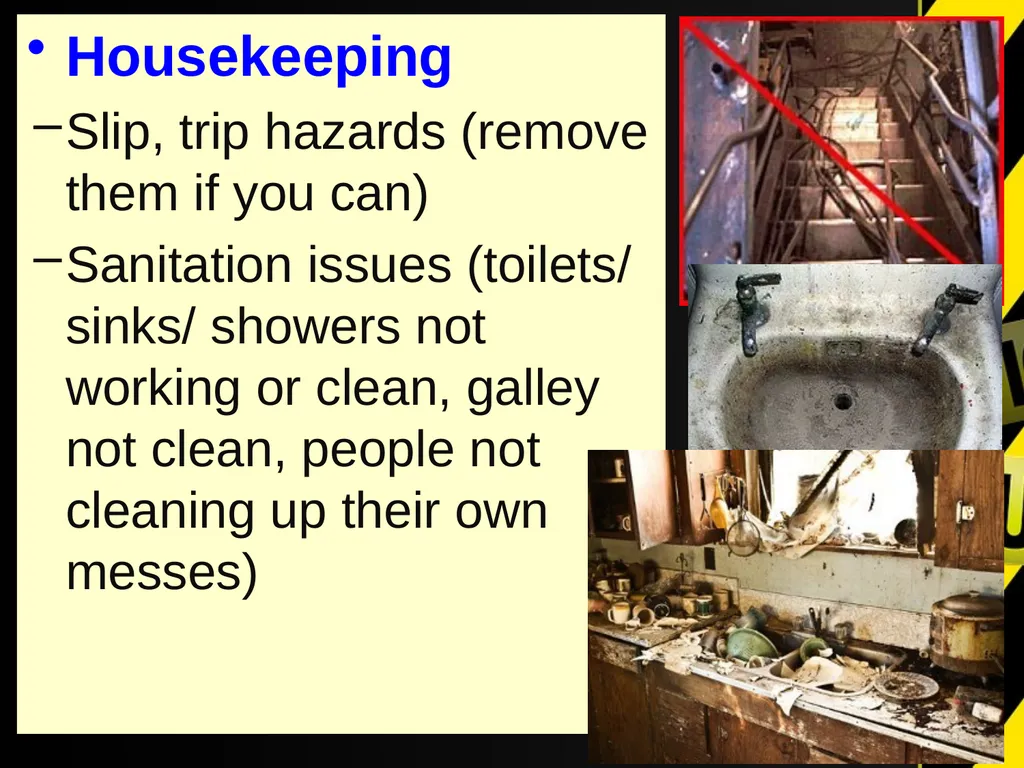
slide15. Housekeeping
Slip, trip hazards (remove them if you can)
Sanitation issues (toilets/ sinks/ showers not working or clean, galley not clean, people not cleaning up their own messes)<br>
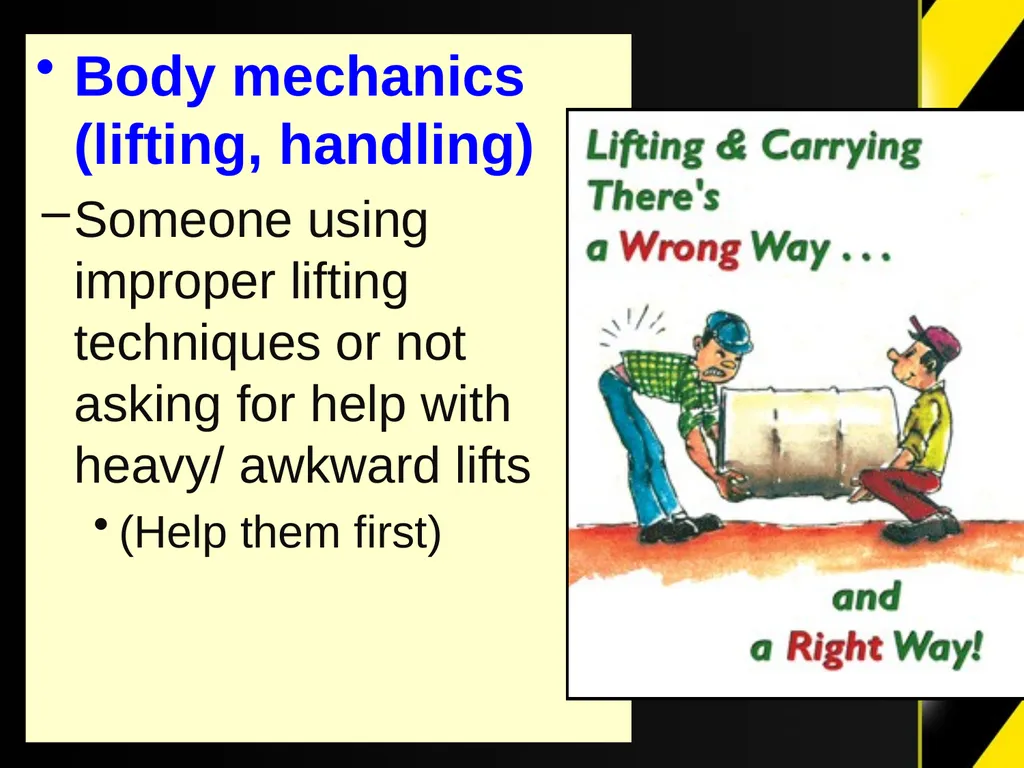
slide16. Body mechanics (lifting, handling)
Someone using improper lifting techniques or not asking for help with heavy/ awkward lifts
(Help them first)<br>
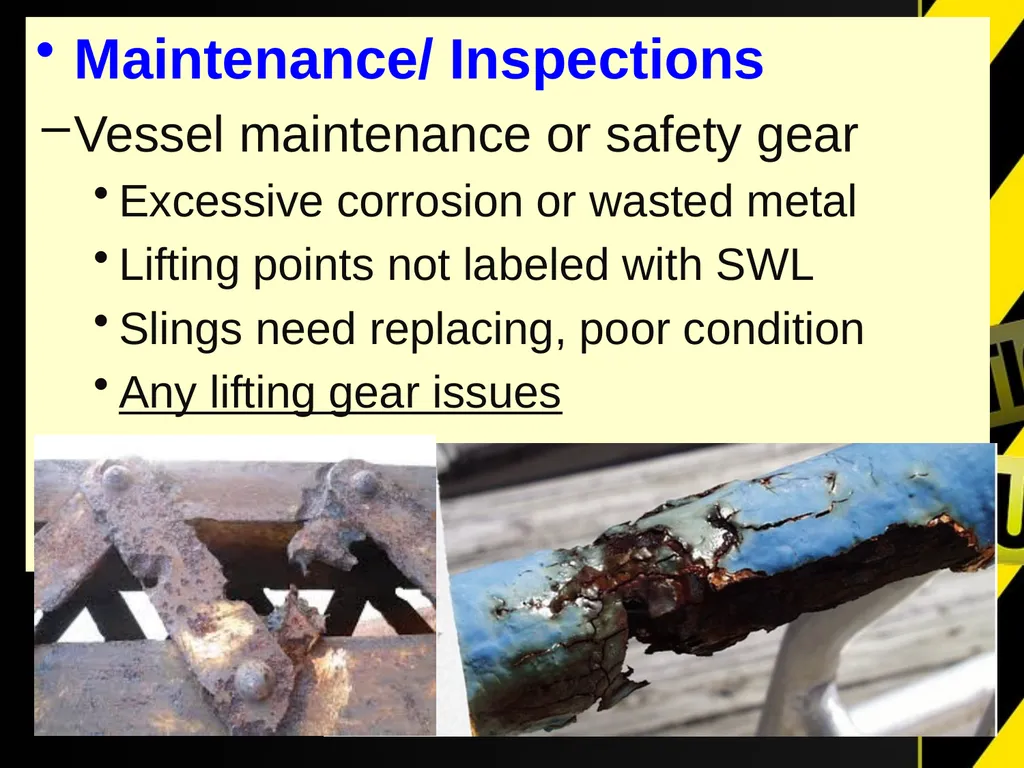
slide17. Maintenance/ Inspections
Vessel maintenance or safety gear
Excessive corrosion or wasted metal
Lifting points not labeled with SWL
Slings need replacing, poor condition
Any lifting gear issues<br>
slide18. Procedures
Not following procedures
No procedure established for common issue, but should be (suggest one)
Established procedures impractical – suggest revision<br>
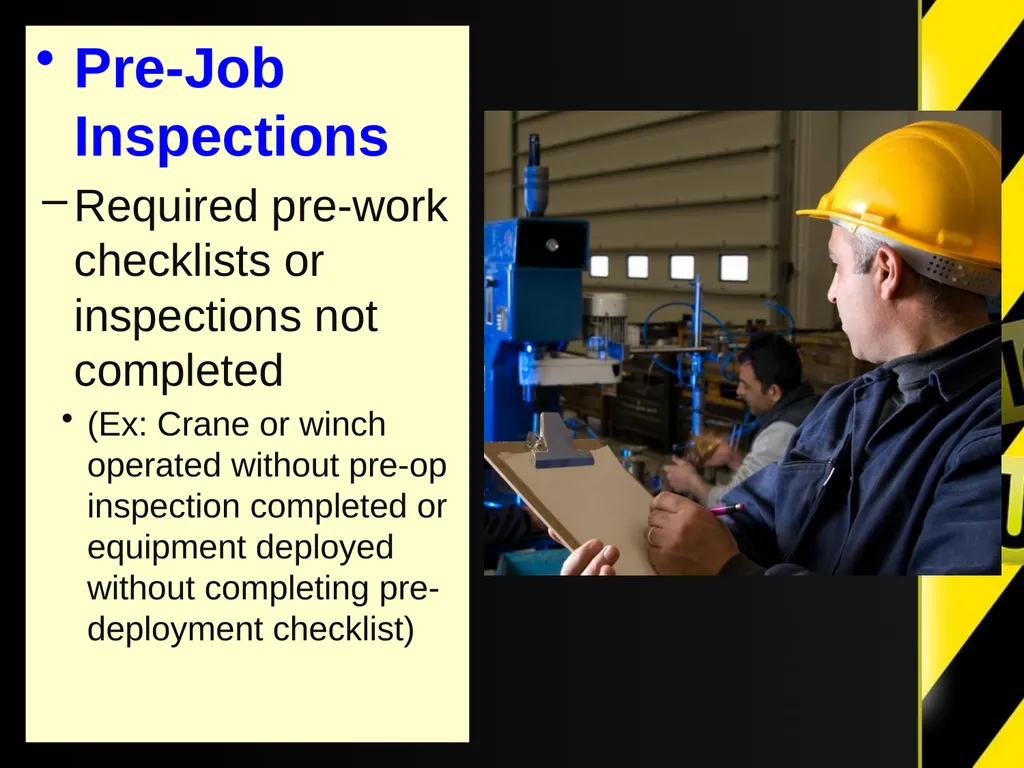
slide19. Pre-Job Inspections
Required pre-work checklists or inspections not completed
(Ex: Crane or winch operated without pre-op inspection completed or equipment deployed without completing pre-deployment checklist)<br>
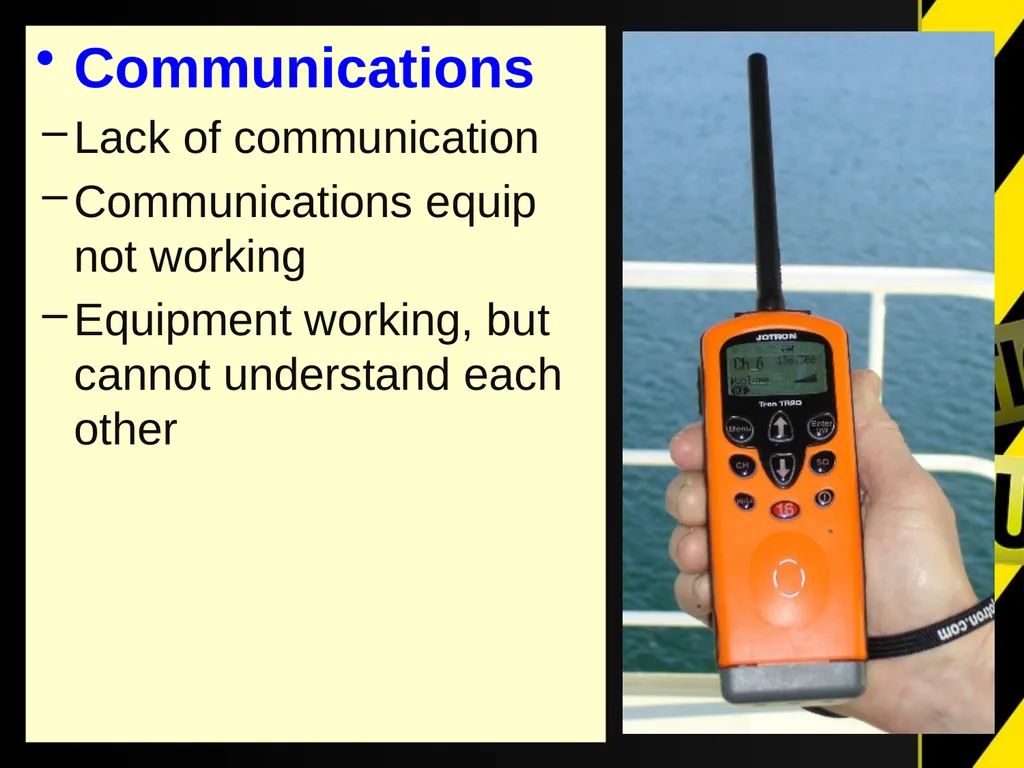
slide20. Communications
Lack of communication
Communications equip not working
Equipment working, but cannot understand each other<br>
slide21. What NOT to report on SOCs? Personality conflicts
Work it out in person or report to supervisor
Non-productive complaints (Whining)
“My roommate didn’t flush the toilet” is not an SOC issue.
“Toilet lever left open, causing sewage tank to overflow” is an SOC issue.<br>
slide2. What are we trying to improve? Safety Awareness for everyone aboard
Daily habits that affect our safety
Procedures that could be done more safely or efficiently
Maintenance that we have become careless about<br>
slide3. Why do we need to improve? It’s the right thing to do.
To protect each other from harm
To create a positive and safe work environment
To involve people in their own safety<br>
slide4. This is YOUR tool.. The safety cards are a tool for the vessels to engage the people who are on the vessel to find and correct problems BEFORE they become an incident, audit hit or injury.<br>
slide5. Prevention Participation See something wrong and not sure how to report it?
Complete a safety card.<br>
slide6. How will Safety Observation Cards (SOCs) do this? SOCs provide a way to identify and track things that need improvement.
SOCs notify bridge and engineering of items that need to be addressed.
Bridge reports progress back to the crew in the safety meetings.
Bridge notifies Management of important issues<br>
slide7. Safety Observation Card Process<br>
slide8. What types of things do we report on SOCs? PPE
Someone forgot to wear it
(Bring it to them)
Damaged or poor condition
(Don’t use it! Get one in good condition)
Running low, need more
(Report to First Mate for reorder)<br>
slide9. PPE
Don’t have the right kind for the job
(Don’t do the job without it!)<br>
slide10. Tools and Equipment
Tools don’t have guards
(Don’t use tools without guards!)
Damaged, not working properly
(Take out of service, give to Engineer for repair)
Using incorrect tool for the job
(kitchen knife used as a screwdriver)<br>
slide11. Tools and Equipment
Project Critical Equipment (Winches, cranes, power packs, A-frames, tuggers) not working as expected
(Engineer needs to
check it out to prevent
failure, arrange repair)<br>
slide12. Safety Attitude
Carelessness- not putting up tools, cleaning area when work is done.
Ignoring posted signage/ warnings.
Blocking emergency exits/ hatches
Watertight doors open when underway<br>
slide13. Safety Attitude
Willful violations Anyone refusing to wear required PPE or follow safety protocols should be immediately reported. They are putting you and the project at risk.<br>
slide14. Permits to Work
Work done without a permit that requires a permit
Expired permits still posted after work is complete
Incomplete permit
Operating equipment that is tagged out with “Energy Isolation” permit/ tag<br>
slide15. Housekeeping
Slip, trip hazards (remove them if you can)
Sanitation issues (toilets/ sinks/ showers not working or clean, galley not clean, people not cleaning up their own messes)<br>
slide16. Body mechanics (lifting, handling)
Someone using improper lifting techniques or not asking for help with heavy/ awkward lifts
(Help them first)<br>
slide17. Maintenance/ Inspections
Vessel maintenance or safety gear
Excessive corrosion or wasted metal
Lifting points not labeled with SWL
Slings need replacing, poor condition
Any lifting gear issues<br>
slide18. Procedures
Not following procedures
No procedure established for common issue, but should be (suggest one)
Established procedures impractical – suggest revision<br>
slide19. Pre-Job Inspections
Required pre-work checklists or inspections not completed
(Ex: Crane or winch operated without pre-op inspection completed or equipment deployed without completing pre-deployment checklist)<br>
slide20. Communications
Lack of communication
Communications equip not working
Equipment working, but cannot understand each other<br>
slide21. What NOT to report on SOCs? Personality conflicts
Work it out in person or report to supervisor
Non-productive complaints (Whining)
“My roommate didn’t flush the toilet” is not an SOC issue.
“Toilet lever left open, causing sewage tank to overflow” is an SOC issue.<br>