
Schemas What are they? "A schema is a pattern of

Published  . 0 views
↓ Download
Schemas What are they? "A schema is a pattern of
1 / 1
Schemas What are they? "A schema is a pattern of - slide 1 of 11 Schemas What are they? "A schema is a pattern of - slide 2 of 11 Schemas What are they? "A schema is a pattern of - slide 3 of 11 Schemas What are they? "A schema is a pattern of - slide 4 of 11 Schemas What are they? "A schema is a pattern of - slide 5 of 11 Schemas What are they? "A schema is a pattern of - slide 6 of 11 Schemas What are they? "A schema is a pattern of - slide 7 of 11 Schemas What are they? "A schema is a pattern of - slide 8 of 11 Schemas What are they? "A schema is a pattern of - slide 9 of 11 Schemas What are they? "A schema is a pattern of - slide 10 of 11 Schemas What are they? "A schema is a pattern of - slide 11 of 11
Description: Schemas What are they? A schema is a pattern of repeated actions. Clusters of schemas develop into later concepts (Athey, 2007). There are many different types of schemas. Sometimes the activities may seem a little strange or even

Related Topics

Download Presentation

"Schemas What are they? "A schema is a pattern of" is the property of its rightful owner. Permission is granted to download and print the materials on this website for personal, non-commercial use only, and to display it on your personal computer provided you do not modify the materials and that you retain all copyright notices contained in the materials. By downloading content from our website, you accept the terms of this agreement.

Presentation Transcript

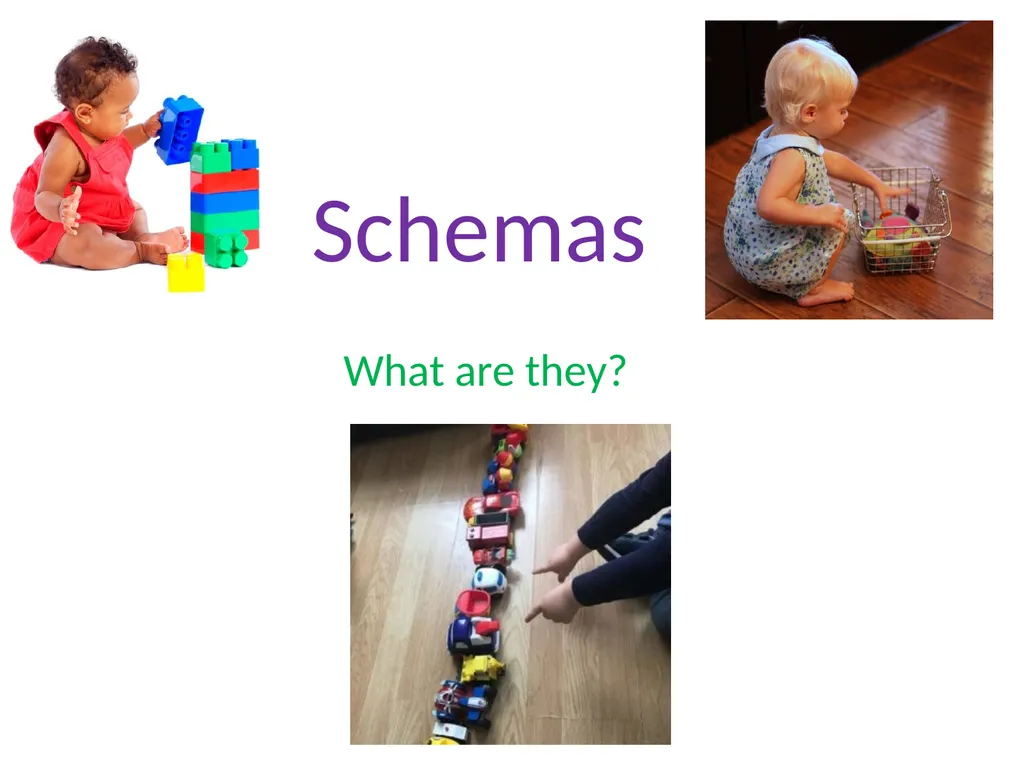
slide1. Schemas What are they?<br>
slide2. "A schema is a pattern of repeated actions. Clusters of schemas develop into later concepts" (Athey, 2007).

There are many different types of schemas. Sometimes the activities may seem a little strange or even irritating to adults, but to the child, it’s a necessary step in their understanding of the world and themselves.<br>
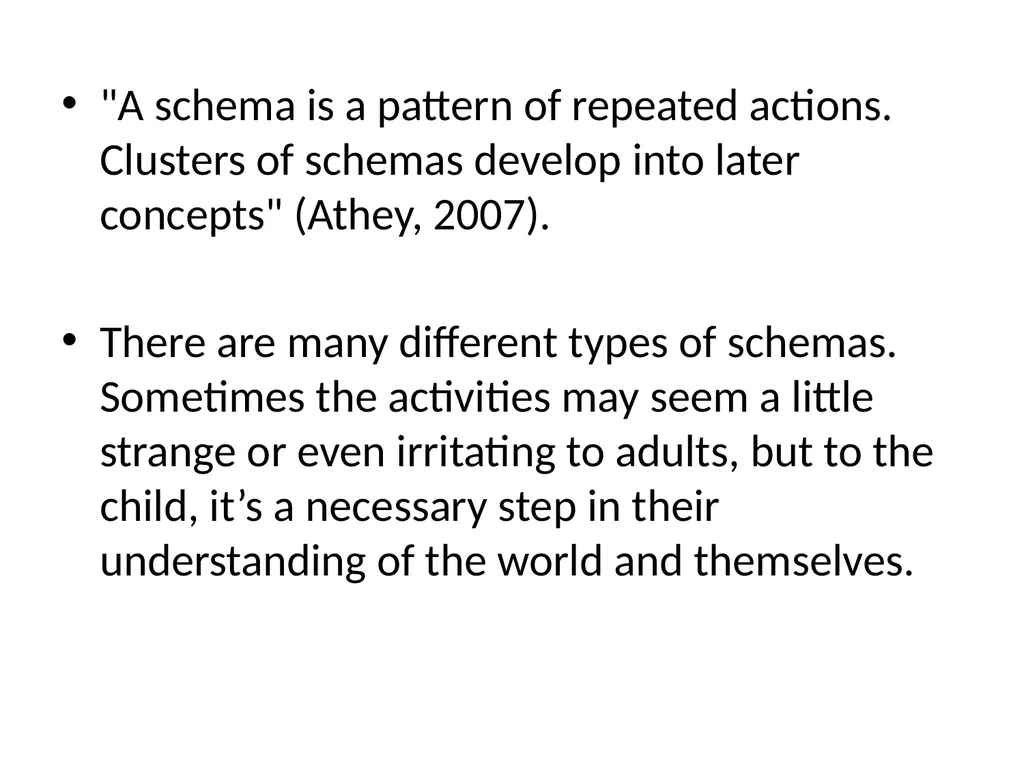
slide3. Trajectory Creating lines in space by climbing up and jumping down. Dropping items from up high.

Sometimes they will come through as what we might once have seen as 'inappropriate behaviour' such as throwing objects in enclosed spaces or climbing on the table.<br>
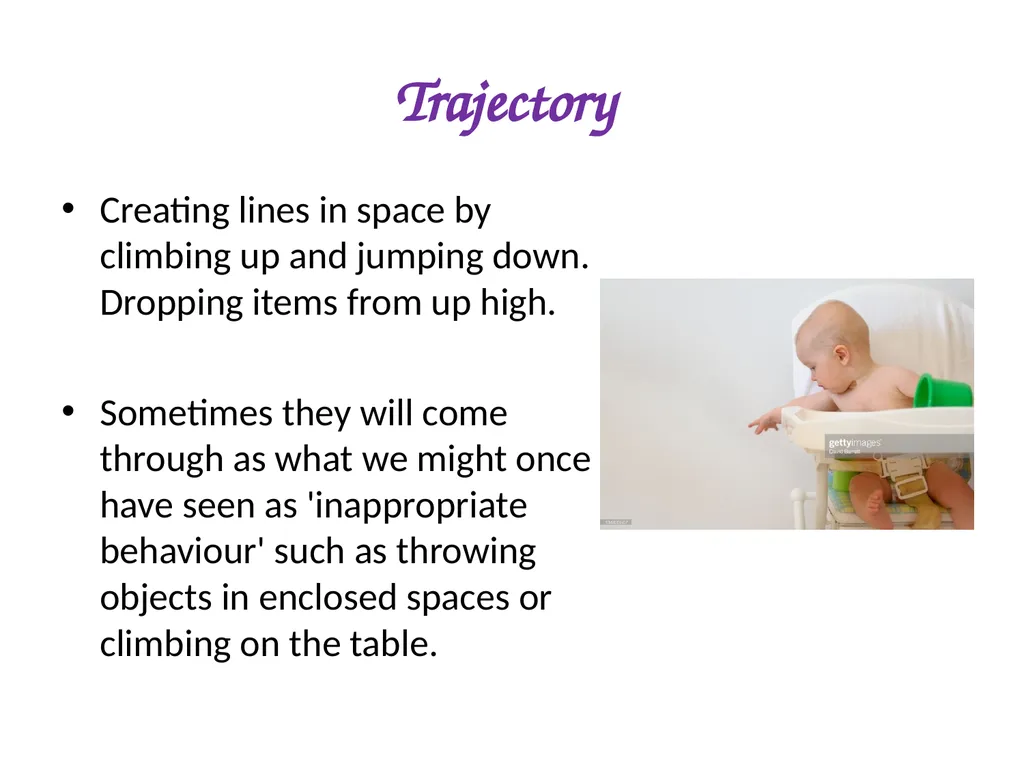
slide4. Enveloping Covering themselves or objects completely. Wrapping items up or placing them in containers.
Playing games like peek-a-boo<br>
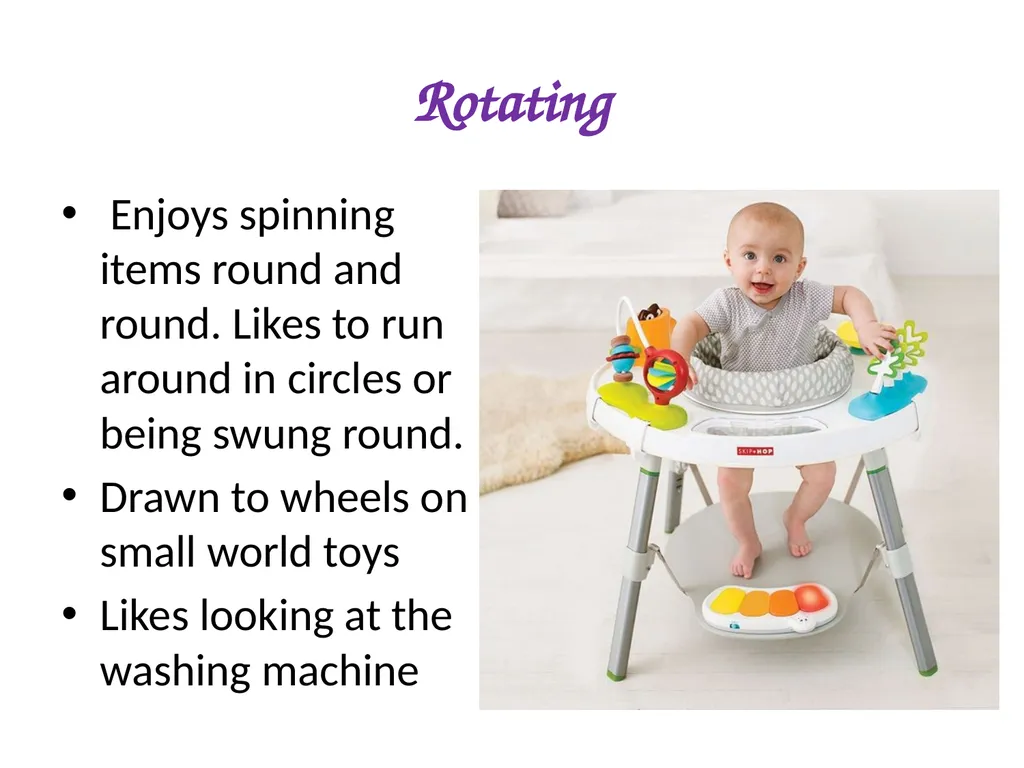
slide5. Rotating Enjoys spinning items round and round. Likes to run around in circles or being swung round.
Drawn to wheels on small world toys
Likes looking at the washing machine<br>
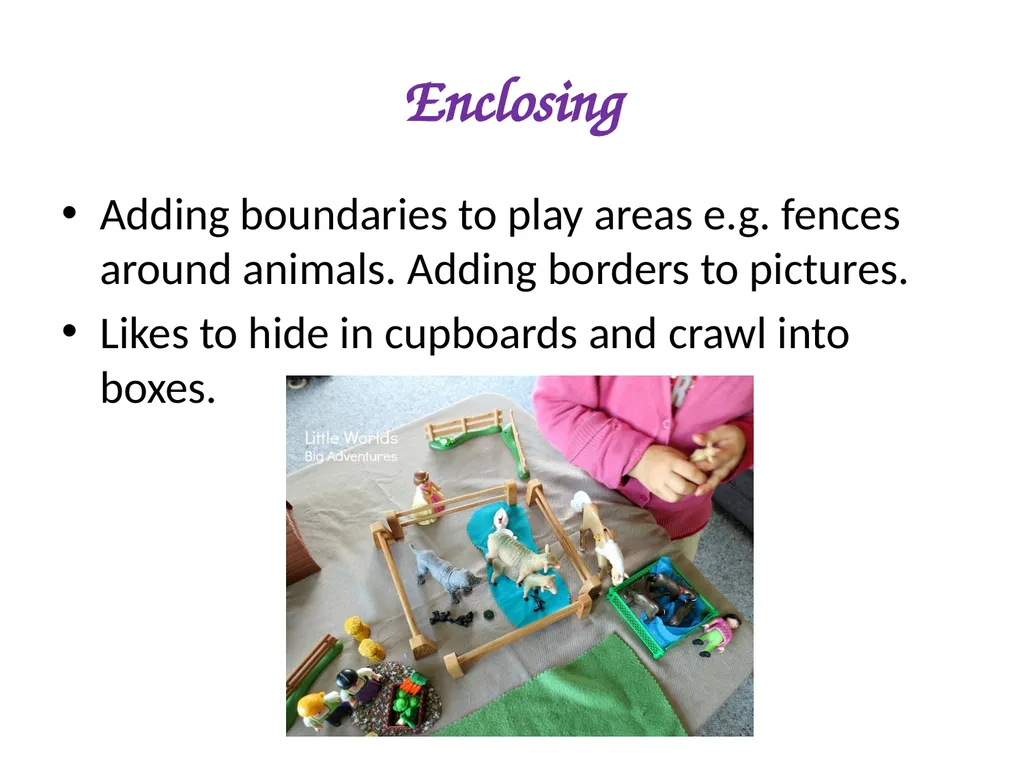
slide6. Enclosing Adding boundaries to play areas e.g. fences around animals. Adding borders to pictures.
Likes to hide in cupboards and crawl into boxes.<br>
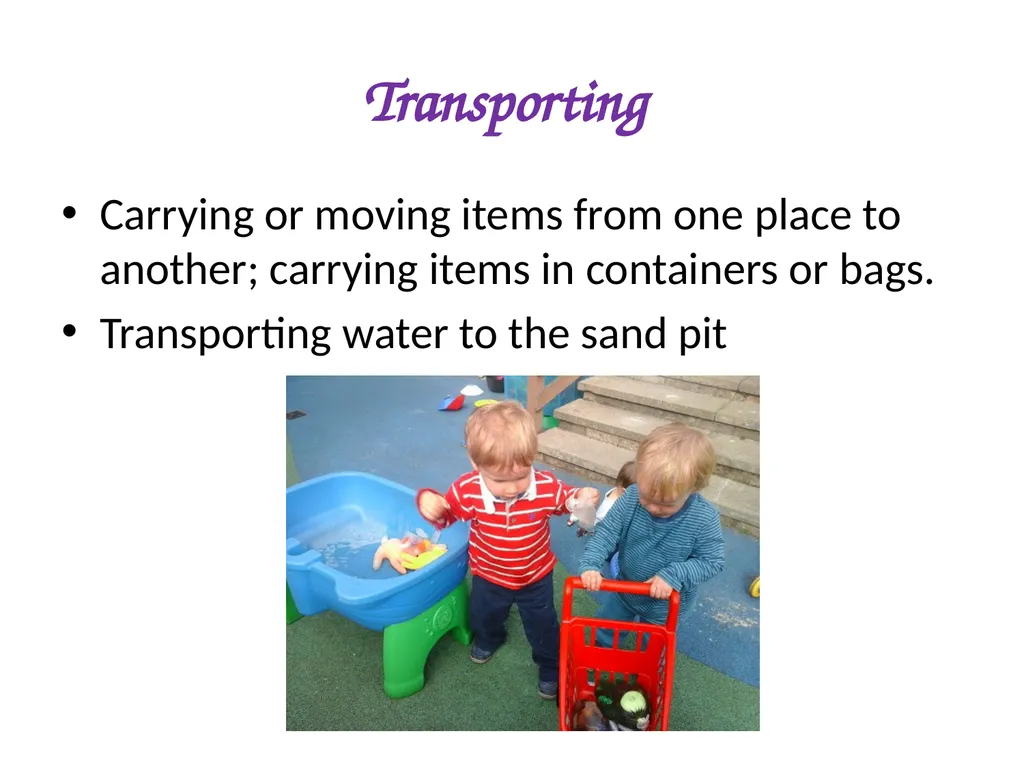
slide7. Transporting Carrying or moving items from one place to another; carrying items in containers or bags.
Transporting water to the sand pit<br>
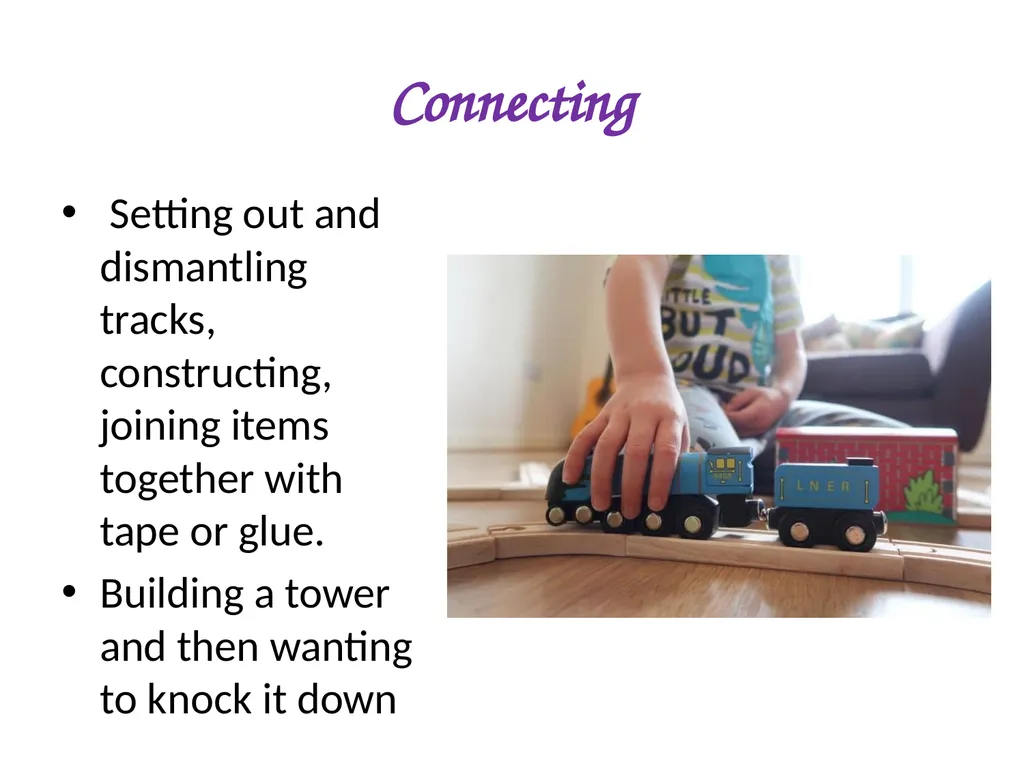
slide8. Connecting Setting out and dismantling tracks, constructing, joining items together with tape or glue.
Building a tower and then wanting to knock it down<br>
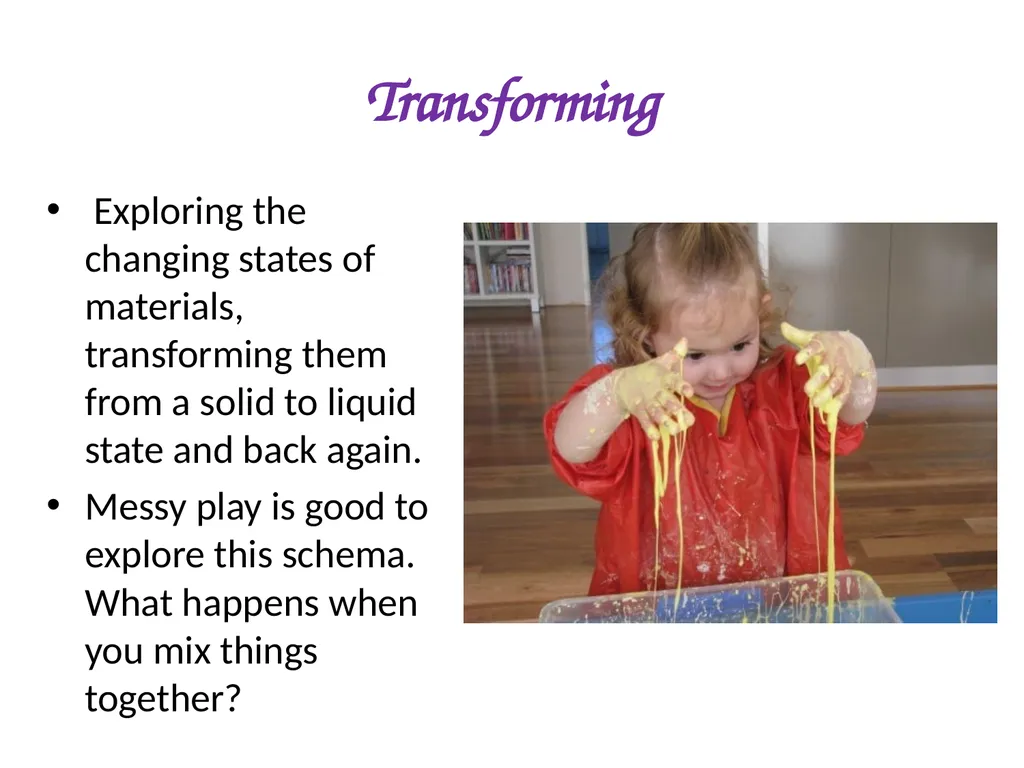
slide9. Transforming Exploring the changing states of materials, transforming them from a solid to liquid state and back again.
Messy play is good to explore this schema. What happens when you mix things together?<br>
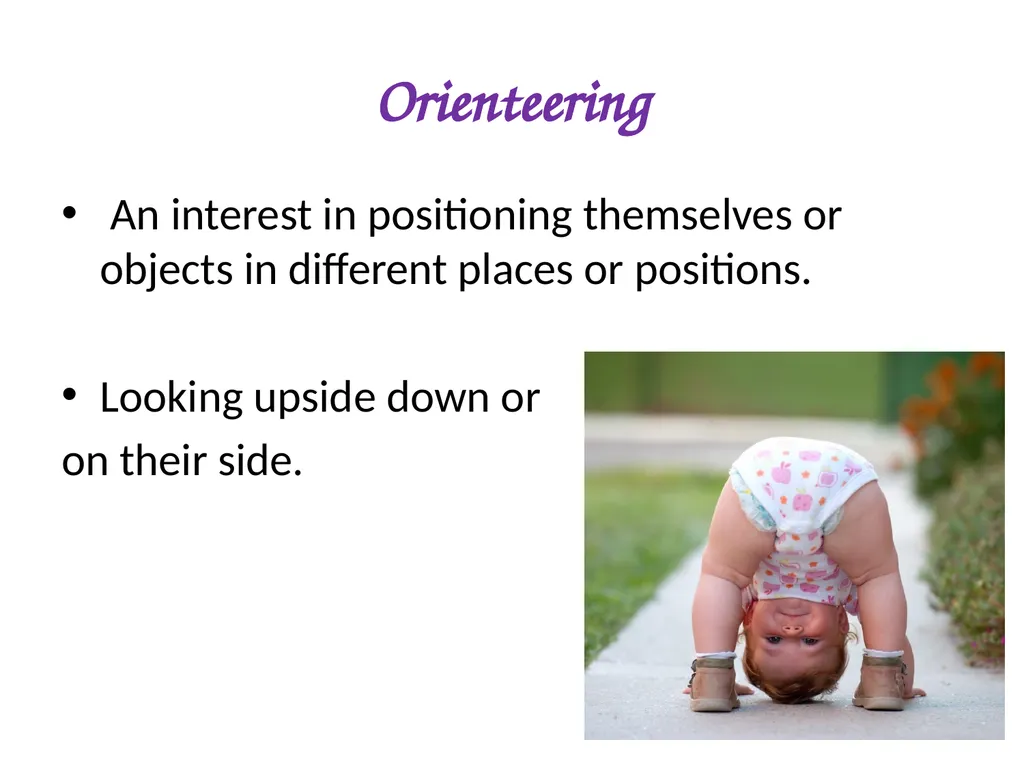
slide10. Orienteering An interest in positioning themselves or objects in different places or positions.

Looking upside down or
on their side.<br>
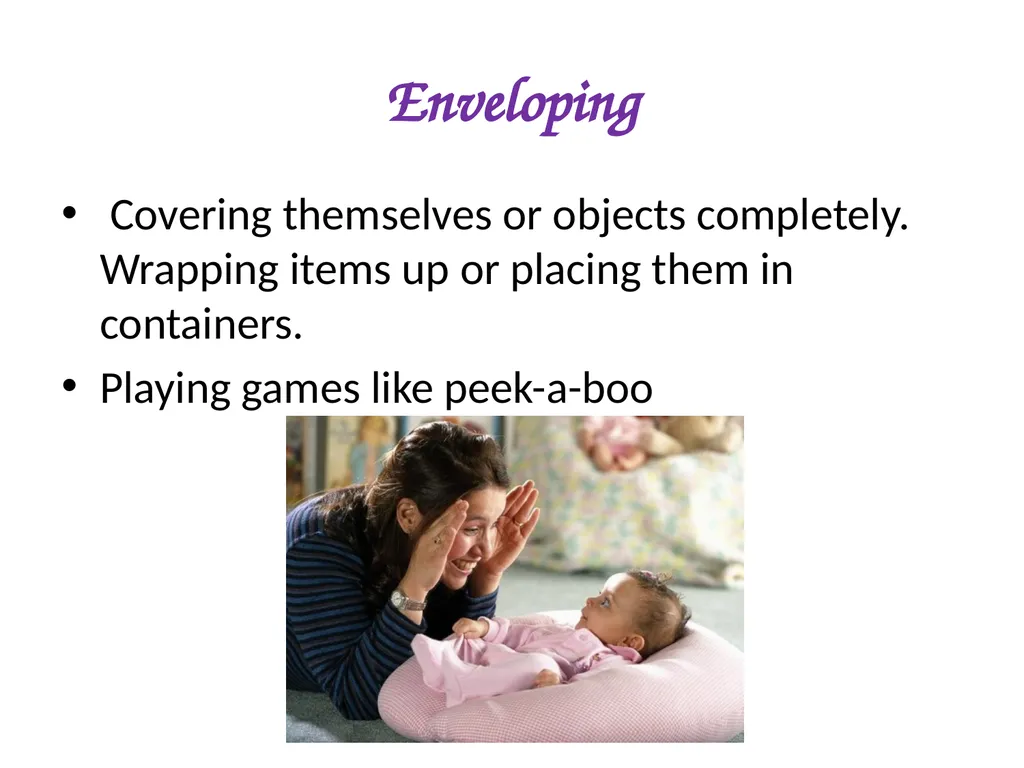
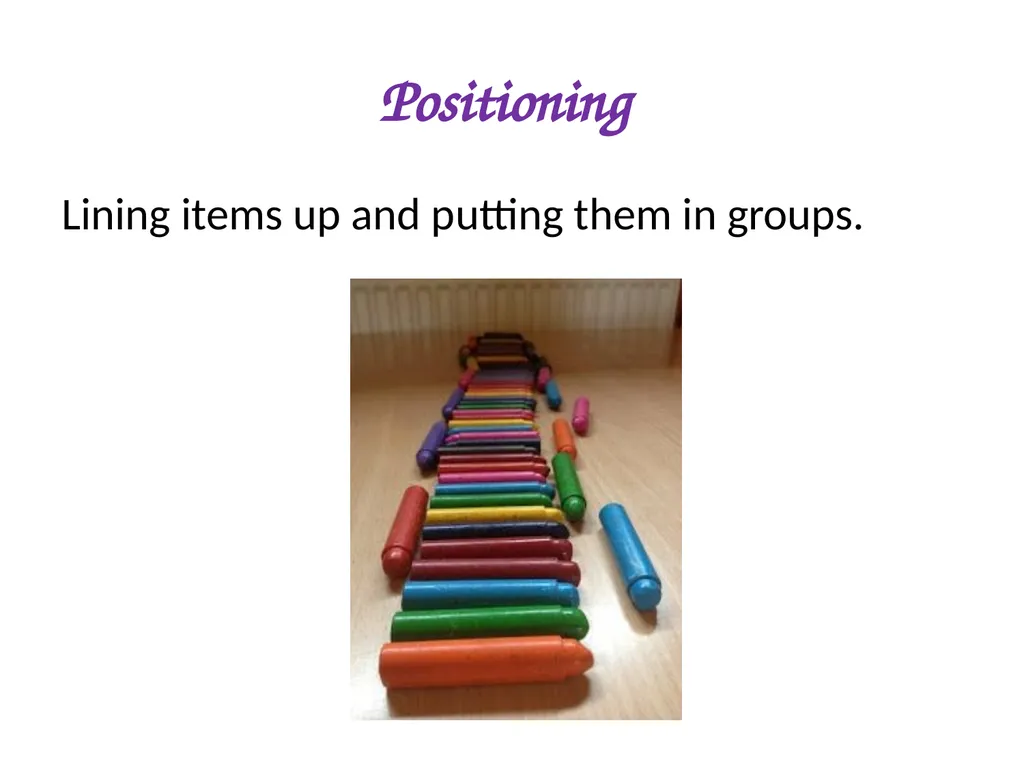
slide11. Positioning Lining items up and putting them in groups.<br>