Section 106, National Historic Preservation Act (NHPA) A Case Study: The Fond du Lacs Band fee to trust application for the Former Carter Hotel, Duluth, MN Section 106 of the National Historic Preservation Act of 1966 (NHPA) requires
"Section 106, National Historic Preservation Act" is the property of its rightful owner. Permission is granted to
download and print the materials on this website for personal, non-commercial use only, and to display it
on your personal computer provided you do not modify the materials and that you retain all copyright
notices contained in the materials. By downloading content from our website, you accept the terms of this
agreement.
Presentation Transcript
01
Section 106, National Historic Preservation Act (NHPA) A Case Study: The Fond du Lac’s Band fee to trust application for the Former Carter Hotel, Duluth, MN<br>
02
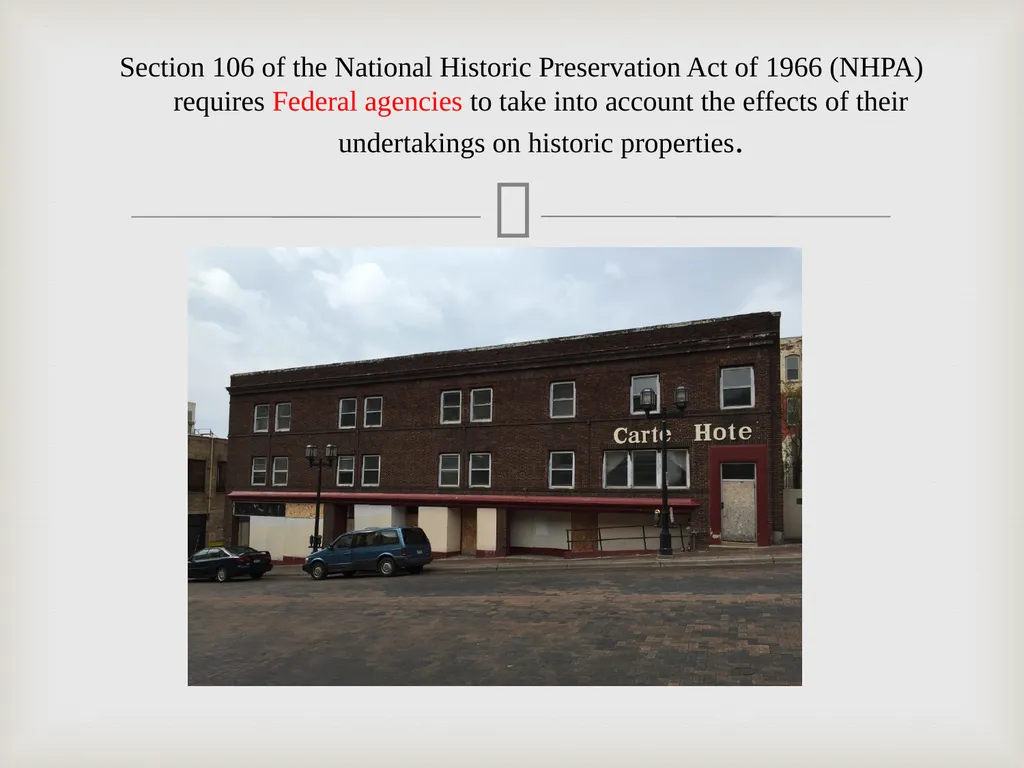
Section 106 of the National Historic Preservation Act of 1966 (NHPA) requires Federal agencies to take into account the effects of their undertakings on historic properties.<br>
03
Initiation of the Process
Identification of historic properties
Assessment of adverse effects
Resolution of adverse effects
Failure to resolve adverse effects
Coordination with the National Environmental Policy Act (NEPA) - Vast majority of undertakings are resolved by this point 36 CFR 800 Subpart B – The section 106 Process continued<br>
04
(a) Undertaking? Yes.
(1) Potential to cause effects on historic properties? Yes.
(b) Coordinate with other reviews? Yes, NEPA.
(c) Identify the appropriate SHPO/THPO? Yes, MN SHPO and Fond du Lac THPO.
(f) Identify other consulting parties? Yes, Fond du Lac Band, City of Duluth, and Duluth Preservation Commission. 800.3 Initiation of the Process<br>
05
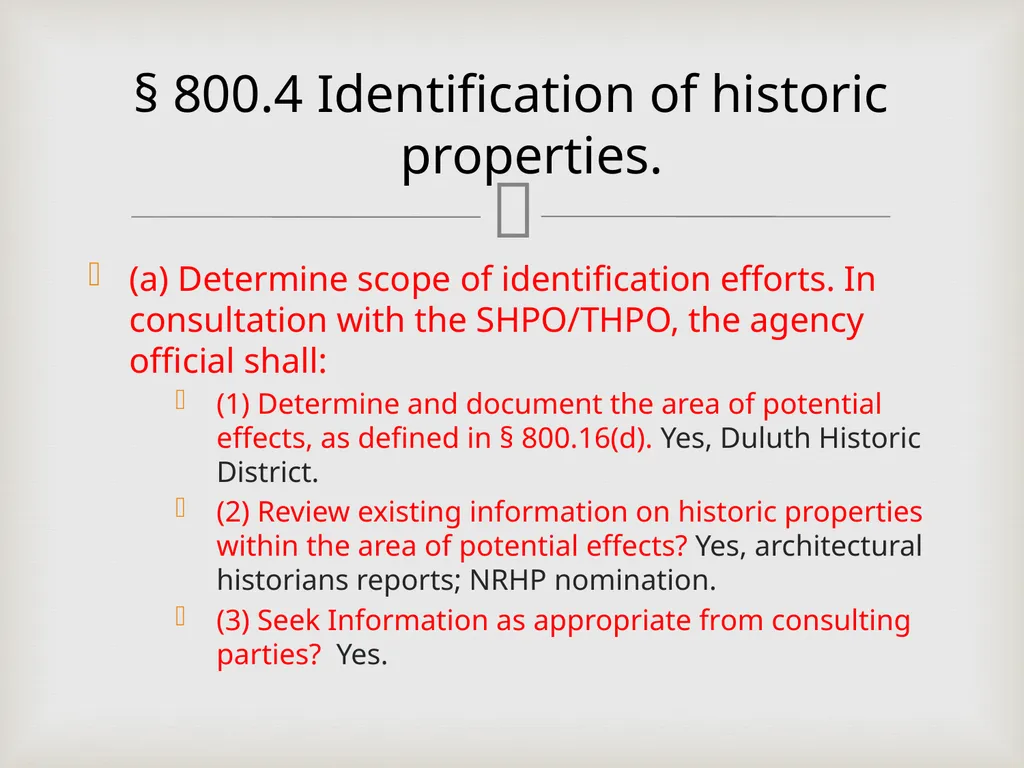
(a) Determine scope of identification efforts. In consultation with the SHPO/THPO, the agency official shall:
(1) Determine and document the area of potential effects, as defined in § 800.16(d). Yes, Duluth Historic District.
(2) Review existing information on historic properties within the area of potential effects? Yes, architectural historians reports; NRHP nomination.
(3) Seek Information as appropriate from consulting parties? Yes. § 800.4 Identification of historic properties.<br>
06
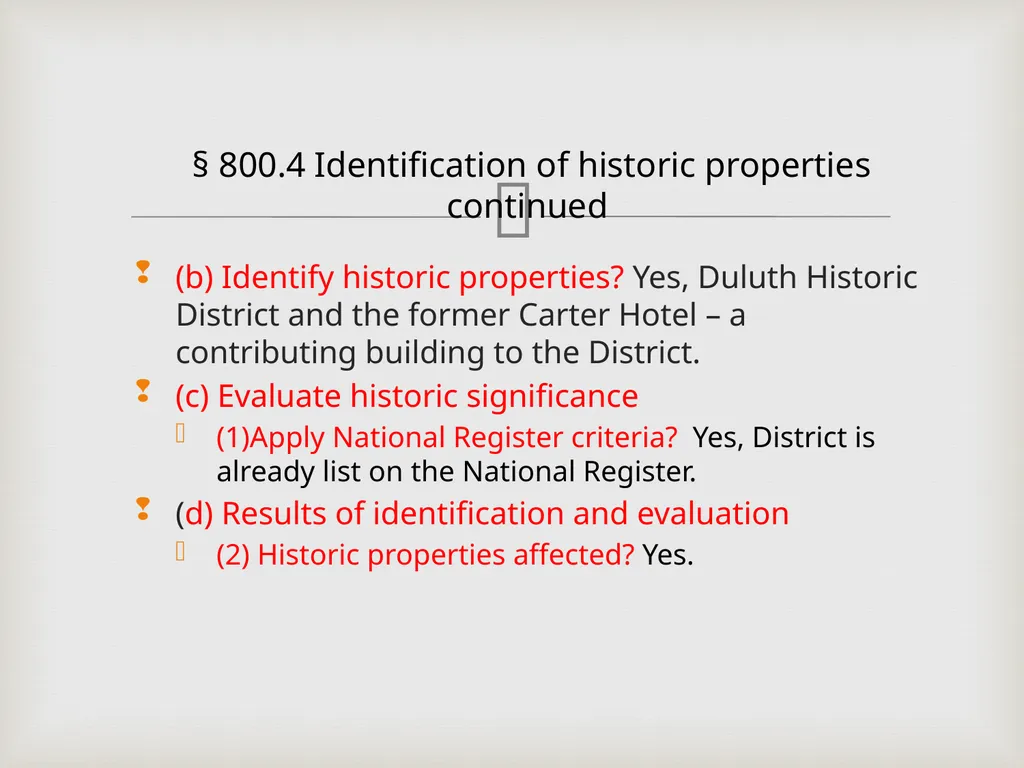
(b) Identify historic properties? Yes, Duluth Historic District and the former Carter Hotel – a contributing building to the District.
(c) Evaluate historic significance
(1)Apply National Register criteria? Yes, District is already list on the National Register.
(d) Results of identification and evaluation
(2) Historic properties affected? Yes. § 800.4 Identification of historic properties continued<br>
07
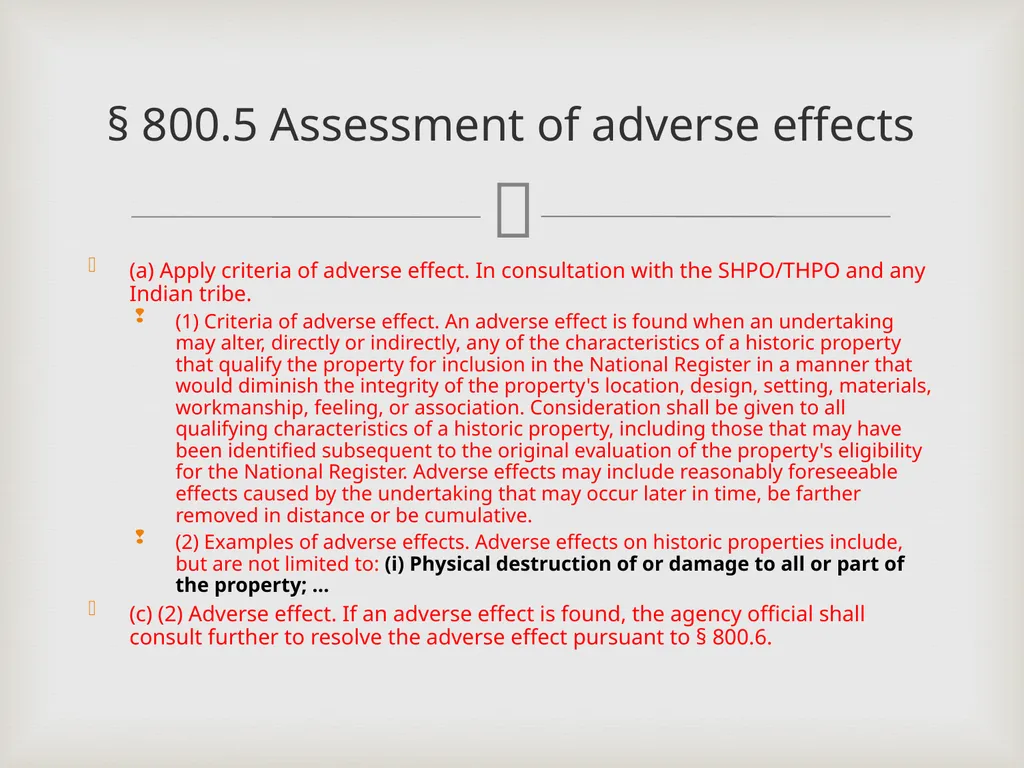
(a) Apply criteria of adverse effect. In consultation with the SHPO/THPO and any Indian tribe.
(1) Criteria of adverse effect. An adverse effect is found when an undertaking may alter, directly or indirectly, any of the characteristics of a historic property that qualify the property for inclusion in the National Register in a manner that would diminish the integrity of the property's location, design, setting, materials, workmanship, feeling, or association. Consideration shall be given to all qualifying characteristics of a historic property, including those that may have been identified subsequent to the original evaluation of the property's eligibility for the National Register. Adverse effects may include reasonably foreseeable effects caused by the undertaking that may occur later in time, be farther removed in distance or be cumulative.
(2) Examples of adverse effects. Adverse effects on historic properties include, but are not limited to: (i) Physical destruction of or damage to all or part of the property; …
(c) (2) Adverse effect. If an adverse effect is found, the agency official shall consult further to resolve the adverse effect pursuant to § 800.6. § 800.5 Assessment of adverse effects<br>
08
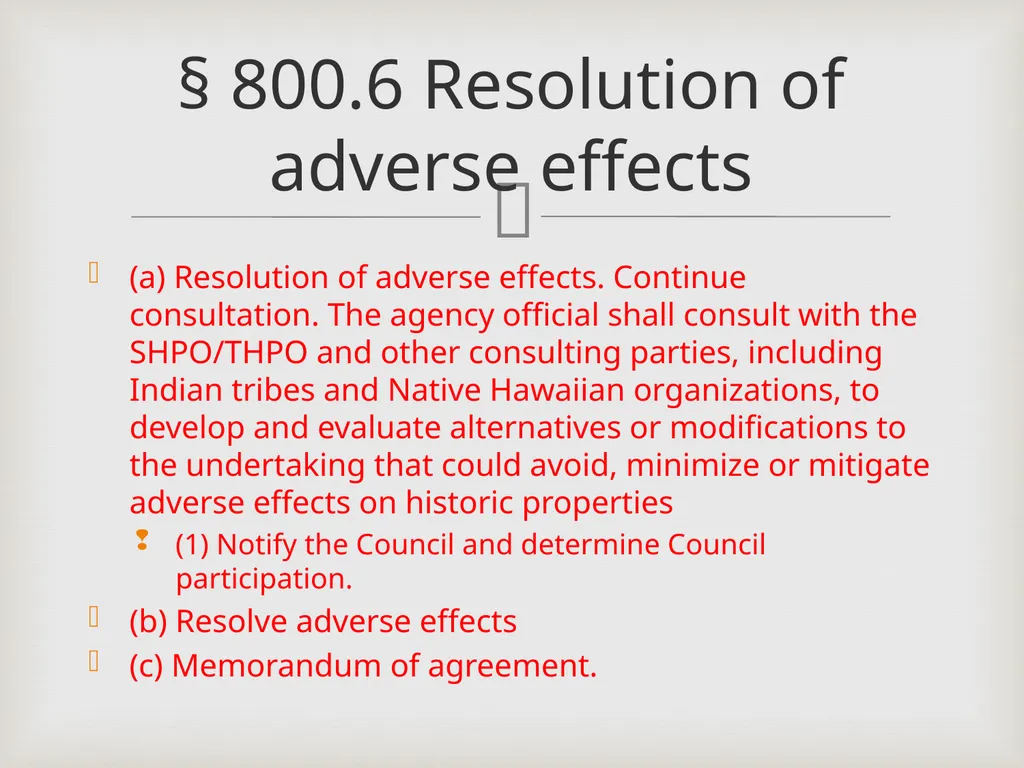
(a) Resolution of adverse effects. Continue consultation. The agency official shall consult with the SHPO/THPO and other consulting parties, including Indian tribes and Native Hawaiian organizations, to develop and evaluate alternatives or modifications to the undertaking that could avoid, minimize or mitigate adverse effects on historic properties
(1) Notify the Council and determine Council participation.
(b) Resolve adverse effects
(c) Memorandum of agreement. § 800.6 Resolution of adverse effects<br>
09
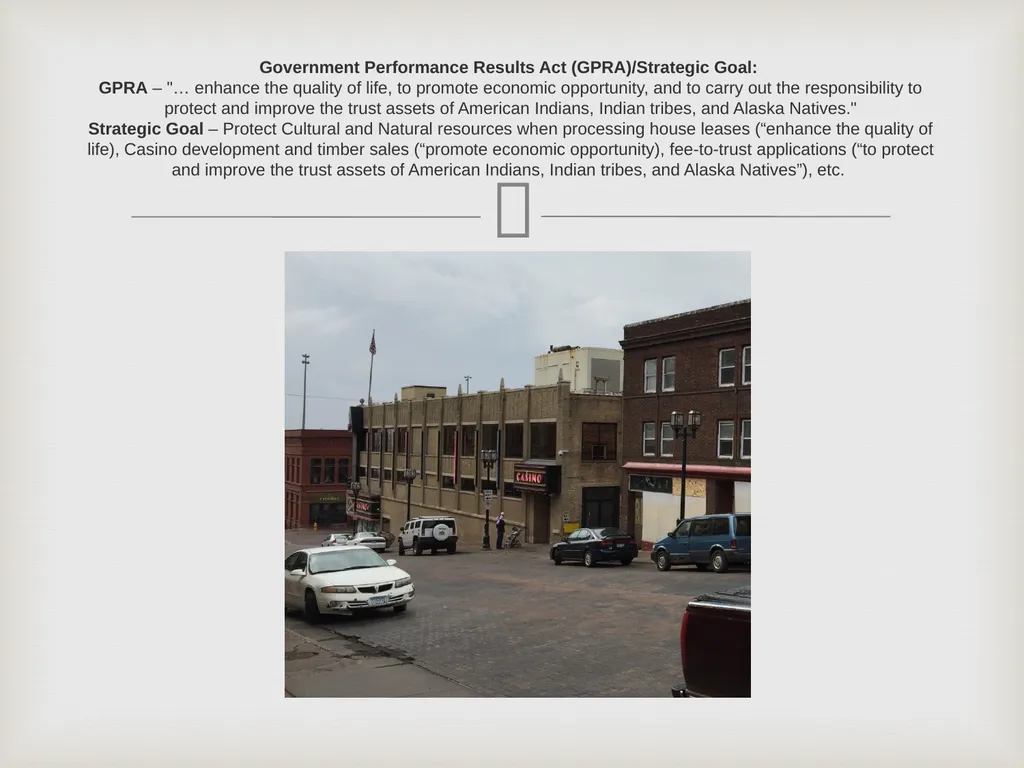
Government Performance Results Act (GPRA)/Strategic Goal: GPRA – "… enhance the quality of life, to promote economic opportunity, and to carry out the responsibility to protect and improve the trust assets of American Indians, Indian tribes, and Alaska Natives." Strategic Goal – Protect Cultural and Natural resources when processing house leases (“enhance the quality of life), Casino development and timber sales (“promote economic opportunity), fee-to-trust applications (“to protect and improve the trust assets of American Indians, Indian tribes, and Alaska Natives”), etc.<br>