
Secure Elements and W3C L. Castillo 06/16/15
Description: Secure Elements and W3C L. Castillo 061615 Secure Elements at a glance Secure microprocessor, secure memory, crypto engine September 8, 2014 2 Many applications Caveats Small memory, Low power, Low processing Secure Elements dont have a
Related Topics
Download Presentation
"Secure Elements and W3C L. Castillo 06/16/15" is the property of its rightful owner. Permission is granted to download and print the materials on this website for personal, non-commercial use only, and to display it on your personal computer provided you do not modify the materials and that you retain all copyright notices contained in the materials. By downloading content from our website, you accept the terms of this agreement.
Presentation Transcript
slide1. Secure Elements and W3C L. Castillo 06/16/15<br>
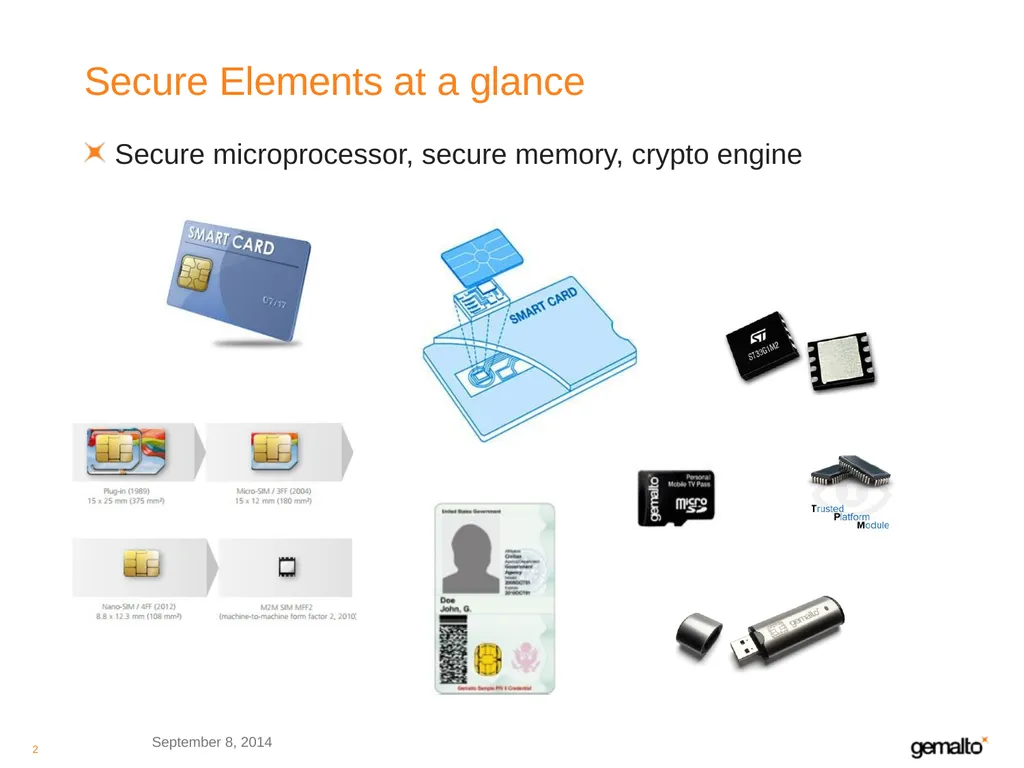
slide2. Secure Elements at a glance Secure microprocessor, secure memory, crypto engine September 8, 2014 2<br>
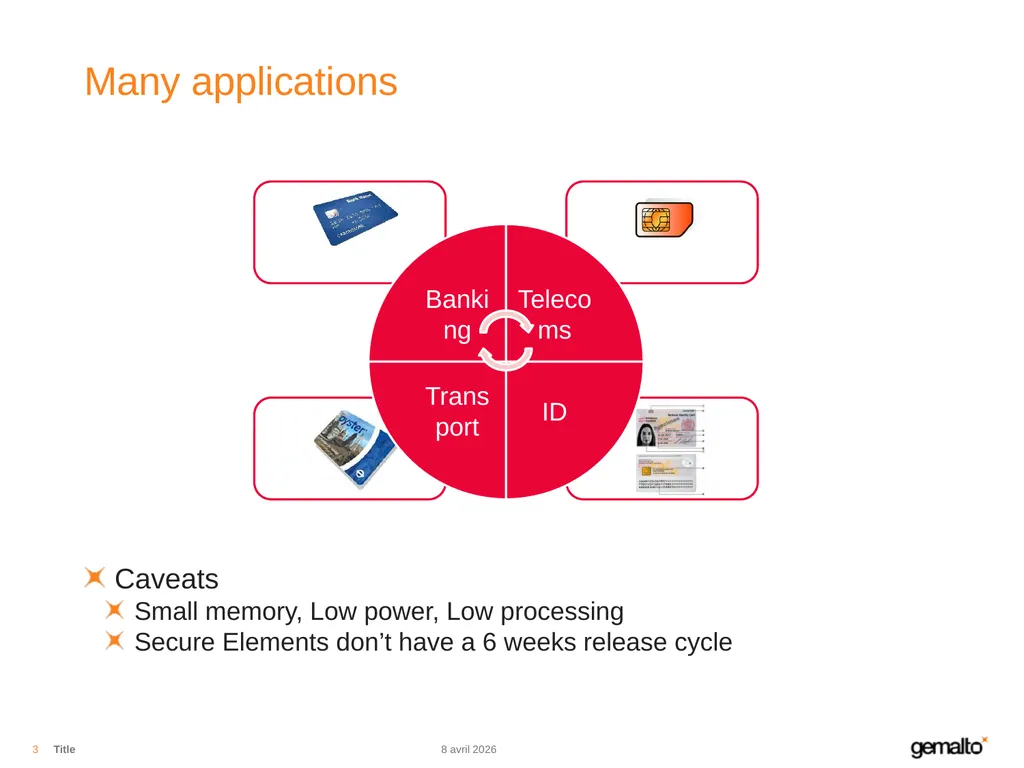
slide3. Many applications Caveats
Small memory, Low power, Low processing
Secure Elements don’t have a 6 weeks release cycle 12.06.15 Title 3<br>
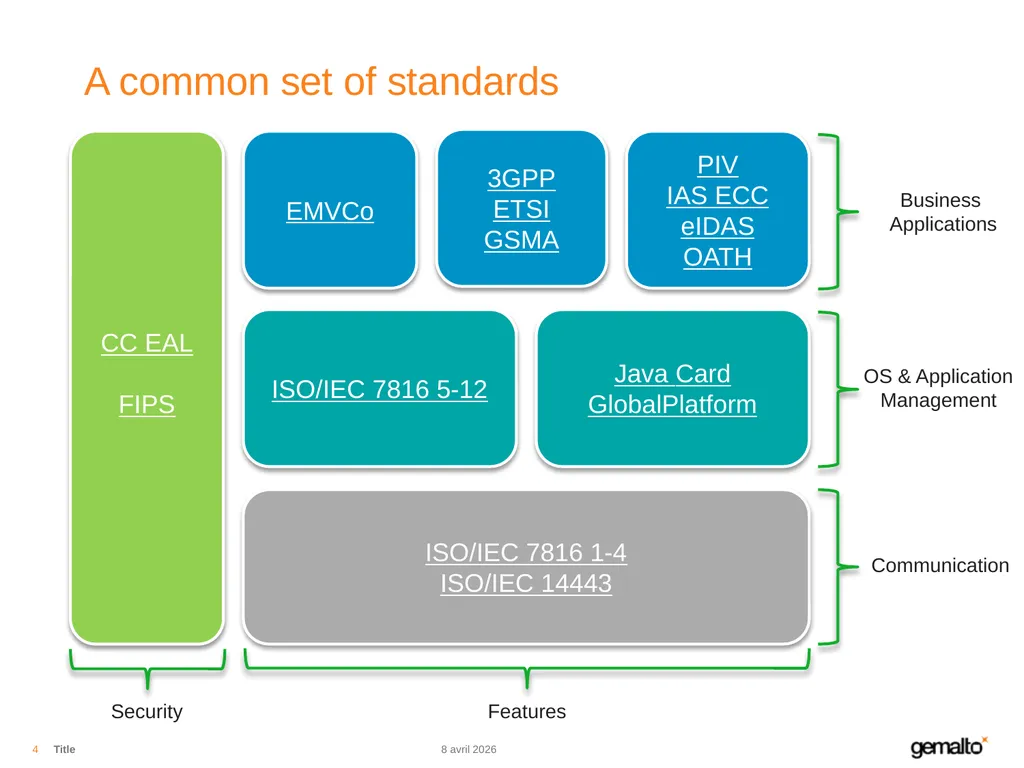
slide4. A common set of standards 12.06.15 Title 4 CC EAL
FIPS ISO/IEC 7816 1-4
ISO/IEC 14443 ISO/IEC 7816 5-12 Java Card
GlobalPlatform EMVCo 3GPP
ETSI
GSMA PIV
IAS ECC
eIDAS
OATH Communication OS & Application
Management Business
Applications Security Features<br>
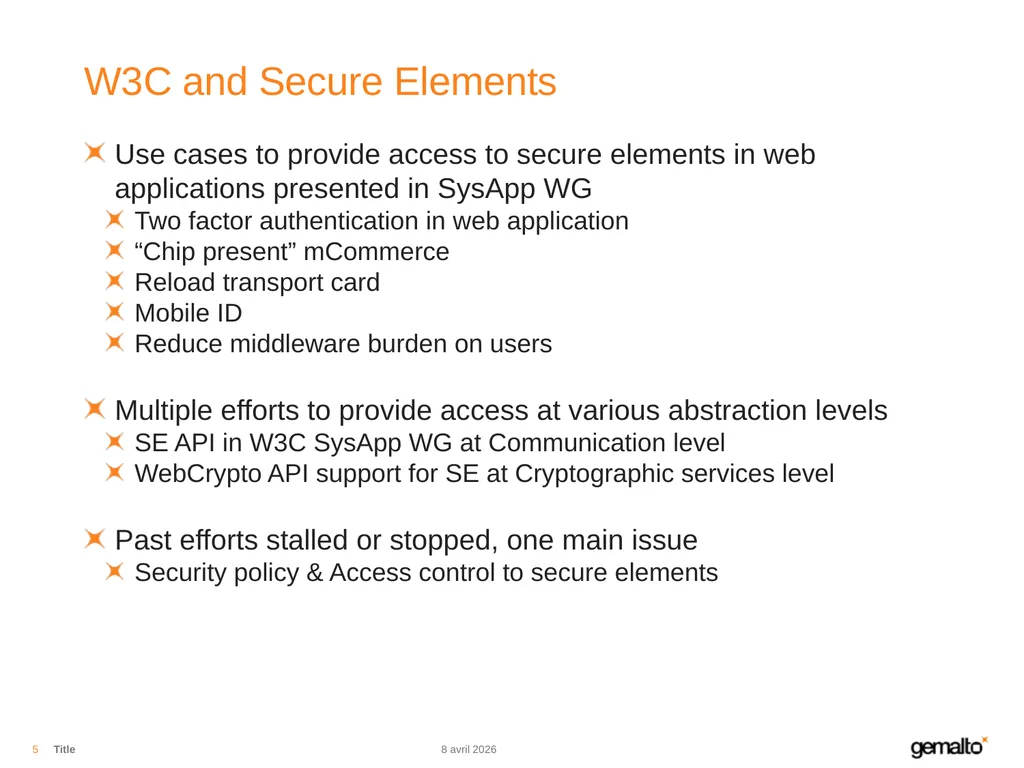
slide5. W3C and Secure Elements Use cases to provide access to secure elements in web applications presented in SysApp WG
Two factor authentication in web application
“Chip present” mCommerce
Reload transport card
Mobile ID
Reduce middleware burden on users
Multiple efforts to provide access at various abstraction levels
SE API in W3C SysApp WG at Communication level
WebCrypto API support for SE at Cryptographic services level
Past efforts stalled or stopped, one main issue
Security policy & Access control to secure elements 12.06.15 Title 5<br>
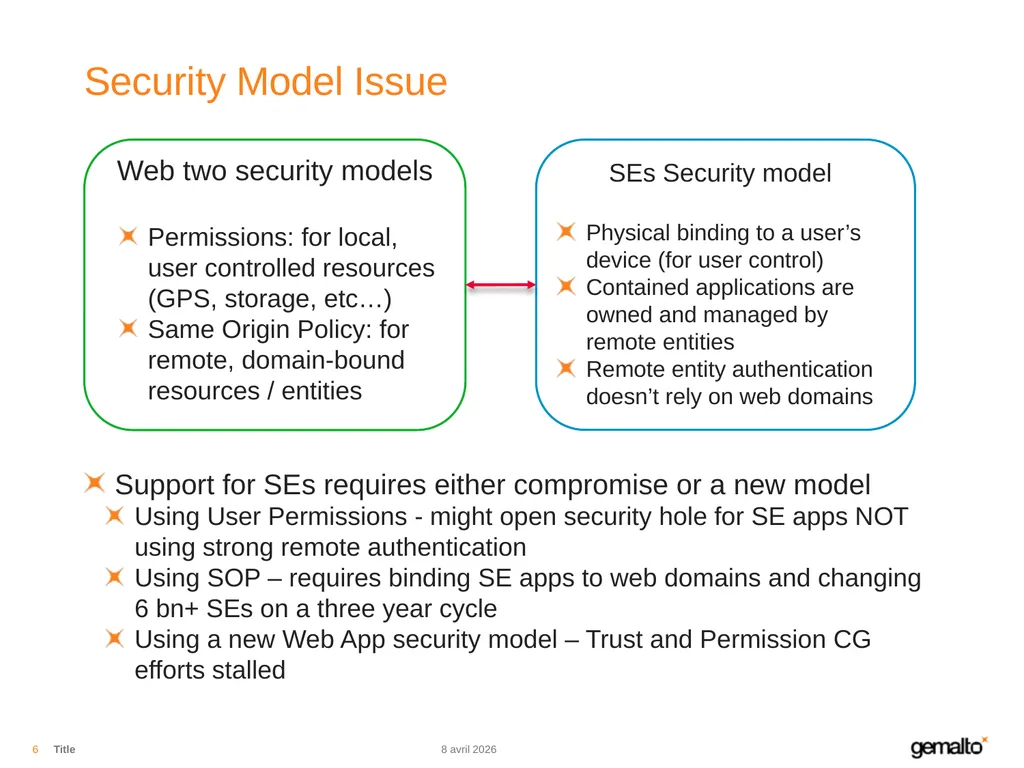
slide6. Security Model Issue 12.06.15 Title 6 Web two security models
Permissions: for local, user controlled resources (GPS, storage, etc…)
Same Origin Policy: for remote, domain-bound resources / entities Support for SEs requires either compromise or a new model
Using User Permissions - might open security hole for SE apps NOT using strong remote authentication
Using SOP – requires binding SE apps to web domains and changing 6 bn+ SEs on a three year cycle
Using a new Web App security model – Trust and Permission CG efforts stalled SEs Security model
Physical binding to a user’s device (for user control)
Contained applications are owned and managed by remote entities
Remote entity authentication doesn’t rely on web domains<br>
slide7. Web Payments: touch points with SEs Credentials for authentication and/or payments
Proximity payment infrastructure
EMV Card-based payment processing
Tokenization
World-wide EMV transition
TEE 12.06.15 Title 7<br>
slide8. Next steps Ongoing efforts: collecting requirements to address SEs services through the web
Global Platform Web APIs group
W3C Working Group coming soon
Many actions around Security / Credentials in W3C
Web Security
…
Recruiting participants for the coming W3C Working Group
Contact Virginie Galindo: virginie.galindo@gemalto.com 12.06.15 Title 8<br>
slide2. Secure Elements at a glance Secure microprocessor, secure memory, crypto engine September 8, 2014 2<br>
slide3. Many applications Caveats
Small memory, Low power, Low processing
Secure Elements don’t have a 6 weeks release cycle 12.06.15 Title 3<br>
slide4. A common set of standards 12.06.15 Title 4 CC EAL
FIPS ISO/IEC 7816 1-4
ISO/IEC 14443 ISO/IEC 7816 5-12 Java Card
GlobalPlatform EMVCo 3GPP
ETSI
GSMA PIV
IAS ECC
eIDAS
OATH Communication OS & Application
Management Business
Applications Security Features<br>
slide5. W3C and Secure Elements Use cases to provide access to secure elements in web applications presented in SysApp WG
Two factor authentication in web application
“Chip present” mCommerce
Reload transport card
Mobile ID
Reduce middleware burden on users
Multiple efforts to provide access at various abstraction levels
SE API in W3C SysApp WG at Communication level
WebCrypto API support for SE at Cryptographic services level
Past efforts stalled or stopped, one main issue
Security policy & Access control to secure elements 12.06.15 Title 5<br>
slide6. Security Model Issue 12.06.15 Title 6 Web two security models
Permissions: for local, user controlled resources (GPS, storage, etc…)
Same Origin Policy: for remote, domain-bound resources / entities Support for SEs requires either compromise or a new model
Using User Permissions - might open security hole for SE apps NOT using strong remote authentication
Using SOP – requires binding SE apps to web domains and changing 6 bn+ SEs on a three year cycle
Using a new Web App security model – Trust and Permission CG efforts stalled SEs Security model
Physical binding to a user’s device (for user control)
Contained applications are owned and managed by remote entities
Remote entity authentication doesn’t rely on web domains<br>
slide7. Web Payments: touch points with SEs Credentials for authentication and/or payments
Proximity payment infrastructure
EMV Card-based payment processing
Tokenization
World-wide EMV transition
TEE 12.06.15 Title 7<br>
slide8. Next steps Ongoing efforts: collecting requirements to address SEs services through the web
Global Platform Web APIs group
W3C Working Group coming soon
Many actions around Security / Credentials in W3C
Web Security
…
Recruiting participants for the coming W3C Working Group
Contact Virginie Galindo: virginie.galindo@gemalto.com 12.06.15 Title 8<br>